

The Hudson’s Bay Company (HBC) filed for creditor protection under the Companies’ Creditors Arrangement Act (CCAA) last week. The move follows a steep 30% decline in sales over the past 12 months and a reported $1 billion in debt, leaving the iconic department store chain in a precarious financial position.
The company’s challenges are multifaceted, stemming from shifting consumer preferences, reduced foot traffic in downtown locations, a lack of reinvestment in its stores, and broader economic pressures exacerbated by trade disputes with the United States.

Retail expert Bruce Winder, in an interview with Retail Insider, offered a sobering assessment: “They’re literally fighting for their life right now. With a major sales decline and mounting debt, a bankruptcy filing seemed inevitable.”
Financial Struggles and Loss of Lenders
One of the most alarming issues leading to the filing was Hudson’s Bay’s reported inability to secure financing. According to Winder, “They lost their bank and credit facility, which was a major red flag. They were running out of money immediately unless they found new financing.”
HBC President Liz Rodbell cited trade tariffs as a major deterrent for potential lenders, stating that the uncertain economic climate made it difficult to attract investment. “Because of the tariffs, no one wanted to lend them money anymore,” Winder noted.
Further complicating matters was HBC’s decision in December 2024 to separate its operations, creating a new entity for Hudson’s Bay stores while Saks Fifth Avenue and Saks Off 5th were moved into a different holding company under Saks Global. This restructuring signaled an intent to prioritize Saks over the struggling Hudson’s Bay brand.
The Decline of the Department Store Model
The downfall of Hudson’s Bay is not an isolated event but rather part of a broader trend affecting department stores worldwide. “Consumers just don’t shop that way anymore,” Winder explained. “If you look at shoppers aged 20 to 50, they’re not thinking of The Bay. They’re buying from Amazon, specialty retailers, or brands themselves.”
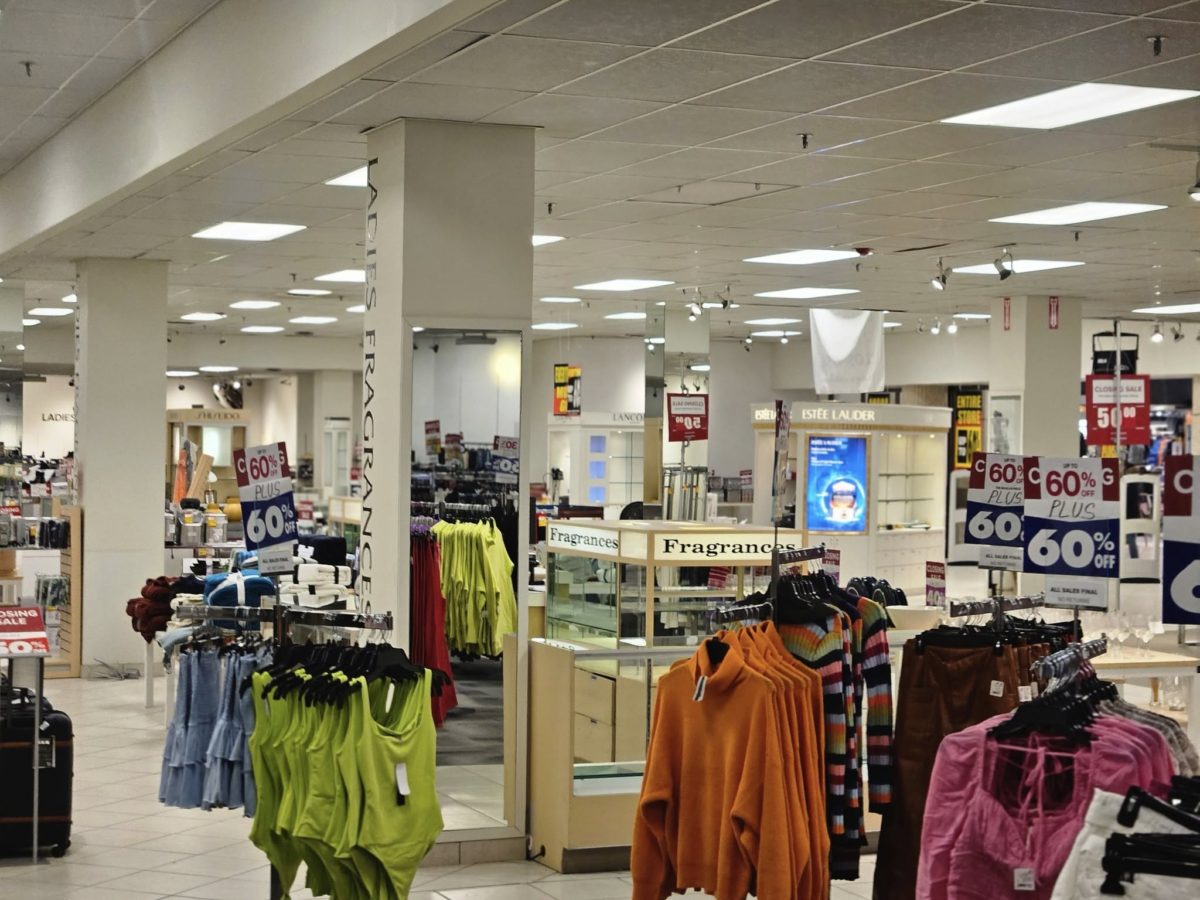
The lack of reinvestment in stores further alienated customers. “Many locations suffered from maintenance issues, with peeling walls, broken elevators and escalators, and empty shelves. It was so obvious the company was starving for capital,” Winder said. “The more you neglect the stores, the more customers stop coming.”
Former CEO Bonnie Brooks had briefly revitalized the retailer in the early 2010s, repositioning it closer to Holt Renfrew in terms of premium branding. However, subsequent leadership failed to sustain the momentum, and investment dried up. “They tried to make Hudson’s Bay relevant again, but without consistent reinvestment, it just couldn’t compete,” Winder noted.
Saks Fifth Avenue Licensing and Potential Closures
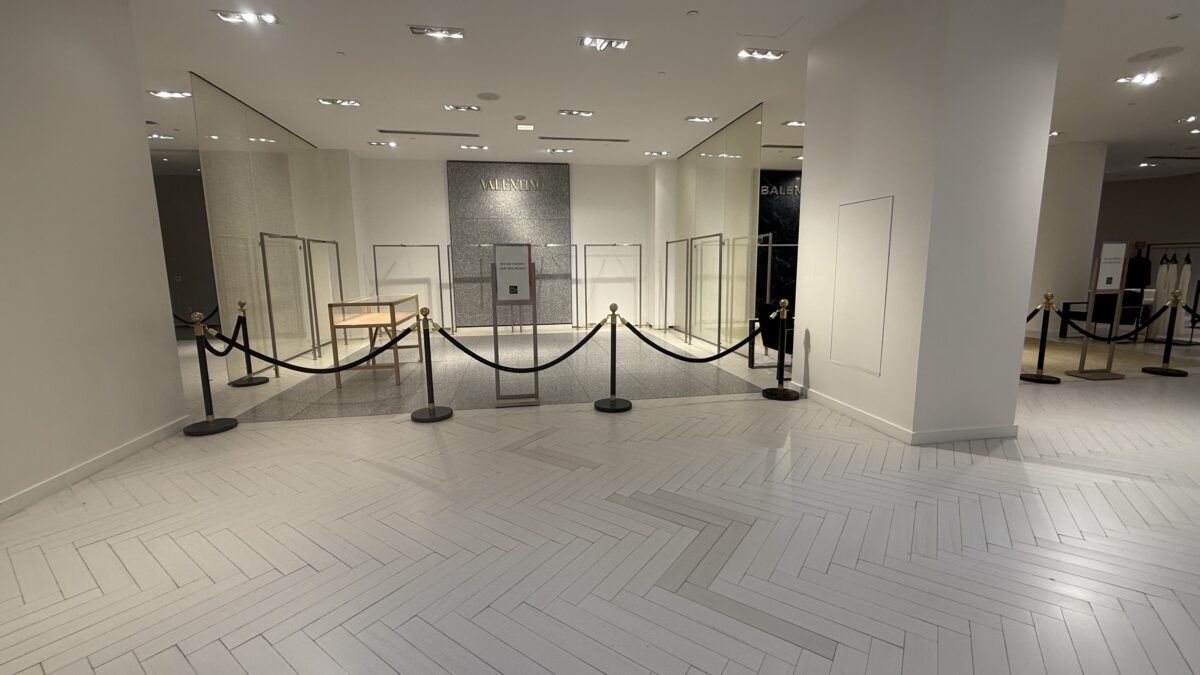
An overlooked aspect of the restructuring is the fate of Saks Fifth Avenue stores in Canada. The three full-line Saks locations, along with 13 Saks Off 5th stores, are operated under a licensing agreement rather than direct ownership. “That means these stores are also at risk,” Winder said. “If HBC liquidates, it could spell the end for Saks in Canada.”
Saks Fifth Avenue’s Canadian stores are in Toronto and Calgary. A larger store expansion never came to fruition. Saks Off 5th operates stores in BC, Alberta, Manitoba and Ontario.
Vendor Relations and Supply Chain Disruptions
As the retailer navigates CCAA protection, its strained relationships with vendors pose another hurdle. Reports indicate that many suppliers have not been paid, leading to concerns about inventory replenishment. “The only way vendors will ship to them now is if it’s cash up front,” Winder noted. “No one is going to extend credit to a company in bankruptcy.”
Beyond financial risk, some brands may avoid Hudson’s Bay to protect their reputations. “If a retailer is liquidating inventory at 60% or 70% off, that devalues the brand,” Winder explained. “Luxury and premium brands especially don’t want their products sold in a distressed environment.”
Potential Buyers and Restructuring Scenarios
A court hearing scheduled for March 17 will determine the next steps, including whether Hudson’s Bay secures financing or moves toward liquidation. The fate of the retailer now hinges on whether a “white knight” investor—such as Doug Putman, Joe Mimran, or Authentic Brands Group—steps in to salvage the operation.
“Putman has a track record of buying distressed retailers, but would he want the Bay?” Winder questioned. “Mimran and his group have been looking at retail investments, and Authentic Brands Group is known for licensing historic brands. It all depends on the valuation.”
A Possible Future: The Heritage Model
If Hudson’s Bay is to survive, some believe it must pivot dramatically. Winder envisions a smaller, heritage-driven model, akin to brands like Roots or Canada Goose. “They could focus on Canadiana—three-striped blankets, premium outdoor gear, high-quality Canadian-made products,” he suggested. “Target tourists and upper-middle-class consumers, not the mass market.”
Such a shift would require drastic downsizing, potentially reducing the footprint to just seven to ten flagship stores in major Canadian cities, he said. “They’d need to strip down operations, get rid of most locations, and focus on a niche market,” Winder added.
Impact on Shopping Malls and Retail Jobs
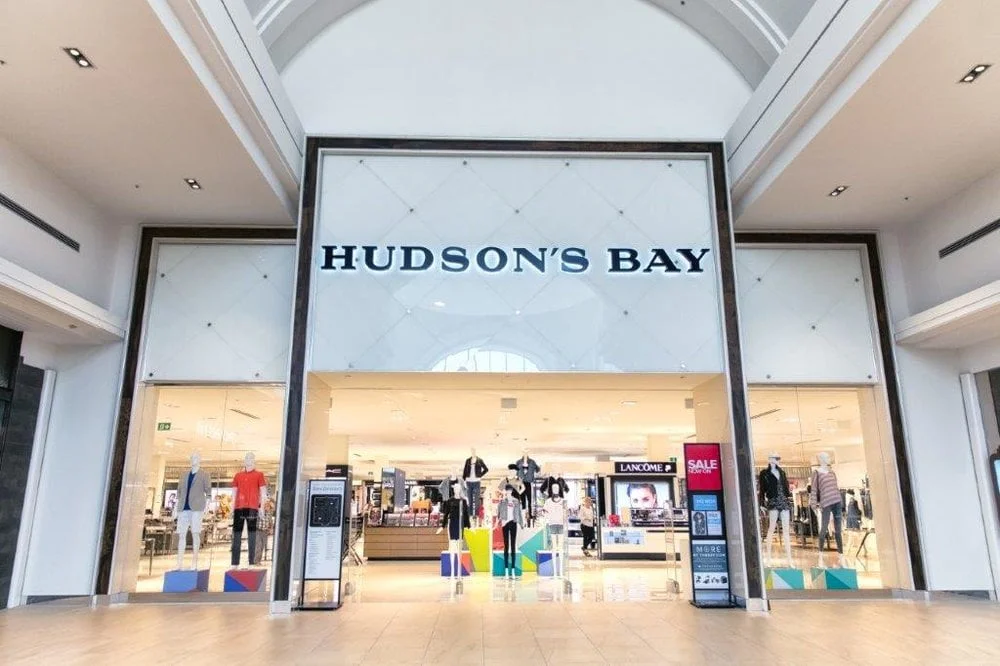
The potential collapse of Hudson’s Bay could leave significant vacancies in Canada’s shopping malls. Many malls were built with department stores as anchor tenants, a model that is rapidly becoming obsolete. “The department store era is over,” Winder declared. “Outside of La Maison Simons and maybe Holt Renfrew, the days of department stores anchoring malls are done.”
Additionally, mass closures would result in thousands of job losses. “It’s devastating for employees, especially those who have been with the company for decades,” Winder said. “And what happens to their pensions? Remember what happened with Sears?”
Gift Card Holders Face Uncertainty
Another looming issue is the fate of outstanding gift cards. Reports suggest that consumers hold millions of dollars in unused Hudson’s Bay gift cards. If the company undergoes liquidation, these could become worthless overnight.
“It’s a massive number,” Winder said. “If I were a consumer, I’d be using my gift card right now. However, a mass redemption of gift cards could further strain the company’s finances, accelerating its cash flow crisis.”
The End of an Era?
With its 355-year history and deep ties to Canada’s retail landscape, the possible demise of Hudson’s Bay would mark a significant shift in the industry. “It would leave a massive hole in Canadian retail,” Winder said. “And in a time of economic uncertainty, it would feel like a gut punch to see an institution like this disappear.”
While restructuring efforts continue, the clock is ticking. Without new financing or a strategic acquisition, Hudson’s Bay may soon join the list of once-dominant retailers that failed to adapt to a changing market. For now, the fate of Canada’s most storied department store remains uncertain.












It may be worth noting that Zellers seems to have vanished from the web… again. All of the Anko merchandise is tagged clearance and the Zellers tab isn’t displayed on the main thebay.com website anymore.
Thank you for the heads up re: Zellers — this is not a good sign for the future of that brand.
Zellers signage had been removed this weekend from the store here in Waterloo.
It’s been missing for months, think at least 6 months. All merchandise was merged with The Bay products and most of the Anko went on clearance. Also some stores in Ottawa had the items merged with the rest of the merchandise on the floor.
The store in Orleans also had a revamp back in the fall, and almost half the 2nd floor became clearance clothing, where the racks mimic what the last remaining Zellers looked like that HBC left the signage on to act as Clearance centers for The Bay merchandise
You beat me to it. I am dumbfounded to this day they were trying to bring back Zellers. Great for the nostalgia. However, they sold merchandise that was not sold in any Zellers store back in the day. They could’ve had the upper level of the department store an upscale Bay model and the lower level a full Zellers Department store.
They needed to refresh and update most of their department stores… well, except for Yorkdale maybe a few others. The rest were outdated and looked and smelled terrible. Instead of keeping all 80 plus locations they could have kept 10 of their best and again, used the funds to update and restore the brand.
These people have no common sense. They just seen what they wanted to do, never really knew what customers wanted or would like to see. Sad.
I hope Hudson’s Bay can survive. It’s survived 2 world wars, the Great Depression, countless economic downturns. It’s truly part of Canada, and once that is gone. It’s gone. The history dies with the brand and a part of Canada goes with it.
Even if they came out the other side with 15-20 stores they could redo their strategy and focus on being a retailer to Canadians, for Canadians. Have a feeling the American ownership wants it shut down and doesn’t care, they never reinvested into the store or online stores. Just drained the capital out of this iconic Canadian brand. They took Zellers from us and now The Bay. Sad to see as HBC was once the largest retailer in Canada
There are about 855 Anko branded items still available on theBay.com for now.
Doesn’t Authentic Brands Group supply about a quarter of all the national brand merchandise sold by Hudson’s Bay?
In addition to gift cards, their Rewards program has also conveniently been down for more than two weeks, which leaves millions of dollars more in limbo; Customers can’t redeem points for merchandise. I’ve been collecting for years, and have a substantial amount of points (and dollars) collected; If they go into liquidation and discontinue the program, I’m hooped.
Lesson learn: Don’t hoard loyalty points.