On a year-over-year basis, gasoline prices fell less in September (-4.1%) compared with August (-12.7%) due to a base-year effect, leading to an acceleration in headline inflation. Excluding gasoline, the CPI rose 2.6% in September, after increasing 2.4% in August, said the federal agency.
A slower year-over-year decline in prices for travel tours (-1.3%) and a larger increase in prices for food purchased from stores (+4.0%) also contributed to the upward pressure in the all-items CPI in September. The CPI rose 0.1% month over month in September. On a seasonally adjusted monthly basis, the CPI was up 0.4%, explained Statistics Canada.
“Prices for gasoline fell 4.1% year over year in September after a 12.7% decrease in August. The smaller year-over-year decline was largely due to a base-year effect. In September 2024, prices fell 7.1% month over month due, in part, to lower crude oil prices amid growing concerns of weaker economic growth, particularly in China and the United States. In September 2025, gasoline prices rose 1.9% on a monthly basis following refinery disruptions and maintenance in the United States and Canada, which put upward pressure on prices,” noted the report.
“On a year-over-year basis, prices for travel tours fell 1.3% in September following a 9.3% decline in August. Despite typically declining on a month-over-month basis in September, travel tour prices rose 4.6% in the month. This was a result of higher prices for destinations in Europe and some parts of the United States, as major events in destination cities put upward pressure on hotel prices.
Consumers paid 4.0% more year over year for food purchased from stores in September, following a 3.5% increase in August. Faster price growth was driven by increased prices for fresh vegetables (+1.9% in September, compared with -2.0% in August) and sugar and confectionery (+9.2% in September, compared with +5.8% in August).
Photo: Mike Jones
“Year-over-year grocery price inflation has generally trended upward since its most recent low in April 2024 (+1.4%). Grocery items contributing to the general acceleration included fresh or frozen beef and coffee, both due, in part, to lower supply.”
Following a year-over-year increase of 1.7% in August, the clothing and footwear index rose 0.8% in September. This slower growth helped moderate the acceleration in the all-items CPI. The downward pressure was driven by slower growth in clothing prices, partially offset by a smaller decline in footwear prices. On a month-over-month basis, clothing prices fell 0.3% in September. This was the first month-over-month decline in September since 1998, added Statistics Canada.
Andrew Grantham
Andrew Grantham, Senior Economist, CIBC Capital Markets, said headline CPI accelerated by more than anticipated in September, but core measures of inflation were just subdued enough to support a further 25bp cut from the Bank of Canada next week, particularly given evidence of a sluggish recovery in GDP and weak business sentiment.
Douglas Porter
Douglas Porter, Chief Economist, BMO Capital Markets, said: “We were all braced for a pop in headline to back above 2% on gasoline prices alone, but unfortunately food inflation got hungrier as well, with a few other elements of core also nudging into the picture. Suffice it to say this will make the Bank of Canada’s decision a bit more interesting next week than previously expected—markets had been all but baking in a rate cut after Governor Macklem’s dovish remarks and yesterday’s soft Business Outlook Survey. Absolutely full disclosure: We have been on the dovish side of the ledger, calling for the Bank to eventually cut the overnight rate to 2.0% (and possibly lower if trade gets uglier), but were not convinced that October would see another cut. Given today’s setback for core, we’ll stay there for now. The biggest counterpoint, as noted above, is that some key measures of core are still fully consistent with the Bank’s view that underlying inflation is around 2.5%.”
Andrew Hencic, Director & Senior Economist, TD, said: “Underlying inflation appears to have firmed up in the past two months, but it remains within the Bank of Canada’s target range. One hotter-than-expected month does not a new trend make, but it is worth monitoring whether the strength in price pressures is indicative of ongoing consumer resilience.
“The Bank of Canada should still have room to deliver another cut. The economic outlook is fraught with risks, and the elevated unemployment rate reflects an economy with ample slack – something yesterday’s Business Outlook Survey reinforced. Markets seem to agree, pricing the odds for an October cut at 69%, just a smidge lower than the 77% pre-release.”
In June of this year, a new kind of wellness destination opened across from Vancouver’s English Bay Beach. AetherHaus Vancouver introduces a reimagined approach to sauna and cold plunge culture, offering experiences designed to restore presence and connection rather than promote performance. Founded by Vancouver hospitality entrepreneur Kevin Frank, AetherHaus blends ancient European traditions with a sense of warm inclusivity rarely found in modern wellness spaces.
Positioned in one of Vancouver’s most vibrant neighbourhoods, AetherHaus stands as a sanctuary from the city’s high-intensity fitness culture. Its ethos is simple yet profound: wellness without pretension. Guests are invited to “show up as they are,” embracing a slower rhythm that prioritizes stillness and authentic connection.
“We created AetherHaus to welcome everyone, not just the hyper health-conscious,” explains Frank. “This is a space for people to simply show up as they are and experience the power of stillness.”
Left-to-right: General Manager Mika McCann, Founder Kevin Frank, and Program Director Dave Gu. Photo: AetherHaus
AetherHaus draws its inspiration from German Aufguss, a sauna ritual where aromatic steam is circulated to enhance heat and scent, and Russian Banya, known for its communal, social environment. Both traditions emphasize physical rejuvenation and shared experience, qualities that AetherHaus has adapted to suit Vancouver’s diverse and curious wellness community.
“The Aufguss format is one of our most popular sessions,” says Frank. “It originated in the early eighties with a lot of heat, a lot of steam, and towel fanning. It’s a unique offering that feels both ancient and fresh at the same time.”
The studio’s name also reflects this blend of elements. “In Greek mythology, Aether was the pure air the gods breathed,” Frank explains. “And Haus, the German word for house, evokes warmth, comfort, and belonging. Together, they represent a home for the elements and for connection.”
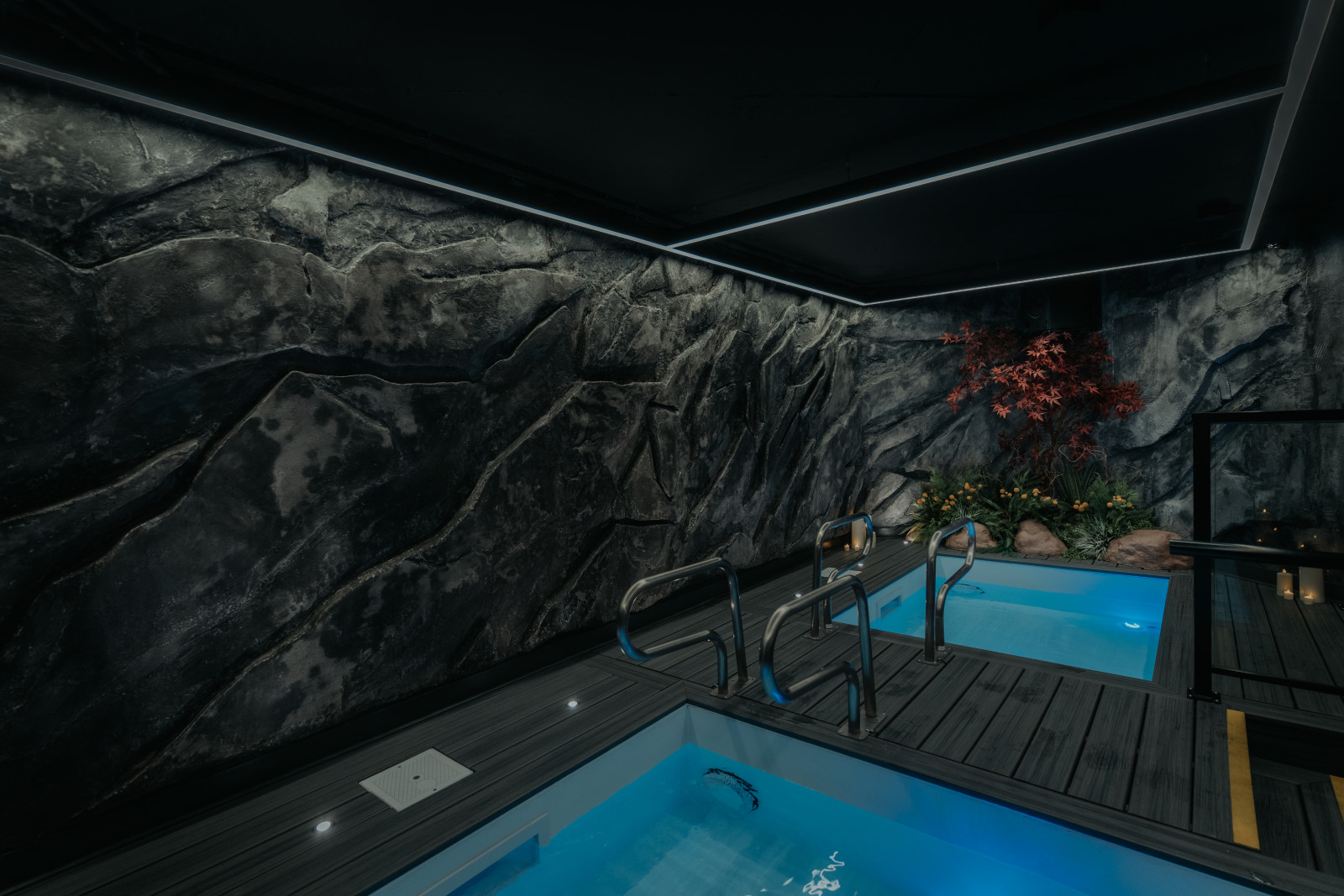
Cold plunge at AetherHaus in Vancouver. Photo: AetherHaus
Designed for Presence, Not Performance
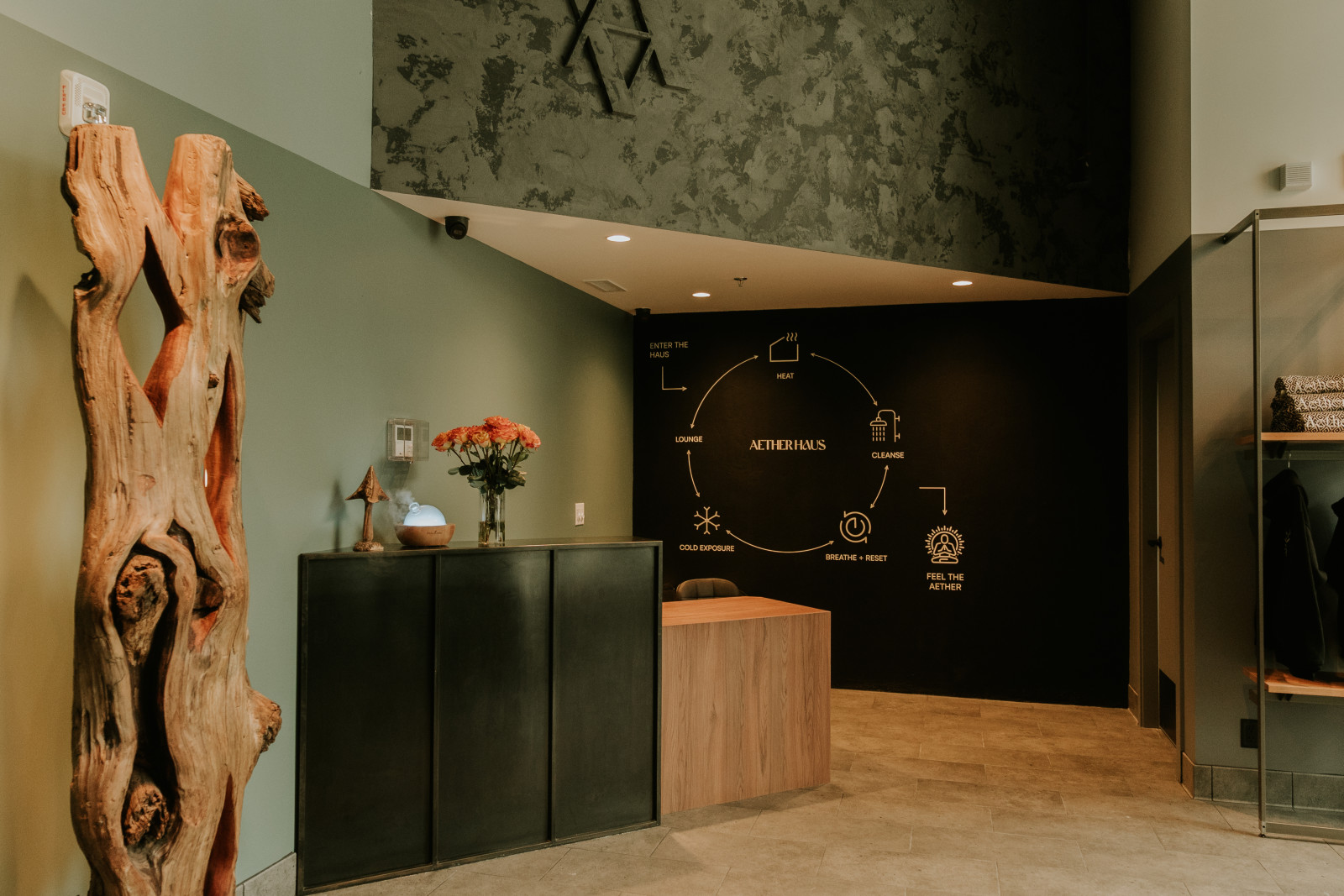
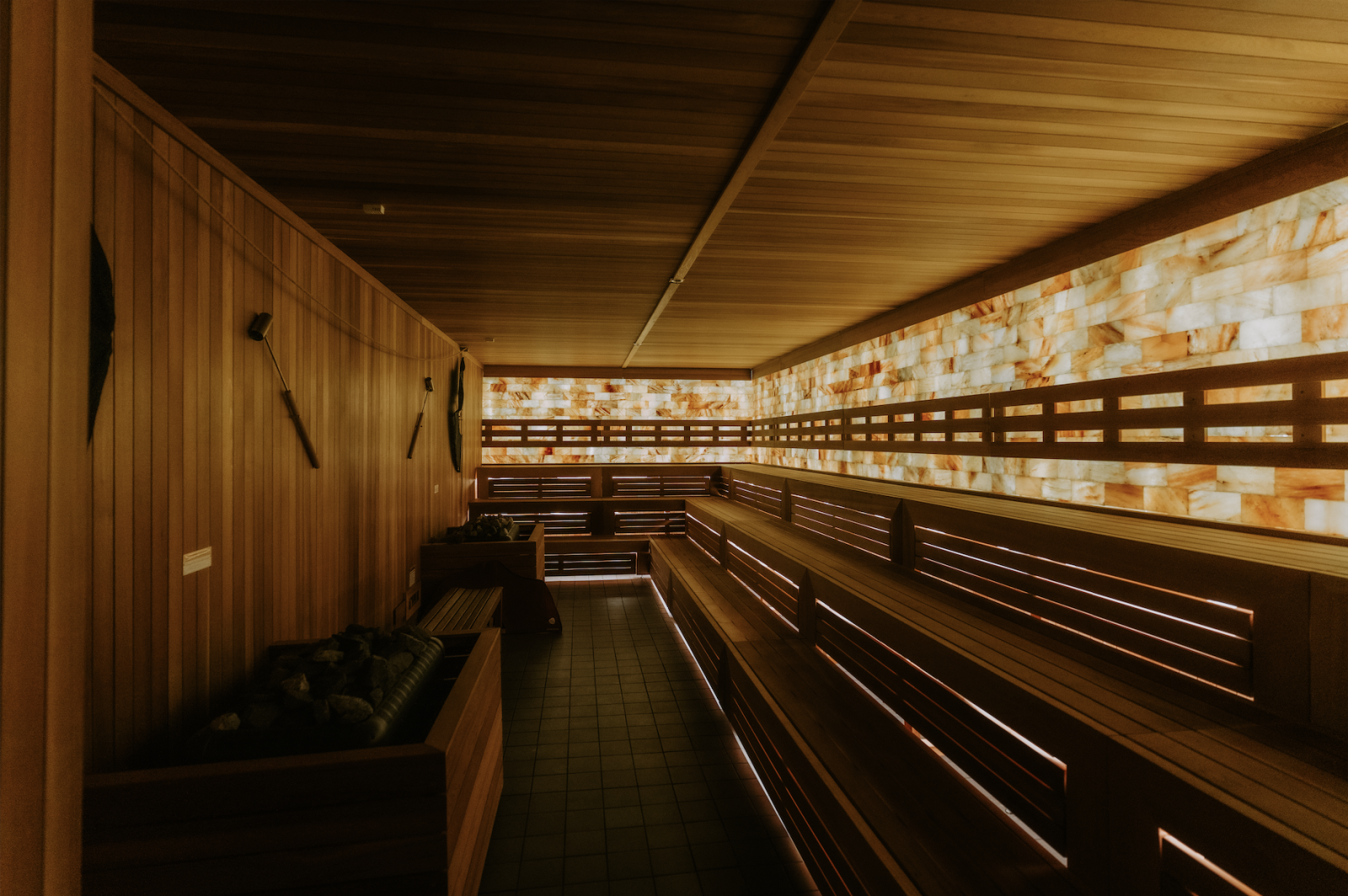
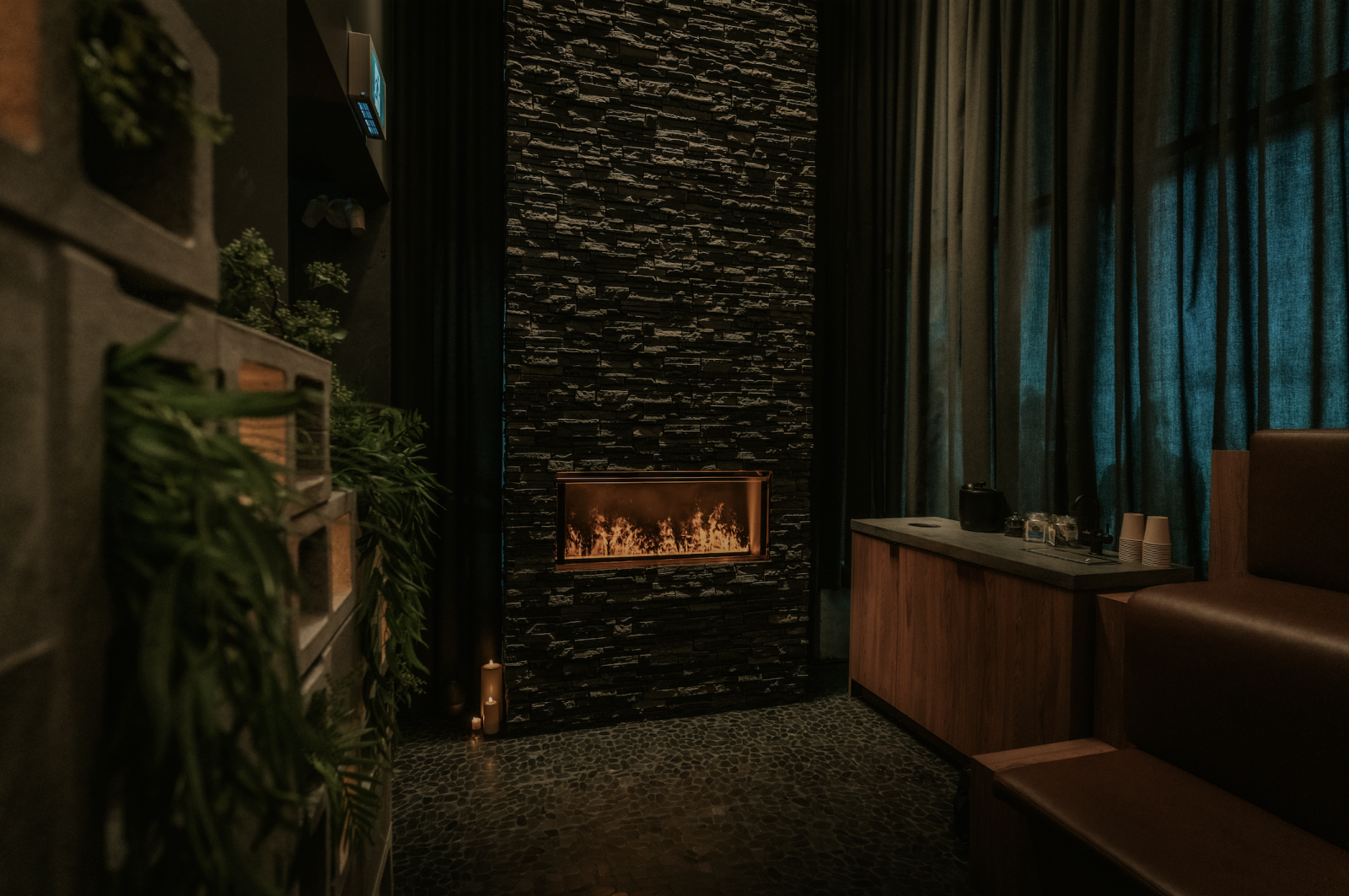
Inside AetherHaus Vancouver, every detail encourages calm and reflection. Guests are asked to leave their phones behind to help maintain a focus on the moment. The design features a Himalayan salt block sauna, communal cold plunge pools, a tranquil tea lounge, and dark, ambient lighting that replaces the harsh brightness found in typical spas.
“The goal here isn’t to push or perform,” adds Dave Gu, AetherHaus’s Program Director. “It’s to allow people to be with themselves in whatever state they need—calm, clarity, or introspection. We’re here to guide, not dictate.”
Unlike most Western sauna facilities that use timers or rigid cycles, AetherHaus encourages guests to tune into their own body’s rhythm. “In Scandinavia, there are no timers,” Frank says. “We’ve intentionally removed that element because it takes away from the experience. Instead, we want you to go within—listen to your body and leave when it feels right.”
The Experiences: From Sound Journeys to Cold Immersion
AetherHaus offers a series of 90-minute semi-guided and open-format sessions designed to suit a variety of moods and needs. Guests can choose from classes such as Haus Classic, Sound Journey, Breath and Sound, Yin Stretch, The Cold Enthusiast, The Pause, The Release, and The Space Within. Each session integrates sensory and meditative elements, including live music and breathwork, to help participants reset.
For those seeking flexibility, Open Haus sessions allow guests to move freely between the sauna, plunge pools, and tea lounge. Guides circulate aromatic steam infused with organic flowers or tree essences, enriching the multisensory experience.
Frank notes that many visitors have quickly found their own rhythm. “Some guests come for recovery after a workout, others for relaxation or reflection. What’s beautiful is how everyone connects through the shared experience, even in silence.”
Sauna at AetherHaus in Vancouver. Photo: AetherHaus
A Cold Plunge Revolution in Vancouver
Cold exposure is a core pillar of the AetherHaus philosophy. The studio’s communal cold plunge pools are the first of their kind in Vancouver, accommodating both group and individual immersion experiences. Temperatures vary to suit beginners and experienced plungers alike.
AetherHaus’s cold program is led by Gu and Jon West, both trained in the Wim Hof Method, which combines breathwork and cold immersion to enhance physical and mental resilience. The pair have also trained the studio’s guide team to provide safe, informed instruction.
“Cold exposure has incredible circulatory and mental health benefits,” Frank says. “It’s not about endurance, it’s about awareness. You learn to work with your breath and body, rather than against them.”
He adds that results often come quickly. “Even after a couple of days, people notice their tolerance building. The benefits vary. Some find it helps with inflammation, others with mental clarity. We hear stories from athletes and people with arthritis saying it’s made a real difference.”
AetherHaus in Vancouver. Photo: AetherHaus
Vancouver’s First Fully Compliant Communal Cold Plunge
In creating AetherHaus, Frank and his team worked closely with City of Vancouver and Coastal Health authorities to meet the highest public health and safety standards. The studio is the first in the city purpose-built to comply fully with regulations governing communal cold plunge facilities, setting a precedent for hygiene and operational integrity.
“Every detail, from the water quality to the filtration systems, was designed with safety in mind,” Frank notes. “Guests can immerse themselves completely, knowing that everything meets or exceeds public health standards.”
The design of the plunge area itself reflects the studio’s aesthetic philosophy. “We call it the Ice Cave,” says Frank. “It’s a rock-walled space that feels almost elemental, a contrast to the heat of the Himalayan salt sauna.”
AetherHaus in Vancouver. Photo: AetherHaus
Building Community at English Bay
The 3,100-square-foot studio sits just steps from the English Bay shoreline, a location chosen both for its natural beauty and its strong sense of community. “English Bay felt like the right fit,” says Frank. “It’s a dense, walkable neighborhood where people already engage with the outdoors including the Polar Bear Swim, the beach, the seawall. It made sense to build something that complements that lifestyle.”
The space quickly became a point of local curiosity during construction. “Our hoarding was up for more than a year while we worked through permitting,” Frank recalls. “We had constant emails from people asking when we were opening. Locals were excited to see something new coming to the neighborhood.”
Since opening, AetherHaus has seen strong local engagement. “Many residents signed up for founding memberships before even stepping inside,” says Frank. “We’ve had a wonderful response from the community.”
Hospitality at Its Core
AetherHaus’s success is grounded in hospitality, a reflection of Frank’s own professional roots. Every guest interaction is handled with care, and much of the praise the studio has received centers around its people.
“We get so many comments about how friendly and helpful our staff are,” Frank says proudly. “It’s the most rewarding part.”
Program Director Gu personally selected every member of the team through his own wellness network. “We didn’t even have to post a job ad,” Frank shares. “Dave handpicked everyone who works here, and that sense of purpose shows up in how guests are treated.”
The result is an atmosphere that feels deeply human. The tea lounge offers complimentary loose-leaf teas for reflection between sauna and plunge sessions, encouraging conversation or quiet contemplation. The entire design encourages community and calm rather than speed or competition.
AetherHaus in Vancouver. Photo: AetherHaus
Setting the Tone for the Future of Wellness
While AetherHaus Vancouver is the first location, Frank envisions more studios over time. “In the near future, I’d love to open a second location in Vancouver,” he says. “Eventually, maybe Whistler or the Okanagan. I could see two or three locations over the next five years.”
Each would stay true to the brand’s intentional design principles. “Our 3,100-square-foot English Bay location works really well, but future spaces could be a bit larger,” he adds. “It’s hard to find big spaces in downtown Vancouver, but there’s room to grow.”
For Frank, the goal isn’t rapid expansion but thoughtful evolution. “We’re not trying to chase trends. We’re building something with meaning, something that can genuinely make people’s lives better.”
Canadian retail has adapted to constant change, from accelerated e-commerce adoption to supply disruptions and stubborn inflation. Yet the holiday season continues to grow. Last year’s Black Friday set a record with a seven percent year-over-year lift, a sign that consumer demand persists even as shoppers work harder to find value, confidence and convenience in every purchase. Google frames that trio as a “new value equation,” and it sits at the center of what the company calls Canada’s first AI-powered holiday season.
Eric Morris, Managing Director of Retail at Google Canada, told reporters that change has become retail’s constant. “Every year it feels like things are changing, and the change actually is a constant for retail here in Canada,” he said. He noted that while retailers head into Q4 with uncertainty, “every single year, retail is a growth industry in Canada,” which is why winning the weeks before, during and after the peak days matters so much. He added that the biggest shopping day is often a few days before Christmas, not the headline-grabbing tentpoles.
Morris also pointed to bifurcated demand signals. Searches for value players are up, while luxury brand searches also rise. “It’s not that all Canadians are looking for value or all are looking to splurge,” he said. “It depends on where households are at and what they are buying in that moment.”
Eric Morris
Inside the data: research-heavy journeys and AI in the cart
New Google-commissioned research with Ipsos and Angus Reid shows how intensely researched the season has become in Canada. Eighty-seven percent of Canadians are thinking about or shopping for someone else during the holidays, which makes decisions more complex. On average, Canadians shop 3.6 categories over any two-day period in season, rising to 4.1 categories for Gen Z. Nearly two-thirds of Gen Z use 10 or more resources for their holiday shopping. Seventy-three percent of all purchases last season were researched first, and almost half of purchases happened after at least a week of consideration.
Most notably, 43% of Canadian holiday shoppers plan to use AI tools to research and decide their purchases this year. Google argues that this makes 2025 the first AI-powered holiday season for the Canadian market.
Alyza Keshavjee, Google Canada’s Head of Consumer Insights, called AI “an indispensable tool” across the entire funnel. “Forty-three percent of Canadians plan to use AI for their shopping, making this Canada’s first truly AI powered holiday,” she said. She described the emerging “AI Shopper” as digitally native, often Gen Z and millennial, and on average higher income, a cohort that “retailers need to pay attention to as they drive growth and set future trends.”
Alyza Keshavjee
The research breaks down where Canadians expect AI to help. About 31 percent say AI is useful for discovery and short-listing options. Forty-one percent expect to use it to compare features, prices and deals, with nearly a quarter turning to AI to validate reviews and choices. Nineteen percent see AI helping post-purchase with setup and installation.
Keshavjee also highlighted stress and budget relief. A majority of Canadians who plan to use AI say it can reduce last-minute shopping stress, and one in four believe AI can help find gifts on a tight budget.
Categories where AI confidence is highest
Canadians are most comfortable taking AI recommendations in big-ticket, spec-heavy categories where choice overload is common. Consumer electronics and smartphones lead, followed by home appliances. Confidence remains strong in furniture and home décor, apparel and footwear, beauty and personal care, and even food and groceries.
That pattern tracks with how shoppers describe their pain points. When features, formats and SKUs proliferate, AI’s ability to summarize, compare and tailor becomes an advantage. It clarifies trade-offs, flags deals and availability, and points to reviews that matter. In Google’s language, AI is becoming a “shopping companion” that reduces cognitive load from first inspiration to post-purchase support.
What Google is launching: virtual try-on expands to Canada
Alongside the research, Google is rolling out an AI-based virtual try-on feature for apparel and shoes that connects personal photos with real product listings. Danielle Buckley, Product Management Director for Google Shopping, explained that the experience draws on Google’s Shopping Graph, which the company describes as the world’s most comprehensive set of products and retailers, frequently refreshed with billions of updates per hour.
Danielle Buckley
“People shop on Google more than a billion times a day,” Buckley said, noting that AI underpins shopping on Search, the Shopping tab, Lens and Maps. She called out adoption of visual search, where Google says there are over 25 billion Lens queries per month, and one in four has commercial intent. “Snapping a photo of a product or circling it on a phone is now a direct doorway to commerce.”
Try-on is designed to increase confidence and add some fun back into online browsing. A shopper taps a product listing, hits Try it on, uploads a full-length photo, and the system generates an image showing what that garment might look like on them. “We built a custom image generation model just for fashion,” Buckley said. “It understands both the human body and nuances of clothing, how different materials fold, stretch and drape on different bodies.” She emphasized identity preservation, including face, body proportions and skin tone, and the garment’s visual accuracy across poses.
Buckley said early users report higher enjoyment, and they are sharing try-on images more than standard product listings, which fuels social-style shopping loops. She also confirmed that the feature is expanding internationally, including to Canada, with shoes rolling out alongside tops, bottoms and dresses.
For merchants, Buckley stressed accessibility. “There’s no special thing you need to do to light that up, aside from making sure we’re getting high quality imagery of your products,” she said. If brands prefer to opt out, they can do so in Merchant Center or via support. The company does not currently share try-on specific usage data back to merchants, although standard listing metrics remain available in Merchant Center.
The retailer playbook: five moves to make now
Google crystallizes its guidance into five actions that align with how Canadians now shop and how AI surfaces products and content. First, retailers should set explicit business goals for the season, whether revenue, profitability, sell-through, new-to-brand or market share, and then match tools and tactics to those goals.
Second, they should engage early and stay present across the season’s curve, not just on Black Friday and Cyber Monday. Third, they should make the online-to-in-store journey seamless, with accurate store hours, location details, inventory, delivery timelines and returns. Fourth, they should improve product content for AI discovery, with rich descriptions, structured data and strong imagery so AI can parse and present it. Fifth, they should connect with shoppers through video on YouTube, including creator partnerships that build product confidence.
Morris put a finer point on the third and fourth items. “If you have stores, make sure Canadians can find your stores, that your business listings are accurate, your reviews are present, your hours are accurate,” he said. He added that the more high-quality product data retailers share, the more likely AI tools are to surface those products when consumers are looking.
Why adoption matters now
In a group interview, Morris was asked whether retailers will fall behind fast-moving competitors if they do not adopt AI. Morris argued that AI can narrow capability gaps in both directions. Large domestic chains can close distance with global platforms, while small and medium-sized retailers can close gaps with national incumbents. “AI can just do it more quickly and more efficiently, and again close the gap with competitors,” he said.
Buckley added that many AI features ride on feeds and assets merchants already provide. If a retailer is present in the Shopping Graph with complete, high-quality data, its offers are eligible to appear in AI-enhanced experiences without bespoke integration. That practicality matters heading into the season. With shoppers researching earlier and longer, retailers that clean up feeds, titles, attributes and imagery now will show up more consistently when it counts.
Stress, budgets and the human side of holiday shopping
Keshavjee said shoppers view AI as a pressure valve. “A significant majority who plan to use AI agree that it can help reduce last-minute shopping stress,” she said, pointing to the fast, structured comparisons that AI provides. Budget sensitivity is also top of mind. “We already see that twenty-five percent of consumers think AI will help them find gifts on a tight budget.”
She illustrated the point with a personal example. Preparing for a Halloween party, she asked Gemini for décor ideas, then used AI to compare options, check prices and watch setup videos. “AI truly was my shopping companion through that journey,” she said. The story mirrors the research showing that Canadians want help discovering ideas, narrowing choices, validating reviews and completing setup, not just finding a product page.
The stakes across the full calendar, not just peak days
Morris reminded retailers that winning the season is a marathon. The weeks before Black Friday, the Cyber period, and the stretch to Christmas all matter, especially because Canadians keep shopping at elevated levels well after Cyber Monday. That means measurement and agility are important. Clear goals and an instrumentation plan make it easier to shift budgets toward what is working in real time, whether that is leaner creative focused on deal-seeking queries or richer video content that builds product confidence.
The data supports this full-season posture. With 73 percent of purchases researched in advance and nearly half made after a week or more, there are many touchpoints where an offer, review, product video or inventory signal can influence the outcome. Retailers who are visible, consistent and accurate at each step will convert more of that research into sales.
How to prepare content for AI discovery
Google’s advice to “improve product content for AI discovery” is pragmatic. Retailers should ensure that titles, attributes and bullet-level details in product feeds mirror how Canadians actually search. Imagery should be clear, consistent and diverse enough to answer common questions about fit, finish and scale. On-site product pages should include original descriptions and helpful context that AI models can parse and summarize. For physical stores, Business Profiles should be complete and regularly maintained. When those foundations are in place, AI-driven surfaces have more to work with, which raises relevancy and reduces mis-matches.
Buckley underscored that high-quality imagery does more than convert on a product page. It can unlock emerging experiences like try-on, where accurate drape, fit and colour reproduction are essential. She said the team prioritized identity preservation and garment realism because shopper trust depends on both. If brands are not ready or comfortable, opt-out is available, but the direction of travel is clear. Visual and social shopping are blending, and shoppers want to see products on real bodies before they buy.
The bottom line for Canadian retail
The data is unambiguous. Canadians research more, take longer to decide, and now plan to use AI at meaningful scale during the holidays. For retailers, the opportunity is not simply to “add AI,” but to meet shoppers where AI is helping them most. That means enabling better discovery, streamlining comparisons, building product confidence with rich media and reviews, smoothing the handoff to stores and delivery, and reducing stress with clear timelines and returns.
This is why Google calls 2025 Canada’s first AI-powered holiday season. It is not the first year AI appeared in marketing stacks, but it is the first where a broad share of Canadians expects AI to guide their shopping. Retailers that prepare their data, content and store networks for that reality will be easier to find and trust, online and in person.
Chef Tushar Tondvalkar has opened his first restaurant, Kavita, in Vancouver’s Mount Pleasant neighbourhood. The concept is described as a tribute to his Mumbai roots and coastal upbringing in Malvan, expressed through two seasonally changing menus.
Named after his mother, Kavita also means “poetry” in Marathi. The 46-seat restaurant will offer an à la carte menu based on India’s festival calendar, as well as amma-kase, a tasting menu inspired by the nurturing spirit of mothers.
Tushar Tondvalkar
“I’m excited to finally bring my dream restaurant into reality with Kavita and introduce Canadians to my interpretation of regional Indian cuisine,” said Tondvalkar.
“One of my earliest memories of food are of busy Mumbai streets, when they came alive with the sounds of metal ladles, bursts of chilli oil and fire, and the scent of frying and fermenting. I learned that food could be loud and generous, just like the city itself.”
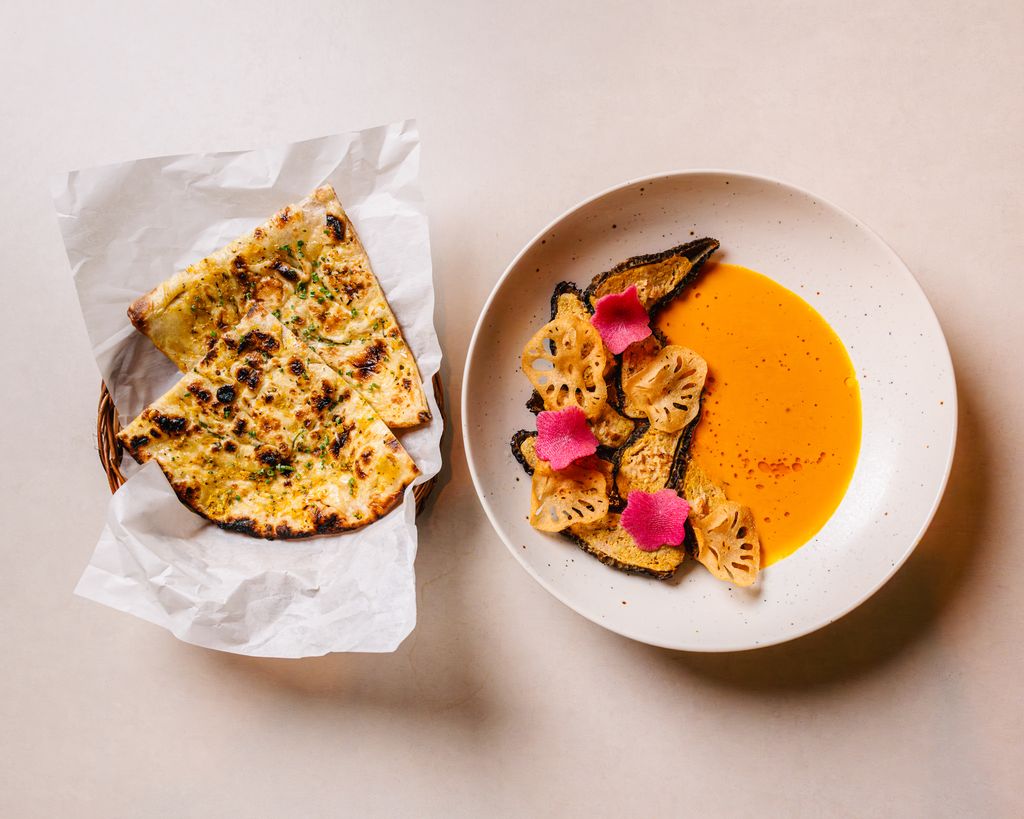
The à la carte menu will evolve with Indian festivals such as Holi, Diwali, Onam and Eid, featuring ingredients and dishes that reflect the cultural and culinary diversity of the country. Early offerings include a Beef Tartare with podi masala, crispy curry leaf, egg yolk and tapioca crisp, and a Malvani Black Chickpea Stew with caramelized coconut and onion sauce, wade (fried bread), and seasonal vegetables.
The nine-course amma-kase tasting menu, priced at $98 per person before tax and gratuity, will shift with seasonal produce from British Columbia. Launch dishes include Bombay Vada with moth bean stew and beetroot chutney, Geoduck Clam with Malvani masala and kokum, Aged Duck with Kerala-style coconut curry and appam, and Shrikhand with black sesame cake and seasonal fruit.
“I’m honoured to have such a great team joining me on this adventure of opening a new restaurant in Vancouver,” said Tondvalkar. “In Indian culture, the kitchen is the heart of the home. This same spirit guides us as we work together to introduce guests to our contemporary interpretation of Indian cuisine.”
Photo: Kavita
Kavita’s front-of-house operations will be led by general manager Yash Shah, a longtime friend of Tondvalkar and formerly of Autostrada. The beverage program will be overseen by wine director Nikhil Kumar, previously of The Victor, and bar manager Kabir Sehgal, formerly of Chupito.
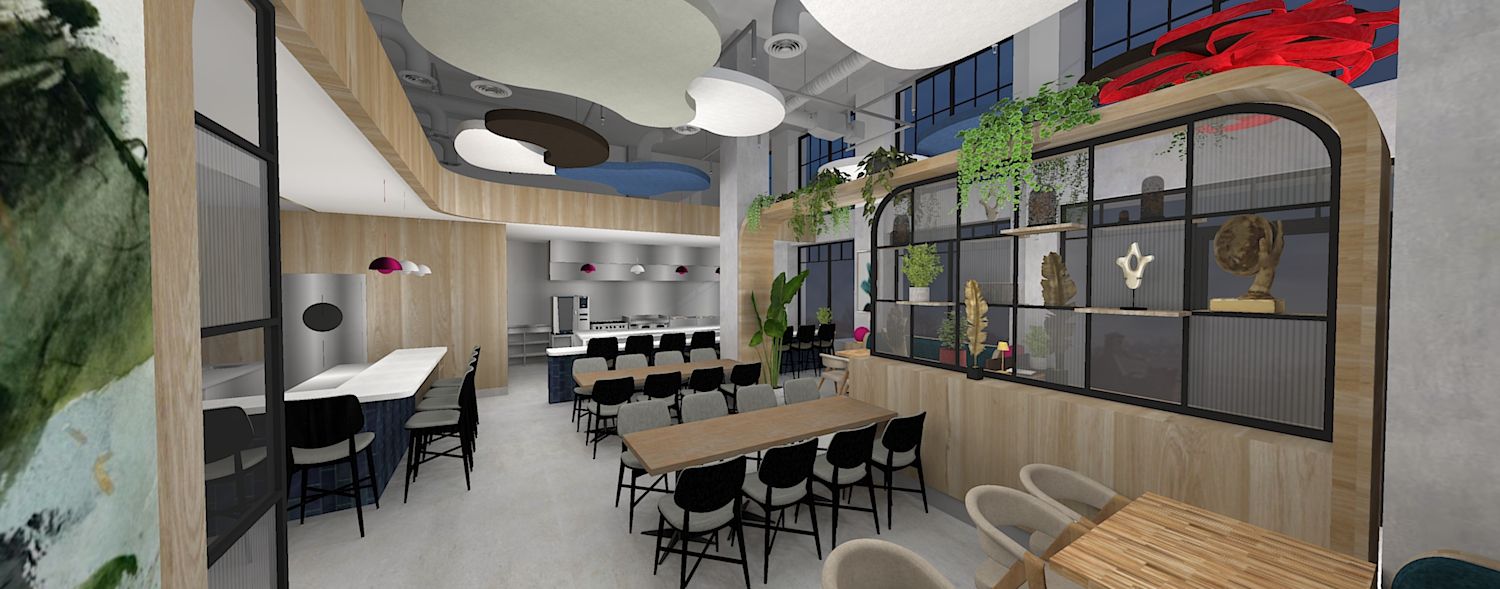
Designed by Janks Design Group Inc., the 1,500-square-foot space includes an open kitchen and a chef’s table seating eight. The interiors combine sustainable materials, handcrafted details and eclectic finishes intended to reflect the restaurant’s modern take on Indian cuisine.
Calgary entrepreneur Shawn Freeman has launched BuyCanadianSoftware.ca — a new online hub that spotlights Canadian-built software across categories like collaboration, cybersecurity, project management, CRM, and more.
The goal: keep data, dollars, and innovation here at home by making it easier than ever to find and adopt local tech solutions.
Why it matters now:
Economic impact: Every dollar spent on Canadian tech supports Canadian jobs and strengthens the national innovation ecosystem.
Privacy & sovereignty: Canadian platforms keep data under Canadian laws and protections.
Resilience: Relying solely on U.S. tools carries risks — from policy shifts to outages. Diversifying builds digital resilience.
Innovation: Canada is home to world-class builders who too often fly under the radar; this hub gives them visibility.
Shawn Freeman
Freeman said he launched buycanadiansoftware.ca to help users discover Canadian-developed alternatives to popular international software tools.
“The idea is to highlight, when people are looking for software, that it’s good to find a company that’s headquartered in Canada,” Freeman said. “Everybody obviously thinks about buying groceries and clothing locally, but they often forget that software is also developed here too.”
Freeman said the platform is a free resource where Canadian tech companies can list their software and identify their U.S. competitors, making it easier for consumers to find local replacements.
“You can go and put it on there—just tell us who your U.S. competitor would be so that folks know if they’re using a certain tool today, what they could get as a replacement that’s Canadian-grown,” he said.
He also pointed to broader economic and policy considerations, including tariffs and the push for increased investment in Canadian technology companies.
“The more that we can support them locally, the better—supporting our local innovation and our economy,” Freeman said. “There’s data sovereignty and privacy concerns as well, depending on the type of software. Sometimes we have better service, and the software is just better.”
Freeman said he believes in rallying behind Canadian businesses but acknowledged the importance of global partnerships where appropriate.
“We should do as much of it as we can,” he said. “Obviously, if there are countries that can do things better in a certain area, then we’ll partner with them and buy their products.”
Photo: MART PRODUCTION
Canada’s tech sector has been growing steadily over the last five to 10 years, Freeman noted, with more companies reaching billion-dollar valuations.
“We’ve had more and more companies get to the billion-dollar status—more unicorns,” he said. “Those are great success stories and they just attract more and more investment into Canada and help new ones get up and running better.”
Despite that growth, Freeman said there is still room to improve.
“I think there’s been a really good push, but we can do more.”
Sofitel Montreal Golden Mile has completed a full renovation of its flagship Canadian property, marking what the hotel’s general manager calls a “defining milestone” for the brand in Canada.
“More than twenty years since first welcoming guests, this transformation marks a defining milestone for Sofitel Montreal Golden Mile,” said Marc Pichot, General Manager of Sofitel Montreal Golden Mile. “It is a bold reimagining of the Sofitel experience in Canada. Every detail reflects our commitment to creating moments of beauty and discovery, while preserving the timeless French elegance and joie de vivre that are at the heart of our brand.”
Marc Pichot
The renovation includes a redesign of the hotel’s lobby, guestrooms, communal areas, meeting spaces, Fitness Centre and its signature restaurant, Renoir. A new cocktail lounge, NINI Salon à Cocktails, has also been introduced.
The five-star hotel is located on Sherbrooke Street in Montreal’s Golden Square Mile, near Mount Royal and the Montreal Museum of Fine Arts. It features 256 guest rooms, including 17 suites, and more than 10,000 square feet of meeting and event space.
Highlights of the renovation include a redesigned lobby with a metallic ribbon wall and sculptural teal light installation, leading to a Living Area and Library furnished with bespoke pieces and suspended artwork inspired by birds in flight.
The NINI Salon à Cocktails and Renoir Restaurant centre around a rosé-toned bar, with the restaurant’s sunroom offering a garden-inspired retreat and the dining room featuring a bronze mirrored ceiling and French design accents.
Guest rooms and suites have been transformed into “art-infused sanctuaries” using soft palettes and jewel-toned accents to create what the hotel describes as a timeless retreat.
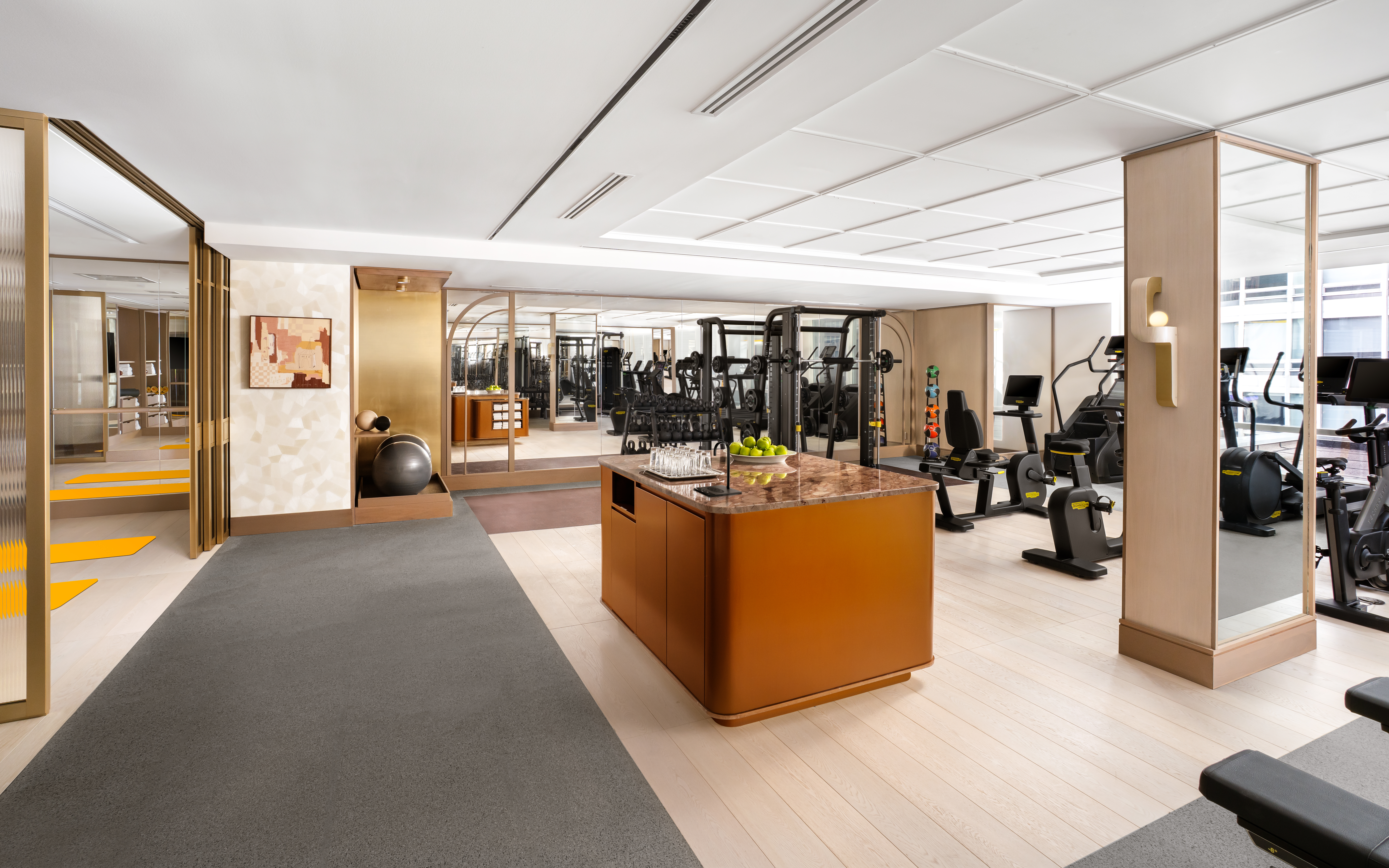
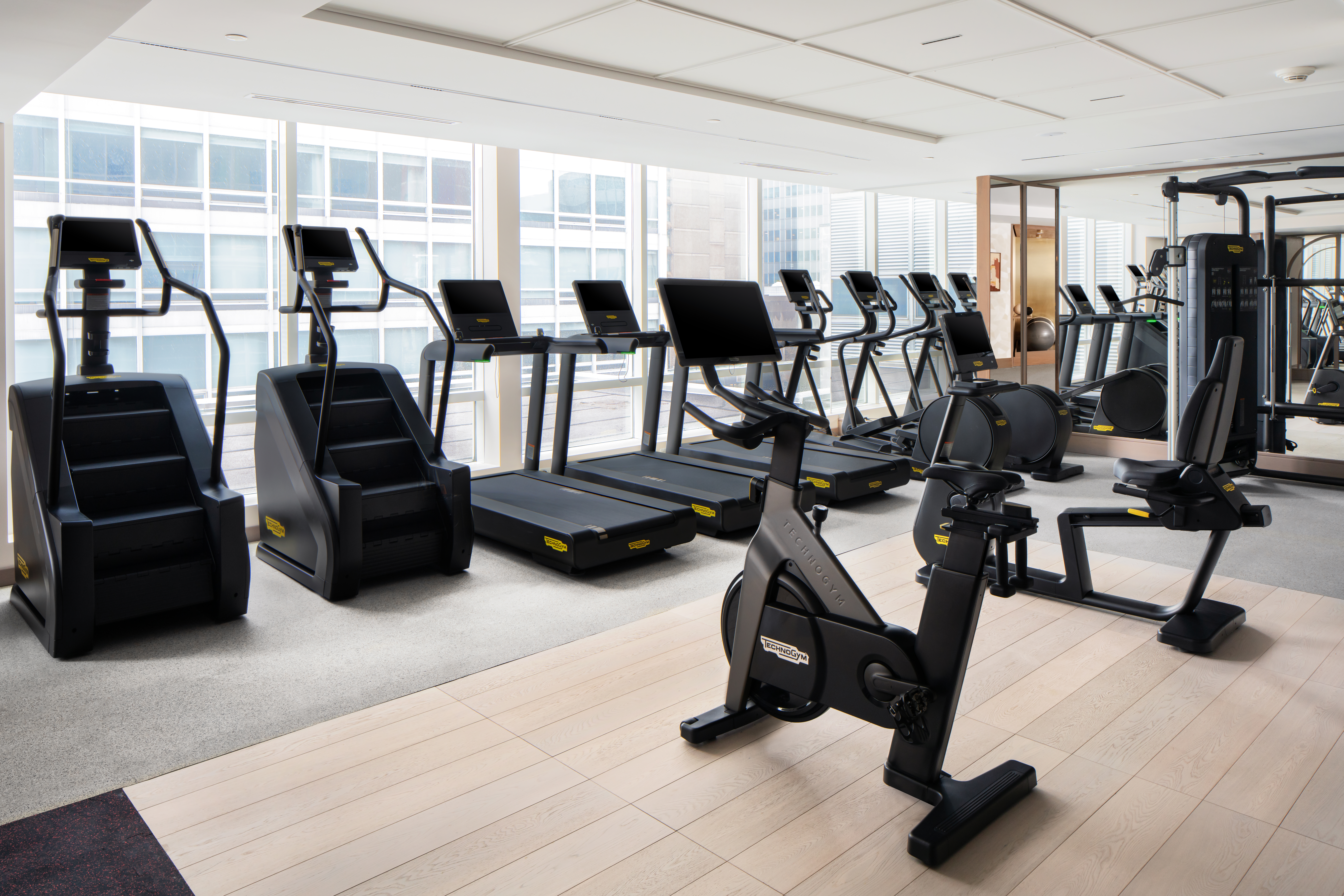
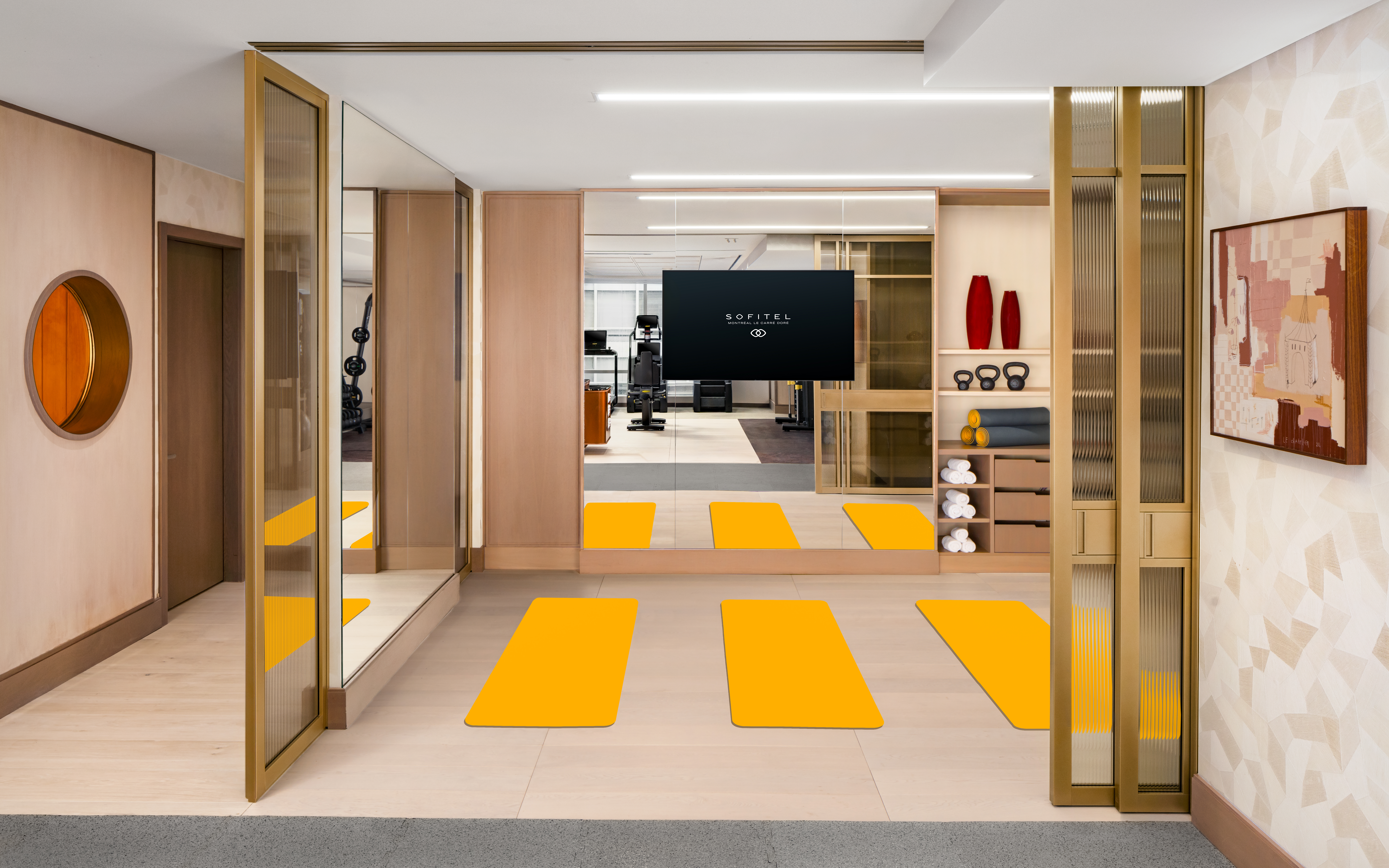
The updated Fitness Centre now includes a yoga room, French mouldings, a copper refreshment station and natural-toned finishes designed to blend into the overall hotel aesthetic.
Photo: Citizen North
Meeting and event spaces, including the Picasso Ballroom and meeting rooms named after French artists such as Monet, Chagall, Matisse and Gauguin, have been refreshed with new carpets and custom furnishings. A stained-glass mosaic by Montreal-Romanian artist Titu Dragutescu and Romanian master glassmaker Nicolae Moldovanu has been relocated from the lobby to the second floor.
The renovation was carried out in collaboration with the design firm 2pir Design. According to the hotel, the redesign draws inspiration from the concept of a Parisian Maison, combining French luxury with modern elements and artistic flourishes.
Photo: Citizen North
“From the striking lobby foyer with sculptural light fixtures to the refined living areas, greenhouse-inspired sunroom, and intimate dining spaces, each corner tells a story of chic sophistication balanced with playful curiosity,” the hotel said in a release.
The redesign marks the first major transformation of a North American Sofitel property in alignment with the brand’s positioning as an ambassador of the French luxury lifestyle.
“Through meticulous planning and a bold creative vision, 2pir Design has reimagined Sofitel Montreal Golden Mile as a sanctuary where tradition meets modernity and the art of French living is celebrated at every turn,” the release stated.
OpenRoad Auto has introduced a new brand identity as it marks 25 years of operations, including an updated name, revised mission and vision statements, and refreshed core values.
The company, formerly known as OpenRoad Auto Group, announced the changes recently as part of a broader initiative to position itself for the future of automotive retail. The rebranding includes a simplified corporate name and a renewed focus on customer experience and community engagement.
Christian Chia
“OpenRoad Auto represents both our origins and our future,” said Christian Chia, CEO of OpenRoad Auto. “Our new identity honours the relationships and trust we’ve built over the past 25 years, while positioning us to grow further as a company.”
The company’s new brand values — humility, integrity, inventiveness, and care — are intended to guide all interactions and decisions across the organization.
According to the company, these values underscore its commitment to doing what is right, remaining curious, and fostering trusted relationships.
“This milestone is about more than a name and logo change,” Chia said. “It’s about defining who we are today and the possibilities we’re creating for the future. It’s also a recommitment to our customers, our employees, and our communities that humility, integrity, inventiveness, and care will always be at the heart of everything we do.”
OpenRoad Auto also unveiled its updated mission and vision statements. Its new mission is to “drive possibilities with trusted relationships and a better automotive experience,” while the revised vision is to “drive possibilities for everyone in our communities.”
Founded in 2000, OpenRoad Auto has grown to become British Columbia’s largest automotive retail group, operating 36 full-service locations, including 29 dealerships and seven collision centres in B.C. and Ontario. Its roots trace back to 1978, when it opened its first location in Richmond, where the company’s head office remains.
Retail Insider is streamlining its Canadian retail news from around the web to include a handful of top news stories that can be viewed quickly during the day. Here are the top stories from the past 24 hours.
Tariffs and trade tensions continue to affect consumers’ spending plans and perceptions about their financial health, according to the Bank of Canada’sCanadian Survey of Consumer Expectations, conducted through an online panel from July 31 to August 21.
Many survey respondents expressed a desire to prioritize spending on Canadian goods and vacations in Canada, said the Bank, adding that the survey took place before the Canadian government announced it would remove some counter-tariffs.
Other key findings:
Consumers saw a further deterioration in the labour market in the third quarter, driven in part by a sharp drop in job-finding prospects for public sector workers.
Consumers continue to think tariffs will generate inflationary pressures. Expectations for short-term inflation remain above their pre-pandemic averages, and expectations for longer-term inflation have picked up again. A large share of survey respondents cited tariffs as the most important factor affecting the Bank of Canada’s ability to control inflation.
Overall, the CSCE indicator—a measure that summarizes Canadian consumers’ opinions about their spending plans, the labour market and their personal finances—rose modestly in the third quarter from its most recent low. Slight improvements in financial health and household spending intentions contributed to this rise, while perceived labour market conditions remained negative.
The Bank’s Business Outlook Survey was conducted by in-person, video and phone interviews from August 7 to September 3, 2025. The large majority of interviews were conducted before the announcement of the removal of certain Canadian counter-tariffs.
Key findings:
Firms’ outlooks and intentions remain subdued despite a gradual improvement in sentiment and a slight easing of perceived uncertainty.
Expectations for growth in domestic and export sales remain soft due to concerns about the broad economic effects of trade tensions.
Few firms reported binding capacity constraints or labour shortages, and most businesses do not expect to increase current staffing levels.
Soft demand and uncertainty related to trade tensions persist in holding back investment intentions, with close to half of firms prioritizing routine maintenance over expansion.
Businesses continue to expect cost increases due to tariffs and trade uncertainty. However, many said that weak demand is limiting their ability to pass these cost increases through to their selling prices.
Firms’ one-year-ahead inflation expectations are below the peak reached earlier in the trade conflict and are now only slightly above late-2024 levels.
Jollibee and global girl group KATSEYE are expanding their partnership with a new exclusive merchandise collection launching Monday and a concert ticket giveaway set to begin later this week.
The second drop in the Jollibee x KATSEYE collaboration became available on October 20 at 9 a.m. PST through the Complex Shop. The limited-edition release includes three apparel items: a cream “Chickenjoy 100% Gnarly” jersey tee, an oversized black hoodie of the same name, and a slate blue “Shared Dream” corduroy bomber jacket, available for pre-order and expected to ship November 11.
Luis Velasco
“From bold fans and flavours to fresh music and fashion, every part of this partnership has been about celebrating joy, connection, and creativity,” said Luis Velasco, Senior Vice-President and Marketing Head at Jollibee North America. “The response from our fans has been incredible, and this second drop and sweepstakes are our way of giving back — and keeping that joyful spirit going.”
Jollibee invites fans to enter the Jollibee X KATSEYE “Beautiful Chaos Tour” Ticket Giveaway Sweepstakes, Oct. 23 – Nov. 9, 2025. For details, visit jollibeefoods.com/KATSEYE.
The giveaway offers the chance to win two tickets to a sold-out KATSEYE concert in one of nine North American cities on the group’s “Beautiful Chaos” tour. Canadian fans will have a chance to win tickets for the Toronto stop, while U.S. cities include New York, Washington, Sugar Land, Irving, Phoenix, San Francisco, Seattle and Los Angeles.
According to Jollibee, the initiative builds on the success of the Jollibee x KATSEYE Korean BBQ menu collaboration launched in mid-September. The KATSEYE Special: Korean BBQ Chicken Sandwich and Fried Chicken saw high demand, selling out in several markets shortly after launch. While locations have since been restocked, the menu item remains available for a limited time.
The second Jollibee X KATSEYE merch collection, featuring three exclusive apparel items, drops today, October 20, 2025, on the Complex Shop.
The collaboration aims to connect with fans through a shared love of food, music and fashion. The latest offerings follow the sell-out success of the first merch collection and the launch of the Korean BBQ Chicken products.