When Prime Minister Mark Carney unveiled his government’s first five “nation-building” projects this week, the focus was on scale and ambition. The LNG expansion in Kitimat, a small modular reactor at Darlington, the Contrecoeur container terminal in Montreal, and critical mineral developments in British Columbia and Saskatchewan demonstrate that Ottawa is ready to fast-track major projects that strengthen the country’s competitiveness. Energy, infrastructure, and mining are the building blocks of growth, and Carney is signalling he intends to put them at the centre of his economic strategy.
Yet for all their importance, these initiatives highlight a glaring omission: food. Canada is one of the world’s foremost breadbaskets, a reliable supplier of safe, high-quality products, and home to one of the most innovative food ecosystems in the world. Agriculture and agri-food generate more than $90 billion in exports each year and support one in nine Canadian jobs. But in this first round of nation-building projects, the sector was largely absent. While the expansion at Contrecoeur will help ease shipping bottlenecks for grains and processed foods, and stable nuclear power may eventually lower costs for processors and greenhouse operators, these are indirect benefits. Agriculture and food deserve direct, large-scale investments of their own.
To be sure, certain vulnerabilities within the system do require attention. Western Canada’s beef-packing sector, for example, has long been concentrated in a few massive facilities. When one of them experiences a labour dispute or a shutdown, the effects ripple across the supply chain, leaving farmers and consumers exposed. Expanding and modernizing beef-packing capacity would help, but this is only one piece of a much larger puzzle. If Canada is to secure its place as a global food power, it needs projects that match the ambition of those announced this week, projects that address the structural needs of our food system.
Five such projects come to mind. A Prairie Gateway Grain and Pulse Terminal, a new rail-linked, export-ready hub in Saskatchewan or Manitoba, would allow canola, peas, lentils, and wheat to reach global markets at scale, the Prairie equivalent of Contrecoeur. A Protein Supercluster 2.0, a multibillion-dollar corridor of state-of-the-art processing plants, would transform plant proteins, canola oil, and biofuels into higher-value exports. A National Plant and Animal Science Campus, modeled on Wageningen in the Netherlands, would centralize advanced breeding, climate-resilient crop research, and livestock genomics, providing the kind of moonshot science Canada badly needs. Northern Food Sovereignty Corridors, with investments in vertical farming, and greenhouses, would reduce reliance on costly imports, improve access to fresh food in northern and Indigenous communities, and advance reconciliation. Finally, a Digital Food Traceability Network would create a nationwide platform for tracking products from farm to fork using blockchain and AI, cutting waste, reassuring consumers, and giving Canadian exports a decisive edge in markets where transparency is paramount.
Carney’s first set of projects was designed to show that Canada can think big and act fast. But if this strategy is to be complete, food must be part of the equation. Feeding the country—and much of the world—cannot remain an afterthought. Moreover, if Canada is to be taken seriously as a global player, the culture of bureaucracy and self-inflicted uncertainty that has slowed so many past initiatives must be muted and ultimately eliminated. Investors, farmers, and innovators alike need predictability and speed, not endless regulatory churn.
In short, building mines and reactors may fuel prosperity, but building the infrastructure, science, and innovation to sustain our food systems is what will secure it. Canada’s true power lies not just beneath the ground, but also in the fields, labs, and supply chains that keep plates full at home and abroad.
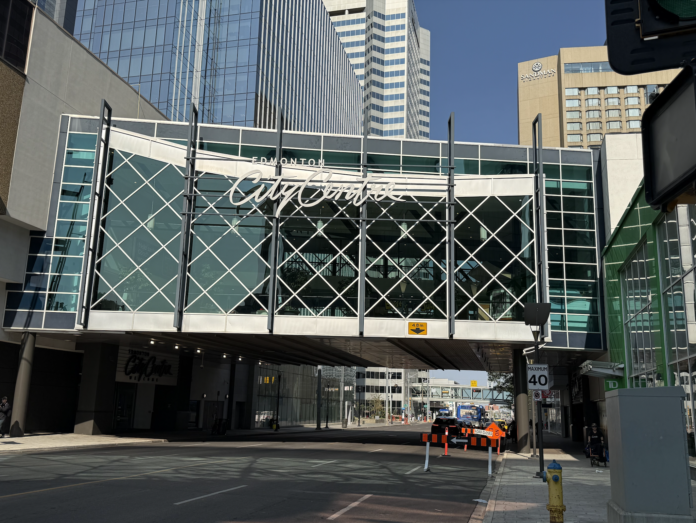
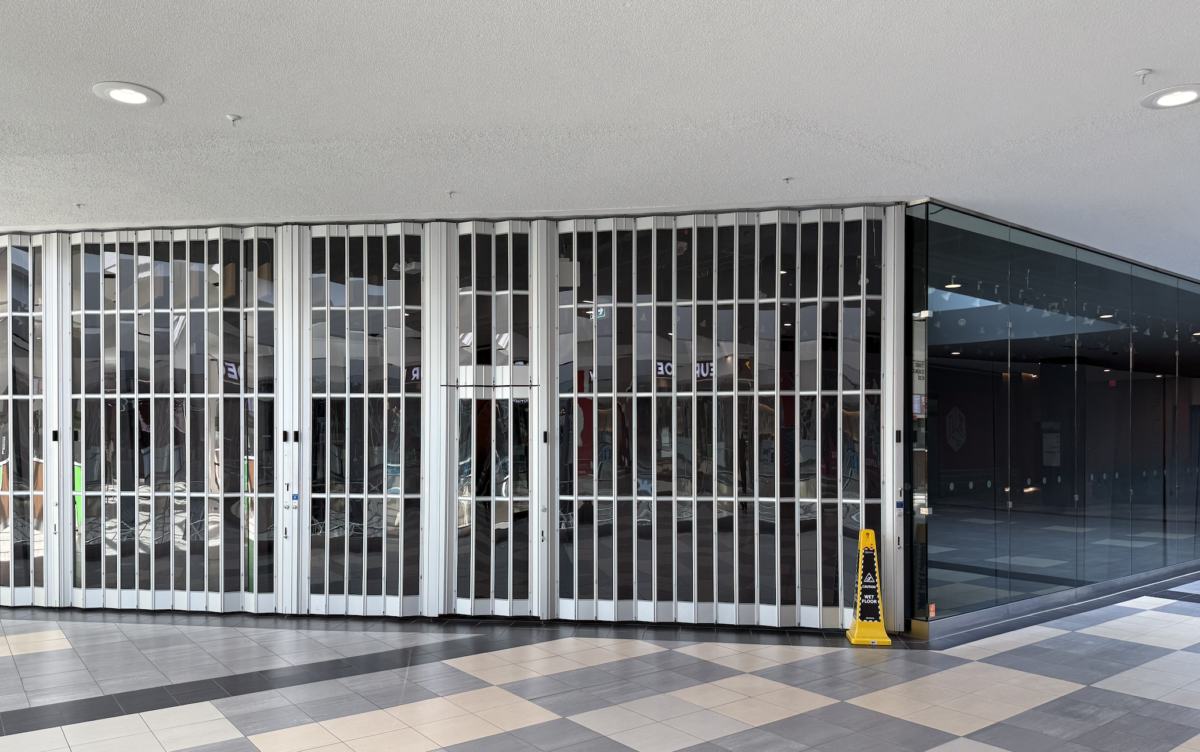
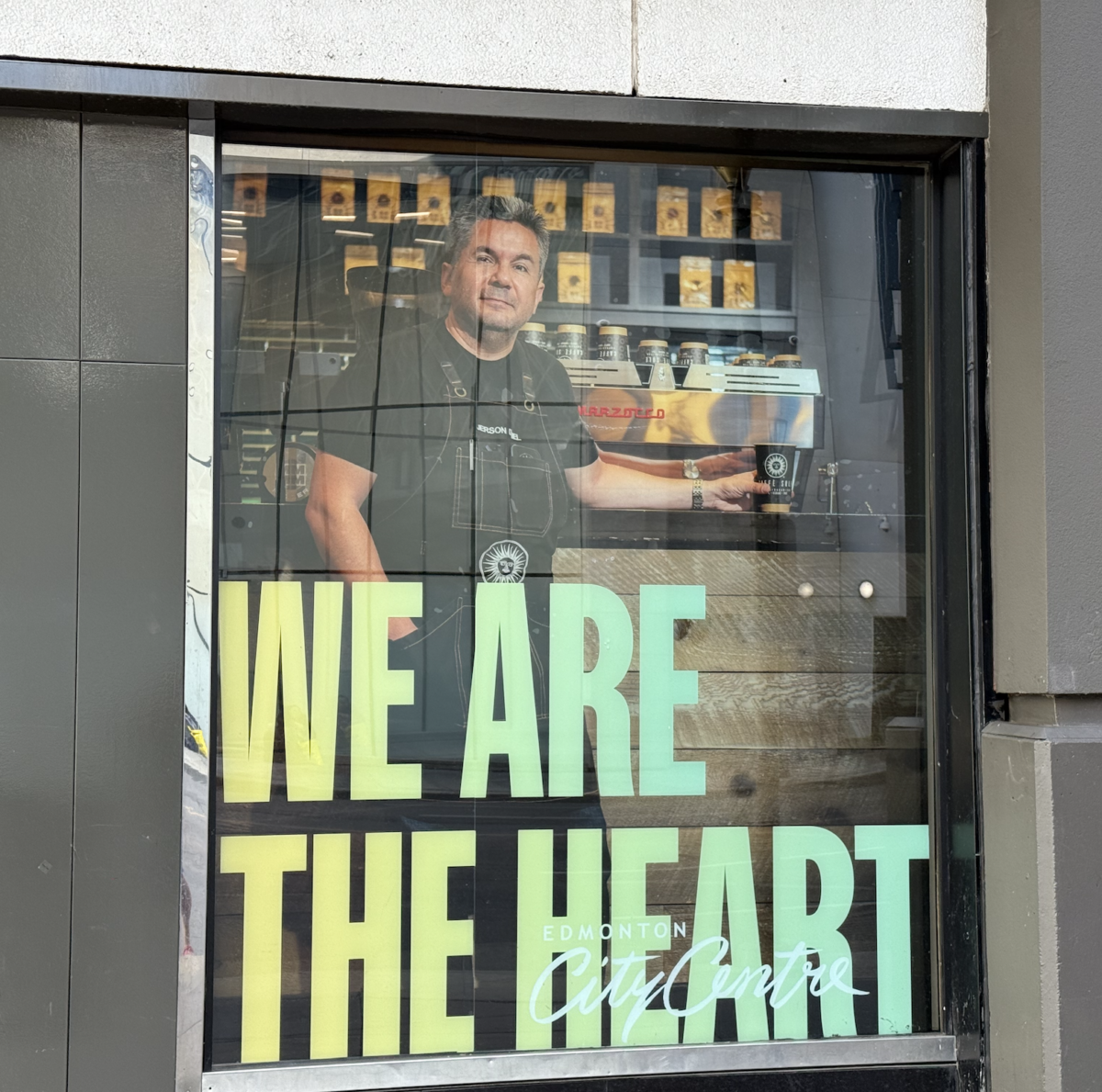
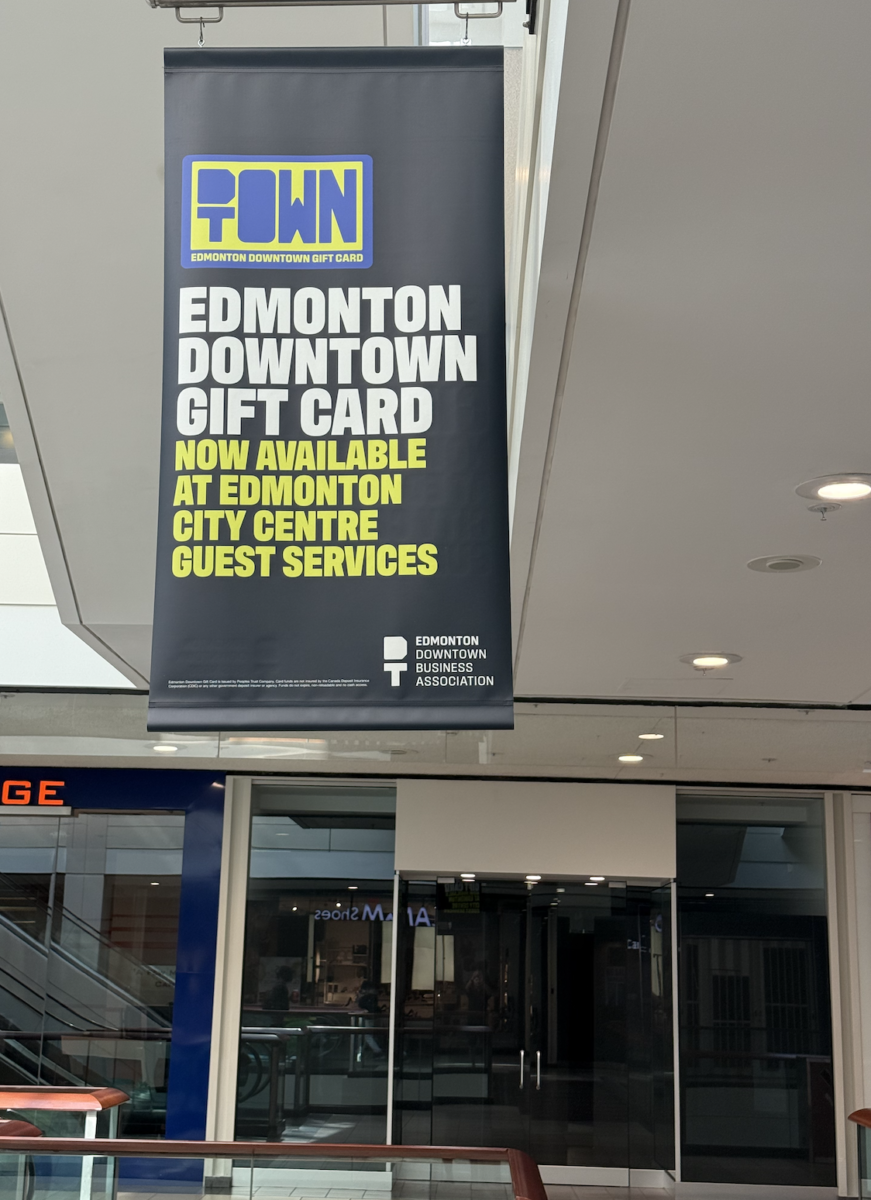
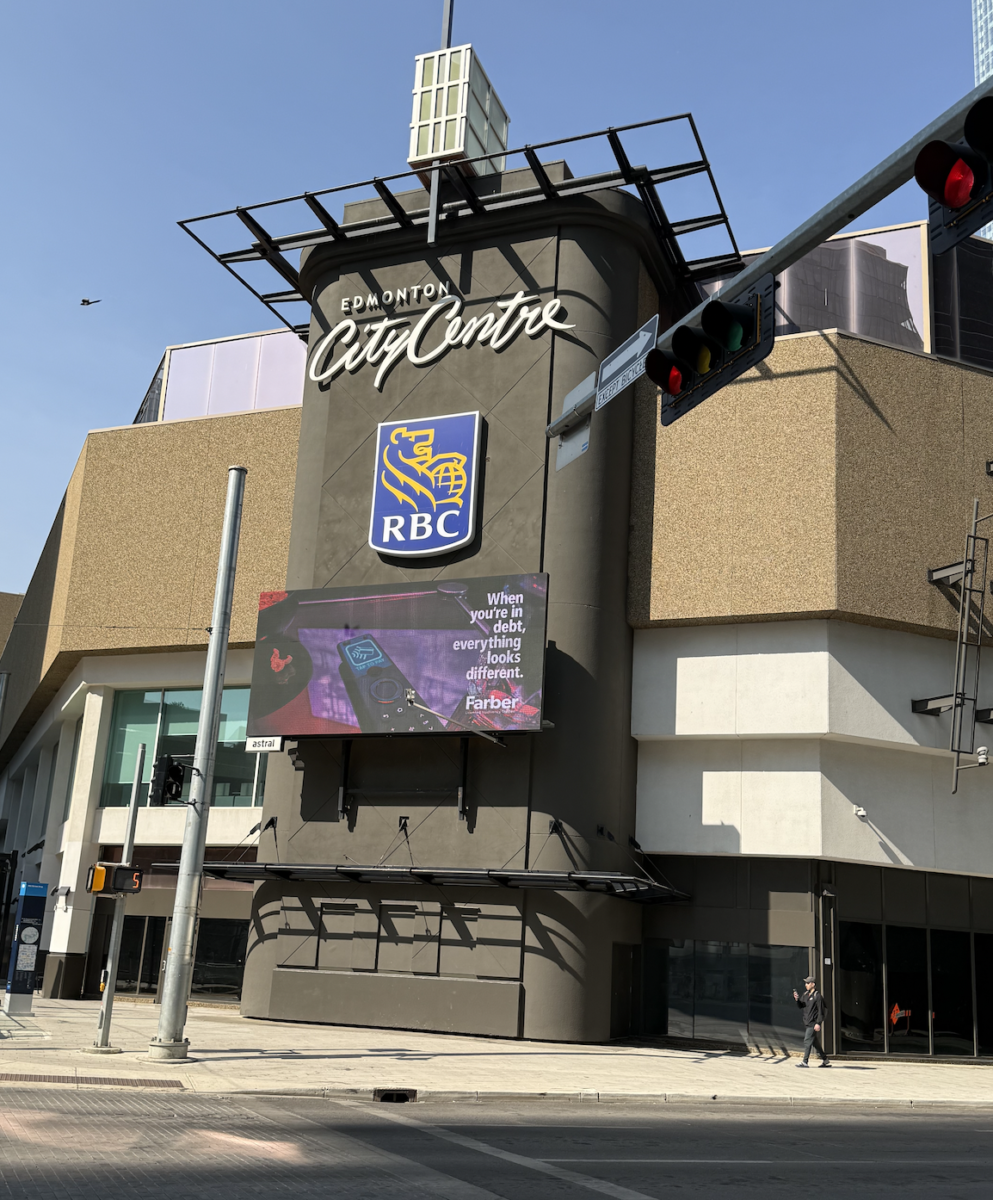
The looming question around the future of Edmonton City Centre has stirred concern, but for some, it’s also sparked cautious optimism. With the property now in receivership, the downtown Edmonton shopping centre, once a vital core retail hub, stands at a critical crossroads.
“It’s a massive asset right in the middle of the core,” said Puneeta McBryan, CEO of the Edmonton Downtown Business Association. “I think for the general public, who aren’t intimately involved in the commercial real estate industry or the downtown business community, it was probably a bit of a shock and really concerning to hear.”
Puneeta McBryan
But for those closely involved in the downtown file, McBryan says the news came as no surprise.
“We’ve all been pretty acutely aware that the property changed hands at probably the worst possible time,” she explained. “Downtown Edmonton was doing really well through 2017, 2018, 2019. So the property changed hands when values reflected how well things were going. But the fact that it changed hands in 2019, and then the pandemic hit, we’ve all had a front-row seat to how incredibly challenging, nearly impossible, it’s been to bring that asset back to what it could and should be.”
McBryan believes there’s now real potential for progress.
“Frankly, and this might sound crazy, but for some of us really close to the issue, it’s almost a bit of a relief right now because it means that, hopefully soon, we’ll have new owners coming in with a very clear and realistic view of what’s required, and who are willing and able to make the significant investment needed to reimagine that property.”
Downtown Edmonton itself is still wrestling with many of the same post-pandemic challenges facing urban centres across North America.
Edmonton City Centre. Photo: Mario Toneguzzi
“We’re in downtown Edmonton battling the same issues that major cities all over North America are dealing with: a complete change in how, where, and when people are working in offices, which has led to the devaluation of commercial real estate; safety and security concerns; visible homelessness; and open-air drug use that makes customers uncomfortable and puts staff in danger,” said McBryan.
Edmonton City Centre. Photo: Mario Toneguzzi
However, she adds, Edmonton’s downtown struggles are amplified by factors specific to the city.
“Our downtown is too large geographically,” McBryan said. “The neighbourhood we call ‘downtown’ spans a huge area—about 2.6 square kilometres. We have office buildings, residential towers—everything you’d expect in a downtown—spread across that whole area, along with a lot of undeveloped land.
“Just for context, Calgary’s downtown is the next largest, and that’s only 1.9 square kilometres.”
This lack of density, McBryan said, contributes to the challenge of creating a vibrant and safe urban core.
“Even on a good day, when we have 30,000 to 40,000 people working downtown, they’re spread over a massive area,” she said. “That makes it hard to create the density and critical mass that make a downtown feel busy, bustling, safe, and prosperous.”
Compounding the problem is a relatively low residential population.
“Over that entire huge area, we only have about 13,000 residents,” she added. “That’s changing slowly—there are great new developments, especially in the Warehouse District between about 104th Street and 108th Street but it’s not happening fast enough. Still not enough density.”
There are also long-standing social issues at play.
“We have the highest concentration of correctional facilities per capita of any major city in Canada,” McBryan noted. “So when we talk about homelessness, crime, and disorder there are very entrenched issues driving that. It’s going to take all orders of government to solve these problems. We’ve been saying that for years.”
Edmonton City Centre. Photo: Mario Toneguzzi
While CBRE signage has been spotted on-site, the real estate firm isn’t commenting publicly on the situation. Yet, there is a growing sense of potential.
“I think there’s a huge opportunity with that mall,” said McBryan. “What’s happening in the ICE District (nearby) there’s a lot of success there we can build on. There’s so much opportunity in downtown Edmonton right now. A lot of people are hopeful.”
“This mixed-use urban complex was formed in 1999 when two separate shopping centres, The Edmonton Centre developed by Oxford Properties in 1974 and the Eaton Centre developed by the builders of the West Edmonton Mall, Tripple Five Corp in 1987 were combined to create the Edmonton City Centre.
“I remember with fondness attending the Eaton Centre grand opening reception hosted by the developer. The property had a glitzy feel to it that was uncommon in downtown Edmonton at the time. The 1980’s was a transformational decade on the Edmonton shopping centre scene. New malls were being constructed and existing ones expanded, and the Oilers were on top of the NHL. It was an era where anything was possible in Edmonton, and the City quickly became saturated with retail space and seriously over built.
A”nd here we are almost 40 years later, and Edmonton is spiraling into a Canadian version of an urban ”doom loop” in the post-pandemic era. Doom loop is an academic term coined in the United States that refers to a scenario that applies to a city’s problems such as a drugs, people with mental health issues, homelessness, and crime. Edmonton city leadership has failed to reign in this dangerous level of disorder. At times downtown Edmonton feels like a zombie movie and unfortunately it has affected many aspects of urban life including the downtown shopping scene. The stark contrast between the shiny new Ice District a few city blocks away and the Edmonton City Centre is the tale of two cities. If Edmonton can clean this situation up it will present an amazing opportunity for the ownership of Edmonton City Centre to reposition the property, but it will take money and patience.”
“Many businesses come and go. Over the last decade a sharp decline in foot traffic driven by hybrid work and a slow post pandemic recovery, elevated operating costs, and public concerns around safety. Unlike suburban malls, downtowns lack centralized management. This makes it difficult to maintain consistency in branding, cleanliness, and tenant mix. Add to that limited parking, aging infrastructure, and rising competition from e-commerce, soon AI-commerce and suburban retail, and it’s clear that traditional downtown retail models need to reinvent themselves to match changing consumer behaviors. Retailers at the end of the day need foot traffic and merchants that will compliment them not over competition, unsurprisingly larger retailers stay away because of uncertainty,” he said.
“Downtowns can absolutely be revitalized, but not by returning to what they were. They need to evolve into open-air, curated urban villages, essentially, the new mall without walls. That means increasing residential density, embracing mixed-use developments, investing in street-level vibrancy, and supporting experiential, independent retailers. Municipalities must also foster shared stewardship among businesses and landlords to create unified branding, events, and programming that draw people in for more than just shopping. And this shift can attract larger retailers who rely on heavy traffic, giving the shopping areas more variety and credibility. Downtown areas will also need SOHOs to create a diverse business hub. Some communities are getting it right, but not all. Smaller communities may be able to respond more quickly than larger ones. Real estate owners need to go beyond filling vacancies and be far more strategic with their choices in tenants; securing the right tenants can lead to long-term success and value for their properties and the tenants. I’ve seen this practice work well in other countries.
“Not the end, but indeed a transformation. Traditional downtown malls designed around department store anchors and commuter crowds are fading; it will be a challenge even for suburban malls, but many downtown malls are being reimagined as mixed-use hubs with housing, healthcare, education, co-working, and entertainment. The mall of the future won’t be enclosed; it will be the entire downtown, walkable, diverse, culturally active space where people live, work, and gather. In that sense, we’re not losing malls; property owners and merchants need to see this shift as an opportunity to reimagine things, but that will take time and a concerted effort to sell the idea to themselves as the right direction.”
“Although some traffic has returned, many cities are not back at the levels they used to be, pre-pandemic, despite Canada’s massive population growth. Recent back-to-work mandates will help as employers push to bring empoyees back 4 or 5 days. Another challenge is crime. Canada’s homelessness and druge use issues have grown significantly in downtown areas and this can scare shoppers away but also increase shoplifting. Another issue is that some conusmer segments are tight with their spending. Although overall retail sales have been good recently, some economists feel that it is the next shoe to drop as our GDP softened last quarter and unemployment levels have increased,” he said.
“The return-to-office mandates will help but until governments tackle homelessness, drug addiction and crime, Canada’s downtowns will not be what they once where. The question is, will governments act and can they? We are entering an era of austerity and I don’t think these social, judicial and medical issues are on the front burner as we need to get our economy moving again.
“I think select downtown malls, particularly in affluent, tourist areas will do well. Middle retail malls will probably go away as shoppers spend in the suburbs where some of the issues I discuss above are less prevelent. Also, select convenience retail below condominiums and office towers will do business as shoppers need not travel outside of their bubble to buy.”
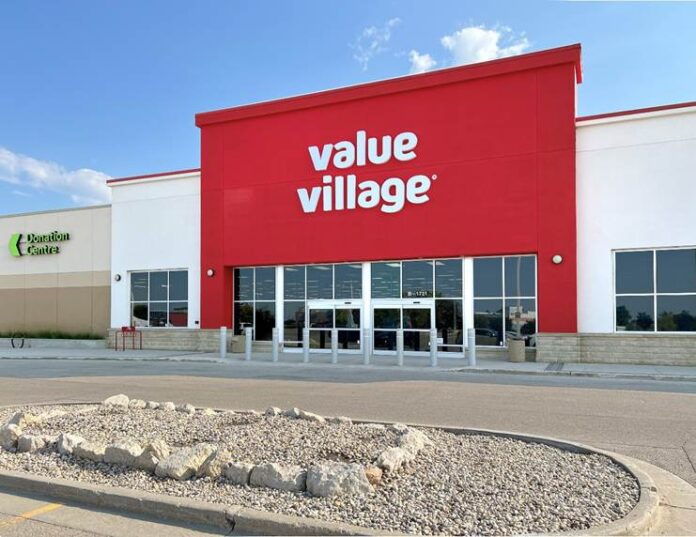
Two new Value Village locations have opened—one in Winnipeg and one, Village des Valeurs, in Saint-Bruno-de-Montarville.
The thrift proud movement continues to grow, championing reuse and supporting Canadian nonprofit partners like the Canadian Red Cross and Grands Frères et Grandes Sœurs.
Value Village is one of the brands in the Savers portfolio.
Thrift shopping isn’t just a trend—once thought of as a niche activity has grown to a mainstream retail choice. Broadly, we’re seeing secondhand shopping grow in popularity, not only in Manitoba and Quebec, but across the country. It is a popular choice among Canadian consumers for three reasons: it’s affordable, environmentally-friendly and stores have a great selection of quality secondhand finds, says the retailer.
The new Value Village store in Winnipeg, spanning nearly 28,000 square feet of pre-loved merchandise, has opened to the Fort Garry Winnipeg community offering thousands of unique items ranging from clothing and accessories to housewares, books and more.
Raquel Grisdale, Value Village Kenaston store manager, said the brand’s continued growth in Manitoba reflects a broader shift in how consumers are choosing to shop.
“We’re proud to offer a one-of-a-kind shopping experience, giving Winnipeg shoppers access to quality secondhand goods at affordable prices – all while making a positive impact on the planet,” said Grisdale.
“This store is about more than great deals. It’s about inspiring people to shop with purpose and give pre-loved fashion and housewares a second life. We welcome all who want to be part of the thrift movement.”
The retailer said the new Winnipeg location will contribute to the approximately 1.5 billion pounds of reusable goods Value Village stores have diverted from landfills across Canada over the last five years alone.
Through strong partnerships with local charitable organizations, Value Village stores also help uplift communities by purchasing donations of clothing and household items from its nonprofit partners, helping fund their mission, it said.
The Winnipeg opening expands Value Village’s partnership with the Canadian Red Cross, which helps people and communities in Canada and around the world in times of need and supports them in strengthening their resilience.
Tom Scinto
“We are grateful to Value Village for their generosity. Their support will contribute to the work of the Canadian Red Cross through emergency response, disaster relief and community services,” said Tom Scinto, Director Corporate Partnerships at the Canadian Red Cross. “By working together, we are building safer, more resilient communities.”
The Saint-Bruno new store spans 30,000 square feet.
Grace de Melo, Village des Valeurs Saint-Bruno store manager, said the brand’s continued growth in Quebec also reflects a broader shift in how consumers are choosing to shop.
The Saint-Bruno opening expands Village des Valeurs partnership with Grands Frères et Grandes Sœurs de la Montérégie, which exists to champion the health and wellbeing of youth by providing quality mentoring relationships that help children reach their full potential.
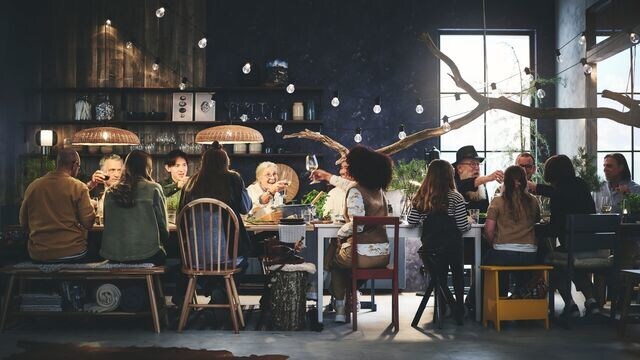
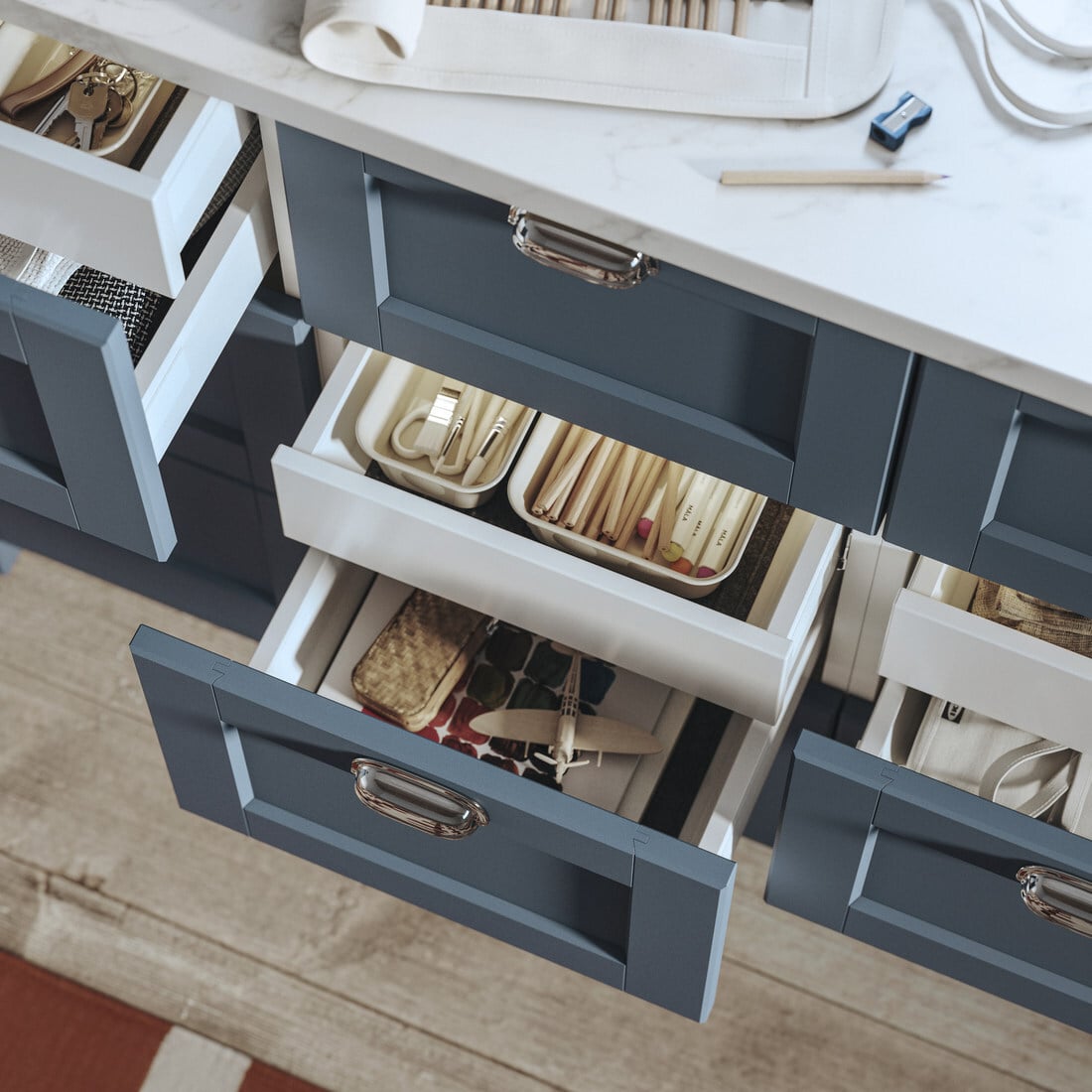
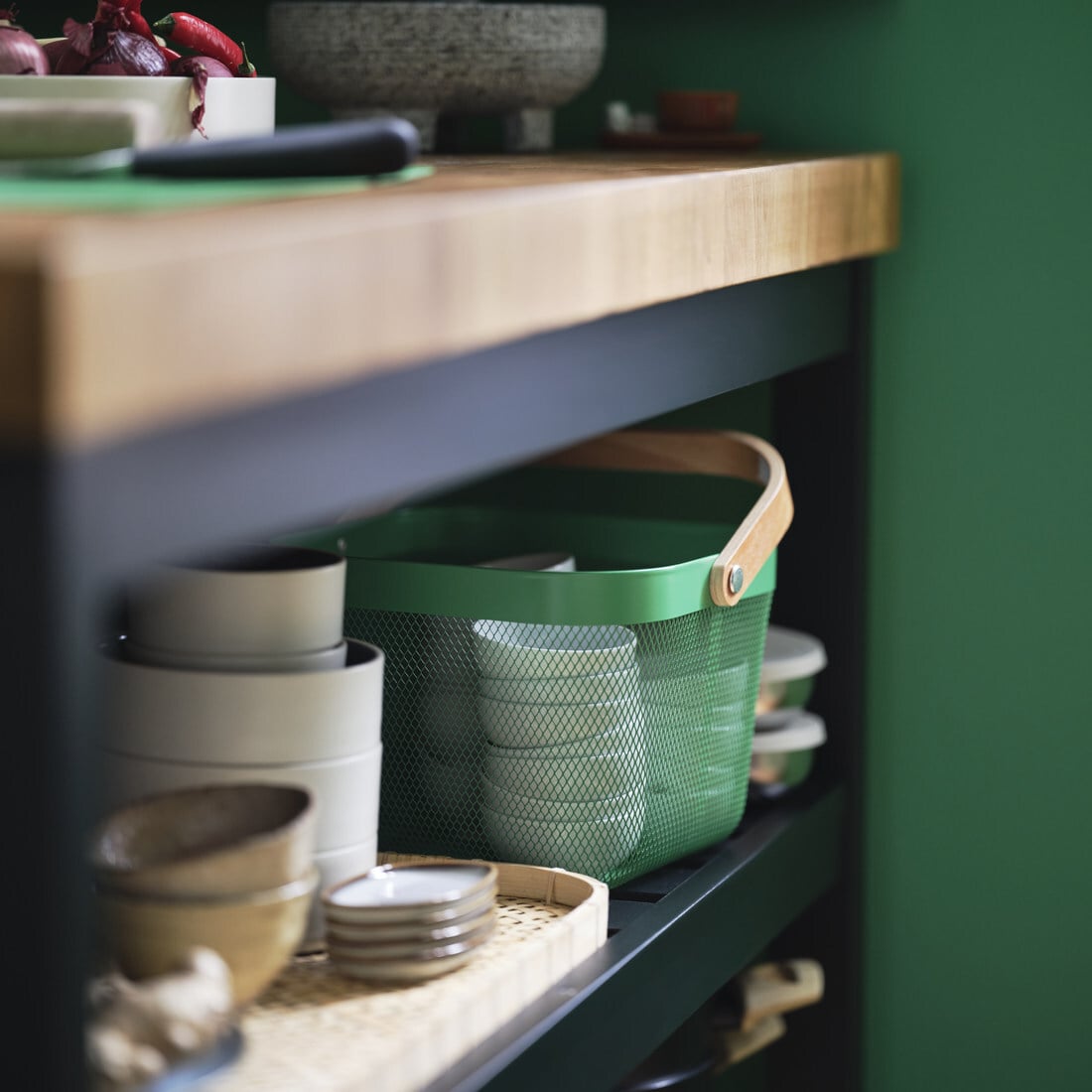
This year, our focus is on helping people create kitchens and dining solutions that reflect their individual
needs—making everyday cooking easier, more enjoyable, and more sustainable. (CNW Group/IKEA Canada Limited Partnership)
IKEA says it is reinforcing its commitment to creating a better everyday life for the many by helping to ensure every child has access to healthy, nutritious meals.
On Saturday, September 13, to mark the launch of a year focused on affordable cooking & eating, all Swedish Restaurants across Canada will offer $1 traditional breakfast to IKEA Family members from opening until 11 a.m., and every plate makes a difference. All proceeds from traditional breakfast sales during this time will be donated to Breakfast Club of Canada, an organization dedicated to helping children across the country start their day with the nourishment they need to learn, grow, and thrive, it said.
Rob Kelly
“At IKEA, we believe that cooking and sharing meals should be a joyful and accessible experience for everyone,” said Rob Kelly, Chief Commercial Officer, IKEA Canada. “This year, our focus is on helping people create kitchens and dining solutions that reflect their individual needs—making everyday cooking easier, more enjoyable, and more sustainable. No matter your budget, living space, or life circumstances, we want to empower the many to rediscover the simple pleasure of gathering around a home-cooked meal.”
“This initiative is part of our broader focus on supporting people through every step of the cooking and eating journey—from organizing and prepping to sharing meals and cleaning up. Just like a långbord brings everyone together around one table, we’re making each part of the experience simpler, more joyful, and full of connection,” explained the retailer.
Tommy Kulczyk
“Collaborations like this one with IKEA Canada are vital to our mission,” said Tommy Kulczyk, President and CEO of Breakfast Club of Canada. “When companies step up to advocate and support children’s access to nutritious food, they’re not just filling plates, they’re fueling futures. We’re proud to work alongside IKEA Canada to help ensure more children across the country start their day nourished and ready to thrive.”
Affordability remains at the heart of IKEA Canada’s approach, it said. To kick off the year in focus, two limited-time offers will be available from September 8 to 17:
20% off cooking and eating essentials
20% off dining furniture
These offers are designed to make everyday moments at home more accessible and joyful for the many, it said.
“Looking at the new fiscal year ahead, IKEA Canada will introduce more than 200 new products designed to elevate the cooking and eating experience. Highlights include new dining tables and smart storage solutions that help reduce food waste, save money, and maximize space. The kitchen range will also expand with more versatile options, including new frame and interior colours and smarter interior solutions to make kitchens even more functional and inspiring,” said the company.
All offers, including the $1 breakfast, are exclusive to IKEA Family members. It’s free to join, and members enjoy special deals, events, and rewards all year long. To learn more, visit https://www.ikea.com/ca/en/offers/
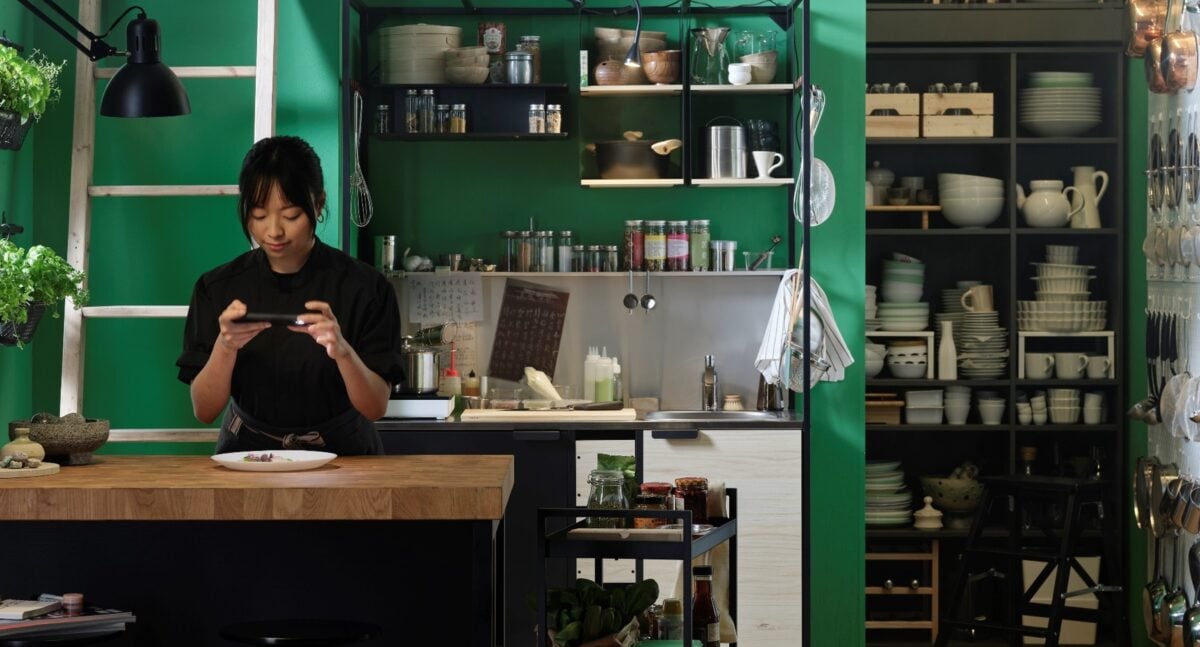
This year, our focus is on helping people create kitchens and dining solutions that reflect their individual
needs—making everyday cooking easier, more enjoyable, and more sustainable. (CNW Group/IKEA Canada Limited Partnership)
Founded in 1943 in Sweden, IKEA is a leading home furnishing retailer. IKEA Canada is part of Ingka Group which operates 400 IKEA stores in 31 countries, including 16 in Canada. Last year, IKEA Canada welcomed 32.6 million visitors to its stores and 162.6 million visitors to IKEA.ca.
This year, our focus is on helping people create kitchens and dining solutions that reflect their individual
needs—making everyday cooking easier, more enjoyable, and more sustainable. (CNW Group/IKEA Canada Limited Partnership)This year, our focus is on helping people create kitchens and dining solutions that reflect their individual
needs—making everyday cooking easier, more enjoyable, and more sustainable. (CNW Group/IKEA Canada Limited Partnership)This year, our focus is on helping people create kitchens and dining solutions that reflect their individual
needs—making everyday cooking easier, more enjoyable, and more sustainable. (CNW Group/IKEA Canada Limited Partnership)
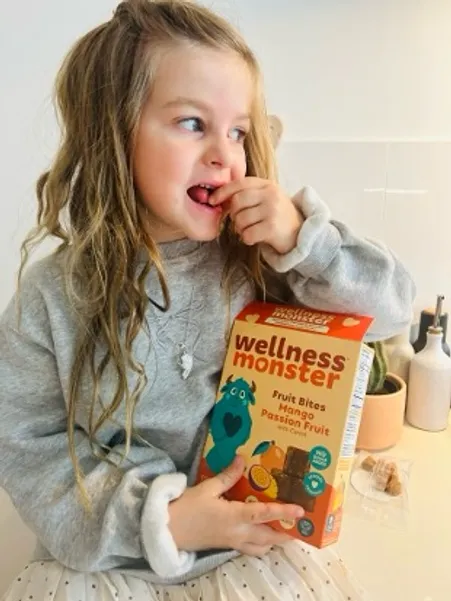
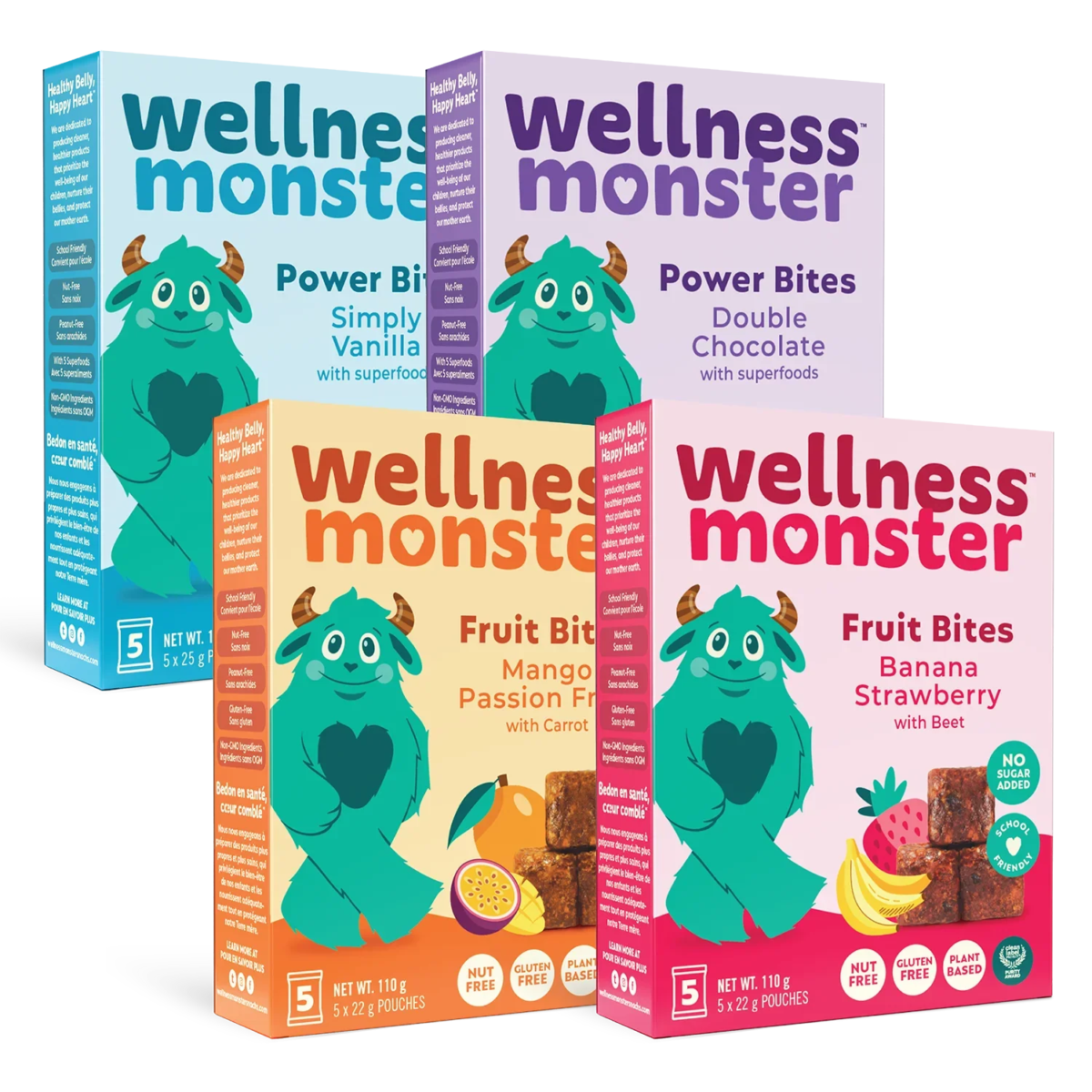
Canada’s packaged food sector has a new player shaking up the snack aisle. Wellness Monster, a Toronto-based, female-founded brand specializing in allergen-friendly, nutrient-dense snacks for children, is expanding quickly just two months after launch. The company, founded by consumer packaged goods veteran Brittany Compton, has already secured listings with more than 60 retailers, including Well.ca, with Costco Canada preparing to bring the products online within weeks.
The early traction reflects growing consumer and retailer appetite for cleaner, protein-rich snacks that meet the rising demand for transparency in ingredients. With childhood obesity and diet-related health issues climbing globally, Compton says the timing for Wellness Monster could not be more urgent.
Brittany Compton
“Better for you is not good enough anymore when it comes to kids,” Compton told Retail Insider. “We’ve tried to really change the game on ingredients, and that hasn’t been easy. But families deserve better.”
From Personal Challenge to National Launch
The story of Wellness Monster began in Compton’s own kitchen. A mother of two, she was driven by her son’s ongoing digestive health struggles. Frustrated by the lack of suitable options on grocery store shelves, she began developing snacks at home.
Her 20-year career in consumer packaged goods, including senior roles at Mars and as President of Love Child Organics, gave her the confidence to bring a solution to market. “If someone was going to fix this, it had to be me,” she said.
After a year of experimentation, including failed attempts to produce a clean-ingredient cookie that could run on conventional manufacturing lines, Compton and her team landed on a successful formula. The result was a range of high-protein, allergen-free snacks infused with superfoods, designed to be both nutritious and appealing to children.
Tackling a Global Health Crisis
Wellness Monster’s mission is rooted in a growing health concern. Childhood obesity is projected to affect more than 254 million children worldwide by 2030. At the same time, the $60-billion snack industry continues to be dominated by legacy brands filled with dyes, refined sugars, and seed oils.
“Kids today are not expected to outlive their parents, which is shocking,” Compton said. “The kids’ snack aisle is still filled with ultra-processed products. That’s making our children sick.”
This reality has prompted parents to seek alternatives. Increasingly, shoppers are scrutinizing labels and demanding transparency. Wellness Monster has positioned itself at the forefront of this shift by focusing not only on what goes into its snacks but also what is excluded — refined sugars, seed oils, natural flavour chemicals, artificial colours, and gums.
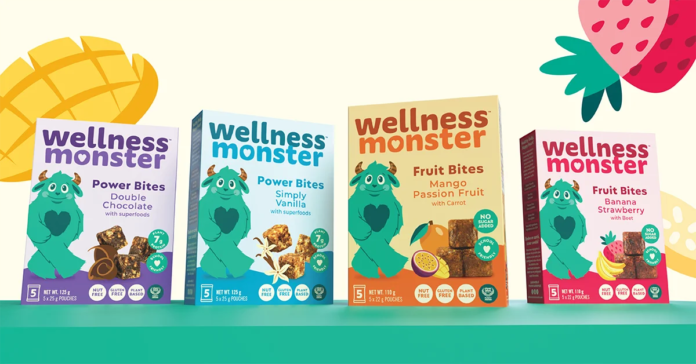
Image: Wellness Monster
Clean Label Certification as a Differentiator
A key element of Wellness Monster’s appeal is its Clean Label Project certification, a third-party designation that tests for more than 500 environmental toxins, including pesticides, glyphosates, and heavy metals.
Originally established in the baby food sector, the certification is now being embraced by parents as children transition into the snack aisle. “We’ve achieved the Purity Award, which places us in the top 25% of tested brands,” Compton explained. “Parents actually trust Clean Label over organic now because it provides lab testing that organic alone doesn’t guarantee.”
This certification has given the brand credibility in a crowded marketplace, while also aligning with rising parental concerns over long-term health impacts of food additives.
Early Retail Traction and Distribution Growth
Since its launch, Wellness Monster has secured an impressive roster of retail partners. Independent natural chains, online platforms, and major distributors have embraced the brand. Within weeks of debuting, Wellness Monster snacks began appearing on store shelves across Ontario, with expansion into other provinces underway.
Well.ca listed the products off-cycle, underscoring the urgency retailers see in the category. Costco Canada is expected to bring Wellness Monster to its online platform in the coming month, and larger mass-market grocers such as Loblaws and Walmart are targets as well.
“Retailers see the space as ripe for disruption,” Compton said. “They recognize that parents are demanding higher protein, lower sugar, and cleaner snacks for their kids.”
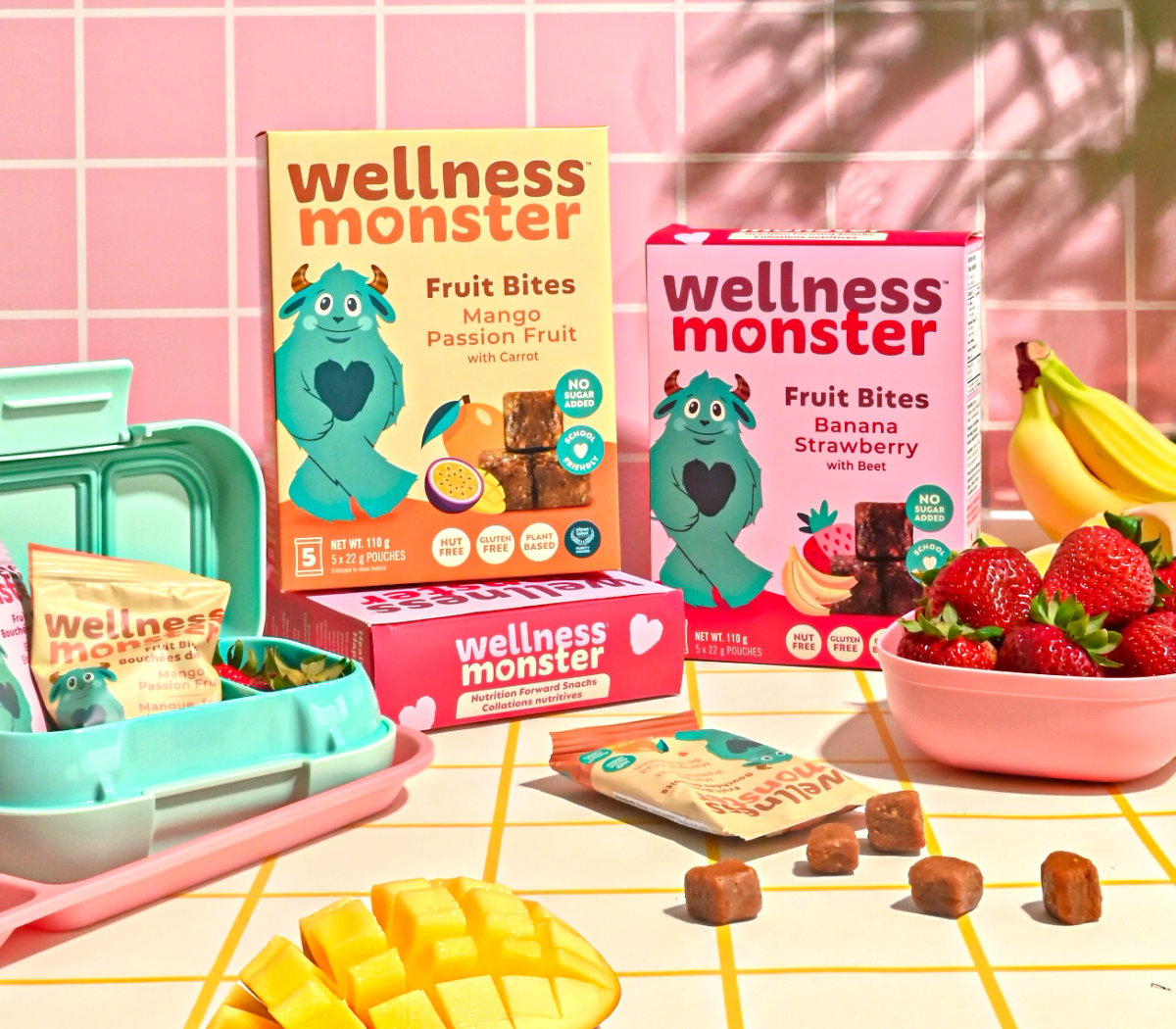
Image: Wellness Monster
Protein-Focused Innovation
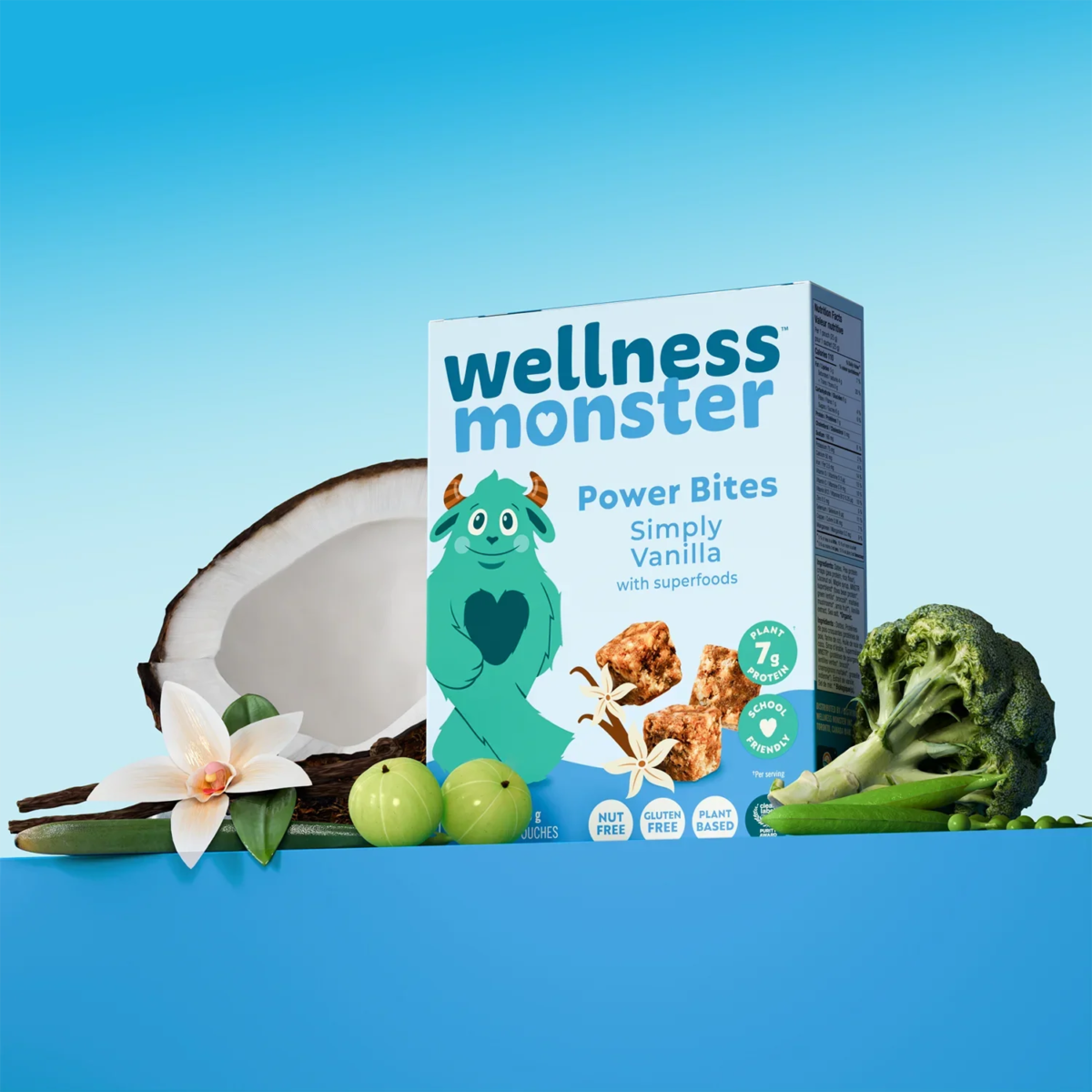
One of the most distinctive features of Wellness Monster products is their protein profile. Each “Power Bite” provides seven grams of plant-based protein, roughly one-third of a child’s daily requirement.
“Protein is about more than muscle growth for kids,” Compton explained. “It’s about keeping them full longer. Parents constantly tell us their children are hungry all the time. Our snacks provide a more substantial solution.”
The protein comes from pea and fava bean sources, combined with a proprietary “Monster Blend” of superfoods including mushrooms, lentils, broccoli, and amla fruit. This combination not only boosts satiety but also delivers key vitamins such as D and C.
Playful Branding Meets Parental Trust
Part of Wellness Monster’s resonance lies in its branding. Packages feature a colourful monster character designed to appeal to children while reassuring parents. The character evokes nostalgic parallels to cereal aisle mascots and even Care Bears, but with a modern wellness twist.
“Character branding has always been important in the cereal aisle,” Compton noted. “We’ve built a character that embodies health and wellness instead of sugar and junk food.”
The approachable branding has also extended to marketing campaigns targeting parent communities, with partnerships among mom influencers and social media voices.
Advisory Support and Experienced Leadership
Wellness Monster’s leadership team combines startup agility with deep industry experience. Alongside Compton, the company is advised by Tara Bosch, the founder of SmartSweets, who led her company to a nine-figure exit before the age of 30. Gord Flaten, former CEO of Avena Foods, also brings expertise in food manufacturing and scaling.
Sarah Jordan, powerhouse executive with extensive experience growing and building Canadian brands, has also backed the brand.
“We’ve built a really strong team around this venture,” Compton said. “That’s been critical for navigating challenges and seizing opportunities.”
Image: Wellness Monster
Manufacturing Partnerships and Global Sourcing
Wellness Monster has secured Canadian co-manufacturing partners capable of working with clean ingredients — no small feat in an industry optimized for refined sugars and artificial flavours. “It was a journey to find partners who could produce snacks that met our standards,” Compton said.
One product line, a fruit snack range, is manufactured in Ghana, where fruit is harvested tree-ripened and processed onsite to preserve nutrients. The Power Bite protein line, meanwhile, is made domestically in Canada.
Expansion Plans: Canada and Beyond
For now, Wellness Monster is focused on expanding its footprint in Canada, but U.S. entry is firmly on the horizon. Whole Foods and Sprouts are high on the target list for an initial rollout.
“The U.S. is very much ripe for disruption,” Compton said. “But first we’re establishing strong roots here at home.”
Within Canada, expansion into major grocers is a priority, alongside continued growth in specialty and natural channels. Product diversification is also planned, with categories like puffs, cookies, and cereals under consideration.
A Brand with Wider Appeal
Though designed for children, Wellness Monster snacks are already resonating with adults. Parents report enjoying the protein bites themselves, and the brand is exploring opportunities in office distribution. “Millennials and Gen Z find the packaging nostalgic,” Compton said. “We see potential in expanding the brand beyond kids.”
That could include fitness enthusiasts and professionals seeking on-the-go snacks. “Our protein content and clean ingredients make these suitable for a much wider audience,” Compton added.
Image: Wellness Monster
A Mission-Driven Disruptor
At its core, Wellness Monster represents more than a product launch. It is a movement aimed at reshaping food culture for the next generation. “Like many kids in the ’90s, I ate more processed foods than I’d choose today.” Compton reflected. “I don’t want today’s kids to go through that.”
The brand’s tagline, “Healthy Snacks for Hungry Monsters,” captures its playful tone, but the mission remains serious: reducing the dominance of ultra-processed food in children’s diets.
“Food has a direct impact on how children grow, learn, and live,” Compton said. “It’s time we offered them snacks that truly nourish rather than harm.”
Helene Clarkson on-the-go travel wear. Image: Helene Clarkson
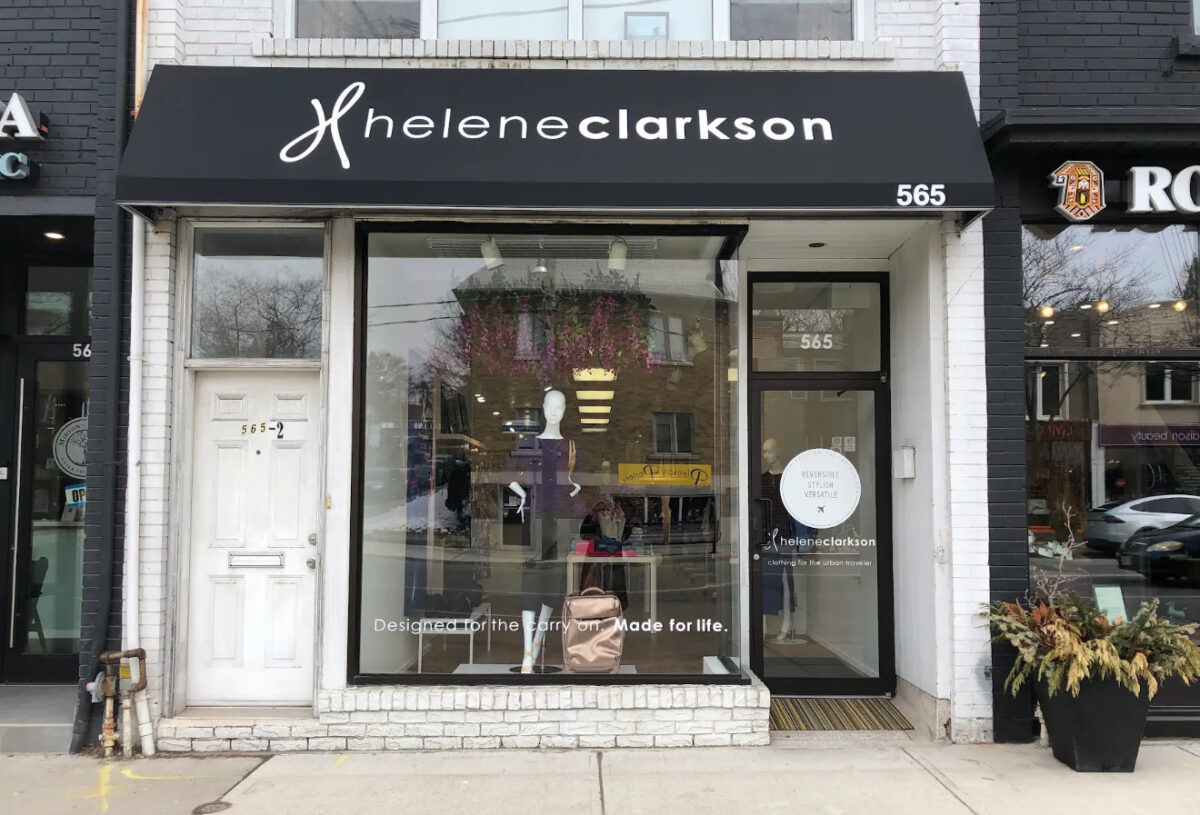
Toronto designer and actor Helene Clarkson has spent a decade refining a clear proposition for modern shoppers who move constantly between planes, boardrooms and dinners. Her namesake label, produced entirely in Canada, is centred on reversible, wrinkle-resistant pieces designed to pack small, change quickly and stand up to real life. The flagship boutique at 565 Mount Pleasant Road anchors the brand’s physical presence, while a steadily growing online community extends far beyond the city.
“I started it because I was traveling quite a bit with my husband,” Clarkson recalled. “We’d be on the convention floor during the day, and in the evening we would want to go out. I was limited with what I could wear out of a carry-on suitcase. I began thinking about reversible pieces and fabrics that would not crease, so I did not look terrible when I pulled them out of the suitcase.”
From that practical origin, the collection has matured into a wardrobe for what Clarkson calls the urban female traveler. “Nobody is climbing Kilimanjaro in my clothing,” she joked. “It is about arriving from a flight and going straight into a meeting, then heading to dinner. You can flip things inside out and be very versatile with the pieces you bring.”
Helene Clarkson
From Royal York to Mount Pleasant, Then Through a Pandemic
Clarkson launched her first retail space at the Fairmont Royal York Hotel in 2017, a location that captured business travellers flowing through Toronto’s PATH. “It was great,” she said. “We had women who traveled for business and guests staying in the hotel.” A West Coast pop-up followed in Vancouver. By spring 2019 she had opened on Mount Pleasant Road, joining a cluster of independent retailers in a neighbourhood that values local makers.
Within a year the pandemic hit. The Royal York shop closed as tourism vanished. Mount Pleasant survived, though foot traffic changed. “It is not what it was,” Clarkson said of the area. “There are a lot of store closings.
People do not lunch and shop the way they used to. It is starting to come back a bit, but Bayview looks stronger. There is more density of restaurants and retail there, although the rent is double.”
The calculus is familiar for independent brands in Canadian cities, where leasing decisions weigh neighbourhood character against fixed costs. For now, Mount Pleasant remains home base as Clarkson evaluates the next opportunity. “I try to find a new place, but one has not come up that I feel safe trying,” she said. “Retail is harder than it was before.”
Designed in Toronto, Made to Last
If the retail map has shifted, the product formula has stayed consistent. The brand now counts more than 100 styles, produced in small batches with local manufacturers and suppliers. Pieces are machine-washable, quick-drying and built to mix and match across seasons. Signature items such as the Aro Pant, reversible dresses and dual-sided tops anchor a catalogue that aims to do more with less.
“I have over 150 styles in the back catalogue,” Clarkson said of the brand’s history. “Some we never repeat because they did not work. Others we keep doing, we just change prints or fabrication. That way we do not reinvent the wheel each season.”
Her education in design came on the job. “My first rendition did not go well,” she admitted. “I aimed toward athletic fabrics and made a lot of mistakes. Then I hired a consultant, and I found a fabulous manufacturer in Toronto who literally held my hand. He taught me about patterns, sampling and production. We talk about adding a couple of inches here, taking away there, and we do another sample before he cuts anything. I feel very lucky.”
The approach supports the brand’s sustainability posture while reinforcing Canadian production. Small-batch runs limit waste and let Clarkson react to feedback quickly. “Because we manufacture here, we can control our own production and numbers,” she said. “That matters.”
Price, Sizing and an Inclusive Fit Strategy
Clarkson positions pricing to reach a broad audience, with most pieces ranging from about $99 for accessories up to roughly $289 for core garments, and occasional higher-ticket items that breach the $300 mark when fabric and construction require it. The brand introduced extended sizing just as the pandemic began, which complicated rollout. “We launched one X and two X sizing right when COVID hit,” she said. “We pulled back on two X because it was not selling as well. One X remains and has great customers.”
Demand for petite sizing persists, although scale is a hurdle for a small label. “We have been asked for petite,” Clarkson confirmed. “For a very small brand, you have to go in deep to do it right. I have been cautious.”
The brand’s philosophy is to make clothing that looks sophisticated without being precious. “You can elevate it. I have worn my pieces to black tie events,” Clarkson said. “You can also wear them to the beach or walking your dog. It is meant to be lived in.”
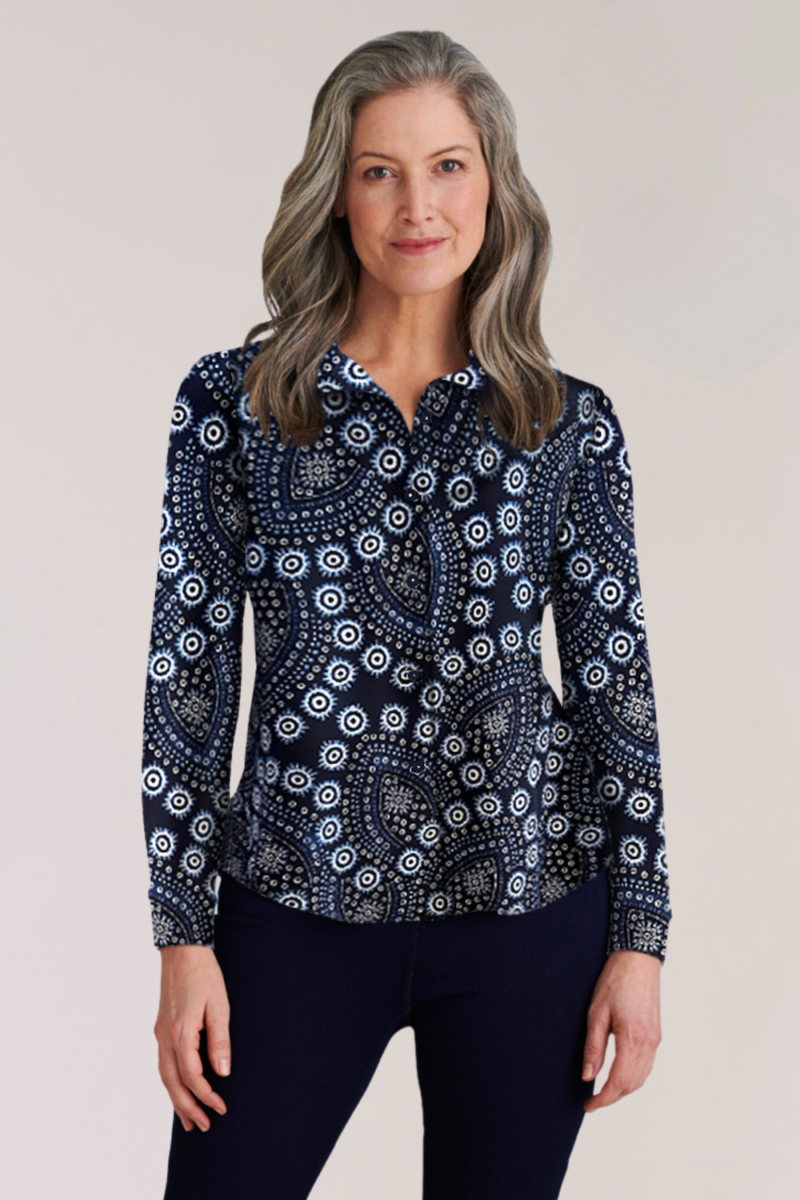
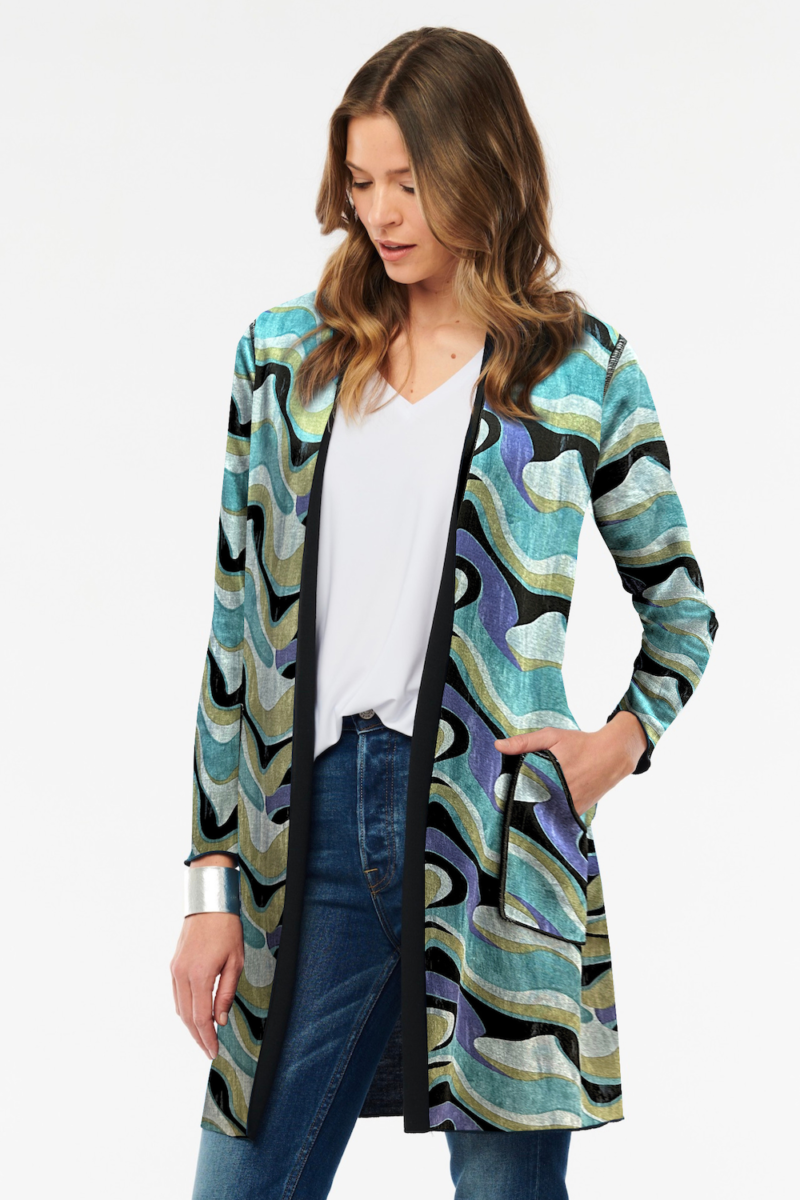
Bala Blouse Batik Print. Image: Helene ClarksonCabri Reversible Cardigan Swirl (Black) — Image: Helene Clarkson
Loyalty and Community Keep Customers Close
As customer acquisition costs rise across social platforms, Clarkson invests in retention. “We have a very high retention rate, which I am proud of,” she said. A straightforward loyalty program awards one point per dollar, redeemable for discounts at set thresholds. “It is simple,” she explained. “We add birthday points and little perks that say thank you.”
A travel-themed blog, or “Travel Log,” extends the brand’s voice beyond transactions. Curated by marketing director Michelle Swift, it features packing tips, destination ideas, occasional recipes and soundtracks to keep customers engaged between purchases. “It is not always sell, sell, sell,” Clarkson said. “We want to entertain and thank people for sticking with us.”
The editorial layer dovetails with search engine goals, keeping the site fresh with new content. It also supports the core story behind Helene Clarkson travel wear, that the label is a partner in planning trips and everyday life, not just a product you buy once and forget.
Live Shopping as a Canadian Growth Channel
One of the brand’s most interesting bets is live shopping. The model has matured in Asia and is picking up momentum in the United States. In Canada it remains early, which makes Clarkson’s experiments noteworthy. “I enjoy it. It is really fun,” she said. “We do not run long shows. We try to mix them up.”
A live shopping coach with shopping-channel expertise helped the team structure episodes. Clarkson and Swift co-host. They wear the same pieces in different sizes and on opposite sides to demonstrate reversibility, and they answer questions in real time when viewers join via the brand’s website. “We prefer the website because people can chat and add to cart at the same time,” Clarkson said. “On Instagram and Facebook, that is harder.”
The team has tested storytelling formats to keep content fresh. In one episode a customer brought her planned wardrobe to the Mount Pleasant shop before a two-and-a-half-week trip to Croatia, including a conference in Zagreb. Clarkson and Swift used the segment to build a carry-on capsule, combining the customer’s items with Helene Clarkson travel wear to streamline her packing list. In another, Clarkson filmed from home, showing exactly how she packed for Sicily and London, including a wedding.
Immediate sales during a live stream are not yet the norm, but conversion uprates in the days following each show. “We are building audience,” Clarkson said. “We see purchases after viewers take time with it or watch on the website later.”
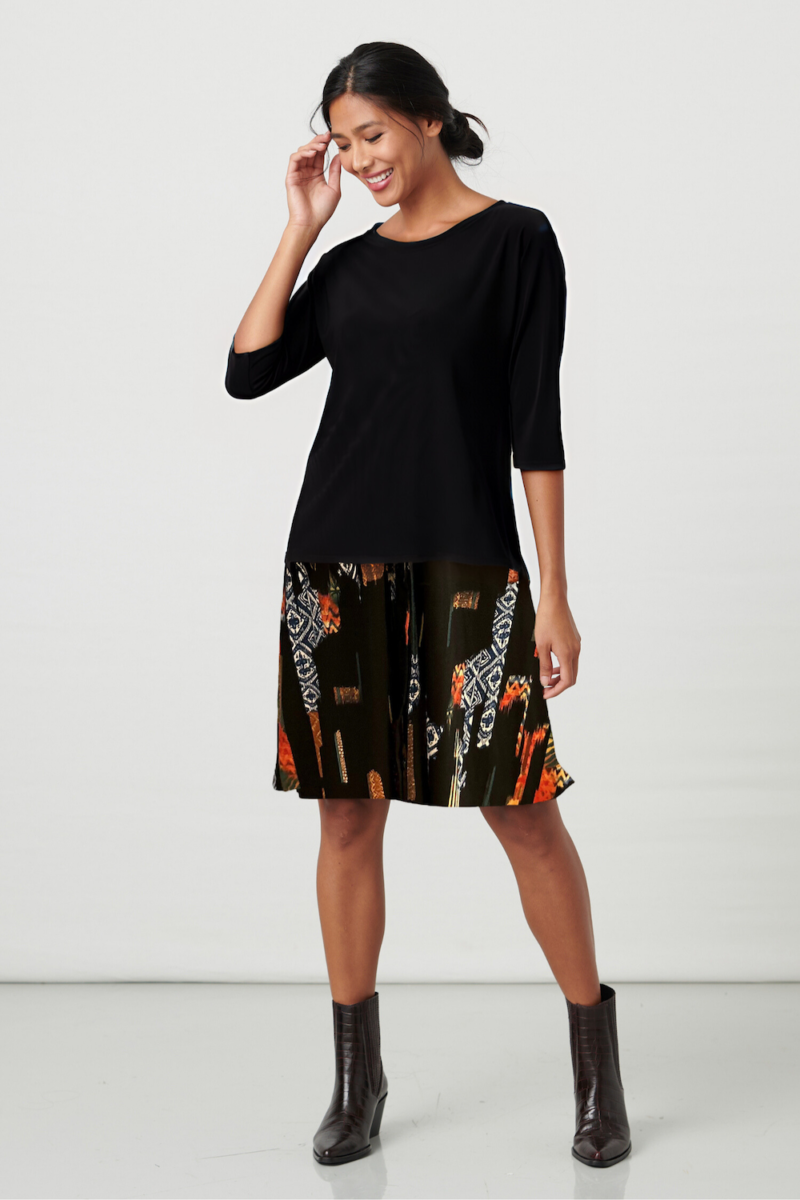
Andorra Ponte Pant Grey Image: Helene ClarksonHalle Rweversible Skirt Black_Mosaic + Sousa Top. Image: Helene Clarkson
A Pause on the United States, Strong Momentum in Canada and Abroad
The brand’s customer base remains primarily Canadian, with Ontario and Toronto leading, thanks in part to the Mount Pleasant storefront. “We have people who come from out west and make a point of visiting the store,” Clarkson said. “Meeting long-time customers in person is lovely.”
Internationally, the label draws a surprising pocket of demand from Australia, along with consistent orders from Europe, notably Germany. “One of my best customers in Australia is about to place her hundredth order,” Clarkson said, laughing. “She has more of my clothes than I do.”
The company recently paused direct shipping to the United States due to tariff uncertainty and administrative ambiguity around collection and remittance. “We announced that we are not shipping to the US right now,” Clarkson said. “We are holding off until we understand how these tariffs work and how to deal with them. When we collect HST, we know we pay the CRA. None of this has been set up yet for what we are being asked to do. Small businesses are throwing up their hands.”
Wholesale, Consignment and the Margin Math
As a Canadian manufacturer, Clarkson has been cautious with wholesale. “If you make clothes in Canada, your costs are exponentially higher than offshore,” she said. “It is hard to make your margins wholesaling in Canada unless you price much higher.”
She tested The Shopping Channel in 2018 on Jeanne Beker’s Style Matters and would consider a return with a tighter capsule tailored to the platform. “I learned a lot,” she said. “I would like to do it again, but with product built for that customer.”
For now, a limited consignment relationship with RevolutionHER at Mapleview Centre in Burlington and at Vaughan Mills helps new shoppers discover the brand without the capital intensity of a broader wholesale program. “It is safe, and the women there are fabulous to work with,” Clarkson said. Presentation matters, and partners must represent the garments with the same care found in the flagship.
Expansion Plans, With Care
Clarkson hints at a new location under consideration, though she is superstitious and will not share details until the lease is signed. “Fingers crossed,” she said. “We will have more to say soon.” She also suggests that future formats may not be traditional streetfronts. “I am thinking about other things,” she said, leaving open the possibility of showroom, pop-in or experience-oriented models that align with the way the brand engages customers online.
Pop-ups remain useful for awareness, but they require staff, shipping and travel energy that a small company must ration wisely. “People say, just do a pop-up,” Clarkson said. “It is a big deal. You have to ship everything, hire staff and stand it up properly across the country.”
An Actor’s Resolve, A Designer’s Iteration
Clarkson’s background as a Genie-nominated actor informs her persistence as a founder. “Clothing felt like it might be less subjective than acting,” she said. “It is the same. You get rejection. You develop a thick skin. If someone does not like your clothing, move on, find your market.”
That ethos shows up in product development, where samples iterate until they fit and function as intended, and in day-to-day retail, where service and education build long-term loyalty. “We show people why a piece works,” Clarkson said. “Because so many items are reversible, it is fun to show the reverse. Demonstration elevates the entire experience.”
Why the Formula Resonates Now
The brand’s value proposition aligns neatly with how Canadian consumers say they want to dress. Utility and comfort must coexist with polish. Pieces need to travel well, whether across town or across the Atlantic. Shoppers also want to support Canadian makers. “We are lucky that we truly manufacture here in Toronto,” Clarkson said. “People are searching for Canadian-made, and that has been extremely helpful.”
That context gives Helene Clarkson travel wear a defensible niche. It is not performance athletic. It is not high fashion with short runways. It sits in a sweet spot where versatility, fabric performance and understated style meet, with a Canadian supply chain as a proof point for quality and values. Prices land within reach for many working professionals, and the loyalty program rewards frequency.
Menswear questions follow Clarkson wherever she goes. “You are not the first man to ask,” she laughed. “The men in our friend group want reversible pieces. It is in the back of my mind.” For now, focus stays on the women’s line, refining fits and delivering new prints and fabrics that keep the capsule fresh without sacrificing the simplicity customers rely on.
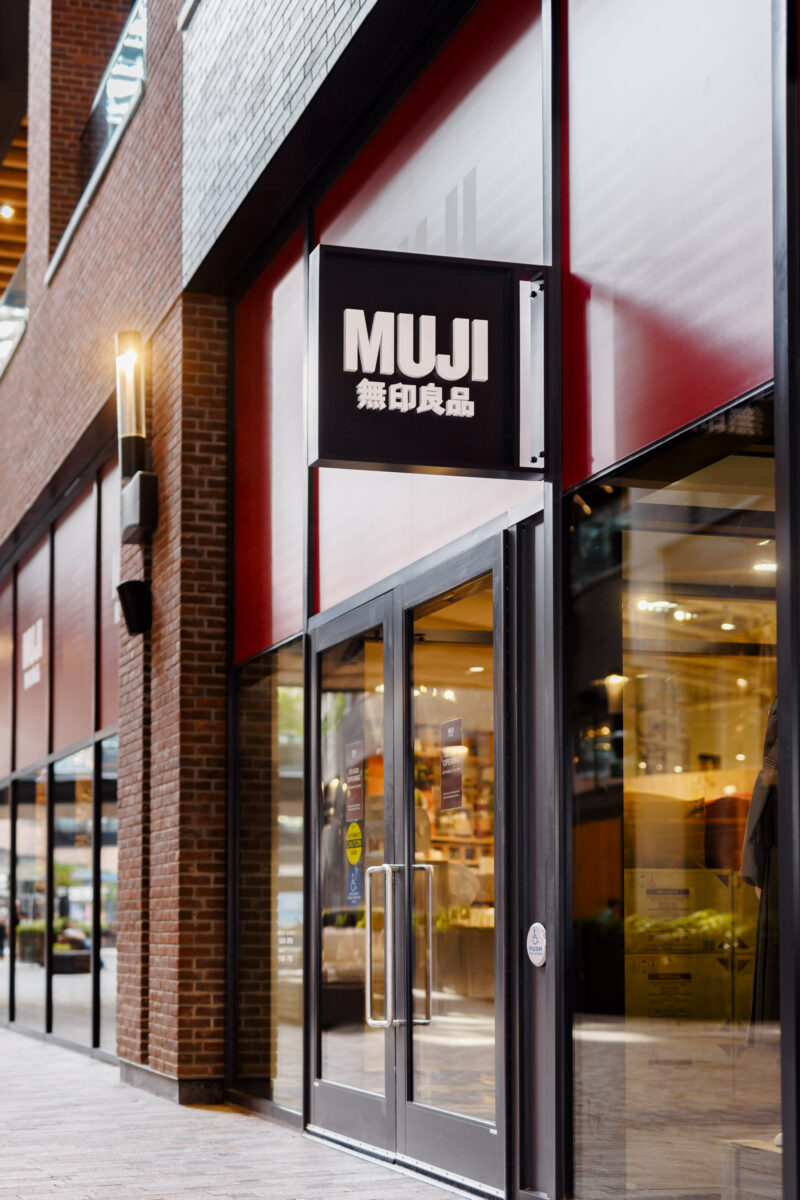
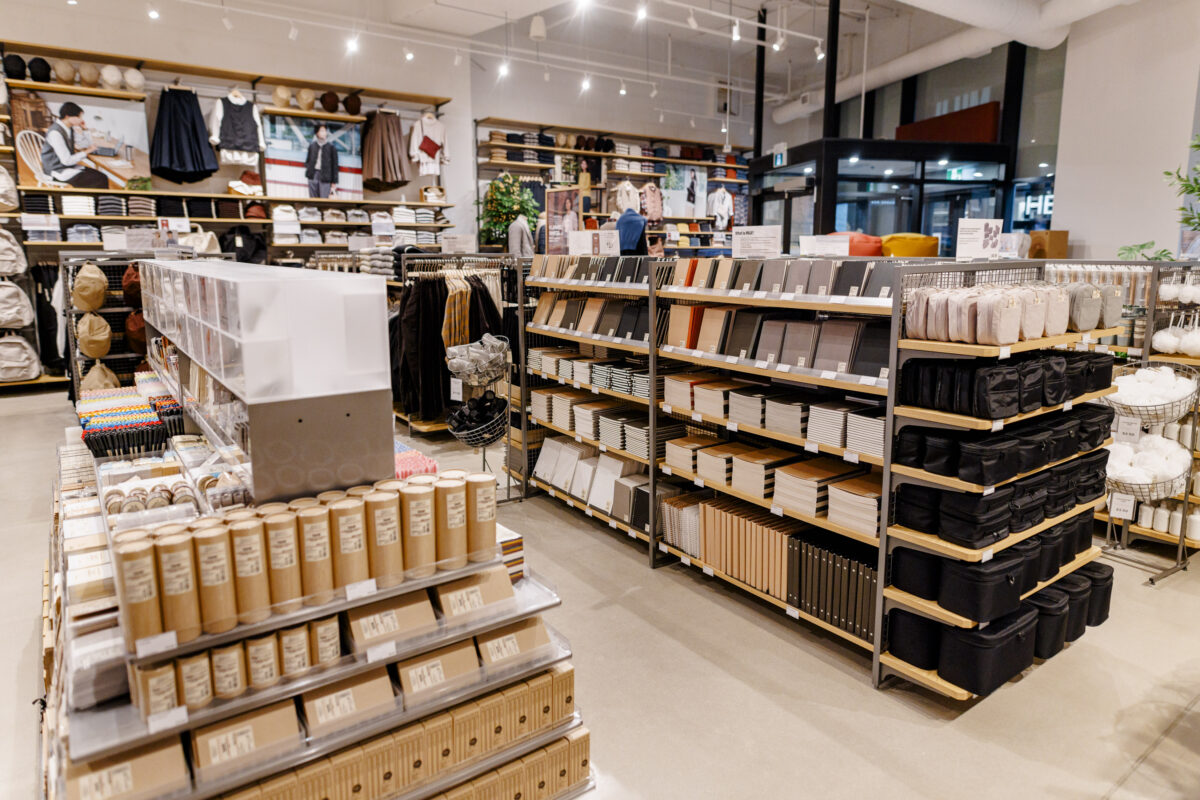
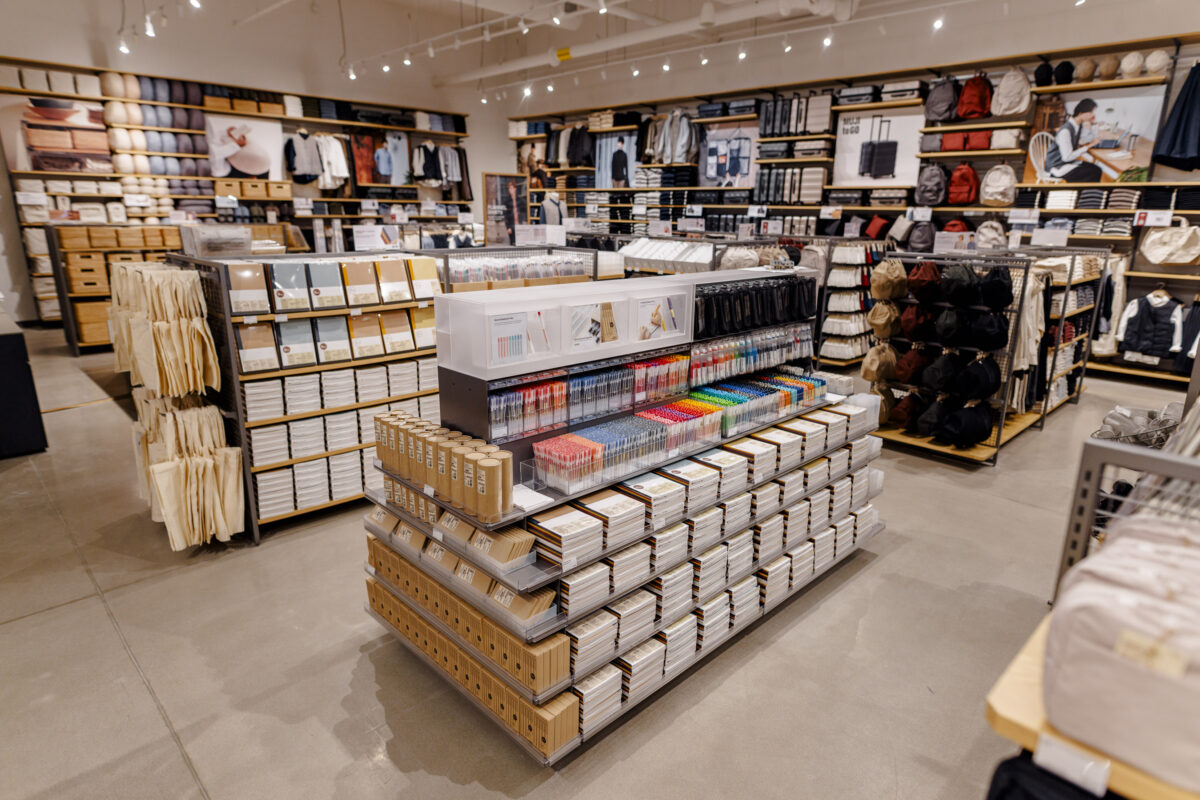
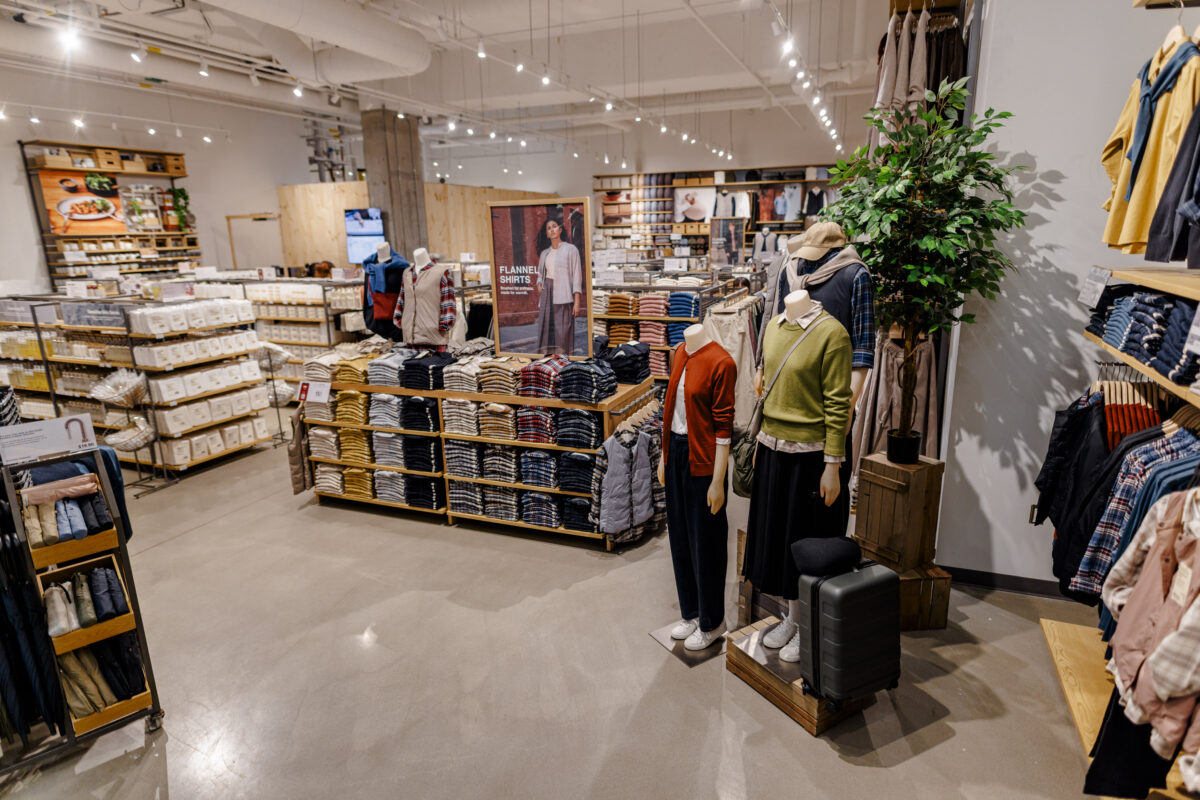
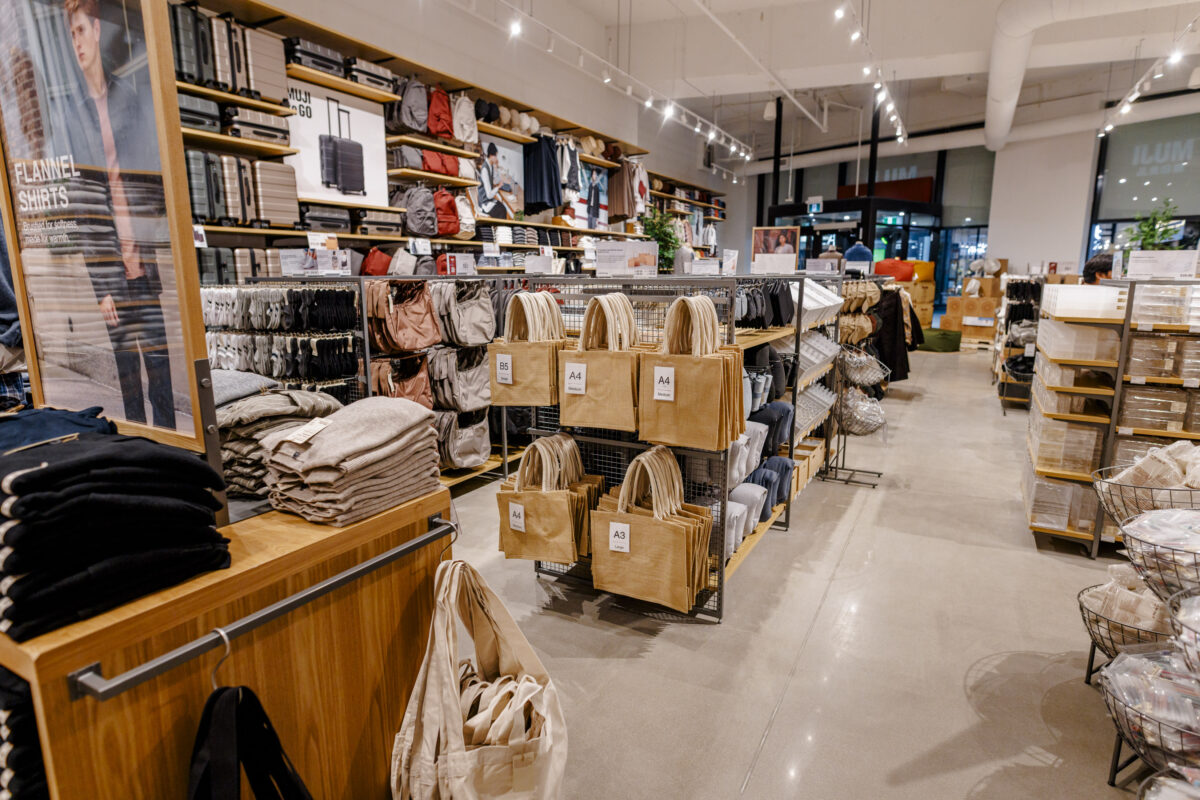
Japanese lifestyle brand MUJI, known for its variety of minimalist household and consumer goods, has opened its newest store at The Well in downtown Toronto.
Richard Rappaport
“MUJI at The Well is 6,000 square feet; like all of our other stores, its layout reflects MUJI’s global design ethos, presenting its simple and functional products in a lifestyle setting,” said Richard Rappaport, President, MUJI Canada.
“MUJI is a global retailer of high-quality, expertly-designed everyday essentials. We carry a range of product categories – everything from fashion and wellness to home goods, stationery and more. MUJI’s full name, Mujirushi Ryohin, loosely translates to “No-Brand, Quality Goods”, and underscores MUJI’s commitment to modesty, affordability, and quality.
“MUJI has grown as the go-to brand for millions of loyal customers in 30+ countries, offering more than 7,000 products.The Well location is MUJI’s 7th store in Canada, and 4th in the GTA.”
Rappaport said The Well location is the very first in Canada where customers can discover MUJI’s new skincare series before it arrives in other stores nationwide.
“It’s also home to Jarvis, our robot barista, already loved at our Atrium Toronto and Robson Vancouver stores. These additions make The Well a place where visitors can discover something fresh while enjoying the familiar MUJI experience they know and love,” said Rappaport.
“The Well is at the centre of a growing and vibrant neighbourhood where people live, work, and come together. MUJI’s goal has always been to provide simple, thoughtful essentials that support everyday life. By opening here, we hope to make our products more accessible to the community and be part of the way this neighbourhood continues to grow and evolve.”
Josh Katz
Josh Katz, AVP, Leasing, The Well: “Welcoming MUJI to the property adds a globally recognized, design-driven retailer that enhances the overall experience for guests at The Well. With occupancy nearing capacity, The Well continues to attract high-quality tenants that complement the vibrant mix of shopping, dining, and entertainment offerings.”
The retailer, originally founded in Japan in 1980, offers a wide range of low-cost, good quality products including household goods, apparel, food, and even houses. The name derives from the company’s original name in Japanese: Mujirushi Ryohin, meaning No Brand, Quality Goods.
The company is based on three core principles, which remain unchanged to this day: selection of materials, streamlining of processes, and simplification of packaging.
There are more than 1,000 stores around the world, carrying more than 7,000 items.
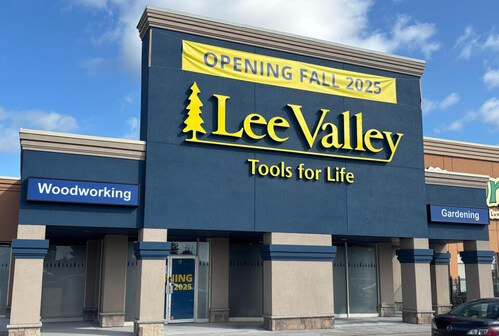
Lee Valley Tools in Pickering, ON. (CNW Group/Lee Valley Tools)
Lee Valley Tools, the Canadian, family-owned retailer, is unveiling its brand-new 19th location in Pickering on Saturday, September 20.
The flagship store is conveniently situated just off Highway 401 at 1755 Pickering Parkway, marks the brand’s return to the eastern Greater Toronto Area, it said.
Lee Valley Tools in Pickering will be home to the company’s largest and most concentrated in-store product displays in Canada, designed to inspire creativity and encourage hands-on interaction. Customers can engage with tools, explore displays, and participate in workshops and demonstrations led by Lee Valley Tools Customer Advisors. Dedicated customer parking will also be available on-site, added the retailer.
Jason Tasse
“When it comes to the journey of creating something, no one believes in or supports this more than Lee Valley – whether an aspiring craftsperson or a seasoned enthusiast, we have designed an in-store experience for everyone,” said Jason Tasse, President & Chief Operating Officer, Lee Valley Tools. “We’ve been looking for an ideal location in the GTA for some years, and we’re excited to officially open Lee Valley Tools’ 19th Canadian store in Pickering, creating new jobs and bringing a superior retail experience to the community.”
For more than 40 years, Lee Valley Tools has grown from a small, Ottawa-based mail-order business into a national brand with a robust online presence. Today, the company offers a broad assortment of products and continues to evolve while remaining committed to supporting the creative journeys of its customers, it said.
Founded by Leonard and Lorraine Lee, the Canadian company began with a single product, a barrel stove kit, and quickly grew to offer an extensive range of tools for woodworking, gardening, kitchen, and home.
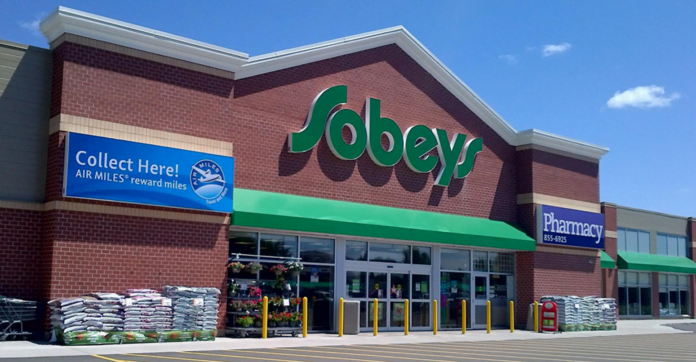
EXTERIOR OF SOBEYS GROCERY STORE. PHOTO: SUPERMARKET NEWS
Empire Company Limited announced on Thursday its financial results for the first quarter ended August 2, 2025, saying it was the strongest quarterly earnings per share in its history.
For the quarter, the company recorded net earnings of $212 million ($0.91 per share) compared to $208 million ($0.86 per share) last year. On an adjusted basis for the quarter, the Company recorded net earnings of $212 million ($0.91 per share) compared to $219 million ($0.90 per share) last year.
Michael Medline, president and CEO, Empire Company Limited (CNW Group/Empire Company Limited)
“Fiscal 2026 is off to a solid start as we delivered another quarter of strong bottom line growth, the strongest quarterly earnings per share in our history, underscoring the fact our team’s execution continues to improve,” said Michael Medline, President & CEO, Empire.
Empire Company Limited is a Canadian company headquartered in Stellarton, Nova Scotia. Empire’s key businesses are food retailing, through wholly-owned subsidiary Sobeys Inc., and related real estate. With approximately $31 billion in annual sales and $17 billion in assets, Empire and its subsidiaries, franchisees and affiliates employ approximately 129,000 people.
Its banners include brands such as Longo’s, Safeway, Farm Boy, FreshCo, IGA.
The company said it is continuing to enhance data capabilities and deepen its understanding of its customers, allowing the company to effectively capture emerging trends.
“Over recent years, the Company has accelerated investments in renovations, conversions, and new stores along with store processes, communications, training, technology and tools. Investing in the store network will remain a key priority, demonstrated by a sustained emphasis on renovations and continued new store expansion. The Own Brands program enhancement will remain a priority through increased distribution, product innovation and supporting Canadian suppliers,” it said.
“The Company intends to invest capital in its store network and is on track with its plan to renovate approximately 20% to 25% of the network, which started in fiscal 2024 and continues through fiscal 2026. This capital investment includes important sustainability initiatives such as refrigeration system upgrades and other energy efficiency initiatives.”
SUMMARY RESULTS – FIRST QUARTER
Comparative amounts have been rounded to the nearest million to conform with current year presentation.
(in millions of Canadian dollars, except per share amounts)
August 2, 2025
August 3, 2024
13 Weeks
13 Weeks
$ Change
Sales
$ 8,258
$ 8,137
$ 121
Gross profit
2,235
2,126
109
Operating income
382
369
13
Adjusted operating income(1)
382
383
(1)
EBITDA(2)
671
645
26
Adjusted EBITDA(1)
671
659
12
Net earnings(3)
212
208
4
Adjusted net earnings(1)(2)(3)(4)
212
219
(7)
Diluted earnings per share
EPS(3)
$ 0.91
$ 0.86
$ 0.05
Adjusted EPS(1)(3)(4)
$ 0.91
$ 0.90
$ 0.01
Diluted weighted average number of shares outstanding (in millions)
233.4
242.3
(8.9)
Dividend per share
$ 0.22
$ 0.20
$ 0.02
August 2, 2025
August 3, 2024
13 Weeks
13 Weeks
Gross margin(2)
27.1 %
26.1 %
EBITDA margin(2)
8.1 %
7.9 %
Adjusted EBITDA margin(1)
8.1 %
8.1 %
Same-store sales(2) growth
0.8 %
0.5 %
Same-store sales(2) growth – food(5)
1.9 %
1.0 %
Same-store sales(2) (decline) growth – fuel
(13.4) %
4.4 %
Effective income tax rate
26.0 %
22.6 %
(1)
See “Non-GAAP Financial Measures & Financial Metrics” section of this News Release for a description of the types of costs and recoveries included.
(2)
See “Non-GAAP Financial Measures & Financial Metrics” section of this News Release.
(3)
Attributable to owners of the Company.
(4)
See “Adjusted Impacts on Net Earnings” section of this News Release.
(5)
Previously named – same-store sales, excluding fuel.
“Since fiscal 2018, the Company has been expanding its FreshCo discount banner to Western Canada and its significant growth has been driven by store conversions and regional expansion. The value proposition and strong multicultural assortment, along with the addition of the Scene+ loyalty program, has supported the growth and expansion of the Discount banner,” said Empire.
“The Company opened two new FreshCo stores in Western Canada during the quarter and one subsequent to the end of the quarter. As at September 10, 2025, FreshCo has 51 stores operating in Western Canada and expects to open an additional four stores in fiscal 2026. The Company expects to have opened 65 FreshCo stores in Western Canada over the next several years.”
“For fiscal 2026, capital spend is expected to be approximately $850 million, with approximately half of this investment allocated to renovations and new store expansion (including a 1.5% increase in store footprint expansion from new stores), 25% allocated to IT and business development projects and the remainder allocated to logistics and sustainability. By the end of fiscal 2026, the Company expects to complete the network renovations of approximately 20% to 25%, which began in fiscal 2024.”
Plan and order points offer customers one-on-one appointments with IKEA experts to plan, design, and purchase home furnishing solutions for any room in the home such as kitchen renovations or bedroom storage systems. Once orders have been placed, they can be delivered to their homes or collected from the pick-up location at the Plan and order point. (CNW Group/IKEA Canada Limited Partnership)
IKEA Canada is launching a new Plan and order point in Kelowna, BC, the second location in the province, following Abbotsford.
This continued growth demonstrates the home furnishing retailer’s commitment to becoming more accessible to Canadians where they live, work, and socialize. Currently, the nearest physical IKEA meeting point for Kelowna residents is about four hours away by car, said the retailer.
“Plan and order points offer customers one-on-one appointments with IKEA experts to plan, design, and purchase home furnishing solutions for any room in the home such as kitchen renovations or bedroom storage systems. Once orders have been placed, they can be delivered to their homes or collected from the pick-up location at the Plan and order point,” it said.
“For those looking to instantly refresh their spaces, the Kelowna Plan and order point will feature a limited number of products from the IKEA range (excluding food – sorry, no meatballs) for immediate purchase and takeaway.”
Kelowna Plan and order point to offer high-quality design services, bringing affordable, inspiring home furnishing solutions closer to BC residents. (CNW Group/IKEA Canada Limited Partnership)
Located in the Central Park Power Centre at 1500 Banks Rd, #104, the IKEA Kelowna Plan and order point is expected to open in spring 2026. It will be the 12th Plan and order point location across Canada.
“As the cost of living continues to rise and everything from groceries to gas becomes less affordable, it has become our priority to offer more affordable, functional, and inspiring home furnishing solutions to Canadians — no matter where they live or how they choose to shop with us,” said Jessie Quick, Country Business Development and Transformation Manager, IKEA Canada.
Jessie Quick
The retailer said Plan and order points are one of the many ways IKEA Canada has been transforming its business to deliver a seamless retail experience wherever, whenever, and however customers choose to shop with the renowned home furnishing retailer. Insights show that Plan and order points help to reduce the distances that customers must travel to visit an IKEA location, which has affordability, accessibility, and sustainability benefits.
In addition, IKEA Canada said it has recently made all online and in-store planning services free of charge for our customers; reduced in-home kitchen planning and measuring from $199 to $129; lowered the entry delivery fee of $39 to $19; and added ‘Rooms of Choice’ for all deliveries depending on the needs of the customer.
IKEA has been present in the BC market for nearly 50 years when the first Canadian store opened in Richmond in 1976. To date, there are two IKEA stores, three pick-up locations, a vast number of parcel pick-up locations, and one customer distribution centre.
Janet McGowan
“We are thrilled to continue our growth in Western Canada where we have built a rich history and meaningful connections with the BC community,” said Janet McGowan, Market Area Manager, West Market, IKEA Canada. “We look forward to providing our new neighbours in Kelowna with beautiful, functional, and sustainable home furnishings that fit their budget and evolving needs at home.”
Founded in 1943 in Sweden, IKEA is a leading home furnishing retailer, offering a wide range of well-designed, functional home furnishing products at prices so low that as many people as possible can afford them. IKEA Canada is part of Ingka Group which operates 574 IKEA stores, shops and planning studios in 31 countries, including 16 in Canada.
For those looking to instantly refresh their spaces, the Kelowna Plan and order point will feature a limited number of products from the IKEA range (excluding food – sorry, no meatballs) for immediate purchase and takeaway. (CNW Group/IKEA Canada Limited Partnership)