Advertisement
Home Blog Page 363

Bayview Village Expands Innovative Restaurant Lane with Arrival of Flagship Ju-Raku Location

Bayview Village in Toronto. Image supplied

Bayview Village Shopping Centre in Toronto is set to welcome a new culinary arrival with the opening of Ju-Raku, a proudly Canadian-owned, elevated Japanese dining concept. The 4,500 square foot restaurant will officially open its doors on Sunday, April 6, 2025, marking the brand’s first location in Canada. Its debut adds to Bayview Village’s growing list of refined eateries and supports the shopping centre’s strategy of positioning itself as an innovator in upscale retail and gourmet dining experiences.

Ju-Raku promises an immersive experience in high-end Japanese cuisine, bringing a rare combination of omakase sushi and teppanyaki under one roof. The restaurant’s design and menu pay homage to Japan’s culinary traditions while presenting them through a modern lens suited for Toronto’s discerning diners.

“Our guests can expect an unforgettable culinary journey at Ju-Raku,” said HF Tang, Director of Palate Portfolio, which includes Ju-Raku. “Our menu includes the highest grade Japanese beef and freshest seafood sourced directly from Japan and around the world. The experience is elevated not only by the exceptional quality of ingredients, but also by the skills of our highly experienced chefs, many of whom have honed their craft at some of the most recognized Japanese restaurants.”

The restaurant will feature a 20-seat teppanyaki bar, described as  “interactive and intimate” culinary theatre. It will also offer a chef-curated omakase sushi bar, where diners can enjoy seasonal dishes crafted with precision.

Ju-Raku at Bayview Village in Toronto. Image supplied

Elegant Interiors and Private Dining

Designed to reflect both traditional Japanese aesthetics and the clean lines of Scandinavian modernism, the interior of Ju-Raku was intentionally created to feel serene and sophisticated.

“Our 4,500 square-foot flagship seamlessly blends Japanese aesthetics with Scandinavian modern influences,” said a Ju-Raku spokesperson. “We designed the space with intention, including Toronto’s newest 20-seat teppanyaki bar, a beautifully crafted sushi bar, and private VIP rooms designed for intimate gatherings.”

Private dining rooms within Ju-Raku seat up to 10 guests and are tailored for special occasions or small celebrations. The design avoids conventional wood-heavy accents in favour of a brighter, more contemporary feel that reflects the restaurant’s modern interpretation of Japanese fine dining.

Ju-Raku at Bayview Village in Toronto. Image supplied

A Strategic Fit Within Bayview Village’s Transformation

Known for its elevated offering across fashion, beauty, dining, and lifestyle, Bayview Village continues to transform itself into a premier retail and culinary destination. Located in North York, the centre features upscale tenants and caters to nearby neighbourhoods, including Willowdale, York Mills, and the Bridle Path.

Carrie DeVries, Vice President of Leasing at QuadReal Property Group, expressed excitement for the opening of Ju-Raku. “We are proud to welcome the first Ju-Raku location to Bayview Village, further elevating our collection of distinctive gourmet dining destinations,” she said. “At Ju-Raku, guests will experience a new level of culinary artistry… set within a refined and welcoming ambiance.”

Ju-Raku at Bayview Village in Toronto. Image supplied

Curated Restaurant Lane: A Showcase of Dining Excellence

Bayview Village continues to redefine what a shopping centre dining experience can be through its curated Restaurant Lane, a thoughtfully designed corridor featuring a lineup of unique, upscale eateries. Unlike traditional shopping centre food courts—or “food halls”—Restaurant Lane offers a deliberate and elevated alternative.
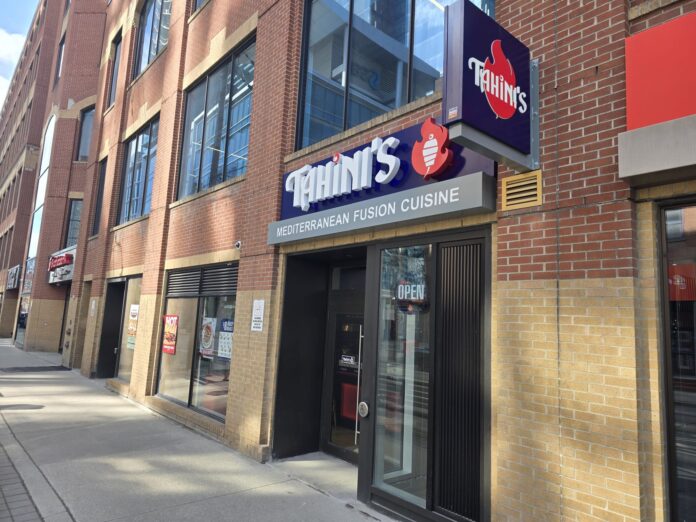
Ju-Raku joins a collection of notable dining experiences that illustrate the centre’s intentional curation, including Pür & Simple, a stylish breakfast and brunch concept; Il Fornello, an inviting Italian restaurant that balances casual and upscale elements; and Tabulè, known for its refined take on Middle Eastern fare among others. These restaurants reflect the broader transformation of Bayview Village into a hub of culinary excellence, attracting food-savvy visitors from across the city.

“This highly anticipated addition to our Restaurant Lane speaks to the calibre of exceptional experiences and Canadian-owned brands we strive to bring to the shopping centre,” added DeVries. “Ju-Raku will be a landmark destination at Bayview Village as part of its transformation into a vibrant community hub, synonymous with luxury living.”

Updated renovatons to Bayview Village in Toronto. Image supplied

Bayview Village: A Storied History with a Vision for the Future

Established in 1963 as an open-air shopping centre, Bayview Village has grown into one of Canada’s most prestigious shopping destinations. Over the years, it has evolved with its clientele, maintaining an upscale profile that sets it apart from many shopping centres in the city.


Anchored by Hammam Spa By Céla, LCBO, Shoppers Drug Mart, Goh Ballet Bayview and the GAP (re-opening mid-April), the centre is also home to a variety of upscale retailers, offering a unique blend of everyday necessities and elevated indulgences. It is easily accessible via the Sheppard subway line at Bayview Station and features ample parking.

Through the reimagination of the Bayview Village master plan, QuadReal is transforming the Toronto shopping destination into a visionary, design-forward, master-planned community. With construction already underway for the project’s first phase, the exciting redevelopment will be anchored by a resort-inspired outdoor promenade and include immersive shopping and dining experiences, a public park and condominium apartment residences. 

More from Retail Insider:

Significant shift in Canadian consumer shopping habits due to US trade threats 

Photo by Borko Manigoda

Food Processing Skills Canada (FPSC) has released its consumer research report, Impact of US Tariffs on Canadian Food Consumer Behaviour, indicating Canadian consumers are changing their shopping habits.

“There is an opportunity here for Canadian food and beverage businesses to reach consumers looking for local and Canadian products and for policymakers to use the tools at their disposal to get more Canadian products in front of consumers,” said Jennefer Griffith, Executive Director, Food Processing Skills Canada.

Jennefer Griffith
Jennefer Griffith

Research confirmed that the political environment has had a direct impact on Canadian consumer shopping habits. 98% of survey respondents have heard about tariffs or trade restrictions between Canada and the USA and 85% are concerned, said the organization.

“This concern has caused a drastic shift in behaviour with 43% of consumers making significant changes to their grocery shopping habits in the last two months. The primary motivation for these changes is a desire to buy Canadian products (81%) and avoid U.S. products (76%). Seniors prioritize buying Canadian, while immigrants and those under 35 place less emphasis on it. Buying products from one’s own province is more important to Quebecers (82%) and less so to Albertans (48%),” it said.

67% of consumers report buying more Canadian products in the past two months, including 26% who indicate buying “much more.” Consumers are most likely to report buying more Canadian produce, followed by bakery and grains, canned goods, meat/poultry/seafood, and dairy products. Alcoholic beverages are at the bottom of the list. Half of consumers report shopping at Canadian grocery retailers more often, said the report.

“The top motivations for buying more Canadian products are the belief that it’s good for the economy (86%), “anger/frustration” with the U.S. (75%), a desire to help Canadian food and beverage processors (72%), and Canadian pride (71%). Very few are motivated by a belief that Canadian products cost less. 52% of consumers who increased their purchases of Canadian products report an increase in their grocery bills, but only 5% consider the increase to be “much more expensive,” it explained.

Photo by Andrea Piacquadio

“However, identifying Canadian products remains a significant challenge. Only 40% of consumers find it easy to determine how “Canadian” a product is. The most common method for identifying Canadian products is reading product labels (76%), followed by looking for Canadian symbols (e.g., flag) on packaging. Only 11% use mobile apps or online tools and only 47% of respondents correctly identified “Product of Canada” as the “most Canadian” product, highlighting a lack of understanding of labeling.

“The research shows that 48% of those who haven’t increased their purchases of Canadian products want to start doing so, but difficulty identifying Canadian products is a major barrier for this group. 70% of all consumers say they would buy a lot more Canadian products if it was easier to determine how Canadian it is.”

The report is part of a series of consumer surveys gathering insights into Canadians’ grocery shopping habits, perceptions of available products, and response to increasing food prices and inflation. This final report in the series also assessed awareness and concern regarding US tariffs and trade rhetoric.

To learn more about additional consumer insights and industry recommendations download the report here.

Food Processing Skills Canada is the food and beverage manufacturing industry’s skills training and workforce development organization. As a non-profit located in Ottawa with representatives across Canada, the organization supports food and beverage manufacturing businesses in developing skilled and professional employees and workplace environments.

Related Retail Insider stories:

Employment falls in wholesale and retail trade: Statistics Canada

Photo by Pavel Danilyuk

Employment fell by 29,000 (-1.0%) in wholesale and retail trade in March, partly offsetting an increase of 51,000 in February. On a year-over-year basis, the number of people working in wholesale and retail trade was little changed in March, reported Statistics Canada on Friday.

The federal agency said overall employment in the country fell by 33,000 (-0.2%) in March and the employment rate declined 0.2 percentage points to 60.9%. The unemployment rate rose 0.1 percentage points to 6.7%.

Employment decreased by 33,000 (-0.2%) in March, the first decrease since January 2022. The decline in March followed little change in February and three consecutive months of growth in November, December and January totalling 211,000 (+1.0%).

“The employment decline in March was driven by a drop in full-time work (-62,000; -0.4%). Full-time employment had followed a strong upward trend in the second half of 2024 and had held steady in January and February 2025,” said Statistics Canada.

“The employment rate—the proportion of the population aged 15 and older who are employed—fell 0.2 percentage points to 60.9% in March. This partially offset an increase of 0.3 percentage points that had been observed from October 2024 to January 2025.”

Private sector employment fell by 48,000 (-0.3%) in March, following little change in February and a cumulative increase of 97,000 (+0.7%) from November 2024 to January 2025. On a year-over-year basis, the number of employees in the private sector was up by 175,000 (+1.3%), said the report.

Public sector employment was little changed for a third consecutive month in March and was up 92,000 (+2.1%) compared with a year earlier. Self-employment was also little changed in March and was up 81,000 (+3.0%) on a year-over-year basis, added the report.

StatsCan said the unemployment rate rose 0.1 percentage points to 6.7% in March, the first increase since November 2024. The unemployment rate had trended up from 5.0% in March 2023 to a recent high of 6.9% in November 2024, before falling by 0.3 percentage points from November 2024 to January 2025, in the context of robust employment growth at the end of 2024 and in early 2025.

“Since March 2024, the unemployment rate has remained above its pre-COVID-19 pandemic average of 6.0% (from 2017 to 2019).”

Related Retail Insider stories:

Downtown Vancouver Retail Faces Shifting Trends [Report]

Alberni Street at Burrard Street in Downtown Vancouver. Photo: Lee Rivett.

Downtown Vancouver’s retail sector is undergoing a significant transformation, shaped by shifting consumer behaviours, economic headwinds, and new investments. The recently released State of Downtown 2025 report by Downtown Van provides a comprehensive picture of the city core’s retail landscape and outlines both the opportunities and challenges ahead for the district that remains Canada’s most densely populated downtown.

From increasing storefront vacancies to standout performance in apparel spending, the report illustrates a dynamic market adapting to evolving conditions. The document underscores that while retail in downtown Vancouver has not fully recovered to pre-pandemic levels, it continues to show signs of resilience—particularly in select corridors and categories.

Retail Sales and Spending Patterns

Retail spending in the Downtown Van district declined in 2024, with average weekly sales volume falling by 1.9% year-over-year. Over half of the weeks in 2024 registered negative annual growth. Yet, despite the broader softness, apparel emerged as a bright spot.

Apparel retail sales grew by an average of 7.3% year-over-year, outperforming general retail. Black Friday 2024 was a particularly strong period for the category, with an 85% spike in sales compared to the previous year. This signals strong consumer interest in fashion, even as broader discretionary spending remains cautious.

While the total number of retail transactions increased by 1.2%, the average transaction size declined, pointing to a more value-conscious shopper. After adjusting for inflation, average retail transaction size in downtown Vancouver fell by 10.9% between 2023 and 2024. However, apparel again bucked the trend, with transaction count rising by 3.0% and transaction size increasing by 2.3%.

Photo: Tourism Vancouver

Retail Foot Traffic by Corridor

Visitor data shows that foot traffic trends were uneven across downtown’s major retail corridors. In 2024, overall visitation to the Downtown Van district declined by 7.8%—the first drop since the onset of the COVID-19 pandemic. This decrease was most pronounced among Vancouver residents, whose visits to the downtown core fell by 12%, the sharpest drop among regional municipalities.

That said, some corridors did show growth. Granville Street experienced an 11.6% year-over-year increase in visits, while Robson Street rose modestly by 2.1%. Alberni Street, known for its luxury retail mix, saw a sharp 11.7% decline in traffic, attributed in part to the departure of key tenants like Brooks Brothers and Michaels. West Hastings Street similarly declined by 3.3%.

These divergent trends highlight the importance of location strategy for retailers. Corridors with a growing entertainment or nightlife presence, such as Granville, are seeing stronger footfall, particularly in the evenings. In fact, evening and late evening visits to downtown surged in 2024—rising by 19.6% and 37.1%, respectively—indicating a growing nighttime economy.

Luxury brands on Alberni Street in downtown Vancouver. Photo: Lee Rivett

Despite the pockets of success, the overall retail environment remains fragile. Downtown Vancouver’s storefront vacancy rate rose from 13.7% to 14.9% in 2024. This marked a 9% year-over-year increase and reversed gains made in 2023. The downtown vacancy rate also remains well above the citywide average of 9.9%.

Granville Street was particularly hard hit. The retail vacancy rate on the once-bustling strip jumped from 22.1% to 29.3%, with over one in four storefronts sitting empty. Notable closures included Cinema Public House and 8th & Main. Vacancies have clustered on the 800, 900, and 1000 blocks—areas targeted by the City of Vancouver’s ongoing Granville Street planning process, which aims to revive daytime activity in the entertainment district.

Yet there are signs of recovery on Granville. The Rec Room opened in late 2024, Winners moved into a new space north of Hudson’s bay, and five food and beverage tenants have been secured in the newly redeveloped 900-block project by Bonnis Properties. These openings were not yet reflected in the year-end storefront count, suggesting early momentum for 2025.

Hudson’s Bay Uncertainty Looms Large

A major headline affecting downtown retail in 2025 is the uncertain future of the Hudson’s Bay Company’s flagship location at Granville and Georgia. HBC filed for creditor protection in March 2025, a development that could reshape the city’s retail core. RioCan, part-owner of the flagship property, has indicated that redevelopment or re-tenanting could be options should the space become vacant.

While the outcome remains to be seen, other retailers are actively expanding downtown. Adidas opened a new Brand Centre at Robson and Burrard, and Marshalls is expected to open on Granville in 2025. Roots is also relocating its store to Robson and Hornby (construction finishes in the summer), signalling continued confidence in the downtown market from prominent national retailers.

Downtown Vancouver Hudson’s Bay flagship store (Image: Streetworks Developments)

Economic Pressures on Retailers

According to a LOCO BC study commissioned by Downtown Van and the Vancouver BIA Partnership, local businesses are under significant cost pressure. Between 2019 and 2024, the average cost of doing business in Vancouver rose by 25%, driven by surging expenses in payroll, leases, insurance, and property taxes.

  • Lease costs increased by 70%
  • Property tax burdens surged by 133%
  • Employment-related costs rose by 40%, while employment grew just 14%
  • Insurance premiums nearly doubled due to inflation and rising claims

These cost pressures are compounded by economic uncertainty and the escalation of a trade dispute with the United States. New U.S. tariffs on Canadian goods, and Canada’s retaliatory tariffs, are expected to squeeze retail margins further by increasing wholesale costs and complicating supply chains.

Consumer Shifts and Price Sensitivity

Retailers are also contending with shifting consumer behaviour. According to the report, 83% of Canadians have changed their financial plans and 66% are reducing expenses. In downtown Vancouver, this trend has translated into smaller purchases per visit.

While transaction volume was up, average transaction size across the retail sector declined. This shift is evident not only in general retail but also in dining, with restaurant spending dropping even as visitation increased. Moneris data showed a 6.5% average year-over-year decrease in weekly restaurant sales in 2024.

Still, retail experiences that combine value and quality continue to appeal to consumers. Apparel retailers in particular have shown resilience, perhaps benefiting from pent-up demand and ongoing interest in fashion and brand experiences.

New Adidas flagship on Robson Street at Burrard in downtown Vancouver. Photo: Lee Rivett

The Role of Tourism and Events

Tourism remains a key driver of retail activity downtown. In 2024, 1.32 million cruise passengers docked at Canada Place—a 7% increase year-over-year—and downtown hotel occupancy rose to 80.4%. The average hotel room rate climbed to $335 per night, with demand peaking in December thanks to Taylor Swift’s The Eras Tour, which injected an estimated $157 million into the local economy.

Downtown is also seeing a growing share of out-of-province visitors. In 2024, visits from other Canadian provinces rose by over 50%, and Calgary accounted for 1.2% of all downtown visits—higher than many nearby municipalities.

Major upcoming events such as the 2025 JUNO Awards, Web Summit, and the 2026 FIFA World Cup are expected to boost tourism further and create legacy benefits for retail, public space, and urban activation.

The Nighttime Economy

One of the report’s emerging themes is the growing role of downtown Vancouver’s nighttime economy. Evening and late-night visits grew significantly in 2024, and there is potential to transform the downtown core into a vibrant 24-hour district.

The Granville Plan, currently in development, aims to reimagine the street as a revitalized entertainment destination that serves residents and visitors alike. This includes upgrading public space, streamlining event permitting, and encouraging food, beverage, and cultural uses that extend beyond traditional business hours.

Downtown Vancouver on Granville Street. Photo: Lee Rivett.

Real Estate and Office Market Outlook

Retail’s performance is also shaped by adjacent sectors such as office leasing and residential development. Office vacancy in downtown Vancouver stood at 12.0% at the end of 2024—still the lowest of any major North American downtown—following a wave of new office completions.

While some major tenants like Microsoft and WeWork returned space to the market, demand for AAA office space remains strong. Leasing activity was driven by sectors including tech, financial services, and law, suggesting continued strength in the employment base that supports retail.

Residential density also remains a key asset. Downtown Vancouver is home to nearly 141,000 residents, making it the most densely populated downtown in Canada. This local population continues to support restaurants and retail, even as tourist numbers fluctuate.

Outlook for 2025 and Beyond

Looking ahead, the downtown Vancouver retail market is poised at a crossroads. While economic challenges persist, the city core’s density, transit connectivity, and role as a cultural and commercial hub provide a strong foundation.

Targeted investment—in both public infrastructure and retail revitalization—will be essential to maintaining momentum. The shift toward a more experiential, evening-oriented retail environment offers opportunities for operators that can adapt to changing consumer patterns.

With a mix of new developments, an influx of major events, and growing interest from out-of-town visitors, downtown Vancouver remains a critical piece of the region’s retail ecosystem.

More from Retail Insider:

Canada faces potential wave of small business closures: MNP

Photo by The Coach Space

Amid economic uncertainty and tariff wars, Canada faces a wave of small business closures, partly driven by the “Silver Tsunami” of retiring Baby Boomer entrepreneurs, says MNP

With small businesses making up 98.1% of all employer businesses, employing 46.5% of the private sector workforce, and with many owners nearing the age of retirement, succession planning is critical to the transition, says the company.

It says a new report from Statistics Canada reveals that the average age of owners was 53.5 in 2020, with many now approaching or already at retirement age. Overall, the report found that dynamism is on the decline in Canada, with the entry rates for incorporated business ownership decreasing and the gap between the entry and exit rates narrowing, indicating fewer new entrepreneurs entering the market to replace those who exit—creating a growing gap in local ownership, adds MNP.

Kerry Smith
Kerry Smith

“Succession planning is not just about transition; it’s an opportunity to ensure independent businesses remain community-owned, strengthen local economies, safeguard jobs, and drive long-term prosperity. Whether through family succession, employee ownership, or third-party sales, a well-crafted succession strategy secures both economic resilience and Canadian sovereignty,” explains Kerry Smith, National Leader, Family Office Services at MNP LLP.

The potential impact of retiring owners and resulting exits is particularly pronounced in rural and small-town Canada, where 98.6% of businesses are locally owned. The majority of these businesses are in construction (14.7%) and agriculture, forestry, fishing, and hunting (14.4%), followed by retail trade (10.6%). A lack of succession planning is underscored by the fact that nearly two-fifths (40.5%) of small rural businesses are expecting labor-related challenges in the coming year. These include difficulties with recruitment (29.8%) and concerns about employee retention (17.0%), says MNP.

“Retiring boomers are at the heart of the talent shortage—especially in leadership roles—the question isn’t just about hiring, but about who will step up to keep these businesses running. Succession planning is key to ensuring a smooth transition, helping owners secure their legacy while protecting the businesses and communities that rely on them,” says Smith.

According to MNP’s Succession Readiness Report, nearly two-thirds (64.1%) of Canadian businesses have no succession plan. Fewer than one in 10 (8.5%) have established clear, actionable goals for the inevitable changeover, which threatens to leave a significant gap in Canada’s business ecosystem.

“Rallying behind local businesses goes beyond shopping locally—it’s about protecting jobs, keeping money within communities, and strengthening domestic industries. It also means ensuring Canadian businesses remain Canadian-owned. As Canada’s self-sufficiency faces pressure from global trade dynamics, maintaining community ownership of key industries is vital,” he explains.

Smith points to underutilized programs like employee share ownership plans (ESOPs)and employee profit sharing plans (EPSPs) as one way for small businesses to keep talent and motivate the next generation of owners. ESOPs provide a structured way for business owners to pass their business on to their workforce and allow employees to build wealth through the company. EPSPs, meanwhile, offer a strategy for enhancing employee engagement and retention by sharing company profits, giving employees a direct stake in the company’s financial success and fostering a sense of shared ownership and commitment to growth.

Photo by RDNE Stock project

“ESOPs and EPSPs can provide structured pathways for ownership transition while keeping businesses rooted in their communities,” says Smith. “For Baby Boomer business owners facing retirement, these tools offer a means to ensure their companies continue thriving, while also allowing employees to build wealth and invest in the business’s success.”

“Employee ownership is a crucial tool not just for succession planning, but for ensuring that Canadian businesses remain Canadian-owned. Countries like the U.S. and the U.K. have long embraced ESOPs as a way to secure local economic stability, and Canada can be doing the same. ESOPs and EPSPs offer a powerful way to transition businesses while preserving Canadian jobs and keeping wealth within our communities.”

The MNP survey found that less than half (48%) of business owners are confident their business’s net value will align with their retirement goals, and many have not sought professional advice to confirm this. Smith stresses that working with advisors can be the difference between a smooth transition and financial uncertainty.

“The silver lining of the tariff war is that it encourages Canadian businesses to think ahead—identifying growth opportunities locally and exploring new markets beyond North America. Working with a qualified advisory team can help uncover opportunities that may have been overlooked,” he says. “Whether an owner plans to transfer leadership, sell to a third party, or pass the business to a family member, early strategic succession planning is crucial.”

Recent data from Statistics Canada shows that business closures remain steady, with a monthly average of 44,350 in 2024—a 2.7% increase from 2023. The closure rate in 2024 stands at 4.7%, up slightly from 4.6% in 2023. Although this trend is expected to accelerate as the aging population retires, adds MNP.

“For many aging Canadian business owners, their company is not only the cornerstone of their financial future but also a critical source of employment and stability for both their employees and the community,” says Smith.

Longo’s opens 42nd store in Vaughan, expands with plans for Etobicoke and Niagara locations (Photos)

Source: Longo's
Source: Longo's

Ontario-based grocery chain Longo’s has opened its 42nd store at 6530 Major MacKenzie Drive W in Kleinburg  —marking its 7th store in its home base of Vaughan.

Anthony Longo, the brand’s CEO, said the company is well known in the Vaughan area, so people recognize the brand. 

Anthony Longo
Anthony Longo

“The location itself is on the northwest side of Vaughan, and it’s an area that’s growing rapidly. We think it’s going to be a great site long term. They’re continuing to build houses, and it fits our demographics—all the things we look for. I think it’s going to be a great site with some really good tenants in the plaza as well,” he said.

A few weeks ago, the company also opened another location in Vaughan, at Weston Road and Highway 7, part of the Colossus Centre.

Longo said the company also plans to open a store this year in Etobicoke on Queensway near Kipling. 

“We’re really excited about that because it’s our first store in Etobicoke. We’ve been looking for a site in that area for years, and this is going to be a great opportunity for us to serve that community,” he said.

Source: Longo's
Source: Longo’s

“In 2026, we plan to open another store, probably in the spring, Welland, in the Niagara region. It will be our first store in that area, so we’re really excited about it. It’s a growing market with really good demographics, and we’ve never had a store there before, so it’s a new area for us.”

All 42 stores are located primarily in the Greater Toronto Area and beyond. 

Longo said the company has not contemplated going beyond that geographic area – at least at this stage.

“I think there’s still lots of opportunity within the Southern Ontario region. For example, in Barrie, we have a site that’s been approved, but it’s a few years away because they need to get municipal servicing there. There are really fast-growing areas that we’re not yet represented in, so I believe we still have an opportunity to add quite a few more stores in this marketplace over the next few years.”

The company’s most recent stores are between 38,000 and 40,000 square feet. However, the Colossus store, which just opened, is 28,000 square feet. 

Source: Longo's
Source: Longo’s

“There are three things we excel at and that we consider key differentiators. One is our customer service. We focus on creating an exceptional connection with our customers, and we call that our culture—treating customers like family. It’s about making people feel like they belong and giving them a great shopping experience,” explained Longo.

“The second thing is being fanatically fresh. We believe we have the best fresh departments in this market, from produce to prepared foods, meat, seafood, bakery, and deli. We do that exceptionally well. 

“The third thing is our Longo’s owned and unique brands. We focus on a whole assortment of products, including some exclusive items, that you can’t find anywhere else. I believe we do all three of these really well—although I might be a little biased.”

The brand has stayed close to its Italian roots in a number of ways but primarily through its assortment and through its private label line called “Curato,” which means “curated” in Italian. 

“It’s a line of 100% Italian imported products, everything from candies and oils to vinegars, cheeses, and other items. They’re really popular with our customers,” added Longo.

Source: Longo's
Source: Longo’s

“We do talk to companies about selling them outside our stores, but we’re still working through that process . . . We launched the Curato brand about seven or eight years ago. Although we’ve always imported products, we really focused on developing the brand around that time.”

As for the new store, Longo said the same formula has been kept across the board, but there are some changes. 

“We’ve sharpened the grocery assortment, and we’ve revamped our meat department. We took a concept from our Kitchener store, where we eliminated the wall between the service case and where our butchers work. Now, customers can interact with the butchers in an open setting, creating more of a market feel. Additionally, we combined our cheese and meat departments. Instead of having separate islands, we put them together for better customer service,” he said.

“We’ve also done some rebranding with our prepared foods section. It’s now called “Pronto Eats,” and it’s focused on helping families get great meals on the table in a simple way. We’re continuing to expand in that area and see a lot of opportunity for growth in the food service sector.”

Deb Craven
Deb Craven


“Each new location we open is a testament to the family values and standards that have defined us for almost 70 years,” said Deb Craven, President, Longo’s. “At Longo’s Kleinburg, we are excited to deepen our connection with the community, bringing the freshest, highest-quality products—many of which are carefully sourced from right here at home—while continuing to deliver the exceptional service and value our Guests have come to know and trust.”


The Kleinburg community has long anticipated the new location, which opens just five weeks after Longo’s Colossus.
Longo’s Kleinburg, situated at 6530 Major Mackenzie Drive W., offers fresh produce, artisanal cheeses, locally sourced meats and seafood, and a Market-style bakery. Customers can also enjoy a fresh Deli & Meat Counter, oven-baked pizza, gourmet sandwiches, a hot buffet, a salad bar, ready-to-go meals, and made-to-order sushi. The store also features an in-store Starbucks, local beer and wine selections,
and The Loft Cooking School, offering various classes and community events for adults and children.

“Kleinburg is a special community, and we are beyond excited to become an active part of it,” said Matthew Maiss, Store Manager, Longo’s Kleinburg. “We look forward to providing high-quality products, exceptional service, and a welcoming space for our Guests.”

Source: Longo's
Source: Longo’s

Longo’s is a family-operated Canadian organization that started in 1956 when three brothers, Tommy (Anthony Longo’s father), Joe and Gus opened their first fruit market. What began as a small family-run store has since grown into a company that operates 42 stores in communities across Toronto and the GTA. Today, Longo’s said it maintains the same family-based values as it did almost 70 years ago, putting Family Standards at the heart of everything they do.

Related Retail Insider stories:

Government’s decision to exempt food from new retaliatory tariffs will protect Canadian jobs, food affordability: Restaurants Canada

Photo by Gary Barnes

While Canada still faces significant challenges from U.S. tariffs, Restaurants Canada said it is pleased by the federal government’s decision to exempt food from any additional retaliatory tariffs.

This will help the foodservice industry regain some much-needed stability and protect the 1.2 million Canadians it employs amid the current economic uncertainty, it said.

“We appreciate the federal government’s and Prime Minister Carney’s willingness to listen to us on this issue,” said Kelly Higginson, Restaurants Canada President and CEO. “Our food supply chains are highly integrated, and many food items we import from the U.S. are not available from other sources in the quantities or timeframes required for our industry. As a result, the impact would have been felt entirely on our side of the border.”

In consultation with the government on Canada’s response to U.S. tariffs, Restaurants Canada said it shared a list of 39 priority items, including food, food-safe packaging and cleaning supplies, that are critical for the foodservice industry and can’t be easily procured domestically or from other markets.

In addition, Restaurants Canada said it has advocated for support measures that will mitigate impacts of a prolonged trade dispute with the U.S.:

  • Permanently exempting all food and alcohol from GST/HST
  • A wage subsidy program to keep employees connected to their workplaces and prevent job losses
  • Eliminating interprovincial trade barriers to strengthen the Canadian economy and reducing additional costs and regulations
  • Manufacturing credits to enable food and packaging manufacturers to expand production quickly
  • Loosening regulations around packaging requirements from out of country products that may be substitutes for American-made products

“There is still a lot of uncertainty for our industry and many others following yesterday’s announcement from the White House,” added Higginson. “So far, the government has shown its commitment to take a nuanced approach that minimizes the impact on Canadians, which is a good thing.”

Restaurants Canada is a national, not-for-profit association advancing Canada’s diverse and dynamic foodservice industry. Restaurants are a nearly $120 billion industry employing 1.2 million Canadians and is the number one source of first-time jobs in Canada.

Related Retail Insider stories:

Smaller grocery stores gain ground in Calgary amid population growth

Photo: No Frills

Calgary’s grocery store landscape is evolving as population growth continues to outpace the expansion of traditional grocery stores. 

Hani Abdelkader
Hani Abdelkader

According to Hani Abdelkader, a local real estate expert, while Calgary’s population has surged by 48% since 2008—from 1.1 million to 1.68 million people—grocery store space hasn’t kept up with the demand.

Abdelkader, who is Principal at Avison Young Commercial Real Estate, highlights the trend toward smaller grocery store footprints, which has become more prevalent in recent years.

 “In 2008, the average grocery store size was 62,000 square feet. Now, it’s around 42,000 square feet, and it’s continuing to decrease,” said Abdelkader. “This shift is due to a lack of available real estate for large-format stores and the growing trend toward mixed-use urban developments, where grocery stores need to fit into smaller spaces—often 20,000 square feet or even 10,000 square feet.”

The rise of smaller, neighbourhood-focused grocery stores is especially noticeable in areas in residential areas. “Smaller neighbourhood stores are becoming more common. A lot of that growth is due to the rise in alternative grocery channels, such as Walmarts and Shoppers Drug Mart,” noted Abdelkader. 

He also pointed to the increase in ethnic grocery stores in Calgary, with both large players like T&T and smaller, independent stores like the Italian Centre stores making a significant impact.

The expert also noted the growing presence of national grocery banners adopting smaller footprints.

 “We’re seeing national grocery banners like Loblaws and Sobeys getting into ethnic models, and discount models like Freshco and No Frills are also gaining traction with smaller footprints. These smaller stores are definitely active in the market,” said Abdelkader.

One notable example of this shift is No Frills, which has opened a 10,000-square-foot location at West Village Towers on 9th Avenue. This move is part of a broader trend of smaller format grocery stores in the area. Sobeys is also following suit, with plans for a 12,000-square-foot urban format store in the Beltline area, just outside downtown Calgary.

Looking to the west side of the city, Sobeys is also preparing to open a new location in West Springs, targeted for a September to November timeframe. This store will be part of the Truman development in the area, further solidifying the trend of smaller grocery formats adapting to the needs of urban populations.

As Calgary’s grocery market diversifies, the rise of smaller stores and ethnic models is reshaping the way residents shop for food. With growing demand for accessible, convenient shopping experiences, it’s clear that the grocery store landscape in the city is evolving to meet the needs of an increasingly diverse and urban population.

Source: Calgary Co-op

According to an Avison Young report

  • Since 2008, the amount of grocery store space available per individual in Calgary has decreased from 3.5 per capita to 2.5 per capita. This reduction reflects a shift in the retail landscape, driven by evolving market demands and urban development trends.
  • The average size of grocery stores peaked at 62,000 square feet in the 2000s but has since declined to 41,000 square feet for newly developed stores. This trend is influenced by the rise of high-density neighbourhoods and changing consumer preferences.
  • The expansion in population and density has outpaced the current availability of grocery stores, leading to a gap in meeting consumer demand. In response, companies have opted towards quickly developing more smaller, compact grocery stores to better accommodate this growing need.

Hudson’s Bay Sales Collapsed Prior to Bankruptcy: Leaked Memo

Hudson's Bay at the Melcor Centre in downtown Lethbridge, Alberta. Photo: Apple Maps

The financial decline of the Hudson’s Bay Company in the year leading up to its March 2025 bankruptcy filing has been laid bare in a confidential document obtained by The Globe and Mail. The internal memorandum reveals a steep year-over-year decline in sales, painting a dire picture of a company in freefall amid operational neglect, dwindling customer trust, and a collapse in leadership and investment.

The information memo, prepared in February 2025, shows that Hudson’s Bay’s total sales fell by nearly a third in fiscal 2024, dropping to $1.11 billion from approximately $1.65 billion the previous year. Even more staggering is the nearly 50% collapse in e-commerce sales, which dropped to $142 million from nearly $300 million in 2023.

“The compounding effect of store neglect, inventory challenges, and leadership turnover ultimately accelerated Hudson’s Bay’s downward spiral,” said retail expert Carl Boutet in an interview with Retail Insider. “It just kept getting worse.”

Carl Boutet

E-commerce Collapse Reflects Deeper Issues

The plunge in digital sales is emblematic of larger structural failures. Sources told Retail Insider that some online orders never arrived, communication with customer service was often inconsistent or nonexistent, and delivery timelines were missed. These issues drove even loyal customers away.

“We received numerous complaints from customers who had previously trusted The Bay’s online service,” said one source familiar with the retailer’s e-commerce operations. “They stopped shopping altogether after experiencing repeated delivery failures and silence from customer service.”

According to Boutet, there were likely severe disruptions in Hudson’s Bay’s logistics and third-party fulfilment networks.

“I suspect there were payment delays with 3PLs and other logistics partners,” he said. “If you’re not paying your shipping partners, they’re not going to prioritize your customers — or ship anything at all.”

Declining In-Store Experience Drove Away Shoppers

Issues were not limited to e-commerce. Many Hudson’s Bay stores had not seen renovations in years. Customers reported outdated interiors, broken escalators and elevators, inadequate air circulation, water damage, and — in some instances — stores closing due to overheated HVAC systems.

“Stores that had no music playing, had large sections closed off, and elevators out of service for months,” said one long-time customer who contacted Retail Insider. “It felt like they had just given up.”

These problems were compounded by a notable exodus of both senior managers and sales associates. The resulting lack of staff meant customer service suffered in stores just as it had online.

“It’s hard to sell when there’s no one on the floor,” said a former department manager who requested anonymity. “Customers would walk out because there was no one to help them.”

Zellers at Hudson’s Bay CF Toronto Eaton Centre in 2023 (Image: Dustin Fuhs)

Marketing Cuts and Zellers Reboot Fizzle Out

Adding to Hudson’s Bay’s troubles was a dramatic reduction in marketing efforts. Advertising budgets were slashed, including campaigns for Zellers, which had been relaunched as a pop-up concept within Bay stores starting in early 2023. While Zellers initially drew attention, its visibility faded throughout 2024.

“The Zellers concept had some initial traction,” noted Boutet. “But without marketing support or a compelling value proposition, it quickly became forgettable.”

Even signage and visual merchandising were inconsistent across stores. In some Zellers pop-ups, fixtures looked temporary and merchandise was sparse.

“It didn’t look like a serious retail initiative,” said one visual merchandising expert who toured multiple Zellers shop-in-shops. “It looked like a clearance section.”

Private Brands Offer Little Cushion

About 12% of Hudson’s Bay’s sales in 2024 came from its stable of private brands, which include Gluckstein Home, Distinctly Home, 1670, Black Brown 1826, and Zellers-branded goods. That’s a modest figure compared to rivals like La Maison Simons, whose private label offering makes up approximately 70% of its merchandise and contributes to better margins.

Boutet believes this underperformance signals a missed opportunity.

“Private label can be a huge strategic advantage, but it requires investment and merchandising depth,” he explained. “Hudson’s Bay didn’t have the resources or the focus to build strong in-house brands.”

A bright spot was the performance of the iconic Hudson’s Bay striped blanket, with sales reportedly surpassing $5.6 million this year so far. However, Boutet warned against overestimating its significance.

“It’s impressive, sure, but it’s not going to save a $1.1 billion business,” he said. “You’d have to sell a mountain of blankets to make a dent in that number.”

Store liquidation signage at Hudson’s Bay in the Mayflower Mall in Sydney, Nova Scotia. Photo: Andrew Barkhouse

Sales Lag Behind Smaller Retailers

Despite operating more than 80 stores in Canada, Hudson’s Bay’s total annual sales are now roughly on par with Holt Renfrew, which runs just six stores nationally. In fact, some individual Bay stores are said to underperform significantly when compared to smaller retail tenants in the same malls.

“We’ve seen Sephora stores and others outselling the entire Bay store in the same centre,” said one retail landlord source. “That’s telling.”

Other competitors have outpaced Hudson’s Bay with more focused strategies. La Maison Simons, for instance, has grown to 17 stores with annual brick-and-mortar sales of approximately $430 million — nearly 40% of Hudson’s Bay’s 2024 revenue — despite being a smaller player and only expanding outside Quebec in 2012.

Simons’ e-commerce operation now surpasses Hudson’s Bay’s as well, with annual digital sales estimated at $220 million — nearly 55% higher than Hudson’s Bay’s online business in 2024.

Flagships See Sharp Declines

The leaked memo underscores just how far Hudson’s Bay’s store sales have fallen since their peak. In 2016, the Queen Street flagship in Toronto is said to have brought in approximately $220 million annually. Yorkdale’s Bay store was said to generate roughly $120 million per year.

Today, those numbers are likely dramatically lower, given the overall sales slump across the chain.

“It’s safe to assume that Queen Street and Yorkdale saw tens of millions shaved off their sales,” said retail analyst Carl Boutet. “The loss in traffic, combined with empty shelves, broken elevators, and no marketing, made even flagship stores feel neglected.”

Internal Challenges and Vendor Distrust

Another major barrier to a potential revival is vendor confidence. Multiple sources told Retail Insider that Hudson’s Bay had made promises to pay outstanding invoices mere weeks before its bankruptcy filing — promises that went unfulfilled.

“Retailers don’t forget that kind of thing,” said one apparel vendor. “They left a lot of people hanging.”

Boutet agreed that rebuilding trust would be an uphill battle.

“If you’re 90 days past due and still asking for inventory, that’s not a partnership — that’s desperation,” he said.

Proposed Turnaround Plan Falls Short

According to the memo, Hudson’s Bay proposed keeping six stores operational, alongside a renewed e-commerce effort. The company estimated it would require an $82 million investment in the first year to sustain these operations.

The breakdown included:

  • $68 million in inventory
  • $12 million in capital improvements
  • $2 million in IT infrastructure

But Boutet questioned whether that amount would be sufficient, particularly given the condition of the three Quebec stores, none of which had been renovated in years.

“There’s no money in that plan for escalators, HVAC repairs, fixturing — let alone meaningful renovations,” he said. “And if they’re not investing in the store experience, why would anyone come back?”

The six stores reportedly lost $58 million in 2024. Even under the proposed turnaround, Hudson’s Bay projected a loss of $40 million in the first year.

“So really, the investment required is closer to $126 million,” Boutet pointed out. “That’s if you believe they can break even by year two — which is a big assumption.”

Real Estate May Be the Last Asset

As financial prospects fade, real estate remains the most valuable piece of the puzzle. Hudson’s Bay holds long-term leases — some as long as 118 years — at high-profile malls like Yorkdale in Toronto.

The memorandum floated the idea of monetizing these leaseholds, subject to landlord consent. But even that may prove challenging in a softening real estate market.

“Landlords are looking to densify,” said Boutet. “They may not be interested in propping up failing department stores — especially when they could build condos or bring in higher-performing tenants.”

Legacy and Unanswered Questions

As Hudson’s Bay seeks potential investors or buyers for all or parts of its assets, there remains lingering skepticism about its leadership. Some insiders have suggested that a different management team would be required for any viable future.

“You need a true leader to restore credibility,” one former VP said. “Someone like Bonnie Brooks, who had a vision and could execute it.”

With liquidation underway at most locations, questions still remain about the fate of the remaining stores and the brand itself. Some speculate that Hudson’s Bay could re-emerge as a smaller, more focused retailer or as a brand licensor leveraging its heritage.

Boutet is less optimistic.

“There’s nothing new in this latest reporting that gives me much hope,” he said. “Apart from the $5.6 million in blankets — and even that won’t come close to saving them.”

More from Retail Insider:

Canadian retail faces Americanization challenge: Opportunity for growth in independent brands

CF Market Mall in Calgary. Photo by Mario Toneguzzi

Canadian independent retailers have been disadvantaged by the retail Americanization of Canada.

But George Minakakis, Founder and CEO of Inception Retail Group, in a LinkedIn post, suggests now is the time for opportunity for those brands to grow.

George Minakakis. Photo: LinkedIn.

“The Americanization of Canadian retail has had limited success. There is generally high turnover, few opportunities for career growth, and most only operate satellite offices for operational support. It is not the same as it is in their country of origin. The Americanization of Canadian retail has disadvantaged large and small Canadian brands,” he said.

“My recent visit to (CF) Sherway Gardens (in Toronto) revealed three prominent locations that will need new tenants. Sports Chek, HBC, and SAKS are exiting. This is an opportunity for developers and independent retailers.

Many Canadian retailers will never have the opportunity to be in malls less of course, they are tertiary shopping centre. The reason even the most attractive and appealing independent retail brands fail comes down to one thing: they can’t get into high-traffic locations. Low traffic means low sales and potential failure. That’s the reality and story for many retailers, he said.

“However, if we were to look at this differently and want to add support in helping redirect and make Canada’s economy more independent and resilient, smaller retailers with attractive business and consumer models need to be allowed to grow,” added Minakakis.

“If they can, they will operate in Canada, and their growth will create organizations to support them from offices to distribution centres. Retail in Canada can’t attract and retain talent because there are not enough career growth opportunities.

“I am not suggesting stopping foreign investment. I am suggesting that developers start looking for Canadian retailers with growth potential. We need more Canada in Canadian retailing. And independent retailers may be more exciting as tenants than pickleball tenants.” 

Bruce Winder

Bruce Winder, a retail analyst, said Minakakis’ argument is an interesting one and comes down to whether you believe in globalization or not. 

“With globalization, borders are open and consumers are free to choose retailers as they wish. International retailers are free to expand with little in the way of economic barriers. The same goes for Canadian retailers who can open stores abroad. With a more protectionist view, local retailers have less competition but consumers have less choice. Which scenario is better? It depends on your perspective,” he said.

“I think Canada can be a hard market for all retailers. One just needs to look at our vast geography, high tax rate on individuals, higher regulations and relatively low population.  We have seen independent as well as retail chain stores fail all too often based on our unforgiving national footprint and economic reality.

“We have seen some independents grow into global brands such as lululemon and Aritzia. It is not impossible but it is improbable. It takes time but with the right stewardship and patient capital, the world is our oyster. It all comes down to having an incredibly powerful brand and value proposition that can compete on a global scale.

“We have seen consolidation in the retail market over the last 30 years as large companies, including Canadian and American brands, acquire their way to scale economies to try and make Canada profitable. We have formidable national champions such as Canadian Tire, Loblaw, Dollarama and others. We have seen several American retailers enter Canada only to leave (Target, Lowes, Nordstrom, etc.) while others have thrived such as Walmart.”

Because Canada is a relatively small market, economically, we will almost always see American retailers operate with a skeleton crew, at least at first, added Winder.

“They are hesitant to invest in overhead when our market is much smaller than their home country. The exception has been retailers like The Home Depot, Amazon Canada, TJX and others that realize that they need sufficient infrastructure in Canada in order to reach their full potential,” he said.

“I think we produce world-class retail leaders right here at home. Career opportunities are available in Canada, especially if you work for a large Canadian retailer. If you work for an American retailer, you usually need to move to their US office to attain the most senior roles.  It all depends on one’s individual ambitions and desired lifestyle.”

Related Retail Insider stories: