

As Hudson’s Bay continues liquidating the majority of its stores across Canada, the question many are asking is whether the iconic 354-year-old retailer can still be saved. For Ashwin Raman, a seasoned retail and interior design strategist, the answer is a resounding yes—but only if the company adopts bold and practical solutions centred around design thinking and customer experience.
“Hudson’s Bay doesn’t need to disappear—it needs to evolve,” says Raman. “There’s still life in the brand if it takes a design-led, experience-driven, and customer-first approach.”

A Firsthand Look: The State of Hudson’s Bay Stores
In response to the news of Hudson’s Bay’s court-supervised restructuring, Raman visited two of the chain’s Mississauga locations—at Square One and Erin Mills Town Centre—to assess the in-store experience.
“It was eye-opening,” he explains. “I went in as a designer, not just a shopper. There’s no distinct entry experience, the wayfinding is confusing, and the store feels like it’s stuck in the past.”
Raman, formerly the Director of Design at Walmart Canada and Target U.S., took a hands-on approach: walking the stores, sketching ideas, and identifying practical, low-cost solutions that could be implemented quickly.
“We’re talking about human intelligence—HI—not just AI. Sometimes the best insights come from going to the ground and seeing things for yourself,” he says.
Reimagining the Storefront: From Invisible to Inviting
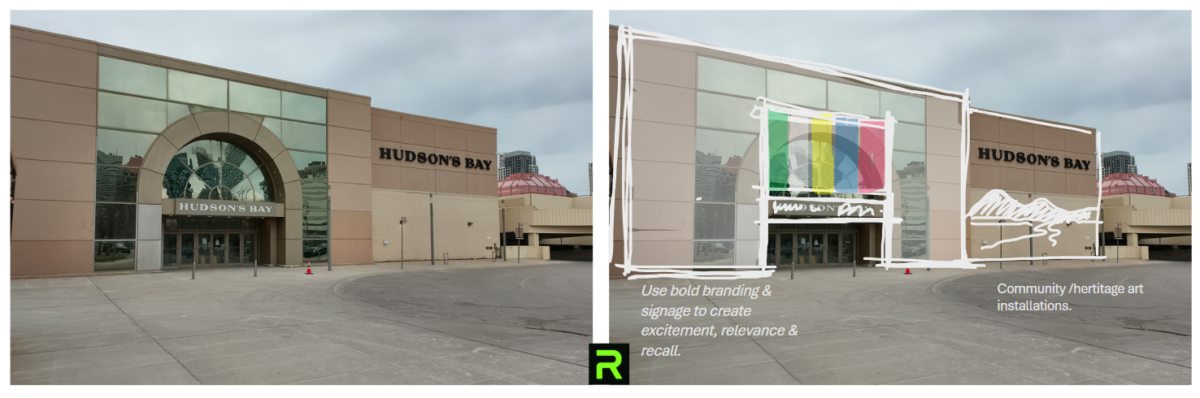
One of Raman’s key observations was the uninspired and dated storefront design.
“The brand has heritage, but you wouldn’t know it from looking at the building,” says Raman. “The façade is dull, the signage is minimal, and there’s no visual excitement to draw customers in.”
His recommendation? Add large-format digital screens at entrances for dynamic seasonal content, reinforce Hudson’s Bay’s Canadian legacy through bold typography, and transform vestibules into immersive brand moments.
“Even something simple like a storytelling wall or digital concierge screen could reframe the customer’s first impression,” he explains.
Navigating the Maze: Optimizing Layout and Floor Zoning
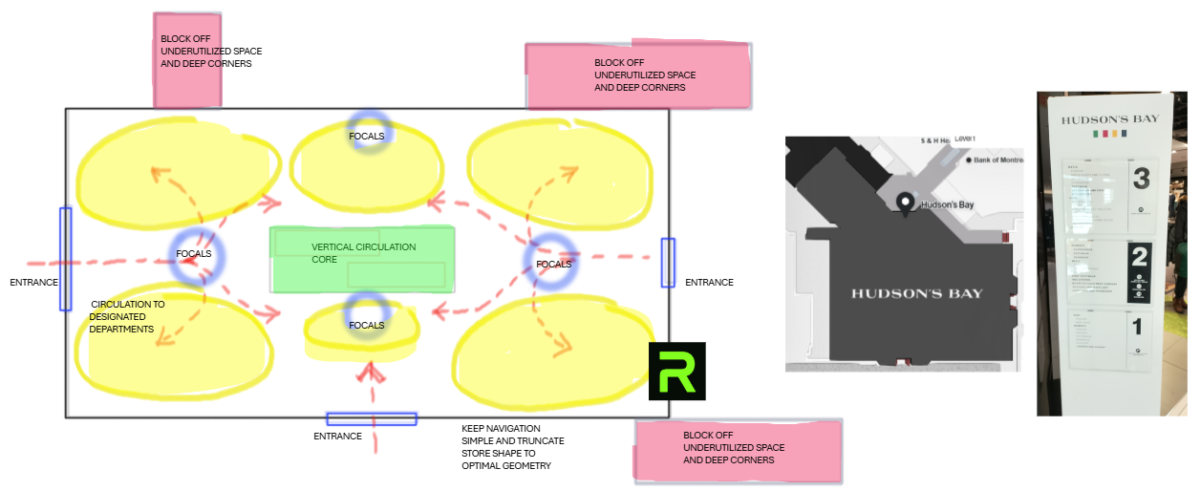
Once inside, the shopping experience doesn’t get much easier. Raman points out that stores are often far too large, with no clear zoning or intuitive customer journey.
“You walk in and think: am I in women’s, men’s, home? There’s no focal point,” he says. “Retail should be about guiding customers, not tiring them out.”
He suggests reducing underperforming square footage and creating concept shops or “hero brand” zones near entrances to highlight key designers or seasonal themes. Clear signage and intuitive floor planning could vastly improve navigation.
“Why not create an artificial rectangular footprint within the store and convert dead space into storage or curated pop-ups?” Raman proposes.
The Power of Lighting and Visual Merchandising
Poor lighting, especially in apparel sections, was another critical issue Raman observed.
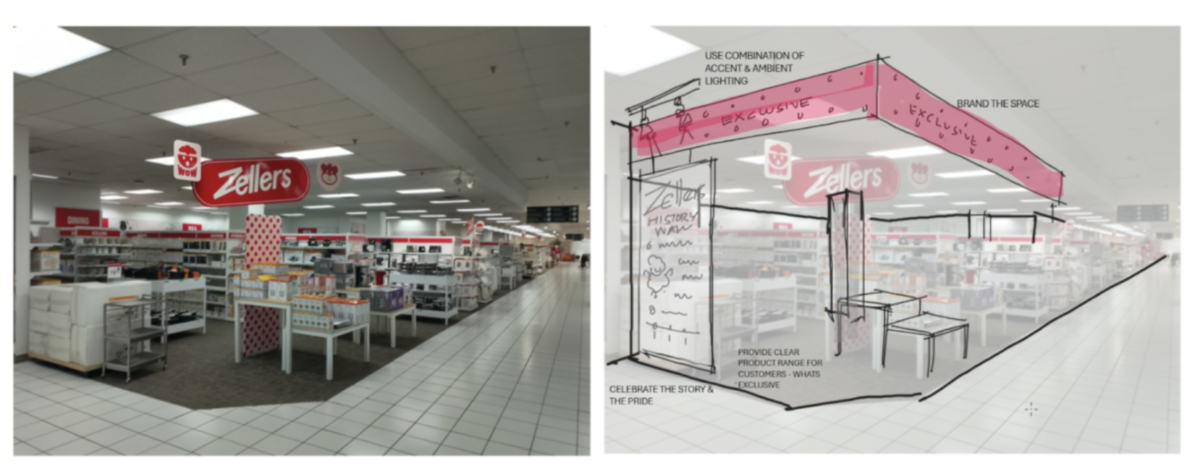
“Lighting makes or breaks a retail experience,” he explains. “Many Hudson’s Bay stores use flat, white LED panels that wash out the products. There’s no warmth, no drama.”
He advocates for targeted accent lighting, bold feature walls, and seasonal focal points to create more inviting spaces. Drawing from his background in lighting engineering, Raman suggests affordable upgrades like modular displays and adjustable lighting tracks.
“You don’t need to spend millions,” he says. “You just need to be intentional.”
Revitalizing Zellers: More Than Nostalgia
The relaunch of Zellers within Hudson’s Bay stores was intended as a value-driven draw—but Raman says the execution has fallen short.
“When I visited the Zellers section, it was dark, the carpet was dirty, and there was zero storytelling,” he recalls. “There’s so much missed opportunity there.”
His solution? Transform Zellers into a youthful, experience-focused sub-brand with engaging displays, nostalgic product tie-ins, and a clearly differentiated identity.
“Wrap it like a gift box, create a history wall about Zellers, and turn it into something people want to explore,” says Raman. “Right now, it’s just merchandise on shelves.”
Bundled Products and Smart Signage: A New Way to Sell
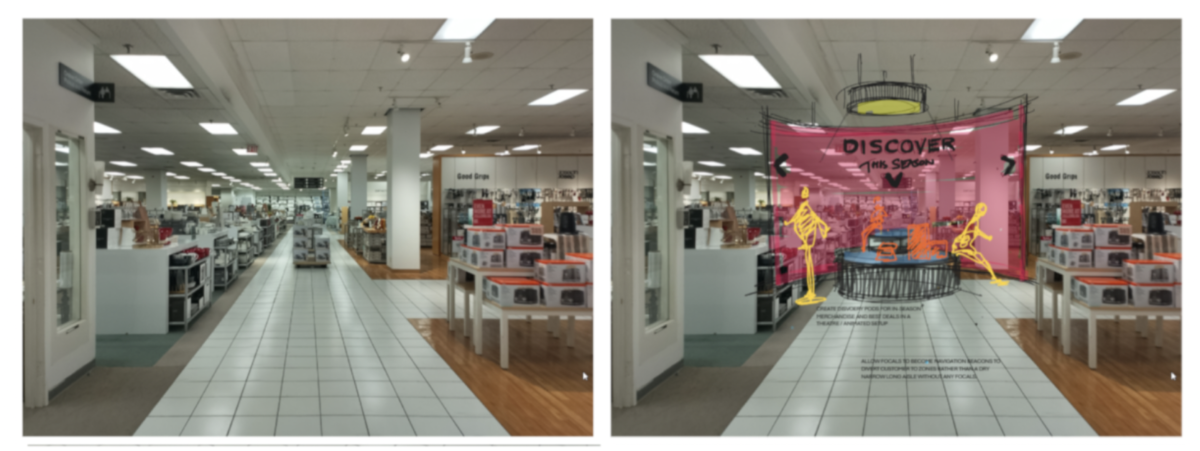
On the sales floor, Raman also recommends introducing “Discovery Zones” that group products into themed bundles—such as vacation kits or wedding packages—creating an instant sense of value and cohesion.
“It’s about turning shopping into storytelling,” he says. “Show people how your products fit into their lives, not just what’s on sale.”
Raman also suggests implementing smart signage through digital price tags that update automatically to reflect promotions—an approach that improves efficiency and reduces labour costs.
“You can change promotions instantly, and customers always see the best deal,” he explains. “It’s a one-time investment with long-term benefits.”
Reinventing Loyalty: Tiered and App-Based Rewards
While Hudson’s Bay has dabbled in digital loyalty, Raman argues the approach lacks depth. He recommends a tiered system that rewards long-time customers and incentivizes frequent purchases, all tied into a sleek mobile app.
“Think Canadian Tire money, but reimagined,” says Raman. “Track purchase history, recognize loyalty, and offer instant perks. It builds emotional connection.”
The Call to Action: Creative Collaboration Over Corporate Silence
As Hudson’s Bay prepares to wind down the majority of its stores by June 15—leaving only six open in Toronto and Montreal—Raman believes the brand still has a chance at survival.
“What they need is a one-day innovation workshop,” he says. “Bring together creatives, store managers, the design team, and strategists. Just put all the ideas on the table.”
He sees value in cross-collaboration to co-create a future vision for the six remaining locations, including the flagship on Queen Street in Toronto and the Montreal downtown store.
“They’re getting hit with ideas from all directions, but they need a filter—a forum to brainstorm, prioritize, and act,” he adds.
Final Thoughts: Rebuilding Canada’s Retail Icon
In Raman’s view, Hudson’s Bay still has brand equity, real estate, and a place in Canadian hearts. What it lacks is a focused vision and the courage to implement change at pace.
“The challenges are real, but they’re not insurmountable,” he says. “You can do a lot with a little—if you think creatively.”
For a retailer steeped in history, the future may hinge not on nostalgia but on nimble, customer-first design thinking. Whether Hudson’s Bay answers that call may determine if it remains a symbol of Canadian retail—or a cautionary tale.







Given the explosive Canadian pride we are experiencing and buy Canadian movement if a “Canadian” were to buy Hudson Bay and refocus and take into account many of the suggestions above and keeping 8-10 flagship stores it could be successful and on top of that completely relaunch Zellers I’m not talking these silly pop-ups I mean full fledged… there has never been a better time to launch a Canadian competitor to Wal-Mart we are looking to stop supporting American give me the reason to never step foot in a Wal-Mart again HBC!!!
Ramen has the right concept! I was a loyal Bay customer for many years but sadly it could not keep my attention- there was no appealing visual concept in the store, just crowded racks of poorly displayed clothing. It is the perfect time to reinvent the Bay, as Canadians are ready to get behind a major CANADIAN owned ( hopefully) store- bring back the home decor into the store, Brian Gluckstein designs wonderful furniture and accessories but we can only find them on line…Showcase Canadian designers, and lifestyle and get young families back into the store. Take a look at Simons- their stores are always full of shoppers, beautiful merchandizing and inovative displays…
While the ideas are wonderful, the company has not invested in their stores for at least the past 10 years due to monies being siphoned off by the owners for ‘other projects’ such as HBC in Europe, purchase of Bergdorf Goodman and Neiman Marcus in November 2024, purchases of online websites, reorganizing the corporate structures and many more projects. Hopefully the next owners/executives financially can reinvent an amazing legacy business.
I totally agree with the above insights. We are in a time where we as Canadian have finally realized what we needed all along more solidarity, pride in our country and in each other, and what this beautiful country means to us. This will be perhaps the only time in history where we can fight to also save the remaining Bay stores and maybe make a comeback for more; saving a piece of our heritage..This can only be successfully done by a true group of CanadIans at the helm, from the owners to the management who will care about the Bay legacy…and willing to work hard, investing back into the stores, staff and customers…I hope that I will be able to someday walk into a brilliant and revitalized thriving Bay store in my city (Ottawa)! Elbows up
Go Hudson Bay Canada!!
I have lived in Edmonton for over two decades, and in that time only one Hudson’s Bay location was renovated (out of four locations) to reflect a modern aesthetic. After moving past the more acute phase of the pandemic, their stores would continue to close early (7 pm weekdays) rather than return to normal hours (9 pm weekdays). In Edmonton’s case, having one store location remain (instead of all four) would be better than the current situation of all four stores closing.
I strongly suggest to the Hudson’s Bay owners that they seriously consider the suggestions in the above article. If not, please sell this company to Canadian interests who can.