Advertisement
Home Blog Page 383

Mejuri Opens Laval Store, Expanding Canadian Presence

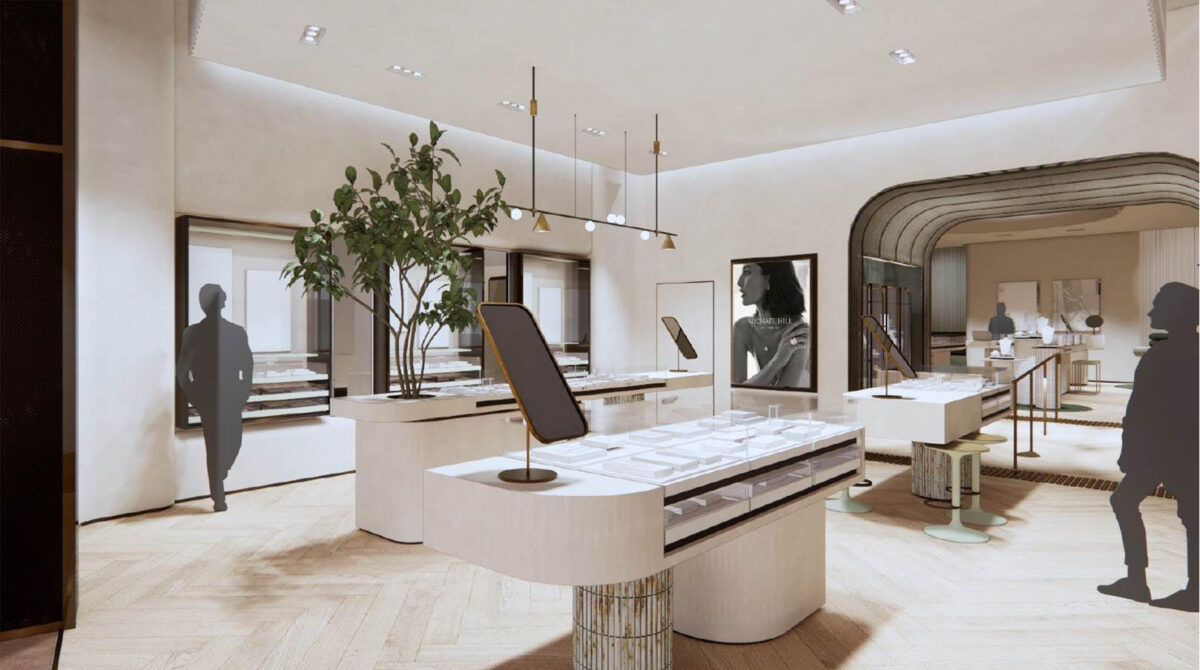
Mejuri at CF Carrefour Laval in Montreal. Photo supplied

Toronto-based fine jewelry brand Mejuri has expanded its Canadian retail footprint with the opening of a new store at CF Carrefour Laval in Laval, Quebec. This marks the brand’s 41st store globally and its latest move to enhance accessibility for customers in the Greater Montreal area.

Mejuri’s opening at CF Carrefour Laval aligns with its strategy to establish a presence in high-traffic shopping destinations. As one of Quebec’s premier retail centres, CF Carrefour Laval offers a strong customer base of both local shoppers and visitors from surrounding areas. 

The Laval location is the latest in Mejuri’s growing network of physical stores, reflecting the brand’s continued investment in brick-and-mortar retail to complement its strong e-commerce platform. The store offers an inviting space where customers can engage with expert stylists and explore collections tailored for everyday luxury.

A Unique Retail Experience with Thoughtful Design

The new Mejuri store is designed to provide a high-end yet welcoming atmosphere, prioritizing hospitality and customer engagement. A key feature of the Laval location is the Mejuri Ring Bar, an interactive space where customers can explore, style, and personalize their jewelry selections. The space is accentuated by elegant tile finishes and an artistic lighting installation that enhances the brand’s distinctive aesthetic.

Further elevating the customer experience, the store incorporates a textured plaster wall inspired by Mejuri’s iconic Charlotte pattern. This handcrafted element embraces an intentionally imperfect style, adding depth and tactile richness to the space. The store also features a full-service piercing studio, allowing customers to curate their ear stacks with Mejuri’s signature fine jewelry in a seamless, elevated experience.

Large-scale imagery and illuminated graphics throughout the store reinforce the brand’s storytelling, creating an immersive retail environment that embodies Mejuri’s dedication to craftsmanship and individuality.

Jeff Berkowitz of Aurora Realty Consultants negotiated the lease deal on behalf of Mejuri. Cadillac Fairview is the landlord of CF Carrefour Laval.

Mejuri at CF Carrefour Laval in Montreal. Photo supplied

A Look at Mejuri’s Brand Philosophy and Growth

Founded in 2015 by Noura Sakkijha and Majed Masad, Mejuri has redefined the fine jewelry market by positioning itself as a brand for everyday luxury. Moving away from the traditional model of gifting fine jewelry, Mejuri encourages self-purchasing, empowering customers to invest in high-quality, accessible pieces for daily wear.

The company’s product offerings include a wide range of rings, earrings, necklaces, and bracelets, crafted from 14K solid gold, sterling silver, and gold vermeil. Sustainability is a key focus for the brand, with 94% of its gold sourced from recycled materials and all diamonds being responsibly sourced and conflict-free.

Leveraging Omnichannel Growth and Community Engagement

Mejuri has successfully built a strong online and offline presence, leveraging social media and influencer marketing to cultivate an engaged community. While it initially gained traction as a digital-first brand, its strategic expansion into physical retail has strengthened its ability to offer customers a tactile shopping experience.

The opening of new stores, including the Laval location, reinforces Mejuri’s omnichannel strategy, allowing customers to seamlessly transition between online browsing and in-store purchasing. The brand’s retail expansion also underscores its commitment to fostering a sense of community, with in-store experiences designed to encourage engagement and personalization.

Mejuri’s Expanding Retail Footprint

In addition to the newly opened Laval store, Mejuri has been actively expanding its physical presence both in Canada and internationally. In November 2024, the brand unveiled its ninth Canadian store at Square One Shopping Centre in Mississauga, Ontario. This location features Mejuri’s signature Ring Bar and an on-site piercing studio, providing customers with an interactive and personalized shopping experience. 

Mejuri’s Canadian retail locations include: 

  • Toronto: Ossington Avenue, Yorkdale Shopping Centre, Holt Renfrew 50 Bloor St. W., Square One Mississauga
  • Calgary: CF Chinook Centre. 
  • Montreal: Peel Street 
  • Vancouver: Kitsilano, Holt Renfrew CF Pacific Centre, and Park Royal in West Vancouver

Internationally, Mejuri has established stores in major cities such as New York, Los Angeles, London, and Sydney, reflecting its commitment to providing accessible luxury worldwide. 

Each Mejuri store is thoughtfully designed to offer a welcoming atmosphere, featuring interactive elements like the Ring Bar and full-service piercing studios, allowing customers to personalize their jewelry selections and curate their unique styles.

More from Retail Insider:

Canada’s Luxury Retail Boom Faces Demand Challenges

Bloor Street luxury run in Toronto. Bloor Street has seen an unprecedented number of luxury brands open flagship stores over the past couple of years. Photo: Craig Patterson

Luxury retail in Canada is experiencing an architectural boom, with flagship stores and expansions dominating the landscape. Yet, as Randy Harris, founder of Trendex North America, emphasizes, this growth may not reflect a proportional increase in consumer demand. In an engaging conversation, Harris shared his insights on the dynamics shaping Canada’s luxury market and the challenges ahead.

Expanding Square Footage, Questionable Demand

The recent surge in luxury retail construction has been striking. Yet Harris suggests this may not align with the actual growth of the market. “The title of my next article could very well be ‘Luxury Retail Is Booming, But Demand Isn’t,’” he said.

Randy Harris

Luxury brands such as Saint Laurent are expanding aggressively. For example, by mid-2025, Toronto alone will house an estimated 28,000 square feet of Saint Laurent retail space. But Harris cautions against equating this growth with increased consumer spending. “It’s logical to question whether all these new stores truly expand the market or merely make it easier for existing customers to shop,” he said.

Loyal Consumers, Limited Growth

Harris highlights that true luxury consumers—those who purchase brands like Chanel or Hermès—tend to be extremely brand-loyal. “These affluent customers aren’t necessarily increasing their purchases because there are more stores,” he said.

This loyalty contrasts with aspirational buyers, often younger consumers, who save up for occasional luxury purchases. While aspirational buyers contribute to the market, they do not drive the sustained growth needed to justify doubling retail square footage.

“The affluent, brand-loyal consumer is not necessarily swayed by convenience,” Harris explained. “They know their preferred brand, and their shopping habits are unlikely to shift dramatically simply because a flagship store opens nearby.”

New luxury wing in the Yorkdale Shopping Centre in Toronto. The mall is adding 65,000 square feet of luxury retail to an already very robust offering. Photo: Craig Patterson

Timing Challenges and Deep Pockets

The decision to expand luxury retail in Canada was likely made years ago, Harris explained, with brands forecasting a brighter economic environment. “You don’t just flip a switch and open a new store,” he noted. “These plans were set in motion two or three years ago.”

Many luxury brands are backed by global conglomerates with significant financial resources. This means they can afford to endure periods of slow growth in Canada. “Canada is such a small part of their portfolio,” Harris said. “They can ride out a couple of lean years.”

The Role of Tourism

Tourism has historically been a significant driver of luxury retail sales. In Canada, affluent visitors—particularly from China—have played a pivotal role in years past. However, Harris pointed out that the recovery of tourism remains uncertain. “We haven’t seen the same number of Chinese visitors compared to previous years,” he said.

The weak Canadian dollar should, in theory, make Canada an attractive shopping destination for international tourists. “A favourable exchange rate is important,” Harris added, “but it’s not the sole factor. The global flow of tourists, particularly from Asia, has yet to return to pre-pandemic levels.”

This has significant implications for luxury retailers, many of whom rely on tourist spending to meet their revenue targets. “Tourism is a critical input for my analysis of the luxury apparel market,” Harris noted. “When visitor numbers are down, it’s a major headwind for the industry.”

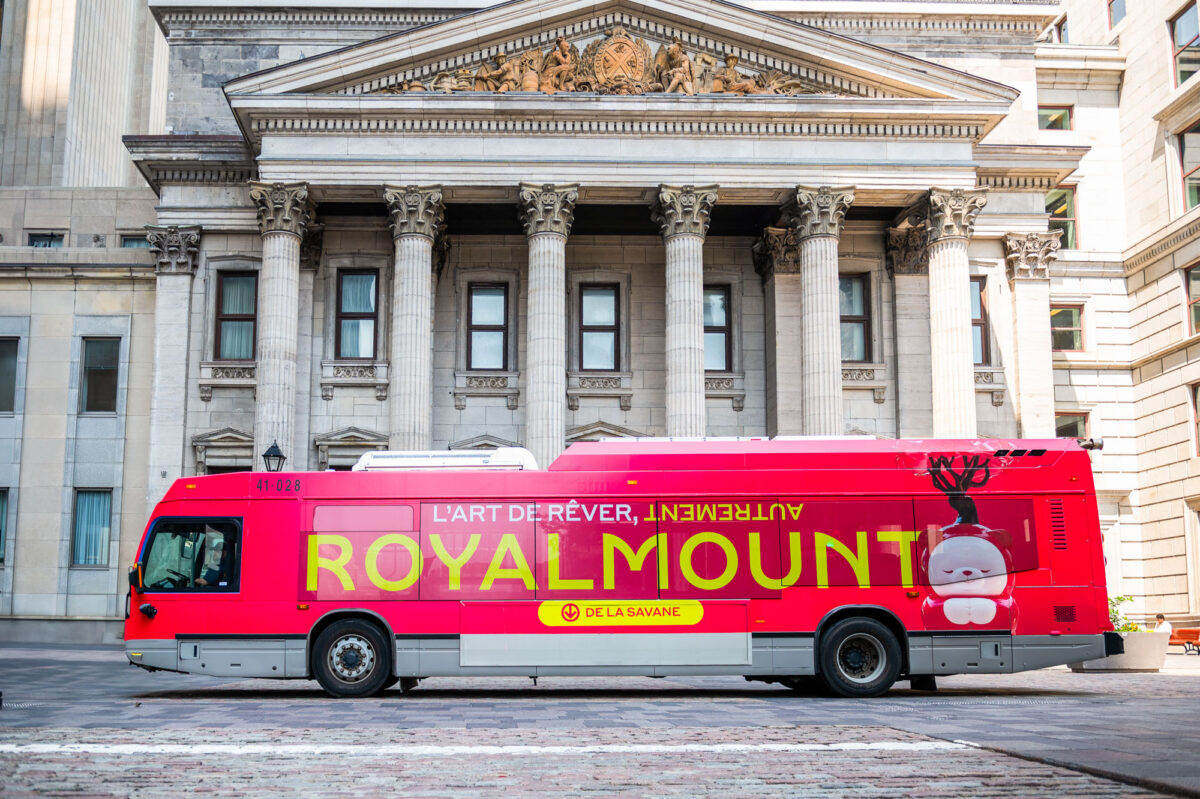
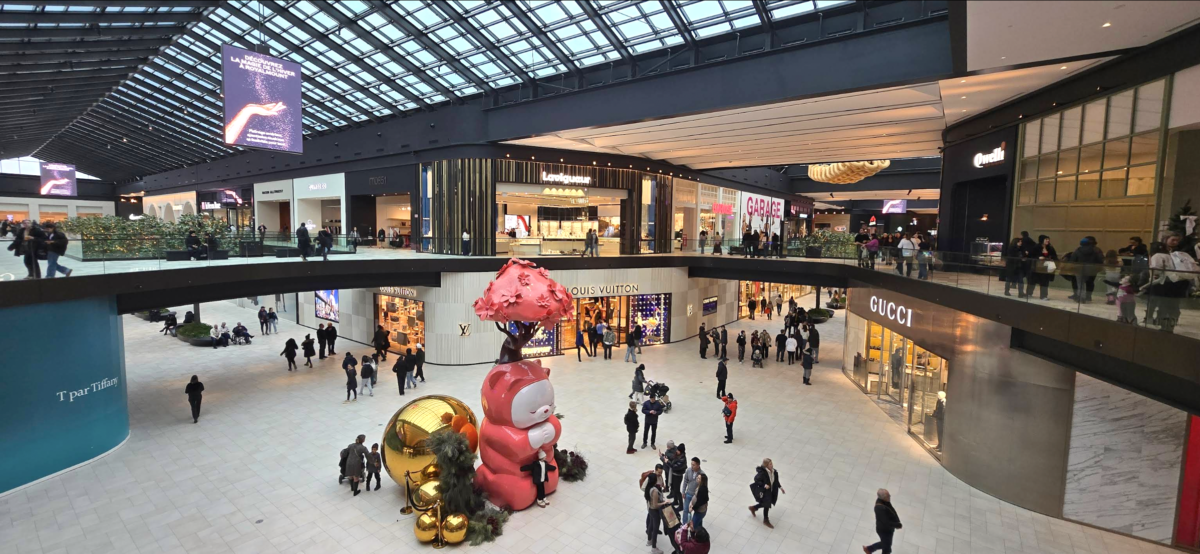
Royalmount in Montreal, prior to its opening in September 2024. Numerous luxury brands have opened their first stores in Quebec, with more to come this year. Image: Carbonleo

A Misalignment of Supply and Demand

Harris’s analysis underlines the disconnect between the rapid expansion of luxury retail space and the stagnant growth in demand. 

“The market hasn’t doubled, but the square footage has,” he said. He predicts that brands may face challenges in justifying these expansions, particularly as they continue to rely on affluent but finite consumer bases.

For instance, the affluent neighborhoods surrounding Toronto’s Yorkdale Shopping Centre offer a prime market for luxury goods. However, as Harris observed, “Opening a flagship store doesn’t necessarily create new customers; it just makes it easier for existing ones to shop.”

Harris also questioned whether this building boom simplifies shopping or simply overextends retailers. “Does opening a flagship store really expand your business, or does it just make it easier for customers to access your brand?” he asked.

The dichotomy between aspirational and true luxury consumers is a key theme in Harris’s analysis. “You have younger, aspirational buyers trading up,” he explained. “But the core luxury consumer is not growing at the same pace as the square footage.”

Younger buyers are often drawn to accessible luxury items, such as small leather goods or entry-level accessories. “These purchases are significant,” Harris said, “but they’re not driving the kind of sustained growth needed for these massive expansions.”

Alberni Street at Burrard Street in Downtown Vancouver. Over the past decade, the area has transformed into a significant luxury node. Photo: Lee Rivett.

Long-Term Outlook for Luxury Brands

Despite current challenges, Harris is optimistic about the long-term outlook for some luxury brands. “Companies like Hermès and Saint Laurent are playing the long game,” he said. “They aren’t in any hurry and seem to be doing everything right.”

Harris noted that brands with measured, thoughtful approaches to growth are more likely to succeed. “The ones that avoid rushing expansions or overestimating the market will emerge stronger,” he said.

Brands like Hermès have demonstrated a commitment to quality and exclusivity, which helps maintain their appeal even during market slowdowns. “Hermès, in particular, has mastered the art of scarcity,” Harris said. “Their strategy ensures long-term desirability and brand equity.”

The Post-Pandemic Landscape

The effects of the COVID-19 pandemic continue to shape the luxury retail landscape. Harris noted that some expansions planned during the pandemic were based on overly optimistic forecasts. “Brands assumed the retail environment would bounce back faster than it has,” he said.

Additionally, the shift to e-commerce during the pandemic has left a lasting impact. While luxury consumers still value in-person shopping experiences, the convenience of online shopping cannot be ignored. “Retailers need to balance their brick-and-mortar investments with robust online offerings,” Harris advised.

Oakridge Park in Vancouver, opening summer 2025. Image: QuadReal

Global Context for Luxury Retail

Harris also highlighted how Canada’s luxury retail trends align with global patterns. “The expansion of flagship stores is not unique to Canada,” he said. “It’s part of a broader strategy by luxury brands to solidify their presence in key markets.”

However, he cautioned that Canada’s smaller population and limited tourist appeal make it distinct from other luxury hubs like Paris or New York. “The scale here is different,” Harris explained. “Brands need to adjust their strategies accordingly.”

The future of luxury retail in Canada will depend on a delicate balance of market forces, including consumer behaviour, tourism, and global economic trends. Harris underscored the importance of aligning growth strategies with actual market demand. “It’s about more than just buildings; it’s about understanding where the market is headed,” he said.

More from Retail Insider:

Food prices could rise with tariffs: Loblaw

Photo by Mike Jones
Photo by Mike Jones

Food inflation continues to moderate, and in January was deflationary due to food purchased at restaurants and the impact of the removal of GST, says the latest Food Inflation report by Loblaw Companies Limited.

“Customers at the register continue to find ways to lower prices, including buying more items on sale, and substituting for less expensive brands or products. However, there remains concern around the potential inflationary pressures that will need to be closely monitored, and managed. All eyes right now are on the tariff-counter tariff dynamic between the United Sates and Canada; however, the weak Canadian dollar (CAD) is a present and growing concern,” said the Loblaw report.

“The weak foreign exchange (FX) rate will continue to place pressure on consumer prices for imported goods in the months ahead. The Canadian dollar is at its lowest level in 20 years, placing pressure on new food purchases, which will flow through in higher food prices—especially during the winter when we rely more on imports such as fresh produce. Since most of our fresh produce is priced in U.S. dollars, a weaker loonie means higher costs for essentials like lettuce, tomatoes, and avocados. Even goods from non-U.S. suppliers, such as coffee from South America or citrus from Spain, can often be priced in USD, providing little relief from FX pressures for Canadians.”

Photo by Ron Lach
Photo by Ron Lach

Loblaw said the currency impact extends beyond produce. Many products have an underlying commodity exposure (coffee, wheat, vegetable oil, sugar) that are purchased and sold in USD, and suppliers continue to seek to pass on their higher costs.

“While many of these are justified given the current economic situation, we continue to work closely with our suppliers to manage prices for customers, but expect this to be a headwind for food prices in the coming months,” said Loblaw.

“With a short-term reprieve on tariffs between Canada and the US, it’s worth considering how they could impact food prices if implemented. A 25% tariff doesn’t necessarily mean a 25% increase at the grocery store— some costs are absorbed across the entire supply chain, but some will inevitably end up as a higher priced product.

“If trade tensions escalate, Canadians could potentially see higher prices on all products that come from the U.S., including dairy, meat, and packaged foods, along with potential supply disruptions and market uncertainty.”

The impact of tariffs, according to Loblaw

  • Higher Costs for Canadian Producers – Tariffs on agricultural products and ingredients used for food-processing could make it more expensive to produce food in Canada, which increases the price of products on shelf. For example, peanut butter that is processed in Canada, but with peanuts from the U.S. would see a 25% tariff or tax on its ingredients. This is also true for some grain-based products (grown here, sent to the U.S. for manufacturing and then sold back in Canada), and processed meats.
  • More Expensive U.S. Imports – Canada is the 2nd largest market for U.S. agricultural exports, annually importing more than $20 billion. Specifically, the U.S. supplies about two-thirds of Canada’s vegetable imports, one-third of fruit imports, over half of Canada’s beef imports, and our country is the top market for US processed and prepared/ preserved pork. If Canada’s counter tariffs on U.S. products go into effect, this is likely to increase the price of these foods on the shelf.
  • Supply Chain Disruptions – Trade uncertainty may cause delays, shortages or price spikes in certain food products. From customers choosing to stock up on items in advance, to potential shipping lags as companies look to onboard new suppliers from new markets, customers may see more instability at shelf.

Related Retail Insider stories:

Canadian businesses have optimistic outlook: Statistics Canada

Photo by Andrea Piacquadio

Nearly three-quarters (73.1%) of businesses are either very optimistic or somewhat optimistic about their future outlook over the next 12 months. The proportion of businesses reporting an optimistic future outlook has consistently remained above 70% since the second quarter of 2024, according to a report released Friday by Statistics Canada.

“Meanwhile, 16.7% of businesses expect their sales of goods and services to increase over the next three months, consistent with 16.6% in the fourth quarter of 2024. This was led by businesses in retail trade (24.4%); manufacturing (23.4%); and arts, entertainment and recreation (19.8%). At the same time, 24.8% of businesses expect to raise the prices of their offered goods and services over the next three months,” explained the federal agency.

“Businesses continue to anticipate a variety of obstacles over the next three months, mainly those related to costs and labour. While pressures of both cost- and labour-related obstacles continue to ease in the first quarter, the proportion of businesses with a positive outlook remains over 70%.”

Cost-related obstacles remain a concern for the majority of businesses

While cost-related obstacles are expected by over three-fifths (62.5%) of businesses across Canada over the next three months, there has been a slight easing of pressures, with the proportion of businesses falling from nearly two-thirds (65.7%) in the fourth quarter of 2024, said the report.

Cost-related obstacles consist of inflation; the cost of inputs; interest rates and debt costs; the cost of insurance; costs of real estate, leasing or property taxes; and transportation costs.

“In this context, inflation (46.4%) is the most commonly expected obstacle by businesses over the next three months. Businesses in accommodation and food services (68.3%); arts, entertainment and recreation (56.9%); and retail trade (56.5%) were most likely to expect inflation to be an obstacle, said StatsCan.

Labour cost is the most commonly anticipated input businesses expect to be an obstacle

Statistics Canada said over one-quarter (26.7%) of businesses anticipate cost of inputs to be an obstacle over the next three months. Of these businesses, over three-fifths (61.6%) specified labour cost as an input they expect to be an obstacle, led by businesses in health care and social assistance (89.8%); arts, entertainment and recreation (84.3%); and information and cultural industries (76.1%).

“Meanwhile, 43.8% of businesses across Canada expect to increase wages over the next 12 months, with an average wage increase of 7.0%. This is comparable to the expected average wage increase of 7.4% from the first quarter of 2024. Businesses in retail trade (52.9%); manufacturing (52.3%); and accommodation and food services (51.5%) were most likely to expect to increase wages. On the other hand, over two-fifths (44.6%) of businesses expect wages to stay the same, and a further 3.1% expect a decrease in wages,” it said.

Related Retail Insider stories:
Retail trade experiences best growth since June 2021: Statistics Canada

Photo by Pavel Danilyuk

Retail trade increased 2.6% in December, representing its largest monthly growth rate since June 2021 (+5.0%) when restrictions on in-person shopping due to the COVID-19 pandemic began to ease reported Statistics Canada on Friday.

Retail trade expanded 1.6% in the fourth quarter as seven out of 12 subsectors increased. Motor vehicle and parts dealers (+5.8%) drove the growth for the second consecutive quarter as activity at new car dealerships remained robust and consumers continued to take advantage of more favourable financing rates, said the federal agency.

Real gross domestic product (GDP) increased 0.2% in December, partially offsetting the decline recorded in November. Both services-producing and good-producing industries were up, contributing to the fifth increase in the last six months. Overall, 11 of 20 industrial sectors rose in December, said the report.

Statistics Canada said services-producing industries (+0.2%) were the largest contributors to growth in December, driven by a strong increase in retail trade. Goods-producing industries rose 0.3%, partially offsetting November’s decline. Utilities and mining, quarrying and oil and gas extraction contributed the most to growth in the goods-producing aggregate after being among the largest detractors to growth in November.

All subsectors increased in December, with motor vehicle and parts dealers leading the growth and posting a third consecutive increase.

“Several subsectors selling goods impacted by the temporary GST/HST tax break introduced on December 14th recorded increases in December. Food and beverage stores (+2.9%) was the second largest contributor to the sector’s growth, as retailing activity at both supermarkets and other grocery retailers (except convenience retailers) and beer, wine and liquor stores drove the increases,” it said.

Statistics Canada also reported on Friday that GDP increased 0.6% in the fourth quarter, after rising 0.5% in the third quarter. Growth in the fourth quarter was driven by higher household final consumption expenditures and increased exports and business investment. Drawdowns of business inventories and higher imports moderated the overall growth.

On a per capita basis, real GDP rose 0.2% in the fourth quarter, after falling 0.1% in the previous quarter. In 2024, GDP per capita fell 1.4%, following a decline of 1.3% in 2023, it said.

“Household spending rose 1.4% in the fourth quarter of 2024, the strongest growth since the second quarter of 2022. Higher spending on new trucks, vans and sport utility vehicles led the overall increase in the fourth quarter of 2024, followed by financial services and telecommunication services,” explained StatsCan.

“In 2024, household spending was up 2.4% from 2023, reflecting increases in goods (+1.6%) and services (+3.0%). The largest contributor to the rise in 2024 was purchases of new trucks, vans and sport utility vehicles, as well as expenditures on rent, telecommunication services and financial services.

“On a per capita basis, household expenditures rose 1.0% in the fourth quarter of 2024, while they fell 0.6% in the year as a whole.

Related Retail Insider stories:

Lenders ready to support increased transaction activity: CBRE

Photo by Andre Furtado

Lenders are showing a significant shift in demand for retail as evidenced by the surge in intentions to increase budgets in 2025. Nearly half of lenders plan to grow their retail budgets this year, a notable jump compared to the average of 14% seen over the last seven surveys, according to the 2025 Canadian Real Estate Lenders’ Report by commercial real estate firm CBRE.

“After declining for five consecutive years, lender intentions to increase office budgets rebounded modestly from 0% last year to 7% of lenders in 2025. Intentions for growing industrial loan books continue to be relatively solid, accounting for 45% of lenders in 2025, but remain well below the average 63% of lenders seen over the 2018-2022 period. Notably, lender intentions for increasing hotel budgets for the year ahead have continued to steadily trend higher since the pandemic,” said the report.

So far lenders are not concerned about potential tariffs, and sentiment around commercial real estate lending has improved. According to CBRE’s new Canadian Real Estate Lenders’ Report, lenders are ready to support increased transaction activity and are gearing up for a much more active 2025. While some challenges persist for lending to certain property types and cities, borrowers can expect to see greater debt availability this year.

CBRE’s Lenders’ Report analyzes the responses of 37 domestic and foreign lenders, representing over $200 billion in commercial real estate loans under management combined, to a survey on activity expectations, lending terms and criteria, and lender sentiment and preferences. Lender sentiment matters because the availability of debt will determine if businesses can take on mortgages to grow their footprint or if investors can purchase properties.

Jessica Harland
Jessica Harland

“Lenders are feeling increasingly good about every asset class and property type, with levels of concern dropping across the board, except for land and condos,” says CBRE Senior Vice President Jessica Harland. “Nearly half of lenders intend to increase allocations to commercial real estate for a second year in a row and those looking to make a large increase is also up.”

In its Canadian Real Estate Market Outlook 2025 report, CBRE said retailer sentiment going into the new year remains positive, however, factors influencing the market will further entrench current trends and push change in the sector. Being forward looking and resilient will always be rewarded, and this has never been more true than in today’s competitive landscape.

Trends to Watch

Here’s what CBRE identified as trends to watch this year:

  • A supply-constrained retail landscape is expected to persist and reshape the typical store format in Canada. Retailers will ultimately be strategic, expanding into secondary markets or modifying the scale of their typical store.
  • Expanding where and how retailers access consumers may be what it takes to remain relevant in the year ahead. Diversifying sales methods may play a significant role in revenue generation, even if primarily used for branding.
  • Sentiment going into 2025 remains positive, however, we are starting to see more normal growth levels following the boom pandemic years. Retailers that tap into savings, provide entertainment, or are innovative/experiential will continue to thrive during this time.

Related Retail Insider stories:

Canadians want retailers to make it easier to support local businesses amid trade war threats: KPMG

A sign encouraging shoppers to buy Canadian products at a liquor store in Vancouver on Feb. 2, 2025. Shoppers have been caught up in the buy Canadian fervour since U.S. President Donald Trump began threatening to apply tariffs on imports from Canada. THE CANADIAN PRESS/Ethan Cairns

As more Canadians choose to buy local products amid the looming threat of U.S. tariffs, a new survey from KPMG in Canada finds they want retailers to make it easier for them to do so.

More than nine in 10 say they want stores to promote Canadian products and think grocery stores should be required to give them preferential shelf space with nearly 70 per cent wanting them to stop selling U.S. products altogether, said the company.

 Kostya Polyakov
 Kostya Polyakov

“We’re seeing a significant shift in the shopping behaviour of Canadians, who are fired up to support local producers, artisans, and companies. As many as 70 per cent of Canadians in our survey were clear – they will boycott U.S. products with eight in 10 actively looking for non-U.S. versions of products when a Canadian one isn’t available.” said Kostya Polyakov, Partner and National Consumer and Retail Leader at KPMG in Canada. “Canadians are fighting for Canada, to keep jobs and their dollars within the community. But it’s not always easy at first glance to know if what they’re buying is Canadian and increasingly, they now demand retailers make it easier for them, calling out those that don’t.”

With 84 per cent of Canadians reading packages to see where products are made and three-quarters willing to pay more to buy a Canadian product over one that’s made in the U.S., retailers already see the change in shopping habits. Loblaw Companies Ltd. recently reported a 10-per-cent increase in sales of items labelled product of Canada, made in Canada or produced in Canada for the first week of February compared to the previous week, said the KPMG report.

Key poll highlights:

  • 93 per cent of Canadians say they want retailers and grocery stores to identify and promote Canadian products
  • 68 per cent think, in a trade war, grocery stores should stop selling U.S. products and produce
  • 85 per cent say the trade war has prompted them to support more local producers or companies
  • 70 per cent of Canadian consumers say they will boycott U.S. products, including produce and other groceries should U.S. President Donald Trump follow through with a 25-per-cent tariff on imports from Canada
  • 80 per cent say they are purposefully looking for a non-U.S. version (e.g., if fruit is available from either the U.S. or Peru, choosing the Peruvian version) if a Canadian product equivalent isn’t available
  • 89 per cent say Canadian grocery stores should be required to give preferential shelf space to Canadian products
  • 84 per cent say they are paying more attention to the origin of where products are made by reading the labels
  • 77 per cent say they will buy Canadian products even if it costs more

Labels matter

Poll findings reveal consumers are paying attention to more than just labels as the vast majority (93 per cent) hope – and expect – Canadian retailers are searching for non-U.S. suppliers with 85 per cent saying they will think twice about buying from stores that move its entire operations to the U.S., said KPMG.

“As consumers increasingly prioritize Canadian products, it is crucial for retailers to adjust their supply chain so they can continue to operate locally. This not only serves to build trust with customers by aligning to their expectations but also helps strengthen our national economy,” said Polyakov. “There is also strong agreement among survey respondents that inter-provincial trade barriers must be eliminated so they can have enough product choice to continue buying Canadian.”

Despite the surge of national pride, affordability remains a top concern as 86 per cent are worried Canada will slide into a recession and 90 per cent think governments should lower the cost of everyday essentials by reducing taxes or providing tax credits to help consumers through a tariff war, noted KPMG.

“While it’s clear Canadians will pay extra to support the home team, the impact of the rising cost of essentials is also top of mind for many,” said Polyakov. “With consumers strongly expecting to see their grocery bills go up, they plan to cut back on non-essential spending, which could hit sectors like dining and entertainment hard.

“The question is, will this trend of buying Canadian last beyond a few months or quarters?”

Additional poll findings:

  • 93 per cent say they hope – and expect – Canadian retailers are searching for non-U.S. suppliers
  • 85 per cent say they will think twice about buying from a company that deserts Canada and moves its entire operations to the U.S.
  • 96 per cent say inter-provincial trade barriers must be eliminated to make it possible for consumers to buy Canadian and have a choice of Canadian products
  • 86 per cent say they are worried that Canada will slide into a recession
  • 24 per cent are willing to pay 2-5 per cent more to make sure they are buying a Canadian product over one that’s made in the U.S.
    • 16 per cent are willing to pay 6-10 per cent more
    • 14 per cent are willing to pay more than 11 per cent more
    • 25 per cent say they can’t afford any increase in prices
  • 90 per cent say to help consumers through a tariff war, governments should reduce the cost of everyday essentials, like food and gas, by reducing taxes or providing tax credits
  • 94 per cent expect the cost of groceries to rise for their household
  • 84 per cent say that if the cost of essentials – like groceries and produce – go up, they will have to reduce spending on other things, the “nice to have” including eating out and entertainment

Related Retail Insider stories:

Martin Moriarty on West 4th Avenue’s Retail Boom in Vancouver

West 4th Avenue in Vancouver. Photo: Apple Maps

West 4th Avenue, nestled in Vancouver’s Kitsilano neighbourhood, has become a hub for premium and direct-to-consumer brands. Long known for its mix of boutiques and local eateries, the street has undergone a significant transformation in recent years. Yet, this growth comes with challenges, primarily due to the scarcity of retail spaces.

“There’s really no space left,” said Martin Moriarty, Senior Vice President at Marcus & Millichap Canada, during a recent interview. “It’s a vibrant, long-term market, but once spaces are leased, tenants tend to stay for the long haul. That makes it difficult to accommodate new retailers.”

High-Profile Tenants Cementing West 4th’s Status

The avenue’s appeal has attracted both international brands and homegrown Canadian names. Reformation, a Los Angeles-based sustainable fashion retailer, recently secured a former Allbirds location on the street. “Reformation already has signed up,” Moriarty confirmed. “That lease is done, and it’s an exciting addition to the area.”

Other prominent brands include Aritzia, which is in the process of opening a flagship location in a former bank building. Additionally, Danish outerwear brand Rains opened its store on West 4th in December, contributing to the street’s reputation as a destination for stylish and contemporary retailers.

“These are big brands making strategic moves,” said Moriarty. “West 4th has rapidly become a focal point for direct-to-consumer brands seeking a presence in Vancouver.”

Future Aritzia store on West 4th Ave in Vancouver. Image: Apple Maps

Limited Space Drives Challenges and Opportunities

The scarcity of available retail space remains a pressing issue for prospective tenants. Moriarty noted, “I was on West 4th yesterday with a tenant, exploring potential opportunities. But most of them are off-market possibilities. There’s just not much left unless a tenant decides to move, which isn’t common.”


One notable development is the former Safeway site on the 2300 block, which was purchased by Low Tide Properties and PCI Development. The project will include rental housing, retail space, and a Sobeys grocery store. However, as Moriarty explained, “That amazing project is still a couple of years away, so immediate leasing opportunities remain limited.”

With the demand for retail space outpacing availability, Moriarty suggests potential expansion opportunities. “You might see the retail stretch extend east and west, particularly with an amazing project like the PCI development on the 2300 block,” he said. “But moving too far east leads to a different mix of tenants, often more service-oriented.”

Arc’Teryx on West 4th in Vancouver, BC in July 2023. Photo: Lee Rivett.

The Broadway Plan and Future Growth

The recently implemented Broadway Plan, which facilitates higher-density residential developments along the Broadway corridor, is expected to impact West 4th positively. The addition of the Broadway SkyTrain line will bring more transit access to the area, increasing foot traffic.

“The SkyTrain will funnel more people to West 4th,” Moriarty stated. “It’s only going to boost the neighbourhood’s appeal. The increased density from residential developments will add to the vibrancy of the area.”

Projects like the Jericho Lands and the Sen̓áḵw development by local First Nations groups will further enhance the area’s population density. “These developments will bring thousands of new residents,” Moriarty explained. “While they’ll include retail, much of it will be service-oriented, keeping West 4th as the primary destination for premium and boutique shopping.”

Monos store on West 4th Avenue in Vancouver – the first for the company. Photo: Monos

A Bright Future for West 4th

As Kitsilano continues to develop, the future looks bright for West 4th Avenue. The scarcity of retail space and the influx of new residents suggest that demand will only increase. “With the demographic strength of the west side and the additional density from rental projects, it’s hard to be anything but positive,” said Moriarty.

The street’s transformation underscores Vancouver’s broader retail trends, where location, tenant mix, and urban development converge to shape vibrant shopping districts. For West 4th, the challenge now is balancing growth with preserving the character that made it so desirable in the first place.

“West 4th is a unique case,” Moriarty concluded. “It’s a neighbourhood street with global appeal. That’s a hard combination to beat.”

More from Retail Insider:

Vancouver’s West 4th Retail District Thriving Amidst Growing Popularity and Upscale Competing Brands [Feature]

Go Lime launches in Walmart Canada, with 1st two retail stores in Ontario

Store Wall (CNW Group/Go Lime Inc.)

Go Lime Inc., a leader in the home comfort industry, has launched in Walmart Canada with the opening of its first two retail stores.

The initial locations include the Milton Supercentre Walmart and Go Lime’s flagship store at Heartland Supercentre in Mississauga, marking a significant step toward making innovative home comfort solutions more accessible to Canadian customers, said the company.

Jeff Schwartz
Jeff Schwartz

“At Go Lime, our mission has always been to provide unparalleled value, choice, trust, and transparency in the home comfort industry. Launching in Walmart Canada aligns perfectly with our commitment to being customer-centric and bringing innovative, affordable solutions to millions of homeowners across Ontario,” said Jeff Schwartz, President & CEO of Go Lime.

“We’re not just selling products; we’re building relationships with our customers based on trust and transparency. Our team is dedicated to making sure every customer receives personalized service and the best possible experience when shopping with Go Lime.

“We understand that investing in home comfort is a significant decision for our customers, and we’re here to make that process as simple, transparent, and affordable as possible. We’re proud to offer solutions that not only meet but exceed the expectations of our customers.”

Milton Location (CNW Group/Go Lime Inc.)

Go Lime is a leading provider of home comfort solutions, specializing in energy-efficient water heaters, including tank and tankless options, plus a full line of HVAC, including furnaces, heat pumps and much more.

The company said its presence in Walmart Canada is designed to disrupt the traditional home comfort industry by putting customers first. The company’s retail stores provide a unique shopping experience where customers can interact with knowledgeable associates, learn about the latest in-home comfort technology, and find tailored solutions for their specific needs, it added.

Go Lime said it is on a mission to disrupt the home comfort industry by challenging outdated practices and setting new standards for quality, service, and innovation. By partnering with Walmart Canada, Go Lime is making it easier for customers to access the latest advancements in home comfort technology at convenient retail locations.

“Our goal is to revolutionize how people approach home comfort,” said Schwartz. “We’re bringing the best products, the best prices, and the best customer experience to the forefront, all in a way that’s transparent and centred around what our customers truly need.”

Front View (CNW Group/Go Lime Inc.)

The launch of Go Lime’s first two retail locations in Walmart Canada is just the beginning. The company has ambitious plans for growth and expansion across the province, aiming to make high-quality home comfort solutions accessible to more Canadians, it said.

“We’re excited to bring Go Lime’s unique approach  home comfort to communities across Ontario,” said Schwartz. “This is a major milestone for our company, and we’re looking forward to continuing our journey of innovation, value, and customer-first service.”

Related Retail Insider stories: