In addition to the acquisition, Recipe has entered into a comprehensive development agreement with Darden to significantly expand the Olive Garden brand across Canada, it said.
“The acquisition of the existing Canadian Olive Garden locations, situated in key markets across British Columbia, Alberta, Saskatchewan, and Manitoba, marks a strategic move for Recipe to integrate a highly popular and well-established casual dining concept into its extensive portfolio,” explained the company.
“Furthermore, the development agreement with Darden Restaurants grants Recipe the exclusive rights to develop and operate new Olive Garden restaurants throughout Canada. This partnership underscores Recipe’s commitment to growth and diversification, bringing Olive Garden’s beloved Italian-inspired cuisine and family-friendly dining experience to more communities nationwide.”
“Olive Garden is a brand with a strong legacy of success and a loyal following, and we see immense potential for growth across Canada. This acquisition and subsequent development agreement align perfectly with our strategy to expand our presence in the casual dining segment with leading brands that resonate with Canadian consumers.”
The acquisition of the existing restaurants is effective immediately, and Recipe said it will begin integrating these operations into its robust infrastructure. Recipe added that it will leverage its extensive operational expertise, supply chain efficiencies, and strong marketing capabilities to further enhance the Olive Garden experience in Canada.
Brad Smith
“Our partnership with Recipe marks the beginning of an exciting new chapter for Olive Garden in Canada,” said Brad Smith, president of Darden International & Franchising.“Their proven track record in operating beloved restaurants throughout the country will help us better serve our Canadian guests and team members, while unlocking new opportunities for growth.”
More information on the timing of new locations will be announced in due course as development plans take shape, noted Recipe.
Photo: Olive Garden
Recipe Unlimited is Canada’s largest full-service restaurant company. Home to leading casual dining, quick service, and fast casual brands, Recipe has more than 1,200 restaurants located across Canada, and an international presence in the United States and the Middle East. The company’s portfolio of brands includes Swiss Chalet, The Keg, St-Hubert, Harvey’s, Montana’s, New York Fries, Kelseys, East Side Mario’s, Original Joe’s, State & Main, Anejo, The Burger’s Priest, The Landing Group, Elephant & Castle, Fresh Kitchen + Juice Bar, The Pickle Barrel, Blanco Cantina, and now Olive Garden.
Darden’s family of restaurants features some of the most recognizable and successful brands in full-service dining — Olive Garden, LongHorn Steakhouse, Yard House, Ruth’s Chris Steak House, Cheddar’s Scratch Kitchen, The Capital Grille, Chuy’s, Seasons 52, Eddie V’s and Bahama Breeze.
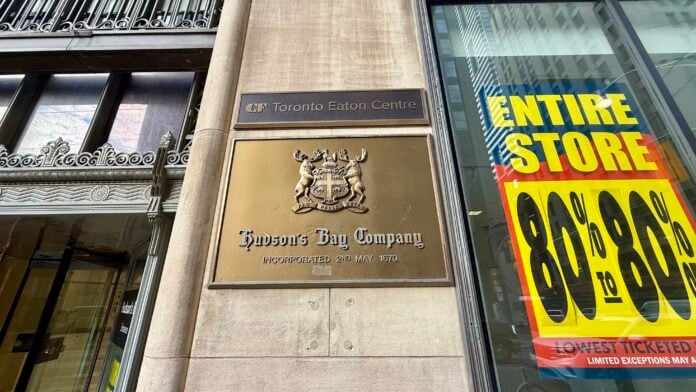
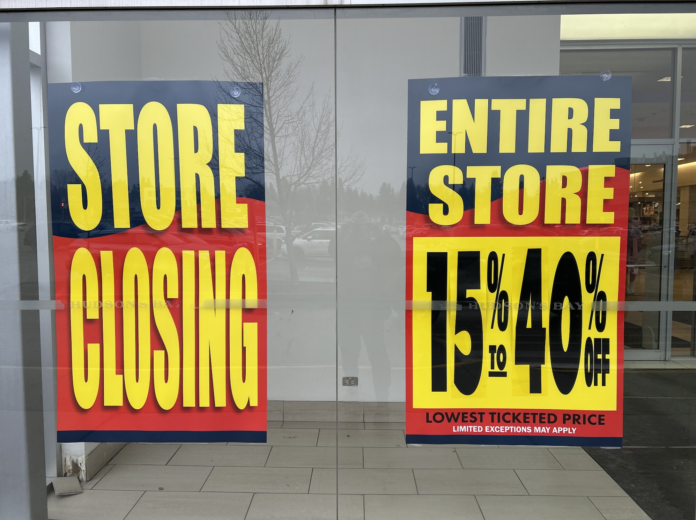
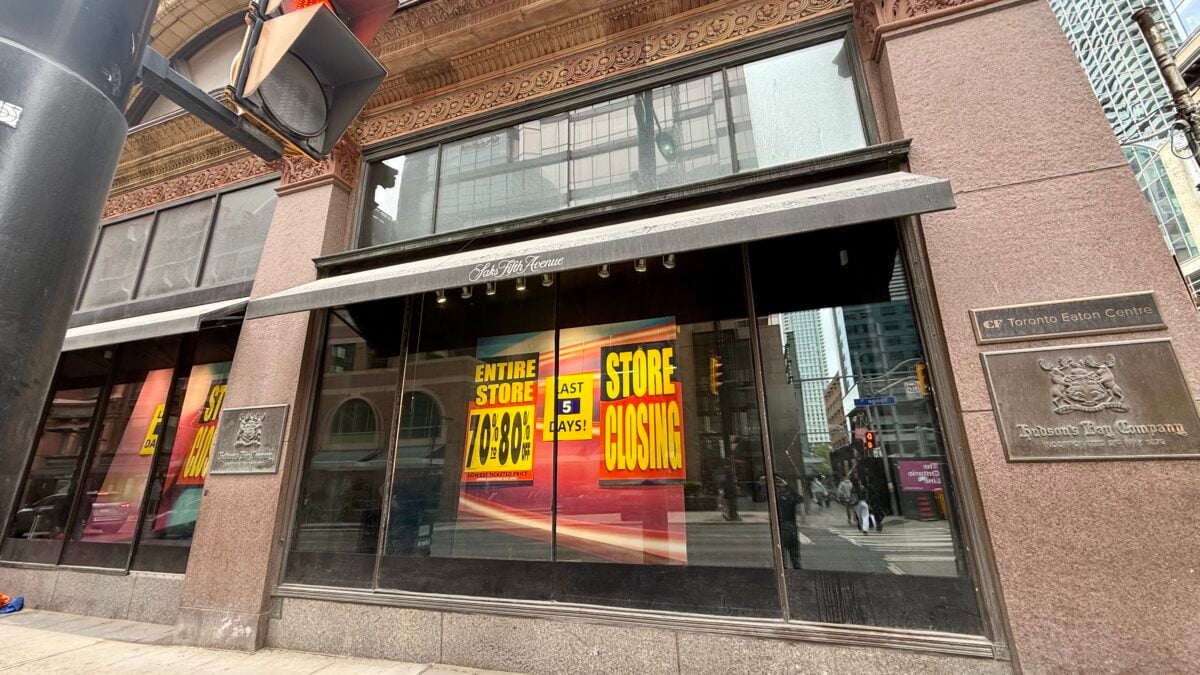
Signage outside the former Hudson's Bay flagship store in downtown Toronto, May 2025. Photo: Craig Patterson
The Hudson’s Bay Company is forcefully rejecting calls from a key lender to expand court oversight of its operations, arguing in new court documents that many of the problems cited by the lender were in fact caused by the lender itself.
In an affidavit filed Sunday with the Ontario Superior Court of Justice, Michael Culhane, chief financial officer and chief operating officer of the defunct retailer, accused Hilco Global of “intentional inaccuracies and mischaracterizations” in its push to have Alvarez & Marsal’s court-appointed oversight powers enhanced. He described the criticisms as an effort to deflect blame for the very liquidation failures Hilco helped engineer.
“It is neither fair nor credible for Hilco to criticize the retailer for matters that were foreseeable, inevitable and/or, in many instances, driven by or contributed to by Hilco’s own conduct and commercial decisions,” Culhane said.
The dispute has become the central battle in the Hudson’s Bay liquidation dispute, one that may shape the outcome of the company’s restructuring under Canada’s Companies’ Creditors Arrangement Act. Hilco, through its affiliate Restore Capital, is a major lender and also owns Hilco Merchant, the lead liquidator in charge of shutting down Hudson’s Bay’s remaining department stores.
Shuttered Hudson’s Bay store at Toronto’s Yorkdale Shopping Centre on the evening of June 1, 2025. The Yorkdale store is part of the RioCan JV. Photo: Craig Patterson
Restore Capital and its co-lenders advanced $151.4 million to Hudson’s Bay in December. They now argue that the retailer has wasted that money through poor decisions, including a contentious deal to sell 25 leases to B.C.-based billionaire Ruby Liu. Restore is seeking a court order to terminate the sale and install either a more powerful monitor or a third-party receiver to oversee what remains of the business.
But Culhane contends that the liquidation sale was run directly by a syndicate of five firms, with Hilco in the lead. That group included Gordon Brothers, Tiger, the GA Group and SB360 Capital. According to Culhane, Hilco controlled pricing and timing decisions and had supervisory staff in every store.
Hilco’s own projections anticipated roughly $17 million in sales from furniture, fixtures and equipment (FF&E). Instead, only $10.7 million was recovered, a shortfall Culhane attributed to missteps made by the liquidators, including delayed start times, poor discounting, and failure to secure bulk buyers.
“These were matters Hilco knew or should have known could occur when it agreed to and participated in the various processes that it now criticizes,” Culhane wrote in his affidavit.
The retailer now faces accusations that the FF&E abandonment is costing millions in removal fees. Yet Culhane insists that Hilco chose to vacate all stores by June 7 and left behind unsold items, despite Hudson’s Bay’s warnings. He argues it is disingenuous for the company’s lender and liquidation partner to now seek greater control over the wind-down.
Weihong (Ruby) Liu in front of the Court House at 330 University Avenue in Toronto on June 23, 2025. Photo: Craig Patterson
At the centre of the broader Hudson’s Bay liquidation dispute is the proposed sale of 25 store leases to Ruby Liu, a mall owner who plans to relaunch the department store model under her own name. Liu has already acquired three leases for $6 million and made a $9.4 million deposit toward the remaining 25, suggesting a purchase price of approximately $94 million.
Restore Capital calls the Liu deal “illusory” and a “misadventure,” citing landlord resistance and a lack of a convincing business plan. In a filing over the weekend, the lender warned that the transaction’s delay is costing lenders millions in ongoing rent and legal fees. “If the transaction fails, no proceeds will be realized and the astounding costs incurred, and to be incurred, in its pursuit, will never be recouped,” Restore stated.
Culhane defended the lease sale, saying it represents the best chance to realize value for creditors. He also revealed the company intends to seek court approval for an additional lease sale later this month and plans to auction off its corporate art collection to raise further funds. Hudson’s Bay is also pursuing a claim for access to a pension surplus, which Culhane says could allow lenders to be repaid in full.
Rendering of a Ruby Liu store. Image: Ruby Liu/Central Walk
In seeking to block Restore’s push for expanded oversight, Culhane warned that appointing a “super monitor” or outside receiver would introduce unnecessary costs and delays. He emphasized that Alvarez & Marsal, the current monitor, has not raised concerns about cash flow or mismanagement and continues to support the company’s conduct in the proceedings.
Hudson’s Bay, once Canada’s oldest retailer and a cultural institution, filed for creditor protection in March after years of declining sales, neglect, and mounting debt. As the liquidation winds down, tensions between lenders and management have intensified, with the fate of the Liu transaction likely to be a deciding factor in what, if anything, remains for creditors.
The court is set to hear arguments Tuesday on whether to terminate the Liu deal or let it proceed. The outcome will mark a pivotal moment in the Hudson’s Bay liquidation dispute, as stakeholders await a ruling that could determine the future of the company’s remaining assets.
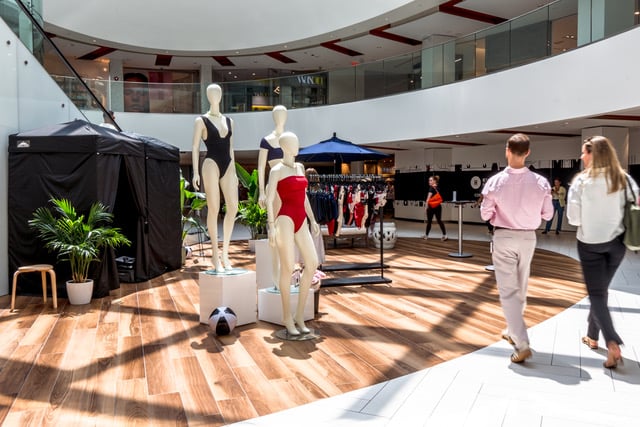
Lauren Bentley pop-up at Yorkville Village. Image: Yorkville Village
Canadian luxury swimwear label Lauren Bentley Swimwear is gaining momentum as one of the country’s most promising emerging fashion brands. Known for its refined aesthetic and strong focus on craftsmanship and sustainability, the brand has officially opened a new pop-up retail experience at Yorkville Village in Toronto, July 9-25. The boutique-style location brings founder and CEO Lauren Bentley’s vision of elevated, timeless swimwear directly to consumers in a bright, resort-inspired setting.
Located in the high-traffic Oval space under a dramatic skylight, the new store is described by Bentley as a “poolside escape minus the pool”, a retail experience that goes beyond product and into lifestyle. “We’re bringing in all the fixtures, our vision coming to life,” said Bentley in an exclusive interview. “This one is all us. It’s been a lot of planning, but that makes it exciting. I’ve always loved creating experiences, and I see this as an extension of that.”
Lauren Bentley
Creating a Swimwear Moment in Canada
Now open for the summer, the Yorkville Village pop-up has been designed to reflect the brand’s sophisticated yet approachable identity. Inspired by warm-weather leisure, the space includes loungers, social seating, and elegant product displays that nod to Mediterranean luxury.
“We felt like having that sunlight coming in through the skylight is going to be really helpful,” Bentley said. “Selling bathing suits in Canada, especially outside of summer, can be tricky. Our customers often need to see the sun, or have a trip booked, before they even consider buying swimwear.”
The brand is also collaborating with other Yorkville Village tenants for cross-promotional initiatives and product integrations. “There’s a strong community feel here,” Bentley added. “Everyone’s been incredibly supportive. It’s the right place for us to engage customers directly.”
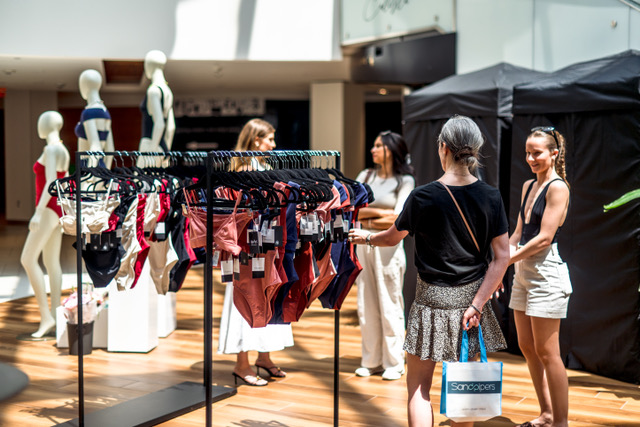
Lauren Bentley pop-up at Yorkville Village. Image: Yorkville Village
From Nova Scotia to Toronto Luxury
Bentley’s journey to founding her namesake brand began in Nova Scotia, where a childhood by the ocean inspired her passion for swimwear. After studying Fashion Business Management at Seneca College, she entered the fashion wholesale industry, eventually becoming swimwear brand director at Jaytex Group.
“One day I got a call that I was flying to Miami Swim Week the next day,” she recalled. “It was my dream come true. I had to learn fast and sell swimwear to North American buyers in a weekend.”
Bentley spent several years refining her concept before launching Lauren Bentley Swimwear in October 2023 under the parent company LSEB Creative Corp. “This brand was years in the making,” she said. “And now it feels like it’s unfolding exactly the way it was meant to.”
Lauren Bentley pop-up at Yorkville Village. Image: Yorkville Village
A Brand Rooted in Craftsmanship and Intention
At the core of Lauren Bentley Swimwear is a design philosophy that favours timelessness over trends. Each piece is carefully created to be both elegant and enduring.
“Our trims and fabrics are sourced individually, and with great care,” Bentley explained. “We consider every detail to ensure each component meets our high standards and ultimately, our customer’s expectations.”
Most trims and materials are sourced from Europe, while all production is done in Portugal, a country with a storied tradition of textile excellence. “Portugal is one of the strongest textile regions in Europe,” she said. “Their level of craftsmanship aligns beautifully with our values.”
This dedication is visible in the brand’s elevated silhouettes, which are inspired by Mediterranean swimwear and designed to flatter and last. “We want our pieces to feel refined, effortless, and above all, made to endure,” she said.
Image: Lauren Bentley Swimwear
Responsibility at the Core
From day one, environmental and social responsibility has been embedded into every facet of the brand. “We view sustainability as a necessity when building a brand in today’s world,” said Bentley. “We still have a long way to go, but our commitment is serious and ongoing.”
The company has aligned with manufacturers who carry respected certifications, including the Global Organic Textile Standard (GOTS), Global Recycled Standard (GRS), and Recycled Claim Standard (RCS). Bentley emphasized that ethical partnerships are non-negotiable. “We only work with those who share our values,” she said.
This ethos also drives the brand’s design direction: creating garments that last both in quality and style. “We don’t want to contribute to throwaway fashion,” she explained. “Every product is meant to be timeless and durable.”
Climate Commitment Built In
In addition to responsible manufacturing, Lauren Bentley Swimwear also takes direct action to address its shipping footprint. “For every order we ship, we calculate estimated emissions and allocate a portion of our revenue to verified carbon removal projects,” Bentley noted.
Those projects are selected based on scientific vetting by experts at Carbon Direct. “We believe in supporting climate innovation while offsetting our own impact,” she said. “It’s not perfect, but it’s purposeful.”
This transparency and forward-thinking approach are part of what sets the brand apart in a competitive luxury space. “Fashion isn’t always clean,” Bentley added. “But we can hold ourselves accountable and always strive to do better.”
Image: Lauren Bentley Swimwear
A Strong Start in Luxury Hospitality
Despite being under two years old, Lauren Bentley Swimwear has already secured premium partnerships that reflect its upscale positioning. The brand is stocked at Four Seasons Hotels in Toronto, Nashville, and New Orleans.
“I love the luxury hospitality world,” said Bentley. “It’s where our clients are already comfortable, relaxed, and open to discovering something beautiful. These partnerships are such a natural fit.”
The brand also completed a successful trunk show with Holt Renfrew’s Bloor Street flagship, giving it a strong introduction to Toronto’s luxury retail audience.
“That event gave us credibility and visibility,” she said. “Holt Renfrew has a phenomenal team—we’re hoping to work with them again in the future.”
Building a Beachwear Lifestyle Brand
While swimwear remains the foundation, the long-term vision for Lauren Bentley Swimwear includes product expansion into beachwear, accessories, and even resort-inspired lifestyle categories.
“We’re starting with men’s and women’s swimwear, but the next step is beachwear cover-ups, then daywear, then accessories,” Bentley explained. “Eventually, I’d love to get into homewares and even lingerie.”
Permanent flagship stores could also be in the future, ideally in destinations where swimwear shopping is relevant year-round. “It has to be intentional,” she said. “We’re not interested in quick wins — only thoughtful, long-term growth.”
She’s also open to shop-in-shop concepts and further wholesale partnerships, provided they align with the brand’s ethos. “Every relationship we pursue has to reflect our core values,” she added.
Lauren Bentley pop-up at Yorkville Village. Image: Yorkville Village
A Brand With Purpose
Ultimately, Bentley sees her namesake brand not just as a business, but a long-term platform to build something meaningful, both creatively and ethically.
“This is my baby and my name is on it for a reason,” she said. “I want to be around for decades, not just a few seasons. I’m building something with integrity.”
The new Yorkville Village pop-up marks an important step in that journey: a chance to meet customers face-to-face, share the brand’s story, and build community.
“We’ve built something beautiful,” Bentley said. “Now we get to invite people into the experience.”
In a shifting media landscape amid policy changes and platform-specific risks, brands are reconsidering where to allocate and diversify their ad spend. New research from Pinterest and MAGNA reveals there’s one thing that many businesses have been overlooking to drive real impact: positive ad environments.
Pinterest commissioned MAGNA for research to help understand which ad environment attributes can impact a brand’s performance goals. The research reveals a clear takeaway for brands: It pays to be positive.
Because when people experience a positive environment, marketers see positive results – from increasing audience engagement to boosting sales.
According to Pinterest, the top findings for marketers include:
People are more engaged when they’re in a positive space. The study found that people were 20% more emotionally engaged with content they saw on platforms they perceived as positive. They were more leaned in as well, spending an average of 15% more time looking at the ads.
Ads in positive environments work harder. When the same exact ad was shown on different platforms, users responded that an ad seen on a platform they viewed as positive is perceived as twice as trustworthy, twice as interesting and 1.5x more likeable. Put another way: Your customer’s experiences are crucial, and can make the same piece of creative work harder.
People are more likely to take action in positive ad environments. Positive environments don’t just help brands improve perception, they also make people more likely to act. Compared to non-positive spaces, positively viewed platforms can be up to 94% more impactful in driving purchase intent.
Brands see better results when they account for viewability and positivity in their media buying strategy. In the MMM simulations, the same creative and same finite budget generated up to 24% more sales when brands incorporated viewability and positivity in their media buying strategy.
Soniya Monga
“In partnership with MAGNA, this research shows that safe and positive platforms aren’t just preferred by users, they perform for advertisers,” said Soniya Monga, VP of Global Agency Sales. “We were able to quantify the impact on metrics like engagement, trustworthiness, intent and even results to demonstrate that brands don’t have to choose between positivity and performance.”
Pinterest said it is continuing to build a more positive internet—one that brings out the best in humanity and supports advertisers in reaching audiences with intent.
Pinterest is ranked the #1 social media platform for instilling feelings of self-worth and purpose, as measured by a global wellbeing metric.
Kara Manatt
“We understand advertisers are all seeking a competitive edge in today’s marketplace, and we believe this research represents a fresh opportunity for where to find it,” said Kara Manatt, EVP, Intelligence Solutions, MAGNA. “This ambitious study shows what audiences experience whenever they log on to social media, how that impacts brands, and why prioritizing this could benefit both.”
Following two consecutive interest rate pauses, the MNP Consumer Debt Index – conducted quarterly by Ipsos – is holding steady at 88 points this quarter.
Still, nearly two-thirds of Canadians say they desperately need interest rates to go down, relatively consistent since last quarter (64%, +1pt). Despite the Index stabilizing, ongoing economic uncertainty and the cost of living continue to weigh on households. More than one-third (36%) of Canadians report feeling anxious or stressed about their financial situation, while one-quarter say they feel like they’re having to put their life on hold (26%) or are constantly putting out financial fires, facing one unexpected cost after another (24%), said the report.
Grant Bazian
“Canadians have not witnessed such economic uncertainty since the pandemic. We see some stability in financial perception, but many households feel like their lives are on hold, stuck in a financial holding pattern as they wait for the proverbial dust to settle,” said Grant Bazian, president of MNP LTD, the country’s largest insolvency firm.
“Given the persistent economic pressures and a backdrop of global volatility, many are hesitant to make major financial or life decisions, unsure of what lies ahead.
“Even after two interest rate pauses, those making careful choices and delaying major decisions may be struggling to get ahead amid the current uncertainty around costs and income. For many vulnerable households–particularly younger adults and lower-income Canadians–it may feel like they’re constantly putting out financial fires.”
Younger adults and lower-income households are consistently among the most likely to report financial strain and feeling stalled. One-third (33%) of Canadians aged 18-34 say they feel stalled–having to put their lives on hold–while those with household incomes under $40K (30%) are also the most likely to feel stalled. Young Canadians aged 18-34 (45%) and those with household incomes less than $40K (44%) are the most likely to report feeling anxious or stressed about their financial situation. One-third (32%) of Canadians feel stuck living paycheque to paycheque, with those aged 18-34 (37%) and 35-54 (39%), and those earning less than $40K (45%), being the most likely to feel this way. However, younger Canadians aged 18-34 (32%) are also the least likely to say they are feeling cautious with how they manage their money due to current financial pressures, compared to 37% of Canadians overall, said MNP.
“In response to current financial pressures, two in five Canadians (41%) have reduced discretionary spending, one-third (33%) are increasing savings or building emergency funds, and more than one-quarter (27%) are prioritizing debt repayment. Nearly one-quarter (23%) of Canadians are putting important life goals–such as buying a home, starting a family or changing careers–on hold. Younger Canadians aged 18-34 are the most likely to delay these types of milestones (33%),” said the MNP report.
Despite interest rates holding steady twice this year, more Canadians this quarter say they are concerned rising interest rates could drive them toward bankruptcy (41%, +3pts). Furthermore, even if rates were to decline, a significant proportion of Canadians (45%, +2pts) remains concerned about their ability to repay debt, said MNP.
“There are some persistent fears around interest rates,” added Bazian. “For some households, the damage has already been done. After years of rising costs, high interest rates, and depleted savings, there may be some deep anxieties about what could still be to come.”
As Canadians look to the future, one-third (33%, +3pts) expect their debt situation to improve one year from now, and a larger proportion (40%, +1pt) believe it will improve in five years. However, 13% say they expect their debt to worsen over both horizons. Fewer this quarter believe they will be able to cover all living expenses in the next year without needing more debt (54%, -4pts), explained MNP.
Millions Remain Close to Insolvency
While some households are managing to set a little more aside, a significant proportion of Canadians remain on precarious financial footing.
“About 14 million Canadians say they are close to financial insolvency, with little to no room to absorb an unexpected expense or income disruption,” said Bazian.
“Two in five Canadians (42%, -1pt) report they are $200 or less away from financial insolvency each month. That includes more than a quarter (27%, +1pt) who say they already don’t make enough to cover their bills and debt payments,” noted the report.
Hudson's Bay at CF Market Mall in Calgary. Photo: Mario Toneguzzi
Toronto-based inventory liquidator Alex Hennick says business is booming as companies across North America and Europe face mounting challenges tied to unsold goods, warehousing costs, and shifting consumer behaviour.
“We started in 2009,” said Hennick of A.D. Hennick & Associates. “So we’ve been around for 16 years. We are primarily buying and selling large quantities of excess inventory, canceled orders, and distressed assets. So we’re working with manufacturers, with distributors, with bankruptcy trustees, and a variety of different avenues where we’re purchasing volume of inventory.”
Alex Hennick
The liquidator resells that merchandise through a number of channels. “Depending on what we’re buying, we’re selling to discount retailers, we’re selling in auctions, and we’re selling in wholesale. And then occasionally we’ll do store closing sales if we’re doing, say, a bankruptcy of a retailer.”
Hennick says that in recent years, the flow of deals has grown substantially. “There’s so much more inventory on the market right now and there’s so many factors that are affecting it,” he said. “COVID, tariffs—there’s a lot of decisions that companies made in the moment that they look back at a couple years later and the economy has changed significantly.”
He confirmed his company was involved with the Hudson’s Bay Company liquidation. “We were involved a bit with the Bay,” he said. “We work closely with the people who ran the liquidation sale—some of the largest U.S. liquidation firms. And what a lot of these liquidators do in the sale is they’re able to augment or supplement the sale. So the liquidation companies purchase a lot of inventory and they sell them in the store closing sales, because the stores are packed, there’s so much traffic.”
“When the judge gave them approval, we had a lot of inventory in stock that we were able to sell. That was then sold in the store closing sale.”
According to Hennick, many companies in trouble wait too long before making key decisions. “We see a lot of companies doing too much,” he said. “So for example, a clothing company—they might have a lot of different styles, a lot of different colours. Sometimes less is more.”
He added: “Shoe companies—there’s so many different sizes. When you make different styles, you have to have different sizes. So it’s less about how much you’re selling, it’s more about how much you’re buying.”
He noted that poor inventory decisions can cascade into major financial trouble. “You get 50,000 items… if you sell over 48,000 of them, you could be in good shape. But if you sell 30,000, you probably won’t even break even. Then you have warehouse costs and you have overhead, you have so many additional fees that go into it—cash flow and affecting other products.”
Another issue is companies failing to diversify sales channels or evolve. “A lot of companies, if they don’t evolve, sometimes their eggs are in so many baskets. Talking about HBC—obviously for years people thought there might be problems, but a lot of companies are very leveraged because HBC is one of their biggest customers.”
“They’ve now manufactured quite a bit of inventory for HBC which is not going to be bought. So they’re sitting on that and they’ve lost a large customer for years to come. So the impact this will have on manufacturers and brands will be enormous.”
Third-party logistics (3PL) warehousing is another challenge, he added. “The cost to warehouse your inventory is so much these days that we continue to see brands fail because they have these big items that they’re storing in warehouses, and the fees and the cost to store them there—unless it’s turning over quickly—it’s going to outweigh itself,” said Hennick. “The 3PL is the only one making money.”
The liquidator now operates globally. “Some of our biggest customers are in Europe. We’re in Canada, U.S., and Europe. Those are the main markets that we’re selling into.”
Hennick said certain retail segments are especially vulnerable right now. “Besides real estate… obviously the cannabis industry for years grew very quickly. The amount of bankruptcies in cannabis is huge,” he said.
And the struggling housing market has sent ripples through adjacent industries. “Because homes aren’t selling as much and the housing market’s bad, people aren’t doing renovations. So because of that, flooring companies, lighting companies, furniture companies are in really big trouble. They’re sitting on stock and it’s not a price thing.
“Consumers don’t have money. They don’t have money for a big-ticket purchase. And if you’re not doing a renovation, you’re almost never going to be buying flooring and lighting and furniture because it’s kind of situational.”
That economic pressure is fueling a surge in discount retail, Hennick noted. “There’s a tremendous amount of inventory on the market, which allows a lot of these discount retailers and places to get opportunities—great deals.
“If the retailers are buying right and they’re able to get the right deals on the floor, it’s only going to make a better name for themselves and grow their customer base.”
Display window at Saks Fifth Avenue in the Hudson’s Bay building on Queen Street in Toronto, May 28 2025. Photo: Craig Patterson
He cited one notable example from last year: “We bought the assets of the world’s largest barbecue store. That was a store located in Toronto—50,000 square feet.”
“Why was it not located in Texas versus Toronto with our five- or six-month barbecue season? Doesn’t make sense to me.”
“During COVID, they couldn’t keep things in stock. Everyone was at home, everyone needed a new barbecue. All of a sudden in June—barbecue season of 2022—their phones stopped ringing. Because if you buy a barbecue, chances are you don’t need one for another 10 years.”
“They way over-inventoried because they thought, ‘Wow, 2020, our sales went like this. In 2021, 2022, it’s just going to continue.’ But they went and bought that much more inventory.”
“A lot of companies did this—2020 and 2021 were record years. People were at home, interest rates were low, they had disposable income, they couldn’t travel. Then these companies get stuck with huge facilities, massive rent, big overhead, and inventory. And it’s hard. It’s not sustainable.”
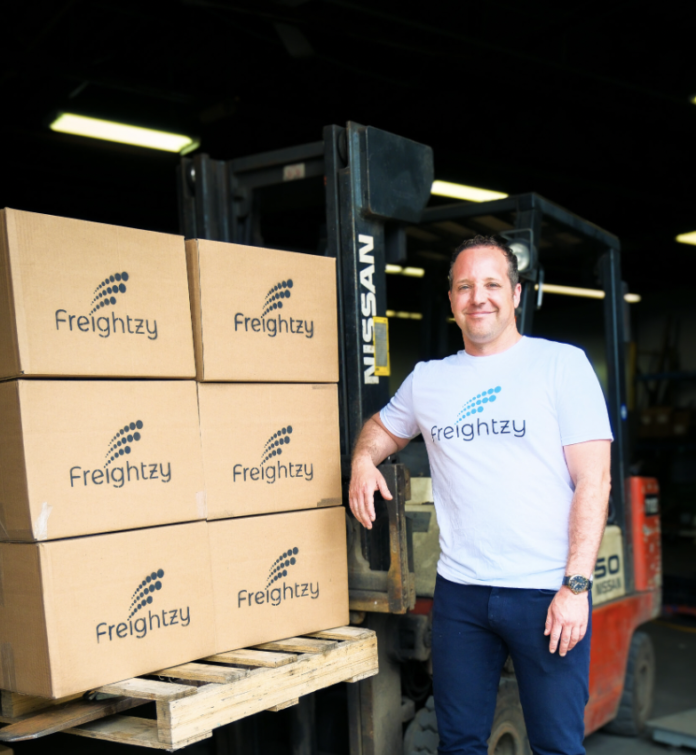
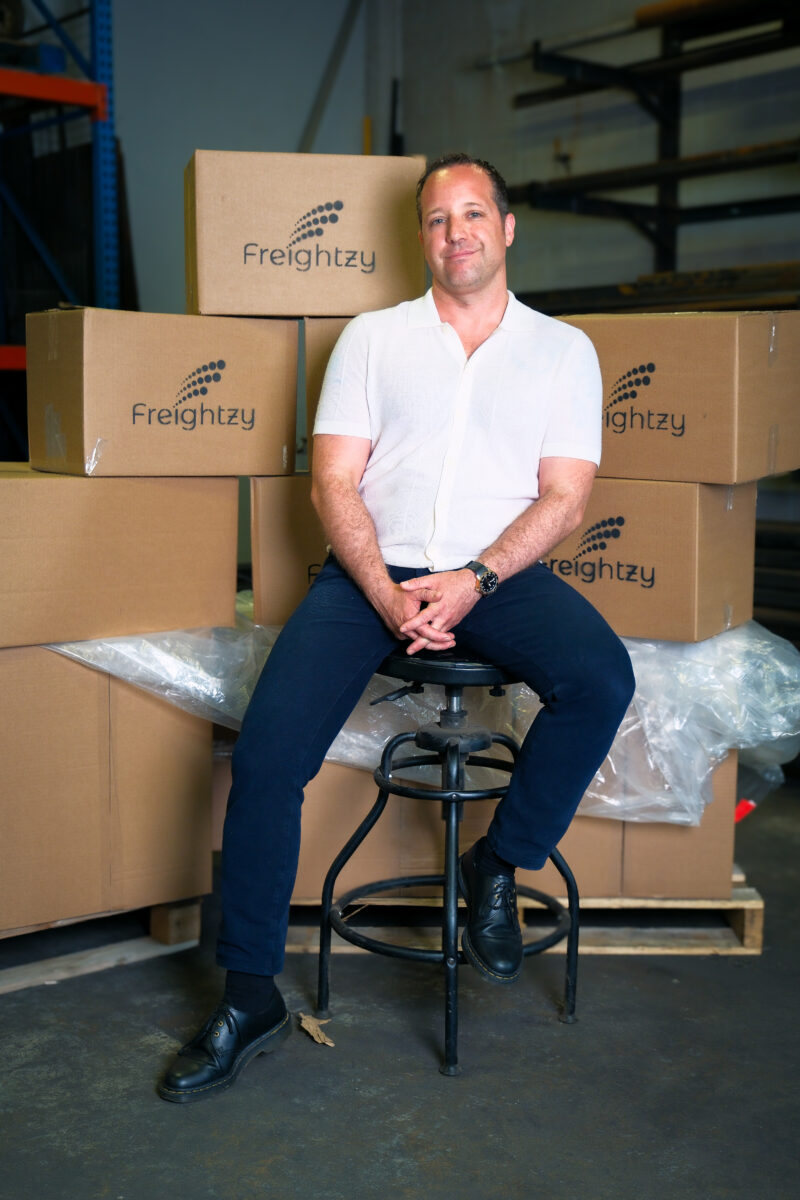
Freightzy, a Canadian startup modernizing shipping and making freight easy for small and mid-sized businesses, recently announced the launch of Canada’s most comprehensive Reefer LTL (Less Than Truckload Refrigerated) Program for SMEs to remove high minimums that typically hold smaller companies back.
Now, growing food and beverage businesses have unprecedented access to cold chain logistics across Canada, the U.S., and Mexico. Freightzy’s tech-enabled, people-first approach connects clients with 70 pre-vetted temperature-controlled carriers and provides personalized quotes from real experts in 10 minutes or less, supported by a custom-built mobile portal for real-time tracking and shipment visibility. With 24/7 human-led support, Freightzy is leveling the playing field for SMEs ready to scale, it said.
“Freightzy exists to help small and mid-sized businesses grow. Our new Reefer LTL program is the next step in leveling the playing field.”
Launched at the onset of the pandemic, the company has achieved rapid growth, doubling its revenue in the last three years, and boasting a 95% on-time delivery and client retention rate, it said.
Freightzy said it sets itself apart through its commitment to real human support, a tech-driven approach that empowers SMEs to ship with confidence.
“In addition to Reefer LTL, Freightzy offers a full suite of solutions, including LTL, FTL, expedited, and intermodal freight, empowering businesses to ship with confidence,” added the company.
“Canada is home to 1.22 million employer businesses. In the food and beverage processing sector alone, there are over 8,800 businesses with 91% of these small or medium-sized businesses, underscoring the critical role SMEs play in both the national economy and Canada’s food industry.
“Furthermore, many SMEs still find it easier to ship products across the U.S. border than to neighboring provinces for reasons that include longstanding interprovincial trade barriers. Freightzy’s expansion comes as Canada works to reduce these barriers and foster growth. As the North American logistics market expands from $1.478 trillion in 2024 to a projected $1.768 trillion by 2033, Freightzy’s new program helps companies overcome logistical barriers and compete more effectively across Canada, the U.S., and Mexico.”
Freightzy Key Features:
Accessible Cold Chain Logistics: Reefer shipping without the high-volume requirements typically demanded by traditional carriers.
Rapid, Human-Powered Support: Personalized quotes in under 10 minutes, available 24/7.
Custom-Built Client Portal: Real-time tracking, instant quotes for LTL, FTL, expedited, and intermodal shipments, full shipment visibility, and access to thousands of vetted carriers across Canada, the U.S., and Mexico.
Scalable Savings: Volume-based pricing advantages and smarter rate negotiations as clients grow.
“I’ve always been in freight. My first job out of school, in my early twenties, was in transportation. I worked for a big firm in Toronto and got let go during the financial recession—2007–2008. That’s when I wanted to start my own freight brokerage, which I own today—Freightzy. I went to RBC, my bank then and still now, and pitched the idea. They basically laughed me out of the office and suggested I open a Subway franchise instead,” said Freedman.
“I had no interest in food service—I’d be a terrible operator—so that didn’t go anywhere. But I didn’t forget my vision. I pivoted and eventually opened the Canadian sales branch of a major U.S. freight company. I ran that for about 10 years.
“Then in 2019, that company was being acquired, and it wasn’t clear what my future there would be. So I decided to finally pursue the dream I had back in 2007–2008. I bootstrapped Freightzy from the ground up.”
Screen shot of a Grey Poupon TV commercial from the early 1980s (inserted for humour, representing a 'high income individual'. Image: screen shot
Canadian consumer spending intentions rose sharply in July 2025, reversing a steep decline seen earlier in the year. According to a new industry report by Stifel Nicolaus Canada Inc., 55 percent of survey respondents now expect to increase discretionary spending over the next 12 months. That figure represents a five-point gain from April and marks the second-highest level across nine survey periods.
The improvement is being driven primarily by high-income Canadians, particularly those earning more than $75,000 annually. These consumers showed stronger intent to spend across nearly every retail category, pointing to renewed confidence in their financial outlook. Analysts at Stifel suggest that the stabilization of the federal political landscape, particularly early approval of Prime Minister Mark Carney’s leadership, may be helping boost sentiment among this group.
Several Canadian retailers could benefit from the rebound according to Stifel, particularly those in apparel, pet supplies, travel, and big-ticket discretionary categories.
Apparel Spending Picks Up Steam
Spending intentions in clothing and apparel saw a notable turnaround. Fifty-one percent of Canadians surveyed plan to increase their spending on fashion in the year ahead, up three percentage points from April. Among high earners, 62 percent expressed intent to spend more, one of the highest figures seen since 2023.
The rebound was especially evident among female respondents, who posted one of the strongest results of the past nine survey cycles. This bodes well for brands such as Aritzia, Groupe Dynamite, and Gildan Activewear, all of which could benefit from increased demand in the months ahead.
Pet Category Remains Exceptionally Resilient
Spending on pets remains a bright spot. Seventy-six percent of respondents said they plan to spend more on pet food and accessories over the coming year, matching the strongest result recorded in the past nine surveys. The trend was most pronounced among women and higher-income households, both of which showed elevated spending intentions.
For Pet Valu, the data could signal a turnaround in same-store sales, which had faced pressure earlier this year. The consistency of consumer interest in this category continues to support growth opportunities for retailers targeting devoted pet owners.
Dollar Stores See Slower Growth
Although dollar stores remain a popular option, the July data suggest that their explosive growth may be levelling off. Seventy-three percent of Canadians said they would spend more in the channel, but that marks the second-lowest increase in five surveys. High-income shoppers, in particular, showed little appetite for further dollar store purchases.
This softening trend could be a headwind for Dollarama, which had enjoyed steady share gains during years of economic pressure. As confidence improves, consumers may be gravitating toward higher-quality or more specialized retailers.
Big-Ticket Categories Gaining Momentum
Somewhat unexpectedly, spending intentions for large discretionary purchases such as powersports vehicles have risen. Nine percent of respondents said they are very likely to purchase or upgrade items such as ATVs, motorcycles, or boats. That figure exceeds the four-year average and could indicate solid demand ahead for BRP, which manufactures a range of recreational vehicles.
Travel is also seeing a renewed boost. Fifty-seven percent of Canadians said they plan to fly for their next vacation, up from 55 percent in April. Among higher-income households, travel intentions jumped by nearly four percentage points. More respondents also indicated that airfare prices had no impact on their decision to travel, suggesting that pricing sensitivity is beginning to ease.
Mixed Signals in the Toy Market
Spending intentions for toys declined by two percentage points since April, though the headline figure masks a more complex picture. While lower-income respondents pulled back slightly, high-income Canadians showed a willingness to increase toy-related spending. Parents between the ages of 18 and 54 posted the strongest levels of intent, with more saying they were “very likely” to spend than “very unlikely.”
This could mean a flat to slightly positive outlook for Spin Master, the Toronto-based toymaker known for Paw Patrol, Bakugan, and other entertainment-linked properties.
Furniture and Appliance Spending Weakens
The outlook for furniture and appliance retailers appears more subdued. Only 53 percent of Canadians said they are likely to increase spending in this category, down three points from April. Among low-income respondents, the number dropped to 46 percent, the weakest reading of the past year. Male respondents also showed less intent to spend.
The data could signal challenges ahead for Leon’s Furniture and The Brick, both of which saw a decline in consumer preference. According to the survey, only 14 percent of Canadians now plan to buy their next piece of furniture from those two retailers, down five points from last year. At the same time, Costco and Amazon gained ground, with more respondents naming them as preferred destinations for furniture purchases.
Convenience Store Branding Shifts
Stifel’s research also explored preferences in the gasoline and convenience store space. The Circle K brand, operated by Alimentation Couche-Tard, saw improved brand recognition. Nine percent of respondents named it as their preferred fuel destination, more than double its showing in 2023.
Furthermore, more Canadians are entering convenience stores when fueling up. Twenty-three percent now say they enter the store most of the time, up from 15 percent in early 2023. This uptick may reflect a return of discretionary comfort or a greater reliance on convenience-based shopping.
Interestingly, 18 percent of respondents said they do not buy gasoline at all. While this could be linked in part to the growing adoption of electric vehicles, Stifel notes that the increase is too large to attribute to EV use alone.
Broader Implications for Retailers
Stifel’s July 2025 update paints a picture of cautious optimism. As high-income households regain confidence, spending is returning in categories that had softened earlier in the year. Apparel, travel, and pets are clear winners, while furniture and value-based channels like dollar stores may see flatter trends.
Retailers aligned with premium positioning, lifestyle branding, and differentiated experiences appear best positioned to benefit from the shift. While overall market sentiment remains mixed, the direction of travel suggests that discretionary spending is, at least for now, back in expansion mode.
Walmart Canada Growth Summit attracted entrepreneurs and businesses from coast-to-coast with more than 50 “golden tickets” awarded to Canadian businesses. (CNW Group/Wal-Mart Canada Corp.)
Recently, 120 local Canadian entrepreneurs and businesses from across the country flocked to Walmart Canada’s head office for the chance to pitch their products directly to the retailer at the inaugural Walmart Canada Growth Summit.
Entrepreneurs and business owners from nearly every province showcased a diverse range of products, reflecting the creativity and ingenuity of Canadian businesses. More than 50 entrepreneurs were presented with “golden tickets” representing a deal, said the retailer.
“These individuals and businesses represent the best of what Canada has to offer—diverse perspectives, bold ideas, and a deep sense of purpose. To Canadian suppliers, this inaugural Summit is our way of saying – we see you, we believe in what you’re building, and we want to grow with you.”
Sam Wankowski
“Products dreamed up and brought to life by local entrepreneurs and businesses began their path to our shelves and online this week following our first Walmart Canada Growth Summit. We’re excited to see these items in Canadians’ shopping baskets shortly,” said Sam Wankowski, chief merchandising officer, Walmart Canada.
“Entrepreneurship is at the core of Walmart – and our focus on working with, developing and growing alongside small, local businesses is one of the reasons we’re thriving today. We like to think small so we can do big things together – one partner, one store, one item and one customer at a time.”
Walmart Canada’s first Growth Summit is part of Walmart’s global Growth Summit series, following similar events in the United States, Chile, India, Mexico and Africa. Since 1994, Walmart Canada has worked with local suppliers, purchasing billions of dollars’ worth of goods from Canadian suppliers. More than 10,000 locally-made products are available in-store and online today.
Christina Collura
“Attending the first Walmart Canada Growth Summit was nothing short of surreal. As a single mom of a child on the Autism spectrum, teacher, and founder of a “small” brand with a big mission, it was incredibly emotional to stand in that room and share our emotional story. I created Creative Beginning to support my son — and now, thanks to Walmart, our inclusive, sensory friendly and educator-backed tools have the opportunity to reach families and children across the country – of ALL needs and abilities,” said Christina Collura, Founder of Creative Beginning Inc. – Chalkboard Based Puzzles.
“Receiving a golden ticket isn’t just a win for our business — it’s a life-changing moment for our family and for every child who’s ever felt unseen or unsupported. Walmart Canada’s belief in small, purpose-driven brands like ours shows they’re not just making space on the shelf — they’re making space for impact.”
Walmart Canada’s Growth Summit featured keynotes from Walmart Canada executives, supplier development workshops and more than 55 hours’ worth of one-on-one pitch meetings with more than 50 Walmart merchants, all designed to support supplier success and help unlock growth opportunities from coast-to-coast. Attendees had a chance to hear from Montreal-based supplier Jake Karls from Mid Day Squares in conversation with Wankowski.
Jake Karls
“As a Walmart Canada supplier, I can tell you firsthand how meaningful this kind of opportunity is,” said Jake Karls, co-founder of Mid-Day Squares. “At yesterday’s first-ever Canada Growth Summit, 120 suppliers got the chance to pitch their products directly to Walmart merchants, an experience that can truly shift the trajectory of a business. Whether they’re starting in four stores or 400, in-store or online, the potential for growth is real. And with the right support, that momentum can help take a business to the next level. Just like it did for us at Mid-Day Squares.”
Doug Ford
“Walmart Canada’s Growth Summit is exactly what we need right now: a chance for Canadian businesses to grow, compete, and put more homegrown products on store shelves,” said Doug Ford, Premier of Ontario. “By working together, we’re protecting good Ontario jobs, creating bigger paycheques, and building a stronger, more self-reliant economy.”
Joseph Godsey
“We’re continuing to grow in Canada, and our newest suppliers from the Canada Growth Summit are going to grow alongside us – whether they appear on our digital or physical shelves,” said Joseph Godsey, SVP, chief growth officer, Walmart Canada. “As an omnichannel retailer, our goal is to make it easy for our customers to find what they need, when they need it – no matter how they choose to shop with us. This is just the start of our future together – and it’s bright.”
Walmart Canada has more than 400 stores nationwide serving 1.5 million customers each day. Walmart Canada’s flagship online store, Walmart.ca is visited by more than 1.5 million customers daily.
A new poll from the Montreal Economic Institute (MEI) and Ipsos reveals widespread concern among Canadians over government fiscal policy, taxation, and trade measures. A significant majority believe that high taxes and retaliatory tariffs are directly contributing to the rising cost of living.
According to the survey, 77 per cent of Canadians say federal tariffs on American products are increasing the price of consumer goods. The poll suggests a strong public perception that Ottawa’s response to U.S. trade policy is having a negative impact at home.
Samantha Dagres
“Canadians understand that tariffs are just another form of taxation, and that they are the ones footing the bill for any political posturing,” said Samantha Dagres, communications manager at the MEI. “Ottawa should favour unilateral tariff reduction and increased trade with other nations, as opposed to retaliatory tariffs that heap more costs onto Canadian consumers and businesses.”
Canadians also express frustration over the overall tax burden. Seventy-two per cent say their current tax bill is hurting their standard of living, and 67 per cent believe they pay too much in income taxes. About half of respondents say they do not receive good value in return for what they pay.
At the federal level, 54 per cent of Canadians say Ottawa is spending too much, while only six per cent think the government is spending too little. A similar proportion, 54 per cent, say federal dollars are not being effectively allocated to address Canada’s most important issues. In terms of accountability, 55 per cent express dissatisfaction with the transparency of government spending.
“Canadians are not on board with Ottawa’s fiscal path,” said Dagres. “From housing to trade policy, Canadians feel they’re being squeezed by a government that is increasingly an impediment to their standard of living.”
Provincial governments were viewed even more critically. A majority of Canadians said they receive poor value for the taxes they pay provincially. In Quebec, 64 per cent of respondents said they are not getting their money’s worth—an opinion likely influenced by the province’s status as having the highest marginal tax rates in North America.
The poll also looked at housing affordability. Seventy-four per cent of Canadians believe that taxes on new construction contribute directly to unaffordability—a key issue as housing costs continue to rise nationwide.
“Taxpayers are not just ATMs for government – and if they are going to pay such exorbitant taxes, you’d think the least they could expect is good service in return,” said Dagres. “Canadians are increasingly distrustful of a government that believes every problem can be solved with higher taxes.”
The survey was conducted between June 17 and 23, 2025, with a sample of 1,020 Canadians aged 18 and over. The results are considered accurate to within ±3.8 percentage points, 19 times out of 20.