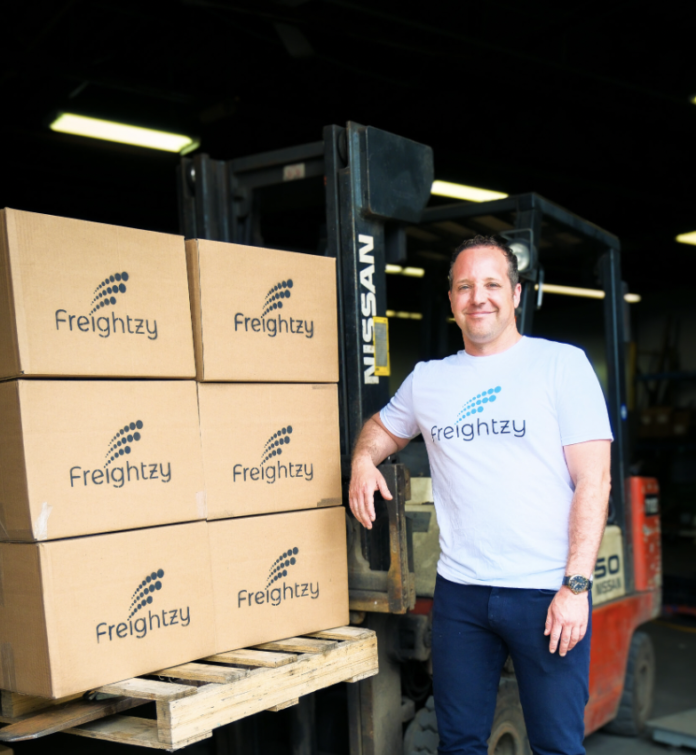
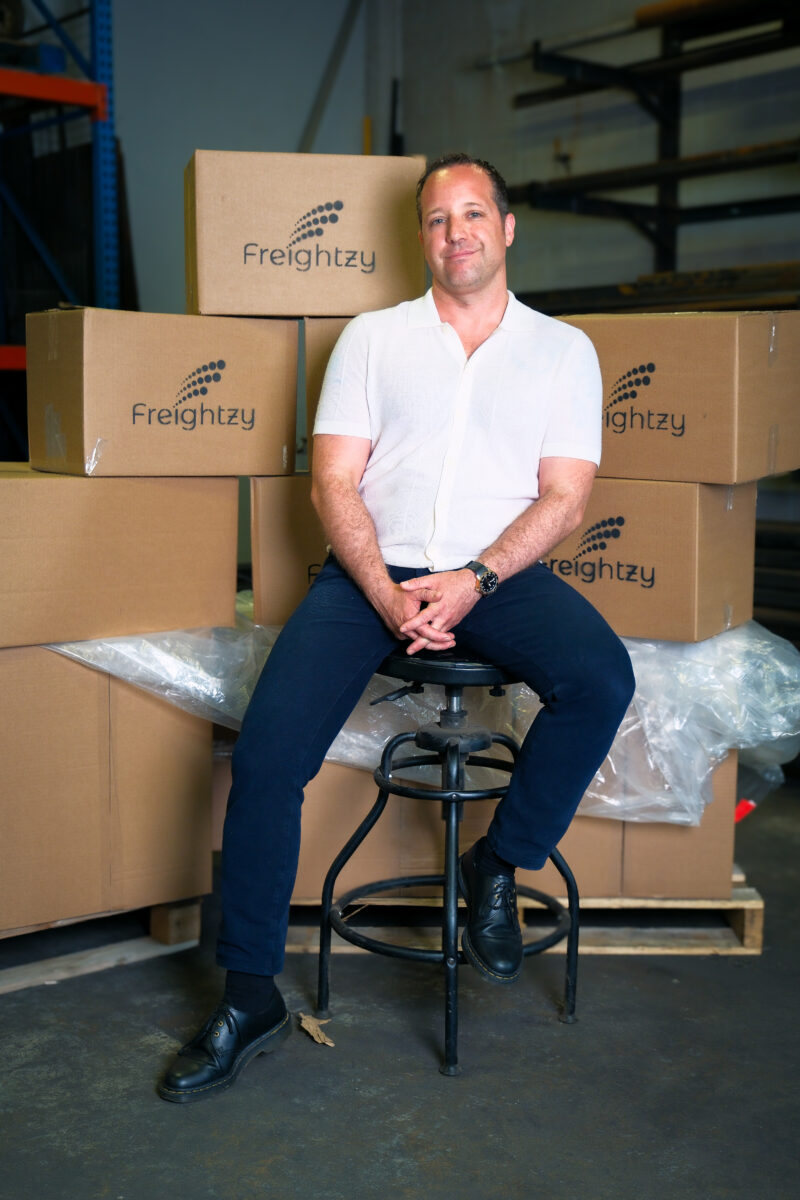
Freightzy, a Canadian startup modernizing shipping and making freight easy for small and mid-sized businesses, recently announced the launch of Canada’s most comprehensive Reefer LTL (Less Than Truckload Refrigerated) Program for SMEs to remove high minimums that typically hold smaller companies back.
Now, growing food and beverage businesses have unprecedented access to cold chain logistics across Canada, the U.S., and Mexico. Freightzy’s tech-enabled, people-first approach connects clients with 70 pre-vetted temperature-controlled carriers and provides personalized quotes from real experts in 10 minutes or less, supported by a custom-built mobile portal for real-time tracking and shipment visibility. With 24/7 human-led support, Freightzy is leveling the playing field for SMEs ready to scale, it said.
“Freightzy exists to help small and mid-sized businesses grow. Our new Reefer LTL program is the next step in leveling the playing field.”
Launched at the onset of the pandemic, the company has achieved rapid growth, doubling its revenue in the last three years, and boasting a 95% on-time delivery and client retention rate, it said.
Freightzy said it sets itself apart through its commitment to real human support, a tech-driven approach that empowers SMEs to ship with confidence.
“In addition to Reefer LTL, Freightzy offers a full suite of solutions, including LTL, FTL, expedited, and intermodal freight, empowering businesses to ship with confidence,” added the company.
“Canada is home to 1.22 million employer businesses. In the food and beverage processing sector alone, there are over 8,800 businesses with 91% of these small or medium-sized businesses, underscoring the critical role SMEs play in both the national economy and Canada’s food industry.
“Furthermore, many SMEs still find it easier to ship products across the U.S. border than to neighboring provinces for reasons that include longstanding interprovincial trade barriers. Freightzy’s expansion comes as Canada works to reduce these barriers and foster growth. As the North American logistics market expands from $1.478 trillion in 2024 to a projected $1.768 trillion by 2033, Freightzy’s new program helps companies overcome logistical barriers and compete more effectively across Canada, the U.S., and Mexico.”
Freightzy Key Features:
Accessible Cold Chain Logistics: Reefer shipping without the high-volume requirements typically demanded by traditional carriers.
Rapid, Human-Powered Support: Personalized quotes in under 10 minutes, available 24/7.
Custom-Built Client Portal: Real-time tracking, instant quotes for LTL, FTL, expedited, and intermodal shipments, full shipment visibility, and access to thousands of vetted carriers across Canada, the U.S., and Mexico.
Scalable Savings: Volume-based pricing advantages and smarter rate negotiations as clients grow.
“I’ve always been in freight. My first job out of school, in my early twenties, was in transportation. I worked for a big firm in Toronto and got let go during the financial recession—2007–2008. That’s when I wanted to start my own freight brokerage, which I own today—Freightzy. I went to RBC, my bank then and still now, and pitched the idea. They basically laughed me out of the office and suggested I open a Subway franchise instead,” said Freedman.
“I had no interest in food service—I’d be a terrible operator—so that didn’t go anywhere. But I didn’t forget my vision. I pivoted and eventually opened the Canadian sales branch of a major U.S. freight company. I ran that for about 10 years.
“Then in 2019, that company was being acquired, and it wasn’t clear what my future there would be. So I decided to finally pursue the dream I had back in 2007–2008. I bootstrapped Freightzy from the ground up.”
Screen shot of a Grey Poupon TV commercial from the early 1980s (inserted for humour, representing a 'high income individual'. Image: screen shot
Canadian consumer spending intentions rose sharply in July 2025, reversing a steep decline seen earlier in the year. According to a new industry report by Stifel Nicolaus Canada Inc., 55 percent of survey respondents now expect to increase discretionary spending over the next 12 months. That figure represents a five-point gain from April and marks the second-highest level across nine survey periods.
The improvement is being driven primarily by high-income Canadians, particularly those earning more than $75,000 annually. These consumers showed stronger intent to spend across nearly every retail category, pointing to renewed confidence in their financial outlook. Analysts at Stifel suggest that the stabilization of the federal political landscape, particularly early approval of Prime Minister Mark Carney’s leadership, may be helping boost sentiment among this group.
Several Canadian retailers could benefit from the rebound according to Stifel, particularly those in apparel, pet supplies, travel, and big-ticket discretionary categories.
Apparel Spending Picks Up Steam
Spending intentions in clothing and apparel saw a notable turnaround. Fifty-one percent of Canadians surveyed plan to increase their spending on fashion in the year ahead, up three percentage points from April. Among high earners, 62 percent expressed intent to spend more, one of the highest figures seen since 2023.
The rebound was especially evident among female respondents, who posted one of the strongest results of the past nine survey cycles. This bodes well for brands such as Aritzia, Groupe Dynamite, and Gildan Activewear, all of which could benefit from increased demand in the months ahead.
Pet Category Remains Exceptionally Resilient
Spending on pets remains a bright spot. Seventy-six percent of respondents said they plan to spend more on pet food and accessories over the coming year, matching the strongest result recorded in the past nine surveys. The trend was most pronounced among women and higher-income households, both of which showed elevated spending intentions.
For Pet Valu, the data could signal a turnaround in same-store sales, which had faced pressure earlier this year. The consistency of consumer interest in this category continues to support growth opportunities for retailers targeting devoted pet owners.
Dollar Stores See Slower Growth
Although dollar stores remain a popular option, the July data suggest that their explosive growth may be levelling off. Seventy-three percent of Canadians said they would spend more in the channel, but that marks the second-lowest increase in five surveys. High-income shoppers, in particular, showed little appetite for further dollar store purchases.
This softening trend could be a headwind for Dollarama, which had enjoyed steady share gains during years of economic pressure. As confidence improves, consumers may be gravitating toward higher-quality or more specialized retailers.
Big-Ticket Categories Gaining Momentum
Somewhat unexpectedly, spending intentions for large discretionary purchases such as powersports vehicles have risen. Nine percent of respondents said they are very likely to purchase or upgrade items such as ATVs, motorcycles, or boats. That figure exceeds the four-year average and could indicate solid demand ahead for BRP, which manufactures a range of recreational vehicles.
Travel is also seeing a renewed boost. Fifty-seven percent of Canadians said they plan to fly for their next vacation, up from 55 percent in April. Among higher-income households, travel intentions jumped by nearly four percentage points. More respondents also indicated that airfare prices had no impact on their decision to travel, suggesting that pricing sensitivity is beginning to ease.
Mixed Signals in the Toy Market
Spending intentions for toys declined by two percentage points since April, though the headline figure masks a more complex picture. While lower-income respondents pulled back slightly, high-income Canadians showed a willingness to increase toy-related spending. Parents between the ages of 18 and 54 posted the strongest levels of intent, with more saying they were “very likely” to spend than “very unlikely.”
This could mean a flat to slightly positive outlook for Spin Master, the Toronto-based toymaker known for Paw Patrol, Bakugan, and other entertainment-linked properties.
Furniture and Appliance Spending Weakens
The outlook for furniture and appliance retailers appears more subdued. Only 53 percent of Canadians said they are likely to increase spending in this category, down three points from April. Among low-income respondents, the number dropped to 46 percent, the weakest reading of the past year. Male respondents also showed less intent to spend.
The data could signal challenges ahead for Leon’s Furniture and The Brick, both of which saw a decline in consumer preference. According to the survey, only 14 percent of Canadians now plan to buy their next piece of furniture from those two retailers, down five points from last year. At the same time, Costco and Amazon gained ground, with more respondents naming them as preferred destinations for furniture purchases.
Convenience Store Branding Shifts
Stifel’s research also explored preferences in the gasoline and convenience store space. The Circle K brand, operated by Alimentation Couche-Tard, saw improved brand recognition. Nine percent of respondents named it as their preferred fuel destination, more than double its showing in 2023.
Furthermore, more Canadians are entering convenience stores when fueling up. Twenty-three percent now say they enter the store most of the time, up from 15 percent in early 2023. This uptick may reflect a return of discretionary comfort or a greater reliance on convenience-based shopping.
Interestingly, 18 percent of respondents said they do not buy gasoline at all. While this could be linked in part to the growing adoption of electric vehicles, Stifel notes that the increase is too large to attribute to EV use alone.
Broader Implications for Retailers
Stifel’s July 2025 update paints a picture of cautious optimism. As high-income households regain confidence, spending is returning in categories that had softened earlier in the year. Apparel, travel, and pets are clear winners, while furniture and value-based channels like dollar stores may see flatter trends.
Retailers aligned with premium positioning, lifestyle branding, and differentiated experiences appear best positioned to benefit from the shift. While overall market sentiment remains mixed, the direction of travel suggests that discretionary spending is, at least for now, back in expansion mode.
Walmart Canada Growth Summit attracted entrepreneurs and businesses from coast-to-coast with more than 50 “golden tickets” awarded to Canadian businesses. (CNW Group/Wal-Mart Canada Corp.)
Recently, 120 local Canadian entrepreneurs and businesses from across the country flocked to Walmart Canada’s head office for the chance to pitch their products directly to the retailer at the inaugural Walmart Canada Growth Summit.
Entrepreneurs and business owners from nearly every province showcased a diverse range of products, reflecting the creativity and ingenuity of Canadian businesses. More than 50 entrepreneurs were presented with “golden tickets” representing a deal, said the retailer.
“These individuals and businesses represent the best of what Canada has to offer—diverse perspectives, bold ideas, and a deep sense of purpose. To Canadian suppliers, this inaugural Summit is our way of saying – we see you, we believe in what you’re building, and we want to grow with you.”
Sam Wankowski
“Products dreamed up and brought to life by local entrepreneurs and businesses began their path to our shelves and online this week following our first Walmart Canada Growth Summit. We’re excited to see these items in Canadians’ shopping baskets shortly,” said Sam Wankowski, chief merchandising officer, Walmart Canada.
“Entrepreneurship is at the core of Walmart – and our focus on working with, developing and growing alongside small, local businesses is one of the reasons we’re thriving today. We like to think small so we can do big things together – one partner, one store, one item and one customer at a time.”
Walmart Canada’s first Growth Summit is part of Walmart’s global Growth Summit series, following similar events in the United States, Chile, India, Mexico and Africa. Since 1994, Walmart Canada has worked with local suppliers, purchasing billions of dollars’ worth of goods from Canadian suppliers. More than 10,000 locally-made products are available in-store and online today.
Christina Collura
“Attending the first Walmart Canada Growth Summit was nothing short of surreal. As a single mom of a child on the Autism spectrum, teacher, and founder of a “small” brand with a big mission, it was incredibly emotional to stand in that room and share our emotional story. I created Creative Beginning to support my son — and now, thanks to Walmart, our inclusive, sensory friendly and educator-backed tools have the opportunity to reach families and children across the country – of ALL needs and abilities,” said Christina Collura, Founder of Creative Beginning Inc. – Chalkboard Based Puzzles.
“Receiving a golden ticket isn’t just a win for our business — it’s a life-changing moment for our family and for every child who’s ever felt unseen or unsupported. Walmart Canada’s belief in small, purpose-driven brands like ours shows they’re not just making space on the shelf — they’re making space for impact.”
Walmart Canada’s Growth Summit featured keynotes from Walmart Canada executives, supplier development workshops and more than 55 hours’ worth of one-on-one pitch meetings with more than 50 Walmart merchants, all designed to support supplier success and help unlock growth opportunities from coast-to-coast. Attendees had a chance to hear from Montreal-based supplier Jake Karls from Mid Day Squares in conversation with Wankowski.
Jake Karls
“As a Walmart Canada supplier, I can tell you firsthand how meaningful this kind of opportunity is,” said Jake Karls, co-founder of Mid-Day Squares. “At yesterday’s first-ever Canada Growth Summit, 120 suppliers got the chance to pitch their products directly to Walmart merchants, an experience that can truly shift the trajectory of a business. Whether they’re starting in four stores or 400, in-store or online, the potential for growth is real. And with the right support, that momentum can help take a business to the next level. Just like it did for us at Mid-Day Squares.”
Doug Ford
“Walmart Canada’s Growth Summit is exactly what we need right now: a chance for Canadian businesses to grow, compete, and put more homegrown products on store shelves,” said Doug Ford, Premier of Ontario. “By working together, we’re protecting good Ontario jobs, creating bigger paycheques, and building a stronger, more self-reliant economy.”
Joseph Godsey
“We’re continuing to grow in Canada, and our newest suppliers from the Canada Growth Summit are going to grow alongside us – whether they appear on our digital or physical shelves,” said Joseph Godsey, SVP, chief growth officer, Walmart Canada. “As an omnichannel retailer, our goal is to make it easy for our customers to find what they need, when they need it – no matter how they choose to shop with us. This is just the start of our future together – and it’s bright.”
Walmart Canada has more than 400 stores nationwide serving 1.5 million customers each day. Walmart Canada’s flagship online store, Walmart.ca is visited by more than 1.5 million customers daily.
A new poll from the Montreal Economic Institute (MEI) and Ipsos reveals widespread concern among Canadians over government fiscal policy, taxation, and trade measures. A significant majority believe that high taxes and retaliatory tariffs are directly contributing to the rising cost of living.
According to the survey, 77 per cent of Canadians say federal tariffs on American products are increasing the price of consumer goods. The poll suggests a strong public perception that Ottawa’s response to U.S. trade policy is having a negative impact at home.
Samantha Dagres
“Canadians understand that tariffs are just another form of taxation, and that they are the ones footing the bill for any political posturing,” said Samantha Dagres, communications manager at the MEI. “Ottawa should favour unilateral tariff reduction and increased trade with other nations, as opposed to retaliatory tariffs that heap more costs onto Canadian consumers and businesses.”
Canadians also express frustration over the overall tax burden. Seventy-two per cent say their current tax bill is hurting their standard of living, and 67 per cent believe they pay too much in income taxes. About half of respondents say they do not receive good value in return for what they pay.
At the federal level, 54 per cent of Canadians say Ottawa is spending too much, while only six per cent think the government is spending too little. A similar proportion, 54 per cent, say federal dollars are not being effectively allocated to address Canada’s most important issues. In terms of accountability, 55 per cent express dissatisfaction with the transparency of government spending.
“Canadians are not on board with Ottawa’s fiscal path,” said Dagres. “From housing to trade policy, Canadians feel they’re being squeezed by a government that is increasingly an impediment to their standard of living.”
Provincial governments were viewed even more critically. A majority of Canadians said they receive poor value for the taxes they pay provincially. In Quebec, 64 per cent of respondents said they are not getting their money’s worth—an opinion likely influenced by the province’s status as having the highest marginal tax rates in North America.
The poll also looked at housing affordability. Seventy-four per cent of Canadians believe that taxes on new construction contribute directly to unaffordability—a key issue as housing costs continue to rise nationwide.
“Taxpayers are not just ATMs for government – and if they are going to pay such exorbitant taxes, you’d think the least they could expect is good service in return,” said Dagres. “Canadians are increasingly distrustful of a government that believes every problem can be solved with higher taxes.”
The survey was conducted between June 17 and 23, 2025, with a sample of 1,020 Canadians aged 18 and over. The results are considered accurate to within ±3.8 percentage points, 19 times out of 20.
Global shapewear brand Shapermint has officially launched in Canada, bringing its highly anticipated collection of comfort-led, size-inclusive essentials to the Canadian market. With a loyal following of over 12 million customers worldwide, the brand is making its Canadian debut with an array of best-selling products that promise comfort, support, and style at an accessible price, said the company.
Founded in 2018, Shapermint has quickly become one of the fastest-growing intimate apparel brands in the U.S., offering shapewear that combines high-quality materials with innovative designs to create comfortable, everyday essentials. The Canadian launch marks a significant step in the brand’s global expansion, following a surge in international demand for its customer-centric products, it said.
Shapermint’s product line includes wireless bras, shaping camis, shorts, and leggings—all crafted with buttery-soft, sculpting fabrics engineered to smooth, support, and move with the wearer. The collection, available in sizes XS–4XL, is designed to cater to a diverse range of body types and consumer preferences.
Gabrielle Richards
“We’re seeing a shift in consumer expectations around shapewear. It’s no longer about squeezing into something restrictive for a night out,” said Gabrielle Richards, Brand Director at Shapermint. “Today’s shopper is looking for comfort-first, confidence-building pieces they can wear all day. Canada is a natural next step for our global expansion, and we’re excited to meet this audience where they are.”
The brand’s focus on comfort and inclusivity is reflected in the thoughtful design elements across its collection. Features such as roll-resistant waistbands, seamless finishes, and breathable compression panels ensure that Shapermint’s products provide dependable shaping and smoothing without compromising on comfort, it added.
In addition to its stylish, high-performance shapewear, Shapermint is committed to offering its products at a price point that makes them accessible to a wide range of consumers. Each item is backed by a 60-day fit guarantee, giving shoppers confidence in their purchase, said the company.
Shapermint’s Canadian customers can explore the full collection online at Shapermint’s Canadian Websiteand stay connected with the brand on Instagram at @shapermint.
Photo- Shapermint
The Canadian launch reflects Shapermint’s continued commitment to redefining the shapewear category, focusing on comfort, fit, and inclusivity. As the brand continues to grow, its mission to empower consumers with confidence-boosting, everyday essentials remains at the core of its operations, the company added.
President Trump’s latest threat to increase tariffs on select Canadian imports by 35% represents unprecedented uncertainty to Canadian business, according to various retail experts.
“The worst thing for business is uncertainty. Businesses cannot plan under these circumstances due to the variability in economic forces at play. The knock on effects include lower capital spending, lower hiring, a cautious consumer who spends less at retail and potential GDP erosion and layoffs for our country,” retail analyst Bruce Winder.
Bruce Winder
“The longer this type of political and economic climate persists, the greater harm to the Canadian economy and thus our quality of life as a country.
“The Canadian government has the difficult job of balancing getting a deal done and not giving away to much to impair our country in the future. I think it is wise for Canada to continue to explore alternative trading partners to help diversify our economy but that takes time.
“One can argue that President Trump will face significant pressure from US business owners and consumers if and when these significant planned tariffs import inflation into America. In essence we are playing a game of chicken with our biggest trading partner and must watch from the sidelines as to who blinks first.”
“Canadian retailers would face higher costs on imported U.S. goods they rely on, while Canadian-made products could become less competitive in the U.S. market,” he said.
Sylvain Charlebois
“We’d likely see price hikes on everything from produce to packaged foods, especially for goods with tight cross-border supply chains. Retailers would try to absorb some of the impact, but much of it would trickle down to consumers, further fuelling food inflation.
“That said, procurement pivots we’ve seen in recent months—such as diversifying supplier networks and increasing domestic sourcing—could help blunt the impact of any new tariffs. While the threat is serious, the Canadian retail sector is more agile now than it was a few years ago.
“This kind of tariff escalation risks reigniting a full-blown trade war, and Canadian businesses—still recovering from the last round—are watching closely and bracing for volatility.”
“Trump’s threat of 35% tariffs on all Canadian goods is not just economic posturing; it’s a political weapon. What this tells me is that the Canadian government is pushing back, and Trump doesn’t like it,” he said.
“Retailers on both sides of the border would face immediate consequences: higher costs, supply chain uncertainty, and inflationary pressures that get passed directly to consumers. Consumers will retrench, and basically, the economy will come to a standstill. This kind of volatility can’t be absorbed by any industry; retailing is already grappling with slim margins and shifting consumer behaviors. When this President said he would use economic force to take over Canada earlier this year, he was telling us how vulnerable we are.
George Minakakis
“We must move faster toward less reliance on the US. While I know that this is immediately impossible and we will have to acquiesce to some crazy tariffs, Canadians and businesses must stand up to this kind of economic bullying. When this type of trade threat began, I warned clients and associates to begin thinking about economic survival tactics. Canada must rethink its relationships globally, as our very economic and sovereign existence depends on it. Retailers need to think about how they can leverage technology to source products, communicate with consumers, and work through their competitive landscape. We also need to move from reactionary management to responsive and proactive management of businesses. I would anticipate that larger retailers are looking at how they can leverage their AI capabilities to do what I just outlined.
“Trump has mastered the art of provocation and disruption to shape political narratives and outcomes. In the end, the consumer and the retail industry (all industries) become collateral damage in a geopolitical game where predictability and partnership are replaced by chaos and calculated confrontation. And while this threat could blow over, there will be others.”
“We are in challenging times and the uncertainty created by the threat of an additional 35% American tariffs on Canadian goods that could be implemented on August 1, 2025 will compound retailer struggles, he said.
Michael Kehoe
“When we think of ‘survival of the fittest’ a term made famous by British naturalist Charles Darwin in 1869, (it) suggested; “That organisms best adjusted to their environment are the most successful in surviving and reproducing.
“Well, this is applicable to Canadian retailers right now and the stores that can innovate and are financially the ‘fittest’ and able adapt to the current market conditions will survive and expand. It’s the uncertainty that hurts everyone and the ongoing American tariff threats, are a weaponization of chaos against Canada. Chaos is the operative word right now across the retail spectrum in Canada.”
Retail supply chain expert Gary Newbury said U.S. political theatrics have turned into another round of serious economic threats. President Trump announced via a letter posted to Prime-minister Carney, via Truth Social, he would impose a 35% tariff on Canadian goods outside CUSMA protections on 1st August — citing fentanyl trafficking, Canada’s digital tax, and Ottawa’s continued defence of supply management as justification. This is the face of his 30 days period to come to the table to negotiate a deal which falls due soon.
The implications? Chilling, said Newbury.
“If even part of this threat materializes, Canadian exporters in key sectors from agri-food to automotive will face an impossible squeeze. Many simply won’t survive. That means tens of thousands of job losses in manufacturing towns, transport corridors, and rural communities. And retail? It’s next in line,” he said.
Retail doesn’t operate in a vacuum. It thrives on consumer confidence. And here’s the hard truth, according to Newbury:
70% of Canadians are already living paycheque to paycheque
Household debt for around 85% of the population is among the highest in the developed world
Disposable income is fragile — and regional economies are uneven
Gary Newbury
When job losses mount, spending dries up. Here’s how the fallout could break down by retail tier, says Newbury:
Luxury: Foreign spend might hold, but domestic demand will crater outside core global cities (Toronto, Montreal and Vancouver). Expect inventory holdbacks, staffing cuts, and margin defense through exclusivity.
Mid-market: This is where pain gets real. The bulk of Canadian household spending happens here — and it will hollow out. Discretionary retail (furniture, fashion, seasonal) will feel it first. Following Prime Day promotions, the consumer will be in drought mode.
Everyday Low Price: Inflation-weary Canadians are already here. But if costs rise further, even Walmart, Dollarama and Costco shoppers may cut back, and retailers will face margin pressure from both ends.
Discount: The only segment likely to grow — for now. But watch out: if supply chain tariffs affect grey market flows or private-label imports, even value chains could falter.
“Finally, any Canadian retaliatory tariffs or non-tariff barriers (such as quotas or other measures, especially with government “only buy Canadian” spending) — especially on U.S. food, tech, or apparel — risk triggering a price war that bleeds retailers and burns consumers,” he said.
“The timing couldn’t be worse. With supply management now legally shielded by Ottawa, negotiating leverage is limited. Canada may face a no-win choice: concede or endure.
“Retailers must prepare now — for price instability, volume volatility, and a very shaken consumer.”
In a LinkedIn post, high profile Canadian entrepreneur Arlene Dickinson said: “I really wish I was surprised. But when you’ve had to deal with bullies for much of your career, you stop expecting them to act in good faith and start to understand that real strength lies in moving past them and not letting their chaos or threats stand in your way.
Arlene Dickinson
“This new 35% tariff threat is not rooted in fairness or fact. And it’s not a surprise because its bullying and autocratic behaviour. A familiar pattern from Trump, where his quest for power replaces principle, threats replace diplomacy, and his real drivers are greed, control, and a need to dominate.
“But it won’t work on us.”
Dickinson said she sits on the Canada–U.S. Trade Council and she believes strongly in constructive negotiation between sovereign nations and in acting in Canada’s best interests while reflecting our values.
“That requires clarity, mutual respect, and not coercion or submission. Not us bowing down or being on bended knee,” she said.
“We’re busy building an economy rooted in fairness, resilience, and global reach. Of course we want to keep building it with the United States, but we’ll build it regardless. Thats what he fails to understand. Canada isn’t his to manipulate. We’re fiercely independent and extremely resilient and we’ll chart our own course.
“We’ve seen this playbook before. We will not be moved by threats.
“We’re acting with decency and with resolve just as we should. Let’s all stay focused on building a strong and independent Canada, open to the world, confident in our values, and unwavering in putting our country and our democracy first.”
Unifor, Canada’s largest union in the private sector, representing 320,000 workers in every major area of the economy. is condemning U.S. President Donald Trump’s latest threat to impose a 35% tariff on non-CUSMA compliant Canadian goods as a reckless act of economic extortion designed to strong-arm Canada into an unfair trade deal.
“There’s only one answer to this extortion from the U.S. president: push back—hard,” said Unifor National President Lana Payne. “Canada must use every bit of leverage we have. Workers are counting on our government to defend their jobs and industries. Concessions won’t stop a bully, but collective strength will.”
The move, announced in a letter Trump posted on social media, marks the latest escalation in the ongoing trade war with the U.S., said the organization.
Trump’s ultimatum, set to take effect August 1, demands Canadian companies relocate production to the U.S. or face punishing tariffs. The threat comes as Prime Minister Mark Carney and Trump are engaged in negotiations to reach a trade deal by a newly announced August 1 deadline. The 35% tariff threat is just the latest in a series of baseless and punitive actions. Trump has already imposed tariffs on Canadian autos, steel and aluminum, and is also promising a 50% tariff on copper, it said.
“Trump’s playbook is clear, implement and threaten sky-high tariffs to condition us into accepting a lower baseline tariff as the new normal. We must never fall for it,” said Payne. “That’s not negotiation—that’s coercion. We will not settle for a future where Canadian jobs are held hostage to the U.S.”
Lana Payne
With Canadian jobs and industries under attack, Canada must continue its pursuit of an agreement with the U.S. that is preconditioned on zero tariffs. Any U.S. proposal intended to solidify unjust tariffs must be roundly rejected, said Unifor.
The Canadian government must also consider a range of strategic responses to defend its national interest. Unifor is urging the federal government to invoke powers under the Foreign Extraterritorial Measures Act to penalize firms that relocate production outside of Canada, in response to the President’s tariff policies, up to and including an import prohibition on those firms, it said.
In the event a deal cannot be reached by August 1, Unifor is also urging the federal government to immediately undertake a national reserve strategy, with stockpiles of key inputs such as aluminum and critical minerals, among others, essential to Canadian sovereignty.
For more information visit Unifor’s Protect Canadian Jobs campaign website here.
MTY Food Group Inc., one of the largest franchisors and operators of multiple restaurant concepts worldwide, reported Friday financial results for its second quarter of fiscal 2025 ended May 31, 2025 and declared a quarterly dividend of 33.0¢ per share, payable on August 15, 2025 to shareholders registered in the Company’s records at the end of the business day on August 5, 2025.
“From a same-store sales standpoint, the second quarter reflected a tale of two geographies. In the U.S., what began as volatility in Q1 evolved into broader macroeconomic pressure in Q2, which impacted both traffic and average check across much of our network. That said, Village Inn stood out as a bright spot, and we’re actively rolling out initiatives aimed at reinvigorating the guest experience across our key banners,” said Eric Lefebvre, CEO of MTY.
Eric Lefebvre
“We believe these are near-term challenges, and we’re confident that the steps we’re taking will position us well as the environment improves. In contrast, Canada continued to shine, with strong momentum driving solid results, particularly in the casual dining segment. This strength underscores the value of our diversified platform and the resilience of our brands in varied market conditions.
“While we’re not satisfied with the year-over-year EBITDA performance this quarter, it’s important to note that the impact was primarily concentrated within our Corporate segment, with our Franchise and Retail segments performing better.The softness in the Corporate segment was largely driven by some specific banners. We’re actively evaluating strategic options — ranging from accelerating our franchising efforts with one of the banners to implementing broader, transformative changes with the other. We’re confident that these initiatives will strengthen the segment and enhance long-term profitability.”
Key financial results:
Net income attributable to owners increased to $57.3 million, or $2.49 per diluted share compared to $27.3 million, or $1.13 per diluted share in Q2-24.
Cash flows provided by operating activities were $40.2 million compared to $40.6 million in Q2-24, a decrease of $0.4 million mainly attributable to lower segment EBITDA.
Franchise segment normalized adjusted EBITDA increased by 3% to attain $54.0 million in the quarter, compared to $52.6 million in Q2-24.
Normalized adjusted EBITDA decreased 5% to reach $70.0 million in the quarter, compared to $73.7 million in Q2-24.
System sales for the quarter increased slightly at $1.5 billion compared to Q2-24.
Free cash flows net of lease payments decreased to $23.6 million in the quarter compared to $24.3 million in Q2-24. Free cash flows net of lease payments per diluted share(3) were $1.03 for the quarter compared to $1.01 in Q2-24.
Ended the quarter with 7,046 locations compared to 7,079 location at the end of the last fiscal year. Stable store count compared to prior quarter with a net decrease of one location.
Adjusted earnings per share of $1.17 per diluted share compared to $1.25 in Q2-24.
Repurchased and cancelled 297,000 shares for a consideration of $12.6 million in Q2-25, bringing the year-to-date total to 584,400 shares for a consideration of $26.4 million.
Headquartered in Montreal, MTY Food Group operates and franchises quick-service, fast-casual, and casual dining restaurants under 85 different banners across Canada, the U.S., and internationally. With a network of 7,079 locations, MTY continues to expand its presence through strategic growth initiatives, acquisitions, and franchise development.
“MTY continues to navigate a dynamic operating environment. Second-quarter same-store sales performance highlighted a clear contrast between its two core markets. While macroeconomic conditions created short-term headwinds in the U.S., the Company is actively implementing a range of strategic initiatives to position the business for growth once the environment improves. These include, and are not limited to, driving menu innovation, maintaining product quality and consistency, enhancing both online and in-store customer experiences, and reinforcing a strong value proposition across its banners,” said the company.
“The pipeline of future locations remains strong. This quarter’s net openings came in slightly below plan, however MTY anticipates an improvement in the pace of openings in the coming quarters and continues to see strong demand for its brands, especially the larger ones.
“To date MTY has only seen modest direct impacts from tariffs, however the landscape remains fluid and management is actively monitoring developments while implementing mitigation strategies. In both Canada and the US, the Company primarily sources products domestically, which helps limit the potential exposure. Management remains confident in its ability to navigate potential impacts through its strong supply chain and procurement capabilities, strategic menu adjustments, and, when necessary, pricing actions.
“For 2025, management expects stability in normalized adjusted EBITDA margins across all three of its segments, though the Company may experience some fluctuations in corporate store margins, such as this quarter. Overall, management remains confident about its ability to drive margin improvement through positive unit growth, enhanced efficiencies, and an ongoing reduction in the number of less profitable corporate stores. Management expects to continue to drive strong free cash flows in 2025. This will be supported by lower capex than prior year.”
Employment increased by 83,000 (+0.4%) in June and the employment rate rose by 0.1 percentage points to 60.9%. The unemployment rate fell 0.1 percentage points to 6.9%, according to a report released Friday by Statistics Canada.
Employment in wholesale and retail trade increased by 34,000 (+1.1%) in June, the second consecutive monthly gain. The increase in June was concentrated in retail trade (+38,000; +1.7%). On a year-over-year basis, employment in wholesale and retail trade was up by 84,000 (+2.9%), said the federal agency.
Overall employment in the country rose among core-aged (25 to 54 years old) men (+62,000; +0.8%) and core-aged women (+29,000; +0.4%). There was little employment change among youth and people aged 55 years and older.
“There were employment increases in wholesale and retail trade (+34,000; +1.1%), as well as in health care and social assistance (+17,000; +0.6%). Employment declined in agriculture (-6,000; -2.6%) and was little changed in other industries. Employment increased in Alberta (+30,000; +1.2%), Quebec (+23,000; +0.5%), Ontario (+21,000; +0.3%) and Manitoba (+8,500; +1.2%), while it declined in Newfoundland and Labrador (-3,500; -1.4%) and Nova Scotia (-3,400; -0.6%),” said Statistics Canada. “Total hours worked rose 0.5% in June and were up 1.6% compared with 12 months earlier. Average hourly wages among employees increased 3.2% (+$1.10 to $36.01) on a year-over-year basis in June, following growth of 3.4% in May (not seasonally adjusted).”
The employment employment rose for the first time since January. Employment growth was concentrated in part-time work (+70,000; +1.8%).
Photo:
Arina Krasnikova
“The employment rate—the proportion of the population aged 15 years and older who are employed—increased by 0.1 percentage points to 60.9% in June. The employment rate had previously recorded a cumulative decline of 0.3 percentage points in March and April and had held steady in May,” explained Statistics Canada.
“The number of employees increased in both the private (+47,000; +0.3%) and public (+23,000; +0.5%) sectors in June, while the number of self-employed workers was little changed.”
The unemployment rate fell for the first since January. Prior to this decline, the unemployment rate had increased for three consecutive months ending in May 2025, reaching its highest level (7.0%) since September 2016 (excluding 2020 and 2021, during the COVID-19 pandemic), said the federal agency.
“The unemployment rate fell, and most sectors saw job gains. However, one month isn’t going to turn the page on what is a much cooler labour market relative to a year ago. With President Trump making new threats for a higher 35% tariff rate on Canadian goods just last night, certainty for many Canadian businesses doesn’t appear to be improving any time soon,” she said.
“The Bank of Canada gets its next kick at the can on July 30th. Today’s jobs report is another tick in the resilience tally, but next Tuesday’s June inflation report is likely to be the bigger factor in the Bank’s deliberations, given recent hotter-than-expected inflation readings. We think a strong argument for further rate cuts remains in Canada, we’ll soon see if the BoC agrees.”
Shake Shack is hitting the road! In celebration of their one year anniversary, the beloved burger joint is launching a food truck tour across Ontario.
Over the past year, the company said it has made a splash in the Canadian food scene — opening three locations across Toronto, teaming up with MIMI Chinese for an exclusive collaboration, and introducing crave-worthy limited-time shakes, burgers and chicken sandwiches.
Now, they are taking their fan-favourite ShackBurgers, Crinkle-Cut Fries, and hand-spun Shakes to the road, it said.
Billy Richmond
“This summer, we’re bringing the Shake Shack experience to Ontarians like never before,” said Billy Richmond, Business Director of Shake Shack Canada. “From lakeside lounging to neighbourhood parties, the Shack Truck Summer Tour is all about embracing the season with great food and great company. We designed the tour to reach people where they naturally gather, bringing Shake Shack to the moments they’re already enjoying and we can’t wait to share these experiences with communities across Ontario.”
The Summer Tour kicks off on July 19-20 at 18 Ossington Avenue in Toronto with a block party. The tour will make seven stops through the height of summer, featuring picnic tables, lawn games, music, and a menu including Shack faves. Each destination has been curated to celebrate the best of Ontario summers—from waterfront weekends and cottage escapes to iconic boardwalks and beachside hangs.
The Shake Shack Summer Tour stops include:
July 19–20: 18 Ossington Ave, Toronto
July 26–27: Square One Shopping Centre, Mississauga
August 2–4: Dockside at SWS Boatworks (Lake Rosseau), Port Carling — Arriving by boat is encouraged!
August 9–10: 316 Main St, Bar Tiki, Sauble Beach
August 16–17: Drake Motor Inn, Wellington, Prince Edward County
August 23–24: Friday Harbour Resort, Lake Simcoe
August 30–September 1: Woodbine Beach Boardwalk, Toronto
“True to Shake Shack’s mission to Stand for Something Good, a portion of proceeds from every stop will be donated to Second Harvest, Canada’s largest food rescue organization, helping to ensure more communities have access to fresh, nourishing food,” it said.
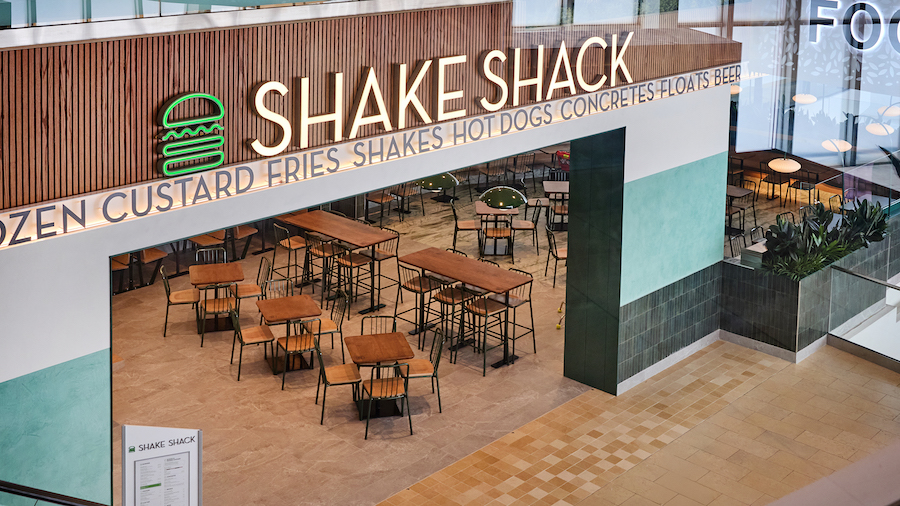
Shake Shack at Toronto’s Yorkdale Shopping Centre. Photo taken from food court escalators. Photo: Shake Shack
Formed in 2023, Shake Shack Canada is a partnership between Osmington Inc. and Harlo Entertainment Inc. – both Toronto-based private investment companies. Shake Shack Canada’s ambitious vision includes opening Shacks nationwide, with its first three locations now open at Yonge & Dundas, Union Station, and Yorkdale Shopping Centre in Toronto.
Since the original Shack opened in 2004 in NYC’s Madison Square Park, the company has expanded to over 590 locations system-wide, including over 380 in 34 U.S. States and the District of Columbia, and over 210 international locations across London, Hong Kong, Shanghai, Singapore, Mexico City, Istanbul, Dubai, Tokyo, Seoul and more.
“We achieved net revenue of $663 million in the first quarter of Fiscal 2026, a 33% increase compared to last year. Comparable sales grew 19%, fueled by double-digit growth in all channels and all geographies. Our results were driven by the strong performance of our Spring/Summer product, which resonated exceptionally well with our clients, as well as our optimized inventory position, strategic marketing investments and our new and repositioned boutique openings. Growth was consistent across channels, with net revenue increasing 34% in retail and 30% in eCommerce, underscoring the broad strength of our multi-channel business. Our performance in the United States, where net revenue increased a tremendous 45%, continued to fuel our results,” said Jennifer Wong, Chief Executive Officer. “In addition, we generated meaningful gross profit margin expansion and SG&A leverage, resulting in outstanding adjusted EPS growth of over 90%.
“Trends across the business remain strong, and we are pleased with the start to our second quarter. We continue to navigate macro developments from a position of financial and operational strength, as we adapt to the environment around us and execute across our key strategic growth levers – geographic expansion, digital growth and increased brand awareness. The strength of the Aritzia brand has never been greater, and yet we still have a long runway for growth in the United States. This gives me great confidence in our ability to execute and capitalize on all of the opportunities that lie ahead.”
First Quarter Highlights
For Q1 2026, compared to Q1 2025:
Net revenue increased 33.0% to $663.3 million, with comparable sales growth of 19.3%
United States net revenue increased 45.1% to $413.0 million, comprising 62.3% of net revenue
Retail net revenue increased 34.2% to $480.3 million
eCommerce net revenue increased 30.0% to $183.0 million, comprising 27.6% of net revenue
Gross profit margin increased 320 bps to 47.2% from 44.0%
Selling, general and administrative expenses as a percentage of net revenue decreased 190 bps to 33.5% from 35.4%
Adjusted EBITDAincreased 76.9% to $95.3 million. Adjusted EBITDA as a percentage of net revenue increased 360 bps to 14.4% from 10.8%
Net income increased 167.7% to $42.4 million, or 6.4% from 3.2% as a percentage of net revenue. Net income per diluted share was $0.36 per share, compared to $0.14 per share in Q1 2025
Adjusted Net Income increased 97.4% to $49.3 million. Adjusted Net Incomeper Diluted Share was $0.42 per share, compared to $0.22 per share in Q1 2025
Aritzia said it expects the following for the second quarter of Fiscal 2026:
“Based on quarter-to-date trends, Aritzia expects net revenue in the range of $730 million to $750 million, representing growth of approximately 19% to 22%. The Company expects gross profit margin to increase approximately 100 bps and SG&A as a percentage of net revenue to decrease approximately 100 bps for the second quarter of Fiscal 2026 compared to the second quarter of Fiscal 2025,” it said.
“While the Company’s momentum across channels and geographies remains strong year to date, the outlook for Fiscal 2026 accommodates for a range of scenarios given uncertainties related to the broader macroeconomic environment, including tariffs.”
Aritzia said it expects the following for Fiscal 2026:
Net revenue in the range of $3.10 billion to $3.25 billion, representing growth of approximately 13% to 19% from Fiscal 2025. This includes the contribution from retail expansion with a minimum of 12 new boutiques and five boutique repositions. Eleven new boutiques and two repositions are expected to be in the United States with the remainder in Canada.
Adjusted EBITDA as a percentage of net revenue to be approximately 15.5% to 16.5% compared to 14.8% in Fiscal 2025, driven by IMU improvements, freight tailwinds, savings from the Company’s smart spending initiative and expense leverage, offset by higher US tariffs.
Capital cash expenditures (net of proceeds from lease incentives) of approximately $180 million. This includes approximately $110 million related to investments in new and repositioned boutiques expected to open in Fiscal 2026 and Fiscal 2027. It also includes approximately $70 million related to the Company’s distribution centre network, including its new facility in the Vancouver area, and technology investments.
Depreciation and amortization of approximately $110 million.
Foreign exchange rate assumption for Fiscal 2026 USD:CAD = 1.37.