Home Blog Page 442

Aritzia Posts Blowout Quarter, but U.S. Tariffs Weigh on Future Outlook

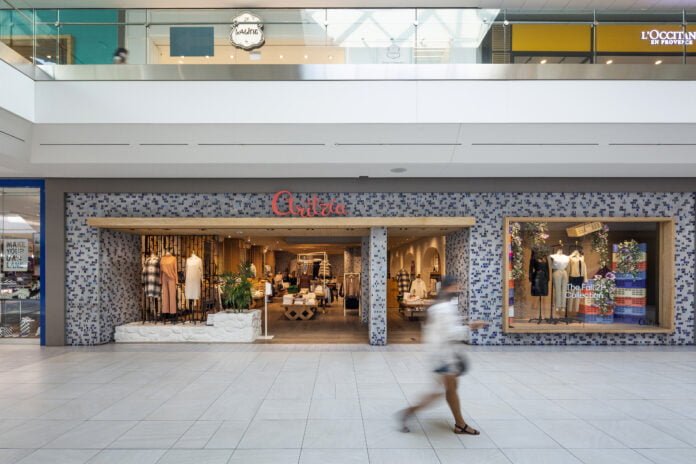
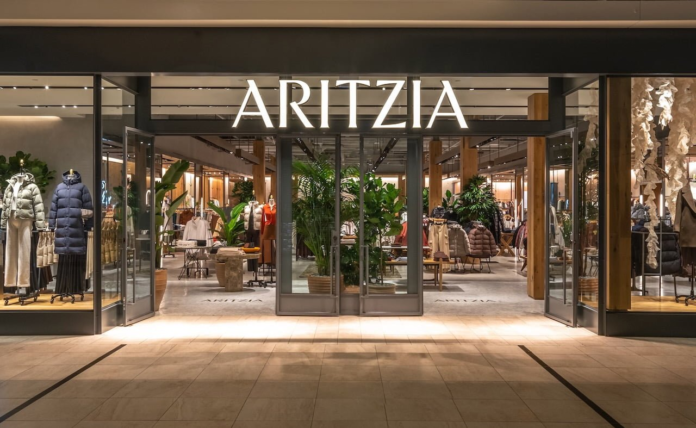
Aritiza store at CF Markville. Photo: Aritizia

Vancouver-based Aritzia Inc. has reported a standout fourth quarter for fiscal 2025, with results significantly exceeding analyst expectations. However, despite the strong momentum, the women’s fashion retailer is adjusting its forward-looking guidance due to pressure from newly imposed U.S. tariffs.

According to a research report published by Stifel on May 1, 2025, Aritzia’s revenue climbed 31% year-over-year to $895 million in the fourth quarter. Adjusted earnings per share surged 144% to $0.83—beating both the firm’s projection of $0.73 and the consensus of $0.70.

“These results demonstrate that Aritzia’s momentum is very real,” noted Martin Landry, Managing Director at Stifel and lead author of the report. “That said, upcoming tariff headwinds have led us to temper our earnings forecast despite the company’s exceptional performance.”

Q4 Outperformance Across the Board

Martin Landry

Aritzia’s comparable sales rose 26% in the fourth quarter, significantly higher than the 17.3% growth projected by Stifel and well ahead of the 15% consensus estimate. Gross margin improved by 420 basis points year-over-year to reach 42.5%, surpassing both internal guidance and external forecasts.

Adjusted EBITDA rose 122% year-over-year to $161 million, with margins expanding to 18%—a 730-basis-point increase compared to Q4FY24. SG&A expenses as a percentage of revenue were trimmed by 20 basis points to 27.5%.

E-commerce also played a crucial role in the strong quarter, with online revenue increasing 42.4% year-over-year to $378 million.

“This was a blowout quarter,” stated the report. “The company’s profitability metrics exceeded expectations and suggest that cost discipline and sales leverage are working in tandem.”

Conservative FY2026 Guidance Reflects Tariff Headwinds

Despite the strong quarter, Aritzia’s FY2026 guidance is cautious. The company expects net revenue between $3.05 billion and $3.25 billion for the year—roughly in line with consensus at the midpoint. However, it is guiding to a lower adjusted EBITDA margin of 14–15%, compared to 14.8% in FY2025. This is notably below Stifel’s prior estimate of 16.4%.

Tariffs imposed by the United States are expected to weigh heavily on margins, with a total negative impact of 400 basis points forecasted for FY2026. Of this, 200 basis points will be absorbed by the company directly, while the remaining 200bps are expected to be offset through strategic mitigation efforts.

Those measures include:

  1. Supply chain diversification away from China, which is expected to reduce exposure to 20% this fall and potentially single digits by spring.
  2. Cost sharing with vendors, designed to distribute tariff-related burdens.
  3. Improved initial markups (IMUs) to enhance realized pricing.
  4. Internal cost-cutting measures to protect profitability.

U.S. Expansion on Track Despite Tariff Risks

While Aritzia has identified tariffs as a significant risk to U.S. operations, the company continues to experience substantial growth south of the border. U.S. revenue now exceeds $1 billion annually, and brand awareness remains relatively low—at just 14% compared to Lululemon’s 73%—signaling runway for expansion.

“The U.S. market is still in the early innings for Aritzia,” said Landry. “With new store openings and increased brand awareness, the company can continue to scale significantly.”

Aritzia currently operates 64 U.S. locations, with plans to open 12 new stores in both FY2026 and FY2027. International markets—particularly Europe and Asia—have also been flagged as next-frontier opportunities.
FY2027 Long-Term Targets Remain in Sight

Despite cautious guidance for the upcoming year, Aritzia has not revised its long-term FY2027 targets. Management is still aiming for revenues between $3.5 billion and $3.9 billion, along with an EBITDA margin of 19%.

Given the setbacks seen in FY2024, there was previously skepticism about whether these goals were still realistic. However, with FY2025’s robust recovery and a return to strong margins, confidence appears to be gradually returning.

“As visibility increases on the FY2027 targets, we believe this could be a catalyst for multiple expansion,” the report stated.

Stifel Lowers Estimates but Maintains ‘Buy’ Rating

In light of management’s guidance, Stifel has revised its forecasts downward. FY2026 and FY2027 EPS have both been reduced by 15%, now standing at $2.21 and $3.08, respectively. EBITDA projections have similarly been trimmed.

Accordingly, Stifel reduced its 12-month price target from $73 to $67 but continues to rate the stock a Buy.

The target price is derived using a blend of three valuation methods:

  • 21x FY27E EPS,
  • 14x FY27E EBITDA,
  • and a discounted cash flow model.

Key Risks to Outlook

The Stifel report outlined several risks to Aritzia’s performance moving forward:

  • Tariffs: Higher duties on Canadian exports could lead to rising U.S. prices, dampening demand and hurting volumes.
  • Brand momentum: A decline in fashion relevance or brand engagement could erode the customer base.
  • Macroeconomic factors: Inflation and higher interest rates may compress consumer spending on discretionary apparel.
  • Currency exposure: Aritzia generates about 50% of its revenue in Canadian dollars but incurs most of its costs in U.S. dollars.
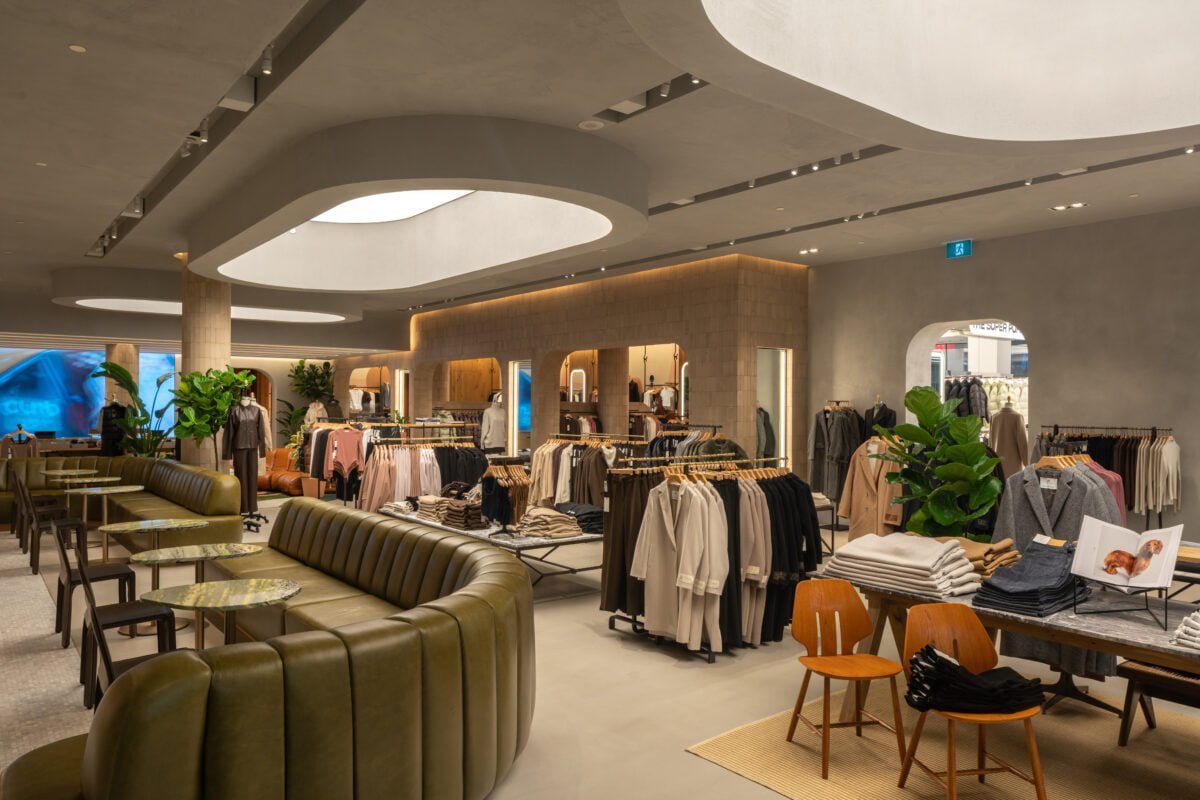
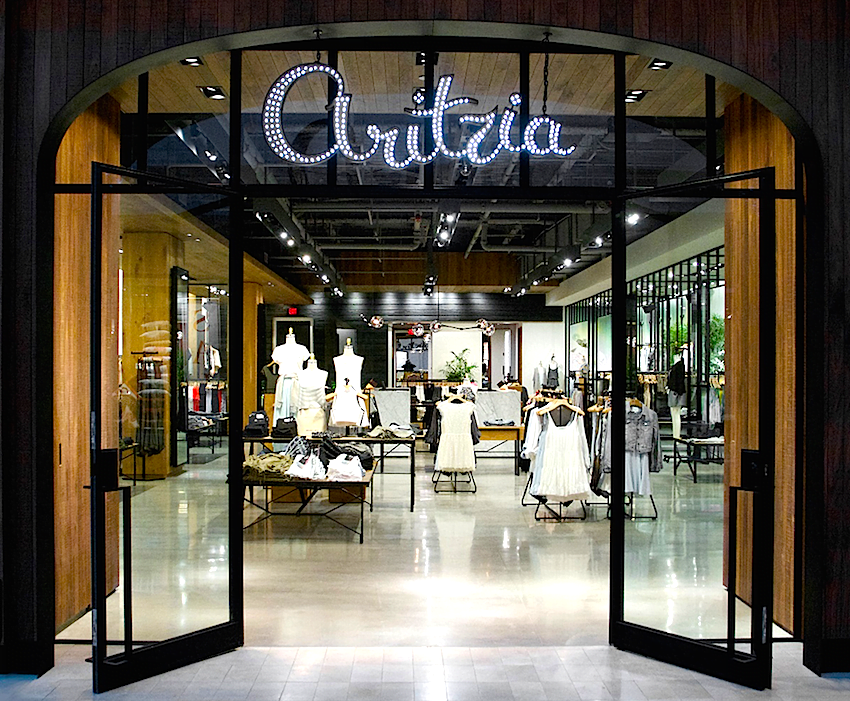
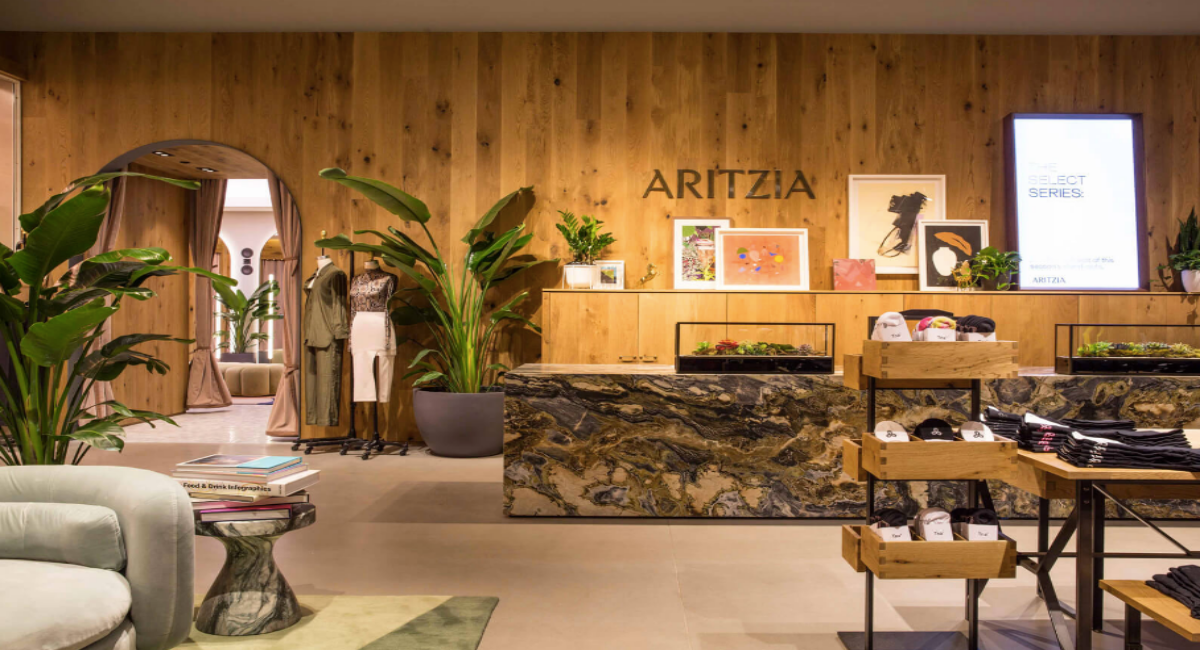
Aritzia Yorkdale (Image: Aritzia)

Financial Metrics at a Glance

MetricFY2025FY2026 (Est.)FY2027 (Est.)
RevenueC$2.74BC$3.16BC$3.59B
Adj. EPS$1.98$2.21$3.08
Adj. EBITDAC$406MC$467MC$616M
EBITDA Margin14.8%14.8%17.2%
Net IncomeC$231MC$252MC$343M

Source: Stifel Research Report, May 1, 2025

Final Thoughts

Aritzia’s Q4FY25 performance confirms the retailer’s ability to deliver strong growth and margin recovery, even in a volatile economic environment. While tariffs represent a real and material risk to FY2026 earnings, the company’s proactive mitigation strategies and consistent expansion in the U.S. suggest the longer-term story remains intact.

Investors may face short-term uncertainty, but Aritzia’s momentum, operational discipline, and runway for growth—particularly internationally—make it a name to watch closely.

More from Retail Insider:

Couche-Tard Advances 7-Eleven Bid with Data Access Deal

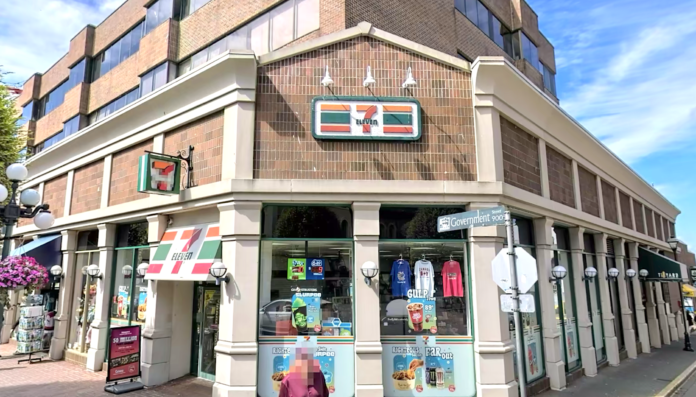
7-Eleven store on Government Street in Victoria BC. Photo: Apple Maps

 In a move that could reshape the global convenience store landscape, Canadian retail giant Alimentation Couche-Tard Inc. has gained access to confidential financial data from Japan-based Seven & i Holdings Co., taking a major step forward in its USD$52-billion bid to acquire the owner of the 7-Eleven chain.

The development comes after months of limited engagement, during which Couche-Tard expressed mounting frustration over a lack of progress. Now, with a formal non-disclosure agreement (NDA) signed and a standstill provision in place, the door has been opened for deep due diligence and substantive discussions that could lead to one of the largest retail acquisitions in Canadian history.

A Global Dance: Patience Meets Urgency

“This is the culmination of the dance,” said retail strategist Carl Boutet in an interview. “It’s make or break. The fact that we’ve reached this point is a really encouraging sign. It shows that there’s a genuine willingness on the part of Seven & i to explore this seriously.”

Carl Boutet

Boutet emphasized that this is not just a business deal, but a cross-cultural and geopolitical balancing act. 

“Couche-Tard has been trying to move at a North American pace—fast and direct,” he explained. “But the Japanese way is slower, more methodical, and deeply rooted in trust and honour. The NDA and standstill provision are a signal of increasing goodwill by both parties.” 

A Strategic and Cultural Milestone

The standstill clause, disclosed by Seven & i, ensures that Couche-Tard cannot pursue a hostile takeover during the ongoing talks. It also gives Couche-Tard access to financial information that has, until now, remained tightly guarded. This includes detailed data on business units, geographic performance, and profitability—critical insights for assessing whether a sweetened offer is warranted.

“Until now, all they had was publicly available information and market intelligence,” said Boutet. “This opens the data room. It’s a big act of vulnerability for Seven & i. Couche-Tard will be able to see what’s really working, what isn’t, and where the growth potential lies.”

Size vs. Efficiency

Despite being much smaller in store count—Seven & i operates more than 80,000 stores globally versus Couche-Tard’s 18,000—Couche-Tard has a higher market valuation. The difference is driven by profitability and operational efficiency.

“The market views Couche-Tard as a better operator,” Boutet noted. “They’ve built a reputation as a logistics powerhouse. That’s one of the reasons they’re in a position to make this kind of play.”

He added that while Seven & i’s revenues may be higher, Couche-Tard’s price-to-earnings ratio is superior, which reflects the market’s confidence in its performance and discipline.

Regulatory Uncertainty and Divestiture Planning

One of the major sticking points in the negotiations has been antitrust concerns, particularly in the U.S. Couche-Tard executives maintain that there is “a path to regulatory approval,” but Seven & i has been sceptical. The Tokyo company has warned against being dragged into regulatory limbo for years.

To mitigate these risks, both companies are reportedly working with investment bankers to identify potential buyers for approximately 2,000 stores in North America. Private equity firms are considered likely candidates for such acquisitions.

“There was fear that the U.S. Federal Trade Commission would see this as a monopoly,” Boutet said. “Ironically, Couche-Tard is up against competitors like Walmart and Mexico’s OXXO, who are also expanding rapidly in the convenience space.”

From Tokyo to Laval: The View from Canada

The idea of a Canadian company acquiring one of Japan’s most iconic retail chains has captured the attention of industry watchers.

Alain Bouchard, Couche-Tard’s founder

“It would be historic,” said Boutet. “We’re talking about the largest convenience store chain in the world potentially being run from Laval, Quebec.”

Alain Bouchard, Couche-Tard’s founder and current chairman, has reportedly spent extensive time in Tokyo pursuing the deal. “This is clearly personal for him,” Boutet added. “He took the failed Carrefour deal very hard. This is not about ego, but about vision. He believes Couche-Tard can operate this business better.”

Past Lessons, Future Ambitions

The Carrefour episode in 2021—where a $20-billion acquisition attempt was quashed by the French government—still lingers. Boutet believes it taught Couche-Tard valuable lessons about diplomacy and cross-border negotiations.

“This time around, they’re being more deliberate, more respectful of local processes,” he said. “They’ve lined up institutional financing in Canada and are approaching this with a level of discipline that’s very impressive.”

That financing, which could come in part from Canadian pension funds or institutional lenders, will be critical. A deal of this scale—estimated to be worth close to CAD$70 billion—would likely involve a significant amount of debt.

Photo: Couche-Tard

Seven & i’s Crossroads

Meanwhile, Seven & i is pursuing a dual-track strategy: either sell to Couche-Tard or slim down and refocus. The Japanese firm is already selling off underperforming assets and preparing to list a portion of its U.S. operations to fund a large share buyback.

“They’ve said they don’t need this deal to survive,” Boutet acknowledged. “But if Couche-Tard comes back with a stronger offer after reviewing the data, it’ll be hard for shareholders to ignore.”

Shares of Seven & i rose 3.5% on the Tokyo exchange following news of the NDA. However, they remain more than 20% below Couche-Tard’s offer, indicating continued investor scepticism that a deal will be finalized. Boutet noted Couche-Tard’s stock price is down over the past year, with $20.98 billion in revenue and $640 million in net income — with a market capitalization of about CAD $66 billion dollars. In comparison, Seven & i is valued at about CAD$55 billion. 

Culture, Control, and Caution

Beyond financial metrics, the acquisition raises deep questions about brand identity and operational autonomy.

“There’s fear in Japan that Couche-Tard will turn 7-Eleven into a pure logistics machine,” said Boutet. “But I think both companies recognize that what makes 7-Eleven unique—especially in Japan—is its merchandising, ready-to-eat offerings, and cultural resonance. That’s worth preserving.”

If the deal goes through, Boutet believes the Canadian company will maintain much of 7-Eleven’s current operational infrastructure in Japan and the U.S., while using its own efficiencies to drive profitability.

Next Steps: The Waiting Game

With the NDA now in effect, the ball is squarely in Couche-Tard’s court. Will they improve their offer? Will Seven & i’s board recommend a deal?

“I think they almost have to increase the bid now,” Boutet predicted. “If they don’t, it could signal disinterest, or worse, that the numbers didn’t impress. But if they do—if they see real synergy—this could actually happen.”

Yet even if Couche-Tard is ready to move quickly, Boutet cautioned against expecting a swift conclusion.

“From a Japanese business perspective, these things don’t get rushed,” he said. “They’ve made it clear they’re not going to be forced into a decision. It could be months—or more—before we see a final outcome.”

More from Retail Insider:

Aritzia reports 38% Q4 revenue growth, driven by U.S. expansion and ecommerce momentum

Aritzia at CF Masonville Place (Image: Cadillac Fairview)

Aritzia Inc., a design house with an innovative global platform offering Everyday Luxury™ online and in its boutiques, Thursday announced its financial results for the fourth quarter and full year ended March 2, 2025, saying the results underscore the strength of its business.

Jennifer Wong
Jennifer Wong

“Our results for the fourth quarter and full year Fiscal 2025 underscore the strength of our business and growing affinity for the Aritzia brand. We delivered outstanding fourth quarter net revenue growth of 38%, excluding the 53rd week in Fiscal 2024, and comparable sales growth of 26%,” said Jennifer Wong, Chief Executive Officer.

“Underpinned by our assortment of beautiful products, optimized inventory position and strategic marketing investments, we fueled accelerated momentum in eCommerce and continued to execute our real estate expansion strategy, including the opening of our iconic Fifth Avenue flagship in Manhattan. Our results were primarily driven by our performance in the United States, where net revenue increased a tremendous 56% excluding the extra week. We also delivered further improvement in our Adjusted EBITDA margin, which increased more than 700 basis points in the fourth quarter.

“We continue to see strong momentum in the first quarter of Fiscal 2026, fueled by a positive client response to our Spring/Summer product and our optimized inventory position. The strength of our brand, quality of our assortment and our Everyday Luxury™ client experience are all resonating exceptionally well, giving us confidence in our ability to capitalize on the opportunities that lie ahead. Given the recent tariff developments, it’s clear we’re operating in a dynamic environment. Our successful 40+ year track record across varying economic climates demonstrates our ability to pivot and adapt. We have a healthy balance sheet and are well-positioned to navigate the evolving macroeconomic conditions, while remaining steadfast in advancing our key growth levers.”

Fourth Quarter Highlights

For the thirteen weeks of Q4 2025, compared to the fourteen weeks of Q4 2024:

  • Net revenue increased 31.3% to $895.1 million, with comparable sales growth of 26.0%
  • United States net revenue increased 48.5% to $548.0 million, comprising 61.2% of net revenue
  • Retail net revenue increased 24.2% to $517.1 million
  • eCommerce net revenue increased 42.4% to $378.1 million, comprising 42.2% of net revenue
  • Gross profit margin increased 420 bps to 42.5% from 38.3%
  • Selling, general and administrative expenses as a percentage of net revenue decreased 140 bps to 27.5% from 28.9%
  • Adjusted EBITDA increased 121.8% to $160.9 million. Adjusted EBITDA as a percentage of net revenue increased 740 bps to 18.0% from 10.6%
  • Net income increased 311.6% to $99.6 million, or 11.1% as a percentage of net revenue. Net income per diluted share was $0.84 per share, compared to $0.21 per share
  • Adjusted Net Income increased 156.5% to $98.0 million. Adjusted Net Income per Diluted Share was $0.83 per share, compared to $0.34 per share
Aritzia (PHOTO: SOCANMAGAZINE.CA)

The company said Strategic Accomplishments for Fiscal 2025 include: Drove a 19% increase in net revenue (excluding the 53rd week in Fiscal 2024), resulting in a strong 5-year compound annual growth rate (“CAGR”) of 23%; Optimized the composition and quality of the Company’s inventory position, which fueled an acceleration in comparable sales growth in each quarter of the fiscal year and helped generate meaningful gross margin expansion; increased investments in digital and brand marketing to help protect and propel the Aritzia brand, grow awareness and generate new client acquisition; opened 12 new boutiques and repositioned three existing boutiques, including three iconic, brand-propelling flagship locations – two in Manhattan and one in Chicago; launched an improved aritzia.com, featuring an elevated client experience, including greater personalization and enhanced product discovery, and facilitating the seamless integration of a planned customer mobile app; and delivered a 550 basis point improvement in Adjusted EBITDA as a percentage of net revenue, driven by IMU improvement, lower markdowns, lower warehousing costs and savings from the company’s smart spending initiative.

“Based on quarter-to-date trends, Aritzia expects net revenue in the range of $620 million to $640 million (in the first quarter Fiscal 2026), representing growth of approximately 24% to 28%. The Company expects gross profit margin to increase approximately 200 bps and SG&A as a percentage of net revenue to decrease approximately 100 bps for the first quarter of Fiscal 2026 compared to the first quarter of Fiscal 2025. The Company expects Adjusted EBITDA as a percentage of net revenue to be approximately 14% for the first quarter of Fiscal 2026 compared to the first quarter of Fiscal 2025,” it explained.

“While the Company’s momentum across channels and geographies remains strong year to date, the outlook for Fiscal 2026 accommodates for a range of scenarios given uncertainties related to the broader macroeconomic environment, including tariffs.”

Aritzia at Vaughan Mills, photo provided by Vaughan Mills.

Aritzia said it expects the following for Fiscal 2026:

  • Net revenue in the range of $3.05 billion to $3.25 billion, representing growth of approximately 11% to 19% from Fiscal 2025. This includes the contribution from retail expansion with a minimum of 12 new boutiques and five boutique repositions, including four new boutiques and one reposition in the first half of the fiscal year. Ten new boutiques and two repositions are expected to be in the United States with the remainder in Canada.
  • Adjusted EBITDA as a percentage of net revenue to be approximately 14% to 15% compared to 14.8% in Fiscal 2025, driven by IMU improvements, freight tailwinds, savings from the Company’s smart spending initiative and expense leverage, offset by the higher US tariffs.
  • Capital cash expenditures (net of proceeds from lease incentives) of approximately $180 million. This includes approximately $110 million related to investments in new and repositioned boutiques expected to open in Fiscal 2026 and Fiscal 2027, as well as $70 million primarily related to the Company’s distribution centre network, including its new facility in the Vancouver area, and technology investments.
  • Depreciation and amortization of approximately $110 million.

“For the period from Fiscal 2024 to Fiscal 2027, the Company now expects capital cash expenditures (net of proceeds from lease incentives) of approximately $750 million compared to its prior assumption of approximately $500 million, primarily due to increased square footage growth and currency headwinds.”

Related Retail Insider stories:

Interview: Thomas Caldwell on Hudson’s Bay IP Bid

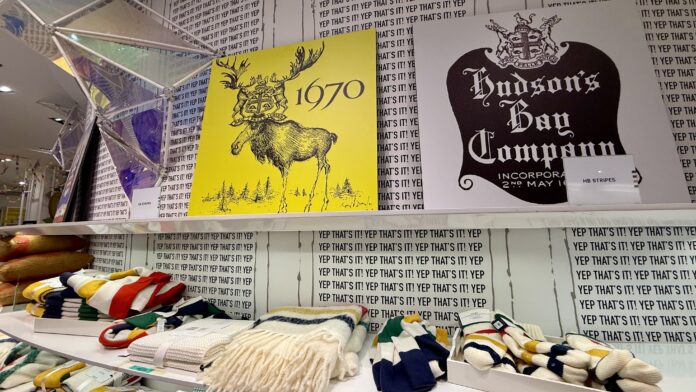
Hudson's Bay stripe products at the Queen Street flagship store in Toronto on March 15, 2025. Photo: Craig Patterson

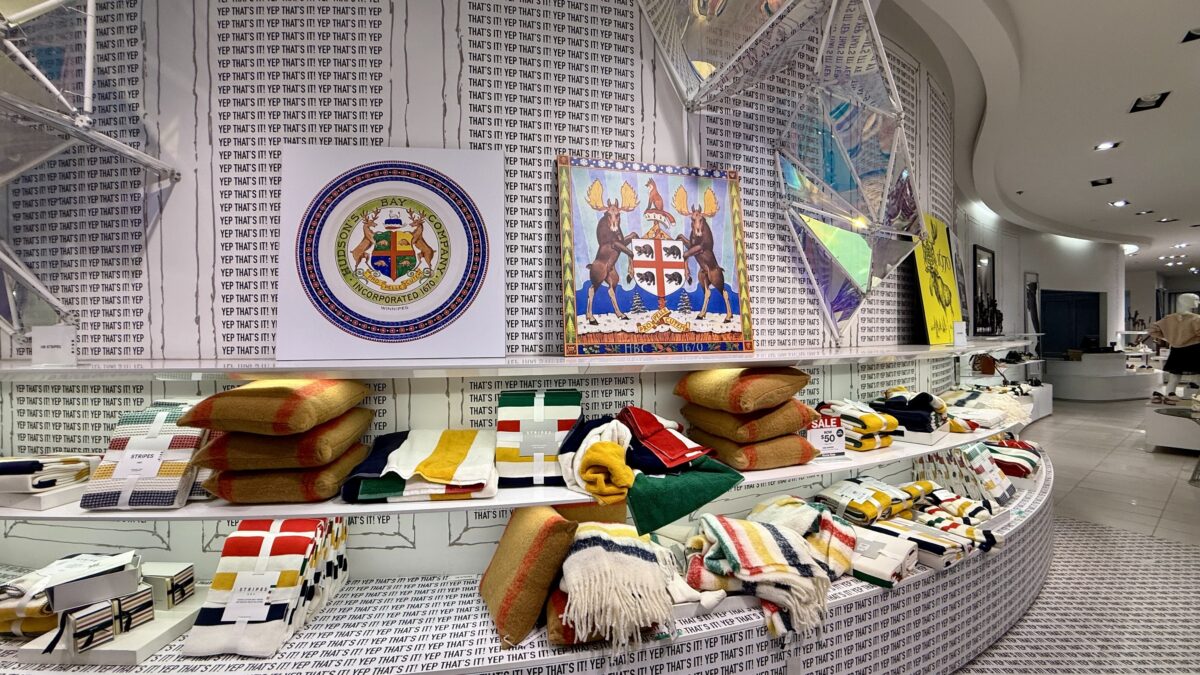
As Hudson’s Bay continues its dramatic court-supervised liquidation process, at least one bidder is aiming not just for profit—but for preservation. Thomas S. Caldwell, CEO of Toronto-based Urbana Corp., confirmed in an interview that his firm has placed a formal bid to acquire Hudson’s Bay’s intellectual property and, most notably, the historic Royal Charter of 1670 that founded Canada’s oldest company.

“This is a big deal in my brain,” Caldwell told Retail Insider in a candid conversation. “I feel this company should be in Canadian hands. And indeed, I believe the charter should be in Canadian hands as well.”

A Patriotic and Strategic Play

Thomas S. Caldwell, CEO of Toronto-based Urbana Corp.

Caldwell emphasized that Urbana’s motivation is twofold: patriotic and opportunistic. “There’s a Canadian component to it,” he said. “I’m a proud Canadian. I’ve put full-page ads in newspapers across the country speaking to Canada and things I think are important. I’ve been in Afghanistan with our battle group. I really do feel this [Hudson’s Bay] is something that should remain ours.”

Yet there’s also a business opportunity. “This is an iconic brand that I think has been debased over the years,” Caldwell said. “I believe it could be rejuvenated and be meaningful in many product ranges.”

While Urbana Corp. manages a broad portfolio that includes public and private equities and owns significant stakes in global exchanges, the firm is not known for retail. Caldwell was clear: “We’re not interested in the stores or leases—we have no retail expertise. This is about the intellectual property.”

A New Home for a Canadian Treasure

Urbana’s bid also includes plans for the Royal Charter, a historical document dating back to the 17th century and considered foundational to Canada’s economic history.

“If we’re successful, we would likely donate the piece to an archival institute,” Caldwell said. “It’s not something I want locked up in a glass case in my office under armed guard. It’s something that should be in Canada, period—no ifs, ands, or buts.”

Caldwell noted early discussions with members of the Indigenous community about how the charter might be publicly displayed and interpreted. “It’s redemptive in a way,” he said. “Some see it as the beginnings of Canada; others, the start of colonialism. Either way, it belongs to the public.”

Hudson’s Bay Royal Charter from 1670

Assessing the Value of History

When asked how one goes about valuing a Royal Charter, Caldwell chuckled. “This is one of those situations where you close your eyes, squeeze the trigger, and see if you hit something,” he said. “There’s no direct comparison—you can’t line it up with the U.S. Constitution or the Gettysburg Address. You just have to figure out a number.”

For Urbana, the calculus for Hudson’s Bay’s IP was based on what they believe they can do with the assets. “It’s what we see as risk capital,” Caldwell explained. “We made our decision on that basis.”

A Brand Worth Reviving

While Urbana has no intention of relaunching Hudson’s Bay as a department store chain, Caldwell believes the brand name still carries tremendous equity.

“I’ve been in the investment business longer than you’ve been alive,” he joked. “I’ve always had an interest in Hudson’s Bay. When they sold it to the owner in the States, I didn’t feel good about it.”

For Caldwell, the interest was never in owning physical stores or reviving the traditional retail model. “Retail is too tough a business,” he said. “Department stores are at least three iterations ago. The future is about brands and the internet—not old-fashioned store formats.”

Instead, Urbana envisions leveraging the brand in new, creative ways—though Caldwell declined to elaborate due to ongoing legal constraints. “I’m constrained by non-disclosure agreements,” he admitted. “The lawyer’s a bit upset I’m even doing this interview, but I don’t care.”

Hudson’s Bay stripe products at the Queen Street flagship store in Toronto on March 15, 2025. Photo: Craig Patterson

A Competitive Bid Landscape

Urbana is not alone in vying for pieces of Hudson’s Bay’s legacy. The deadline to submit binding bids for the retailer’s intellectual property, including its iconic Stripes brand and trademarks, passed at 5 p.m. on Wednesday, April 30. Leases for Hudson’s Bay and its sister company Saks were subject to a separate deadline the following day.

“We’ve seen a high level of interest,” said Adam Zalev, managing director at Reflect Advisors, the firm overseeing the sale. “The bid deadline and high sales at stores really help prove the strength of the Canadian consumer and their desire to support Hudson’s Bay.”

Among the most visible competitors is Weihong Liu, a Chinese billionaire and chairwoman of Central Walk, which owns several B.C. shopping centres. Liu confirmed to the Toronto Star on April 30 that she had submitted a bid to acquire 25 Hudson’s Bay stores. “The money has already been paid,” she said. Liu plans to hold a press conference in the coming days.

Liu’s offer reportedly targets stores in British Columbia, Alberta, and Ontario. Liu has spoken publicly about her desire to “revive the retail industry, solve employment issues, and make The Bay great again.”

Court filings from April 22 confirm that 18 parties expressed interest in 65 store leases, while 36 leases received no bids. Some of the interested parties are landlords seeking greater control over their properties.

Canadian Tire in the Mix?

The Canadian Press reported that Canadian Tire may have also submitted a bid for parts of Hudson’s Bay’s intellectual property, citing two unnamed sources familiar with the sale. When asked to confirm, Canadian Tire declined to comment.

Whether the Canadian Tire chain is seeking a licensing opportunity or a deeper brand integration remains unclear. But the possibility of a major national retailer stepping in has added another layer of intrigue to the process.

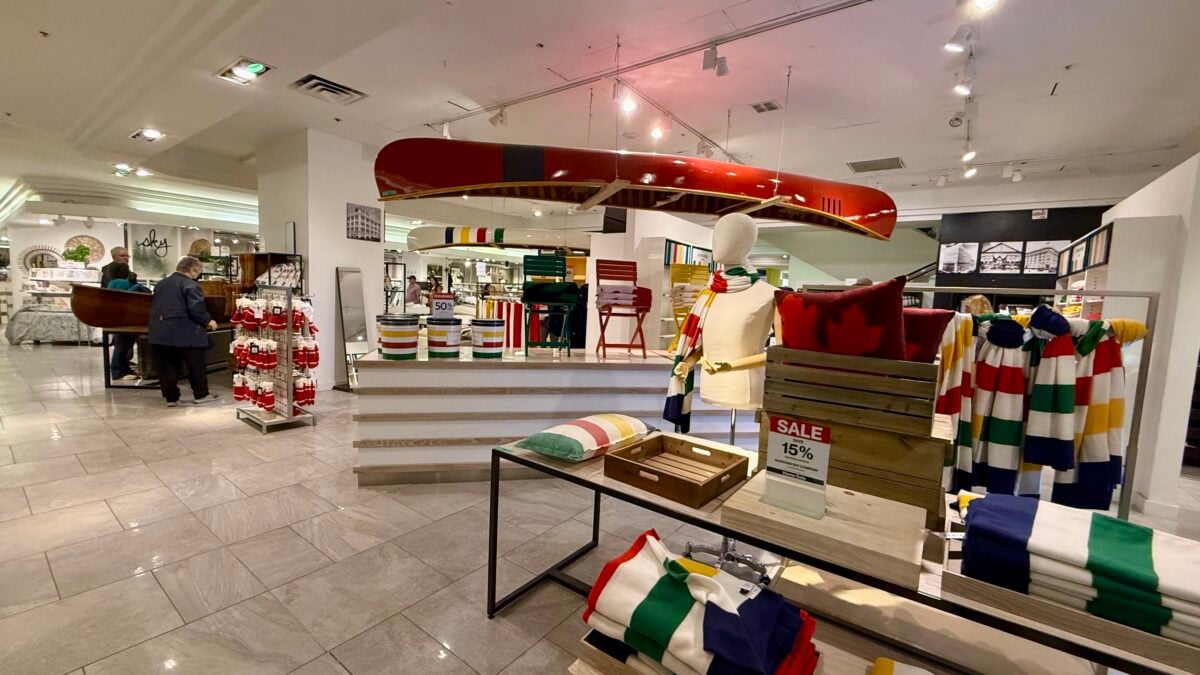
Hudson’s Bay stripe products at the Queen Street flagship store in Toronto on March 15, 2025. Photo: Craig Patterson

Could Management Make a Play?

A lesser-known but plausible scenario involves a bid from within. An “insider protocol” document circulated to legal counsel in early April hinted that a member of management might submit an offer. While no such bid has been confirmed, the document was introduced shortly after the April 7 deadline for internal parties to express interest. That could include current HBC owner and Governor Richard Baker. 

If multiple bids meet the requirements, an auction will be held around May 16, with court approval expected by May 30. Liquidation sales are scheduled to wrap by June 15, at which point any unclaimed leases will revert to landlords.

The End of a Retail Era

Hudson’s Bay, established in 1670, is currently undergoing full liquidation across more than 80 store locations. A plan to preserve six flagship stores was abandoned on April 25 when the retailer determined there was a “low probability” of receiving viable bids under a reduced store model.

Still, the brand’s intellectual property and charter remain highly coveted. For Caldwell, it’s about much more than value.

“If someone else beats us, God bless them,” he said. “As long as it’s Canadian and as long as it ends up here—that’s what matters to me.”

He added with characteristic candour, “I’m just a thug trader. I made my bid and now I let the lawyers sort it out.”

More from Retail Insider: 

Apple Q2 2025 Earnings: $95.4B Revenue, Record EPS, and Services Hit All-Time High

Introducing iPhone 16e, the most affordable member of the iPhone 16 family. Photo: Apple.

Apple Inc. has reported robust financial results for the second quarter of fiscal 2025, ending March 29, with quarterly revenue climbing 5% year over year to $95.4 billion, propelled by double-digit growth in its high-margin Services segment. Quarterly diluted earnings per share rose to a March quarter record of $1.65, up 8% from the same period last year.

CEO Tim Cook highlighted the company’s expanding product lineup and sustainability efforts: “We were happy to welcome iPhone 16e to our lineup, and to introduce powerful new Macs and iPads… We’ve cut our carbon emissions by 60 percent over the past decade.”

Apple’s Services revenue reached an all-time high of $26.6 billion, growing nearly 12% year over year, while iPhone sales topped $46.8 billion, up modestly from Q2 2024. Mac and iPad revenue also posted gains, while wearables showed a slight decline.

The company generated $24 billion in operating cash flow during the quarter and returned $29 billion to shareholders. CFO Kevan Parekh noted ongoing loyalty as a key driver: “Our installed base of active devices once again reached a new all-time high across all product categories and geographic segments.”

Apple’s board approved a 4% increase in its quarterly dividend to $0.26 per share, payable May 15, 2025. It also authorized a new $100 billion share repurchase program, underscoring confidence in long-term growth and shareholder returns.

Tilley Sport Pops Up at Holt Renfrew in Toronto

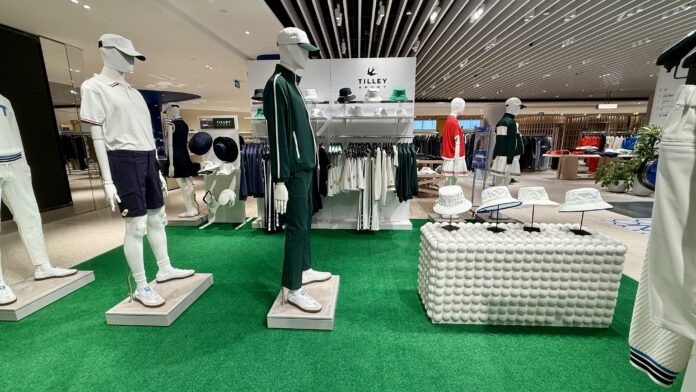
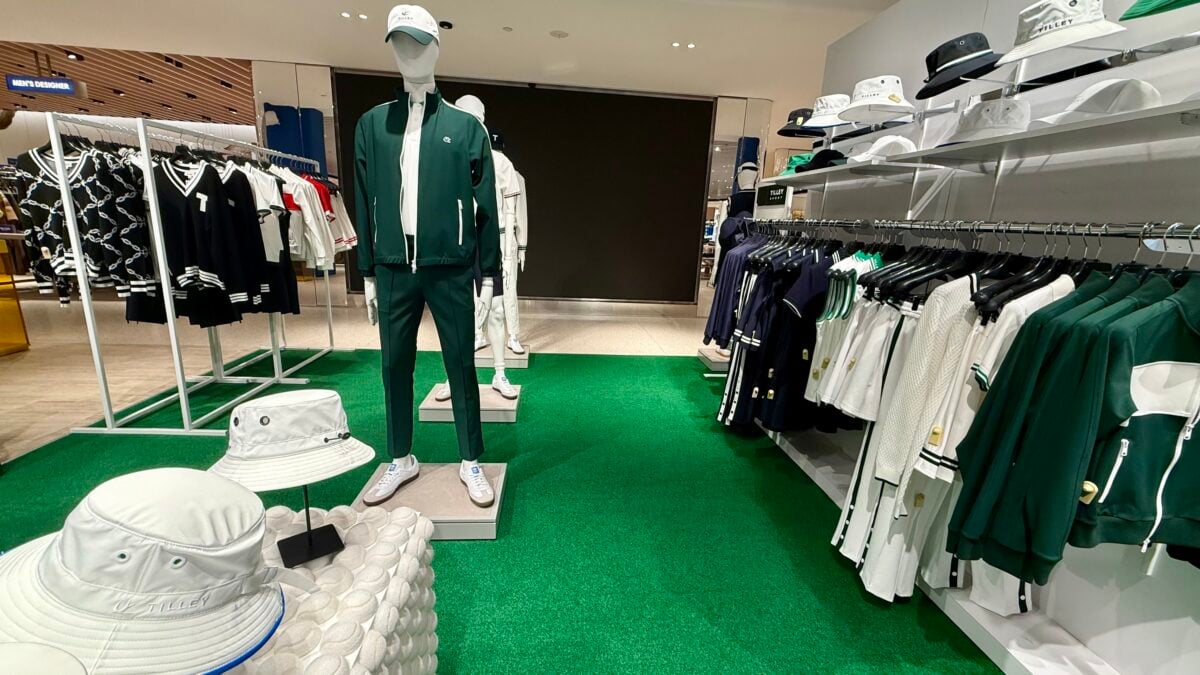
Tilley Sport shop-in-store at Holt Renfrew, 50 Bloor St. W. in Toronto. Photo: Craig Patterson

Tilley Sport, a contemporary evolution of the classic Canadian brand Tilley Endurables, has launched a new pop-up shop on the third floor of Holt Renfrew’s flagship location at 50 Bloor Street West in Toronto. The move signals a bold repositioning of the brand under the creative leadership of renowned Canadian designer Kim Newport-Mimran, best known for founding Pink Tartan.

The Holt Renfrew pop-up, which debuted to strong reception, will rotate through two additional Holt Renfrew locations in the Greater Toronto Area—Square One in Mississauga and Yorkdale Shopping Centre in Toronto. These activations represent a new chapter for the heritage label, now targeting fashion-forward consumers with a taste for both performance and style.

Kim Newport-Mimran at the Tilley Sport pop-up in Toronto. Photo: Instagram

“I’ve got my full focus on Tilley Sport because it’s performing so well,” said Newport-Mimran in an interview. “It’s definitely a full-time job plus.”

A Designer’s Personal Passion Fuels the Line

Tilley Sport was born from Newport-Mimran’s newfound passion for golf and the realization that the market lacked elevated, fashion-conscious apparel options for active women.

“When Joe [Mimran] came home wearing a Tilley polo, I said, ‘You’ve got to let me design the women’s collection,’” she said. “I couldn’t find anything stylish to wear on the golf course—and there are a lot of fashion girls out there who want both great performance and a chic silhouette.”

What began as a small golf capsule has since evolved into a full-scale lifestyle and performance brand. The current collection covers a broad spectrum of garments and accessories, from antimicrobial polos and compression socks to modern silhouettes like skirts, skorts, and performance-driven sweaters—all rendered in luxurious fabrics.

“It’s preppy chic,” Newport-Mimran explained. “Sporty chic is a real trend in fashion right now, and I wanted the collection to take you from the course to the clubhouse. These are clothes you can live your life in.”

Tilley Sport shop-in-store at Holt Renfrew, 50 Bloor St. W. in Toronto. Photo: Craig Patterson

Strategic Retail Distribution

In addition to its Holt Renfrew presence, Tilley Sport is available at the brand’s two corporate stores—one on Ossington Avenue in Toronto and another in Oakville. But much of the distribution strategy hinges on aligning with prestigious “green grass” golf accounts and resorts.

“We’re in some of the most respected golf clubs in Canada and the U.S., and even at the Fairmont Hotel in Bermuda,” said Newport-Mimran. “The hats had global distribution, and that was our entry point. But when retailers saw the apparel, they wanted in.”

The expansion of Tilley Sport comes amid a broader effort to modernize the Tilley brand under the direction of Joe Mimran and Frank Rocchetti, who took over operations in 2020. Gibraltar & Company, a Toronto-based private equity firm, has owned the brand since acquiring it from Hilco Capital in 2018.

Luxury Fabrics Meet Functionality

While many designer brands have dabbled in performance apparel, Tilley Sport is unique in its comprehensive focus on the sport itself.

“We’re really focused on giving you the product you need to perform,” said Newport-Mimran. “The functionality is incredible. Every seam, every yarn—down to comfort waistbands and antimicrobial treatments—has been thought through.”

The collection features long and short sleeve polos, sleeveless tops, skirts, and even ready-to-wear pieces that transition seamlessly from sport to streetwear.

“A good game starts in the closet,” Newport-Mimran added. “Whether it’s golf or pickleball, it’s head-to-toe dressing.”

She also emphasized the importance of sun protection, moisture-wicking materials, and wearable silhouettes—design priorities that combine both fashion and science.

Tilley Sport shop-in-store at Holt Renfrew, 50 Bloor St. W. in Toronto. Photo: Craig Patterson

A Show-Stopping Debut at Holt Renfrew

The launch event at Holt Renfrew’s Bloor Street store included a 40-look runway show and a “green carpet” experience, allowing attendees to interact directly with the product.

“I love experiential retail,” Newport-Mimran said. “You can see something online, but nothing compares to touching the fabric and trying it on. We received tremendous feedback—and it translated into sales.”

The Holt Renfrew team was equally enthusiastic. According to Newport-Mimran, “The fashion director and buying office loved the product. They’re ahead of the curve when it comes to forecasting and trends, and they recognized the value in what we’re doing.”

Growing the Collection: Swim, Sail, Surf

Looking ahead, Newport-Mimran is already designing into Spring 2026 with plans to expand the Tilley Sport line into new product categories, including swimwear and even travel-friendly accessories.

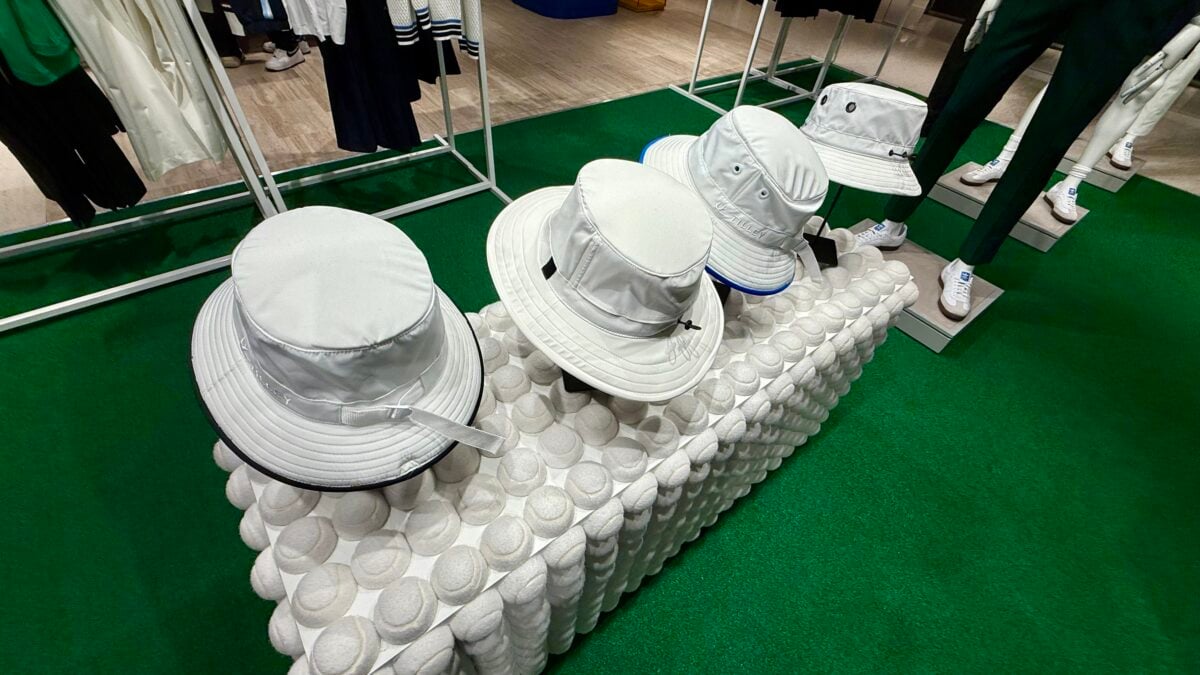
“I’ve already started with shoes and bags—we’ve done golf gloves, Terry bucket hats, mini buckets, visors,” she noted. “Everything has a little play on words, like ‘Get a Grip’ for our golf gloves, or ‘We’ve Got You Covered.’”

While collaborations may be on the horizon—particularly in footwear—she stressed that everything remains tightly curated and consistent with the brand’s performance-first philosophy.

Future of Retail: Strategic and Selective

As for standalone retail expansion, Newport-Mimran remains focused on thoughtful growth.

“For now, we’re really working with green grass accounts, private golf clubs, and resorts. We’re also looking at green grass distribution in Dubai,” she said. “It’s about being in the best places where people want to play and wear the product.”

She sees the collection filling a unique niche in the market. “Designer brands like Celine and Gucci might do a tennis capsule, but Tilley Sport is built around the sport first, and then the streetwear second. We’re not just about fashion—we’re about performance.”

More from Retail Insider: 

Why Some Grocery Boycotts Work—When Others Don’t

Shop Canadian/Made in Canada/shop local at a grocery store. Photo: Dustin Fuhs

While government action has its limits, Canadian consumers have taken matters into their own hands — one grocery trip at a time. Amid ongoing trade tensions with the United States, evidence is mounting that Canadians are increasingly favouring domestic food products. For the foreseeable future, many are deliberately avoiding American brands. This is not just a trend — it’s a grassroots boycott.

Food industry boycotts are notoriously hit-or-miss. Some fade quickly with little impact. Others — like the current anti-American consumer shift — can lead to significant market disruption. What we’re seeing now is rare: a swift, widespread de-Americanization of Canadian grocery shelves.

Retailers have acknowledged the change. Loblaw this week and Metro last week noted that Canadian-made product sales are now surpassing imports — although hard data is scarce. What’s notable is the pace of the shift. Within weeks, grocers recalibrated their sourcing strategies, seeking alternatives to U.S. suppliers, even in categories constrained by winter logistics. The speed and scale of this consumer-led adjustment caught many in the industry off guard.

Why the Loblaw Boycott Fell Flat

By contrast, the Reddit-driven Loblaw boycott has been ineffective. Despite high-profile calls for a consumer revolt, Loblaw’s revenues have grown by nearly 3% year-over-year, profits are up, and shares have risen more than 25% since the boycott began on May 1. All performance indicators are ahead of sector averages. The digital protest continues, but the economic data tells a different story: consumers are back.

Why did one boycott fail while the other gained traction? Credibility. The Loblaw boycott hinged on claims of price gouging — but without clear evidence. Grocers’ gross margins remained stable, and in many periods, food sales growth actually lagged inflation. A rise in gross margin would have indicated profiteering; its absence suggests otherwise. Moreover, grocers generate significant income from non-food goods and services — a nuance often lost in online discourse.

The anti-American movement, however, taps into something more visceral. Political rhetoric from former President Donald Trump — frequently hostile toward Canada — has created a lingering emotional undercurrent. This is Canada’s “Wall moment,” echoing the consumer backlash seen in Mexico when Trump demanded they pay for a border wall in 2016. In Canada, the response is unfolding in grocery stores.

Patriotism May Fade, but Lessons Remain

That said, food patriotism is inherently temporary. With the U.S. election now over and political tensions likely to ease, emotional motivations will weaken. If Canadian goods become less price-competitive, economic pragmatism will again outweigh patriotic sentiment. The wallet, ultimately, trumps emotion.

This creates both a challenge and an opportunity. Canadian food processors and retailers should not rely on anti-American sentiment to drive growth. Instead, they must compete on quality, value, and trust. This moment should be used to build lasting loyalty — not through fear, but through performance.

Removing interprovincial trade barriers would help. It would force domestic firms to compete more openly, drive down costs, and enhance consumer choice. Such reforms could turn short-term patriotism into long-term preference, making Canadian food more affordable, more available, and more attractive.

Canada has some of the most respected food producers in the world. But sustained growth will come not from political backlash, but from strategic reform and consistent value delivery. The “Orange Man Bad” effect may fade, but the case for buying Canadian can endure — if we make it on the right terms.

More from Retail Insider: 

Luxe Du Jour targets $13M Series B raise to fuel retail and tech expansion

Source: Tammy Phan, Luxe Du Jour

 Luxury resale platform Luxe Du Jour is planning a major expansion as it looks to raise $13 million CAD in a Series B funding round, aiming to double sales once again and grow its physical retail and digital platform across North America.

CEO Tammy Phan confirmed the upcoming raise in an interview with Retail Insider, citing the company’s ongoing growth trajectory after a successful Series A round.

Luxe Du Jour is a Canadian-born one-stop online luxury boutique where you can shop, sell, consign, rent, restore and accessorize bags.

Tammy Phan
Tammy Phan

“We raised our Series A with one of our investors, a billionaire from Vancouver, and ever since that injection of cash, we doubled our sales,” said Phan. “So we know it takes money to make more money.”

The company raised $5 million in its Series A round in 2023. With a proven model and growth strategy, Luxe Du Jour is now pursuing a significantly larger raise.

“If our model is right, why don’t we raise now $10 million, double that what we raised last time, to prove that we can double sales again because we have a new strategy.”

Phan said the company is looking to close the funding round before the summer.

“Everyone’s shopping. Everyone wants to spend money, whether it’s on vacations or it’s on designer bags for vacations.”

Expanding Retail Footprint in Canada and the U.S.

Luxe Du Jour started in 2016 with the intent to bring sustainability to the luxury market. The founders put together their collection of handbags and started selling them on consignment! This was the initial launch of Luxe Du Jour. They found that they could easily re-home their pre-loved handbags by consigning them, recoup their investment, and save on new purchases by choosing to buy pre-loved.

Luxe Du Jour currently operates two head offices—one in Calgary, Alberta, and one in Irvine, California, which opened in March 2023.

“Because of the head office, we realized that we’re missing a huge opportunity when it comes to retail showrooms,” said Phan. “All the clients that are coming to our head offices, they’re like, ‘Oh my gosh, yes, I want to come to the shop, I want to see it, I want to have the whole luxury experience.’”

While Irvine includes a mini showroom within the office, Phan sees major growth potential through full-scale retail.

“Statistically, when you open up a luxury retail storefront, it’s proven with historical data that it typically increases sales by 30 to 40 per cent in that geographical region for companies,” she said.

“Imagine if we do open up one retail showroom in Toronto or Miami or New York, and it ends up increasing sales by 40 per cent. We would have a copy-and-paste model. We would start putting that in major cities.”

Luxe Du Jour
Luxe Du Jour

Retail Trial in Yorkville

The company recently opened a pop-up in Toronto’s Yorkville area in November 2024 in partnership with luxury fashion boutique CityLux Boutique.

“Customers can drop off their bags to us,” said Phan. “That was a lot of the friction point for our customers all the way in the East Coast. They were like, ‘We want to sell with Luxe Du Jour, but we don’t want to ship our $20,000 bags all across the country.’”

Phan said the pilot has been an early success.

“It’s really proved to be very, very successful and very, very helpful for our clients. So we know we need to open up a permanent location there.”

Investment in Technology and Global Reach

The upcoming investment will also support the company’s digital transformation and global ambitions.

“We’re improving our app and our software,” Phan said. “There’s a lot of new features we need to integrate into our platform so that it can make buying, selling, renting more seamless and open that up easily to the global clientele.”

While remaining tight-lipped on some initiatives, she added, “I just can’t tell you the confidential stuff because it’s not in progress. I can’t have a competitor stealing that yet.”

Growth of Circular Fashion

Phan believes Luxe Du Jour is positioned to benefit from a generational shift in shopping behaviour.

“Pre-owned is growing faster than the brand new luxury market,” she said. “The brand new luxury market is only growing by 3 per cent every year… the pre-owned secondhand market is going at a rate of 11 per cent per year.

“We’re really seeing that the future generation of shoppers—the Millennials, the Gen Zs—they’re the ones that care about shopping sustainably, being a part of circular fashion. ‘Used’ is the new ‘new’ for them.”

Related Retail Insider stories:

VIDEO: Calgary’s Downtown Transformation Strategy Boosts Housing, Business, and Vibrancy

Calgary is undergoing a significant downtown transformation aimed at revitalizing the core while addressing major challenges stemming from the 2014 oil crash. Thom Mahler, Director of Downtown Strategy for the City of Calgary, explained how a sharp rise in office vacancies and a $16 billion drop in downtown property values forced the city to rethink its economic strategy. The resulting tax burden shifted to businesses outside the core, spurring the need for systemic change.

The Downtown Strategy, spearheaded by the City in collaboration with Calgary Economic Development, focuses on increasing downtown residential density through office-to-residential conversions. To date, 11 projects — 10 residential and one hotel — are underway, set to deliver 1,500 new housing units and bring approximately 2,400 new residents into the downtown area.

The city is also welcoming post-secondary institutions downtown. The University of Calgary’s School of Architecture, Planning and Landscape is relocating its full program to the former Nexen building, accommodating 1,200 students and staff and occupying 180,000 square feet. This academic presence is expected to further energize downtown retail and food sectors.

This population shift supports a broader vision of a vibrant, mixed-use downtown less reliant on traditional office workers. Retailers and restaurants are adapting to a diversified demographic, with new businesses like Value Village Boutique attracting younger consumers and residents.

With fresh federal funding through the Housing Accelerator Fund, the city anticipates more conversion projects and renewed investor interest in repurposing underused office buildings. At the same time, Calgary is addressing safety and homelessness with a multi-pronged, compassionate approach involving enforcement, support services, and long-term housing strategies.

The City is also revitalizing the east end of the downtown with redevelopment of Arts Commons, the Olympic Plaza and the Glenbow Museum.

Together, these efforts are reshaping downtown Calgary into a resilient, inclusive, and dynamic urban hub.

Related Retail Insider stories: