Scandinavian furniture brand OMHU has expanded into the Canadian market.
OMHU is best known for its TEDDY—the modular, boneless sofa that’s taken over the internet. The TEDDY series is available in 26 colours, made locally in Europe and North America.
This latest milestone comes on the heels of a successful US expansion last fall and heavy demand for the Canadian market. In only a few weeks since launching, the Canadian landing page has garnered a waitlist of 50,000+ customers and counting.
CEO Simon Salomonsson said Canada was a natural next step in OMHU’s North American expansion following the establishment and strong growth of its U.S. business.
Simon SalomonssonOMHU photo
“Even before opening for sales, we had seen meaningful interest from Canadian customers and creators. Our pre-launch site, giveaway and early-bird campaign generated more than 50,000 registrations, including close to 2,000 within the first few hours,” he said.
“More broadly, our strategy is to build OMHU into a global design brand while maintaining a direct-to-consumer model. The U.S. gave us the infrastructure, operational experience, and confidence to expand further in North America, and Canada is a logical extension of that platform. We see significant potential in markets where consumers are highly digital, design-conscious, and comfortable purchasing larger-ticket products online.”
The Canadian response has exceeded the brand’s expectations and gives it a strong indication that there is an appetite for something different in the Canadian furniture market, said Salomonsson.
“We believe Canadian consumers are very design-conscious, but there is still room between traditional furniture retail and high-end designer furniture for brands that combine distinctive design, quality, and a more accessible, digital-first buying experience,” he said.
“For us, the 50,000 registrations are also important because they were generated before customers could actually purchase the product. That gives us confidence that we are entering the market with genuine existing demand rather than having to build awareness entirely from scratch.”
Salomonsson said one of the biggest differences approaching the Canadian market versus its U.S. expansion is that the brand is entering Canada with much more North American experience than it had when launching in the U.S.
“We have already learned a lot about everything from logistics and inventory planning to customer expectations and how people discover and purchase furniture online,” he said.
OMHU photo
“Canada will remain fundamentally D2C, with customers purchasing directly through OMHU. At the same time, we are combining the online experience with physical touchpoints through Friends of OMHU locations, allowing customers to experience the products in real homes and spaces before purchasing. Our goal is to offer competitive local pricing, reliable delivery, and a customer experience that feels genuinely built for Canada rather than simply extending the U.S. website across the border.”
Having production capabilities in both Europe and North America is an important part of how the brand is able to scale internationally, explained Salomonsson.
“As our North American business grows, having production closer to the end customer helps us build a more efficient and resilient supply chain, reduce unnecessary transportation, and improve lead times,” he noted.
“The Canadian launch is therefore not an isolated expansion. It builds on the North American infrastructure we have already established through the U.S. and allows us to use that platform more efficiently as our presence in the region grows.”
At launch, the retailer will have six Friends of OMHU partner locations across Toronto and Montreal where customers can experience its products.
“These are physical brand touchpoints rather than conventional OMHU-owned stores and are very aligned with our D2C approach,” said Salomonsson.
OMHU photo
“Initially, our focus is on making the launch successful and building a strong customer base rather than opening traditional retail stores. Longer term, we see Canada as an important market for OMHU, and we expect to expand both our physical presence and the range of products available as the market develops. Toronto and Montreal are the natural starting points, but we see potential well beyond those cities.
“Our approach has always been to prove demand first and then invest behind it. With more than 50,000 registrations before launch, Canada has given us a very strong starting signal.”
The campaign runs from Aug. 31 to Oct. 12 at RONA+ and RONA corporate stores, as well as some distribution centres and participating stores in RONA’s affiliated dealer network.
Funds raised will support non-profit organizations providing assistance to victims of domestic violence, low-income families and people with special needs or mental health issues.
The campaign is being held for the fourth consecutive year. Since its launch in 2023, Home Sweet Home has raised close to $2 million for hundreds of non-profit organizations across Canada, according to the Foundation.
The Foundation said this year’s fundraising target will be supported by customer donations and participation from store employees.
Customers can contribute while shopping at participating stores or online at rona.ca, with donation options of $2, $5 or $10.
The organizations receiving support are selected as part of the campaign’s focus on local communities, with the foundation providing funding to groups addressing issues including domestic violence, financial hardship, disabilities and mental health.
The Foundation was established in 1998 and focuses on improving the quality of life of Canadians in need by helping revitalize living environments or making housing more accessible.
The Foundation specifically supports victims of domestic violence and their children, low-income families, and people with disabilities or mental health issues.
RONA inc. is headquartered in Boucherville, Que., and operates and services more than 425 corporate and affiliated dealer stores.
The company said it employs 21,000 people and has operated in Canada since 1939.
As Torontonians increasingly seek wellness experiences that go deeper, The Practice offers a space where psychotherapy and sound healing share the same address, and where the experience of showing up for yourself has been completely reimagined, said Jackson. The Practice brings together psychotherapy, life and career coaching, chakra healing & embodiment work, red light therapy, yoga, meditation, breathwork, sound baths, lymphatic modalities, and vibrational therapy, and frequency healing- alongside a café, curated retail, dedicated event spaces, and a rooftop patio, she added.
“I spent decades in clinical settings that were deeply professional but lacked warmth, and rarely focused on what was possible,” said Jackson. “My own healing journey taught me that what we need most is not just a place to process pain, but a place to remember who we are beyond it. The Practice is everything I wished had existed when I needed it most.”
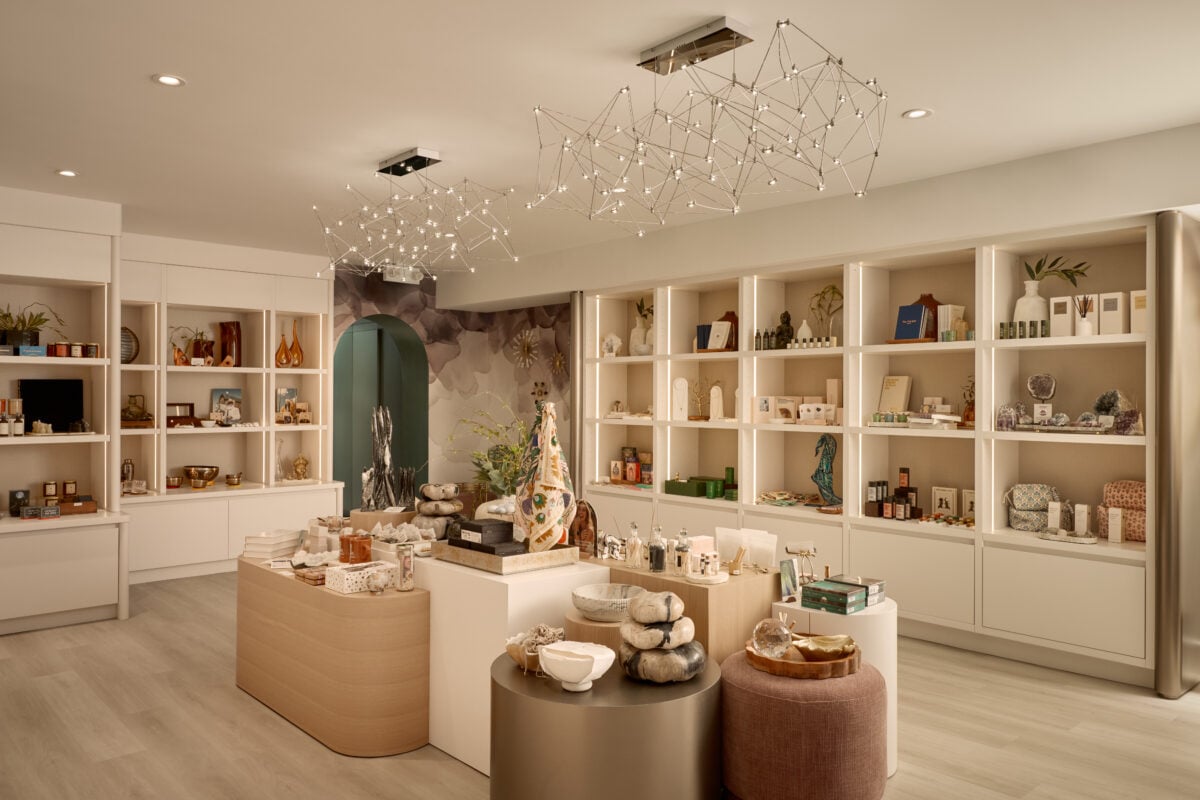
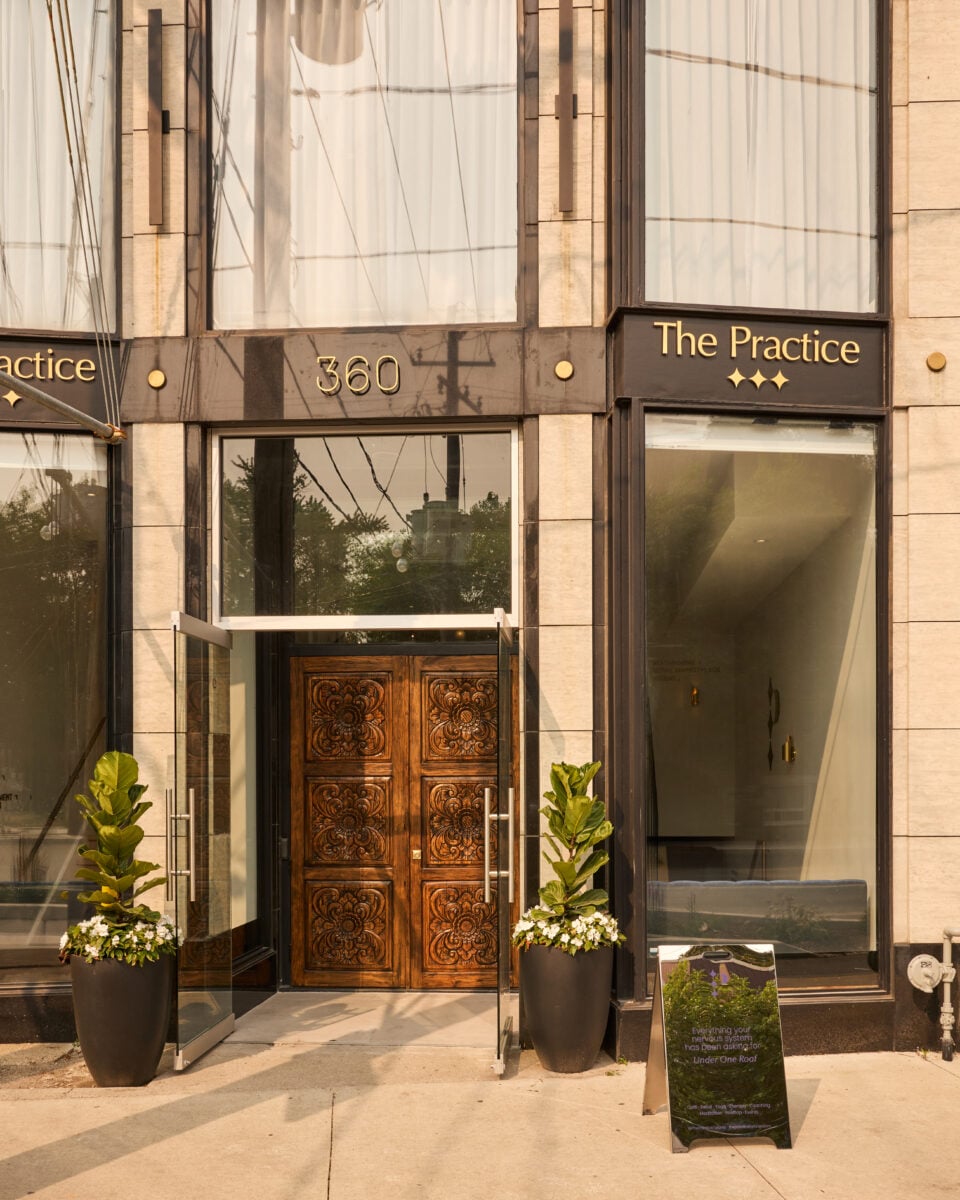
Spanning over 6,000 square feet across four floors, The Practice has been designed as an antidote to the traditional clinical setting. Rich tones & textures, warm light, and luxurious finishes set the tone. The space was designed to highlight the relationship between environment and emotional wellbeing, and the belief that colour and light are not decorative choices but therapeutic ones.
Sara Jackson
The space features:
A full yoga studio offering multiple modalities including: red light yoga, sound baths, meditation, and breathwork classes
Private treatment rooms for psychotherapy, coaching, chakra healing & frequency work, lymphatic modalities , and vibrational therapy beds
Wellness café ft. coffee, matcha, herbal tea, ceremonial cacao, and nourishing smoothies
A curated retail space featuring wellness essentials
Dedicated event spaces for workshops, gatherings, and community programming
A rooftop patio for connection, conversation, and open-air community
Jackson is also the author of The Whisper, a book exploring intuition, self-trust, and what becomes possible when you learn to hear your own voice above the noise.
In an interview with Retail Insider, Jackson spoke about the concept.
Question: What gap did you see in Toronto’s mental health & wellness landscape that led you to create The Practice, and why did you feel the traditional clinic model needed to be reimagined?
Answer: Traditional psychotherapy is incredibly valuable, and there are many times when a clinical model is exactly what someone needs. What I felt was missing was a truly integrative approach—one that sees our mental and emotional health as part of our overall wellness, and something we can actively invest in throughout our lives, not simply something we addresswhen something is wrong.
I also wanted to move away from the idea that healing begins with, “I have a problem, and I need an expert to fix it.” I do believe that we already know what we need; we just have to learn how to access that and trust it. Most of us have become disconnected from it through conditioning, relationships, trauma, expectations and our overall life experiences.
For me, healing isn’t simply about becoming symptom-free. It’s about understanding yourself more deeply, changing the way you speak to yourself, learning to trust yourself, and ultimately creating more joy, connection and meaning in your life. I wanted to build a place where all of those things could exist together.
The Practice photo
Q: How did you approach designing The Practice as part of the therapeutic experience, and what role do the four floors, curated retail, café, event spaces and rooftop play in how people experience the space?
A: The design was incredibly deliberate because I believe our environment affects how we feel before a conversation even begins. I wanted someone walking into The Practice to immediately feel that something was different.
All five senses were considered. The colours, textures, lighting, music, scent and even the way people are greeted are part of the experience. There is an underlying message throughout the space: You deserve to be somewhere beautiful. You deserve to feel cared for. You deserve spaces that inspire you.
That matters particularly when someone may be coming in to do difficult emotional work. You might be processing grief or trauma upstairs, but you entered through a beautiful café where somebody knew your name. You can have a therapy session and then sit quietly with a coffee, take a yoga class, browse something beautiful in the retail space, attend an event or simply spend some time without immediately having to rush back into the world.
The four floors allow those experiences to coexist. The café and retail create connection and accessibility. The treatment and therapy spaces allow for privacy and deeper work. The movement and event spaces create community and shared experience. And the rooftop adds another place to gather, connect and simply be.
The jewel tones throughout the space are also personal to me. They draw from the beauty of the peacock and the idea of allowing ourselves to be fully expressed, to shine rather than tucking away or shrinking.
Sara Jackson
Q: What was the thinking behind bringing psychotherapy and life coaching together with modalities such as breathwork, meditation, sound baths, energy work and red light yoga under one roof ?
A: The idea actually came out of my own experience. During a significant period of change and healing in my life, I was seeing a therapist, working with a coach and exploring things like meditation, energy work and other wellness practices—and I was travelling all over the city to do it.
What became clear to me was that each experience was giving me something different, but they were all supporting the same human being.
That became fundamental to The Practice: meet people where they are.
There are days when you’re ready to sit across from somebody and talk about something difficult. There are other days when you don’t have words for it. You might need to breathe, move, meditate, lie on a vibration bed or simply allow your nervous system to settle.
I wanted people to have choices because healing isn’t linear, and our needs aren’t identical from one day to the next. At the same time, I didn’t want to create a wellness space that avoided the difficult work.
Psychotherapy is intentionally at the heart of The Practice because sometimes we do have to look at our history, our patterns, our relationships and the experiences that shaped us.
Then coaching can help take that understanding forward. Therapy may help us understand why. Coaching can begin asking, How do I make different choices to create a life full of awe? The other modalities support that process through the body and nervous system. Together, they create space for reflection and change.
The Practice photo
Q: Building a 6,000-plus-square-foot wellness destination over three years is a significant undertaking—what were the biggest challenges in bringing your vision for The Practice to life?
A: The biggest challenge was learning how I had to protect the original vision. When an idea first comes to you, there can be this very clear moment where you simply know what you’re trying to create. Then you begin building it, and suddenly there are architects, designers, consultants, contractors, advisors, friends and people who genuinely want to help.
Everyone brings ideas, and most of those ideas are offered with the best intentions. Somewhere in all of that input, it becomes very easy to lose your own voice. And then there is your own doubt. Building something of this scale over three years gives you plenty of opportunities to question yourself: Is this too much? Will people understand it? Should I change this? Should I make it more conventional?
So the greatest challenge was continuing to return to that original knowing and continuously and consistently checking in with myself: Am I still listening to my inner knowing with every choice I am making?
In many ways, building The Practice required me to practice the very philosophy behind it: quiet some of the external noise, listen closely to what I knew, and have the courage to follow it.
Q: What does The Practice’s launch say about how Torontonians’ attitudes toward mental health, wellness and the spaces where they seek support are changing, and where do you see the concept going from here?
A: I think we’re moving toward a much broader understanding of what mental health actually means. For a long time, the conversation around mental health has understandably been centred around mental illness. But we are all mental and emotional beings. We all have histories, fears, patterns, relationships, uncertainty and moments when life doesn’t go according to plan. None of us has done this before and, really, none of us truly know what we are doing.
I think people are increasingly looking for places where they can explore those parts of themselves without feeling that they first need to identify something as being wrong.
At the same time, I think the wellness industry is evolving. There has been tremendous interest in meditation, breathwork, yoga, nervous-system regulation and other modalities, but sometimes the deeper psychological work has been left out of that conversation. I wanted The Practice to bring those worlds together rather than treating them as separate.
Sara Jackson
To me, wellness is ultimately about being human. It’s about connection, vulnerability, self-awareness, responsibility, compassion and learning to listen to ourselves beneath all of the noise telling us who we’re supposed to be.
I don’t believe any one modality—or that The Practice itself—has all the answers. That’s actually part of the philosophy. We’ve created a space where people can explore, experience different things and discover what genuinely resonates with them.
The response we’ve received tells me there is an appetite for that kind of approach. I would love to see The Practice continue to grow and evolve, and ultimately for this way of thinking about mental and emotional wellness to reach well beyond Toronto.
But the measure of success for me is still very human. If somebody walks through our doors and leaves understanding themselves a little better, trusting themselves a little more, feeling more connected, or seeing a possibility for their life that they couldn’t see before, then we’ve done something meaningful.
If we can change a few lives that way, that’s what The Practice was created to do.
Westcliff’s acquisition of Kingsway Mall in Edmonton gives the Montreal-based real estate company a major foothold in Alberta as it continues to expand its portfolio of established Canadian shopping centres. The transaction marks a return to Western Canada for Westcliff, which says it remains interested in further acquisitions when the right opportunities emerge.
The acquisition adds one of Edmonton’s largest shopping centres to Westcliff’s holdings. Kingsway spans 880,049 square feet on 41.8 acres, with more than 160 stores and services. The property attracts close to seven million visitors annually and reports retail sales of approximately $715 per square foot.
“Kingsway Mall brings together several qualities Westcliff looks for in a retail asset: scale, visibility, strong traffic, a meaningful role in the community and long-term relevance in its market,” said Adam Marcovitz, Vice President at Westcliff. He said Kingsway’s location, accessibility, tenant mix and established customer base provide a strong foundation for the company as it re-enters the Western Canadian market.
A Major Edmonton Retail Asset
Kingsway’s tenant roster includes Walmart Supercentre, HomeSense, Marshalls, Shoppers Drug Mart, Aritzia, Sephora, lululemon and Browns Shoes, alongside a broad mix of fashion, food, services and specialty retailers. The shopping centre had been owned and managed by Oxford Properties since 2000. Oxford is the real estate arm of OMERS, the pension plan for Ontario municipal employees. Financial terms of the sale to Westcliff were not disclosed.
Acquiring Kingsway gives Westcliff an immediate presence in a major Western Canadian market through a property with significant existing traffic and retail sales. Marcovitz said Edmonton’s scale and long-term prospects were important considerations.
“Edmonton is a major Canadian urban market with strong long-term potential,” he said. “Kingsway Mall is located in a dynamic trade area shaped by established neighbourhoods, institutional anchors and ongoing urban evolution, which makes it an attractive environment for long-term retail investment.”
Adam Marcovitz, Vice President at Westcliff
Kingsway sits just north of Edmonton’s downtown core near Royal Alexandra Hospital and the Kingsway/Royal Alex LRT station, providing access to major employment, health-care and transit infrastructure. The surrounding area is also evolving, including the development of Blatchford on the former Edmonton City Centre Airport lands, which is planned as a substantial mixed-use community.
Edmonton continues to add population and economic activity, although the rapid pace of population growth seen in recent years is expected to moderate. Forecasts also point to less new retail space being delivered in the market in 2026 than in the previous year. For an established centre such as Kingsway, continued metropolitan growth and a more limited pipeline of new retail supply provide a supportive backdrop.
Continuity Comes First at Kingsway
Despite the scale of the transaction, Westcliff is not planning an immediate overhaul of Kingsway. The company says no major changes are planned in the short term, with its initial focus on continuity, supporting existing operations and gaining a deeper understanding of the factors that have contributed to the property’s performance.
“Retailers and tenants should not expect abrupt changes,” Marcovitz said. “Westcliff’s approach is to listen first, understand what makes the property work and make thoughtful decisions that support the long-term customer experience.”
Westcliff will work with Kingsway’s existing management and operations teams as ownership transitions. There are also opportunities that could become more significant over time, including the sizeable space left by Hudson’s Bay following the department store’s closure at Kingsway in June 2025. Westcliff has not announced plans for the space, and Marcovitz stressed that major changes are not part of the immediate strategy for the centre.
“The long-term vision is to keep Kingsway Mall active, relevant and connected to the needs of the market it serves,” he said.
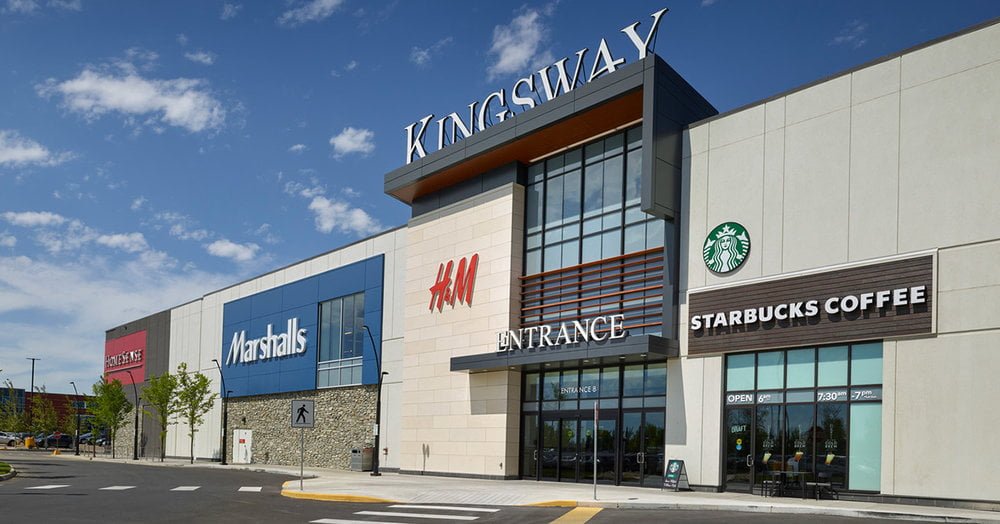
Exterior of Kingsway Mall in Edmonton showing H&M and Marshalls. Photo: Kingsway Mall
Kingsway Extends a Recent Acquisition Strategy
The Edmonton transaction follows two significant shopping centre acquisitions by Westcliff in late 2024. In October of that year, the company acquired Champlain Place in Dieppe, New Brunswick, from Cadillac Fairview. The approximately 784,000-square-foot super-regional centre has more than 150 stores and services and serves a broad trade area in southeastern New Brunswick.
Two months later, Westcliff acquired Fairview Park in Kitchener, Ontario, also from Cadillac Fairview. The 731,916-square-foot shopping centre has 113 stores and services and reported annual retail sales of $734 per square foot at the time of the transaction. Kingsway extends that acquisition activity into Alberta.
The three centres share several characteristics. Each is a large retail property with significant traffic, national tenants and a prominent position within its regional market. Westcliff has acquired them as functioning retail destinations with existing momentum rather than properties requiring immediate, large-scale turnaround strategies.
“This acquisition fits into Westcliff’s broader strategy of growing its Canadian portfolio through established retail destinations that are deeply connected to their communities,” Marcovitz said. Kingsway provides considerable scale in Westcliff’s return to the West, with reported sales of approximately $715 per square foot and close to seven million annual visitors giving the company an established operating base in Edmonton from the outset.
Major Shopping Centres Changing Hands
Westcliff’s recent acquisitions also highlight changes taking place in the ownership of some Canadian shopping centres. Kingsway was acquired from Oxford Properties, while Champlain Place and Fairview Park were purchased from Cadillac Fairview, putting three significant properties previously held by major institutional owners into Westcliff’s portfolio.
The transactions should not be read as evidence of a broad institutional retreat from Canadian shopping centres. Large pension-backed owners continue to hold some of the country’s most productive retail properties. They do, however, show that substantial regional malls are becoming available to private owners with different portfolio strategies and investment horizons.
Westcliff has been prepared to acquire these properties when they fit its investment criteria. Founded in 1972, the privately owned company has more than five decades of experience across shopping centres and other commercial real estate, with holdings in Canada and the United States.
A Selective Case for the Enclosed Mall
Kingsway also reflects Westcliff’s confidence in well-positioned enclosed shopping centres at a time when performance across the sector varies considerably. Strong centres continue to attract retailers, investment and customers, while properties facing weaker demand or changing trade areas can require significant repositioning.
Recent ownership changes in Edmonton provide a close comparison. Edmonton City Centre has gone through a court-supervised sale process, with its sale to Westrich approved in August, while Kingsway is changing hands as an operating regional centre where the new owner is emphasizing continuity. The contrasting circumstances show why enclosed shopping centres increasingly need to be assessed individually, with location, traffic, tenant demand, sales productivity and surrounding development producing very different outcomes within the same metropolitan market.
Westcliff’s investment case centres on properties that remain relevant to the communities around them. The company sees value in shopping centres where customers can combine retail visits with services and other everyday needs, supporting repeat traffic and long-term relevance.
Westcliff Open to Further Acquisitions
Asked whether the transaction signals an appetite for additional acquisitions in Western Canada or elsewhere in the country, Marcovitz confirmed that the company remains interested.
“Yes, but the goal is not simply to add properties to our portfolio, but to invest in places that have real purpose, strong market relevance and room to evolve,” he said.
Those criteria are consistent with Westcliff’s recent shopping centre purchases. Champlain Place strengthened its position in Atlantic Canada, Fairview Park expanded its holdings in Ontario, and Kingsway now provides a substantial presence in Alberta. As Canadian real estate owners continue to evaluate their portfolios and capital priorities, other acquisition opportunities could emerge.
For Kingsway, the immediate priority is straightforward. Westcliff has acquired a productive Edmonton shopping centre and plans to spend its initial period of ownership learning the property and supporting its existing operations. Longer term, Kingsway gives the company a significant Alberta platform as it looks for further opportunities to expand its Canadian portfolio.
Presented by Supply & Demand Chain Executive and Food Logistics, the annual awards recognize female supply chain leaders whose accomplishments, mentorship, and leadership are helping shape the future of the global supply chain industry.
The Trailblazer category honors experienced women who have spent their careers driving innovation, operational excellence, and lasting change while paving the way for future generations of women in supply chain and logistics.
In an interview with Retail Insider, Rhea discusses her experience and the global supply chain.
Angela RheaTima Miroshnichenko photo
Question: What do three decades in fashion and retail supply chains reveal about where the industry is headed?
Answer: Three decades in fashion and retail supply chains have taught me that change is constant, but the pace and complexity of change have accelerated dramatically. Earlier in my career, the primary focus was often on cost, speed, and getting products to market. Today, brands have to balance those priorities with resilience, compliance, sustainability, transparency, and now more commonly, the ability to respond to disruption in real-time.
The biggest shift I see is that supply chains are becoming less transactional and more interconnected. A retailer cannot look only at its direct supplier and assume it understands the risk associated with a product. They need to understand the network behind that supplier, including subcontractors, raw material processors, and even upstream sources.
The future belongs to organizations that can connect product, supplier, compliance, quality, and logistics information and turn it into actionable intelligence. Technology is an important part of that transformation, but the goal is not technology for its own sake. It is about giving people better information so they can make faster and better decisions.
Q: Why does supply chain resilience increasingly depend on relationships, not just technology?
A: Technology can provide visibility, but relationships determine what happens when something goes wrong. When a disruption occurs, whether it is a regulatory change, a quality issue, a capacity constraint, or a geopolitical event, retailers need suppliers that will communicate early and work collaboratively on a solution. A supplier relationship built entirely around price is much less resilient than one built around transparency, shared expectations, and continuous improvement.
That means retailers need to move from simply monitoring suppliers to actively developing them. Data can help identify which suppliers are performing well, where risks are emerging, and where additional support is needed. However, someone still has to have the conversation. The strongest supply chains combine digital visibility with human relationships. Technology helps us identify where to focus. Trust and collaboration help us actually solve the problem.
Q: How can retailers move from compliance-driven traceability to meaningful supply chain visibility?
A: The first step is changing the purpose of traceability. If the only objective is to produce documentation when an auditor or regulator asks for it, companies will always be playing catch-up.
Meaningful visibility means being able to understand what is happening across the supply network while there is still time to act. That requires connecting supplier information, product data, orders, audits, certifications, quality information, and chain-of-custody evidence rather than keeping those records in separate systems.
It also means going beyond Tier 1. Tier 1 is generally the easiest part of the supply chain to map. The real complexity often begins further upstream, particularly with raw materials and processing. At TradeBeyond’s 2026 AAFA Traceability Conference panel, we discussed how differences in production dates, units of measurement, batches, and processing stages can make upstream traceability particularly difficult.
The objective should be to create a living picture of the supply chain, not a static compliance report. When retailers have that visibility, traceability becomes useful for sourcing, risk management, supplier development, and business continuity, not just regulatory compliance.
Artem Podrez photo
Q: What do the latest regulatory requirements mean for sourcing and supplier relationships?
A: Regulation is fundamentally changing the conversation between brands and their suppliers. Requirements around deforestation, forced labour, human rights due diligence, product sustainability, and traceability require companies to demonstrate what happened throughout the supply chain, rather than simply make statements about their policies.
That puts more responsibility on sourcing organizations. Supplier selection can no longer be based primarily on cost, capacity, quality, and lead time. Companies also need to understand a supplier’s transparency, compliance maturity, documentation capabilities, and upstream relationships. This is especially important because regulatory requirements are becoming data requirements. A supplier may need to provide information about origin, materials, facilities, production processes, or environmental and social conditions. If that information cannot be collected, validated, and connected to the relevant product or shipment, compliance becomes extremely difficult.
The answer should not be to treat every new regulation as another isolated project. Retailers should build a scalable data and supplier-management foundation that allows them to adapt as requirements evolve and change.
Q: Why does women’s leadership matter in traditionally operational and technology- focused areas of supply chain?
A: Women have always played an important role in the supply chain, even if that contribution has not always been reflected in leadership representation. I believe diverse leadership matters because supply chains are fundamentally about people, relationships, and problem-solving. The industry is also changing from a function focused primarily on operational execution to one that requires collaboration across technology, sustainability, sourcing, compliance, finance, and corporate strategy.
Different perspectives make organizations better equipped to understand those interconnected challenges. For women entering leadership roles in supply chain and technology, I would encourage them not to feel that they need to fit an existing definition of what a supply chain leader looks like. The industry needs leaders who can bridge disciplines, ask difficult questions, and bring people together around a common objective. My own experience across fashion, retail, technology, and supply chain has reinforced that leadership is not about having every answer. It is about being willing to learn, challenge assumptions, and create an environment where other people can contribute their expertise.
Q: How are AI and emerging technologies changing the way retailers manage global supply networks?
A: AI is moving supply chain management from reactive to more predictive decision-making. There is a tendency to talk about AI as though it will automate the entire supply chain. I don’t think that is where the greatest value lies today. The more immediate opportunity is helping people process enormous amounts of information, identify patterns, and focus their attention where it matters most.
For example, AI can help extract information from supplier documents, identify inconsistencies in supplier records, flag emerging risks, analyze supplier performance, and prioritize exceptions. It can also help connect information that historically sat in separate workflows.
However, it is important to note that AI is only as valuable as the data underneath it. If supplier information is fragmented or inaccurate, AI cannot magically make the underlying supply chain visible. Retailers need connected data, clear processes, and defined ownership first. The most successful implementations will therefore combine AI with human expertise. AI can surface the signal. People still need to determine what that signal means and what action the business should take.
EqualStock IN photo
Q: How has ESG evolved from a reporting exercise into an operationalconsideration?
A: ESG is moving from the annual-reporting conversation into day-to-day supply chain decisions. For example, it is one thing to report supplier emissions or sustainability metrics. It is another to use that information when deciding where to source, which suppliers to develop, how to manage risk, or whether a product can meet future market requirements.
That shift is important because ESG information becomes much more valuable when it is connected to operational data. A retailer can start asking more meaningful questions like:
● Which suppliers are improving?
● Where are environmental or social risks concentrated?
● Which materials create the greatest impact?
● Which suppliers have the data and processes necessary to support future requirements?
Traceability is a major part of that evolution because credible ESG performance depends on knowing where products and materials come from. Connected supply chaindata can help move ESG from a reporting obligation to a decision-making tool.
Q: What should brands be doing now to prepare for Digital Product Passport and other traceability requirements?
A: Brands should start now, even though some of the detailed requirements are still being developed. The EU has identified textiles as a priority category under the Ecodesign for Sustainable Products Regulation. The European Commission currently anticipates adoption of the textile-specific delegated act in Q3–Q4 2027, with mandatory compliance taking effect around 2028 and implementation details to follow. Brands should use this time to establish the infrastructure rather than wait for every requirement to be finalized.
First, map the supply chain beyond Tier 1 and understand where critical product and material information originates. Second, establish common data standards so information from different suppliers and tiers can actually be connected.
Third, identify gaps in documentation, chain of custody, and supplier participation. Finally, make sure traceability and product information is connected to the sku level through a unique identifier rather than maintained as a separate compliance exercise.
The DPP is ultimately about making product information accessible and connected to the actual product throughout the product lifecycle. For textiles, that information includes product identification, fiber composition, origin, relevant economic operators, repair and maintenance information, reuse and recycling information, and other verified compliance and traceability data. The brands that will be best positioned are not necessarily those that build a system specifically for the DPP, but are the ones that build a connected supply chain data foundation capable of supporting the DPP and whatever regulatory requirements come next. The European Commission’s DPP Registry is already live as of July 2026, which is another indication that this is moving from a future concept toward practical implementation.
Everyone has that one recipe that they cherish. Sometimes passed down through generations, it might live in a worn notebook or simply in the memory of someone who knows it by heart, rarely shared beyond the people closest to them.
Food Basics sees an opportunity to play a role in preserving and celebrating those traditions. As a grocery brand that helps Ontarians bring the ingredients and flavours of home to their tables every day, More Flavours of Home takes that role one step further by putting the people and stories behind those traditions at the centre.
The grocer is launching More Flavours of Home, a cookbook series that invites Ontarians to nominate the home cooks and dishes that matter most to their families and communities. Selected recipes and stories will be featured across three editions celebrating Diwali, Lunar New Year and Ramadan.Nominations are open now through September 7, 2026.
Hardeep KharaudFood Basics photo
Hardeep Kharaud, SVP of Food Basics, said More Flavours of Home is the next step in the brand’s More Flavours of the World platform; an opportunity to dive deeper beyond the hundreds of imported products key to many ethnicities that it carries, and into showcasing the people, recipes and traditions that make culture worth experiencing.
“Food Basics is one of the fastest growing grocers in Ontario, and every new neighbourhood we open in brings a new opportunity to reach customers on more than just price alone. Our core belief is that great prices bring people in, but stocking the ingredients they actually cook with, and recognizing the culture behind them, is what earns the weekly shop.
More Flavours of Home sits right where those two meet, celebrating the communities we serve, and the role food plays in bringing people together,” he said.
For many people in Ontario, food is one of the strongest ties to family, culture and community, said Kharaud.
“We serve incredibly diverse communities across the province, and we see every day how a recipe keeps people connected to where they come from and to each other. Over the years, we’ve continued to grow and strengthen our assortment of cultural products, fresh produce, halal meat and specialty ingredients across Ontario. In doing so, we’ve learned that the ingredients are only part of the story. The people who cook with them and share them are what truly bring those flavours to life,” he said.
More Flavours of Home was built around cultural moments where food plays an important role. Diwali, Lunar New Year and Ramadan were selected because of their food traditions, as well as their significance to hundreds of thousands of Ontarians across diverse cultural and faith communities, added Kharaud.
Pavel Danilyuk photo
“These celebrations are also important moments within many of the communities we serve across Ontario, making them a natural extension of our commitment to helping customers find the flavours and ingredients that matter most to them.
“Nominations are open through September 7, so we’re looking forward to digging into the submissions once the window closes. What we’re hoping to see is a reflection of the diversity of Ontario. Maybe it’s the aunty who makes the only biryani worth eating, the grandmother whose mooncake recipe has never left the kitchen, or even someone nominating themselves because they know their recipe deserves to be shared. Ultimately, we’re looking to hear from family members, friends and community champions whose cooking brings people together, preserves traditions and creates a sense of home.”
Kharaud said the brand will look at success through the response it receives from Ontarians, including nominations, engagement with the cookbooks and feedback from the communities they’re celebrating.
“More Flavours of Home was built to grow with the communities we serve. These first editions celebrate Diwali, Lunar New Year and Ramadan, but the door is open to anyone who wants to share the food that matters to them.
“This series is a culmination of years’ worth of effort behind the scenes. We’ve been on a real journey to sharpen our merchandising, pricing and assortment in cultural goods so it’s consistent and dependable across our stores from Windsor to Ottawa. That commitment extends throughout our fresh departments as well, from ethnic produce and halal meat to the specialty ingredients that anchor so many cultural dishes. The cookbook is proof of that work. As we keep strengthening that foundation, we’ll keep evolving the series alongside the communities we serve.”
KFC Canada just marked its first expansion outside of its core category in the country’s history launching Kwench, its new dedicated beverage brand with a $30 million investment from KFC Canada and its franchisees.
Marking its North American debut, Kwench features four distinct categories and nine crave-worthy, made-to-order beverages, including Krunch Shakes, Sparkling Lemonades, Boba Refreshers and Iced Lattes.
The scale of the expansion is significant: Kwench is rolling out to more than 170 locations by summer’s end, with plans to reach 600 locations in 2027.
“Kwench represents a significant growth opportunity for KFC Canada as we expand beyond our core food offering and build a dedicated beverage brand at scale,” said Ryan Koon, President and General Manager, KFC Canada. “It reflects our commitment to meeting the evolving needs of Next Gen Canadians, offering trend-led drinks designed to be experienced and shared socially. Just as importantly, Kwench brings a distinct tone and personality to life, one that’s confident and full of character.”
Canada is also just the third global market, following the UK & Ireland and Australia, to introduce Kwench nationally.
The move comes as beverages continue to play a larger role in QSR choice, with consumers increasingly seeking drinks that offer bold flavours, unexpected textures and bright, contrasting colours.
“We saw an opportunity to create something with its own bold, playful and unapologetic identity, rather than simply adding a few more drinks to the existing menu,” he said.
“Today, beverages have evolved into much more than an accompaniment to a meal. They have become part of treat culture, self-expression and social experiences, particularly among younger consumers and we wanted to join the conversation.”
The $30 million investment from KFC Canada and its franchisees reflects the scale of the opportunity it sees in specialty beverages and its confidence in Kwench as a long-term growth platform, said Akhtar.
“Kwench is our first expansion outside of KFC’s core category in Canada, so this is a meaningful step for the business. The investment will support the rollout and expansion of Kwench, with the brand reaching more than 400 locations by end of year and approximately 600+ locations in 2027,” he said.
KFC photo
Akhtar said the quick service restaurant is seeing a shift in the role beverages play in the overall QSR industry.
“Specialty beverages have become a leading driver of QSR choice, and consumers are increasingly looking for drinks that offer bold flavours, unexpected textures, bright colours and a sense of discovery,” he explained.
“Shakes and lemonades continue to rank among the most sought-after specialty beverage categories, but consumers are also looking for new combinations and experiences.”
Gen Canadians are helping redefine what a beverage can be. Drinks are increasingly a form of self-expression and social identity, and they’re something people discover, share and talk about, added Akhtar.
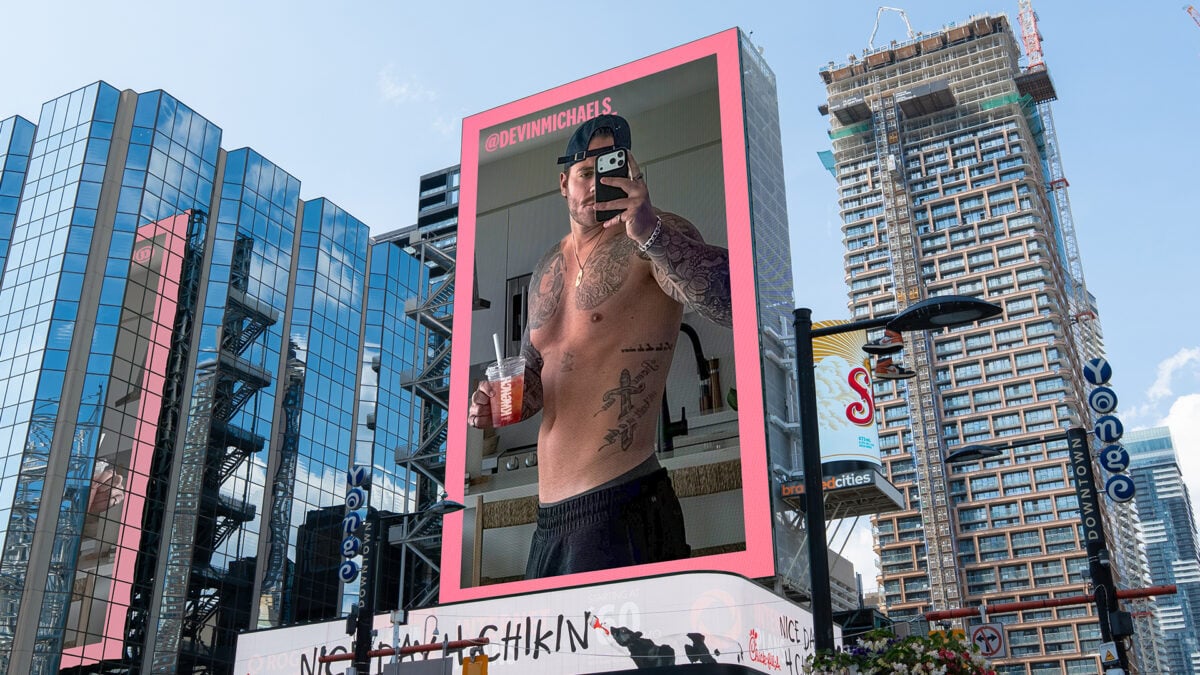
“That thinking is at the heart of how we’re bringing Kwench to life. Our marketing is designed to meet Gen Z with a playful, culturally relevant tone and experiences built to spark conversation and participation. Our new “Kwench Traps” campaign plays directly into that behaviour, turning the idea of a thirst trap on its head and giving everyday Canadians the chance to be featured on a billboard at Yonge-Dundas,” he said.
“We wanted the campaign to feel as bold and unexpected as Kwench itself. Younger consumers are particularly attuned to trends, visual appeal, unexpected flavours and experiences that feel worth sharing socially and gain attention.”
KFC photo
Kwench is an important part of the company’s strategy to evolve the KFC experience and identify new areas of growth while staying true to what makes the brand distinctive, noted Akhtar.
“This is our first expansion outside of our core category in Canada, and it allows us to participate in a fast-growing specialty beverage occasion while creating new reasons for consumers to visit KFC,” he said.
“We see Kwench as complementary to our core food business, but also as a destination in its own right. Whether someone is coming in for a shake after school, a sparkling lemonade with their meal or an iced latte in the afternoon, Kwench gives us another way to meet consumers across more occasions throughout their day.”
KFC photo
Akhtar said Canada is a very important growth market for KFC, and it saw a strong opportunity to bring the Kwench concept here based on both the strength of the KFC brand and the evolving beverage preferences of Canadian consumers.
“The scale of the Canadian opportunity was also a key factor. With more than 650 KFC locations across the country, we have the ability to bring Kwench to Canadians nationally and build a meaningful new beverage platform. We’re excited to see how Canadians make Kwench their own.”
Dairy Aisle at a Loblaw grocery store. Image: StuCor Construction Ltd.
Smaller baskets, more frequent purchases and the rise of store brands reveal a consumer who is constantly searching for value.
The Canadian grocery shopper is changing. Recent consumer data from NielsenIQ describe households that are buying more frequently, carrying smaller baskets, visiting more types of retailers and showing less loyalty to both traditional supermarkets and national brands.
This is not simply an inflation story. It is a story about adaptation. After years of inflation, Canadians have become tactical shoppers. They divide purchases among retailers, follow promotions closely and reconsider which brands and proteins still offer value.
In the latest rolling 13-week measurement, the average buyer recorded 63.6 purchase occasions, compared with 58.1 in the period ending in early April. That equals nearly five purchases a week, but it does not mean five grocery-store visits. The measure captures transactions across supermarkets, warehouse clubs, mass merchants, drugstores, dollar stores and online channels.
The direction is unmistakable: Canadians are purchasing more often. Meanwhile, spending per transaction fell from $39.42 to $38.08, a decline of 3.4 per cent. Consumers are making smaller purchases, but repeating them more frequently. Smaller baskets do not necessarily produce savings when they are filled more often.
This looks like cherry-picking. A household may buy produce at a supermarket, meat at a warehouse club, pantry goods at a discount retailer and something else online. The weekly grocery trip is becoming a series of smaller transactions across several channels.
Traditional grocers remain Canada’s largest food-retail channel, but their grip is weakening. Over the latest 52 weeks, they captured 47.8 per cent of spending, down 1.3 percentage points. Less than $48 of every $100 spent across the retail market now goes to a conventional grocery store.
Warehouse and mass merchants gained market share. Warehouse-club spending increased 11.5 per cent and product volume rose 6.9 per cent. Ethnic stores also grew strongly, with spending up 12.1 per cent and purchases up 9.7 per cent.
Spending online climbed 17.9 per cent, while the number of products purchased jumped 22.1 per cent. Because purchases grew faster than spending, consumers may be finding better value online or choosing less expensive products. At traditional grocers, spending increased 3.1 per cent while purchases rose only 0.8 per cent. Shoppers paid more but carried home almost the same amount.
The search for value is also strengthening private labels. Store brands now represent 24.3 per cent of physical volume but only 18.8 per cent of spending. About 24 of every 100 kilograms purchased are store-brand products, yet they account for less than $19 of every $100 spent. The gap is consistent with their lower-price positioning.
Private-label volume increased 1.5 per cent over the latest 52 weeks, while national-brand volume declined 0.2 per cent. Dollar sales rose 3 per cent for both. Shoppers are purchasing more store-brand product, while national brands are collecting more revenue without selling more volume.
Even store brands cannot protect consumers from pressure in animal proteins. Private-label meat and seafood volume fell 4 per cent while dollar sales increased 2 per cent. Canadians bought less but still spent more. That is the affordability challenge in one sentence.
The 12-week category results reveal a reshuffling of protein choices. Cottage-cheese volume increased 17 per cent. For every 10 kilograms purchased a year earlier, shoppers are now buying the equivalent of 11.7 kilograms. Dollar sales increased even faster, by 25 per cent.
One tracked seafood segment also grew, with volume up 13 per cent, but salmon moved in the opposite direction. Salmon volume fell 36 per cent: the equivalent of 10 kilograms became only 6.4 kilograms. Yet dollar sales declined just 23 per cent, indicating a higher average price or product mix.
Processed cheese spreads suffered a similar retreat. Volume dropped 22 per cent, meaning the equivalent of 10 kilograms became 7.8 kilograms. Tracked meat volume declined 10 per cent, from the equivalent of 10 kilograms to nine.
Canadians are not abandoning animal protein. They are reallocating it. Cottage cheese is gaining momentum, helped by protein content, versatility and value. Some seafood products are growing, while salmon, processed cheese spreads and certain meat products are losing volume.
The lesson for grocers and manufacturers is straightforward. Today’s consumer is no longer passively absorbing higher prices. Loyalty has become conditional. A familiar brand, convenient location or rewards program still matters, but only when the value is credible.
National brands should not assume that higher dollar sales mean a healthy business. Revenue can increase while customers buy less product. Traditional grocers face the same warning: they command the largest share of spending, but shoppers are moving parts of their baskets elsewhere.
The defining characteristic of today’s shopper is not thrift alone. It is fragmentation. Canadians are spreading purchases across more places, making more transactions, buying smaller baskets and switching products when the value equation fails. They are still buying food – just very differently.
Community pharmacies are a familiar part of the Canadian retail landscape, but the role they play in their communities is much broader than many realize.
They are local businesses and employers, often with longstanding ties to the communities they serve. They are also increasingly important healthcare destinations as pharmacists take on a wider range of clinical services.
For many Canadians, however, the pharmacy is still primarily thought of as the place to fill a prescription or pick up an over-the-counter medication. That perception misses a much bigger story: community pharmacies contribute to both Canadians’ health and the strength of local economies.
Recent first-of-its-kind research commissioned by the Neighbourhood Pharmacy Association of Canada (NPAC) gives us a clearer picture of the scale of that contribution.
The findings include:
Community pharmacy contributes nearly $23 billion annually to Canada’s economy.
The sector supports more than 273,000 jobs and generates approximately $6.3 billion in annual tax revenues.
Nearly two-thirds of Canada’s pharmacy locations are independently owned or banner pharmacies.
Approximately 60 per cent of Canadians live within a one-kilometre walk of a pharmacy.
In rural Canada, more than one in every 100 residents works in the pharmacy sector.
Billy CheungPharmasave photo
Those figures begin to show just how closely the economic and healthcare contributions of community pharmacy are connected. At the same time, the services pharmacies provide have expanded significantly. Depending on where you live, pharmacists can now assess and prescribe for common ailments, administer vaccines and injections, renew or adapt prescriptions and, in some jurisdictions, order laboratory tests.
They are also increasingly involved in supporting patients with chronic conditions. As extensively trained medication and immunization experts who are among the most accessible healthcare professionals in their communities, pharmacists are well-positioned to take on this broader role.
And as that role in healthcare expands, the local pharmacy is changing as a business too.
The value of making decisions close to home
Nearly two-thirds of Canada’s pharmacy locations are independently owned or banner pharmacies. That matters because, for independently owned pharmacies, local ownership puts decisions closer to the communities being served.
A pharmacist owner sees firsthand what patients and customers are asking for, where gaps in care may exist and which services are needed locally. They can then make decisions about where to invest and which services make sense for their community.
Healthcare needs aren’t the same everywhere, and neither are the solutions. We see that in the services being offered across the Pharmasave network.
At Cumberland Pharmasave in B.C., owner-pharmacist and women’s hormone consultant Kerri Moskal developed an innovative hormone-replacement therapy (HRT) clinic for women that has drawn patients from across Vancouver Island. As demand grew, she adapted the model by introducing after-hours group education sessions, followed by the option of a one-on-one call for personalized recommendations. Her work was recently recognized with the BC Pharmacy Association’s 2026 Excellence in Patient Care Award.
In Weyburn, Saskatchewan, Pharmasave is helping expand access to mental health care through the province’s Mental Health Medication Management Pharmacy Pilot Project. Working under a collaborative practice agreement with a local psychiatrist, participating pharmacists can initiate medications, adjust medications or dosages to optimize therapy, and discontinue medications when appropriate. The model makes greater use of pharmacists’ expertise to provide patients with more timely, ongoing medication management in their community, while allowing the psychiatrist to focus more time on patients with complex needs and see more patients overall.
Across Nova Scotia, seven Pharmasave pharmacies are helping support broader health needs in their communities by running Community Pharmacy Primary Care Clinics as part of a provincial program. Through the clinics, pharmacists can assess and prescribe for conditions such as strep throat, pink eye and urinary tract infections, while also helping patients manage chronic diseases including diabetes, asthma and COPD.
These are just a few examples of how independent pharmacist owners and community pharmacy teams are identifying gaps in care and helping improve access close to home.
At Pharmasave, we have a national footprint, but our pharmacies are deeply rooted in the communities they serve. Pharmacy owners are often local healthcare providers, employers and trusted members of their communities. That local connection matters from a retail and business perspective too: these are businesses making decisions about services and investments based on the needs they see firsthand.
Pharmasave photo
Supporting local economies and communities
The connection between economic and healthcare well-being is particularly apparent in rural communities.
A community pharmacy can be both one of the most accessible healthcare destinations in town and an important local employer and longstanding business. According to NPAC’s report, more than one in every 100 rural residents works in the pharmacy sector.
In smaller communities, those roles are closely connected.
A pharmacy that identifies a local gap and adds a new healthcare service can help residents access care closer to home while continuing to support local employment and economic activity. And because pharmacist owners often live and work in the same communities as their patients and customers, they have a firsthand understanding of how local needs are changing.
There is an important continuity-of-care story here too.
Research cited in NPAC’s report shows that pharmacists in rural communities may see patients between 1.5 and 10 times more frequently than family physicians. They also tend to stay in their communities. Pharmacists remain in rural practice for an average of 15 years, compared with 11 years for family physicians.
Think about what that means in practice.
Over time, the local pharmacy can become a personalized hub of care. If you’ve been seeing the same pharmacist for years, they may know the medications you take, understand aspects of your health history and goals, recognize when something has changed and often know your family too.
That continuity matters. As pharmacists take on a broader role in healthcare, those longstanding relationships give them an opportunity to provide increasingly personalized support and identify needs that might otherwise go unnoticed.
This isn’t about pharmacists replacing family physicians, nurses or other healthcare professionals.
Good healthcare depends on different professionals working together and contributing their particular expertise. It’s about recognizing the healthcare capacity that already exists in our communities and making good use of it.
The local pharmacy has changed
At Pharmasave, we recently surpassed 900 pharmacies across Canada, many of which are independently owned by pharmacists who live and work in the communities they serve. Over the past year, pharmacists across our network completed more than 80,000 common ailment assessments and provided health and medication support for nearly 88,000 new patients.
I suspect those numbers would surprise many Canadians. And that’s really the point.
Independent Pharmacy Day on August 31 is an opportunity to recognize the people behind independent pharmacies across Canada. It is also a timely moment to consider how significantly the role—and the business—of community pharmacy has evolved.
The neighbourhood pharmacy is still where Canadians go to fill prescriptions, but the business increasingly extends well beyond dispensing. And that evolution looks different from one community to the next.
It is this combination of entrepreneurship, local decision-making and an evolving role in healthcare that places independent pharmacy at the intersection of Canada’s business, retail and healthcare landscape.
It was another busy week for Canadian retail, with expansion, investment and shifting consumer behaviour shaping many of the stories we followed at Retail Insider.
Brands continue to invest in stores and new markets, even as retailers navigate a more complicated economic environment. Trade tensions remain part of the conversation, while changing consumer expectations are influencing everything from store design and technology to merchandising and customer experience.
We also saw further evidence this week that physical retail remains an important part of growth strategies across the country. New stores, acquisitions, shopping centre investment and commercial partnerships are continuing to reshape the Canadian retail landscape as we head toward the fall.
Here are some of the stories and developments that caught my attention this week.
Retailer News
Arc’teryx is notably accelerating its North American footprint with ambitions to grow from 75 stores to approximately 200, targeting key urban centres, mountain towns, and premium retail concepts. It’s a sign of confidence in the outdoor and technical apparel sectors fueled by significant direct-to-consumer momentum Arc’teryx’s North American retail expansion. In parallel, Westcliff has re-entered Western Canada by acquiring the 880,049-square-foot Kingsway Mall in Edmonton, leveraging the city’s young and educated demographic to strengthen its national retail portfolio Westcliff’s acquisition of Kingsway Mall in Edmonton.
Other retail developments reinforce consumer appetite for both experiential and lifestyle-oriented offerings. Samsung Canada is expanding its physical retail presence with new experience-oriented stores that spotlight AI-powered and connected devices, underscoring the continuing relevance of in-person discovery even for technology products Samsung Canada’s experience-led store openings. Retailers like JD Sports and Knix are also extending their footprints with flagship and regional store openings, respectively, signalling ongoing investment in urban and Atlantic Canadian markets JD Sports’ downtown Montreal flagshipKnix’s first Atlantic Canada store in Halifax.
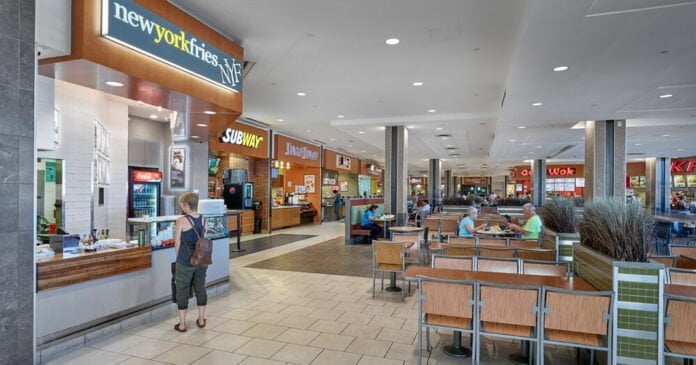
Foodservice continues to be a bright spot, with rapid growth noted at Jersey Mike’s and Happy Belly Food Group, both expanding aggressively across Canada, thus driving demand for prime retail real estate in the quick-service sector Jersey Mike’s expansion ambitionsHappy Belly Food Group’s record Q2 sales. Food court redevelopment projects like Promenades St-Bruno’s $49.5 million overhaul also reflect the imperative to adapt retail centres to evolving dining preferences Promenades St-Bruno food court redevelopment.
Retailers and landlords are actively responding to trade-related headwinds, as seen in renewed calls for local sourcing and Buy Canadian initiatives sparked by escalating tariffs. This renewed movement is influencing merchandising and supply strategies amid broader economic challenges Renewed Buy Canadian movement. Meanwhile, Walmart is expanding Walmart+ to Canada, integrating omni-channel capabilities to bolster its digital reach alongside physical store investments Walmart’s Canadian digital strategy expansion.
Retailer Financials / Trends / Reports
Statistical data this week painted a cautiously optimistic picture for the Canadian economy. Statistics Canada reported a 0.8% real GDP increase in Q2 2026 driven by household spending and business investment, although looming tariff risks could temper this momentum Canadian economy rebounds in Q2. Retail employment data showed a slight decline in June, primarily in grocery and general merchandise sectors, while vacancy rates for retail positions continue to indicate tight labour market conditions with recruitment challenges Retail payroll employment trends.
On the corporate front, Corby Spirit and Wine Limited recorded a record fiscal 2026 with 11% revenue growth, buoyed by a robust ready-to-drink portfolio and effective cost control, exemplifying resilience amid sector volatility Corby Spirit and Wine’s record fiscal results. Such performance underlines the continued demand for premium and innovative beverage offerings within retail environments, reinforcing the importance of portfolio diversification.
Retailer Op-Eds
The recent reflection on the Roots acquisition offers valuable insights for mid-market retailers, stressing the criticality of protecting a unique value proposition and leveraging cultural resonance to maintain customer loyalty and expand profitability. This case illustrates how differentiation and brand authenticity remain essential strategies in a competitive retail landscape Lessons from Roots acquisition. Trade tensions and tariff retaliations also remain a contentious topic, with expert analysis warning that broad counter-tariffs risk significant grocery price inflation without achieving desired trade outcomes, suggesting a need for more targeted government measures to minimise consumer harm Tariff retaliation’s impact on grocery prices.
Editor’s Take
One thing that continues to stand out to me is the willingness of retailers and landlords to invest despite considerable uncertainty in the Canadian economy. Arc’teryx is expanding its store network, Westcliff is adding to its shopping centre portfolio, and Walmart is building out its digital membership strategy. These are very different businesses, but each is making longer-term bets on how and where Canadians will shop.
At the same time, the operating environment is becoming harder to predict. Trade tensions and tariffs are adding another layer of complexity to sourcing and pricing, while the renewed interest in buying Canadian could influence purchasing decisions in ways that extend well beyond the current political moment. Retailers will be watching closely to see how much of that sentiment translates into lasting changes in consumer behaviour.
What I find particularly interesting is that uncertainty does not appear to be stopping investment. We continue to see new stores, renovations, acquisitions, technology spending and experimentation with new formats. Companies are being selective, but there is still considerable confidence in the Canadian consumer and in well-positioned physical retail.
As we move into the fall and eventually the holiday season, the divide between retailers that are investing from a position of strength and those focused primarily on managing costs could become increasingly visible. That will be something we’ll be watching closely at Retail Insider.