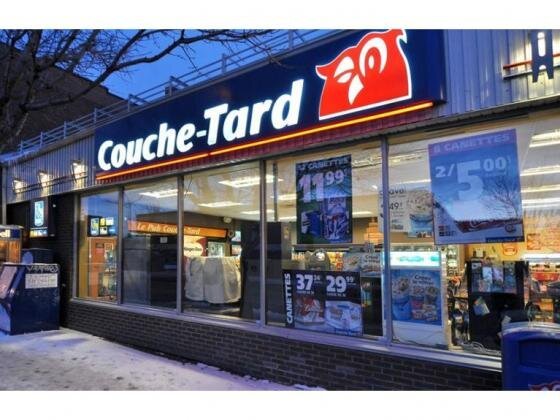
Alimentation Couche-Tard says it remains on track to add hundreds of new stores across its global network as the company invests in foodservice, customer loyalty and digital engagement initiatives designed to drive long-term growth.
The Laval, Quebec-based operator of the Circle K convenience store chain is advancing a strategy that positions convenience stores as more than fuel stops, with growing emphasis on prepared foods, beverages, digital engagement and repeat customer visits.
While many retailers continue to navigate a challenging consumer environment, Couche-Tard is pursuing one of the retail sector’s more ambitious expansion plans. The company remains on track to build 750 new stores by 2030 while continuing to invest in initiatives designed to strengthen store performance across its global network.
For retail industry observers, the strategy offers insight into how one of Canada’s largest retailers sees the future of convenience retail — one increasingly driven by foodservice, loyalty programs, customer data and a broader range of reasons for consumers to visit stores.
“We are winning in the markets we serve, strengthening our position and widening the gap versus the broader convenience channel,” President and CEO Alex Miller said during the company’s latest earnings discussion on Tuesday morning.
Expansion Remains a Key Priority
Store development continues to sit at the centre of Couche-Tard’s long-term growth plans.
During fiscal 2026, the company completed 130 store development projects, including 37 newly constructed stores and 13 store relocations or reconstructions in the fourth quarter alone. Another 34 stores were under construction at year-end.
The company’s target of building 750 new stores by 2030 stands out in today’s retail environment. Across much of the industry, expansion has become increasingly selective as retailers contend with higher construction costs, labour pressures and economic uncertainty.
For Couche-Tard, expansion is closely tied to the evolution of the convenience store format itself.
Newer stores are typically designed to support larger food and beverage programs, stronger digital integration and an improved customer experience. Executives said recently developed locations are producing strong returns and can become substantially more profitable than the average existing store after several years of operation.
The company also continues to evaluate acquisition opportunities. Management described merger and acquisition activity as active across multiple markets, reinforcing a strategy that combines organic growth with carefully selected acquisitions.
Foodservice Becomes a Bigger Growth Driver
One of the most notable developments within the business is the growing importance of foodservice.
Convenience retailers across North America have spent years working to capture a larger share of meal occasions, competing with quick-service restaurants, coffee chains and grocery stores. Couche-Tard appears to be making progress in that effort.
Foodservice same-store sales increased by more than five per cent in the United States during the quarter, while sales through the company’s Fresh Food Fast platform grew by more than 10 per cent.
Meal deals have become a meaningful contributor to performance. Management said the company is now approaching 1.2 million bundled meal offers sold each week across its network.
The trend is also evident in Canada. Couche-Tard reported that meal deals exceeded internal targets during the quarter, with more than 30 per cent of Canadian food sales now tied to bundled offers. The company has also been emphasizing its Prepared in Canada initiative while continuing to improve product availability and execution.
Foodservice represents a significant opportunity because it creates additional reasons for consumers to visit stores beyond fuel purchases. It also provides convenience retailers with a chance to compete for spending that has traditionally gone to restaurants and coffee chains.
Beverages Continue to Drive Traffic
Beverages remain another important growth category. Management highlighted strong performance in packaged beverages and energy drinks, with energy drinks posting double-digit same-store sales growth in Canada and more than 15 per cent growth in the United States.
The category benefits from high purchase frequency and works particularly well alongside meal deals, loyalty promotions and seasonal product launches.
Couche-Tard also pointed to continued strength in alcohol sales, particularly in Ontario, where expanded alcohol availability has created new opportunities for convenience retailers.
Together, food and beverages are becoming increasingly important growth drivers as the sector adapts to changing consumer preferences and long-term declines in tobacco consumption.
Loyalty and Digital Engagement Gain Momentum
Digital engagement has become a key component of Couche-Tard’s strategy. The company’s Inner Circle loyalty program reached 15 million members in the United States and now operates across more than 5,000 stores.
For retailers, loyalty programs provide more than rewards. They generate customer insights, support personalized offers and encourage repeat visits.
Couche-Tard said its efforts to convert fuel customers into in-store shoppers are gaining momentum, with pump-to-store conversion increasing significantly as loyalty participation grows.
The company is also expanding digital capabilities in Europe, including the integration of electric vehicle charging services into customer-facing applications.
Those investments reflect a broader shift across retail as companies seek stronger customer relationships and more direct engagement with shoppers.
Canadian Operations Deliver Record EBITDA
Couche-Tard’s Canadian business generated record EBITDA during fiscal 2026 despite ongoing pressure in tobacco and nicotine categories.
Canadian same-store merchandise sales declined 0.9 per cent during the fourth quarter. Excluding tobacco, however, same-store sales increased 1.3 per cent.
Management highlighted strength in packaged beverages, energy drinks and alcohol sales, particularly in Ontario.
The results provide another indication of how convenience retail continues to evolve. While tobacco remains an important category, much of the sector’s future growth is expected to come from foodservice, beverages, loyalty programs and broader customer engagement.
The Next Phase of Convenience Retail
Couche-Tard’s latest update offers a glimpse into how the convenience store sector may evolve over the coming decade.
Fuel remains a foundational part of the business, but the company’s strategy increasingly focuses on creating more reasons for customers to visit stores, whether for a meal, a beverage, a loyalty offer, an electric vehicle charge or a quick purchase.
The company’s 750-store expansion target reflects confidence not only in its real estate strategy, but also in the continued relevance of physical convenience retail.
As the sector evolves, retailers that successfully combine location, foodservice, digital engagement and customer loyalty may be best positioned to capture the next phase of growth. Couche-Tard is betting that convenience stores can continue to expand their role in consumers’ daily routines — and its latest results suggest that strategy is gaining momentum.