Home Blog Page 674

Toronto-Based Nani’s Gelato Announces Major Location Expansion and New Cafe Concept Rollout [Interview]

Image: Nani's Gelato

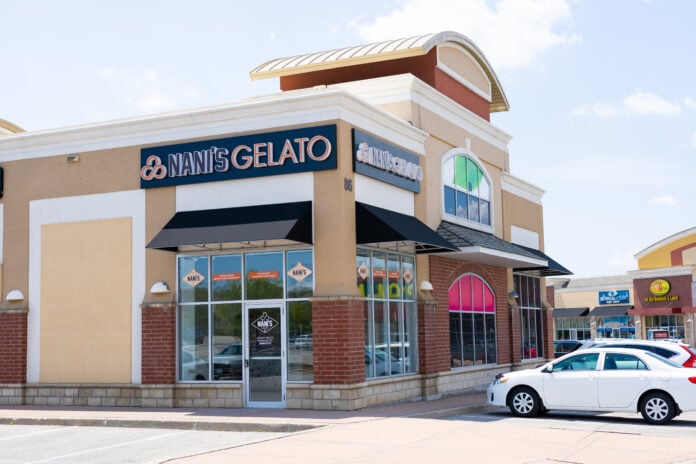
Nani’s Gelato, an ice cream shop based in Toronto, is opening five new locations this year, has plans to open around 50 locations within the next three years, and will be expanding into the United States market. 

Currently, the brand has one corporate and four franchised locations in the Greater Toronto Area open offering a variety of gelato, sorbet, pints, and soft-serve options. Consumers can expect new flavours every other week as the brand rotates through its 150 flavours and all are made on-site to provide fresh products daily. The last location opened a few weeks ago in Milton. 

Parry Sohi

“Our gelato is unique, made with Italian recipes and ingredients, and all of our equipment is imported from Italy. We focus on authentic, on-site, freshly made gelato and make it denser, creamier, and richer. It is a high-quality, flavour-intense product that stands out in the market. We have five operating locations and we are in the process of starting construction on five additional units right now,” says Parry Sohi, the owner of Nani’s Gelato. 
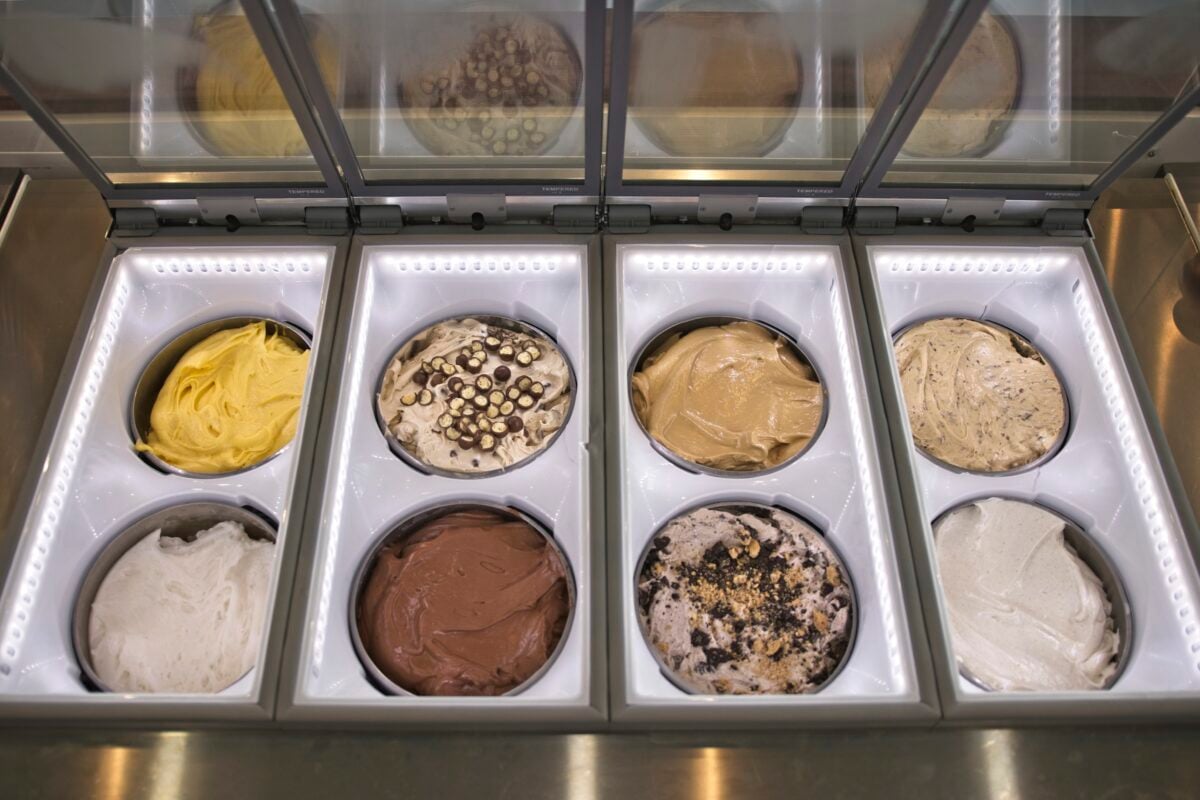
Image: Nani’s Gelato

The five additional units under construction are all in Ontario and include: Burlington, Kitchener, Stoney Creek in Hamiliton, Whitby, and another location in downtown Toronto. 

The locations in Burlington, Kitchener, and Stoney Creek will be opening for May or June, Whitby will be open by the end of the year, and Sohi says the brand is finalizing the deal for the location in Toronto and it’s unknown when it will be opening as of yet. 

Sohi says the brand will also be expanding for the first time outside of Ontario this summer and has recently finalized a deal in Calgary: “There are a lot of young families, a lot of young couples, so it fits really well in the type of demographic that we tend to target.” 

Kelly Farraj of The Behar Group Realty Inc. is representing the brand for its expansion.

50 locations within three years 

To make this goal happen, Sohi says the plan is to open around 12 locations a year without saturating the market. 

“If we hit 40 to 50 units, we see the additional units actually being opened by our existing franchises as opposed to going out and finding new franchisees. So we think that will give us a really good footprint with all of the Canadian real estate landlords and in turn, when we are looking to expand internally using our existing franchisees, we feel like the financial strength of that would really leverage well in the retail sector.” 

To get started with the expansion in the United States, Sohi says he will be attending a trade show in the next couple of months and is hopeful the brand will be able to expand there by the end of next year. 

Inside of Canada, Sohi says the brand is looking to expand further in Ontario including North York, Richmond Hill, Scarborough, Pickering, Ajax, Oshawa as “there is a lot of potential in those markets.” As for outside of Ontario, Sohi says the brand will be targeting Winnipeg and Vancouver as those are its primary locations and will be expanding there for next year. Sohi says he is also interested in expanding into Saskatchewan. 
Image: Nani’s Gelato

“We have shifted our model” 

Sohi says the brand is shifting its model to becoming more of a dessert cafe where consumers can come in and be able to sit inside. 

“We are expanding some new products in our menu and guests will be able to sit. It will be a great meeting place for friends and family within the community. We are working really hard on some of our retail locations to also secure outdoor space right in front, which will really help when people come out to enjoy the nice weather in the summer. We are looking at our stores becoming more of a community hub for desserts and relaxation for friends and family.” 

Now when looking for locations, Sohi says the ideal spot would be between 900 to 1,200 square feet, has an outdoor space for a patio that is designated for the space, and the brand is focusing on getting more seating inside. 

A fun feature inside is the kitchen, as consumers are able to see into the kitchen at every location where “they make fresh gelato on-site every morning.” 
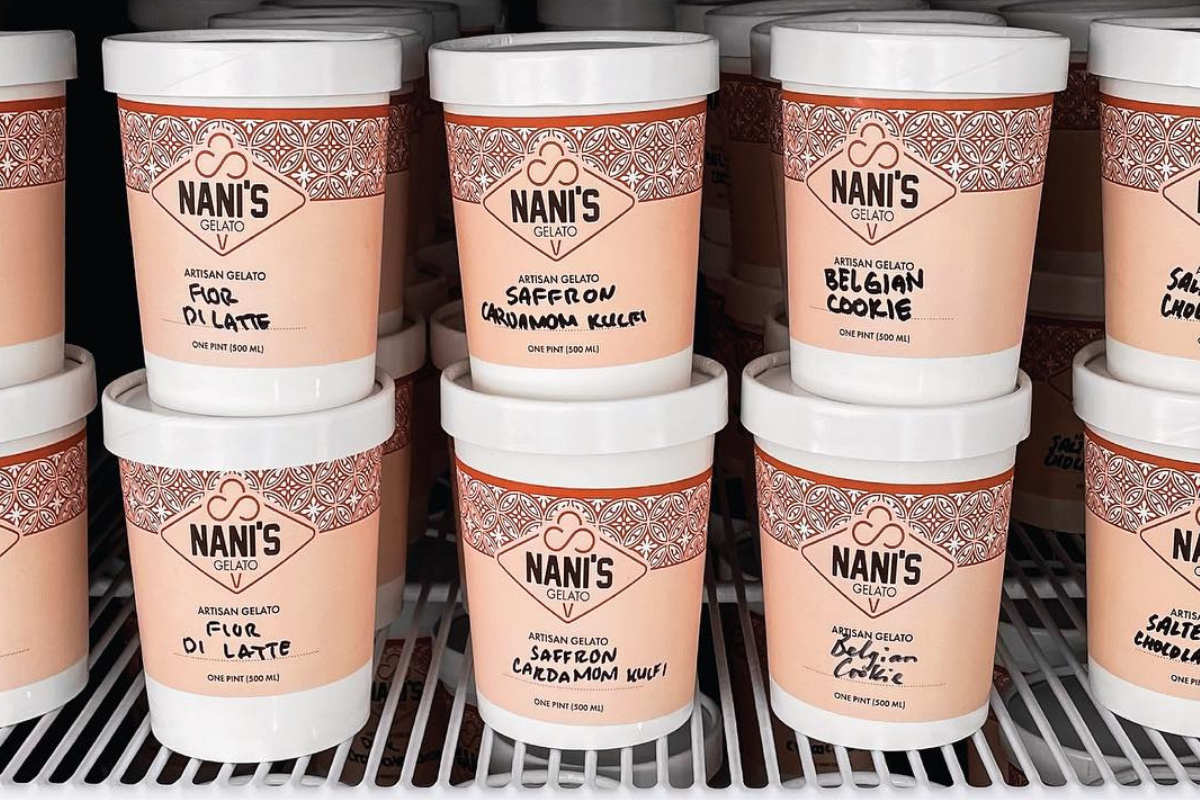
Image: Nani’s Gelato

All locations will be created with comfort in mind and will be an open concept. 

“We are trying our best to keep all locations very similar as we roll out. Landlords are becoming more comfortable with that and once they have seen our design, they really like it. It is very fresh, it is pretty modern, so they are excited to put that concept and use it into a lot of the new retail spaces we are looking at.” 

As for its product expansion, Sohi says the brand will be adding beverages. 

“We only offer bottled water to customers coming in where a lot of our competitors, who run gelato cafes, are offering coffee, espresso, and cold beverages. So we are looking at something as simple as offering carbonated drinks to hot and cold drinks we are going to be making in-house, and seasonal drinks.” 

Sohi says the menu will also evolve as the brand is working on new and unique gelato products: “We are keeping it a secret right now, but a big chunk of what we are doing is beverage.” 

French Sports Retailer Decathlon Repositioning with Renovated Stores and Brand Signage, Including Canadian Locations

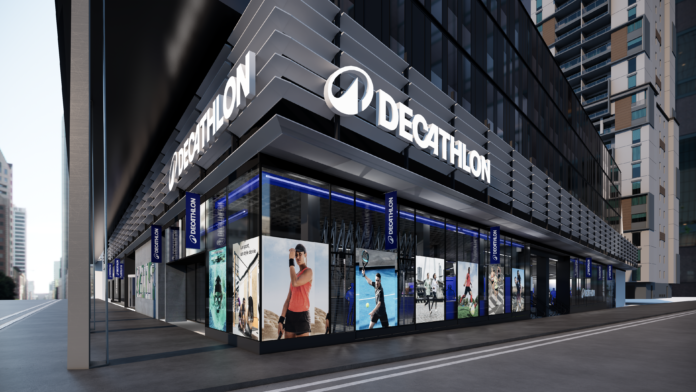
Image: Decathlon

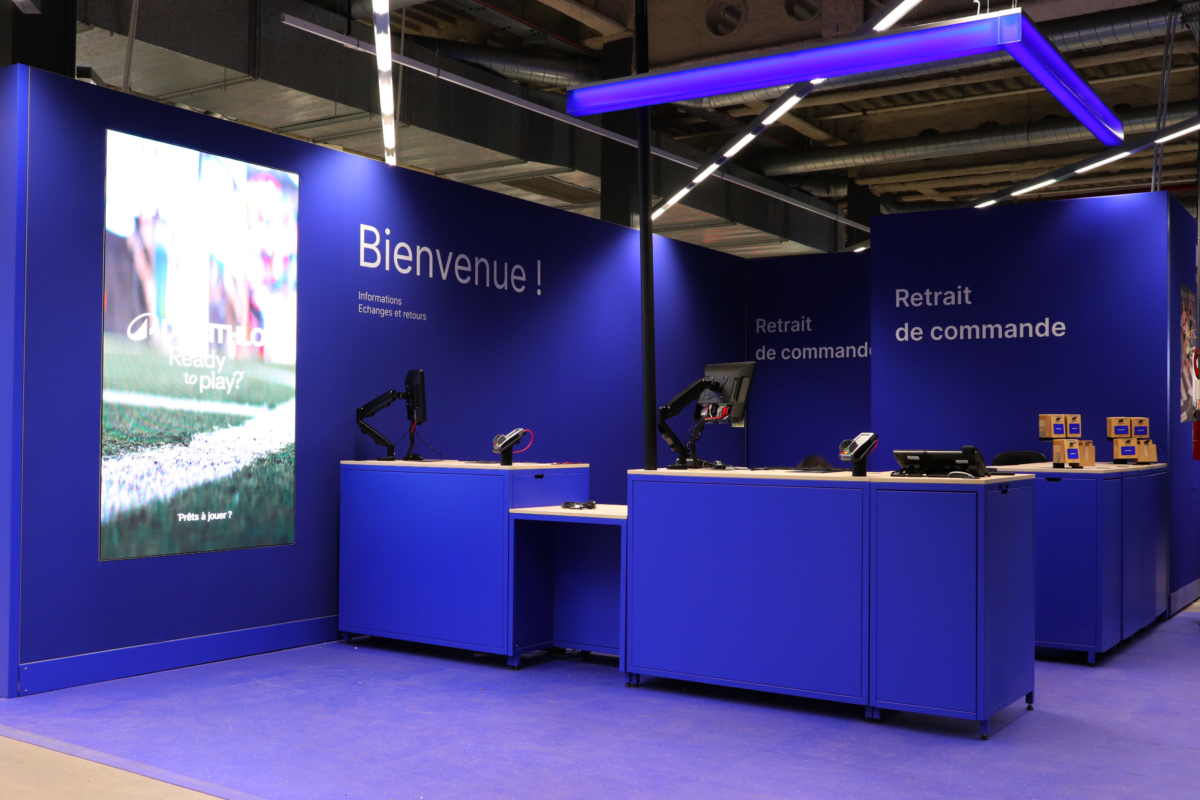
Global retail sports brand Decathlon has launched its new purpose which it says is to “Move People Through the Wonders of Sport.” The retailer has 19 stores in Canada after entering the country in 2018, and all locations will be renovated as part of the initiative.

The company, in a news release on Tuesday, said the strategy behind its new initiative is to bring innovative and sustainable sport to everyone. 

Barbara Martin Coppola

“Today marks a very special moment in both the history and future of Decathlon. Now more than ever, the world needs sport. It has a unifying power, and can improve both physical and mental health,” said Barbara Martin-Coppola, Decathlon’s Global Chief Executive Officer, in a statement.

“At Decathlon, we want to have a greater positive impact on humans, society and the planet by Moving People Through the Wonders of Sport. I am proud to be working towards the North Star – our guiding light and ambition – with our teammates. 

“It’s been incredible to see our diverse community come together to celebrate what makes us special: enabling everyone to practice sport on their own terms. I am confident that our ambitious strategy, evolving our way of doing business, will ensure Decathlon leads the sector as a unique and trusted sports brand.”

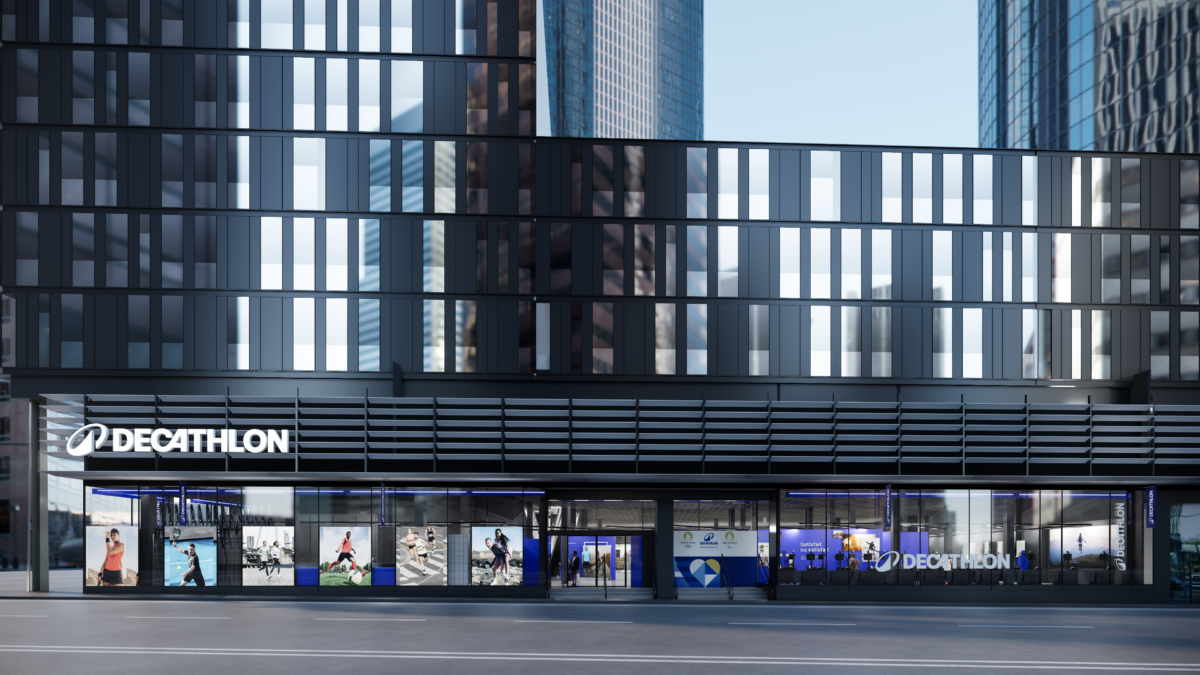
Image: Decathlon

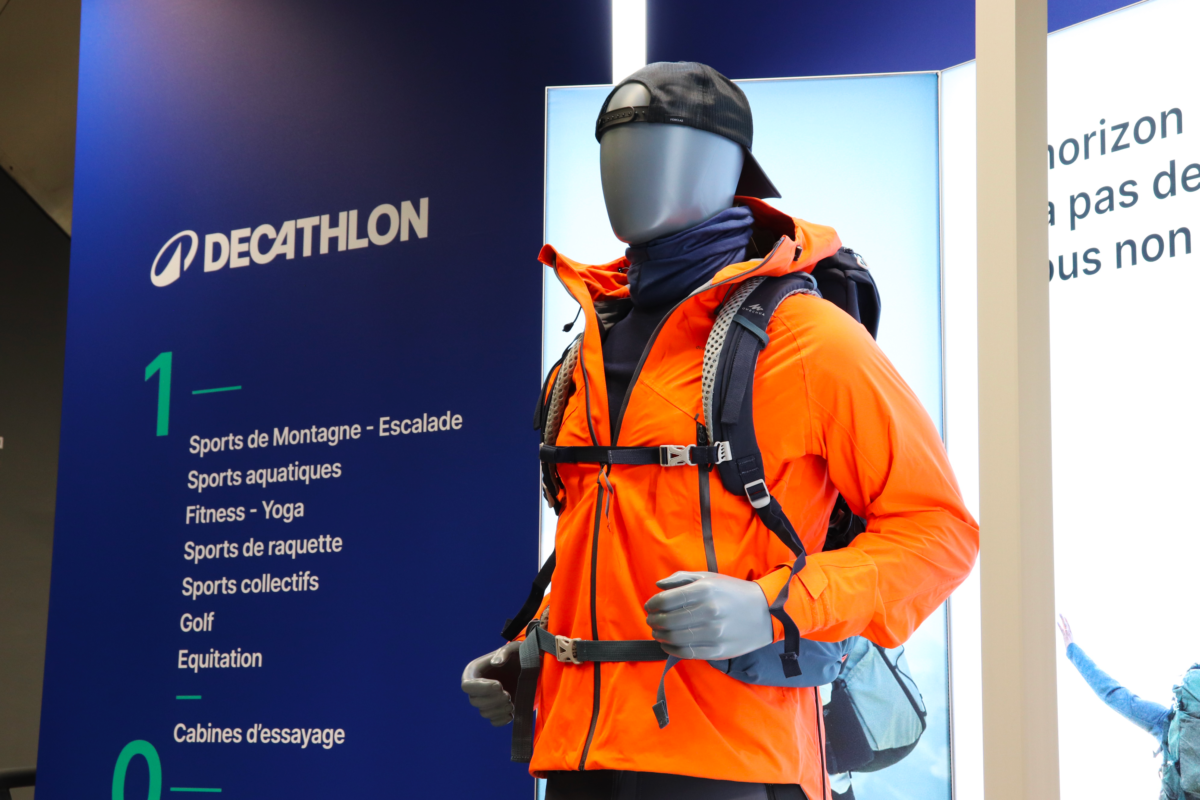
The company said it is unveiling a new brand, which includes “a dynamic and forward-looking identity and the new “orbit” logo.”

Decathlon, which began in 1976, has about 1,700 stores worldwide. Of its 19 stores in Canada, eight are in Quebec, seven are in Ontario, one in Halifax, and two are in Alberta. A pop-up at Metropolis at Metrotown in Burnaby, near Vancouver, will be replaced with the new brand concept in a store opening this spring spanning about 38,000 square feet. A new Decathlon store is also opening this spring in Chicoutimi, Quebec.

“Since the beginning of its journey in 1976, Decathlon has always believed in sports’ vital role in helping societies to be healthier and happier. And today, people need sport more than ever,” said the company. “At the beginning of this transformation journey, Decathlon wrote its “North Star”, a long-term ambition to accelerate its mission for the good of societies and the planet. Guided by the North Star, a new purpose was born: Move People Through the Wonders of Sport.

“Anchored to this purpose, Decathlon is adopting an ambitious global strategy, which encompasses an enhanced customer experience, a strong commitment to sustainability and an overall modernisation of the company. Core to the customer experience is an evolved brand introduced today.”

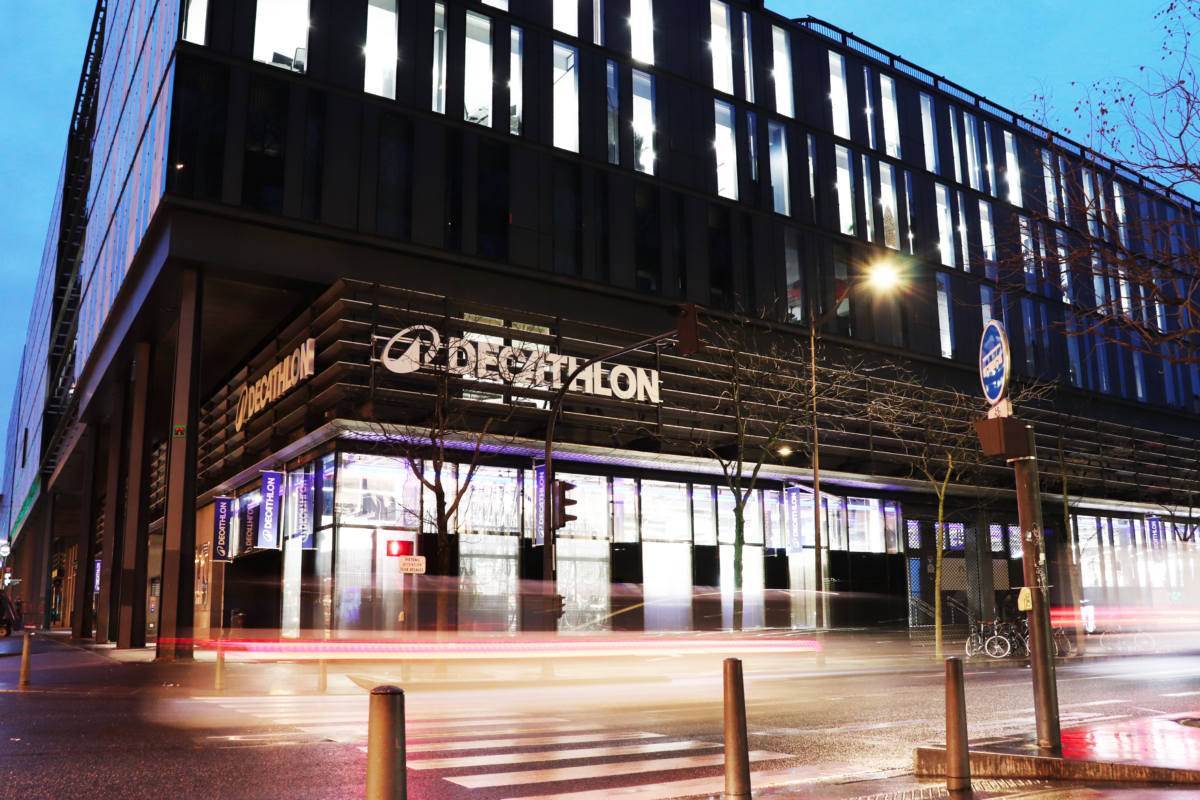
Decathlon Paris Rive Gauche (Image: Decathlon)

Decathlon said the new brand identity reflects the brand’s ambition while celebrating its past. 

“Along with a dynamic blue, it now welcomes a new brand icon – “the Orbit” – expressing movement, the ambition to reach new heights, and circularity, at the heart of Decathlon’s sustainable business model,” it said.

That Orbit logo will be incorporated into the new Metropolis at Metrotown store, which will be the first in Canada to showcase the brand refresh.

“Decathlon is unleashing the full potential of the brand to bring sport to everyone through a new and simplified brand portfolio with nine category specialists: Quechua (mountain), Tribord (water and wind), Rockrider (outdoor cycling), Domyos (fitness), Kuikma (racket), Kipsta (team sports), Caperlan (wildlife), Btwin (urban gliding and mobility) and Inesis (target), and 4 expert brands: Van Rysel, Simond, Kiprun and Solognac.”

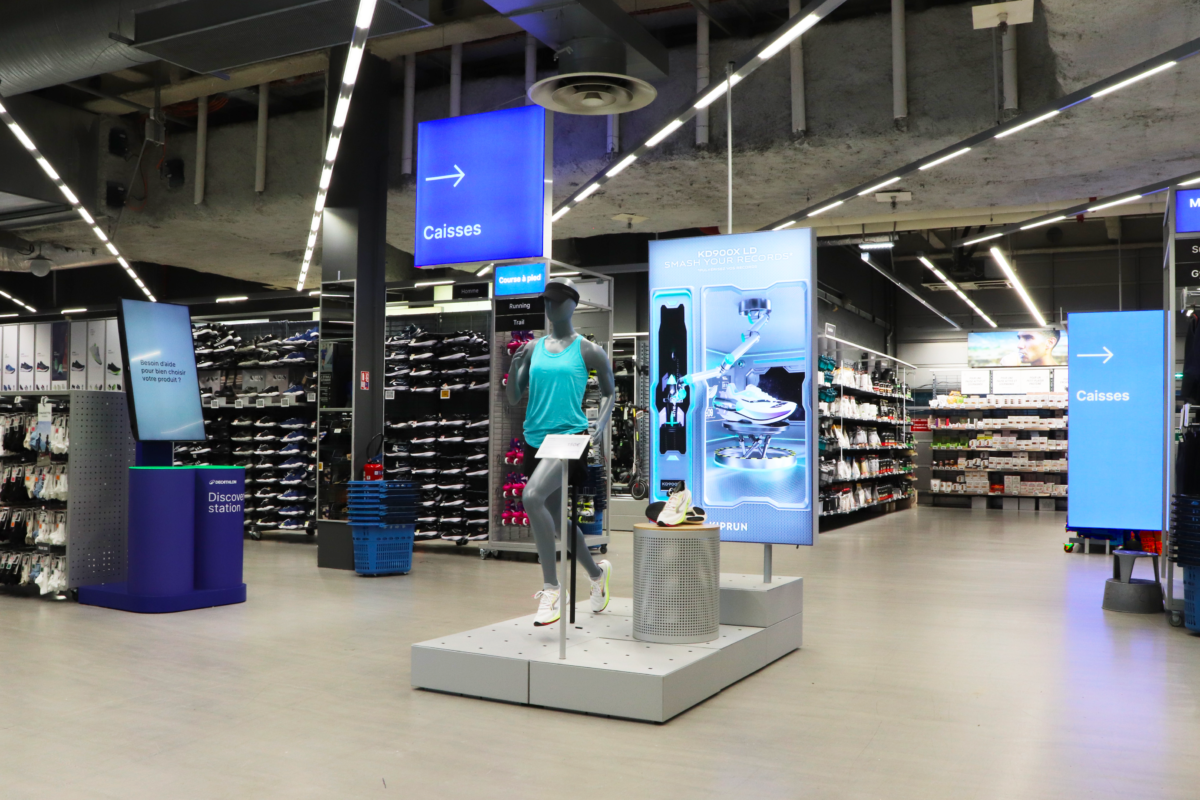
Image: Decathlon

Philippe Gariépy, Brand Marketing Manager for Decathlon Canada, said the company needs to shift what people perceive it to be.

“Our aim in redefining our company’s direction is to establish ourselves as a notable sports brand. Until now, Decathlon has been perceived primarily as a sports store, similar to other sports retailers across the country that resell sports equipment. However, akin to renowned sports brands, we design, manufacture, and sell our own products, which are created by deeply passionate sports teammates. Only 20% of those who know us are aware of this aspect, a figure that’s understandable considering our relatively recent introduction to this market. 

“Our goal is to have a meaningful connection with our customers that extends beyond the act of transaction. This is the reason behind our brand’s current evolution, an evolution that will be translated across all our touchpoints.”

Gariépy said the upcoming new store in Vancouver will have the new identity and new customer experience.

“We’d like to challenge the typical Decathlon concept: big box, mass merchandising and long aisles. We’re currently testing several avenues, some of which have a more boutique look that does justice to the quality of our products. We want to offer a shopping experience that’s tailored to the sporting needs of our communities. In the future, we may open stores with a more specific offer around a group of sports and activities. The first store we’ll open on the new identity is in Vancouver (April 2024).”

Decathlon Paris Rive Gauche (Image: Decathlon)

Decathlon has also committed to becoming Net Zero by 2050.

Its decarbonization targets are (scopes 1, 2 & 3):

● 20 per cent reduction in absolute CO2 emissions in 2026.

● 42 per cent reduction in absolute CO2 emissions in 2030 and net zero by 2050.

“Decathlon is working hand in hand with suppliers and partners to unlock sustainability all across the supply chain. With this collaborative approach, Decathlon has been working with suppliers to decarbonise processes and pave the way for new business models based on circularity and increased product life cycles. This also means that across the product range, Decathlon is increasing product lifespans and enabling customers to reuse, repair and recycle their products,” said the retailer.

Image: Decathlon
Image: Decathlon

The company said it is also harnessing the power of digital with a global revamp of the ecommerce website to provide a seamless shopping experience for customers anytime, anywhere. Decathlon has local ecommerce operations for Canada which were established shortly after its Canadian entry about six years ago.

“Decathlon’s digital supply chain has been rethought with the best-in class tools and AI algorithms to enable accurate forecasting, assortment planning and stock parameters. This has already led to significant reductions in stock levels and many improvements, including decreasing transportation costs, carbon footprint and delivery time,” said the retailer.

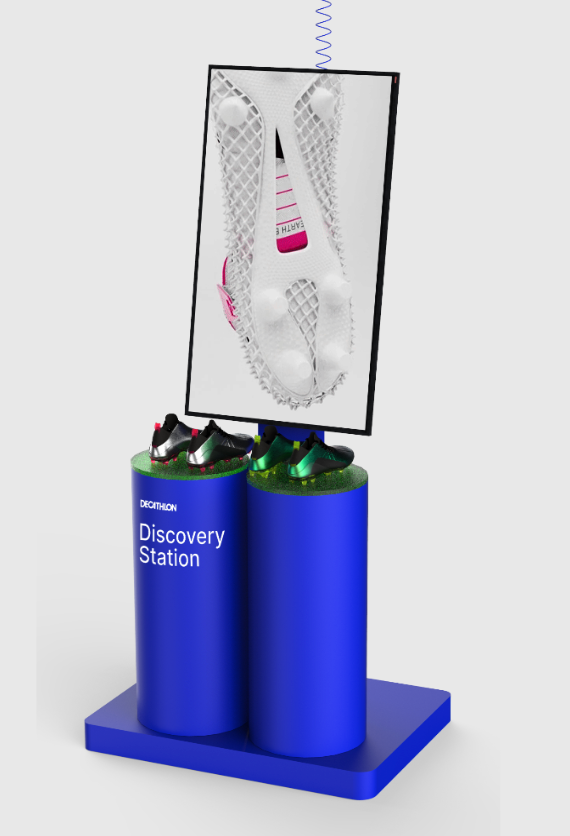
“Decathlon is also breaking ground with new ways to embark its customers on an immersive experience, including its 3D Shopping App on Apple Vision Pro in the U.S. More than 1,700 stores around the world will be refurbished with a whole new setup, offering customers intuitive navigation, increased product visibility, engaging physical and digital displays, and an aesthetically pleasing atmosphere. The forthcoming opening of the Vancouver Metropolis at Metrotown store, the first in British Columbia, will embody this bold new identity and revamped experience.”
Higher Prices for Less Chocolate this Easter in Canada as Cocoa Costs Soar to Record Highs [Op-ed]

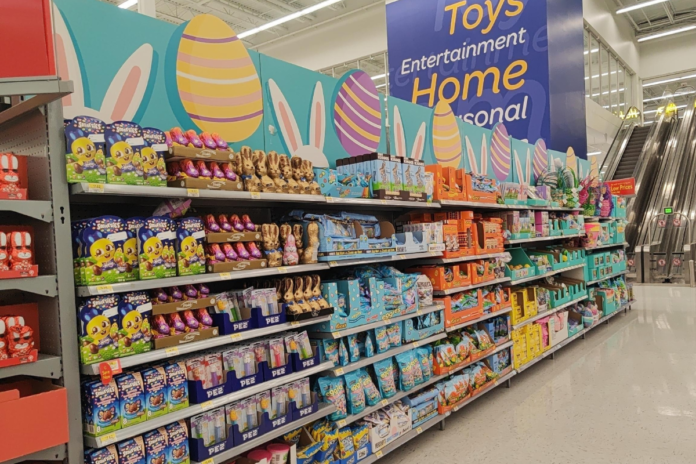
Easter Seasonal Section at Walmart in Richmond, BC (Image: Field Agent Canada)

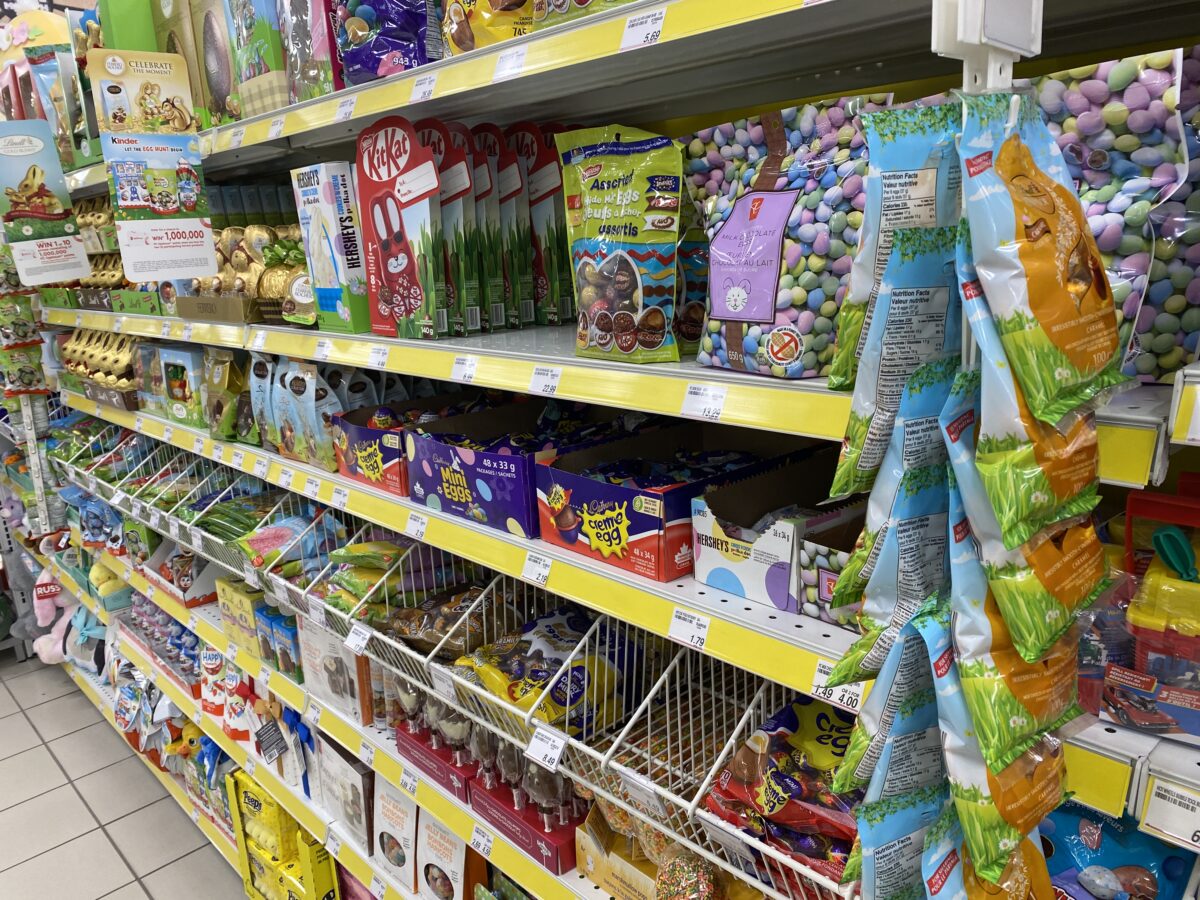
As Easter approaches, families and chocolate enthusiasts look forward to indulging in their favourite cocoa-based treats, a tradition that marks this festive season. However, this year’s celebrations are set against a backdrop of soaring cocoa prices, marking a significant challenge not just for consumers but for the entire chocolate industry. The current situation presents a complex mix of environmental, economic, and market dynamics that have pushed cocoa prices to record highs, affecting everything from production to the end consumer experience.

Soaring Cocoa Prices: An Unprecedented Challenge

The price of cocoa has skyrocketed, now almost 40% higher than its previous record set 47 years ago. Last week, cocoa contracts reached an unprecedented $7,06 per metric ton, doubling since November and surpassing the record highs of $3,83 in 2011 and $5,11 in 1977. This surge is attributed to a combination of factors, including the rising cases of black pod disease in key producing regions like the Ivory Coast and Ghana, which together account for almost 60% of global cocoa production. Additionally, heavy rains have disrupted the transportation of supplies to ports for shipment, while speculative trading further inflates prices.

Despite the steep increase in costs, global demand for cocoa remains unwavering, particularly as emerging markets’ growing middle class continues to desire chocolate products. Major companies such as Barry Callebaut are responding by aggressively purchasing futures, anticipating continued demand.

Shoppers Drug Mart Seasonal Chocolate (Image: Dustin Fuhs)

Industry Response and Consumer Impact

The industry’s giants, including Hershey and Mondelez (the company behind Cadbury), are signalling the strain of rising cocoa prices on their operations. Hershey has warned of potential profit impacts, while Mondelez reports a decline in sales volumes as consumers tighten their belts. This scenario suggests that chocolate manufacturers, retailers, and chocolatiers will likely pass on these increased costs to consumers. However, the strategy extends beyond mere price hikes.

Shrinkflation: The Invisible Price Increase

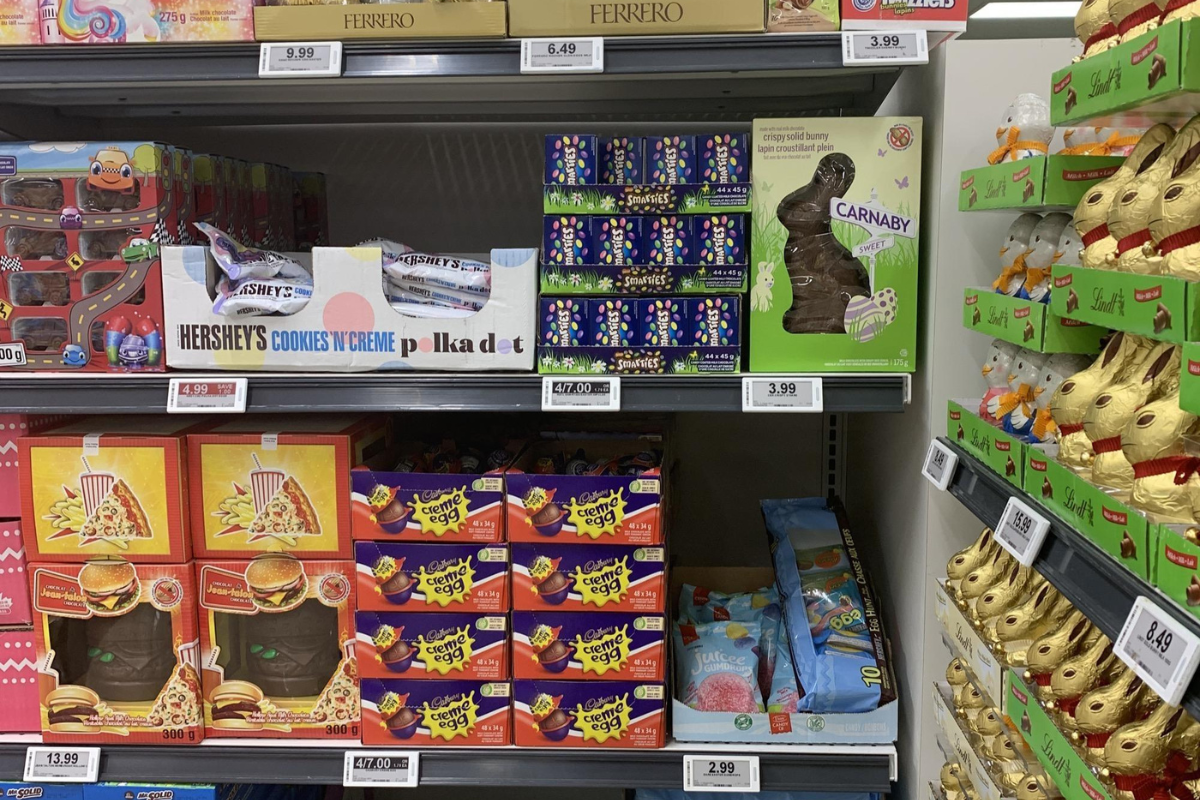
In Canada, we estimate that chocolate bars have increased by more than 3% in just one month. Also, the phenomenon of “shrinkflation” has led to noticeable reductions in the size of several beloved chocolate bars and products, all to maintain existing price points. Over the past 12 months, notable changes include the shrinking of the well-known Cadbury eggs by 12.9%, from 39 grams to 34 grams. Similarly, the 400-gram Nutella jar has been downsized to 365 grams; the Toblerone bar, once 400 grams, now weighs in at 360 grams; and the Oh Henry! Bar has gone from 62.5 grams to 58 grams, a 7.2% reduction. Other popular treats like Coffee Crisps and Hershey’s Chipits have seen their sizes reduced by 10%. One of the more significant adjustments is seen with M&Ms, where 1kg bags have been reduced to 800 grams—a 20% reduction—with prices staying constant. This list is not exhaustive; many more products likely have been affected by shrinkflation, signalling a widespread strategy to cope with economic pressures while keeping consumer prices stable.

Zehrs in Waterloo (Image: Field Agent Canada)

Skimpflation: A Sneakier Strategy

Beyond shrinkflation, the industry is also embracing “skimpflation,” where manufacturers reformulate products with cheaper ingredients to cut costs. This strategy involves replacing cocoa with artificial flavours and other novel ingredients, subtly altering ingredient lists without most consumers noticing. Skimpflation is harder to trace and, coupled with the end of the shrinkflation cycle for most products, presents a new challenge for discerning consumers.

The Bitter Reality of Cocoa Consumption

The current cocoa price crisis underscores a broader conversation about sustainability, consumer awareness, and the future of food manufacturing. While chocolate is not essential for survival, it represents a cherished indulgence for many. The ongoing changes in the industry mean consumers must be more vigilant and informed about their purchases, acknowledging that they might receive less value for the same price, especially concerning cocoa-based products.

As we navigate this Easter season, the joy of chocolate consumption comes with a heightened awareness of the complexities behind our favourite treats. The situation calls for a balanced approach from all stakeholders—producers, consumers, and policymakers alike—to ensure the long-term sustainability of cocoa production and the preservation of our cherished chocolate traditions amidst these economic challenges.

Peter Pond Mall in Fort McMurray Sees New Retail Tenants and High Sales Productivity Growth [Interview]

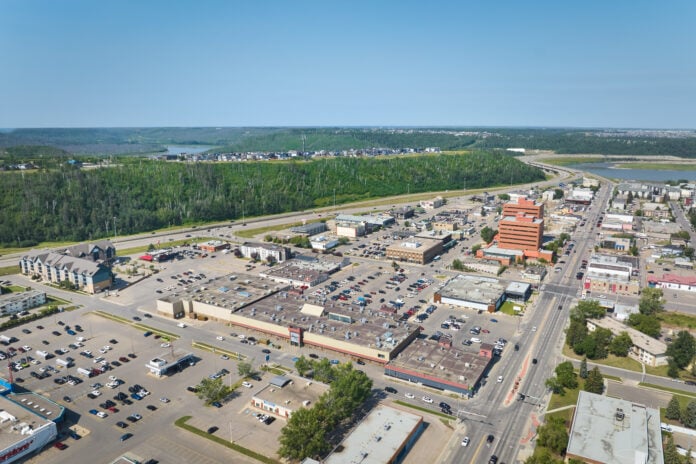
Peter Pond Mall - Fort McMurray, AB (Image: Michael Muraz)

An elevated level of household income in the Fort McMurray region has fueled healthy growth for the Peter Pond Mall in the city.

Kevin Brees, Regional Manager, Operations for Primaris REIT, which owns the shopping centre, said productivity of $832 sales per square foot has increased by 12 per cent over a year ago and 32 per cent since 2019.

He said the average household income in the area is about $210,000.

“We’re anticipating that sales growth to continue. At what levels we’re not sure. But the growth is definitely there. Obviously, we’ve seen the growth,” said Brees. 

Image: Peter Pond Mall
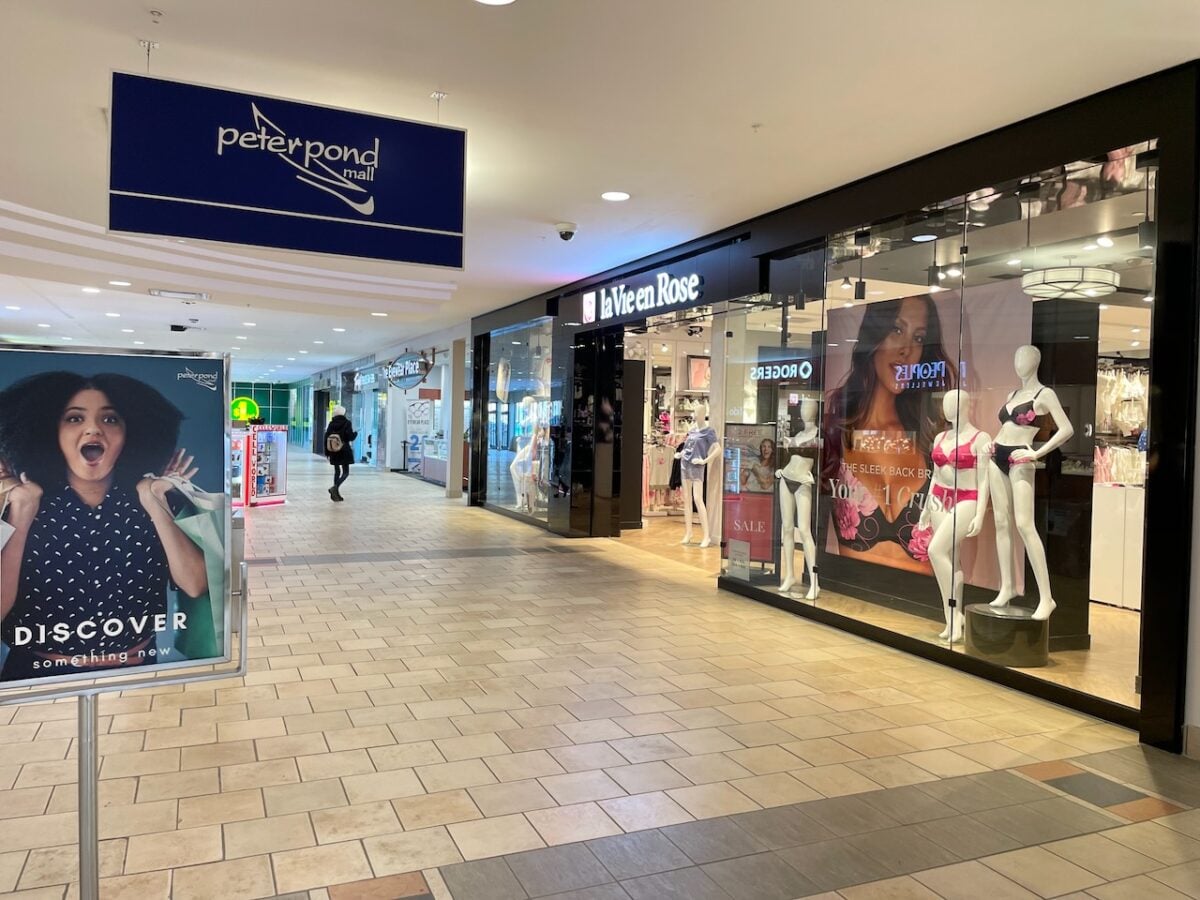
La Vie en Rose at Peter Pond Mall (Image: Peter Pond Mall)

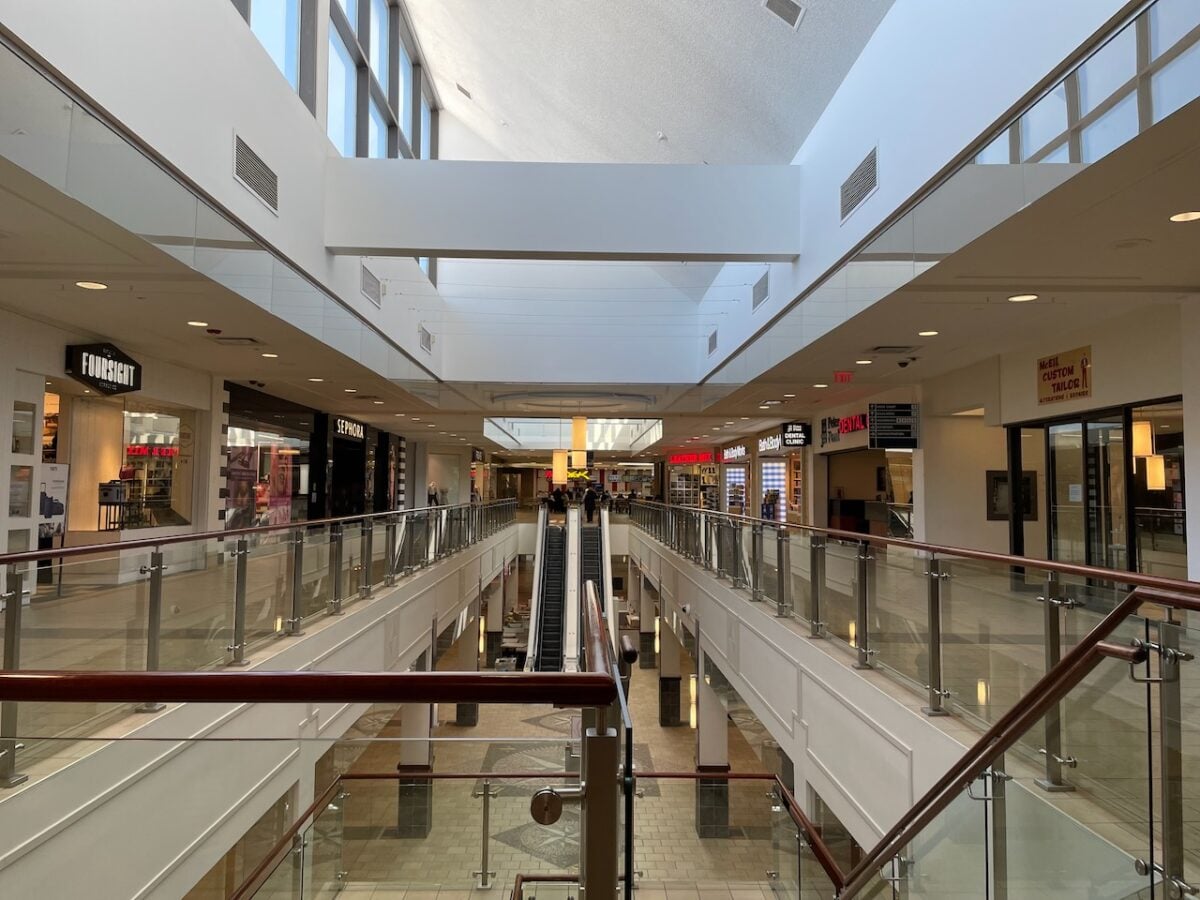
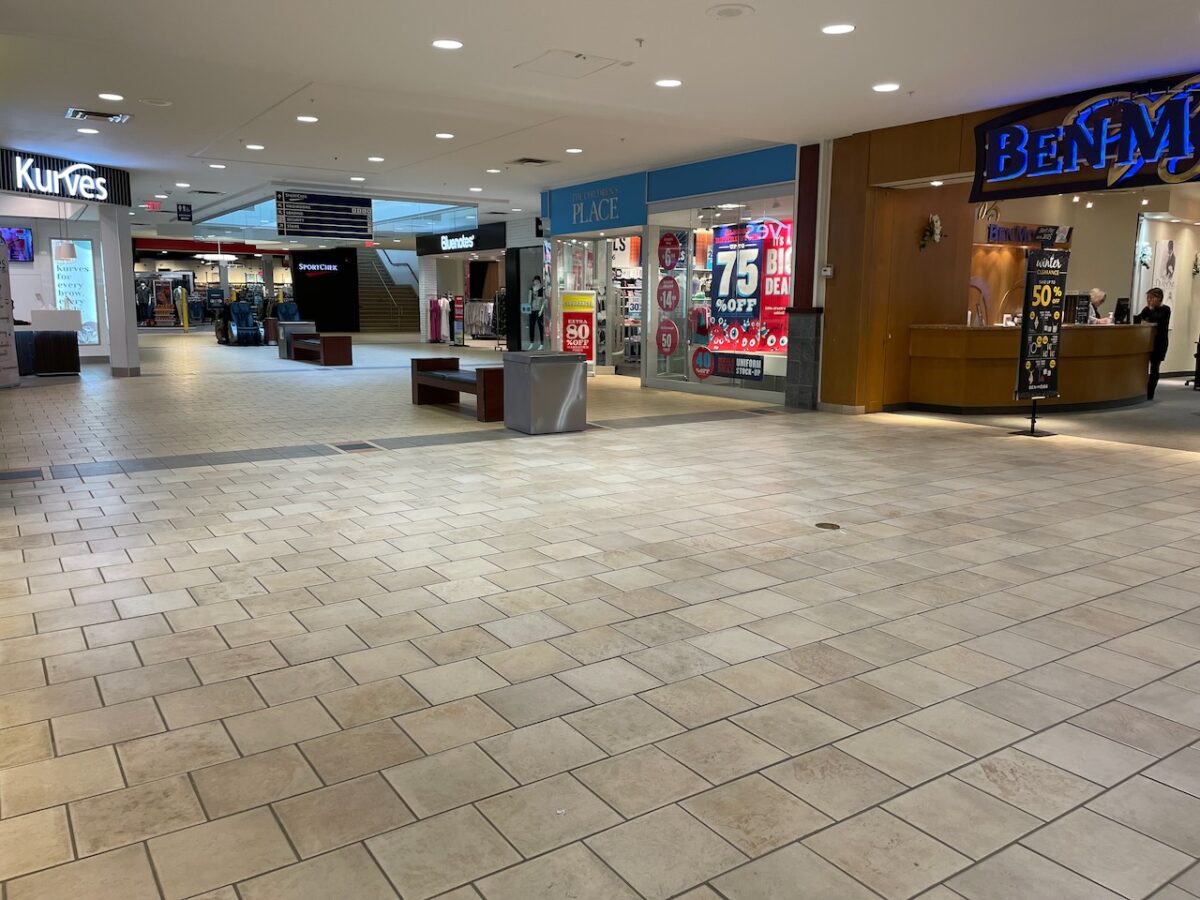
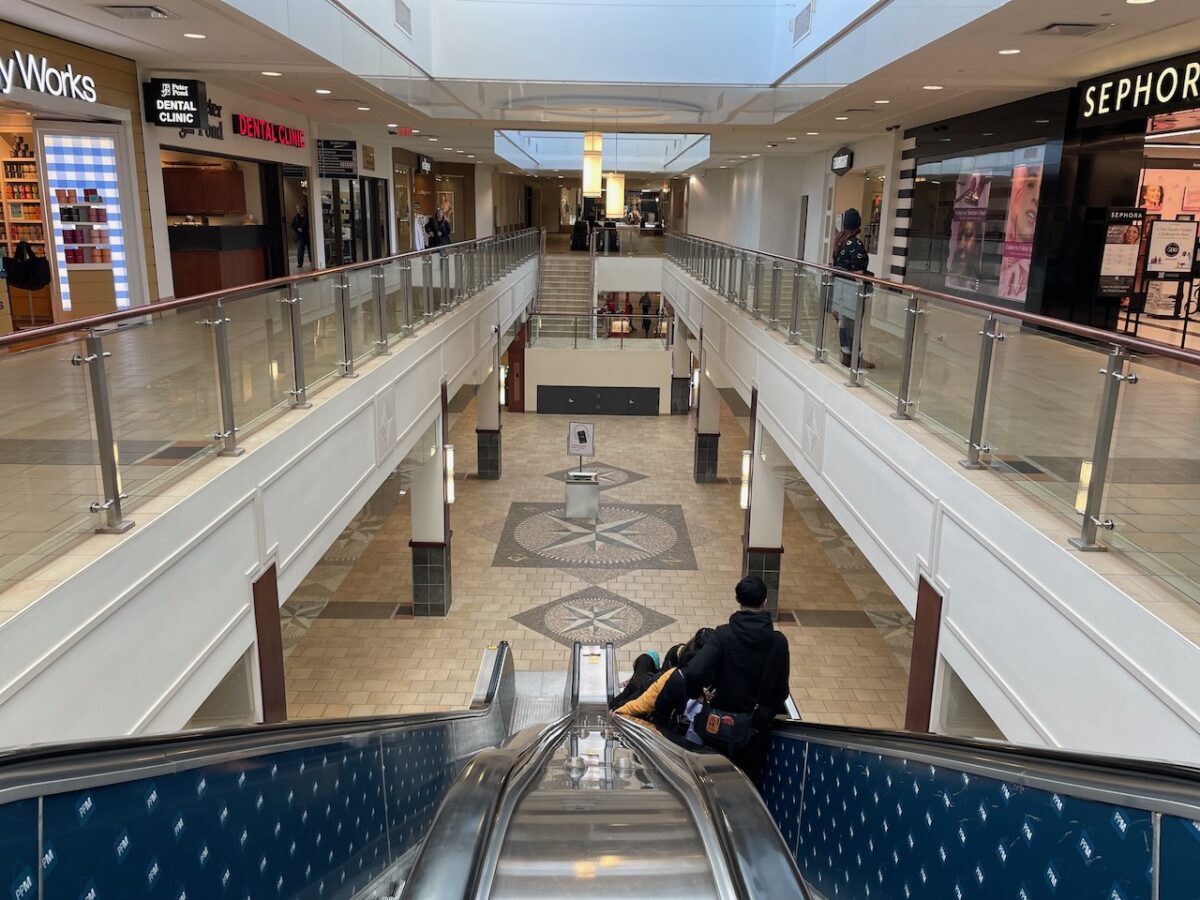
Peter Pond, which was built in 1978 and is right downtown, has 207,000 square feet of gross leasing area with more than 70 stores and services on two levels.

In 2023, the new tenants which opened included Sephora (November), Torrid (December), Purdys (October and transitioning to perm in Fall of 2024), and Potato Corner (June – Food Court). Sephora is said to have broken Canadian records with sales during the November store opening event at Peter Pond.

Brees said further bolstering the Food Court in 2024 was Taco Time which opened in January.

Occupancy is about 96 per cent.

Brees said the Primaris leasing team is working with national and multi-national tenants for 2024 and beyond.

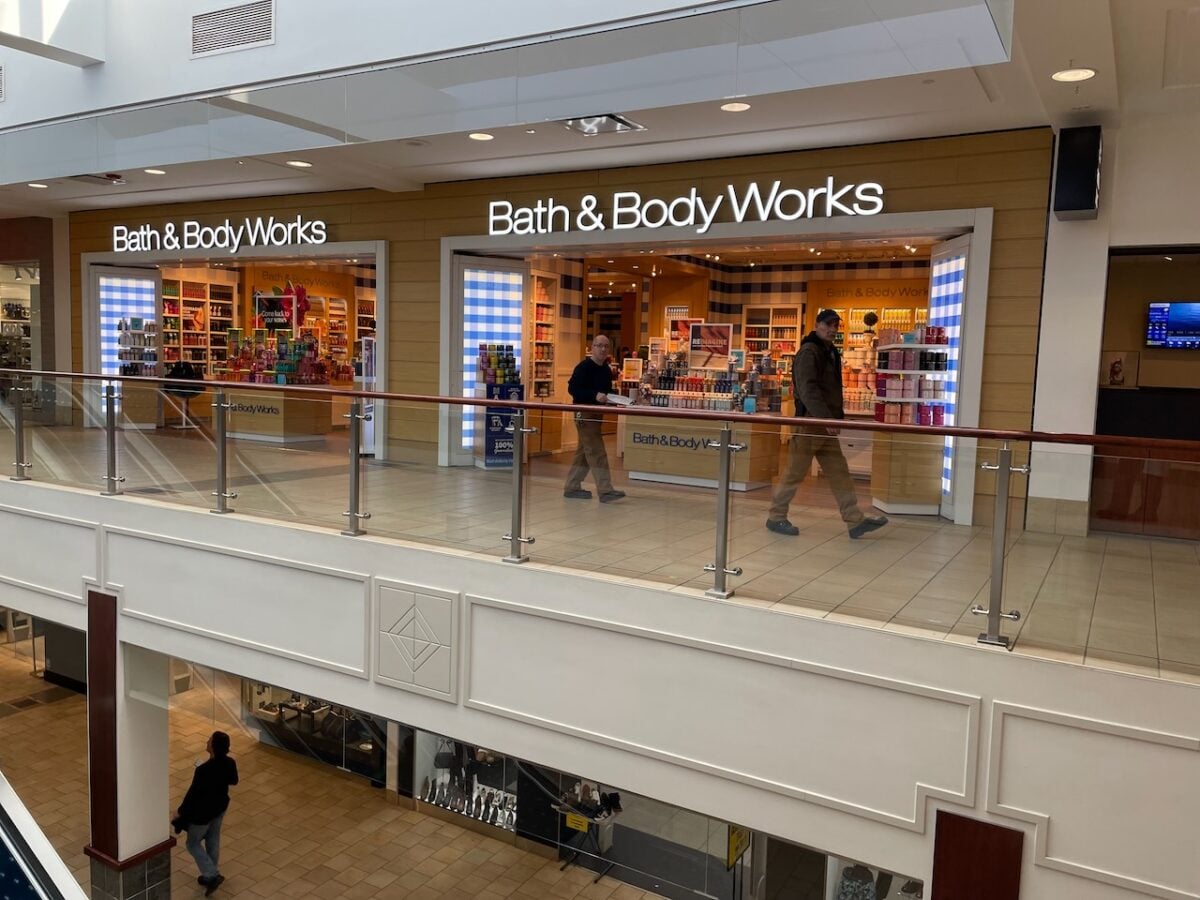
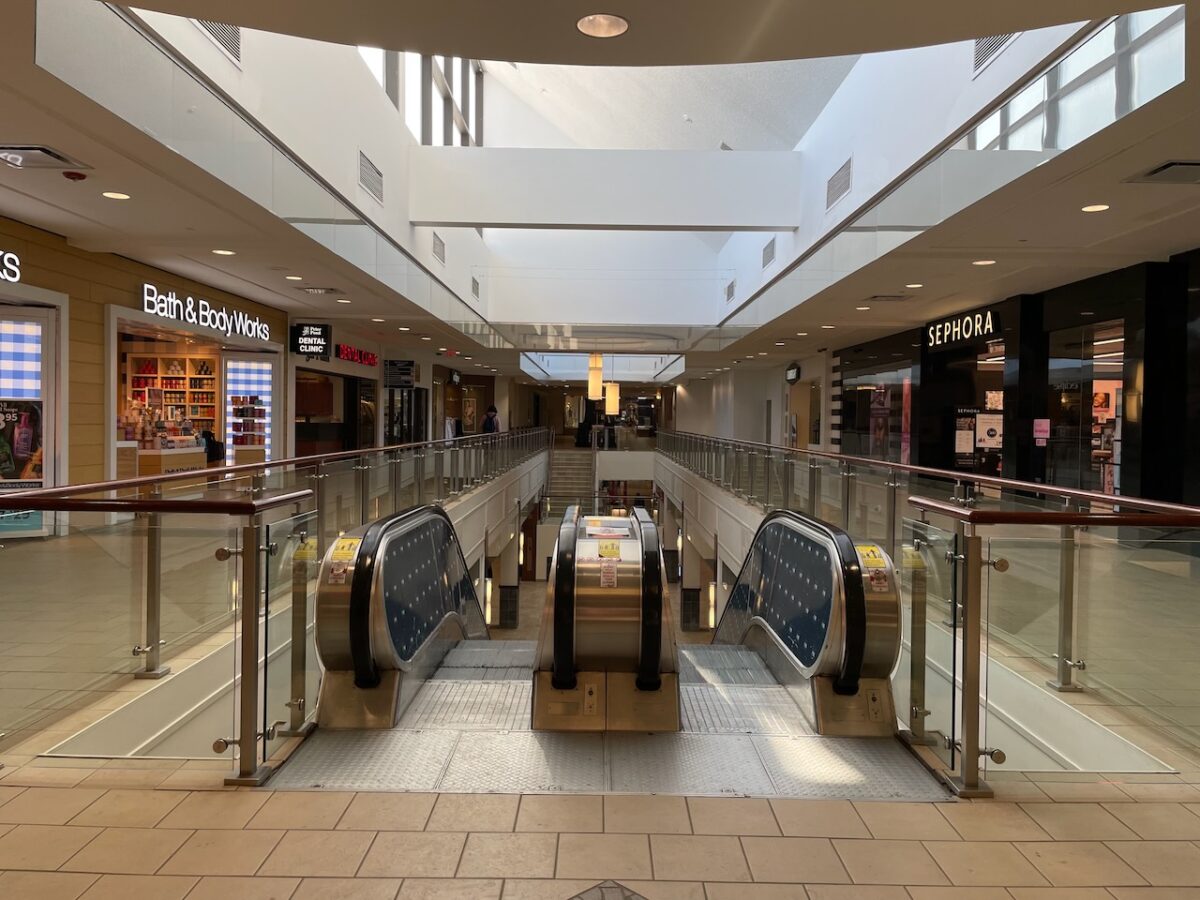
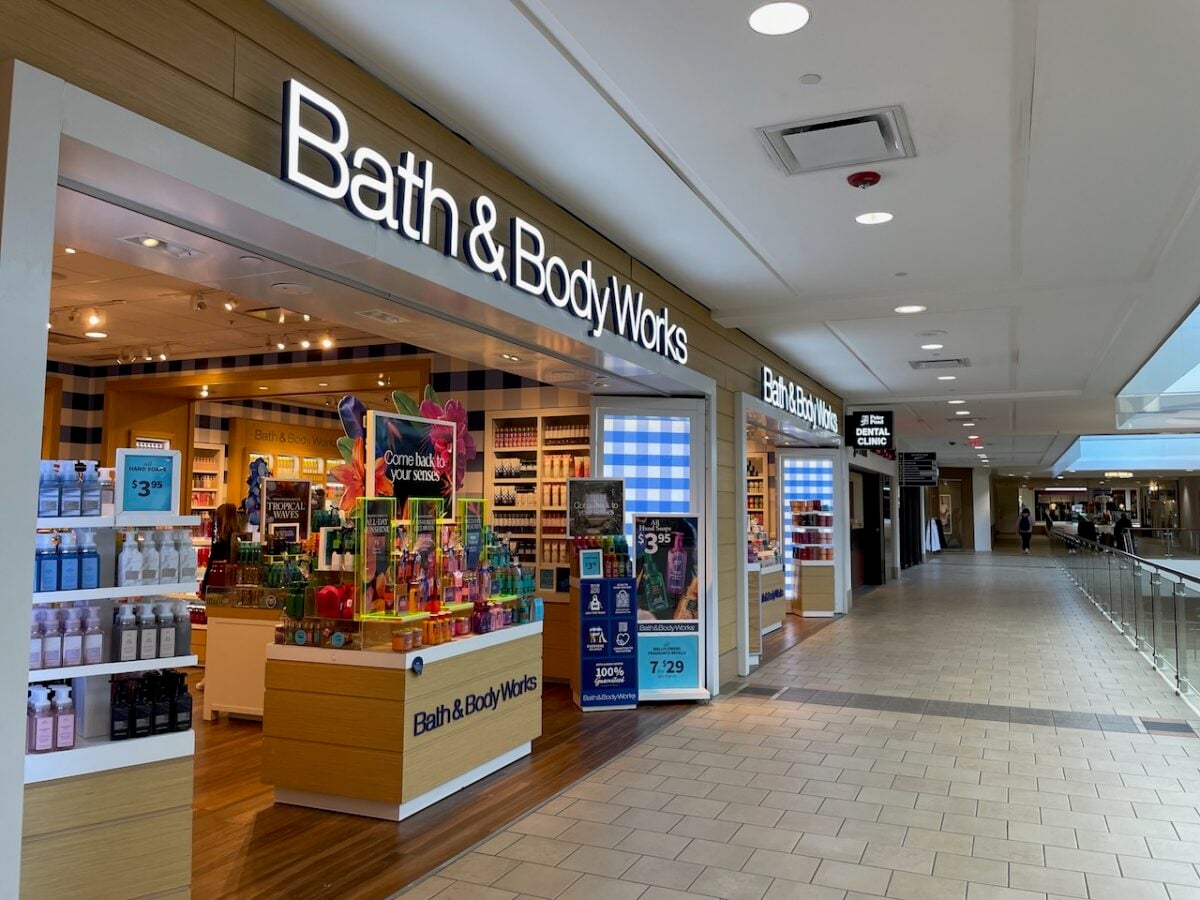
“With an occupancy of 96 per cent, we’re really positioned for 2024 and 2025. We’ve already had three highly-anticipated tenants open in late 2023 with Sephora. They occupy 4,700 square feet. They’re on the upper level adjacent to Bath and Body Works. And they exceeded all expectations. We had Torrid open at the beginning of December and they’re 3,100 square feet. They’re on the main level,” he said. “They’re across from La Vie en Rose. Again, another strong brand. Torrid is doing exceptionally well also. 

“Purdys was another anticipated tenant our customer was asking for. They opened in October. They’re part of that pilot project. They opened on a temporary basis and they’re transitioning into a permanent location in 2024. They did very well. 

“What we really noticed in Fort McMurray is the Fort McMurray customer has been asking for these tenants and tenants like them and the Fort McMurray customer has been supporting those tenants. They’ve had amazing community support which has really been evidenced by those recent results. Not just the recent results but really from 2019. You can see that sales growth.”
Leasing at Peter Pond Mall is handled by Nico Scarcello, with Shauna Hannam looking after Specialty Leasing for the property.

Bath & Body Works at Peter Pond Mall (Image: Peter Pond Mall)
Peter Pond Mall (Image: Peter Pond Mall)

Brees said Fort McMurray has an affluent customer to draw from in the primary trade area near Peter Pond Mall with about 77,000 people and close to 60 per cent of the customers are female.

When asked if there are any development plans for the mall, Brees said:

“We’re always looking at things but nothing that we can speak to at this time. Us and of course any landlord is always looking.

Primaris is Canada’s only enclosed shopping centre focused REIT, with ownership interests primarily in the leading enclosed shopping centres in growing mid-sized markets. The portfolio totals 39 properties, or 12.5 million square feet, valued at approximately $3.8 billion at Primaris’ share. 

Primaris was initially formed in 2003 as a publicly-traded company then known as Borealis Retail REIT, sponsored by Ontario Municipal Employees Retirement System (OMERS), one of Canada’s largest pension funds and owners of real estate.  Management was internalized in 2009, and in 2013 H&R REIT acquired the Primaris operating platform and 25 of the properties owned and managed by Primaris. On December 31, 2021, Primaris REIT was spun-off from H&R REIT through an non-taxable distribution of units.  Concurrent with the spin-off, Healthcare of Ontario Pension Plan (HOOPP) contributed six large format shopping centres in exchange for approximately 26 per cent of the units of Primaris REIT.

Additional Photos from Peter Pond Mall

Bath & Body Works at Peter Pond Mall (Image: Peter Pond Mall)
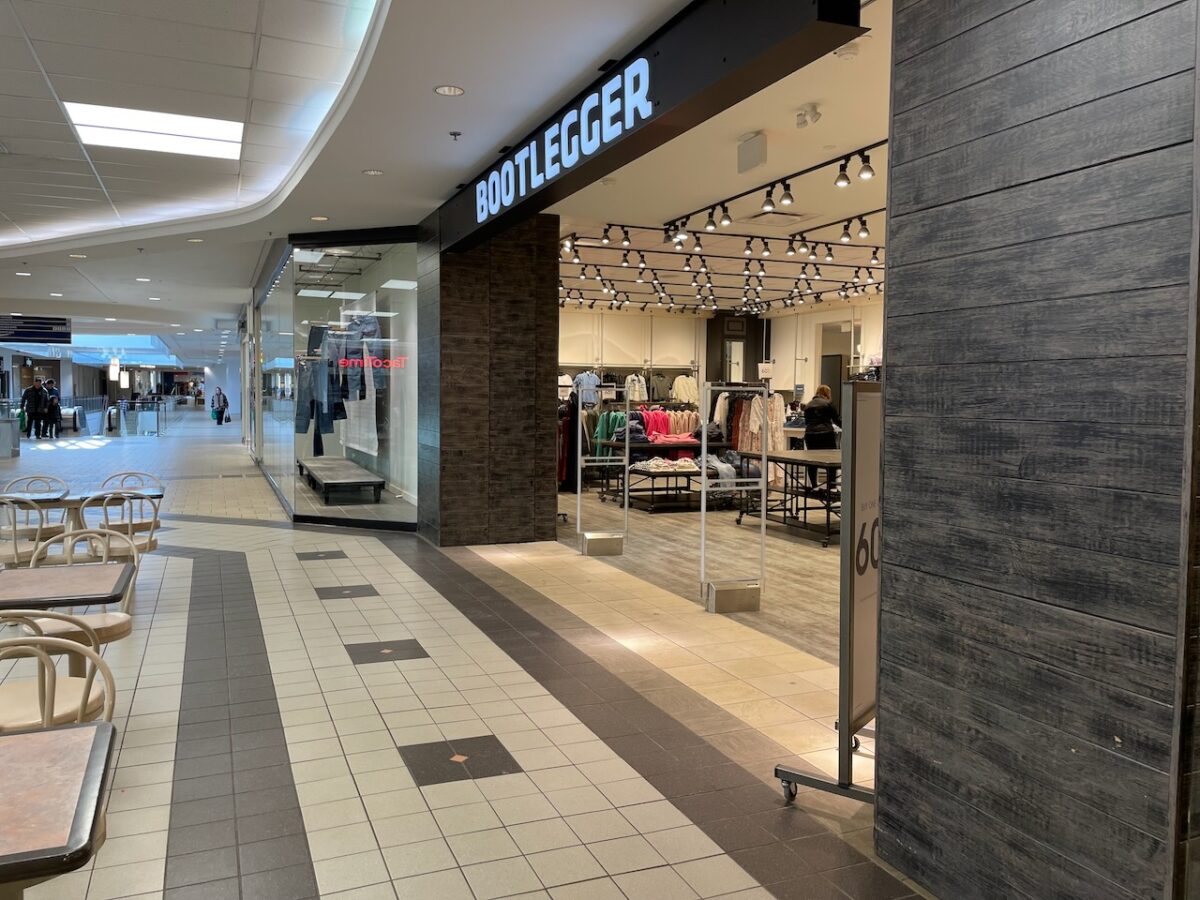
Bootlegger at Peter Pond Mall (Image: Peter Pond Mall)
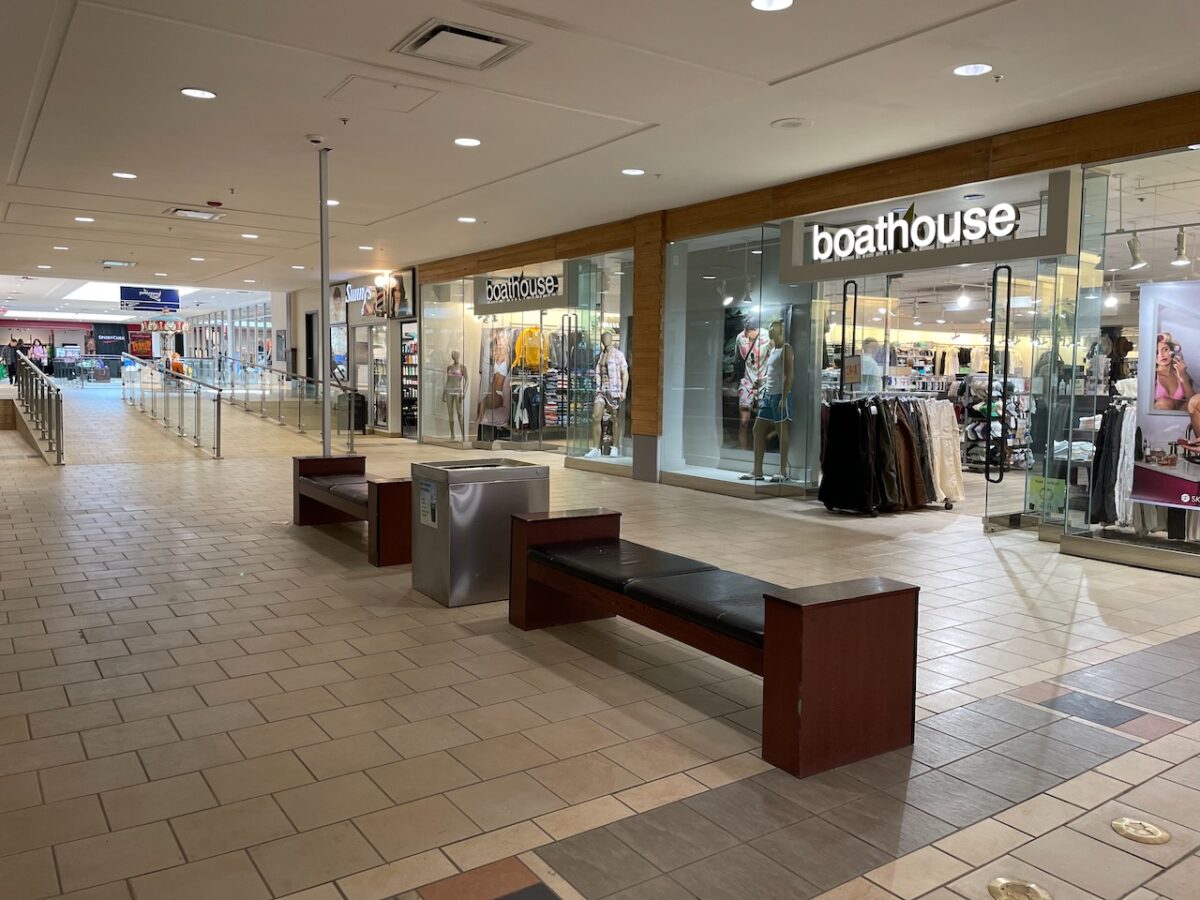
Boathouse at Peter Pond Mall (Image: Peter Pond Mall)
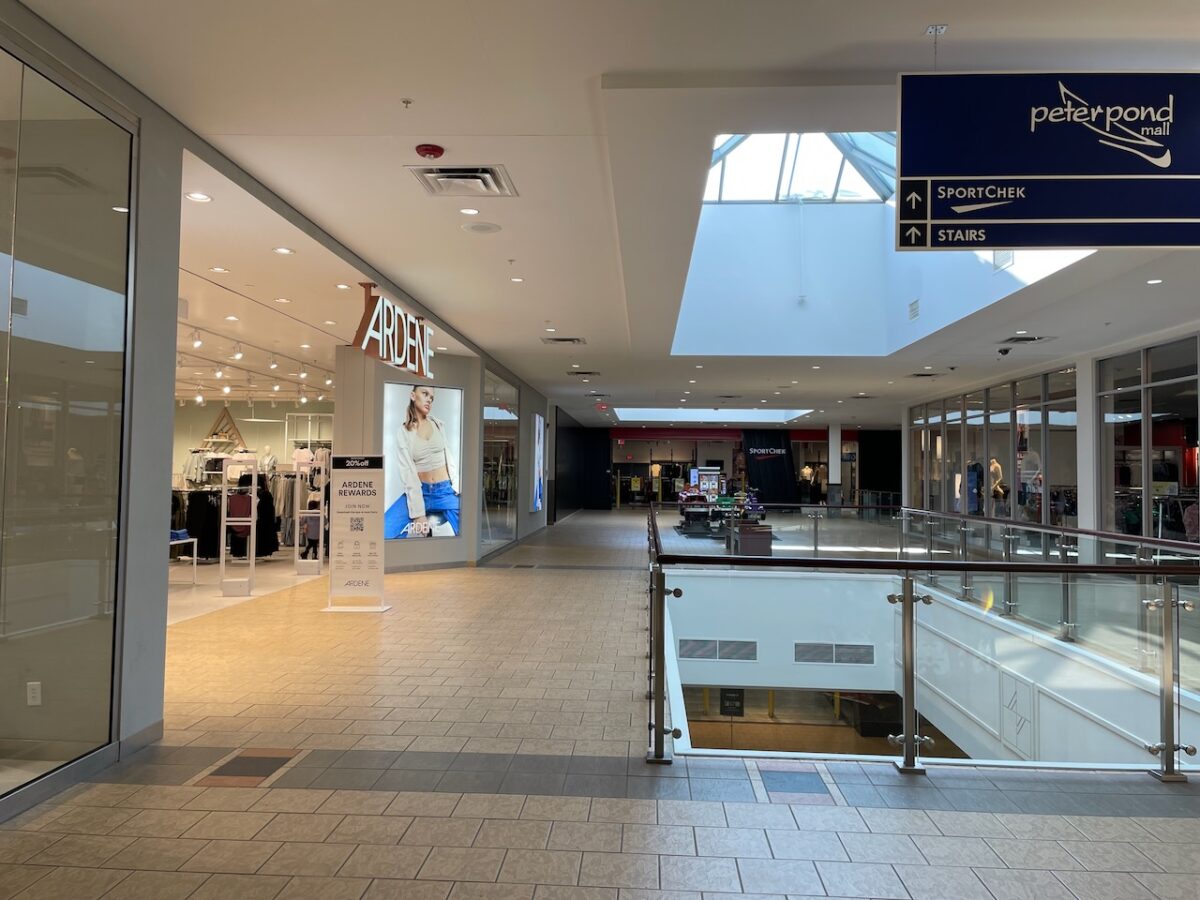
Ardene at Peter Pond Mall (Image: Peter Pond Mall)
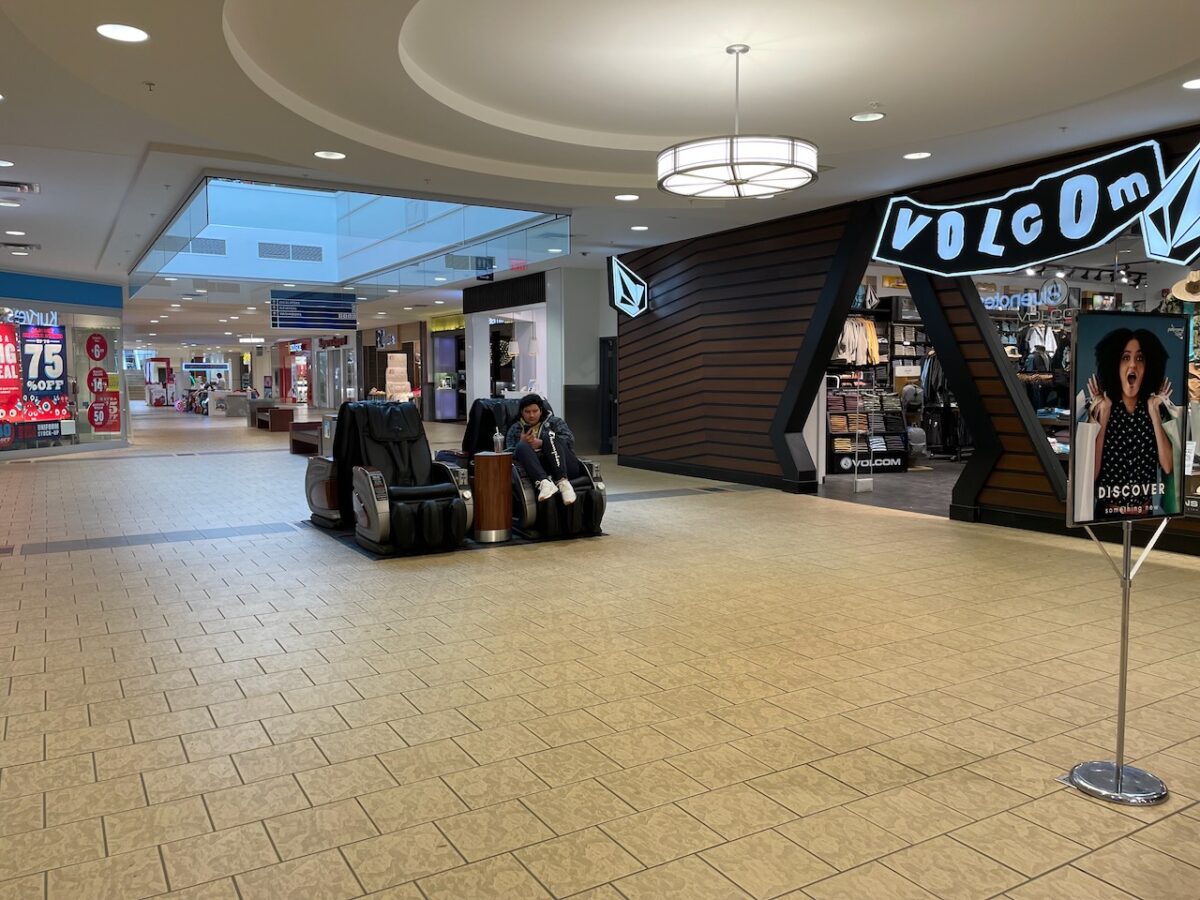
Image: Peter Pond Mall
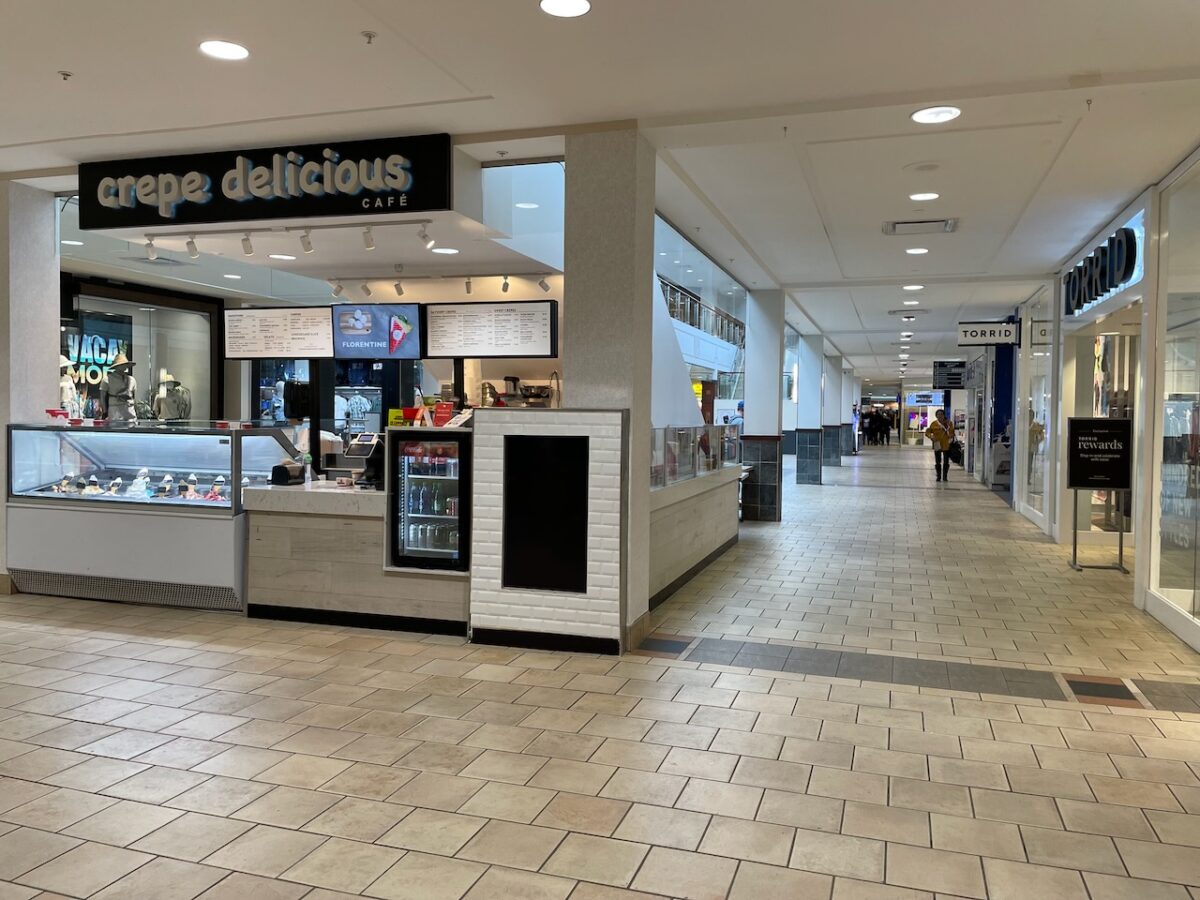
Crepe Delicious at Peter Pond Mall (Image: Peter Pond Mall)
Image: Peter Pond Mall

Standing Up for Our Industry: A Conversation with Michael Medline

Amidst the unparalleled challenges, diverse perspectives, and exciting opportunities in the retail sector, Retail Council of Canada is hosting a standout networking breakfast as part of the highly popular In Conversation With Retail Leaders in Canada series. This latest installment will feature a candid discussion with Mr. Michael Medline, President & CEO of Empire Company Limited and Sobeys Inc. Scheduled for Tuesday, April 2, 2024, from 7:30-9:15am ET, at the Delta Hotels by Marriott Toronto Airport & Conference Centre, 655 Dixon Road in Toronto, it’s an especially relevant event for retailers and the vendor and supplier community.  

Titled ‘Standing Up for Our Industry’ this session will feature an interview with Mr. Medline, renowned for his straightforward and passionate defense of the grocery sector and be moderated by Hollie Shaw, former Financial Post retail reporter celebrated for her incisive questions and keen analysis, the conversation is set to be both enlightening and provocative. 

This discussion will delve into key topics shaping the future of retail, such as the implementation of the Grocery Code of Conduct, the enhancement of fairness and transparency in business negotiations, and the role of the government in the retail sector. 

Michael Medline, renowned for his frankness, has been a vocal advocate for the Grocery Code of Conduct and is not one to shy away from rebuking politicians, pundits, and media for unfounded criticism of grocers. Participants can anticipate a session filled with his straightforward and insightful commentary.  

This In Conversation with Retail Leaders in Canada breakfast is an extraordinary opportunity to directly hear from and engage with Mr. Medline, one of Canada’s preeminent business leaders. Attendees will have the opportunity to gain unrivalled perspectives and be part of a pivotal dialogue steering the future of retail in Canada.  Tickets are available for purchase, with a 20% discount for groups of five or more. This is a not-to-be-missed chance to be part of a conversation that truly matters.

*Partner content – Retail Insider worked with Retail Council of Canada to publish this article.

Vancouver Retail Market Slows as Demand for Space Remains Strong: JLL Report 

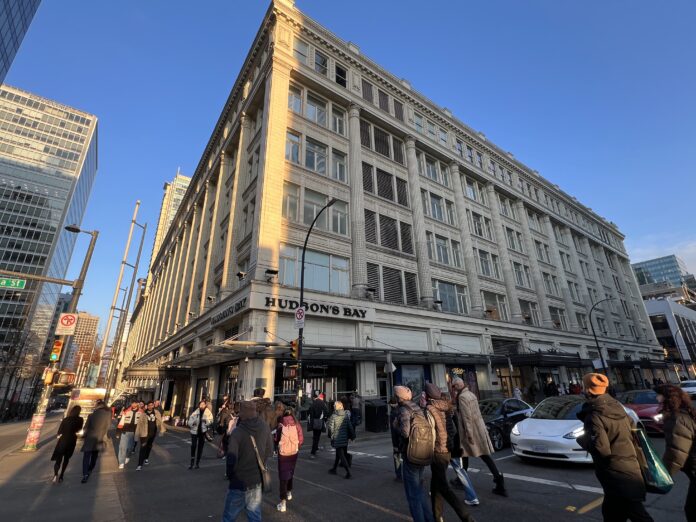
Former Hudson's Bay in downtown Vancouver. Photo: Lee Rivett.

Rising rents and a downtown recovery are fueling Vancouver’s retail market, says commercial real estate firm JLL.

“The Vancouver retail market is seeing increased demand even with economic uncertainty. Limited availability and rising rents are driving retailers to secure leases quickly,” said the company’s Vancouver Retail Insight, Spring 2024, report.
“Although retail sales have decelerated, some growth is expected in 2024, supported by a growing local tech sector and resilient consumer spending.

“Ridership, the opening of new concepts at Amazon’s The Post, and the rapid recovery of tourism continue to support the recovery of downtown Vancouver.”

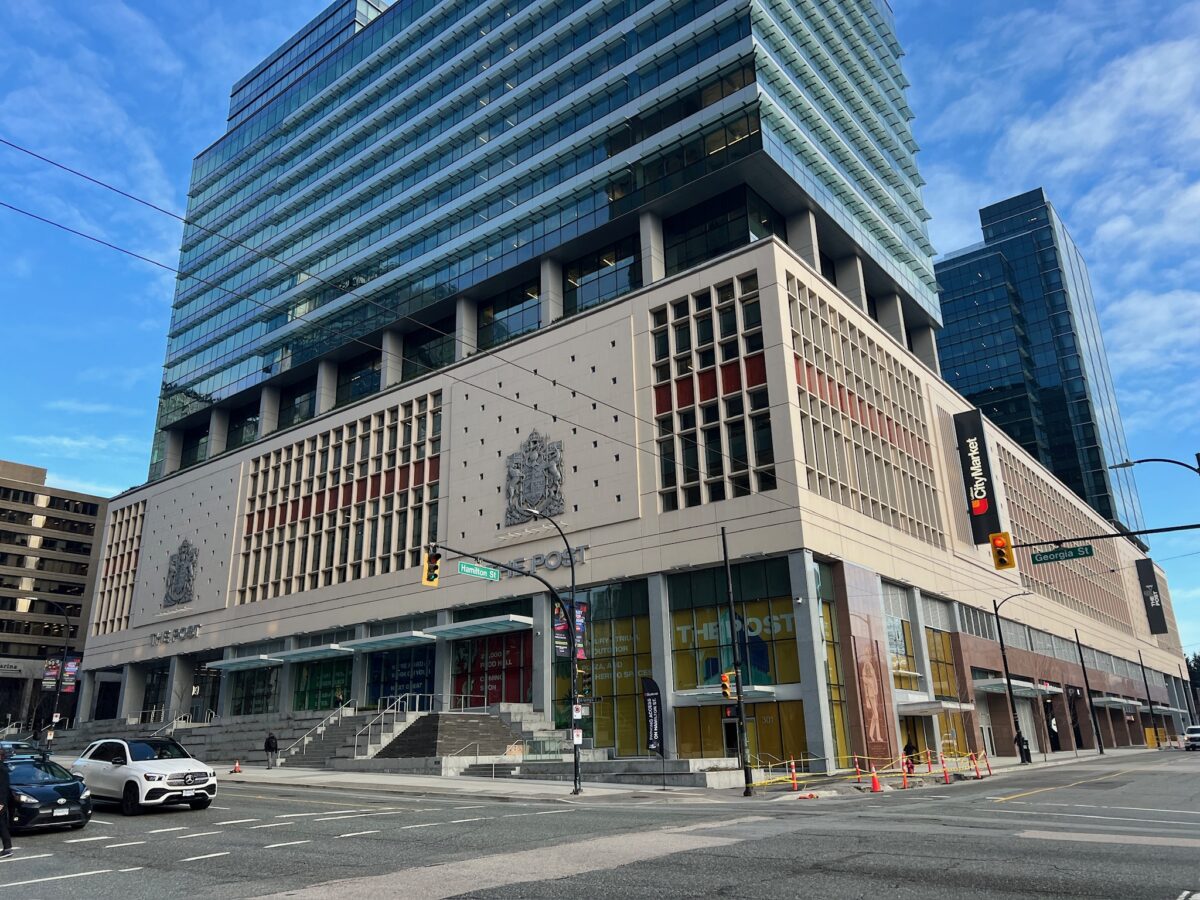
“The Post” in Downtown Vancouver after Loblaw’s City Market opening. Photo: Lee Rivett.

JLL said the Vancouver retail leasing market has been thriving, with significant rental growth over the past five years. Demand for retail space has outpaced supply, as evidenced by increased net absorption in 2023.

“However, leasing volumes have gradually declined since their peak in 2022 as retailers face a softer outlook for consumer spending and a scarcity of premium spaces,” said the report.

“Vancouver remains an important hub for Canadian-based and international businesses. Retailers in the athletic, outdoor, and fashion sectors – including Adidas, JD Sports, Kit & Ace, and Esprit – have made expansion announcements.

“Sustained demand has driven rental growth, but more recently inflation and rising property taxes have also been contributing factors, as landlords pass these additional costs on to tenants.

“Construction activity has focused on the redevelopment of malls. The 1.2 million square foot Oakridge Park is scheduled for completion in spring 2025 and will feature a luxury component and the second Time Out Market in Canada.”

Oakridge Park in Vancouver. Photo: Lee Rivett.
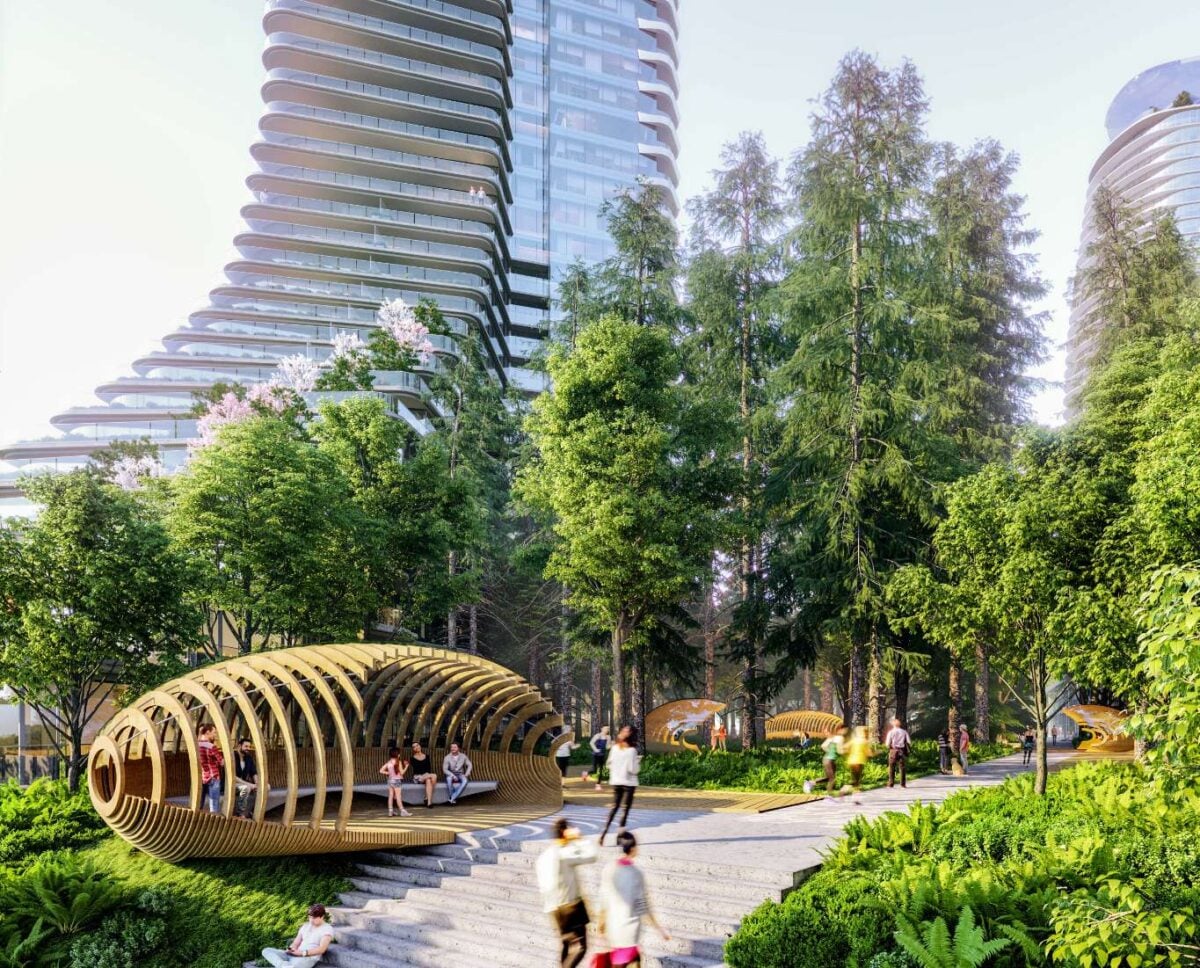
Nine acre park at Oakridge Park. Image via QuadReal

While most space absorption has concentrated in general retail and neighbourhood centres, mixed-use retail spaces should see a significant increase in absorption, said JLL, adding that Vancouver’s retail market is performing well, marked by limited availability and surging rents. Sustained demand is prompting retailers to secure leases quickly, and limited new construction activity is expected to keep the market tight.

“Despite the deceleration of retail sales growth and a softer housing sector, Vancouver’s retail market remains in demand due to its fast-recovering downtown area and a flourishing local tech sector. The opening announcements of The Post in the downtown area and Oakridge Park in the suburbs are expected to sustain the market’s momentum,” explained the report.

“Looking ahead, the long-term prospects for Vancouver’s retail real estate market remain strong. The city’s high number of immigrants and its role as a hub for international retail concepts contribute to the positive outlook. 

“Retail sales in Vancouver have shown a downward trend in recent years, although some real growth is predicted for 2024. While home improvement, home furnishings, and jewelry are out of favour, an appetite for electronics, shoes, and clothing has emerged.”

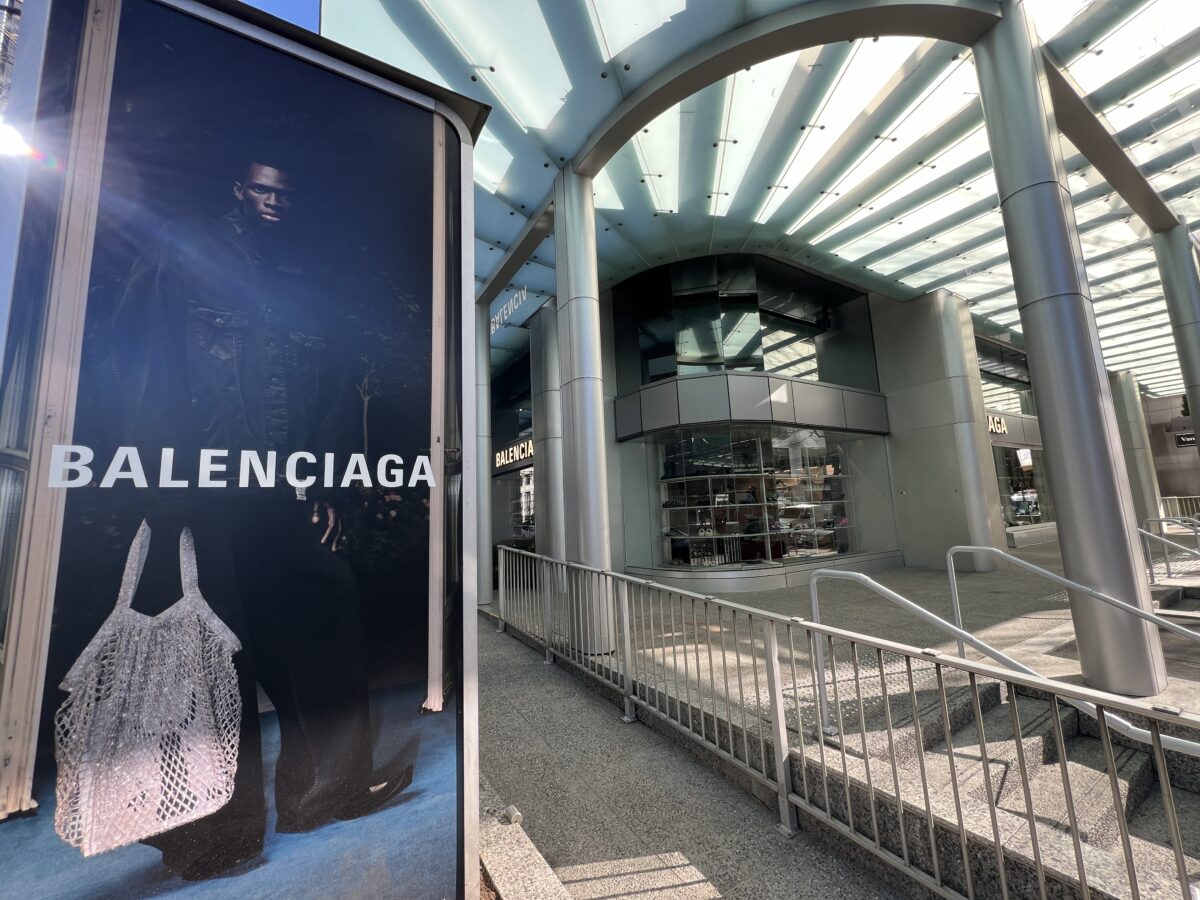
Balenciaga on Alberni Street in downtown Vancouver. Photo: Lee Rivett.
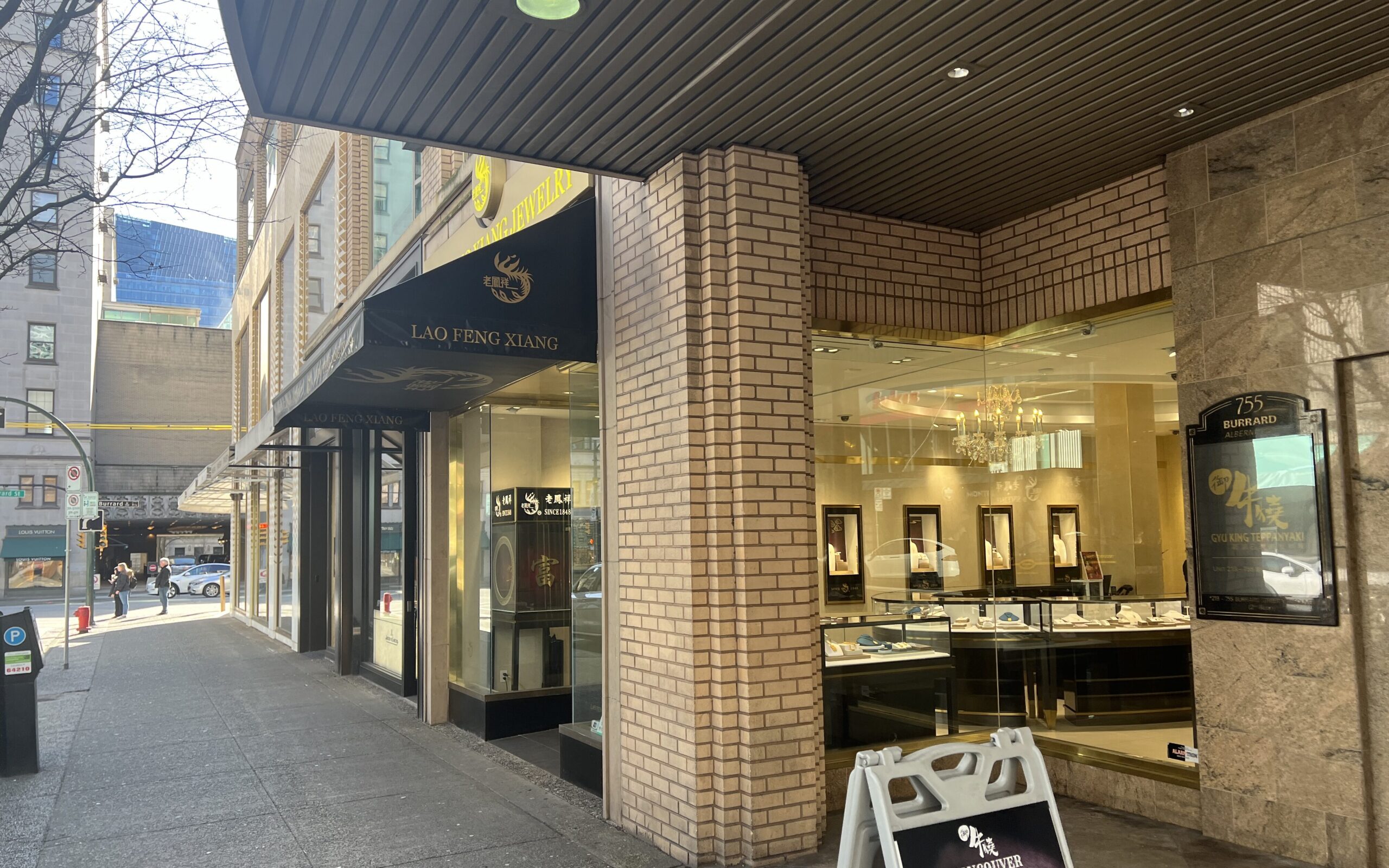
Lao Feng Xiang on Alberni Street in downtown Vancouver. Photo: Lee Rivett.

The report said a weaker housing market has softened the economic outlook for Vancouver, but prospects for consumer spending remain positive. The city benefits from an influx of immigrants, a recent boom in the local technology sector, and positive prospects for employment growth.

Full-service and limited-service restaurants have outperformed retail goods and are expected to continue growing, but at a decelerated rate in the single digits. This suggests that dining experiences remain relatively strong despite an overall retail-sales deceleration, it added.

“The Post, Amazon’s office building in downtown Vancouver, is moving forward with the opening of its first concepts. Loblaws City Market, Fogo de Chão, and Evolve Strength fitness gym are just a few recent additions. Furthermore, The Post will feature a curated food hall, enhancing the overall downtown experience,” said the report. 

“Tourism in Vancouver is seeing a rapid recovery, with visitor numbers approaching pre-pandemic levels. While Canadian visitors have returned, international visitors − particularly from China, Japan, and South Korea − are still lagging. Destination Vancouver recently reported that demand for hotel rooms is projected to surpass supply by 2026, which could result in potential revenue loss for the industry.

“Rising hotel demand, coupled with restrictive Airbnb rules, has sparked a hotel boom, with three new large hotels planned for the downtown core.”

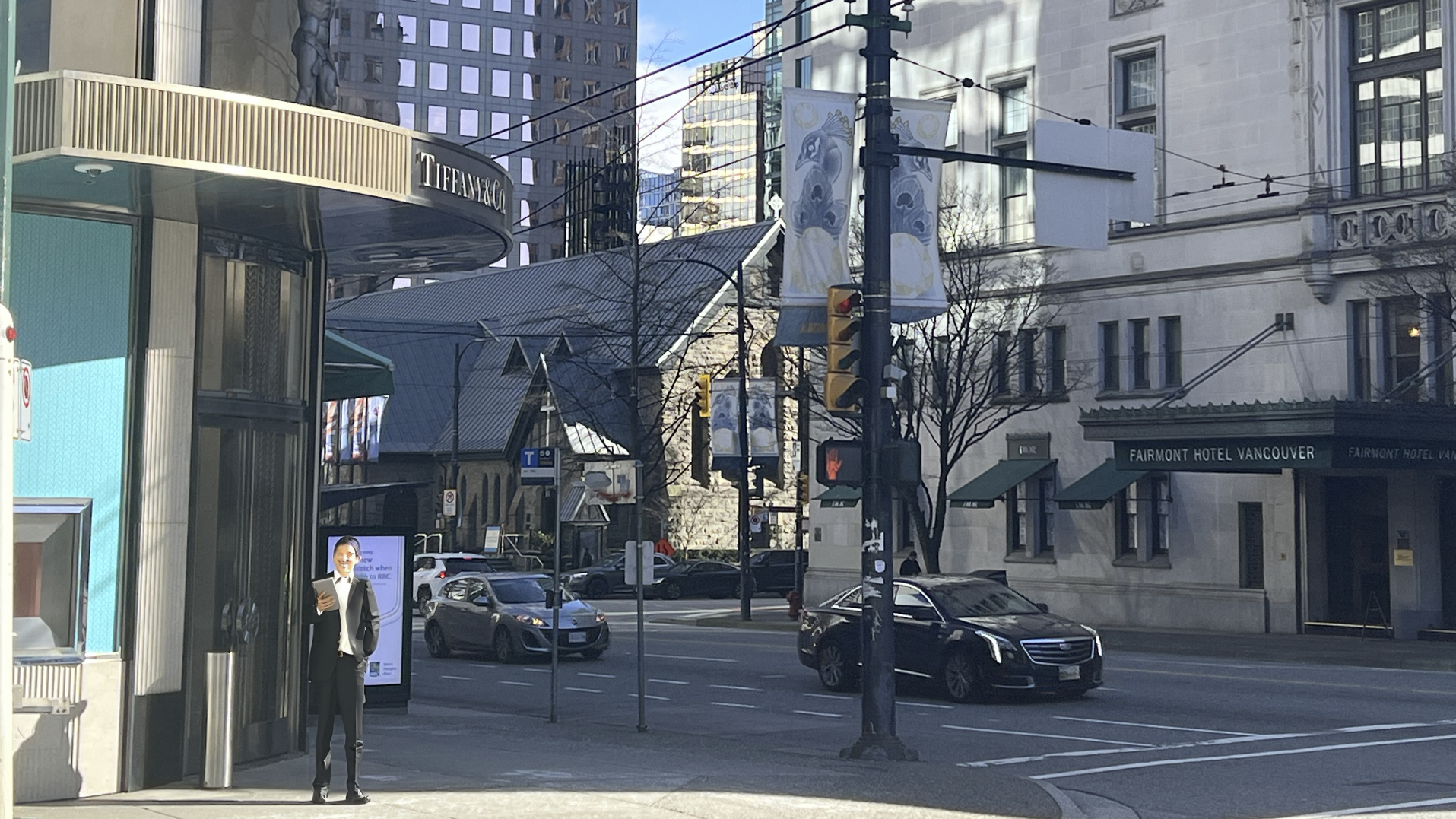
Fairmont Hotel Vancouver at Alberni Street and Burrard Street in downtown Vancouver. Photo: Lee Rivett.
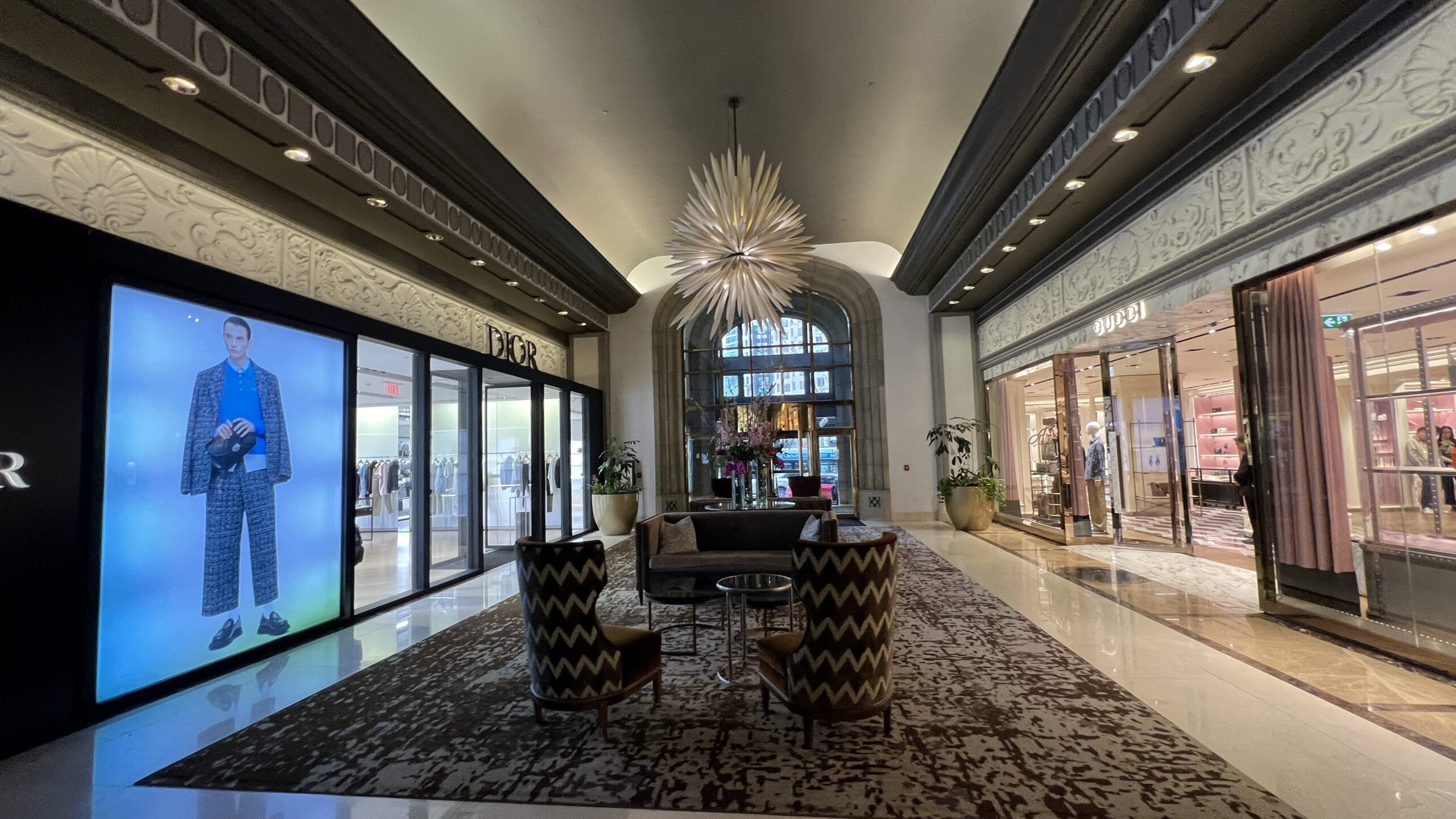
Dior and Gucci within Fairmont Hotel Vancouver. Photo: Lee Rivett.

Brodie Henrichsen, Executive Vice President at JLL, said Vancouver’s retail market is fairly robust right now.

Brodie Henrichsen

“We’re seeing supply getting gobbled up. We’re not seeing a lot of new supply. And we’re seeing a pretty good movement of new tenants coming into the market and some reshuffling,” he said.

“You’re seeing a number of new flagship tenants opening up on Robson Street and I think you’ll see some more with the releasing of the Nordstrom. And I think you’re going to see some more movement up and down Robson Street over the next couple of years just with some reshuffling.”

He said there is some slight upward pressure on rental rates in the market.

“Our downtown core has recovered quite well. Tourism is back. The office market for the most part is quite busy downtown. We’ve got a lot of good fundamentals for the downtown market and the urban markets are doing quite well,” added Henrichsen.

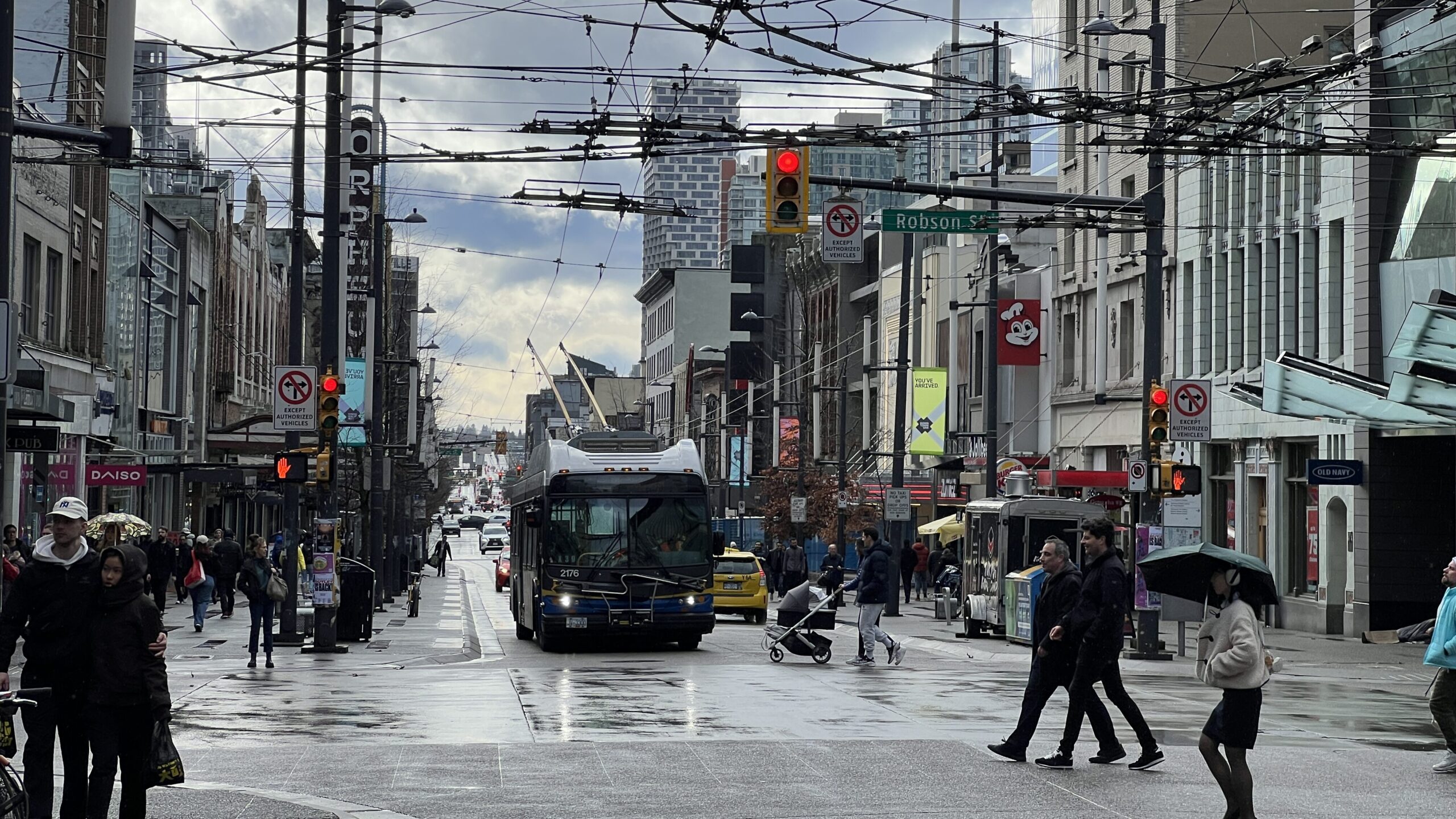
Robson Street looking down Granville Street in downtown Vancouver. Photo: Lee Rivett.
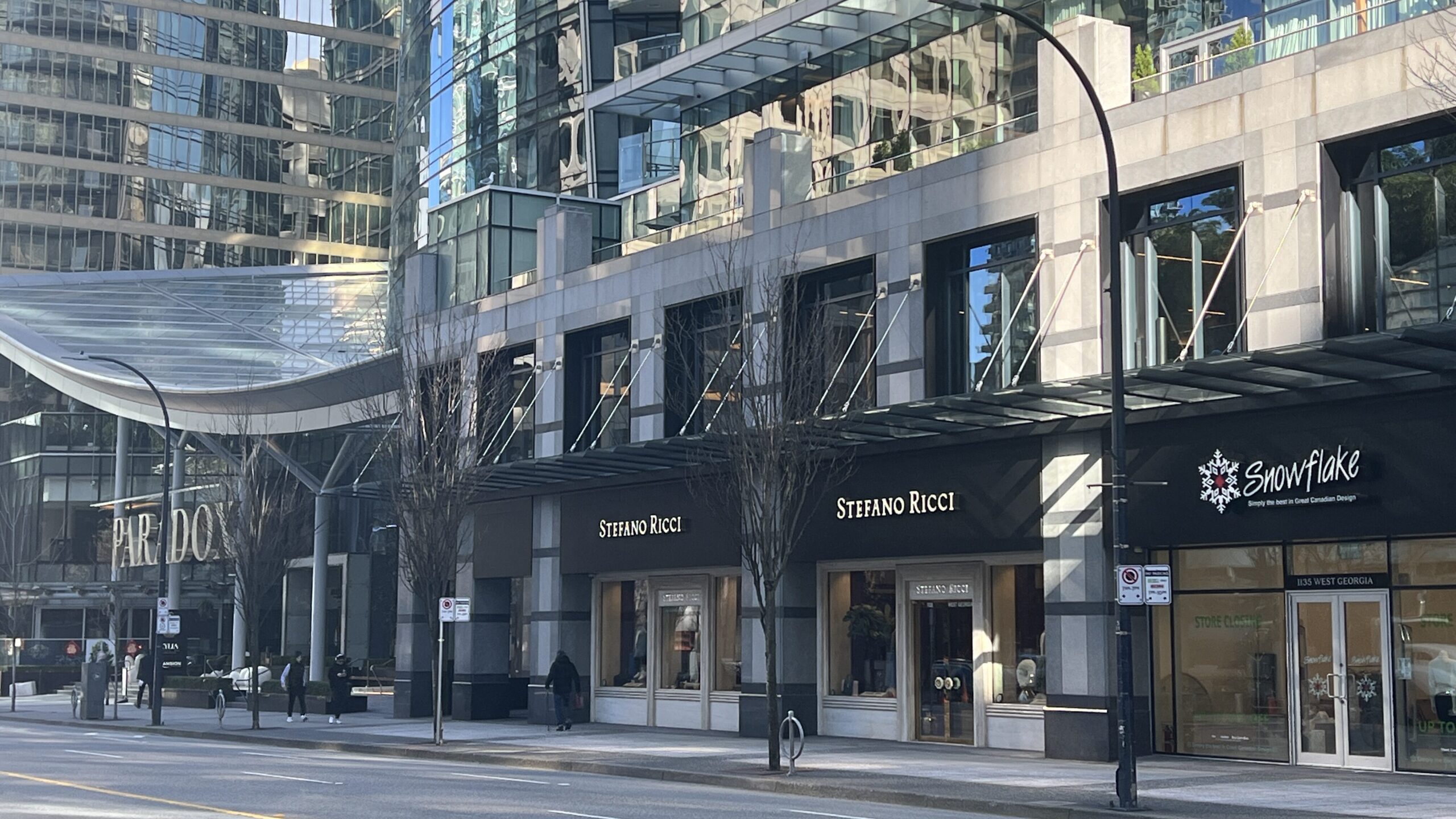
Paradox Hotel on West Georgia with Stefano Ricci and Snowflake in downtown Vancouver. Photo: Lee Rivett.

“Retail sales are still holding pretty strong and in some cases we’re seeing some increases. The downtown market has been through its challenging times and it’s improving. I think we’re definitely seeing just more demand from tenants coming to the market and wanting proper flagship big presence opportunities in downtown Vancouver.”

While the tourism sector is growing, he said the biggest challenge is hotel rooms and finding places for tourists to stay.

“You’re seeing very strong demand. Hotel rates in Vancouver are sky high right now. It’s very expensive and occupancy levels are very high for the hotels and that’s without the Chinese tourists coming back. The last time I checked we’re at 15 or 20 per cent of the daily flights from China that we had back in 2018,” added Henrichsen.

Robson Street in Vancouver Shifting with New Retailers being Added [Podcast]

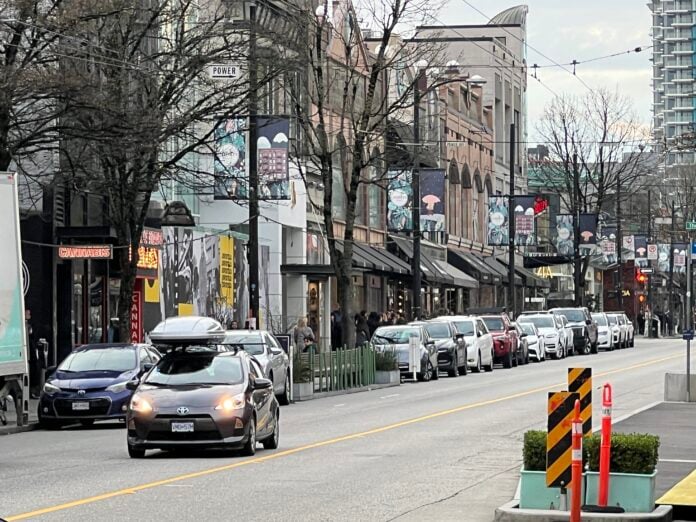
Robson Street in Downtown Vancouver. Photo: Lee Rivett.

Craig and Lee discuss the latest retail developments on Robson Street, a key shopping area in downtown Vancouver. They highlight significant changes, such as the transformation of the former Victoria’s Secret location into an adidas Concept store and the relocation of Roots due to Arc’teryx taking over its prime spot. This episode delves into the dynamics of retail real estate, showcasing how major brands are reshaping the street’s retail mix.

Further, they touch on additional developments, including the opening of a Lush Spa and plans for new entrants like Esprit, signaling a revival of the street’s appeal. The discussion also covers the closure of Club Monaco and its replacement by JD Sports, illustrating the evolving nature of retail spaces and consumer preferences. The conversation provides insights into how these changes contribute to Robson Street’s competitiveness with other shopping destinations.

Finally, Craig and Lee speculate on the future of Robson Street in the face of new challenges, such as the opening of Oakridge Park, a major retail development. They ponder the need for Robson Street to upgrade its public realm to maintain attractiveness and competitiveness. Through their dialogue, they underscore the importance of innovation and adaptation in the retail sector, highlighting how Robson Street’s evolution reflects broader trends in urban retail environments.

Robson Street in Vancouver Shifting with New Retailers being Added [Podcast]

Episode Sponsor: 

  • SAJO – Canada’s first specialized retail builder. Visit SAJO to see their holistic approach and transdisciplinary team to explore and understand your needs.

Discussed in this Episode: 

The Weekly podcast part of the The Retail Insider Podcast Network by Retail Insider Canada and is available on Apple Podcasts, Stitcher, TuneIn, Google Play, or through our dedicated RSS feed for Overcast and other podcast players.

Subscribe, Rate, and Review our Retail Insider Podcast!

Follow Craig:

Follow Retail Insider:

Listen & Subscribe:

Share your thoughts!

Drop us a line at Craig@Retail-Insider.com. You can also rate us in Apple Podcasts or recommend us in Overcast to help more people discover the show!

Background Music Credit: Hard Boiled Kevin MacLeod (incompetech.com). Licensed under Creative Commons: By Attribution 3.0 License. http://creativecommons.org/licenses/by/3.0/

Inside Look: Pigeon Coffee Opens at Brookfield Place in downtown Toronto [Photos/Interview]

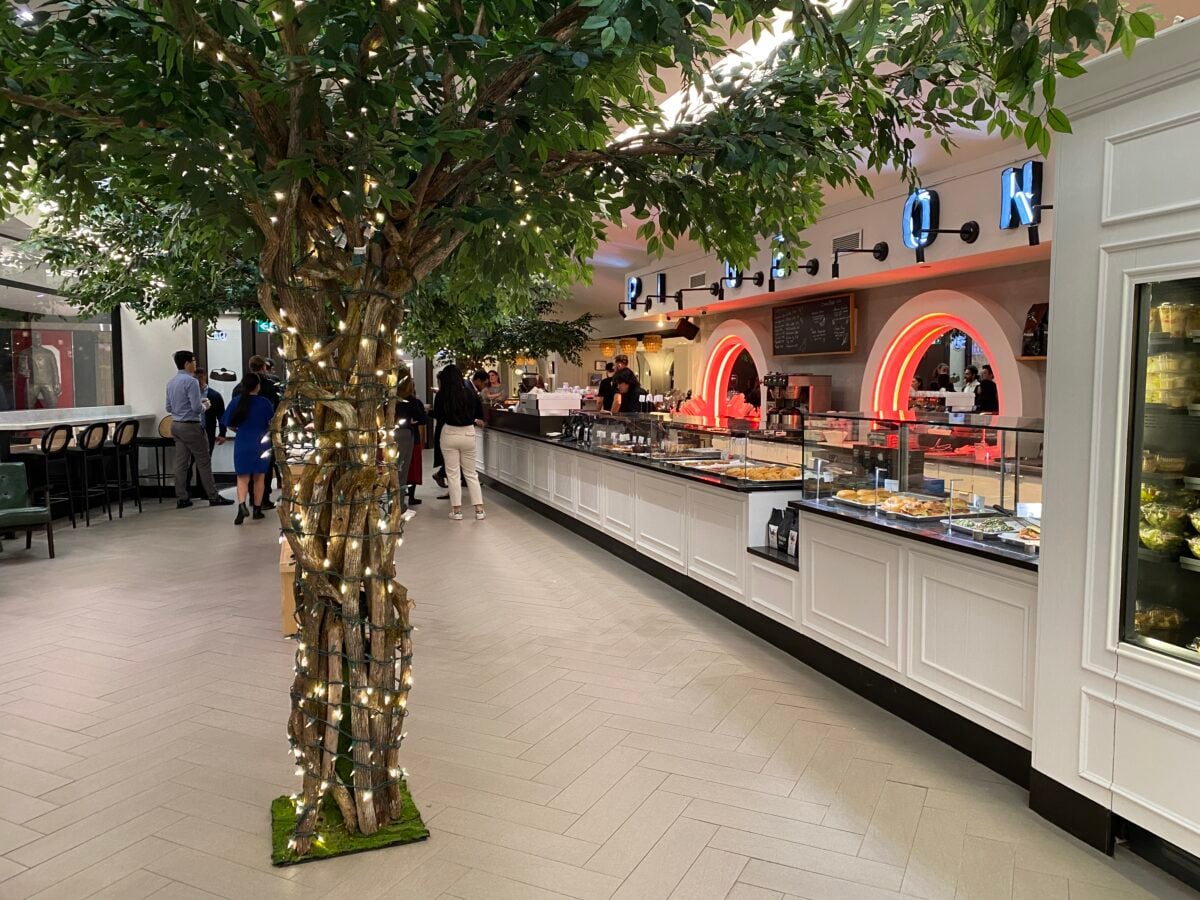
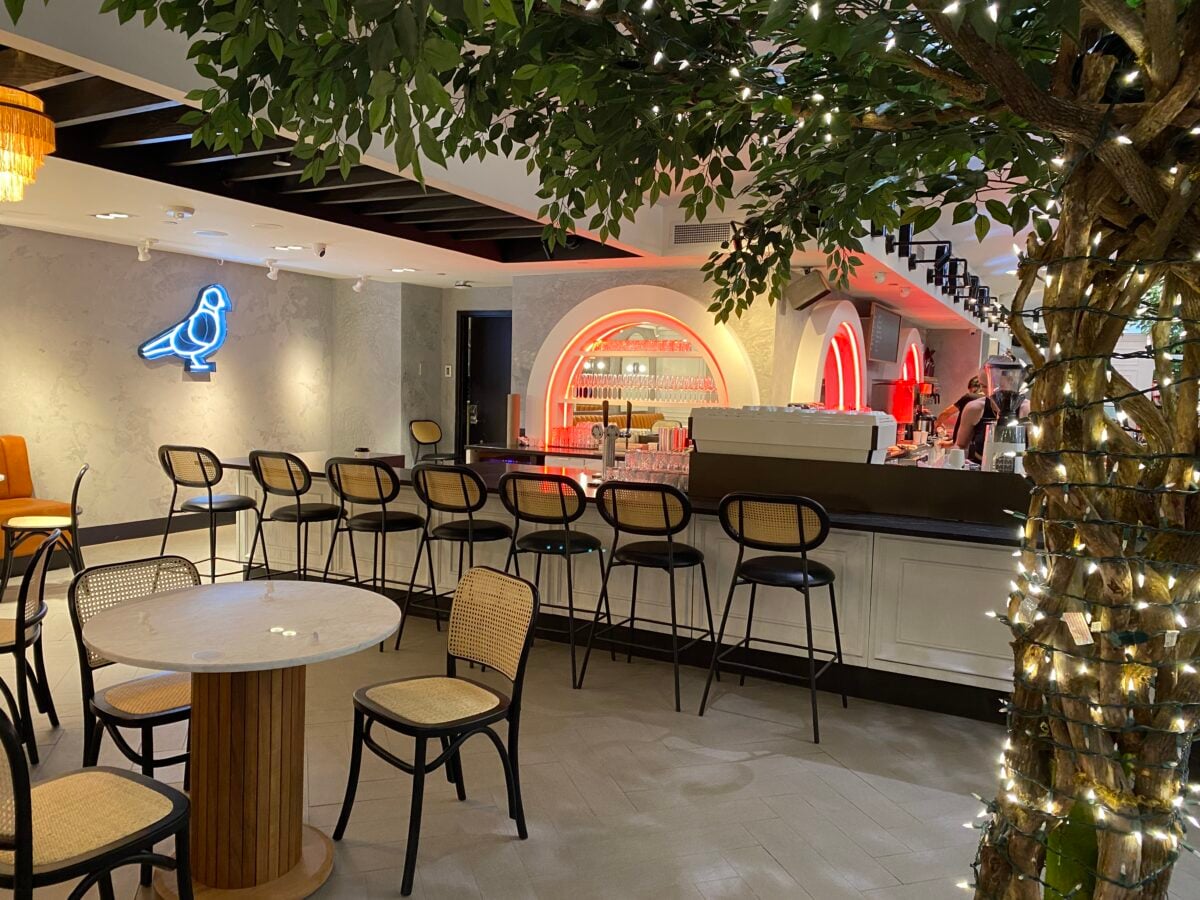
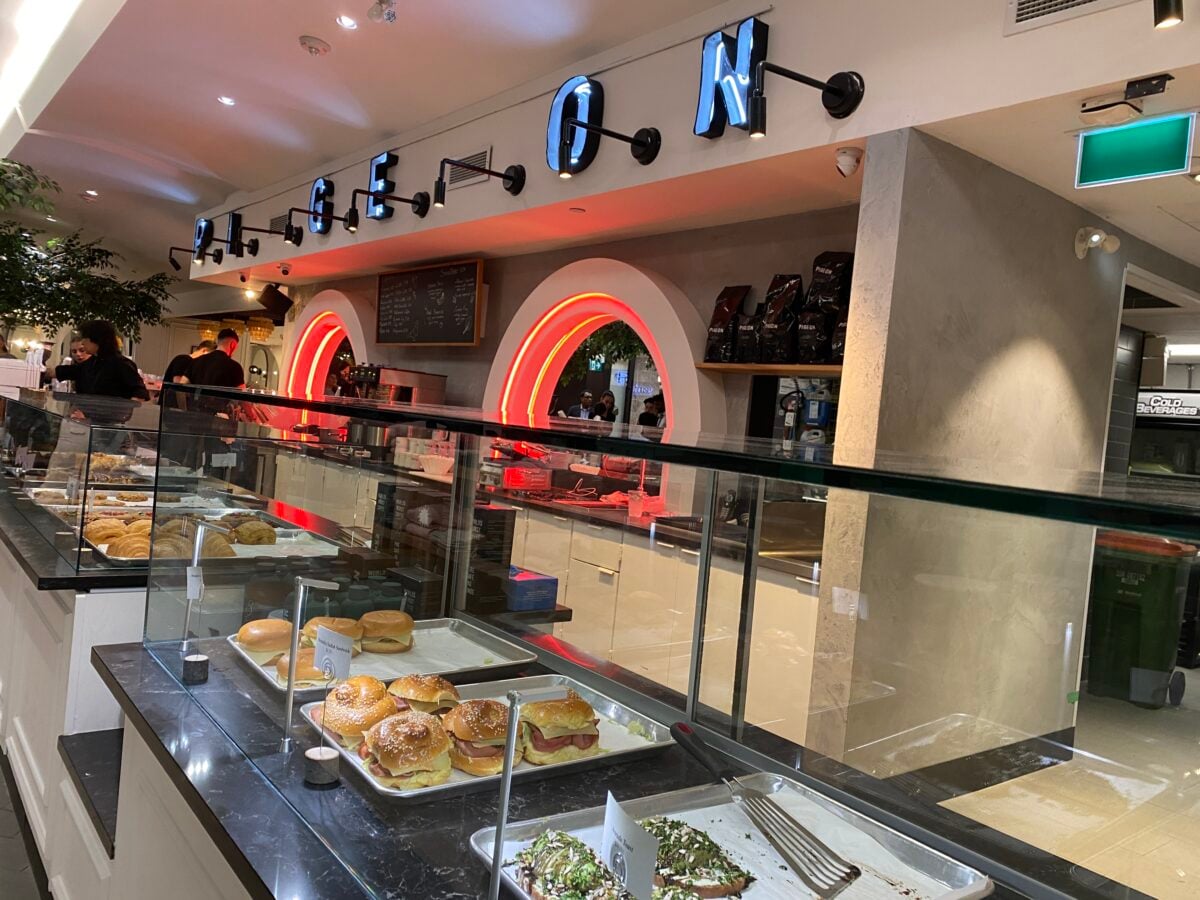
Pigeon Coffee at Brookfield Place (Image: Dustin Fuhs)

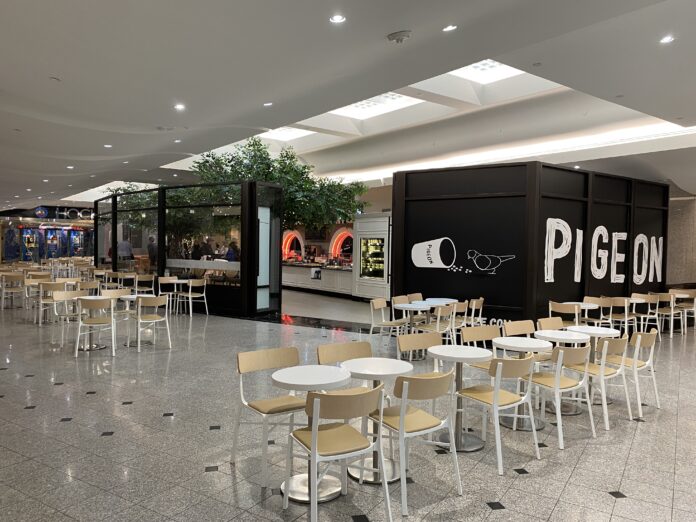
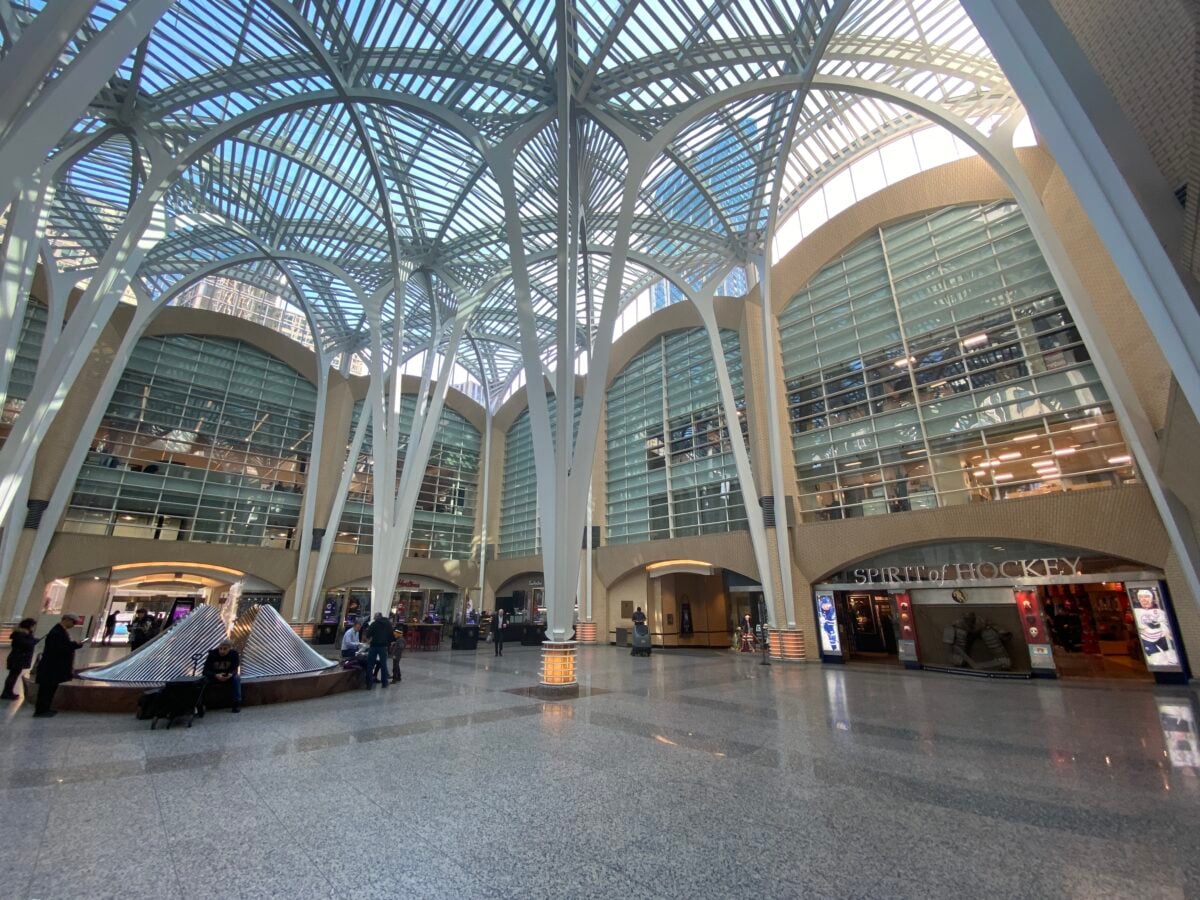
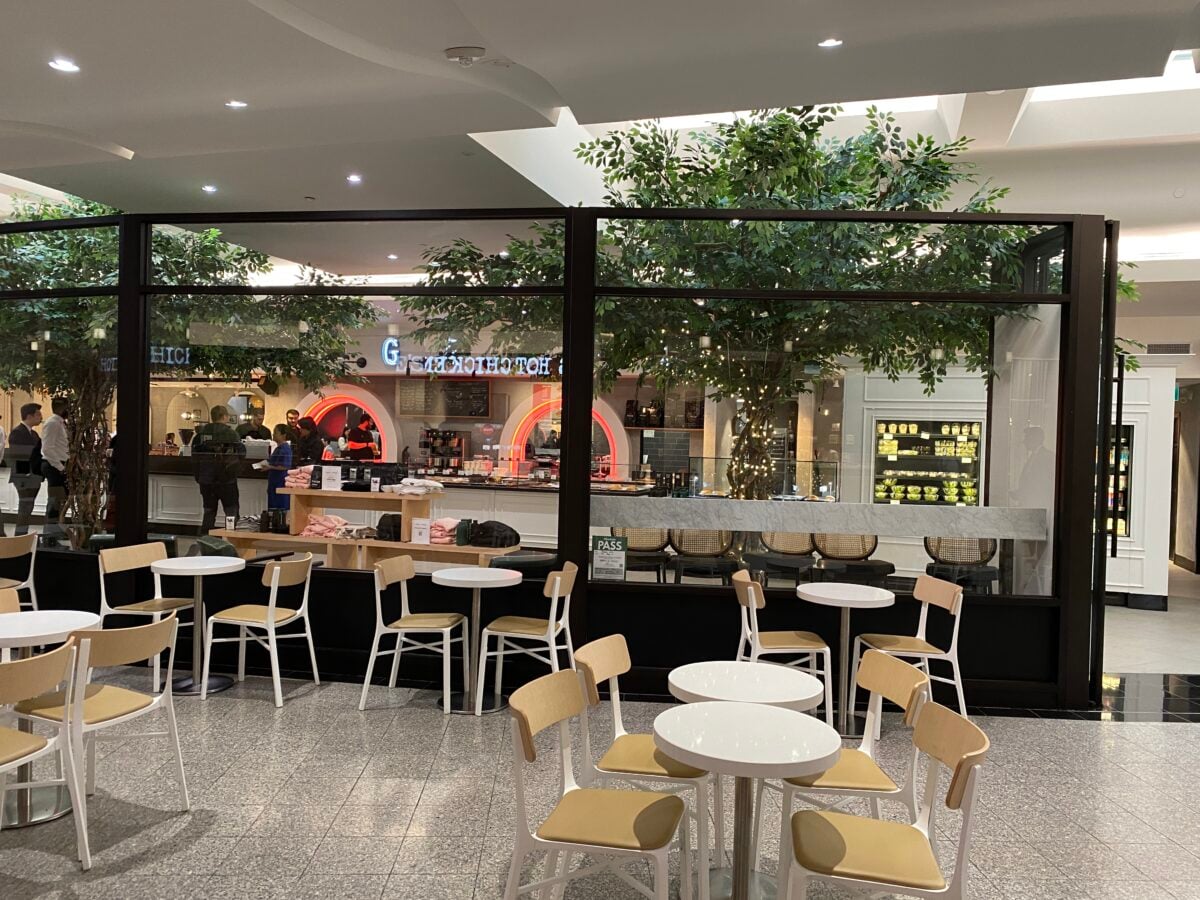
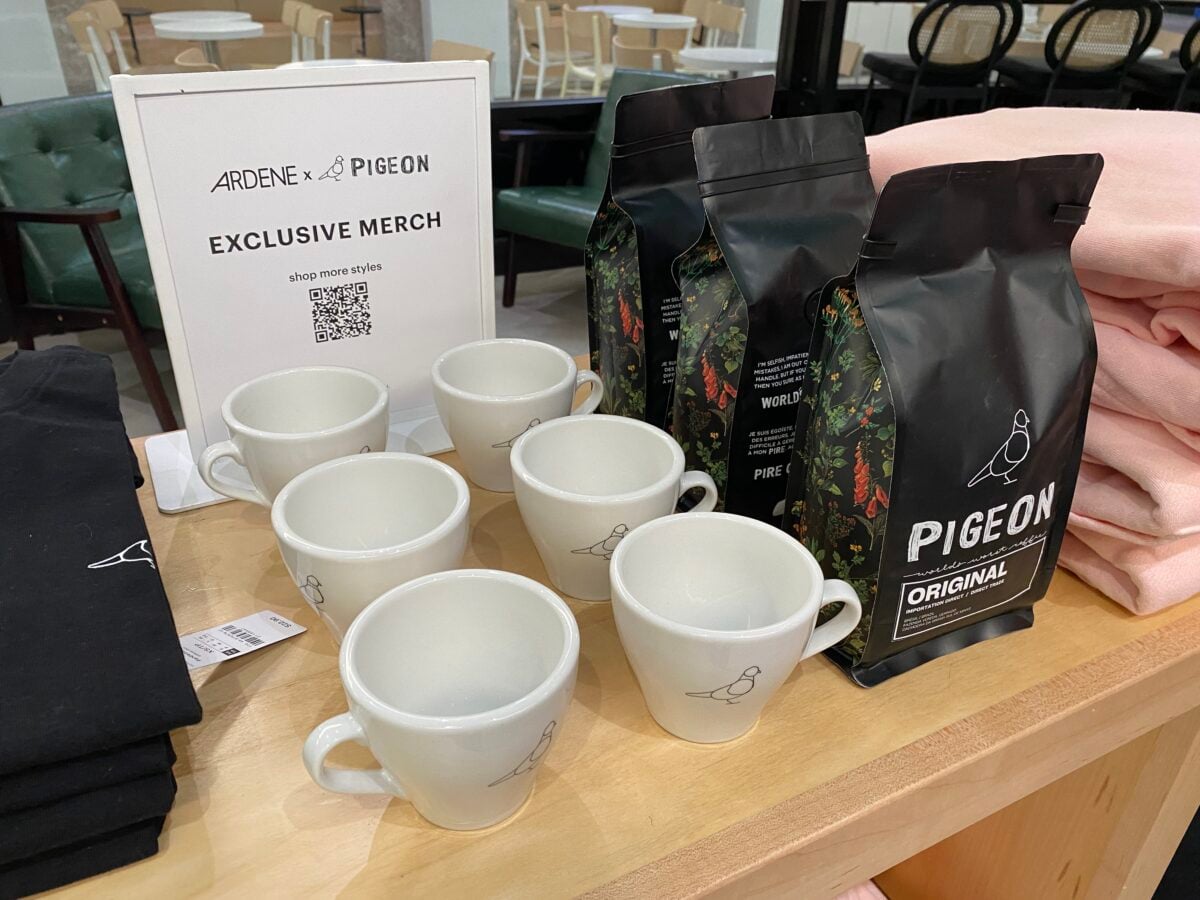
Pigeon Cafe, also known as “the world’s worst coffee”, has opened right next to the Hockey Hall of Fame in downtown Toronto’s Brookfield Place.

The Montreal-based company is coming off a successful launch of full service Pigeon restaurant concept on King Street in the Entertainment District in 2023.

Jonathan Dresner

The new Brookfield Place location marks a milestone for the company.

“We believe that this location will bring a breath of tropical fresh air into the Path,” shared Jonathan Dresner, Founder and Owner of Pigeon Espresso Bar. “No matter where people visit Pigeon Cafe, we want them to feel as though they travelled on vacation, whether it’s for a cocktail with a friend or even if it’s to grab a quick cup of the world’s worst coffee on the go.”

Pigeon Coffee at Brookfield Place (Image: Dustin Fuhs)
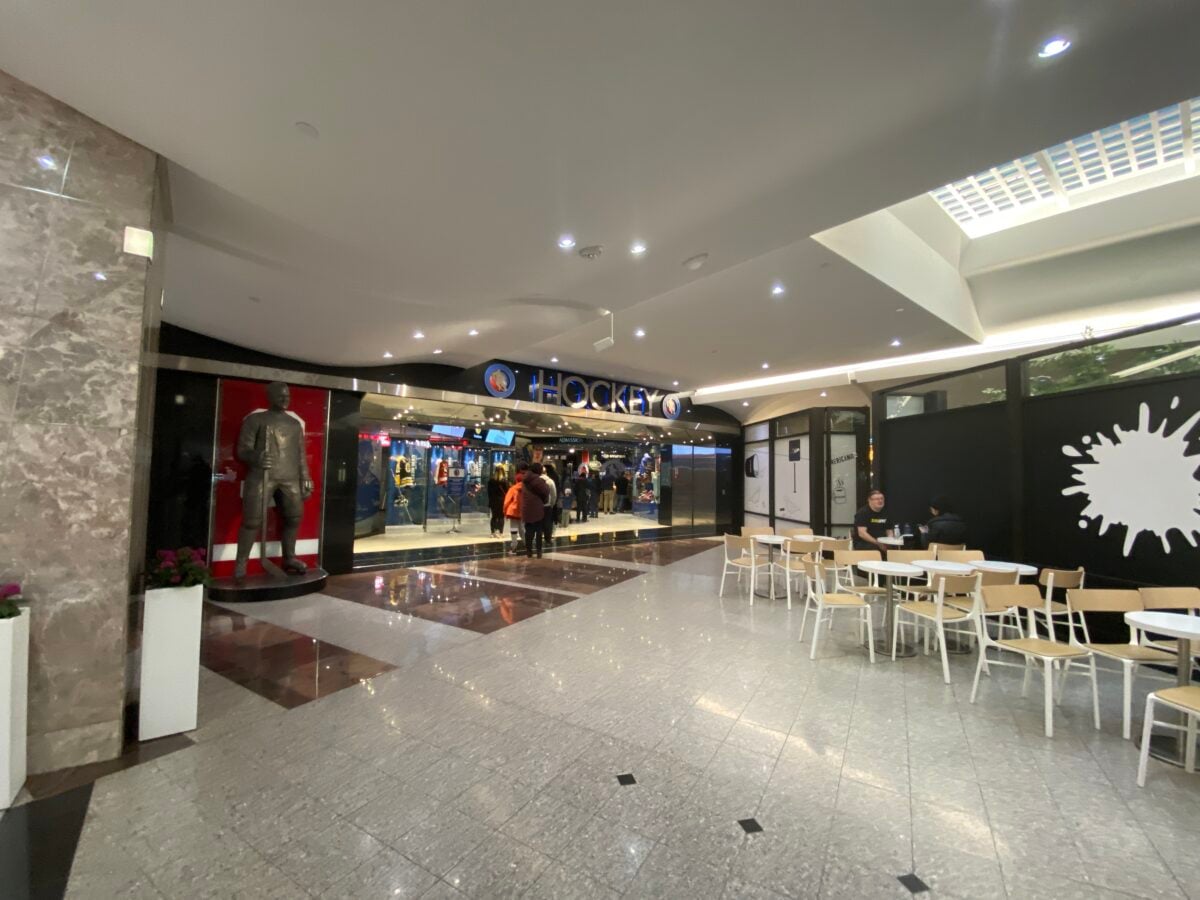
Pigeon Cafe next to Hockey Hall of Fame at Brookfield Place (Image: Dustin Fuhs)
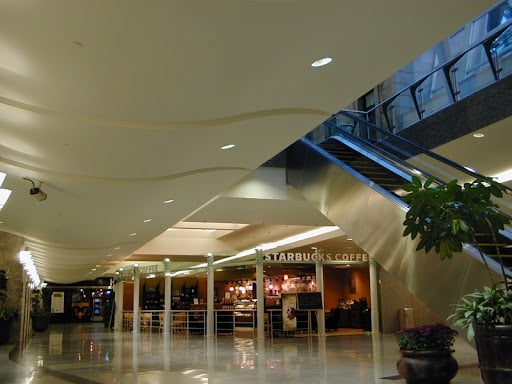
Starbucks at Brookfield Place (Circa 1999) Image: Starbucks Everywhere
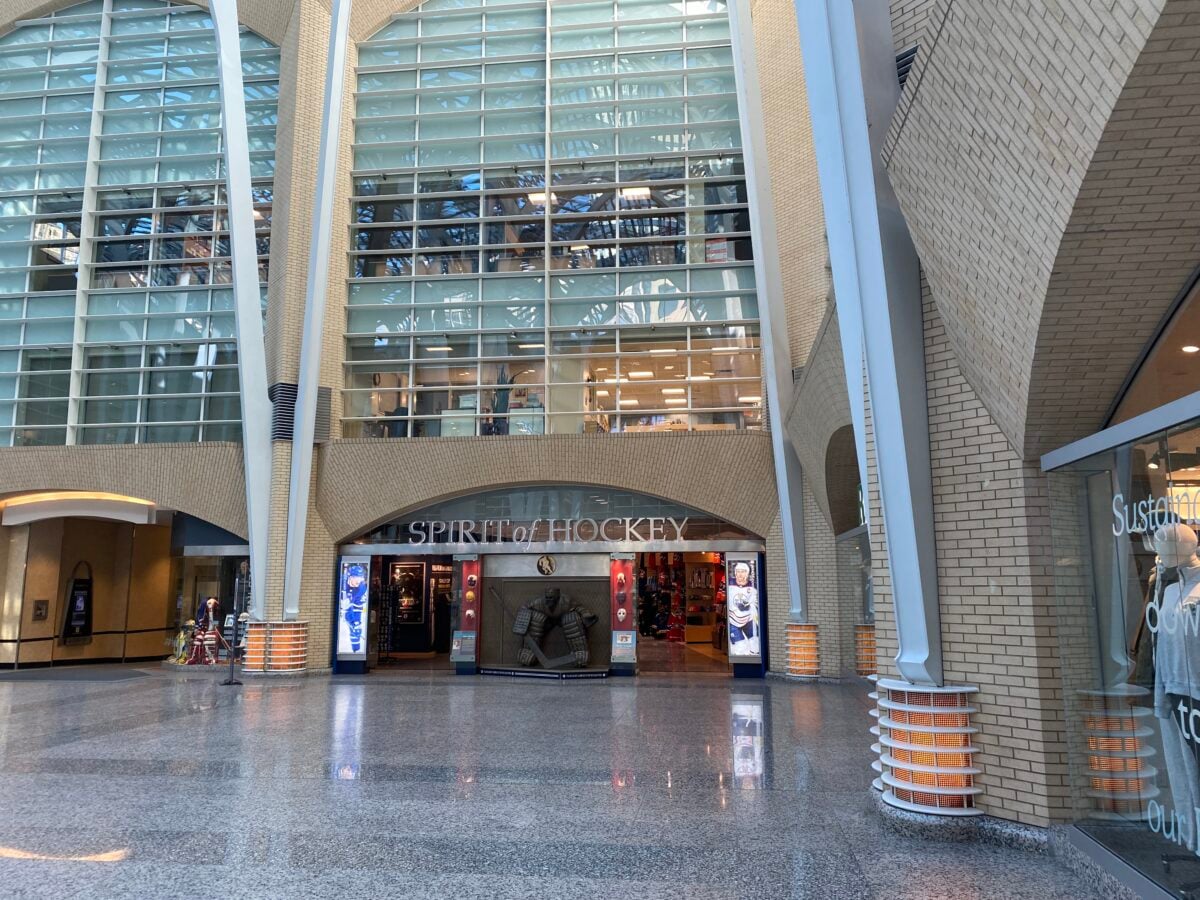
(from left to right) Johnny Bower (HHOF 76), Gillian Rumble, wife of the late Ken Danby, Billy Smith (HHOF 93) and Hockey Hall of Fame Chairman and CEO Bill Hay, unveil a new sculpture based on Ken Danby’s iconic ‘At The Crease’ painting, at the entrance of the new Spirit of Hockey store. (Image from November 10th, 2010)

Pigeon took over a high-traffic location outside the main entrance of the Hockey Hall of Fame, which was previously home to Starbucks.

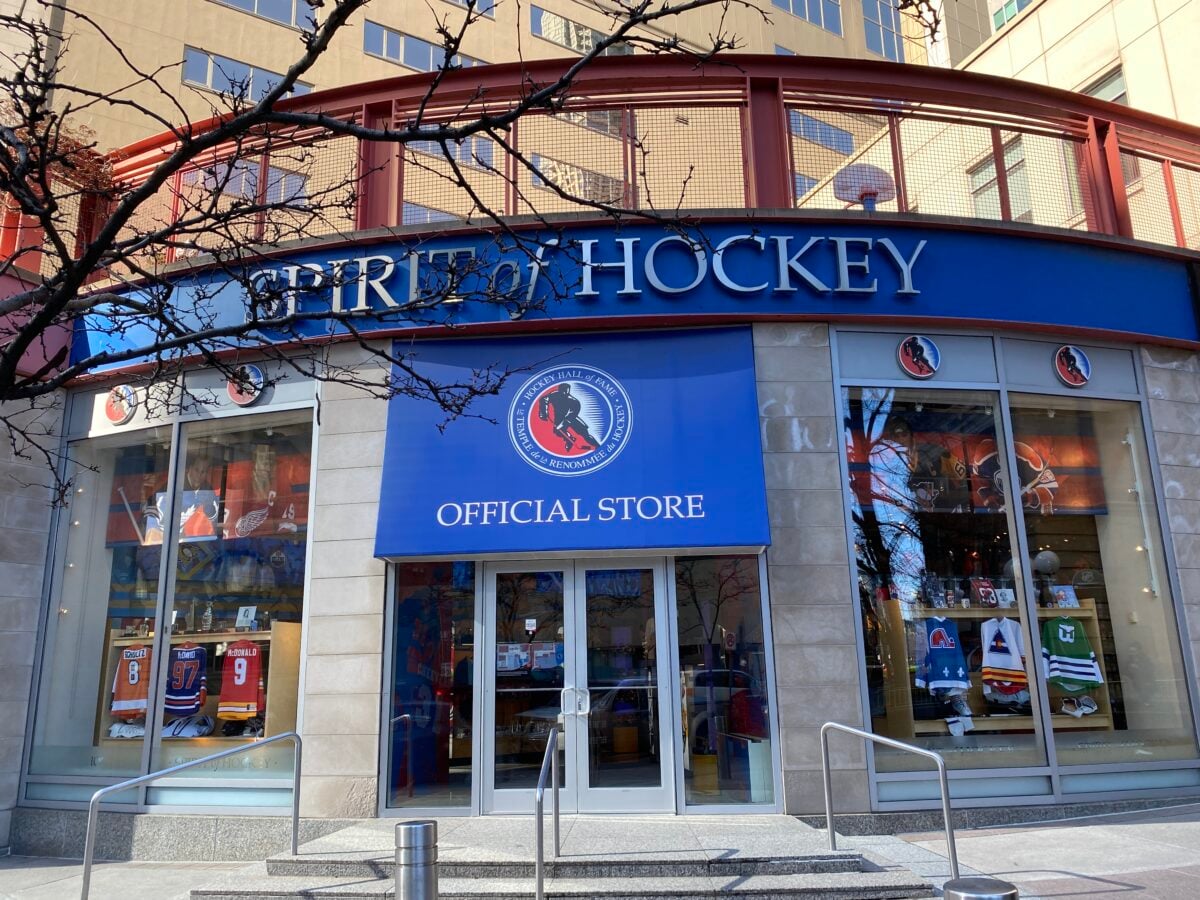
Before the Seattle-based giant took the full space, half of the store footprint was home to the retail gift shop of the Hockey Hall of Fame. As part of a grand opening on November 5th, 2010, the Spirit of Hockey gift shop opened upstairs in a street-front space during a re-configuration of the museum, which saw guests exit up a set of stairs to the new gift shop versus leaving through the downstairs.

“Our guests can explore a greater variety of international hockey exhibits along with an enhanced retail shopping experience,” said Phil Pritchard, Hockey Hall of Fame Vice-President and Curator as part of a press release for the opening. “By relocating and expanding the Spirit of Hockey store to street level, valuable space was made available in the concourse to further showcase the game’s global reach in the expanded Tissot World of Hockey Zone, now our largest dedicated exhibit area.”

The new Spirit of Hockey allowed the iconic Sam Pollock Square within Brookfield Place to have anchors that focused on the guest experience – with Roots, Tim Hortons, Gateway Newstands and the former Marche food hall.

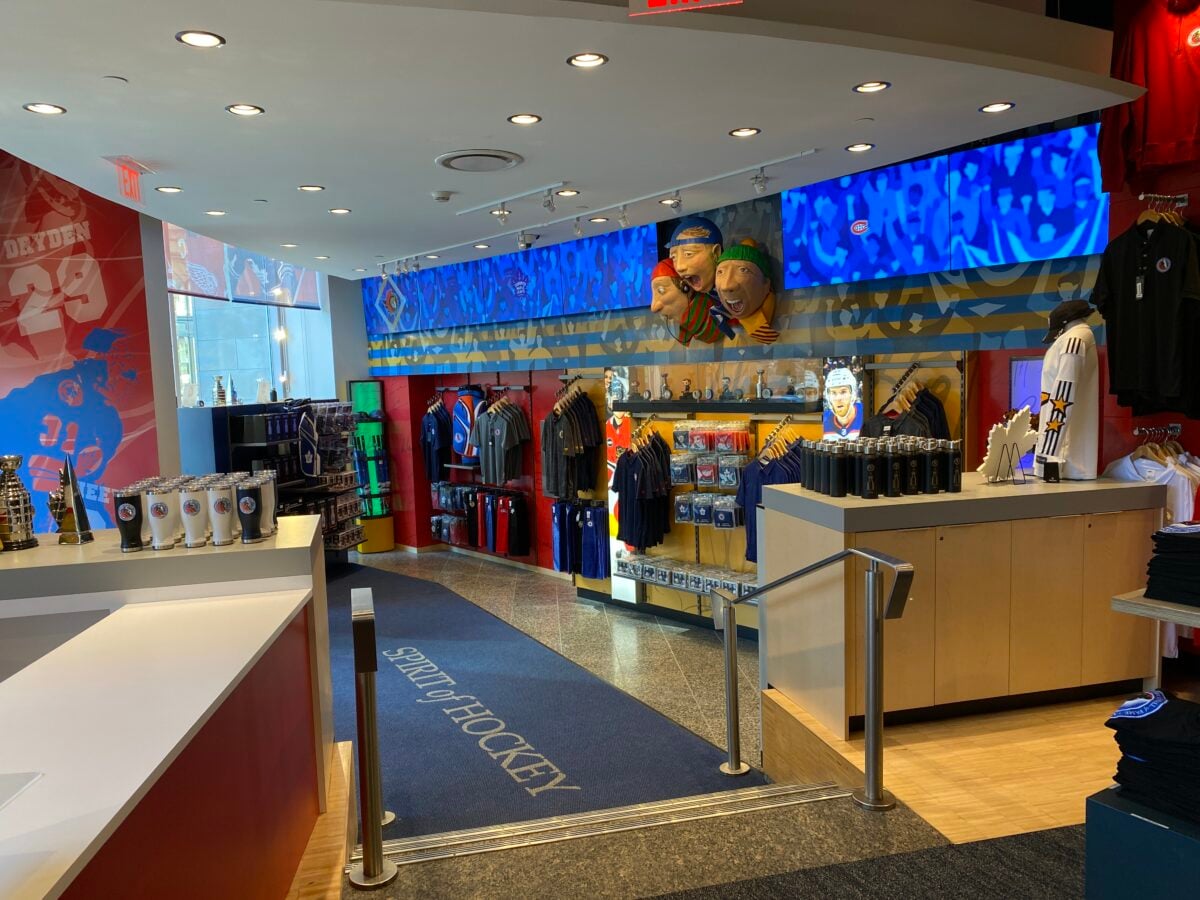
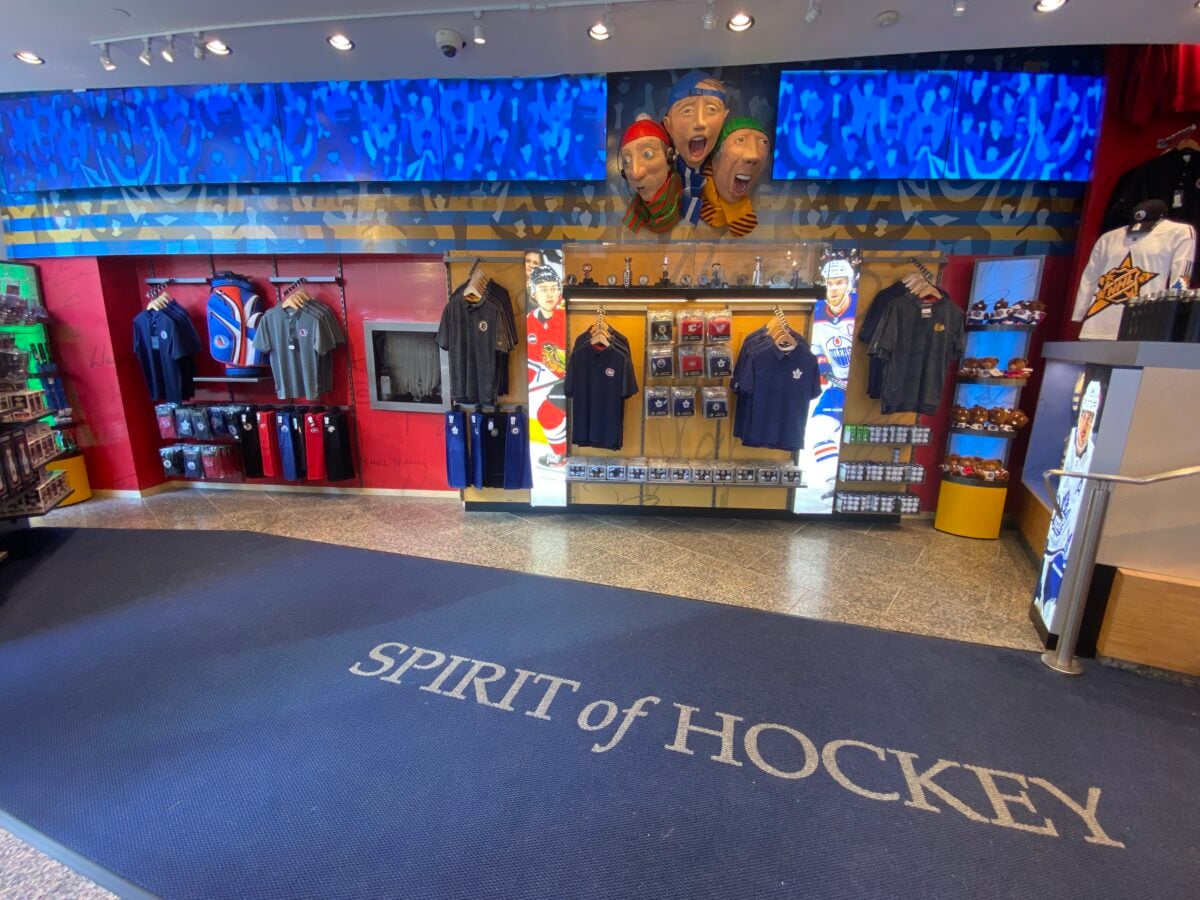
Spirit of Hockey recently completed a minor renovation, with talk of a future full-scale redesign being shelved during the pandemic.

Spirit of Hockey at Brookfield Place (Image: Dustin Fuhs)
Brand New Renovation at the Spirit of Hockey at Brookfield Place
Brand New Renovation at the Spirit of Hockey at Brookfield Place (Image: Dustin Fuhs)
Spirit of Hockey at Brookfield Place (Image: Dustin Fuhs)
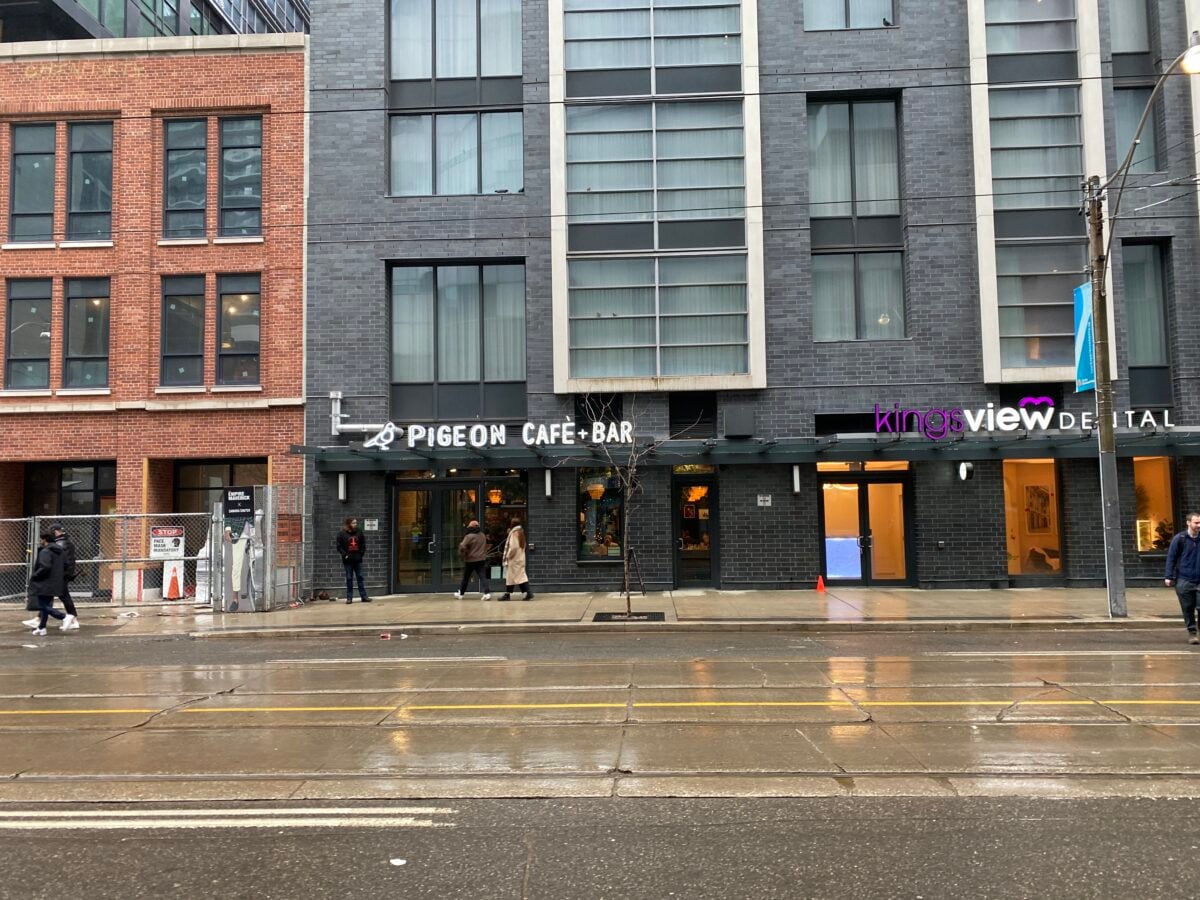
Pigeon Café & Bar at 337 King Street West (Image: Dustin Fuhs)

The identity of Pigeon is continuing to evolve and adapt as the brand finds its place in the neighbourhoods that it opens in.

“We evolved from a 150 square foot espresso bar location with no food or seating, into a network of stores that have a variety of food and beverages, some with table service and a full bar and some with grab and go. We have too much fun being silly and creative which makes it hard to stay consistent but easy for each location to have its own unique charm.”

“The challenge in continuing to grow over the years will be to control ourselves a little more so that we can more easily replicate what works and try having fun in other ways than always trying to do new things.”

Pigeon Coffee at Brookfield Place (Image: Dustin Fuhs)
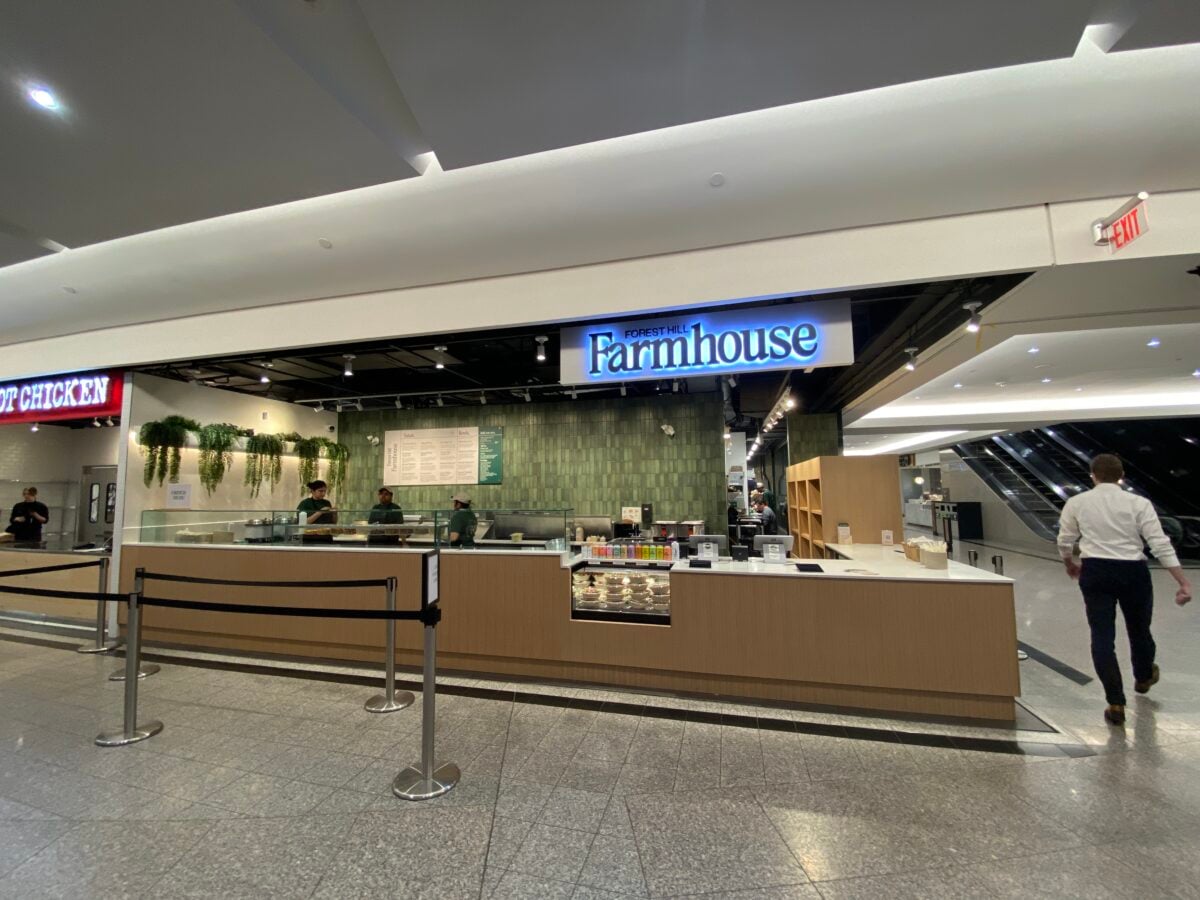
Farmhouse at Brookfield Place (Image: Dustin Fuhs)

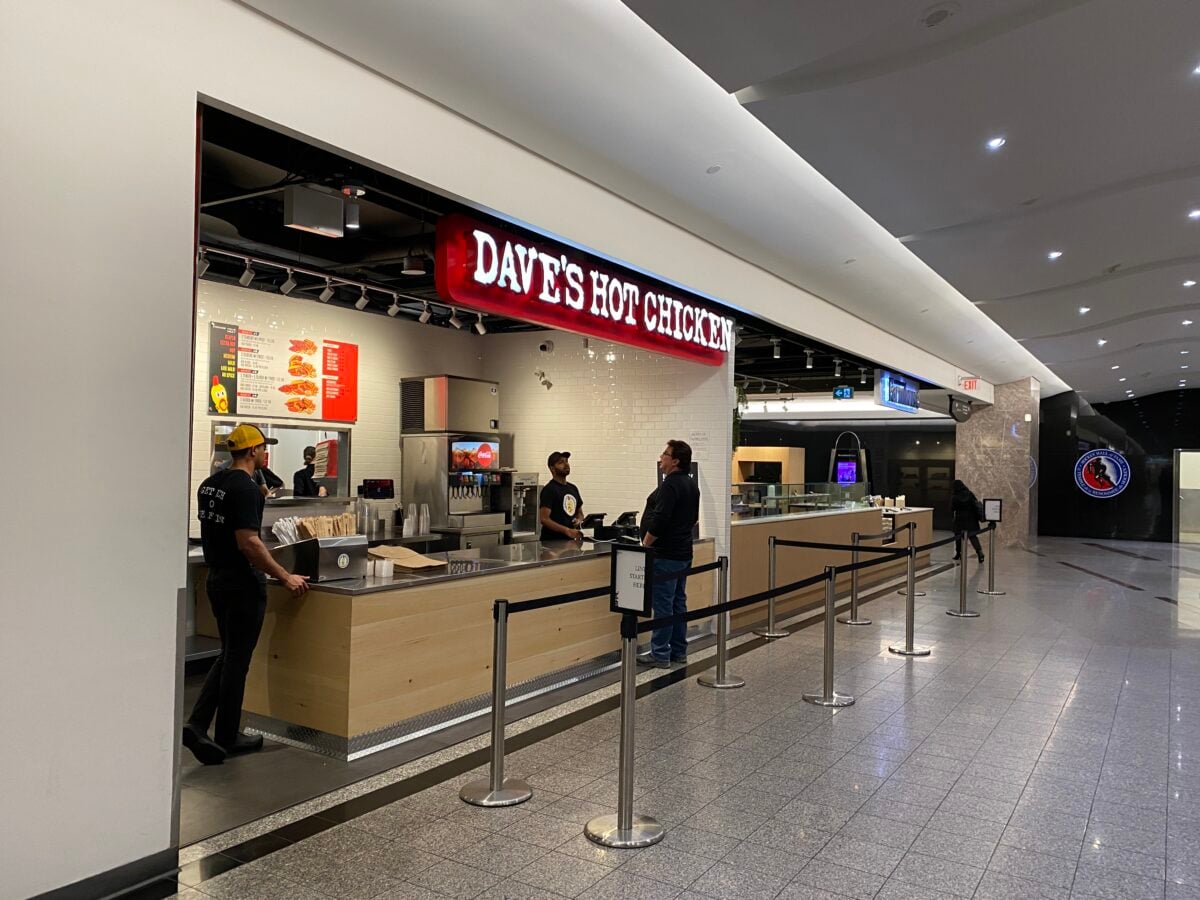
Pigeon Cafe Brookfield Place is opening up within days of two new food offerings outside of the Hockey Hall of Fame, with Dave’s Hot Chicken and Forest Hill Farmhouse taking over the former concourse level of Marché.

California-based Dave’s Hot Chicken is coming off a recent high-profile opening in Toronto, with the debut of a store just north of Yonge Dundas Square in the former 7-Eleven space across from the Toronto Metropolitan University campus.

Dave’s Hot Chicken at Brookfield Place (Image: Dustin Fuhs)

Pigeon brings another offering to the largest underground shopping complex in the world according to Guinness World Records, with 371,600 square meters of retail space and 1200 retail storefronts.

The next step for The PATH, coming out of the pandemic, was to attract unique brands that were ready to invest in the future of the Financial District. Retail Insider will be doing a follow-up article on the stores that have recently opened and more that are planned throughout the core.

Brookfield Place (Image: Dustin Fuhs)

Dresner said that the brand was ready to take on the challenge of the PATH.

“As always, a lot of fun, passion and hard work went into designing this store. We want the community in the PATH to come to Pigeon for so many different occasions. Coffee and food to go but also to sit down and enjoy it on the premises which is breathtaking. Work meetings or to catch a break with a friend or associate.

“We want people to come here for a drink after work and we also have a special plan for Pigeon Cafe Brookfield. We want this location to be used as an event space for corporate and private functions and we are confident that people will be blown away with what we can offer them.”

Pigeon Coffee at Brookfield Place (Image: Dustin Fuhs)

Pigeon Cafe Brookfield is just the latest for the brand, but Dresner has more up his sleeve.

“We don’t have too much of a concrete plan laid out but we do have a few more locations under development that are fun and exciting. We definitely want to keep expanding and having fun and to start selling more Pigeon coffee online and in other stores.”