Advertisement
Home Blog Page 779

How a Near-Death Experience Led Daniel Lewis to Found an Innovative Chai Tea Business

Daniel's Chai Bar at Bramalea City Centre
Daniel's Chai Bar at Bramalea City Centre (Image: Jonathan Lewis / Jonathan Productions)

A near-death experience a few years ago changed Daniel Lewis’ life and put him on the path to entrepreneurship with plans to grow Daniel’s Chai Bar, based inside Bramalea City Centre Shopping Mall in Brampton, Ontario, into a franchisable brand.

It began with the establishment of T By Daniel initially.

“It was born out of what I like to call a tragedy to triumph to story. I spent most of my high school years as an aspiring music artist. Rap, hip hop, and I became a Canadian songwriter. I was exploring all avenues in the music industry. I really believed that’s where my destiny was, until 2009 rolled around. On account of lyrics to one of my songs, I went through a bit of an unfortunate circumstance where I was the victim of a nearly fatal stabbing,” said Lewis.

Daniel's Chai Bar at Bramalea City Centre
Daniel’s Chai Bar at Bramalea City Centre (Image: Jonathan Lewis / Jonathan Productions)
Daniel Lewis

“That was a real eye opener for me in my life and without going into all the details of that incident, it caused me to look at my time here on earth very differently. It really made me ask the question: 

What impact do I have in the world? 

I looked and considered the ways in which everybody had impacted me during this tragic period; the pilot, the paramedics, the doctor, nurses, everyone who stepped in to help me survive that life and death moment. 

They all impacted me and contributed to my life and they were all strangers to me a week prior. “

Daniel's Chai Bar at Bramalea City Centre
Daniel’s Chai Bar at Bramalea City Centre (Image: Jonathan Lewis / Jonathan Productions)

“So I asked myself in the hospital. What impact do you have in life Dan? If this was fatal, what did you do? 

I hated the answer and so I promised myself that when I got out of the hospital I would find some way, some tool or method of impacting people’s lives in a positive way.”

He stopped drinking and smoking and he caught onto tea. A casual walk in the mall one day and a David’s Tea location put him on his current path. He found out tea was healthy for him, good for his body to heal from all the damage caused by the incident.

Daniel’s Chai Bar at Bramalea City Centre (Image: Jonathan Lewis / Jonathan Productions)

“I just became a huge tea addict really, a tea enthusiast. And after spending way too much money on tea one day I said to myself what if that thing I was looking for is tea! What if I start my own tea business and make it built on the foundation of impacting people’s lives in a positive way,” explained Lewis. “And that idea became T By Daniel.”

The brand was established in 2011 as an online company. Very quickly he realized that the brand was not visible enough to the public. So he began to go to events, farmer’s markets, trade shows to just get the name out there. After three years of doing that, the first store was opened with his wife Renata in downtown Brampton. 

In 2018, the brand relocated to the Bramalea City Centre Shopping Mall. After a year, the couple had their second child, and they decided to step back from the front facing aspect of the business and focus on online expansion.

The Royal Encounter with Prince Charles (Image: Daniel Lewis)

They eventually changed the company name to Daniel’s Chai Bar and it is now back at Bramalea City Centre with a brick and mortar location with its recent opening.

“The reason we changed the corporation is that Daniel’s Chai Bar is designed to be a franchisable concept which is very different from T By Daniel,” explained Lewis.

“I’m re-positioning this and re-imagining everything about it – the brand, the look. Everything is made with franchising in mind and so I do see more store locations in the near future, which I’m  already starting to facilitate those conversations. 

“Tea has piggybacked off the coffee industry for many years. But I think as coffee took on a more artisanal look and feel to it; baristas, barista art, and special lattes etc. Tea followed suit and did the same thing. I’m a certified tea master myself now and tea has become an art and as it gets more artistic, chai and chai lattes are in higher demand. Chai is loaded with different flavours and health benefits and it just strikes that good balance between tea and spice, and because of that it’s a hot choice for consumers all over the world.”

Garage Opens Pop-Up Store on Queen Street West in Downtown Toronto

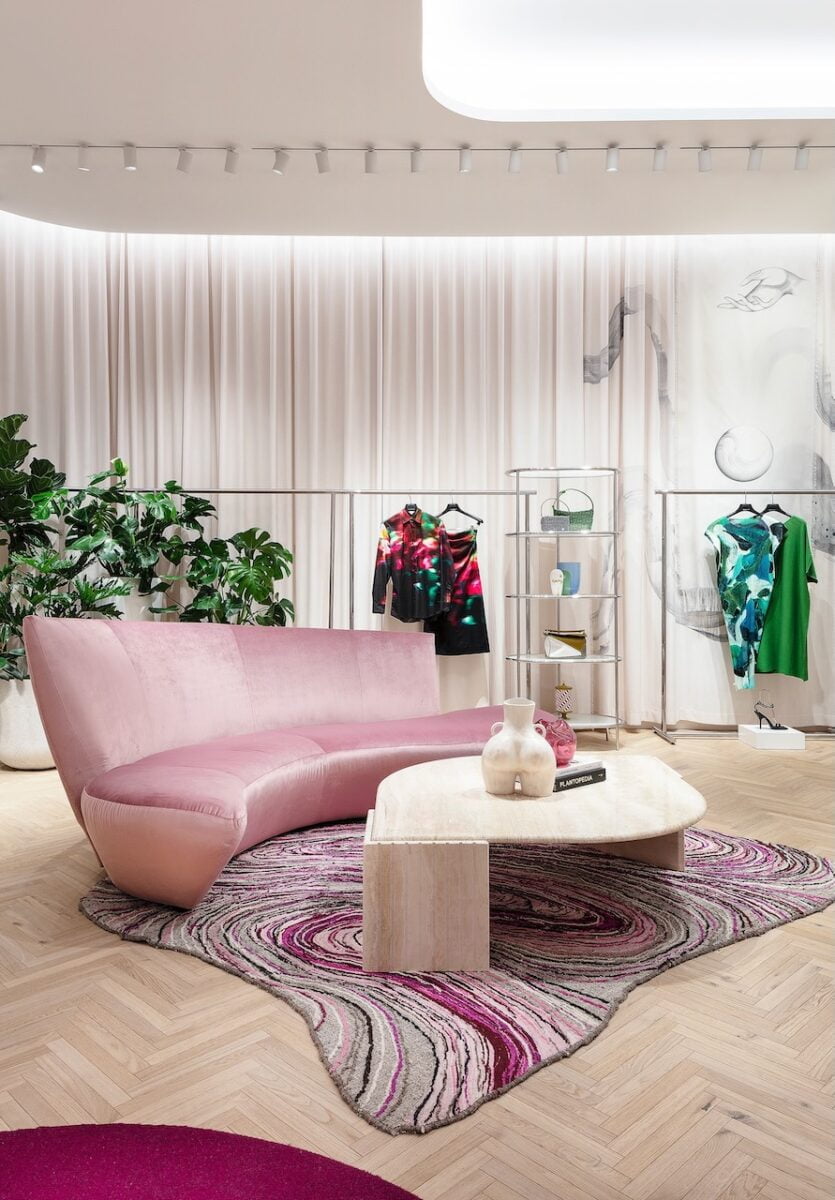
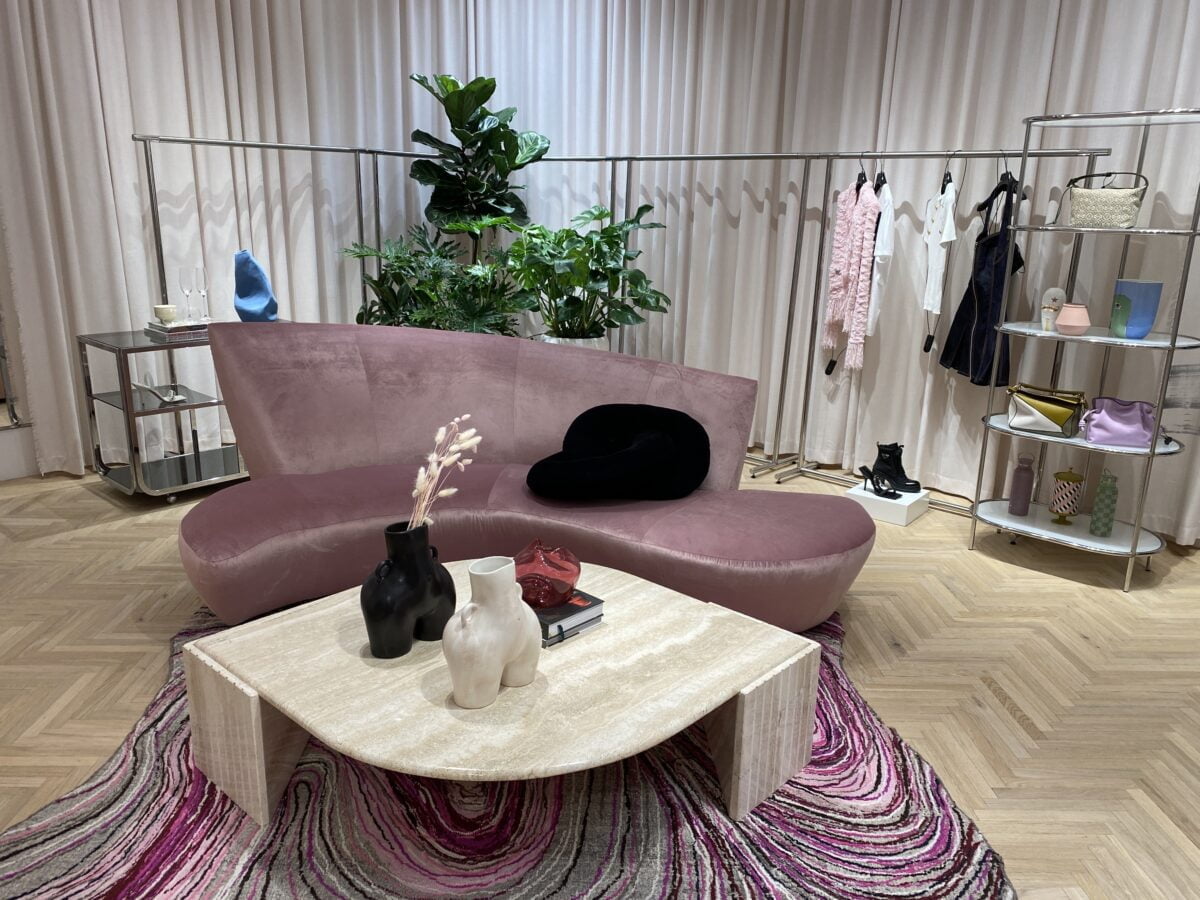
Garage Pop-up on Queen Street West
Garage Pop-up on Queen Street West in Toronto, 2021 (Image: Groupe Dynamite)

Montreal-based fashion retailer Garage has debuted a pop-up in Downtown Toronto, which includes the first-ever GARAGE FOR ALL unisex apparel collection.

The brand debuted the unisex initiative online in November and with shop-in-shops throughout the chain, with the new Toronto pop-up having a section of the store featuring the line.

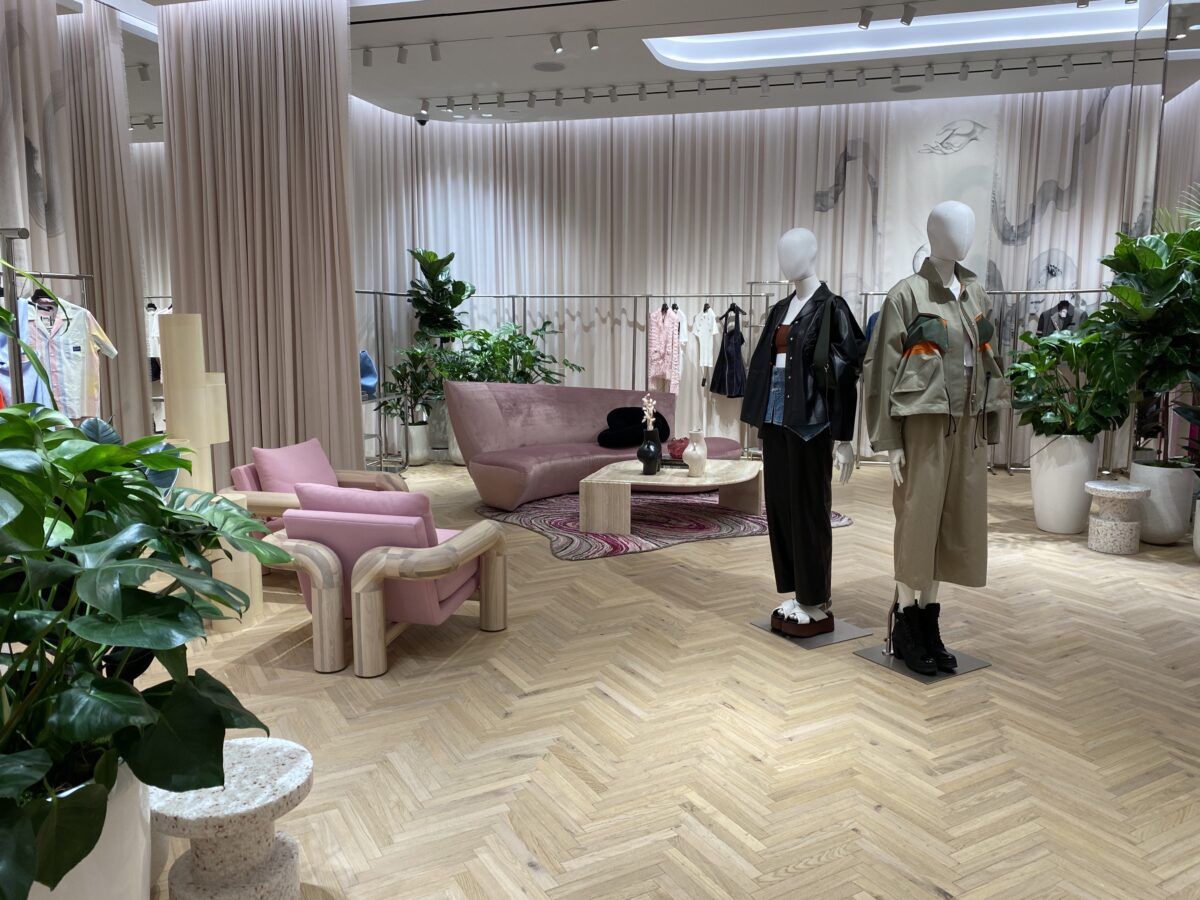
The design of the pop-up includes a ‘See it, Scan it, Shop it’ format, with the online inventory synced with the in-store offerings. It also features an intricate mural from Paris & Montreal-based artist Delphine Dussoubs (aka dalkhafine).

Garage Pop-up on Queen Street West (Image: Groupe Dynamite)

Garage is part of Groupe Dynamite, a Montreal-based company with two brands in the portfolio, Garage and Dynamite and operates more than 340 stores in worldwide and employs more than 5000 people.

Garage has opened the pop-up at 330 Queen Street West, which has been home to long-term tenants in the past, including an 8-year run with G Star Raw, from 2012 to 2020. Buffalo David Bitton also called this space home in the late 2000’s.

Additional Photos from the Garage Queen Street West Pop-up

Garage Pop-up on Queen Street West (Image: Dustin Fuhs)
Garage Pop-up on Queen Street West (Image: Groupe Dynamite)
Garage Pop-up on Queen Street West (Image: Dustin Fuhs)

Moose Knuckles Opens Impressive 2-Level Pop-Up in its Hometown of Montreal

Moose Knuckles Montreal
Moose Knuckles Montreal (Image: Moose Knuckles)

Montreal-based luxury outerwear brand Moose Knuckles has opened the new pop-up location in the brand’s hometown of Montreal.

The Rue de la Montagne store, next to the Four Seasons Hotel, provides fans of the brand to see an evolution of Moose Knuckles over the years in a museum-like showcase.

Moose Knuckles Montreal
Moose Knuckles Montreal (Image: Moose Knuckles)

“Our newest Moose stores are designed by renowned designer Stefan Beckman and create a completely immersive experience into our world,” said Andrea Elliott, EVP, Direct to Consumer, Moose Knuckles. “Moose has always merged Canadian technical know-how in outerwear with a fashion edge through a global lens that makes us truly unique in the space. We welcome the opportunity to showcase our complete line to new markets across the country and the world.”

Moose Knuckles has designed the pop-up to reflect the brand’s commitment to a more ‘circular economy’. LED Lighting, responsibly harvested wood flooring, recyclable metals and glass – in fact, all fixtures in and elements in the space are designed to last and reuse as the brand expands.

Moose Knuckles Montreal
Moose Knuckles Montreal (Image: Moose Knuckles)

“The concept of applying a tundra-inspired lens on city life struck a chord with me,” said Stefan Beckman, Set Designer & Founder, Stefan Beckman Studio. “The question was how to merge these two vastly different worlds? We had to be very sharp and purposeful with every element.”

Moose Knuckles recently opened a permanent storefront at CF Toronto Eaton Centre in November, which featured technology that was installed as part of the guest experience. RFID technology is included in every jacket, which allows consumers to interact with the environment that the garment was designed to thrive in.

Retail Insider will be covering the future expansion plans of Moose Knuckles as it continues to build the brand globally.

Additional Photos from Moose Knuckles Montreal

Moose Knuckles Montreal
Moose Knuckles Montreal (Image: Moose Knuckles)
Moose Knuckles Montreal
Moose Knuckles Montreal (Image: Moose Knuckles)
Moose Knuckles Montreal
Moose Knuckles Montreal (Image: Moose Knuckles)
Moose Knuckles Montreal
Moose Knuckles Montreal (Image: Moose Knuckles)
Moose Knuckles Montreal
Moose Knuckles Montreal (Image: Moose Knuckles)
Moose Knuckles Montreal
Moose Knuckles Montreal (Image: Moose Knuckles)
Moose Knuckles Montreal
Moose Knuckles Montreal (Image: Moose Knuckles)

Calgary Co-op Marks 65 Years: CEO Interview

Image: Calgary Co-op

The first Calgary Co-op grocery store opened in downtown Calgary in 1956 and 65 years later the chain has more than 440,000 members and numerous supermarkets and speciality stores in the local region.

Ken Keelor

Company CEO Ken Keelor said Calgary Co-op has seen many changes over the decades, but its values and community-minded approach remains the same.

So how does a grocery store remain in business for 65 years especially in such a competitive environment?

“It is very, very important to focus on financial sustainability. You can have all the heart and wonderful culture and all of that stuff, but if you are not financially sustainable you’re done. You can’t serve your community. You can’t serve anyone. I think where a lot of companies, especially those that are sort of much more socially focused like we are, can lose their focus is where the management team, leadership and board, lose track of the fact that you have to be financially sustainable,” said Keelor.

Image: Calgary Co-op

“In the last seven years, we’ve had three wage increases, we’ve had property tax increases, we’ve had discount competitors come into our marketplace and open up shop, we’ve had a really tough economy with joblessness, the drop in the price of oil and jobs that were never filled again, we’ve had people leave the city.

“Calgary Co-op has put a very strong focus on I would say four elements – our sales, our profitability, our people development and our long-term plan and strategy. We built a long-term strategy for this very reason. That’s the first element and all of those pieces play into it. You’ve got to have a long-term strategy, you’ve got to be thinking financial sustainability and you’ve got to be very aware that in the environment that we’ve been in, sales are going to be hard to come by, so you’ve got to manage your costs, you’ve got to manage your margins and you’ve got to be here for the community, not just in spirit.”

Keelor said the second piece of success really is culture.

“You can’t work on strategy without working on culture, on risk and on financials. And so whenever I talk strategy I always talk about culture, financials and risks. Culture I pick out as the second factor . . . The beauty of this organization is that in its very DNA it’s service oriented and community oriented and people love to serve,” said Keelor.

Celebrating 65 years with the grandson of member number 1. He uses his grandmother’s number every time he shops at Calgary Co-op.

“It’s a culture that preserves the heart of what makes team members want to work here and want to serve.”

Today, Calgary Co-op employs about 3,850 people with 24 food stores, 30 Wine, Spirit and Beer stores, 10 cannabis stores, 39 gas bars, three Home Health Care locations and three Community Natural Foods stores.

The company’s presence is beyond Calgary in communities such as Cochrane, Airdrie, Strathmore, Okotoks, and High River.

Keelor became CEO in 2014.

Calgary Co-op, one of North America’s largest co-operatives, was established by Calgary and area farmers and ranchers who wanted to serve Calgarians with fresh, local food.

Image: Calgary Co-op

Today it also has three private brands: Cal & Gary’s, Founders & Farmers, and Only Alberta Meat.

It has assets of $627 million and annual sales of $1.2 billion.

“We need to innovate but it needs to be commercial innovation that drives the business of the company,” said Keelor.

In the past year, the company has renovated its stores in the Dalhousie and Brentwood neighbourhoods. It has also completely renovated the downtown Community Natural Foods location.

It has also significantly advanced its construction and redevelopment of the Oakridge Co-op location which will include a residential component. The plan for the redevelopment of the North Hill location, with residential as well, is coming along.

The grocery chain is planning to open a new location in the Marda Loop neighbourhood in 18 to 24 months.

Image: Calgary Co-op

“We are also potentially looking at one more site in that Springbank Hill area,” he said. “We haven’t inked an arrangement yet but certainly we have interest in going into that area,” said Keelor. “We might look to areas like Cochrane in the future to areas like Skyview which is way northeast (in Calgary). Skyview is a developing community that’s growing really fast. Cochrane has grown really fast already. We believe those two areas would fit the bill quite well for Calgary Co-op.

“The small footprint that we put in Sage Hill that we’ll even skinny down more in Marda Loop we’re very interested in seeing how these perform because there may be potential for smaller footprint stores in the future for Calgary Co-op.”

Keelor said health and wellness is an area of focus for the company moving forward. It will be growing its pharmacy business, its home health care business, its Community Natural Foods division, and its natural foods business within its stores.

“The whole area of health and wellness is going to be something that we’re going to lean on for growth for the company for long-term sustainability and long-term strategy and financial sustainability are all founded on one thing – being uniquely different to the marketplace,” he said. “If you don’t have differentiation, you will not have long-term financial sustainability.

Image: Calgary Co-op

“You might sustain a couple of years but if people don’t see you as different, your competitors can copy you and you’re done. So health and wealth and wellness will be one strong area of focus. The other area of focus will definitely be leveraging our real estate to grow. When you look at our real estate, we have over $400 million in real estate and we have got to look at how we can use that to grow be that expanding our stable of tenants that we have on the properties, be that building more or new lines of business on those properties, or be that even monetization of those pieces of land that a lot of Calgary Co-op’s money is invested in. Those revenues can drive our growth.

“We can only kind of grow by using our operating earnings or cash from the business by leveraging the properties that we have or by taking a loan. And we plan to do all three of those things.”

Visa Expanding its ‘Buy Now, Pay Later’ Options Through Unique Collaboration with Moneris

Consumer sentiment and behaviour is always evolving, their needs and desires seemingly changing as frequently as the seasons. In fact, an inevitably shifting consumer mindset is one of the only constants within the retail industry. With this understanding, merchants everywhere are perpetually exploring ways by which they can keep up with the consumer, or get out ahead of them, in order to ensure that they provide the offering and service they seek. And, increasingly it seems, as part of that offering and service, consumers are looking for greater flexibility at checkout, including purchasing options like ‘buy now, pay later’. It’s evolving sentiment that represents a bit of a transformation of purchases. And it’s one, according to Brian Weiner, VP and Head of Product and Digital at Visa Canada, that represents the uninterrupted progression of the payments industry.

“At the end of the day, consumers want flexibility and they want choice,” Weiner asserts. “And merchants now have the technology available to them in order to provide that flexibility and choice in ways that they just couldn’t previously. We’ve seen a number of consumer trends emerge of late, including the rise of contactless payments, open payments in transit, crypto payments and, most recently, in the increased demand for installment options. The payments ecosystem is constantly evolving. Consumers and merchants are transacting in different ways and places than they have traditionally. Merchants want to sell things. And consumers want to be able to purchase things. So, it’s our job as a network to be where consumers and merchants are engaging, enabling those transactions through the solutions that we offer.”

Innovative Installments

Image: Visa

One of the solutions that Weiner refers to is the recently announced Visa Installments. Set to launch in Spring 2022, Installments is a collaboration between the global financial services giant and Moneris – a recognized world leader in unified payments – that allows participating merchants to provide installment options at checkout to eligible Canadian credit cardholders on qualifying purchases. At the time of purchase, the option provides consumers with the flexibility to choose whether to pay for their purchase in full or in smaller, equal payments that are made over a defined period of time. And because Installments payments are drawn from the cardholder’s existing credit balance, they don’t take on any additional debt, making the solution an especially responsible one as well. It’s an offering from Visa that not only facilitates these kinds of transactions, Weiner points out, it does so in a seamless and frictionless way for both consumers and merchants alike.

“The idea of paying for purchases through installments is not a new concept,” he recognizes. “However, the technology that we’ve put in place to enable these types of purchases is fairly new and represents a completely different way of delivering installments to the market. It’s going to allow merchants to meet a growing level of interest, particularly among affluent, digitally-native consumers, in having access to more options with respect to the ways they make payments and manage their cash flow. Through our solution, we’ve effectively embraced the concept of installments within an existing Visa transaction. With one of the other fintech solutions, when making a purchase either in-store or online, customers are often taken away from the retailers’ website to another page where they have to fill out a form and authorize a credit check. It results in a tremendous amount of friction within the experience. Because Installments has been built within the existing flow of a regular Visa transaction, with cardholders presented with payment options at the point-of-sale, there is never a deviation away from the retailer, creating a seamless purchasing experience.”

Meeting consumer demand

Installments represents an innovation in payments that, as Weiner points out, reflects the continued evolution of the industry. However, it’s also representative of a strong response by the financial services leader to mounting demand for ‘buy now, pay later’ purchase options. In fact, according to findings of a recent Visa survey, installments adoption among Canadian consumers has increased 30 percent over the course of the past 12 months. In addition, more than a third (35%) of Canadians said they would not have made recent purchases if ‘buy now, pay later’ options were not available, with a further 47 percent recognizing the importance of flexible payment options since the onset of the pandemic. As a result of this rising sentiment, installments currently represent over $1.7 trillion of global payment volume, with approximately $50 billion occurring in Canada annually. Visa Installments certainly goes a long way toward satisfying this consumer demand. However, Weiner suggests that the flexibility provided to the merchant with respect to the management of the payment options they provide is just as critical a component inherent in the solution.

“Supported by our technology, we provide the capability for merchants to load information into the system with all of the offers available to their customers,” he explains. “It enables them with incredible flexibility to be able to make different offers presented to different customers, depending on a number of different factors. Visa’s job in this equation is to facilitate the connection between the merchant and customer, enabling them to do business with each other. And, because Installments is an API-based solution, it’s incredibly easy for merchants to plug into their existing systems. Moneris is the biggest acquirer in the country and integrated to the solution. Because of this, it’s been made very simple for any of Moneris’ merchant customers to take advantage of this offering.”

Increasing expectations

Image: Visa

Weiner also notes that solutions like Visa Installments often result in 20 to 25 percent increases in basket size and equally impressive improvements in conversion rates which, for retailers operating in any category, are each representative of significant growth. In Weiner’s estimation, Installments presents this opportunity to merchants and a platform to enhance the customer’s shopping experience and journey, instilling in them a trust that is often critical in defining their relationships with brands. And, he adds, it’s a solution that allows Visa to continue evolving with the expanding and changing payments ecosystem, positioning it well to carry on providing the all-important connection between merchant and customer.

“It’s never been more important for businesses and organizations to continue exploring new ideas and searching for ways to improve and enhance their current offering and service. Visa has always shown a commitment to doing this, and we continue to innovate and push the envelope. We’re one of the most digitized economies in the world here in Canada, one of the most advanced electronic payments markets in the world. So, the bar is already high with respect to offering, and it just keeps getting pushed higher. As a result, there’s no question that merchant demands and expectations are changing. And it’s also without question that consumer demands and expectations are changing, too. Each want options, to be able to transact in new ways and new places. And Visa wants to be there to enable them to do that, wherever they are, in whatever form factor they’re using and channel they want to operate in. In whatever way they want to interact, we just want to enable that digital commerce to take place.”

*Retail Insider occasionally works with selected brands on content, and this article is no exception. For more information, email craig@retail-insider.com.

Related Retail Insider Articles

Frank and Oak 2.0 Opens Vancouver Flagship Store with Plans for Further Expansion: CEO Interview

Frank and Oak Kitsilano Flagship
Frank and Oak Kitsilano Flagship (Image: Suzanne Rushton http://www.suzannerushton.com/)

Retailer Frank And Oak has opened its new Kitsilano flagship store –  the largest store yet for the retailer and part of a growth strategy initiated by the brand’s new leadership team.

The growth efforts are ramping up towards the end of 2021, with the first Frank And Oak store outside of North America now open in China with more plans for global expansion in 2022.

“A flagship for us means space – a 3,600-square-foot store, where typically stores are between 1,200 and 2,200. So every SKU and design – a full lifestyle collection – is in that store,” said Dustin Jones, Frank And Oak’s President and CEO of Unified Commerce Group.

Frank and Oak Kitsilano Flagship
Frank and Oak Kitsilano Flagship (Image: Suzanne Rushton http://www.suzannerushton.com/)

“That space. That area of Kitsilano is a Fifth Avenue of Vancouver for lack of a better term. We generally don’t put our stores in those locations. Most of our stores are not in the highest traffic centre locations. We have a lot of boutiques that do really well and they’re almost hidden gems to a certain degree.

“So putting ourselves that visible on a main street location in that size of space is part of that. In terms of demographics, we’re a digitally native company, so we collect and gather and analyze a lot of data and that area was the third largest zip code of our digital customer base.”

Unified Commerce Group acquired Frank and Oak in October 2020 after the retailer went through the bankruptcy protection process last year.

Frank and Oak will celebrate its 10th anniversary in 2022. Currently, the brand has 15 locations. There are 12 locations in Canada.

Frank and Oak Kitsilano Flagship
Frank and Oak Kitsilano Flagship (Image: Suzanne Rushton http://www.suzannerushton.com/)

“Like most companies we were impacted greatly by COVID and used the period of COVID to pivot the foundation of the corporate strategy. We were predominantly pre-COVID a subscription based company with retail outlets and today through COVID we made a full transition away from subscription to a fully integrated omni channel retail model. A complete investment in new systems and capabilities, a complete investment in talents that we brought in to upgrade and move the brand forward,” said Jones.

“Frank and Oak is one of the leaders worldwide in sustainability. We had to during COVID make adjustments so that we could broaden the reach of consumers. And so going to a fully integrated omni channel retail model will allow us to expand more efficiently in North America and more efficiently in Asia and it will allow us to connect with the consumer on our reason for being – a full lifestyle brand dedicated to material science and changing the fashion industry towards a circular based economy.”

Jones said the retail expansion in Canada will be measured. The company will optimize Vancouver, Montreal and Toronto as it can. The retailer also has some outlying opportunities in places like Edmonton, Calgary that it’s closely studying today.

“Most of our focus in Canada is our digital growth complemented with physical hubs where we can now do fully integrated fulfillment, we can be closer to customers, more sustainable. But we have a very, very large growth plate . . . We’ll grow digital two to one,” he said.

Frank and Oak Kitsilano Flagship
Frank and Oak Kitsilano Flagship (Image: Suzanne Rushton http://www.suzannerushton.com/)

“Our focus for the global scale is going to be the United States and China. We have a significant amount of data that shows particularly in Toronto and Vancouver, there’s a large Canadian born Chinese customer that’s been wearing Frank and Oak, that loves Frank and Oak and is promoting Frank and Oak in China without the brand being in China. And so the founder of Frank and Oak is originally from Beijing. So there’s some natural roots there.

“And China is moving very, very quickly towards a conscious consumption economy . . . The timing for us is really well done for us to expand in that market. And the United States is 30 per cent of our business, we’ve just never gone after it. Most of that business is a digital consumer that’s buying across border and paying more for it. We opened our first location in Soho, a boutique. We opened a second location in Chicago in October. We plan to crawl before we walk and walk before we run. But we have high expectations for the US and China. The North American market and the China market that’s over 65 per cent of total retail consumption. Before we try other markets, we’re going to make sure we get these two right.”

Unified Commerce Group was officially launched in September 2019. Jones is a lifetime retailer with expertise in digitization. He has spent his entire retail career, just over 20 years, digitizing different areas of retail. His first 14 years was spent building macys.com and building Macy’s omnichannel. Then he moved to China for about five years working with the Alibaba group and a fashion portfolio group which owned 26 fashion brands.

Unified Commerce Group was founded by Jones and Wall Street veteran Greg Freihofner to build a portfolio of purpose-driven brands that connect with consumers on a global scale, and in the world’s most dynamic markets. The company has headquarters in New York, Montreal and China.

Dustin Jones & Greg Freihofner (Image: Frank and Oak)

“Our entire company is now doggedly focused on how we’re innovating in this industry, how we become the Tesla of the fashion industry in terms of the way we’re attacking the second most polluting industry globally. We’ve launched new product innovation this fall which were highlights of what we’re doing and what we’ve invested in as a business,” said Jones.

“From my perspective, our growth is a function of our ability to create impact in this industry and our ability to pioneer and lead the way for the rest of the industry to come along. We’re happy to share how we make our products, we’re happy to share the factories where they’re made. We know that from a market share perspective we’re a small company and it’s going to take really large companies to make a difference in utilizing the products and the materials that we’re building and in more mass production ways.

“It’s Walmart and Macy’s and Costco and Target and Simons and others, Zara, that have the largest material impact. So our focus is doing the innovation work that we’re doing and not holding that proprietary but giving people the chance to take that and build from that and we’ll continue to innovate.”

Jeff Berkowitz of Aurora Realty Consultants negotiated the Frank and Oak lease deal on behalf of the retailer.

Canadian Eco-Conscious Loungewear Brand ‘Stacey Martin Lifestyle’ Expands with Limited Edition Collection

Stacey Martin Lifestyle
Image: Stacey Martin Lifestyle

Stacey Martin Lifestyle, a Canadian luxury eco-conscious loungewear brand based in Ottawa, continues to grow its business with the recent launch into the fashion arena with the release of its inaugural limited edition collection, Go There – Remember Where You Wore Me.

Stacey Martin, founder and CEO, began her business after being a dancer on Broadway. Her first brand was called KANIA Couture and launched in 2009.

Image: Stacey Martin Lifestyle

“During the pandemic I realized there was a big opportunity to scale my brand and I wanted to change the name to my name and be more of an extension of who I am. So the idea was to give attention to female black leaders, to give attention to women executives in the fashion world, to bring more attention to eco-conscious fabrics in that we don’t have to have fashion being so disposable and terrible for the environment, and to make clothing that is able to move,” said Martin.

She changed the name of the brand a year ago to Stacey Martin Lifestyle. She did an equity capital raise in February and today it also has 167 shareholders which was completed in May. She built the new brand over the summer and launched the collection recently.

The retailer has a storefront in Ottawa’s Byward Market, which is more of a studio space. The storefront was first opened in 2009 with about 500 square feet of space.

According to her LinkedIn profile, Stacey Martin Lifestyle promotes body positivity, wellness and self love. With a sophisticated, laid back, effortless island vibe the brand encourages you to see the beauty in your present moment.

Stacey Martin Lifestyle
Image: Stacey Martin Lifestyle

“We believe clothing is more than just something you wear. Your clothing can capture an emotion and remember where you were. Then every time you slip back into that piece, you can be taken back to that place all over again.”

“My goal is to do more pop-up in other places,” said Martin.

“Consumers are really looking for that personal touch again. I feel that the idea of eco-conscious people don’t really know about it. People have to actually come and feel what the fabric feels like. They want to know what it’s like to try and feel it on. They want to have the personal touch as well . . . People are buying for personal connection again.

“My vision for the company is that Stacey Martin can be a representation of diversity and inclusion. I think that it’s time to be a representation of a lot of companies that are more well known that are run by females and BIPOC leaders as well.”

Martin has a mission to bring female and BIPOC leadership to the forefront.

In the retailer’s press release on the launch of the new collection, it was noted that 14 per cent of major fashion brands are being run by female executives, and less than 0.5 per cent of Black female entrepreneurs have received private capital funding.

“I am so incredibly proud and excited to be launching this collection after many months of hard work, soul searching and really anchoring down to find and draw out the inspiration for the Go There collection,” said Martin. “The evolution of this brand is deeply personal and is a reflection of so many things that are important to me at this stage in my life. My heritage, the way I feel about my own body, the way I feel about how society projects opinions onto others’ bodies, and my responsibility as a designer to ensure what I put out there isn’t at the detriment of our environment.

“The Go There collection is really all about feeling unstoppable when you put on a piece and do exactly what you are meant to do on this planet confidently.”

The limited edition Fall 2021 collection captures the richness of the designer, Stacey Martin’s Nevisian heritage.

Image: Stacey Martin Lifestyle

“By establishing a robust partnership with Nevis Tourism Authority she honours her cultural background and love for the island through her brand. This intimate collection is as exclusive as the island itself — far from the concept of traditional “Caribbean inspired clothing”, the collection is designed to eloquently marry two worlds of style and comfort that embodies the Caribbean/Canadian expression,” said the retailer.

“Eco-consciousness is at the forefront of Stacey Martin Lifestyle’s core values, and inspiration behind the evolution of the brand. Over recent years, more attention has been drawn to the staggering environmental impacts the fashion industry has across the globe. 20 per cent of industrial water pollution comes from textiles treatment and dying, and over 70 million trees are cut down each year to make our clothes. Knowing the immense toll the fashion industry takes on our environment each year, Martin mindfully chose to use eco-consciousness materials that lessen environmental impacts to create each piece of the Go There collection.”

These materials include:

● Organic Cotton: Untreated national seed, organic cotton grown without synthetic fertilizers;

● Tencel Modal: A type of cellulose fibre mainly derived from sustainability-sourced beechwood trees;

● Tencel Lyocell: A type of rayon cellulose fibre derived from sustainable wood sources; and

● Recycled Polyester: Made from post-consumer plastic waste diverted from landfills.

The brand’s pieces are made in Canada, and designed in-house in Ottawa.

Getting away from the traditional naming conventions, Martin uses no numbers or traditional names for sizing, rather the sizes are named as follows: Baby Love (XS), Pure Love (S), True Love (M), More Love (L), Real Love (XL), Xtra Love (XXL), and One Love (One Size Fits All).

“How many countless people out there can remember a time we’ve tried to squeeze our bodies into clothing that is labelled the size that we think we are, and face negative feelings when we have to up a size or no longer fit into this number that the fashion industry has assigned to our bodies?” said Martin.

“Clothing is meant to fit our bodies, not the other way around. Fashion has shifted and comfort and style are no longer mutually exclusive. Our modern needs of clothing have evolved and I felt it was time to let go of those sizing names that have caused so many of us grief over the years. Time to love ourselves for who we are and find clothing that compliments our figures and makes us feel confident and comfortable.”

Omega Relocates Downtown Vancouver Store at Fairmont Hotel Vancouver [Photos]

2021.12.01: Omega Watches. New Store Opening at the Fairmount Vancouver Hotel in Vancouver BC, ****(Photo by Bob Frid © 2021 Omega Watches - All Image Rights Reserved) : mobile 778-834-2455 : email: bob.frid@shaw.ca : Web: bob-frid-images.photoshelter.com ****

Swiss watch brand Omega has relocated its Vancouver storefront at the Fairmont Hotel Vancouver. The new 1,937 square foot boutique was designed to be “brighter and more immersive” and builds on the presence that Omega has in the Vancouver market since opening its first store there prior to the 2010 Olympics. 

The new Omega is positioned across the hall from its former location which opened originally as a pop-up in late 2009. In the new store, visitors are greeted by a grand chandelier which leads into a space characterized by red and gold with an additional chandelier towards the back of the store. Several lounge areas include a built-in library concept, as well as a champagne and coffee bar. The new store also boasts updated visual walls, display units and a dedicated watchmaking area. 

The store’s design was said to complement the fine architecture of the Fairmont Hotel — along with glossy and polished touches of gold to highlight the entrance, the display windows were designed to reflect the building’s historic charms.

2021.12.01: Omega Watches. New Store Opening at the Fairmount Vancouver Hotel in Vancouver BC, ****(Photo by Bob Frid © 2021 Omega Watches – All Image Rights Reserved) : mobile 778-834-2455 : email: bob.frid@shaw.ca : Web: bob-frid-images.photoshelter.com ****

The store carries Omega’s collections of Speedmaster, Seamaster, De Ville and Constellation timepieces, along with accessories from fine jewelry to sunglasses.

Omega relocated the store to make way for the expansion of Gucci which is in the process of turning its Fairmont Hotel Vancouver location into a flagship. Prior to relocating, Omega occupied 2,300 square feet on the main floor of the hotel with windows facing onto West Georgia Street. Gucci will annex the space to create a 6,200 square foot flagship store that will open next year. 

When it opened in late 2009, the Vancouver Omega store which spanned about 600 square feet was initially intended to operate for a few weeks. Strong sales saw the storefront expand and remain in the same spot for nearly 12 years, speaking to the strength of luxury brand retail sales in the Vancouver market. It continues to be the only standalone Omega storefront in Canada, and several jewellers also operate Omega shop-in-stores in major markets.

The nearby Luxury Zone in downtown Vancouver is home to various other luxury brands, including jewellers and watch brands such as Tiffany & Co., Panerai, Montblanc, Vacheron Constantine, IWC, Van Cleef & Arpels, Hublot, De Beers, Rolex, and soon Chopard and Tudor will join them. Next year Cartier will open on Burrard Street across from the Fairmont Hotel Vancouver when it relocates from 456 Howe Street. 

2021.12.01: Omega Watches. New Store Opening at the Fairmount Vancouver Hotel in Vancouver BC, ****(Photo by Bob Frid © 2021 Omega Watches – All Image Rights Reserved) : mobile 778-834-2455 : email: bob.frid@shaw.ca : Web: bob-frid-images.photoshelter.com ****