Fall has a habit of sliding straight into the holidays before anyone feels ready for it. Pumpkins show up on porches one week, and then somehow there’s already Christmas music playing at the grocery store the next. Between Halloween and everything that follows it, there’s a lot to sort out, costumes, decorations, gifts, snacks for whatever gathering pops up, and it piles up fast if nothing gets planned ahead of time. Amazon has made this whole stretch easier to manage since toys, games, books, food, decor, and gifts are all searchable in one place instead of running between five different stores trying to track everything down.
Here’s a look at what’s actually worth having ready this season, category by category.
Toys and Games: Keeping Everyone Entertained
Both Halloween season and the holidays that follow it usually mean more time spent indoors, family gatherings, kids home from school, cousins showing up for a weekend. A few solid toys and games on hand make those stretches a lot easier. Board games work well across mixed age groups, especially the ones that don’t require reading a huge rulebook before anyone can actually start playing.
For younger kids, simple building sets or Halloween themed toys, little plastic pumpkins, glow in the dark stuff, spooky but not actually scary figures, keep things festive without giving anyone nightmares. Once the season shifts toward the holidays, puzzles and card games tend to come out more often too, easy to pick up and set down between whatever else is happening around a busy house. And what can be a better place to get all of these than Amazon? Tons of options and varieties, that too under affordability.
Halloween Costumes: Getting Ahead of the Rush
Halloween costumes are usually the first thing on people’s minds once October rolls around, and waiting too long to sort this out means settling for whatever’s left instead of what was actually wanted. Kids change their minds more than once about what they want to be, sometimes more than three times, so having options to browse early saves a lot of last-minute stress.
This is really where Halloween shopping tends to kick off for most households, scrolling through costume options weeks before the actual day. Classic costumes, superhero outfits, group or family-themed costumes, all of it sells out fast once the last week of October hits. Getting halloween costumes sorted early, along with accessories like face paint or props, avoids that scramble that seems to happen every single year to someone.
Amazon tends to have all types of Halloween costumes for every age. It has everything for kids to adults and family to group. All you need to do is visit the Amazon website or open its app, look for what you need and get it delivered at your door step.
Books: A Good Fit for Both Seasons
Books make an easy addition to both Halloween and the holiday stretch right after it. Spooky story collections, seasonal picture books for younger kids, or a stack of cozy autumn reads all work well for October evenings. Once the calendar flips toward the holidays, books also turn into one of the easiest, most reliable gift options for pretty much anyone on a list.
For anyone already thinking about gifts to buy for early Christmas, books from Amazon are a solid place to start since they work across a wide range of ages and interests without much guesswork. A themed book, a cookbook, a novel someone mentioned wanting, something for the kids, tends to land better than people expect, and it’s one of those gifts that’s easy to shop for without knowing someone’s exact size or specific taste.
Food and Snacks: Stocking Up Before Guests Arrive
Both Halloween and the holiday season that follows come with a fair amount of hosting, a small get together, a bigger family dinner, or just having enough candy on hand for trick or treaters ringing the bell all evening. Stocking up on candy ahead of time avoids that last-minute grocery run where all the good stuff is already picked over.
Beyond candy, seasonal snacks, hot cocoa mixes, spiced tea, baking ingredients for whatever’s being made that week, all get more use once the weather cools and people start hosting more often. Having these holiday essentials stocked ahead of time means less scrambling when guests show up unannounced or a random craving for something seasonal hits on a Tuesday night.
Décor: Setting the Mood for Both Seasons
Halloween decor and holiday decor overlap more than people expect, especially with lighting. String lights work for a spooky October porch just as well as a cozy December living room, it really just comes down to color and setup. Pumpkins, string lights, spooky figures, and porch decorations cover the Halloween side, while wreaths, ornaments, and holiday lighting take over once November wraps up.
A lot of households end up treating this whole stretch as one long decorating season instead of two separate events, slowly shifting from orange and black to reds and greens as the weeks pass. A few storage bins to keep everything organized between seasons make packing up and pulling things back out a lot less annoying every year.
Amazon is the place where you can find decorative items for both events. A variety of stuff for halloween as well as so many items for Christmas. From colourful lights to pumpkin ornament balls and Christmas trees to complete home decoration, everything is available in one place.
Gifts: Thinking Ahead Actually Pays Off
Gift shopping tends to get pushed off until the last possible moment, which usually means overpaying or settling for whatever’s still available. Thinking about the best gifts for the holiday season earlier in the fall, even just jotting down a few rough ideas per person, makes the whole thing a lot smoother once December actually shows up.
For anyone looking into gifts to buy for early Christmas, starting the search in October or November instead of waiting until December leaves a lot more room to compare options, catch good prices, and dodge the shipping delays that tend to show up right before the holidays. Popular items sell out or get pricier as the season goes on, so getting ahead of it tends to pay off both in cost and in actually being able to find what’s wanted.
Sports: Staying Active Through the Colder Months
Outdoor activity doesn’t have to stop just because the weather turns. Gear built for cooler weather, warmer athletic layers, equipment for indoor activities, or even just a football for a Thanksgiving weekend game in the yard, tends to get more use during this stretch than people assume. For families with active kids, sports related gifts also tend to be a solid addition to a holiday list, especially for anyone who’d rather be outside than unwrapping another toy that ends up forgotten in a drawer by January.
Bringing It All Together
Between Halloween and the holidays that follow, there’s a lot to juggle, costumes, decorations, food, gifts, and everything crammed in between. Starting early with Halloween shopping and thinking ahead about gifts to buy for early Christmas takes a lot of pressure off compared to scrambling through the last two weeks of December like usual.
Amazon makes this whole stretch a lot easier to manage since toys, books, decor, food, and gifts are all searchable in one place, with reviews that help narrow things down before buying anything. Whether it’s Halloween costumes for the kids, a few holiday essentials for hosting, or working through a list of the best gifts for the holiday season, having everything available together saves a lot of time compared to running around to separate stores.
At the end of the day, a bit of early planning makes the whole season more enjoyable. Costumes sorted ahead of time, decor that shifts smoothly from Halloween into the holidays, gifts picked out before the last-minute rush kicks in, once those pieces are in place, the season starts feeling like something to actually enjoy instead of something to just get through. Now, if you want to plan everything ahead of time, then check out Amazon for every festive need. Visit the website now!
Retailers must protect customer data wherever a shopper interacts with the brand. A purchase made in a store, an order placed through a mobile app, a customer-service conversation, and a loyalty account can all generate valuable information that needs to be handled securely. As retail becomes more connected, protecting personal and payment information has become part of the everyday customer experience.
The challenge goes beyond keeping hackers out of a database. Retail businesses have to think about employees, third-party vendors, point-of-sale systems, websites, mobile platforms, cloud services, and the many connections between them. A weak point in one channel can create problems across the broader retail ecosystem.
Strong data protection therefore requires more than a single security tool or an isolated IT department. Retailers need coordinated policies, informed employees, thoughtful technology decisions, and leaders who understand both cybersecurity and business operations. Looking at the most common customer touchpoints can help explain where that work begins.
Build Cybersecurity Leadership Into Retail Strategy
Cybersecurity decisions increasingly belong in conversations about operations, customer experience, budgeting, and long-term growth. Retail leaders may need to decide which systems should be upgraded, how vendors handle sensitive information, and what procedures employees should follow when suspicious activity occurs.
Professionals who want to connect business management with information security can explore a cybersecurity MBA program designed around both areas. Baylor University’s Dallas program, for example, includes business coursework alongside information security foundations and cybersecurity policy and planning, providing a business-oriented perspective on managing information risks.
A leadership perspective matters because cybersecurity rarely operates in isolation. Decisions about convenience, staffing, customer service, technology spending, and vendor relationships can all affect how well customer information is protected.
Protect the Point of Sale
Point-of-sale systems remain one of the most important places for retailers to focus their attention. Customers expect transactions to be quick and convenient, but payment systems also handle sensitive information that can make them attractive targets for criminals.
Retailers should regularly review how payment data moves through their systems and who can access related information. Strong authentication, timely software updates, network segmentation, and carefully controlled permissions can reduce unnecessary exposure.
Employee practices matter here, too. A cashier, store manager, or support employee may encounter a suspicious device, unusual login request, or unexpected software prompt before anyone on the IT team sees it. Clear procedures make it easier for employees to recognize and report potential problems instead of trying to resolve them on their own.
Treat E-Commerce and Mobile Channels as Connected Systems
Online shopping creates another layer of customer data to protect. Retail websites and mobile applications can collect names, addresses, contact information, account credentials, purchase histories, and payment-related information, depending on how the retailer’s systems are configured.
Retailers should avoid treating each digital channel as a completely separate security project. A customer may move from an email promotion to a website, log into a loyalty account through an app, and then contact customer support about the same order, creating several points where information can be accessed.
A connected security strategy can help retailers identify where information travels between systems. Regular access reviews and monitoring can also reveal whether employees, applications, or vendors have more access than they actually need.
Give Customer Accounts More Protection
Customer accounts can contain years of purchasing history and personal information, making them valuable even when payment details are not stored directly in the account. Loyalty programs are particularly important because they encourage shoppers to maintain ongoing relationships with retailers.
Simple account protections can make a meaningful difference. Retailers can focus on measures such as:
Strong authentication requirements
Limited employee access
Secure password recovery
Login monitoring
Regular account reviews
Convenience still matters, so retailers should consider how security measures affect the shopping experience. Requiring customers to jump through unnecessary hoops can create frustration, while insufficient protection can expose accounts to avoidable risks.
Make Employees Part of the Security Strategy
Technology cannot compensate for every human error. Retail employees interact with customer information in countless situations, from processing returns to answering questions about loyalty accounts and updating shipping information.
Training should reflect the situations employees actually encounter rather than relying entirely on generic cybersecurity presentations. Staff members should know how to recognize phishing attempts, verify unusual requests, protect login credentials, and escalate questionable activity.
Short, recurring training can also be easier to absorb than an annual information dump. Retail environments change quickly, and employees may need reminders when new systems, scams, or procedures are introduced.
Look Closely at Third-Party Access
Retailers rarely operate entirely on their own. Payment processors, shipping providers, marketing platforms, customer-service tools, analytics companies, cloud providers, and other vendors may connect to systems containing customer information.
Vendor relationships should therefore include more than pricing and service-level discussions. Retailers also need to understand what information a vendor can access, how long the information is retained, and what security responsibilities each party has.
A useful vendor review can cover several practical questions:
What data does the vendor receive
Why does the vendor need access
Who can access the information
How is information protected
What happens after the contract ends
Regular reviews are especially useful when a vendor adds new services or changes how information is stored. A relationship that was low-risk when it began may look different after several years of system integrations.
Prepare for Problems Before They Happen
Even strong security programs cannot guarantee that an incident will never occur. Retailers need a response plan that explains what happens when suspicious activity is detected and who takes responsibility for each step.
A response plan can identify internal contacts, outside specialists, communication procedures, system-isolation steps, and documentation requirements. Having those decisions established ahead of time can reduce confusion when employees are dealing with an active problem.
Customer communication deserves special attention. People want clear information about what happened, what information may have been affected, and what actions they should take. A prepared communication process can help retailers provide useful updates without creating additional confusion.
Turn Data Protection Into an Ongoing Process
Customer data security is not a project that ends when a new firewall, authentication system, or employee training program is implemented. Retail technology changes constantly, and every new sales channel, vendor integration, app feature, or customer service tool can create new considerations.
Retailers can strengthen their programs by regularly reviewing access permissions, testing response plans, evaluating vendors, updating employee training, and examining how customer information moves through the organization. Leaders should also make sure security discussions remain connected to broader business decisions rather than being treated as a separate technical concern.
The modern retail front line extends far beyond the checkout counter. Every digital interaction, employee touchpoint, and connected system can influence how customer information is protected, making coordinated cybersecurity an essential part of running a trustworthy retail operation.
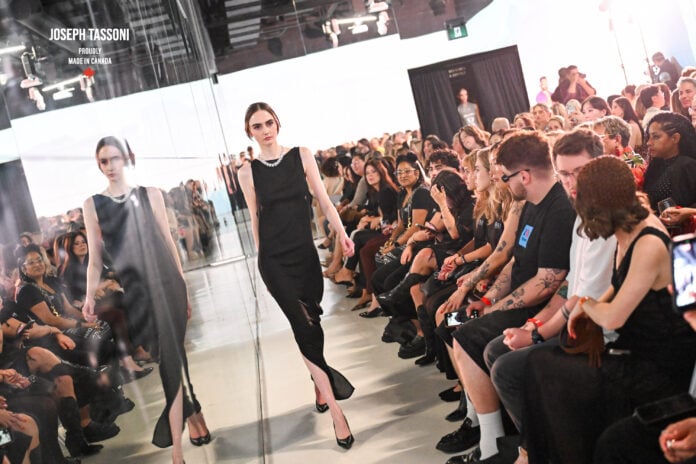
Natural Authority -Joseph Tassoni runway show, September 2026. Image: George Pimentel Photography
Canadian designer Joseph Tassoni says his latest Toronto runway production was his strongest to date, following an evening at The Well that brought together fashion, immersive art, hospitality and a growing customer community around his independently operated, Made-in-Canada brand.
Natural Authority, Tassoni’s Spring/Summer and Fall/Winter 2027 presentation, took place September 18 at Arcadia Earth at The Well in downtown Toronto. Two runway presentations were staged during the evening, with Tassoni estimating that more than 400 people attended the broader event. Retail Insider attended the packed 8:30 p.m. presentation.
“It was my best show yet,” Tassoni said in an interview following the event. “There’s no question.”
Joseph Tassoni, Image: George Pimentel Photography
His assessment wasn’t based simply on turnout. Previous presentations had placed considerable emphasis on demonstrating the breadth of his collections and ensuring customers understood the different categories he produced. This year, Tassoni started with a different objective.
“This time, my focus, I wanted a feeling,” he said. “I wanted people to leave feeling something.”
The shift marked an evolution for a designer who has been staging independent runway productions since 2023. Commercial considerations remained important, Tassoni said, but he gave himself greater freedom to develop the collection around a creative idea.
Natural Authority explored confidence, presence and what Tassoni describes as magnetism without needing to command attention. The idea influenced the clothing, casting and experience surrounding the runway.
Presenting a Mood Instead of a Season
The Natural Authority runway moved across outerwear, tailoring, swimwear and sheer garments without following a conventional progression through individual seasons.
“I presented a mood this year,” Tassoni said. “Here’s the mood. Here’s the feeling. How do you feel about this?”
The show opened with a transparent silk organza jumpsuit, which Tassoni selected to establish the direction immediately. Outerwear, the category on which he originally built his brand, remained part of the collection alongside suiting, blazers and swimwear.
Tassoni views the collection as a unified presentation, with sensuality and luxury expressed through different fabrics and silhouettes. Some of the most minimal garments also presented significant technical challenges.
He pointed to the swimwear, explaining that several versions were developed to achieve the fit he wanted before the pieces reached the runway.
“You have zero room for error,” he said. “If it doesn’t fit right, it shows.”
That emphasis on fit extends into how Tassoni wants customers to understand the broader brand. As the business develops, he wants his name to become associated with three characteristics: fit, quality and design.
Natural Authority -Joseph Tassoni runway show, September 2026. Image: George Pimentel Photography
Casting for ‘Natural Authority’
The same philosophy influenced the casting.
“Did the person embody natural authority?” Tassoni recalled asking during the process. “Did they have that confidence, that quiet kind of walk and that magnetism without having to scream, ‘Look at me’?”
The resulting cast brought together professional performers, returning participants and people whose personal experiences resonated with the theme.
Among them was Toronto-area aerial circus performer Maya Auchincloss, who has publicly documented her experience with cancer, multiple tumour resections and years of significant pain.
Auchincloss has said she plans to undergo a foot amputation and earlier this year completed the CN Tower Climb for Nature as one of the experiences she wanted to accomplish beforehand.
Tassoni said walking in a fashion show was another goal for Auchincloss, making her participation particularly meaningful to him.
“She embodies natural authority,” he said. “She has this natural, I don’t even know what it is, but she has a charm.”
Toronto-based performing artist Patricia Gordon, known professionally as Ponytail Patricia, was also among the cast, along with several returning participants.
For Tassoni, the casting broadened the idea behind Natural Authority beyond the garments themselves. Presence and confidence could look different from one person to the next.
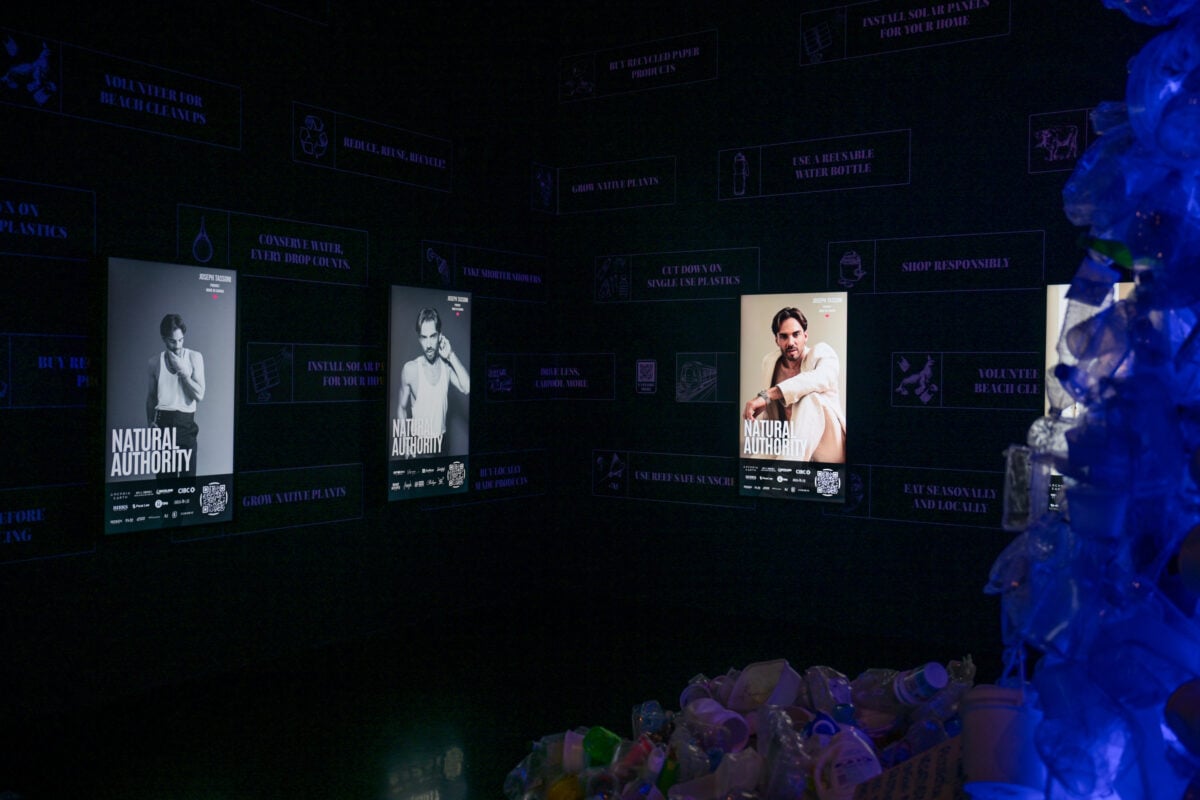
Joseph Tassoni art show at Natural Authority, September 2026. Image: George Pimentel Photography
A Digital ‘Dreamscape’
Another component of Natural Authority had intentionally remained largely under wraps before the event.
Guests entering a separate room at Arcadia Earth encountered an installation built around a digitally recreated version of Tassoni. His face was projected onto a mannequin positioned alongside two female mannequins, while his recorded voice unexpectedly addressed people entering the otherwise quiet space.
“I wanted it to be almost surreal, like you’re walking into a dreamscape of Natural Authority,” he said.
Tassoni wanted the additional room to provide an experience beyond another display of clothing. The installation was designed to create curiosity and conversation, regardless of how individual guests interpreted it.
“What I loved was that people were like, ‘What did I just experience? What was that?’” he said.
There was an intentional tension between the technology used in the installation and the ideas behind the collection. Tassoni sees a place for digital tools, but Natural Authority emphasized physical presence, clothing, movement and human interaction.
“Natural Authority was bringing that human connection back to the art of dressing,” he said. “It’s very much about the art of dressing, the art of being human.”
The Audience Response
What happened after the runway became an important measure of whether Tassoni’s approach had connected.
Following previous shows, he said people would often approach him with a general compliment: “That was a great show, Joseph.”
This time, the conversations were more specific. Guests identified individual garments and described their reactions to particular pieces. Some asked about the collection, while others were already asking about next year.
“For me, how do I measure success? I think I’m always just trying to raise the bar,” Tassoni said. “This show was very specific to, ‘That piece made me feel like this. This made me feel like that. This did this to me.’”
For Tassoni, those conversations mattered because they reflected what he had set out to accomplish. He had moved away from organizing the presentation primarily around product categories and wanted the collection to generate a more personal response.
The audience reaction also has implications for the business. Tassoni’s independently produced events put existing clients and potential customers directly in front of the collection, with those relationships continuing through the company’s other channels after the show.
Joseph Tassoni on the runway – Natural Authority -Joseph Tassoni runway show, September 2026. Image: George Pimentel Photography
A Controlled Approach to Growth
Tassoni is taking a deliberate approach to expanding the brand.
He isn’t currently focused on placing the collection across a large network of multi-brand retailers. Customers encounter Joseph Tassoni through its online presence, referrals, events and the designer’s recently opened showroom in downtown Oakville.
“Do I want to be on every single shelf across every single store and be available to everybody right now? No,” he said.
“I see that my company is taking the appropriate time to grow for longevity, and in doing so is creating a strong base of people who understand and immediately associate my brand with fit, quality and design.”
The runway production complements that approach. Existing clients, potential customers and business partners can experience the collection directly, while Tassoni retains control over how the clothing and brand are presented.
There is also a direct connection between the Toronto runway and the Oakville showroom. On September 26 and 27, the space is scheduled to host a Shop the Runway event featuring runway samples, archive garments, one-of-a-kind pieces and other designs.
Tassoni said new customers typically reach the company through its website, referrals from existing clients or visits to the showroom. He pushes back on describing that model as limited distribution, saying he is comfortable with where the business is today.
His priority is to build a strong customer base while allowing the company to expand at a pace he believes it can sustain.
Oakville Clients Follow the Brand to Toronto
The Natural Authority audience also reflected the customer community Tassoni has developed west of Toronto.
After six years operating a showroom in Burlington, he relocated to downtown Oakville this summer, opening an approximately 650-square-foot appointment-based space at 292 Lakeshore Road East.
Tassoni said many clients travelled from Oakville and Burlington to attend Natural Authority, with several arriving in pieces he had previously designed for them.
“We feel very loved and welcomed by the community in Oakville,” he said. “There were many people from Oakville that came to the show.”
The sight of existing clients wearing Tassoni designs while watching the new collection provided a visible link between the designer’s customer base and the larger events he produces in Toronto.
Fashion, Business and Community
Natural Authority also involved companies from several industries, reflecting Tassoni’s effort to build a broader community around the annual production.
Partners included CIBC Private Wealth Wood Gundy and Maison Birks, alongside businesses in real estate, beauty, hospitality and other sectors. The evening also included a silent auction supporting Oakville Hospital Foundation and initiatives focused on mental health and inclusivity.
“It’s about a community, and it’s about bringing business together,” Tassoni said. “It’s not just my collection. We’re highlighting everybody.”
That approach sits alongside Tassoni’s continued emphasis on Canadian production. The designer has kept domestic craftsmanship and quality fabrics central to the brand as it develops.
The combination of runway production, physical retail and direct customer relationships gives Tassoni several ways to develop the business while remaining independent. The annual show has also grown beyond a presentation of the next collection, bringing customers, partners and other members of the community together around the brand.
From The Well to The Ritz-Carlton
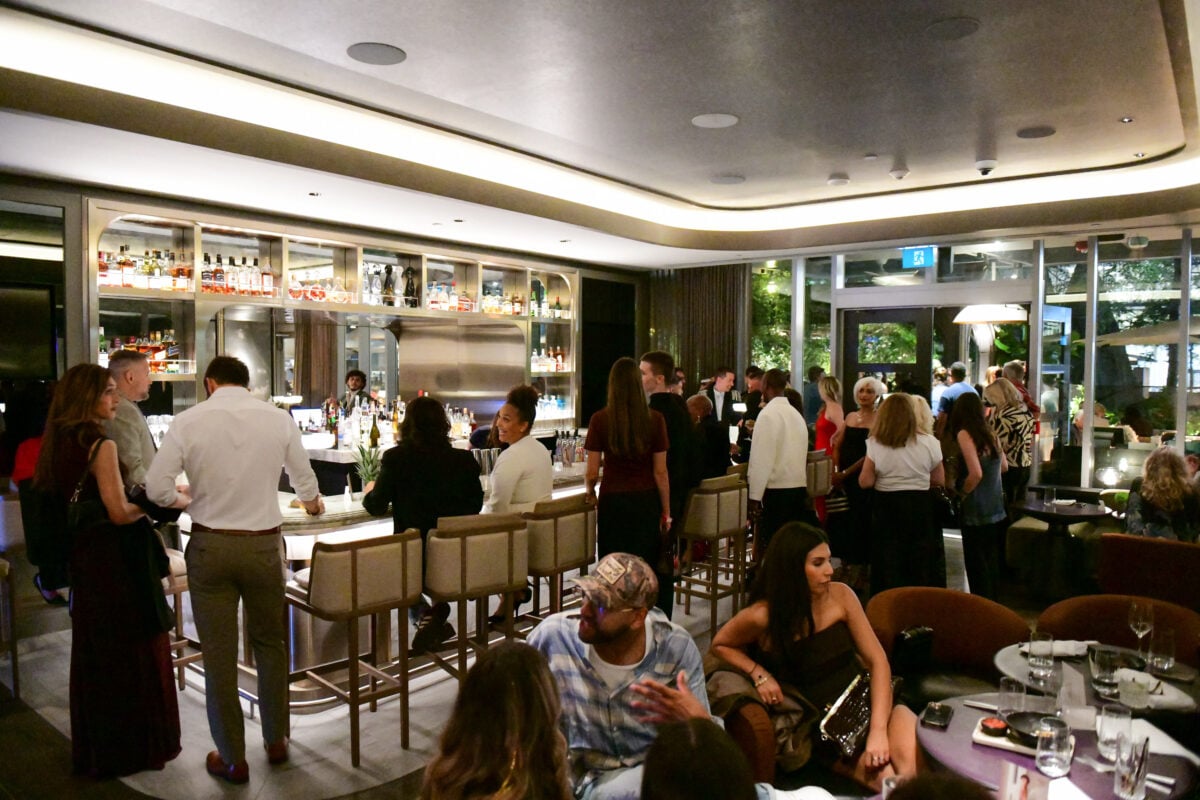
Following the runway presentations, the evening continued at EPOCH Bar & Kitchen Terrace at The Ritz-Carlton, Toronto.
Tassoni selected the venue to carry the atmosphere of Natural Authority into a more social setting where guests could meet and interact. He had worked with The Ritz-Carlton previously and felt EPOCH’s indoor-outdoor environment suited the tone of the evening.
“I wanted something that felt sexy, and I wanted something that felt sleek,” he said.
The afterparty extended the event beyond the runway, giving guests another opportunity to interact after the collection and installation at Arcadia Earth.
At the Ritz Carlton Epoch Bar & Kitchen Afterparty. Image: George Pimentel Photography
Looking Ahead to 2027
Tassoni isn’t yet ready to disclose the creative direction of his next collection, but he said discussions about another production began almost immediately after Natural Authority.
After four years of independently produced runway events, each presentation has given Tassoni another opportunity to refine both the creative experience and the business surrounding it.
Natural Authority provided a particularly clear test. He wanted the audience to respond to the collection beyond whether they liked the clothing or enjoyed the show.
“Anytime I measure success, was my big picture or the goal that I had achieved?” Tassoni said. “Did people react or did people feel what I was trying to put out there?”
By the end of the evening, guests were talking to him about individual garments, describing their reactions and asking what came next.
Canadian retail activity weakened in July following a strong finish to the second quarter, but the decline masks a widening divide between categories where purchasing volumes are growing and those where consumers remain under pressure.
Retail sales fell 0.7% from June to $73.7 billion in July, with declines across eight of nine major retail subsectors. Sales volumes decreased 1.1%, reversing much of June’s increase. Retail sales were still 5.1% higher than a year earlier, with strong real demand continuing across several major categories.
Health and personal care, apparel and general merchandise are generating meaningful volume growth, while food retail and several home-related categories remain weak. Gasoline continues to inflate headline retail dollars without corresponding growth in demand.
Retailer reporting adds another dimension. Value considerations are increasingly influencing pricing, promotions, store formats and expansion decisions, particularly in grocery and other categories exposed to household budget pressures.
This September 2026 edition of the Canadian Retail Monitor uses the latest data available for each series. Retail Trade and Wholesale Trade figures cover July, the Retail Commodity Survey covers June, and Consumer Price Index figures cover August. Earlier 2026 results are used where they materially change the interpretation of the latest data.
*Core retail excludes gasoline stations and fuel vendors and motor vehicle and parts dealers.
July interrupted the stronger performance recorded in June, when retail sales increased 0.6% and volumes rose 1.5%. Statistics Canada’s preliminary estimate points to a 1.3% increase in retail sales in August, although the figure will be revised when complete survey results become available.
Real Retail Demand Pulls Back After Strong June
July’s weakness was broad. Eight of Canada’s nine major retail subsectors recorded lower sales from June, while core retail sales fell 0.7% after increasing 1.2% the previous month.
The 1.1% decline in sales volumes was larger than the decrease in current-dollar sales, indicating a genuine reduction in purchasing activity during the month.
June had been unusually strong, with volumes rising 1.5%, while retail sales had generally expanded through the first half of 2026. July represents a meaningful reversal, but the available history does not establish a sustained contraction in Canadian retail demand.
The preliminary 1.3% increase estimated for August provides another reason for caution in interpreting July. The estimate is based on responses from 57.8% of companies surveyed, compared with an average final response rate of 87.1% over the previous 12 months.
What Drove Canada’s Retail Growth?
Despite July’s monthly decline, Canadian retail sales were approximately $3.6 billion higher than in July 2025. A relatively small number of categories accounted for most of the increase.
Retail category
Approx. contribution to YoY retail growth
Gasoline and fuel
+1.76 percentage points
Health and personal care
+1.03 pts
General merchandise
+1.00 pt
Motor vehicles and parts
+0.80 pts
Sporting, hobby and miscellaneous
+0.34 pts
Clothing-related retail
+0.33 pts
Food and beverage
+0.08 pts
Building materials and garden
-0.02 pts
Furniture, home furnishings and electronics
-0.25 pts
Gasoline again accounted for a disproportionate share of headline retail growth. Sales at gasoline stations and fuel vendors were 20.2% higher than a year earlier, while volumes declined 9.3%.
Health and personal care and general merchandise tell a different story. Both made large contributions to retail growth while also generating strong increases in purchasing volumes, making them considerably stronger indicators of underlying demand.
Price vs. Volume: Where Demand Is Really Growing
Comparing current-dollar sales with constant-price volumes provides a clearer view of the underlying retail market.
Retail category
Nominal YoY
Real volume YoY
Retail Insider reading
Jewellery, luggage and leather goods
+15.9%
+34.1%
Exceptional real growth
Health and personal care
+12.2%
+10.7%
Strong
Clothing-related retail
+6.0%
+8.3%
Strengthening
General merchandise
+6.8%
+7.1%
Strong
Sporting, hobby and miscellaneous
+5.9%
+3.9%
Positive
Motor vehicles and parts
+2.9%
+3.1%
Positive
Food and beverage
+0.4%
-2.5%
Volume pressure
Building materials and garden
-0.4%
-3.4%
Weak, sequentially improving
Furniture, home furnishings and electronics
-4.9%
-2.9%
Weak
Gasoline and fuel
+20.2%
-9.3%
Price-driven
The divide is significant. Several discretionary categories are generating meaningful real growth even as consumers remain cautious elsewhere.
Gasoline provides the clearest example of price-driven growth, while apparel-related volumes increased faster than sales dollars. Food retail shows another pattern: modest growth in dollars alongside declining purchasing volumes.
Retail Sector Pulse
Retail Insider maps Statistics Canada data to its own sector classifications to provide a consistent framework for the Canadian Retail Monitor and its sector reports. These are analytical categories rather than official Statistics Canada definitions, with broader industries used as proxies where necessary.
Retail Insider Sector
September Signal
Key Evidence
Health & Beauty
Strong
Sales +12.2%; volume +10.7%
Apparel & Fashion
Strengthening
Sales +6.0%; volume +8.3%
Department Stores & General Merchandise
Strong
Sales +6.8%; volume +7.1%
Grocery
Volume Pressure
Food/beverage volume -2.5%
Home Furnishings
Weak / Stabilizing
Aggregate volume -2.9%; mixed subsectors
Electronics & Appliances
Weak
Persistent annual decline
Jewellery & Watches
Strong
Jewellery/luggage/leather volume +34.1%
Sporting Goods & Outdoor
Positive
Sporting/hobby/misc. volume +3.9%
Automotive
Positive
Motor vehicle/parts volume +3.1%
Convenience Retail
Price-driven
Fuel spending +20.2%; volume -9.3%
Value / Discount*
Strengthening
Retailer strategies increasingly emphasize value
*Value and Discount is based partly on company reporting rather than an official Statistics Canada retail classification.
Health & Beauty Sustains Strong Growth
Health and personal care continues to rank among Canada’s strongest retail categories. Sales increased 12.2% from a year earlier in July, while volumes rose 10.7%.
The performance extends a pattern visible throughout 2026. Product-level data provide additional support: Statistics Canada’s June Retail Commodity Survey showed home health product sales increasing 15.9% year over year, while infant care, personal and beauty products increased 9.1%.
Loblaw’s latest reporting provides further Canadian context. Its Drug Retail business generated 6.1% sales growth, with pharmacy and healthcare services same-store sales increasing 7.5%. The company also reported strength in beauty and over-the-counter products.
Together, the retail-industry, commodity and company data support Health & Beauty as one of the more durable growth areas in Canadian retail entering the second half of 2026.
Apparel & Fashion Strengthens
Apparel-related retail continued to improve in July, extending the momentum identified in the previous Canadian Retail Monitor.
Sales at clothing, clothing accessories, shoes, jewellery, luggage and leather goods retailers increased 6.0% from July 2025, while volumes rose 8.3%. In June, sales had increased 5.4% and volumes 6.6%, providing further evidence that the category’s improvement is carrying into the second half of the year.
Clothing volumes increased 5.3% in July and footwear rose 13.5%. Jewellery, luggage and leather goods volumes increased 34.1%, although the breadth of that category means the result should not be interpreted as a measure of luxury demand alone.
The June Retail Commodity Survey points in the same direction, with clothing sales up 8.0%, footwear up 3.3%, and jewellery, watches and luggage increasing 14.8%.
SportChek also reported an 8.0% increase in comparable sales in Canadian Tire’s latest quarter, with athletic footwear among the stronger categories. FIFA World Cup-related demand accounted for roughly half of SportChek’s comparable-sales increase, making that result somewhat stronger than the underlying run rate.
The July data strengthen Retail Insider’s previous assessment of Apparel & Fashion as Improving. Purchasing volumes are now expanding faster than retail dollars, providing stronger evidence of real demand growth.
General Merchandise Holds Strong Annual Gains
General merchandise sales fell 1.9% in July after increasing 2.5% in June, making the category the largest contributor to the monthly decline in total retail sales.
Annual performance remains strong. Sales were 6.8% higher than in July 2025, while volumes increased 7.1%, indicating that the growth is primarily associated with greater purchasing activity.
The category has been volatile during 2026, including a 3.0% increase in January and renewed gains late in the second quarter. July interrupted that acceleration without materially changing the stronger annual demand picture.
Grocery Inflation Eases as Volumes Stay Weak
Grocery retail continues to show a pronounced divide between spending and purchasing volumes. Food and beverage retailer sales increased just 0.4% from July 2025, while volumes declined 2.5%. At supermarkets and other grocery retailers excluding convenience stores, sales increased 1.2% while volumes fell 2.4%.
Inflation is moving in a more favourable direction. Grocery inflation slowed from 4.3% in May to 3.9% in June, 3.1% in July and 2.8% in August. August marked the first time since July 2024 that grocery inflation was below the all-items CPI rate of 3.0%.
The cumulative price increase remains substantial. Food purchased from stores was 29.0% more expensive in August than five years earlier, leaving households operating from a considerably higher price base even as the current rate of inflation moderates.
Retailer strategies continue to reflect those pressures. Loblaw reported food retail sales growth of 3.3% in its latest quarter and same-store growth of 1.6%, while comparable growth at its hard-discount banners was close to 4%. Promotions, private label and discount formats continue to feature prominently in the company’s strategy.
METRO is also increasing its discount exposure. The company plans to convert 10 Metro stores in Ontario to Food Basics and has added 31 discount locations over the previous three years. Management described promotional activity as elevated amid intense competition.
The evidence does not establish universal trade-down among Canadian consumers. It does show that value considerations are influencing store formats, banner investment and promotional strategy across major grocery operators.
For the grocery sector, the inflation problem is easing faster than the volume problem.
Home Retail Shows a Divided Picture
Home-related retail remains challenged, but the latest data argue against treating the entire category as a single market.
Sales at furniture, home furnishings, electronics and appliance retailers declined 4.9% from July 2025, while volumes fell 2.9%. Electronics and appliance volumes were down 3.7%, while furniture volumes were comparatively stable at 0.5% below a year earlier.
Building materials are showing better sequential momentum. Sales at building material and garden equipment and supplies dealers increased 0.8% in July, marking the fourth consecutive monthly increase. Sales were still 0.4% below July 2025 and volumes were down 3.4%, pointing to stabilization from a weak base.
Upstream data offer another indication of activity in the category. Wholesale sales of building materials and supplies increased 3.5% in July and were 14.3% higher than a year earlier, although Statistics Canada noted that higher prices, particularly for steel products, contributed to the increase.
Leon’s latest results add further context. The retailer reported lower revenue even as delivered units increased, with customers around the middle of the market shifting toward lower average price points. Appliance units increased despite lower dollar sales, while premium customers remained comparatively resilient.
Some of the weakness in retail dollars therefore reflects trade-down and lower average selling prices, while electronics and several housing-sensitive categories remain genuinely weak. Building materials, meanwhile, are showing early sequential improvement from a low base.
Canadian Retail Momentum
The Sector Pulse describes current conditions. Retail Insider’s momentum assessment considers whether the latest observations extend or alter patterns visible earlier in 2026.
Sector
Current Condition
Momentum
Evidence
Health & Beauty
Strong
Sustained
Continued double-digit real growth
Apparel & Fashion
Positive
Strengthening
July extends Q2 improvement
General Merchandise
Strong
Volatile / Positive
June acceleration partly reversed
Grocery
Weak volume
Pressure persists
Real demand remains negative
Home Furnishings
Weak
Mixed
Furniture comparatively stable; electronics weak
Building Materials
Weak
Improving sequentially
Four consecutive monthly gains
Automotive
Positive
Moderating
First monthly decline in four months
E-Commerce
Positive YoY
Volatile
June surge partly reversed
Value / Discount
Strong signal
Strengthening
Increasing evidence across major retailers
Monthly retail data can be volatile, making direction more informative when several observations support it. Health & Beauty and Apparel & Fashion currently provide the clearest positive signals, while grocery volumes remain persistently weak.
Building materials illustrate the opposite distinction: the category remains weak year over year, but four consecutive monthly increases indicate improving sequential momentum.
Market Segment Signals: Value Moves Deeper Into Retail Strategy
Statistics Canada does not separate retail activity into Luxury, Premium, Mid-Market, Value, Discount or Off-Price segments, but company reporting provides useful evidence about how retailers are responding to changing consumer behaviour.
Value is increasingly visible in decisions extending beyond short-term promotions. Loblaw continues to expand hard-discount grocery and emphasize private label. METRO is converting conventional supermarkets to Food Basics while growing its discount network. Canadian Tire has used pricing analysis to lower prices on more than 5,000 products, while Leon’s has observed middle-market customers moving toward lower opening price points.
These actions show value considerations influencing store investment, banner strategy, merchandise architecture and pricing decisions.
Premium demand has not disappeared, and strong real growth across apparel, health and several other categories argues against interpreting the market as a universal trade-down story. Retailers are allocating more resources to price-sensitive consumers while preserving opportunities at higher price points.
Regional Retail Signals
Retail performance diverged considerably across Canada in July.
Geography
MoM
YoY
Canada
-0.7%
+5.1%
Newfoundland and Labrador
-1.5%
+15.1%
Prince Edward Island
+0.2%
+9.4%
Nova Scotia
+0.6%
+7.1%
New Brunswick
+1.6%
+6.5%
Quebec
~0.0%
+3.9%
Montréal
+1.3%
+4.1%
Ontario
-2.0%
+4.9%
Toronto
-4.7%
+2.4%
Manitoba
-0.4%
+6.3%
Saskatchewan
+0.5%
+4.6%
Alberta
+1.4%
+9.7%
British Columbia
-1.4%
+1.5%
Vancouver
-1.6%
-0.8%
Toronto recorded the sharpest reversal among Canada’s major metropolitan markets, falling 4.7% after increasing 3.9% in June. Sales remained 2.4% above July 2025, making the latest result more consistent with a reversal of June’s unusually strong increase than a sustained contraction.
Vancouver’s pattern is weaker. Sales declined 1.6% in July and were 0.8% below a year earlier, following a June result that was also slightly negative on both a monthly and annual basis. The additional month strengthens the evidence of persistent softness.
Alberta moved in the opposite direction, with sales increasing 1.4% from June and 9.7% year over year. That places the province well ahead of Ontario, Quebec and British Columbia on annual growth.
Retail sales by geography do not measure shopping-centre traffic or leasing performance directly, but the divergence is relevant to retailers and property owners assessing regional demand.
Channel Monitor: E-Commerce and Fulfilment Strategy
Canadian retail e-commerce sales declined 3.5% from June to $5.49 billion in July, representing 7.5% of total retail trade. The decline followed June’s 9.9% increase, when online sales reached 7.7% of retail activity.
July e-commerce sales were still 6.0% higher than a year earlier. Taken together, the two months suggest normalization following June’s unusually large increase, with the longer-term digital growth signal still intact.
Individual retailers continue to report stronger online growth. Loblaw’s e-commerce sales increased 19.3% in its latest quarter, Canadian Tire reported growth of approximately 14%, and METRO’s online food sales increased 16.3%.
How those orders are fulfilled is becoming increasingly important. METRO plans to close its Montréal automated e-commerce fulfilment centre and shift more volume toward store-based picking and third-party delivery, with same-day service and lower fixed costs forming part of the strategy.
As Canadian e-commerce matures, fulfilment economics and delivery speed may increasingly matter as much as online penetration itself. For Retail Insider’s Retail Technology outlook, the evolution of these operating models warrants continued attention.
What Canadians Were Buying
Statistics Canada’s Retail Commodity Survey tracks products sold rather than the industries selling them, providing a useful cross-check against the Retail Trade data.
The latest available figures cover June and are not seasonally adjusted. Total retail commodity sales increased 7.2% from June 2025, with several of the strongest categories aligning with signals elsewhere in the Monitor.
Home health product sales increased 15.9%, jewellery, watches and luggage rose 14.8%, sporting and leisure products increased 9.1%, and infant care, personal and beauty products rose 9.1%. Clothing increased 8.0%, while footwear rose 3.3%.
Home furniture, furnishings, housewares, appliances and electronics increased 3.4%, while hardware, tools, renovation and lawn-and-garden products increased 1.6%.
The commodity data reinforce the broader picture of strength in health-related products, apparel, jewellery and sporting goods, alongside more subdued growth across several home-related categories.
Inflation Adds Context to Retail Performance
Canada’s all-items Consumer Price Index increased 3.0% year over year in August, unchanged from July. Grocery inflation eased to 2.8%, while clothing prices declined 1.1% from a year earlier.
The impact on retail performance differs sharply by category. Apparel-related volumes increased 8.3% in July while nominal sales rose 6.0%, consistent with consumers purchasing more goods without equivalent price growth.
Gasoline provides the reverse example: retail spending increased 20.2% from a year earlier while volumes fell 9.3%. Grocery sits between the two, with price growth slowing substantially while retail volumes remain negative.
These differences reinforce the importance of evaluating Canadian retail growth in both current dollars and real purchasing volumes.
What to Watch in August
Statistics Canada’s advance estimate suggests retail sales increased approximately 1.3% in August, potentially reversing July’s decline. The final results will help determine whether July was primarily a correction following June’s strong performance or the beginning of a weaker period for consumer demand.
Volumes will be particularly important because the advance estimate measures current-dollar sales. General merchandise, grocery and building materials will also warrant attention, particularly whether building materials extend their four-month sequence of monthly gains.
Regional results will show whether Toronto recovered from July’s sharp reversal and whether Vancouver’s weakness persisted. E-commerce will provide another test after June’s surge and July’s partial normalization.
Retail Insider Takeaway
Canadian retail entered the second half of 2026 with growth intact but increasingly concentrated across particular categories. July was broadly weaker than June, yet the historical evidence does not currently support interpreting the result as the beginning of a sustained retail downturn.
The more important development is the widening real-demand divide. Health & Beauty continues to generate strong purchasing growth, Apparel & Fashion is strengthening, and General Merchandise remains solid despite monthly volatility. Grocery volumes remain under pressure, while Home Furnishings and Electronics & Appliances continue to face weaker conditions.
Retail strategy is adjusting to that environment. Discount-banner expansion, store conversions, pricing initiatives, private label and lower opening price points show value considerations moving deeper into operating and investment decisions across several major retailers.
For retailers, landlords, brokers and suppliers, the Canadian market remains active but increasingly differentiated by category, geography and price point. Strong real demand is present in several important sectors, but headline sales growth alone increasingly fails to show where that demand is occurring.
Toronto’s waterfront commercial market is developing differently from one end of the district to the other, with relatively low vacancy in established areas and considerably more available space in the rapidly developing east.
Across the central and western waterfront, some departing businesses are being replaced quickly. Farther east, new commercial space continues to arrive as buildings open in neighbourhoods that are still adding residents, infrastructure and amenities.
“We continue to see a growth in commercial space as more buildings come online along the eastern waterfront,” said Dorsa Alizadeh-Shabani of Toronto Waterfront BIA. “Along the central and western waterfront, as soon as a business moves out or closes, it is replaced fairly quickly with a new business.”
Alizadeh-Shabani pointed to two recent restaurant closures along the central waterfront where new operators moved in before the spaces were publicly marketed.
“We had two restaurant closures along the central waterfront that were immediately replaced by two other restaurants without even having a ‘For Lease’ sign out on the vacancies,” she said. “I think this is a good sign that the neighbourhood is in demand.”
The BIA’s 2026 Broker Package identifies 300 commercial units within its boundaries, with 260 businesses operating and 26 new businesses identified in the report. The overall commercial vacancy rate is 13.3 per cent.
Vacancy Rates Vary Across the Waterfront
Vacancy is uneven across the district. The BIA reports a rate of eight per cent in the western waterfront and seven per cent in the central area, compared with 27 per cent in the eastern waterfront.
Alizadeh-Shabani said the eastern figure reflects a neighbourhood at an earlier stage of development, where commercial inventory continues to be added.
“The eastern waterfront is the newest part of the waterfront that is still continuing to develop and grow, and the high vacancy is expected at this stage as new buildings are opening,” she said.
Redevelopment is also changing the commercial inventory. The Broker Package notes that commercial space at Quayside and 1 Yonge has been removed as redevelopment proceeds, including seven former business locations and five spaces that had been vacant.
Alizadeh-Shabani said some of the businesses opening in the east suggest growing interest in experience-based concepts.
“I think we expect that there is a higher demand for experience-based spaces,” she said. “We have had a climbing gym, virtual golf venue and a fitness studio move into the neighbourhood within the last couple of years, and I think the visitors and residents would appreciate more of those types of businesses in addition to the food and beverage stores that are there.”
More Year-Round Destinations
Service businesses make up a significant part of the waterfront mix, particularly in residential areas where they serve neighbourhood needs. Alizadeh-Shabani said there is room for businesses that can also give people a reason to visit throughout the year.
“We have a lot more businesses in the service category than anything else,” she said. “While that is great for residents, it would be good to see more businesses that are an exciting destination year-round that can help drive people to the waterfront outside of the summer months.”
Winter remains the most challenging period, according to Tim Kocur, Executive Director of Waterfront BIA. He said businesses and waterfront organizations have been experimenting with ways to sustain activity during the colder months.
“Winter is obviously the biggest challenge, as always, but even there we’re optimistic about year-over-year growth,” Kocur said.
He pointed to Queens Harbour, where seasonal winter décor helped attract customers through January and February. Harbourfront Centre has expanded winter market programming around its skating rink over the past two years, while Boxcar Social hosted Miracle Toronto during the winter.
“Our hope is that creative programming and activation in winter encourages others to learn from and experiment, too,” Kocur said.
New Pinnacle towers featuring mixed-use buildings and retail opportunities. Image: Pinnacle International
Customer Bases Change Across the District
The waterfront serves residents and downtown workers alongside tourists, airport passengers and people visiting its parks, cultural institutions and attractions. The relative importance of those groups changes depending on location.
“We have quite an interesting mix of retailers currently, and in the central waterfront we see mostly businesses that cater to tourists and visitors,” Kocur said. “As we move more west, you can feel a shift in the types of businesses in that they are mostly there to serve the residents.”
Waterfront BIA’s Area Data Package puts average household income among waterfront residents at $151,857. Average household size is 1.8 people and the average resident age is 38.
The residential population exists alongside substantial visitation. Environics data included in the package recorded 74.3 million visit events within the waterfront study area in 2025. The measurement represents visits rather than unique people, meaning an individual can account for multiple visits.
How that balance develops in the east remains an open question.
“It would be interesting to see how the development will shape the type of businesses we are going to see in the east,” Kocur said.
Quayside Will Add a Four-Season Anchor
Major development and infrastructure projects are expected to reshape the eastern waterfront over the coming years.
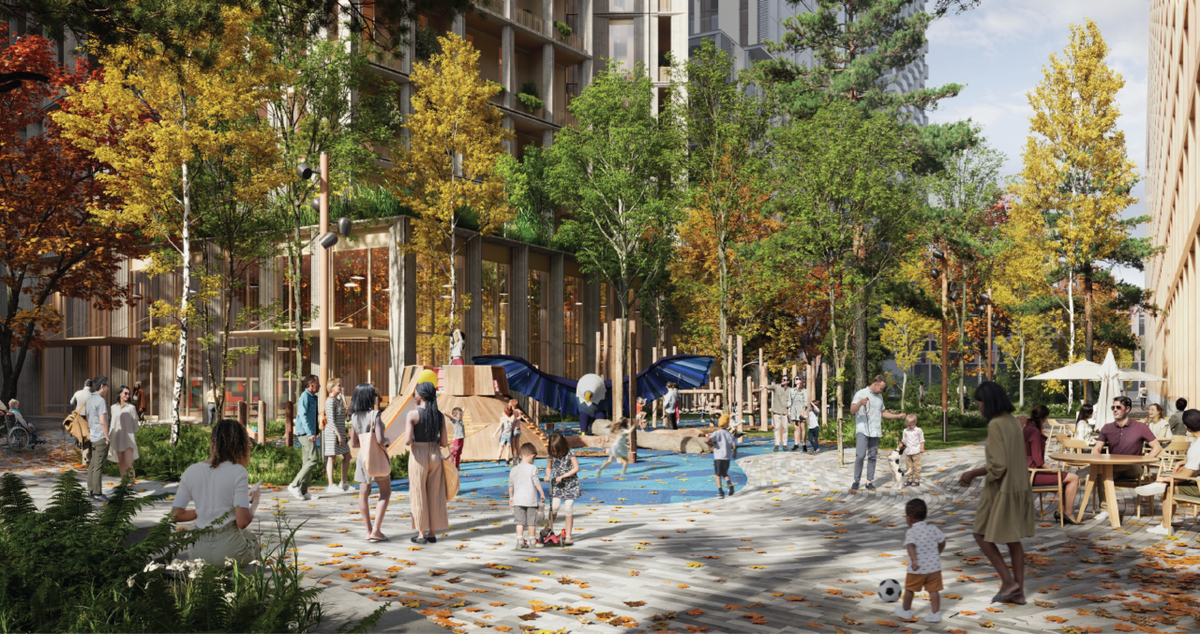
The first phase of Quayside is planned to include more than 1,700 affordable and market rental homes, alongside additional residential development, public spaces and community infrastructure. A Toronto Public Library branch planned for Quayside will be the first TPL branch on Toronto’s waterfront.
Kocur expects the library to contribute to year-round activity.
“The addition of the City’s planned library for the first phase of Quayside on Queens Quay will be a four-season local anchor that will further help draw more retail around it,” he said.
Alizadeh-Shabani believes the larger change in the eastern commercial market could come as transportation and public-realm infrastructure catch up with development.
“I think the build-out is going to be very similar to what we are seeing now,” she said. “I think we’ll see most of the shift once the higher order transit has been put in place and the Queens Quay public realm work has been done on the east to match the western waterfront.”
The Waterfront East Rapid Transit Line is jointly funded by the municipal, provincial and federal governments, with Toronto City Council authorizing early construction work in 2026. The approximately 3.8-kilometre project will extend higher-order transit through the eastern waterfront to Ookwemin Minising, with dedicated infrastructure along Queens Quay East, Cherry Street and Commissioners Street.
Early work includes portions of the Queens Quay East extension and reconstruction, adding another major piece of infrastructure to a district where residential and commercial development continues to advance.
Quayside, image via Waterfront BIA
Aqualuna Brings a Significant Retail Commitment
Aqualuna at Bayside Toronto provides a current example of retail investment around Parliament Slip.
The fourth and final residential phase of the 13-acre Bayside Toronto development includes 240 condominium units and approximately 18,000 square feet of ground-floor commercial space. Original Luxury is preparing an approximately 8,500-square-foot flagship at the property, representing a substantial footprint within the building’s commercial component.
Kocur said the Parliament Slip location has attributes that should become increasingly important as the surrounding waterfront is completed.
“The Aqualuna site right on Parliament Slip should be seen as particularly attractive,” he said. “We know from when we do walking or boat tours for visitors that that building is one of the most stunning and beautiful in Toronto now.”
Future pedestrian connections will further integrate the site with the eastern waterfront.
“In 2028, the other side of the slip will have a pedestrian bridge, and at that point this site is essentially in the middle of the Water’s Edge Promenade that will run all the way from Sugar Beach and into the Port Lands and the new Biidaasige Park viewing area looking back at the city that’s already open,” Kocur said.
The Keating Channel Pedestrian Bridge is anticipated to open in mid-2028, connecting the southeast foot of Parliament Slip with Biidaasige Park North on Ookwemin Minising. The bridge will connect the Water’s Edge Promenade east of Parliament Slip with Biidaasige Park and the larger regional park system.
For commercial space around Parliament Slip, those connections will place a much larger stretch of the waterfront within a continuous pedestrian and cycling network.
Future Acqualuna retail and storefront for Original Luxury. Image: Tridel
Opportunities Around Bathurst and Rees Park
Kocur also identified the Bathurst corridor and the area surrounding Rees Park as locations where additional businesses could help generate year-round traffic.
“There are also a couple of opportunities in the Bathurst corridor and around Rees Park that can attract more businesses that generate more foot traffic year-round and are also attractive to visitors landing right at Billy Bishop Toronto City Airport,” he said.
Those areas have different customer dynamics from the central and eastern waterfront. The Bathurst corridor can draw from nearby condominium residents and airport passengers, while the central waterfront has a heavier visitor and tourist component.
Businesses evaluating waterfront locations are therefore looking at several distinct commercial environments rather than a single uniform market.
Waterfront Retail Continues to Evolve
The Broker Package identifies a varied group of businesses that have recently joined the waterfront, including restaurants, wellness operators and personal services.
The established central and western waterfront currently have substantially lower vacancy rates than the east, while Alizadeh-Shabani says some vacated spaces in those areas are being replaced quickly. The eastern waterfront has considerably more available space as new development continues to add commercial inventory.
Its retail environment will take shape alongside new housing, transit investment, public-realm improvements and community infrastructure. Experience-based businesses are already appearing in the mix, while the BIA sees room for additional concepts capable of attracting customers throughout the year.
The differences across the district will remain important as the waterfront grows. Central, western and eastern locations serve different customer bases and are at different stages of development, creating different opportunities for retailers, restaurants and service businesses considering Toronto’s waterfront.
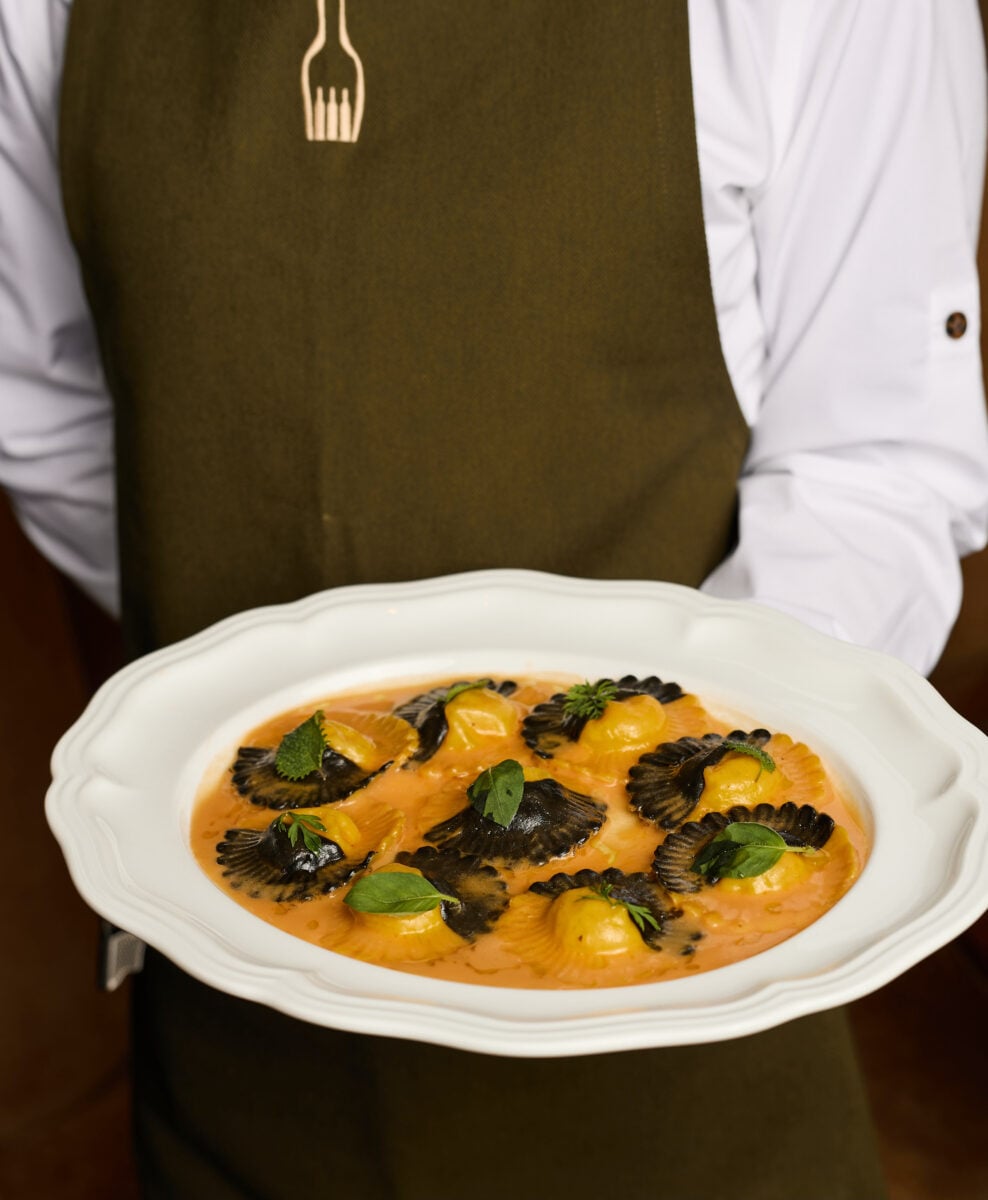
The Italian restaurant is located at 1055 Yonge St. and is majority-owned by Lunaro Hospitality, a Toronto-based company founded by the Dilawri family and led by managing director Rayana Dilawri. The opening represents Lunaro’s entry into restaurant operations and Friedlich’s first restaurant as executive chef.
Shay Ristorante is named after Friedlich’s daughter and is described as a personal expression of his heritage and story, with a focus on creating a dining experience centred on family and Italian culinary traditions.
“From our earliest conversations with Justin, we knew he had a distinctive vision for Shay Ristorante,” said Rayana Dilawri, Managing Director of Lunaro Hospitality. “We are thrilled to see that vision come to life and we are proud to open our first restaurant with him.”
Justin FriedlichRayana Dilawri
Friedlich spent close to a decade at Buca Yorkville, where he advanced to Chef de Cuisine, before working as a private chef in the years leading up to Shay Ristorante’s opening. The menu includes Italian dishes such as Tajarin al Pomodoro and Supplì al Tonno, a selection of seasonal crudo, served from the kitchen as well as desserts including Tiramisù Nero, made with house-made chocolate savoiardi.
Family tradition is also reflected in the restaurant’s use of Baglio Rocca olive oil from Palermo, Sicily. Shay Ristorante is described as the exclusive Canadian home of the olive oil, which is used throughout the menu, including in Gelato all’Olio and house-made focaccia.
Lunaro Hospitality oversaw the design and build of the restaurant, working with designer Michael London. The design combines Italian-inspired elements with a Milanese influence, including stone, chestnut-toned millwork and a view of the kitchen line from the dining area.
The dining room seats 89 guests and features a floor-to-ceiling Venetian plaster wall. Its central bar is finished with fluted porcelain tile and marble and is framed by a see-through glass wall.
The restaurant also includes La Sala, a private dining room with a Tuscan-inspired terracotta and burnt amber palette. The room can accommodate up to 16 guests and is available for larger parties.
Artwork throughout the restaurant is provided by Rukaj Gallery, with the restaurant opening with The Gathering, a monumental work by artist Alex Katz. The piece is one of an edition of 40 and is based on a group portrait Katz painted in the 1970s.
Shay Ristorante is Lunaro Hospitality’s first restaurant opening, while the company says it is currently involved in three major restaurant projects in Toronto, Vancouver and Los Angeles.
Canadian grocers are facing a supply chain with less room for disruption, but new data from Capgemini shows they have fewer backup options than their global peers.
Only 34% of Canadian companies have alternate logistics routes, ports or carriers in place, compared with 44% globally, while 89% report raw-material scarcity, compared with 67% in the US. At the same time, just 44% of Canadian organizations are redesigning production processes to use less water, versus 49% globally and 70% in Germany.
Vinayak Madappa, Strategic Advisory Partner at Capgemini works with Canadian grocers on rerouting supplier relationships, stress-testing logistics networks and managing risk. He said Canada’s supply chains were built around a small number of trading relationships predominately with the USA and Mexico due to the proximity and ease of access to these markets, and the data shows it.
Vinayak MadappaHelena Lopes photo
“Only 34 per cent of Canadian organizations have alternate logistics routes, ports or carriers in place, the lowest of the 13 countries surveyed and 10 points behind the global average. For grocers and retailers in general, that means a single border slowdown or port closure can impact the ability to ensure the product reaches the shelf in a timely manner,” said Madappa.
“Diversification, while ideal, is dependent on the global markets and geopolitical trends. A balance between diversifying both within Canada and with new markets will be critical and to establish supply chain resilience.
He said the supply chain pressure is showing up in raw materials, ingredients, packaging, and production more than finished goods.
“Packaging is a good example: if you buy your cans from a US supplier, you pay tariffs on those materials even if the food inside is Canadian, so the cost of the finished product is higher. For grocers, ingredients, packaging and other upstream inputs are where scarcity and cost bite first,” said Madappa.
He said most companies went into the Canada/US trade dispute with six to 12 months of safety stock, and that buffer is running down.
“Grocers are getting choosier about which products go to which stores, sourcing more from Europe, Mexico and Latin America while also expanding and investing in local/domestic food production, and putting more behind discount banners and store brands, which sends business to smaller Canadian producers,” said Madappa.
“As of now, the question is not about availability of the product. This is pressure coming as an outcome of tariffs impacting cost management and profitability. To mitigate this, companies could take advantage of provincial trade barriers being relaxed for most products, and leverage this to balance inventory risk particularly for fresh produce, dairy and prepared foods.
“Another focus is to sharpen demand forecasting and create a multisupplier ecosystem. None of it moves fast, so shoppers could see less choice on shelves in the coming months.”
Gustavo Fring photo
He said Canadian companies have rarely had to plan around water scarcity, so few have redesigned for it.
“Only 44 per cent of Canadian manufacturers are changing production processes to use less water, compared with 49 per cent globally and 70 per cent in Germany. Food depends on water at every stage from farm to processing plant, so as roadblocks hit growing regions here and abroad, grocers will feel it in both price and availability,” added Madappa.
He said retailers are absorbing rising costs against their margins for now, but once that runs out, Canadians are likely to see the impact of fewer options on the shelf or as companies adapt – higher prices or shrinkflation.
“Tariffs, conflict and fuel prices are all hitting at once, so grocers relying on a single source or route are the most exposed. The biggest opportunity is visibility and planning leveraging AI, advanced analytics, and digital supply chain platforms enable real-time visibility and faster decision-making. This will allow for proactive risk management and help organizations identify potential disruptions, optimize inventory, and improve supplier performance,” noted Madappa.
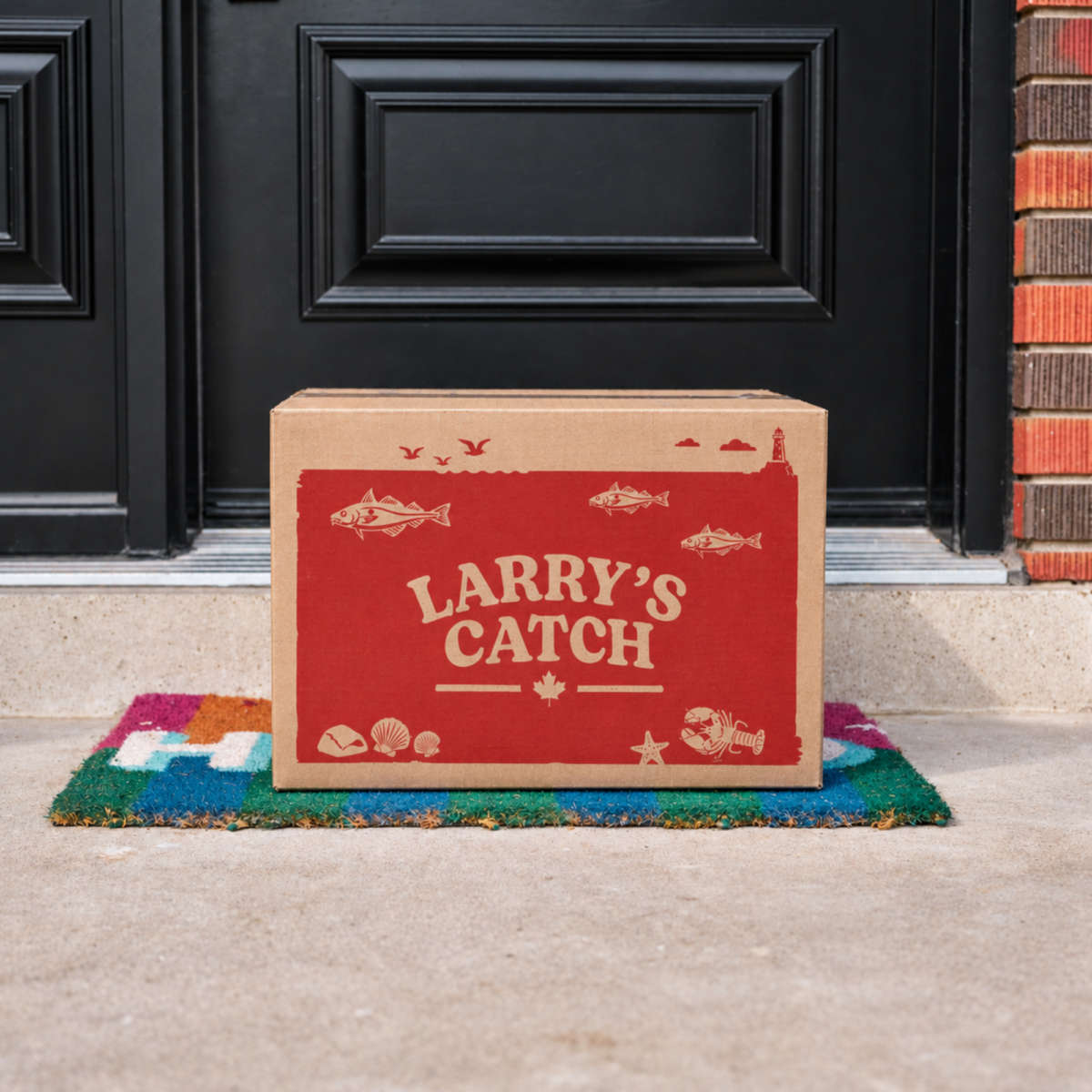
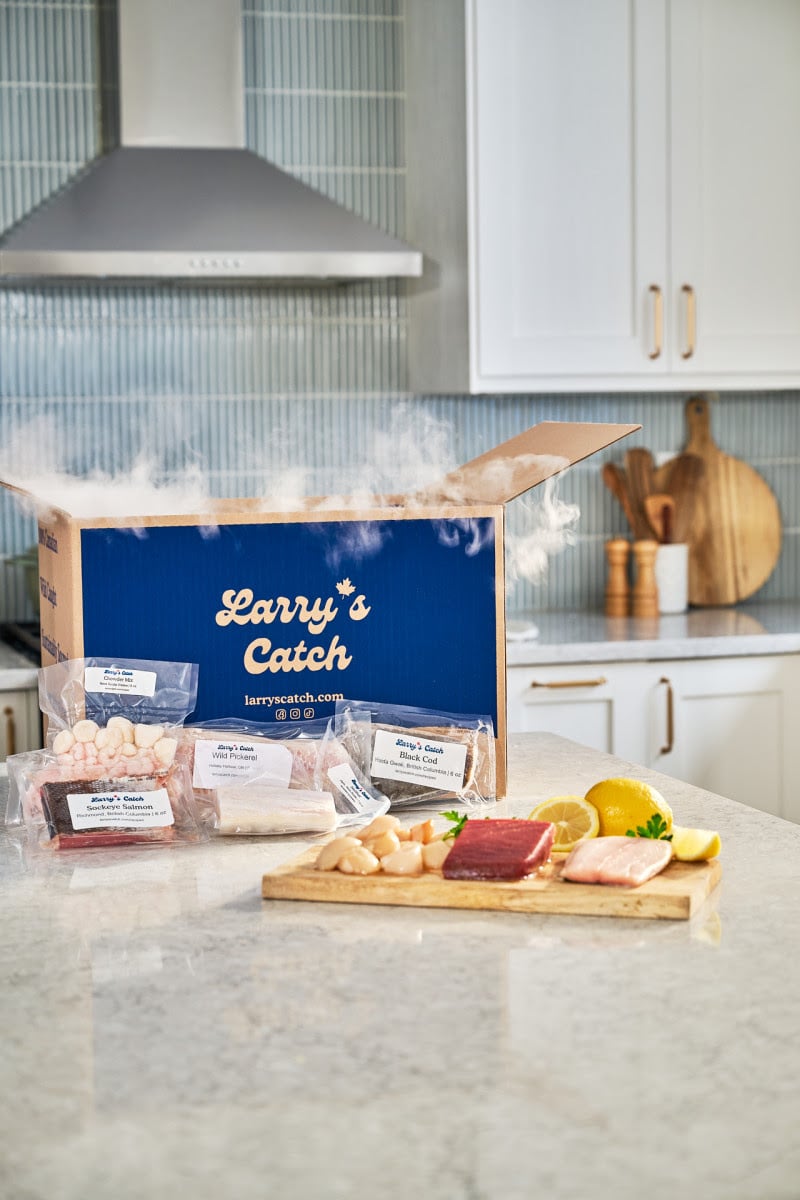
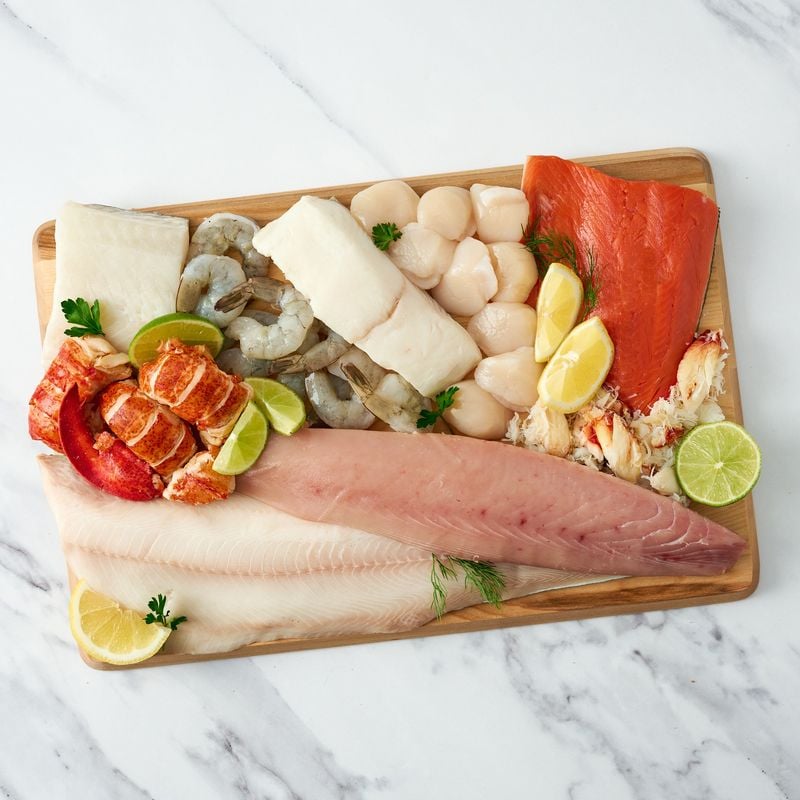
Larry’s Catch says it is expanding its operations into Western Canada with the opening of a new warehouse in Vancouver, establishing a dedicated West Coast hub to support the company’s rapid growth.
It said the new facility will allow the brand to strengthen its delivery network, lower shipping costs and make its premium, wild-caught Canadian seafood more accessible to customers across British Columbia, Alberta and Saskatchewan.
“This new warehouse is a major milestone for Larry’s Catch and a reflection of how quickly Canadians are embracing a better way to enjoy seafood,” said Glen Creaser, co-founder of Larry’s Catch. “Expanding into Western Canada allows us to get closer to our customers, improve the delivery experience and make incredible Canadian seafood accessible to more communities.
“For us, this is about much more than opening another warehouse; it’s about continuing to build the infrastructure needed to connect Canadians with the seafood being harvested in their own country, no matter where they live.”
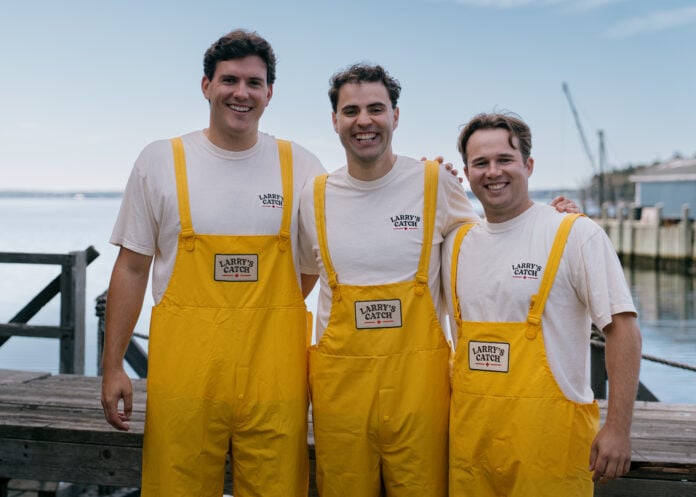
The company said the Vancouver warehouse marks a major milestone in its progress from a small Canadian start-up to a national seafood brand. What began with co-founder Creaser asking his fisherman father, Larry, to send seafood from their home province of Nova Scotia to Ontario has grown into a Canada-wide business serving thousands of customers from coast to coast.
Having launched in 2024, Larry’s Catch shipped just 264 orders in its first year and has since grown to an annualized pace of more than 30,000 orders, reflecting the rapidly growing demand for its premium, wild-caught Canadian seafood.
Larry’s Catch
The company was founded by Creaser, James Quinn and Javier Mejorada. Larry’s Catch now delivers Canada-wide, across British Columbia, Alberta, Saskatchewan, Manitoba, Ontario, Quebec, New Brunswick, Nova Scotia, and Prince Edward Island.
In an interview with Retail Insider, Creaser spoke about the latest developments with the company.
What prompted Larry’s Catch to open a dedicated warehouse in Vancouver at this stage of the company’s growth, and what investment did the company make in the facility?
We already had the ability to ship to customers in Western Canada, but opening a dedicated Vancouver warehouse allowed us to dramatically improve the experience. It opened up many more postal codes, reduced transit times, made deliveries more reliable, and lowered our shipping costs enough that we could offer free shipping on orders over $150 across much more of the region.
That also gave us the confidence to invest more heavily in growing our customer base in Western Canada. We already knew there was demand there, but it made much more sense to focus our marketing efforts once we could offer customers a shipping experience that matched the quality of the product.
The biggest investment for us was the upfront inventory required to properly stock the warehouse from day one. We wanted customers in the West to have access to the same breadth of Canadian seafood that our customers had come to expect.
Larry’s Catch photo
How much do you expect the Vancouver warehouse to reduce shipping costs and delivery times for customers in Western Canada, and how many additional postal codes will the company be able to serve as a result?
The difference has been significant. We can now offer free shipping across far more of Western Canada, and for customers whose orders fall below our free-shipping threshold, shipping costs have fallen to less than 25% of what they could have been before we opened the Vancouver warehouse.
Transit times are also much shorter and more predictable because products are starting their journey much closer to the customer.
We don’t have an exact count of the additional postal codes, but one of the biggest benefits has been our ability to reach more rural and underserved communities. Today, we’re able to serve postal codes representing more than 95% of the population in the regions we operate in.
Larry’s Catch has grown from 264 orders in its first year to an annualized pace of more than 30,000 orders — what have been the biggest drivers of that growth, and what are your current sales or order-growth targets?
Word of mouth and referrals have been a huge part of our growth. We do our best to show every customer that we genuinely care about their experience, whether that’s the quality of the seafood, how their order arrives, or how we respond when something goes wrong. When customers trust you enough to recommend you to their friends and family, that compounds very quickly.
We had also built a meaningful audience in Western Canada before opening the warehouse, so the expansion gave us an opportunity to better serve demand that was already there and accelerate organic growth and word of mouth in the region.
Our focus isn’t simply on hitting an arbitrary order number. We want to keep growing quickly, but only as long as the customer experience grows with us. That’s ultimately what has gotten us this far.
Larry’s Catch photo
How does the company plan to build its customer base in British Columbia, Alberta and Saskatchewan, and are you looking at additional warehouses, retail partnerships or other distribution options as the business expands?
We’re going to let our customers help determine what comes next.
One of the things we’ve tried to do since the beginning is listen to customers more than we listen to ourselves. We constantly gather feedback and look at what people are asking us for. Do they want to see Larry’s Catch on retail shelves? Do they want access to more Canadian species and products from suppliers across the country? Are there new regions where customers are asking us to deliver?
Those answers will shape how we expand. We’re open to additional warehouses, retail partnerships and other distribution models, but we want each move to solve a real customer need rather than expanding simply for the sake of expansion.
What does the Vancouver expansion mean for Larry’s Catch’s longer-term strategy, particularly its goal of building a national seafood brand and increasing the number of Canadians who buy Canadian wild-caught seafood directly from the company?
For us, it all comes down to access.
A lot of our customers find Larry’s Catch because they want high-quality, wild Canadian seafood but simply haven’t been able to find it where they live. Canada produces some of the best seafood in the world, yet for many Canadians it can still be surprisingly difficult to buy.
Building a national seafood brand means removing those barriers. A major part of that is making shipping more affordable, faster and more reliable, while continuing to expand the range of Canadian seafood we can offer.
The Vancouver warehouse is another step toward making great Canadian seafood accessible to more Canadians, regardless of whether they live in a major city or a smaller community.
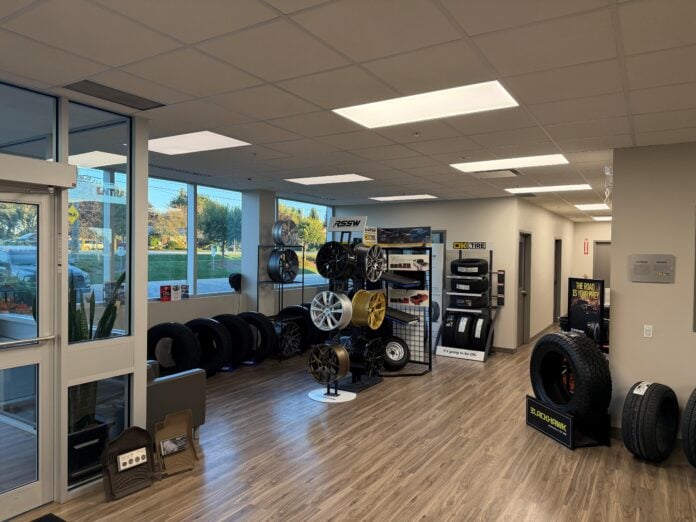
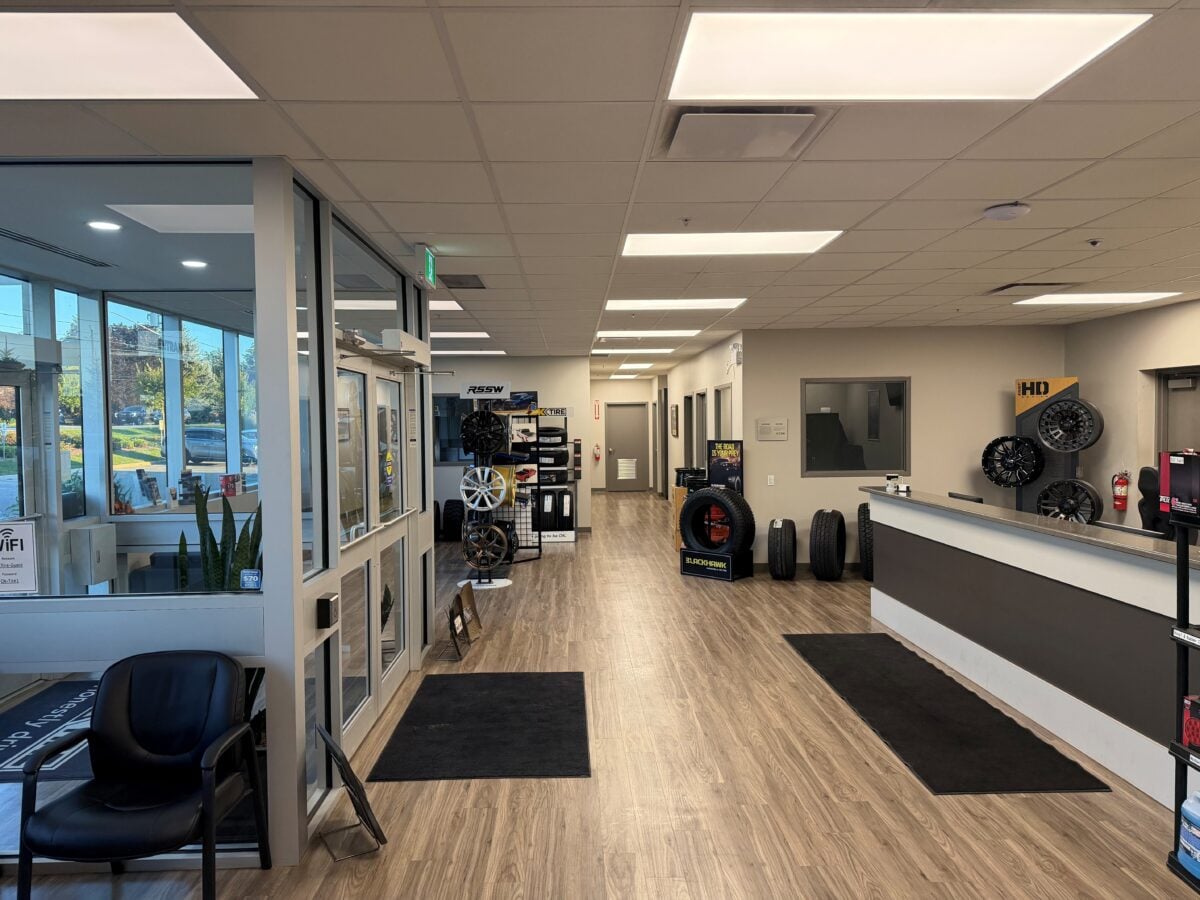
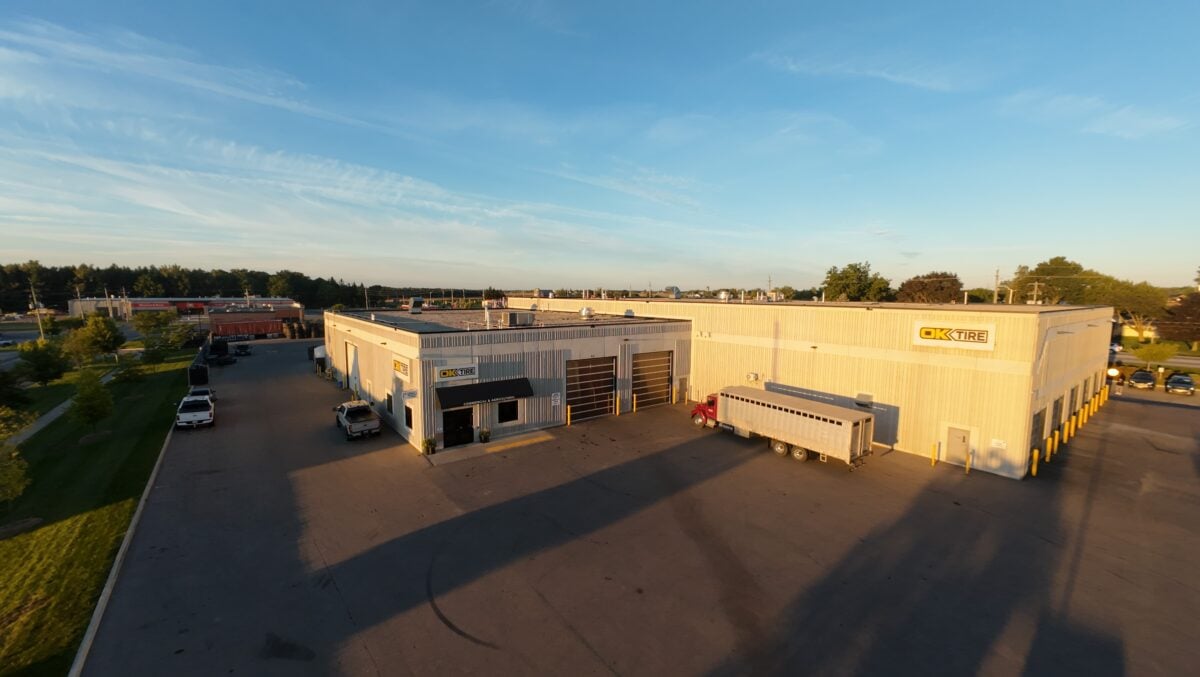
OK Tire Stores recently launched Behind the Bay Doors, a new shop owner video series designed to spotlight the entrepreneurs, leaders and communities that power its network of independently owned and operated locations across Canada.
OK Tire is the largest independent tire and auto service retailer network in Canada. Part of the Canadian landscape since 1953, there are nearly 325 independently owned and operated OK Tire locations across the country offering a full range of both retail and commercial Services. OK Tire is 100% Canadian owned and operated.
At the heart of OK Tire’s evolution under its “OK Tire 2.0” vision, the series brings to life what sets the brand apart: local ownership, deep community ties, and a people-first approach to business. Through authentic, documentary-style storytelling, Behind the Bay Doors captures the real experiences of shop owners who are not only running successful businesses, but actively shaping the communities they serve, explained the company.
OK Tire photo
The first episode, filmed in Elmira, Ontario, features store owners Eric Brubacher, Robert Bowman and Ryan Freeman offering an inside look at their journey, team, family, and longstanding connection to the community.
“This series is a reflection of who we are, the heart and soul behind what makes OK Tire so special, and where we’re going as a network,” said Brian Mielko, President and CEO of OK Tire Stores Inc . “OK Tire 2.0 is about strengthening our foundation while accelerating growth, and that starts with our people. Our shop owners are entrepreneurs, community leaders, and trusted experts. They are the inspiration behind everything we do. By telling their stories, we’re reinforcing what makes our model so powerful and why it continues to resonate across Canada.”
Shot in a documentary style, each episode highlights the pride, and leadership that come with owning and operating a local business. It also serves as a platform for owners to share their experiences in their own words, bringing transparency and authenticity to the forefront, said the company.
“Being the first dealer featured in Behind the Bay Doors was a real honour for us,” said Eric Brubacher, Co-Owner of OK Tire Elmira. “For us, this was about more than showcasing our shop, it was a chance to tell the story of the people behind it and the community that has supported us and shaped who we are. We’re proud to be part of a network that celebrates local ownership, and we’re excited to help kick off a series that shines a light on the stories behind OK Tire dealers across Canada.”
The next two featured locations, OK Tire Cold Lake and OK Pneus Ville-Marie will be releasing this fall.
The company has a goal of reaching 400 stores nationwide by 2028.
In an interview with Retail Insider, Mielko discussed the initiative.
What prompted OK Tire to launch the Behind the Bay Doors video series, and what does the initiative tell customers about the company’s independently owned business model?
Behind the Bay Doors was created to shine a spotlight on the people behind the OK Tire brand.
While customers see a nationally recognized name, what many may not realize is that every OK Tire location is independently owned and operated by local entrepreneurs who are deeply invested in their communities.
The series gives customers a closer look at the individuals, families, and teams who run these businesses every day. It highlights the unique stories, values, and community connections that make each location distinct while reinforcing the strength of the national OK Tire network.
Ultimately, the initiative helps customers better understand that when they choose OK Tire, they’re supporting a local business backed by the resources and expertise of a trusted Canadian cooperative.
OK Tire photo
How important are local ownership and community relationships to OK Tire’s strategy as the company continues to expand its national network?
Local ownership is fundamental to who we are as an organization. For more than 70 years, OK Tire’s success has been built on independent business owners who understand the unique needs of their customers and communities.
As we continue to grow our network, maintaining that local connection remains a priority. Our owners live and work in the communities they serve, support local organizations and build long-term relationships with customers. That local knowledge and accountability create confidence,
which is a key differentiator in today’s marketplace. Growth is important, but preserving the entrepreneurial spirit and community focus that define OK Tire is just as critical to our long-term success.
What have you learned from the response from dealers to the series, including the number of applications from dealers who want to participate?
The response from our dealers has been very positive. The series gave many owners a platform to share their stories and recognize the people behind their success. Their enthusiasm reflects the pride our members have in their businesses and the passion they bring to their work. Across
the network, we see entrepreneurs who are deeply committed to serving their customers, putting customer needs first, and building lasting relationships within their communities.
What the series has reinforced is that every OK Tire location has a unique story to tell. Our owners are more than business operators; they’re local business leaders who make a meaningful difference in people’s lives, whether that’s helping families stay safely on the road, supporting local organizations, or creating jobs in their communities. The positive response to the series has validated the power of authentic storytelling and highlighted the values that make our network so strong.
OK Tire photo
How does storytelling about individual shop owners and their businesses support the broader “OK Tire 2.0” vision and the company’s growth strategy?
OK Tire 2.0 is focused on strengthening our network, elevating the customer experience, and positioning the organization for long-term growth. Storytelling plays an important role in that vision because it helps communicate what makes OK Tire different.
By highlighting the experiences and successes of individual owners, we’re able to showcase the entrepreneurial opportunities that exist within our cooperative model while building a stronger emotional connection with customers. These stories demonstrate that OK Tire is more than a
brand or a collection of stores; it’s a network of passionate business owners working together to serve their communities. That authenticity helps attract future members, strengthen customer loyalty, and reinforce the values that support our growth strategy.
With OK Tire targeting 400 stores nationwide by 2028, what role will independent entrepreneurs and local ownership play in achieving that goal?
Independent entrepreneurs will be at the heart of achieving our growth objectives. Our expansion strategy is not about creating corporate-owned locations; it’s about empowering local business owners to succeed through the strength of a national cooperative network.
Whether through succession opportunities, existing independent operators joining the OK Tire family, or entrepreneurs opening locations in underserved markets, local ownership will remain a defining characteristic of our organization. We believe our continued growth will come from individuals who want to combine the freedom of independent ownership with the benefits of shared purchasing power, operational support, marketing resources, and a trusted national brand.
As we work toward 400 locations, our focus will remain on attracting and supporting entrepreneurs who share our commitment to exceptional customer service, community involvement, and long-term business success.
Nightmare Bar is bringing its immersive world of horror, cocktails, music, interactive entertainment and spine-tingling surprises to Calgary, haunting the city from October 8 to October 31.
Following a blockbuster season that welcomed more than 200,000 guests across 16+ cities throughout North America last year, Nightmare Bar, a concept by Showtime, is expanding its Halloween experience to Calgary, bringing its signature blend of nightlife and immersive entertainment to local audiences.
Nightmare Bar transforms venues into atmospheric Halloween playgrounds where the drinks are flowing, the characters are roaming, and guests never quite know what might be waiting around the next corner.
Each ticket includes a 90-minute immersive Halloween experience, with guests entering a world filled with themed cocktails, nibbles, interactive games, live entertainment and appearances from Nightmare Bar’s resident ghosts, ghouls and creatures of the night.
Part bar, part immersive experience and part Halloween party, Nightmare Bar is designed for guests who want more than a traditional night out.
Nightmare Bar photoNightmare Bar photo
From theatrical encounters and interactive challenges to music, themed drinks and unexpected scares, every session is packed with atmosphere, entertainment and plenty of photo-worthy moments.
In an interview with Retail Insider, Adam Lewis, Operations Director at Showtime, spoke about the concept.
What prompted Nightmare Bar to expand into Calgary this year, and what do you see as the opportunity for the city’s Halloween and nightlife market?
Calgary felt like a natural market for us. We’ve seen strong demand for Nightmare Bar across North America, particularly for experiences that give people something different to do around Halloween beyond a traditional nightclub or haunted house.
What we like about Calgary is the combination of a strong hospitality scene, a large young professional audience and a city that really gets behind seasonal events. Nightmare Bar sits somewhere between nightlife and an interactive Halloween experience you can come with a group, have drinks, play some fun horror-themed games, take photos and enjoy the atmosphere without it needing to be an intense haunted attraction.
We also see Western Canada as an important part of our growth, so Calgary was high on our list as we expanded the 2026 season.
Nightmare Bar photo
Where will Nightmare Bar be located in Calgary, and what can you tell us about the venue, its capacity and the investment required to bring the experience to the city?
Nightmare Bar Calgary will be hosted at Limericks, which gives us the space and existing hospitality infrastructure we need to transform the venue while still delivering a strong food and beverage operation.
Rather than treating it as one large general admission event, we operate Nightmare Bar through timed 90-minute sessions. That allows us to control the number of people inside the experience at any one time and makes it much more social and comfortable for guests.
We’re investing a significant amount into the Calgary transformation across custom décor, lighting, themed installations, signage, interactive elements, entertainment and production. Typically, bringing one of these venues to life requires a low five-figure investment in design and production alone, before marketing, staffing and operating costs are taken into account.
The goal isn’t to completely rebuild the venue. It’s about using lighting, ceiling treatments, themed areas, characters and strong visual moments to make an existing hospitality venue feel very different for Halloween.
Nightmare Bar photo
More than 200,000 people attended Nightmare Bar experiences across 16-plus North American cities last year. What has driven that growth, and how does Calgary fit into the company’s broader expansion strategy?
A big part of the growth has come from keeping the concept accessible.
Nightmare Bar isn’t trying to be a huge theme park or an elaborate haunted house. It’s a fun night out built around Halloween drinks, music, characters, interactive games, photo opportunities and a venue that looks completely different for the month.
That simplicity has allowed us to work with great existing venues in multiple cities rather than having to build temporary locations from scratch.
We’ve also found that Halloween has become much more of a social occasion for adults. People want somewhere they can go in a group, dress up, have a few drinks and actually do something rather than simply standing in a bar.
Calgary is part of our continued expansion into major Canadian markets. If we can establish strong local partnerships and prove the concept in year one, it gives us a platform to return and build the event further each season.
How does Nightmare Bar’s business model work, particularly in terms of ticket pricing, food and beverage sales, session capacity and the length of the Calgary run?
The model is deliberately straightforward.
Guests purchase a ticket for a specific 90-minute Nightmare Bar session, with tickets generally around US$16 / the local equivalent, depending on the market and date.
The ticket covers entry to the themed experience, entertainment and interactive elements. Food and drinks are then purchased separately from the venue, which operates the bar and kitchen as it normally would, but with Halloween-themed specials added for the event.
A typical session is designed for approximately 60 to 70 guests, although this varies by venue and individual session.
In Calgary, the event will operate across the Halloween season in October, with multiple sessions running on our busier nights. We also have the flexibility to add additional sessions where demand warrants it.
It works well for the venue because Nightmare Bar drives incremental customers and food and beverage spend, while we focus on ticketing, marketing, entertainment and creating the experience.
Nightmare Bar photoNightmare Bar photoNightmare Bar photo
What are you expecting in terms of attendance in Calgary, and do you see potential to make Nightmare Bar a recurring Halloween event in the city?
For a new market, we try not to put an unrealistic number on it before we’ve opened the doors, but we would be very happy to welcome several thousand guests across the Calgary season.
Our established markets have shown us that the concept can build significantly through word of mouth once people start seeing the venue and sharing content from the experience.
We absolutely see Calgary as having the potential to become an annual Nightmare Bar city.
The bigger opportunity for us isn’t simply running an event once. It’s establishing locations where people start to associate Nightmare Bar with Halloween every year. If Calgary responds the way we think it will, we’d like to come back in 2027, evolve the design, introduce new elements and continue growing it year after year.