Retail Insider is streamlining its Canadian retail news from around the web to include a handful of top news stories that can be viewed quickly during the day. Here are the top stories from the past 3 days.
Video Interview: How Canadian Consumers Are Adapting To The Higher Cost Of Living
Lesley-Anne Scorgie, President, MeVest, and an author, speaker and personal finance consultant, talks about the rising costs consumers are facing these days and how they are responding to that stressful environment.
The Video Interview Series by Retail Insider is available on YouTube.
Connect with Mario Toneguzzi, a veteran of the media industry for more than 40 years and named in 2021 a Top Ten Business Journalist in the world and the only Canadian – to learn how you can tell your story, share your message and amplify it to a wide audience. He is Senior News Editor with Retail Insider and owner of Mario Toneguzzi Communications Inc. and can be reached at mdtoneguzzi@gmail.com.
Also check out the other series offered by Retail Insider, including The Weekly podcast and The Interview Series, which are both available on Apple Podcasts, Stitcher, TuneIn, Google Podcasts, or through our dedicated RSS feed for Simplecast and other podcast players.
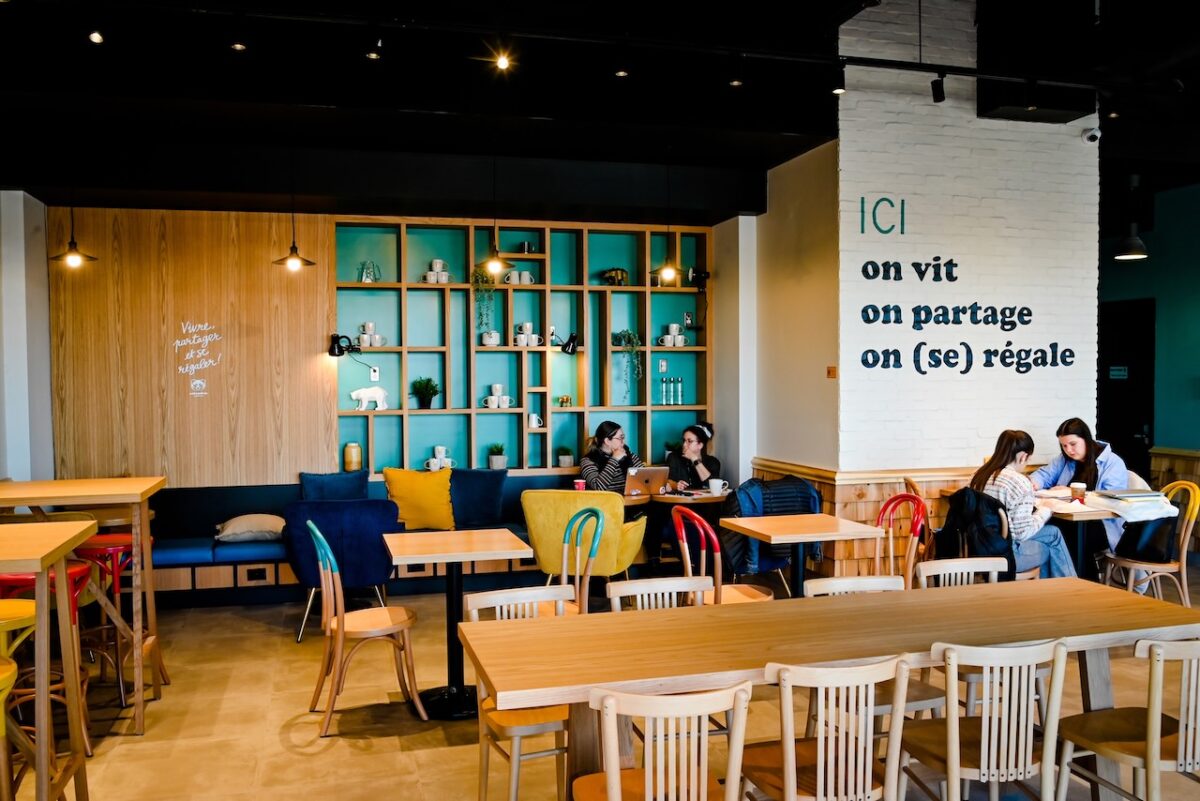
Columbus Café & Co, the famed French coffee house, has brought the French Parisian coffee experience to Quebec with plans to open numerous locations in the province and expanding to Toronto in 2023.
“We’ve immersed ourselves in the local culture and our food is fresh and prepared on site every morning,” said Maxime Mayant, the company’s CEO in Canada. “A large food offering to share every moment of the day whether it is lunch, breakfast, or snack.
Maxime Mayant
“Our values are as follows: Live, share and enjoy. We cultivate healthy eating and products and do as much as possible on site. We also cultivate ecology throughout the process, whether for fair trade organic coffee, packaging, rules in branches.”
Columbus Café opened its first location in 1994 in France and quickly became the pioneer on the French Coffee shop market.
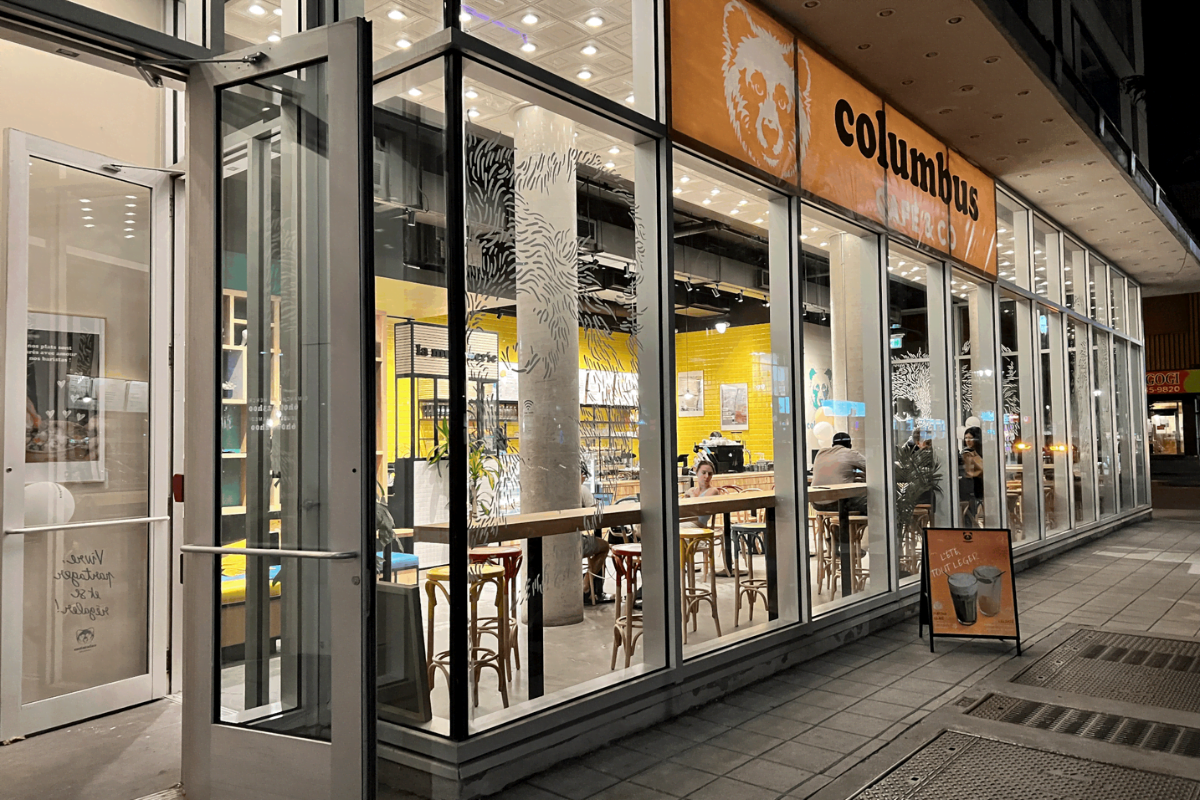
Columbus Cafe at 2153 Ste Catherine Street West
In 2001, the company kicked off its international expansion in Brussels, then began franchising in 2007. Today, there are more than 200 locations across France and internationally, with the company opening about 30 new locations a year of late.
Montreal-based Think Retail is part of Columbus Café & Co’s expansion in Quebec which so far has opened nine locations in the province. Think Retail’s founder is also helping the brand for its launch in Toronto.
Tony Flanz
“Walking before they run, Quebec is the first market that they opened,” said Tony Flanz, of Think Retail, which consults and represents international, national, and regional retail chains. “They opened during the pandemic. The first unit was on Mount Royal East in Montreal. Since then we’ve leased at least five former Starbucks locations.”
Recent openings include two Montreal locations at 262 and 2153 rue Sainte-Catherine. It’s also got a 2,088-square-foot location with drive-thru at 269 Rue Sicard in Sainte-Thérèse, Que. Plus, another Columbus Café & Co is under construction at 5526 Ave de Monkland, a 1300-square-foot former Starbucks space.
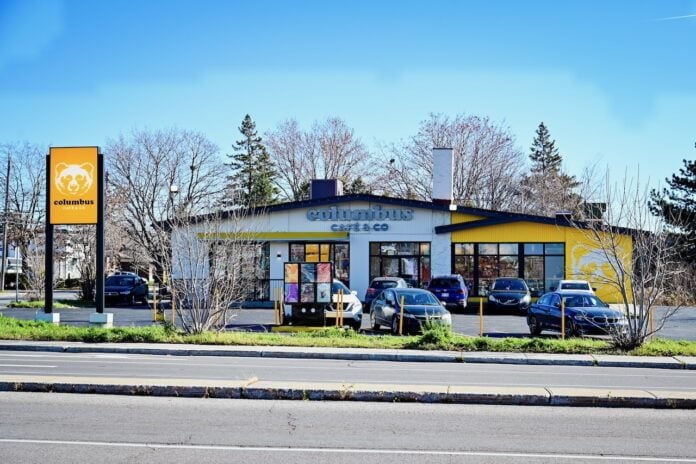
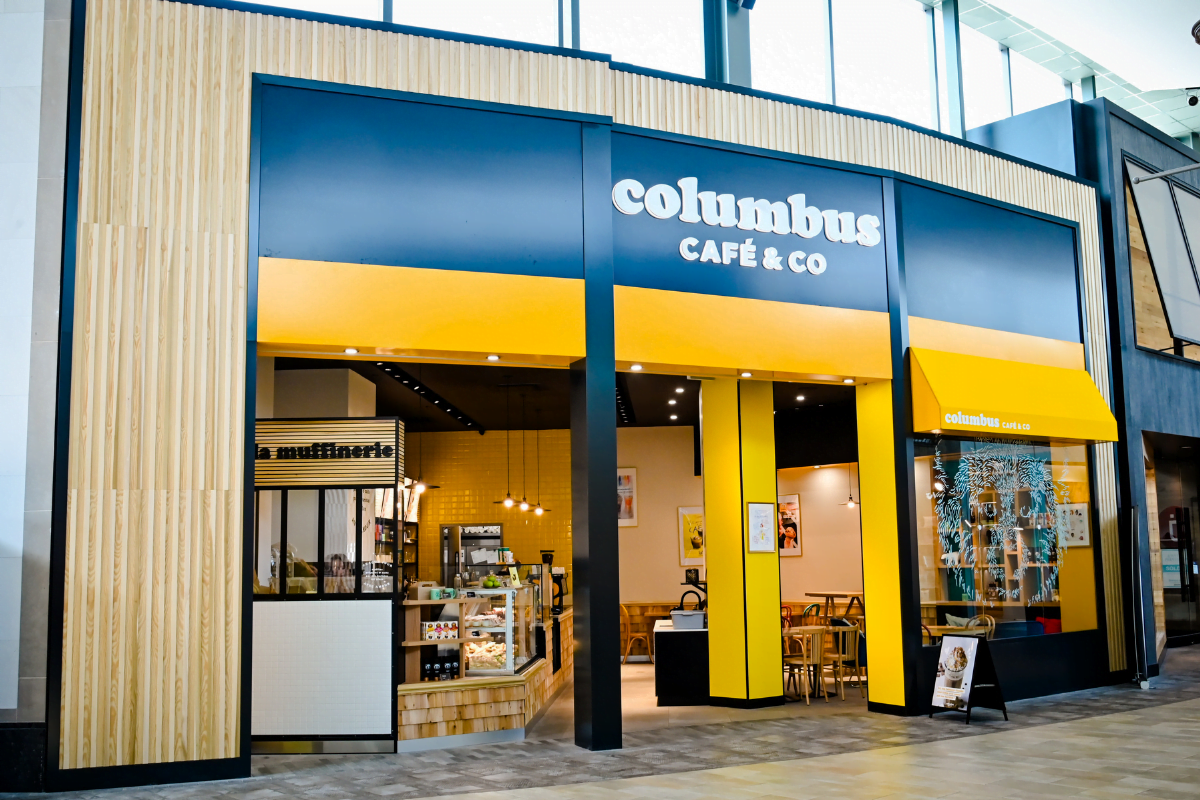
Columbus Cafe (Image: Dustin Fuhs)Columbus Cafe at Carrefour Laval (Image: Think Retail)
In addition, in the spring, Columbus Café & Co opened a 910-square-foot café at Carrefour Laval, just in front of La Maison Simons.
Flanz said the concept has been winning over the people of Quebec since its North American debut with its dynamic atmosphere, engaging menu and, of course, the premium coffee products.
“The goal is to open a minimum of one a month,” he said.
“The concept is full of personality; from the bear on its logo to its fresh sophisticated spaces, with warm woods and pops of blue and yellow. It’s the perfect addition to any neighbourhood seeking a high-end coffee shop. Plus, the menu—sandwiches, salads and Buddha bowls, plus an array of quality baked goods and sweet treats—keeps customers coming back throughout the dayparts, from breakfast through lunch, an afternoon coffee break, dinner and an evening catch up with friends.
“The French café is well positioned for high-traffic street locations in Montreal, as well as drive-thru opportunities in other cities. Markets of interest include, but are in no way limited to, the South Shore, West Island, Sherbrooke and more. Columbus will also consider busy open-air centres. The ideal size is 1,300 to 2,000 square feet.”
Columbus Cafe in St Therese (Image: Think Retail)
Flanz said the concept gravitates to high street locations, high traffic, corner locations. It is also attracted to large open air centres that have a clustering of restaurants with drive-thru and patio preferred.
“They’ll also consider the odd super regional mall but it’s not something that is necessarily a target of ours,” he said.
Flanz said the coffee shop’s food component is very strong and of great quality.
“All the products are baked fresh on the premises, they’re not subbed out to a local contractor or wholesaler,” he said. “So when you walk into their premises, it smells wonderful and the product has been freshly baked in front of you. I think that really resonates with those coffee lovers that have been seeking for a long time a person in the space that has both good coffee and good food. That’s what’s been lacking and I think Columbus’ food is the best in the market today.”
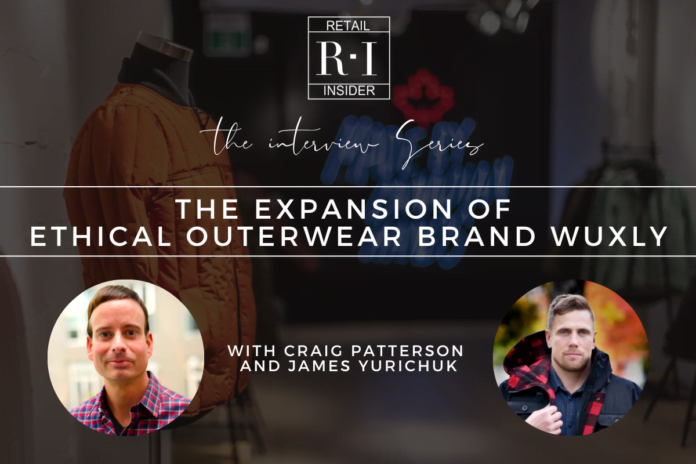
Podcast [Interview] James Yurichuk Discusses Expansion of Ethical Outerwear Brand Wuxly
Craig and James Yurichuk, Founder and CEO of Wuxly, talk about the brand and where it’s going in terms of new retail stores, wholesale, and collaborations including a recent one with iconic Canadian musician Bryan Adams.
The Interview Series podcast by Retail Insider Canada is available on Apple Podcasts, Stitcher, TuneIn, Google Play, or through our dedicated RSS feed for Overcast and other podcast players. Also check out our The Weekly podcast where Craig and Lee discuss popular content published on Retail Insider which is part of the The Retail Insider Podcast Network.
Drop us a line at Craig@Retail-Insider.com. You can also rate us in Apple Podcasts or recommend us in Overcast to help more people discover the show!
Background Music Credit: Hard Boiled Kevin MacLeod (incompetech.com). Licensed under Creative Commons: By Attribution 3.0 License. http://creativecommons.org/licenses/by/3.0/
Retail Insider is streamlining its Canadian retail news from around the web to include a handful of top news stories that can be viewed quickly during the day. Here are the top stories from the past 24 hours.
Household savings that accumulated during the Omicron lockdown are being spent, with gradual signs of slowing over the next 18-24 months;
Pent-up demand for consumer spending remains consistent with healthy savings;
The strong job market drives spending, likely with continued momentum despite inflation and rising interest rates;
Decreased retail construction limits new retail space, further tightening the market.;
Availability continues a downward trend while rents continue trending upward;
The retail market offers opportunity, with consumers more comfortable shopping in enclosed spaces and many shopping closer to home.
Tim Sanderson
“We’ve definitely got a lot busier in Q3 of this. We’re seeing a return of interest on the retailer’s front. People are coming to the market. They’re touring. They’re looking at real estate and that goes for Toronto and Montreal and Vancouver. Maybe less so in the secondary markets,” said Tim Sanderson, Executive Vice President & National Lead, Retail, JLL Canada.
“There’s interest out there and I think a lot of the pent-up demand for touring the market by retail clients was kind of put on the backburner during COVID and it didn’t help that it wasn’t that easy to get in and out of the country for a while. So people weren’t traveling but they’re back. They’re looking. Transactions are happening. The transactions that are happening are pre-COVID types of transactions. During COVID we saw a lot of percentage rent only deals with very large tenant inducement dollars attached to them. And we’re back to a much more realistic, more typical deals.
100 Bloor St W (Image: Dustin Fuhs)
“I wouldn’t say we’re back to full rents right across the board in terms of what pre-COVID rents were but we’re pretty darn close to it.”
Sanderson said the recessionary winds are certainly blowing. Interest rates are rising. The inflation rate is high. Housing market activity has slowed down.
“I do think that there’s a lot of people in the consumer market that have not been through a recession before or haven’t been through a nasty recession.”
Following a weaker start to the year with the Omicron wave, retail leasing activity has rebounded in a more stable environment with very few health and safety restrictions and is set to complete 2022 slightly above 2019 levels, said the JLL report.
“Interest in in-store shopping remains high, and businesses continue to benefit from pent-up demand. Overall, Canada’s economic momentum should continue to encourage retailers to lease space, pulling down available space while driving rents and space-absorption up. Despite recent signs of slowing, the economy remains robust with a tight labour market, pent-up demand, and healthy household savings. Businesses and shoppers continue to be largely optimistic about the future. Business conditions have improved, and retailers anticipate increased future sales ‒ although not at the same accelerated pace as in previous months. Shoppers are less hesitant about enclosed spaces and fairly confident about their future spending,” it said.
“With the proximity of the holiday season and an upsurge of sales and promotions, there are still more reasons to believe that retail will continue to cruise for the rest of the year and early 2023. For the entirety of 2023, the trend is that retail will continue to benefit from current tailwinds despite them gradually fizzling out. Healthy household savings Canadian households have amassed $260 billion in excess savings – over seven times what Canadians would spend on clothing in a year. This buffer should offset the effects of high inflation for the time being and encourage shoppers to keep spending.”
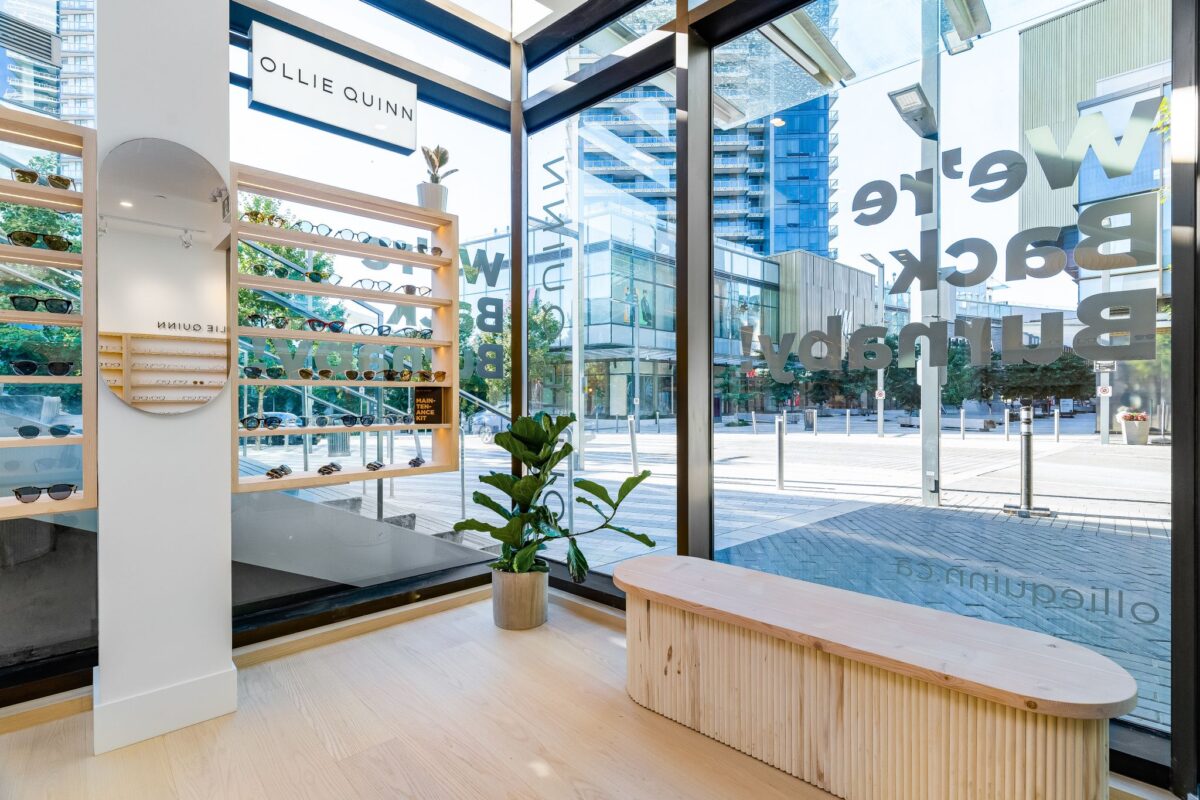
Recent Opening of Ollie Quinn at The Amazing Brentwood in Burnaby (Image: Ollie Quinn)
The report said rising construction costs in Canada continue to impact the real estate market, including retail. To contain expenses, developers, landlords, and retailers have been forced to consider whether they should build new properties, renovate existing ones, or even postpone construction altogether.
“Interest rates have also been increasing, which means it is more challenging for businesses to borrow capital and make investments. This can affect endeavours from small real estate development projects, where underwriting becomes more restricted, to large projects, where investors need access to significant capital resources to move forward with their plans,” said JLL.
“Rising labour and material costs could mean that retailers may find creative ways to continue their brick-and-mortar expansion. We’re seeing more retail pop-ups, subleases within department store spaces, and joint ventures to gain physical presence with limited capital investment.”
The pandemic during 2020/early 2021 resulted in a revolutionary adjustment to the way consumers worldwide purchased apparel as store/mall closures and shopping restrictions forced apparel consumers to embrace e-commerce to a level never seen before, says a new report by Trendex North America, a marketing research and consulting firm.
The 2022 E-Commerce Canadian Apparel Report said worldwide apparel e-commerce increased during 2021 by 15 per cent to US$759.5 billion, while in the U.S. apparel e-commerce increased by 21.8 per cent to US$181 billion.
“Apparel e-commerce growth in Canada during 2021 slowed as mall/stores began to reopen during the later part of Q2 2021. After increasing by 108 per cent in 2020 in spite of total apparel sales decreasing by 26.4 per cent, it came as no surprise that apparel e-commerce sales declined by 10.7 per cent in 2021. Last year Canadian apparel e-commerce sales totalled C$7.3 billion and accounted for 26.3 per cent of all apparel sales. All early signs indicate that Canada’s apparel e-commerce growth will further slow in 2022 but subsequently apparel e-commerce sales will return to positive growth.”
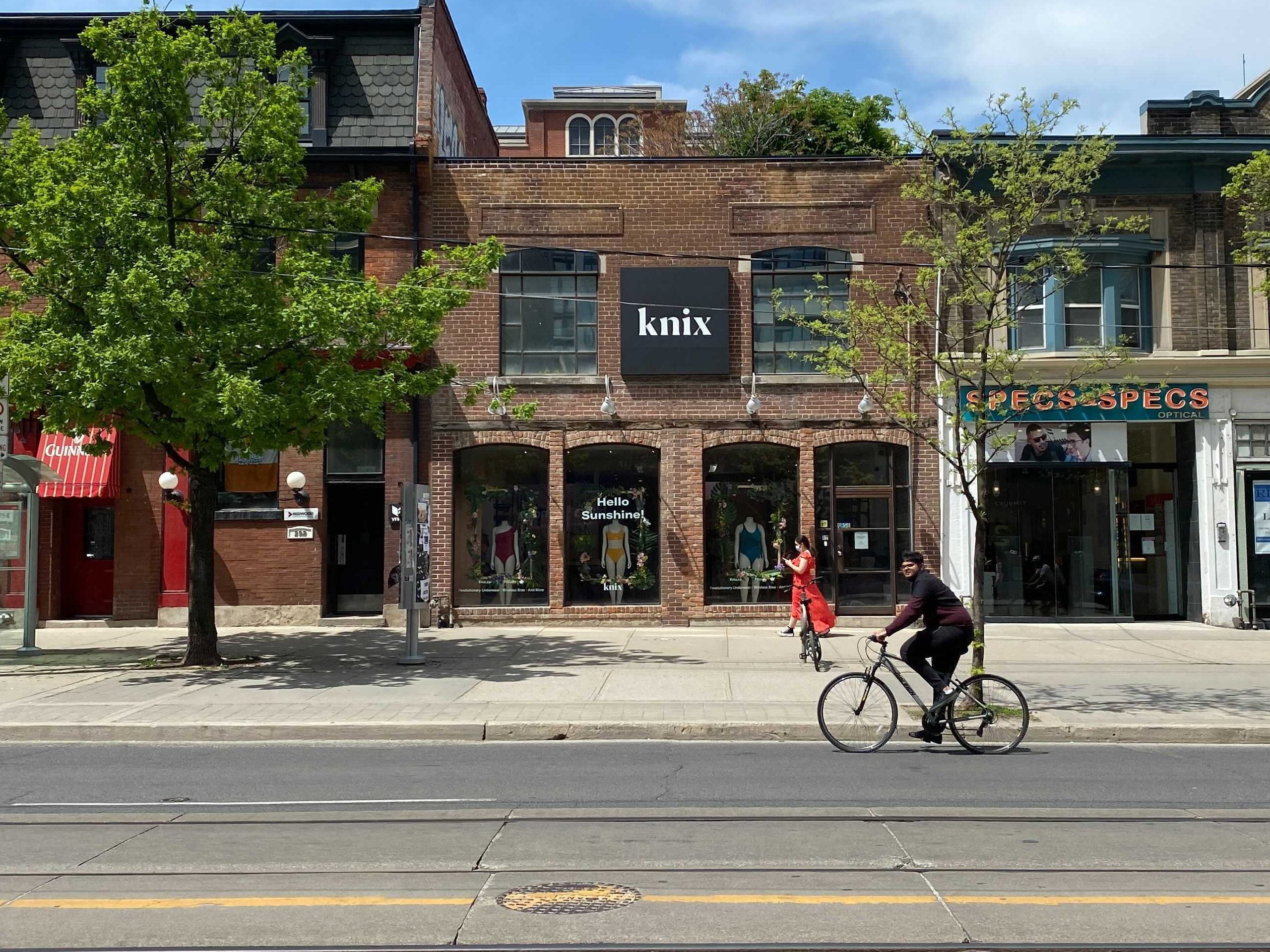
Knix on Queen Street West – Photo by Dustin Fuhs
But the report warns that the benefits of growth will not be shared equally but will benefit a small group of retailers that have “gone all in” when it comes to investing in their e-commerce capabilities.
Randy Harris, President and Owner of Trendex North America, said there’s been a four stage process that apparel e-commerce has been going through. The first stage, pre-COVID from 2015 to 2019, saw industry growth of about 10 to 13 per cent each year. The Quebec market was underdeveloped and towards the end of the period Shopify partnered with the Canadian government to help small retailers get into the e-commerce market which helped the Quebec retailers.
Randy Harris
Then we moved into the second stage, COVID, 2020-2021 with astronomical growth in the first year. It grew 108 per cent.
“The reason for the growth was obvious. Stores were closed and the consumer had no choice and if they wanted to acquire something they had to do e-commerce. But the interesting thing was that after growing by 108 per cent in 2020 the following year, especially as things began to open up in the second half the growth rate for apparel e-commerce slowed dramatically and in fact for all of 2021 the apparel e-commerce fell 10.7 per cent and that was after the growth of 108 per cent.”
Now we’re into phase three, which Harris calls return to normalcy, which will go from this year to 2025 with an expected six to eight per cent growth during that period each and every year. Digital marketing will become increasingly more important and there will be an emerging focus on profitability and not sales.
“The most interesting part of our forecast is phase four which I refer to as maturation/consolidation and that will begin in 2026 and what we’re going to see is the consumer by that time will be so overwhelmed with choices that they’re going to either turn to marketplaces to simplify their buying or buy direct from a supplier like Nike as opposed to going to The Bay and hit the Nike product on their site or we’re going to see a growth for really niche product, niche retailers like Knix, the lingerie retailer,” said Harris.
“At that point what we’re going to see is a real shakeout in the apparel e-commerce market and there will be consolidation, bankruptcies. There will be all kinds of things happening. The bottom line is a rising tide, meaning growth of e-commerce, will not lift all boats by 2026 or 2027. There will be consolidation. There will be bankruptcies. There will be people who will step back from it. I think this is a non-Pollyanna attitude towards apparel e-commerce. The consumer likes it but they still like going to the stores.”
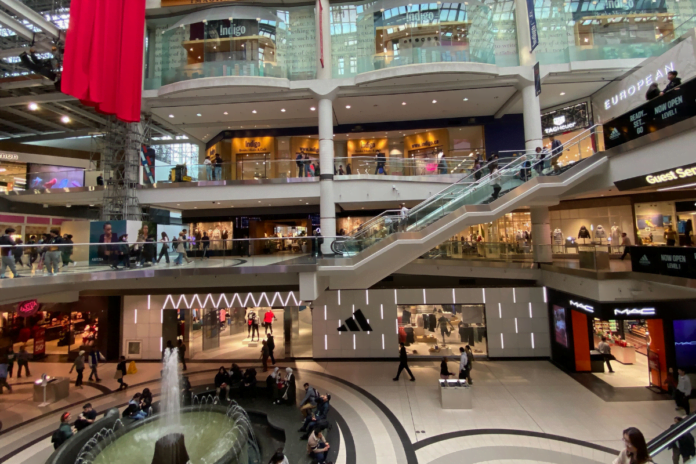
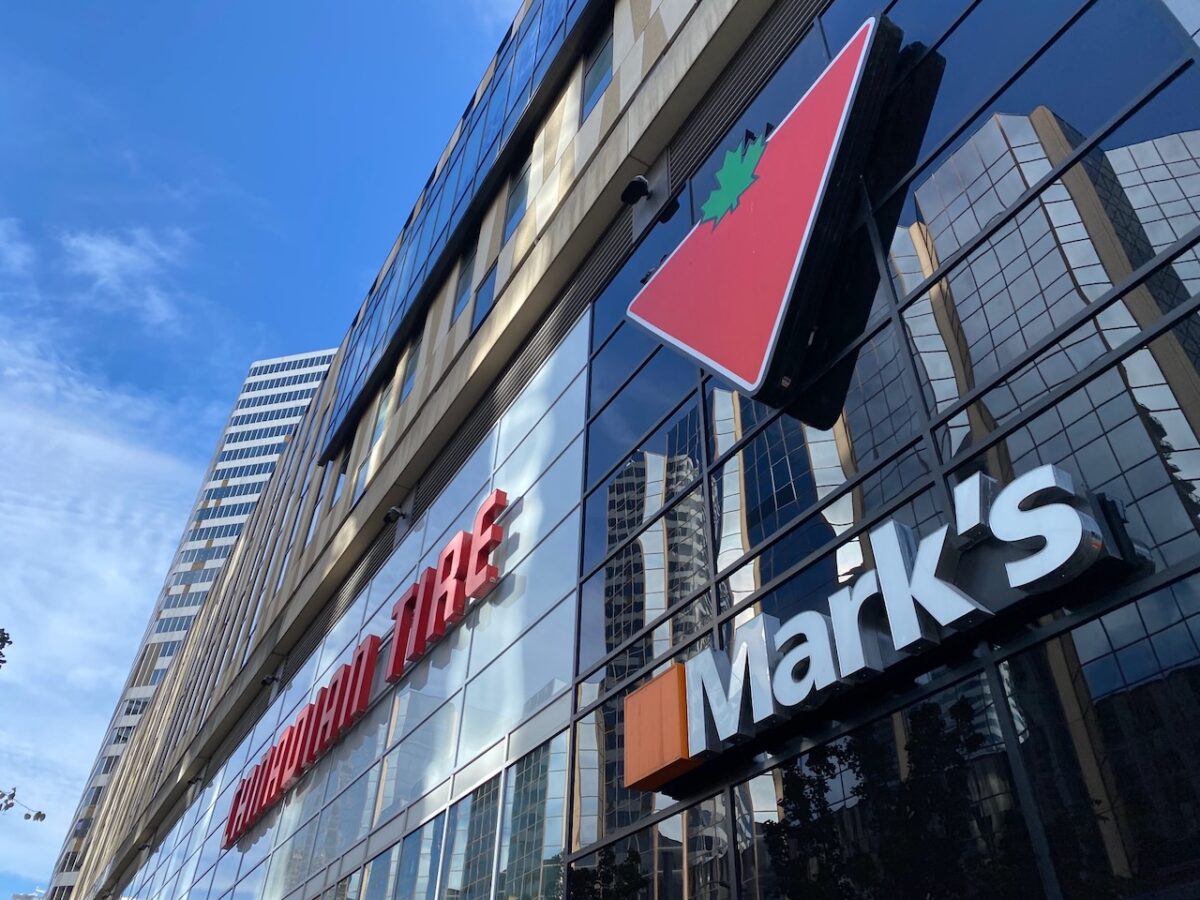
Canadian Tire and Mark’s at CF Toronto Eaton Centre (Image: Dustin Fuhs)
Harris said that his long-term worry is that a number of Canadian retailers are just not going to be able to keep up and play in this market. They don’t have the investment capital to upgrade their sites. Unless you have deep pockets, you’re not going to be able to keep up in this market.
He said the overall e-commerce numbers are skewed by the big players like Amazon and Walmart who dominate the market.
“They’ve got awareness. So people think of them first. In the long-term the smaller players are just not going to be able to keep up and the amount of money that people like Canadian Tire and Walmart, and even retailers like Aritzia, are investing in e-commerce, they’re driving the market,” he said. “In the report I mention that 15 retailers in Canada will drive the apparel e-commerce market and everybody else will be fighting over the crumbs basically.”
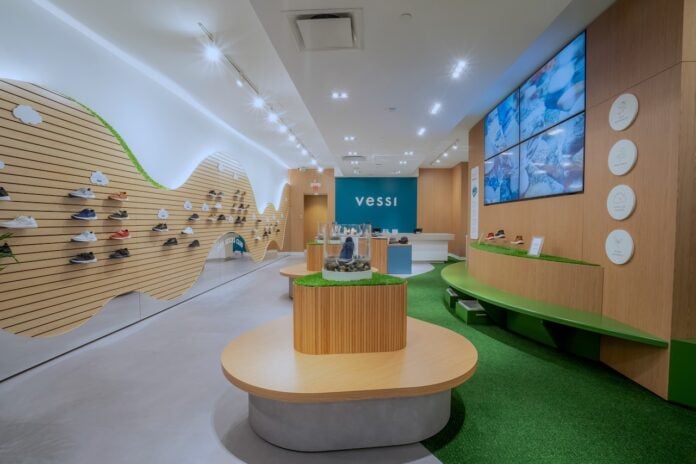
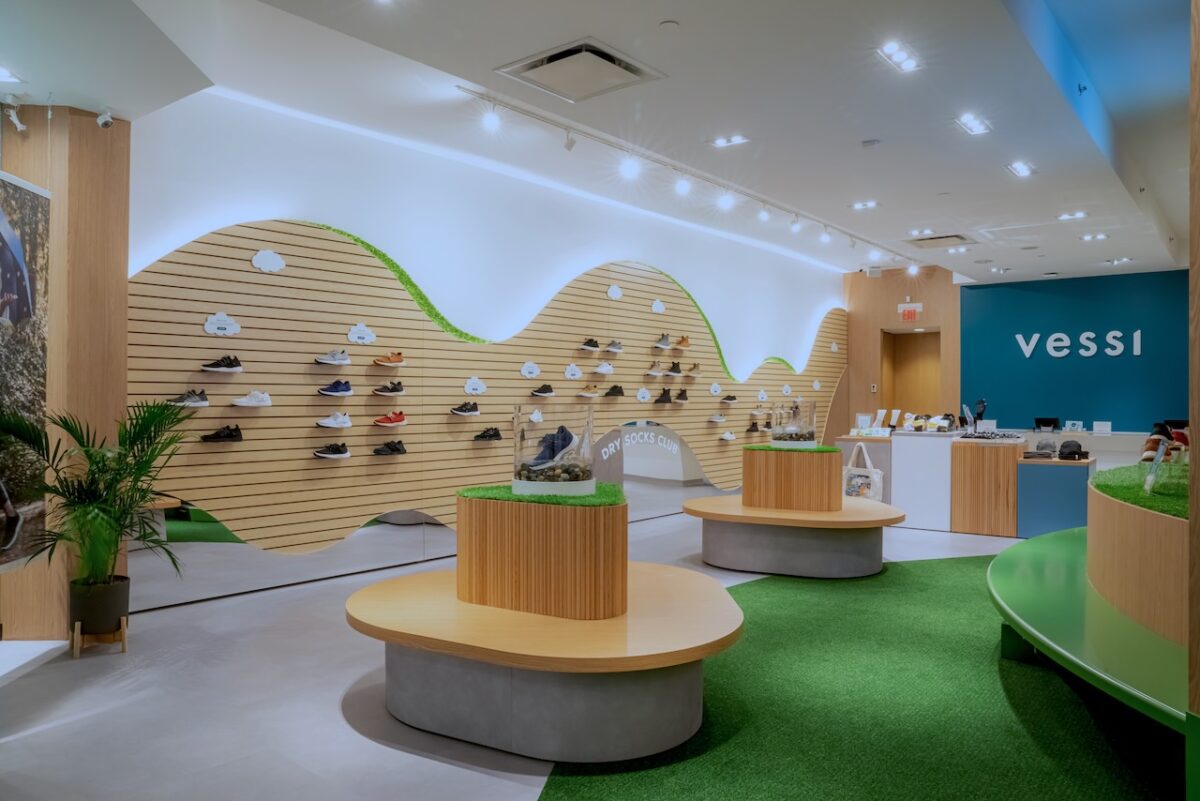
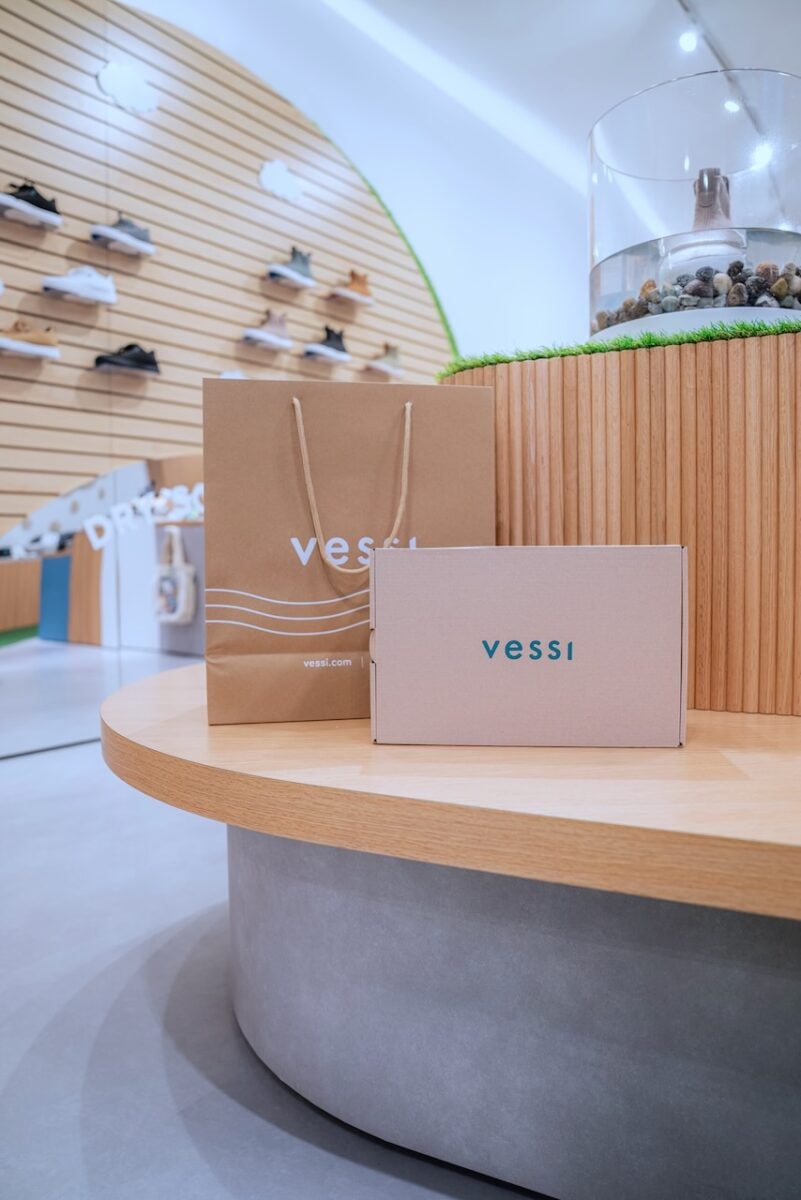
Vancouver-based waterproof footwear brand Vessi has opened its first permanent storefront in Burnaby’s Metropolis at Metrotown. Retail Insider first reported on the anticipated opening several days ago.
The 1,000 square foot retail location is designed to showcase the city of Vancouver, including a feature wall which reflects Vancouver’s mix of nature and urbanism.
Mikaella Go
“We’re incredibly proud to open Vessi’s very first retail store in our hometown when we started off with a humble Kickstarter campaign four years ago” says Mikaella Go, Co-Founder of Vessi.
“We attribute a lot of our success to the strength of our community. Listening to our fans has been a big commitment of ours and we heard that they want an in-person shopping experience in Vancouver. It was a no-brainer for us to open up our first store in the city we love and live and work in. We’re excited to meet our existing customers in-person and to introduce more customers into the Vessi community.”
Vessi Metropolis at Metrotown (Image: Vessi)
Vessi Metropolis at Metrotown (Image: Vessi)
Vessi Metropolis at Metrotown (Image: Vessi)
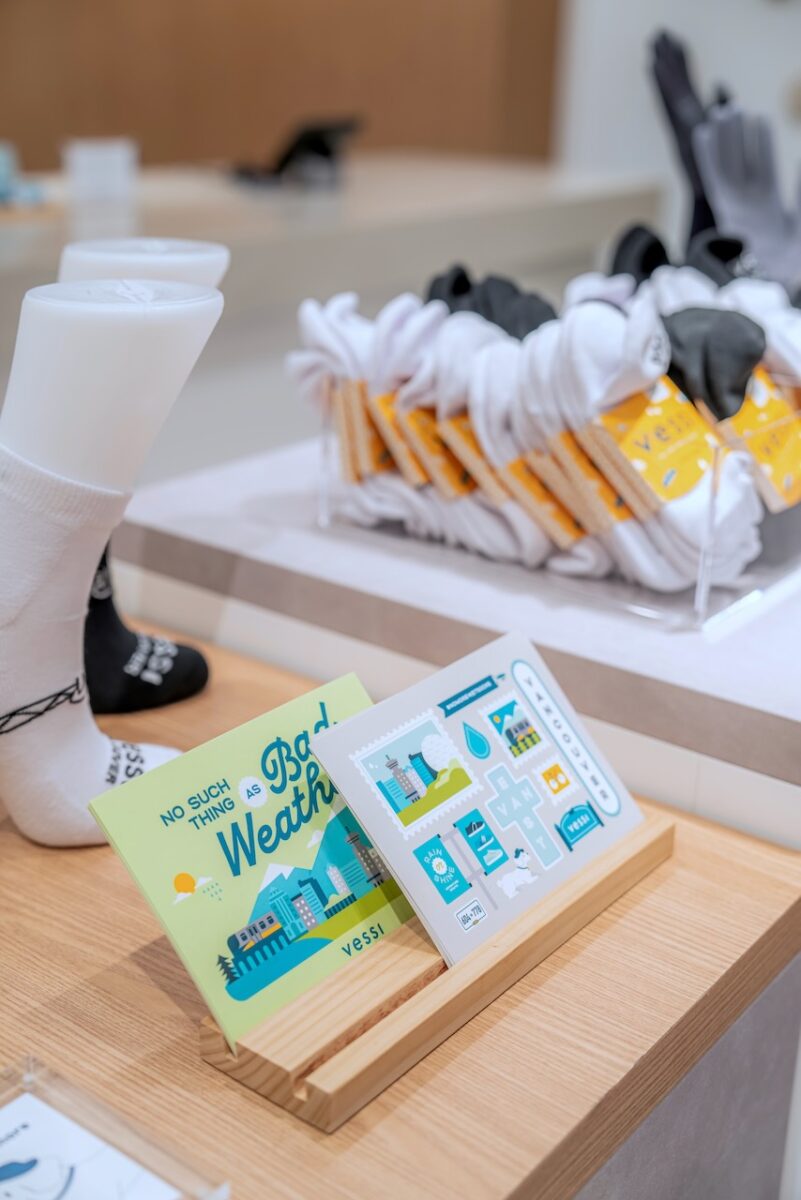
Vessi will offer the full range of footwear and accessories, in addition to featuring a limited edition store-only line of two pins, a tote and three postcards, designed by local Vancouver artist Cynthia Vo.
The retail storefront is one of the next steps for the company, which is seeing expansion on multiple fronts. Vessi will be testing additional markets with pop-up stores in other Canadian cities, and will be continuing to build its presence in U.S. markets through pop-up trunk shows at select Nordstrom locations.
Retail Insider is streamlining its Canadian retail news from around the web to include a handful of top news stories that can be viewed quickly during the day. Here are the top stories from the past 24 hours.
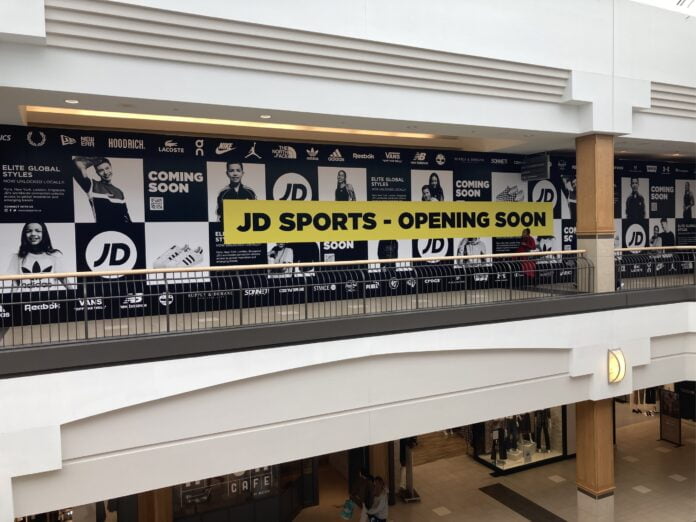
JD Sports Canada Future Location at CF Polo Park (Image: Field Agent Canada)
JD Sports, a sports fashion retailer, is opening its 10th location in Canada and is looking to open around fifteen more in 2023 – including expanding into the Quebec market.
The retailer is celebrating its first year in Canada in two weeks and since then has successfully opened ten stores, including a new location that is opening in Winnipeg on November 19th.
“In the last month, we have opened three stores. The new stores are in CF Lime Ridge in Hamilton, Scarborough Town Centre in Toronto, and in Bramalea City Centre in Brampton. And now we are going to be opening in Winnipeg at CF Polo Park in a few days. It is a market we are really excited to be in and there is a big range of JD customers in that area. From our social media, the response seems to be positive and people are looking forward to us coming to town,” says Khori Williams, the Director of Sales for JD Sports Canada.
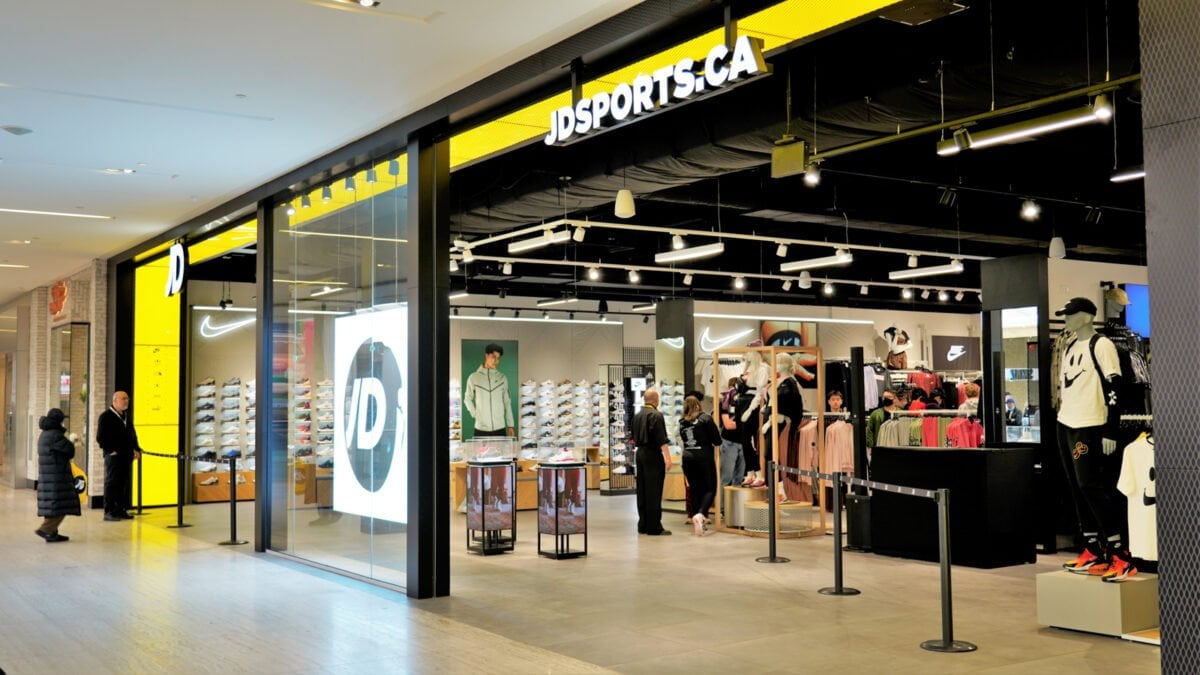
JD Bramalea (Image: JD Sports Canada)
Spanning 8,000 square feet, JD Sports at CF Polo Park in Winnipeg and will have a grand opening to celebrate being in a new market. CF Polo Park has top brands such as Michael Kors, Club Monaco, and Forever 21. It also includes a variety of restaurants and entertainment.
This store will be the 10th JD Sports store in Canada and the other locations are:
CF Fairview Mall in Toronto (First store in Canada)
Guildford Town Centre near Vancouver
West Edmonton Mall in Edmonton
CF Chinook Centre in Calgary
Vaughan Mills near Toronto
Scarborough Town Centre in Toronto
Bramalea City Centre in Brampton
Oshawa Centre near Toronto
CF Lime Ridge in Hamilton
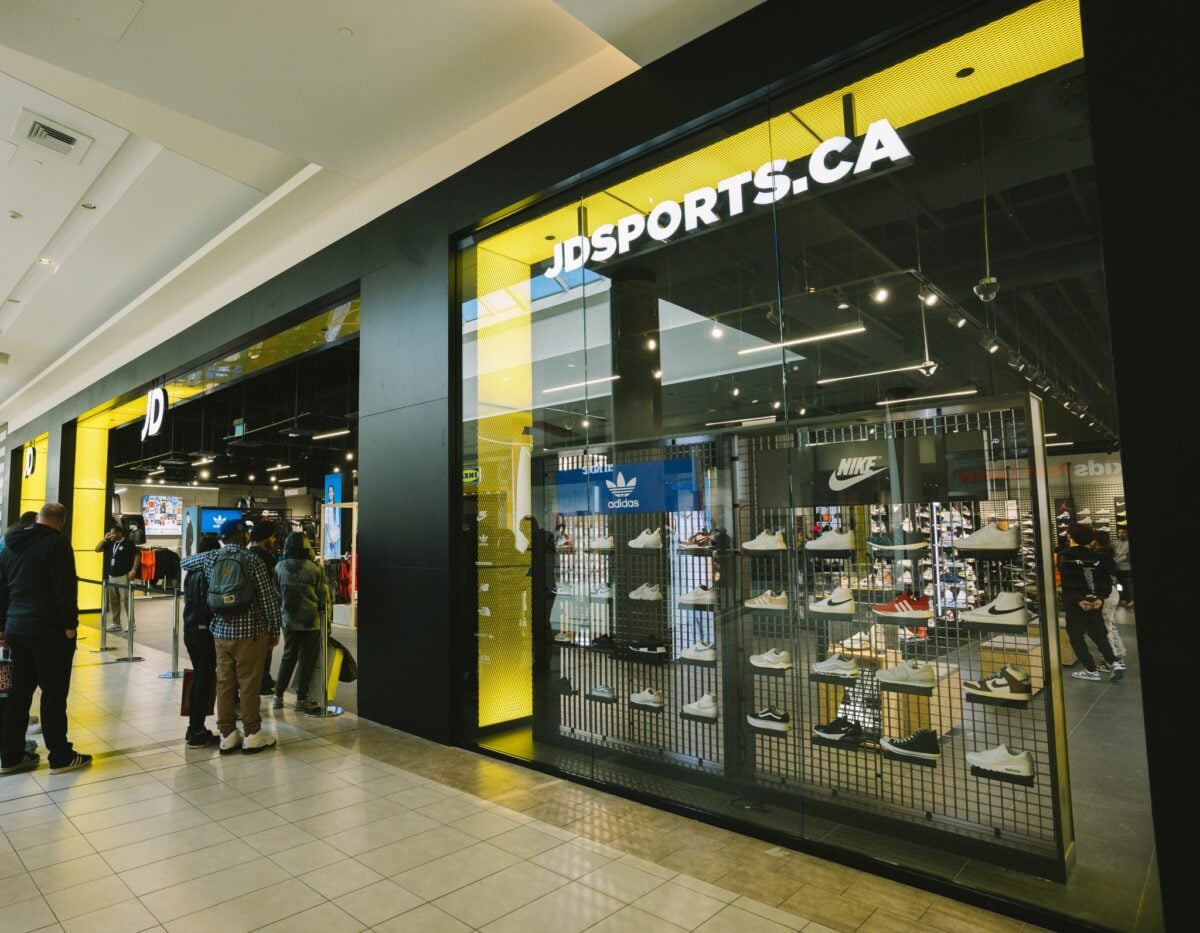
JD Sports at West Edmonton Mall (Image: JD Sports)
JD Sports was founded in 1981 in Greater Manchester in England and carries top brands such as Nike, Adidas, The North Face, Puma, Reebok, and more. Today, JD Sports has over 950 stores in 32 territories worldwide including the United Kingdom, Australia, New Zealand, Ireland, Asia, France, Singapore, Portugal, Germany, South Korea, and the United States. JD Sports decided to open stores internationally in 2010 where it opened its first international store in Lille, France. The retailer offers a variety of shoes, clothing, and accessories for men, women, and children. Where Will You See JD Sports Next? Although Williams was not able to specifically say where new locations will pop-up at this time, he mentioned JD Sports is looking at going into the East Coast, Saskatchewan, and into the Quebec market.
“What I can say is that we are looking at the Quebec market. It seems like a market that is growing, and we are seeing a lot of energy out there, especially for our industry.”
Williams said next year, he would like to see 10-15 new store openings and 80-100 new stores within the next five years in Canada.
With every store, JD Sports makes sure it feels “very local.”
“We want to represent the community we are in very well and service them with specific products. We recognize that it is not a one size fits all throughout Canada and every province is different. As a result, we want to make sure we are catering to those differences and ensuring that the entire family is able to shop at JD Sports – we have something for everyone.”
In addition to making stores feel local, Williams said JD Sports also offers sponsorships through the community, participates in different events, allows programs to occur within stores, and are always looking at local business to partner with to create experiences within the community.
JD Sports at West Edmonton Mall (Image: JD Sports)
Don’t miss out on new sneaker launches as with JD Sports, you can check out its Sneaker Release Dates for new sneakers that are coming out. Currently, the list is for all confirmed 2022 sneakers that have already been released and has launch dates of new sneakers where customers can track new releases and know what is coming. Customers can also make the decision to be notified once a sneaker they like is available. Right now, the release shows there will be two sneakers being released on November 11th. Sneaker release dates bring a new excitement into shopping as a customer can preview the shoe before it is in-store and knows exactly when the shoe will be available.
“This has been a long and entertaining ride that we have had and it has been fun and exciting. Everyone on our team is extremely happy to bring the JD Sports experience to Canada and we appreciate the positive feedback we have received since opening our first store at Fairview Mall a year ago now. In two weeks we will be celebrating our one year anniversary in Fairview Mall. Last year we had zero stores, and now we have ten – it is quite the accomplishment for us.”
Jordan Karp of brokerage Savills Canada has the mandate for JD Sports in Canada and is negotiating leases for new stores.