Advertisement
Home Blog Page 808

The Rise of the Unassuming QR Code and How it Could Change the Food Industry: OP-ED

“QR codes are everywhere now. Even though they have been around for almost three decades, the pandemic has allowed this technology to become a mainstream data sharing solution. For the food industry, the QR code’s resurgence could become a game-changer.”

QR codes have been in our lives for a very long time. Before the pandemic, we used them a few times a year on average, tops. Now, most Canadians will use a QR code almost every week, and in some cases, daily. Implications for the food industry can be significant. Once deemed a clever tool used occasionally, mostly for marketing, the QR code can not only change how the food industry exchanges data with consumers, but it could also change our own expectations of how transparent our food supply chain can really become. 

QR codes, also known as Quick Response system, were invented in 1994 in Japan. This was for the automotive sector, since it needed a larger data storage capacity than the standard UPC code we see on most products we buy. Other sectors quickly took note of the QR code’s advantages, including the food industry. 

For years, the food industry has tried to figure out a way to make the entire food chain more transparent, more open, so consumers can understand what’s in the food they purchase at stores and in restaurants. How to convey the origin of all ingredients embedded in food products is no easy task unless consumers can intuitively use a piece of technology. Well, the pandemic reminded us that we’d had the solution all along.

The pandemic has literally given QR Codes a second wind. A recent survey by Dalhousie University estimates that about three in five Canadians have used QR Codes at a restaurant or in a grocery store in the last month, for payment services, marketing purposes and other industry aspects. Almost 39% don’t use QR codes at all. That percentage is much lower among Millennials and Gen Z. The rate of usage in Canada is arguably much higher than before the pandemic.

To eliminate any human contact, the QR code became a household application for most in the food industry during the pandemic. Since most of us have smart phones now, access to data like menus, prices, instructions, or schedules via QR codes gave everyone a chance to live in a touchless world. The technology was always available to us to eliminate any paper-based documents we use. But QR codes can also do much more. The possibilities are virtually endless.

For years now, we have seen companies use blockchain technologies and QR codes as part of their food traceability strategy. With the hyper-digitization of the food industry, some retailers have used these codes, with mixed results. In Europe and Asia, the use of QR codes is quite common. Carrefour in Europe and Germany’s Metro are already using them for more supply chain transparency. In North America, it was more seen as a novelty and fun feature for tech-savvy consumers to use. This may very well change after the pandemic.

COVID-19 has made the use of QR codes more of a mainstream application, which can now open doors to a variety of new possibilities. The pandemic has made consumers more conscious of what goes on within the supply chain before food gets to store shelves or restaurants. People are concerned about workers’ wages and welfare in farming processing. To make better food choices, they also want to know more about ingredients and how they can increase some of their local purchases. In turn, the industry can learn more from consumers with more data trading between us and the industry. This could lead to a more market-based innovation which is always beneficial. 

Better traceability can also eliminate food fraud and make our entire food supply chain more transparent, but the QR code won’t offer a guarantee that this can happen. QR-based solutions, due to the inherent ease of imitation, might even incentivize counterfeiting, turning out to be more hazardous than adopting no solution at all. QR codes are cheap and incredibly easy to make, but they can also allow for data to be shared more easily.

Within a few years, consumers will expect the entire food supply chain to be fully transparent in real-time, and the industry will need to be ready for this. Because of the place we gave to QR codes during the pandemic, QR codes could become the consumer’s portal to the obscure part of the food industry.

Regardless of whether QR codes become the preferred solution, what has changed is that consumers now know the food industry can provide more transparency by empowering them via their smart phones, so they will likely expect it now.  

Canadian Retail News From Around The Web For September 13th, 2021

Canadian Retail News From Around The Web

Top Stories: National

Central/Eastern Canada News

Western Canada News

Retail Insider Partners with City of Toronto for September 30th Retail Job Fair: Retailers Invited to Participate

Retail Insider has partnered with the City of Toronto to host its September 2021 online Retail Job Fair. Retailers interested in participating can contact Veronica (Roni) Simic at veronica.simic@toronto.ca

Interested retailers are encouraged to contact Veronica asap given the relatively short timelines. 

The online Retail Job Fair takes place from 9:00am-4:00pm on Thursday, September 30. Past events have been successful, including 2020-21 Retail Job Fairs where over 1,500 youth attended virtually due to the pandemic. The City of Toronto has hosted in-person Retail Job Fairs since 2004 with over 15,000 job seekers in attendance, over 200 retail employers participating and over 8,000 job seekers hired for various positions. 

The Retail Job Fair is a unique customized job fair model exclusively supporting youth 16-29 years old in Toronto. These young and ambitious job seekers are identified as job ready and interested in not only working in the retail sector but also creating a career in retail. The Retail Job Fair provides the opportunity for youth to engage directly with employers who are recruiting for a variety of positions.

In preparation for attending the Retail Job Fair, job seekers have received support from various City of Toronto youth employment programs including Toronto Youth Partnerships and Employment (TYPE), Toronto Employment & Social Services (TESS), and Youth Employment Partnerships (YEP) network agencies. These teams work closely with youth prior to the Retail Job Fair to ensure they are coached and prepared and have any necessary supports they require, such as child care, resumes and financial support so they can attend interviews and start a career in retail. 

For retailers looking to be part of the City of Toronto Job Fair later this month, contact: Veronica (Roni) Simic at veronica.simic@toronto.ca

‘Virtual Land’ VR Concept to Expand Across Canada After Launching North America’s largest Virtual Realty Theme Park at West Edmonton Mall: Interview

Virtual Land at West Edmonton Mall (Image: Matthew from Best Edmonton Mall)

Virtual Land, in West Edmonton Mall, is being billed as North America’s largest virtual reality theme park.

And Amir Husain, who is operating the concept, said plans are to expand to five cities in Canada in the next two years including Vancouver, Toronto, Calgary, Montreal and Ottawa.

“I have travelled the world looking for the best virtual reality gaming. The three top centres of virtual reality are Japan, Korea and Taiwan . . .This store is a franchise from the main head office in Taiwan and Pakistan,” he said.

“Basically it’s a mix of virtual and augmented reality.”

Virtual Land at West Edmonton Mall
Virtual Land at West Edmonton Mall (Image: Matthew from Best Edmonton Mall)

Virtual Land features more than a dozen unique virtual reality experiences with the ability of having multiple people in a room playing together, trying to solve a mission, a puzzle or a game, working as a team.

Virtual Land has taken over the old Brick space in WEM – almost 32,000 square feet.

From survival zombie themes to racing, PVP experiences and plenty of family friendly features, Husain said Virtual Land will offer something for everyone.

“The franchise is in 21 locations around the world but they have never stepped into North America. I wanted to be the first one to bring it to North America. It started with a search of the biggest malls in North America. I connected with the people at the West Edmonton Mall. I came with a PowerPoint presentation for them to see how I plan to expand this location and make it North America’s largest virtual arcade, which will include over 20 different virtual reality experiences which is really unique in the world,” he said.

“I keep saying virtual reality but we have managed to build in an escape room and a haunted house. Everybody who is coming in will have to go through a haunted house, solve an escape room puzzle to get hold of the guns before they can actually start using those guns in the actual games.

Virtual Land at West Edmonton Mall
Virtual Land at West Edmonton Mall (Image: Matthew from Best Edmonton Mall)

“We are trying to get a mix between not just the virtual but the physical world as well where anybody comes in, gets their mission statement, gets their training, and then they go into a haunted house where they have this escape room puzzle to get hold of the guns.”

As people walk through the maze, there will be live actors trying to scare them. At the end of the maze, people are briefed about their mission and then they can go and experience a game.

“We are a gaming company. All our experiences are actual games,” said Husain. “It’s an experience but we are a gaming company. All of the games are actually games where people can get out and that will give them a sense of accomplishment. So we want them to come back and try it again. And try better.

“So it’s not an experience where you come and look at stuff and it’s wow this is virtual reality. It’s a gaming company.”

Virtual Land at West Edmonton Mall
Matthew from Best Edmonton Mall at Virtual Land in West Edmonton Mall

Mall super-fan Matthew Dutczak of the Best Edmonton Mall fan site on a YouTube post said Virtual Land “promises to be North America’s largest virtual reality theme park.”

“The space it takes up and much of the former two storey furniture store is huge and this part of the mall was completely gutted and reconfigured just to make room for this experience,” he said.

“Virtual Land intends to blur the lines between an amusement park and an arcade by featuring over a dozen different virtual reality experiences . . . They have more than enough to satisfy the gun loving gamer in you.

“It’s not always as simple as just strapping on a VR headset and going in. Virtual Land is building a completely atmospheric experience. Before you come face to face with zombies, mad men, or possessed demons, you might find yourself navigating a maze-like haunted house or trying to unlock the path forward in a mini escape room.”

Virtual Land at West Edmonton Mall
Virtual Land at West Edmonton Mall (Image: Matthew from Best Edmonton Mall)

IKEA Launches 1st Small-Format Design Studio for Canadian Market

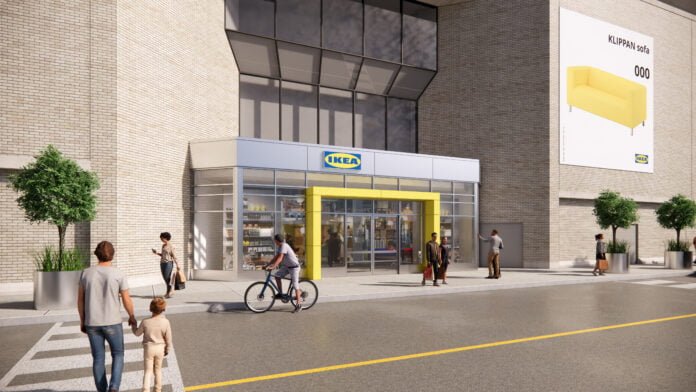
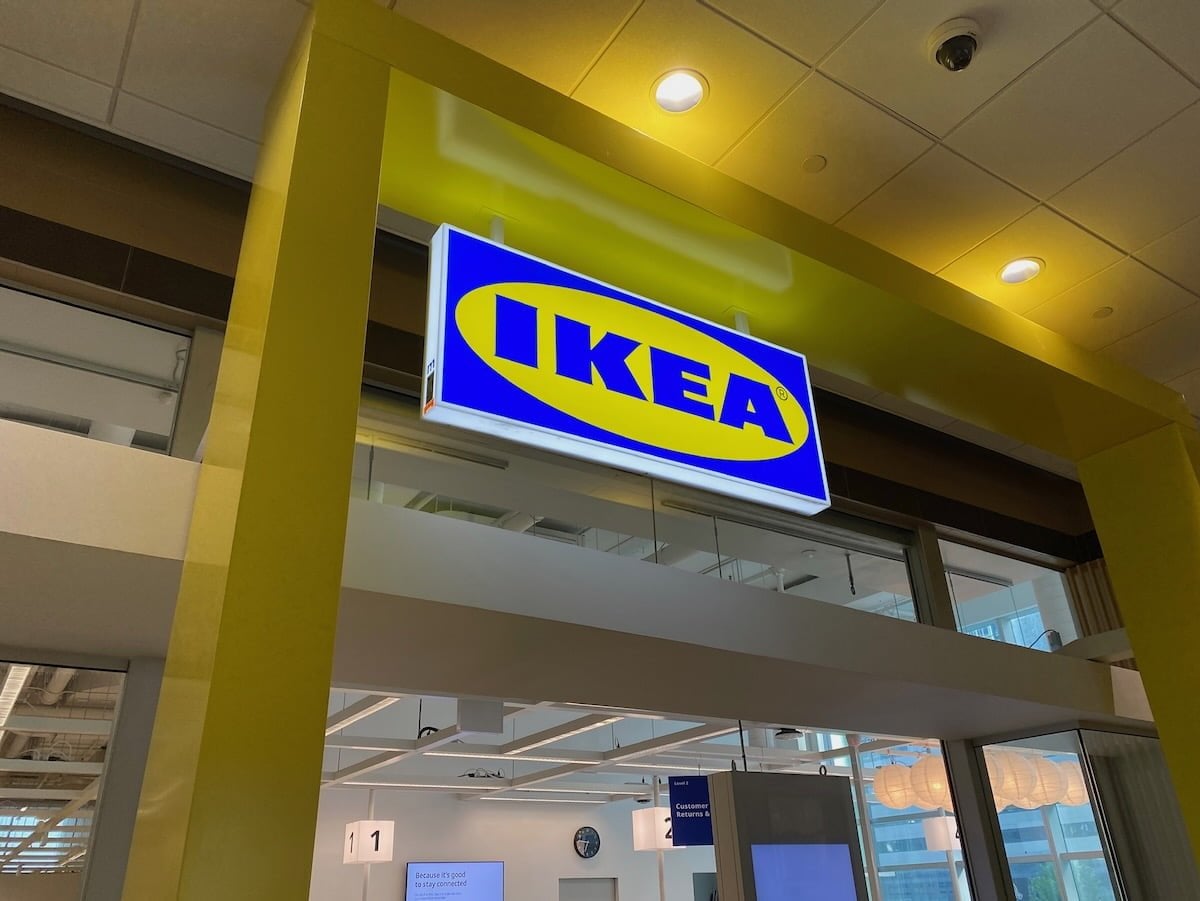
IKEA Design Studio-Oshawa (Image: IKEA)

IKEA in Canada has just launched a new standalone concept offering a dedicated space for personalized design services with IKEA experts and one-on-one planning.

The IKEA Design Studio’s first location is in Oshawa, Ontario and it’s just one of several in development. The Oshawa location is designed to reach out to the retail giant’s customers in the Greater Toronto Area.

Niclas Jarnkrok

Toronto Area Manager Niclas Karlsson-Järnkrok said the new concept for the Canadian market allows customers to design and order complex home furnishing systems for the kitchen, bath, bedroom and living room by scheduling one-on-one planning sessions with a trained IKEA design expert or via a self-service planning station in a dedicated studio space.

“Our ambition is to become more accessible to GTA residents by bringing IKEA closer to them and offering new, convenient services that meet their growing needs,” he said. “The IKEA Design Studio is one of the many ways we’re enabling our customers to interact seamlessly with IKEA, especially as we continue to evolve the spaces in our homes to meet the changing demands of our lives at home.

“The Design Studio supports our total GTA market approach. Our ambition is to keep making IKEA more affordable and more accessible and also convenient for many more people. The Design Studio will help customers design, plan, order and purchase their personalized solutions but focusing more on the complex purchases around kitchens and bathrooms and bedrooms where we see the need for getting the specialist support or help with the planning component is more needed.

Image: IKEA

“This is a way to actually create more accessibility for that type of service in this case the Durham region where we also know many customers today don’t think we are accessible enough when it comes to this type of service.”’

He said planning is also available for businesses at the Design Studio.

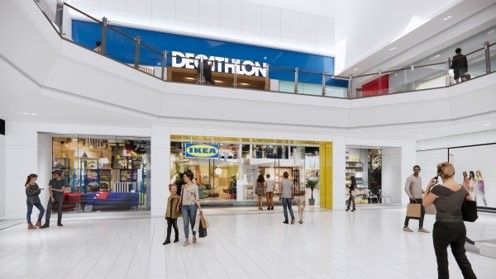
The first Design Studio is located inside the Oshawa Centre at 419 King Street West.

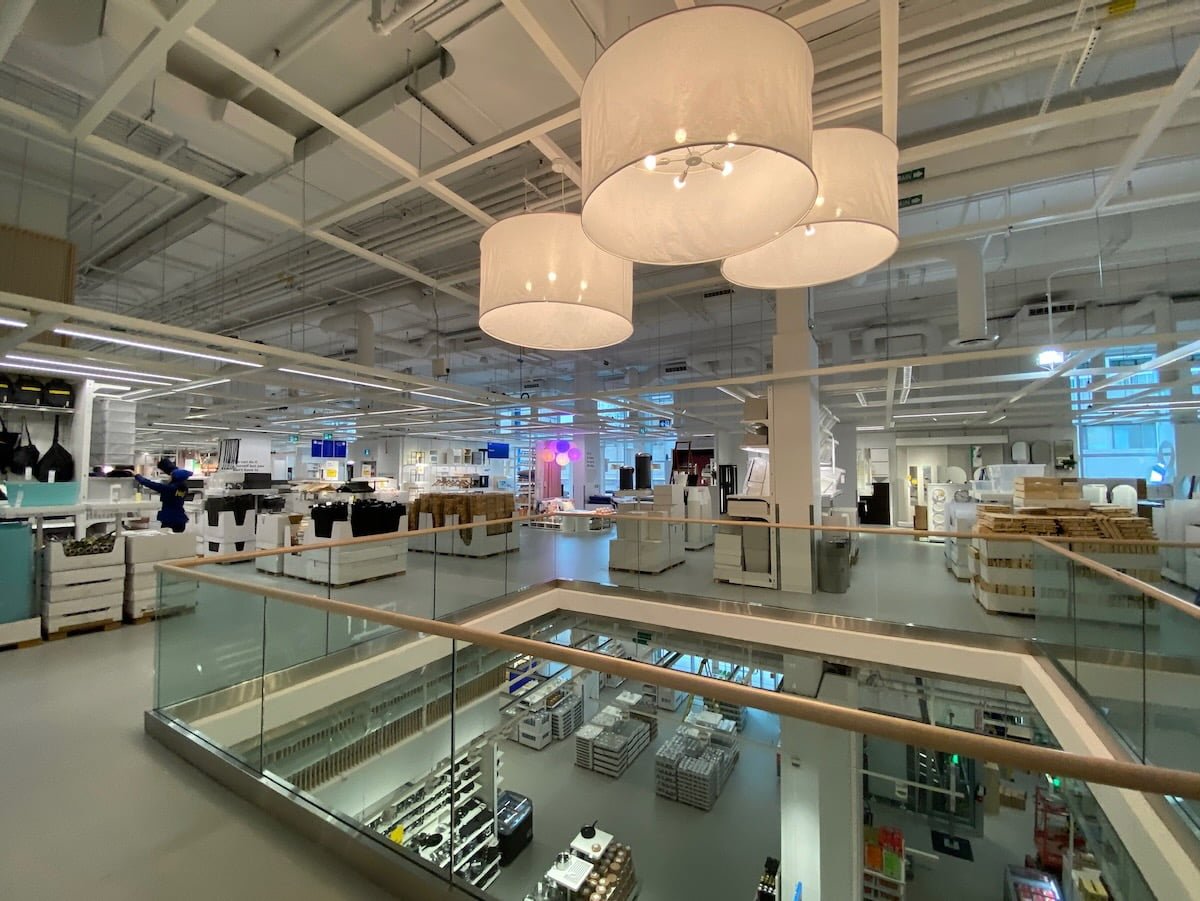
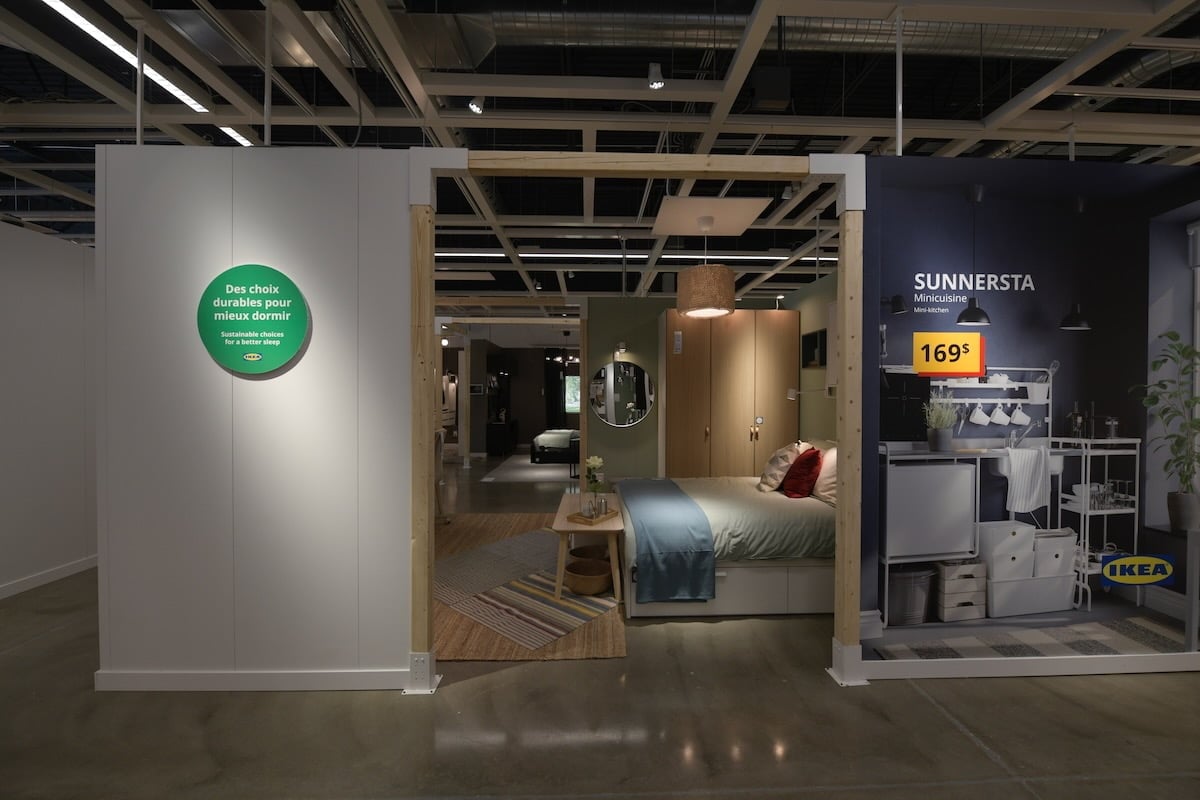
Karlsson-Järnkrok said it is quite a bit smaller than a traditional IKEA store but will showcase the full IKEA range through digital solutions along with a small, curated selection of product samples on display. It’s a private space for customers to connect with IKEA’s expert planners and create personalized home furnishing packages. Purchases made at an IKEA Design Studio can be delivered directly to customers’ homes or picked up at local IKEA Pick-up locations, including 980 Thornton Road S, Unit #4 in Oshawa, Ontario.

Karlsson-Järnkrok said the concept exists in some other countries, mainly in Europe.

“We see more places in and around the GTA. We have a similar opportunity when it comes to being more accessible and convenient. Of course, this is the first one we’re opening. We have more in the plans and I think it’s really important for us to continue to learn together with our customers to evolve and develop this concept and improve it over the next coming period,” he said.

“When it comes to the bigger stores that we have in the GTA I think we have quite good coverage. But we have identified a number of areas where the accessibility can be improved and Durham is one of them and that is the reason we have chosen to open there.”

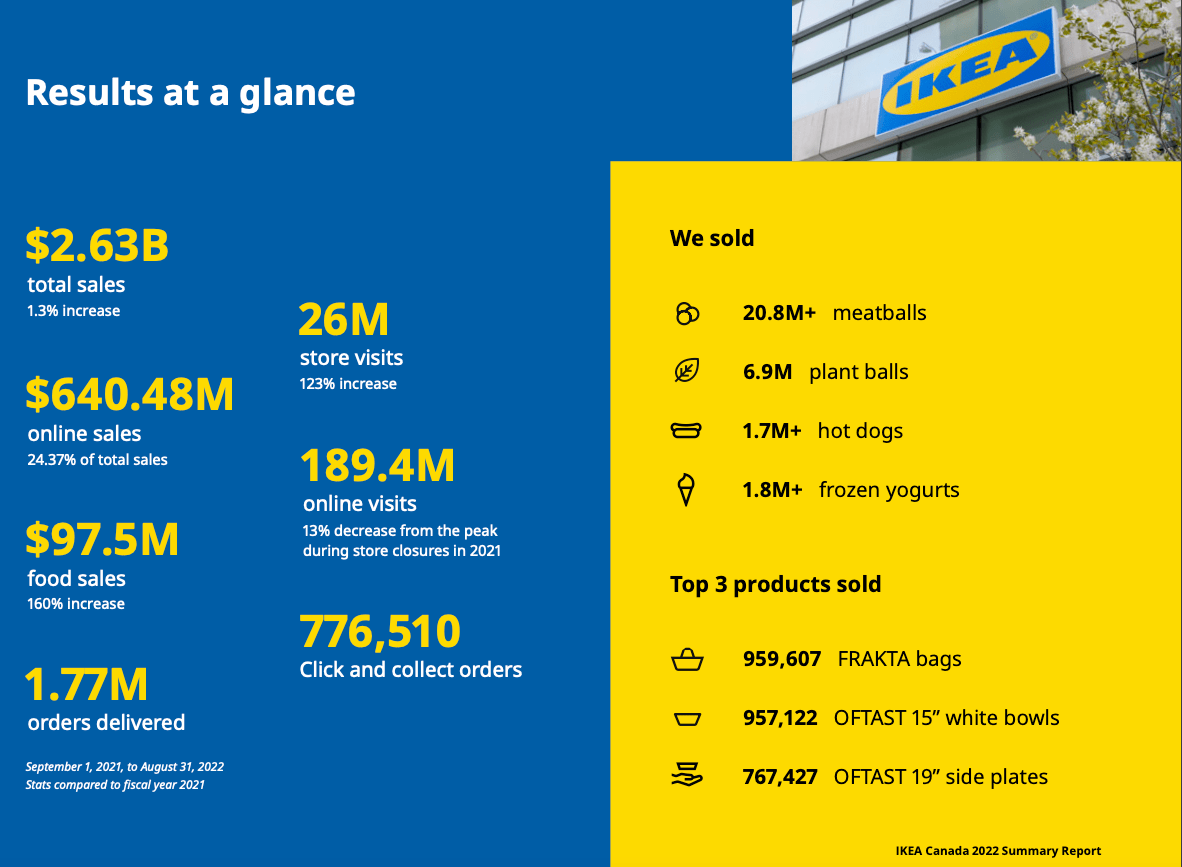
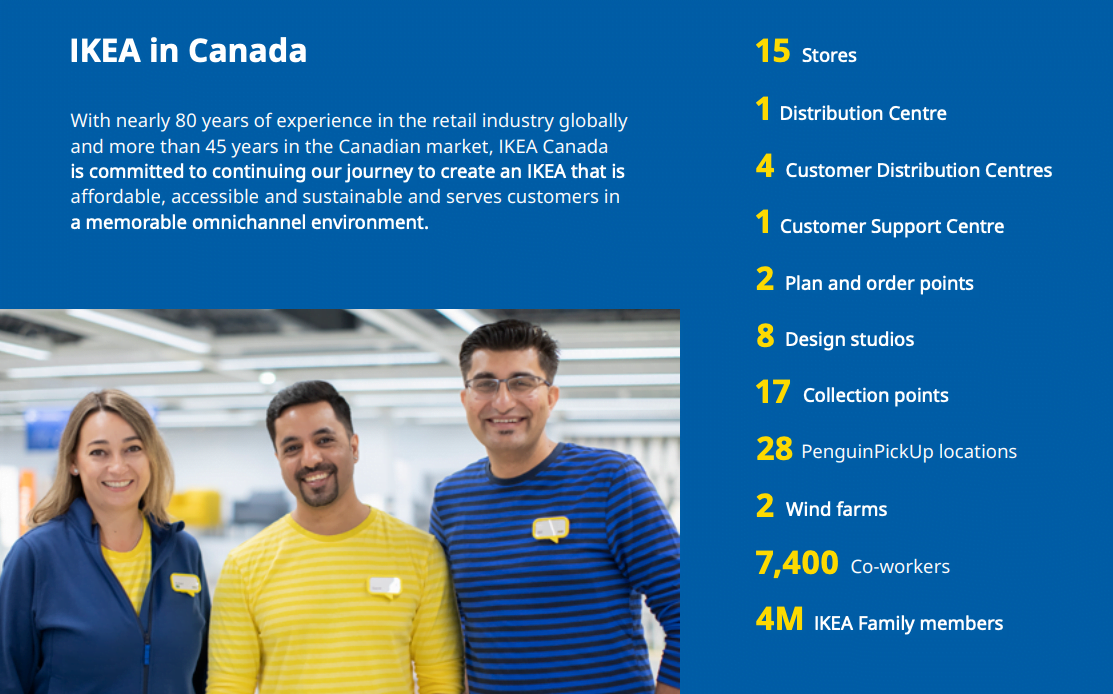
Founded in 1943 in Sweden, IKEA is a leading home furnishing retailer and IKEA Canada is part of Ingka Group which operates 374 IKEA stores in 30 countries, including 14 in Canada. Last year, IKEA Canada experienced 22.9 million visitors to its stores and 178.4 million visitors to IKEA.ca and the IKEA app.

Canadian Retail News From Around The Web For September 10th, 2021

Canadian Retail News From Around The Web

Top Stories: National

Central/Eastern Canada News

Western Canada News

Brief: Canadian Shoe Outlet Closing All Stores, Signage Changes on EB Games Stores in Canada

CSO | Canadian Shoe Outlet to Close All Stores

Canadian Shoe Outlet at Gerrard Square Shopping Centre
Canadian Shoe Outlet at Gerrard Square Shopping Centre (Photo by Dustin Fuhs)

Discount footwear retailer has announced that it is closing all locations.

Read more about the closure

Grace Loves Lace Opens in Toronto’s Historic Distillery District (Photos)

Grace Loves Lace Toronto Showroom – Photo by Dustin Fuhs

Australian-based bridal retailer has opened in Downtown Toronto.

See a photo walkthrough of the showroom

Salomon To Shutter Store at Park Royal In West Vancouver

“Store Closing” signs in Salomon store at Park Royal Shopping Centre in West Vancouver, BC (September 2021). Photo: Lee Rivett.

French sports retailer will close the store after 10 years, leaving a single corporate store in Whistler.

Read more about the closure

Canadian EB Games and EBX Locations Start Rebranding to GameStop with New Store Signage

GameStop at Yorkdale Shopping Centre
GameStop at Yorkdale Shopping Centre (September 9, 2021) – Photo by Craig Patterson

Texas-based entertainment retailer has started the physical rebrand of Canadian EB Games stores.

Read more about the rebrand

H&M Shuts One of Two Downtown Montreal Stores 

Image via Google Street View, November 2020

Swedish fast-fashion retailer has closed the location on Ste-Catherine Street West in Montreal.

First NorthGirls Storefront Launches in Toronto Under North Brands Group Umbrella

Image: NorthGirls Lawrence Plaza

Toronto-based North Brands Group launches first female-focused storefront.

H&M Shuts One of Two Downtown Montreal Stores 

Image via Google Street View, November 2020

Swedish fast-fashion retailer H&M has shut its store at 450 Ste-Catherine Street West in downtown Montreal. Another larger location at 1100 Ste-Catherine Street West remains open. 

The shuttered location at Ste-Catherine Street West was at the corner of St. Alexander Street on a quieter stretch of Ste-Catherine east of Philips Square and the Hudson’s Bay department store. Ste-Catherine Street has been under renovations and paving stones were recently added to the street and sidewalks. 

A much larger H&M store continues to operate at the corner of Ste-Catherine and Peel Streets on a busier stretch than where the shuttered location was. In 2016 the store saw a major renovation including the addition of a fourth floor.

H&M operates stores across Canada in major markets. Another prominent street front location could shutter at 19 Bloor Street West in Toronto as the space has been recently advertised for lease by brokerage JLL

Canadian EB Games and EBX Locations Start Rebranding to GameStop with New Store Signage

GameStop at Yorkdale Shopping Centre
GameStop at Yorkdale Shopping Centre (September 9, 2021) - Photo by Craig Patterson

Texas-based entertainment retailer GameStop has started the rebranding process for Canadian EB Games and EBX locations.

The EBX store at Yorkdale Shopping Centre had the store signage updated and now represents the GameStop brand. Staff in the stores are informed 48-hours in advance of the change, which happens after the store closes for the evening.

EB Games was purchased by GameStop in 2005 which saw the locations in Europe and the US rebranded.

GameStop announced in July that EB Games Canada would be transitioning from the legacy brand to GameStop Canada by the end of 2021.

EB Games at Yorkdale
EB Games at Yorkdale (March 2021) – Photo by Dustin Fuhs
In-Store Signage at EB Games CF Toronto Eaton Centre
In-Store Signage at EB Games CF Toronto Eaton Centre – Photo by Dustin Fuhs

Luxury Brand ‘Celine’ Opens 1st Standalone Canadian Storefront at Toronto’s Yorkdale Shopping Centre [Photos]

Celine at Toronto's Yorkdale Shopping Centre
Celine at Toronto's Yorkdale Shopping Centre (Photo: Craig Patterson)

LVMH-owned luxury brand Celine has opened its first standalone Canadian store at Toronto’s Yorkdale Shopping Centre. The location, which features the brand’s women’s collections with menswear on the way in November, was supposed to open in the spring of 2020 and it was delayed due to the pandemic.

Celine’s Yorkdale location is across from Holt Renfrew’s enlarged flagship at Yorkdale in an expansion wing of the mall that opened in 2012. Celine occupies just over 2,200 square feet in an L-shaped configuration. The broad storefront features vertical black mullions and basaltina stone bulkhead. 

The interior space includes a front area with accessories and bags, followed by a ready-to-wear area with clothing hung on black metal racks from the store’s high ceilings. Vintage furniture is featured throughout the space. At the back of the store, a corridor leads to fitting rooms. 

Products are highlighted on long linear travertine shelves on the walls which are suspended on white, travertine and solid oak wall surfaces. The store’s design reflects Celine’s global boutique remodel initiative that began in 2019 as conceptualized by the brand’s creative director Hedi Slimane. 

Celine at Yorkdale Shopping Centre
Celine at Yorkdale Shopping Centre – Photo by Michael Muraz

The Celine store will be made possible by merging two former storefronts at Yorkdale that were once occupied by Ted Baker and Longchamp. Both Ted Baker and Longchamp relocated nearby shortly before the pandemic. 

Celine is known for its womenswear and in the fall of 2019, the brand also launched a menswear line for the first time. The Yorkdale Celine store currently only carries the women’s collection. Celine menswear will be added to the Yorkdale store in November of this year according to an employee in the new store. 

To coincide with the opening of the standalone Celine store at Yorkdale, the brand has shut two boutique spaces in multi-brand retailers in Toronto. Last month the Celine accessories boutique at Saks Fifth Avenue in downtown Toronto shut down, which followed Celine shutting a women’s ready-to-wear boutique on the second level of Nordstrom at Yorkdale. A large Celine accessory boutique space continues to operate at Nordstrom’s Yorkdale location. 

Click image for interactive Yorkdale mall floorplan

In Canada over the past couple of years, Celine has expanded its direct-to-consumer operations through luxury retailer Holt Renfrew. Celine’s concessions at Holts are separated into categories in dedicated departments, with separate shops for leather goods and accessories, women’s ready-to-wear, and men’s ready-to-wear. At Holt Renfrew’s Vancouver flagship, Celine has three separate shops for women’s and men’s fashions as well as leather goods and accessories. Holt Renfrew’s Vancouver store was the first in Canada to showcase the new men’s Celine fashion line and continues to be the only store where it is available in this country. 

Celine at Yorkdale Shopping Centre
Celine at Yorkdale Shopping Centre – Photo by Michael Muraz

In Calgary, a Celine leather goods and accessory shop is housed on the main floor of the city’s Holt Renfrew store. In Toronto, Holt Renfrew’s 50 Bloor Street West flagship houses a makeshift Celine shop for the brand’s women’s ready-to-wear on the second floor.

Holt Renfrew Ogilvy in Montreal was expected to have separate boutique spaces for Celine including a ground level accessory boutique, a third floor women’s ready-to-wear boutique and a fourth floor men’s boutique. A source at Holts told Montreal correspondent Maxime Frechette that Celine instead wanted one consolidated space for all categories in the store and as that was not available, Celine’s fashions are not carried at Holt Renfrew Ogilvy at this time. 

Nordstrom’s Vancouver flagship has a Celine accessory boutique on its street-level as well as a Celine shop-in-store for women’s ready-to-wear on its women’s floor. The shops operate as concessions. 

Saks Fifth Avenue’s downtown Toronto flagship housed a Celine leather goods and accessory shop on Saks’ street level which shut last month as mentioned above, and a Celine women’s ready-to-wear boutique was formerly located on Saks’ third-level women’s designer floor which shut in 2019 and was replaced with a Dolce & Gabbana boutique space.

Globally, Celine operates a network of standalone stores as well as concessions and wholesale accounts in various major markets. In the United States, Celine operates standalone stores in markets including New York City (two stores, Madison Avenue and Wooster Street in Soho), Beverly Hills (Rodeo Drive), Costa Mesa (South Coast Plaza), Miami (Miami Design District), Dallas (Highland Park), Houston (Houston Galleria), Las Vegas (two stores, Crystals and Wynn), in suburban Washington DC (Tyson’s Galleria), and at the Ala Moana Centre in Honolulu. 

Celine at Toronto's Yorkdale Shopping Centre
Celine at Toronto’s Yorkdale Shopping Centre (Photo: Craig Patterson)

As with many fashion brands, Celine has undergone a transformation at the helm of a new creative director. In January of 2018, Celine announced that Hedi Slimane would become the brand’s new designer, after Slimane led French luxury brand Saint Laurent from 2012 to 2016. Prior to that, he was the menswear designer for French luxury brand Christian Dior. Under Slimane’s direction with Celine, some were critical that his vision for the brand’s clothing was similar in style to those he designed for Saint Laurent, though Celine now appears to have been embraced by many and is said to be seeing success globally.

LVMH has owned Celine since 1996. The Celine brand was founded by Céline Vipiana in 1945, and was considered to be one of the first luxury brands in the industry. The company got stared as a made-to-measure children’s shoe business, and when the brand’s first store opened in Paris, its logo was a red elephant. In 1960, Celine repositioned itself as a women’s ready-to-wear fashion brand, with conservative styles with a ‘designer sportswear’ approach. Celine expanded to also be known for its leather goods such as bags, loafers and gloves. 

In 1973, Celine redesigned its logo to become an intertwined “C”. Ms. Vipiana remained at the helm of Celine until her death in 1997. American designer Michael Kors became Celine’s creative director after Ms. Vipiana’s death, and he left Celine to focus on his own brand in 2004. In 2008, noted designer Phoebe Philo took over the artistic direction of Celine, with her first collection for the brand debuting in the spring/summer of 2010. Prior to Celine, Ms. Philo directed French luxury brand Chloé after the exit of Stella McCartney in 2001.

While Yorkdale’s Celine flagship is the first corporately-owned location for the brand in Canada, licensed Celine storefronts once operated in Toronto, Montreal and Vancouver until the late 1990’s. In 1976, Toronto multi-brand luxury retailer Ira Berg opened Canada’s first Celine boutique at 1508 Yonge Street just north of St. Clair Avenue, in a space most recently occupied by a Subway restaurant and soon to be demolished for a condominium tower. In 1981, Ira Berg opened a second Celine boutique on Toronto’s ‘Mink Mile’ at 110 Bloor Street West. Both shuttered before Ira Berg went bankrupt in 1996.

In Montreal in the 1980s, a Celine boutique operated at 2142 Crescent Street for several years. And in Vancouver, luxury multi-brand retailer Collections International operated two standalone Celine shops in the 1990s — one was located next to a former Chanel boutique at 755 Burrard Street (both spaces are now occupied by Coach), and a second Celine boutique was housed on the third level of the Pan Pacific Hotel which was once home to various luxury brands.