Home Blog Page 81

Lululemon Opens Massive Automated Distribution Centre in Brampton

Lululemon warehouse in Brampton ON. Image: City of Brampton

Lululemon has opened a distribution centre spanning more than one million square feet in Brampton, Ontario, creating a major new fulfillment hub for the Vancouver-founded retailer’s e-commerce operations across Eastern Canada and the eastern United States.

The facility became fully operational in June and was formally unveiled at a July 8 opening ceremony attended by company executives, government representatives and members of Brampton City Council.

It contains one of the largest AutoStore-enabled operations in North America, bringing together 525 robots, 292,000 storage bins and eight kilometres of conveyors. The investment places Brampton at the centre of a large cross-border fulfillment territory while significantly expanding Lululemon’s Canadian supply-chain infrastructure.

“Since breaking ground in 2023, our new Brampton DC marks a significant milestone in the continued evolution of Lululemon’s global supply chain,” said Ted Dagnese, chief supply chain officer at Lululemon.

“This facility expands our fulfillment capabilities in Canada and the U.S., enabling us to better serve our guests and operate with greater speed and agility. The opening represents collaboration across our operations, engineering, technology, facilities, and supply chain teams and reflects our commitment to innovation, operational excellence, and creating new opportunities for our people as we build the future of our distribution network.”

Hundreds of Robots Power the Brampton Facility

Developed in partnership with warehouse-automation company Element Logic, the Brampton distribution centre features an AutoStore system containing 292,000 storage bins and 525 R5 Pro robots.

The robots move across the top of a tightly configured storage grid, retrieving bins of merchandise and delivering them to workstations for order processing. The system allows a large volume of inventory to be stored vertically within a dense footprint while reducing the time employees spend travelling through conventional warehouse aisles to locate products.

Lululemon said the integrated automation system is designed to improve fulfillment speed, flexibility and scalability while supporting a seamless customer experience. Approximately eight kilometres of conveyors move products through different stages of the operation.

The scale of the building is considerable. Lululemon said approximately 57 NHL hockey rinks could fit within its footprint, while the mezzanine alone covers an area comparable to two European football pitches.

The City of Brampton described the AutoStore system as the largest installation of its kind in Canada. The municipality also said the one-million-square-foot campus is one of the largest distribution facilities in North America.

Those descriptions refer to separate measures of the operation. Lululemon identifies the Brampton site as one of North America’s largest AutoStore-enabled facilities, while the city describes its AutoStore installation as the largest in Canada.

Supporting Fulfillment Across Eastern North America

The distribution centre will support Lululemon’s growing online business across Eastern Canada and the eastern United States, giving the Brampton operation a role extending beyond the Greater Toronto Area.

The site is located in northeast Brampton, a city with a significant concentration of logistics, distribution and advanced-manufacturing activity. Its position within the Greater Toronto and Hamilton Area gives Lululemon access to one of Canada’s largest consumer and labour markets, along with transportation connections serving Ontario and neighbouring regions.

For Lululemon, the facility provides additional capacity close to major population centres while expanding the company’s ability to move inventory and fulfill online orders across two countries.

“The development of the Brampton Distribution Centre is a testament to the partnership we built with the City of Brampton,” Dagnese said in a statement issued by the municipality. “We are proud of our Canadian roots and with this facility, our capabilities are reaching new heights and further enhancing our distribution network in Canada and the U.S.”

The investment also reinforces the Canadian foundation of a company that has grown from Vancouver into a global athleticwear retailer. While Lululemon now operates an international network of stores and digital platforms, Canada remains home to important corporate, retail and supply-chain operations.

Lululemon Brampton warehouse opening with dignitaries. Photo: City of Brampton

Project Began Several Years Ago

The opening follows several years of planning, construction and systems integration. Lululemon disclosed in its 2022 annual report that it had entered into a lease for an approximately 980,000-square-foot distribution centre in Brampton. The company broke ground on the project in 2023, with the completed facility becoming fully operational in June 2026.

The approximately 980,000 square feet cited in the earlier lease disclosure is lower than the more than one million square feet of operational space announced at opening. The larger figure may include the mezzanine and other internal operational areas, although Lululemon has not publicly explained the difference.

The development timeline reflects the complexity of establishing a distribution centre built around extensive robotics and automation. Along with preparing the building, the project involved installing hundreds of robots, nearly 300,000 storage bins, conveyor infrastructure and the technology required to coordinate inventory movement throughout the operation.

Lululemon said the facility represents collaboration across its operations, engineering, technology, facilities and supply-chain teams.

The Brampton centre was planned several years before its opening and represents a long-term infrastructure investment designed to support the company’s future digital and North American fulfillment requirements.

Automation Reshapes Distribution Work

The Brampton facility also illustrates how employment inside large retail distribution centres is becoming increasingly technical.

Employees interact with inventory delivered through automated systems, while operational and technical teams oversee equipment, software and product flows. Lululemon said the facility is creating opportunities for employees to develop specialized operational and technical skills as new systems are introduced.

The company did not disclose a current workforce total for the centre in its opening announcement. Earlier public estimates for the project varied, making it difficult to establish a reliable employment figure without confirmation from Lululemon.

The company has emphasized training, employee development and new career pathways within its distribution network.

Brampton Mayor Patrick Brown said the investment reflects the city’s ability to support major global operations.

“Lululemon’s continued investment in Brampton is a strong endorsement of our city’s economic strength, skilled workforce and ability to support major global operations,” Brown said. “This transformed facility supports the current workforce, drives innovation and reinforces Brampton’s position as a leader in logistics and advanced manufacturing.”

The City of Brampton said its economic development and planning teams worked with Lululemon during the site application and review process. Municipal staff also connected the company with transit services, community partnerships and other local resources as it established the operation.

Expanding Lululemon’s Fulfillment Capacity

The centre opens as large retailers continue to invest in distribution technology capable of moving inventory efficiently between suppliers, warehouses, stores and online customers.

For Lululemon, the Brampton operation provides additional capacity to manage seasonal demand, product launches, returns and changing order volumes across a large geographic area. Its dense storage grid allows substantial quantities of merchandise to be held within the facility, while the robotic system retrieves and directs products as orders are received.

The automated configuration also provides room for the operation to handle greater volumes within its existing footprint. Lululemon said the system was designed to offer the speed, flexibility and scalability required as its e-commerce business develops.

The official opening was attended by Dagnese, Brown and the Honourable Maninder Sidhu, Minister of International Trade and Member of Parliament for Brampton East. Other attendees included municipal councillors and senior members of Lululemon’s global fulfillment and distribution teams.

With the operation now fully active, Brampton has become an important link between Lululemon’s inventory, digital customers and distribution network across Eastern North America.

More from Retail Insider:

CFIB projects private investment to weaken, even as GDP expected to grow in Q2-Q3

Kenneth Surillo photo

The Canadian GDP is expected to rebound in Q2 and Q3 of 2026, finds the latest Main Street Quarterly report by the Canadian Federation of Independent Business (CFIB).

Simon Gaudreault
Simon Gaudreault

“Given higher oil and gas prices and Canada’s position as a major producer and exporter of energy, GDP is expected to post stronger growth in Q2 and Q3. However, while rising energy prices are lifting GDP, they’re also driving up costs on Main Street. There’s a need for greater cost-of-doing-business relief and measures to help small business owners manage the ongoing challenges,” said CFIB’s chief economist and vice-president of research, Simon Gaudreault.

“Economic uncertainty is weighing on business plans, leading small firms to scale back or postpone investment, hiring, and expansion plans.”

The CFIB is Canada’s largest association of small and medium-sized businesses with 103,000 members across every industry and region.

Key highlights of the Q2 2026 edition of the Main Street Quarterly report

  • CFIB’s estimates and forecasts, developed in partnership with AppEco, suggest Canada’s GDP is expected to grow by 2.7% and 1.6% in Q2 and Q3, respectively. Consumer Price Index (CPI) inflation rose to 3.1% year over year in Q2 and is forecasted to edge up to 3.4% in Q3.
  • Private investment plans remain weak and are expected to drop sharply by 6.3% in Q2.
  • The In Focus section this quarter shows that 38% of SMEs now report capital equipment and technology costs as a challenge, up sharply since the pandemic. Rising machinery, equipment and technology prices, compounded by tariffs, a weaker Canadian dollar and economic uncertainty, are placing additional pressure on businesses seeking to replace and upgrade their assets.
  • With the U.S. deciding not to renew CUSMA, about 35% of Canadian SMEs surveyed in early July report it’s too soon to determine the impact on their business plans, highlighting the uncertainty surrounding the review process. Most small firms (64%) say Ottawa should take the time needed to secure a stronger deal rather than rush an agreement. More Canadian SMEs are also diversifying their trade beyond the U.S., but interprovincial trade barriers remain a major hurdle for firms expanding into domestic markets.
  • A new section on business entries and exits shows that, following Statistics Canada’s recent data revisions, business exits have now outpaced entries for three quarters in a row. This marks the first sustained period of net business losses since the pandemic. Saskatchewan and Quebec are the only provinces with a hint of positive net new entries, with the health and education sectors adding the lion’s share of new businesses. 
  • The Q2 2026 private sector job vacancy rate remained stable at 2.8%, representing 393,000 unfilled positions.

More from Retail Insider:

RioCan Sells 50% Share in FourFifty The Well to Woodbourne Capital for $188 Million

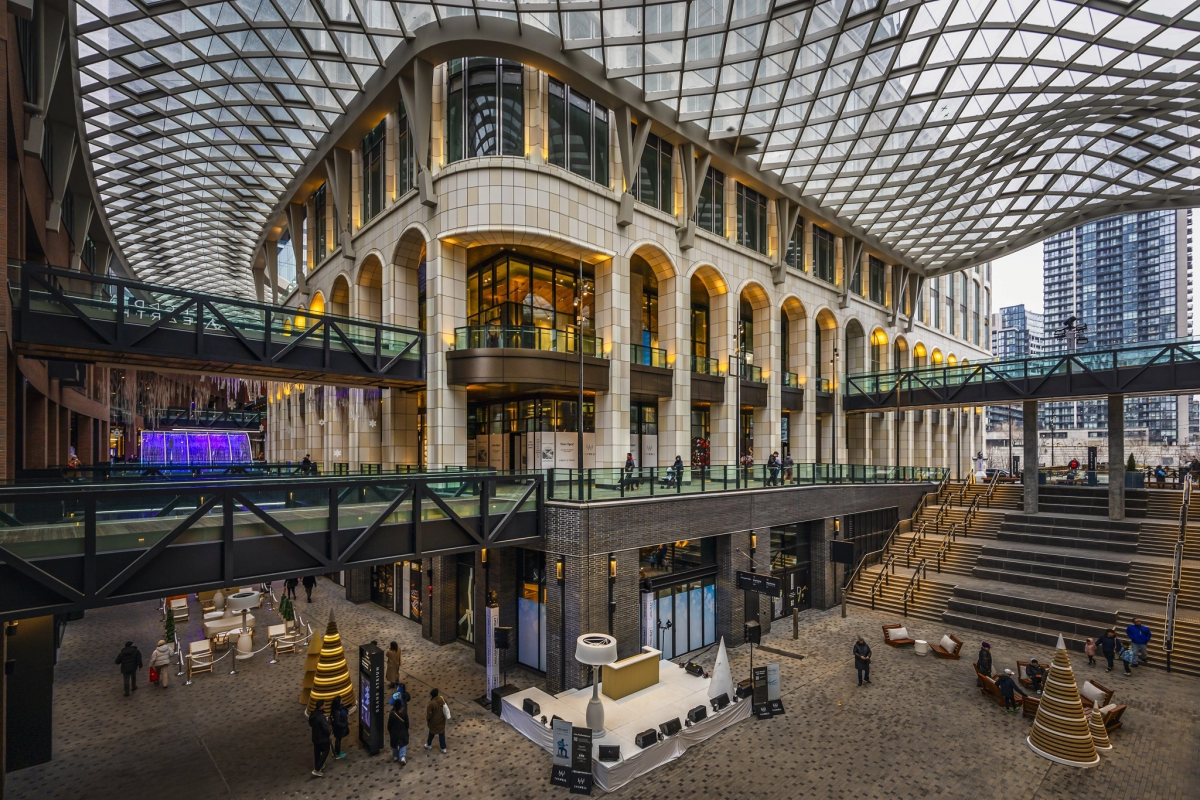
The Well residential towers in Toronto at The Well. Image: The Well

RioCan Real Estate Investment Trust has sold its 50% interest in FourFifty The Well, the purpose-built rental tower within The Well development in downtown Toronto, to existing partner Woodbourne Capital.

Green Street reported that RioCan received $188 million for its interest. The buyer and purchase price had not been disclosed when RioCan announced in May that it had reached a firm agreement to sell the property.

Woodbourne already owned the other 50% of FourFifty and now holds full ownership of the rental building. Based on the reported consideration, the transaction implies a value of approximately $310 million for the entire property, or about $524,000 per apartment.

The sale does not include RioCan’s interest in The Well’s retail component or the development’s other residential buildings.

FourFifty The Well is a 46-storey tower containing 592 rental apartments at 450 Front Street West. Completed in 2024, it is the only purpose-built rental building within The Well’s residential collection.

The tower was developed by RioCan Living and Woodbourne as part of the 7.7-acre mixed-use development, which includes retail, restaurants, offices, rental apartments and condominiums.

RioCan, Allied Properties REIT and DiamondCorp agreed in 2016 to sell most of The Well’s residential development rights to Tridel and Woodbourne. RioCan retained a 50% interest in the rental tower through its development and initial leasing period.

The Well in Toronto. Photo: The Well

RioCan Monetizes Rental Portfolio

The FourFifty transaction forms part of RioCan’s wider strategy to monetize its RioCan Living residential rental portfolio and concentrate capital on its core retail business.

RioCan has sold or agreed to sell interests in several residential properties over the past year, including Frontier, Latitude and Luma in Ottawa, Brio and Underwood in Calgary, Litho in Toronto and Market in Montreal.

In May, the REIT said the FourFifty agreement was included in a group of completed and pending residential transactions expected to generate approximately $379 million in gross proceeds.

“The ongoing monetization of RioCan Living continues to unlock value from the residential rental portfolio, providing additional flexibility to redeploy capital in line with the Trust’s long-term strategy,” RioCan said previously.

The company has characterized its current direction as a retail-focused strategy centred on necessity-based properties in Canada’s most densely populated and high-demand markets.

RioCan is not withdrawing from mixed-use development or residential intensification entirely. Residential density can increase the value of existing retail land, support redevelopment and create additional customers for stores and restaurants.

The REIT is, however, reducing the amount of capital tied up in completed rental buildings after construction and leasing risks have largely passed.

RioCan Remains at The Well

RioCan continues to have exposure to The Well through the development’s retail component, which has evolved since beginning to open in late 2023.

Recent additions have included MUJI, Tilley and Kit and Ace, while Mine & Yours has operated temporary retail concepts at the property. Gotstyle, which previously operated a flagship location at The Well, has closed the store.

The tenant changes reflect the continued evolution of The Well as its retail component matures. RioCan’s sale of FourFifty is separate from that commercial portfolio and gives Woodbourne full control of the completed rental tower.

More from Retail Insider:

Why CHFA NOW Toronto Matters for Retailers Navigating the Future of Wellness

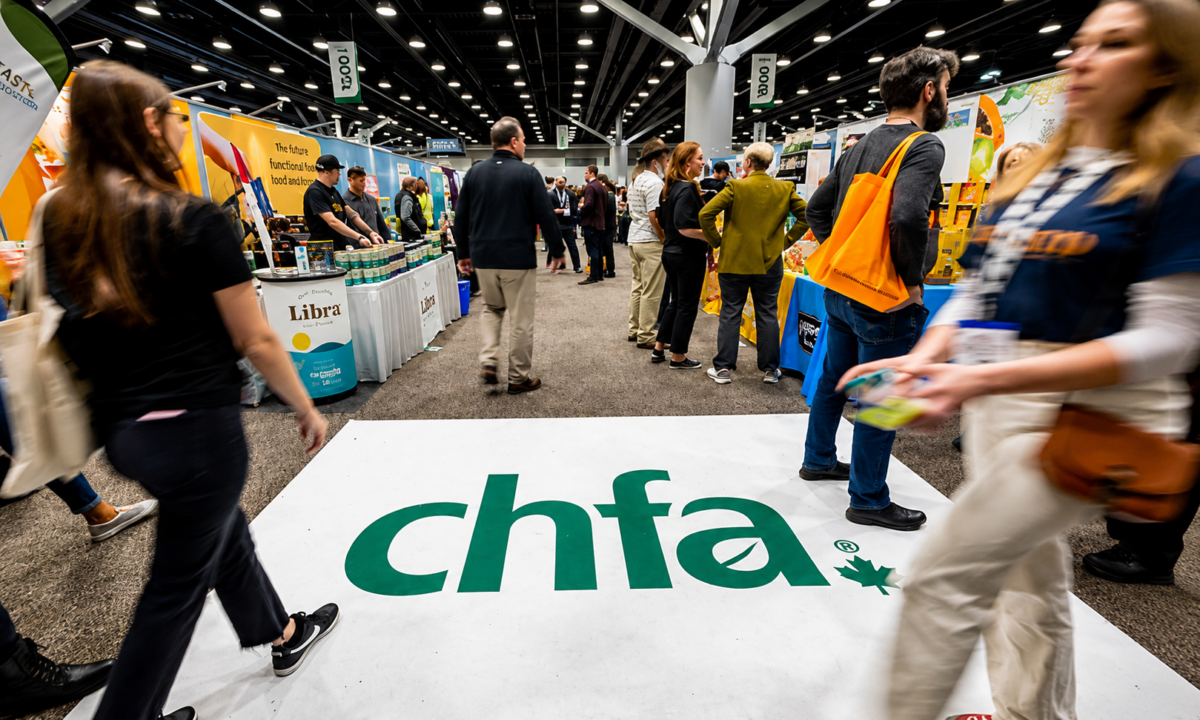
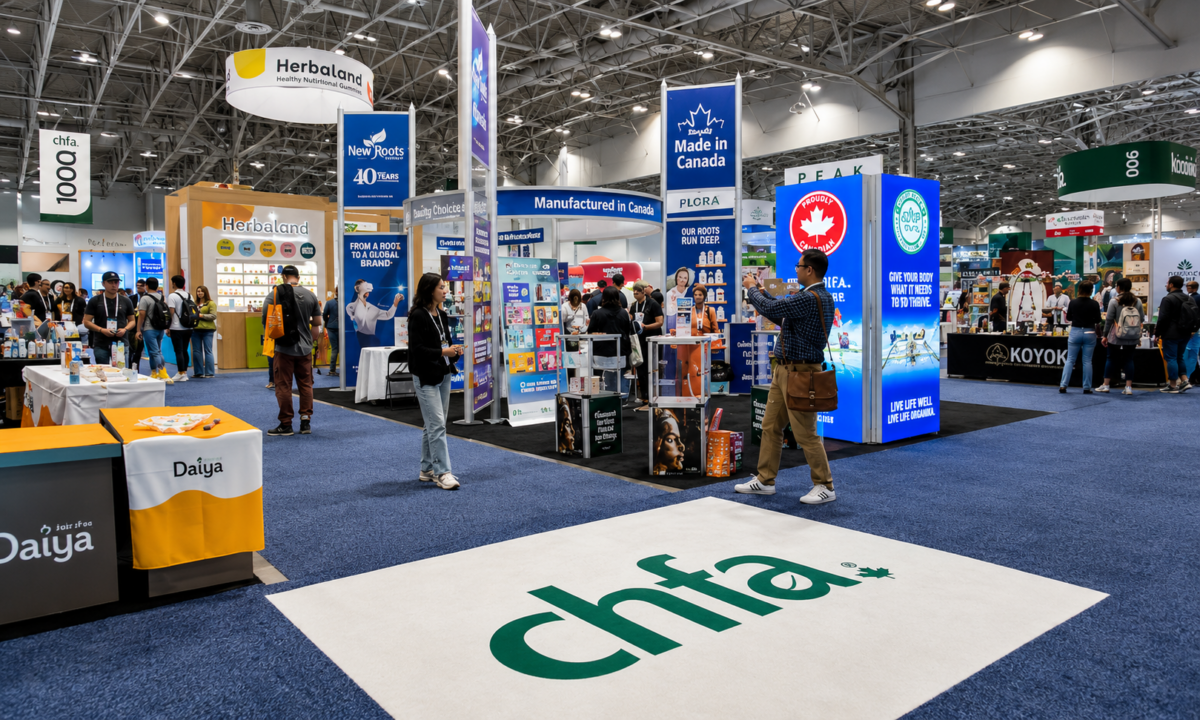
Photo: CHFA NOW

Retailers have never had more information at their fingertips. Sales data, trend reports, social media and digital marketplaces provide a constant stream of insights into what consumers are buying and what may come next.

Yet identifying the next successful product or emerging consumer trend has arguably never been more challenging.

Consumer preferences are shifting quickly, particularly in the wellness space. Functional foods and beverages, supplements, clean beauty, natural health products and sustainable lifestyle goods are moving further into the mainstream, creating opportunities for retailers across grocery, pharmacy, specialty retail and beyond.

For many retailers, wellness has evolved from a niche category into a broader merchandising strategy that now influences everything from food and beauty to personal care and household purchasing decisions.

For buyers and merchants, the challenge is not simply finding new products. It is determining which trends have staying power, which brands are ready for retail and which products will resonate with increasingly health-conscious consumers.

That is one reason trade shows continue to play an important role in the retail landscape.

Why Face-to-Face Discovery Still Matters

Digital tools have transformed how retailers research products and connect with suppliers, but they have not replaced the value of seeing products firsthand.

A buyer can taste a new functional beverage, compare products across an entire category, ask detailed questions about ingredients or formulations and meet the entrepreneur behind an emerging brand. Those experiences often provide insights that are difficult to gain through a website or virtual presentation.

Relationships are also built differently in person. A conversation on a trade show floor can become the start of a long-term supplier partnership, helping retailers discover products and brands that may eventually become important additions to their assortments.

“At CHFA NOW, I can have 100 conversations in two days. Where else can you do that?” said Gary Huges, Local Development Manager at Sobeys.

The ability to have those conversations efficiently has become increasingly valuable as wellness grows into one of retail’s most dynamic sectors.

Photo: CHFA NOW

Wellness Continues to Reshape Retail

The wellness economy has become a significant force in Canada and continues to influence consumer purchasing decisions across multiple categories.

Consumers are increasingly seeking products that support healthier lifestyles, from protein-forward snacks and functional beverages to cleaner-label beauty products, supplements and environmentally conscious household goods. At the same time, retailers are looking for ways to keep assortments fresh, differentiated and aligned with changing customer expectations.

Wellness is no longer confined to one section of the store.

Grocery retailers are expanding their better-for-you offerings. Pharmacies continue to emphasize preventative health and supplements. Beauty retailers are embracing products positioned around clean ingredients and wellness benefits. Independent retailers are seeking unique brands that help distinguish them from larger competitors.

Keeping pace with that evolution requires constant discovery.

A Gathering Place for Canada’s Wellness Industry

That is where CHFA NOW Toronto has carved out an important role within the industry.

Presented by the Canadian Health Food Association, CHFA NOW brings together retailers, distributors, manufacturers, suppliers and industry leaders from across the country to explore the latest developments in natural, organic and wellness products. The event has become one of Canada’s most important marketplaces for product discovery and relationship building within the sector.

Its continued growth underscores the strength of the category.

Due to strong exhibitor demand, CHFA NOW Toronto has expanded its show floor for 2026 after selling out early. The 2025 event attracted more than 1,200 exhibitors, approximately 3,400 attendees, representatives from 750 retail locations and more than 8,400 industry professionals.

For retailers, the scale of the event offers a unique opportunity to evaluate hundreds of brands and products in one place while gaining insight into the trends shaping wellness retail.

Photo: CHFA NOW

Discovering Emerging Brands Before They Reach the Mainstream

One of the most anticipated destinations at this year’s event is The Greenhouse, CHFA NOW‘s curated showcase with 70+ emerging Canadian natural, organic and wellness brands.

Located in the 2600 aisle, The Greenhouse is designed to give retailers early access to the products, founders and ideas that may define the next generation of wellness retail.

For buyers, discovering a promising new brand before it gains broader recognition can provide an important competitive advantage. Emerging brands often bring innovation, authenticity and differentiation—qualities that many retailers are seeking as consumers become more discerning in their purchasing decisions.

“Wellness continues to be one of the fastest-moving areas of retail, and staying ahead means discovering new products before they become mainstream,” said Aaron Skelton, President and CEO of CHFA.

“CHFA NOW gives retailers direct access to the brands, founders and innovations shaping the future of wellness. Through The Greenhouse, we’re creating opportunities for retailers to discover emerging Canadian brands early, build meaningful relationships and bring differentiated products to their customers.”

The opportunity to meet founders directly is part of what makes the experience valuable. Understanding a brand’s story, its mission and its plans for growth can help retailers make more informed buying and merchandising decisions and build relationships that extend well beyond the show floor.

Making the Most of the Experience

To help retailers maximize their visit, CHFA offers a complimentary Retailer VIP program for eligible retailers who register early by August 28.

The program includes savings on food and travel, priority access, exclusive networking opportunities and curated trend sessions designed to help buyers make the most of their time at the show.

For retailers managing busy schedules and rapidly evolving categories, the ability to discover products, reconnect with suppliers and gain new insights over the course of a few days can deliver significant value.

Looking Ahead

Retail continues to become more digital, more data-driven and more complex. Yet some aspects of the business remain fundamentally human.

Product discovery is one of them.

Retailers still benefit from tasting, touching, comparing and speaking directly with the people behind the brands they may one day place on their shelves. Suppliers still benefit from hearing firsthand what retailers are seeing in stores and what consumers are asking for.

In an environment where consumer preferences can shift quickly and new brands emerge almost overnight, the ability to discover products early and build relationships directly with suppliers may be more valuable than ever.

For retailers navigating the rapidly evolving wellness landscape, that is precisely the role CHFA NOW Toronto continues to play.

CHFA NOW Toronto 2026 takes place at Exhibition Place in Toronto, with the conference scheduled for Friday, September 25, and the trade show running Saturday, September 26, to Sunday, September 27. Retailer registration for the trade show is complimentary, with eligible retailers also able to participate in the Retailer VIP program.


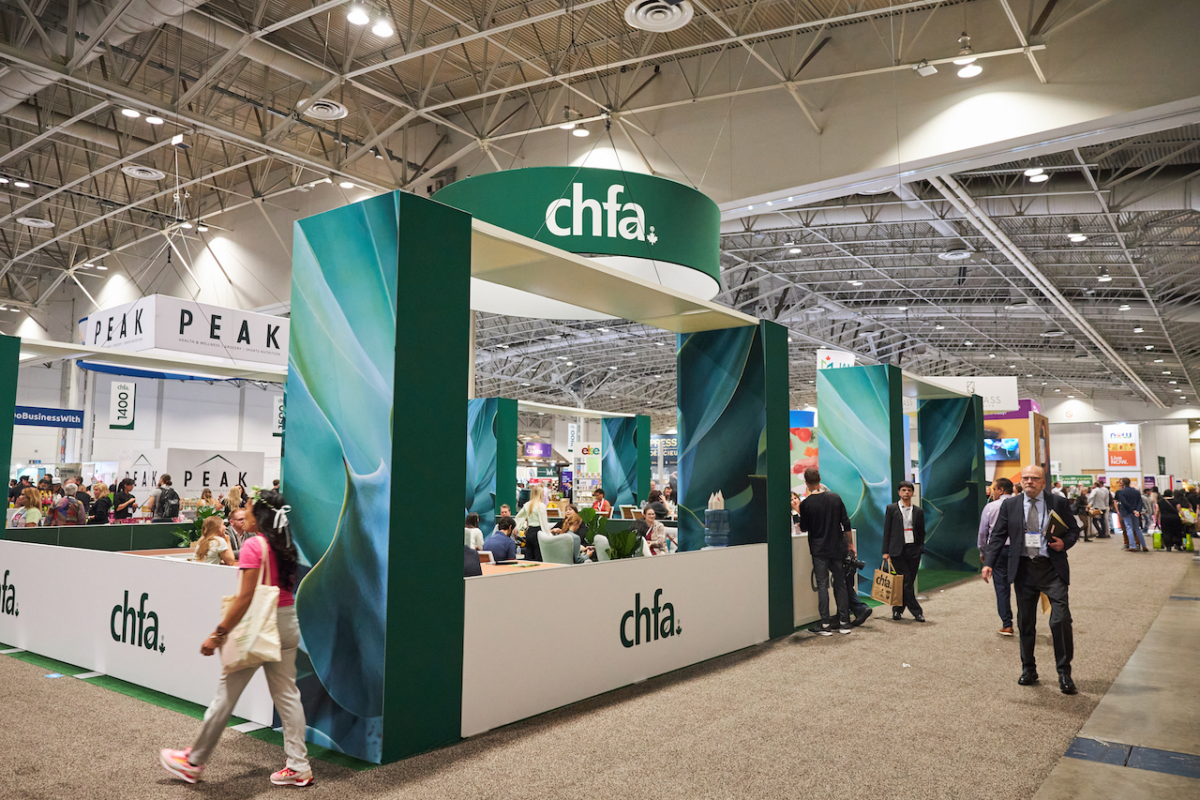
Photo: CHFA NOW
Photo: CHFA NOW

More from Retail Insider:

Daily Synopsis: Jul 15, 2026

Welcome to the Daily Synopsis by Retail Insider. We hope you enjoy the 8 articles we published today covering key developments in Canadian retail.

Lemonade Lab from British Columbia introduced tap payments for kid-run businesses, combining digital storefronts with parental oversight to teach kids financial skills. House of Q, also based in B.C., expanded its BBQ brand through specialty retail channels in Canada and the U.S., focusing on gourmet shops and independents.

Canadian cardholder spending held steady in June as consumers balanced essentials with experiences based on RBC data. Consumer behaviour is becoming harder to predict in the AI shopping era, prompting retailers to rely more on real-time data. Quebec removed QST from select foods and essentials. Rawcology launched probiotic snack bites and expanded Canadian retail distribution, while retailers face challenges as more shoppers expect tap-to-pay options.

🗞️ The Day’s Retail Insider Article List

🌐 Canadian Retail News From Around the Web

Quebec Removes QST from Select Foods and Household Essentials

A grocery store in Quebec. Photo: Vergo Construction

Quebec consumers are now paying less at the checkout for a selected group of foods and household paper products following the removal of the provincial sales tax from qualifying items.

The permanent measure took effect July 15, eliminating the 9.975 per cent Quebec Sales Tax from products that include individually sized frozen desserts, small quantities of sweetened baked goods, prepared fruit and vegetable trays, granola bars, trail mixes, toilet paper and facial tissues.

The change applies only to the QST. Federal Goods and Services Tax continues to be charged where it previously applied, meaning some affected products remain taxable at the federal level.

Quebec estimates that removing QST from the selected products will save a family with two children approximately $45 over a full year. The effect on an individual shopping trip will generally be limited, although the province expects the measure to reduce its tax revenue by more than $100 million annually once fully implemented.

For retailers, the transition required changes to product tax classifications, point-of-sale systems, invoicing procedures and accounting processes. Businesses had to ensure that QST was removed from eligible products while maintaining the correct GST treatment.

Retailers Update Checkout and Product Tax Coding

Implementing the exemption required retailers to identify affected products and adjust their tax treatment within product databases and checkout systems.

Businesses selling the products were advised to review SKU-level tax coding, product master data, point-of-sale configurations, invoicing processes and customer-facing pricing ahead of the implementation date.

The different federal and provincial treatment creates an added layer of complexity. Some products that are now zero-rated for QST purposes continue to be subject to GST, requiring retailers to remove one tax while continuing to collect the other.

Retailers must also account for detailed product, package-size and sales-channel definitions when determining eligibility. Incorrect coding could result in QST being charged on an eligible product or removed from one that remains taxable.

Revenu Québec instructed businesses to ensure that cash registers stopped applying QST to qualifying products after July 15.

Customers who believe QST was charged incorrectly can ask the retailer for a refund or credit. When a retailer is unable to provide one, consumers may apply to Revenu Québec for a rebate within two years of paying the tax.

Which Products Are Covered?

The expanded zero-rating applies to several food categories that were previously subject to QST when sold in certain sizes or formats.

Qualifying frozen products include ice cream, frozen pudding, ice milk, sherbet, frozen yogurt and similar desserts sold in individual portions of less than 500 grams or 500 millilitres.

The change also covers doughnuts, cookies, sweetened croissants, cakes, muffins, pastries, tarts, pies and similar baked goods sold in individual portions weighing less than 230 grams or in packages containing fewer than six units.

Pudding, flavoured gelatin, mousse, flavoured whipped desserts and similar products sold in individual portions of less than 425 grams are also included.

Other qualifying categories include:

  • Fruit salads and platters or arrangements of prepared fruit
  • Platters and arrangements of prepared vegetables
  • Salted or seasoned nuts and seeds, excluding products seasoned primarily with sugar or sugar-based ingredients
  • Mixtures composed mainly of rolled oats or other cereals, seeds, nuts or dried fruit, including granola bars and trail-mix-style products
  • Toilet paper
  • Facial tissues

The eligibility rules and package thresholds are set out in Revenu Québec’s updated guidance for basic groceries.

Package Size Previously Determined Tax Treatment

Several affected categories were governed by rules that could be difficult for consumers to understand.

A single muffin or a package containing fewer than six sweetened baked goods, for example, could receive different tax treatment from a package of six or more. A small individual container of ice cream could also be taxed differently from a larger format.

Prepared produce created another distinction. Whole fruits and vegetables were generally treated as zero-rated basic groceries, while fruit salads, cut-fruit platters and prepared vegetable trays could be subject to QST.

The new measure removes the provincial tax from these selected smaller and prepared formats when they are sold through grocery stores and similar qualifying establishments.

The change simplifies some package-size and product-format rules, although the place of sale can still determine how an item is taxed.

Household Savings Estimated at $45 Annually

Quebec estimates that a family with two children will save approximately $45 over a full year as a result of the expanded zero-rating.

That amounts to an average of $3.75 per month, although the actual benefit will depend on how frequently a household purchases the affected products.

The province projects that the measure will reduce government revenue by $497.1 million over five fiscal years. The estimated cost is $70.1 million during the partial 2026–27 fiscal year, rising to $102.4 million in 2027–28 and $111.2 million by 2030–31.

The figures point to a modest benefit for an individual household and a more substantial cumulative effect across Quebec’s retail market.

The exemption is permanent, providing an ongoing reduction in the final cost of qualifying products.

Restaurants and Vending Machines Remain Outside the Measure

The exemption does not apply in every setting where the affected foods are sold.

The products remain subject to QST when sold at establishments where all or substantially all food and beverage sales are taxable under existing rules, including most restaurants.

Food sold through vending machines or under, or in connection with, catering contracts also remains outside the new zero-rating.

A muffin, frozen dessert or prepared snack purchased from a grocery retailer may therefore receive different provincial tax treatment from an identical product sold by a restaurant or foodservice operator.

GST rules are unchanged, so the removal of QST does not necessarily make an affected product entirely free of sales tax.

The policy removes several package-size distinctions within grocery retail while maintaining separate treatment across restaurant, vending and catering channels.

Toilet Paper and Tissues Receive Broader Treatment

Toilet paper and facial tissues are treated differently from the selected food categories under the new rules.

The paper products are zero-rated for QST purposes throughout the supply chain. Suppliers, wholesalers and retailers registered for QST no longer collect the provincial tax on them, although GST continues to apply.

For the newly covered foods, regular QST collection rules continue elsewhere in the supply chain. The retail zero-rating applies when the products are supplied through grocery stores and similar establishments.

The broader treatment of toilet paper and facial tissues required businesses at multiple stages of the distribution system to update their tax coding and invoicing practices.

Retail Council Welcomes Implementation Approach

Retail Council of Canada welcomed the permanent removal of QST from the selected products, saying the measure reflected recommendations made by the retail industry.

The organization highlighted the implementation timeline, the application of the measure across retail formats and the government’s definition of eligible products. It said the change applies across retail sectors while excluding restaurants.

Those considerations are important for retailers managing large product catalogues and multiple checkout platforms, particularly across grocery, pharmacy and convenience-store operations.

The exemption arrives as governments continue to face pressure over food prices, household expenses and broader affordability concerns.

For Quebec shoppers, the savings will often amount to a few cents on an individual product or several dollars across a larger basket of qualifying goods. Across millions of transactions, the provincial government expects the cumulative value to surpass $100 million annually.

The measure will have a limited effect on most household budgets, but it provides permanent relief on frequently purchased products and removes several tax distinctions that were difficult to explain at the checkout.

More from Retail Insider:

Retail Insider “Real Estate & Leasing Report”: Scarcity and Curation Reshape Canadian Retail

Retail Insider has released Q2 2026 Canadian Retail Real Estate: Scarcity, Curation and Selective Growth Reshape the Market, authored by Craig Patterson as part of Retail Insider Reports. Retail Insider Reports are designed to deliver executive-level insights across major retail sectors and can be accessed through the Retail Insider Report Hub.

This report examines Canadian retail real estate, leasing, shopping centres, mixed-use developments, landlords, tenants, mall operators, redevelopment activity and broader commercial retail property trends. Drawing on Retail Insider reporting, REIT disclosures and industry research, it explores how constrained supply, redevelopment priorities and evolving tenant demand are reshaping the country’s retail property market.

General Themes

  • Scarcity Drives Leasing Power — Limited availability of productive retail space continues to strengthen occupancy, leasing spreads and pricing at Canada’s leading retail properties.
  • Prime Assets Pull Further Ahead — Performance differences between top-tier shopping centres and secondary assets continue to widen as retailers concentrate investment in their strongest locations.
  • Curation Becomes a Strategic Advantage — Leading landlords are building integrated retail districts that combine shopping, food, entertainment, hospitality, residential uses and public spaces.
  • Hudson’s Bay Creates a Market Reset — Former department store space is creating redevelopment opportunities while challenging landlords to reposition large-format retail boxes.
  • Open-Air Centres Continue to Outperform — Grocery-anchored and necessity-based retail formats remain among the most resilient asset classes for both tenants and investors.
  • Mixed-Use Remains the Long-Term Direction — Despite project delays caused by financing and construction costs, integrated mixed-use developments continue to shape future retail planning.
  • Capital Matters More Than Ever — Well-capitalized landlords are better positioned to acquire assets, fund redevelopment and respond to changing leasing opportunities.

Retail Insider Coverage

The report draws extensively from Retail Insider’s coverage of Canada’s retail property sector during the quarter, connecting individual stories into a broader view of market direction. Coverage includes shopping centre productivity rankings, the continuing strength of Yorkdale Shopping Centre, leasing trends across major Canadian markets, Oakridge Park’s development progress, and the growing importance of curated retail districts such as Toronto’s Bloor-Yorkville.

Retail Insider also examined the retail real estate implications of Hudson’s Bay’s closure, the repositioning of former department store space, redevelopment activity at enclosed malls, institutional investment by major REITs including RioCan, SmartCentres and Choice Properties, as well as acquisitions by private investors. Together, these stories reveal how landlords are responding to changing tenant demand while repositioning assets for long-term performance.

Broader Industry Coverage

The report suggests Canadian retail real estate has moved beyond a broad post-pandemic recovery into a far more selective market. Retailers continue to expand physical footprints, but increasingly compete for a relatively small number of highly productive locations where demographics, accessibility and tenant mix support stronger long-term performance.

At the same time, redevelopment strategies are evolving. Rather than relying solely on large mixed-use projects, many landlords are pursuing incremental value creation by subdividing former anchor spaces, strengthening necessity-based retail offerings and building destinations that combine retail with food, services, entertainment and community programming. These approaches are becoming increasingly important as construction costs, financing conditions and municipal approvals extend redevelopment timelines.

Editor’s Take

The report concludes that scarcity has become the defining characteristic of Canada’s retail real estate market. Strong locations continue to attract retailers, investors and international brands, while weaker assets face growing pressure to reposition themselves through redevelopment, improved merchandising and more thoughtful curation. Success is increasingly determined by location quality, capital flexibility and the ability to create destinations that serve both commercial objectives and evolving consumer expectations, rather than simply maximizing leasable space.

Conclusion

Readers interested in Canada’s evolving retail property landscape can read the full Q2 2026 Canadian Retail Real Estate: Scarcity, Curation and Selective Growth Reshape the Market report by Craig Patterson through the Retail Insider Report Hub, where this report and the complete collection of Retail Insider Reports are available for executives, retailers, landlords, developers, investors and industry professionals.

Maxi Plans 13,000-Square-Foot Store at Montreal’s Former Forum

Maxi supermarket chain, Montreal, Quebec. Image: Hkeely at https://commons.wikimedia.org/wiki/File%3AA_Maxi_supermarket_chain_grocery_store_in_Montreal%2C_Quebec%2C_Canada_01.jpg

Maxi will open a grocery store of more than 13,000 square feet inside Montreal’s former Forum, extending Loblaw Companies Limited’s push to bring smaller discount stores into dense urban neighbourhoods.

Construction and fit-out work are underway at the Sainte-Catherine Street West and Atwater Avenue property. The multi-million-dollar store is scheduled to open by the end of 2027, according to Loblaw.

Patrick Blanchette
Patrick Blanchette

The location will carry fresh food, grocery products, prepared meals, multicultural foods and natural and organic items. Loblaw said the assortment will include more than 6,000 products from Quebec. Customers will also have access to Maxi’s price-matching program and PC Optimum.

Patrick Blanchette, senior vice-president of Maxi, said the store is intended to serve residents, families, students and people working in the surrounding district.

The opening will place a practical, recurring-use retailer inside one of Montreal’s best-known buildings. It also offers another example of Loblaw adapting the Maxi format to urban real estate that cannot accommodate a conventional suburban supermarket.

Maxi builds a smaller urban format

At slightly more than 13,000 square feet, the Forum store will be considerably smaller than many full-size supermarkets. Its size is consistent with several recent Maxi openings in central Montreal.

A Maxi that opened on Plaza Saint-Hubert in June occupies 8,000 square feet and created approximately 40 jobs. Another location in Montreal’s Village occupies just over 18,000 square feet. Loblaw also identifies its René-Lévesque Boulevard store as part of the same urban expansion strategy.

The stores show that Maxi can operate across a wide range of urban footprints. Smaller formats give Loblaw access to neighbourhoods where available grocery space is fragmented, rents can be higher and loading or parking conditions differ from suburban sites.

The approach has become a material part of Loblaw’s expansion program. The company opened 48 Maxi and No Frills stores in 2025, including 39 small-format locations. Loblaw has described those stores as a way to bring hard discount into urban pockets as well as suburban communities.

That expansion continues in 2026. Loblaw plans to invest $2.4 billion in its stores, supply chain and related infrastructure during the year. Its plan includes 31 new Maxi and No Frills stores among 70 new food, pharmacy and health-care locations.

The company reported in May that its discount banners continued to outperform during the first quarter. Loblaw opened five hard-discount stores in the period, while increased customer traffic and new locations contributed to revenue growth.

The Forum announcement therefore fits into a wider allocation of capital toward value-oriented food retail. The location gives Loblaw another point of access to consumers in central Montreal without requiring a large standalone building or suburban shopping-centre site.

CBRE in Montreal, under the direction of Bryan Greenberg and his team, negotiated the Maxi lease deal, and represented several other lease deals for stores in the city.

Grocery adds recurring traffic to the Forum

Ashkenazy Acquisition Corporation lists the former Forum in its portfolio as Forum Towers, a six-level mixed-use property covering an entire city block. The company puts the complex at 1.2 million square feet and identifies tenants including Cineplex, Econofitness, the Comedy Nest and Dawson College.

For the property, Maxi can generate a different traffic pattern from its entertainment and institutional uses. Grocery shopping creates frequent neighbourhood visits and can support activity across mornings, evenings and weekends.

That regular traffic could benefit food-service and service tenants while making the Forum more useful to people living and working nearby. It also gives the complex a tenant whose performance is tied to the surrounding residential trade area, not solely to destination entertainment.

The store’s precise position inside the building has not been disclosed. Loblaw has also not provided details about its entrance, loading arrangements, parking, online-order services, employment numbers or lease terms.

Those details will determine how effectively the location operates as an urban grocery store. Visibility from Sainte-Catherine or Atwater, convenient pedestrian access and efficient deliveries will be particularly important in a compact format.

Montreal Forum, Image: Jeangagnon at https://commons.wikimedia.org/wiki/File%3AForum_Pepsi_10.JPG

Established competition near Atwater

Maxi will enter a well-served grocery district.

Marché Adonis operates at 2173 Sainte-Catherine Street West, along the same corridor. The downtown Adonis opened in 2013 with 15,000 square feet of selling space, making it comparable in size to the future Maxi. The store represented a $6.5-million investment when it opened.

IGA also operates at street level inside the neighbouring Alexis Nihon shopping centre at 1500 Atwater Avenue. The store offers online grocery ordering and is positioned within the Atwater transit and retail complex. Metro’s Super C discount banner has another store at 147 Atwater Avenue, south of the Forum.

The competitive challenge will go beyond price. Adonis has an established position in multicultural foods and prepared meals, two categories Loblaw specifically identified for the Forum store. IGA benefits from its location within Alexis Nihon, while Super C already competes for discount-oriented customers in the Atwater trade area.

Maxi will bring Loblaw’s private-label assortment, PC Optimum membership base and price-matching proposition into that mix. Its compact footprint suggests a curated assortment designed for frequent urban shopping, with less room for the breadth found in a conventional suburban location.

A new chapter for a historic property

Built in 1924, the Montreal Forum served as the home of the Montreal Canadiens until 1996. It was designated a National Historic Site of Canada in 1997 because of its place in Canadian hockey and its history as a venue for major sporting, cultural, political and religious events. The building was converted to other uses after the Canadiens left.

The heritage connection gives the opening a recognizable address, but the commercial importance lies in Maxi’s role within the property today.

For Loblaw, the store advances a model that allows discount grocery to enter constrained urban sites. For the Forum, it introduces an anchor based on daily needs and repeat visits.

The long construction schedule leaves several questions unanswered, including why the store will not open until late 2027 and whether building conditions, approvals or the complexity of the fit-out are factors. More information about the unit and its access will offer a clearer picture of how grocery will be integrated into the former arena.

What is already evident is that Maxi is becoming less dependent on a standard store box. The Forum location will test how far Loblaw can compress its hard-discount model while competing in one of central Montreal’s more established grocery clusters.

More from Retail Insider:

B.C.-Built Lemonade Lab Brings Tap Payments to Kid-Run Businesses

Lemonade Lab Demo, Image: lemonadelab.ai

A child selling bracelets, lawn care or baked goods can promote the business online. Accepting a card payment is harder.

Dean Horsfield, Founder of Lemonade Lab

Most mainstream commerce accounts must be controlled by adults, even when the product or service belongs to a young entrepreneur. B.C.-built Lemonade Lab is targeting that gap with a platform that lets children create shops, accept digital payments and learn basic business skills under parental supervision.

The mobile app uses near-field communication technology to accept contactless cards and digital wallets without a separate payment reader. Users can also build branded shop pages, list products and services, manage bookings, issue digital receipts and monitor their earnings.

Lemonade Lab founder Dean Horsfield told Retail Insider in an online interview that the idea came from repeatedly passing a neighbourhood lemonade stand and noticing how many potential customers lacked the cash needed to make a small purchase.

“I want my daughters to understand digital payments,” Horsfield said. “I want them to understand reinvesting. I want them to understand the digital flow of money.”

The lemonade stand provided the name, but it represents only one type of business on the platform. Horsfield said young users have created shops for jewellery, sculptures, lawn care, pet services, digital products and horse massage.

Some children operate several businesses throughout the year. A user could offer lawn care in summer and snow shovelling in winter, with separate storefronts feeding into one record of earnings.

A gap in retail payment infrastructure

Lemonade Lab is entering a Canadian market where contactless payment is routine, even though cash remains widely used.

Canadians paid with cash for 21 percent of purchases in 2024, according to the Bank of Canada. Cash usage has remained relatively stable since 2020. Almost two-thirds of in-person payments, however, were contactless, and mobile payments accounted for almost five per cent of purchases.

For a neighbourhood seller, the issue is practical. A customer may be willing to spend a few dollars on a drink or bracelet but still expect to pay with a card or phone.

The technology needed to accept that payment is increasingly accessible. Apple launched Tap to Pay on iPhone in Canada in May 2024, allowing merchants to accept contactless debit cards, credit cards and digital wallets through supported apps without buying a separate terminal. Stripe, Square, Moneris and Adyen were among the first Canadian payment platforms to support the service.

Lemonade Lab applies that capability to a child-facing commerce platform. Its distinction is the structure around the payment, including shop-building tools, learning activities, parental approval and moderated customer communication.

Mainstream commerce services can support a young person’s business, but an adult usually has to own the account and assume legal responsibility. Shopify requires its account holder to be at least 18 or the age of majority where the service is used. Shopify Payments also requires a parent or guardian to establish an account for a seller who is under 18.

Horsfield said Lemonade Lab was designed so children could take the lead in creating and operating a shop without being expected to manage the legal and financial obligations attached to payment processing.

How payments and withdrawals work

Lemonade Lab acts as the merchant of record for payments processed through the platform, according to follow-up information supplied by Horsfield. Stripe is the payment processor.

The parent or guardian remains the responsible adult and legal seller behind the child’s shop. The adult is also financially responsible for the products or services being sold, along with refunds and customer disputes.

When a customer completes a payment, the child’s net earnings appear in a Lemonade Lab Bank balance. The child can request a withdrawal, but a verified parent or guardian must approve it and receive the money.

Entering an adult’s email address does not activate that approval. The adult must independently verify the email, create a parent account and provide consent. Identity and bank-account verification are required before funds can be withdrawn.

Refunds, chargebacks and related dispute costs can be deducted from the shop’s balance. Withdrawals may be held while Lemonade Lab and Stripe review a dispute, identity issue or potential fraud concern.

The model gives young sellers visibility into their business activity while leaving control of the money with an adult.

Lemonade Lab Graphic, Image: lemonadelab.ai

The economics of small sales

Payment costs can be difficult for businesses selling low-priced products. A fixed fee on every transaction can consume a large share of a two-dollar or four-dollar purchase.

Lemonade Lab does not charge a shop-running fee on the first $100 in sales each month. Sales above that threshold carry a 3.5 per cent charge, which Horsfield said includes card-processing costs.

The company’s public pricing page also states that the first $100 earned each month has no transaction fee and that a 3.5 per cent shop-running charge applies after that point.

A shop generating $150 in monthly sales would pay $1.75 on the final $50, leaving a balance of $148.25.

The withdrawal model creates an additional cost for families using a free account. Free accounts pay a 10 per cent withdrawal processing fee, according to Horsfield. A withdrawal of the remaining $148.25 would therefore produce a payout of approximately $133.43.

Paid plans do not carry the withdrawal fee.

That difference is important for small sellers. The transaction charge above the monthly threshold is limited, but the withdrawal fee changes the effective cost of using the free plan.

Lemonade Lab says children can continue using the platform without paying a subscription. Optional memberships remove cash-out processing charges and add business, learning and reporting tools.

Business education built around activity

Lemonade Lab is positioning itself as an educational platform as well as a commerce tool.

Children earn points, digital coins and status by completing activities in several areas. Revenue is one measure, but users can also progress by creating marketing material, updating their shops, completing lessons, supporting other users and working as part of a team.

Horsfield said the company did not want sales to be the only sign of achievement. Children who start a business may not make money immediately, and an early lack of sales can discourage them from continuing.

“You don’t have to be that top earner to be a top achiever,” he said. “You just have to stick it through.”

The platform includes short games and exercises related to entrepreneurship and financial management. One lesson teaches users how to distinguish a product feature from a customer benefit. Older participants can complete text-based lessons, multiple-choice questions and other activities.

Horsfield said the status system has become an important engagement tool. Children frequently contact support when they believe a digital coin or level has not been awarded correctly.

Lemonade Lab is also developing a team mode that allows several users to operate a business together. A lead user can assign roles such as product manager or marketer, giving participants experience with shared responsibilities.

Lemonade Lab Infographic, Image: lemonadelab.ai

Early shops and classroom adoption

Lemonade Lab opened its full platform to the public on March 15, 2026, following a beta program that began with 10 users in December 2025. Its educator module launched earlier in March, according to the company’s published timeline.

As of July 10, 2026, Lemonade Lab had 210 children registered, 117 shops created, 27 educator registrations and 25 classrooms created, according to figures supplied by Horsfield.

Those numbers clarify earlier growth claims. Horsfield said a previous reference to more than 300 accounts included children, parents and educators. It did not represent 300 active child sellers.

He also said the company’s reference to monthly doubling concerned the pace of new shop creation, not revenue or cumulative user growth.

Lemonade Lab is not yet publishing a verified conversion rate showing how many registered users have completed a first sale. Horsfield said commerce is live but remains at an early stage, making shop creation a more reliable validated measure than transaction conversion.

That distinction matters. The platform supports real commerce, but a portion of its current use is centred on experimentation, education and creating a business before generating sales.

The education product includes classroom dashboards, assignments, challenges, leaderboards and student storefronts. Lemonade Lab says the tools are free for schools and after-school programs.

The company is not naming individual schools or youth organizations without permission. It is also not describing every classroom created on the platform as an active class or cohort.

LL Safe Graphic, Image: lemonadelab.ai

Safety controls and parental visibility

Allowing children to publish storefronts and interact with customers raises concerns that do not apply to a conventional adult merchant account.

Children aged 13 and younger can begin in a private environment where they create a business without immediately publishing it. Parental participation is required before younger users can access public, financial or customer-facing functions, Horsfield said.

Parents receive a separate dashboard where they can review activity, monitor communications and adjust settings. Conversations between a child and Lemonade Lab’s support team are also visible to the parent.

Customers cannot see a child’s home address, private location, personal phone number, email address or private schedule, according to Horsfield. Users offering services can publish selected availability without exposing their complete schedule.

Customer communication is routed through structured forms, not unrestricted direct messaging.

The company’s LL Safe system screens communications for grooming, scams, manipulation, inappropriate requests and attempts to move a conversation outside the platform. Messages identified as unsafe can be blocked before reaching the child, while repeated concerns can result in a customer losing access to student sellers, according to Lemonade Lab’s safety materials.

LL Safe is currently an internally developed moderation system. Horsfield said it has not undergone a formal independent privacy, cybersecurity or child-safety assessment.

Lemonade Lab’s terms also acknowledge that the platform cannot guarantee every harmful or inappropriate activity will be identified or prevented.

The system should therefore be viewed as a layer of monitoring and parental visibility, not a guarantee against harmful interaction.

Building a longer relationship with young founders

Lemonade Lab’s longer-term strategy extends beyond a child’s first sale.

Horsfield said the company is developing a more advanced product under the working name LL Studio. The planned product would let users move into more sophisticated tools as they become older, reach higher platform levels or generate greater revenue.

The company is also considering an archival option that would preserve a user’s early storefronts, branding and business records after the person stops actively using the platform.

Horsfield said he wishes he still had copies of the flyers and websites he created during his own early business ventures. Preserving that material could give users a record of their first commercial work and, in some cases, a verifiable account of what they built.

There is also a customer-retention opportunity. A young person might begin with lawn care, jewellery or pet services and later need tools for a larger operation.

Lemonade Lab is trying to establish that relationship at the earliest stage, when the first shop, product and customer payment are still being created.

For the Canadian retail and payments industries, the platform offers an early example of commerce technology being adapted for sellers who have generally remained outside conventional merchant systems.

Its next challenge is turning shop creation into sustained sales while maintaining the parental oversight, privacy controls and customer safeguards required when the merchants are children.

More from Retail Insider:

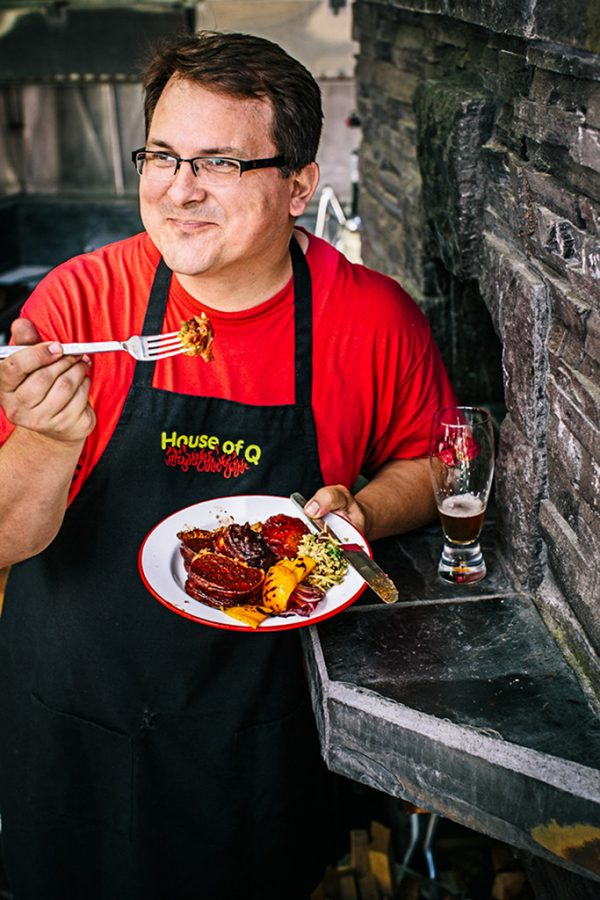
How B.C.’s House of Q Built a North American BBQ Brand Through Specialty Retail

BBQ. Photo: the épicier

Nearly two decades after Brian Misko began bottling flavours developed on the competition barbecue circuit, one of his best-known sauces is again earning recognition south of the border.

House of Q, the Vernon, B.C.-based company founded by Misko and his wife, took second place in the Mustard Sauce category at the 2026 International Flavor Awards in Wisconsin for its Slow Smoke Gold BBQ Sauce. According to the company, the competition drew more than 320 entries from 12 countries.

The award marks another milestone in a much longer business story. Misko says House of Q products are now carried in more than 600 stores across Canada and over 150 in the United States, with much of that footprint built outside conventional grocery.

For years, the company concentrated on independent butcher shops, gourmet stores and a growing network of specialty BBQ retailers. That route to market emerged from the same competition culture that produced the sauces themselves.

“Our mission in creating products is plain and simple: to win awards at BBQ Pitmaster competitions,” Misko told Retail Insider. “If it was a regional event or a world championship, we need to perform at the highest level of our ability.”

From Software to the Competition Circuit

House of Q traces its beginnings to Misko’s earlier career in software. Regular travel to American cities exposed him to slow-smoked barbecue and eventually led him into competition cooking.

What began as a hobby became increasingly serious. Misko started developing sauces and spice blends for contests at a time when the commercial BBQ selection available to Canadian pitmasters was much smaller than it is today.

The first sign of a business opportunity came directly from consumers. At competitions, people who sampled the food began asking whether they could buy the sauces.

Brian Misko

“Do you have any of that sauce that was on that pulled pork sample you gave me?” Misko recalled.

The question pointed to a market. People wanted access to the same flavours being prepared for competition.

Misko and his wife placed their first order with a co-packer in the spring of 2007, and retailer interest followed.

“That was the beginning of House of Q,” he said.

The business remained closely tied to competition BBQ as Misko’s profile expanded. His record would eventually include a sixth-place pork finish at the Jack Daniel’s World Championship Invitational Barbecue and first place in ribs at the World Food Championships.

A major turning point came in 2010, when he was invited to participate as a guest chef at the B.C. Pavilion during the Vancouver Winter Olympics, showcasing British Columbia agricultural products for international media. He left the software industry shortly afterward.

As Misko remembers the decision, the experience prompted a straightforward thought: “Maybe you should put some energy on this BBQ thing.”

His public profile continued to grow through television, trade shows, cooking demonstrations, a national bestselling cookbook and more than 75 BBQ segments on Global TV’s B.C. Morning News. He has also appeared on Food Network Canada programs including Fire Masters.

The retail business, however, was shaped by a decision that proved especially important: where House of Q products should be sold.

Building Through Specialty Retail

Many emerging food brands look first to supermarkets. House of Q followed another path.

Misko said the earliest retailer inquiries came from independent butcher shops and gourmet stores. Those channels became central to the company’s go-to-market strategy.

“There is an instant polarity for food creators to go to grocery stores when you bring a product to market,” he said. “The first phone calls we received from retailers asking for our sauces and spices, however, were from butcher shops and gourmet stores. It wasn’t grocers.”

House of Q focused on merchants Misko describes as having a “value-added relationship with their customers.”

For a BBQ brand, the fit was practical. Independent butchers could recommend sauces and seasonings alongside meat purchases, while gourmet retailers could introduce shoppers to products they might not encounter in a conventional grocery aisle. Store employees also had opportunities to explain how a rub, binder or sauce fit into the cooking process.

Another channel became increasingly important as Canada’s BBQ market developed.

Misko recalls that the country had only a handful of dedicated BBQ stores when House of Q entered the market in 2007. As home grilling and smoking became more established, specialty retailers selling grills, smokers, fuels, accessories, rubs and sauces expanded with the category.

For House of Q, BBQ retail has been its fastest-growing segment over the past five to 10 years, according to Misko. Independent butcher shops represent another major channel.

The company effectively grew alongside Canada’s specialty BBQ retail ecosystem.

“In short, grocery stores haven’t been a focus for our go-to-market strategy, but maybe that could be next,” Misko said. “We learned early on that we wanted to focus on merchants with a value-added relationship with their customers and that has proven to be with BBQ shops, butcher stores and gourmet outlets.”

The approach also gave House of Q a way to expand without depending entirely on supermarket shelf space, where smaller brands often compete for attention against significantly larger suppliers.

In more recent years, selected distributors have helped extend the company further across Canada by bringing the products to their own retail customers. Misko said that distributor-led growth has been central to House of Q’s expansion over the past five to 10 years.

From Independent Stores to Larger Retail Channels

Canada remains House of Q’s more established market.

After nearly two decades of selling and marketing BBQ products in this country, Misko said the company has developed a stronger understanding of how to explain the category to Canadian consumers. The U.S. market is considerably more crowded.

“There are more stores in Canada that carry House of Q sauces and spices than down south,” he said. “After 19 years of marketing in Canada, there may also be a bit of experience in describing BBQ to Canadians.”

The company’s growth has also included setbacks.

Misko pointed to the 2025 collapse of Peavey Mart as an example of the disruption suppliers can face when an established retail customer disappears. Roughly 90 Peavey Mart stores moved into closure during the retailer’s collapse, removing a significant retail channel from the Canadian market before the banner was later revived on a smaller scale under new ownership.

For a smaller supplier, the failure of a retailer can quickly alter distribution plans even when demand for the product itself has not changed.

House of Q has continued broadening its reach. Misko said the company has added distribution through TJX-owned stores in Canada, taking the brand beyond the independent and specialty merchants that historically formed the core of the business.

Retail Insider has also observed House of Q products on shelves at a HomeSense connected to Winners on Bloor Street in Toronto.

The presence points to a gradual evolution in the company’s retail mix. House of Q remains closely associated with specialty BBQ stores and independent butchers, while consumers are also encountering the brand in larger national retail environments.

Turning Competition Recipes Into Retail Products

House of Q’s product development process grew directly from competition.

When Misko began competing, specialized commercial BBQ products were less widely available. Pitmasters often needed to create their own sauces and spice blends, then refine them through repeated testing.

For House of Q, that meant adjusting recipes week after week in pursuit of better results from trained judges. The Kansas City Barbeque Society was a major presence in that world, with formal judging standards and a competition structure that rewarded consistency.

“When we first started competition BBQ, there wasn’t the same volume of commercial food products available, and we needed to make our own sauces and spices,” Misko said. “That meant crafting a recipe and making minor changes week after week until we consistently won awards from the trained judges.”

Once a recipe performed consistently, the company knew it had something worth keeping in its competition lineup. The next challenge was determining whether it could work as a commercial product.

Misko said early meetings with the company’s co-packer became an education in production at scale. Ingredients had to perform consistently, recipes needed to be repeatable, and commercial manufacturing could require changes that would never arise in a home kitchen or competition setting.

“Learning how to create recipes that are scalable and easily adjustable for commercial production posed a learning curve early on,” he said.

The company also had to accept that a recipe might need to change as it moved into manufacturing.

“Learning how things are made is one thing, but having the willingness to adapt your home recipe is another,” Misko said. “But we got there.”

That path from competition to commercialization became one of House of Q’s defining characteristics. Products were developed to perform in contests, refined through repeated judging and later adapted for home cooks and commercial production.

Slow Smoke Gold reflects that history.

Misko originally created the mustard-based sauce as a competition slather applied to raw meat before dry rubs or seasonings. The layer helps seasoning adhere during cooking and became part of his competition approach.

The sauce later developed into one of House of Q’s best-known retail products. Its tangy, gold-coloured profile differs from the thick, sweet, tomato-and-molasses sauces many consumers associate with barbecue, and the latest International Flavor Awards result adds to a longer record of recognition for the product.

A B.C. Production Network and a Growing BBQ Culture

House of Q is based in Vernon, but its production and logistics network extends across British Columbia.

The company’s sauces are manufactured in Vancouver, its spice rubs are produced in Burnaby and its warehouse is located in Abbotsford.

Misko said the COVID-19 period created ingredient and packaging challenges, though those pressures have since stabilized. He described the company’s current co-packer relationships as strong, with reliable turnaround times and high-quality production partners.

The pandemic also brought more consumers into home cooking. Misko said House of Q benefited as people experimented with grilling and smoking, followed by continued interest in outdoor cooking.

Canadian consumer research points to the depth of that behaviour. A survey by Caddle and Dalhousie University’s Agri-Food Analytics Lab, reported by Canadian Grocer, found that 42 per cent of Canadian consumers barbecue more than once a week during the summer.

For House of Q, the customer base extends well beyond serious pitmasters.

Misko said consumers encountered at trade shows across Canada often look surprisingly similar from one region to another. Many are families with several people to feed. Others are backyard enthusiasts who have become more sophisticated about multi-step cooking processes involving rubs, sauces and binders.

The common thread, he said, is an interest in flavour and product quality.

“Everyone just wants something that really tastes fantastic and makes them smile,” Misko said.

Looking South as the Category Evolves

House of Q sees further opportunity on both sides of the border.

In Canada, Misko believes the company can increase coverage through additional distribution and regional retail relationships. Grocery, historically outside the core strategy, could become a larger part of the mix.

The U.S. presents a different challenge. House of Q already has a retail presence there, according to Misko, along with American manufacturing relationships. It is also competing in a denser market filled with established products, pitmasters, creators and social media personalities.

“Meanwhile, we are still navigating how to market to the American consumer and differentiating our award-winning flavours, or should that be flavor?” he said.

Misko is also watching changes in the wider sauce and condiment business.

In May 2026, The Marzetti Company completed its acquisition of fast-growing Japanese barbecue sauce brand Bachan’s. Reuters reported the transaction at roughly US$400 million amid broader investor interest in sauce and spice companies.

For House of Q, the relevance is not that an acquisition is necessarily the objective. The company has not indicated that it is seeking a buyer. The broader activity shows how differentiated brands in adjacent categories are attracting strategic attention as the market evolves.

Misko sees an increasingly complex environment in which independent food companies face choices around distribution, manufacturing and scale.

“Navigating the increasingly complex food product market means making more choices,” he said.

For House of Q, those choices could include deeper Canadian distribution, additional regional and national retail relationships, further U.S. expansion or a larger move into grocery.

“It all starts with letting merchants and distributors know who you are, what your story is and if they want to share our love of BBQ with their customers,” Misko said.

Challenging a Canadian BBQ Inferiority Complex

For all the company’s growth, Misko believes Canadian BBQ brands still face a credibility challenge at home.

Canadian consumers are heavily influenced by American BBQ personalities, social media and YouTube creators, he said. That exposure has helped build interest in outdoor cooking, while also reinforcing a perception that serious BBQ expertise comes from south of the border.

House of Q has spent nearly two decades competing in that environment. Its products have won international awards, Misko has earned major competition results in the U.S., and the company has built a retail network spanning both countries.

Yet Canadian brands can still encounter a familiar assumption.

“It’s from Canada, what do Canadians know about BBQ?” Misko said, describing the attitude.

For House of Q, the challenge remains one shared by many independent consumer brands: earning shelf space, building awareness and giving shoppers a reason to look beyond larger or louder competitors.

The latest award for Slow Smoke Gold adds another answer.

“It’s easy to say, yes, Canadians do know BBQ.”

More from Retail Insider: