As part of our Retail Insider Reports, this Q1 2026 Sporting Goods & Outdoor Retail Report provides structured analysis of the Canadian sporting goods and outdoor retail sector, drawing on Retail Insider’s ongoing coverage to identify key market dynamics, emerging trends, and strategic shifts. These reports are designed to deliver executive-level insights across major retail sectors and can be accessed through the Report Hub.
****
The Canadian sporting goods and outdoor retail sector entered 2026 at a pivotal moment, balancing aggressive expansion with shifting consumer expectations around fitness, lifestyle, and community engagement. While some retailers are capitalizing on large-format vacancies to grow their physical presence, others are restructuring or exiting, reinforcing a widening divide between operators that can scale and those struggling to adapt.
Underlying this transformation is a changing consumer relationship with fitness. While only 46% of Canadian adults meet recommended physical activity levels, demand for structured fitness continues to grow. Approximately 10 million Canadians now hold gym or studio memberships, representing a 14% year-over-year increase, driven in large part by younger demographics.
Within this context, retailers and operators are evolving rapidly. Sports Experts’ relocation into the former Saks OFF 5TH space at Place Ste-Foy, Fitness World’s $50 million expansion, and JD Sports’ continued urban growth all reflect a sector investing in experience and accessibility. At the same time, Eddie Bauer’s restructuring highlights the risks facing legacy outdoor apparel formats.
Retail Insider Coverage Reflects Active but Uneven Growth
Retail Insider covered 17 articles related to sporting goods and outdoor retail in Q1 2026, reflecting a steady level of sector activity. Expansion led coverage, followed by partnerships and product launches, alongside leadership changes and restructuring events.
These signals translate into tangible market movement. GoodLife Fitness is adding new locations nationwide, while Groupe Boucher is significantly expanding its Sports Experts–Atmosphère footprint. Boutique fitness consolidation, including b.cycle’s acquisition of SPINCO, reflects a maturing market where scale and geographic reach are increasingly important.
At the same time, restructuring remains part of the story. Eddie Bauer’s Chapter 11 filing and the marketing of store leases introduce a new wave of retail space availability.
Real Estate Transformation Favors Experiential Sporting Goods Retail
The decline of department store anchors continues to reshape Canadian retail real estate. Vacancies created by former Saks OFF 5TH and Hudson’s Bay locations are increasingly being absorbed by category specialists and fitness operators.
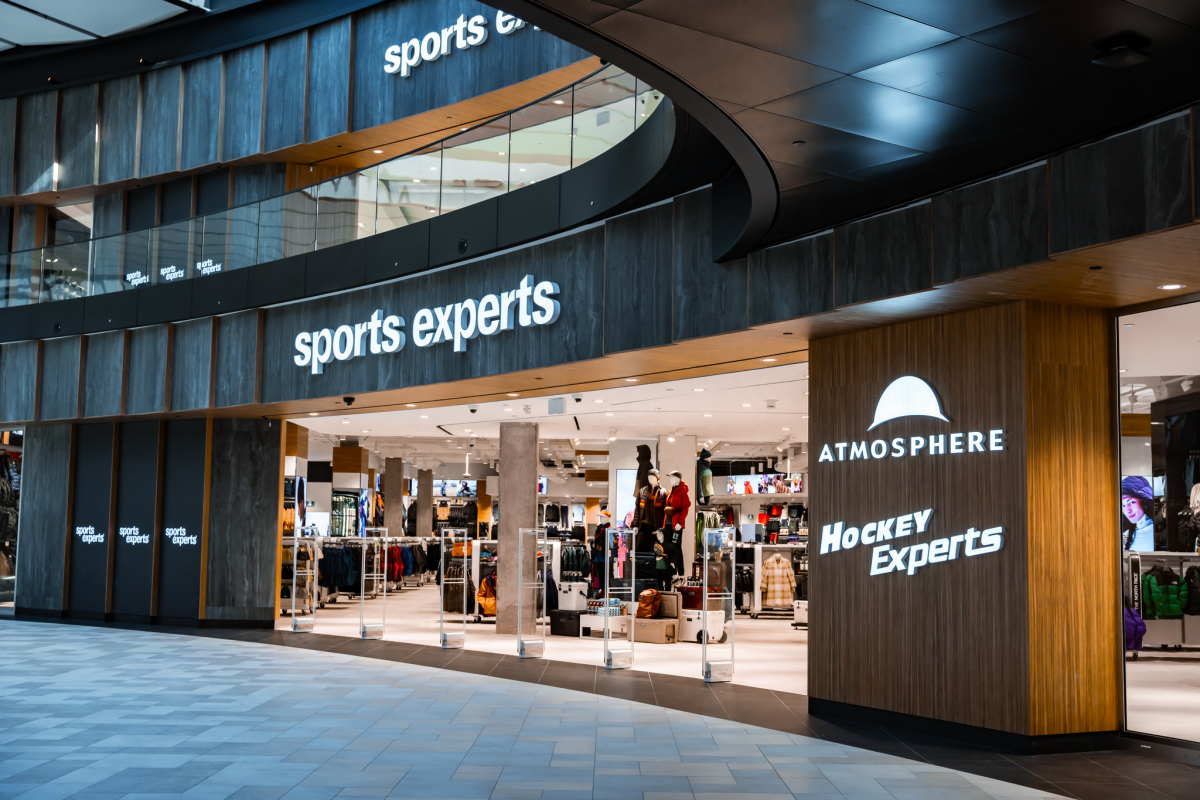
Sports Experts’ expansion into a 33,000-square-foot former department store space illustrates this shift. The move allows for a more immersive retail environment, including branded shop-in-shop concepts and broader assortments tailored to active lifestyles.
This trend is being replicated across the country. Large-format sporting goods retailers, along with fitness and athleisure brands, are emerging as primary anchor replacements in both urban and suburban markets. In cities such as Vancouver and Edmonton, brands including Lululemon and Arc’teryx, alongside fitness operators, are actively backfilling mid- to large-format retail vacancies.
For landlords, this represents a structural shift in tenant mix. Experiential and lifestyle-driven retail is replacing traditional department store formats, offering more consistent traffic and stronger alignment with evolving consumer behaviour.
Fitness Expansion Reflects Growing Demand for Community and Accessibility
Fitness operators are scaling rapidly to meet increasing demand for structured, community-based activity.
Fitness World Canada’s $50 million investment to expand its club network and introduce franchising reflects confidence in the long-term growth of accessible fitness. GoodLife Fitness is following a similar expansion trajectory, supported by national marketing campaigns focused on inclusivity and diverse fitness journeys.
At the same time, boutique fitness is consolidating. The combination of b.cycle and SPINCO creates a national platform that blends localized community engagement with broader operational scale.
This growth is occurring alongside shifting consumer behaviour. While overall physical activity participation remains below recommended levels, rising membership rates indicate that consumers are increasingly turning to structured environments to support health and wellness goals.
Market Growth and Premiumization Support Category Expansion
The broader sporting goods and outdoor retail market continues to expand, with an estimated value of approximately $6.1 billion CAD and steady growth driven by consumer investment in higher-quality equipment.
This growth is increasingly shaped by premiumization. Consumers are prioritizing performance-oriented products across categories such as hiking, cycling, and outdoor recreation, supporting higher average transaction values and reinforcing the role of specialty retailers.
Retailers that can combine product expertise with experiential retail environments are well positioned to capture this demand, particularly as consumers seek both performance and lifestyle alignment in their purchases.
Leadership and Strategic Direction Influence Competitive Positioning
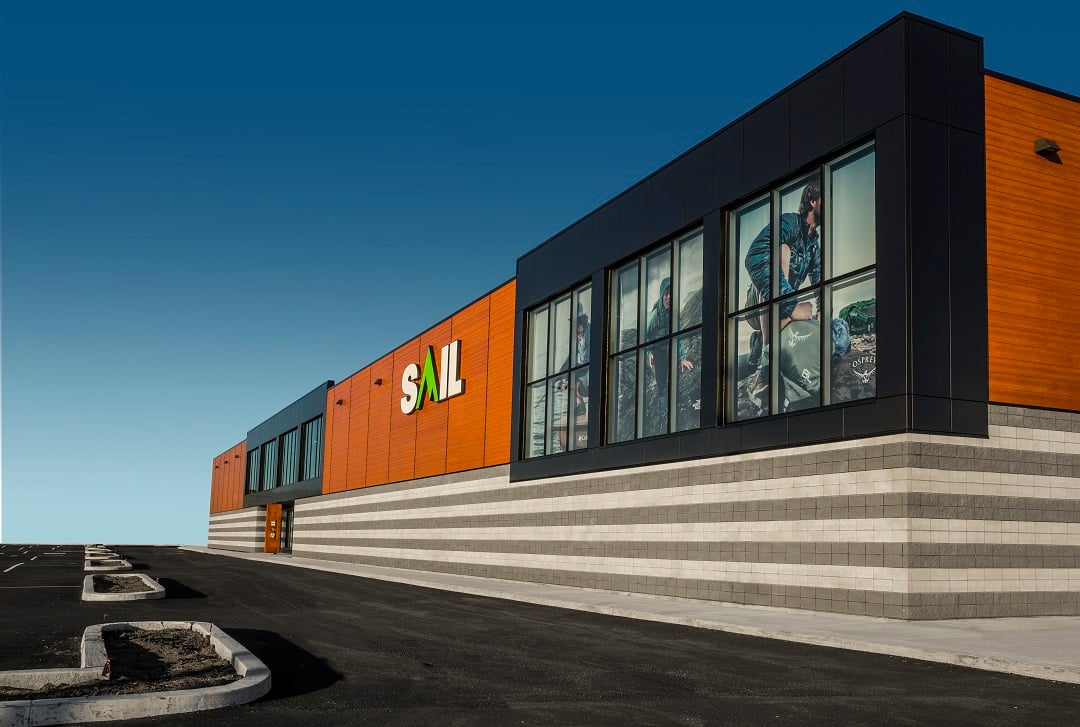
Leadership transitions are playing a role in shaping the sector’s evolution. Changes at L.L.Bean and SAIL Outdoors reflect efforts to align strategy with current market conditions, including a greater emphasis on omnichannel growth and customer engagement.
SAIL’s leadership shift, including a female-led buyout, signals a move toward renewed expansion and digital integration. These transitions highlight the importance of strategic clarity and execution in a market defined by both opportunity and risk.
Brand Partnerships and Consumer Engagement Deepen Market Reach
Partnerships with sports organizations and leagues continue to serve as key growth drivers. Oakley’s sponsorship of Canada Snowboard and Team Town Sports’ alignment with Canadian soccer leagues demonstrate how brands are leveraging performance credibility to drive retail demand.
Retailers are also experimenting with new approaches to consumer engagement. Decathlon’s no-return policy on select products reflects an effort to influence purchasing behaviour and reduce operational costs, although the long-term impact on customer loyalty remains to be seen.
Sector Outlook: Experience and Lifestyle Define Growth
The Canadian sporting goods and fitness retail sector is evolving toward a more experience-driven and lifestyle-oriented model.
While challenges remain, particularly for legacy outdoor apparel retailers, growth is being driven by operators that can combine scale, community engagement, and experiential retail. The continued repurposing of large-format retail space further reinforces the sector’s role in shaping the future of shopping centre environments.
Editor’s Take
The most important shift in Q1 2026 is the emergence of sporting goods and fitness operators as key drivers of retail real estate transformation.
Retailers such as Sports Experts and Groupe Boucher are capitalizing on large-format vacancies to create more immersive retail environments, while fitness operators including Fitness World and GoodLife are expanding rapidly to meet growing demand for accessible, community-based experiences.
At the same time, boutique fitness consolidation and premiumization within sporting goods highlight a market that is both scaling and specializing.
Eddie Bauer’s restructuring serves as a reminder that not all players are positioned to succeed in this environment. Legacy formats that lack flexibility or differentiation face increasing pressure, particularly as consumer expectations continue to evolve.
Looking ahead, the trajectory of fitness participation and membership growth will remain a key indicator of sector health. The continued evolution of retail real estate, particularly the repurposing of former department store space, will also shape competitive dynamics.
Selected Coverage
- Sports Experts to Replace Saks OFF 5TH at Place Ste-Foy – Craig Patterson – Jan 8, 2026
- L.L.Bean promotes Greg Elder to president and CEO – Mario Toneguzzi – Jan 12, 2026
- Fitness World Plans $50M for Canadian Expansion – Craig Patterson – Jan 14, 2026
- b.cycle Acquires SPINCO in National Fitness Deal – Lee Rivett – Feb 26, 2026
- Eddie Bauer Store Leases Marketed in Canada – Craig Patterson – Mar 4, 2026
- JD Sports Expands in Canada with Eaton Centre Flagship – Craig Patterson – Mar 27, 2026
- SAIL Leadership Buyout Signals New Growth Phase – Craig Patterson – Mar 31, 2026
- Winnipeg-based Activate Games accelerating international growth – Mario Toneguzzi – Mar 20, 2026
- Groupe Boucher to relocate, expand Place Ste-Foy Sports Experts–Atmosphère store – Mario Toneguzzi – Jan 13, 2026
- Oakley makes history with first-ever official national team apparel sponsorship – Mario Toneguzzi – Feb 2, 2026
- Decathlon makes select running shoes unreturnable in January pledge aimed at New Year’s fitness commitments – Mario Toneguzzi – Jan 13, 2026
- KEEN launches trail running category – Mario Toneguzzi – Mar 24, 2026
- GoodLife Fitness launches national marketing campaign as it expands Canadian locations – Mario Toneguzzi – Jan 30, 2026
- VIMALIFE Expands Toronto Fitness with Leslieville Club – Craig Patterson – Mar 3, 2026
- Team Town Sports named official footwear retailer for Canadian Premier League, League1 Canada – Mario Toneguzzi – Jan 14, 2026