

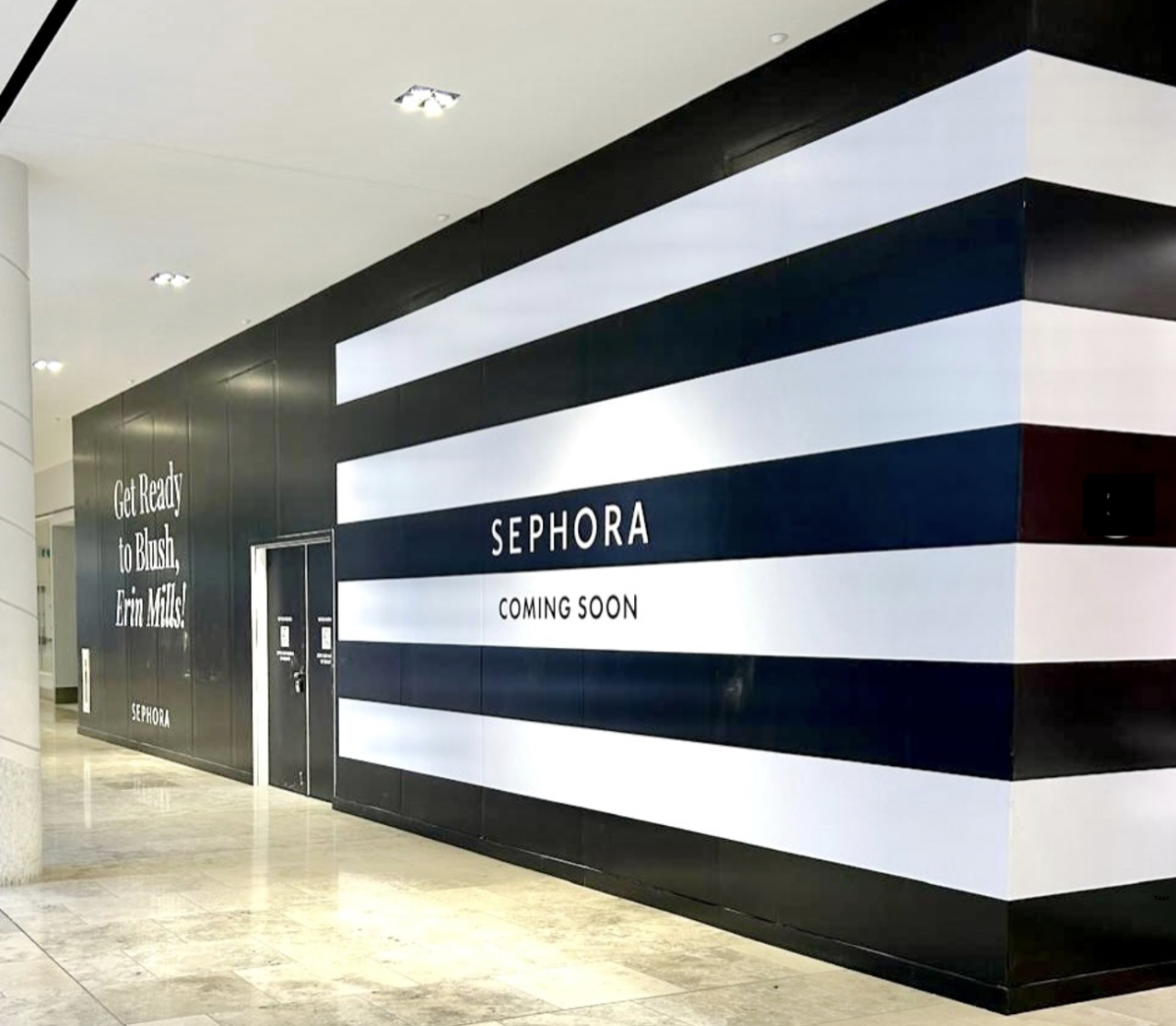
Sephora is set to open its 144th Canadian store at Erin Mills Town Centre in Mississauga on March 6. The opening is part of the retailer’s sustained effort to capture additional share in the rapidly evolving Canadian beauty market.
Sephora entered Canada digitally in 2003 before opening its first physical location at CF Toronto Eaton Centre in 2004. Since then, the company has steadily built infrastructure, including a Canadian headquarters in 2007, a dedicated Canadian website in 2012, and a 280,000-square-foot distribution centre in Brampton in 2015. Its 100th Canadian store opened in Winnipeg in November 2022, and the brand has added roughly 10 to 15 stores annually since then.
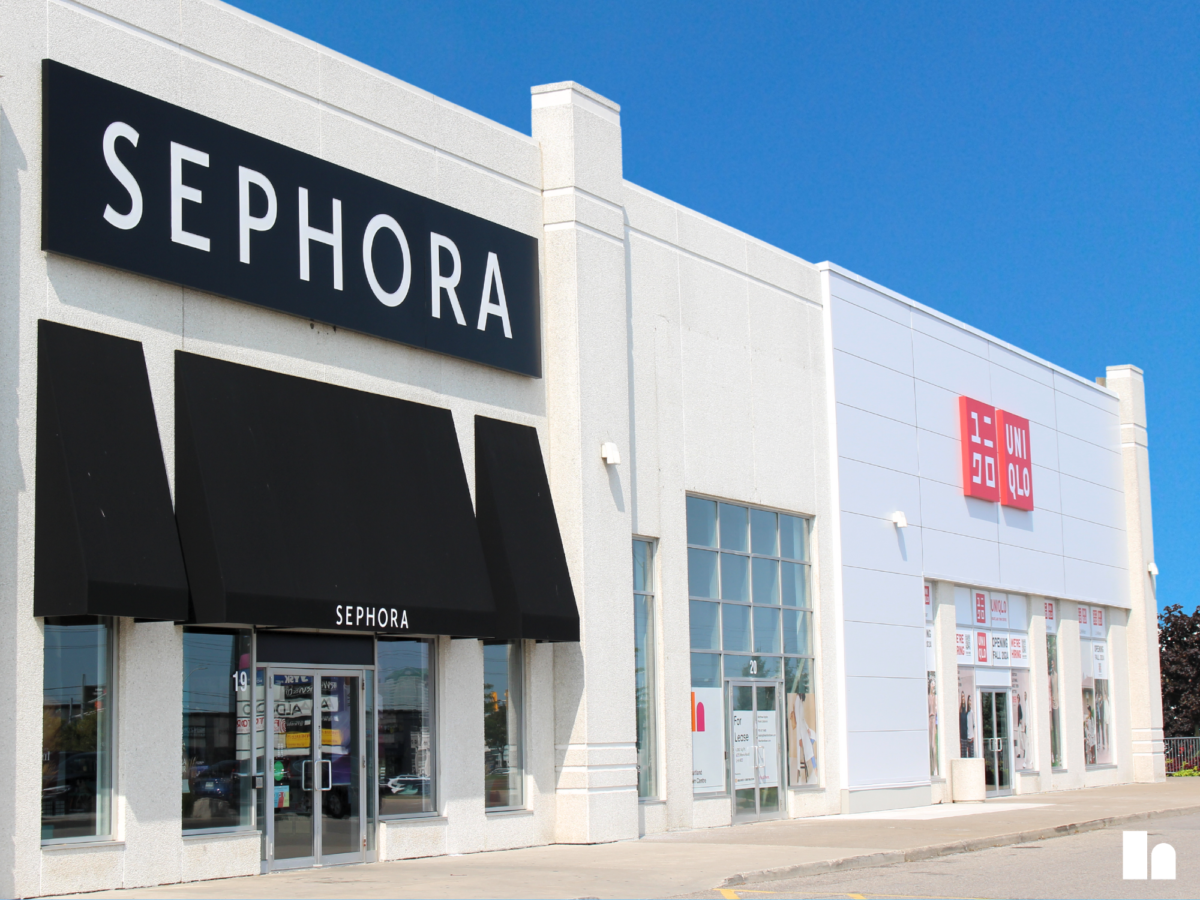
The Erin Mills opening reflects Sephora’s ongoing suburban expansion strategy. Rather than concentrating solely on premier downtown shopping centres, the retailer is increasingly targeting residential hubs and secondary malls. That move directly addresses convenience advantages long held by drugstore operators. Jeff Berkowitz of Aurora Retail Group handles lease negotiations for Sephora.
A $12 Billion Industry in Transition
The Canadian beauty market is valued at approximately $12.18 billion in 2026. Growth in prestige categories continues to outpace mass segments, supported by premiumization in fragrance, skincare, and hair care.
Sephora remains the leading specialist beauty retailer in Canada and commands roughly 30 percent of the prestige segment. While Shoppers Drug Mart maintains the broadest physical footprint with more than 1,300 locations nationally, Sephora has differentiated itself through experiential retail, knowledgeable sales staff and digital integration.
The competitive dynamic is increasingly defined by how retailers balance prestige positioning with value sensitivity. Inflationary pressures have encouraged consumers to seek smaller indulgences, reinforcing what is often referred to as the Lipstick Effect. Sephora’s mix of exclusive brands, private label offerings, and trial-size formats allows it to capture that behaviour.
Competitive Landscape: Sephora, Shoppers, and Holt Renfrew
Sephora occupies a strategic middle ground between mass convenience and ultra-luxury exclusivity. Its open-sell format, emphasis on discovery, and digital tools such as Color IQ and Skin IQ reinforce its positioning as an omnichannel leader.
Shoppers Drug Mart, owned by Loblaw Companies, controls an estimated 28 to 30 percent of Canada’s total health and beauty market. The retailer leverages the PC Optimum loyalty ecosystem to convert everyday purchases into redeemable points across grocery and pharmacy categories. Its BeautyBOUTIQUE concept has enabled it to carry prestige brands traditionally associated with department stores. Some have complained about a lack of staff, and market share is said to be declining.
Holt Renfrew operates within a narrower ultra-luxury segment, emphasizing concession-based brand boutiques and concierge-level service. Although its volume share is smaller, average transaction values are significantly higher. Its basement-level beauty halls “could perform better” according to sources.
Sephora’s advantage lies in exclusivity and cultural relevance. Brands such as Rare Beauty by Selena Gomez, Fenty Beauty by Rihanna, Haus Labs by Lady Gaga, and Makeup by Mario anchor its prestige moat. Shoppers differentiate with heritage luxury names, including Chanel, Guerlain, and Clé de Peau Beauté.
The result is a market increasingly shaped by loyalty competition. PC Optimum drives transactional value, while Sephora’s Beauty Insider program fosters emotional attachment through early access and community engagement.
The Hudson’s Bay Exit and Market Reallocation
The collapse and permanent closure of Hudson’s Bay by June 1, 2025, reshaped the Canadian beauty market. For decades, department store beauty counters served as a middle-ground prestige destination. Their disappearance displaced numerous heritage brands and beauty advisors.
Brands that once relied on Hudson’s Bay counters were forced to seek alternative distribution. Many pivoted toward Shoppers Drug Mart’s BeautyBOUTIQUE concept or strengthened direct-to-consumer strategies. Sephora and Shoppers emerged as primary beneficiaries, effectively consolidating prestige distribution into a tighter competitive framework.
Walmart Canada has also moved aggressively into the masstige segment. Through initiatives such as its Start Accelerator program, Walmart has introduced premium quality brands at accessible price points, targeting value-conscious consumers who previously shopped department stores.
The relaunch of Zellers under new ownership in 2026 reflects a more focused model. The updated concept deliberately avoids pharmacy and beauty counters, acknowledging the dominance of Sephora, Walmart, and Amazon in those categories.
The Ulta Question
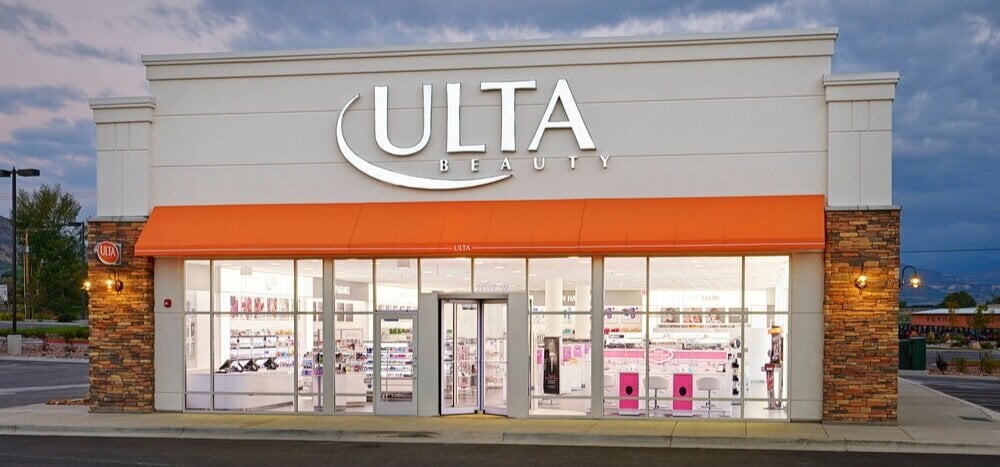
If Ulta Beauty enters Canada, it would represent the most significant disruption in the sector in more than a decade. Ulta’s hybrid model combines prestige and mass brands under one roof and typically includes in-store salon services.
Such an entry would intensify competition across all segments of the Canadian beauty market. Sephora would likely double down on exclusives and experiential loyalty offerings. Shoppers Drug Mart would face increased pressure to elevate service components beyond convenience and points accumulation.
An Ulta arrival would also ignite a suburban real estate contest. Sephora’s move into power centres mirrors Ulta’s typical U.S. footprint. Co-location in plazas could become common, driving sharper pricing strategies and more aggressive promotional activity.
Ultimately, a three-player rivalry among Sephora, Shoppers, and Ulta could narrow pricing gaps and accelerate brand launches in Canada.
Structural Shifts Reshaping the Industry
Beyond store counts, deeper shifts are redefining the Canadian beauty market in 2026.
The first is the maturation of derm-cosmetics and regenerative skincare. Retailers increasingly compete with medical aesthetic providers. Clinical positioning has become mainstream, and dermatologist-tested branding carries significant weight.
The second is the rise of Indigenous-owned and BIPOC-led brands. Commitments such as Sephora Canada’s 25 percent BIPOC-owned assortment goal by 2026 signal structural change in merchandising strategies. Brands like Cheekbone Beauty and Sḵwálwen Botanicals illustrate how representation and cultural storytelling are shaping product development.
Sustainability has also progressed beyond marketing claims. Industry milestones, including diversion of more than 100,000 pounds of beauty waste through recycling partnerships in late 2025, reflect measurable environmental efforts. Refillable packaging formats from luxury brands have become central selling points rather than niche offerings.
Finally, men’s grooming remains the fastest-growing segment, projected at a 10 percent compound annual growth rate through 2026. Retailers are reframing grooming as self-maintenance, expanding assortments in gender-neutral skincare and performance-driven hair treatments.
Outlook: A Market Far from Saturation
Sephora’s 144-store milestone reflects a larger shift in the Canadian beauty market. Even with economic pressures, Canadians continue to spend on accessible prestige products. The closure of department store beauty counters has concentrated sales among fewer players, while Sephora’s move into suburban malls is designed to capture growth closer to where consumers live.
Competition is intensifying. Exclusive brands, loyalty programs, and in-store experiences are becoming key tools in the fight for market share. Sephora’s steady expansion signals that the company believes Canada still has room for further growth relative to its size and spending potential.
If Ulta Beauty enters Canada, the competitive landscape would change again. For now, the Erin Mills Town Centre opening reinforces Sephora’s intention to remain a leading force in a market that is evolving quickly rather than gradually.


















Wasn’t ulta coming to Canada before? Then they gave up?
Correct, Ulta suspended its initial plans to enter Canada in September 2020 as the pandemic took hold.