Vancouver-based Lotus Capital Corp. is expanding its Canadian retail portfolio with the acquisition of Plaza 33 in Kelowna, adding an established grocery-anchored shopping centre to a growing collection of necessity-based properties across the country.
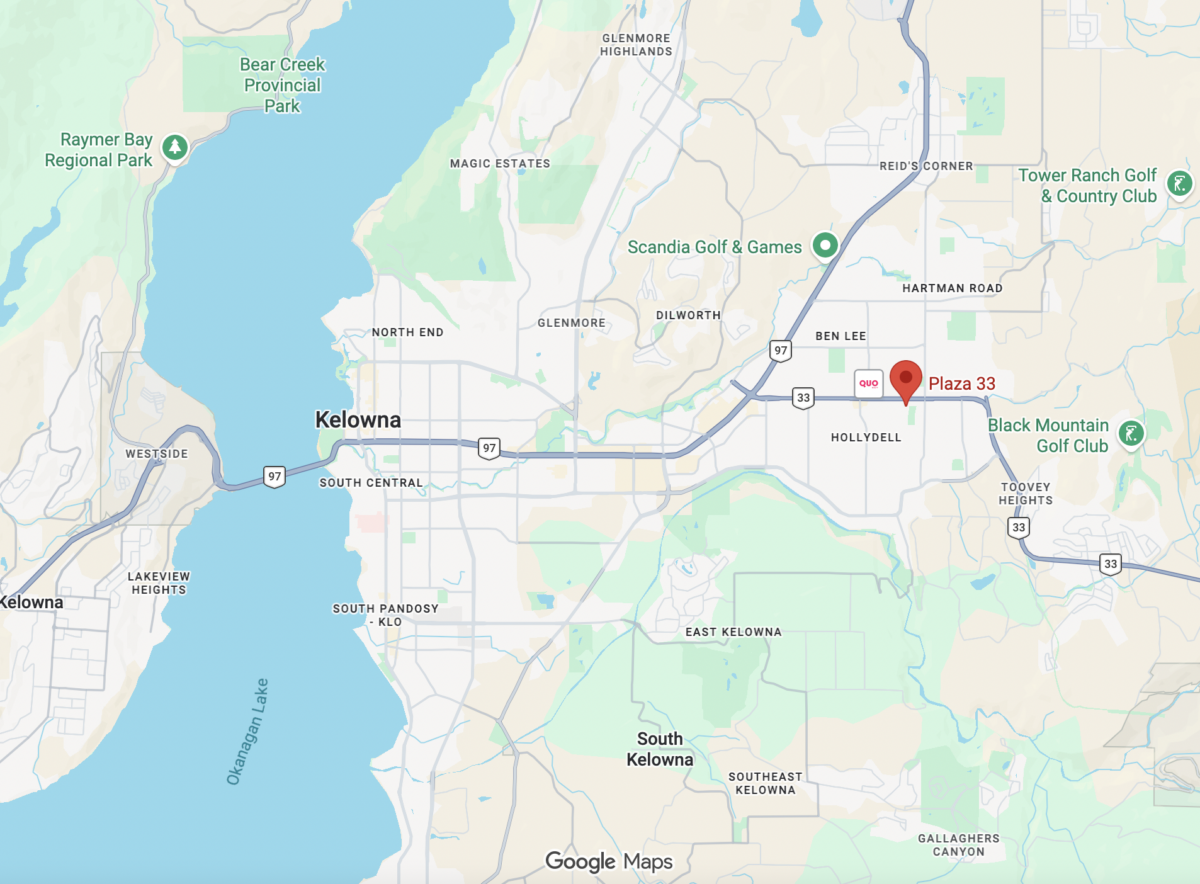
The 86,000-square-foot centre is located at 301 Highway 33 in Kelowna’s Rutland area and sits on 4.61 acres. Built in 1970, Plaza 33 is anchored by Save-On-Foods and includes a mix of pharmacy, banking, health services and community uses. Tenants include Shoppers Drug Mart, RBC, TD Canada Trust, a medical laboratory and an Okanagan Regional Library branch, along with other businesses serving the surrounding community.
The acquisition marks Lotus Capital’s first purchase in Kelowna and extends a recent expansion into grocery-anchored and necessity-based retail. The company has identified the city as one of Western Canada’s stronger secondary markets, pointing to population growth, a diversifying economy and increasing business investment as part of the acquisition rationale.
The purchase price was not disclosed. Plaza 33 had previously been marketed for sale with a reported asking price of $37.5 million, while the property’s most recent reported B.C. Assessment value was $29.1 million.
A Tenant Mix Built Around Daily Needs
Plaza 33 fits closely with the type of retail property becoming more visible within Lotus Capital’s portfolio. Its mix of grocery, pharmacy, banking, medical and community-oriented uses brings several forms of repeat traffic to one neighbourhood centre, with much of that activity tied to routine household needs.
The presence of both Save-On-Foods and Shoppers Drug Mart is particularly important. Two major bank branches, health-related uses and a public library add further reasons for customers to visit the property throughout the week.
For an owner, that mix reduces reliance on any one discretionary retail category and gives the centre a broader role within the surrounding community. Properties of this type often function as local service hubs, particularly in established residential areas where shoppers combine multiple errands in a single trip.
Lotus has indicated that its current plan is to continue operating Plaza 33 as an income-producing retail property, drawing on the centre’s existing traffic and tenant base.
Why Kelowna Matters
The acquisition also places Lotus in one of British Columbia’s most closely watched regional growth markets. Kelowna has experienced significant population expansion over the past decade and continues planning for further growth, while its economy has broadened beyond tourism and leisure to include education, health care, technology, professional services and other industries.
Retail conditions have remained comparatively healthy, though performance differs by format and submarket. Colliers reported approximately 6.2 million square feet of retail inventory across Greater Kelowna at mid-year 2025, with a vacancy rate of 2.94 per cent and average asking net rents of $30.10 per square foot.
By year-end, average net rents remained close to that level at $29.89 per square foot, even as several larger vacancies affected overall market conditions. The figures support the broader case for Kelowna as a growth market while showing that retail demand is not equally strong across every segment.
National retailers have continued entering and expanding within the region. At the same time, high construction costs have made both tenants and landlords more selective about new development and major improvements to existing space. That can strengthen the position of established centres with functional premises, known traffic patterns and long-standing ties to surrounding neighbourhoods.
An Established Retail Node in Rutland
Plaza 33’s location in Rutland adds another dimension to the acquisition. Rutland is one of Kelowna’s major residential areas and has an established network of neighbourhood retail serving local residents.
Mid-2025 market data from Colliers placed retail vacancy in the submarket at approximately 2.4 per cent. Average asking net rents were lower than in several other Kelowna submarkets, at roughly $23.67 per square foot.
The figures point to a market where space was comparatively affordable while vacancy remained limited. For tenants, lower occupancy costs can make locations more accessible. For owners of well-positioned properties, a constrained supply of available space can support leasing stability.
Plaza 33 also has a long operating history in the neighbourhood. Although the property dates to 1970, older shopping centres can retain significant value when their locations remain relevant and their tenant mix continues to serve local demand.
Cash Flow Today and Longer-Term Optionality
The amount of land involved adds another layer to the Plaza 33 acquisition. At 4.61 acres, the property represents a sizeable urban site within a growing city.
Previous marketing of the property highlighted longer-term development potential, and local planning context has been associated with the possibility of greater density on the site, including development of up to 12 storeys. Lotus has not announced redevelopment plans and has indicated that its current intention is to continue operating Plaza 33 as a retail centre.
For now, the investment case centres on an established income-producing property with a durable tenant base. Ownership of a large site in a growing urban market also leaves room for future flexibility if market conditions and planning priorities change over time.
That combination can be especially valuable where older low-rise retail centres occupy substantial parcels of urban land.
A 292,000-Square-Foot Push into Grocery-Anchored Retail
Plaza 33 follows a much larger retail acquisition by Lotus Capital in Eastern Ontario. In 2025, the company acquired a four-property portfolio of grocery-anchored shopping centres from Choice Properties REIT, totalling approximately 292,000 square feet across Kingston, Cornwall, Rockland and Hawkesbury.
Each centre is anchored by a grocery store. The Kingston property at 1030 Coverdale Drive includes a No Frills, while the Rockland centre at 2737 Laurier Street and the Hawkesbury property at 1560 Cameron Street are anchored by Your Independent Grocer locations.
The largest asset in the portfolio is Brookdale Centre in Cornwall, a roughly 140,000-square-foot shopping centre anchored by Food Basics. Other major tenants include Dollarama, Scotiabank and Planet Fitness.
Brookdale Centre also carries a broader mix of restaurants, apparel retailers and service businesses. Reported tenants have included GameStop, Guac Mexi Grill, Kelseys, Penningtons, Play It Again Sports, Reitmans, Stacked Pancake House, The Beer Store, Tim Hortons and Tootsies Shoe Market. The centre was approximately 90 per cent leased when the portfolio was sold.
The transaction gave Lotus immediate scale in Eastern Ontario and placed the company in several regional markets where grocery-anchored centres hold prominent positions in their communities. With Plaza 33 added to the portfolio, the two recent acquisitions account for approximately 378,000 square feet of retail property.
The Current Strategy Has Deeper Roots
The Ontario and Kelowna purchases have made Lotus Capital’s retail activity more visible, though the company has previous experience owning and managing neighbourhood shopping centres.
One example is Forest Glen Shopping Centre in Kitchener, an approximately 127,000-square-foot grocery-anchored property acquired by Lotus in 2013. During its ownership, the company renewed the grocery anchor’s lease and carried out targeted improvements before realizing the investment in 2016.
The property is relevant to the current strategy because it carried many of the same characteristics now visible in the company’s recent acquisitions, including neighbourhood positioning, grocery anchoring, repeat consumer traffic and active asset management.
Lotus has also previously owned Kameyosek Shopping Centre in Edmonton, a neighbourhood-oriented property serving an established residential area. Its mix included banking, medical and convenience-oriented uses, making it similar in some respects to the service-based profile now seen at Plaza 33. Lotus later realized the Kameyosek investment.
Those earlier holdings show that the current expansion is not Lotus Capital’s first experience with shopping centres. The more recent acquisitions appear to be increasing the scale and visibility of a property type the company already knows.
Retail Within a Broader Real Estate Platform
Lotus Capital is a diversified real estate investor with interests spanning industrial, residential, retail and development assets across Canada, along with investment activity in the United States.
That wider platform helps put the recent retail expansion into context. In Brampton, Lotus acquired two Class A business-centre properties in the Airport Intermodal Business Park in 2025. Together, the assets comprise approximately 140,000 square feet and are fully leased.
The company has also owned or invested in manufacturing, warehouse and industrial properties in markets including Burlington, Windsor and Greater Victoria. In Metro Vancouver, Lotus has assembled a Legacy Apartment Portfolio comprising 10 multi-residential properties and 338 units.
Its other activity includes residential development projects such as LINX in Vancouver and the Wildcat Industrial project in Colwood, which is planned to include approximately 150,000 square feet of industrial strata space.
Across more than three decades, Lotus has invested in and realized assets across several property categories and says its activity has represented billions of dollars in investment across North America. Retail remains one part of that broader platform, though the recent shopping-centre acquisitions have given the sector greater prominence within the company’s Canadian activity.
What the Portfolio Suggests About Lotus Capital’s Approach
Viewed across its disclosed holdings, Lotus appears to favour properties that already produce income and also leave room for active management or future value creation.
That pattern takes different forms across the portfolio. Industrial assets can provide contracted income from business tenants. Multifamily properties allow for long-term ownership and incremental improvements. Development sites create value through planning and construction.
The retail acquisitions bring several of those elements together. A grocery-anchored neighbourhood centre can generate current cash flow, serve regular consumer needs and offer opportunities through leasing, operations or property improvements. In some cases, a large land holding may also carry future development potential.
Plaza 33 illustrates that mix. It is an operating shopping centre with a broad daily-needs tenant base, a long-standing community presence and a sizeable site in a growing city. The Eastern Ontario portfolio offers a similar income-oriented profile across four regional markets.
Why Necessity-Based Retail Remains Attractive
Lotus Capital’s expansion comes as grocery- and drug-anchored shopping centres continue to draw investor attention.
The appeal is easy to understand. Consumers may delay furniture, apparel or other discretionary purchases when household budgets tighten, but they continue buying groceries, filling prescriptions and using everyday services.
Necessity-based retail still faces pressure. Grocery operators deal with tight margins, pharmacies adjust store networks and neighbourhood centres require ongoing leasing and capital investment. Even so, properties anchored by regular consumer needs can carry a degree of stability that is harder to achieve in heavily discretionary formats.
Established centres may also benefit from the high cost of creating new commercial space. Construction expenses, financing conditions and tenant improvement costs can make new projects difficult to justify in many markets.
An existing centre with usable space, established access, familiar traffic patterns and a strong local tenant mix can remain valuable even when the buildings themselves are older. Western Canadian market commentary has continued to identify grocery- and drug-anchored plazas as attractive investment targets in selected markets.
Looking Beyond Canada’s Largest Cities
The geography of Lotus Capital’s recent retail acquisitions is notable. Kelowna, Kingston, Cornwall, Rockland and Hawkesbury are very different communities, with distinct economies and growth patterns.
What they share is a location outside Canada’s largest downtown investment markets and a reliance on established regional and neighbourhood retail.
In communities like these, grocery-anchored centres can hold important positions within local shopping patterns. They often serve broad residential catchments and benefit from customer routines built over many years.
Acquisition conditions can also differ from Toronto or Vancouver, where competition for land and income-producing real estate can be intense. That does not make every secondary market equally attractive, but it can create opportunities for investors prepared to assess communities individually.
Kelowna adds a Western Canadian growth market to the portfolio. For Lotus, Plaza 33 provides exposure to that growth through an operating property already embedded in the Rutland community.
A Retail Platform Taking Shape
The Plaza 33 acquisition makes Lotus Capital’s retail strategy easier to see.
The company now has a major grocery-anchored portfolio in Eastern Ontario, a newly acquired neighbourhood centre in Kelowna and earlier experience with shopping centres in Ontario and Alberta. Those holdings sit within a larger real estate platform spanning industrial, residential and development assets.
The pattern points to a growing focus on established locations, everyday consumer demand and properties with durable income characteristics. In selected cases, longer-term land value may add another layer to the investment.
Plaza 33 may be Lotus Capital’s first acquisition in Kelowna, but it sits within a much longer record of real estate investment and shopping-centre ownership.
With its recent Eastern Ontario and British Columbia acquisitions accounting for approximately 378,000 square feet of retail property, grocery-anchored and necessity-based centres are becoming a more visible part of the company’s Canadian portfolio.