Build-A-Bear Workshop is refocusing its product strategy around customization and the in-store experience after a weaker-than-expected summer assortment contributed to declining traffic and sales during the retailer’s second quarter.
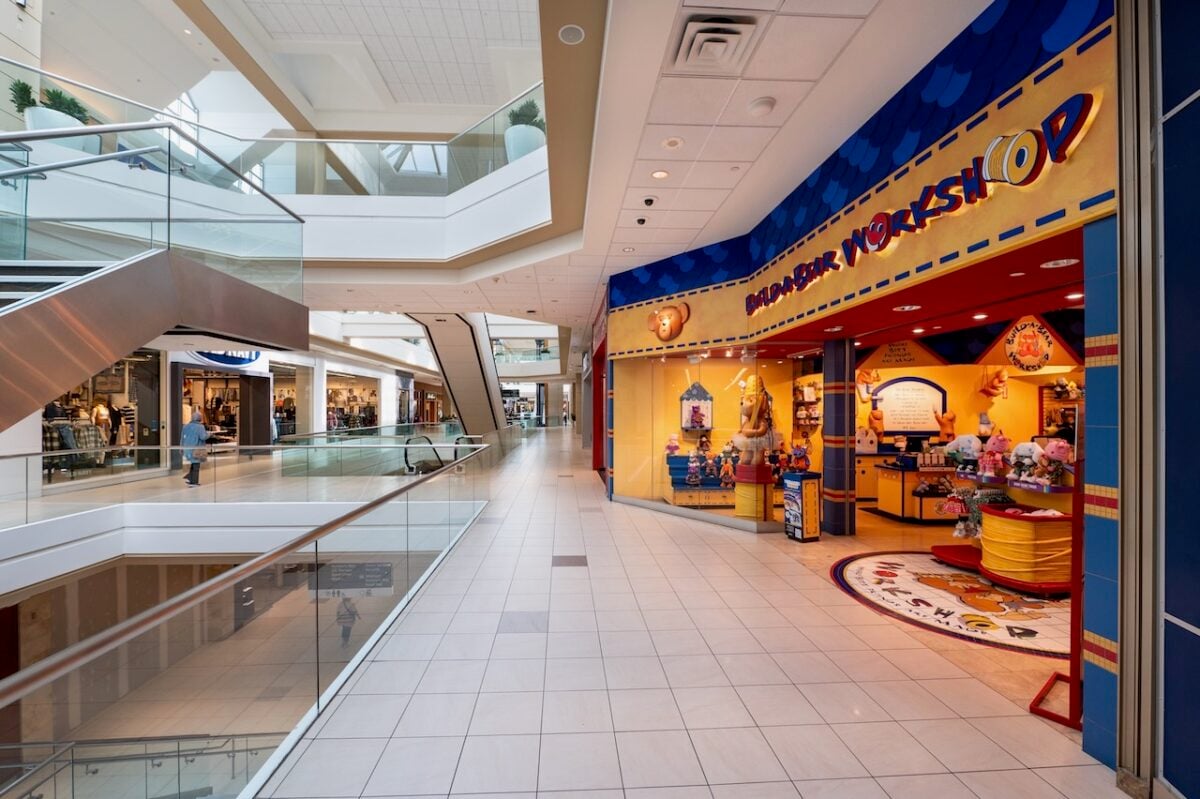
The St. Louis-based company operates a network of company-managed stores in Canada, with recent activity including a new location at Cataraqui Centre in Kingston, Ontario. Canada remains one of Build-A-Bear’s core corporate markets as the retailer expands internationally and works to broaden its appeal across age groups.
At the same time, the company has learned that some of its recent product innovation moved too far away from the stuffing, dressing and personalization process that has defined Build-A-Bear for nearly three decades.
“The reality is we pushed it too far,” CEO Chris Hurt told analysts during the company’s second-quarter earnings call Thursday.
Management is already seeing signs that a return to products built around the traditional Build-A-Bear model is resonating. The company’s recent Halloween launch delivered the highest non-fourth-quarter sales week in its history, while early third-quarter traffic and sales have improved from the first half of the year.
Summer Product Strategy Misses the Mark
Build-A-Bear entered the summer facing difficult comparisons with 2025, when collections including its Fruit Stand assortment, Sanrio Sweet Shop and products tied to How to Train Your Dragon helped drive strong sales.
For 2026, the company pushed further into product innovation with concepts including Slushy Plushies and other trend-oriented merchandise. Some of those products were less dressable and customizable than traditional Build-A-Bear characters and did not perform as management expected.
Build-A-Bear has traditionally used the summer period to experiment with emerging trends because occasions such as Valentine’s Day, Easter, Halloween and the holiday season tend to have more established product expectations.
After five consecutive years of record annual results, management believed there was room to push the summer assortment further. The results are now influencing how the company approaches future product development.
Products that retained the familiar Build-A-Bear formula performed considerably better. Chummy Shark, a dressable character included in the Make Your Own Summer collection, sold out during the quarter.
Build-A-Bear’s proprietary Promise Pets collection also continued to generate higher-than-average spending per transaction, supported by customers adding clothing and accessories.
Management said innovation will remain important, with future assortments expected to place greater emphasis on the interactive elements associated with the brand.
Weaker Traffic Pressures Results
Second-quarter revenue fell 7.2 per cent to US$115.3 million, while e-commerce demand declined 15.6 per cent. Pre-tax income dropped to US$11.6 million from US$15.3 million a year earlier.
Transactions declined primarily because of lower store traffic. Increased promotional activity, partly aimed at moving underperforming summer merchandise, contributed to a 340-basis-point decline in gross margin to 54.2 per cent.
Build-A-Bear subsequently lowered its fiscal 2026 outlook. The company now expects annual revenue of US$500 million to US$525 million, down from its previous forecast of US$530 million to US$550 million.
Pre-tax income is expected to reach US$60 million to US$68 million, compared with the previous forecast of US$72 million to US$78 million.
Despite the reduced outlook, management expects 2026 to remain one of the stronger years in Build-A-Bear’s history.
Halloween Provides an Early Rebound
Early third-quarter results are giving management some confidence that merchandise was an important part of the summer slowdown.
Build-A-Bear’s Halloween assortment moved closer to its traditional formula, combining seasonal and trend-oriented characters with opportunities to stuff, dress, accessorize and personalize them.
The launch generated the highest non-fourth-quarter sales week in company history. Build-A-Bear also recorded its third-highest U.S. e-commerce sales week, trailing only the Black Friday weeks of 2020 and 2025.
Hurt said traffic and sales have improved sequentially during the early third quarter, although performance remains slightly below the company’s previous expectations.
This year’s Halloween assortment includes returning fan favourites and new characters designed for clothing, accessories and other personalization options.
The performance highlights the importance of the workshop to Build-A-Bear’s retail model. The process of creating and personalizing a character remains a central point of differentiation for the brand.
Canada Remains a Company-Operated Market
Canada holds a different position within Build-A-Bear’s global network than many of the international markets where the company is currently expanding.
Canadian stores are part of Build-A-Bear’s corporately managed North American operations rather than its international franchise network.
The company’s Canadian footprint spans shopping centres in Ontario, Alberta, British Columbia, Manitoba and Nova Scotia.
Recent activity includes a new Build-A-Bear Workshop at Cataraqui Centre in Kingston. The retailer also operates at CF Markville in Markham, while its CF Polo Park store in Winnipeg was repositioned within the shopping centre as part of broader changes at the property.
Build-A-Bear does not disclose Canadian sales separately, and management did not provide Canada-specific financial results during Thursday’s call.
The Canadian network provides an established platform for a business that remains closely tied to physical retail. Stuffing, dressing and personalizing characters are activities largely designed around participation inside Build-A-Bear workshops.
The importance of that model became particularly apparent during the second quarter as products offering fewer opportunities for interaction struggled to generate the response management had anticipated.
Adults and Collectors Broaden the Audience
Build-A-Bear is also expanding the audience for its products and stores.
The company increasingly identifies teens and adults as an addressable market alongside families and children, supported by nostalgia, pop culture, licensing, gifting and collectability.
Its assortment includes products tied to properties such as Pokémon, Sanrio, Harry Potter, The Nightmare Before Christmas and How to Train Your Dragon, allowing Build-A-Bear to reach fandoms extending beyond its traditional child customer.
Hurt said the company has demonstrated an ability to turn emerging trends into longer-lasting parts of its assortment. Characters including Spring Green Frog and Capybara began as trend-oriented products before becoming established offerings.
Seasonal launches are another part of the strategy, particularly as limited and returning characters generate online attention and user-created content.
Canada is included directly in the licensing push. Build-A-Bear launched a Sanrio Halloween collection Thursday featuring Berry and Cherry from Lloromannic. Hurt said Build-A-Bear is the first retailer in the U.S., Canada and U.K. to offer Lloromannic in plush form.
Canada has also been included in the retailer’s traffic-driving promotions. In June, its “Feeling the Squeeze? Get a Hug” promotion offered selected Make-Your-Own furry friends for C$15 at participating Canadian workshops.
Physical Expansion Continues
Location expansion remains one of four strategic pillars outlined by management, alongside organic growth, wholesale and outbound licensing, and gifting and personalization.
Build-A-Bear ended the second quarter with 674 locations across 37 countries. It added five net locations during the quarter and 12 during the first half of fiscal 2026.
The company continues to expect at least 50 net new experience locations this year, with most expected to be operated by international partners. The target does not represent a specific Canadian expansion plan.
Build-A-Bear is also experimenting with a more elaborate version of its store concept.
A multi-level location at ICON Park in Orlando, expected to open during the third quarter, will introduce an appointment-based design studio where customers can work with consultants to create one-of-a-kind characters.
Other additions include expanded embroidery and clothing customization, enhanced voice-recording options, a scent bar and a Build-A-Bear Bake Shop with guided dessert experiences.
Management intends to evaluate the concepts and potentially apply successful elements elsewhere in its store portfolio. No Canadian rollout of the features has been announced.
Wholesale Growth Falls Short
Build-A-Bear’s efforts to extend the brand through wholesale have progressed more slowly than anticipated.
A multi-million-dollar Walmart program from last year will not be repeated in 2026, while other wholesale opportunities are taking longer to develop. The company consequently reduced its commercial segment outlook from growth of at least 20 per cent to approximately flat performance for the year.
Management continues to view wholesale as a longer-term opportunity after the Walmart program demonstrated demand for Build-A-Bear-branded products through third-party distribution.
Build-A-Bear Approaches 30th Anniversary
Build-A-Bear will mark its 30th anniversary in 2027 with a year-long program that will include bringing popular characters from its archives back into the assortment.
The initiative is designed to reconnect longtime customers with characters they may remember from earlier visits while introducing them to a new generation.
Build-A-Bear will begin building toward the anniversary in October with a special version of longtime mascot Bearemy.
The anniversary comes as nostalgia, collectability and adult consumers take on greater importance within the company’s strategy. Licensed characters and emerging trends will remain part of the assortment as Build-A-Bear looks for additional ways to reach those audiences.
The company’s experience this summer has also provided a clearer direction for future product development. Build-A-Bear plans to continue pursuing new characters and consumer trends while maintaining the interactive elements that have helped define its stores since the company was founded.