
Adult collectors, trading cards and licensed merchandise are changing Canada’s toy industry, creating new opportunities for retailers while established chains rethink their store networks and assortments. Demand from consumers buying toys for themselves is also influencing product development, store formats and the timing of purchases beyond the traditional Christmas season.
Andrew Wagar, Chair of Marketing Communications at the Canadian Toy Association and President of Swerve Strategic Marketing, says trading cards have become a major source of demand. In an interview with Retail Insider, he identified Pokémon, sports cards, licensed merchandise and inexpensive collectible toys among the products attracting attention.
“The short answer is the big driver is trading cards,” Wagar said. He described a market in which dedicated enthusiasts return for new releases, sought-after characters and additions to existing collections.
The Canadian Toy Association’s annual sales data, compiled by Circana, shows that sales among participating Canadian retailers reached C$2.678 billion in 2025, up 14% from C$2.340 billion in 2024. Circana estimates that its Retail Tracking Service represents approximately 69% of the Canadian toy retail market, so the figures are not a complete national sales total.
Growth was concentrated in particular categories. Games and puzzles increased 56% to C$464 million, building sets rose 25% to C$516 million, and action figures and accessories grew 13% to C$165 million. Arts and crafts increased 15% to C$117 million, while dolls declined 1% and outdoor and sports toys fell 2%.

Wagar said Canadian toy sales were running approximately 14% ahead of the previous year during 2026, citing information available at the time of the interview. The reporting period and underlying figures have not been independently established, and the published 2025 results should not be mistaken for confirmed 2026 growth.
In the United States, Circana reported that toy dollar sales rose 20% from January through September 2026, with units up 18%. Collectible toy sales increased 56% and licensed toys 27%, while consumers aged 12 and older accounted for the majority of industry growth. Those are U.S. findings, not measurements of Canadian purchasing behaviour.
Adult Collectors Extend Demand Beyond Gift Giving
Wagar believes adult collecting has reduced the industry’s reliance on seasonal gift purchases. Trading cards, collectible figures and elaborate building sets appeal to customers buying for personal enjoyment, while new releases can create reasons to shop throughout the year.
He recalled a period when a disappointing Christmas could have serious consequences for toy companies dependent on a short selling window. “So this whole adult collector thing has really saved it,” he said, describing the additional demand generated by enthusiasts.
Wagar also suggested that collecting can provide enjoyment and familiarity during uncertain economic periods, drawing parallels with interest in hobbies during the pandemic. He acknowledged that the psychological explanation is speculative; strong category sales do not establish why individual consumers make their purchases.
Collectibles Take More Space in Canadian Shopping Centres
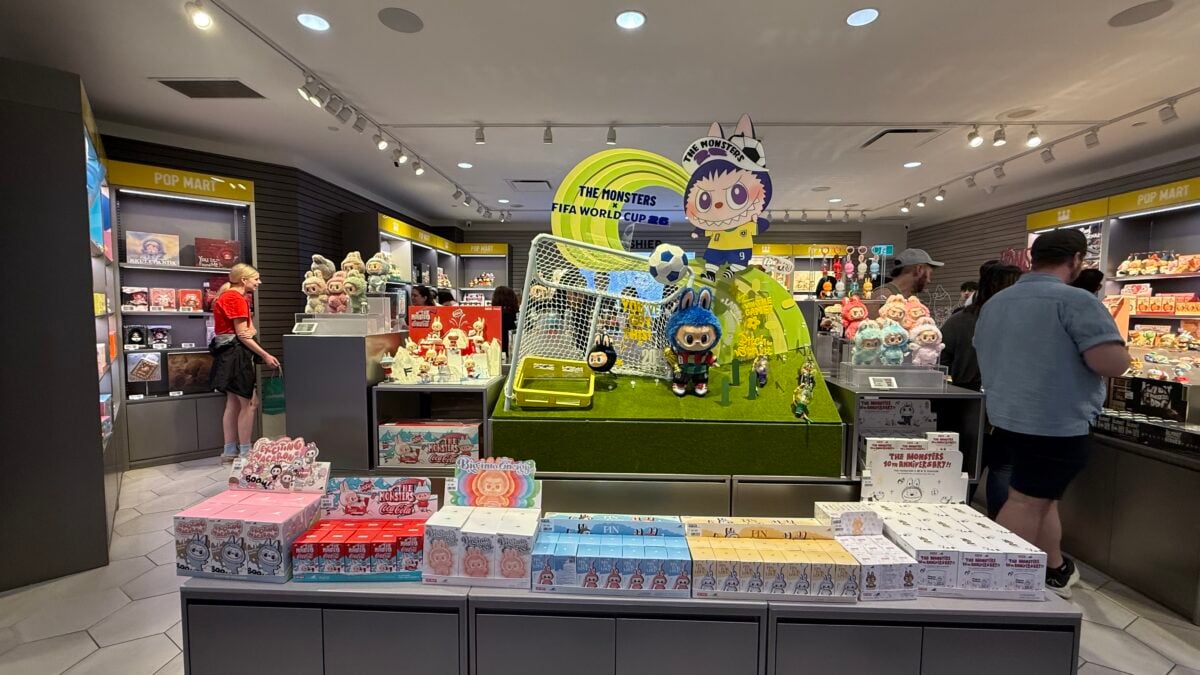
The shift is visible in Canadian malls, where collectible merchandise increasingly appears outside conventional toy stores. Pop Mart has expanded its Canadian presence around designer figures and character-based products, with 10 Canadian leases signed or committed as of its July update.
At CF Toronto Eaton Centre, Pop Mart opened an approximately 1,728-square-foot location in July and subsequently planned a larger permanent store of approximately 5,028 square feet. The expanded footprint would provide more space for character assortments and changing merchandise presentations, although the larger store’s opening should not be assumed complete.
Miniso is pursuing a different format through licensed merchandise, novelty products and collectibles. Its MINISO LAND flagship at West Edmonton Mall opened in November 2025 at approximately 12,000 square feet, demonstrating how character merchandise can anchor a substantial retail environment rather than a small display.
LEGO has developed elaborate adult-oriented sets alongside products for children, including models connected to architecture and entertainment properties. At CF Toronto Eaton Centre, its store carries merchandise across a wide range of price points, allowing customers to purchase everything from inexpensive accessories to larger collectible sets.
British plush brand Jellycat provides another example of merchandise reaching beyond traditional toy retail. Retail Insider observed its products at Holt Renfrew, including a themed presentation at Square One in Mississauga and a display at the department store’s Bloor Street location in Toronto.
The appeal of individual characters can be difficult to sustain, however, and Wagar cautioned that collectible trends change. Retailers must balance opportunities for repeat visits with the risk of holding inventory after interest in a particular property fades.
Independent Retailers and Established Chains Adapt
The contraction of Toys“R”Us Canada’s former standalone network and changes at Mastermind Toys have altered the competitive landscape. Wagar believes independent stores can benefit when enthusiasts seek specialist assortments and staff who understand their hobbies, although he did not provide a current national count of independent toy stores.
“Adult collectors like independent toy stores because they wanna shop at stores where the people who work there understand them,” he told Retail Insider. He pointed particularly to categories such as board games and trading cards, where knowledge of products and releases can distinguish a specialty operator from a general merchandise chain.
Mastermind has broadened its assortment beyond traditional toys. During the interview, Retail Insider discussed Roots children’s clothing at the retailer’s Bayview Village location in Toronto, alongside brands such as Coco Village and LEGO. The merchandise mix provides additional reasons for families to visit, but its financial contribution has not been disclosed.
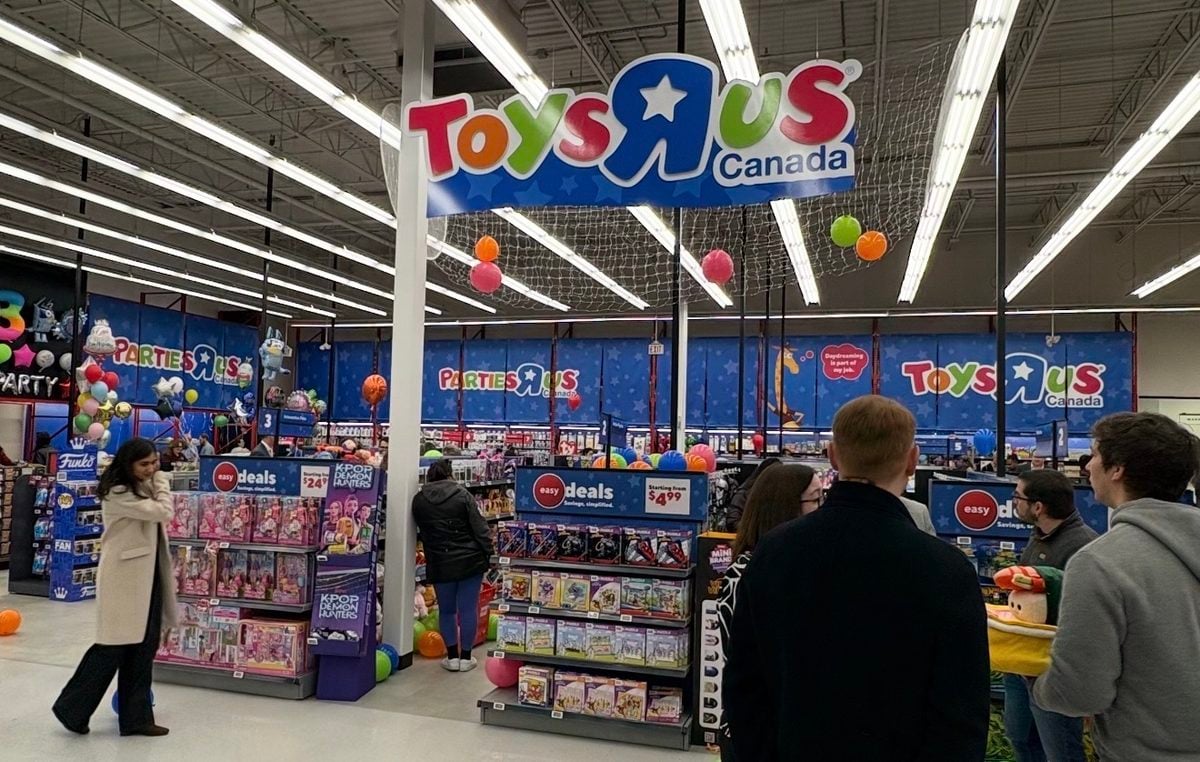
A more significant distribution change is the Toys“R”Us partnership with Staples Canada. The companies announced a first Toys“R”Us and Parties“R”Us shop-in-shop at 45 Red Maple Road in Richmond Hill, Ontario, scheduled for November 14, with a proposed expansion to nearly 300 Staples locations during 2027.
The arrangement would give the toy brand access to an existing national network without recreating its former large-format footprint. The rollout remains a plan, the commercial terms have not been disclosed, and the announced pilot date alone does not confirm that the store began trading as scheduled.
For landlords, the developments illustrate different ways to accommodate toy demand: dedicated collectible stores, larger experiential flagships and departments within existing chains. The business test is whether each format generates enough repeat purchases to support its space, staffing and inventory costs.
Manufacturers See Different Results
Growth in collectible categories has not translated into uniform performance for major manufacturers. Toronto-based Spin Master reported third-quarter 2026 consolidated revenue of US$732.7 million, down 0.3%, while its toy segment declined 3% to US$631 million. The company nevertheless reported a 25% increase in PAW Patrol-related toy sales.
Hasbro reported consolidated third-quarter revenue growth of 15%, with its Wizards of the Coast and Digital Gaming segment up 31%. Magic: The Gathering generated US$616.1 million in quarterly revenue, an increase of 34%, illustrating the scale of one established collectible gaming franchise.
These are worldwide corporate results, not comparable Canadian retail sell-through figures, and the companies have different portfolios. Their performance nevertheless shows why strength in trading cards or individual franchises cannot be assumed to benefit every manufacturer equally.
Holiday Inventory and the Longer-Term Outlook
Christmas remains important for children’s toy purchases even as adult collectors shop throughout the year. Wagar warned that higher freight and replenishment costs could make some retailers reluctant to reorder popular products after Black Friday, particularly when there is little time left to sell them before the holidays.
His warning is a forecast, not evidence that Canadian chains have adopted a common replenishment policy. Decisions will depend on supplier arrangements, margins, inventory availability and the economics of individual shipments.
Demographics also warrant attention over the longer term. Statistics Canada reported a total fertility rate of 1.26 children per woman in 2025, unchanged from 2024, although the figure does not establish a corresponding decline in spending on children’s toys.
Wagar expects licensed entertainment properties, trading cards and adult-oriented merchandise to remain important in 2027. “I think next year could be even bigger,” he said, while acknowledging that the industry’s performance will depend on how individual trends develop.
For Canadian retailers, the opportunity is not simply to stock the next popular character. It is to build assortments and store experiences that give collectors reasons to return, while retaining the flexibility to adjust when consumer attention moves elsewhere.