Retail Insider has released Q3 2026 Convenience: Food Growth as Merchandise Sales Remain Soft, authored by founder and publisher Craig Patterson. The report examines a gap between stronger food categories and the broader merchandise performance that convenience retailers need to improve.
The report covers Canadian convenience stores, fuel-linked retail, grab-and-go food, beverages, tobacco alternatives and related neighbourhood formats. It combines Retail Insider reporting, company disclosures, government data and industry research, distinguishing Canadian results from North American initiatives and proposed international transactions.
Retail Insider Reports provide sector-level analysis of Canadian retail demand, investment and operations. The Retail Insider Report Hub brings together the quarterly collection for operators, suppliers and property owners following changes across the industry.
General Themes
- Food is becoming a stronger reason to visit: Operators are pursuing meals as well as traditional snack and beverage purchases.
- Assortment can distinguish a banner: Proprietary products and international sourcing give customers choices unavailable at every competitor.
- Loyalty is targeting frequency: Visit milestones are designed to encourage another merchandise purchase rather than reward spending alone.
- Fresh food raises operating demands: Availability, labour, replenishment and waste affect the value of higher sales.
- Category growth is not the final result: Better food performance must be considered alongside total merchandise sales and margins.
Retail Insider Coverage
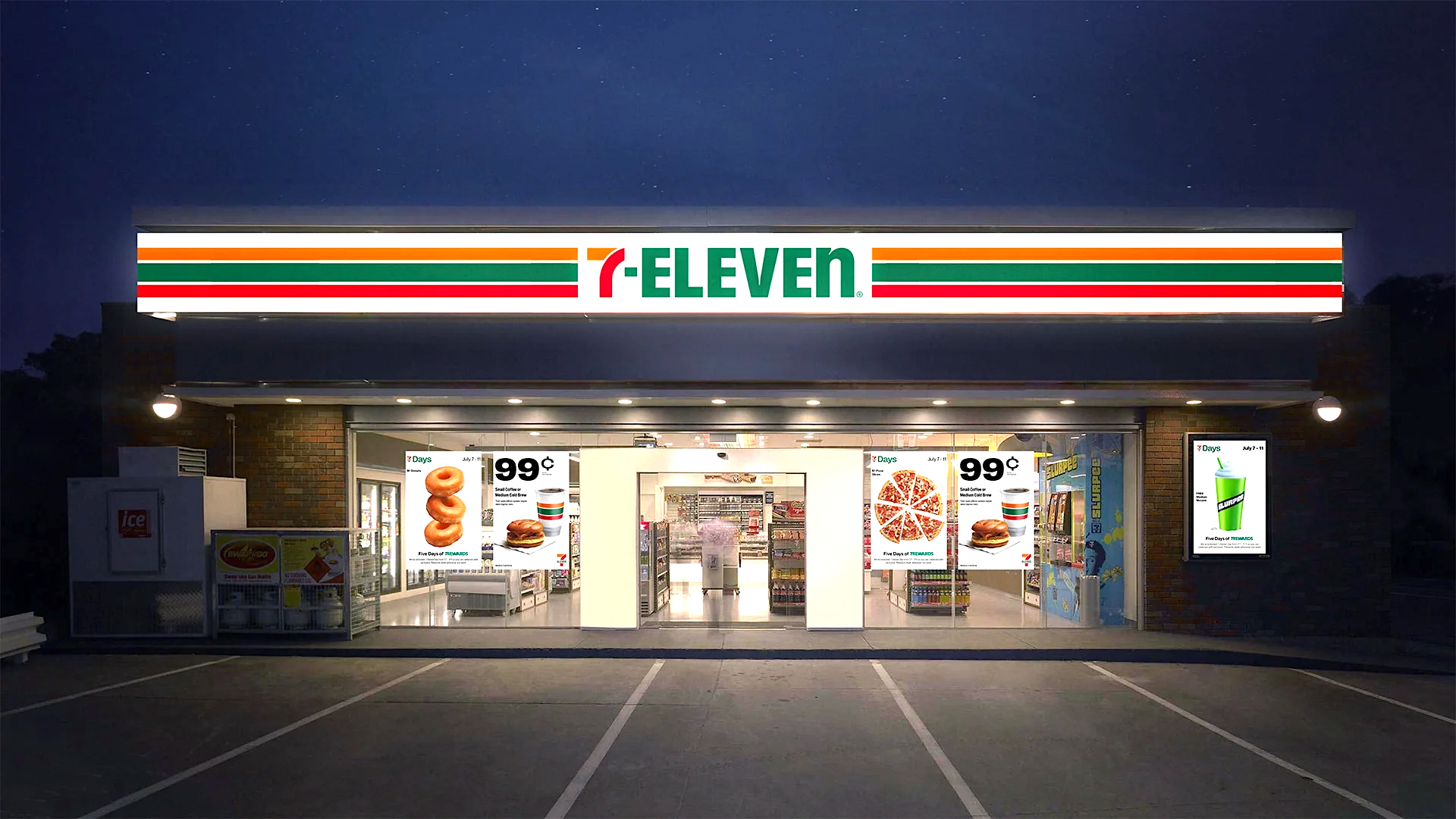
Couche-Tard sold nearly 14 million meal-deal bundles across North America in its fiscal first quarter, approximately 20 per cent more than a year earlier. That is not a Canadian sales count, and its longer-term ambition to grow food faster than the core business remains a target. In Canada, 7-Eleven’s roughly 550-store network is expanding prepared food with support from four commissaries and, at some locations, on-site preparation and seating. Both approaches compete for immediate meal occasions also served by restaurants and grocery prepared-food departments.
KaleMart24 is building food into the format from the outset. By September, it had nine operating stores and 17 secured locations, including eight under construction, with at least 22 locations planned for the first quarter of 2027. Founder Oussama Saoudi reported that approximately 70 per cent of sales came from ready-to-eat and better-for-you products. Its preferred 1,000-to-1,500-square-foot stores provide more assortment room than an experimental 300-square-foot location, but expansion still has to demonstrate consistent performance across a larger network.
7-Eleven is using exclusive merchandise alongside prepared food to make the banner part of the purchase decision. Slurpee’s Canadian 60th-anniversary program included packaged soda, confectionery and artist collaborations, while a Korean assortment was scheduled to roll out between August and November. The company said its Japanese-style egg salad sandwich had become its best-selling Canadian sandwich, a company-reported product result rather than an industry measure. Canadian-made, Caribbean-inspired Rolliis added another source of differentiation.
Circle K and Couche-Tard launched Road to Rewards on September 15, linking merchandise purchases of at least $5 to repeat-visit milestones. Fuel prepayments do not qualify, and rewards include food, beverages and private-label products. The structure is designed to bring customers back into the store. During the reporting period, the company had not disclosed attributable incremental sales, retention or profitability.
More fresh and prepared food increases the cost of getting inventory wrong. Couche-Tard’s RELEX forecasting and replenishment deployment was expanding from roughly 200 stores to more than 1,000 across North America, with reported availability improvements on managed items. Those results are not Canadian operating outcomes: most American business units were expected to be live in fiscal 2027, followed by Canada in fiscal 2028. Better availability matters only alongside the labour and waste involved in keeping products ready to buy.
Couche-Tard’s proposed approximately US$8.6-billion Żabka transaction would add a network of more than 13,000 stores in Poland and Romania. The potential value includes capabilities in food, private brands, compact stores, loyalty and logistics. Retail strategist Carl Boutet identified possible lessons while emphasizing that he had no inside knowledge of the company’s plans. The report finds no evidence that Żabka’s store format will be introduced in Canada, and any benefits remain conditional on the transaction closing and subsequent execution.
Broader Industry Coverage
Statistics Canada reported July sales of approximately $646 million at convenience retailers and vending-machine operators, down 4.3 per cent year-over-year and 5.4 per cent at constant prices. That category excludes gasoline stations and fuel vendors, so it does not match the merchandise business of a fuel-linked chain. Couche-Tard’s Canadian same-store merchandise sales were flat for the 12 weeks ending July 19, masking stronger food and energy drinks alongside pressure in nicotine. Management attributed part of the legal nicotine weakness to illicit sales and regulation.
Couche-Tard’s Canadian food sales increased 4.3 per cent, yet its merchandise and service gross margin declined 60 basis points to 33.3 per cent. The figures do not establish that food caused the margin decline. They show that a growing category can coexist with flat overall same-store merchandise sales and weaker aggregate margins. Labour, waste, pricing and product mix remain essential to judging the benefit.
Fuel produced another set of signals. Statistics Canada’s July sales dollars at gasoline stations and fuel vendors rose 20.2 per cent year-over-year while constant-price sales fell 9.3 per cent, meaning higher spending did not indicate greater volume. Couche-Tard separately reported Canadian same-store fuel volumes up 1.1 per cent in its fiscal first quarter. The company and national measures cover different periods and definitions and cannot be treated as interchangeable.
Editor’s Take
The next several quarters will test whether new food ranges, 7-Eleven’s international products and KaleMart24’s expansion produce sustained demand. Road to Rewards, running through early November, may provide evidence of changed visit behaviour if results are disclosed. Same-store merchandise sales, margin, availability, waste and incremental spending will be more useful than launch activity alone.
Convenience still has valuable advantages in location, speed and extended hours. A broader food offer can make those advantages relevant to more purchases, but it also adds operating requirements. The commercial question is not simply whether a retailer sells more meals; it is whether those meals and repeat visits strengthen the economics of the whole store.
Conclusion
Read the full Q3 2026 Convenience: Food Growth as Merchandise Sales Remain Soft for its analysis of prepared food, differentiated merchandise, loyalty and fuel-linked retail. The report separates growth ambitions from the financial evidence currently available.
The Retail Insider Report Hub includes this report and the wider quarterly collection. It brings together Canadian sector reporting and the operating issues behind retail investment decisions.