As part of Retail Insider Reports, this Q3 2026 Convenience Report analyzes Q3 2026 developments in Canadian convenience stores, fuel-linked retail, and foodservice formats. Drawing on Retail Insider coverage, industry research, company disclosures, government data, and broader market signals, it identifies key dynamics shaping operators, suppliers, store assortments, and consumer visits. These reports are designed to deliver executive-level insights across major retail sectors and can be accessed through the Retail Insider Report Hub.
This report examines Canadian convenience retail, including convenience stores, fuel retailers, grab-and-go foodservice, neighbourhood retail, tobacco alternatives, beverages, and related convenience formats.
Report Contents
Executive Summary
Canadian convenience retailers increased their focus on food and beverage occasions during the third quarter of 2026 as broader sales remained under pressure, investing in prepared meals, differentiated products and loyalty programs designed to generate repeat visits.
Statistics Canada reported seasonally adjusted sales of approximately $646 million at convenience retailers and vending-machine operators in July, down 4.3% from a year earlier. At constant prices, sales declined 5.4%, indicating that the weakness extended beyond changes in selling prices.
Alimentation Couche-Tard’s Canadian results showed a more complicated picture inside the store. Same-store merchandise sales were flat during its fiscal first quarter, while Canadian food sales increased 4.3% and energy drinks recorded high-single-digit growth. Merchandise and service gross margin declined 60 basis points to 33.3%.
Couche-Tard is pursuing more meal occasions and a wider range of food price points, while 7-Eleven Canada is expanding prepared food and using proprietary and internationally sourced products to differentiate its assortment. Montreal-based KaleMart24 is building a small-format chain with ready-to-eat products at the centre of its proposition.
Circle K and Couche-Tard are also targeting frequency through a loyalty campaign structured around repeat visits. Together, the initiatives reflect an effort to capture more customer occasions and spending from each convenience location.
The financial test is whether those initiatives translate into sustained merchandise sales and gross profit. Canadian convenience sales remained under pressure during Q3, but performance varied considerably by category and operator. Several themes emerged during the reporting period:
- Statistics Canada reported July sales at convenience retailers and vending-machine operators down 4.3% year over year and 5.4% at constant prices.
- Couche-Tard’s Canadian same-store merchandise sales were flat, while food increased 4.3% and energy drinks delivered high-single-digit growth.
- Prepared food is expanding the competitive set as convenience retailers pursue meal and snack occasions also served by restaurants, grocers and other food retailers.
- 7-Eleven is using proprietary products such as Slurpee alongside products sourced through its international network to differentiate its assortment.
- Circle K and Couche-Tard’s Road to Rewards campaign links qualifying merchandise purchases to visit milestones, placing greater emphasis on frequency.
- Growth in selected categories has yet to produce stronger overall merchandise economics at Couche-Tard in Canada, where merchandise and service gross margin declined 60 basis points.
Q3 provides growing evidence of where convenience retailers see future merchandise growth, while leaving open whether the changing mix will improve overall store economics.
Retail Insider Coverage
Prepared Food Expands the Competitive Set
Food has become central to Couche-Tard’s efforts to generate additional merchandise growth. Across North America, the company sold nearly 14 million meal-deal bundles during its fiscal first quarter, approximately 20% more than a year earlier. Food represented 13.2% of merchandise sales in the company’s latest annual reporting.
Couche-Tard is developing food across value, mid-tier and higher price points. Management has described a longer-term objective of growing food at three to four times the rate of the core convenience business, although that remains a company target dependent on execution and customer demand.
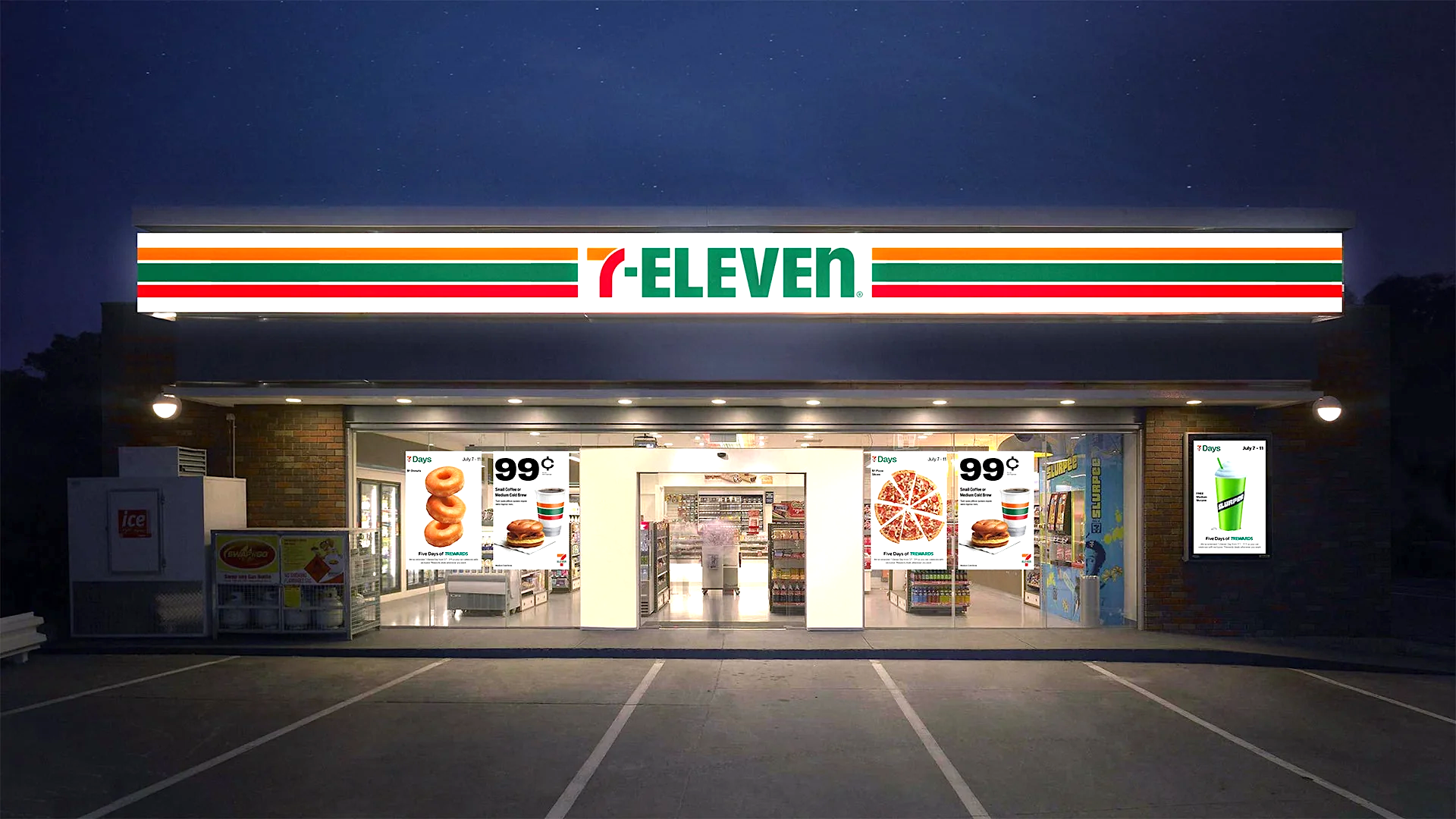
7-Eleven Canada is expanding food’s role across roughly 550 stores between Ontario and British Columbia. Four Canadian commissaries support its fresh and prepared-food operations, while some locations include on-site preparation, seating and licensed restaurant concepts. Vice President and General Manager Marc Goodman has described a longer-term direction closer to a quick-service restaurant that also sells convenience merchandise.
The strategy widens the competitive set. Customers looking for an immediate meal, snack or beverage can choose among convenience stores, quick-service restaurants, grocery prepared-food departments and other nearby retailers.
Canadian industry research also points to a larger role for convenience foodservice, with the channel participating in breakfast, lunch and dinner occasions alongside traditional snack and beverage purchases. Location, extended hours and speed remain important advantages. A stronger food offer gives convenience retailers access to a larger share of immediate-consumption spending.
KaleMart24 Builds the Store Around Food
KaleMart24 provides a smaller-scale example of the food-oriented model. By September, the Montreal-based chain had nine operating stores and 17 secured locations, including eight under construction. Founder Oussama Saoudi said the company planned to reach at least 22 locations during the first quarter of 2027.
The company generally seeks spaces between 1,000 and 1,500 square feet in dense, high-pedestrian-traffic areas. Its first Toronto store at 601 Yonge Street opened in late September. Saoudi said approximately 70% of KaleMart24’s sales came from ready-to-eat and better-for-you products, including smoothies and açai bowls. The figure is company-reported, but it shows how central food is to the format.
Couche-Tard is increasing food penetration within a large established network, while 7-Eleven is adding more foodservice capabilities to hundreds of Canadian stores. KaleMart24 is building its proposition around food from the outset.
The company has also experimented with an approximately 300-square-foot location, but Saoudi said the size constrained its assortment. Expansion will test whether its food mix and preferred 1,000-to-1,500-square-foot format can perform consistently across a larger network.
Exclusive and Global Products Differentiate the Assortment
Foodservice can increase the number of occasions served by a convenience store. Differentiated merchandise can help determine which retailer receives the visit. 7-Eleven used Slurpee’s 60th anniversary in Canada to extend one of its best-known proprietary brands. A partnership with Hamilton-based Collective Arts introduced packaged Slurpee Soda at $1.99, alongside Slurpee-branded confectionery and Canadian artist collaborations.
The company also connected Slurpee promotions with food purchases and 7Rewards participation, using the established brand across merchandise, traffic and loyalty initiatives. 7-Eleven’s international network provides another source of differentiated assortment. The Canadian business announced a Korean product rollout between August and November, following the March introduction of a Japanese-style egg salad sandwich that the company says became its best-selling sandwich in Canada.
With 7-Eleven operating across 19 countries, the Canadian business can draw on products and merchandising experience developed elsewhere, with local performance determining which items earn a longer-term place in the assortment. Canadian suppliers provide another source of differentiation. Maureen Simon Foods began rolling out Canadian-made, Caribbean-inspired Rolliis through 7-Eleven Canada in August.
Proprietary, exclusive and internationally sourced products give 7-Eleven additional ways to make the banner itself part of the purchase decision.
Loyalty Moves From Spending to Frequency
Circle K and Couche-Tard introduced Road to Rewards in Canada on September 15, their first app-integrated campaign structured around customer visits. In-store merchandise purchases of at least $5 qualify toward milestones, while fuel prepayments are excluded. Rewards become available after the third, fifth, seventh, tenth, thirteenth and fifteenth qualifying visits and include food, beverages, private-label products and regional offers.
The structure places emphasis on returning to the store. An identified merchandise transaction moves the customer toward another reward and potentially another visit. That fits with the broader effort to increase food, beverage and private-label sales, but the commercial performance has yet to be established. Couche-Tard had not disclosed incremental sales, visit frequency, retention or profitability attributable to the campaign during the reporting period.
More Food Raises the Operational Stakes
Prepared food increases the importance of forecasting, availability, replenishment and waste control. Couche-Tard’s deployment of RELEX forecasting, replenishment and space-planning technology is one example of the infrastructure being developed alongside its merchandising strategy.
The company said the deployment was expanding from approximately 200 stores to more than 1,000 across North America, with product availability on managed items improving by more than 5%. Most U.S. business units are expected to be live during fiscal 2027, followed by Canada in fiscal 2028.
Those results are not Canadian operating performance, but the rollout demonstrates the operational demands created by a more complex assortment. Too little fresh inventory can mean lost sales, while excess product can increase waste.
Żabka Adds Capabilities, Not a Canadian Blueprint
Couche-Tard’s proposed approximately US$8.6-billion acquisition of Poland’s Żabka Group would add more than 13,000 stores in Poland and Romania to its international network. Żabka’s stores average approximately 700 square feet and operate through a large franchise network supported by digital and supply-chain infrastructure. Couche-Tard has identified food, private brands, loyalty, personalization and logistics among the capabilities it expects to gain.
Those areas have potential relevance to a company operating more than 2,000 Canadian stores. Retail strategist Carl Boutet has pointed to Żabka’s checkout technology, smaller footprint and loyalty program as areas Couche-Tard could potentially learn from, while emphasizing that he has no inside knowledge of the company’s plans.
There is no evidence that Żabka’s store format will be introduced in Canada. Its relevance is the additional operating knowledge and capabilities available to Couche-Tard if the transaction closes.
Broader Industry Coverage
Convenience Sales Remain Under Pressure
Statistics Canada’s July figures provide a broad measure of the difficult sales environment. Seasonally adjusted sales at convenience retailers and vending-machine operators were approximately $646 million, down 1.8% from June and 4.3% from July 2025. At constant prices, sales declined 2.0% month over month and 5.4% year over year.
The category does not capture the entire Canadian convenience industry. Gasoline stations and fuel vendors are reported separately, and the statistical category does not correspond exactly to the merchandise operations of a fuel-linked convenience chain such as Circle K. July was also the latest detailed retail reference month available during the reporting period.
Couche-Tard provides a more detailed look at one of Canada’s largest operators. For the 12 weeks ended July 19, Canadian same-store merchandise sales were flat, while total Canadian merchandise and service revenue declined 2.6% to US$599.9 million. Merchandise and service gross margin declined 60 basis points to 33.3%.
President and CEO Alex Miller said Canadian performance improved during the quarter and turned positive in its final reporting period. Food sales increased 4.3%, energy drinks delivered high-single-digit growth, and packaged beverages and alcohol helped offset continued pressure in nicotine. Management attributed weakness in legal nicotine volumes partly to the illicit market and regulatory environment.
The aggregate merchandise result masks substantial movement within the assortment.
Food Growth Has Yet to Lift Overall Merchandise Economics
Couche-Tard’s Canadian results provide the financial counterweight to the quarter’s food investments. Food sales increased 4.3%, yet Canadian same-store merchandise sales were flat and merchandise and service gross margin declined 60 basis points to 33.3%.
The results do not establish that food caused the margin decline. They show that stronger performance in one category can coexist with flat overall merchandise sales and a lower aggregate merchandise margin. Prepared food can support traffic, frequency, basket size and differentiation. Its contribution ultimately has to be assessed through the sales and gross profit generated after labour, waste, pricing and product mix are considered.
Fuel Provides a Different Economic Picture
Statistics Canada reported July sales dollars at gasoline stations and fuel vendors 20.2% above a year earlier, while constant-price sales declined 9.3%. Higher spending at the pump therefore did not indicate stronger purchasing volumes.
Couche-Tard reported Canadian same-store fuel volumes up 1.1% during its fiscal first quarter, marking an eighth consecutive quarter of growth. The company result and Statistics Canada figures use different measures and reference periods and should be kept separate.
Fuel remains economically important to fuel-linked convenience operators, but the more notable Q3 changes inside the store were occurring in merchandise, food and customer engagement.
Editor’s Take & Outlook
Outlook: Can More Visits Produce Better Economics?
The next several quarters should provide better evidence of whether food, assortment and loyalty investments are improving overall store performance.
For Couche-Tard, Canadian food growth will need to be considered alongside same-store merchandise sales, merchandise margins and continued pressure in nicotine. Its expansion beyond value meal deals into additional food price points will also test customer demand and margin potential.
7-Eleven’s Korean assortment will continue rolling out, providing more evidence of whether products sourced through its international network can become durable parts of the Canadian merchandise mix. Its broader prepared-food strategy will test how far the chain can move into meal occasions traditionally served by restaurants and grocers.
Road to Rewards runs through early November. Participation, repeat visits and incremental spending, if disclosed, could provide an early measure of whether milestone-based rewards change customer behaviour.
KaleMart24’s expansion will test whether its company-reported food mix can be maintained as the chain adds stores and enters additional markets. Couche-Tard’s proposed Żabka acquisition adds a longer-term question around how food, loyalty, compact-store and logistics capabilities developed in Europe could influence the wider company.
Across the sector, same-store merchandise sales, gross margin, food mix, repeat visits, product availability and waste will provide stronger evidence of progress than product launches or expansion targets alone.
Editor’s Take
Convenience retail has long benefited from location, extended hours and speed. Those advantages remain valuable as a wider range of businesses compete for immediate meal, beverage and snack purchases. The Q3 developments show convenience operators pursuing a larger share of that spending. Couche-Tard is targeting more food occasions and a wider range of price points. 7-Eleven is expanding prepared food while using Slurpee and its international network to differentiate the assortment. KaleMart24 is building ready-to-eat products into its model from the outset, while Road to Rewards is designed around bringing customers back.
The financial evidence remains mixed. Couche-Tard’s Canadian food sales increased 4.3% while same-store merchandise sales were flat and merchandise and service gross margin declined.
Selling more food is therefore one measure of progress. The larger test is whether convenience retailers can turn additional meal occasions, differentiated merchandise and repeat visits into stronger overall store economics.
Representative Articles
- 7-Eleven Canada Expands Slurpee Brand as Iconic Frozen Drink Turns 60 — Jul 9, 2026
- What Couche-Tard Could Gain from Żabka Beyond 13,000 Stores — Jul 31, 2026
- Maureen Simon Foods launches Rolliis in 7-Eleven stores across Canada — Aug 25, 2026
- Couche-Tard Reshapes Convenience Store Mix as Consumer Habits Change — Sep 3, 2026
- Couche-Tard Earnings Rise as Canadian Convenience Sales Flatten — Sep 1, 2026
- Circle K, Couche-Tard launch app-based rewards campaign tied to customer visits — Sep 15, 2026
- 7-Eleven Brings Korean Bestsellers to Canada as Global Food Strategy Expands — Sep 24, 2026
- KaleMart24 preparing for rapid expansion in the coming months — Sep 24, 2026