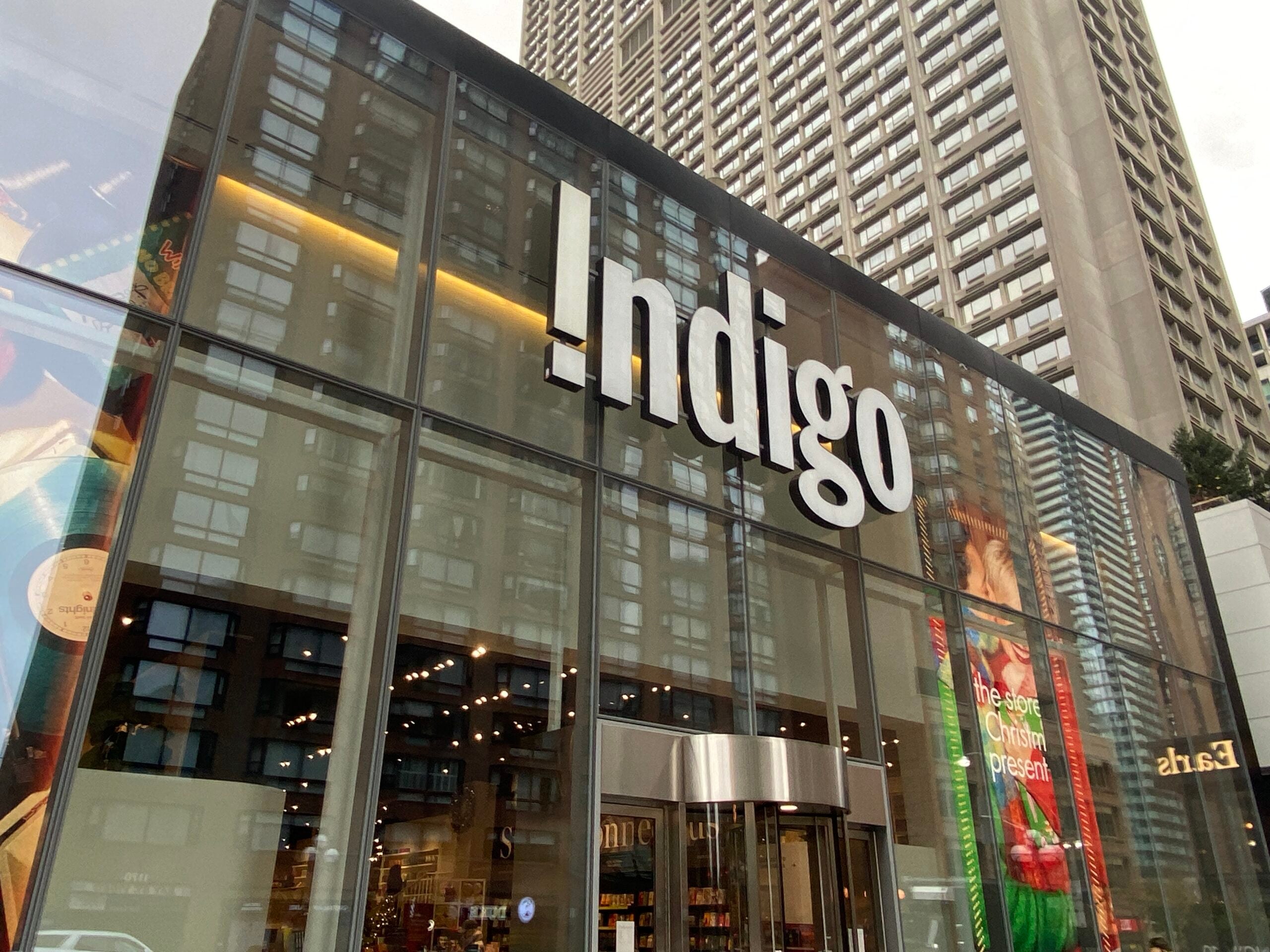
As part of Retail Insider Reports, this Q3 2026 Books & Specialty Report analyzes Q3 2026 developments in Canadian books, entertainment, collectibles, and related specialty retail. Drawing on Retail Insider coverage, industry research, company disclosures, and broader market signals, it identifies key dynamics shaping physical distribution, customer engagement, merchandise demand, and store economics. These reports are designed to deliver executive-level insights across major retail sectors and can be accessed through the Retail Insider Report Hub.
This report examines Canadian books, music, gaming, collectibles, hobby entertainment, movie exhibition, and entertainment-focused retail businesses and consumer trends.
Report Contents
- Executive Summary
- Retail Insider Coverage
- Pop Mart Expands After Strong Canadian Demand
- LEGO Expands Direct Retail Alongside Wholesale
- Criterion Tests Demand Before Establishing Permanent Retail
- Yoto Moves From Direct Sales Into 90 Indigo Stores
- Villager Puzzles Builds Reach Through Existing Retailers
- Cineplex Converts Film Interest Into Merchandise Sales
- Cineplex Begins Strategic Review
- Broader Industry Coverage
- Independent Bookstores Adapt Their Physical Models
- ABC Books Prepares to Leave Yonge Street
- Book Bar Combines Bookselling With Hospitality
- Cineplex Shows Why Spending Mix Matters
- Build-A-Bear Refocuses on Customization
- Spin Master Times Inventory Around Entertainment Releases
- Scholastic Enters the Fall Publishing Season
- Editor’s Take & Outlook
- Representative Articles
- More From Retail Insider
Executive Summary
Canadian books and entertainment businesses expanded their physical reach during the third quarter of 2026, using strategies ranging from dedicated branded stores and independent bookstores to shop-in-shops, national retail partnerships and merchandise attached to entertainment venues.
Pop Mart followed strong early Canadian demand with plans for a larger permanent store at CF Toronto Eaton Centre and confirmed that ten Canadian leases were signed or committed. LEGO opened at CF Markville ahead of two additional Greater Toronto Area stores, while Yoto entered 90 Indigo locations after developing its Canadian business primarily through direct sales.
Independent bookselling offered a different view of physical retail. Book City marked 50 years in Toronto, ABC Books prepared to leave a Yonge Street location it has occupied since 1988, and the newly opened Book Bar at Mirvish Village combined bookselling with hospitality and programming.
The amount of real estate required to reach these audiences varies considerably. The commercial test is whether stores, displays and other physical formats generate purchases and repeat visits sufficient to support their costs.
Canadian books and entertainment businesses increased their physical reach during Q3 while pursuing different approaches to stores and distribution.
- Pop Mart confirmed ten Canadian leases signed or committed following stronger-than-expected early physical-store performance. At CF Toronto Eaton Centre, the brand is progressing from an initial roughly 1,728-square-foot presence to a permanent store of approximately 5,028 square feet.
- LEGO opened a roughly 2,690-square-foot CF Markville store and scheduled additional stores at CF Toronto Eaton Centre and Square One for Q4. Completion of all three would increase its Canadian network from 12 to 15 stores.
- Toronto’s independent bookstore market showed several stages of physical retail. Book City celebrated 50 years, ABC Books prepared to vacate its longtime Yonge Street location, and Book Bar opened a bookstore, café and licensed bar at Mirvish Village.
- Criterion established a permanent Toronto presence through Cinema Cellar following temporary retail tests, while Yoto entered 90 Indigo stores through its first major Canadian national retail partnership.
- Cineplex reported a 45% increase in merchandise sales to approximately $4 million in its June quarter, providing measurable evidence of film audiences spending on physical products tied to entertainment content.
- Cineplex’s location-based entertainment profitability weakened as spending shifted away from higher-margin amusement, while Build-A-Bear attributed weaker global traffic partly to products that reduced opportunities for dressing and customization.
- Spin Master reported that approximately US$40 million in gross product sales originally expected in Q3 shipped during Q2, partly as retailers prepared for the PAW Patrol movie.
Retail Insider Coverage
Pop Mart Expands After Strong Canadian Demand
Pop Mart opened at CF Toronto Eaton Centre on July 3 and subsequently confirmed that ten Canadian leases were signed or committed. Greater Vancouver, the Greater Toronto Area and Quebec were identified as priority markets. Valen Tam, Pop Mart’s head of real estate for North America, said Canadian physical-store performance had exceeded initial expectations, creating early challenges around product allocation.
The company’s Eaton Centre commitment has already increased. Pop Mart’s initial presence occupied approximately 1,728 square feet, while a permanent store of approximately 5,028 square feet is planned in the shopping centre. The larger location provides more room for Pop Mart’s portfolio of characters and product releases that drive collector visits. Labubu and THE MONSTERS have been particularly important to the company’s recent global growth, alongside properties including Molly, SKULLPANDA, CRYBABY and DIMOO.
THE MONSTERS accounted for a significant share of Pop Mart’s global revenue in 2025. As the Canadian network expands, performance across multiple characters and product releases will provide a better indication of the depth of demand than individual opening periods.
Inventory will also be important. Early allocation difficulties show the challenge of keeping sought-after products available while a rapidly expanding network competes for supply.
LEGO Expands Direct Retail Alongside Wholesale
LEGO opened an approximately 2,690-square-foot store at CF Markville on September 11, with a 2,637-square-foot CF Toronto Eaton Centre location scheduled for October 23 and a 2,970-square-foot Square One store planned for November 6. Together, the three locations represent 8,297 square feet of additional retail space. If all open as scheduled, LEGO’s Canadian store network will increase from 12 to 15 locations, a 25% increase.
LEGO products are already widely available through Canadian retailers and online. The company has described its own stores as a “brand lighthouse,” with wholesale partners providing broader accessibility. The Markville store includes Build a Minifigure, a Pick & Build Wall and a DUPLO play table, alongside LEGO Insiders benefits and staff assistance. The format gives LEGO additional opportunities around personalization, product discovery, loyalty and service.
The Canadian expansion will test the contribution of direct stores within an already extensive distribution network, including what they add to the customer relationship beyond product availability elsewhere.
Criterion Tests Demand Before Establishing Permanent Retail
Criterion brought its Mobile Closet to Toronto during TIFF in 2025, attracting more than 1,000 visitors during the festival’s first weekend, and later operated a holiday pop-up. In 2026, the film distributor established a permanent section inside Cinema Cellar’s first store at 129 John Street, near TIFF Lightbox and Scotiabank Theatre. The location offers physical film editions, specialist curation and a section dedicated to Canadian cinema.
The progression from temporary activation to holiday pop-up and then year-round presence allowed Criterion to test Toronto demand before making a permanent commitment. Its eventual format also limits the physical infrastructure required. A dedicated presence inside a specialist retailer provides access to a relevant film audience without the space and operating requirements of a standalone Criterion store.
Trading outside TIFF and the holiday period will provide a better indication of sustained demand than temporary-event traffic.
Yoto Moves From Direct Sales Into 90 Indigo Stores
Children’s audio company Yoto introduced its players, cards and accessories to 90 Indigo stores and Indigo.ca on August 5. Dedicated displays in Indigo’s Kids departments allow families to handle the products and understand the card-based audio system. The rollout is Yoto’s first major national Canadian retail partnership after approximately four and a half years of developing the market largely through direct sales. The company reported Canadian growth of 50% in the previous year, although it did not disclose the underlying dollar base.
Physical displays are particularly relevant for a product that can require explanation. They allow parents and children to understand the player and cards in an environment already associated with books, children’s products and gifting. The business creates potential purchases after the initial device sale as families add audio cards and collections. Yoto’s first holiday season with national Indigo distribution will provide an early test of whether wider physical availability increases customer acquisition and repeat purchases.
Canadian-author collaborations and additional Quebec French-language content were among the company’s stated priorities as the rollout began.
Villager Puzzles Builds Reach Through Existing Retailers
Canadian brand Villager Puzzles reported cumulative sales exceeding 200,000 puzzles and availability in more than 800 Canadian retail locations, including all Simons stores. Villager uses artwork by Canadian women artists, who receive uncapped royalties. Founder Kelly Strimer has described the business as funded through sales and reinvestment, with additional creative-hobby categories under consideration.
The cumulative unit sales and store count do not provide a quarterly growth rate, but the distribution model shows how a differentiated entertainment product can build substantial physical reach without operating its own store network.
Cineplex Converts Film Interest Into Merchandise Sales
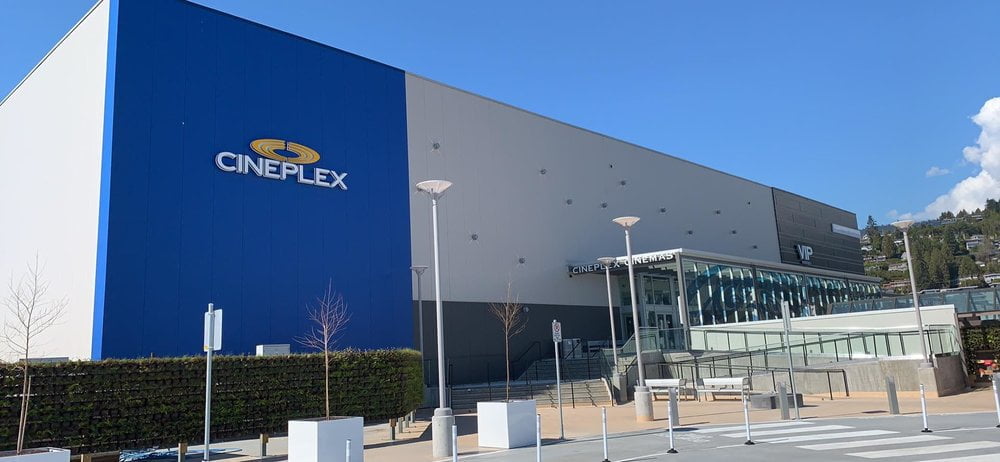
Cineplex provided some of the quarter’s clearest financial evidence of entertainment audiences generating additional retail spending. For the quarter ended June 30, revenue increased 9.8% to $383.7 million as theatre attendance rose 9.3% to 12.7 million.
Merchandise sales increased 45% to approximately $4 million and contributed roughly one-third of the increase in concession revenue per patron. Concession revenue per patron rose 2.2% to $10.26, while box-office revenue per patron increased 1.7% to $13.91. Collectibles tied to current films allow Cineplex to capture spending beyond tickets and traditional concessions, while its online store extends merchandise availability outside the theatre visit. Merchandise remains small relative to the overall business, but its growth provides measurable evidence of movie interest translating into physical-product sales.
Cineplex also reported more than 270,000 CineClub members, who visited approximately four times as often as non-members. The comparison does not establish that membership caused the higher attendance, but it identifies a customer group with substantially more frequent interaction with the company.
Cineplex Begins Strategic Review
Cineplex initiated a strategic review in September and appointed Bill Walker chief executive following Ellis Jacob’s retirement. The review includes consideration of a potential sale of the company, with Jacob remaining as a special adviser through December 31. No buyer, transaction or timetable has been announced.
The review comes as Cineplex manages businesses with different operating characteristics, including theatres, premium formats, merchandise, subscriptions and location-based entertainment. Stronger theatre attendance and merchandise sales sit alongside weaker profitability in its amusement venues. The existence of the review does not establish whether Cineplex will ultimately be sold or whether individual assets will change hands.
Broader Industry Coverage
Independent Bookstores Adapt Their Physical Models
Toronto’s bookstore market provided several examples during the quarter of how physical bookselling is adapting to changing customer and real-estate conditions. Book City marked its 50th anniversary in September. Frans and Gini Donker opened the business in 1976, and the company now operates four Toronto locations under the leadership of their son Ian Donker.
Its history includes expansion, contraction and changes in store format as neighbourhoods and retail conditions evolved. Store managers have substantial influence over buying, allowing individual locations to respond to surrounding communities, while long-serving employees and repeat customers have helped maintain neighbourhood relationships.
Book City’s Bloor West Village experience demonstrates how customer demand and store economics can change independently. The company closed its former location there in 2012 amid factors including high occupancy costs and competition from Chapters. After Chapters subsequently left the neighbourhood, Book City returned in 2014 with a smaller store of roughly 1,800 square feet. The business reached its 50th anniversary with a network repeatedly adjusted to local conditions.
ABC Books Prepares to Leave Yonge Street
ABC Books opened in 1970 and has operated at 662 Yonge Street since 1988. It is scheduled to vacate the premises on October 30, with owner Patrick Hempelmann citing property taxes as a factor making the location economically unsustainable. A moving sale was underway as the store prepared to leave. Inventory is expected to move toward 244 Queen Street West, where the related BMV Books operates, although the future of ABC as a distinct retail banner has not been established.
ABC and Book City illustrate different outcomes for businesses with decades of customer history. A loyal audience remains valuable, but individual stores still have to work within their occupancy and operating economics.
Book Bar Combines Bookselling With Hospitality
Book Bar opened June 27 at 600 Markham Street in Mirvish Village, operating across two levels of a restored house. The independent bookstore combines books with coffee, alcoholic beverages and literary programming. The business attracted attention on TikTok and Instagram before opening. Staff expected romance and fantasy, categories prominent on BookTok and Bookstagram, to be particularly important. Early purchasing patterns differed. Approximately two months after opening, literary fiction was reported as Book Bar’s strongest-selling category.
Social-media interest can generate awareness and visits without precisely predicting what customers purchase inside the store. Book Bar’s location near the University of Toronto and within the Annex and Mirvish Village area may also produce a customer mix different from its online following.
Hospitality and programming give the business additional potential revenue and reasons for customers to return, although no financial results have been disclosed to demonstrate whether the hybrid format produces stronger bookstore economics. A temporary experiment at Guildford Town Centre in Surrey approached bookselling from another direction. The month-long Book Corner offered approximately 1,000 titles, with proceeds supporting charitable and literacy initiatives.
The shopping centre said it was testing curated bookselling, dwell time, repeat visits and the translation of BookTok interest into physical purchases. Results had not been published, and its charitable structure differs from the economics of a permanent bookstore.
Cineplex Shows Why Spending Mix Matters
Cineplex’s location-based entertainment business produced a different result. Adjusted store-level EBITDA declined to $3.9 million from $5.8 million, while margin fell to 12.2% from 17.5%. Management said food-and-beverage spending increased while higher-margin amusement spending declined and identified new competing entertainment concepts near some successful locations.
The results show why traffic and total spending do not fully describe the economics of an entertainment venue. The activities customers spend money on can materially affect the return generated from a visit. That distinction is relevant as shopping centres and other landlords add entertainment concepts intended to increase traffic and dwell time. A busy venue still requires a spending mix capable of supporting its operating and occupancy costs.
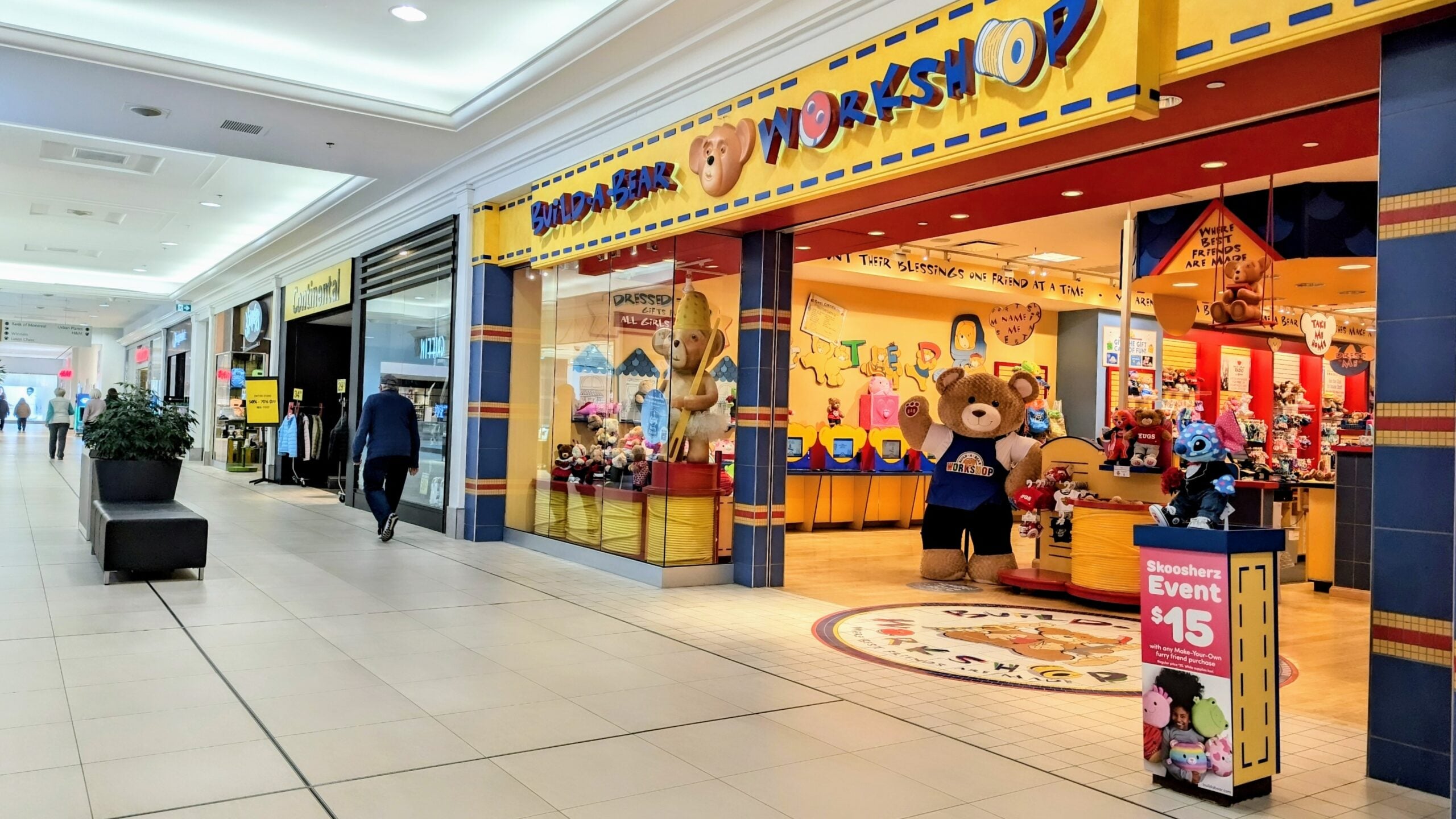
Build-A-Bear Refocuses on Customization
Build-A-Bear provided a related lesson in its global second-quarter results. Revenue declined 7.2%, with management attributing weaker traffic partly to summer merchandise that did not support the customer interaction as effectively as intended. No separate Canadian financial result was disclosed.
Some summer products were less suited to dressing and customization, reducing the activities around which the Build-A-Bear store model has traditionally been organized. Chief executive Chris Hurt summarized the decision: “The reality is we pushed it too far.”
Management subsequently pointed to stronger early Halloween performance as products returned to formats supporting stuffing, dressing, customization and other parts of the established Build-A-Bear process. The results cannot be used as a measure of Canadian store performance, but they show how closely an interactive retail format can depend on merchandise that supports the activity customers expect.
Spin Master Times Inventory Around Entertainment Releases
Toronto-based Spin Master reported a 12% increase in global toy revenue during the quarter ended June 30, but approximately US$40 million of gross product sales originally expected in Q3 shipped during Q2, partly as retailers prepared for the PAW Patrol movie. The company had reduced older PAW Patrol inventory before introducing the new movie assortment. Management said early movie-product sell-through was meeting expectations as marketing increased, although it was too early to determine the scale of later replenishment.
Retailers want merchandise available while audience attention is strongest, while suppliers need sufficient sell-through to generate subsequent orders without leaving excess product after the release window. The approximately US$40-million shipment shift also means Spin Master’s 12% quarterly toy-revenue growth requires context. It moved sales between quarters without changing the company’s full-year outlook. Spin Master is extending entertainment properties into additional categories, including Melissa & Doug books through Penguin Random House, with other games, toys and collectibles in development.
Scholastic Enters the Fall Publishing Season
Scholastic reported fiscal first-quarter 2027 international revenue of US$60.5 million, approximately unchanged after currency effects. The company did not disclose a separate Canadian result. Management described an active fall publishing calendar and encouraging U.S. book-fair bookings, but those comments do not establish equivalent Canadian growth. Domestic ordering, sell-through and replenishment will provide more useful evidence of Canadian performance through the fall.
Editor’s Take & Outlook
Outlook: Repeat Spending Becomes the Test
The next several quarters should provide better evidence of whether the physical investments highlighted during Q3 are producing durable demand. Pop Mart’s additional Canadian openings will test demand beyond initial store launches and individual character releases, while LEGO’s remaining GTA openings will add direct retail capacity in markets where its products already have extensive wholesale distribution.
Book Bar will move beyond its opening period as it tests its combination of bookselling, hospitality and programming. ABC Books’ departure from Yonge Street should clarify the future of the banner, while Criterion will gain evidence of Toronto demand outside TIFF and the holiday period. Yoto’s first holiday season with 90-store Indigo distribution will test whether physical demonstration and broader availability increase player and card sales. Cineplex will provide further evidence on merchandise attachment and whether higher-margin amusement spending recovers at its entertainment venues.
Spin Master’s PAW Patrol results will show whether initial movie-related shipments translate into consumer sell-through and replenishment. Opening queues, event attendance and social-media attention are useful indications of interest. Repeat purchases, replenishment, merchandise attachment, sustained traffic and store-level earnings provide stronger evidence that the interest is commercially durable.
Editor’s Take
Books and entertainment products can lend themselves to physical retail because customers browse, collect, discover, personalize and interact with products connected to existing interests. Q3 showed that serving those audiences can involve very different amounts of real estate.
Pop Mart is committing to a larger Canadian branded network, while LEGO is expanding direct stores alongside extensive wholesale distribution. Book City has spent five decades adjusting a neighbourhood bookstore network, Book Bar is combining books with hospitality, Criterion has established a dedicated section inside a specialist retailer, and Yoto is using Indigo for national physical distribution.
The appropriate physical commitment depends on the job the space performs. Pop Mart uses stores to support characters and product releases, LEGO adds interaction and loyalty to broad existing distribution, Yoto benefits from physical demonstration, and Criterion can reach collectors without operating a standalone store.
The financial results add discipline to the expansion story. Cineplex’s 45% merchandise growth shows incremental spending tied to entertainment content, while its location-based entertainment results demonstrate how spending mix affects returns. Build-A-Bear’s global results show the importance of merchandise that supports the interaction around which a store is built.
Inventory also has to align with audience attention. Spin Master’s PAW Patrol shipments show how retailers and suppliers position merchandise around major entertainment releases, while Pop Mart’s early Canadian allocation issues demonstrate the challenge when demand outpaces available product.
The next measure is what happens after the opening, viral release, festival or movie premiere, when initial attention has to become repeat spending.
Representative Articles
- Pop Mart Plans Major Canadian Expansion After Strong Early Demand — Jul 8, 2026
- Yoto Expands Into 90 Indigo Stores Following Strong Canadian Growth — Aug 6, 2026
- LEGO Expands Canadian Store Network with Three GTA Locations — Sep 15, 2026
- Criterion Establishes Permanent Toronto Retail Presence After Strong TIFF Demand — Sep 15, 2026
- Canadian puzzle brand Villager Puzzles builds business around women artists and retail growth — Sep 3, 2026
- The Book Corner pop-up launches at Guildford Town Centre (Photos) — Aug 27, 2026
- Cineplex Turns Movie Fandom Into Growing Retail Business — Aug 28, 2026
- Cineplex to consider potential sale of company in Strategic Review, appoints new CEO — Sep 23, 2026
- Spin Master Enters Critical Holiday Toy Season as Canadian Market Gains Momentum — Aug 11, 2026
- Build-A-Bear Refocuses Strategy as Canadian Store Network Evolves — Sep 1, 2026
- Pop Mart to Relocate into Larger CF Toronto Eaton Centre Store — Jul 29, 2026