Retail Insider has released Q3 2026 Luxury: Flagship Investment, Space and Service, authored by Retail Insider founder and publisher Craig Patterson. The report examines how Canadian luxury operators are changing property, merchandise and service decisions while expansion remains concentrated in particular locations and customer groups.
The report covers high-end fashion, jewellery, watches, accessories and Canadian luxury destinations, with selected resale and accessible-luxury comparisons. It reviews July-to-September reporting, company disclosures and official data available October 1, distinguishing earlier openings, different fiscal periods and future plans from completed Q3 activity.
Retail Insider Reports provide executive-level analysis of the sectors and business issues shaping Canadian retail. The collection is available through the Retail Insider Report Hub, bringing sector reporting and broader industry research together in one place.
General Themes
- Investment is selective: Individual flagship commitments do not establish a national increase in luxury demand.
- Space allocation changes the economics: Stock rooms, appointments and hospitality alter how a store supports selling.
- Location strategy follows particular customers: Established luxury districts, affluent neighbourhoods and resort hotels offer different commercial opportunities.
- Revenue needs context: Acquisitions, channel mix, pricing and financing costs can complicate headline growth.
- Customer relationships extend beyond new merchandise: Resale and temporary activations create additional routes into physical luxury retail.
Retail Insider Coverage
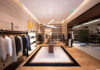
Harry Rosen’s new Yorkville flagship illustrates a deliberate change in store economics. Its September opening at 153 Cumberland Street replaced more than 50,000 square feet across five levels with a 38,000-square-foot, three-level store. The location is the centrepiece of a previously announced $50-million Canadian investment program, not a $50-million project on its own. Inventory space rose from an estimated 5 per cent at the former store to approximately 20 to 30 per cent, supporting cleaner presentations and deeper availability. Private selling, made-to-measure, events and hospitality expand the reasons to visit, while flexible merchandising reduces dependence on fixed branded environments.
Toronto investment also extended beyond Bloor frontage. Chrome Hearts purchased the approximately 7,076-square-foot former Webster property at 121 Scollard Street for $12.65 million, securing control of a building for its first standalone Canadian store. No opening date was announced in the reviewed reporting. Tiffany’s approximately 15,000-square-foot replacement flagship at 66 Bloor Street West remained under construction with an early-2027 opening expected. Absolutely Fabrics’ 7,000-square-foot Summerhill expansion provided a different example, drawing partly on existing clients in nearby affluent neighbourhoods rather than relying solely on new pedestrian traffic.
Vancouver’s investment spans distinct destinations and price positions. Fendi’s boutique of more than 1,689 square feet at Oakridge Park became its only standalone Canadian store after its temporary Yorkdale location closed. Vestis Fashion Group’s Max Mara and Weekend Max Mara stores had opened at Oakridge in May, before Q3, and July reporting emphasized consolidating that expansion before adding further locations. Downtown, Longines was preparing its first Canadian boutique at 765 Burrard Street, while coverage documented St. John’s June closure at the Fairmont Hotel Vancouver. Entries and investment therefore coexisted with exits rather than demonstrating uniform market growth.
Hospitality and appointments broaden what a luxury location can do. Brunello Cucinelli agreed to take space at Fairmont Château Whistler, giving it access to a resort customer base through a planned boutique rather than an operating Q3 store. Bang & Olufsen’s 2,100-square-foot Yorkville location combines private demonstrations, customization and residential-design consultations, extending the opportunity beyond conventional walk-in sales. Holt Renfrew’s Mercedes-Benz Studio used changing installations to refresh an existing space. The completed programming demonstrates a repeatable format, but its effect on sales and retention was not established.
Birks shows why growth must be examined below the revenue line. For the fiscal year ended March 28, reported during the quarter, sales increased 15.5 per cent to $205.4 million while comparable sales rose 2.6 per cent, with the European Boutique acquisition contributing materially. Operating income of $3.1 million sat alongside approximately $8.8 million in interest and other financing costs and a $3.4-million net loss. Refinancing extended principal lending arrangements to 2031 without eliminating that burden. Its proprietary jewellery campaign and selected boutique partnerships show different routes to stronger distribution control, while the announced exchange move was not a Canadian store-closure decision.
Canada Goose’s global results require similar care. Revenue increased 10.3 per cent in its fiscal first quarter ended June 28, but direct-to-consumer comparable sales declined 3.2 per cent. Wholesale revenue rose 66.5 per cent partly because of order-book growth and shipment timing. Progress in apparel, rainwear and windwear supports its effort to become more relevant year-round, without establishing equivalent growth in Canadian consumer demand.
Resale adds another relationship to manage because retailers must secure merchandise as well as sell it. Mine & Yours uses appointments, quotes, closet purchases, cash, credit and consignment, while its Calgary relationship with Holt Renfrew allows eligible sellers to choose department-store credit. Separately, STEFF ELEOFF’s Yorkdale and Bloor pop-ups were announced for October and November. These were prospective fourth-quarter activations in the report, offering a physical test for a smaller Canadian label rather than evidence of completed Q3 openings.
Broader Industry Coverage
Global earnings disclosures reinforce the distinctions between luxury business models. Prada Group’s first-half revenue increased 16 per cent at constant exchange rates including Versace, compared with 5 per cent organically. Its 17 per cent organic Americas retail growth did not isolate Canada. Management’s emphasis on leading clients, stable entry prices and a broader price range provided strategic context rather than a Canadian sales result.
Brunello Cucinelli reported first-half growth of 13.3 per cent at constant exchange rates and 9.5 per cent at reported rates. Management rejected an entry-price strategy and linked selective expansion to preserving exclusivity. That positioning helps explain its investment approach, but regional growth cannot forecast performance at a planned Whistler store.
HUGO BOSS supplied a different operating picture. Second-quarter currency-adjusted revenue declined 9 per cent while gross margin improved 200 basis points, alongside assortment simplification, fewer markdowns and network optimization. Its 21 net first-half store closures were global figures. They do not establish Canadian retrenchment, just as improved margins alongside lower revenue do not prove a broad luxury recovery.
Coach operates at a more accessible price point. Fourth-quarter constant-currency sales rose 14 per cent globally and 10 per cent in North America, while handbag average unit retail increased at a mid-teens rate and units were approximately flat. Retail Insider identified 29 Canadian stores, but Tapestry did not specify which would receive its newer design concept. Global fleet investment therefore remained context rather than a confirmed Canadian renovation program.
Editor’s Take
The useful question is what each investment changes in the operating model. Harry Rosen needs service capacity and deeper stock to produce worthwhile visits, while Birks needs improved operations to translate into earnings after financing costs. Dedicated boutiques, property ownership and private appointments offer more control, but each still requires productive customer relationships. Official jewellery, luggage and leather-goods sales combine merchandise categories and price tiers, so they cannot establish luxury-market growth.
The report’s pipeline provides further tests rather than completed outcomes. Tiffany’s replacement flagship remained an early-2027 project, Chrome Hearts and Longines had not disclosed opening dates, and Whistler was still planned. Temporary jewellery activations likewise needed to demonstrate customer response before supporting a permanent-store decision. Luxury investment is commercially meaningful when the resulting space, service and assortment earn their ongoing cost, not simply when a new address is announced.
Conclusion
Read the full Q3 2026 Luxury: Flagship Investment, Space and Service for the analysis of flagship investment, boutiques, resale and operating performance. It distinguishes Canadian activity from global results and planned projects from stores already trading.
The report and the wider quarterly collection are available through the Retail Insider Report Hub. The hub connects sector reporting with analysis of consumer demand, retail property and the businesses supporting Canadian retail.