Home Blog Page 146

Survey reveals Canadians have reached breaking point: Harris & Partners

Kampus Production photo

As Canadians face an increasingly difficult financial landscape, a clear and troubling picture has emerged from one of the country’s most comprehensive surveys of financial wellbeing. The Harris & Partners Financial Resilience Index, built from over 12,000 survey responses collected across multiple national studies, documents how financial strain has crystalized into a full-blown crisis.

The data tells a story of a nation not merely under pressure, but pushed past its limits: working more for less, borrowing to survive, losing sleep, and quietly hiding the consequences from the people closest to them, said the company, adding that the concern is no longer whether Canadians are struggling. It’s whether the system that surrounds them is equipped to respond.

“This data doesn’t just show stress; it shows a nation hitting its limit. When you look across all 12 surveys, the message is unmistakable: Canadians are exhausted, financially overextended, and increasingly unsure how to stay afloat,” said Joshua Harris, CEO & Licensed Insolvency Trustee, Harris & Partners.

Rising Costs, Stagnant Incomes, and a Vanishing Safety Net

At the heart of the Index is a finding both simple and devastating: household incomes no longer match the cost of living for the majority of Canadians, said the report. 57.3% of respondents said their income did not cover basic expenses including rent, food, and bills. That strain has since intensified, with 88.9% living paycheque-to-paycheque and 82.9% cutting back on essentials such as heating and groceries. Rents have climbed across major cities. Heating costs have surged. Food inflation continues to outpace wage growth. Many families find themselves choosing between fresh produce, fuel for the car, or paying bills on time.

“We speak with people every day who are earning more than they ever have in their careers, yet still can’t keep up with grocery bills or rising rents. When the basics become unaffordable, financial resilience doesn’t just erode – it vanishes,” noted Harris.

Joshua Harris
Joshua Harris

Borrowing to Survive: Credit, Payday Loans, and Shrinking Options

As affordability has deteriorated, the report said Canadians have increasingly turned to borrowing not to get ahead, but simply to cope:

  • 53.4% borrowed in the past two years just to cover essential living costs
  • 77.1% could not cover a $500 emergency without taking on debt
  • 61.2% used credit in the last year to pay for basic expenses

Among the 569 payday loan users surveyed, the picture is even more acute: 71.4% borrowed for essential expenses, 40.4% for emergencies, and 44% struggled to repay. These are not lifestyle borrowers. These are people whose fridge is empty, or whose rent is due, it said.

Changes to the criminal interest rate caused lenders to tighten criteria, leaving many lower-income households with fewer viable, regulated options.

“People feared turning to unregulated lenders. And based on the conversations we’ve had, that fear was justified. When legal credit tightens in a country with declining financial resilience, people don’t stop borrowing – they just borrow unsafely,” added Harris.

The Emotional Toll: Anxiety, Sleepless Nights, and Shame

Financial strain has not stayed in the spreadsheet. It has moved into bedrooms, relationships, and the working day, according to Harris & Partners:

  • 60.4% go to bed worrying about money
  • 46% lose sleep because of financial pressure
  • 68.4% say their debt makes them anxious
  • 56.6% hide their financial struggles from loved ones
  • 76.3% said job or financial stress harmed their mental health in the past year
  • Nearly 40% say their debt is damaging their relationships

“We’ve entered a period where financial shame is as common as financial stress. People feel embarrassed, or they don’t want to worry their spouse, or they think they should just ‘cope.’ But silent stress is still stress – it eats away at mental health and relationships,” explained Harris.

Families are avoiding conversations. Parents are skipping meals. People are postponing medical appointments because they cannot afford the cost. The consequences are very real, and they are compounding, he said.

Workplace Burnout: Doing More for Less

Beyond the household budget, the Index reveals a parallel crisis in the workplace:

  • 58% felt emotionally burned out
  • 52.6% said their workload increased without better pay
  • 45.1% took on a second job or extra gig work just to get by
  • 21.4% took on extra duties with no compensation
  • 14.7% worked unpaid overtime

“We’re used to thinking of overtime or extra work as a path to security. It has become a coping mechanism – and even then, it isn’t enough,” said Harris.

Tima Miroshnichenko photo


A Generation Already Behind: Young Canadians Losing Faith

The Index also highlights an accelerating crisis among students and young adults. More than 60% of graduates reported regretting taking on student debt, and nearly 85% felt the government should do more to address it. With average student debt around $28,000, combined with high rents and starting wages that lag inflation, young Canadians are delaying homeownership, family planning, and even healthcare.

A Supreme Court ruling further complicated relief options, resetting the seven-year bankruptcy discharge period when borrowers return to school, a change that many young Canadians view as yet another barrier on an already difficult path, noted Harris & Partners.

“This generation did everything right. They studied, trained, and worked – yet they’re entering adulthood already behind. When you add high rents and rising consumer prices, it becomes incredibly difficult to build a stable foundation,” said Harris

Insolvencies at Highest Level Since 2009

The financial signals collected across the Index were ultimately borne out in national insolvency data. According to the Office of the Superintendent of Bankruptcy (OSB), consumer insolvencies reached 36,256 in Q3 – the highest level recorded since 2009.

“These filings confirm what the Index has been signalling. Households simply cannot absorb any more financial shocks. The margin is gone,” according to Harris.

More from Retail Insider:

Expectations mismatch fueling Canada’s youth unemployment challenges: CFIB

Kampus Production photo

A new report by the Canadian Federation of Independent Business (CFIB) finds fundamental disconnects at every stage of the hiring process: how employers and youth search for each other, what they expect from a job, which roles young people are willing to take, and what skills employers actually need.

The report is based on a survey of small business owners and a special poll of Canadian youth.

Nearly two-thirds (62%) of small businesses recruit through personal connections, referrals from people they trust. Meanwhile, three in four youth (73%) search primarily through online job boards and only around half tap into their personal networks. This mismatch means opportunities are circulating in places youth aren’t actively looking. Co-op and internship programs, which convert to permanent hires at a 73% rate, are used by a quarter of youth but only one in five small businesses, highlighting a missed opportunity for businesses to access job-ready youth, said the CFIB.

“We have two groups – employers and young job seekers – who are increasingly out of sync right now,” said Molly MacCormack, CFIB policy analyst. “Small businesses hire through trusted networks and look for soft skills, while many youth focus on online postings potentially overlooking the available roles that businesses need. As a result, they’re missing each other and fueling high youth unemployment numbers.”

The CFIB is Canada’s largest association of small and medium-sized businesses with 103,000 members across every industry and region

Molly MacCormack
Molly MacCormack

When hiring youth, small businesses rank soft skills, like positive attitude (91%), motivation (84%), and professionalism (76%) above credentials, experience, or education. These are exactly the qualities most visible in service, trades, and physical roles, yet those are precisely the jobs many young Canadians are ruling out. Nearly half won’t consider jobs requiring heavy physical effort or overnight shifts. Nearly two in five won’t consider outdoor work, noted the CFIB.

“The reality is there are jobs out there that young Canadians just don’t want, can’t do, or won’t do,” said Bérengère Fouqueray, CFIB research analyst. “Whether it’s a resort in northern B.C. or a restaurant in rural New Brunswick, businesses need workers to keep operating and support their local economies. Many young people aren’t able or willing to relocate, or take on the shifts required, especially if they are in school. Leaving these roles unfilled could be the difference between staying open or closing the doors for good.”

Bérengère Fouqueray
Bérengère Fouqueray

Small businesses are also operating in a sluggish economic environment. Tight margins and ongoing uncertainty make it harder to bring on new, inexperienced workers. And while most small firms pay above the provincial minimum wages of $15 to $18 per hour, more than one-third of youth say they wouldn’t consider a minimum wage job. CFIB’s findings point to the often-overlooked costs of entry-level hiring, particularly the time and resources required for training, according to the report.

“Today’s hiring environment is far more constrained for small businesses,” said Fouqueray. “Given the current economic pressures, small businesses are hesitant to grow their teams and are being much more cautious about bringing on new staff.”

More than two-thirds of small businesses are also unaware that government hiring supports even exist. Those who find them describe application processes that are onerous, poorly timed, and disconnected from how small businesses actually operate, explained the CFIB.

“Young workers need more training and hands-on management, which takes time away from running the business,” added MacCormack. “That time has a real cost, and any policy that seeks to address youth unemployment needs to acknowledge it.”
 
CFIB is calling on governments to cut payroll taxes, introduce permanent refundable tax credits for co-op and internship hires, and cut the red tape from programs like Canada Summer Jobs. 

“Small businesses owners are proud to often be the ones to give young people their first jobs, and we don’t want to lose that,” said Fouqueray. “Bridging the expectation gap means young people can continue to get valuable workplace experience, and businesses get the workers they need.”

Read the full report, Work in Progress: Bridging the gap between small businesses and Canada’s youth.

More from Retail Insider:

Spruce Meadows partners with Mattel for Barbie™ x Spruce Meadows

Spruce Meadows photo

Spruce Meadows, one of the world’s premier show jumping venues and Calgary’s leading sports and entertainment destination, is partnering with Mattel, Inc., leading global play and family entertainment company and owner of one of the most iconic brand portfolios in the world, for Barbie™ x Spruce Meadows – a weekend of branded activations, entertainment, and a women-centered leadership forum running June 12 to 14 during the ‘National’ Tournament, presented by Rolex.

Spruce Meadows said show jumping is the only sport in the world where women and men compete on an equal playing field – same course, same rules, same competition. That makes it a natural home for a brand built on empowering women and girls to see themselves in every role imaginable, it said.

The weekend will include:

  • 10,000 co-branded Barbie™ x Spruce Meadows bandanas distributed across all three days
  • Outdoor screening of Barbie™ The Movie on the evening of Friday, June 12
  • Barbie™ Box and pink horse photo ops across the grounds
  • Branded entertainment in the International Ring
  • The ChangemakeHER Forum featuring leaders from sport, business, media, entertainment, and culture on Saturday, June 13
    • The ChangemakeHER Forum is held in the Gallery on the Green Congress Hall. Influential women from sport, business, media, entertainment, and culture will take the stage for a moderated conversation on leadership and impact, followed by an elegant hospitality experience in the Champagne Garden with premium viewing of the RBC Grand Prix.
  • Featured speakers and additional program details will be announced soon.
  • Exclusive co-branded satin jackets for VIP attendees.
Linda SouthernHeathcott

“Barbie™ is one of the most recognized and beloved brands in the world. Bringing that energy to Spruce Meadows during the ‘National’ felt like a natural fit,” said Linda Southern-Heathcott, President & CEO of Spruce Meadows. “Show jumping is the only sport where women and men compete head to head on a completely equal playing field – and partnering with a brand that has spent decades empowering women and girls to break boundaries is a powerful statement about what this sport and this venue stand for. The ChangemakeHER Forum, the activations across the grounds, the thousands of guests wearing their Barbie™ x Spruce Meadows bandanas – it’s going to be something truly special, and we could not be more excited to share it.”

A portion of all event proceeds will support the Spruce Meadows Leg Up Foundation.

More from Retail Insider:

Automotive Properties REIT reports higher first-quarter AFFO as portfolio expands

Vitaly Gariev photo
Vitaly Gariev photo

Automotive Properties Real Estate Investment Trust reported higher revenue and adjusted funds from operations in the first quarter as the real estate investment trust benefited from a series of property acquisitions completed over the past year.

The Toronto-based REIT said adjusted funds from operations, or AFFO, rose 19.1 per cent to $14.8 million for the quarter ended March 31, up from $12.4 million a year earlier. Diluted AFFO per unit increased to a record $0.262 from $0.247 in the same period last year.

Rental revenue for the quarter totalled $29.1 million, up 21.7 per cent from $23.9 million in the first quarter of 2025, while cash net operating income increased 19 per cent to $23.8 million.

“Our strong first quarter performance reflects the positive impact of the 13 property acquisitions we completed in 2025 and the partial contributions of two additional property acquisitions we completed during the quarter,” said Milton Lamb, chief executive of Automotive Properties REIT. “We generated strong year-over-year growth of 21.7% in rental revenue and 19.0% in cash NOI, resulting in record quarterly AFFO per unit.”

The REIT attributed the increase in revenue, funds from operations and cash net operating income primarily to properties acquired during and after the first quarter of 2025, as well as contractual rent increases.

Milton Lamb
Milton Lamb

Net income and comprehensive income for the quarter totalled $25.3 million, compared with $7.6 million a year earlier. The REIT said the increase reflected higher net operating income and changes in non-cash fair value adjustments tied to investment properties and interest rate swaps, partly offset by higher interest costs and changes related to unit-based compensation.

Funds from operations, or FFO, increased 20.4 per cent to $15.2 million, while diluted FFO per unit rose to $0.268 from $0.251 a year earlier.

The REIT declared regular cash distributions of $0.206 per unit during the quarter, up from $0.201 per unit a year earlier. Its AFFO payout ratio declined to 78.6 per cent from 81.4 per cent in the prior-year quarter.

During the quarter, the REIT completed two acquisitions funded primarily through its revolving credit facilities.

On Jan. 1, the company acquired a Hyundai dealership property in Québec City for approximately $13.25 million. On March 26, it acquired a Rivian automotive and service property in Vista, Calif., for US$16 million.

Subsequent to the end of the quarter, the REIT acquired two dealership properties in Santa Ana, Calif., for US$30.15 million. The properties, which house Audi South Coast and South Coast Volkswagen dealerships, are leased to Penske Automotive Group Inc.

“Subsequent to quarter end, we completed an additional property acquisition in southern California, adding two more dealership properties to our portfolio,” Lamb said. “We look forward to building on our positive momentum in the year ahead, supported by a growing property portfolio featuring high-quality tenants providing essential automotive retail and services, 100% occupancy and rent collection, locations in prime metropolitan markets featuring GDP and population growth, an attractive net lease structure, and embedded fixed or CPI-adjusted rental growth.”

As of March 31, the REIT’s debt-to-gross-book-value ratio stood at 46.3 per cent, compared with 43.8 per cent a year earlier. It also reported $69 million of undrawn capacity under its revolving credit facilities, $1 million in cash on hand and 11 unencumbered properties valued at approximately $152.9 million.

As of the date of the earnings release, the REIT said its debt-to-gross-book-value ratio had risen to 47.8 per cent following the April acquisition, while undrawn credit capacity stood at approximately $32.5 million. The trust also reported 13 unencumbered properties with an aggregate value of approximately $195.4 million.

The REIT said 77 per cent of its debt was fixed as of March 31, with a weighted average interest rate of 4.48 per cent.

Automotive Properties REIT said it continues to monitor risks related to inflation, interest rates, currency fluctuations and trade restrictions, including tariffs and broader geopolitical uncertainty.

The trust said it expects continued consolidation in the Canadian and U.S. automotive dealership and service sector over the medium to long term, driven by increasing capital requirements and efforts by operators to achieve greater scale.

The REIT’s portfolio includes 95 income-producing commercial properties across Canada and the United States, representing approximately 3.5 million square feet of gross leasable area.

More from Retail Insider:

A&W to launch first smash burger nationwide as chain expands menu offering

Smash a Double or a Single Smash Burger at A&W on Monday, May 25th. (CNW Group/A&W Food Services of Canada Inc. (marketing & PR))

A&W Food Services of Canada Inc. says it will launch its first smash burger across Canada on May 25 as the restaurant chain moves to add a popular burger style to its menu nationwide.

The company said the limited-time offering will be available as either a single or double burger topped with cheddar cheese, pickles, onions and sauce on a brioche bun. Customers will also be able to order the item through the company’s mobile app.

The launch marks what the company described as the first nationwide smash burger offering by a Canadian quick-service restaurant chain.

A&W said the product rollout is aimed at bringing the smash burger format to locations across the country as consumer interest in the style grows.

“Hand-smashed burgers are rarely done at this scale because it takes quality ingredients and thoughtful execution,” said Karan Suri, senior director of innovation at A&W Canada. “Each hand-smashed, juicy, grass-fed beef patty is paired with real cheddar cheese, tangy pickles, and our signature sauce for a perfectly balanced bite. Pure burger bliss.”

Karan Suri
Karan Suri

The company said the burgers will feature grass-fed beef patties that are seared before being assembled with the toppings.

Susan Senecal, chief executive of A&W Canada, said the company sees the product as an extension of its existing burger lineup.

Susan Senecal
Susan Senecal

“There is something so special about the simplicity of a perfect smash burger! We are excited to be welcoming Canadians to try our delicious new obsession,” Senecal said. “The same quality and care you know and love from A&W is now bringing you a fun and flavourful smash burger.”

Ahead of the national launch, the company said it will host a promotional pop-up event in Toronto on May 22 at an A&W restaurant located at 780 King St. W.

The company said the location will temporarily receive a redesigned “Smashed A&W” appearance as part of the event, where visitors will be offered complimentary double smash burgers while supplies last. The event is scheduled to run from noon to 5 p.m. EDT, with a limit of one burger per person.

A&W said the smash burger will be available at participating restaurants across Canada for a limited time beginning May 25.

The company says it operates more than 1,100 restaurants across the country.

More from Retail Insider:

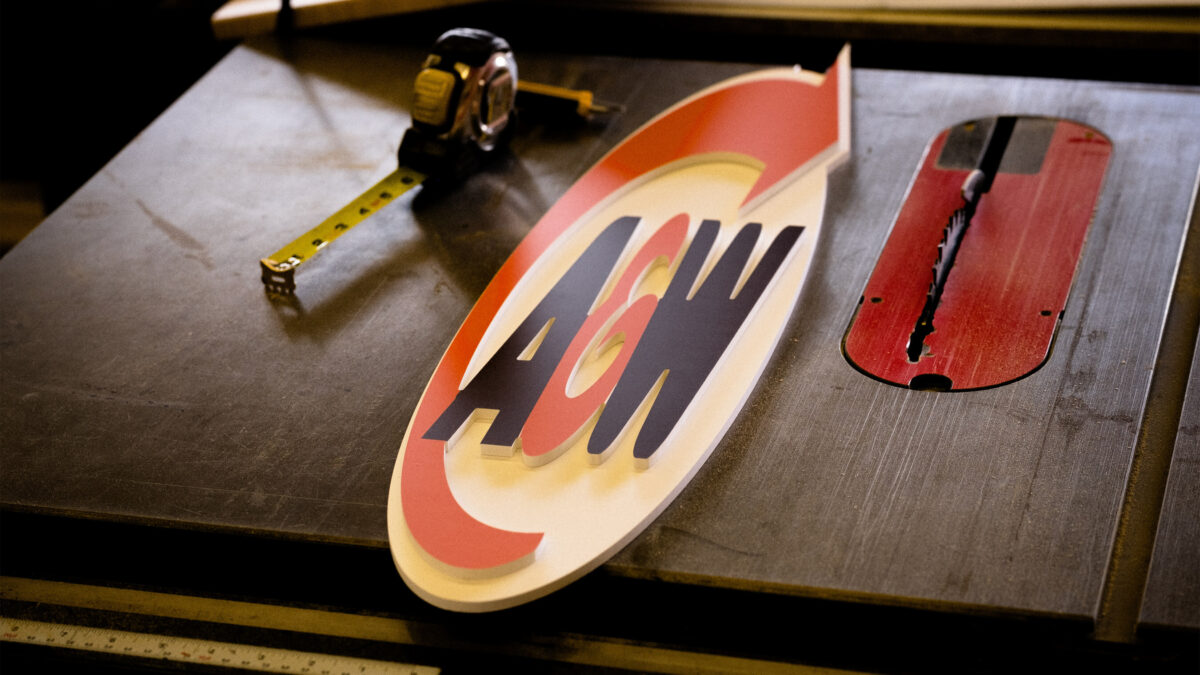
Behind the scenes: Crafting the custom signage for the ‘Smashed A&W’ pop-up. (CNW Group/A&W Food Services of Canada Inc. (marketing & PR))

Happy Belly Food Group exercises right to acquire remaining 50% of PIRHO Fresh Greek Grill

Happy Belly Food Group photo

Happy Belly Food Group Inc., a leader in acquiring and scaling emerging food brands says it has exercised its right to acquire the remaining 50% of PIRHO Fresh Greek Grill, making the brand a 100% wholly-owned subsidiary of Happy Belly.

PIRHO Fresh Greek Grill serves gourmet bowls, wraps, and pitas as a fast casual Greek restaurant with the fresh wholesome tastes of Greece and its delicious traditional foods, said Happy Belly in a news release.

“Acquiring the remaining 50% of PIRHO is a significant milestone for Happy Belly as we move towards 100% ownership of the brand,” said Sean Black, Chief Executive Officer of Happy Belly.

Happy Belly said it will acquire the remaining 50% of the business on a debt-free basis at a multiple of 7.5x TTM EBITDA. Happy Belly said it intends to satisfy the purchase price by transferring the required percentage ownership of the JVCo’s existing Happy Belly shares to brands founder and family shareholders. The value of the shares will be recognized at current market values and transferred on the day of close of this transaction. Final transaction details to be announced at the close of the transaction after all reconciliations are completed (estimated to be completed sometime in Q3).

Sean Black
Sean Black

By leveraging our share price appreciation to acquire the remaining 50%, Happy Belly will complete this transaction without the use of cash or issuing any new shares causing dilution, it added.

“This transaction validates the value Happy Belly creates for our joint venture partners and validates our acquisition strategy based on reduced risk when partnering with founders. Our model paves the way for sustained and predictable M&A growth across our portfolio of emerging brands. By balancing organic expansion in our core markets with a nationwide rollout, we’re positioned to deliver long-term value. We’re confident our multi-brand platform will drive strong results, attract top-tier franchise partners, and secure prime real-estate opportunities across Canada. Happy Belly’s portfolio consists of 686 contractually committed retail franchise locations across multiple emerging brands in various stages of development, construction, and operation. Our predictable and disciplined growth engine continues to deliver measurable results as we expand our brands across Canada and the U.S. to create long-term value for our shareholders,” explained Black.

Happy Belly Food Group photo

“We strongly believe that food can bring people together and inspire colorful conversations. PIRHO culture is rooted in old-world Greek traditions with an emphasis on family and community. The wholesome ingredients, the careful preparation, the irresistible aromas, the delicious food and of course the human interaction all make for a warm and inviting atmosphere. During our visits to Greece, this nurturing environment left a deep and lasting impression with us. So much so that it led to the creation of PIRHO True Food Grill. The best of Greece right here in Ottawa! In our fast-paced world, taking the time to connect with friends and family has never been more important. You deserve to enjoy those precious moments and connect with your loved ones, in real life, with True Food. Join us for lunch or dinner at PIRHO Grill and fuel your soul.”

More from Retail Insider:

Corby reports record third-quarter results, raises quarterly dividend

Tim Douglas photo
Tim Douglas photo

Corby Spirit and Wine Ltd. reported record third-quarter and nine-month fiscal 2026 results recently, driven by growth in its ready-to-drink business, favourable LCBO shipment timing and gains in spirits market share.

The Toronto-based spirits and wine company said third-quarter revenue for the period ended March 31 rose 21 per cent year-over-year to $58.3 million, while adjusted net earnings increased 67 per cent to $7.6 million. Corby also declared a quarterly dividend of 24 cents per share, payable June 10 to shareholders of record as of May 27.

The company said domestic case goods revenue increased 35 per cent to $48.2 million in the quarter, helped by continued expansion of its ready-to-drink portfolio in Western Canada and Ontario, as well as changes tied to Ontario retail modernization and LCBO ordering patterns. Export sales fell 20 per cent to $3.3 million, while commissions revenue declined 11 per cent to $6 million.

Adjusted EBITDA for the quarter rose 30 per cent to $15.2 million, while earnings from operations increased 63 per cent to $12.5 million.

For the first nine months of fiscal 2026, Corby reported revenue of $200.6 million, up 15 per cent from a year earlier. Adjusted net earnings rose 20 per cent to $27.7 million and adjusted EBITDA increased nine per cent to $52.8 million.

The company said growth during the nine-month period was driven by expansion of its ready-to-drink business across key provinces, spirits market share gains and favourable LCBO shipment timing.

Corby said marketing, sales and administrative expenses increased at a slower pace than revenue growth in both the quarter and year-to-date period, reflecting what it described as disciplined cost management and investments in key brands and partnerships.

Florence Tresarrieu
Florence Tresarrieu

Corby president and chief executive Florence Tresarrieu said the company expects fourth-quarter results to moderate as ordering patterns normalize and broader weakness in the spirits market continues.

“Q3 marked a quarter of very strong earnings growth for Corby as we continue to build on the momentum established in the first half of the fiscal year. Revenue grew at a strong pace, driven by the expansion of our RTD portfolio, and benefiting from LCBO order phasing in Q3, while disciplined cost management and strong commercial execution supported even stronger earnings growth. As expected, Q4 is anticipated to be significantly softer as LCBO ordering patterns normalize and spirits market declines persist. Despite this, we remain on track to deliver high single–digit revenue growth for FY2026, reaching a record revenue level for the company.”

Tresarrieu said the company continued to gain market share despite weaker conditions in the broader industry.

“Despite a volatile industry backdrop, our team has demonstrated resilience and agility, enabling us to capture incremental market share across both spirits and RTDs. This reflects the strength of our strategy, portfolio, and partnerships.”

She said Corby plans to continue investing in its brands and ready-to-drink business while maintaining what it described as a prudent approach to costs and capital allocation.

“Looking ahead, our focus remains on delivering sustainable, profitable growth, while maintaining a healthy balance sheet to continue delivering a sustainable dividend to our shareholders. We will achieve this through continued investment in our core brands, continuing to support our RTD business expansion, and capitalizing on new opportunities as the Canadian retail and regulatory landscape evolves, while keeping a prudent approach to managing costs.

“I would like to thank our employees, customers, and partners for their continued commitment, which positions Corby to deliver long-term value for our shareholders.”

More from Retail Insider:

Leger and Plus Company Introduce Smart Persona for Real-Time Consumer Insights

Smart Persona, powered by Leger. Image: RI/Leger

The research industry is undergoing a fundamental shift as artificial intelligence begins to
reshape how organizations understand consumers. Traditional methods such as surveys and focus
groups remain essential, but they often require time, budget, and planning that do not align with
the pace of modern decision-making. In response, companies are exploring new ways to generate
insights faster while maintaining methodological rigour.

In this context, Leger has partnered with Plus Company to introduce Smart Persona, an AI-
powered solution designed to deliver real-time consumer insights through interactive, data-
driven personas. The platform represents a notable evolution in how research can be conducted,
particularly for retailers and marketers navigating increasingly dynamic environments.

Bridging Speed and Research Rigor

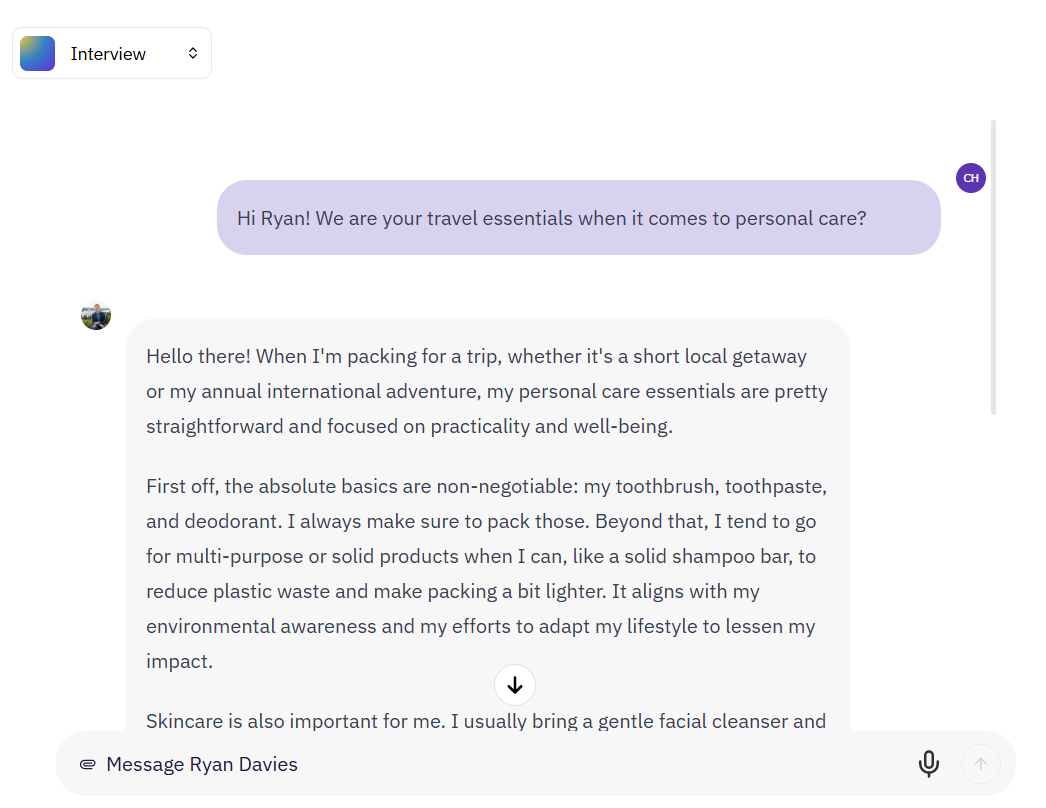
Smart Persona enables users to engage in real-time conversations with synthetic personas built
from Leger’s segmentation data and a broad set of validated data sources. Rather than relying on
static personas presented in reports, the platform transforms audience profiles into interactive
tools that can be queried on demand.

“Integrating Smart Persona enhances our offering while remaining true to our approach and
methodological rigour,” said Sarah Mottet, Vice-President, Transformation and AI at Leger.
“This innovation is a natural extension of our research work and enables our clients to fully
maximize the value of their studies.”

Sarah Mottet, Vice-President, Transformation and AI at Leger

The solution is designed to address a growing challenge within the industry. As decision cycles
shorten, organizations often need directional insights within hours rather than weeks. Smart
Persona allows users to test ideas, validate assumptions, and explore consumer reactions in near
real time, supporting faster and more informed decision-making.

At the same time, Leger emphasizes that the tool is intended to complement, not replace,
traditional research methodologies. High-stakes decisions still require validation through
established approaches such as surveys or focus groups, ensuring that speed does not come at the
expense of accuracy.

Turning Data into Conversations

A defining feature of Smart Persona is its conversational interface. Users can ask questions, test
creative concepts, or evaluate product ideas by interacting directly with personas that reflect
specific audience segments.

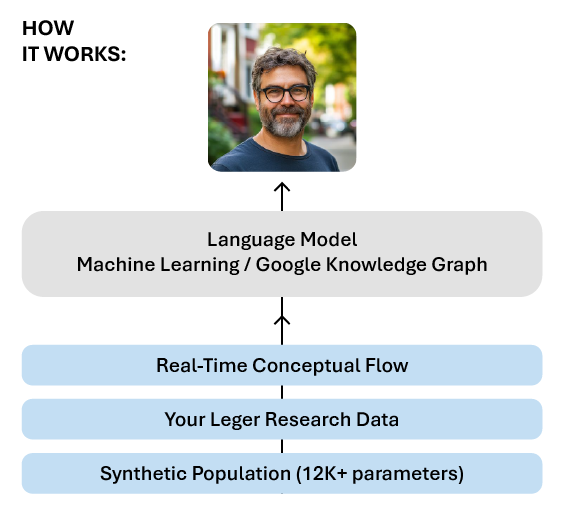
According to materials provided by the company, the platform is built on a synthetic population
model enriched by more than 25 data sources, including demographic, behavioral, and
transactional inputs. Each persona can incorporate thousands of attributes, allowing for nuanced
and contextually relevant responses.

This approach enables teams to move beyond surface-level insights. Instead of receiving a single
data point, users gain access to explanations and underlying motivations, offering a more
complete understanding of consumer behaviour.

The system is also designed to mitigate common concerns associated with generative AI. By
grounding responses in structured data through a retrieval-augmented architecture, Smart
Persona aims to limit hallucinations and improve consistency.

Applications Across Retail and Marketing

The implications for retailers are significant. In practical terms, Smart Persona can be used to test
marketing campaigns, evaluate product concepts, and refine in-store experiences before
committing resources.

For example, marketing teams can assess different creative executions for digital advertising and
receive immediate feedback on which approach is more likely to resonate with a target audience.
Similarly, merchandising teams can explore consumer reactions to new product ideas, helping to
prioritize concepts before formal testing.

The platform can also support broader strategic decisions. By simulating how different customer
segments might respond to pricing changes, brand repositioning, or promotional strategies,
organizations can identify potential risks and opportunities earlier in the process.
This ability to generate directional insights quickly is particularly valuable in retail, where timing
can directly impact performance and competitive positioning.

A Collaborative Approach to Innovation

The development of Smart Persona reflects a broader trend toward integrating artificial
intelligence into established research practices. Plus Company brings technological expertise in
AI and data modelling, while Leger contributes decades of experience in market research and
analytics.

“Our objective is to integrate artificial intelligence in a practical, meaningful and complementary
way,” said Jean-Marc Leger, President and Founder of Leger. “By combining our
complementary expertise, we are pushing the boundaries of research and delivering augmented
intelligence to our clients.”

The concept of “augmented intelligence” underscores the positioning of Smart Persona as a tool
that enhances human decision-making rather than replacing it. By making research more
accessible and interactive, the platform aims to democratize insights across organizations,
allowing more teams to incorporate consumer perspectives into their daily work.

The Future of Consumer Insight

As the research landscape continues to evolve, tools like Smart Persona highlight the potential
for AI to bridge the gap between speed and rigor. The ability to interact with data in real time
introduces new possibilities for how insights are generated, shared, and applied.

For retailers and brands operating in competitive markets, this shift could have meaningful
implications. Faster access to consumer feedback enables more agile decision-making, while
data-driven validation helps reduce uncertainty.

Smart Persona represents an early example of how artificial intelligence can be integrated into
research workflows in a way that aligns with industry standards. As adoption grows, it may also
signal a broader transformation in how organizations approach consumer insight in the years
ahead.

For more information on Smart Persona, visit: leger360.com/smart-persona-powered-by-leger

Daily Synopsis: May 20, 2026

Welcome to the Daily Synopsis by Retail Insider. We hope you enjoy the 10 articles we’ve published covering key developments in Canadian retail.

Toronto-based PLANTA closed its Yorkville and Queen West restaurants to focus on expansion in the U.S. DUER is expanding its brand to Banff, Alberta, tapping into the city’s tourism market. Boston Pizza launched Live & Local, turning its restaurants into live music venues across Canada to support local artists with tours through Labour Day.


Luxury resale continues to grow rapidly as Canadian consumers increasingly view pre-owned high-end fashion as strategic purchases, redefining the luxury market. Meanwhile, Tropoly reached over 1,000 live automations reflecting growing AI use by retailers to improve operational efficiency. Retail Insider also published insights on grocery pricing shifts, FIFA World Cup supply chain readiness, and new U.S. growth plans for a snack brand using upcycled produce.

🗞️ The Day’s Retail Insider Article List


🌐 Canadian Retail News From Around the Web

PLANTA Closes Toronto Restaurants in Yorkville and Queen West

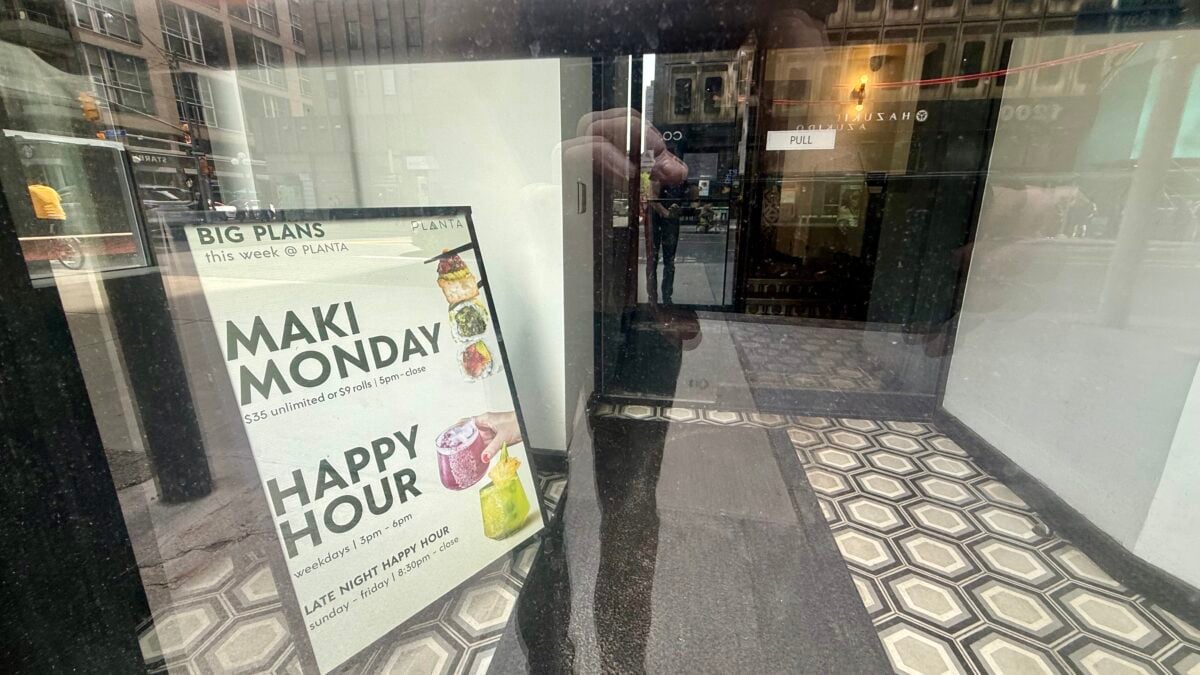
Sign at the former PLANTA restaurant at 1221 Bay St. in Toronto, May 20, 2026. Photo: Craig Patterson

Toronto-founded restaurant brand PLANTA has closed its two Toronto restaurants, marking a major shift for a company that helped bring upscale plant-based dining into the city’s mainstream nearly a decade ago.

The company confirmed this week that its PLANTA Yorkville and PLANTA Queen restaurants officially closed on May 19 as it continues to focus on growth in the United States. The closures affect prominent locations in Yorkville and on Queen Street West, two of Toronto’s most competitive restaurant corridors.

For many Toronto diners, the closures represent the end of a defining chapter in the city’s restaurant scene during the late 2010s, when ambitious hospitality concepts, rising consumer interest in wellness-focused dining, and Toronto’s growing international profile transformed the local market.

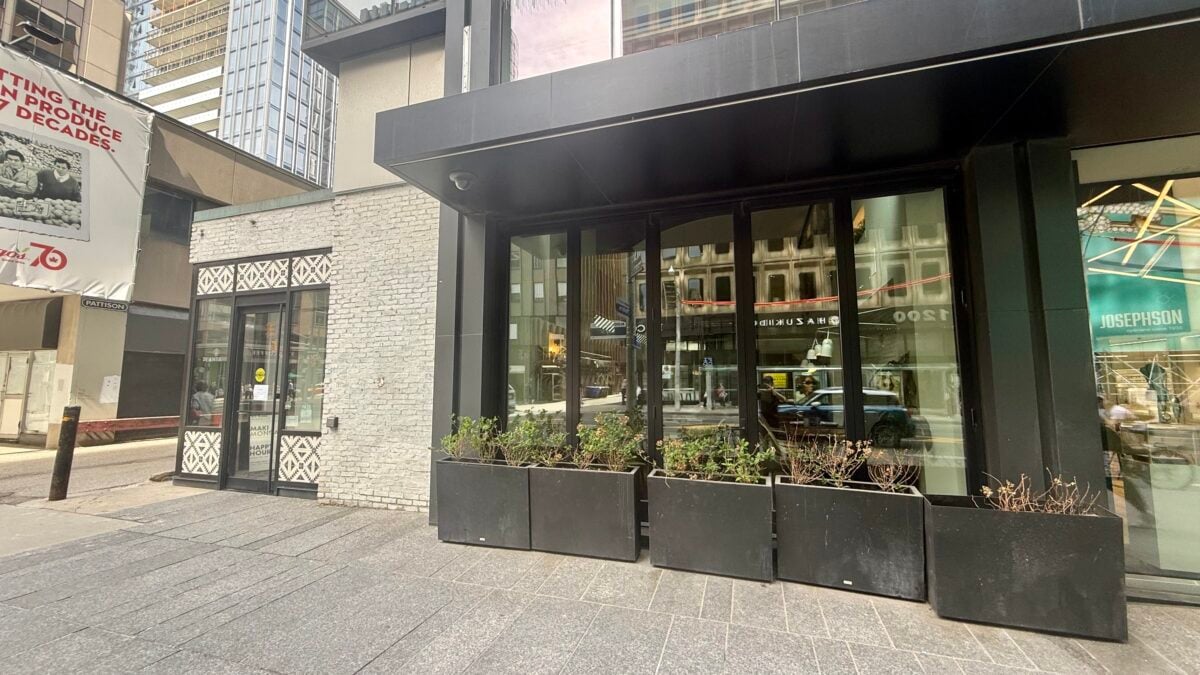
Former PLANTA restaurant at 1221 Bay St. in Toronto on May 20, 2026. Photo: Craig Patterson
 

PLANTA Rose Alongside Toronto’s Hospitality Boom

When PLANTA opened its first Yorkville restaurant in 2016 near Bay and Bloor streets, Toronto’s dining landscape was changing rapidly. Restaurants were becoming increasingly design-conscious, consumers were embracing healthier dining options, and operators were building concepts with Instagram-era audiences firmly in mind.

At the time, premium vegan dining remained relatively uncommon in Canada. PLANTA entered the market with a polished concept that combined chef-driven menus, sophisticated interiors, and a broad lifestyle appeal that attracted customers beyond traditional plant-based diners.

The Yorkville restaurant quickly became one of Toronto’s best-known plant-based dining destinations and helped elevate vegan cuisine within the city’s mainstream hospitality market.

PLANTA later expanded across Toronto with additional concepts, including PLANTA Queen in the former Nota Bene space on Queen Street West, as well as PLANTA Cocina in Yorkville, which continues to operate.

The company was co-founded by Steven Salm and chef David Lee, whose culinary reputation helped establish credibility for the brand in its early years. As PLANTA gained momentum, the company expanded aggressively into major U.S. markets including Miami, New York, Chicago, and Los Angeles.

Inside the former PLANTA restaurant at 1221 Bay St. in Toronto on May 20, 2026. Photo: Craig Patterson
 

Rising Costs Continue to Pressure Toronto Restaurant Operators

The closures also reflect the increasingly difficult economics facing restaurant operators in Toronto, particularly in premium urban districts where occupancy costs, labour expenses, and overall operating costs have continued to climb.

Yorkville remains one of Canada’s most expensive restaurant and luxury retail districts, while Queen Street West has experienced considerable turnover among hospitality operators in recent years as businesses adapt to changing consumer spending patterns and post-pandemic market conditions.

Industry-wide pressures have intensified across North America as consumers become more cautious with discretionary spending amid ongoing economic uncertainty. Premium dining concepts have faced particular pressure as operators attempt to balance rising costs with softer traffic and heightened competition.

The plant-based dining category has also evolved significantly since PLANTA first launched. While consumer demand for vegetarian and vegan menu options remains strong, many mainstream restaurant operators now offer expanded plant-based selections, creating a far more competitive market than existed a decade ago.

Inside the former PLANTA restaurant at 1221 Bay St. in Toronto on May 20, 2026. Photo: Craig Patterson

Prime Hospitality Spaces Return to Market

The closures place two prominent restaurant spaces back onto the market in highly visible Toronto retail corridors where demand for premium hospitality space remains relatively strong.

The former Yorkville restaurant occupied a sought-after location surrounded by luxury retailers, hotels, and upscale restaurants in the Bloor-Yorkville area. Meanwhile, the Queen Street West location sits within one of Toronto’s busiest shopping and dining districts, where well-positioned hospitality spaces rarely remain vacant for long.

PLANTA said the move will allow the company to focus resources on opportunities in the United States, where it has built a growing presence over the past several years. The company did not provide details regarding future Canadian expansion plans.

For Toronto’s restaurant industry, PLANTA’s pullback highlights how dramatically the hospitality market has changed since the company first entered Yorkville during a period of rapid growth and optimism for the city’s dining sector.

Former PLANTA restaurant at 1221 Bay St. in Toronto on May 20, 2026. Photo: Craig Patterson

More from Retail Insider: