Advertisement
Advertisement
Home Blog Page 238

Specsavers to open 111 new optical locations in Loblaw grocery stores across Canada

A Specsavers Canada store (CNW Group/Specsavers Canada Inc.)

Specsavers Canada Inc. and Loblaw Companies Limited announced Wednesday a transformative relationship that will see 111 new Specsavers locations open within Loblaw locations across Canada to replace the Theodore & Pringle brand, which will cease operations.

This will bring Specsavers’ total Canadian footprint to more than 260 locations nationwide, establishing the company as the leading optical provider in Canada, according to a news release.

Specsavers locations will open in select Loblaw grocery stores across Canada – including in Loblaws, Real Canadian Superstore and Zehrs stores – while maintaining seamless continuity for customers and patients, and significantly expanding access to advanced eye care services including Optical Coherence Tomography (OCT) technology. The expansion also represents Specsavers’ entry into five new provinces — New Brunswick, Newfoundland and Labrador, Nova Scotia, Prince Edward Island, and Saskatchewan — and one new territory, Yukon, while strengthening its presence in British Columbia, Alberta, Manitoba, and Ontario.

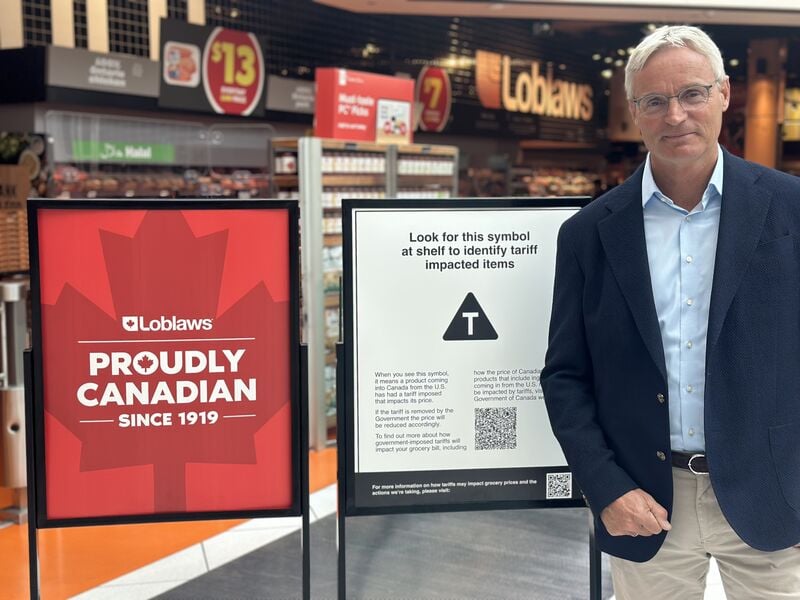
Bill Moir (Image: Specsavers Canada)

“This expansion represents a pivotal moment for eye care accessibility in Canada,” said Bill Moir, Managing Director of Specsavers Canada. “By opening 111 new locations within trusted Loblaw locations, we’re fundamentally improving how Canadians access the eye care they deserve. Our mission has always been to change lives through better sight; we believe expert eye care and quality eyewear should be affordable for all. We are now able to expand that mission across the country, ensuring that more families can access comprehensive optical services in the communities where they already shop.”

New Specsavers locations will operate within existing Loblaws stores, providing customers and patients with convenient access to comprehensive eye examinations, prescription eyewear, contact lenses, and specialized eye care services. All locations will be staffed by qualified independent optometrists and opticians, according to officials.

Irene Doody
Irene Doody

“Theodore & Pringle was born from the belief that eye care should be convenient and affordable for everyone,” said Irene Doody, Head of Optical, Loblaw Companies Limited. “Specsavers’ reputation for accessible eye care aligns perfectly with our purpose – to help Canadians live life well. Specsavers will provide a seamless transition for our optical customers while introducing them to a trusted global leader in eye care.”

The first wave of new Specsavers locations within Loblaw stores is scheduled to open in September 2025, with additional locations following throughout the remainder of the year.

Specsavers is an optometrist-owned business that entered the Canadian market in late 2021. Since then, over 150 locations have opened across the country, in B.C., Alberta, Ontario, and Manitoba. Founded in the UK over 40 years ago by optometrist husband-and-wife team, Doug and Mary Perkins, there are now more than 2,700 Specsavers healthcare businesses globally, serving over 44 million patients and customers.

Loblaw is Canada’s food and pharmacy leader, and the nation’s largest retailer. With more than 2,800 locations, Loblaw, its franchisees and Associate-owners employ more than 220,000 full- and part-time employees, making it one of Canada’s largest private sector employers.

It has more than 1,100 grocery stores that span the value spectrum from discount to specialty; full-service pharmacies at nearly 1,400 Shoppers Drug Mart® and Pharmaprix® locations and in close to 500 grocery stores; PC Financial® services; Joe Fresh® fashion and family apparel; and four of Canada’s top-consumer brands in Life Brand®, Farmer’s Market™, no name® and President’s Choice®.

A Specsavers Canada store (CNW Group/Specsavers Canada Inc.)

Related Retail Insider stories:

Jersey Mike’s Subs opening in Regina as a springboard to Canadian expansion West

Image: Jersey Mike's Subs

Redberry Restaurants is opening the first Canadian Jersey Mike’s Subs outside of Ontario at 2323 Victoria Avenue E., in Regina, today bringing its signature fresh sliced/fresh grilled subs to hungry Saskatchewanians as it expands into Western Canada

This opening marks Redberry’s 13th Jersey Mike’s location. The company opened its first Canadian location in Markham, Ontario in August 2024, and plans to open 300 locations over the next 10 years (see Canada’s locations here), said the company.

Ken Otto
Ken Otto

“We can’t wait to introduce the great people of Regina to Jersey Mike’s authentic sub sandwiches,” said Ken Otto, CEO, Redberry. “This is just the beginning of our expansion into Western Canada and we couldn’t think of a better place to start the journey.”

The company said it expects to open four additional locations in Western Canada in 2025 with a minimum of ten more coming in 2026. Locations in Saskatoon and Prince Albert, Saskatchewan are slated for this fall.

To celebrate the Regina opening, Redberry will hold a grand opening and fundraiser from Wednesday, July 30 to Sunday, August 3, to support Regina Education and Action on Community Hunger (REACH). Customers who receive a special fundraising coupon distributed through a grassroots effort prior to the opening can make a minimum $3 contribution to REACH in exchange for a regular sub. Customers must have a coupon to be eligible.

Customers without a coupon will have the opportunity to download the Jersey Mike’s app and earn a free regular sub after their first in-app sub purchase and will also be able to support REACH via a donation box near the register.

The first 100 visitors to the new location in Regina will also receive a free swag bag.

Since the beginning of 2024 Jersey Mike’s in Canada has raised more than $135,000 for local organizations. During Jersey Mike’s Month of Giving in March, Redberry raised almost $70,000 for Make-A-Wish Canada.

Founded in 2005, Redberry is one of the largest QSR restaurant franchisees in Canada. Redberry owns and operates more than 200 restaurants across the country, operating under the BURGER KING®, Taco Bell and Jersey Mike’s Subs brands.

Related Retail Insider stories:

The 5 Best In-Store Merchandising Teams for Multi-Location Businesses

Managing consistent merchandising across multiple retail locations presents unique challenges that require specialized expertise. Effective merchandising teams must balance centralized brand standards with local market needs while maintaining operational efficiency at scale.

How to Hire a Team for In-Store Merchandising in Multiple Locations

When hiring a team for in-store merchandising, consider the following:

  • The company’s ability to provide national coverage
  • Its technology infrastructure and real-time reporting capabilities
  • Available training programs and employee classifications 

The top-rated multi-location merchandising partners offer artificial intelligence-based analytics and flexible service models, allowing you to scale support based on seasonal needs. Look for companies providing strategic planning and local execution capabilities with proven track records in your retail vertical.

5 Top-Rated Multi-Location Merchandising Partners

The following companies have established themselves as industry leaders through their ability to deliver consistent, high-quality merchandising services across diverse geographic markets. Each offers unique strengths that make it particularly effective for businesses operating multiple locations.

1. Driveline Retail

Driveline Retail is one of the top retail merchandising companies for national brands. With its comprehensive approach to multi-location challenges, Driveline Retail has been a trusted partner to major retailers since 1999, offering people support and technology solutions.

With 15,000 W-2 retail professionals across all 50 states, the company offers extensive national coverage. Its recent robotics division launch represents an industry breakthrough — portable robotic systems streamline data collection with precision, scanning shelves and tracking product locations. The SmartPMX platform, AI analytics and LiDAR space capture technology make Driveline Retail particularly effective for multi-location businesses. The company ensures consistent execution across all locations while providing actionable optimization insights.

2. Acosta Group

Founded in 1927, Acosta Group has established itself as a powerhouse in retail merchandising with nearly a century of experience. The team has about 27,000 retail merchandising associates in the U.S., Canada and the U.K., making it one of the most extensive merchandising operations globally.

The company’s strength lies in proven technology and extensive retailer relationships. The Acosta 360 platform delivers transparency and accountability, with associates averaging 200,000 monthly outlet visits using mobile technology and daily point-of-sale data optimization.

3. Anderson Merchandisers

Anderson Merchandisers brings unique insight as both a former supplier and current merchandiser. It understands the complete retail ecosystem, and its entrepreneurial approach delivers results-driven solutions at each location served.

Two key differences set Anderson Merchandisers apart — its associates and its technology platform. This combination generates measurable shelf results, making the company valuable for brands requiring detailed performance metrics across multiple markets.

4. CROSSMARK

CROSSMARK has over a century of retail innovation experience. It delivers marketing solutions in insights and intelligence, headquarters sales, retail merchandising, and shopper and consumer engagement.

With over 40,000 employees and offices throughout the United States, Canada, Australia and New Zealand, CROSSMARK provides global coverage for brands across multiple international markets.

5. Retail Merchandising Services 

Retail Merchandising Services delivers comprehensive support across various retail categories, including DIY and consumer electronics. Its focus is on ensuring that products reach shelves and impact consumers.

The company’s commitment to flexibility sets it apart. It offers customized solutions that align with specific objectives. Real-time data and reporting capabilities allow multi-location businesses to monitor merchandising performance across all stores simultaneously.

What Makes a Great Retail Merchandising Company for National Brands?

The best in-store merchandising teams for companies with multiple locations share several key characteristics.

They combine nationwide coverage with local market expertise, leverage advanced real-time reporting and quality control technology, and maintain rigorous training standards across all locations. The top five merchandising teams excel at adapting centralized strategies to local preferences while ensuring brand consistency remains intact.

The Future of Multi-Location Merchandising

The retail merchandising landscape continues evolving with emerging technologies like AI-powered analytics, robotic data collection and real-time performance tracking. The best teams combine human expertise with cutting-edge technology, providing brands with the visibility and control needed to succeed across multiple locations.

Success requires partners who understand the complexity of national coordination and the nuances of local execution. The companies above represent leading solutions for brands ready to optimize their in-store presence at scale.

Freed & Freed’s Legacy with HBC Stripes Lives On

Freed & Freed's Fall/Winter 2025 Stripes collection for the former Hudson's Bay Company. Image: Freed & Freed

One of Canada’s most storied garment manufacturers, Winnipeg-based Freed & Freed International, played a pivotal role in shaping the modern identity of Hudson’s Bay Company’s iconic HBC stripes. Over more than a decade of collaboration, the fourth-generation company produced an expansive range of outerwear and accessories that became synonymous with Canadian heritage, pride, and craftsmanship.

Now, as Hudson’s Bay exits the retail landscape, Freed & Freed reflects on its deep connection to the multicoloured stripes that once stood as a symbol of national identity—and hints at how the brand might continue to evolve under new stewardship.

A Storied Collaboration Rooted in History

Freed & Freed’s relationship with Hudson’s Bay began with a phone call. After inheriting the reins of her family’s company 16 years ago, President Marissa Freed reached out to Hudson’s Bay in hopes of rekindling a supplier relationship that had once included manufacturing London Fog outerwear for the retailer.

Marissa Freed

“I cold-called them and said, ‘Hey, we used to make London Fog for you, and we’d love to work together again,’” she said in an interview. That meeting led to a request from Hudson’s Bay for Freed & Freed to produce duffel coats for Canada’s Olympic athletes—launching what would become a defining partnership.

That moment, according to Freed, was a turning point. “I was so proud. I remember saying to my team, ‘I want all the outerwear for the Olympics,’” she recalled. “And we got it.”

From that point forward, Freed & Freed became synonymous with the HBC stripes. The company went on to design and manufacture an extensive line of products, from full-length coats and snowsuits to sleeping bags, baby buntings, tote bags, and puffer mittens.

Bringing the Stripes into a New Era

The evolution of Freed & Freed’s work with Hudson’s Bay coincided with a renewed interest in the HBC stripes among Canadian consumers. What began as a single product offering soon expanded into full seasonal collections. Freed’s team began to design entire assortments, complete with fabric selections, stripe placements, and design variations tailored to Hudson’s Bay’s customer base.

“We started with outerwear, but over the years we moved into knitwear, sweatshirts, t-shirts—even wine totes,” said Freed. “We developed the entire range and handed over collections to the Bay’s buyers to select from. It became a true design partnership.”

One particularly memorable moment came when Hudson’s Bay mistakenly printed thousands of t-shirts omitting one of the Canadian provinces. “They called us in a panic,” said Freed. “We hadn’t even made the original batch, but we stepped in to help fix it. That’s how we got pulled into their knitwear program.”

Freed & Freed’s Fall/Winter 2024 Stripes collection for the former Hudson’s Bay Company. Image: Freed & Freed

Pride in Production and Canadian Identity

At the heart of the Freed & Freed story is a deep emotional connection to Canada and its cultural symbols. The company’s factory, staffed primarily by women and in operation for over a century, embraced the opportunity to work on products tied so closely to the national identity.

“Our team took so much pride in it,” Freed recalled. “People who had been sewing with us for 40 years would visit Hudson’s Bay stores just to trim loose threads off our garments. That’s how much it meant.”

The HBC stripes, first seen on wool point blankets sold by the Hudson’s Bay Company in the 18th century, evolved into a motif recognized across generations. Freed & Freed’s role in translating those stripes into modern apparel helped define what the brand looked like in the 21st century.

And even as Hudson’s Bay faced criticism in recent years for operational shortcomings, including declining in-store experiences and underinvestment in infrastructure, the stripes endured. “When people thought the Bay was going under, the Stripes collection still sold out at full price,” said Freed. “No discounts. Just pure demand.”

Hudson’s Bay stripe products at the Queen Street flagship store in Toronto on March 15, 2025. Photo: Craig Patterson

An Unseen Final Collection

Despite mounting financial issues, Hudson’s Bay had placed orders for a Fall 2024 Stripes capsule collection which Freed produced, and a 2025 collection that did not reach production. Designed in full by Freed & Freed, the collection included standout pieces such as a striped snowsuit and updated outerwear. However, as the company entered creditor protection earlier this year, the collection was never produced.

“It was one of our best collections,” Freed said. “But there was no marketing budget. Most people don’t even know it existed.”

Freed has shared that the pieces exist as detailed design renderings, with purchase orders in place before the retailer ceased operations. “It’s heartbreaking,” she added. “We had everything ready.”

Freed & Freed’s Fall/Winter 2025 Stripes collection for the former Hudson’s Bay Company. Image: Freed & Freed

Carrying the Stripes Forward

While Hudson’s Bay stores have now closed and the company’s operating arm is winding down, the HBC stripes brand may live on in other formats. Canadian Tire Corporation acquired the HBC intellectual property portfolio in June 2025 for $30 million, including the famous stripes, slogans, and private labels like Hudson North.

Freed acknowledges that Canadian Tire’s acquisition offers hope for continuity. “People are thrilled that the stripes remain in Canadian hands,” she said. “And there’s so much potential—across Canadian Tire, Mark’s, and Sport Chek—for the brand to find new life.”

But she emphasizes that any revival of the HBC stripes should be rooted in authenticity and a deep understanding of the brand’s history. “It’s not just about putting stripes on things. It’s about what they mean to Canadians,” she explained.

Hudson’s Bay stripe products at the Queen Street flagship store in Toronto on March 15, 2025. Photo: Craig Patterson

Looking Ahead, With Pride

Freed & Freed International remains one of Canada’s few vertically integrated garment manufacturers. The company produces its own genderless vegan outerwear line and continues to operate with a unionized, ethical workforce from its Winnipeg headquarters.

For Freed, the stripes remain a source of pride and passion. “I love designing for the stripes. I love figuring out what products work, who the customer is, and how we can honour that history,” she said. “It’s a part of me now.”

Whether that journey continues through a partnership with Canadian Tire or another avenue, Freed remains open to possibilities. “We’re ready. We’re proud of what we’ve done, and we’d love to keep going.”

More from Retail Insider:

Canadian Prime Day Sales Surged 9% as Shoppers Seek Deals

Amazon Prime Day. Image: Amazon

Amazon Prime Day 2025 delivered strong results in Canada, with non-Amazon retailers benefiting from bargain-hunting consumers who spread their spending across multiple channels. According to Salesforce data, Canadian sales grew by 9% year-over-year during the four-day event, outpacing the United States and demonstrating the resilience of Canadian retail despite economic uncertainty.

This year’s Prime Day ran for four days, from July 8 to 11, making it the longest event since its inception. The expanded timeline helped Canadian retailers see incremental gains, particularly in the latter half of the sale period.

“Sales growth for North American non-Amazon retailers increased 1% year-over-year during last week’s Prime Day events and by 9% in Canada,” said Caila Schwartz, Director of Consumer Strategy and Insights at Salesforce. “The strongest growth came during the final two days in Canada, where retailers recorded sales growth of 16% and 23% respectively.”

Caila Schwartz
Caila Schwartz

This spike suggests that many shoppers waited to make purchases, either to compare deals or because of the extended promotional activity by competitors.

Canadian Consumers Focus on Value

Canadian consumers showed strong engagement with promotional events despite broader financial caution. Salesforce data reveals that the average discount rate in Canada was 20%, slightly lower than the 22% seen in 2024, yet growth still outpaced expectations.

“What makes it even more impressive is that the average discount level being offered was down 2% from last year,” said Schwartz. “Shoppers who were holding out for a bargain from Amazon clearly went elsewhere as the week went on.”

Pre-event promotions also paid off for Canadian retailers. In the three days leading up to Prime Day, non-Amazon retailers saw sales gains of 9%, 3%, and 13% respectively. Schwartz explained that capturing consumer attention before the main event can lead to strong results.

“We definitely are seeing other players in the industry preempt Prime with their own deal events,” she said. “That seems to be a really good strategy because it allows retailers to engage shoppers before the noise of Prime Day takes over.”

Canada Outperforms the United States

While Canadian retailers enjoyed 9% growth, the United States posted a modest 1% increase for non-Amazon sales during Prime Week. Globally, non-Amazon retailers experienced an 8% rise, with Europe leading gains at double-digit levels. The European surge has been linked to recent interest rate cuts, which boosted consumer confidence and spending power across the region.

“What is happening in Europe in regards to interest rate cuts had a clear impact,” noted Schwartz. “We saw Q1 was pretty flat, but by Q2, every region across Europe saw strong growth, and that carried into Prime Day. It could indicate what might happen in North America if we see similar cuts.”

Top Categories: Apparel and Beauty Lead in Canada

Although Salesforce does not track Amazon-specific transactions, its data shows a “halo effect” across the broader retail industry during Prime Day. In Canada, apparel and beauty emerged as standout categories during the event, reflecting consumer appetite for discretionary purchases when discounted.

Globally, handbags and luggage saw the highest growth at 30%, followed by food and beverage (+27%) and sporting goods (+25%). These trends suggest shoppers continue to prioritize lifestyle and wellness categories alongside essentials.

Canadians prefer slower shipping
Photo: Amazon

Mobile Shopping Reaches New Heights

Another significant trend is the continued rise of mobile commerce. In Q2 2025, 72% of Canadian traffic came from mobile devices, and 67% of orders were completed on mobile — a notable increase from 63% in the same period last year.

“We appear to have reached a level of parity in terms of traffic penetration, but orders are still growing,” explained Schwartz. “The Canadian shopper is just getting even more comfortable transacting across mobile, and we attribute that to mobile wallet adoption.”

Payment solutions such as Apple Pay, PayPal, and Venmo have made the process frictionless, encouraging consumers to finalize purchases on their phones.

Economic Pressures Influence Behaviour

While Canadian Prime Day performance was strong, macroeconomic headwinds continue to shape consumer sentiment. Inflation, high interest rates, and economic uncertainty are driving more cautious spending habits.

“Our data shows that Canadians are feeling more pessimistic about the state of the economy compared to consumers in the U.S. and Europe,” said Schwartz. “They are prioritizing savings and essentials, and 44% reported buying less now than they were six months ago.”

This contrasts with U.S. shoppers, who reported more optimism and indicated a willingness to spend disposable income on goods. Only 14% of Canadians surveyed said they were buying more this year, signaling a continued pullback from discretionary purchases except during major promotional events.

Holiday Outlook: Discount Strategies Will Be Key

Looking ahead, Salesforce predicts a competitive holiday season, with Canadian shoppers continuing to seek value. Inflationary pressures and cautious financial planning will keep discount-driven strategies at the forefront for retailers.

“Canadian consumers have told us they are waiting for deals and discounts,” Schwartz said. “Brands that show up strategically, similar to what we saw during Prime Day, will be best positioned to win.”

The data suggests that retailers should prepare for early promotions leading into Black Friday and Cyber Monday, leveraging lessons from Prime Day to optimize inventory and engagement.

Why Prime Day Matters for Canadian Retail

Although Prime Day is an Amazon-branded event, its influence extends far beyond the platform. The Salesforce report demonstrates how Canadian retailers can benefit from the halo effect, provided they time their promotions effectively and cater to value-driven shoppers.

As mobile shopping accelerates, consumer price sensitivity intensifies, and interest in domestic products grows, with 31% of Canadians prioritizing items made at home, retailers that embrace these trends will gain a competitive advantage.

As Schwartz summarized: “There’s space in these shopping events for every brand to show up. Using that space strategically, and cutting through the noise, can deliver strong results.”

More from Retail Insider:

Loblaw Plans Canada’s Largest Rooftop Solar Project

Loblaw's East Gwillimbury Distribution Centre (CNW Group/Loblaw Companies Limited)

Loblaw Companies Limited has announced plans to build Canada’s largest rooftop solar installation at its East Gwillimbury Distribution Centre in Ontario, marking a significant milestone in the retailer’s sustainability strategy. The project will generate over 8.5 million kilowatt-hours of clean electricity annually, supplying up to 25 per cent of the facility’s energy needs.

The system will have a capacity of 7.5 megawatts and cover approximately 435,000 square feet of roof space, an area comparable to seven football fields. Once operational in 2026, this rooftop solar installation will become one of the largest on a single building in North America.

“From the moment we began construction on our East Gwillimbury Distribution Centre, we knew we needed to take full advantage of the rooftop space to generate clean, renewable energy for the facility,” said Tom Marson, Vice President, Building Technology & Energy at Loblaw Companies Limited.

The project will complement other sustainable initiatives at the site, such as fully electric shunt trucks and advanced building energy management systems. “This installation clearly demonstrates our commitment to taking decisive action as we work to achieve net-zero Scope 1 and Scope 2 emissions by 2040 for our enterprise operating footprint,” Marson added.

Partnering With Great Circle Solar

To deliver this ambitious renewable energy project, Loblaw will partner with Great Circle Solar, a leader in Canadian solar development and operations. The two companies have collaborated for more than a decade, bringing renewable solutions to Loblaw facilities across the country.

“This marque project will be operational in 2026. It is by far the largest of its kind ever contracted in Canada and one of the largest on a single rooftop in North America,” said Clarke Herring, President of Great Circle Solar. “For over a decade, we’ve worked side by side to bring renewable energy solutions to communities across Canada. Loblaw’s continued leadership and long-term commitment to clean renewable energy is consistent and evident.”

Founded in 2011, Great Circle Solar manages approximately $3 billion in operational solar assets in North America, including one of the largest independently managed portfolios of commercial rooftop systems. The company focuses on the full life cycle of solar asset development and works with businesses, real estate owners, and investors to integrate clean energy solutions.

A Broader Environmental Commitment

For nearly two decades, Loblaw has prioritized climate action through a variety of measures. In 2024, the company achieved a 16 per cent reduction in Scope 1 and Scope 2 greenhouse gas emissions compared to a 2020 baseline. It also invested over $40 million in more than 500 carbon reduction projects.

As Canada’s largest retailer, Loblaw operates more than 2,800 stores nationwide and employs over 220,000 people through its grocery banners, Shoppers Drug Mart pharmacies, and financial services. The company serves millions of Canadians annually and manages some of the country’s most recognized consumer brands, including President’s Choice, no name, and Joe Fresh. Its purpose, Live Life Well®, underscores a corporate commitment to health, sustainability, and community well-being.

The upcoming Loblaw rooftop solar installation reflects the company’s broader ambition to lead on sustainability. As Marson noted, the East Gwillimbury project is part of a long-term effort to reduce emissions and build greener infrastructure for the future.

More from Retail Insider:

DoorDash Faces Legal Action in Canada Over Hidden Delivery Fee

DoorDash delivery person on a bicycle. Photo: DoorDash Canada

Some may dismiss food delivery users as lazy, but that stereotype ignores reality. Many Canadians rely on apps like DoorDash or UberEats not by choice, but out of necessity—due to limited mobility, demanding schedules, or even inclement weather. What’s truly lazy is the platform’s approach to pricing transparency. Abusive pricing is abusive pricing, regardless of convenience.

DoorDash, a dominant player in the food delivery economy, is now at the centre of a major legal challenge. In June 2025, the Competition Bureau filed an application with the Competition Tribunal alleging that DoorDash misled consumers by advertising deceptively low prices, only to reveal unavoidable fees—service charges, regulatory recovery costs, and small-order surcharges—at the final stage of checkout. Known as “drip pricing,” this tactic is precisely what recent amendments to the Competition Act were designed to eliminate.

This case is not just about a single company’s practices—it’s about maintaining integrity in a digital marketplace that millions of Canadians now rely on to access food. According to the Bureau, DoorDash may have collected nearly $1 billion in hidden fees from Canadian consumers over several years. That equates to about $25 per Canadian—an enormous figure in a country where food inflation has already strained household budgets.

Importantly, this isn’t the first such case. In 2024, Cineplex was fined $39 million for similar drip pricing tactics involving hidden booking fees. But unlike movie tickets, food is not discretionary—it’s a necessity. When essential purchases are subject to opaque pricing models, it undermines not just trust but fairness in the market.

DoorDash has now responded by claiming that all fees were “prominently displayed” before customers confirmed payment. They also argue that consumers had alternatives: subscribe to DashPass, choose pickup, or spend more to avoid certain charges. From a legal standpoint, these defences may hold weight. But from a food economics perspective, they miss the point. If the price consumers click on is not the price they ultimately pay, then price signals are distorted—and markets cease to function efficiently.

Consumer protection laws are meant to ensure pricing clarity, not reward platforms for building in workarounds. For some users, especially older adults or people with disabilities, these apps can be overwhelming. Complexity is not an excuse for opacity.

This issue also reflects a broader transformation in how Canadians access food. Delivery is no longer a luxury—it’s a normalized channel in the food economy. From urban centres to rural communities, Canadians are using apps for groceries and meals because traditional access points may be limited. This makes transparency not just a legal matter but a public policy concern—one tied to accessibility, equity, and digital literacy.

When trust erodes in digital food markets, platforms don’t just face legal penalties—they risk reputational damage that can be difficult to repair. The entire value proposition of delivery hinges on convenience and reliability. When pricing is unclear or misleading, both are compromised.

In an increasingly digital food system, transparency is currency. If DoorDash and its competitors wish to preserve their role in this ecosystem, they must commit to clear and upfront pricing. The Competition Bureau’s intervention is timely and warranted, but it also prompts a broader question: why are other platforms not being scrutinized under the same lens?

Charging fees for service is acceptable in a market economy. Concealing those charges until the final screen is not. In the food space, where trust is everything, transparency isn’t a courtesy—it’s an obligation.

More from Retail Insider:

Small Canadian exporters are covering cost of U.S. tariffs: CFIB

Photo: Ron Lach
Photo: Ron Lach

Most small businesses are absorbing some or all of the costs associated with U.S. tariffs, according to new data by the Canadian Federation of Independent Business (CFIB).

With a deadline for a new trade deal looming on August 1, CFIB is calling on Ottawa to release Canada’s retaliatory tariff revenues to support small businesses.

On imports from the U.S., nearly seven in 10 small businesses paid the full Canadian tariff, with the median cost of $9,000. On exports, 63% covered costs directly or shared them with their U.S. customers, paying a median of $25,000, explained the national organization, Canada’s largest association of small and medium-sized businesses with 100,000 members across every industry and region.

Dan Kelly

“It is clear that most small exporters have had to eat much of the cost of U.S. tariffs in order to keep their American customers,” said Dan Kelly, CFIB president.

Ottawa has collected billions in additional tariff revenue on U.S. imports compared to last year, said the CFIB.

“If no deal is reached by Friday, Canada must immediately return the revenue collected from our counter tariffs to small businesses to help them weather the ongoing harm and massive economic uncertainty,” said Kelly. “Many have been holding out, delaying critical decisions hoping for enough certainty to plan for the future. Without an immediate deal, many are facing some terrible choices, including laying off key workers.”

CFIB said it sent a letter to the federal government, urging it to consider several options to providing financial relief to businesses. These include a rebate program for affected businesses, a temporary reduction in the small business tax rate from 9% to 0% or lowering Employment Insurance premiums for employers. CFIB’s latest petition, which has 10,000 signatures, also calls on Ottawa to deal with unfinished business and lower the costs of doing business.

Corinne Pohlmann

“So far, the federal government’s announced support measures and tariff exemptions have fallen short of bringing desperately needed cost relief,” said Corinne Pohlmann, Executive Vice-President of Advocacy at CFIB.

“We also hope that the government will take a careful look at its counter-tariff plans when negotiations conclude. Although small businesses have been supportive of Canada’s counter-tariffs while discussions are under way, ongoing tariffs would have permanent consequences on small businesses and the broader Canadian economy.”

Related Retail Insider stories:

Home Société Group launches new unified e-commerce platform

Home Société Toronto Downtown (Image: Dustin Fuhs)

Home Société Group has launched a newly rebranded and consolidated e-commerce website, mustsociete.com.

Designed to mirror the experience of visiting the brand’s large-format stores in Toronto, Montreal, Quebec City and Ottawa, the refreshed platform brings together the company’s full portfolio–including Maison Corbeil, MUST, Jardin de Ville, Galerie du Meuble and Home Société–into one elevated and intuitive digital space, said the company.

Home Société Group's New Unified E-Commerce Platform on MUST Société (CNW Group/Home Société Group)
Home Société Group’s New Unified E-Commerce Platform on MUST Société (CNW Group/Home Société Group)

“The launch of our new website marks a pivotal milestone in our digital transformation and brand consolidation journey,” said Walid Laaraba, President of the Group.

“By bringing all our brands and curated collections under one digital roof, we’re delivering a more seamless, elevated customer experience—designed to reflect the quality, coherence, and style our clients expect.

A World of Design. One Destination

As the most recognized and visited digital storefront, MUST SOCIÉTÉ –known for its modern, fashion-forward designs and multi-brand showrooms – was the natural choice to anchor the rebrand. Previously housed on separate websites, each brand now lives under one roof, allowing users to shop all brand collections in a seamless, single-cart experience. While each brand maintains its own homepage and identity, the platform’s navigation is now more streamlined, with a significantly enhanced mobile experience, explained the company.

Walid Laraaba
Walid Laraaba

Key Upgrades Include:

  • Shop All Brands Together – One cart, one checkout, and easy brand-to-brand browsing.
  • Mobile-Optimized and Lightning Fast – The rebranded site runs on Shopify, providing quicker load times, simple navigation, and an elevated mobile shopping experience.
  • Enhanced Checkout Experience – One-step checkout with Shop Pay, Apple Pay, and more.
  • Live Support, Smarter Tools – Gorgias-AI powered live chat and integration with the Shop app offer a smooth and supported online journey.
  • First-Time Online Access for La Galerie du Meuble and Home Société Customers – The rebrand brings La Galerie du Meuble into the e-commerce space for the very first time, while allowing Home Société customers to now shop all brands in one website.

Built in collaboration with Valtech (site design and development), Paprika (UX design), and Home Société Group’s in-house design team, the site’s new look brings the physical showroom’s refined aesthetic to the digital space, added the retailer.

“This digital relaunch represents a pivotal first move in Home Société Group’s continued investment in customer experience and innovation while delivering a consistent, premium experience at every touchpoint.”

Home Société Group is a leader in mid to high-end interior and exterior furnishings, with 17 existing stores across Quebec and Ontario (Toronto and Ottawa). The company’s portfolio includes Maison Corbeil, MUST, Jardin de Ville, Home Société and La Galerie du Meuble.

Related Retail Insider stories:

Demand for experience drives most new store openings: JLL report

Photo: Taha Samet Arslan

Shoppers continue to prioritize experience even in the face of macroeconomic uncertainty − dining, entertainment, and fitness & wellness services comprised 51% of new-store announcements this year, according to a new retail report from commercial real estate firm JLL.

Dining remains the main driver of retail expansion, with more than 40% of the opening announcements. About 30% of the total are quick-service, fast casual, and coffee shops or bakeries, with the rest casual or fine dining, said the report.

Toronto and Montréal continue to contribute the most to retailer expansion within major Canadian markets, followed closely by Calgary. Dining has contributed to Calgary’s emergence as a strong national retail node after the pandemic, with an increased depth of both national and international chains, it added.

Paul Ferreira
Paul Ferreira

“Restaurants are increasingly employing targeted expansion strategies, focusing on specific regions and store formats, and carefully balancing their presence in both urban and suburban markets to maximize reach. A prominent trend is the reliance on franchising or other creative models to accelerate growth, with operators often securing master development agreements,” said Paul Ferreira, Senior Vice President, Retail Brokerage, JLL Canada

The JLL report said shoppers continue to prioritize experience even in the face of macroeconomic uncertainty − dining, entertainment, and fitness and wellness services comprised 51% of new-store announcements in the first quarter of 2025. Dining remains the main driver of retail expansion, with more than 40% of Q1 opening announcements. About 30% of the total are quick-service, fast casual, and coffee shops or bakeries, with the rest casual or fine dining. Other active categories include discount grocers, gyms, and cosmetics.


Toronto and Montréal continue to contribute the most to retailer expansion within major Canadian
markets, followed closely by Calgary. Dining has contributed to Calgary’s emergence as a strong national retail node after the pandemic, with an increased depth of both national and international chains.

“Restaurants started 2025 on strong footing. Just as retail sales per capita are expected to rise, restaurant spending per capita is set to increase in the next few years,” said the JLL report. Currently, dining accounts for most of Q1’s notable site searches across major markets, which suggests that the momentum will continue.

“Toronto, Montréal, Calgary, and Vancouver have attracted the most dining concepts. This is in sync
with projections that much of restaurantspending growth will come from major cities in the most populous provinces. Good Earth Coffeehouse, Hello Nori, and WingsUp! are among the concepts that announced more locations in Q1. Other active Canadian operators include Happy Belly Food Group and Redberry Restaurants.

By far, apparel and accessories and dining lead in new mall-store announcements, added the report.

Lovisa, Uniqlo, and Mango have announced the most, followed by Hello Nori, %Arabica, and Chick-fil-A. Dining is increasingly establishing a presence in shopping centres, a notable example being Shake Shack at Yorkdale Shopping Centre.


Other active retailers include Asian beauty Kiokii and…, consumer electronics KaseMe, and home
furnishings Nespresso.

“The expansion of brands like JD Sports, L.L.Bean, Sweat and Tonic (REFORMD), and Shop Santé underscores the growing demand for athleisure apparel, wellness services, and lifestyle products.
Mall landlords continue to invest in large flagship stores, indicating confidence in their prime retail
locations and a shift towards creating destination retail experiences. Simons is opening locations in CF Toronto Eaton Centre and Yorkdale Shopping Centre.

Related Retail Insider stories: