Home Blog Page 288

Canac Expands Greater Montreal Footprint With 1st Laval Store

Rendering of the new Laval Canac store. Image: Portail Construction

After more than a year of anticipation, Canac is preparing to open its first-ever location in Laval, marking a pivotal moment in the Quebec-based hardware and building materials chain’s history. The new store will officially open on Friday, February 6, at the corner of Boulevard du Curé-Labelle and Boulevard Saint-Elzéar Ouest, bringing the retailer into one of the province’s most important and competitive retail markets.

The Laval opening represents far more than another store launch. Despite operating 35 locations across Quebec, Canac has never had a presence in Laval or on the island of Montreal. That long-standing absence is now coming to an end with what the company describes as its largest single investment to date.

The scale of the Laval project underscores its strategic importance. Construction costs alone surpassed $35 million, making it the most significant investment Canac has ever made in a single location. The site spans approximately 450,000 square feet and is anchored by a 50,000-square-foot main building, of which roughly 30,000 square feet is dedicated to retail sales space.

This level of capital commitment reflects a deliberate and confident move into the Greater Montreal region. Rather than testing the market with a smaller or adapted format, Canac has opted to introduce its full large-format renovation centre model, signaling long-term intentions in the area.

Strategic Location Serving Laval and Montreal Shoppers

The new Canac Laval store is strategically positioned near Highways 15 and 440, offering convenient access for customers travelling from across Laval, the North Shore, and Montreal. For years, local shoppers seeking Canac’s value-driven offering had to travel outside the region.

Laval residents often traveled north to Prévost in the Laurentians, while Montreal customers typically headed to Saint-Hubert or La Prairie on the South Shore. The new location significantly shortens those trips and places the brand within easy reach of a large population that was already familiar with its pricing and assortment.

The site’s accessibility also strengthens its appeal to professional contractors, for whom efficient access, loading areas, and proximity to job sites are critical factors when choosing where to source materials.
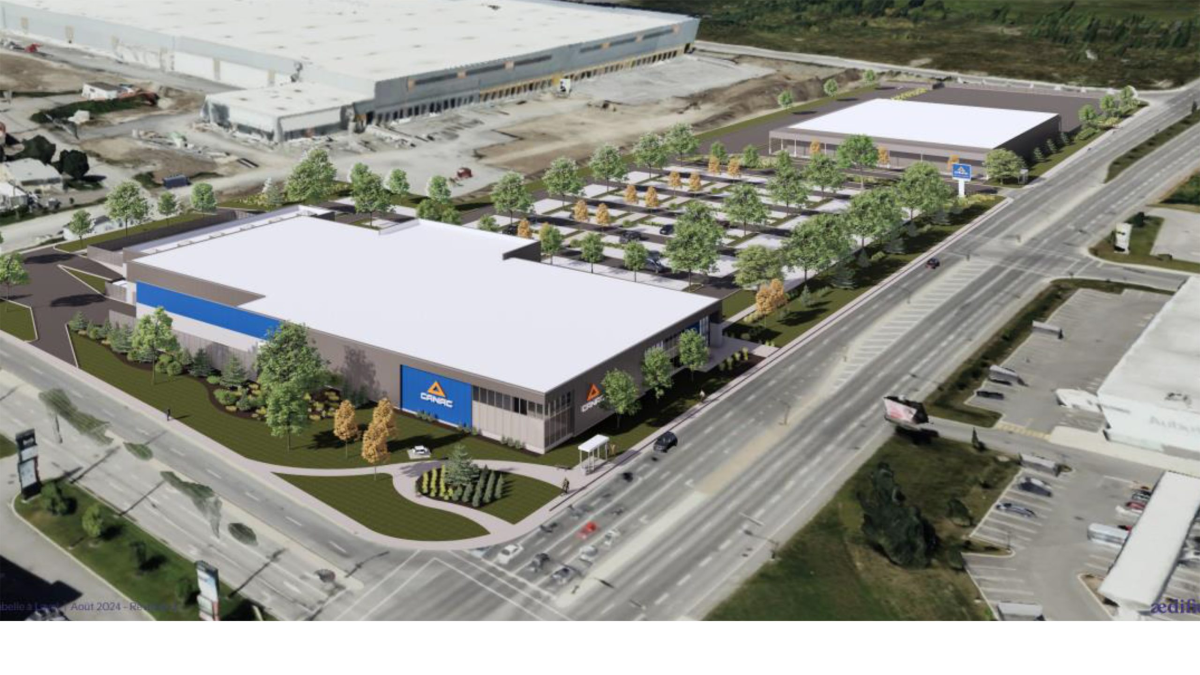
Rendering of the Laval Canac store. Image supplied

A Comprehensive Large-Format Retail Experience

Inside the store, customers will find a broad assortment designed to support both renovation projects and everyday maintenance needs. The retail space carries categories including hardware, plumbing, electrical supplies, tools, paint, flooring, finishing products, building materials, and seasonal items.

Beyond the main sales floor, the complex features a 12,000-square-foot indoor and outdoor garden centre, catering to landscaping and seasonal outdoor projects. A covered warehouse spanning approximately 41,500 square feet provides additional capacity for bulk merchandise and weather-protected loading, while a large outdoor lumber yard supports framing, decking, and construction materials.

The property also includes approximately 250 parking spaces, several of which are equipped with electric vehicle charging stations, reflecting changing consumer expectations around convenience and infrastructure.

Addressing a Longstanding Market Gap

Canac’s absence from Laval and Montreal had long been notable within Quebec’s home improvement sector. The chain has traditionally focused on Quebec City and regional markets, expanding steadily while maintaining tight control over logistics and operations.

The Laval opening marks a turning point in that approach. It brings Canac into direct competition within a dense and highly competitive retail environment, where established home improvement banners already operate multiple locations and maintain deep relationships with contractors.

The Laval store is the first step in a broader push into the Greater Montreal region. According to multiple reports, Canac plans to open additional locations in Laval and Magog in 2026, followed by its first on-island Montreal store in Anjou in 2027.

Construction on the Anjou location is expected to begin this spring, with the store set to become Canac’s 38th branch. Together, these projects indicate a sustained and carefully paced expansion strategy rather than a one-time entry into the market.

This measured growth suggests that Canac sees significant long-term opportunity in Greater Montreal, supported by population density, ongoing residential development, and continued demand for renovation and construction supplies.

Deep Roots in Quebec’s Hardware Industry

Canac’s origins date back to the late 19th century, with roots in two family businesses founded in Quebec. Jos Grenier was established in 1875, followed by Louis Canac-Marquis in 1878. The two companies merged in 1981 to form Canac-Marquis Grenier, creating the foundation for the modern chain.

In 1985, the business was acquired by Groupe Laberge, which has overseen its expansion into a province-wide retailer. Headquartered in Quebec City, Canac positions itself as the first independent hardware and construction materials chain to originate from the region.

The company remains privately owned and Quebec-based, a distinction it highlights following the sale of other major banners to foreign ownership.

Positioning in a Competitive Home Improvement Landscape

Canac operates large-format renovation centres designed to serve both DIY homeowners and professional trades. Stores typically carry more than 25,000 SKUs across categories such as tools, plumbing, electrical, paint, flooring, décor, lumber, and landscaping products.

The format integrates indoor retail space with outdoor or semi-covered lumber yards and garden centres, placing the chain in direct competition with established players such as Home Depot, RONA, and Home Hardware. Canac differentiates itself through competitive pricing, operational efficiency, and an emphasis on practical, experience-based advice.

That value-focused positioning has become increasingly important as consumers remain price-conscious while still investing in home improvement and renovation projects.

Logistics as a Key Competitive Advantage

Supporting Canac’s retail network is a highly integrated logistics and distribution system. The company operates major distribution centres in Saint-Augustin-de-Desmaures and Drummondville, enabling centralized purchasing and efficient inventory flow across its stores.

Current expansion projects include a 650,000-square-foot distribution centre build-out incorporating an AutoStore automated handling system. This investment is designed to increase throughput, improve accuracy, and reduce handling costs, reinforcing Canac’s ability to compete on price as it enters more expensive and competitive markets.

As the chain expands into Greater Montreal, these logistics capabilities are expected to play a central role in maintaining margins while delivering value to customers.

A Steady and Disciplined Growth Strategy

Canac’s expansion has been deliberate. From just five stores in the early 1980s, the company has grown to 35 locations across Quebec, with a stated goal of opening approximately two new stores per year.

Its network now includes markets such as Jonquière, Drummondville, Rock Forest, Cowansville, Rimouski, Granby, Saint-Hubert, Thetford Mines, La Prairie, Contrecoeur, Sorel-Tracy, and Rivière-du-Loup. Most new stores have been developed as greenfield big-box projects, allowing Canac to maintain consistency in design and operations.

The move into Laval represents an evolution of that strategy, bringing the same model into a denser and more competitive urban environment.


More from Retail Insider:

Canadian Retail News From Around The Web For January 26, 2026

Canadian Retail News From Around The Web

News at a Glance

Retail Insider is streamlining its Canadian retail news from around the web to include a handful of top news stories that can be viewed quickly during the day. Here are the top stories from the past 48 hours.

Toys “R” Us Canada closes another 19 stores in two months, leaving just 22 locations (Edmonton Journal)

Several suppliers suing Toys ‘R’ Us Canada for unpaid merchandise: court docs (Canadian Press)

HBC landlords want $2.4 million to cover costs from Ruby Liu lease battle: docs (Canadian Press)

Lululemon founder blames board for latest problems with Get Low clothing line (Business in Vancouver)

Lululemon puts Get Low leggings back online — with caveats (Retail Dive)

Market Outlook: Canada’s retail sales rise masks deeper economic weakness (BNN)

Buy Canadian movement at grocers could ramp up again during trade talks (Canadian Press)

How grocery giants control who can sell food in your neighbourhood (CBC)

Upper Canada Mall sees multiple store closures amid retail shakeup (Newmarket Today)

Not ‘luxury’ enough? Toronto’s Yorkdale mall owners fight to keep Fairweather out (CBC)

Toronto grocery store and restaurant set to host morning parties, pilates event (InSauga)

93-year-old charged after allegedly crashing into North York store, hitting 6 people (CTV)

These are Toronto’s best independent bookstores (Streets of Toronto)

Gen Z Fuels Resurgence of Physical Music in Canada as Vinyl and K-Pop Sales Surge

Megahit Records
Megahit Records

As Spotify Wrapped takes over feeds, Gen Z is also driving a resurgence in physical music.

Record sales in Canada are up 19.1% year over year, and Statistics Canada shows physical media purchases climbed 34% from 2021 to 2023. Beyond nostalgia, the surge points to deeper lifestyle trends: screen-free listening rituals, collecting as a form of identity, and renewed interest in music communities.

Jeff Johnson, owner of Megahit Records — one of Temu Canada’s top-performing independent records stores — is seeing this growth firsthand. As a music industry veteran, former Warner Bros analyst, and active singer-songwriter, Johnson said physical formats are resonating with Canadians and Gen Z, and which artists are driving demand.

More on why this is trending: 

  • Physical albums as identity objects: Fans want more than music — they want tangible connections, artwork, and collectibles. Limited-edition vinyl and CDs with posters, postcards, and other extras are top sellers from Megahit’s Temu store. K-pop is a prime example, with fans collecting special editions and making physical albums central to their fandom and self-expression.
  • Offline discovery, online purchasing: Gen Z still loves browsing record stores for hidden gems, but online shopping still proves important. Marketplaces like Temu help them find items that may be sold out in-store, showing that discovery often happens offline while actual purchasing happens online.

“Looking at our sales on Temu in the US and Canada, I see a lot of our K-Pop products selling — it’s remarkable really. This is one phenomenon that makes the current rise in physical music sales different from previous times. K-Pop fans are truly passionate about the artists they love,” said Johnson.

“Oftentimes if a new K-Pop album comes out with multiple versions — sometimes five or six versions — or one for each band member, fans will want to buy all of the different versions.

“While someone buying six versions of the same album boosts physical music sales in a big way, another big driver, of course, is the ongoing resurgence of vinyl records being pushed by Gen Z buyers. Gen Z certainly has fallen in love with vinyl in recent years and it shows.”

Jeff Johnson
Jeff Johnson

Since the company started selling on Temu in Canada, it has noticed that a high percentage of music sales were coming from vinyl records. 

“We’re finding an enthusiastic customer base out there for our vinyl products — all the way from the jazz icons of the 50s to classic rock bands of the 70s to the big artists of today like Taylor Swift. As opposed to streaming, vinyl is something they can own that has its own innate beauty – this is what our customers and music fans value,” added Johnson.

“Our biggest selling item with Canadians consumers through our Temu storefront is a special green vinyl limited edition of the Talking Heads album entitled ‘77, which originally came out nearly 50 years ago. I believe music fans are collectors at heart and have a special affinity for limited editions, coloured vinyl, box sets and so on. They love the music, but they also want something special that they can have, hold, and put on display. 

“As for the prices, a lot of these special editions are priced higher, but music fans are often willing to pay a premium for products from artists they love. Selling on Temu has helped me keep my pricing transparent, especially as it relates to selling special edition vinyl, so that my customers can avoid inflated costs and still get to purchase something they’ll treasure at a fair price.”

Some consumers like to shop for music in person—  to browse through the racks looking for a hidden gem. Some like the ease of Temu and online shopping and ordering from home. Temu also makes it easy for younger customers to browse across different categories and pick up what they need in one place. 

“Hardcore collectors may go to Discogs or eBay looking for obscure used titles. Gen Z is definitely a music generation, and they certainly have more options than previous generations when it comes to finding and buying music,” he said.

Johnson said he sees the growth of physical music continuing strong into 2026. 

“As long as record companies continue to repackage and release great music into previously unavailable configurations, fans will be there to buy them,” he explained.

“For example, every year for the past several years, the Beatles have released a remastered and/or repackaged version of one of their albums. This past year it was the three Anthology albums from the ‘90s. Every new release generates interest in the artist’s entire back catalog thus increasing sales even more. There’s always an anniversary edition coming out — whether it’s the 30th anniversary of a Nirvana album, the 40th anniversary of a Tears For Fears album and so on.

“However, what could be the biggest boost for physical sales this year could be the return of K-Pop’s biggest act – BTS. Their new album has multiple physical configurations coming out next month and they’re planning a huge world tour. In light of all this, I believe physical music has a bright future.”

More from Retail Insider:


Toronto Hot Yoga Pioneer Dana Dineen Opens Second bhy Studio in Riverside (Photos)

Dana Dineen
Dana Dineen

Dana Dineen, founder of one of Toronto’s longest-standing hot yoga + fitness studios, bhy has  just opened the doors to the brand’s second locat in Broadview, now serving Toronto’s up-and-coming Riverside neighbourhood. 

The expansion is a major milestone for bhy quietly building one of the city’s most loyal studio communities at a time when few boutique wellness brands seem to last more than a few years. 

What began as a single-location hot yoga studio in the Beaches has grown into a two-location business rooted in consistency, care, and connection – offering a full spectrum of fitness and recovery, from hot HIIT and barre-inspired classes to yin yoga and cold plunge therapy.

With more brands trying to replicate the “community feel,” Dineen’s approach stands out: she’s built meaningful loyalty and longevity by staying consistent, showing up, and designing experiences that meet people where they are.

Located on the main floor of a three-storey building at street level — offering high visibility and easy access in Toronto’s vibrant east end. Positioned at the crossroads of Corktown, Riverside, and Leslieville, the new studio connects a growing neighbourhood with bhy’s grounded and vibrant approach to fitness and recovery.

Dana Dineen
Dana Dineen

The space features:

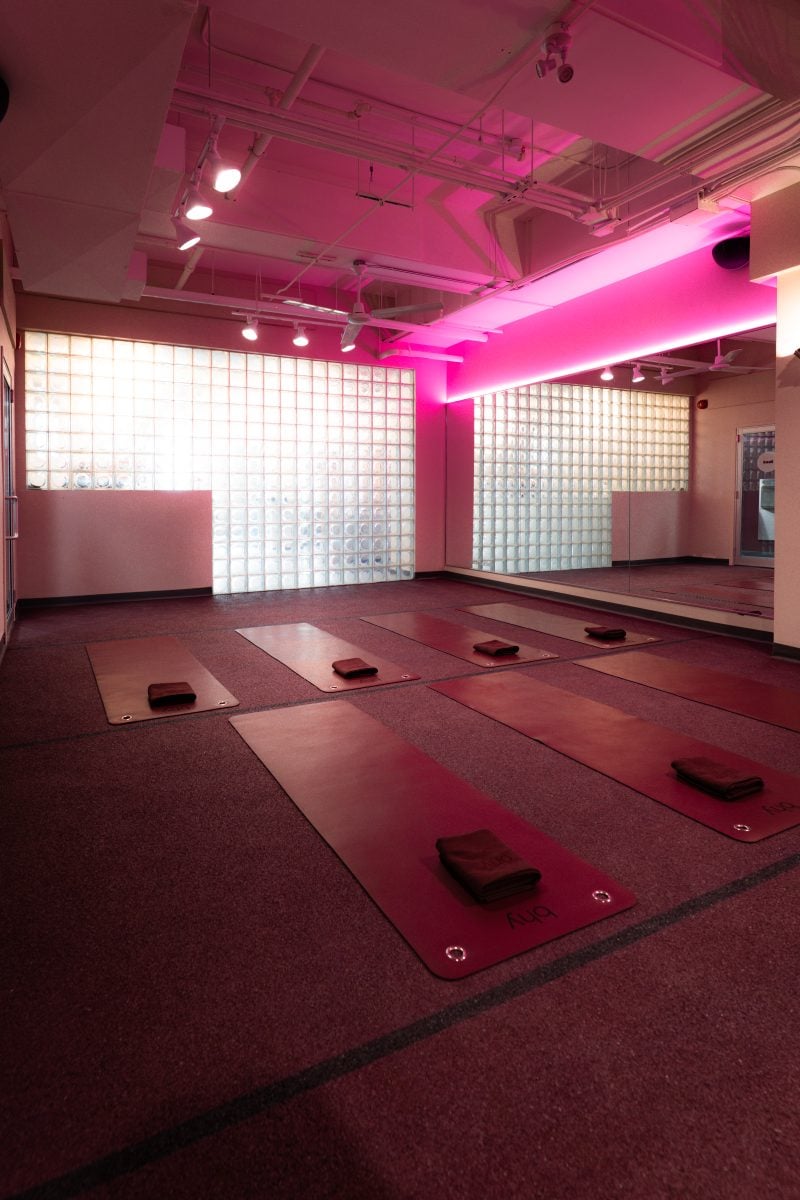
  • Two large practice rooms for hot yoga, hot HIIT, ignited 45, barre, and yin yoga
  • State of the art heating and cooling in each practice room with humidification and dehumidification systems and high efficiency air exchangers.
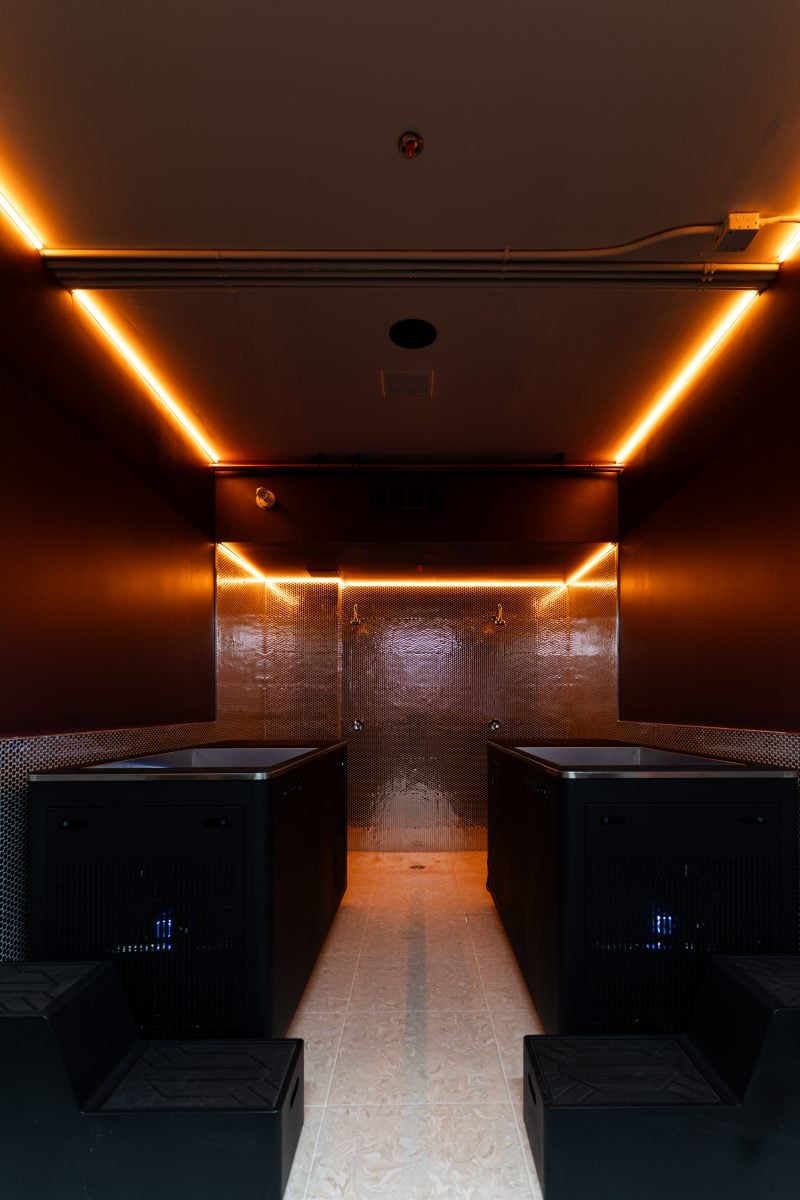
  • Four cold plunge tubs for post-class recovery
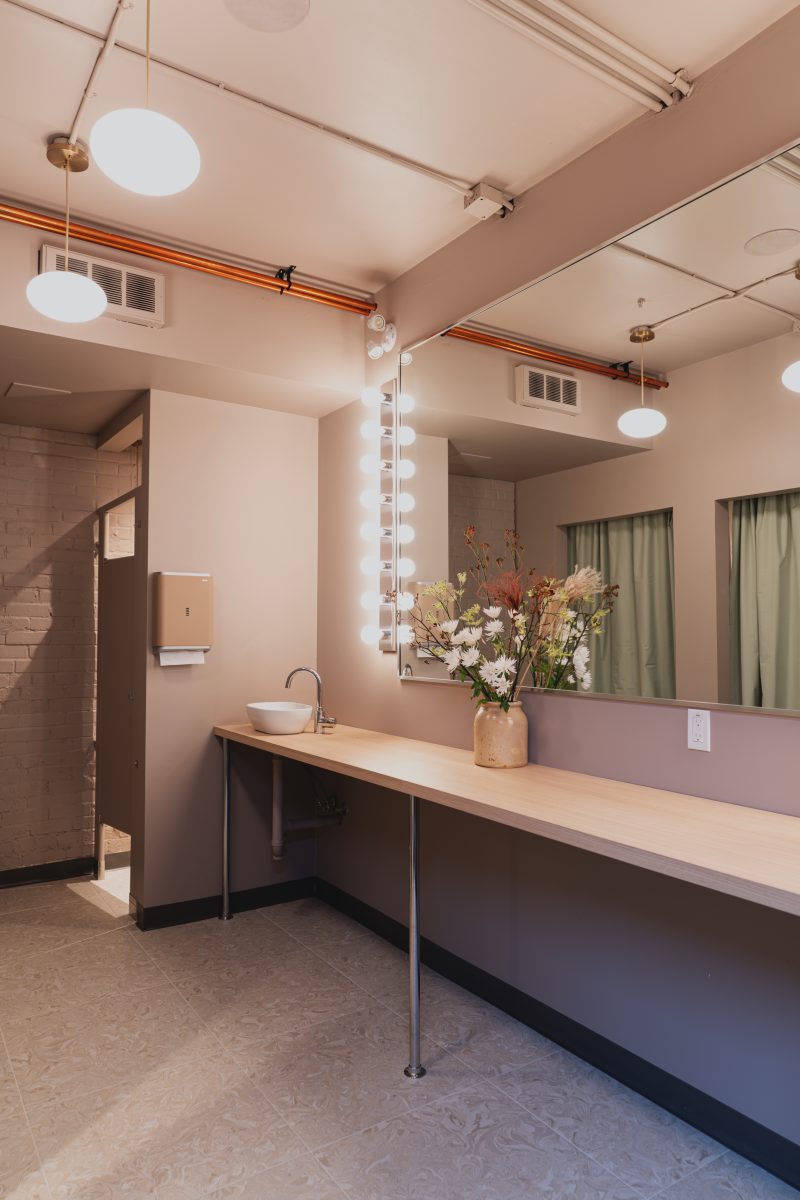
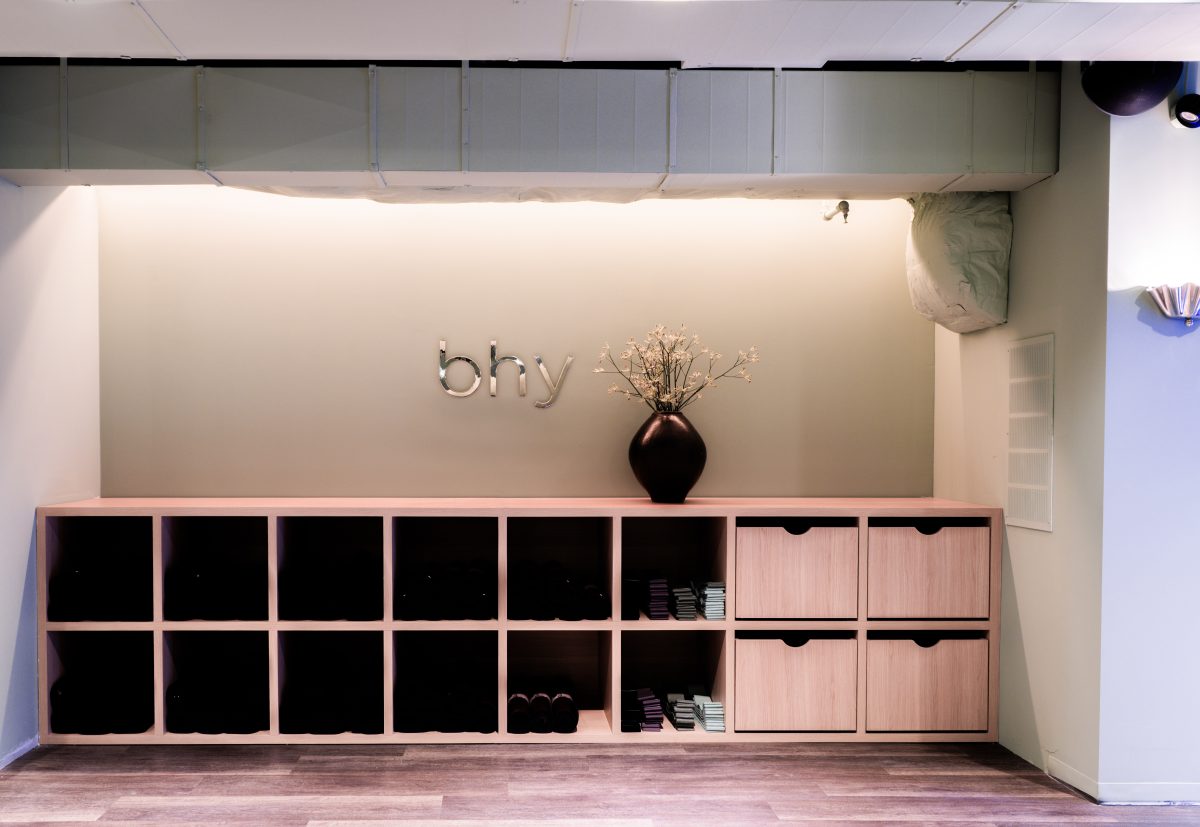
  • A bright lobby and lounge area, mirroring the signature welcoming feeling of the original Beaches location
  • Design-forward interiors by KLA Interiors — combining natural materials (oak, stone, glass) with clean, calming lines, and warm lighting and some unexpected moments of fun

bhy Broadview is now open at 635 Queen Street East. 

“I believe what’s kept bhy steady, is our commitment to who we are, why we teach, and what this practice can do in people’s lives. The heart of bhy has always been the same: show up, do your best, take care of yourself and each other, and let the practice change you from the inside out,” said Dineen of the brand founded in 2002.

“A huge part of our longevity comes from prioritizing our clients and our community above everything else. We invest in high-quality instructors who are dedicated to the practice, to the teaching, and to the people in the room — not in chasing “talent” the way much of the industry does. Our teachers aren’t performers; they’re leaders, guides, and community builders. That energy is felt in every class, and it’s why people stay.

“We’ve stayed rooted in the lineage and structure that works — the heat, the discipline, the repetition, the integrity — while continuing to evolve in ways that support real people, real bodies, and real practice. That commitment to consistency, and community is what has kept bhy strong for over 20 years.

“Community is often cited as a differentiator in boutique fitness, but bhy has built genuine loyalty over many years. What does “community” actually look like in practice at bhy, and how do you design for it day-to-day?”

bhy
bhy

Dineen said the word “community” gets tossed around a lot in boutique fitness, but at bhy it’s not a marketing word — it truly is something you can feel the second you walk in the door. 

“It looks like people showing up for each other, encouraging each other, sweating beside each other, and growing together over years, not weeks. It is intentional connection with every person who walks in the doors and teachers who know your name, your practice, your story — we strive to make our clients feel seen and supported every time they step into the studio,” she said.

“Day-to-day, we design for community in very intentional ways. We hire and train instructors who genuinely care — people who understand that teaching is service. We create consistent class structures that help students build confidence. We hold high standards for teaching, cleanliness, and space care because it communicates respect. And all of our staff practices regularly on the mat with our clients.

“bhy is a place where people can be themselves. Nothing contrived, nothing curated for social media — we always remind our clients that as long as you do your best and try with 100% of your attention and intention, you are receiving the results you need and your best is always good enough.”

bhy
bhy

Dineen said expanding to Riverside came from a deep understanding of who the brand is after more than 20 years — and the realization that staying the same size was starting to limit what was possible for its clients and its team. 

“Without more space, I couldn’t offer the opportunities people were asking for: more classes, more teacher trainings, more pathways to teach, mentor, lead workshops, and build real careers within bhy. And I also knew the practices we teach — the heat, the structure, the discipline — deserved a wider reach,” she said.

“Riverside was the right next home for a few very real reasons. It’s far enough from the Beaches that it wouldn’t cannibalize what we’d built, but close enough that our reputation, our roots, and our teaching team could carry the bhy vibe into the neighbourhood in an authentic way. It’s also a community much like the Beaches — full of people who genuinely want to support local, show up for each other, and build something real together.

“Expansion wasn’t about duplicating a studio — it was about creating more opportunity, more access, and more space for this practice to impact more people, while letting Riverside develop its own identity grounded in the bhy ethos. bhy offers everything from hot HIIT to yin yoga and cold plunge therapy.”

bhy
bhy

Dineen said expanding its offerings has never been about doing “more” — it’s about choosing practices that deepen the bhy experience and support students in meaningful, complementary ways. 

“Every modality we teach brings an intensity that demands focus. Whether it’s the heat of hot yoga, the power of hot HIIT, the precision of barre, the stillness of yin, or the cold plunge — each one calls on the same five aspects of the mind: concentration, determination, self-discipline, patience, and faith,” she explained.

“The formats may be different, but the mental training is the same. Concentration in stillness. Determination through intensity. Self-discipline in staying with the breath. Patience in the process. Faith in yourself and your practice. Over time, that consistency becomes meditation in motion — or meditation in stillness.

“All of our classes are designed to work together. They strengthen different parts of the body and the mind, but they all come back to the same foundation: discipline, breath, presence, and emotional regulation. We understand the power of the circulatory system — how heat drives it, cold sharpens it, effort challenges it, and breath steadies it.

“That’s how we expand without losing clarity. Each practice reinforces the same philosophy, the same mental skills, and the same internal transformation. We don’t add trends; we add what supports the whole ecosystem of bhy — and what genuinely helps our students become stronger, calmer, more focused, and more resilient.”

bhy
bhy

Dineen said one of her favourite sayings is “what you focus on grows.”

“So as I remind our students to do on the mat I also try: focus on what I believe in and on the people right in front of me — me clients and my team, not the ones I think I should be attracting,” she said.

“I intentionally don’t follow other similar fitness businesses. Not because I don’t respect them or find inspiration in their work, but because for me this is the quickest way to start playing the comparison game and then it can be easy to lose sight of what makes bhy distinct.

“And honestly, practice what you preach. If you’re asking people to bring discipline, consistency, patience, and heart to their practice, you have to show up with the same. Integrity is felt. Your energy sets the tone.”

More from Retail Insider:

Continued stability in Vancouver’s retail sector: Colliers

Photo: Luke Lawreszuk

The retail sector showed continued stability in the latter half of 2025 with low vacancies that will likely continue trending downwards, according to the Greater Vancouver Retail Report H1 2026 by commercial real estate firm Colliers.

“Continued political tensions with the U.S. has helped to incorporate the “Buy Canadian” movement into the cultural norm with consumer spending affected and tourism into the U.S. down significantly from the previous year,” said the report.

“Projections for the first half of 2026 are giving investors and tenants alike a reason for optimism heading into the summer. One of the largest retail developments in recent memory, the redevelopment of the old Oakridge Mall into the new master planned Oakridge Park mixed-use complex is planned to finish its first phase of construction. 

“Shortly thereafter, Vancouver will host seven FIFA World Cup 26 matches over a one-month span, an event expected to draw hundreds of thousands of international visitors and deliver an additional boost to the B.C. economy.”

The report said as of year-end 2025, the Urban Retail Colliers Index Vacancy Rate is 2.99%, up from 2.90% at mid-year 2025. Meanwhile, the Suburban Retail Colliers Index Vacancy Rate is 0.81% up from 0.70% at mid-year 2025. Average monthly retail sales for B.C., reported by Statistics Canada, were up 2.5% year-over-year (YoY) to $9.4B as of October 2025 – showing modest growth in consumer spending but slowing down from 7.1% YoY in May 2025. 

Photo: Mila Emilivna

“However, with year-end spending, these figures are likely to receive a significant bump. These results are consistent in showing how consumer spending and vacancy rates are stabilizing,” said Colliers.

“The urban street vacancy rate rose slightly by nine basis points, however, this was largely due to a single large vacancy in Yaletown that bumped up the vacancy.

“Without this vacancy, urban street vacancy would have decreased nineteen basis points, to 2.71%, the lowest recorded vacancy since H1 2022.”

• Grocery-anchored shopping centres, continue to be the standard for stability in an already stable asset class. With a sub 1% vacancy rate two years in a row, consumers show a continued desire to shop near their residences with no signs of changing anytime soon.

• Since the summer, the Bank of Canada has cut interest rates by a cumulative 50 bps, to its current rate of 2.25%. The last time interest rates reached this low was in June 2022. With the inflation rate hovering around 2%, within the BoC target range, these macroeconomic indicators are the ingredients for strong retail growth.

Colliers said the number of Canadian residents returning from the U.S. in August 2025, a peak tourism month, was down 29.7% YoY, whereas the number of US residents visiting Canada declined 1.4% YoY according to Statistics Canada Tourism Statistics. Most notably in August 2025, there was a 29.7% YoY reduction in Canadian residents returning from the Unted States, which was a driving force for a 21.5% overall reduction in Canadians returning from international travel in that same period, showing further evidence of Canadians staying in Canada during vacation months.

Sherman Scott, VP, Vancouver Retail Brokerage, Colliers, said many factors are contributing to Vancouver’s retail stability in 2026. 

“We still haven’t caught up from years of population growth. Retail projects in Vancouver are typically mixed‑use in nature, and with demand slowing for other asset classes such as office and residential, retail supply is also slowing. The redevelopment of older malls like Oakridge and The Amazing Brentwood has opened up opportunities that were not there before,” he said.

Sherman Scott
Sherman Scott

“The HBC closure has also created opportunities that did not previously exist. Transit‑oriented development is supporting retailers seeking space near SkyTrain stations. There has been a resurgence of in‑person shopping. Service and experiential retail continues to remain in high demand.”

Scott said Buy Canadian and shifting travel patterns have accelerated the expansion of local brands such as grocery stores and drug stores. Retail leasing is particularly strong in grocery‑anchored shopping centres and neighbourhood plazas.

“Oakridge Park and FIFA 2026 will once again put Vancouver on the world stage. There will be high demand for short‑term pop‑up retail during FIFA,” he said.

“Recession‑proof retail formats such as grocery stores and drug stores are best positioned in the year ahead.”

More from Retail Insider:

Gentle Fawn leans on longevity over trends as Vancouver fashion brand marks more than two decades

Carla Hogg
Carla Hogg

Vancouver-based fashion brand Gentle Fawn is doubling down on longevity, fit and disciplined growth as it navigates a changing retail landscape more than two decades after its founding, according to co-founder and CEO Carla Hogg.

Founded in 2003, Gentle Fawn has grown into a North American wholesale and direct-to-consumer business with roughly 600 retail partners split evenly between Canada and the United States, while its own e-commerce site has become its largest single sales channel.

“We don’t really focus on trends,” Carla said in an interview. “We focus on longevity and fit. That is what we’re known for.”

From wholesale roots to digital scale

Gentle Fawn began long before e-commerce was a viable option for emerging fashion brands. At the time, operating an online store was widely seen as competing directly with wholesale customers, Carla said.

“Back then there wasn’t e-commerce,” she said. “Having a web store was competing with your wholesale retailers at that time, so that was kind of a no-no back then.”

That approach has since shifted. While the company continues to rely heavily on independent boutiques and chain retailers, its online store is now its biggest retailer by volume. Still, Carla emphasized that wholesale remains central to the company’s business model.

The brand currently sells through about 600 retailers across North America, including Canadian chains such as The Latest Scoop, as well as many fashion specialty boutiques.

“These are the best fashion specialty boutiques in every city and small town,” she said. “That’s who we’re selling to.”

Photo: Gentle Fawn
Photo: Gentle Fawn

Founders shaped by fashion and design

Gentle Fawn was co-founded by Carla and Danny Hogg, who serves as founder and creative director. The company’s origins were shaped by the pair’s shared interest in mid-century modern design and their complementary professional backgrounds.

As the two began working together, Carla said she struggled to find apparel that bridged the gap between action-sports-inspired lifestyle clothing and fashion-forward design.

“I wanted more fashionable stuff,” she said. “I didn’t want to dress like my boyfriend.”

That gap became the foundation for Gentle Fawn, which positioned itself between casual lifestyle wear and contemporary fashion, a space the company continues to occupy today.

A brand name rooted in design

The Gentle Fawn name itself reflects the founders’ design-first mindset. While shopping in an antique store, the pair discovered a small ceramic fawn that would later become the brand’s original icon.

They initially wanted to name the company simply Fawn, but trademark constraints made that impossible. “You can’t trademark a colour, and fawn is a colour,” Carla said.

Danny, who has a background in graphics, developed the Gentle Fawn name and an original logo inspired by mid-century modern aesthetics, including arched lettering and a Palm Springs-era look from the 1960s.

“That’s where the name came from,” she said.

Brick-and-mortar remains under consideration

Despite the brand’s growth, Gentle Fawn does not operate its own physical storefronts. Carla said the company has discussed and debated the idea internally but remains cautious.

“There’s a lot to consider when it comes to brick and mortar,” she said. “It’s a different business than wholesale and than e-commerce.”

While a standalone retail presence could help build brand awareness, she noted that operating physical stores would require a different operational focus and risk profile, something the company continues to weigh carefully.

Product strategy built around balance

Gentle Fawn releases nine product drops per year, balancing core basics with new designs intended to keep customers engaged without overextending the brand.

The company’s core products are designed to provide consistency for returning customers, while seasonal updates add what Carla described as “freshness” to the collection.

“Our basics are what our customer comes to us for,” she said. “They know them and they love them.”

That balance has become increasingly important as the brand manages both wholesale and direct-to-consumer channels, ensuring newness without alienating long-time retail partners or shoppers.

Leadership and recognition

Carla, who describes herself as “more of the face of the company,” oversees the business as co-founder and CEO, while Danny leads creative direction. Day-to-day coordination across the organization is shared among the leadership team.

Carla Hogg
Carla Hogg

Looking ahead

As Gentle Fawn moves through its 23rd year in business, Carla said the focus remains on disciplined growth, strong wholesale relationships and maintaining a clear brand identity in a crowded fashion market.

“There are lots of things coming up,” she said, pointing to upcoming collections while stopping short of detailing specific expansion plans.

For now, the company’s strategy remains rooted in the same principles that shaped its founding: careful design, long-term thinking and a measured approach to change in an industry known for rapid shifts.

“We’re partnering once again with the Jilly Box for their Spring box, which will feature our Starling Skirt. It’s a chic, elegant, and highly wearable style, finished with a flocked polka dot and offered in two colour ways , soft blush and cream.  The Jilly Box has been a strong retail partner for us over the years and is currently our largest account across Canada. I’ll be doing an Instagram takeover with Jillian Harris’s audience this week, and the box is scheduled to ship in February,” she said.

“In addition, we’re launching the second drop of our Spring campaign, Blue Skies Ahead, Volume II, which signals that spring is on the horizon. The collection is inspired by coastal living, with airy fabrics, gentle movement, and a palette drawn from sea and sky, designed to feel effortless and refined for everyday wear.”

More from Retail Insider:

Graydon Skincare navigates a changing Canadian beauty landscape

Graydon Moffat
Graydon Moffat

Over the past decade, Toronto-based Graydon Skincare has navigated a rapidly evolving Canadian beauty retail landscape, from the rise and saturation of clean beauty to shifts in DTC and wholesale strategy, and today’s more value-conscious consumer.

Graydon Moffat founded the brand 10 years ago in March as an independent, plant-powered skincare brand known for its nutrient-rich formulations and thoughtful approach to skin health.

As the brand enters its next chapter, its focus remains on future-proofing the business while staying true to its original values, including:

  • Thoughtful updates to hero formulas to better support sensitive skin and barrier health
  • 100% vegan and cruelty-free formulations with a strong emphasis on transparency
  • Sustainable innovation across packaging, sourcing, and production
  • Clinically informed formulations designed to be effective yet gentle
Graydon Moffat
Graydon Moffat

Moffat said a few moments truly defined the company’s trajectory at Graydon Skincare over the past decade.

“The first one was our community origin. The brand didn’t start in a lab, rather it started in my kitchen. I was a vegan chef and yoga instructor mixing up superfood-based skincare for friends and students. That early, community-rooted approach taught me something fundamental: skincare that nourishes, feels good, and responds to the needs of their skin resonates first with real people before it resonates as a category trend,” said Moffat.

“Secondly, expanding from direct-to-consumer into meaningful retail placements, like our partnerships with Canadian, value-based brick and mortars, was a big step. It showed that there was demand beyond our digital community and that mainstream retail could support a purpose-driven brand without compromising values. Some of our current retail partners include: The Detox Market, Healthy Planet, and Shoppers Drug Mart.”

Early assumptions:

  • Right: “We believed that people were hungry (literally and figuratively) for products that feel clean, transparent, and rooted in wellness rather than hype. That has only become more important as consumers get savvier.”
  • Wrong: “At first, we thought “clean beauty” alone was enough to differentiate us. What we’ve learned is that clean has become table stakes. Today it’s intentionality (clinically informed, genuinely sustainable, age-positive) that sets brands apart.”

Moffat said clean beauty is no longer a niche, it’s expected. 

“What started as a differentiator has become a baseline, which means the way we earn trust has shifted,” she said.

“Today, consumers are less impressed by “clean” stickers and more interested in why a brand does what it does. They want transparency, science and real evidence shared with them in an authentic way. It’s about impact, not just marketing. We lean into education through content and ingredient breakdowns, so people feel confident about what they’re putting on their skin. I also like to show up in our marketing presence as not only the founder but as a woman in her 60s who brings her authentic experience to skincare.

“As a brand, we’re rooted in authenticity, age-positive positioning, and approachable education. We create products that are gentle, feel great, perform well, and align with people’s values, all while being suitable for our core audience of those with sensitive, hormonal, and aging skin. Clean beauty was the beginning; mindful, purpose-driven skincare made for skin that changes through every stage of life is how we meet our customers where they’re at, with products that respond to their skin needs.”

Moffat said the brand is very intentional about its manufacturing and formulation, which means that they’re picky.

Graydon Moffat
Graydon Moffat

“We don’t make products to chase skincare trends or latch on to buzzwords. We make sure everything we do is in alignment with the needs of our audience, the core values we carry as a business, and is a natural expansion of our product line to fill a gap or provide an option that isn’t already available within our line. For example, that’s why our most recent launch, Hydratone, is an exfoliating essence for sensitive skin. It filled a gap in our line but was still intentionally designed for our core audience,” she said.

Transparency builds trust: “In a crowded category, full ingredient transparency and education isn’t just nice, it’s a differentiator. It invites consumers in and empowers them to make informed choices. That kind of trust creates loyal customers, and loyal customers scale organically. If you ever wanted to know about one of the ingredients in a product of ours, we likely already have a full article on the ingredient with information from scientific sources, shared in a way that’s still easy to understand.”

Canadian manufacturing: “Making products close to home in Ontario means higher production standards, closer working relationships with our manufacturers, a smaller carbon footprint, and more control over quality. There’s a cost to that, but it protects our brand integrity and keeps us closer to supply chain partners who share our values. The lab that we produce most of our formulas with is also a place I’m proud to intentionally partner with because like us, they’re a local, women-founded and run business. Our fulfillment center is also local.”

Biotech-informed formulations: Partnering with innovators like C16: “Biosciences to incorporate advanced, sustainable actives like torula oil shows our commitment to effective sustainability. It’s not enough for an ingredient to be effective if it’s not good for the environment. It’s the same vice versa—sustainability must go hand in hand with performance. Torula oil is an example of an ingredient that sits at the intersection of both, and acts as a guide for future biotech innovation we plan on exploring. 

In a value-conscious market, premium positioning means we must balance efficacy with affordability and that’s where waterless formulations, multifunctional products, and streamlined SKUs help us keep pricing accessible without compromising integrity, said Moffat.

Graydon Moffat
Graydon Moffat

Moffat said the company’s go-to-market approach has always been responsive rather than rigid.

“Direct-to-consumer was essential in building our community and understanding our customers deeply, what they loved, what worked, what didn’t, and how they felt about their changing skin as they aged,” she said.

“Demand for physical touchpoints where customers could see and feel products became clear. Retail partnerships with places like The Detox Market, as well as participating in things like the Jilly Box expanded awareness, introduced new customers to the brand, and eventually strengthened DTC demand as well.

“People weren’t just buying products; they were seeking guidance, education, and a positive narrative around aging. That influenced how we communicate about our products. It’s not enough to have the right ingredients, scent and texture, though those are essential too. There also must be a why behind every product. For us, our why is that a person who is getting older and experiencing skin changes become more cautious about the products they use. Our why is being able to meet these skin needs with effective products that truly comfort and nourish the skin in a way that benefits the skin and makes the person using it feel good.

“The common thread? Everywhere we sell, we want the experience to feel personal, informative, and confidence-boosting.”

Entering its second decade means being thoughtful, not just prolific, explained Moffat.

“We pursue innovation that aligns with our values – sustainable biotech actives, smarter formulations, and ingredient solutions that genuinely benefit skin health. It’s not innovation for innovation’s sake, but innovation that improves skin resilience, comfort, and function,” she said.

“We resist the temptation to launch products that don’t fit our core mission. Instead, we refine and elevate what’s already working. Think multifunctional products that simplify routines and support sensitive, aging skin without overwhelming people with choices.

“We celebrate skin as a reflection of life, not something to “correct.” That mindset guides everything from how we name products to how we talk about results. Our promise isn’t to “take years off” it’s to make the years ahead the best yet for our community.”

More from Retail Insider:

Retail Crime Is a Community Safety Issue. And Canada Is Coming Together to Respond

Retail crime is no longer a retail-only problem. It touches community safety, employee wellbeing, economic stability, and public confidence. When retail becomes unsafe, the ripple effects extend far beyond the store—into neighbourhoods, workplaces, and the everyday sense of security Canadians rely on.

This is the context that makes RCC Retail Secure so important. On March 12, 2026, with pre-conference workshops on March 11, 2026, retail leaders, law enforcement, government, and industry partners will come together for Canada’s national forum on retail safety leadership. It is a space designed not just to talk about collaboration, but to strengthen how it actually works in practice.

At the heart of the conference is the idea of trusted collaboration. Because the greatest challenge facing retail safety today is not willingness to work together. It is clarity. What can be shared? What must remain protected? How do organizations collaborate without compromising privacy, investigations, or corporate integrity?

These questions define modern retail safety leadership, and they sit at the core of RCC Retail Secure’s 2026 conference agenda.

The mainstage speakers bring the experience needed to navigate this complexity. Pamela Barnum, TEDx speaker and former undercover officer, explores how communication and influence build trust. Amik Cardinal (CBSA) examines how enforcement, legislation, and cross-border action disrupt organized retail crime. Dean Henrico (Loblaw) shares how technology and operational strategy are transforming loss prevention. Harjot Sahota (London Drugs) and Matt Hall (lululemon) bring frontline insight into what strong retailer–law enforcement partnerships truly look like.

New this year, the March 11 workshops turn collaboration into capability, focusing on:

  • Building collaboration frameworks with law enforcement and government
  • Sharing information responsibly while protecting privacy and corporate integrity
  • Disrupting organized retail crime through coordinated response models
  • Strengthening internal communication and escalation processes

Retail Secure also honours leadership through the Retail Secure Legends Awards, recognizing established leaders, emerging innovators, and front-line professionals whose work protects our communities. Nominations close February 6, 2026.

For those shaping safety strategy in 2026, this is where national leadership, practical insight, and trusted collaboration come together.

Explore the full agenda:
https://rccretailsecure.ca/agenda/

Tickets, nominations, and details:
https://rccretailsecure.ca

Trump tariff threat could be “massive blow” to Canadian economy

US President Donald Trump. Photo: Slate.com

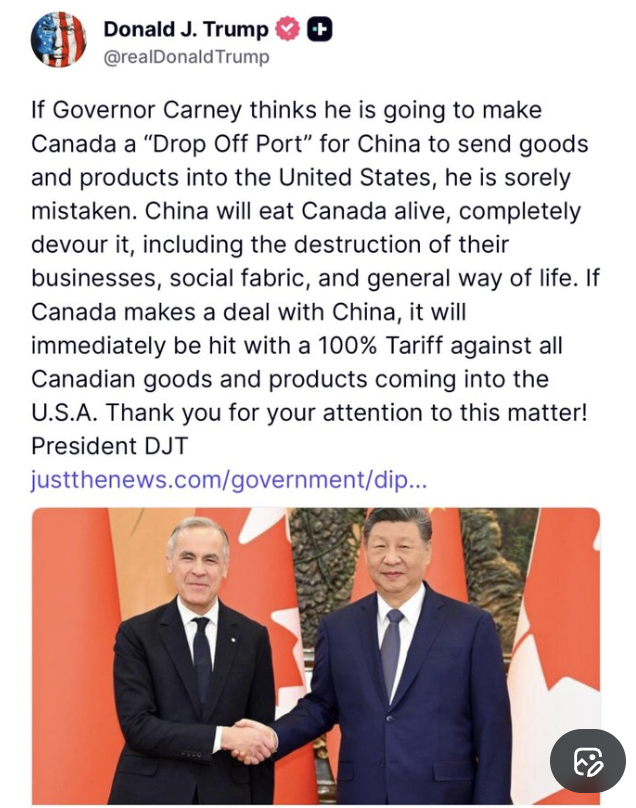
U.S. President Donald Trump’s latest threat of a 100 per cent tariff for Canadian goods has many businesses in Canada worried about what the future will hold.

“Clearly, the latest tariff threats from the US are an unhelpful development for Canada and Canadian retailers. Any threat to our economy can cause consumers and businesses to pause spending and decisions. But, we need to keep our heads about us and focus on what we can control,” said Dan Kelly, President and CEO of the Canadian Federation of Independent Business.

Dan Kelly

“As we’ve seen this past week, the US can threaten its trading partners one day and take threats away only a few days later. Canadians, and the world community, are getting used to this approach and it isn’t causing the dramatic economic swings it did in earlier months. CFIB’s business optimism numbers rose in December and January and I believe this shows that we are getting used to the incredible level of uncertainty we are facing on the trade front.

“Obviously, a 100% tariff would be a massive blow to the Canadian economy, but these aggressive announcements seldom materialize. The best thing we can all do as consumers is continue to support Canadian made goods purchased from Canadian retailers.”

U.S. President Donald Trump's social media post
U.S. President Donald Trump’s social media post

“If the Trump administration imposes 100% tariffs on all Canadian imports into the U.S. for a prolonged period, it would have a major negative impact on this country’s retail industry,” said Bruce Winder, a retail analyst and author.

Bruce Winder
Bruce Winder

“Virtually all industries that rely on the US for export would be significantly impacted. Steel, aluminum, automotive & many others. About 2/3 of Canada’s exports currently go to the U.S.

“This would cause sizeable layoffs which would drastically reduce retail spending. This reduction in retail spending would put huge pressure on retailers doing business here and large staff reductions would follow, creating a doom loop further reducing retail spending.

“However, U.S. importers & consumers would face accelerated inflation which would slow their economy & increase unemployment.”

George Minakakis, Founder and CEO of Inception Retail Group, said we should not be surprised by this threat; if anything, he is surprised it took this long.

“There are a number of fundamental issues here that directly affect consumers and businesses across Canada. First, a threat of 100% tariffs sends a clear message: that Canada is not viewed as a sovereign nation free to trade with whomever it chooses. This is not a trade disagreement; this is an attempt to dictate economic alignment through pressure rather than partnership,” he said. 

“Second, we should not forget the original motivation behind this rhetoric. It was never simply about trade balance. The underlying objective was to extract economic activity from Canada and relocate jobs, investment, and production to the United States. What began as economic pressure has now metastasized into coercive tactics. Tariffs of this magnitude do not strengthen economies; they distort them. Roughly 75% of Canada’s exports go to the United States, and about 20–25% of Canada’s exports are consumer, and retail-oriented goods, a meaningful portion. Any disruption reduces demand, weakens integrated supply chains, and puts direct pressure on Canadian jobs, particularly in retail, manufacturing, and logistics. Not to forget that 100% tariffs on Canada is more inflation to the US consumer!

George Minakakis
George Minakakis

“Canada must approach this moment calmly but clearly. Economic resilience requires diversification, competitiveness, and the ability to make decisions in our national interest, without being coerced. Strong partnerships are built on mutual respect, not ultimatums. But let’s not be naïve about this, we cannot continue to trade under these circumstances. Canada’s Prime Minister is correct, the old-world order no longer exists. Retailers will have a challenging time if these tariffs are implemented, as consumers will retreat toward economic survival, and that means that their search for value will accelerate, and discretionary spending will slow.  

“Therefore, it is important that provinces and municipalities unite in their resolve to protect Canada. The impacts of these decisions are felt first by communities: through jobs, affordability, and economic stability. Planning for these risks is no longer optional; it is responsible leadership. Canada needs to prepare economically. We are not a 51st state. We have a Prime Minister, not a Governor. Forty-one million Canadians have a voice and the economic power to defend our independence, not with anger, but with choice. Support Canada.”

Gary Newbury, supply chain expert and founder of RetailAID, said: “At this stage, the primary risk is not Canadian imports facing immediate tariffs (unless the Canadian admnstration decided to retaliate to which there is little to suggest they would currently), but Canadian exports to the United States and the knock-on effects that would flow back into the domestic retail economy. A 100 per cent tariff on Canadian goods entering the US would directly hit Canadian manufacturers and processors that rely on the US as their primary end market. Many of these firms operate inside deeply integrated North American supply chains.

“In practical terms, this often means raw materials or semi-finished components produced in Canada are shipped to the US for processing or assembly and then re-imported into Canada as finished goods. A tariff at this level would sharply increase costs and break long established cost, sourcing and processing models. For retailers, exposure would vary significantly based on how products and components are sourced and where value is added.

Gary Newbury
Gary Newbury

“Retailers anchored in genuinely Canadian-made products, where most of the cost, labour, and value are created domestically, would be far less exposed. In contrast, products dependent on cross-border processing would carry the bulk of the tariff risk, with cost inflation filtering back through supplier pricing, contract renegotiations, and product availability.

“The immediate economic impact would likely be a rapid pullback in demand. As exporters lose competitiveness and order volumes decline, production would slow quickly. That contraction would spill into employment, with layoffs accelerating the longer such a policy remained in place. Reduced household income and confidence would then feed directly into weaker retail demand across both discretionary and essential categories.

“Finally, this scenario would raise serious questions about the effectiveness of CUSMA. Currently, roughly 80 to 90 percent of goods traded across the Canada US border move tariff free. A move of this magnitude would undermine the stability CUSMA was designed to provide and force retailers and suppliers to reassess long term North American trade assumptions.”

More from Retail Insider:

U.S. Tariffs Threaten Canadian Agri-Food Exports

Tariffs & trade tensions strain Canadian consumer confidence and business outlook: Bank of Canada

From the Desk: Navigating Retail Expansion and Consumer Caution in Early 2026

As we settle into 2026, the Canadian retail landscape reveals a complex interplay between strategic expansion and cautious consumer behaviour. This week’s news highlights retailers bolstering their physical and experiential footprints while economic uncertainties temper consumer spending and confidence. From luxury watch boutiques to evolving digital experiences and emerging wellness concepts, industry players are actively adapting to meet shifting consumer demands.

Among the notable themes are the ongoing efforts to revitalise retail real estate through innovative leasing and redevelopment strategies, as well as the rising integration of technology, especially AI, in both operations and consumer interactions. These developments come against the backdrop of persistent inflationary pressures and heightened sensitivity to pricing, which continue to shape retail sales and customer experiences. Moreover, January’s mid-month period reminds us to keep an eye on event-driven retail and community initiatives that can drive foot traffic during winter months.

This week also coincides with post-holiday season reflections and planning ahead for Valentine’s Day, marking a pivotal moment for retailers to recalibrate marketing, inventory, and staffing strategies in response to evolving consumer patterns and economic signals.


Retailer News

Swiss watchmaker Tissot’s launch of its first standalone boutique in Canada at the Montreal Eaton Centre underscores a strategic push towards premium, experience-driven urban retail environments. Offering personalised service and exclusive product access, Tissot’s move from wholesale to direct consumer engagement exemplifies how heritage brands increasingly prioritise immersive retail settings amid competitive North American markets.

Meanwhile, Galerie de Bellefeuille is eyeing broader North American reach with openings in New York’s Midtown and Miami’s Wynwood Art District, enhancing cross-border cultural and retail dynamics, as detailed in its expansion report here. This strategic entry into key U.S. art hubs reflects how retailers aligned with cultural assets can create distinct destination experiences, benefiting landlords and tenants focused on upscale, lifestyle-driven shopping.

On a larger scale, Zellers is energizing its Canadian comeback by planning national growth following a successful debut at Edmonton’s Londonderry Mall, as discussed in the article covering this revival. Emphasizing curated assortments and operational sustainability, Zellers’ phased approach reflects a pragmatic response to evolving department store voids and aligns with landlords’ interests in repurposing anchor spaces amid marketplace shifts.

According to Statistics Canada, retail sales experienced a 1.3% uptick in November, buoyed by food and beverage sectors recovering from past labour disruptions. Yet economists warn of volatility and a potential December decline, signalling retailers and real estate investors should approach demand projections cautiously in this uncertain climate.

The WOW Digital 2026 study further highlights the rising prominence of online retail channels, with consumer preference rewarding retailers providing dependable, user-friendly digital experiences. This transitioning digital landscape challenges traditional brick-and-mortar formats, pushing retailers to consider hybrid strategies that enhance customer engagement while managing operational costs.

Consumer sentiment reports such as the Bank of Canada survey reveal continued caution among Canadians facing job security fears and inflationary pressures, dampening spending plans. This consumer prudence, coupled with rising prices documented in the Statistics Canada inflation report, creates a challenging backdrop that necessitates nimble retail strategies and reinforces the importance of value-driven offerings.

Retailer People News

Leadership shifts are shaping retail brand trajectories, illustrated by EQ3’s appointment of Jim Hunt as President to steer profitability and growth, as covered in the announcement here. Hunt’s long tenure underscores the value of experienced leadership focused on sustainable brand evolution in home furnishings retail.

Michael Kehoe’s insights into Canada’s retail shakeup highlighted in this video remind stakeholders of the critical transformation underway as traditional department store models decline and mall spaces undergo reinvention. His commentary points to opportunities amid disruption, illustrating the importance of flexibility in retail real estate management and leasing approaches.

On the regulatory front, new Ontario job posting regulations effective from January 1 are reshaping retail hiring landscapes by enforcing pay transparency and fair recruitment practices, as detailed in the article covering these rules. This evolution demands retailer agility in human resource management and may influence employer branding and labour market competition.

Retailer Op-Eds

Sylvain Charlebois’s analysis of Canada’s food inflation provides a sobering view on structural challenges driving the highest food price increases among G7 peers. The piece argues that policy and supply chain inefficiencies, rather than retailer profiteering, primarily fuel these pressures—an important perspective for retail and real estate professionals navigating consumer affordability and cost planning.

This op-ed contextualizes the broader economic environment influencing consumer behaviour and operational costs, reinforcing findings from recent retail data on spending caution and price sensitivity. It’s a call to action for industry leaders to work collaboratively in addressing systemic issues impacting retail ecosystems.

Such thought leadership underscores the intertwined nature of policy, consumer trends, and retail strategies, highlighting the need for informed, proactive responses to drive resiliency and innovation across the sector.


Editor’s Take

This week’s retail digest underscores a market at a pivotal juncture — while expansion and experiential innovation are in full swing, consumer caution and economic headwinds persist. The launch of Tissot’s boutique and Galerie de Bellefeuille’s U.S. growth demonstrate confident brand investments in destination retail and cultural engagement. Yet Statistics Canada’s sales data and the Bank of Canada survey reveal consumers remain cautious, balancing budgets amid inflation and uncertainty.

Adapting to this environment requires operational agility and a keen focus on integrating technology such as AI, as highlighted by the WOW Digital study and consumer openness to automated shopping. Meanwhile, evolving workplace regulations in Ontario will reshape recruitment competitiveness, linking workforce considerations tightly to retail success.

Finally, the op-ed on food inflation reminds us that retailers must navigate not only market forces but structural challenges beyond their immediate control. Strategic collaboration between retailers, landlords, policymakers, and communities will be paramount in building a resilient, consumer-responsive retail environment for 2026 and beyond.

This Week’s Articles

Retailer News

Retailer People News

Retailer Op-Eds

News From Around the Web