Home Blog Page 311

How Logistics Leaders Are Rethinking Warehouse Infrastructure in 2025

The modern warehouse is no longer a static space defined solely by square footage and shelving. In 2025, it will be a dynamic, data-driven environment in which the physical structure must be as agile as the software that controls it. 

For logistics leaders in retail and B2B supply chains, the conversation is shifting from purely digital investment to re-evaluating core infrastructure. This is less a retreat from automation than acknowledging that its benefits only materialise when the physical environment keeps pace.

Automation and artificial intelligence are rapidly transforming fulfilment models, but physical assets such as racking systems and modular containers remain the backbone that either enables or constrains these digital advances. 

Early adopters are standardising on heavy-duty plastic pallet boxes to stabilise load integrity across automated flows.

A high-functioning warehouse today requires the precision of a manufacturing plant, the adaptability of a retail showroom, and the reliability of critical national infrastructure. Achieving this balance is no small task. 

It involves synchronising the capabilities of conveyor systems, container standards, and loading bays with software-driven order sequencing and predictive inventory management. The pressures shaping these decisions are not theoretical. 

E-commerce order volumes continue to push daily throughput limits, while omnichannel retail models introduce variability in order profiles and picking priorities. Seasonal surges, flash promotions, and supply chain disruptions demand operational agility. Software helps, but the physical infrastructure must be able to adapt just as quickly.

This is why the physical re-engineering of layouts, workflows, and material handling systems is climbing back up the strategic agenda for logistics directors. In this climate, container logic, aisle configuration, and load-handling equipment are treated as competitive assets rather than background infrastructure.

Layout, Flow, and Container Logic

When that flow is disrupted by poor space planning, mismatched container specifications, or bottlenecks in handling equipment, the consequences are rarely isolated. Delays at one stage create knock-on effects that can impact picking accuracy, loading schedules, and ultimately delivery performance. 

For high-throughput facilities, even small inefficiencies can multiply into significant operational costs over time. An optimised facility takes a holistic view, treating physical layout and digital order management as interdependent. 

Load sequencing, aisle configuration, and picking zones are planned alongside container compatibility and handling capacity. In many modern operations, modular logistics systems are central to this approach. 

Adjustable racking, movable workstations, and uniform container footprints allow managers to reconfigure floor space in hours rather than days. This flexibility is vital in sectors that face seasonal spikes, product launches, or promotional events, where order volumes and SKU profiles can change almost overnight.

As logistics systems grow in complexity, durable boxes infrastructure is becoming just as essential as data visibility. In this environment, the choice of assets such as heavy-duty plastic pallet containers is not incidental. 

Their uniformity supports automated handling, while their structural integrity reduces the risk of load failure in high-volume operations, a critical factor for compliance in sectors such as food distribution and pharmaceuticals. By integrating such containers into the core design of a warehouse, operators can improve both flow accuracy and safety compliance. 

In high-performing facilities, these design elements are paired with modular systems that allow rapid reconfiguration of space. This flexibility allows operators to adjust layouts quickly and with minimal disruption.

The Role of Standardisation

Standardisation in container and pallet systems is a foundational principle of scalable fulfilment. The concept is straightforward: when every unit load conforms to a predictable specification, the warehouse becomes more predictable. 

Predictability in this context is not about eliminating flexibility, but about creating a framework where automated equipment, manual handling, and digital control systems can operate without constant adjustments or workarounds. 

This operational consistency allows facilities to scale throughput without scaling complexity. The benefits go well beyond matching physical dimensions. Standardisation shapes the entire flow of goods, from inbound receipt to outbound dispatch. 

Inbound shipments that arrive in pre-approved pallet formats can be moved directly into storage or picking areas without time-consuming re-palletising. Outbound consignments can be built with minimal repacking, ensuring orders move swiftly through staging areas. 

This reduction in manual intervention lowers labour costs, shortens dwell times, and allows automated sortation systems to operate at maximum speed and reliability. In high-volume operations, these incremental efficiencies can add up to hundreds of labour hours saved each week.

Standardisation also creates clearer interfaces between different parts of the supply chain. Suppliers, carriers, and warehouse operators working from the same set of container specifications reduce the likelihood of mismatches that cause delays or additional handling. 

As highlighted by DHL’s analysis of supply chain standardisation, standardised, modular logistics solutions can lift productivity by nearly one-fifth while boosting on-time delivery to over 95 percent.

It fosters smoother cross-docking, where goods bypass long-term storage entirely, and supports more accurate load planning for outbound transport. In sectors such as grocery or pharmaceuticals, where product freshness or integrity is critical, these time savings can directly improve quality and compliance outcomes.

Over the longer term, standardisation contributes to cost stability. Facilities that invest in robust, reusable containers and pallets insulate themselves from volatility in single-use packaging markets. 

This not only reduces exposure to sudden price increases, but also lessens the environmental footprint of operations. A ten-year lifecycle for high-quality, reusable equipment can spread capital costs over a far greater number of shipments, delivering measurable savings and a more sustainable cost base. 

When integrated into broader warehouse infrastructure strategy, standardised systems become a quiet but powerful driver of both efficiency and resilience.

Industry Examples of Infrastructure-First Thinking

Several major UK and European retailers are already embedding infrastructure upgrades into their logistics strategies. A prominent grocery chain recently re-engineered one of its regional distribution centres to align racking heights, aisle widths, and container types with automated shuttle systems. This change increased throughput capacity by 18% without expanding the building footprint.

Similarly, a pan-European fashion retailer replaced mixed-material pallets with a unified pool of high-durability plastic units. The shift eliminated a recurring issue of pallet breakage during high-speed sortation, improving both safety and product integrity. While the upfront investment was significant, the retailer reported payback within three years through reduced damage claims and lower pallet procurement costs.

Such examples illustrate that physical infrastructure decisions can deliver measurable gains in operational efficiency and service reliability, gains that software alone cannot achieve.

Sustainability as an Operational Imperative

Sustainability targets are no longer optional in supply chain design. Regulatory frameworks, investor expectations, and customer demand are all pushing logistics operators to reduce their environmental footprint.

Within warehouse operations, one of the most immediate and measurable opportunities lies in shifting from single-use or short-life assets to durable, reusable alternatives. This is not simply a matter of optics; it is about embedding environmental responsibility into the operational fabric of fulfilment networks so that sustainability and efficiency reinforce one another.

Stackable, standardised containers represent one of the clearest routes to achieving this integration. Their reusability reduces the volume of disposable packaging sent to landfill or recycling, while their uniform sizing ensures efficient use of space in both storage and transport. 

This compatibility extends to automated handling systems, which can be calibrated once for a consistent footprint rather than reprogrammed for varying sizes and shapes. Over time, these efficiencies compound, lowering the environmental impact per unit moved and reducing the total energy required for material handling.

An equally important factor is how these assets perform within reverse logistics systems. Reusable containers are designed for repeated cycles of use, retrieval, and redeployment without significant degradation in quality or performance. 

This allows operators to recapture asset value on every return journey, turning what was once waste into a repeatable resource. The ability to integrate these returns seamlessly into existing distribution flows can reduce empty backhauls and support more balanced transport utilisation, further cutting emissions.

Suppliers like Alison Handling support logistics leaders with durable, scalable container solutions aligned with modern fulfilment systems. By embedding reusability into the physical design of a warehouse, companies can make sustainability a structural outcome rather than a separate initiative.

Suppliers as Strategic Partners

The procurement of warehouse infrastructure is no longer a transactional decision. In a volatile market, suppliers with deep expertise in modular design, container lifecycle management, and load optimisation can play a strategic role. 

They help logistics directors evaluate not only the purchase cost of equipment, but its total cost of ownership, compatibility with automation, and fit with long-term capacity planning. In the UK, partnerships with suppliers who can deliver at scale are especially valuable when demand surges unexpectedly. 

Access to consistent, standardised assets ensures that expansion can occur without compromising efficiency. For some operations, this means working with established providers who maintain extensive inventories and design products to integrate with automated handling systems.

By treating suppliers as part of the operational design process, warehouse managers can align infrastructure investments with broader strategic goals, from sustainability to throughput optimisation.

The ROI of Durability

The economic case for investing in high-quality, long-life warehouse assets is compelling. Facilities that rely on low-durability pallets and containers often find themselves locked into a cycle of frequent replacement, each instance adding procurement cost, creating unplanned downtime, and disrupting operational flow. 

Disposal of broken or degraded assets also introduces waste management costs, both in financial and environmental terms. By contrast, selecting equipment that is engineered for longevity allows organisations to spread capital expenditure over many years of use, reducing total cost of ownership and improving budgeting accuracy.

The operational benefits are equally clear. Facilities that replace wooden pallets with heavy-duty plastic pallet boxes frequently report a reduction in annual asset loss and damage. Unlike timber, these containers do not splinter or absorb moisture, which can lead to structural weakening over time. 

Their impact resistance helps protect products in both chilled and ambient environments, reducing the likelihood of spoilage during storage or transit. In industries such as food distribution or pharmaceuticals, where product integrity is tightly regulated, this durability can directly support compliance and reduce the risk of costly recalls.

Resilience in handling equipment also translates into more predictable maintenance schedules and fewer operational disruptions. When assets can be relied upon to perform consistently, managers can focus on optimising processes rather than troubleshooting equipment failures. 

The stability and uniformity of long-life containers also enable tighter integration with automated handling systems, which rely on precise dimensions and load characteristics to perform at maximum efficiency. 

OECD International Transport Forum on port automation research shows that productivity and handling consistency rise when physical infrastructure is standardised. This alignment creates a virtuous cycle in which robust physical assets and advanced automation reinforce one another’s performance.

Integrating Infrastructure with Technology

The convergence of physical and digital infrastructure is one of the defining characteristics of warehouse operations in 2025. As the boundaries between operational technology and information technology continue to blur, physical assets are no longer passive components in the supply chain. 

Containers, pallets, and racking systems are now fitted with embedded sensors. These track location, movement, and environmental conditions such as temperature or humidity in real time.

This constant stream of information feeds directly into warehouse management systems, enabling greater operational visibility and faster, more accurate decision-making. In third-party logistics environments, a 3PL warehouse management system plays a key role in consolidating this data across multiple clients and sites, ensuring consistency and scalability in operations. This integration has several practical outcomes.

Real-time monitoring supports predictive maintenance, allowing operators to identify and address potential equipment failures before they disrupt operations.

Managers can refine layout designs by analysing usage patterns to minimise unnecessary movement or congestion, ensuring that every metre travelled within the facility adds value to the fulfilment process. 

The same data can be used to enhance load sequencing, match container selection to specific product types, and dynamically adjust picking zones in response to order profiles. The most effective supply chains are those in which physical assets are fully embedded into the digital decision-making loop. 

This requires a deliberate alignment between container systems, racking configurations, and the technologies used to manage them. Assets must be compatible with automation platforms, Internet of Things (IoT) devices, and advanced analytics tools.

A mismatch between the physical and digital layers can slow down even the most advanced warehouse software, while a well-aligned infrastructure can amplify its benefits across the entire network. 

Insights from McKinsey’s research on digital-twin warehouse design show that modelling physical layouts and workflows before deployment can prevent costly misalignment and improve efficiency by up to 25 percent. 

The aim is to ensure every movement in the warehouse, whether by a human operator or an autonomous vehicle, is physically efficient and digitally visible. This dual optimisation delivers higher throughput, reduces error rates, and strengthens resilience against unexpected demand shifts or supply chain disruptions. 

In a competitive market where speed, accuracy, and adaptability are closely linked, the ability to integrate the tangible and the digital is becoming a decisive factor in operational success.

Physical Upgrades as Strategic ROI

For many logistics directors, the conversation around infrastructure has shifted from short-term fixes to long-term resilience. Rising energy costs, stricter compliance requirements, and the constant pressure of e-commerce peaks mean that physical assets are no longer treated as background equipment. They are now viewed as strategic levers for efficiency, sustainability, and scalability, on par with investments in software or automation platforms.

In the past decade, warehouses have seen significant investment in management systems, robotics, and predictive analytics. Yet, as highlighted in this analysis of how modern technology is transforming warehousing, many facilities still operate within physical layouts that were designed for a different era.

Operational bottlenecks often arise not from the software layer, but from outdated layouts and incompatible container systems that undermine efficiency gains from automation. The return on investment for upgrading warehouse infrastructure is measurable in several ways.

First, optimised layouts reduce travel time per pick, directly impacting throughput. Second, standardised containers minimise void space in racking and transport, reducing fuel costs and improving cubic utilisation. 

Third, durable assets reduce the frequency of replacement and the downtime associated with equipment failure. For large-scale retailers, these changes also affect upstream and downstream partners. 

A supplier operating with inconsistent container dimensions can introduce inefficiencies across the entire network. This is why forward-looking logistics directors are rethinking infrastructure as an interconnected asset class, not a fixed expense.

These changes in the physical environment naturally lead to a bigger question: how does the entire layout and flow of a warehouse support, rather than slow down, modern fulfilment?

Looking Ahead

The next phase of warehouse evolution will see greater convergence between engineering disciplines, sustainability science, and digital analytics. Logistics leaders will increasingly view their facilities as living systems, where physical design, technology integration, and operational policy must work together.

By rethinking layouts, standardizing container systems, and embedding resilience into every asset, logistics leaders can meet rising expectations for speed, accuracy, and sustainability and set the pace for the next generation of supply chain performance.

Exploring the TEMU Influencer Program: A New Way for Creators to Earn  

Hello, friends!

I recently discovered an amazing shopping website, Temu. They have a wide selection of products, from clothing to home goods, and the prices are incredible!

Temu is an e-commerce company that connects consumers with millions of merchandise partners, manufacturers, and brands with the mission of empowering them to live a better life. Temu is committed to bringing affordable products onto its platform to enable consumers and merchandise partners to fulfill their dreams in an inclusive environment. 

To expand its reach, Temu launched the Temu Influencer Program—its official creator partnership initiative. For digital creators looking to monetize their influence, the TEMU Influencer Program presents an interesting opportunity. Similar to how other major platforms have developed creator partnerships, TEMU is now offering influencers a structured way to earn through product promotions and referral links.

As a Temu Influencer, you can receive free product samples from Temu, earn up to 20% commission (the commission rate applicable to the influencer shall be determined based on the country/region associated with their registered account at the time of participation), and get exclusive opportunities for sponsored promotions and boosting options. For those already familiar with  affiliate marketing or social media e-commerce, TEMU’s approach will feel intuitive. Creators can earn through commission-based referrals, with the potential to scale their earnings as their audience grows. The platform provides promotional tools and resources to help creators effectively showcase products to their followers. 

“-My name is Katharina, I’m 39 years old and I’m so happy to be part of the temu team. 🥰

Temu is a good platform for making money. My efforts have been rewarded. My content has been seen by more people and can be rewarded. I hope that this platform can be known by more people. Welcome more people to join Temu influencer program. My redemption codes are used frequently and are very popular in the community!

On this website, you can find everything you need, from fashion to home! We shop a lot ourselves and I’m happy to share with you!”

— Katharina Walter, TEMU Creator,earn 10000+USD

” I am incredibly grateful for the success I’ve experienced in affiliate marketing. Starting from scratch, I’ve been able to build an impressive following and generate millions of views on my videos. I owe a huge thanks to Temu and their amazing team for their continuous support throughout this journey. The Temu website itself has been an absolute game-changer, making it easy and seamless to promote their products. This incredible opportunity has truly exceeded my expectations, and I’m excited to continue growing, reaching more viewers, driving sales, and enjoying the process every step of the way.”

— Balkan_Hauls, TEMU Creator,earn 10000+USD

“I’m Mohammed Al-Humaiqani, a social media content creator with over 500,000 followers. One day, I decided to join Timo’s influencer program because I could earn money from my phone while at home.

I advise all content creators to join Temu’s influencer program to earn commissions, rewards, and generous profits. I consider Temu’s influencer program one of the best free profit-making programs.

– During my participation in Temu’s influencer program, I earned profits of 81,400 Saudi riyals.””

— Mohammed Al-Humaiqani (Mohomx), TEMU Partner Creator, earn 10000+USD 

In general, TEMU’s influencer program is not only suitable for creators with a large fan base, but also provides fair and potential profit opportunities for small and medium-sized or even newly established creators. If you want to turn your creative passion into tangible income, Temu influencer program is undoubtedly a good platform.

Also, let me tell you an interesting thing——I also got a discount code from Temu, why not come and experience Temu’s activities for yourself! Exclusive discount code: ack641880

Canadian Retail News From Around The Web For August 22, 2025

Canadian Retail News From Around The Web

News at a Glance

Retail Insider is streamlining its Canadian retail news from around the web to include a handful of top news stories that can be viewed quickly during the day. Here are the top stories from the past 24 hours.

Court monitor says it doesn’t support Hudson’s Bay plan to sell leases to Ruby Liu (The Canadian Press)

Billionaire David Thomson wants to buy Hudson’s Bay charter, donate it to Manitoba Archives (The Canadian Press)

RioCan Eyeing Buyout Of Hudson’s Bay From Georgian Mall, Oakville Place (Storeys)

Loblaw opens three new discount locations in one day, continuing discount strategy investmen (Grocery Business)

Cross-border traffic ticks up slightly in July, but duty-free shops still struggling (CTV)

Visionary says Edmonton needs to look elsewhere to re-imagine its downtown mall (Taproot)

Dining and grocery spaces a bright spot in Victoria’s retail rental market (Saanich News)

Bonnis Properties’ $140M sale of Granville and Robson site sparks redevelopment speculation (BIV)

New indoor pickleball courts popping into Capilano Mall in North Vancouver (North Shore News)

Quebec liquor board prepares to destroy $300K worth of American alcohol (CBC)

Inside the social media strategy behind Langley’s viral corner store (BC Business)

One TikTok video got this Canadian business into 400 locations of a major U.S. department store (Globe & Mail)

Hundreds of Oasis fans line Queen West to shop pop-up merch store ahead of Toronto shows — especially the exclusive Adidas football jersey (Toronto Star)

Orangeville Dairy Queen sells record-number of Blizzards for Miracle Treat Day (Orangeville Citizen)

The Body Shop Canada enters new era as 100% Canadian, founded in Britain

Photo: The Body Shop Canada

The Body Shop Canada has entered a pivotal new chapter with its acquisition by Serruya Private Equity.

And the brand has unveiled a focused strategy to expand its Canadian retail footprint, reimagine in-store experiences, and deepen connections with Canadian consumers.

“Being Canadian-owned allows The Body Shop Canada to move with greater agility, tailoring our approach to meet the values and expectations of Canadian consumers,” said Michael Roden, President of The Body Shop Canada. “With the support of a strong executive team, I am proud to be guiding The Body Shop Canada into this new era. Our focus is on creating immersive experiences, both in-store and online, that reignite passion for the brand and welcome the next generation of customers.”

Michael Roden
Michael Roden


Today, The Body Shop Canada operates 64 stores nationwide and is investing in an enhanced
omnichannel strategy. Since January 2025, the brand has opened two new locations in Ontario at
Sherway Gardens and Lime Ridge Mall and will debut a flagship store in Vancouver’s Pacific Centre in
early November 2025. A new store has opened in CrossIron Mills in the Calgary area. New store designs feature skin consultations, interactive product discovery zones, and community-driven spaces.

“As part of its growth plan, The Body Shop Canada will introduce new collections alongside its hero products, beginning with the launch of the premium Spa of the WorldTM, Sweet On You Mist collection, limited-edition Sugar Pumpkin, and many more exciting products to come. While proudly Canadian-owned, all products will continue to be developed and manufactured in Europe, ensuring consistent global quality and ethical sourcing standards. These launches mark an important opportunity to deepen connections with loyal customers and attract new audiences, reinforcing the brand’s position as an ethical leader in the Canadian beauty market,” said the company.

The Body Shop first entered Canada in 1980, opening its inaugural store in Toronto. In March last year, The Body Shop Canada, the Canadian subsidiary of the global beauty brand with 105 stores across the country, announced it had commenced restructuring proceedings by filing a Notice of Intention (NOI) to Make a Proposal pursuant to the Bankruptcy and Insolvency Act (Canada). It will be closing 33 Canadian stores, it said at the time.

Photo: The Body Shop Canada

In an interview with Retail Insider, Roden  said The Body Shop has been in Canada for more than 45 years.

“It has a loyal, a loyal customer and we want to obviously continue to stay connected with that customer. But where we have an opportunity is to be able to connect with the next generation, the younger generation, whot heir parents bought from The Body Shop when they went to university or they went to college. So I think the one opportunity is definitely through our products. We are obviously testing some new product that will be looking at the younger audience,” explained Roden.

“I think number two, definitely there’s an opportunity for us to be more seen in different places, like some of the initiatives that we’re working on. We’re already in Shoppers Drug Mart. We are expanding our brand through third party business outside of just our core business. Shortly we will be launching on Amazon Canada. We have reinstated the online business that was shut down more than a year ago.

“So really we have an opportunity to really make The Body Shop more accessible and convenient while continuing to build on a legacy of ethical, sustainable, product and cruelty-free beauty. We want to live by our values, but we have an opportunity to be expanding.

“And, obviously being now Canadian owned, we also have the opportunity to really speak to our Canadian audience, our core audience here where in the past a lot of the direction came out of the UK. Still the product is out of the UK. We take direction from them but really we are our own business now, so it’s really up to us on how we want to tailor the business through the marketing, through the product and through the customer experience in our stores.”

Roden said the brand still look at retail brick and mortar as an important part of its business, but it’s also open to having diversity and diverting certain parts of the business into new channels

The company was founded in 1976 in Brighton, England by Dame Anita Roddick. Since its beginning, The Body Shop said it has been a pioneer of ethical beauty, offering high-quality, innovation-led skincare, body care, haircare and make-up made with natural, fairly traded ingredients from around the world.

Roden is a seasoned executive in the retail industry who has previously served as CEO of Thrifty’s Inc. (division of YM Inc.), leading large-scale store rollouts, brand repositioning, and operational turnarounds.

“Roden brings deep expertise in market-specific strategy, omnichannel growth, and operational excellence, with a focus on integrating customer experience across physical and digital platforms to drive sustained growth,” said the company.

Roden has been with The Body Shop Canada February 1 when he was brought in to be a consultant to help with the reorganization of the brand. In early June, he became President of the brand.

Related Retail Insider stories:

Canadian retail remains resilient despite tariffs and HBC closure: CBRE

Iconic Former Hudson's Bay Company (HBC) Warehouse on Water Street in Gastown in downtown Vancouver in April 2023. Photo: Lee Rivett

A trade war and the closure of Hudson’s Bay haven’t spelled widespread problems for the Canadian retail industry. Instead, according to CBRE’s new H1 2025 Retail Rent Survey, retail fundamentals have continued to hold up and perform remarkably well amid the challenges.

Retail deals are taking longer to close but are still getting done, although with greater scrutiny. Tenant demand remains healthy with leasing activity seen in almost all sectors, particularly health and wellness, fitness, grocery and restaurants. And while consumers have tightened discretionary spending, they continue to make purchases in a more intentional manner, said the report which was released on Thursday.

Alex Edmison
Alex Edmison

“The long-term trajectory remains positive,” said CBRE Senior Vice President Alex Edmison. “Canada’s population continues to grow and, save for HBC-anchored shopping centres, supply of quality retail space remains constrained.

“We anticipate vacancy will remain low into the foreseeable future and rental rates for quality properties will continue to appreciate at a modest rate. The space left by HBC will take some time to be leased but we are seeing healthy levels of interest and leasing activity around most locations.”

Here are some other takeaways from CBRE’s Retail Rent Survey:

  • There continues to be a marked slowing in rental rate appreciation across the country. Rent growth was recorded in just 16 of the total 120 retail format types or key urban areas tracked in the survey.
  • Four of 11 markets reported no change in rents over the last six months.
  • Unenclosed community centres experienced escalating rents in four markets, the most of any retail format, followed by neighbourhood centres, with increases in three markets.
  • While most focus has remained on suburban sites, urban retail nodes are still experiencing demand and interest. Four key urban retail nodes across three markets noted increased rental rates.

Here are the most active retailers and growing segments for 2025, according to CBRE:

Health & Wellness – Strong growth is being driven by evolving consumer preferences that prioritize holistic wellbeing. Demand comes from fitness gyms, fertility centres, cosmetic enhancement clinics, preventative medicine, and traditional health practitioners. Recent deals include Equinox’s third location in downtown Toronto and Evolve Strength’s new flagship at The Post in Vancouver. Momentum is coinciding with office landlords repurposing underutilized podium levels. Large-format HBC spaces are also emerging as attractive options for these tenants.

  • Restaurants – Faced with eroding margins and profitability, restaurant operators are increasingly favouring second-generation space to save on high construction and fit-out costs. Urban landlords are taking on some of these expenses through tenant allowances for extensive buildouts. Suburban markets are seeing robust restaurant activity especially where they can capture all-day traffic from morning to late night. With consumers being more conscientious of their spending, overall experience and atmosphere are huge drivers for the restaurant sector.
  • Big Box – Big box vacancy across the country remains low, with major players such as TJX, Value Village and Canadian Tire taking most prime locations. Availability of box space will increase in the second half of 2025 and into 2026 with HBC units hitting the market. There is strong interest in most of these locations, however most will take time to absorb as landlords re-align the spaces to match the long- term vision for their shopping centres.
Source: The Well
Source: The Well

Some of the notable retail trends CBRE has identified to watch for in markets across Canada:

  • Vancouver – Anchor tenants, apparel and QSR continue to drive demand throughout the region with the likes of T&T Supermarket, Fitness World, Adidas and Diptyque leading the charge. Former Hudson’s Bay stores, representing 1.0 million square feet across Metro Vancouver, present great opportunity.
  • Calgary – The daycare rollercoaster continues with the Province of Alberta now limiting the number of licenses being approved for for-profit groups. This has not slowed demand. Despite often significant renewal rate increases most daycare tenants are renewing, with some spaces coming back to the market where tenants cannot afford recalibrated rents.
  • Toronto – Toronto’s retail leasing landscape has been robust with new deals occurring in food and beverage, fashion and luxury and contemporary fashion segments. Quality space is in short supply and rents continue to appreciate in the hottest nodes. Yorkdale continues to welcome first-to-market entrants. The latest is Gentle Monster, a Korean eyewear label. In Bloor-Yorkville recent entrants include Luca Faloni, Loro Piana and Eleventy. Brands continue to flock to the area.
  • Ottawa – There has been a small increase in availability in quality power centres, community and neighbourhood plazas. Rents continue to remain high with minimal inducements offered by landlords. An increasing number of 5,000-20,000 square foot spaces are becoming available with greater difficulty in finding new tenants with typical users in this size range citing caution due to tariffs and other economic uncertainty. Entertainment based users are the most interested in pursuing spaces of this size.
  • Halifax – Supply remains relatively limited for both existing and new product, with strong demand coming from food and beverage tenants. Retail plazas with onsite parking are experiencing robust levels of demand. Limited supply and little turnover within these centres have meant that any vacancy that pops up is quickly backfilled.

Related Retail Insider stories:

RioCan’s National VP of Leasing shares strong outlook for retail amid tight market conditions

Toronto Stock Yards Village
Toronto Stock Yards Village, image via RioCan

Retail leasing across Canada continues to show strength, with high occupancy and growing demand from necessity-based and traffic-driving retailers, according to Moshe Batalion, Vice-President of Leasing – National at RioCan.

Asked to provide a national perspective on leasing, Batalion emphasized market tightness and minimal new supply. “The current market conditions remain tight. The market remains a very competitive market. We’re seeing rents continue to rise just given that very little retail is being built.”

Moshe Batalion
Moshe Batalion

When asked about new construction, Batalion confirmed, “New construction for the most part is muted.” This, he added, is “across the country.”

On the development front, RioCan is focused on ongoing projects rather than new builds. “Brand new projects? No. We’ve got out in Calgary East Hills,” he said. “We’ve built out a number of phases and we’re working on building out a few other. There’s a lot of demand in that project particularly.”

In Ontario, the company is seeing similar traction. “We’ve also got a project in North Oshawa called Windfield Farms. We built out about 350,000 square feet already. And again, much like East Hills, a lot of interest in us building more there.”

Windfield Farms
Windfield Farms

When asked about which segments are showing the most growth, Batalion pointed to staples. “Right now the necessity-based retailers, basically groceries, pharmacies, banks. We’re seeing a lot of expansion there. And those are really the tenants that we’re focusing on.” 

He added, “And then you’re also seeing, you the traffic driving tenants, like fashion, home goods, fitness. Definitely. There’s a lot of appetite from those tenants.”

Quick-service restaurants (QSRs) are also making waves. “QSR drives a lot of traffic,” said Batalion. 

Asked about regional differences in strength, Batalion was clear: “I think right now all pockets are, are extremely strong. If you look at our occupancy rate, we’re at an almost an all-time high. We’re 97.5, and so all markets are kind of in that 97 and above occupied.” 

Recently, RioCan Real Estate Investment Trust announced it was cutting financial ties to five properties held in its joint venture Hudson’s Bay.

Those properties were the Square One Shopping Centre in Mississauga, Ont., Scarborough Town Centre in Toronto, the downtown Calgary HBC store, and the Carrefour Laval and Promenades St-Bruno locations in Quebec.

On the topic of the ongoing situation regarding HBC properties, Batalion kept within the bounds of public disclosure. 

“With us being in front of the courts right now, I really can’t say much other than what you know, has already been disclosed on our earnings call.” 

However, he did add: “We will only allocate capital to those buildings where we can demonstrate an acceptable return on investment. My team is actively pursuing backfill solutions for several of the locations that are already in the RioCan operating portfolio. But given the expertise of my team and the strength of our relationships with the retail tenants, we’re well positioned to secure suitable replacement tenants for those properties. And there is considerable interest.
 

“I can also say that those rents that were paid by HBC were well below market.”

The Well, Toronto
The Well, Toronto

Batalion also pointed to a major industry shift worth watching: the plateau of e-commerce. “The one thing we have seen is that e-commerce has plateaued, really making retail a hybrid of online and physical shopping. Tenants have realized they now need to expand their physical locations alongside their digital presence. So I think that is a key and very important to our business right now.”

Related Retail Insider stories:

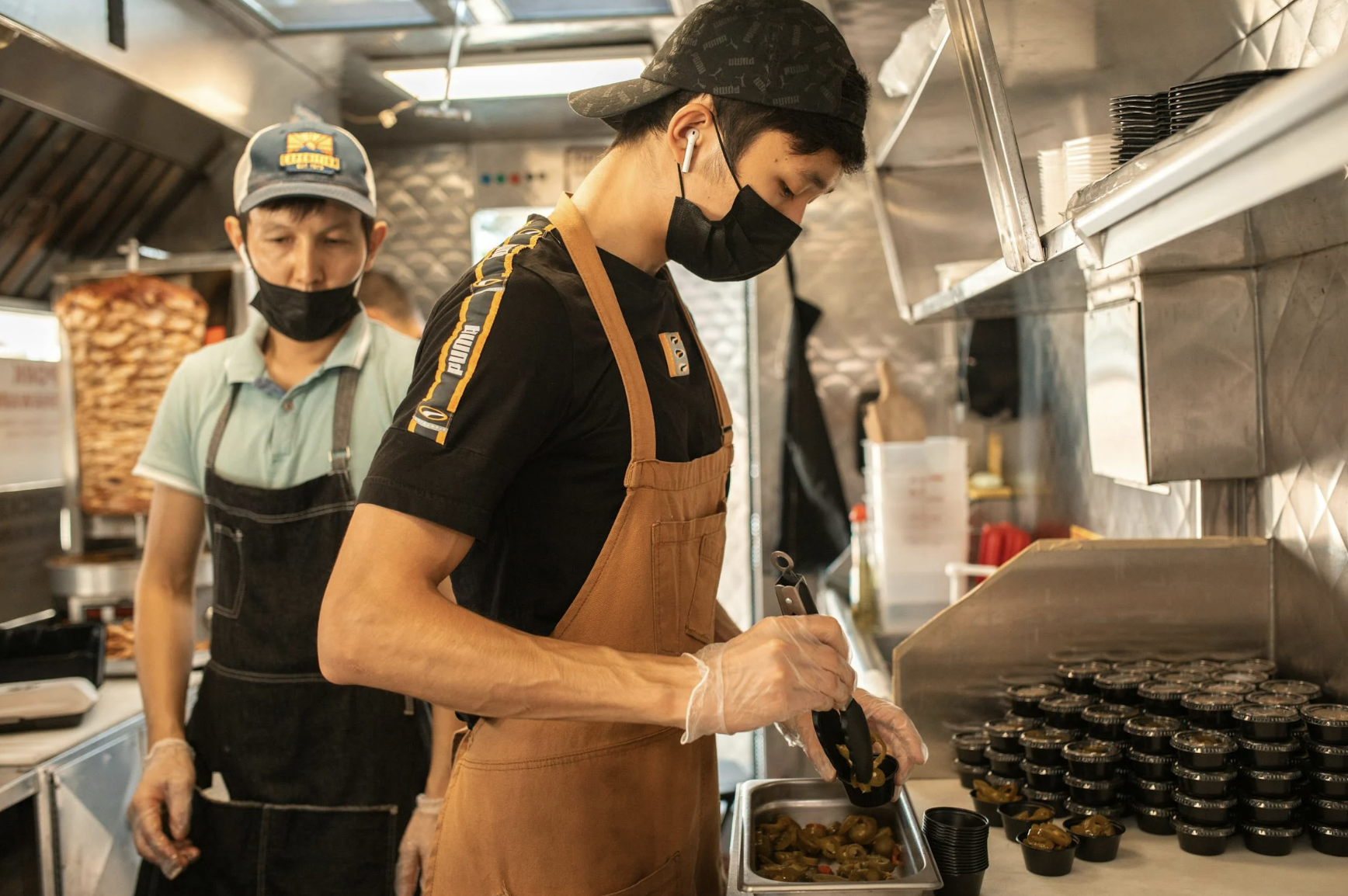
Tahini’s founder Omar Hamam shares entrepreneurial journey from Egypt to Canadian shawarma success

Tahini's
Tahini's

For Omar Hamam,, the path to business ownership wasn’t linear but it was driven by persistence, family, and a fascination with how things work.  Now the founder of the fast-growing Tahini’s restaurant chain and Alex Food Service, Hamam’s story begins far from the bustling kitchens of his London, Ontario-based enterprise.

“I was born in Windsor, Ontario,” said Hamam. “And I went to school in Winnipeg, Manitoba. I’ve been living in London since 2011.”

A graduate of the University of Manitoba with a degree in business, Hamam didn’t initially set out to be a restaurateur. “I was in engineering for about four years and I was almost done.I hated engineering. I wasn’t a good one for sure,” he said. “I always knew I had an admiration for business owners. To me, this is like taking me to a candy shop. I love seeing how a business works and hearing the stories of how people started their business.”

Omar Hamam
Omar Hamam

The shift from engineering to business wasn’t just academic. It meant breaking with family tradition. “My dad’s an engineer, a professor at some point. He has his PhD in engineering, and half my family are engineers,” said Hamam. “In Egypt, the mentality is kind of like, okay, you have to have a good profession. You have to be either a doctor or an engineer. I kind of broke the norm in the family there.”

After graduating, Hamam worked briefly in banking and insurance. “The first job I got was Wells Fargo Bank, doing cold calling for consolidating debts. That was horrible. I lasted less than maybe five months.” He moved to Egypt in 2006 and began working in real estate. But it wasn’t long before a craving from his Winnipeg days sparked a business idea.

“Do you know Slurpees?” Hamam asked. “Winnipeg is known to be the Slurpee capital of the world. I used to drink a lot of Slurpees in Winnipeg. When I went to Egypt I thought, what if I started a business doing Slurpees in Egypt?”

That idea led to meetings with Pepsi and Coca-Cola, negotiations for branded equipment from Italy, and a pilot project in a top Cairo movie theatre. “I launched the first Slurpee in Egypt. It was doing great,” said Hamam. But ultimately, the business climate didn’t suit him. “I couldn’t really manage my way in Egypt. A lot of politics, just a different way of doing business.”

He sold the business and returned to Canada, determined to do things his own way. “When I came back, I decided I didn’t want to work for a company anymore. I love business. I want to do something for myself. I was just looking for a business for months.”

That search led to the purchase of a Middle Eastern shawarma restaurant in 2011. It was busy and successful, but Hamam saw a bigger opportunity. “I didn’t think the name was franchisable,” he said. “I read the book Grinding It Out by Ray Kroc from McDonald’s. I thought what if I can do something like that?”

He studied the stories of major brands, McDonald’s, Subway, Wendy’s, and Burger King, and began developing his own concept. “I needed to open another concept and make sure it’s not just a one-off,” said Hamam. “If I was going to use other people’s money, I’d better be able to bet my own money on it.”

That led to the birth of Tahini’s. “I came up with the name Tahini’s and I opened my first location,” he said. “The first six months I was doing very small sales like $600 a day, which is really, really bad.”

Omar Hamam
Omar Hamam

But he stuck with it, and by the end of the first year, “I was doing the same numbers as the first restaurant. That was awesome.”

Franchising was always the plan, and Hamam knew it required infrastructure. “The second step is I need to come up with a franchise agreement and an operations manual,” he said. The first franchise was opened in 2020. 

He launched Alex Food Service, named after Alexandria, Egypt. “I needed a commissary kitchen to make all the proprietary items,” he explained. “I started going out and approaching restaurants. I got maybe like seven accounts in the first month.”

That dual business model helped support expansion. “Right now, (Alex Food Service) doesn’t just deliver to Tahini’s, but it delivers to a lot of restaurants as well.”

Tahini’s is a unique, category leading quick service restaurant group founded in 2012 and currently operating 60 locations across Canada, in addition to operating Tahini’s Kitchen within select FreshCo locations, a Sobey’s banner, and offering a selection of Tahini’s retail packaged products through select grocers. The brand has been fueled by nearly 2 billion views across all of its social media channels  and is preparing for rapid growth across Canada and internationally.

Reflecting on the challenges, Hamam points to the early days as the hardest. “Nobody knows your name. You can’t get real estate because landlords don’t know you. It’s hard to find franchisees.” But persistence paid off. “I never took no for an answer. If you’re a landlord, for example, I can call you a hundred times all day, every day until you say yes.”

Another edge? Marketing. “We had a lot of followers at YouTube, TikTok, Instagram. We went viral. That really helped us with franchisees and having customers before we already opened.”

From Slurpees in Cairo to shawarma in Southern Ontario, Hamam’s journey proves the power of determination, adaptability, and betting on yourself.

Related Retail Insider stories:

FatFace to Shutter Canadian Stores Amid Global Shift

FatFace in Niagara-on-the-Lake Ontario. Photo FatFace

UK-based clothing and lifestyle retailer FatFace has confirmed it will close all of its Canadian stores this year, marking the end of the brand’s short-lived expansion into the country. The decision comes as part of a broader retreat from brick-and-mortar retail in North America, with the company also shutting down its U.S. stores.

The closures affect approximately 145 jobs across the United States and Canada. FatFace cited economic uncertainty and rising operating costs as the driving factors, calling the physical store model “unviable” in the region at this time.

FatFace entered the Canadian market in 2023 with high hopes, initially opening three stores in Ontario—Niagara-on-the-Lake, Barrie, and Newmarket. Later that year, it launched a Toronto Distillery District pop-up and an outlet location at Toronto Premium Outlets in Halton Hills. By the end of 2023, the brand operated five locations in Canada, with plans for additional stores that never materialized.

The company sought to appeal to Canadian consumers by tailoring products to the market, including maple-leaf motif sweatshirts. FatFace also secured retail spaces in tourist-driven and high-footfall areas, aiming to replicate its lifestyle-driven approach from the UK.

Despite this effort, the stores will now all close permanently, leaving Canadian shoppers with only online access to the brand.

FatFace in Niagara-on-the-Lake, Ontario (Image: GTA General Contractors)

FatFace Moves to Digital-Only in North America

While FatFace’s Canadian and U.S. storefronts will close, the brand confirmed it will maintain online shopping for North American customers. This follows a growing trend among international retailers consolidating their physical presence while expanding e-commerce operations.

FatFace will continue to operate its 175 stores in the United Kingdom, where it has a stronger foothold and long-standing customer base. Since being acquired by British fashion giant Next plc in 2023, FatFace has been integrated into Next’s digital infrastructure, giving the brand a more scalable online platform.

The company has also announced plans to grow its international online reach, exploring entry into additional countries through e-commerce rather than physical retail.

FatFace’s Brand Identity and UK Strength

Founded in 1988 in Méribel, France, FatFace began as a T-shirt brand for skiers before growing into a full lifestyle retailer offering clothing, footwear, accessories, and even pet products. Today, its customer base is largely driven by womenswear, which accounts for nearly two-thirds of its sales.

The brand has positioned itself as a casual, outdoorsy alternative to traditional fashion retailers, with an emphasis on sustainability. FatFace achieved B Corp certification in the UK, reflecting its commitment to ethical and sustainable practices.

This strong reputation and established physical presence in the UK may help shield the company from the difficulties it faced in North America.

More from Retail Insider:

BGO Acquires Mississauga’s Rockwood Plaza

Rockwood Plaza in Mississauga. Image: BGO

Global real estate investment manager BGO has acquired Rockwood Plaza, a more than 300,000-square-foot grocery-anchored retail property in Mississauga. The transaction was completed on behalf of the Prime Canadian Property Strategy, underscoring the firm’s focus on high-quality assets with strong long-term potential.

Located at 4141 Dixie Road, Rockwood Plaza sits on 23.7 acres at the busy intersection of Burnhamthorpe and Dixie Road. The site benefits from excellent connectivity, with direct access to Highways 401, 403, 427, and the QEW, as well as close proximity to both the Dixie GO Station and the Mississauga Transitway.

Anchored by National Retailers

Rockwood Plaza is currently 95% leased and features a tenant mix that reflects long-standing stability in the local market. The property is anchored by Food Basics and supported by well-established national retailers such as Winners, HomeSense, Shoppers Drug Mart, Dollarama, and three major banks.

The centre has built a reputation for tenant retention, with many relationships extending more than two decades. The open-air format, with most tenants operating from exterior entrances, highlights its appeal as a convenient neighbourhood retail destination.

Simon Holmes, Managing Partner and Chief Investment Officer for BGO Canada, said the acquisition aligns with the repositioning goals of the Prime Canadian Property Strategy.

“Rockwood Plaza not only provides a stable income profile and significant future development optionality given its urban location and favourable zoning, it also showcases the strength of BGO’s vertically integrated platform,” said Holmes.

BGO will undertake an active asset management plan, focusing on selective capital improvements, tenant engagement, and strategic leasing. These initiatives are designed to enhance long-term value while maintaining the plaza’s role as a strong community hub.

BGO’s Growing Presence in Canada

BGO, also known as BentallGreenOak, is among the most significant players in Canadian commercial real estate. The company, formed through the 2019 merger of Bentall Kennedy and GreenOak Real Estate, manages approximately $89 billion USD in assets globally as of June 2025.

In Canada, BGO maintains a deep presence through its BGO Properties division, one of the country’s largest property managers. The firm oversees more than 25 million square feet of industrial real estate nationwide and has expanded investment strategies across industrial, multifamily, retail, office, and hospitality sectors.

Recent initiatives include a Canadian Value-Add Strategy, which raised C$247 million to focus on growth areas such as industrial and multi-residential assets in major markets including Toronto, Hamilton, Vancouver, and Montreal. The firm has also broadened into technology-related infrastructure with acquisitions of data centres in Montreal and the Greater Toronto Area.

Rockwood Plaza and Mississauga’s Retail Landscape

Mississauga has long been one of the most active suburban retail markets in the Greater Toronto Area. With strong population growth, a robust employment base, and transit expansion, the city remains attractive for retail investment.

Rockwood Plaza stands out as a strategically located, grocery-anchored retail centre, a category of real estate that has proven resilient even amid evolving shopping patterns. The strength of daily-needs anchors like Food Basics, combined with a lineup of destination tenants, positions the property as a reliable performer in BGO’s growing Canadian portfolio.

For BGO, the acquisition of Rockwood Plaza is a clear demonstration of its intent to secure high-quality, income-producing retail assets in markets with long-term growth potential. The integration of its in-house property management, operations, and leasing teams ensures that Rockwood Plaza will benefit from the firm’s vertically integrated model.

As Holmes emphasized, the acquisition reflects a dual focus on stability and future growth: “We are uniquely positioned to enhance performance and deliver enduring value for our investors.”

More from Retail Insider:

Tariffs Blamed as Canadian Food Inflation Outpaces CPI

Grocery store checkout. Image: Pond5

Food inflation has returned as a problem for Canadian households. According to Statistics Canada, food prices rose 3.3% in July, outpacing overall inflation by 1.6 percentage points. Unlike past cycles, this spike cannot be blamed on volatile global markets. The cause lies much closer to home — in our own policy decisions.

Coffee prices surged 28.6%, confectionery 11.8%, and fresh fruit 3.9%, with grapes alone up nearly 30%. Since March 2025 — when Ottawa ended the GST holiday that had distorted winter data — food inflation has exceeded the overall CPI by an average of 1.4 points. A large part of this gap stems from the counter-tariffs imposed on essential imports, many of which lack viable domestic substitutes.

Two facts reinforce this conclusion. First, the cost of major agricultural inputs — wheat, soybeans, and corn — has been stable in recent months, as has the Canadian dollar. Second, food operates on razor-thin margins. A 10% tariff can destabilize an importer; Ottawa has applied tariffs of up to 25% since March. For many firms, this is an impossible burden to absorb without passing costs directly to consumers.

In March, Canada became the only country other than China to retaliate against U.S. tariffs with counter-measures. This strategy, a holdover from the Trudeau era, was framed as a show of resolve against the “tariff tyrant” in Washington. Some still defend it, but the evidence suggests cheaper, less painful options were available.

While U.S. food inflation fell to 2.9% in July — three months after America’s so-called “Liberation Day” on April 2 — Canadian food inflation rose by 0.4 points from June. Nothing suggests this trend will reverse soon. Many expected U.S. food inflation to spike once pre-tariff inventories were exhausted. It didn’t happen. America’s larger, more productive economy, supported by diversified supply chains, absorbed the shock. Canada, one-tenth the size with far less flexibility, simply cannot.

There’s a reason only China and Canada chose to respond with counter-tariffs: such policies weaponize the cost of living, but against one’s own citizens. The July data confirm this. Canadian consumers are paying the price at the checkout.

Meanwhile, Ottawa is collecting billions in tariff revenues. No information has been released about how much has been raised or how those funds will be used. Mark Carney, for his part, clearly understands how damaging grocery tariffs can be — which is why, since taking office, he has resisted adding new ones.

Yet for many consumers, grocers remain the most visible target of blame. For Prime Minister Carney and his government, this reflex is politically convenient: it distracts from the true cost of tariff policy. But the reality is far more complex.

One can only hope that the government will eventually level with Canadians and acknowledge how counter-tariffs at the grocery store hurt Canadian consumers, rather than clinging to the “elbows up” mantra.

The latest inflation numbers underscore the point.

More from Retail Insider: