The countdown to Canada’s most celebrated summer holiday is on and, for bars and restaurants, this Canada Day long weekend could be a make-or-break moment, according to Square.
A new survey commissioned by Square found that 72% of Canadians plan to spend more time vacationing in Canada and enjoying local restaurants this year—an increase attributed to the current political climate.
To help food and beverage sellers make the most of the busy holiday and succeed, technology company Square announced recently it is launching its most powerful, portable point-of-sale device yet alongside a suite of industry-specific features and upgrades to empower Canadian businesses to move faster, deliver better customer experiences and grow.
According to newly-released Square data, Canada Day weekend is far more than just a celebration: it’s an important revenue driver for the hospitality industry. In 2024, bars and restaurants using Square to run and grow their businesses saw a 36% nationwide sales jump over the July 1st holiday weekend—building on a 30% rise in 2023. The boost didn’t stop there: after the long weekend, sales remained elevated above the annual average for the next two months—a crucial period for operators aiming to shore up their bottom lines before Fall.
Square said this year, nearly three-quarters (72%) of surveyed Canadians anticipate spending more time in the country and at local restaurants, bars and pubs due to the current political climate—and almost half (47%) plan to “make the most of summer in Canada.”
Square is launching Square Handheld, “a powerful and pocketable point-of-sale device that weighs in at 0.34 kgs and is only 1.6 cm thick. For quick-service restaurants, that means cutting down on lines during a busy rush, and for full-service restaurants, it’s taking orders tableside or from across the bar.” help them thrive in the economy.
Retail Insider is streamlining its Canadian retail news from around the web to include a handful of top news stories that can be viewed quickly during the day. Here are the top stories from the past 24 hours.
Net revenues decreased 4.1% to $158.9 million, primarily due to severe winter weather in the month of February and economic uncertainty.
Comparable sales decreased 4.5%.
Gross profit % was down 100 basis points to 55.7%.
Adjusted EBITDA was negative $10.6 million.
Net loss was $10.0 million, or $0.20 per share.
Andrea Limbardi
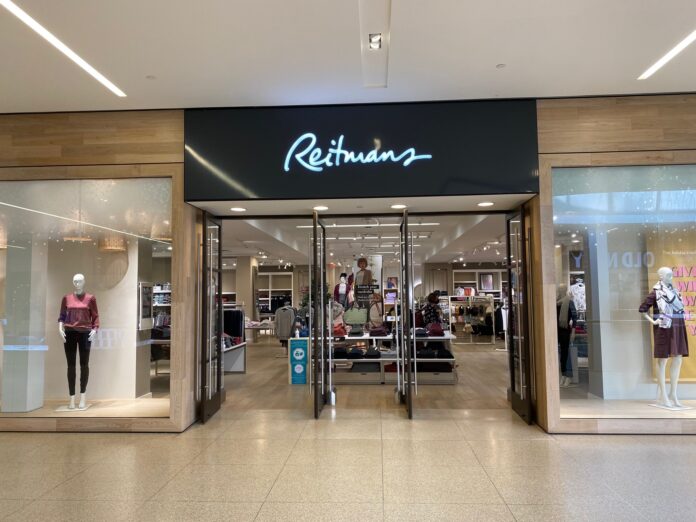
“While our e-commerce revenue grew in Q1, it was not enough to offset lower in-store traffic resulting from near-record snowfall accumulations in some regions during February,” said Andrea Limbardi, President and CEO of RCL.
“We saw improvement once the weather cleared; however, consumers were more price-conscious amid ongoing economic uncertainty. We proactively moved our merchandise with selective and strategic promotional activity, ending the quarter with healthy inventory levels. However, these actions resulted in a year-over-year gross profit impact. I am pleased with the performance of our Reitmans brand, which performed well in the quarter, responding to customers’ concerns over the economy with its hallmark of great styles and quality at accessible price points.
“Our disappointing financial results underscore the importance of implementing the five-year strategic plan we announced in April. This strategy is designed to drive long-term profitable growth and ultimately make our business more resilient. As part of our ongoing efforts to optimize our store fleet, we opened three new Reitmans stores, one RW&CO store, and two PENN stores that were relocations during the quarter. Meanwhile, under our strategy to fuel growth with modernization, we moved forward with the first phase of our digital strategic roadmap. Reflecting our commitment to a seamless customer journey across all our touch points, this first phase will include newly designed front-end e-commerce storefronts for all three brands and migrating to ShopifyTM. We expect the migration and launch of our enhanced e-commerce offering to be completed this fiscal year.”
The Company operates 394 stores under three distinct banners consisting of 225 Reitmans, 86 PENN., and 83 RW&CO
On May 3, RCL said it had working capital of $134.8 million, including cash of $85.4 million compared to working capital of $165.7 million, including cash of $158.1 million as at February 1, 2025 and working capital of $153.4 million, including cash of $98.9 million as at May 4, 2024. At the end of the first quarter, RCL had no long-term debt other than lease liabilities and no amounts were drawn under the Company’s bank credit facilities.
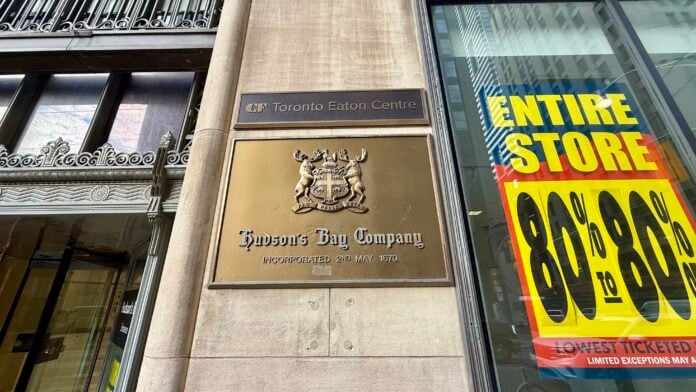
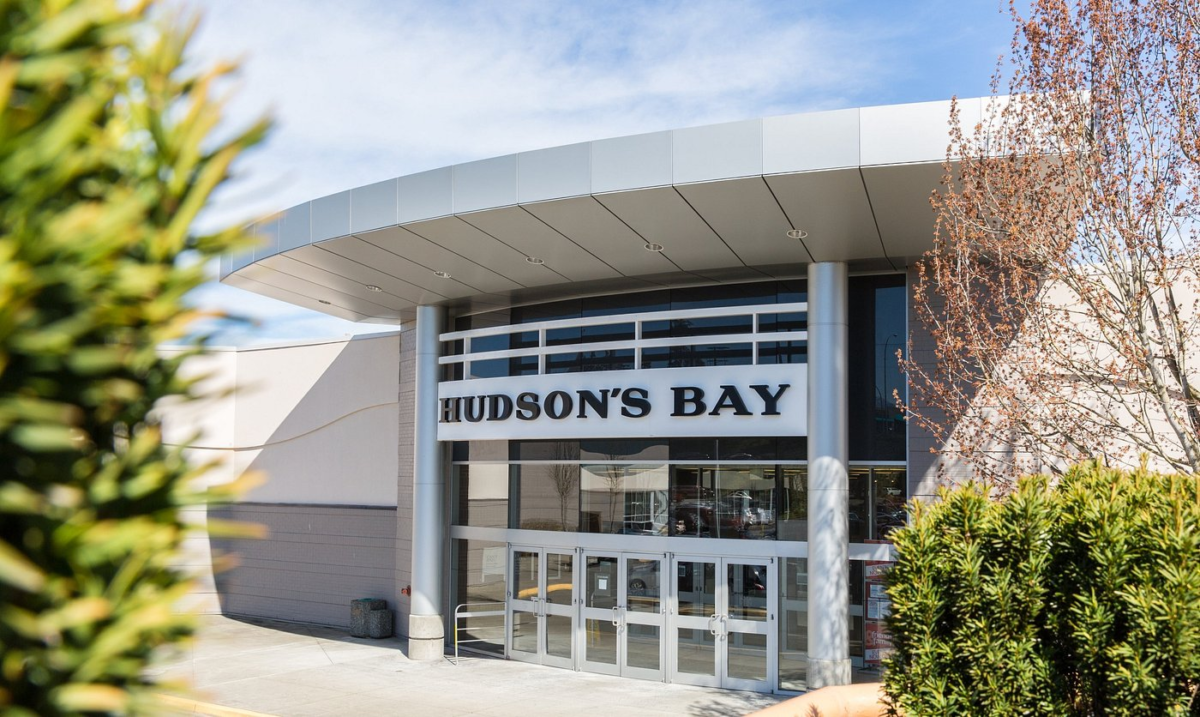
Signage outside the former Hudson's Bay flagship store in downtown Toronto, May 2025. Photo: Craig Patterson
As part of its ongoing restructuring under court protection, Hudson’s Bay Company ULC is preparing to formally change its legal name after selling its intellectual property to Canadian Tire Corporation. The move follows court approval of an asset sale agreement that includes the iconic Hudson’s Bay brand and associated trademarks.
The name change marks a major milestone in the wind-down of Hudson’s Bay’s historical corporate structure, even as the brand name itself continues under new ownership. The rebranding will be addressed at a hearing scheduled for June 23, 2025, before the Ontario Superior Court of Justice (Commercial List), as part of the retailer’s proceedings under the Companies’ Creditors Arrangement Act (CCAA).
Canadian Tire Acquired Brand Rights Through Court-Approved Agreement
On June 3, 2025, the court granted an Approval and Vesting Order (CTC AVO) authorizing the transfer of intellectual property and branding rights from Hudson’s Bay to Canadian Tire. The deal includes exclusive rights to use the names “Hudson’s Bay,” “The Bay,” “HBC,” and all related variants.
As a condition of the agreement, Hudson’s Bay and affiliated legal entities must change their corporate names within 45 days of closing, eliminating any risk of brand confusion with Canadian Tire’s newly acquired assets. The name change requirement was explicitly built into the CTC AVO and applies to entities involved in the restructuring process.
Four HBC Entities Will Undergo Corporate Rebranding
The motion filed by Hudson’s Bay on June 16, 2025, requests the court’s permission to file legal paperwork to change the names of the following four entities:
Hudson’s Bay Company ULC
The Bay Limited Partnership
HBC YSS 1 LP Inc.
HBC YSS 2 LP Inc.
The company is seeking court approval to execute and file articles of amendment or other required documents to complete the corporate name changes. These changes are considered essential for closing the transaction with Canadian Tire and progressing the broader wind-down strategy under the CCAA framework.
The new corporate names have not been disclosed, but under the agreement, they must be dissimilar to “Hudson’s Bay,” “The Bay,” “HBC,” and all similar branding identifiers.
In addition to the name changes, the applicants have also asked the court to revise the “style of cause” used in the CCAA proceedings. The style of cause is the formal heading of the legal matter, and it reflects the corporate names of the companies under court protection.
Once the new names are registered, all future filings, motions, and court documents will be updated to reflect the revised identities of the former Hudson’s Bay entities. This ensures legal and procedural consistency as the proceedings continue.
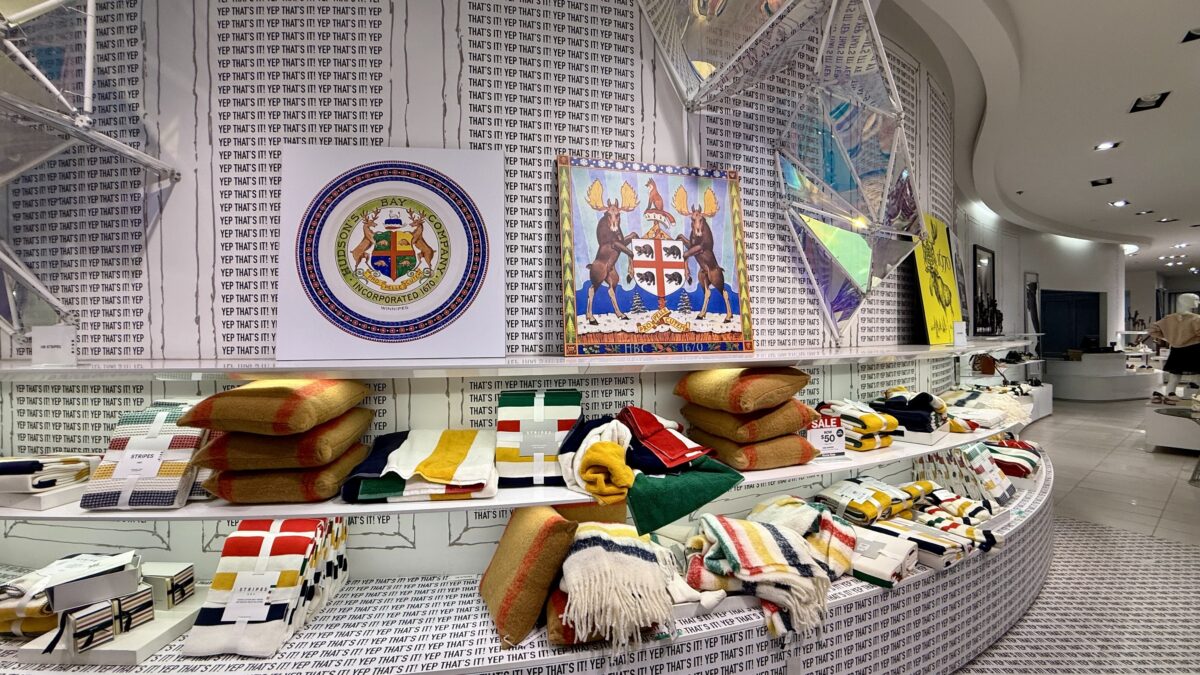
Hudson’s Bay stripe products at the Queen Street flagship store in Toronto on March 15, 2025. Photo: Craig Patterson
Name Change Reflects Strategic Separation of IP and Legal Entity
The corporate name change reflects a broader strategic separation between the now-sold Hudson’s Bay intellectual property and the legal entities being liquidated. While the legal shell of Hudson’s Bay Company ULC continues to exist for the purposes of managing creditor claims and asset recovery, the brand itself is now owned by Canadian Tire.
The Hudson’s Bay name will live on in Canadian retail, but it will no longer be associated with the corporate entities now being dissolved or restructured under the court’s supervision.
Legal Authority and Court Oversight
The June 23 motion relies on sections 11 and 36 of the Companies’ Creditors Arrangement Act, which grant the court broad discretion to approve corporate governance changes and facilitate transactions necessary for a successful restructuring. The name change is also tied directly to the closing mechanics of the Canadian Tire transaction, as outlined in the CTC AVO.
The court has also received notice that the name changes are time-sensitive, as they are required to occur within a fixed window after the asset sale’s completion.
What Happens Next
Assuming the motion is granted, the four listed entities will proceed to file articles of amendment with the appropriate corporate registries. The style of cause in the CCAA case will be updated accordingly, and Hudson’s Bay Company ULC—at least in name—will cease to exist.
The court is expected to continue overseeing other aspects of the restructuring, including pending motions related to lease assignments, asset liquidations, and creditor distributions.
While the name Hudson’s Bay will remain present in Canada’s retail landscape, its operating and legal future now lies firmly under the control of Canadian Tire—closing a historic chapter for an iconic institution.
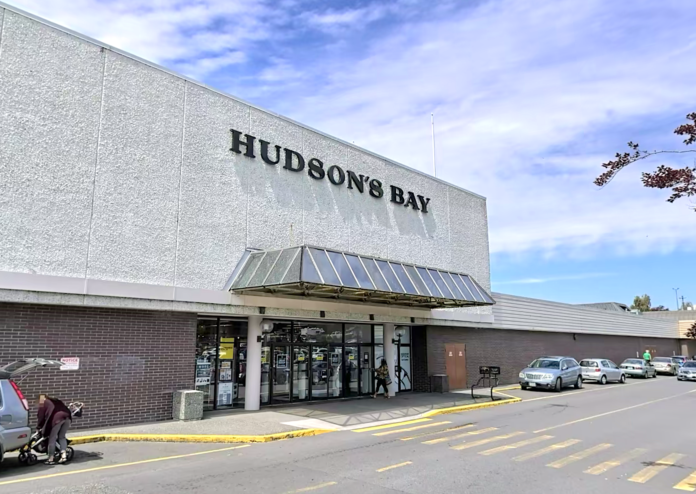
Hudson's Bay store at Mayfair Shopping Centre in Victoria, BC. Central Walk, owned by Ms. Liu, acquired the mall in 2021. Photo: Apple Maps
A pivotal hearing will take place on Monday, June 23, in the Ontario Superior Court of Justice (Commercial List), where Hudson’s Bay Company ULC and affiliated debtors will seek approval to assign three key retail leases in British Columbia to Ruby Liu Commercial Investment Corp., the Canadian retail property group chaired by Weihong (Ruby) Liu.
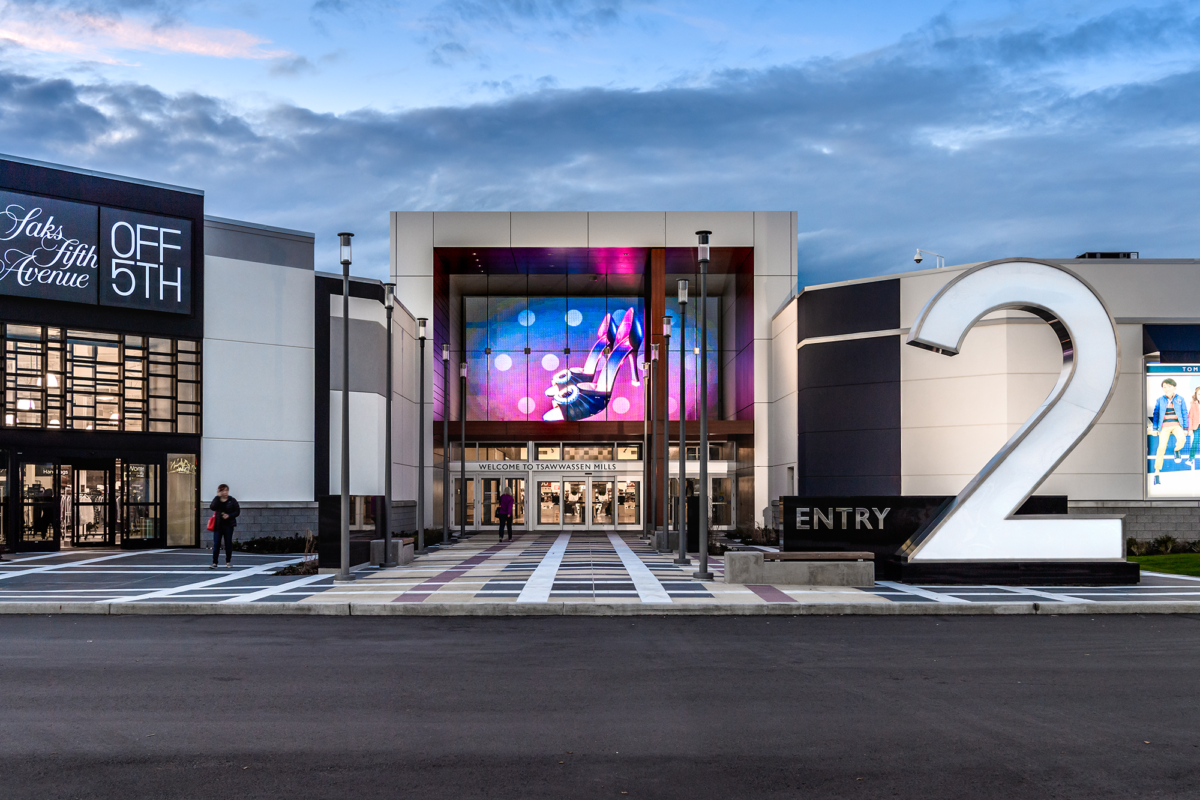
The motion, returnable before Justice Osborne, seeks an “Affiliate Lease Assignment Order” that would approve the transfer of the company’s rights and interests in leases at Tsawwassen Mills in Tsawwassen, Mayfair Shopping Centre in Victoria, and Woodgrove Centre in Nanaimo. The transaction is part of Hudson’s Bay’s broader effort to restructure under the Companies’ Creditors Arrangement Act (CCAA) after seeking creditor protection on March 7, 2025.
Ruby Liu Commercial Investment Corp. Selected as Successful Bidder
Following a court-authorized lease monetization process that launched in March, Hudson’s Bay, with the support of court-appointed Monitor Alvarez & Marsal Canada Inc. and broker Oberfeld Snowcap Inc., marketed over 100 leaseholds to prospective buyers. A total of 12 parties submitted qualified bids by the May 1 deadline, resulting in competitive interest in select properties.
Ruby Liu Commercial Investment Corp’s bid for the three British Columbia leases emerged as the “Successful Bid”, with a combined offer of $6 million, or $2 million per lease. The selection was based on criteria including price, structure, financial capacity, and timing. The company is affiliated with the landlords of all three properties and has already secured the required landlord consents.
As outlined in court filings, the assignment agreement is supported by the Monitor, Oberfeld, and Hudson’s Bay’s senior secured lenders, including the FILO Agent and Pathlight Agent. The company’s board of directors determined it to be the most favourable transaction for the assets in question.
Importantly, the agreement names Weihong Liu (Ruby Liu) as the personal guarantor of the lease transaction. This signals a direct financial commitment from Liu, who leads Central Walk and is spearheading its retail redevelopment strategy in Canada. Central Walk affiliates own and operate the three destination malls where the leases are located, further simplifying the assignment process and aligning long-term interests.
Assignment Agreement Structured to Minimize Risk
The Affiliate Lease Assignment Agreement, signed May 23, 2025, is structured as three separate legal agreements—one per lease. If any lease assignment fails to close, the others may still proceed independently. This modular format reduces transactional risk and maximizes the chances of securing value from each property.
The agreement also notes that no cure costs are required to bring the leases into compliance, as the tenancies are not in default. Additionally, the deal excludes furniture, fixtures, equipment (FF&E), trade fixtures, intellectual property, and artwork from the transaction. These exclusions preserve certain assets for liquidation or transfer under separate arrangements.
Ruby Liu Commercial Investment Corp. has paid a $600,000 deposit specifically for the three leases. The Monitor is also holding an additional $9.4 million deposit related to a separate agreement for up to 25 more lease assignments (detailed below). Under the terms of the agreement, both deposits are subject to forfeiture in favour of Hudson’s Bay if Ruby Liu Commercial Investment Corp. defaults on its obligations.
Former Hudson’s Bay store at Woodgrove Mall in Nanaimo. Photo: Trip Advisor
Broader 25-Lease Assignment Deal Underway
In parallel with the current motion, Hudson’s Bay and Ruby Liu Commercial Investment Corp. have executed a broader asset purchase agreement (APA) involving up to 25 additional Hudson’s Bay leases across Canada. That deal is not part of the June 23 motion but is expected to be brought before the court once required landlord consents are secured.
As of early June, representatives from Hudson’s Bay, Ruby Liu Commercial Investment Corp., Oberfeld, and the Monitor had met with all landlords involved in the 25-lease APA to begin the consent process. Ruby Liu Commercial Investment Corp. also sent business plan outlines for each site to the landlords on June 6, 2025. Some landlords have raised information requests and concerns, which are being addressed collaboratively in preparation for a follow-up motion.
If completed, the 25-lease transaction would represent a major expansion of Ruby Liu Commercial Investment Corp. and Central Walk’s retail real estate holdings in Canada, especially in mid-to-large format suburban shopping centres.
Dozens of Leases Remain Unsold
Despite the competitive process, 62 Hudson’s Bay leases received no qualified bids by the May 1 deadline. Under the terms of the Lease Monetization Order, Hudson’s Bay must formally issue notices of disclaimer for any remaining unsold leases by July 15, 2025.
This suggests a significant number of retail locations will be returned to landlords, leaving anchor vacancies in shopping centres across the country. These outcomes may spur further redevelopment or temporary occupancy strategies by landlords.
Court to Seal Confidential Summary of Bids
As part of the motion, Hudson’s Bay is requesting an order to seal a confidential appendix in the Monitor’s Fifth Report. The document summarizes competing bids received for the three British Columbia leases. The company argues that public disclosure of the economic terms could jeopardize closing and affect landlord relationships.
The sealing order is expected to be temporary and limited to the period until the lease transactions close.
The requested relief is being brought under Sections 11, 11.3, 32, and 36 of the Companies’ Creditors Arrangement Act, which permit courts to approve lease assignments, asset sales, and operational changes during insolvency proceedings. The motion also cites relevant provisions of the Ontario Rules of Civil Procedure and the court’s inherent jurisdiction to supervise complex restructurings.
Former Saks OFF 5TH at Tsawwassen Mills in South Delta, BC. Photo: Construct Canada
Name Changes for HBC Entities Also Sought
In addition to approving the lease assignment, the June 23 motion seeks to amend the court’s earlier Approval and Vesting Order related to Canadian Tire Corporation’s purchase of certain HBC assets. Under the terms of that agreement, Hudson’s Bay and several of its affiliates are required to change their legal names to eliminate confusion with the iconic brand.
The following entities will seek permission to file name change documents:
Hudson’s Bay Company ULC
The Bay Limited Partnership
HBC YSS 1 LP Inc.
HBC YSS 2 LP Inc.
Once the name changes are completed, the style of cause for the CCAA proceedings will also be updated to reflect the new identities. The company has not yet disclosed its future legal names.
Outlook: More Court Motions to Follow
If approved, the three lease assignments to Ruby Liu Commercial Investment Corp. must close by July 30, 2025. The Monitor’s Fifth Report, expected before the June 23 hearing, will further detail the transaction and the broader lease marketing process.
With landlord consultations ongoing and additional bids being reviewed, Hudson’s Bay is anticipated to return to court in the coming weeks to seek approval for the 25-lease transaction and address unsold leases through formal disclaimers.
The outcome of these motions will play a central role in how Hudson’s Bay winds down its retail footprint and how mall landlords reposition former flagship locations in the wake of one of Canada’s most significant retail restructurings.
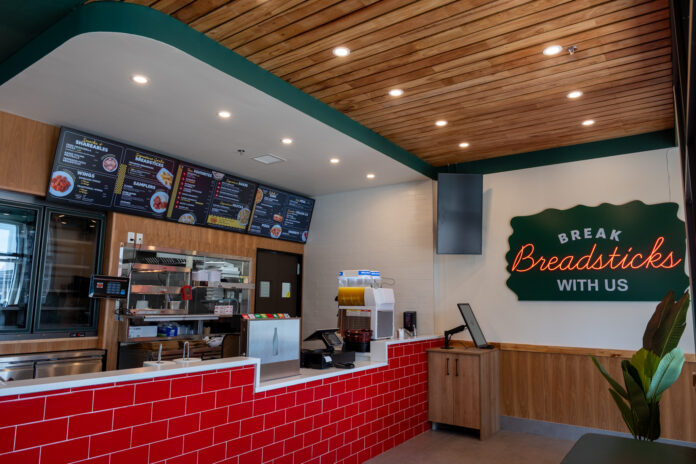
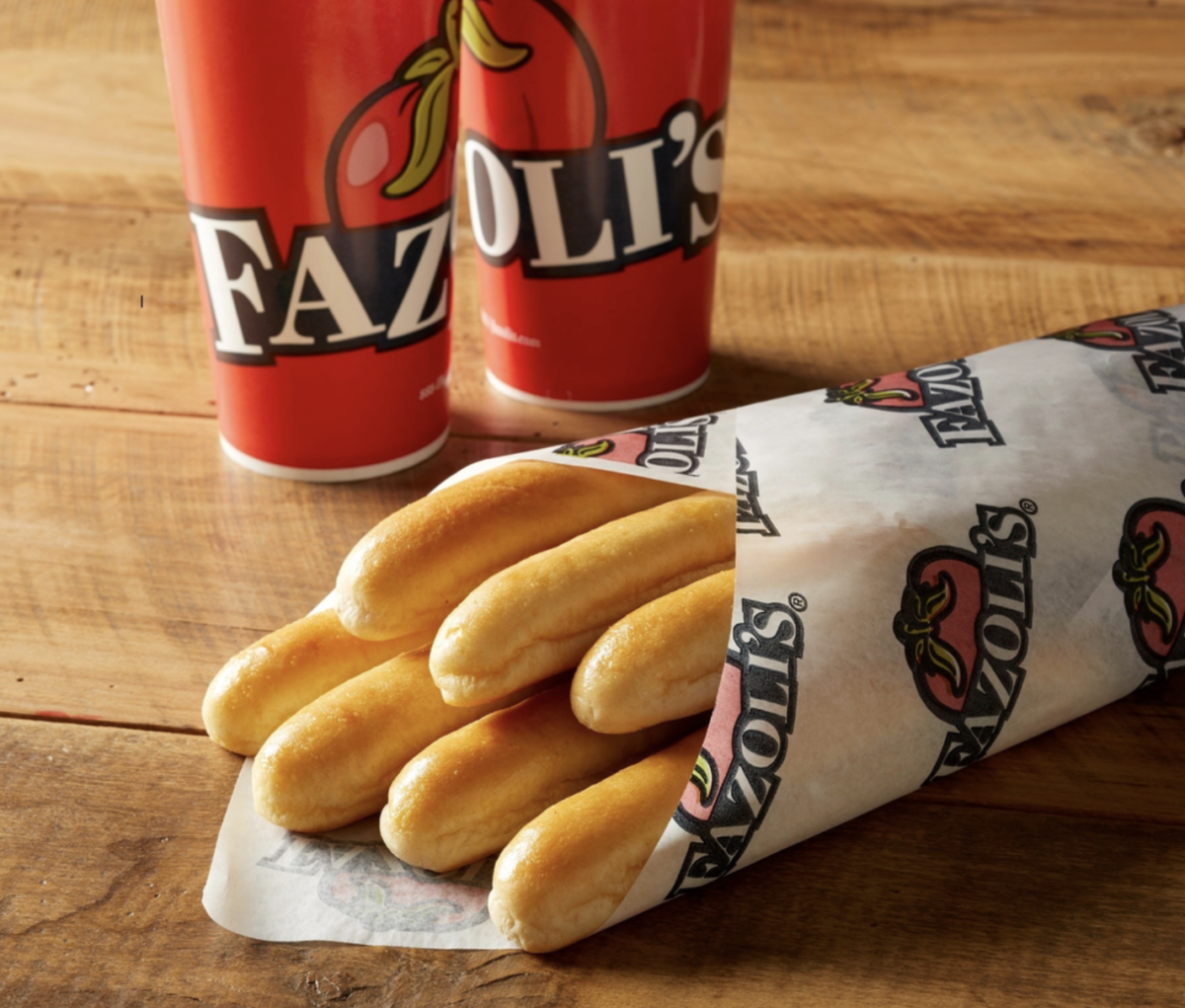
Fazoli’s, FAT Brands’ fast and fresh Italian chain, has officially reached a new milestone, the opening of its first international location in Canada in Calgary.
This marks the first of 25 units set to open across the country over the next nine years in partnership with Briwin Restaurants Inc., said the company.
Gregg Nettleton
“For over 35 years, we have experienced strong growth domestically, and look forward to this new global chapter,” said Gregg Nettleton, President of Fazoli’s.
“Our partner, Briwin Restaurants Inc., has also seen great success within this market as a multi-unit Fatburger franchisee, which is a great precursor of the potential we anticipate with our Canadian Fazolis’ locations.”
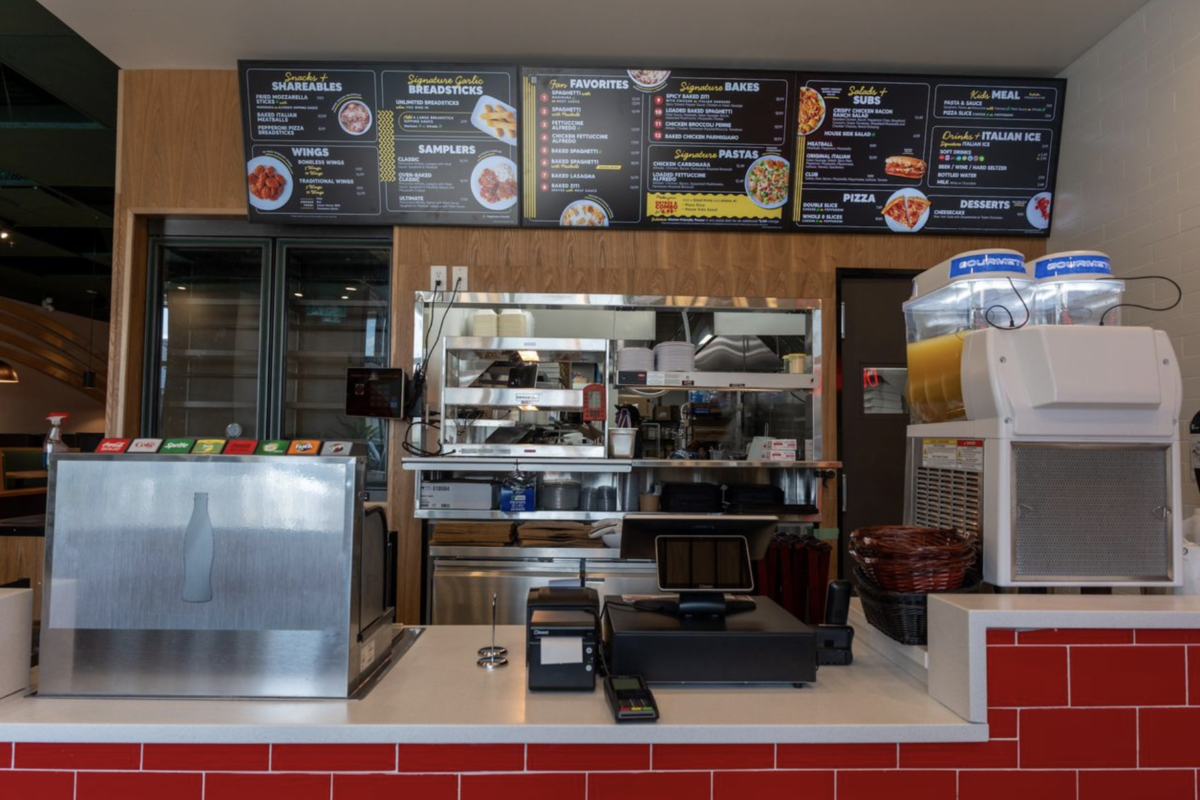
Since 1988, Fazoli’s has been committed to serving quality Italian food, fast, fresh and friendly. From unlimited hot breadsticks to freshly prepared pasta entrees, the chain prides itself on serving high-quality menu offerings, all at an affordable price.
FAT Brands is a leading global franchising company that strategically acquires, markets, and develops fast casual, quick-service, casual dining, and polished casual dining concepts around the world. The Company currently owns 18 restaurant brands: Round Table Pizza, Fatburger, Marble Slab Creamery, Johnny Rockets, Fazoli’s, Twin Peaks, Great American Cookies, Smokey Bones Hot Dog on a Stick, Buffalo’s Cafe & Express, Hurricane Grill & Wings, Pretzelmaker, Elevation Burger, Native Grill & Wings, Yalla Mediterranean and Ponderosa and Bonanza Steakhouses, and franchises and owns over 2,300 units worldwide.
Founded in 1988 in Lexington, Ky., Fazoli’s franchises and operates approximately 200 restaurants in 26 states, making it the largest QSR Italian chain in America. Fazoli’s prides itself on serving quality Italian food, fast, fresh and friendly. Menu offerings include freshly prepared pasta entrees, subsandwiches, salads, pizza and desserts – along with its unlimited signature breadsticks.
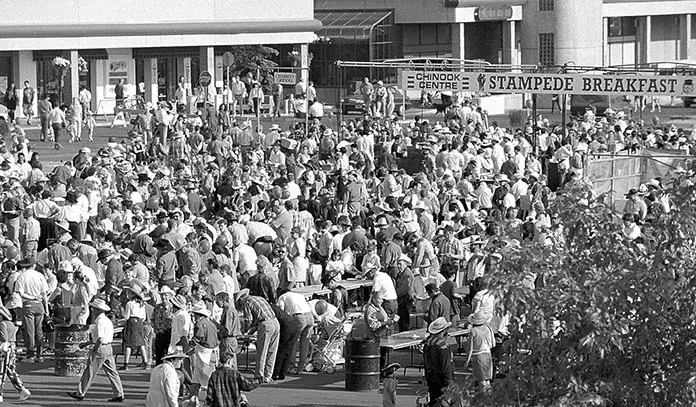
Celebrating 65 years of its cherished community event, CF Chinook Centre’s Stampede Breakfast returns on Saturday, July 5th, with an ambitious goal: to secure the GUINNESS WORLD RECORDS title for Most Pancakes Served!
“More than 25,000 visitors are expected at this rain-or-shine, first-come, first-served event to enjoy a complimentary pancake breakfast with all the fixings, alongside live entertainment, family-friendly activities including the Kiddie Corral, as well as an outdoor retail market. Performances include Madeline Merlo, Tony Stevens, Nolan Compton, and Haley Isabel, with Emcees Jimmy and Jodi Hughes guiding guests through the morning, and in-centre entertainment featuring the Chinook Club Line Dancers, said the Calgary shopping centre in a news release.
To elevate the festivities, CF Chinook Centre said it is hosting a high-energy Pancake Stacking Contest on Friday, July 4th. Teams featuring notable Calgarians will race to stack 65 pancakes, with a fun twist – a “Wheel of Disadvantage” introducing challenges like stacking with oven mitts or one-handed. The winning team will receive a $2,000 donation to a charity of their choice.
Photo: CF Chinook Centre
Calgarians are invited to get rodeo ready by exploring CF Chinook Centre’s 2025 Stampede Lookbook for curated styles from retailers, featuring themes like Prairie Princess, Cowgirl Chic, Lil’ Wrangler, and Rodeo Rider. Plus, guests can enhance their Stampede experience with a CF SHOP! Card bonus offer from July 4 to 14 (while quantities last). Click here for full offer terms, said officials.
“This event is made possible by generous sponsors including PHI Studio, Kal-Tire, PCL Construction, Marble Slab and A&W, in addition to all pancake station participants, with proceeds benefiting Alberta Children’s Hospital Foundation. In line with Cadillac Fairview’s Green at Work® program, this will be a Zero Waste event held in collaboration with GFL Environmental Inc., with volunteers assisting in waste diversion efforts. Public transit is encouraged,” they said.
Event Details
Pancake Stacking Contest: Friday, July 4, 2025, 4:00 PM – 5:00 PM, Centre Court
Stampede Breakfast Event: Saturday, July 5, 2025, 7:00 AM – 11:00 AM, east parking lot between Chapters & Yeti.
7:00 AM – Official Welcome & Acknowledgements: featuring remarks from Emcees Jimmy and Jodi Hughes, CF Chinook Centre General Manager Darren Milne, and the 2025 Stampede Princesses
10:50 AM – Alberta Children’s Hospital Foundation (ACHF) Cheque Presentation: featuring representatives from CF Chinook Centre
12:00 PM – Guinness World Records Award Ceremony & Photo Opportunities: Centre Court, celebrating the potential new record
Photo: CF Chinook Centre
CF Market Mall in Calgary is also hosting its 56th Annual Stampede Breakfast on Tuesday, July 8, from 9:00 AM to 11:00 AM in the East Parking Lot, on the corner of Shaganappi Trail and 32 Ave NW. This long-standing tradition is set to welcome over 6,000 guests for a high-energy start to the Stampede season.
“Attendees can enjoy a complimentary pancake breakfast with all the fixings, alongside Stampede Caravan entertainment and interactive family activities. In-mall entertainment will also feature the Chinook Club Line Dancers. The event will include a Retail Market and Community Markets, showcasing local retailers like Team Town Sports, Alberta Boot Company, Unique Bunny, Bailey Nelson and Twisted Goods, and community organizations like CMLC, Calgary Wild FC, Meals on Wheels, Heritage Park, Man Van, and Ronald McDonald House Charities,” it said.
Calgarians are invited to get rodeo ready by exploring CF Market Mall’s 2025 Stampede Lookbook for curated styles from retailers, featuring themes like Prairie Princess, Cowgirl Chic, Lil’ Wrangler, and Rodeo Rider. Plus, guests can enhance their Stampede experience with a CF SHOP! Card bonus offer from July 7 to 14 (while quantities last). Click here for full offer terms.
Key Event Timings:
Main Breakfast Event: Tuesday, July 8, 2025, 9:00 AM – 11:00 AM, east parking lot, on the corner of Shaganappi Trail and 32 Ave NW
Official Welcome & Stage Opens: 9:00 AM, featuring the Stampede Caravan
Canada’s supply management system—once heralded as a pillar of food security and agricultural self-sufficiency—is failing at its most basic function: ensuring reliable domestic supply.
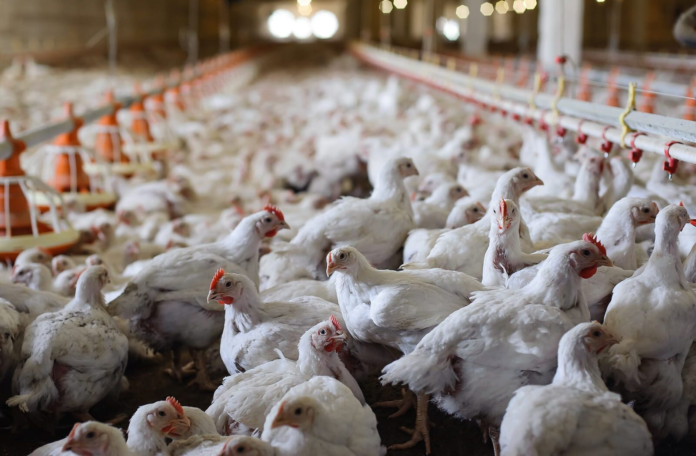
According to the latest figures from the Canadian Association of Regulated Importers (CARI), Canada imported over 66.9 million kilograms of chicken as of June 14—a 54.6% increase from the same period last year. To put that in perspective, this volume could feed 3.4 million Canadians for an entire year, based on per capita poultry consumption. That’s roughly 446 million individual meals—meals that, under a tightly managed quota system, were meant to be produced domestically. Imports now equate to over 12% of Canada’s domestic chicken production so far in 2025—highlighting the country’s growing dependence on foreign supply.
To be fair, the avian influenza outbreak in Canada has disrupted poultry production and partially explains the shortfall. But even with that disruption, the numbers are staggering. Imports under trade quotas established by the WTO, CUSMA, and CPTPP are all running at or near pro-rata levels, signaling not just opportunity—but urgency. Supplementary import permits—designed to be exceptional, last-resort tools—have already surpassed 48 million kilograms, exceeding the total annual import volumes of some previous years. This is not a seasonal hiccup. It is systemic failure.
Canada’s poultry sector is supposed to be insulated from global volatility through supply management. Yet internal shocks—like the domestic avian flu outbreak—have shown just how fragile the system really is. When emergency imports become routine, we must ask: what exactly is being managed?
The original intent of supply management was to align production with domestic demand while stabilizing prices and farm incomes. But that balance is clearly off. The A195 production period, ending May 31, 2025, showed one of the worst underproduction shortfalls in more than 50 years. Producers remain constrained by rigid quota allocations, while consumers face rising poultry prices. More imports. Higher costs. Diminished confidence.
Some defenders will insist this is an isolated event. It’s not. This is the second week in a row Canada has reached pro-rata import levels across all chicken categories. Bone-in and processed poultry products—once minor parts of emergency import programs—are now essential to keeping the market supplied.
The dysfunction extends beyond chicken. Egg imports under the shortage allocation program have already topped 14 million dozen, a 104% increase from last year. Just months ago, Canadians were mocking high U.S. egg prices—yet those prices have since fallen. Ours haven’t.
All this in a country with $30 billion in quota value, intended to protect domestic production and reduce reliance on imports. Instead, we are importing more—and paying more.
Meanwhile, Bill C-202, now before the Senate, seeks to shield supply management from future trade negotiations, effectively making reform even more difficult. So we must ask: is this really what we’re protecting? A system that fails to meet demand, depends on foreign product, and drives up costs at the grocery store?
Our trading partners are taking full advantage. Chile, for instance, has increased its chicken exports to Canada by over 63%, now accounting for nearly 96% of CPTPP-origin imports. While Canada doubles down on protectionism, others are gaining long-term footholds in our market.
It’s time to face the facts. Supply management no longer guarantees supply. And when a system meant to ensure resilience becomes the source of fragility, it is no longer an asset—it’s an economic liability.
In today’s fast-paced retail environment, the safety and morale of employees are more critical than ever. While customer satisfaction remains a major priority, many retailers are now recognizing that employee well-being directly impacts store performance, customer service, and overall profitability. One powerful and often underutilized strategy to enhance employee safety and morale is the deployment of comprehensive outdoor and indoor security monitoring, including remote video monitoring (RVM) and virtual guard services.
Steve Womer
Rather than reacting to incidents after they occur, modern security technology now emphasizes prevention, real-time intervention, and psychological reassurance for retail teams. Let’s explore how intelligent outdoor and indoor security solutions are transforming the retail workplace into a safer, more supportive environment for employees.
Outdoor Monitoring: Crime Prevention Starts at the Perimeter
For retailers, threats don’t just occur inside the store – they often originate outside. Comprehensive outdoor monitoring solutions are crucial in setting the tone for safety before an employee even steps through the door.
Stopping Crime Before It Happens
Modern outdoor security technologies leverage AI-driven cameras that can accurately detect people and vehicles in real-time. These systems monitor store exteriors, parking lots, delivery zones, back alleyways, and customer entry points to immediately spot suspicious behavior before it escalates.
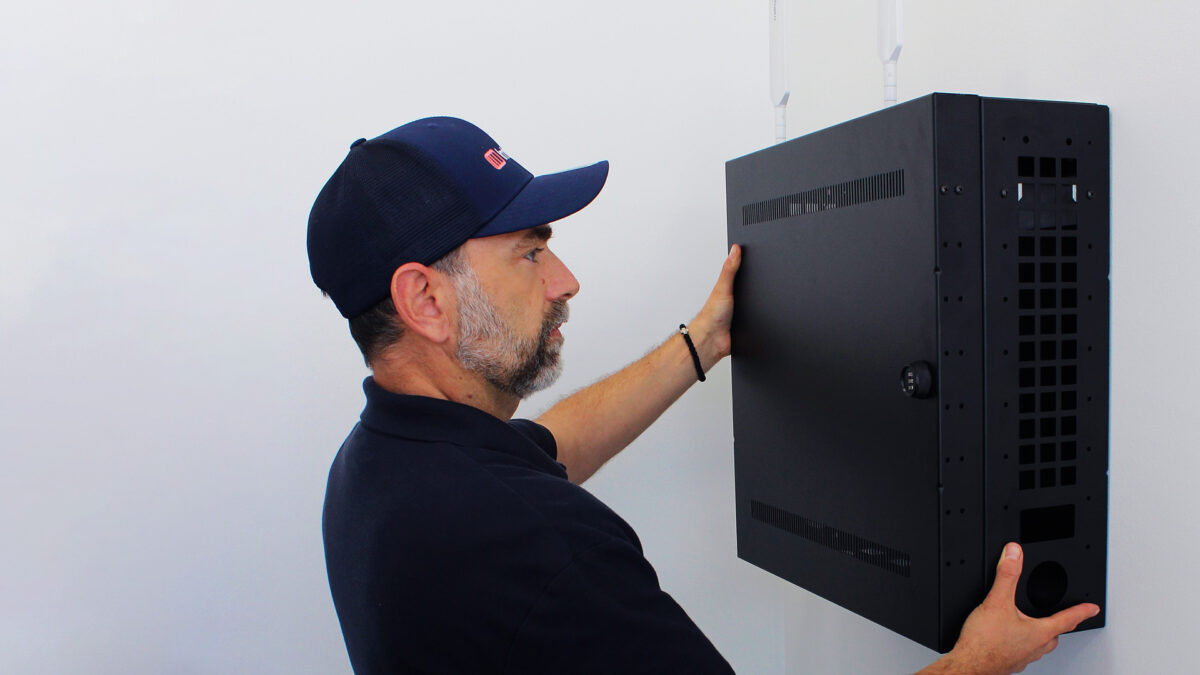
For example, AI-based store perimeter monitoring solutions detect unauthorized activity and issue automated or live personalized voice warnings. If someone lingers near a back door or loiters outside after hours, a live security professional can intervene with a voice message customized to the situation – deterring crime before a break-in or confrontation occurs.
This early intervention not only protects assets but also ensures that store employees feel safe, especially during vulnerable times like opening and closing shifts.
Managing Loitering and Unsanctioned Gatherings
Outdoor monitoring also helps prevent loitering, trespassing, and encampments – common concerns for many retailers in urban and suburban locations. AI-based detection combined with proactive anti-loitering systems can discourage gatherings near storefronts or side alleys, reducing risks of vandalism, confrontation, and the perception of an unsafe environment for employees and customers alike.
By safeguarding store exteriors, retailers create a visibly secure environment, building employee confidence even before they clock in.
Photo: Interface Systems
Indoor Monitoring: Supporting Employees Where It Matters Most
Once inside the store, comprehensive indoor monitoring provides another critical layer of protection and psychological reassurance for retail staff.
Virtual Guard Escort Services for High-Risk Situations
Retail employees often face stressful and risky tasks, such as opening and closing the store alone, conducting bank runs, or handling cash deliveries. Virtual guard services can remotely escort employees during these high-risk moments, providing real-time oversight and support.
An employee locking up late at night, for example, can be monitored remotely by a security specialist, who can intervene if suspicious behavior is observed nearby. This virtual presence drastically reduces fear and improves employee confidence when performing tasks alone.
Retail store employees also often find themselves at the front of difficult customer interactions, shoplifting attempts, and even aggressive behavior throughout the day. Having a virtual guard present allows remote security professionals to proactively intervene through live voice communications during incidents. These remote security teams can: ● Deter shoplifting by announcing a visible security presence. ● Intervene during escalating arguments or risky situations before they turn violent. ● Support employees during active burglary attempts with live updates, directions, and voice warnings that can prompt suspects to flee.
Rather than feeling isolated, employees gain the reassurance that trained security professionals are watching and ready to step in if needed – helping to reduce stress, fear, and trauma from on-the-job incidents.
Scheduled and Randomized Video Tours to Check Employee Well-Being
Virtual guard services also offer scheduled or randomized video tours throughout the day. Retailers can set up random spot checks where remote security personnel visually verify that employees are okay, adding a discreet but comforting layer of oversight, especially in stores with smaller teams or during slow hours.
Security Technology That Minimizes Police Escalation
One of the biggest benefits of remote video monitoring and voice communication interventions is that most situations never need to escalate to law enforcement. According to Interface Systems’ 2024 State of Remote Video Monitoring Report, after analyzing thousands of real-world incidents across customer locations, less than 3% required police involvement once a virtual guard voice communication system was activated.
This data highlights how remote monitoring not only de-escalates threats early but also minimizes the disruption and risk associated with law enforcement responses. For employees, this translates into a workplace that feels safe but not over-policed, allowing them to focus on delivering great customer experiences.
Photo: Interface Systems
A Positive Ripple Effect on Staff Morale
When employees feel physically safe and emotionally supported, the benefits ripple outward: ● Reduced turnover: Employees are more likely to stay when they feel secure at work. ● Higher productivity: Staff can focus on customers, not on personal safety concerns. ● Better customer service: Confident, relaxed employees create a more welcoming environment. ● Lower shrinkage: Employees are empowered to report and prevent theft with the knowledge that they have remote backup.
In today’s tight labor market and challenging retail environment, investing in technology that protects and empowers employees is a clear win for operational leaders, asset protection teams, and CFOs alike.
Building a Safer Future with Intelligent Remote Video Monitoring Solutions
Comprehensive security is no longer just about protecting inventory – it’s about supporting people.
From intelligent outdoor monitoring that prevents crime before it starts to indoor virtual guards that offer real-time reassurance and de-escalation, forward-thinking retailers are transforming security from a reactive necessity into a proactive tool for building a positive workplace culture.
By recognizing the link between employee well-being and effective security strategies, retailers can create environments where both staff and customers thrive.
(Steve Womer is currently SVP of Engineering at Interface Systems. He has a wealth of experience designing and deploying network, physical security, and business intelligence infrastructure for distributed enterprise clients. Since 2008, Steve has served in various engineering, sales engineering, and operational roles for industry-leading managed services providers. Steve is passionate about simplifying the complex and exceeding customer expectations.)
In a significant evolution for one of Canada’s most distinctive footwear brands, Toronto-based Zvelle has officially transitioned into a men’s luxury footwear label, led by founder and creative director Elle AyoubZadeh.
Originally established in 2015 as a women’s shoe brand, Zvelle has now fully embraced a new chapter, releasing limited edition and distressed editions of its signature Ray sneaker. The move marks not only a product shift but a complete creative transformation for the company.
Elle AyoubZadeh
“I just didn’t like what I was seeing in men’s shoes,” AyoubZadeh explained in a recent interview. “There was a lot of clunkiness, a lot of busyness. It’s not my aesthetic. I wanted to undo all of that.”
The Inspiration Behind the Pivot
AyoubZadeh’s transition into men’s footwear was not the result of a formal market study or commercial calculation. Instead, it was born from personal observation and instinct. “In all my travels, I kept looking at men’s shoes and thinking, ‘Why does everything have to look like this?'” she said. “I’m not a man, and I think that actually gives me an advantage. I have a different perspective.”
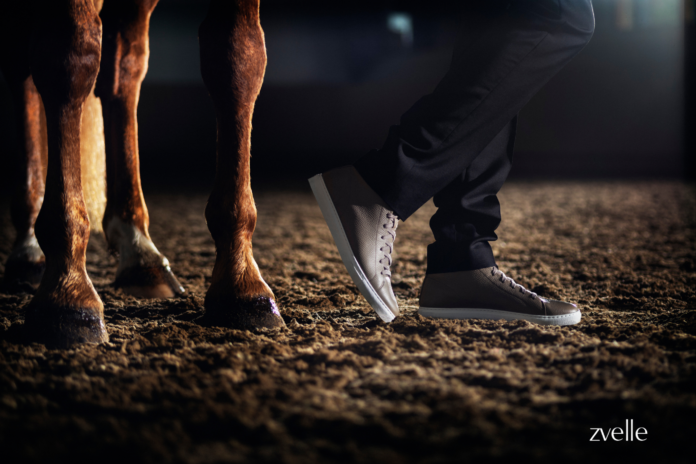
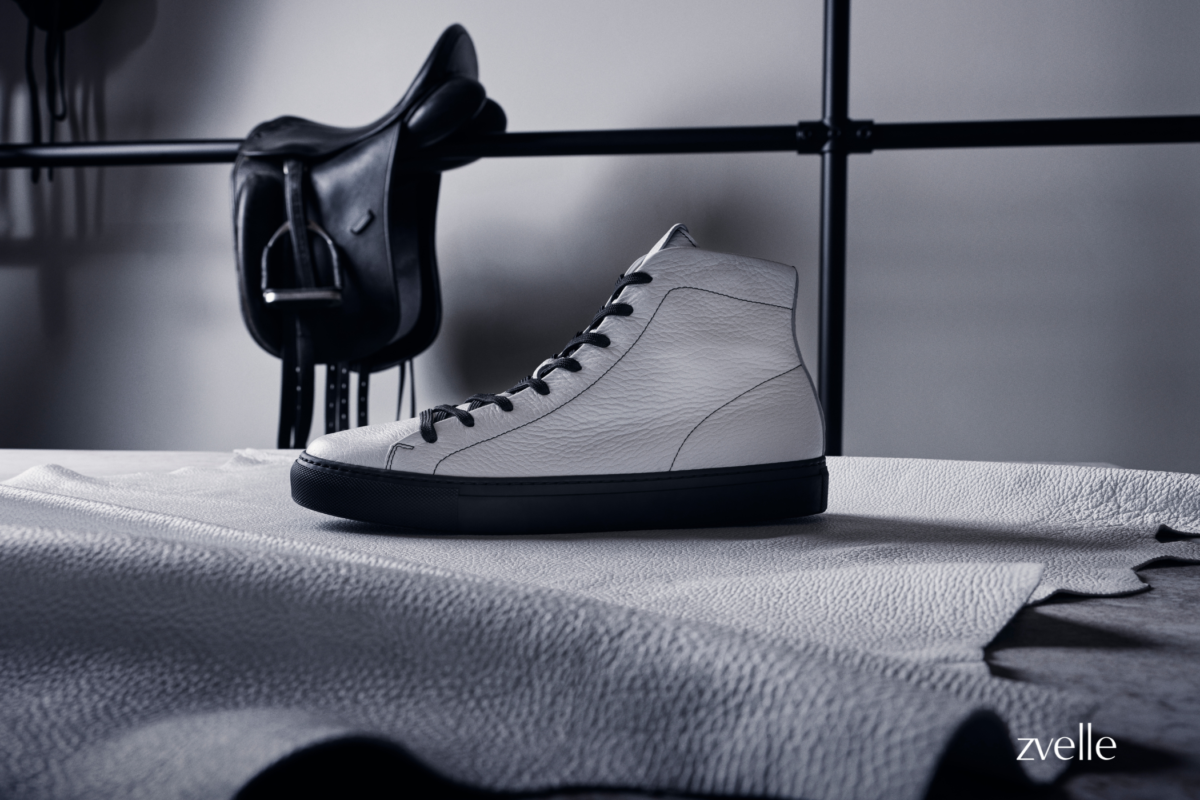
Her first creation for men, the Ray sneaker, was the product of this impulse. “I got obsessed with this idea of creating a high-top sneaker with the sole of a dress shoe,” she said. “Nobody had done that before. I wasn’t even thinking about whether it had been done or not. I just wanted to create something that I had in mind.”
Zvelle Ray Arena campaign image, via Zvelle
Celebrity Endorsements Without Payment
The Ray sneaker quickly attracted high-profile attention. AyoubZadeh personally curated a small list of celebrities she believed embodied the Zvelle man and sent them early pairs. The response was overwhelmingly positive. “Every single one of them wrote back to say how much they loved it,” she said. Notably, Zvelle does not pay for celebrity endorsements. “In the celebrity world, that’s rare. A lot of them are paid brand ambassadors. We don’t pay anyone. These are real supporters and real fans of the brand.”
Among the celebrities who have embraced the brand are Kieran Culkin, Will Smith, and Colman Domingo. “When I do something, I never do it halfway,” AyoubZadeh said. “I believe in what I’m doing and went all in.”
A Different World of Design
Designing men’s footwear presented entirely new challenges and creative opportunities for AyoubZadeh. “It’s like a whole different universe,” she noted. “There is nothing I do the same as I did with women’s shoes. I’m a lot bolder with my vision. I’m very product-focused.”
Today, Zvelle offers four distinct styles: three sneakers—including the Ray—and one dress boot. “We have a new version of the boot coming soon,” she shared. “And we’re about to launch a loafer later this fall.”
The brand also plans to introduce a new slip-on sneaker within the next month. “I think it will really change the way people look at slip-on sneakers,” AyoubZadeh said. “I’m not a sneakerhead. I’m inspired by art and architecture, not sneaker trends.”
Made in Italy, Shipped from Canada
Despite its Canadian headquarters in Toronto, Zvelle’s footwear is entirely handcrafted in Italy. “We work with the best manufacturers in Italy. I have a team there. I oversee literally everything,” AyoubZadeh emphasized. “We don’t work with agencies or outsource anything.”
All orders are shipped directly from Canada, allowing the brand to avoid import duties for Canadian and U.S. customers. “We ship internationally, and we’re not raising our prices despite all the talk about tariffs,” she added. In Canada, the sneakers are priced from approximately $600 to $900 CAD.
Zvelle Ray Arena campaign image, via Zvelle
An Independent Path
Zvelle remains entirely independent and founder-owned, a rarity in today’s increasingly consolidated luxury fashion industry. “I have the luxury, as an independent designer, to drop new styles anytime I want,” AyoubZadeh said. “It allows me to remain true to the vision.”
That vision is deeply personal, rooted in AyoubZadeh’s global upbringing. Born in Shiraz, Iran, and raised across Dubai, New Zealand, and Australia, AyoubZadeh left a career in finance to pursue her passion for footwear.
“Zvelle is for pilots, not passengers,” she once told The Kit, emphasizing her brand’s philosophy of freedom, power, and creative control.
Defining the Zvelle Man
Central to the pivot has been AyoubZadeh’s clear image of who the Zvelle man is. “He’s independent. He values freedom. He’s not someone you can put in a box,” she explained. “He has technical mastery of his craft, but he’s confident enough not to shout.”
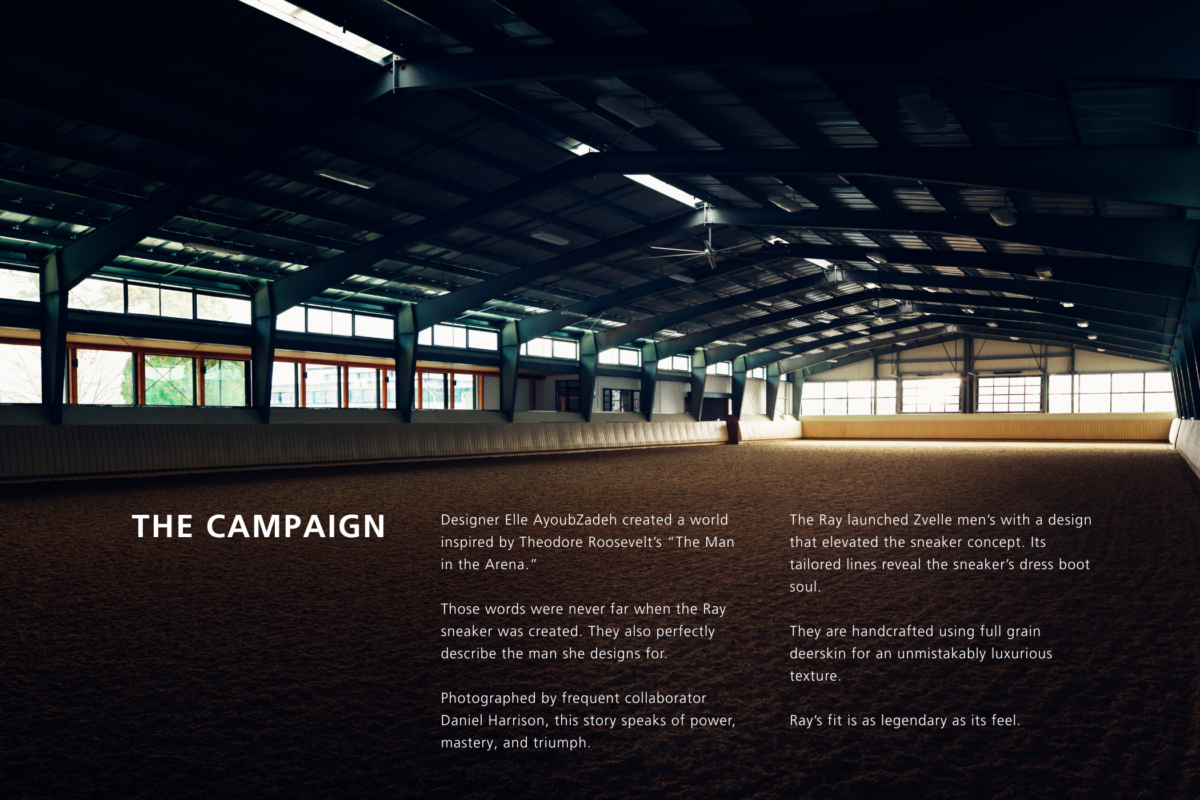
To capture this ethos, Zvelle’s latest campaign prominently features Theodore Roosevelt’s famous ‘Man in the Arena’ speech. “It’s better to be in the arena, to win, to lose, to feel emotions—but at least your soul is doing what it wants to do,” AyoubZadeh said. “When I think of the Zvelle man, he’s someone who’s in the arena.”
Global Expansion on the Horizon
Though Zvelle remains deeply rooted in Canada, the brand’s ambitions are international. “We are proudly Canadian, but we’ve always been a global brand,” AyoubZadeh said. “Now that we have a strong presence in Europe and the U.S., it’s time to also update Canadians on what we’ve been up to.”
The company has previously operated pop-ups across Toronto, including at Yorkdale, CF Toronto Eaton Centre, CF Sherway Gardens, and a showroom in Bloor-Yorkville. While Zvelle currently sells directly through its website, AyoubZadeh is now open to exploring retail partnerships. “At this stage, we’re having conversations with like-minded retail partners,” she said. “We want to work with retailers that understand our approach and share our standards and values.”
Zvelle Ray Arena campaign image, via Zvelle
Physical Stores Remain a Possibility
While there are no confirmed store openings yet, AyoubZadeh remains enthusiastic about physical retail. “I believe in physical spaces,” she said. “We’ve done pop-ups in the past; I could do a pop-up in my sleep now.”
Expansion into Italy is also under serious consideration. “We’ve been in Italy for years on the production side. Now it’s time to speak directly to the consumer there,” she explained. “I’ll know more in the next few weeks, but I’m really excited.”
Los Angeles may also be on the radar. “We already have a strong presence there with celebrity stylists and press offices,” she said. “A physical location in LA wouldn’t be much of a surprise.”
A Distinct Voice in Luxury
In an increasingly crowded luxury footwear market, AyoubZadeh believes Zvelle offers something unique.
“People want freshness, authenticity, quality, distinctive design,” she said. “Those are things that Zvelle stands for.”
At the heart of Zvelle’s renewed identity is AyoubZadeh’s singular creative vision. “I didn’t realize how fresh and new it was until I started getting it out there,” she reflected. “I’m thrilled to see how people are reacting. I just want to keep this vision going.”
For Zvelle, the pivot to men’s footwear is not simply a business decision. It represents a creative evolution—one that reflects AyoubZadeh’s deep belief in quality, individuality, and timeless design.
“At the end of the day, we’re not chasing trends,” she concluded. “We are building something that lasts. We are in the arena.”