The Bank of Canada today maintained its target for the overnight rate at 2.75%, with the Bank Rate at 3% and the deposit rate at 2.70%.
“Since the April Monetary Policy Report, the US administration has continued to increase and decrease various tariffs. China and the United States have stepped back from extremely high tariffs and bilateral trade negotiations have begun with a number of countries. However, the outcomes of these negotiations are highly uncertain, tariff rates are well above their levels at the beginning of 2025, and new trade actions are still being threatened. Uncertainty remains high,” said the Bank in a statement.
“While the global economy has shown resilience in recent months, this partly reflects a temporary surge in activity to get ahead of tariffs. In the United States, domestic demand remained relatively strong but higher imports pulled down first-quarter GDP. US inflation has ticked down but remains above 2%, with the price effects of tariffs still to come. In Europe, economic growth has been supported by exports, while defence spending is set to increase. China’s economy has slowed as the effects of past fiscal support fade. More recently, high tariffs have begun to curtail Chinese exports to the US. Since the financial market turmoil in April, risk assets have largely recovered and volatility has diminished, although markets remain sensitive to US policy announcements. Oil prices have fluctuated but remain close to their levels at the time of the April MPR.”
In Canada, economic growth in the first quarter came in at 2.2%, slightly stronger than the Bank had forecast, while the composition of GDP growth was largely as expected, it said.
“The pull-forward of exports to the United States and inventory accumulation boosted activity, with final domestic demand roughly flat. Strong spending on machinery and equipment held up growth in business investment by more than expected. Consumption slowed from its very strong fourth-quarter pace, but continued to grow despite a large drop in consumer confidence. Housing activity was down, driven by a sharp contraction in resales. Government spending also declined. The labour market has weakened, particularly in trade-intensive sectors, and unemployment has risen to 6.9%. The economy is expected to be considerably weaker in the second quarter, with the strength in exports and inventories reversing and final domestic demand remaining subdued,” explained the Bank.
Photo by Hardeep Singh
“CPI inflation eased to 1.7% in April, as the elimination of the federal consumer carbon tax reduced inflation by 0.6 percentage points. Excluding taxes, inflation rose 2.3% in April, slightly stronger than the Bank had expected. The Bank’s preferred measures of core inflation, as well as other measures of underlying inflation, moved up. Recent surveys indicate that households continue to expect that tariffs will raise prices and many businesses say they intend to pass on the costs of higher tariffs. The Bank will be watching all these indicators closely to gauge how inflationary pressures are evolving.
“With uncertainty about US tariffs still high, the Canadian economy softer but not sharply weaker, and some unexpected firmness in recent inflation data, Governing Council decided to hold the policy rate as we gain more information on US trade policy and its impacts. We will continue to assess the timing and strength of both the downward pressures on inflation from a weaker economy and the upward pressures on inflation from higher costs.”
“In line with its recent messaging, the Bank continues to await greater clarity on various policy fronts, and weigh risks of tariff-driven inflation against the downward inflation pressure of economic slack. The statement noted the mixed picture for growth in Q1 and its expectation that Q2 will be considerably weaker, but also the upward move in some core inflation measures, and its press statement said that they judged that underlying inflation might be firmer than they thought,” he said.
“July looks more promising for a quarter point ease if, as we expect, the jobless rate continues to move higher, and inflation in items not subject to tariff pressures eases off a bit. The BoC will publish a detailed economic forecast to accompany that decision, and we look for final quarter point reduction, to 2.25% in September. Today’s non-move was well anticipated by markets, and most investors will want to see Friday’s jobs data before changing their views on the direction of the policy rate.”
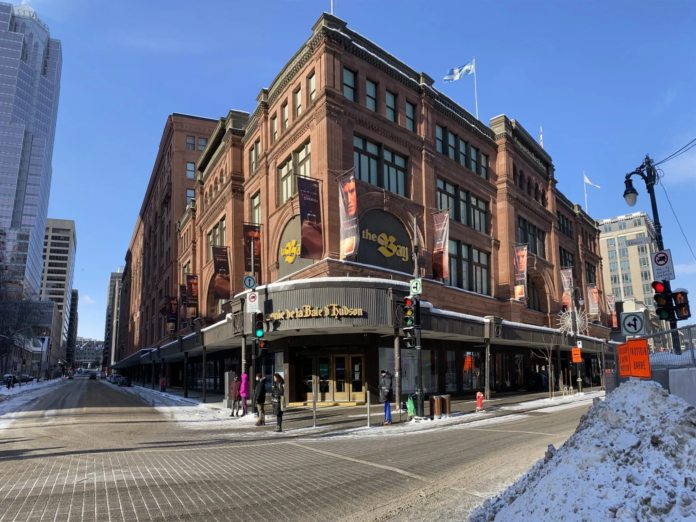
Hudson's Bay flagship store in downtown Montreal in 2021. Photo: Maxime Frechette
The dismantling of Hudson’s Bay’s once-sprawling Canadian retail empire continued this week as the Ontario Superior Court of Justice approved a motion brought forward by RioCan Real Estate Investment Trust to place its joint venture with the Hudson’s Bay Company into court-supervised receivership.
The ruling, handed down Tuesday by Justice Osborne of the Commercial List, marks another milestone in the long-running saga surrounding the collapse of one of Canada’s most historic retailers.
The joint venture, first established in 2015, involves 12 high-profile retail properties spanning some of the most valuable urban and suburban locations in Canada. The portfolio includes former Hudson’s Bay flagship stores in downtown Montreal, Vancouver, Calgary, and Ottawa, alongside major suburban shopping centres such as Yorkdale Shopping Centre and Scarborough Town Centre in Toronto.
RioCan holds a 22 percent interest in ten of the joint venture properties and a 61 percent controlling interest in two others: Oakville Place and Georgian Mall. Hudson’s Bay, through its wholly owned subsidiary, owns approximately 78 percent of the broader venture.
FTI Consulting Appointed as Receiver
With court approval now secured, FTI Consulting Canada Inc. has been appointed as receiver to take operational control of the joint venture portfolio. The receiver will be responsible for stabilizing the properties, addressing the outstanding debt obligations, and exploring possible strategies to maximize asset value for creditors and stakeholders.
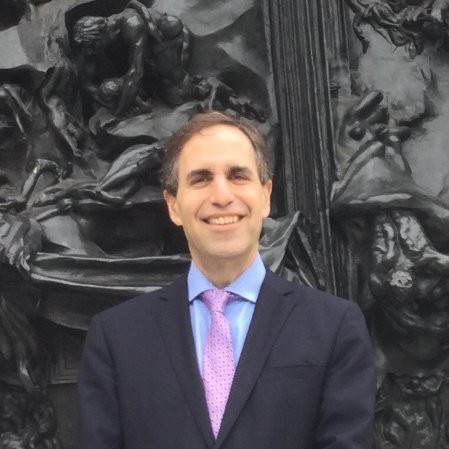
“This appointment was necessary to bring structure to a highly complicated situation involving numerous properties, mortgages, and market conditions,” said retail expert Carl Boutet in an interview. “They needed someone independent who could begin the process of determining what happens to each asset on a case-by-case basis.”
Carl Boutet
Financial Pressures Led to Receivership
Hudson’s Bay, which filed for creditor protection under the Companies’ Creditors Arrangement Act (CCAA) in March 2025, had ceased making rent payments on the joint venture properties as part of its restructuring. That decision severely impacted the financial standing of the joint venture.
RioCan previously disclosed a $209 million loss on its investment in the partnership, and with no bids emerging for the JV assets during a court-approved Sales and Investment Solicitation Process (SISP), receivership became the most viable option to protect creditor interests.
“In reality, these properties are extremely complicated to value,” Boutet explained. “In many cases, the debt secured against these buildings may actually exceed their current market value—especially given the condition of some of these older flagship properties.”
Hudson’s Bay Yorkdale on June 1, 2025, shortly before closing forever. Photo: Craig Patterson
Substantial Mortgages on Each Property
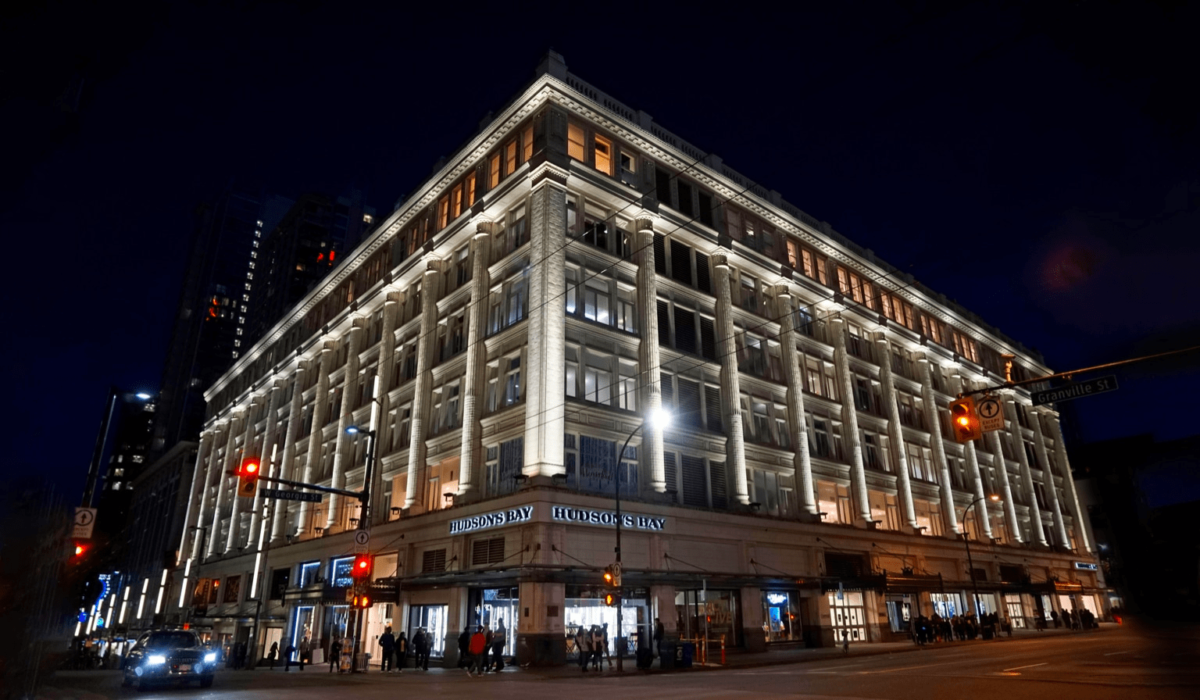
The mortgage debt attached to the joint venture assets illustrates the challenge. According to documents reviewed in court, the downtown Montreal property carries $161 million in mortgage debt, Vancouver’s flagship is encumbered by $202 million, downtown Calgary sits at $105 million, and Ottawa’s property includes first and second mortgages totalling $73 million. Even suburban properties like Yorkdale carry significant debt loads, with $75 million secured against that location.
“These are eye-watering numbers,” Boutet noted. “The sheer scale of the debt on these properties really limits what can be done with them immediately.”
Prospects for the Properties Vary Widely
The receivership opens a range of future possibilities for the 12 properties involved. Some may be redeveloped, others may be leased to new tenants, and several could be sold outright depending on market conditions, municipal approvals, and the willingness of developers to invest.
“There really are two distinct categories of assets here,” said Boutet. “The suburban shopping centre anchor locations like Yorkdale and Laval may have more straightforward paths toward redevelopment or repositioning, likely for mixed-use residential or retail projects. But the historic downtown flagships are a completely different story.”
Boutet points to substantial challenges facing many of the downtown locations. The buildings, often dating back more than a century, face significant costs related to seismic upgrades, historic preservation requirements, and substantial structural refurbishments.
“These aren’t buildings you can simply hand over to the next retailer,” he said. “The level of work needed to bring them up to modern standards is staggering—and very expensive.”
Downtown Vancouver Hudson’s Bay flagship store (Image: Streetworks Developments)
Boutet described the flagship Hudson’s Bay building on Sainte-Catherine Street in Montreal as emblematic of the challenge.
“This building essentially created St. Catherine Street back in the Morgan’s days of the 1890s. Structurally, it’s sound, and it could even accommodate additional floors if someone wanted to develop upward. But the costs involved in restoring and modernizing these spaces are enormous,” he said.
The Montreal store has attracted conceptual redevelopment proposals, some of which involve adding rooftop gardens, museums, residential units, and public spaces. However, none have advanced past the early planning stages or obtained municipal approvals.
“These are buildings where the land alone may actually be worth more than the structures sitting on them,” Boutet explained. “The structures, while iconic, have become financial liabilities.”
Social Pressures May Accelerate Redevelopment Needs
The risk of these buildings sitting vacant for extended periods also raises concerns beyond the financial. Homeless encampments have already appeared near some of the vacant locations. Boutet referenced the situation near the Montreal property, which he described as increasingly precarious.
“Without some type of interim activation—like pop-ups or public programming—these empty downtown stores could become social flashpoints. We saw this with the old Woodward’s building in Vancouver before its redevelopment, where homelessness became a major issue,” he said.
Boutet anticipates that municipalities will put pressure on future owners or developers to keep ground floors activated while longer-term redevelopment plans unfold.
Tent outside a display window of the former Hudson’s Bay flagship store in downtown Montreal. Photo: Carl Boutet
Because of the complexity and cost, Boutet expects that redeveloping the downtown flagships will require intricate public-private partnerships involving multiple levels of government, private developers, heritage groups, and philanthropic organizations.
“It’s going to take federal, provincial, and municipal cooperation alongside private capital to make any of these major redevelopments viable,” he said. “These buildings sit on incredibly valuable real estate. But unlocking that value requires careful and costly planning.”
Boutet even cited examples where local museums, such as Montreal’s McCord Museum, could play a role in future redevelopment scenarios by anchoring portions of the repurposed sites.
Despite the enormous obstacles, Boutet believes the underlying real estate remains highly desirable.
“The downtown cores of Canadian cities aren’t going to shrink. Urbanization trends still favour density and centrality. Whoever can solve the puzzle of repurposing these buildings will be rewarded with irreplaceable real estate holdings,” he said.
In some cases, solutions may involve new forms of student housing, urban logistics hubs, or carefully designed mixed-use towers incorporating retail, office, and residential components.
“These are once-in-a-generation redevelopment opportunities. But they’re not quick fixes. This will be years in the making,” Boutet emphasized.
Ruby Liu’s Bid Does Not Include Downtown Locations
The RioCan receivership proceeding is legally and financially separate from the parallel process involving Weihong (Ruby) Liu’s ongoing bid to acquire 28 former Hudson’s Bay store leases for her planned department store revival. Her bid notably excludes the downtown flagship stores now controlled by the RioCan joint venture and the receiver.
“At this stage, Ruby Liu appears to be focusing on more operationally manageable locations as she launches her new concept,” Boutet said. “The complexity and cost of taking on the historic downtown properties may simply be too much for any one operator—especially a newcomer.”
Rendering of Ruby Liu chain of stores, set to launch this year in Canada.
Receivership Represents Final Chapter in Bay’s Real Estate Exit
The approval of RioCan’s receivership motion represents one of the final major steps in Hudson’s Bay’s unraveling as a traditional department store chain. The company completed liquidation sales and closed its remaining stores on June 1, 2025, ending more than 350 years of continuous retail operations.
For Hudson’s Bay, the receivership effectively severs the company’s remaining ties to its most valuable real estate holdings. What happens next will likely unfold over several years as the receiver markets the properties and stakeholders work to craft redevelopment solutions.
“It’s the end of the line for Hudson’s Bay as Canadians knew it for generations,” said Boutet. “But at the same time, it’s the beginning of a very complicated and fascinating new chapter in Canadian retail and urban real estate.”
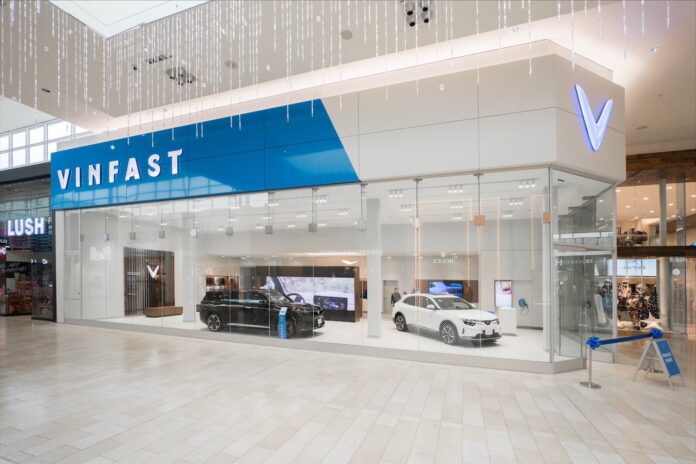
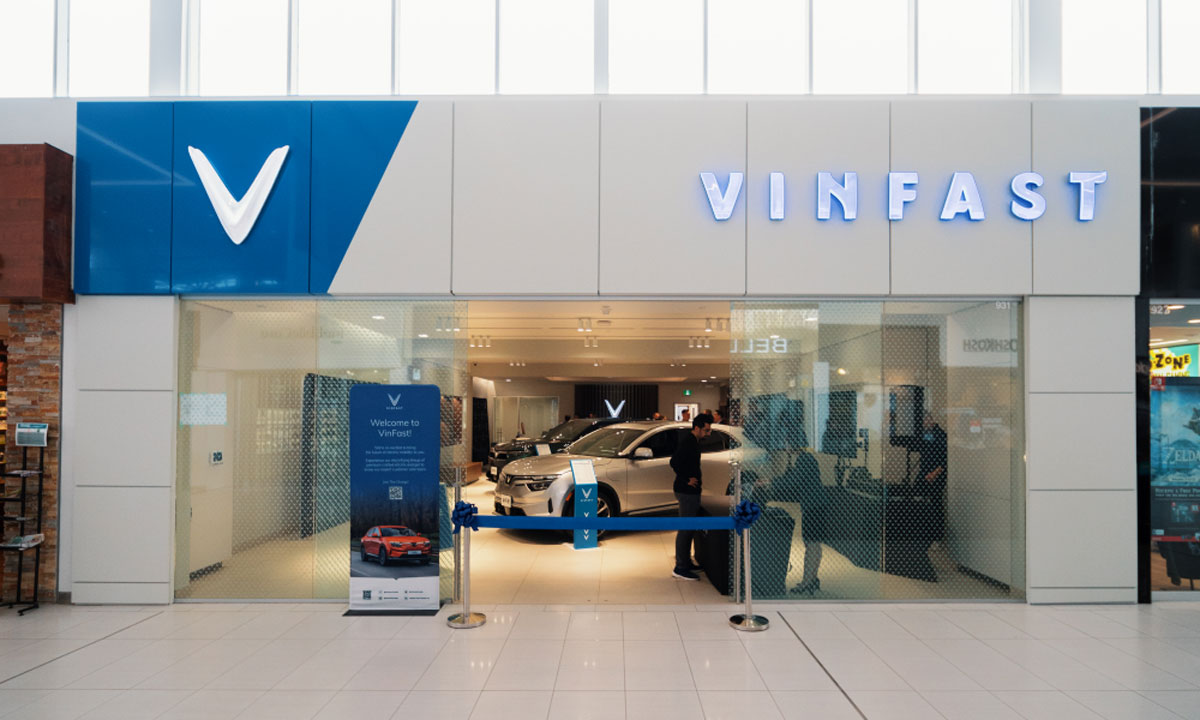
VinFast at Yorkdale Shopping Centre (Image: VinFast)
Vietnamese electric vehicle manufacturer VinFast is scaling back its Canadian retail operations, closing half of its 10 corporate-owned stores amid a challenging EV market. The move comes just two and a half years after VinFast entered the country with an ambitious plan to disrupt the electric vehicle sector and build a direct-to-consumer sales model across Canada.
VinFast officially launched in Canada in late 2022 with great fanfare, opening its first showroom at Toronto’s Yorkdale Shopping Centre in November of that year. The flagship location was part of an aggressive expansion strategy aimed at rolling out more than 35 corporate-owned showrooms across the country. Within a few months, the company had opened a total of 10 retail locations — four in Ontario, three in Quebec, and three in British Columbia — all operated directly by VinFast, bypassing the traditional franchised dealership model.
Unlike many of its competitors, VinFast opted for high-profile locations within major shopping malls and standalone showrooms in key markets. The aim was to boost brand awareness and make it easier for Canadian consumers to experience the vehicles in highly trafficked urban environments.
However, as of May 2025, the automaker announced that five of its 10 stores will be shuttered. The closures include prominent mall-based showrooms at Toronto’s Yorkdale Shopping Centre, Vancouver’s Park Royal Shopping Centre, and Laval’s CF Carrefour Laval. Two additional locations are also slated for closure, though VinFast has not yet disclosed which specific stores these will be.
In a statement, the company emphasized the need for flexibility amid evolving market conditions, saying: “It is critical that we continue to adapt and evolve our business to ensure we are best positioned for future growth.”
Image: Vinfast
Full List of VinFast Canadian Locations
Here is a full breakdown of the 10 VinFast corporate-owned stores across Canada as of mid-2025, with current closure status:
Ontario:
Toronto Showroom (Yorkdale Shopping Centre) – Closing 3401 Dufferin St, Toronto, ON M6A 2T9
Mississauga Showroom & Service Centre 5505 Ambler Drive, Mississauga, ON L4W 3Z1
Oakville Showroom & Service Centre 2270 South Service Road, Oakville, ON L6L 5M9
Guelph Showroom & Service Centre 945 Woodlawn Rd W, Guelph, ON N1K 1G2
Quebec:
Laval Showroom (CF Carrefour Laval) – Closing 3003 Boul. le Carrefour, Laval, QC H7T 1C7
Laval Showroom & Service Centre (Bd Chomedey) 2350 Bd Chomedey, Laval, QC H7T 2W3
Saint-Laurent Showroom & Service Centre (Trans-Canada Highway) 9775 Route Transcanadienne, Saint-Laurent, QC H4S 1T6
British Columbia:
West Vancouver Showroom (Park Royal Shopping Centre) – Closing 2002 Park Royal S, West Vancouver, BC V7T 2W4
New Westminster Showroom & Service Centre 210 12th St, New Westminster, BC V3M 4H2
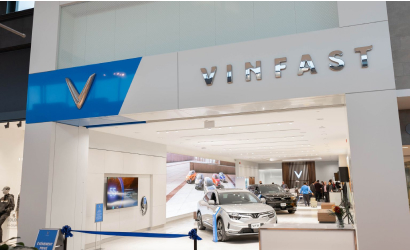
VinFast at Park Royal in West Vancouver. Photo: VinFast
Sluggish Sales Prompt a Strategic Shift
VinFast’s pullback in Canada is being driven largely by a combination of underwhelming sales, shifting government incentives, and broader headwinds facing the electric vehicle industry.
In 2023, VinFast sold just 89 vehicles across Canada. Although sales picked up in 2024 with the introduction of the VF8 SUV, reaching approximately 2,000 units sold for the year, the numbers fell significantly short of the company’s initial projections. In the first quarter of 2025, VinFast reported Canadian sales of 300 VF8 models and just 15 units of its larger VF9 SUV.
Multiple factors have contributed to the company’s struggle to gain traction in Canada. Rising interest rates have cooled consumer demand across multiple sectors, while reductions to both federal and provincial electric vehicle rebates have made EVs less affordable for many buyers. In several provinces, programs that previously offered up to $5,000 or more in purchase incentives have been scaled back or suspended, further discouraging potential customers.
At the same time, competition in the Canadian EV market has intensified, with established brands such as Tesla, Hyundai, Ford, and Volkswagen offering a growing lineup of electric models backed by extensive dealership networks, stronger consumer confidence, and more robust service infrastructures.
A Global Strategy in Flux
The Canadian downsizing is part of a larger reevaluation of VinFast’s overall business model in North America. After initially pursuing an exclusively direct-to-consumer strategy in both Canada and the United States, VinFast has begun pivoting toward franchised dealerships in key U.S. markets. In April 2025, the company announced that it would close all of its company-owned showrooms in California, shifting U.S. sales entirely to a network of franchised dealers.
In its most recent update, VinFast confirmed it had developed a franchised dealer network of 38 operational and soon-to-open locations across 16 U.S. states, including California. The automaker has also hinted that it may pursue a similar franchising model in Canada to supplement or replace its corporate-owned stores in the future.
Outside North America, VinFast has signalled that it may also reconsider its direct sales approach in Europe as it seeks to optimize global operations. The automaker has faced mounting financial pressures after ambitious international expansion efforts encountered slower-than-expected consumer adoption and rising operational costs.
VinFast at CF Carrefour Laval. Photo: VinFast
The Promise and Pause of VinFast’s Manufacturing Ambitions
When VinFast first announced its North American expansion, it included plans for a massive new factory in Chatham County, North Carolina. The proposed $4 billion facility was slated to include an annual production capacity of 150,000 vehicles, as well as manufacturing lines for batteries and electric buses.
However, in 2024, the company announced it was suspending construction of the North Carolina plant, citing the need to prioritize operational efficiency and better align production with actual market demand. This pause raised further questions about VinFast’s ability to scale production globally while simultaneously building out its distribution and support infrastructure.
Meanwhile, plans to introduce a lower-cost VF3 model in North America have also been shelved, with no firm timeline provided for its potential launch.
VinFast’s Canadian Entry: From High Hopes to Hard Reality
VinFast’s entry into Canada in 2022 was marked by optimism and confidence. Backed by Vietnam’s largest private conglomerate, Vingroup, the company invested heavily in brand-building and infrastructure. Its early messaging promised Canadians stylish, affordable electric SUVs combined with high-end customer experiences and innovative technology.
VinFast also emphasized its unique ability to rapidly scale production, having built its original manufacturing plant in Vietnam in just 21 months. Originally producing internal combustion vehicles and electric scooters, the company fully committed to electric vehicle production in 2021 with its VF8 and VF9 models engineered for global export.
Yet as VinFast’s experience in Canada illustrates, even well-capitalized entrants face significant barriers in cracking mature automotive markets. The challenges of building consumer trust, securing adequate service capacity, and competing against long-established brands have proven formidable.
Commitment to Service Despite Downsizing
Even as it pulls back from several retail locations, VinFast has publicly reaffirmed its commitment to existing Canadian customers. The company stated that it will expand its after-sales service network nationwide to support warranty repairs, maintenance, and parts availability.
This focus on maintaining service capacity is especially critical as the company works to reassure early adopters concerned about the long-term viability of their purchases amid store closures.
Future Outlook: VinFast’s Canadian Experiment Enters a New Phase
The contraction of VinFast’s retail footprint in Canada reflects the broader volatility currently gripping the global electric vehicle market. While long-term forecasts continue to predict eventual mass adoption of EVs, short-term sales fluctuations and policy uncertainties are forcing automakers to recalibrate their strategies.
For VinFast, the Canadian market remains a work in progress. The company has indicated it remains committed to Canada, but its original vision of dozens of corporate-owned stores selling directly to consumers has quickly given way to a more pragmatic—and potentially franchised—future.
The next 12 to 18 months will likely determine whether VinFast can build the necessary foundation to thrive in Canada’s highly competitive EV landscape, or whether it joins the growing list of international brands that have struggled to gain traction in North America.
Removing the 5% GST on all restaurant food would save Canadians $5.4 billion in taxes annually and create 80,000 new jobs, according to new economic analysis by Restaurants Canada released on Wednesday.
Kelly Higginson
“Canadians are struggling with affordability and worried about their jobs. Removing the sales tax from prepared food, including the food sold at restaurants, would not only provide them with some relief, but bolster the economy,” said Kelly Higginson, President and CEO of Restaurants Canada.
“The recent GST/HST holiday showed us that making all food tax-free stimulates spending, creates jobs and protects restaurants from bankruptcy. We urge the new federal government to make it permanent as part of their plan to address Canada’s economic challenges.”
Currently, prepared food is subject to sales tax, but groceries, as well as many frozen and ready-to-heat meals, are tax-free.
The recent GST/HST holiday, which removed sales tax from restaurant food among other items, led to a 8.6% increase in commercial foodservice sales in January. January and February 2025 also saw a 50% year-over-year decrease in foodservice bankruptcies, as well as the creation of 24,000 new jobs, more than the previous 12 months combined, said the national organization.
Based on these data, Restaurants Canada estimates that permanently removing the 5% GST on all food would lead to:
64,300 new foodservice jobs (40% of which are likely to go to people under 25)
15,685 additional spinoff jobs in related industries
2,680 new restaurants
$5.4 billion in tax savings to consumers
$1.5 billion in additional tax revenue and EI savings for government
Restaurants Canada is a national, not-for-profit association advancing Canada’s diverse and dynamic foodservice industry. Restaurants are a $120 billion industry employing nearly 1.2 million Canadians and is the number one source of first-time jobs in Canada.
Photo by Gary Barnes
“Prepared food is no longer just a luxury for Canadians,” added Higginson. “Whether its students grabbing lunch on their break, working parents picking up a meal for the family on the way home from soccer practice, or seniors getting meal delivery, many Canadians rely on prepared food to feed themselves, and they should not be taxed for it.”
Restaurants Canada said the savings from exempting all food from sales taxes would disproportionately benefit lower income households, who spend a greater share of their budgets on food than higher income households. More spending in the foodservice sector also has a greater effect in the economy at large than other sectors: for every $1 in sales, the foodservice industry generates $1.80 in economic output, compared to $1.56 generated by other industries.
“This measure is an investment in Canadians’ quality of life and in the foodservice businesses that drive the economies of every community across the country,” noted Higginson. “Food is food and should be treated equally, regardless of where it was purchased. It’s time to fix this unfair tax burden on food.”
Canadians can support Restaurant Canada’s campaign to exempt all food from sales tax at foodisfood.ca.
Huda Beauty, the globally renowned beauty brand which is widely available in Canada, has announced that it has reclaimed full ownership as an independent brand following the conclusion of its eight-year partnership with TSG Consumer Partners.
In 2017, TSG Consumer acquired a minority stake in the company. Now, in 2025, Huda Kattan, Founder and Co-CEO of Huda Beauty, has officially bought back her equity, regaining full control of the brand.
With this move, Huda Beauty is a fully independent company, becoming one of the rare founder-fully-owned brands in the beauty space. This milestone marks a powerful new chapter for the brand, reinforcing its dedication to innovation, authenticity, and a deeply engaged community, while reaffirming its commitment to a founder-led vision, it said in a news release.
Huda Beauty is more than just a makeup brand, it’s a movement rooted in self-expression, empowerment, and authenticity. Built on the belief that ‘Beauty is Self-Made,’ the brand continues to champion individuality with a focus on inspiring and supporting its global community, it explained.
“Taking back full ownership of Huda Beauty is a deeply very important moment for me,” said Huda Kattan. “It says that while many of us dreamers have visions that we are told are too big or not possible to do alone, in actuality, you have all the power you need to change the world yourself! This brand was built on passion, creativity, and a desire to challenge the beauty industry. As we step into this new chapter, I’m more committed than ever to pushing boundaries, staying true to our roots, and showing up for our incredible community every step of the way.”
Since its inception, Huda Beauty said it has revolutionized the beauty space, blending artistry with innovation to create a brand that resonates globally.
With Huda Kattan now at the helm as the sole owner, and her husband, Christopher Goncalo, serving alongside her as Co-CEO, and her sister, Alya Kattan leading their Social Strategy, the company said it looks forward to an exciting future of bold product launches, deeper community engagement, and continued industry disruption.
In an era where economic uncertainty and skepticism toward international models are reshaping how people earn, a new Canadian platform is stepping in to offer a smarter solution. Dorado, a proudly Canadian-owned and operated platform, has officially launched, giving individuals and businesses across the country a fresh way to earn income by referring essential services like mobility, internet, and energy.
Built in Canada, for Canadians, Dorado positions itself as a transparent, values-driven alternative to traditional referral and MLM structures. The platform is free to join, simple to understand, and designed to support earners on their own terms—with no fine print, buy-ins, or complicated compensation schemes.
“We built Dorado to flip the model,” said Scott Simpson, Founder and CEO. “This isn’t about selling overpriced products to your friends. It’s about helping people and businesses earn money by referring services Canadians actually use—like Mobility, PureFibre internet, and energy—with more to come.”
Source: Dorado
Unlike conventional platforms that often rely on hype, hidden fees, or quotas, Dorado aims to keep things simple. Brand Ambassadors can start at no cost, refer essential services, and earn real commissions—without the pressure of inventory or minimum sales.
As regulatory landscapes tighten and costs rise, Dorado offers a stable, compliant, and scalable alternative, backed by established national partners, with more expected to join in 2025.
Key highlights of Dorado include:
100% Canadian conceptualized, owned, and operated
Free to join—no kits, no fees, no monthly minimums
Designed for individual and business earners
Built with automation and compliance at its core
Backed by trusted national service partners
The platform is already welcoming early Brand Ambassadors across the country, turning everyday life events—such as moving, switching providers, or upgrading services—into real income opportunities.
To kick off its nationwide rollout, Dorado will host its first opportunity event, “Earn Smarter and Live Freer,” on June 10. This virtual experience is set to introduce the platform to early adopters and partners, offering a deeper look into how Canadians can earn, save, and grow by sharing essential services.
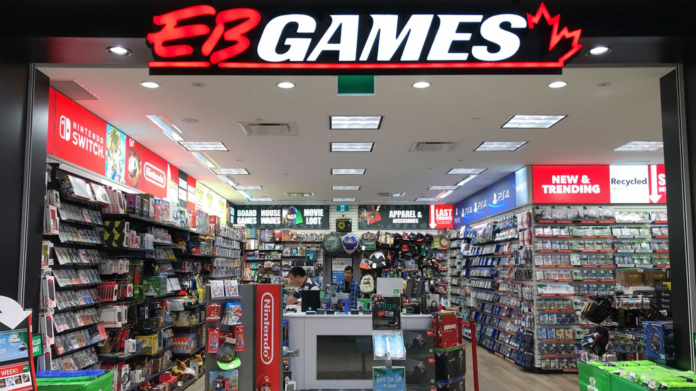
EB Games has announced the return of its popular midnight release event, set for June 5.
Gaming enthusiasts are invited to join the retailer for this thrilling night as it launches the Nintendo Switch 2 and dozens of new games and accessories. Walk-in quantities will be available – while supplies last.
In celebration, stores will be stocked with a diverse selection of accessories, toys, and other gaming essentials to enhance your experience, said the company.
Adding to the excitement, the company will host a Mario Kart World activation on Crescent Street in Montreal during the Crescent Street Grand Prix Festival race weekend festivities, providing fans with a chance to dive into the exhilarating racing experience of Mario Kart World amidst the buzz of race weekend.
“I’m unbelievably proud of what the team has accomplished over the past few weeks. Bringing back midnight launches and organizing the race weekend event showcases our commitment to our community and our passion for gaming,” said Stephane Tetrault, owner of EB Games.
Jim Tyo
“The release of the Nintendo Switch 2 on June 5th will be an epic day for the gaming community, and we are thrilled to announce that we will be opening 132 locations at 12am EDT, ensuring our customers are among the first to play,” added Jim Tyo, President of EB Games.
With over 185 stores across Canada, EB Games leads the market in Video Game and pop culture related Toys & Collectibles.
Recently it was announced that GameStop Canada, previously known as Electronics Boutique (EB Games), is being revived under its original branding following a major acquisition. Tetrault, a well-known French-Canadian entrepreneur with deep roots in the collectibles and entertainment sectors, officially acquired Electronics Boutique Canada Inc. from GameStop Global Holdings S.A.R.L.
With the acquisition, the retailer relaunched under the name EB Games Canada, a brand many Canadians still associate with their formative gaming years.
Scene+ members can now book travel packages through Scene+ Travel, Powered by Expedia, giving them access to new ways to save and opportunities to earn and redeem points when planning their next travel adventure.
Plus, when redeeming their Scene+ points for a travel package – airfare and hotel, members can now also earn points on the hotel portion of their package, the partners announced recently.
“This is just the latest example of our commitment to provide Scene+ members with unique offers and new ways to earn and redeem Scene+ points on the things that matter the most to them.”
As Canadians look for ways to stay home and explore their own country, Scene+ Travel, Powered by Expedia makes that easier with offers that focus on domestic travel to cities like Vancouver, Halifax, Toronto, Calgary and Montreal. Members looking to travel the globe will also have access to promotions for popular international destinations like Cancun, London, Tokyo and Mumbai, explained the partners.
“There are no limitations on destinations and Scene+ members have the flexibility to pay with points, their preferred payment card, or a mix of both. When booking packages in June, members can earn 3,000 bonus points and as always there is no minimum points balance required to redeem towards any package. Having a Scotiabank Scene+ credit card remains the best and fastest way for members to earn Scene+ points and travel faster. Members who pay with an eligible Scotiabank Scene+ credit card can earn up to 6X the points on any booking,” they said.
Scene+ is a carefully curated rewards program offering its more than 15 million members the opportunity to earn points in a wide variety of ways, in a manner that suits their buying habits and lifestyle. Through its relationship with Scotiabank, Scene+ members have an opportunity to accelerate their points-earning potential with eight options on credit or debit cards that give members access to a whole new level of rewards and value. Expedia Group, Inc. brands power travel for everyone, everywhere through its global platform.
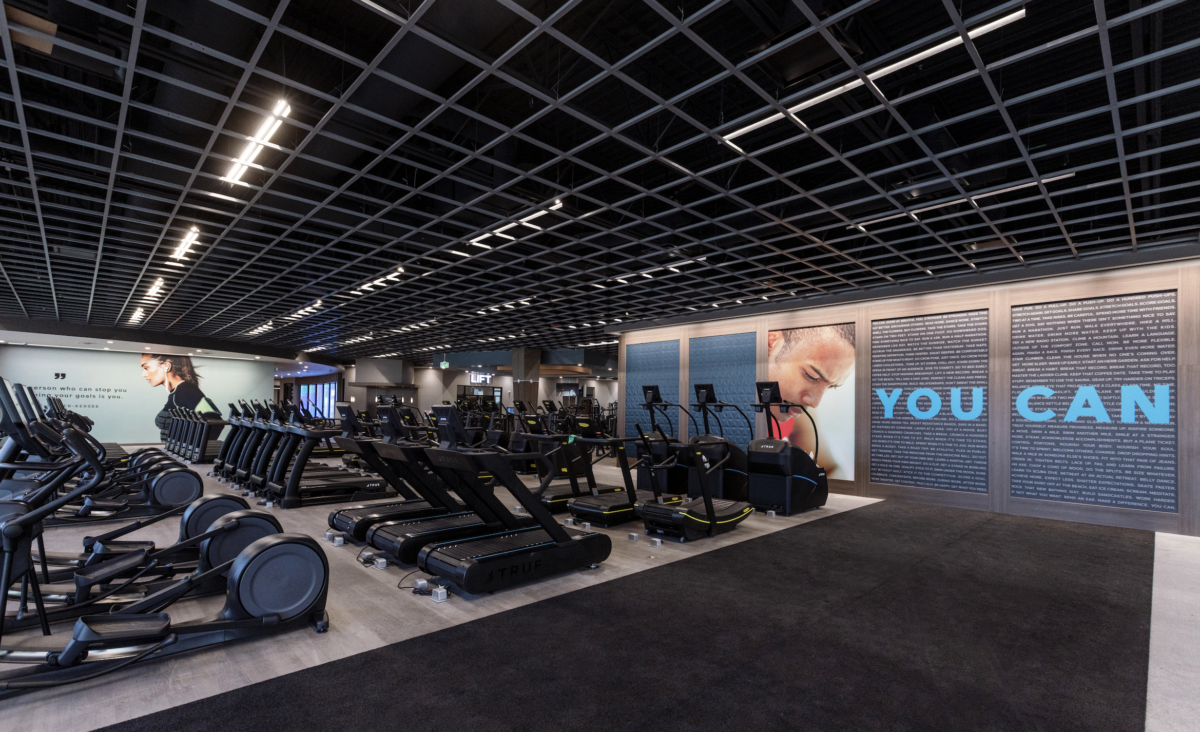
MOVATI Athletic, one of Canada’s foremost fitness and wellness brands, has launched construction of its fourth location in Edmonton, located in the rapidly expanding community of Harvest Hills.
Slated to open early 2026, this new facility is a testament to MOVATI’s continued commitment to delivering a new standard in premium service as part of an inclusive, and wellness-focused fitness experience, said the company.
“Seamlessly integrating form, function and luxury, this new club will offer seven thoughtfully designed boutique-style studios offering up to 200 in-person classes weekly, across yoga, cycling, Pilates, dance and functional training. Members will also enjoy a full-service aquatic area, spa-inspired locker rooms, a private dedicated women’s only fitness space and an array of refined wellness amenities – from contrast therapy suites and recovery zones to a luxe relaxation lounge – all within a single club,” it said.
“Edmonton has embraced MOVATI in such a powerful way, and we’re incredibly excited to continue growing alongside this amazing community,” said Chuck Kelly, President and CEO of MOVATI. “Opening our fourth location is a reflection of that connection. We’re proud to offer more than just a place to work out – we’re creating a space where people come to feel strong and supported in every part of their wellness journey.”
Chuck Kelly
With construction now underway, MOVATI said it is poised to bring its transformative fitness experience to even more Edmontonians. The new club is expected to create up to 120 permanent team positions and provide residents with access to one of the most comprehensive fitness destinations in the region.
Founded in 1997, MOVATI Athletic said it is redefining the fitness experience, blending the intimacy of boutique fitness with the luxury and amenities of a full-service club. As a top- tier fitness brand, MOVATI currently operates 18 clubs across Ontario and Alberta, with an expanding footprint fueled by exceptional member satisfaction and a strong community presence, it said.
“The opening of the fourth Edmonton location marks a significant milestone in MOVATI’s national growth strategy, focused on empowering more Canadians to feel welcome, feel comfortable and feel healthy,” added the company.
Freshii, which is part of the Foodtastic group of foodservice brands, is diving into one of the world’s most popular food trends with the launch of its first-ever lineup of premium poke bowls, now available at locations across Canada.
These include four premium poke bowls featuring sushi-grade salmon, prawns, ahi tuna, or tofu, along with sliced avocados and other fresh ingredients. Freshii is the largest national chain to offer a lineup of poke bowls to Canadian consumers, said the company.
“We’ve absolutely fallen in love with our new poke bowls,” says Chris Cann, Brand Leader at Freshii. “We’ve been working on this product launch for well over a year and the results are exactly what Freshii customers love — quality meals with unique flavours that satisfy your hunger and need for convenience and value.”
Chris Cann
Originating in Hawaii, poke bowls are a cornerstone of island cuisine, celebrated for their fresh ingredients and customizable nature, a philosophy that mirrors Freshii’s core values. Freshii’s new poke bowls embody this spirit, offering a fresh, balanced, and delicious meal option that delivers on flavour and nutritional value, explained Freshii.
“Crafted fresh in-store to deliver a premium, restaurant-style experience, the bowls are available in two flavour styles, teriyaki and ponzu, with a choice of salmon or tofu for the teriyaki bowls, and ahi tuna or prawns for the ponzu bowls. Each bowl features a generous base of rice and greens, topped with a selection of avocado, mango, pickled onions, and crispy wonton strips, plus bold finishing touches like sesame seeds, fried onions, and furikake. Guests can choose from signature sauces, such as Sriracha Mayo or Wasabi Aioli, for added depth and contrast,” it said.
The poke bowl recipes were created by Chef Jason Baker, Director of Culinary, QSR at Freshii and a Vancouver native, whose culinary vision is deeply rooted in the West Coast’s healthy lifestyle and abundance of fresh seafood. His expertise has been instrumental in crafting the lineup to ensure an authentic and exceptional taste experience.
“As someone who grew up on the West Coast, I’ve always been inspired by the way food can be both nourishing and bold in flavour,” said Baker. “With our new poke bowls, we wanted to bring that sense of balance and freshness to every bite using quality ingredients and global influences to create something that feels vibrant, satisfying, and true to Freshii’s mission.”
Freshii is a quick-service restaurant that provides health-conscious consumers with fresh, nutritious, and flavourful meal options on the go. Freshii is wholly owned and operated by Foodtastic, one of the largest restaurant franchise companies in Canada with a portfolio of restaurants that includes Milestones, Pita Pit, Quesada, Second Cup and 22 other renowned banners.