Five individuals and two youths have been charged in relation to an organized retail crime operation that took place at CF Chinook Centre, reported the Calgary Police Service (CPS) recently.
After seeing a concerning rise in organized retail crime, CPS worked alongside the Retail Council of Canada, retail businesses and security teams to develop a coordinated response to protect stores, staff and shoppers, it said in a news release.
“In 2024, retail theft in Canada surpassed $9 billion, with organized groups increasingly targeting high-value goods for resale. The rise in theft has led to increased security costs, declining sales for retailers and growing concern among frontline retail workers,” it said.
“So far in 2025, the CPS has received approximately 400 service calls from retail stores. Of those 400 calls, 142 were related to theft and five were related to robbery. In addition, we have received 3,273 reports through the CPS online reporting system.
“Retail crime may seem like a victimless offence, but it has real consequences for our community,” said Inspector Travis Juska. “It affects business owners, employees and our city’s overall sense of safety.”
In response, CPS said it is working closely with retailers to:
Share intelligence on known offenders and theft patterns.
Encourage timely reporting of all incidents and introduce a direct reporting channel to police and security teams.
Promote crime prevention strategies and staff training.
Between Tuesday, May 13 to Thursday, May 15, officers from the Organized Retail Crime Team conducted targeted enforcement at retail stores in CF Chinook Centre, located at 6455 Macleod Trail S.W., to identify and apprehend individuals involved in retail theft, it said.
Retailers and local businesses are urged to invest in theft deterrence technologies and to report all retail thefts to the CPS to ensure a united front against organized retail crime through the following ways:
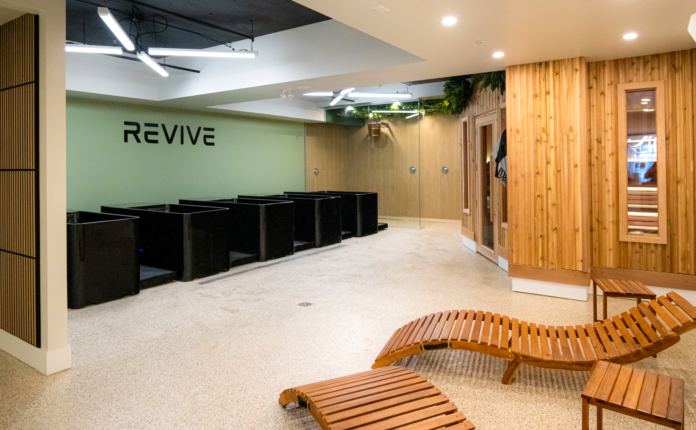
Revive Wellness Club at 2100 Bloor St. W. in Toronto. Image: Revive Wellness Club
Revive Wellness Club, a wellness brand originally founded in the United Kingdom, has officially opened its first Canadian location at 2100 Bloor Street West in Toronto’s High Park neighbourhood. The company’s expansion into Canada is spearheaded by Greg Aguilera, who owns 100% of the brand’s Canadian operations.
“This is just the beginning,” said Aguilera. “We plan to open up to 20 locations across Canada, with six corporately owned and the rest franchised. But we’re being selective—this is about doing it right, not just fast.”
Greg Aguilera
A New Kind of Wellness Hub
The Toronto location is more than a spa—it blends wellness, research, and community under one roof in just over 2,100 square feet. At its core is contrast therapy, the practice of alternating hot and cold exposure, delivered in a space designed to be calming and seamless.
“There are no corridors, barely any doors,” said Aguilera. “You flow from one space to another. We designed it to be an experience—not just a treatment.”
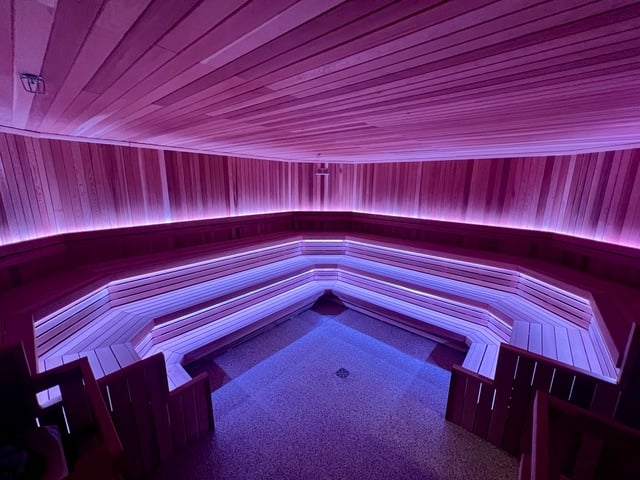
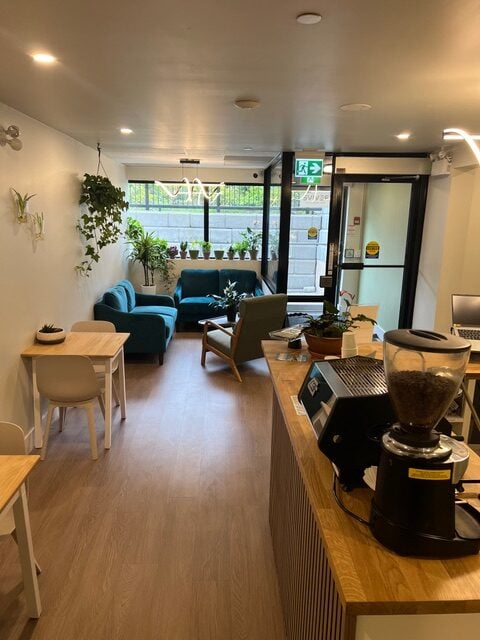
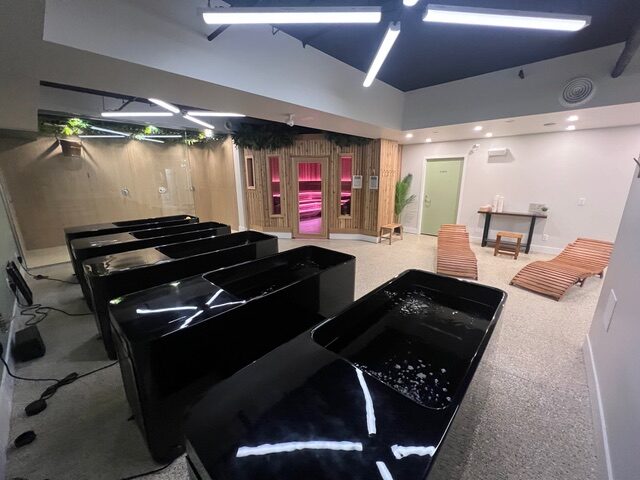
The facility includes a sauna, cold plunge pools, therapy spaces, and a coffee shop—a nod to both wellness and social connection. “We serve the best coffee around,” Aguilera said. “We partnered with Chaveta, a local coffee roaster at 994 Bathurst Street. Our team did six days of barista training. If we’re going to do something, we’re going to do it properly.”
Built from the Ground Up
The Toronto club was developed from scratch. “When we walked in, it was a construction site,” Aguilera said. “We’ve been here since it was a concrete floor. And already, we’re talking about what the first renovation would look like.”
While the space is compact, it’s designed for maximum impact. “This space packs a lot of punch,” he said. “And we’re already thinking—if the space next door becomes available, can we expand?”
A living wall, originally planned for the space, was put on hold due to its $100,000 price tag. “We’ve done the plumbing for it, so maybe down the road. But for now, we wanted to invest elsewhere,” said Aguilera.
Sauna in the Revive Wellness Club at 2100 Bloor St. W. in Toronto. Image: Revive Wellness Club
Grounded in Science and Research
Revive isn’t just about wellness trends. The brand is partnering with the University of Toronto and OCAD University to foster academic research and creativity.
“We’re working with U of T’s kinesiology, physiotherapy, and chiropractic departments to host student researchers who will study the effects of contrast therapy,” said Christabel, a team member and project leader. “We want real-world data on how this affects both physical and mental recovery.”
A community art project with OCAD is also underway. A mural will adorn a blank wall in the club, reflecting the neighbourhood and Revive’s values.
Aguilera emphasized the importance of these partnerships. “We’re not just saying we’re backed by science—we’re contributing to it,” he said. “Contrast therapy has been around forever, but the research is still limited. We want to change that.”
Wellness for Everyday People
While contrast therapy is often associated with elite athletes, Aguilera says the real growth in the UK—and now in Canada—is among everyday people.
“We thought our main clients would be Olympians and pro athletes,” he said. “But it turns out, the biggest growth is in the everyday person. People with stressful jobs, parents, commuters, anyone looking for one hour to reset.”
Sessions last around 60 minutes and include multiple rounds of hot and cold exposure. “It’s long enough to feel the benefits without diminishing returns,” said Aguilera. “You get dopamine release in the sauna, then you reactivate that with the cold. It’s about balance.”
Waiting area, with coffee, at Revive Wellness Club at 2100 Bloor St. W. in Toronto. Image: Revive Wellness Club
A Space to Unwind and Belong
Beyond the science and saunas, Revive is deeply focused on building community. The club hosts support groups, therapy talks, and will soon launch a running club.
“We want to be a space where people can come have a coffee, work remotely, go for a walk, or do a session,” said Aguilera. “People talk to each other here. The energy shifts depending on who’s in the room.”
The club’s philosophy is simple: wellness should be accessible, consistent, and community-driven. “This isn’t a once-a-year spa day,” he said. “This is something you build into your life.”
Eyes on Expansion—Cautiously Optimistic
Revive Canada has ambitious plans to expand to 20 locations by 2027. The next targets include areas across the Greater Toronto Area, followed by the Golden Horseshoe. Aguilera noted that British Columbia and Nova Scotia are also in consideration, with Kelowna cited as a possible location.
“We want to be careful,” he said. “We’re not giving out franchises like candy. Franchisees need to be passionate. If you’re not invested emotionally, this isn’t the business for you.”
Aguilera added that all of the operational systems in place—from hiring to training to community engagement—are designed with scale in mind.
“We built this for growth. But controlled, intentional growth,” he said.
Revive Wellness Club at 2100 Bloor St. W. in Toronto. Image: Revive Wellness Club
Global Aspirations—and a Wellness Cave
While Canada is the priority, the long-term vision is international. Aguilera owns 33% of Revive UK, which has four locations including partnerships with British Olympians and sports teams.
He teased one particularly ambitious idea: “We want to build the first Revive in a cave in South America,” he said. “A real cave. And all Revive members globally would have access.”
Not Just Wellness—Longevity
Ultimately, Revive is about more than just treatments. It’s about giving people a space to heal, decompress, and invest in their long-term health.
“People are starting to see that wellness isn’t a luxury—it’s a necessity,” said Aguilera. “This isn’t eyebrow threading. This is your vascular system, your mental health, your body’s ability to cope with stress. It’s real.”
Revive Wellness Club is now open to the public at 2100 Bloor Street West in Toronto. The team encourages locals to stop in—for a session, a coffee, or just a chat.
“This is just the beginning,” said Aguilera. “Toronto is the first chapter of a much bigger story.”
American Express has announced the return of its Backing International Small Restaurants grant program in Canada to help small, independent restaurants grow and thrive.
The company said the program, in its fourth year in Canada, is designed to help small, independent businesses that support their communities – specifically those serving or operated by individuals facing economic hardship – to make meaningful upgrades, like enhancing digital capabilities, improving kitchen operations and reimagining their dining spaces.
Applications in Canada are open until June 30, 2025. Eligible, independent food establishments located in Toronto and Montreal areencouraged to apply.
Kerri-Ann Santaguida
“At American Express, we’re proud to continue backing small restaurants that play such a vital role in our local communities,” said Kerri-Ann Santaguida, Vice President and General Manager, Merchant Services, American Express Canada. “These restaurants are more than just places to dine — they are cultural and community anchors. This program is designed to invest in this important group of business owners so they are able to preserve what makes their restaurants so special.”
Since launching in 2022, the Backing International Small Restaurants initiative has supported more than 135 restaurants worldwide. Among last year’s Canadian recipients was Montréal’s Bocadillo, a family-run restaurant that used its grant to expand its role as a hub for the city’s music and dance community.
“The grant had allowed us to host more live music events, upgrade our sound system, and improve the dining experience for our guests, ultimately helping us strengthen our connection with our local community in Montreal,” said Laura Uzcategui, owner of Bocadillo.
This year, Backing International Small Restaurants is bigger than ever and is open to applicants in three new countries — France, New Zealand, and Spain — in addition to dining establishments in Australia, Canada, Japan, Mexico, and the U.K. The program is offering $1.45 million USD in funding to 100 restaurants so they can make critical improvements, like upgrading kitchen equipment and making improvements to their storefront, said American Express.
David Downey
“The IDA Foundation is excited to partner once again with American Express to launch the fourth year of the Backing International Small Restaurants program,” said David Downey, Executive Director, IDA Foundation. “To empower these vital community anchors to thrive, this initiative provides essential support to the independent restaurants that are the heart and soul of our downtowns.”
Amex Canada also has a grant and mentorship program run by DMZ at Toronto Metropolitan University. Funded by Amex Canada and administered by DMZ, 100 Canadian small businesses will be selected to each receive a $10,000 CAD grant and mentoring support.
Retail Insider is streamlining its Canadian retail news from around the web to include a handful of top news stories that can be viewed quickly during the day. Here are the top stories from the past 24 hours.
Hudson's Bay store at Centerpoint Mall in Toronto. Image: LAA via Google Maps
A new chapter in Canadian retail is unfolding as Hudson’s Bay Company ULC has entered into a definitive agreement to assign up to 28 of its store leases in British Columbia, Alberta, and Ontario to a company controlled by billionaire Weihong (Ruby) Liu. The agreement, revealed Friday and confirmed by a press release, marks the first major store footprint acquisition amid the department store chain’s ongoing liquidation under the Companies’ Creditors Arrangement Act (CCAA).
The leases will be transferred to Ruby Liu Commercial Investment Corp., as the Vancouver-based businesswoman prepares to launch a brand-new department store concept designed to appeal to a broad, multicultural Canadian audience.
Employment opportunities at the new store will be prioritized for former employees of Hudson’s Bay. “This initiative reflects our commitment to supporting individuals and families and contributing to local communities,” Central Walk said in an emailed press release. Additionally, priority will also be given to suppliers and vendors who previously partnered with Hudson’s Bay.
The emailed press release stated, “Under the leadership of Ms. Ruby Liu, Chairwoman of Central Walk, the store locations will be transformed into modern department stores, bridging the gap between generations, providing immersive shopping experiences, and becoming a destination where all age groups thrive together.”
Hudson’s Bay store at West Edmonton Mall. Photo: Kyle Kempfer
The Company released the following statement from Ms. Liu, translated into English:
“Central Walk Canada is planning to conduct a series of transformative initiatives aimed at fostering intergenerational connections, promoting active lifestyles, and empowering youth through meaningful engagement as part of this transaction.”
“We are evolving to serve Canadians better. We believe every Canadian family deserves a brighter future. Join us in this journey of growth and connection. Together, we can build a more vibrant, caring, and forward-thinking multiculturalist community.”
The press release provides further insight into Central Walk, and the company’s owner’s plans for her new Canadian department store chain. The emailed press release from Central walk noted that the company specializes in the acquisition, development, and management of large-scale retail properties. The release goes on to say that “With a strong business foundation in Southeast Asia, the company has expanded its operations to Canada, aiming to transform traditional shopping centres into inclusive, multifunctional community hubs. The company’s mission emphasizes community engagement and the creation of diverse shopping environments that serve families and integrate retail, dining, entertainment, and cultural experiences.” The same environments are expected to be part of her new Canadian department store chain.
A Landmark Deal in Canadian Retail History
“This is a monumental development,” said Carl Boutet, retail strategist and founder of StudioRx Advisory, in an interview. “We haven’t seen a new department store chain launch at this scale in Canada since Target’s ill-fated expansion over a decade ago. But unlike Target, this concept is homegrown, community-focused, and clearly aims to rewrite what a department store can be.”
Carl Boutet
Liu’s newly inked deal, which is still subject to court and landlord approval, covers store leases in shopping centres where Hudson’s Bay is in the process of winding down operations. The deal was orchestrated as part of a lease monetization process approved by the Ontario Superior Court of Justice (Commercial List).
In a video posted to Chinese social media platform Rednote, Liu was seen signing the contracts surrounded by staff, counting down aloud before putting pen to paper and erupting into applause. Champagne toasts followed—a staged yet symbolic gesture of what may be a historic shift in the retail landscape.
From Mall Owner to Retail Operator
Liu is no stranger to Canadian retail. Through her company Central Walk, she owns three major shopping centres in British Columbia—Mayfair Centre in Victoria, Woodgrove Centre in Nanaimo, and Tsawwassen Mills near Vancouver. Her transition from landlord to retailer underscores a rare full-circle retail strategy.
“She’s in a very unique position,” noted Boutet. “She knows what it takes to make malls work and has direct experience with leasing, tenant mixes, and foot traffic drivers. That knowledge could prove invaluable as she flips the switch from property manager to anchor tenant.”
Insiders suggest that at least three of the 28 assigned leases are located within Liu’s own malls. “We suspect those were always on her radar,” Boutet added.
Weihong (Ruby) Liu, left, prepares to sign documents with Linda Qin at the Central Walk office at Tsawwassen Mills on Friday, May 23. Image: RedNote
A New Kind of Department Store
Unlike Hudson’s Bay’s traditional retail format, Liu’s new concept—still unnamed—will be highly experiential, with immersive elements, a store-in-store format, and a distinctly multicultural approach.
“She’s not trying to recreate the past,” said Boutet. “This will be something very different. Think a hybrid between department store, cultural centre, and experiential marketplace. The goal is to create something joyful and community-driven.”
According to early concept materials shared internally on Rednote, the store will include a mix of fashion, beauty, small-format groceries, and food service. “We’re talking about a space that could host cosplay events, 5D theatres, and virtual reality zones,” said Boutet, referencing Liu’s existing activations at Tsawwassen Mills. “This is more than shopping—it’s entertainment, community building, and cultural engagement.”
Brand Building from the Ground Up
Unlike other bidders in the Hudson’s Bay restructuring process, Liu did not pursue the brand’s intellectual property. That portfolio—including the HBC name, logo, and trademarks—was acquired last week by Canadian Tire Corporation for $30 million.
As a result, Liu’s venture will be launching from scratch.
“She’s going to need to build brand awareness from zero,” said Boutet. “But there’s a strong grassroots foundation already forming in certain communities—especially Chinese and multicultural segments that follow her on Rednote. Word of mouth will be crucial in the early days.”
While Liu is active on Chinese social media, her team is likely planning a broader marketing push across platforms like Instagram, TikTok, and Meta. “I’d expect them to start showing up in Canadian mainstream media soon,” Boutet said.
A Champaign celebration following paper signing at Tsawwassen Mills on Friday, May 23, 2025. Image: RedNote screen shot
A Race Against the Clock
The path ahead won’t be easy. Court documents show that 62 Hudson’s Bay leases failed to receive any qualified bids. Liu’s deal is the most expansive of the 12 qualified bids for 39 leases, and with it comes pressure to activate spaces quickly.
“She now holds the keys to over two dozen massive retail boxes,” Boutet emphasized. “But as soon as Hudson’s Bay is out, she’s on the hook for those rents. That means rapid store build-outs, fixturing, staffing, and activating the space—some with food services and immersive experiences that take time and capital.”
He added, “This isn’t like just stocking shelves. She’s talking about full-scale food operations and experiential zones. And many of these stores need renovations. Some piecemeal, some major.”
Landlords and Legal Hurdles Still Ahead
The next step will be securing landlord consents. Each lease transfer requires approval from individual landlords, some of whom may need convincing—particularly if the proposed use veers away from traditional department store functions.
“Technically, these are being called department stores, which helps fit lease clauses,” Boutet explained. “But landlords also care about viability. They want tenants that will drive traffic and stay solvent.”
Given Liu’s dual role as both landlord and now prospective anchor tenant, some negotiations may be smoother than others. “She knows how to speak their language,” Boutet said.
Weihong (Ruby) Liu holds up a piece of paper showing a working title for her new department store chain launching this year. Alwin Chen is head of marketing for the new department store. Image: RedNote
The Bigger Picture for Canadian Retail
The Canadian retail sector has not seen a player enter the field at this scale since pre-Target days. Liu’s simultaneous bid for 28 stores, mostly concentrated in urban and suburban malls, could fill a significant gap left by Hudson’s Bay and Nordstrom exits.
“This could be the most significant retail startup in Canadian history if she succeeds,” said Boutet. “She’s showing what bold investment in brick-and-mortar can look like—even at a time when everyone is talking about online and AI.”
According to court documents, 17 total bids were received for Hudson’s Bay assets, but Liu is the first to secure a definitive agreement. No details have yet emerged on who will take over the remaining leases.
What Comes Next
Hudson’s Bay plans to complete its liquidation by the end of May. Liu’s lease agreement must receive court approval by May 30. Until then, all eyes are on what will follow this monumental step.
“Retailers across Canada are watching this very closely,” said Boutet. “Because if this works, it won’t just fill a void—it could redefine department stores for a new generation.”
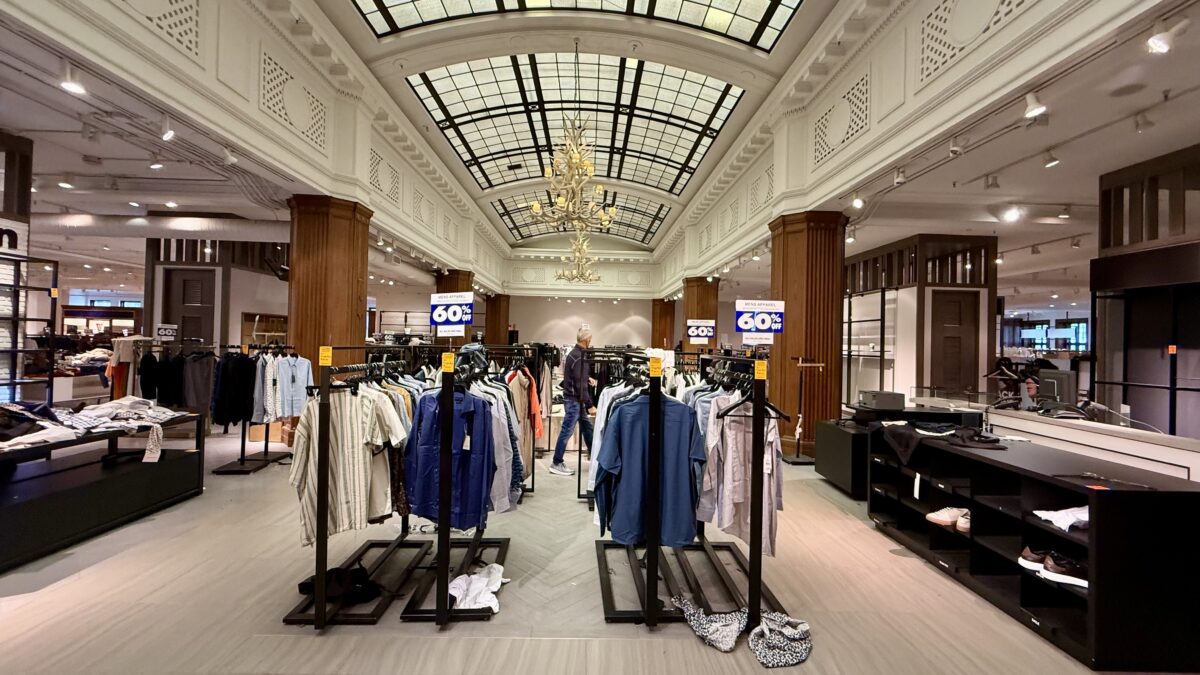
Men’s floor on 6 at Hudson’s Bay downtown Vancouver on May 17, 2025. Photo: Craig Patterson
A Calculated Gamble
Though critics may question the feasibility of launching 28 stores in one fell swoop, Liu’s track record as a developer and businesswoman suggests calculated ambition. “This is not someone who’s just throwing money at a trend,” Boutet concluded. “She’s made it this far by taking smart risks. And if she pulls this off, it’ll go down as one of the most impressive retail turnarounds in Canadian history.”
Whether Liu’s new chain becomes a cornerstone of modern Canadian retail or another ambitious footnote remains to be seen. But one thing is clear: the death of the department store may be overstated—and Ruby Liu may be its most unlikely revivalist.
From the Boston Tea Party to today's targeted tariffs. Image Credit: George Danby / BDN
When Prime Minister Mark Carney quietly lifted most food-related countervailing tariffs on May 7, few Canadians noticed. There was no press release, no public statement—just a discreet policy shift mid-campaign. Yet several symbolic tariffs remain, notably on orange juice, coffee, alcohol, and tea. The rationale? Canadians can supposedly “find substitutes.”
But this logic quickly crumbles under scrutiny. These tariffs aren’t hurting the United States. They’re punishing countries like Kenya, India, Sri Lanka, and Vietnam—nations that actually grow tea and depend on its export for economic development and regional stability.
According to The Tea and Herbal Association of Canada, Canada does not grow or process tea at scale due to its climate and limited infrastructure. We lack the domestic capacity to cultivate, blend, package, or distribute tea commercially. Yet a 25% tariff remains on tea imports routed through the U.S., even when the product originates from the Global South. For example, tea grown in Malawi but warehoused or processed in the U.S. is still hit with the full tariff—penalizing African producers rather than American exporters.
Canadian Prime Minister Mark Carney. Photo: The Canadian Press
The economic damage is now becoming more visible. Until recently, Canadian companies were absorbing the additional costs to shield consumers. That’s changing. Since January, retail tea prices have climbed by approximately 10%, and the pressure is mounting. One major importer now pays around $300,000 per month in tariffs. That level of cost absorption is not sustainable, particularly for mid-sized businesses without the margins to maneuver.
To avoid these punitive costs, some companies are exploring costly supply chain shifts to bypass the U.S. entirely. But these rerouting strategies come with enormous logistical burdens—delays, new regulatory hurdles, and higher operational expenses—all of which continue to be absorbed, for now, by businesses. But make no mistake: this fragile balancing act won’t last.
And when it finally breaks, it’s everyday Canadians—especially seniors and low-income families—who will bear the brunt. For many, tea is more than just a beverage. It’s a dietary and cultural staple, often one of the few affordable and healthy drinks that supports hydration and mental wellness. These benefits are well-recognized in Health Canada’s own nutritional guidelines.
Let’s be clear: this tariff isn’t protecting Canadian industry. There is no domestic tea-growing sector. The industry here revolves entirely around importation, blending, and branding—an ecosystem that contributes up to $1.3 billion annually to the Canadian economy and supports countless community programs, wellness initiatives, and food security projects. These businesses are being penalized not because of wrongdoing, but simply because of where their goods are routed.
Photo: It’s More than Just Tea
There’s also no strategic upside. The United States is not the source of the tea being taxed. It is merely a transshipment point. The real exporters—mostly in the Global South—are suffering from reduced demand, while Canadians pay more for a basic, nutritious beverage found in millions of homes across the country.
Canada has made exceptions before when domestic substitutes didn’t exist—during the pandemic, for personal protective equipment, and again for essential manufacturing components. Tea clearly meets that same threshold.
If Ottawa truly wants to ease food inflation, maintain the integrity of its trade policy, and demonstrate a meaningful commitment to global equity, it must act now.
Scrap the tea tariff—before a misguided symbolic gesture becomes a needless economic hardship for communities at home and abroad.
New Flight Centre flagship at Royal Bank Plaza in Toronto. Image: Flight Centre
Flight Centre Canada has unveiled a new flagship store in downtown Toronto, located within the Royal Bank Plaza complex and connected to the city’s underground PATH network. The store replaces the company’s long-standing Yonge and King location and represents a renewed focus on in-person travel retail. The move marks a deliberate investment in visibility and accessibility, aligning the company with thousands of daily office workers and commuters in Canada’s financial capital.
The new space offers flexible consultation zones, digital enhancements, and a modernized layout designed for both quick service and extended trip planning sessions. By situating the flagship in a landmark commercial tower, Flight Centre signals confidence in the ongoing relevance of face-to-face travel service — even as many competitors shift to online-only models.
Celebrating 30 Years of Canadian Operations
The opening of the Royal Bank Plaza store coincides with a milestone anniversary for the brand. Flight Centre entered the Canadian market in 1995 with its first location in Vancouver. Over the past three decades, the brand has become one of Canada’s most recognizable travel retailers. The new flagship space serves not only as a functional retail environment but as a symbol of Flight Centre’s long-standing presence in the country and its continued evolution.
As Canadian travellers increasingly seek a balance of digital convenience and expert guidance, the company’s hybrid model aims to offer the best of both worlds — blending in-store expertise with a strong online and remote consultation infrastructure.
Flight Centre Travel Group’s Global Reach and Brand Portfolio
Flight Centre Canada is part of the Flight Centre Travel Group (FCTG), one of the world’s largest travel agency organizations. Founded in 1982 and headquartered in Brisbane, Australia, FCTG is publicly listed on the Australian Securities Exchange and operates more than 30 brands across leisure, corporate, and wholesale travel sectors in over 20 countries.
Brands under the FCTG umbrella include Flight Centre for general leisure travel, Corporate Traveller for small- to mid-sized business clients, FCM for large enterprise travel management, Travel Associates for premium travel services, and Discova for destination management. Other specialized services include StudentUniverse for youth travel and Travel Money Oz for foreign exchange. The group employs over 10,000 people globally.
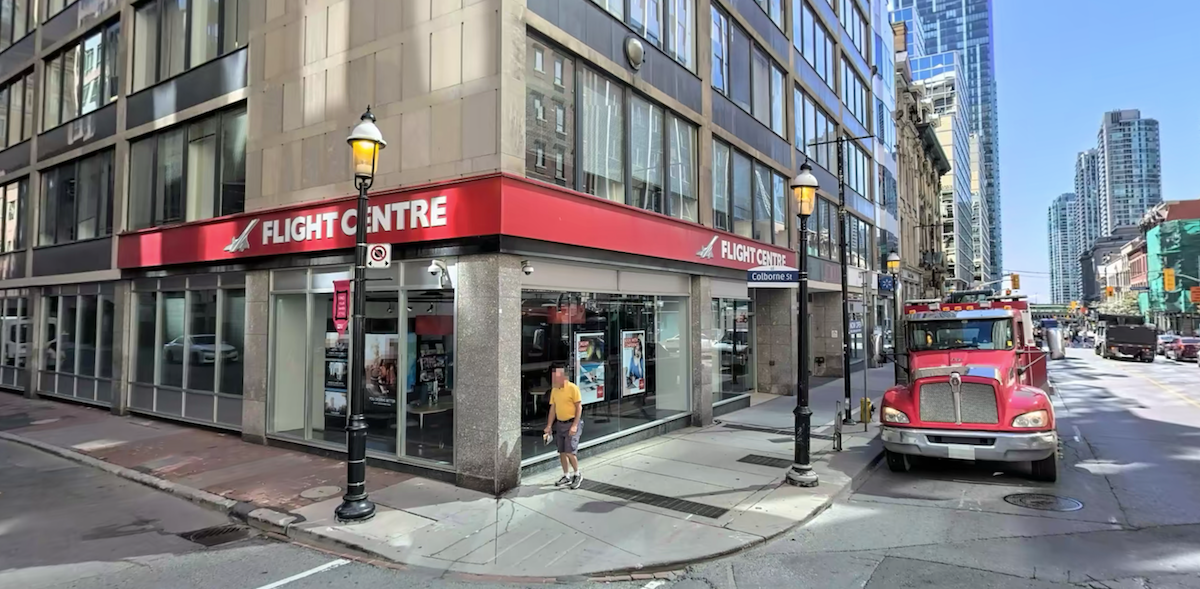
Former Flight Centre flagship at 55 Yonge Street in Toronto. The building will be demolished for a new tower. Image: Apple Maps
A Canadian Leader in Leisure and Corporate Travel
In Canada, Flight Centre has established itself as a major player in both the leisure and business travel segments. Its retail operations offer personalized vacation planning, airfare and hotel booking, cruises, insurance, and group travel services. Canadian consumers have long responded to the brand’s combination of bundled value, promotional offers, and trained travel advisors who work directly with clients to tailor their experiences.
Beyond consumer travel, the company also manages business travel through two specialized divisions. Corporate Traveller Canada supports SMEs with cost-effective, streamlined travel planning, while FCM Travel Canada handles complex itineraries and policy management for large companies, government bodies, and NGOs. Both divisions have become vital components of Flight Centre’s recovery and expansion following the pandemic.
Resilience and Recovery Post-COVID-19
The global pandemic presented one of the most significant challenges in the company’s history. With borders closed and flights grounded, Flight Centre was forced to temporarily shut down or consolidate retail locations and furlough a portion of its workforce. However, the company responded by adapting quickly to changing travel conditions.
Flight Centre Canada pivoted its marketing to emphasize domestic travel and safety-first destinations, implemented flexible booking policies, and expanded virtual consultation options. These efforts enabled the brand to remain visible and relevant during the downturn and laid the groundwork for a strong comeback once travel restrictions began to lift.
By 2024, the company’s Canadian operations had stabilized, and demand for international travel surged alongside a resurgence in corporate travel. The re-opening of global markets allowed Flight Centre to reposition itself as a dependable partner for both business and leisure customers navigating complex travel environments.
Embracing Innovation and Sustainability
Flight Centre Travel Group continues to invest in innovation across its global footprint, including in Canada. The company is deploying artificial intelligence and data analytics to enhance customer service, optimize pricing, and personalize itineraries. These tools are helping consultants provide more relevant recommendations while also improving operational efficiency.
Sustainability is another focus area. FCTG has adopted a range of environmental and social responsibility initiatives, including carbon offset programs, support for community-based tourism through Discova, and partnerships with eco-conscious suppliers. Diversity, equity, and inclusion remain priorities across its workforce in Canada and abroad, as the company seeks to align its operations with broader societal expectations.
Hybrid Retail Model Positions Company for Future Growth
As the broader travel industry leans into digital transformation, Flight Centre Canada is pursuing a hybrid retail model that emphasizes flexibility, customer service, and choice. While many brands have scaled back physical stores, Flight Centre continues to see value in high-traffic retail locations, particularly those that serve corporate environments and urban commuters.
In tandem, the company is building out its remote agent networks, enabling travel advisors to work from home or service clients through video and phone consultations. This mixed approach is designed to capture a wide range of consumer preferences while reducing overhead and improving agility.
The Royal Bank Plaza location exemplifies this philosophy. It serves as both a high-profile brand showcase and a functional space that supports personalized travel planning in real time. The company’s updated global tagline, Your Centre for Travel, reflects this broader strategy — positioning Flight Centre not just as a place to book flights, but as a full-service travel solutions provider.
People shop at a Loblaws store in Toronto. A collaborative approach to ending food insecurity needs a serious commitment from the federal government. THE CANADIAN PRESS/Nathan Denette
The situation south of the border has underscored the value of democracy and governance mechanisms that bolster civil society and the engagement of an array of stakeholders — from Indigenous communities to private sector organizations — in the political process.
A major breakthrough came in 2019 when the Canadian government launched the Food Policy for Canada “as a framework to align and co-ordinate federal food-related initiatives and address critical challenges facing Canada’s food systems to improve social, health, environmental and economic outcomes.”
Our research demonstrates these types of initiatives must be prioritized and adequately resourced to ensure collaborative government initiatives survive.
As four academics studying effective and participatory approaches to building healthy, equitable and sustainable food systems, our study of the Food Policy Advisory Council aimed to understand its development, function, potential value and impact.
We spoke to 13 inaugural members to ask if and how the council — which includes farmers, grocery executives and food system academics — has enabled productive engagement with government and other food systems decision-makers. We also drew on written feedback from government staff about our preliminary research findings.
Gov. Gen. Mary Simon picks tomatoes at the Community Harvest Farm in Ottawa in September 2023. THE CANADIAN PRESS/Justin Tang
Food systems in Canada
Recent reports show that more than 20 per cent of Canadians experience food insecurity, and of those almost 25 per cent are children. At the same time, nearly half of all food is wasted with more than 40 per cent of this waste deemed avoidable.
In 2018, diverse stakeholders agreed that an advisory group was needed to find integrated solutions to complex food issues. They looked to food policy councils as models for collaboration that would include multi-sectoral representatives from across food systems.
Advocates of the Food Policy Advisory Council hoped this new collaborative initiative could offer guidance and build consensus on a range of different issues. Established in 2021, the council has advised the Canadian government on issues like food waste, agricultural sustainability, food insecurity and the design of a National School Food Program.
Insights from council members
Our conversations with Food Policy Advisory Council members revealed a shared belief in the need for a diverse group of food systems advocates to advise the government on food-related programs and policies. Members were deeply committed to the council’s process and brought diverse knowledge and experiences to the table.
Nonetheless, they pointed to flaws in the structure and function of the council. For example, representation and compensation, leading to inequities among members and their respective communities, were points of concern for many participants.
Furthermore, Indigenous representation was limited and members who stepped down were not replaced. Some participants noted tensions between the desire to openly engage with their constituencies and confidentiality agreements with the government about the council’s work.
Our research points to the need to involve Food Policy Advisory Council members more deeply in decision-making, and to establish a more transparent feedback process. Though a new round of council recruitment was launched in 2023 and many nominations were submitted, no new members have been selected. Furthermore, the Food Policy Advisory Council has not met since fall of 2023.
Canned products sit on shelves at a food bank in Ottawa in October 2022. THE CANADIAN PRESS/Adrian Wyld
Collaborative governance
Despite these challenges, the council can still play a critical role in supporting the Food Policy For Canada and food systems more broadly.
In addition, outcomes from participatory governance have the potential to ensure government accountability, to fuel new and innovative ideas and to build valuable relationships across sectors, scales and places. In this moment of crisis and uncertainty, this type of collaborative governance is essential.
For this to happen, the Food Policy Advisory Council needs to be prioritized by its members and by the Liberal government, and provided with adequate resources and capacity to ensure its ongoing success. The new minister of agriculture and agri-Food, Heath MacDonald, will ultimately decide the Food Policy Advisory Council’s fate.
As American democratic institutions falter and our strongest ally imposes wide-ranging tariffs and threatens Canadian sovereignty, the federal government must preserve and enhance participatory governance entities like the Canadian Food Policy Advisory Council.
It’s an innovative space for finding solutions with civil society, the private sector and Indigenous communities that could ultimately strengthen both democracy and food systems in Canada.
About the Authors:
Charles Z. Levkoe is the Canada Research Chair in Equitable and Sustainable Food Systems, Lakehead University
Retail sales increased 0.8% to $69.8 billion in March. Sales were up in six of nine subsectors and were led by increases at motor vehicle and parts dealers, according to a report released Friday by Statistics Canada.
Core retail sales—which exclude gasoline stations and fuel vendors and motor vehicle and parts dealers—were up 0.2% in March. In volume terms, retail sales increased 0.9% in March, said the federal agency.
Retail sales were up 1.2% in the first quarter of 2025, marking a fourth consecutive quarterly increase. In volume terms, retail sales increased 0.2% in the first quarter, it added.
“The largest increase in retail sales in March was observed at motor vehicle and parts dealers (+4.8%), up for the first time in three months. All four store types within this subsector posted gains, with higher sales at new car dealers (+5.2%) driving the increase,” said Statistics Canada.
Photo by Andrea Piacquadio
“Sales at gasoline stations and fuel vendors (-6.5%) decreased in March after five consecutive monthly increases. In volume terms, sales at gasoline stations and fuel vendors decreased 2.6%. Gasoline prices fell 1.6% on an unadjusted year-over-year basis in March, stemming from lower crude oil prices amid concerns of slowing global oil demand and slowing economic growth related to the threat of tariffs.”
Core retail sales increased 0.2% in March, posting their second consecutive monthly increase. The gain was led by higher sales at building material and garden equipment and supplies dealers (+2.6%), followed by clothing, clothing accessories, shoes, jewelry, luggage and leather goods retailers (+2.6%), added StatsCan.
“Higher sales were also recorded at furniture, home furnishings, electronics and appliances retailers, which posted an increase of 2.1% in March. The largest decrease to core retail sales in March came from general merchandise retailers (-2.7%),” it said.
Statistics Canada said retail sales increased in eight provinces in March. The largest provincial increase in dollar terms was observed in Quebec (+1.6%). In the Montréal census metropolitan area (CMA), sales were up 3.1%. In Ontario, retail sales increased 0.6% in March, led by higher sales at motor vehicle and parts dealers. In the CMA of Toronto, retail sales were down 1.0%. The largest provincial decrease in retail sales in March was observed in Manitoba (-1.6%). This decrease was led by lower sales at gasoline stations and fuel vendors.
“On a seasonally adjusted basis, retail e-commerce decreased 2.1% to $4.2 billion in March, accounting for 6.0% of total retail trade, compared with 6.2% in February,” explained Statistics Canada.
“Statistics Canada is providing an advance estimate of retail sales, which suggests that sales increased 0.5% in April. Owing to its early nature, this figure will be revised. This unofficial estimate was calculated based on responses received from 60.2% of companies surveyed. The average final response rate for the survey over the previous 12 months was 91.0%.”
“However, the advance estimate for April suggested that overall sales rose by a further 0.5%, which is a little firmer than we would have expected given the recent weakening in the labour market. Overall, consumer spending growth does appear to have slowed relative to the second half of last year, but not worryingly so as yet,” he said.
“Consumers pulled forward their auto purchases, something we expected as buyers front-ran counter tariffs imposed in April. The surprise was in the 5 of 7 non-auto retail components that advanced on the month, which may represent stockpiling of non-discretionary items ahead of other incoming tariffs,” he said.
“Expectations for another solid month of sales growth in April may offer some positive momentum for total consumer spending into the second quarter, though we expect spending weakness to dominate the broader trend. Canadian consumer confidence has nosedived in recent months and the labour market has started to shed jobs. Against this backdrop, we expect consumers to stay relatively hesitant until confidence and clarity are restored, which we think will occur in the later stages of this year. A few more Bank of Canada rate cuts in the coming months may help soften the blow.”
Opening of Laser Clinics Vaughan Mills. Image: Laser Clinics
Laser Clinics Canada is marking another milestone in its rapid national expansion with the opening of a new location at Vaughan Mills, one of the country’s busiest shopping centres. The clinic opens its doors to the public on May 21, becoming the eighth Canadian location for the Australia-founded medical aesthetics brand.
“Vaughan Mills was the obvious next step for us,” said Toby Milton, Managing Director of Laser Clinics Canada, in an interview. “From a mall analytics perspective, it’s a perfect location — high foot traffic, strong co-tenancy, and an ideal demographic fit. We’re really excited to open.”
Toby Milton, Managing Director of Laser Clinics Canada
Laser Clinics entered the Canadian market in early 2022, opening its first clinic at Hillcrest Mall in Richmond Hill, Ontario. Since then, the brand has expanded across the Greater Toronto Area, as well as Ottawa’s Rideau Centre, with plans to continue that momentum in the years ahead.
“We currently have seven clinics across Ontario, and Vaughan Mills will be our eighth,” said Milton. “We plan to grow to around 40 locations nationwide. We see tremendous opportunity across Ontario, but also westward into Alberta and British Columbia, as well as the Atlantic provinces. We really do see this as a coast-to-coast brand in time.”
Global Expertise, Local Delivery
Founded in Sydney, Australia in 2008, Laser Clinics quickly became one of the leading global brands in the medical aesthetics space. The company offers a wide range of services, including laser hair removal, advanced skin treatments, and cosmetic injectables — all administered by trained professionals such as doctors and registered nurses. With over 200 clinics worldwide, the brand is backed by KKR, one of the world’s largest private equity firms.
“Globally, we’re known as leaders in laser hair removal, skin treatments, and cosmetic injectables,” said Milton. “And we bring that same level of expertise and care to every Canadian location.”
Each Canadian clinic, including the new Vaughan Mills site, provides a consistent customer experience and access to advanced medical-grade technologies. Services include popular treatments such as HydraFacials, LED light therapy, microdermabrasion, and cosmetic injectables like anti-wrinkle injections and dermal fillers.
Tailored Services for a Broad Demographic
Despite the clinical nature of its offerings, Laser Clinics aims to make medical aesthetics accessible and affordable.
“All of our services are transparently priced and competitively positioned,” said Milton. “We also offer free consultations so clients can understand what treatment is best suited for them.”
The demographic of Laser Clinics’ customer base is remarkably broad. “We see both men and women, and clients of all ages,” said Milton. “There really is something for everyone. Whether it’s laser hair removal, skin rejuvenation, or injectables, we tailor our services to meet individual needs.”
Toby Milton in the new Vaughan location. Image supplied
Vaughan Mills: Strategic Retail Placement
The new Vaughan Mills clinic is strategically located in a high-traffic section of the centre, alongside tenants such as Shoppers Drug Mart, Puma, Specsavers, and Mountain Warehouse. The surrounding co-tenancy was a strong factor in the decision to open at the site.
“We’re excited about the co-tenancy and the energy of that part of the mall,” said Milton. “It offers the kind of exposure and accessibility we look for.”
With high visibility and a built-in customer base, the location offers Laser Clinics a prime opportunity to connect with new clients.
Technology and Innovation at the Core
Laser Clinics continues to invest in cutting-edge technology and treatment innovation. While Vaughan Mills will offer the brand’s core suite of services, the company is always evaluating new product developments to enhance its offerings.
“We’re constantly on the lookout for new treatments, especially in the skin category,” said Milton. “From LED therapy to HydraFacials, we offer the latest non-surgical options. Innovation is central to what we do.”
In Canada, the brand has already introduced specialized treatments like Melanopro reducing the appearance of hyperpigmentation and injectables targeting hyperhidrosis. All treatments are guided by Laser Clinics’ global Medical Advisory Committee, ensuring safety and effectiveness.
Franchise Model and Real Estate Strategy
The company is actively seeking franchisees across Canada. On the real estate front, shopping centres remain the brand’s primary focus — for now.
“We really look for high-footfall environments,” said Milton. “Right now, we’re primarily in enclosed malls because of the consistent year-round traffic. But we’re absolutely open to streetfront opportunities if the right space becomes available.”
The company is targeting areas with a combination of high foot traffic and a lack of similar services. “We look for white space opportunities,” added Milton. “Where there’s strong demand and limited competition, that’s where we want to be.”
A Vision for Nationwide Presence
With the Vaughan Mills clinic opening this May, Laser Clinics Canada is only accelerating its national expansion.
“We’re aiming for 30 more clinics in the next few years, and we’ll see where that takes us,” said Milton. “The demand is there, and we’re ready to meet it.”
The company’s strategy is as much about accessibility as it is about beauty. “Our mission is to democratize medical aesthetics,” Milton emphasized. “These treatments used to be exclusive or expensive. We’re here to change that — to offer safe, effective, and affordable treatments to Canadians coast to coast.”