Advertisement
Home Blog Page 431

Johnston & Murphy to Close Canadian Stores and Website

Johnston & Murphy store. Photo: Lips-Mag.com

Johnston & Murphy, the historic American footwear and apparel brand founded in 1850, has announced the closure of its Canadian operations. The decision will see all six Canadian stores and the brand’s Canadian website cease operations as of January 18, 2025. 

Known for its high-quality men’s and women’s shoes, apparel, and accessories, the brand has long been a staple for professionals and quality-conscious shoppers. However, a combination of economic pressures, shifting consumer preferences, and heightened competition has led to this strategic withdrawal.

Official Announcement and Timeline for Closures

In a statement on its Canadian website, Johnston & Murphy expressed its regret about the decision: “We are sad to announce that our ecommerce website for Canada has closed, and we are not accepting orders for shipment in Canada. Our Canadian retail stores will be closing for business on January 18th.” The company also previously noted that all sales made after November 20, 2024, are final and cannot be returned or exchanged. 

The closures will impact Johnston & Murphy stores in Toronto’s TD Centre, Pearson Airport, CF Sherway Gardens, Vaughan Mills, Burlington’s Mapleview Centre, and CrossIron Mills near Calgary. Over the years, the brand has also shuttered other Canadian locations, including a store at CF Toronto Eaton Centre.

In a departure from typical closure strategies, there will be no in-store clearance sales. According to a source who spoke with Retail Insider, all remaining inventory is being shipped to the United States as part of the company’s plan to consolidate operations in core markets.

This image has an empty alt attribute; its file name is Screen-Shot-2025-01-16-at-10.10.26-PM-1200x650.png
Screen shot from the Johnston & Murphy website — Johnston & Murphy to Close Canadian Stores and Online Platform

Continued Availability Through Canadian Retailers

Despite the closure of its stores and online platform, Johnston & Murphy products will remain accessible to Canadian consumers through authorized multi-brand retailers. These include Becker Shoes, Caron Chaussures, Canadian Footwear, Duggers, Factory Shoe, Jean-Paul Fortin, Leclerc Chaussures, Reg Wilkinson Menswear & Footwear, and Trends For Men. Customers are encouraged to contact these retailers directly to inquire about available stock.

This strategy allows Johnston & Murphy to maintain a presence in the Canadian market without the operational costs associated with standalone stores or a dedicated e-commerce platform. By leveraging partnerships with established retailers, the brand can continue to serve loyal customers while focusing its resources on core markets.

Johnston & Murphy store at the TD Centre in Toronto’s Financial District. Photo: Dustin Fuhs

Economic Pressures on Consumers

Johnston & Murphy’s departure underscores the challenges faced by retailers in today’s economic climate. Rising inflation, interest rates, and higher costs of living have left many consumers prioritizing essential purchases over discretionary spending. Mid-tier premium brands, which rely heavily on middle-class customers, have been particularly affected.

During times of economic uncertainty, many shoppers either trade down to more affordable options or, conversely, opt for luxury products that are perceived as offering greater long-term value. This trend has placed brands like Johnston & Murphy in a difficult position, caught between the two ends of the market.

Intense Market Competition in the Footwear Space

At its price point, Johnston & Murphy footwear competes with brands such as Cole Haan, Ecco, and Clarks, which cater to a similar demographic of professionals seeking quality footwear and accessories. However, these competitors have managed to adapt more successfully to shifting consumer preferences. Cole Haan, for example, has embraced casualization with expanded sneaker lines and innovative comfort technologies, appealing to younger and more fashion-conscious customers.

The growing trend toward casual, versatile styles has further challenged Johnston & Murphy. As consumers increasingly favour sneakers, loafers, and hybrid footwear that transitions seamlessly between work and leisure, the brand’s core offerings of formal and professional footwear may have felt outdated. Competitors have responded by diversifying their product ranges, while Johnston & Murphy’s more traditional approach left it vulnerable in a rapidly evolving market.

In recent years, Johnston & Murphy has successfully diversified its product assortment to better align with the evolving lifestyle needs of its customers. This strategic shift has resulted in casual and casual athletic styles becoming a significant part of the brand’s offerings, now accounting for over 50% of its revenue. The category continues to grow, reflecting a broader consumer trend towards versatile, everyday footwear that blends comfort with style. This expansion has allowed Johnston & Murphy to appeal to a wider audience seeking options beyond traditional formal footwear.

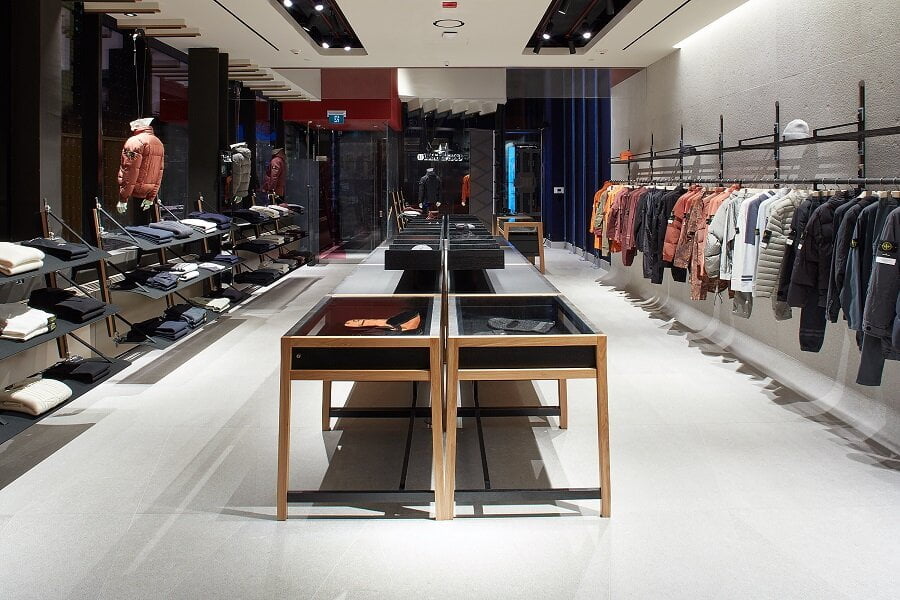
Inside a Johnston & Murphy store. Image: NorthPark Center

Legacy of Quality and Craftsmanship

Founded in Newark, New Jersey, in 1850, Johnston & Murphy has a storied history of crafting high-quality footwear and apparel. The brand has famously served as the shoemaker to every U.S. president since Millard Fillmore, a testament to its enduring appeal and commitment to craftsmanship. Over the decades, Johnston & Murphy expanded its product line to include a wide range of men’s and women’s shoes, apparel, and accessories, blending traditional design with contemporary style.

More from Retail Insider:

Salt Grass & Rare to open in heart of Yorkville

Mark Mandelbaum, Chairman of Lanterra Developments with Michael Dabic, co-owner of Salt Grass & Rare

Renowned for its vision of building iconic urban condominiums, Lanterra Developments, led by Chairman Mark Mandelbaum and President and CEO Barry Fenton, has announced that new upscale restaurant, Salt Grass & Rare, will be coming to luxury residences 50 Scollard in Yorkville in Toronto upon completion mid-2025.

Mark Mandelbaum
Mark Mandelbaum

“At Lanterra Developments, we are committed to creating destinations that redefine luxury
living and elevate the urban experience,” said Mark Mandelbaum, Chairman of Lanterra Developments. “Salt Grass & Rare will be a truly exceptional addition to 50 Scollard, bringing world-class dining to the heart of Yorkville. This collaboration with Michael Dabic and Derek Von Raesfeld further underscores our vision of seamlessly blending architectural excellence, sophisticated design, and curated lifestyle experiences for our residents and the wider community.”

Restaurateurs Michael Dabic and Derek Von Raesfeld, known as the visionaries behind The
Butcher Chef, Oliver’s Steakhouse & Michael’s On Simcoe, will bring this new culinary
destination to Yorkville as an exquisitely appointed fine dining establishment. Together, they will curate bespoke culinary experiences and showcase the latest innovations in architecture, design and fine art, according to a news release.


Official Salt Grass & Rare opening date, further details on the menu, and renderings for the new
restaurant are expected to be released by Spring 2025 along with the final occupancy date for
50 Scollard.

“Salt Grass & Rare will feature a modern dining room, bar & lounge, and grand terrace within a
lush green space with water features. The restaurant’s design will be a collaboration between
Forma Officium Architects and the restaurant group’s in-house design team. The menu will be
led by chef Derek Von Raesfeld with further details to be revealed closer to the grand opening,” said the news release.

“We are excited to unveil Salt Grass & Rare, a distinctive approach to fine dining in Yorkville,”
said Michael Dabic, co-owner of Salt Grass & Rare. “Our unique twist on the modern steakhouse and its focus on culinary excellence will also showcase the latest trends and developments in architecture, design, and art.”


Lanterra said 50 Scollard, located in the heart of Bloor-Yorkville, will be a 41-storey ultra-luxury residential
tower comprised of 129 suites units ranging from 1,200 to over 5,000 square feet with almost all
residences featuring elevators that open directly into the unit, and most floors reserved for one to two units maximum.

“The project will set an unprecedented standard of excellence while redefining city living, bringing new levels of elegance and hotel-inspired service to a select few,” said the company. “Raising the bar for opulent living, 5-star amenities provided by Forest Hill Group will include: chauffeured house car service for resident use, car wash facility, pet spa, valet parking, and an exclusively stocked wine lounge, amongst many other special and unique offerings.

“50 Scollard will be unlike anything the Toronto market has seen, designed by Foster + Partners, led by Pritzker Prize-winning architect Norman Foster, extraordinary interiors by Contract Magazine’s Designer of the Year Alessandro Munge of Studio Munge, and innovative outdoor spaces from Boston’s premier landscape architects, Stoss Landscape Urbanism. Lanterra is also proud to feature Molteni&C Dada Engineered kitchens in every suite at 50 Scollard with unmatched sophistication, innovation and style.”

Related Retail Insider stories:

Canadian economy to see reasonable growth in Q1 2025, tariff threat looms: CFIB

Photo by Christina Morillo

The Canadian economy is expected to grow moderately in the first quarter of 2025, finds the latest Main Street Quarterly report by the Canadian Federation of Independent Business (CFIB).

“Given a strong trade relationship between Canada and the U.S., a 25% tariff on Canadian products would likely drive inflation in Canada, causing price hikes and loss of customers, and heavily impact small- and medium-sized businesses already struggling with weak demand,” said CFIB’s chief economist and vice-president of research, Simon Gaudreault.

Simon Gaudreault
Simon Gaudreault

“While we forecast the Canadian economy will remain healthy in the first quarter of the year, the results don’t take into the account the looming U.S. tariff threat, the GST/HST tax break, uncertainty around capital gains, among other issues facing small businesses.

“It’s important now more than ever to balance the economic environment and create conditions where small- and medium-sized businesses can thrive and compete.”

The CFIB is Canada’s largest association of small and medium-sized businesses with 100,000 members across every industry and region.

Key highlights of the Q4 2024 edition of the Main Street Quarterly report

  • CFIB’s estimates and forecasts in partnership with AppEco suggest the Canadian economy grew by 3.2% in Q4 2024 and will moderate at 2.5% in Q1 2025. The Q4 estimate for the total Consumer Price Index (CPI) inflation dropped to 2.1% in Q3 and should stabilize around the Bank of Canada’s target of 2% year-over-year in Q1 2025.
  • Driven by an increase in long-term small business confidence, private investment rebounded in the last quarter of the year, and the pace is set to pick up in 2025 after a disappointing performance in 2024. 
  • The Q4 2024 private sector job vacancy rate remained almost unchanged at 2.7% in Q4. This represents 378,300 unfilled positions.
  • A special analysis this quarter focuses on the looming U.S. tariffs and their potential impacts. A strong majority (82%) of Canadian businesses—both exporters to and importers from the U.S.— expect significant impacts on their operations if new tariffs are imposed on Canadian products.
  • The quarterly sectoral profile reveals that firms offering professional, business, and financial services, have become less optimistic in the past two years, but they still outpace the all-industry optimism average.

Related Retail Insider stories:

Restaurants see boost in dining and traffic in first month of GST and HST holiday

Photo: Mario Toneguzzi

Restaurants have seen a boost in dining and traffic over the past month coinciding with the GST and HST holiday, according to new data by Restaurants Canada and OpenTable.

From December 14 to 27, data from OpenTable, a global leader in restaurant tech, shows an 18 per cent increase in dining compared to the corresponding period in 2023. Ontario saw a 23 per cent increase year-over-year, while Atlantic provinces (NB, NL, NS, PE) saw an increase of 8 per cent year-over-year, said the organization in a news release on Friday.

It said this aligns with new data from Restaurants Canada’s REACT Survey, which noted a 7-point increase between December 2024 (92.1) and December 2023 (85.1) to its Consumer Dining Index. The Consumer Dining Index is calculated as a weighted average of the number of times Canadians purchased a meal or snack from a restaurant in the past month, indexed to July 2023. The December 2024 index also captures the two weeks before the tax holiday.

Kelly Higginson
Kelly Higginson

“Seeing Canadians embrace the tax relief and treat themselves to a meal out is really encouraging, especially as we navigate a climate of economic uncertainty,” said Kelly Higginson, President and CEO at Restaurants Canada. “More sales also mean more hours for our nearly 1.2 million workers, so this is a win-win-win.”

Restaurants Canada is a national, not-for-profit association advancing Canada’s diverse and dynamic foodservice industry. Restaurants are a $120 billion industry employing nearly 1.2 million Canadians and are the number one source of first-time jobs in Canada.

“We’re very pleased to see these early signs of recovering consumer demand for our sector. This shows that removing sales tax on food is a measure that supports Canadians, businesses and workers. We urge the federal government to make the GST and HST tax break on prepared food permanent,” noted Higginson.

2024 was an incredibly difficult year for restaurants, between rising operating costs (total food costs have increased by 25 per cent, insurance by 24 per cent, utilities by 20 per cent and labour costs by 18 per cent) and lower consumer demand. In fact, 53 per cent of restaurants are operating at a loss or barely breaking even. Restaurants Canada has been calling on governments to prioritize affordability measures, and the GST and HST holiday has done just that, added Restaurants Canada.

Related Retail Insider stories:

Trump’s Tariffs Threaten Canadian Retail and Economy

Donald Trump attempting to make Canada the 51st State -- image by Donald Trump

As Donald Trump prepares to take office in less than a week, his government’s threats to impose sweeping tariffs on Canadian imports have sparked significant concern across industries. For Canadian retailers, the looming tariffs signal potential disruption that could reverberate through supply chains, pricing structures, and consumer habits.

Retail Insider spoke with George Minakakis, retail strategist, and Gary Newbury, supply chain specialist, to unpack how these tariffs could affect retailers, consumers, and the broader economy. Both experts painted a stark picture of potential consequences while offering insights into strategies for navigating this uncertain terrain.

Retailers Brace for Tariff Shock

“Retailers need to get really smart about where they source their products,” said Minakakis. “This could mean shoring up inventory now or diversifying supply chains to mitigate the risks. But make no mistake—if these tariffs go into effect, they could be a linchpin that pushes struggling retailers over the edge.”

George Minakakis. Photo: LinkedIn.

He highlighted how vulnerable smaller retailers are in this scenario. “For businesses that were already on the edge, this could be the final straw. They might not have the financial flexibility to weather this storm,” Minakakis added.

Newbury echoed these concerns. “Larger players might have the resources to adapt, but for smaller retailers, this is existential,” he said. “Without careful planning, some of these businesses may simply not survive.”

Inflation and Its Ripple Effects

One of the most immediate consequences, should the Canadian government implement new tariff arrangements on US imports, is inflation. Increased costs on imports force retailers to either absorb the difference or pass it on to consumers. “If Canadian retailers are forced to absorb increased costs, they’ll pass those costs to consumers,” Minakakis explained. “This will create inflationary pressures that could drive up interest rates and make everything more expensive—from groceries to discretionary items like clothing.”

Gary Newbury

Newbury elaborated on how specific product categories could see disproportionate impacts. “Porcelain products, for instance—everything from toilet seats to bathtubs—could see skyrocketing costs, prompting consumers to delay purchases or seek alternatives,” he said. “This creates a domino effect on both retailers and manufacturers.”

The potential impacts go beyond retail shelves. Minakakis shared a grim statistic: “For every percentage point these tariffs reduce Canada’s GDP, unemployment could rise by 0.6 to 0.7 percentage points. That’s thousands of jobs on the line.”

Consumer Behaviour Under Pressure

When costs rise, consumer habits shift. “Higher prices mean families will spend less on discretionary items and focus more on essentials,” Minakakis explained. “This will hit mid-tier retailers and department stores particularly hard, as these are often the first places consumers cut back.”

Newbury predicted that independent retailers might be better positioned to adapt. “Smaller businesses have the agility to pivot quickly, whether that’s by sourcing locally or reimagining their product offerings,” he noted. “They can turn this challenge into an opportunity to build resiliency.”

For larger retailers, the challenge lies in managing scale. “Big-box stores may struggle to shift sourcing strategies quickly enough to mitigate the impact of tariffs,” Newbury said. “It’s a question of whether their supply chains can adapt in time.”

Impact on U.S.-Based Retailers in Canada

Tariffs wouldn’t just affect Canadian businesses. U.S.-based retailers with operations in Canada could face significant challenges. “Take Costco, for example,” said Newbury. “If a significant portion of their product line is sourced from the U.S., they’ll face higher costs to operate in Canada. This could hurt their competitiveness or even force them to rethink their Canadian footprint.”

Minakakis pointed out that other US retailers could face similar predicaments. “If your supply chain is entirely dependent on U.S. manufacturing and distribution, tariffs could effectively make your business model unviable in Canada,” he said.

Diversifying Supply Chains: A Long-Term Solution

Both experts agreed on the urgent need for Canada to diversify its trade relationships. “Building new partnerships with countries like China or the UK could take years,” said Minakakis. “But it’s a necessary pivot for Canada, given our reliance on U.S. trade.”

Newbury emphasized the importance of strategic planning at the retail level. “Retailers need to analyze their entire product catalog, pinpoint goods sourced from the U.S., and evaluate alternatives,” he said. “This might mean sourcing locally, tapping into European markets, or even cutting underperforming product lines.”

Minakakis highlighted that the challenge isn’t just logistical but also cultural. “We’ve leaned on the U.S. for so long that breaking away feels daunting,” he said. “But this is a wake-up call to reimagine our trade strategy.”

Government Response and Political Dynamics

The federal government’s role will be critical in shaping Canada’s response to Trump’s tariffs. However, Newbury expressed concerns about Canada’s ability to act decisively. “With Parliament prorogued, there’s limited capacity to implement legislation or take bold actions,” he said. “This weakens our negotiating position.”

Newbury suggested that Canada consider more assertive measures. “If Trump imposes tariffs, Canada could respond by halting U.S. imports altogether,” he proposed. “It’s a drastic move, but it would send a strong message.”

Broader Economic Ramifications

Tariffs could ripple through the economy in unexpected ways. “If inflation rises, the Bank of Canada might be forced to raise interest rates,” Minakakis said. “This would exacerbate the pressure on households already grappling with higher costs.”

Newbury pointed to the impact on housing. “Many Canadians renewed their mortgages at low rates during the pandemic. As those mortgages come up for renewal this year and next, higher interest rates could be devastating for families,” he said.

The manufacturing sector could also face fallout. “Trump’s goal is clear—he wants to shift jobs from Canada to the U.S.,” said Minakakis. “That could devastate industries like automotive manufacturing, which are deeply integrated across the border.”

Preparing for a Dark Economic Period

Both experts stressed the need for proactive planning. “Retailers should be preparing for the worst,” said Minakakis. “They need contingency plans—Plan A, B, and C—to navigate potential cost increases, supply chain disruptions, and declining consumer spending.”

Newbury called for greater collaboration across sectors. “This isn’t the time for businesses to operate in silos,” he said. “Retailers, suppliers, and government agencies need to work together to find solutions.”

They also emphasized the importance of transparency. “Retailers need to be honest with their customers about the challenges they’re facing,” Minakakis said. “People appreciate honesty and will support businesses that communicate openly.”

A Call for Unity and Domestic Opportunity

While the potential impacts of Trump’s proposed tariffs are significant, Minakakis sees opportunities for Canada to strengthen its internal trade and unity.

“There are two opportunities,” said Minakakis. “The first is for provinces to take down their own interprovincial trade barriers. This would help stabilize U.S. trade shortfalls. The second is one of national unity. It’s time for businesses and consumers to send a message: Canada stands united as a nation in our sovereignty and economy. I believe this would give the story a positive reinforcement.”

By fostering greater interprovincial trade, Canada could offset some of the economic shocks from diminished U.S. trade, while presenting a united front in the face of external pressures. Minakakis’ perspective highlights the potential for Canada to emerge stronger, even amid adversity.

Conclusion: A Defining Moment for Canadian Retail

As Trump’s inauguration fast approaches, Canadian retailers find themselves at a crossroads. The proposed tariffs are part of a bigger potential seismic shift that could reshape the retail landscape, testing the resilience of businesses and the economy alike.

“Retailers who act now—whether by diversifying supply chains, reducing reliance on U.S. goods, or engaging with government advocacy—will be better positioned to weather the storm,” said Minakakis. “This is a defining moment for the industry.”

Newbury agreed, adding, “This isn’t business as usual. It’s a wake-up call for Canada to rethink its trade relationships and build a stronger, more self-reliant economy.”

More from Retail Insider:

Heritage launches Lunar New Year charitable dinners

Ring in the Year of the Snake with an exclusive dining experience honouring Lunar New Year’s rich traditions while supporting a vital local cause. On Sunday, January 19, and Monday, January 20, Heritage Restaurant and Bar will host two fundraising dinners in partnership with celebrated chefs Will Lew of Pacific Reach and Sharon Chan of MAMAintheKitchen, alongside a group of local suppliers and sponsors.

Proceeds from the event will benefit the Vancouver Chinatown Foundation, a non-profit organization dedicated to preserving and revitalizing Vancouver’s historic Chinatown.

“Lunar New Year is a time to celebrate heritage, community, and generosity,” said Paul Zhang, owner of Heritage Restaurant and Bar. “We are honoured to host this event, bringing people together over incredible food and music while supporting the meaningful work of the Vancouver Chinatown Foundation.”

A news release said the Year of the Snake, associated with wisdom, intuition, and transformation, provides a fitting backdrop for this gathering at Heritage’s newest location at 4242 Main Street. In the spirit of celebration and giving back, guests are invited to begin their evening at 6 p.m. and indulge in a four-course seated dinner spanning 13 unique dishes that honour the cultural richness and culinary heritage of Lunar New Year. Beverages will be available à la carte.

“The menu, collaboratively designed by the Heritage team, Chef Lew, and Chef Chan, showcases creations that reflect their shared cultural backgrounds while highlighting each chef’s unique culinary philosophy. The auspicious feast will be crafted using sustainable, locally sourced ingredients, generously donated by renowned local purveyors such as Canadian Kelp Resources, Canadian Pacifico Seaweed, Clear Ocean Seafood, Fanny Bay Oysters, Gastronomers Garden / Misebloom, Golden Eagle Sablefish, Hook & Herd Distribution, Kenji Seafood, Legends Haul, MAMAintheKitchen, Ocean Wise, Oyster & King, and West Coast Wild Scallops,” said the news release.

“Highlights from the meal include signature dishes such as Salted Egg Yolk Crusted Pork Belly appetizer with crab salad; Heritage’s handmade noodles for longevity and signature BBQ chicken (symbolizing unity); and, for dessert, a trio of Sesame BallsMandarin Mousse, and a creatively re-interpreted Lunar New Year tradition – Nin Gou Rice Cakes – symbolizing wealth and good fortune. Guests will also enjoy live performances throughout the evening by acclaimed local artists Marie Hui and Kristin Fung, adding an enriching element to the festivities.”

To purchase tickets for the Lunar New Year collaborative fundraiser dinners at Heritage Restaurant and Bar, please visit https://www.eatheritage.ca/event-list.

Related Retail Insider stories:

Manulife Place $45M Redevelopment to Revitalize Commercial Podium

Manulife Place rendering, via Epic Investment Services

Epic Investment Services has revealed plans for a $45 million redevelopment of the iconic Manulife Place, a 36-storey tower in downtown Edmonton. The project aims to modernize the building’s common areas, amenities, and retail spaces, aligning with Edmonton’s evolving downtown core and the expansion of the ICE District.

The redevelopment, which is already underway, promises a striking new aesthetic and upgraded functionality for both tenants and visitors. The enhancements are expected to reestablish Manulife Place as a premier destination for office and retail in Edmonton.

A Modern Vision for a Historic Landmark

Originally constructed in 1983, Manulife Place was heralded as Edmonton’s most prestigious office building. Its distinctive blue glass tower spans 745,000 square feet of office space across 36 floors, offering a high proportion of coveted corner offices due to its unique floor plate design.

The current redevelopment plans mark a shift from previous efforts. In 2020, Manulife Investment Management announced a $30 million overhaul of the retail podium, including proposed features such as a potential food hall. However, those plans, which were set to begin in spring 2020, were shelved due to the COVID-19 pandemic.

This new $45 million project builds on the plans of the past, with updated priorities and a clear focus on meeting the needs of post-pandemic tenants and visitors.

Manulife Place podium rendering. Image: Epic Investment Services

Transforming the Retail Podium

A key focus of the redevelopment is the two-storey retail podium, which will feature new flooring, energy-efficient LED lighting, and communal spaces designed to enhance the tenant and visitor experience. The retail space will also accommodate new food and retail offerings.

According to the announcement, Canadian Western Bank will anchor the retail and office space (recently acquired by the National Bank of Canada). The podium’s transformation includes new glazing on the ground and second levels, creating an impressive new lobby entrance and a brighter, more modern aesthetic.

New Amenities for Tenants and Visitors

Tenants of Manulife Place will benefit from a range of modern amenities, including:

  • A club-quality fitness centre.
  • Expanded end-of-trip facilities, including bike storage.
  • An exclusive tenant lounge and a conference centre.
  • A 45,000-square-foot rooftop terrace, providing a unique outdoor space for relaxation and events.

These upgrades are designed to attract and retain tenants seeking a premier office environment, reinforcing the building’s reputation as a top-tier address in Edmonton.

Economic Impact of the Redevelopment

The $45 million investment in Manulife Place is expected to have a positive ripple effect on Edmonton’s downtown economy. By modernizing its retail and office spaces, the redevelopment will create construction jobs in the short term and support long-term employment opportunities through new tenants.

In particular, the redevelopment could help counteract the economic challenges faced by downtown Edmonton, such as lower pedestrian activity and retail vacancies. The addition of new retail offerings and amenities is likely to enhance the vibrancy of the area, making it a more attractive destination for residents, workers, and visitors.

According to Epic Investment Services, the upgrades will position Manulife Place as a key contributor to Edmonton’s future growth and transformation. By drawing businesses that align with the city’s evolving landscape, the project is poised to play a role in shaping downtown Edmonton’s resurgence.

Manulife Place podium rendering. Image: Epic Investment Services

Challenges in Downtown Edmonton

The redevelopment comes at a critical time for Edmonton’s downtown. Across the street from Manulife Place, the struggling Edmonton City Centre mall has faced significant challenges, including the closure of its Hudson’s Bay store during the pandemic. Lower pedestrian counts and a perception of reduced safety have further compounded issues for the area.

Manulife Place’s upgrades are part of a broader effort to address these challenges. By revitalizing its retail and office spaces, the project is expected to boost confidence in downtown Edmonton as a safe and dynamic destination.

A Nod to the Past, a Step into the Future

Manulife Place has a rich history as a cornerstone of downtown Edmonton’s retail and office landscape. When it opened in 1983, it featured high-end tenants such as Holt Renfrew, which operated in the building until early 2020. Last year, Henry Singer relocated from Manulife Place to the ICE District, reflecting the broader shifts in Edmonton’s retail environment.

With its new redevelopment, Manulife Place is poised to reclaim its position as a premier address in Edmonton. The updated design and amenities reflect the changing needs of tenants and visitors in a post-pandemic world while paying homage to the building’s storied past.

As stated in Epic’s release, “Through this redevelopment, Manulife Place will be reintroduced to the market as a premier address for Edmonton, attracting tenants who will play a key role in shaping the city’s future and contribute to its continued transformation.”

More from Retail Insider: 

Consumers regained their spending mojo, but tariffs cloud 2025: TD

Photo by Kindel Media

The latest TD debit and credit card spending data point to growing momentum, reinforcing a solid outlook for consumer spending. December data show spending growth accelerated to 7.2% year-on-year, up from November’s 4.0% and October’s 5.8%, said the bank in a report released on Thursday. 

“The final quarter of the year showed TD Spend outlays ended on a reasonable note. Unlike the previous quarter, where seasonally adjusted monthly volatility muddied the signal, the fourth quarter’s monthly growth rates were consistently positive (albeit marginally in November). This indicates a likely solid performance for consumer spending in Q4. Despite this improvement, annual spending growth for 2024 remains the slowest in the past four years,” said the TD report.

“Encouragingly, growth in spending was broad-based, driven by both goods and services, with goods contributing more at the margin. Notably, home-related purchases (furniture, electronics, etc.) saw a significant acceleration, supported by looser financial conditions and a rebound in the housing market observed in October and, to a lesser extent, November.

“This drove Q4 growth in home-related items to 2.7% quarter/quarter (q/q)—a rate last seen in Q3 2021. Once again, this highlights the Canadian economy’s sensitivity to interest rate changes. Lower financing costs are also expected to make other durable goods, like autos, more affordable, supporting a potential rebound in vehicle sales. Overall, the outlook for durable spending appears strong.”

TD said spending on services regained momentum in Q4 after losing steam in Q3. Spending on recreation and entertainment was the standout performer in Q4, up 6.8% q/q, while spending on travel accelerated to a 3.6% q/q pace after modest gains in earlier in the year. On an annual basis, spending on entertainment and recreation outperformed travel, growing 8% versus 7%, while also experienced a smaller deceleration compared to 2023 figures. A weakening Canadian dollar has likely encouraged Canadians to spend more domestically, shifting their budgets from international travel to restaurants and entertainment.

“Services spending has been boosted by recent high-profile events like the Eras Tour in November and December, as well as the GST tax relief on prepared foods and beverages introduced on December 14, just in time for holiday gatherings with friends and family. We previously analyzed the Eras Tour’s impact on spending in Ontario and now tackle the challenge of identifying whether the GST tax break influenced consumer behavior,” added the report.

“Our analysis indicates that while spending did pick up in the second half of December, this same in-month pattern occurred in the previous two Decembers. This suggests it may just be the typical holiday shopping pattern. However, we don’t know whether without this relief the usual ramp up in spending might have been more muted. We will need to see results from subsequent months to see how much effect the GST holiday had on consume spending, but for now the jury is still out.” 

The report said clothing stores and electronics and appliance stores — the key drivers of Boxing Day sales – saw no significant uplift, assuming discount rates were similar. This year, Boxing Day served as a somber reminder of the subdued spending trends, with all major categories recording declines compared to 2023. Although, this may reflect a shift in seasonal patterns as November’s Black Friday sales seem to be gaining popularity.

“Consumer spending gained momentum toward the end of 2024, supported by lower interest rates, which boosted consumer confidence, and external factors, such as the GST relief. The robust finish to Q4 aligns with our above-trend growth forecast for real personal consumption expenditure (+1.9% quarter-on-quarter annualized), with a solid near-term outlook for durable goods and services. However, uncertainty surrounding potential tariffs and retaliatory measures present a downside risk to our 2025 real consumer spending growth forecast of 1.7%,” concluded the report.

Related Retail Insider stories:

What can Canadian entrepreneurs expect for 2025?: BDC

Photo by Ron Lach
Photo by Ron Lach

Canadian entrepreneurs will be asked to navigate a landscape marked by both opportunities and challenges in 2025. While the economic outlook suggests higher growth than in 2024, the continued effect of inflation, the uncertainty of a changing administration in the U.S. and a declining population will represent challenges for business owners, according to a report by the BDC.

“Entrepreneurs will need to be agile and innovative to respond to these evolving dynamics. A focus on good cash flow management, efficiency, and a willingness to adapt to new trends will ensure that your business will not only survive but thrive in the coming year,” said the BDC, the Business Development Bank of Canada.

Lower inflation should give entrepreneurs some respite

The Canadian economy is expected to grow by around 1.5% for the year, said the BDC.

“Rising costs and inflation have been the main challenges for entrepreneurs over the past two years and the situation should improve in 2025. Inflation is expected to stay within the Bank of Canada target range of about 2%. This should encourage the central bank to continue cutting its interest rate toward the neutral point of 2.75% by mid-2025,” it said.

“Interest rates will be a deciding factor in the year ahead, and we expect them to bring momentum back to the economy. Growth will largely be driven by consumer spending and a rebound in residential investment. Essentially, we can expect a recovery in the spending categories most impacted by interest rate hikes that started in 2022.

“However, the effects of inflation will continue to challenge Canadian entrepreneurs. Even as rates are lowered and inflation comes under control, a higher debt burden will continue to weigh down households. Meanwhile, the higher prices suppliers have been forced to charge because of rising inflation will not go down as inflation slows. Prices will just increase at a slower, more sustainable pace.

“Overall, the economy will continue its safe landing following a peak in activity in 2022.”

Tariff threats will create uncertainty for Canada-U.S. trade  

The report said President-elect Donald Trump has threatened to impose a 25% tariff on all products entering the United States from Canada and Mexico when he is inaugurated on January 20. Meanwhile, Canada is already examining possible retaliatory tariffs on certain U.S. items should these threats materialize.

“The potential tariffs could significantly impact several sectors, including automotive, construction and manufacturing, and they could lead to higher prices for American and Canadian consumers. Tariffs could also fuel inflation and disrupt the highly integrated supply chains that currently exist between the three countries,” explained the BDC.

“It’s not just businesses that trade directly with the United States that could be impacted. Your business could be impacted if you sell to a company that exports to the United States, for example. Proposed tariffs could also impact the import of goods from China or Mexico transiting through the United States. High tariffs could even lead to a recession if Canada were to retaliate with the same intensity (25% tariffs). Such a situation would impact all types of companies, even those that have nothing to do with trade.

“While it’s unclear whether these tariffs are meant to be enacted or simply a negotiation tactic, the responsible thing to do is to start planning for what they could mean for your business. This involves understanding their direct and indirect impacts on your operations and supply chain.”

Lower population growth could make it harder to find employees

Canada’s 2025-2027 Immigration Levels Plan projects a 0.2% population decline in 2025 and 2026 before returning to 0.8% growth in 2027. Meanwhile, the population aged 65 and over will grow by almost 3% per year, noted the report.

“The working-age population, aged 15-64, could fall by more than 450,000 between the end of 2024 and the end of 2026. By comparison, international immigration and net non-permanent residents from this age group grew by over 1 million in 2024 (that’s roughly the entire population of Nova Scotia),” it said.

“Canada’s population growth reached 3.1% in 2023 and has been one of the main drivers of GDP growth for the past few years. A declining population will keep a lid on growth, especially given the Canadian population’s age composition. An ageing population will also lead to changing consumption patterns.

“However, the biggest impact for entrepreneurs will likely be a reduced pool of potential workers. A decline in the working-age population could lead to labour shortages that are likely to hit certain regions or sectors harder than others.”

Related Retail Insider stories:

71% of consumers want generative AI integrated into their shopping experiences: Capgemini report

Photo- Capgemini website

Generative AI (Gen AI) is transforming shopping, with 71% of consumers wanting it to be integrated into their purchasing experiences. The preference of Gen Z and Millennials, for hyper-personalization and seamless digital experiences is mainly driving this trend. This is according to the fourth edition of Capgemini Research Institute’s annual consumer trends report, ‘What Matters to Today’s Consumer’, which finds that technological innovation, shifting financial priorities, and increasing sustainability awareness are fueling consumer behaviors.

Nearly half (46%) of consumers are enthusiastic about the impact of Gen AI on their online shopping and three quarters are open to Gen AI recommendations, up from 63% in 2023. More than half (58%) have replaced traditional search engines with Gen AI tools as their go-to for product/service recommendations. 68% of consumers want Gen AI tools to aggregate search results from online search engines, social media platforms, and retailers’ websites to provide a one-stop shop for highlighted purchase options, said the company in a news release.

It said 7 in 10 consumer products and retail companies view Gen AI as a transformative technology, a significant shift from last year. However, the study finds that while investment in the technology is on the rise, Gen AI usage is not meeting expectations. Consumer satisfaction with the technology is down from last year (at 37% in 2024 compared to 41% in 2023).

Lindsey Mazza
Lindsey Mazza

“Consumers today want personalized shopping experiences, enhanced by AI and generative AI. In addition, they expect fast and efficient deliveries and have become more conscious of their purchasing impact,” said Lindsey Mazza, Global Retail Lead at Capgemini.

“To remain competitive and build brand loyalty, retailers must adopt strategies that put the consumer at the center, leveraging AI to deliver seamless yet exceptional customer interactions. The clear shift towards social commerce is also significant. Retailers need to capitalize on their social and digital advertising platforms to engage consumers early in the purchasing journey.”

Consumers may pay for fast delivery

“Demand for quick commerce is on the rise, with consumers from some geographies increasingly willing to pay for speed and efficiency. For example, willingness to pay more for quick delivery skyrocketed from 41% in 2023 to 70% in 2024, highlighting a strong consumer trend towards easy access to products,” said Capgemini.

“With this increase, consumers are now willing to pay 9% of the order value for 2-hour and 10-minute delivery. 65% of consumers consider a 2-hour delivery format a key attribute when they shop, indicating that retailers should consider integrating this into their business models. This trend is prevalent in countries such as India, Germany, France, Sweden, Spain, and the Netherlands, with the US significantly lagging in this regard.”

Consumers expect sustainable products, but are not prepared to pay a premium

Sustainability is a critical factor when making purchasing decisions. While 64% of consumers buy from sustainable brands and 67% would switch retailers due to a lack of sustainability, their willingness to pay a premium is decreasing. The proportion of consumers willing to pay between 1-5% more has risen slightly, from 30% to 38%, but those willing to pay more than 5% has dropped consistently over the past two years. The report found that initiatives such as carbon labelling and food-waste reduction also resonate strongly with consumers, said the report.

The study highlights that consumers are also increasingly seeking more detailed information about the product they are purchasing. Nutritional information comes out as the key consideration, with 67% of consumers saying they would switch products based on this, it noted.

Consumers use AI influencers and social media to discover products

“AI influencers, such as avatars created using artificial intelligence, are rising in popularity with one quarter of consumers trusting them and making purchases based on their recommendations. Social media influencers are also becoming popular, with around 7 in 10 Gen Zs learning about new products through them in 2024, up significantly from 45% in 2023,” said Capgemini.

“Platforms such as Instagram and TikTok are also reshaping retail, with over half of consumers discovering new products via social media, up from 32% in November 2022. The report found that 40% of all consumers occasionally use social media for customer service interactions, reflecting a growing reliance on social media for resolving issues and seeking support.”

Advertisements on retailer websites/apps influence purchases

The report said 67% of consumers notice ads on retailer website/apps when they search for a product. Over the past 12 months, online adverts influenced nearly one-third of online purchases.

“In contrast, in-store advertisements lag behind in consumer satisfaction, in terms of content quality and placement. There are several reasons for consumer dissatisfaction. For example, 59% of consumers say the ads shown are very generic and don’t serve their specific needs. While over half (53%) want personalized in-store ads such as a display in a smart shopping cart, smart mirrors, or interactive touchscreens. As a result, retailers are focusing on retail media networks (RMNs) to capture consumer attention,” added the report.

“The report also finds that over half (53%) of consumers switch brands/retailers regularly, despite subscribing to their loyalty programs. Experimentation and lack of personalization are major reasons for switching.”

Related Retail Insider stories: