Home Blog Page 438

HBC Liquidation: What Happens when a Company Goes Bankrupt?

Pedestrians pass the Hudson’s Bay building in downtown Calgary on March 20, 2025. THE CANADIAN PRESS/Jeff McIntosh

By: Michael R. King and Douglas A. Stuart

An Ontario court has approved the liquidation of nearly all Hudson’s Bay Company’s stores, marking the end of Canada’s oldest company, which has been in operation for 355 years. The liquidation is set to begin March 24, and will continue until June 15, leaving only six stores in operation.

The court’s decision came shortly after Hudson’s Bay filed for creditor protection, signalling the company’s struggle to manage its mounting debt.

With widespread layoffs sure to follow, this corporate collapse is both shocking and distressing. But the court documents suggest it was not unexpected. Hudson’s Bay lost $329.7 million in the 12 months leading up to Jan. 31, 2025. As of that date, Hudson’s Bay had only $3.3 million in cash and owed more than $2 billion in debt and leases.

The final straw appears to have been trade tensions between Canada and the U.S., with the increased geopolitical and economic uncertainty leading lenders to shun Hudson’s Bay as it sought more financing, according to court documents.

What bankruptcy looks like

The downfall of a major company like Hudson’s Bay brings with it a wave of financial jargon. Understanding the differences between insolvency, bankruptcy, restructuring and liquidation is crucial to fully grasp the situation.

Insolvency occurs when a business runs out of cash and cannot pay its bills. At the start of March, it was $5 million behind on rent and supplier payments, and within days of missing payroll.

Bankruptcy is a legal process under Canada’s Companies’ Creditors Arrangement Act where a company files for protection from its creditors. The goal is to avoid the social and economic costs of liquidation, preserve jobs and protect the interests of affected stakeholders. If granted, the judge sets a “stay period” where the company works out a restructuring plan with its creditors.
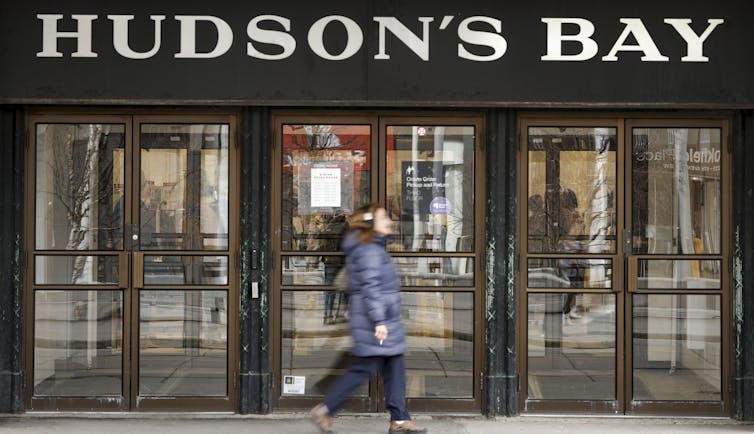
A woman walks past the front of a Hudson's Bay storefront
The liquidation of nearly all Hudson’s Bay Company stores marks a historic and devastating collapse for Canada’s oldest retailer. A pedestrian passes the Hudson’s Bay store in downtown Calgary on March 20, 2025. THE CANADIAN PRESS/Jeff McIntosh

Hudson’s Bay has more than 2,000 creditors, including $430 million in secured term loans, $724 million in mortgages and $512 million to unsecured creditors, mostly owed to suppliers. Hudson’s Bay also owes payroll remittances, federal sales taxes and over $60 million in customer gift cards and loyalty points. Gift cards are good until April 6.

A restructuring wipes out the equity holders and allows a company to negotiate a reduction in its debts. The business continues to operate under the supervision of a court-appointed monitor, using interim financing to pay bills. If successful, the company re-emerges from bankruptcy and continues to do business.

If restructuring is not successful, the company asks the court for permission to liquidate. Liquidation means a “fire sale” of all assets such as inventory, shelving, real estate, leases and trademarks. Items are sold at a deep discount, leading to potential bargains.

The Ontario Superior Court denied the initial request to liquidate on March 14, telling Hudson’s Bay and its creditors to “lower the temperature” and work on a deal. With only limited progress and some concessions made to support Hudson’s Bay’s joint venture with RioCan REIT, the court gave permission for the liquidation on March 21.

Many will lose, some will win

The collapse of Hudson’s Bay will leave many facing financial losses, while a select few stand to gain.

Secured creditors, some suppliers and Hudson’s Bay pensioners are expected to be protected by the courts. However, many others, including thousands of customers and more than 1,800 unsecured creditors, will suffer a financial hit.

The hardest impact will be felt by the more than 9,300 employees losing their jobs. Employees will lose their income, health and disability benefits, and life insurance, significantly impacting families across the country.

However, employees will not lose their pension benefits. The company’s pension plan is fully funded and in surplus position. This was not the case for Sears Canada when it went bankrupt in 2018. A surplus means the value of investments is greater than the promised benefits and is good news for retirees.

Mall landlords will also lose out. Hudson’s Bay drove foot traffic in malls across the country where it was the anchor-tenant. There will likely be painful ripple effects for smaller store owners in malls vacated by Hudson’s Bay, including falling sales, defaults on mortgages and business failures.

That said, some stand to benefit. For example, the American financial services company Restore Capital LLC is providing interim debtor-in-possession (DIP) financing, charging a hefty fee in the process. The lawyers and accountants involved in the bankruptcy may also benefit.

Priority of proceeds

When a company is liquidated, the proceeds from selling its assets are used to repay claimants based on their priority in bankruptcy. This is sometimes referred to as the waterfall of “who gets what.” Think of it as a queue with people lining up to get paid.

Interim DIP financing is paid off first, together with legal and accounting fees related to the bankruptcy. Essential operating costs during the restructuring are also paid, including employee wages.
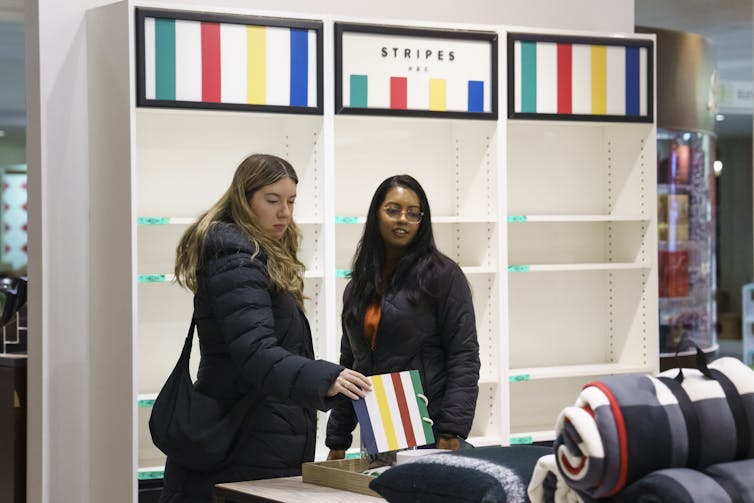
Two women look at merchandise on a table in a store
Shoppers browse at a Hudson’s Bay in Toronto on March 17, 2025. THE CANADIAN PRESS/Christopher Katsarov

Next come secured creditors. These lenders provided funding backed by specific assets, known as collateral. Collateral may include inventory and real estate. A similar process happens on a personal residence; if a homeowner defaults on their mortgage payments, the bank may take possession of the house.

Third in line are debts granted priority by the courts. Employees receive unpaid wages up to a certain cap, just under $9,000, under the federal Wage Earner Protection Program. Pension benefits are paid out and outstanding payroll and sales tax remittances are paid.

As the pool of assets gets smaller, unsecured creditors are paid off next including suppliers, landlords and employees owed additional wages or termination benefits.

Last in the queue from the wind-up are equity holders — the residual claimants — who control the company through their common and preferred shares.

In 2020, Hudson’s Bay’s CEO Richard Baker and a group of investors took the company private, meaning it was no longer publicly traded on the Toronto Stock Exchange, buying out shareholders for approximately $2 billion. This stake is now wiped out.

Disappointing, but not surprising

Hudson’s Bay’s current financial situation is disappointing, but not surprising. The COVID-19 pandemic made times tough for brick-and-mortar retailers. On top of this, under-investment and a failed e-commerce strategy left the company struggling to compete in an increasingly digital retail landscape.

With tariffs and trade uncertainty hurting the Canadian economy, the unfolding trade war is expected to have far-reaching consequences for Canadian households and businesses. Hudson’s Bay was not immune to these effects.

In the end, Hudson’s Bay backed itself into a corner, arguably waiting too long to secure funding and ultimately losing control of its own destiny. Its bankruptcy is a major blow to Canadian retail, marking the end of a era for a company that lasted more than three-and-a-half centuries.

About the Authors:

Michael R. King is an Associate Professor at the Gustavson School of Business and Lansdowne Chair in Finance, University of Victoria

Douglas A. Stuart is an Assistant Teaching Professor of Accounting at the Gustavson School of Business, University of Victoria

More from Retail Insider:

*This article originally appeared in The Conversation.

Hudson’s Bay Collapse Marks Shift for Legacy Retail

Hudson's Bay at CF Markville in Markham, ON. Photo: A. Poon/X (Formerly Twitter)

By Xiaodan Pan, Martin Dresner, and Ruifeng Wang

Hudson’s Bay Company has begun liquidating all but six of its stores. After the 354-year-old retailer filed for creditor protection amid mounting debt and operational losses in early March, a court gave it permission to start the liquidation process.

Founded in 1670 as a fur-trading enterprise, Hudson’s Bay grew into one of Canada’s most iconic department store chains. But with nearly all locations set to close by June 30 and its loyalty programs suspended, the future of Hudson’s Bay remains uncertain.

The retailer’s financial troubles raise broader questions about the viability of traditional department stores in an increasingly fast-paced, digitally driven retail environment.

Modernization efforts

In recent years, Hudson’s Bay attempted to modernize by blending its physical retail footprint with a growing digital presence. This included launching a revamped e-commerce platform and creating an online marketplace that allowed third-party sellers to broaden its product assortment.

In 2021, Hudson’s Bay split its e-commerce and physical store divisions into separate entities: The Bay Online, focused on digital retail, and Hudson’s Bay, dedicated to in-store shopping experiences.

But despite these efforts, Hudson’s Bay has struggled to differentiate its online platform in an overcrowded and highly competitive digital landscape, all while maintaining its physical presence.

The rise of off-price retailers

In sharp contrast to the struggles of legacy department stores, off-price retailers such as Winners, Marshalls and TJ Maxx continue to thrive. Their success is largely due to their ability to attract consumers across a wide range of income levels by offering brand-name merchandise at large discounts.

In Canada, Winners alone has expanded to more than 300 stores nationwide, while Marshalls has added more than 100 locations. Combined, they significantly outnumber Hudson’s Bay’s approximately 80 stores.

Off-price retailers have also gained a competitive edge through real estate choices, favouring open-air shopping centres and strip malls that provide greater accessibility and ample parking, which are benefits that many Hudson’s Bay urban locations lack.

A store front that says 'Sorry for the inconvenience' and 'Hudson's Bay'
Hudson’s Bay has struggled to differentiate its online platform in an overcrowded and highly competitive digital landscape. A pedestrian passes the Hudson’s Bay store in downtown Calgary on March 20, 2025. THE CANADIAN PRESS/Jeff McIntosh

The off-price model thrives on an ever-changing merchandise mix. Buyers continuously source fashion, designer labels and home goods from a broad spectrum of vendors. This approach keeps assortments fresh and also ensures fast inventory turnover, reducing holding costs and supporting lower prices.

This retail model has demonstrated resilience across economic cycles. In times of inflation or financial uncertainty, foot traffic to off-price stores typically increases as consumers become more price-sensitive — further eroding the market share of traditional department stores.

The pressures from digital retailers

The rapid rise of e-commerce has presented a significant challenge for traditional department stores. Over the past decade, online shopping in Canada has grown substantially, with monthly online retail sales surpassing three billion Canadian dollars.

E-commerce now accounts for 11 to 12 per cent of total retail sales, with categories like fashion, hobby and leisure, electronics and furniture and home goods accounting for around 75 per cent of all retail e-commerce sales in Canada.

In the general merchandise space, Amazon controls more than 40 per cent of Canada’s e-commerce market. Retail giants like Walmart and Costco have also expanded their digital capabilities. These players undercut the traditional value proposition of department stores.

The large investments required in distribution capabilities has made it increasingly difficult for smaller competitors, such as Hudson’s Bay, to match the delivery speeds and product assortments of these retail heavyweights.

In niche merchandise categories, specialized retailers have also chipped away at department stores’ customer bases. Sephora and Shoppers Drug Mart dominate the beauty and personal care market, while Lululemon, Nike and Zara rank among the top online stores in fashion.

IkeaWayfair and other direct-to-consumer brands lead the online home goods and furniture market, while Canadian-based Holt Renfrew and France-based LVMH are both leaders in the luxury market.

Adding to the challenge are international digital disruptors such as Shein and Temu, which have have rapidly gained ground in Canada. In 2023, Shein led the country’s online fashion segment with e-commerce net sales of approximately US$1.4 billion.

Temu — an ultra-low-price platform that entered Canada in 2023 — became the country’s most-downloaded iPhone app by the end of 2024. These platforms are challenging legacy retailers by offering aggressive pricing, free shipping and vast product assortments.

Pathways to reinvention

With almost all of its stores closing and its loyalty programs suspended, the future of Hudson’s Bay is in question. While its brand recognition remains strong, it’s unclear whether it will be able to come back from the brink it’s now on.

For any struggling legacy retailer looking to survive in today’s evolving market, reinvention is essential. Department stores and legacy retailers will need to reinvent themselves across five key dimensions:

1. Reposition the brand: Canadian retailers can redefine their core value propositions, emphasizing what makes them unique. Their uniqueness may lie in their Canadian heritage, for instance. Brands like Roots and Canada Goose have been successful with this strategy.

2. Rethink retail formats: The age of downtown retailing continues to fade, especially as remote work reduces foot traffic in urban centres. Large-scale covered malls are also declining, given the demise of anchor department store retailers and the rise of e-commerce. Canadian retailers should explore alternate formats, such as neighbourhood-based, category-specific outlets tailored to community preferences.

Closeup of a person's hand holding a paper shopping bag that says Hudson's Bay
The rapid rise of e-commerce has presented a significant challenge for traditional department stores. A shopper leaves the Hudson’s Bay store in downtown Calgary on March 20, 2025. THE CANADIAN PRESS/Jeff McIntosh

3. Optimize physical presence: Strategic location decisions are crucial. Physical retailers must right-size their physical footprints — closing underperforming locations while reinvesting in high-traffic, high-return outlets. Future expansion should favour asset-light, data-informed models based on actual consumer demand.

4. Improve in-store experiences: To draw customers back into stores, shopping must become experiential. Immersive displays, personalized service and community-centric events could make a visit to a physical store more memorable and engaging for customers.

5. Integrating physical and digital channels: A cohesive digital and physical strategy is essential. Technologies such as augmented reality fitting rooms, virtual showrooms, click-and-collect options and AI-powered personalization could bridge the gap between online and in-store shopping.

A defining moment for Canadian retailers

Canadian retailing stands at a pivotal crossroads. The collapse of legacy department stores, the dominance of e-commerce giants and the rise of off-price and digital-first competitors all signal a permanent shift in how consumers shop.

A long legacy alone does not secure survival. As seen with the collapses of Sears, Eaton’s and now Hudson’s Bay, failure to adapt can lead to obsolescence. The retail landscape is now defined by agility, innovation and the ability to meet consumers where they are.

For retailers still standing, the lesson is clear: nostalgia is not a business model. Shoppers are now more price-conscious, convenience-driven and digitally engaged than ever before. Companies unwilling or unable to evolve will likely face the same fate as the retail giants that came before them.

About the Authors:

Xiaodan Pan is an Associate Professor at the John Molson School of Business, Concordia University

Martin Dresner is a Professor, Logistics, Business and Public Policy, at the University of Maryland

Ruifeng Wang is a PhD Student in Supply Chain Management at the University of Maryland

More from Retail Insider:

*This article originally appeared in The Conversation.
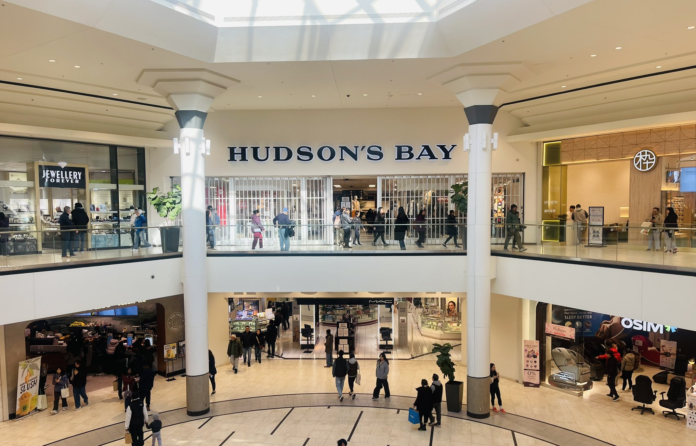
Oberfeld Snowcap to Monetize Hudson’s Bay Leases

Hudson's Bay store at Rockland Centre in Montreal. Photo: Tom Bombadil/Google Maps

The Hudson’s Bay Company (HBC), currently undergoing a court-supervised restructuring under the Companies’ Creditors Arrangement Act (CCAA), has appointed Oberfeld Snowcap Inc. as its exclusive real estate consultant to manage the monetization of its leased store portfolio across Canada. The move is a significant step in HBC’s broader financial and operational overhaul following its March 2025 filing for creditor protection.

The engagement was formalized through a Consulting Services Agreement dated March 20, 2025, and subsequently approved by the Ontario Superior Court of Justice (Commercial List). Filed court documents provide insight into Oberfeld Snowcap’s monetization role. 

A Strategic Appointment Amid Financial Turmoil

Oberfeld Snowcap, a Montreal-headquartered commercial real estate advisory firm specializing in retail, has been selected to assist Hudson’s Bay in evaluating and facilitating lease-related transactions that could generate value or reduce liabilities. The appointment followed consultations with HBC’s internal advisors and Alvarez & Marsal Canada Inc., the court-appointed Monitor overseeing the restructuring.

Jay Freedman, President of Oberfeld Snowcap

Jay Freedman, President of Oberfeld Snowcap, and Jeff Ross, Managing Director, are leading the project, leveraging their combined decades of experience in retail lease advisory across Canada.

Scope of Oberfeld Snowcap’s Engagement

Under the terms outlined in the consulting agreement, Oberfeld Snowcap is tasked with managing the lease monetization process for Hudson’s Bay’s real estate portfolio across Canada. This includes providing detailed local market insights to evaluate the value and strategic potential of individual leased locations. The firm will leverage its long-standing relationships with landlords, developers, and other stakeholders to identify and pursue opportunities for lease sales, assignments, transfers, or terminations that align with HBC’s restructuring objectives.

Jeff Ross, Managing Director, Oberfeld Snowcap

In addition to these core advisory functions, Oberfeld Snowcap may offer licensed real estate brokerage services where applicable, ensuring full transactional support if and when deals progress to execution. The firm is also responsible for supporting the negotiation of binding commercial and financial terms for lease transactions and will work collaboratively with other brokers or professionals involved in specific deals. 

Court documents indicate that all offers or inquiries regarding HBC leases must be formally reported by Oberfeld Snowcap to both Hudson’s Bay and the court-appointed Monitor, Alvarez & Marsal Canada Inc. The firm must operate strictly under HBC’s direction and is not authorized to make independent decisions or representations on behalf of the retailer.

Term and Timeline of Agreement

The engagement began on March 21, 2025, and is currently set to conclude on September 30, 2025, unless extended by Hudson’s Bay in 30-day increments. Given the complexity of HBC’s lease portfolio, it remains possible that the term may be extended beyond the initial six-month period, according to court documents. 

Hudson’s Bay store at Cambridge Centre in Cambridge, ON. Photo: Apple Maps

Compensation Structure

Oberfeld Snowcap’s compensation under the agreement includes both a fixed monthly work fee and a performance-based success fee. The firm will receive a monthly work fee of C$80,000, which is pro-rated for any partial months worked and capped at a total of C$240,000 (plus applicable taxes) over the initial term of the agreement. This fee is creditable against any success fees that may be earned during the engagement.

The success fee component is based on the net proceeds generated from court-approved lease transactions. Specifically, Oberfeld Snowcap will receive 10% of the net proceeds from each completed transaction, subject to a maximum of C$175,000 per lease (plus taxes). These success fees are payable only after the successful closing of a transaction, provided an invoice has been submitted. No further compensation is owed beyond these amounts, and Oberfeld Snowcap is expected to cover its own operating expenses throughout the engagement, according to court documents. 

Hudson’s Bay store at Mic Mac Mall in Dartmouth, Nova Scotia. Image: Apple Maps

Monetizing Leased Store Locations Across Canada

With a substantial number of leased locations across the country, including both flagship urban stores and suburban mall sites, Hudson’s Bay’s real estate holdings represent a significant asset base. Oberfeld Snowcap’s role will be to assess the portfolio and help identify opportunities to unlock value through lease sales, transfers, assignments, or negotiated terminations. The firm is expected to evaluate each lease based on market demand, location potential, and landlord interest, with the goal of maximizing returns or reducing liabilities for HBC.

In many cases, underperforming or non-core sites could be repositioned for other retailers or redeveloped altogether. By leveraging its national network and deep industry relationships, Oberfeld Snowcap is positioned to facilitate transactions that align with Hudson’s Bay’s restructuring strategy while helping reposition prime real estate assets for future retail use.

A National Firm with Deep Market Knowledge

Founded over 40 years ago, Oberfeld Snowcap Inc. is widely regarded as one of Canada’s foremost commercial real estate advisory firms specializing in the retail sector. With a long-standing reputation for representing major retailers, landlords, and developers across the country, the firm brings a wealth of experience to Hudson’s Bay’s restructuring process. Its services span tenant representation, lease restructuring and disposition, market analytics, site selection, and strategic planning — making it well suited to manage complex real estate portfolios during times of transition.

Headquartered in Montreal, Oberfeld Snowcap maintains offices in Toronto, Calgary, and Vancouver, along with a U.S. presence in Boca Raton, Florida. The firm’s national platform enables it to deliver regionally informed insights while maintaining a unified approach to real estate strategy.

Oberfeld Snowcap’s value proposition lies in its data-driven approach, which combines real-time market intelligence with deep industry relationships. This enables the firm to identify and execute real estate strategies that create long-term value. Its client roster spans startups, national chains, and international brands, reflecting its versatility and depth in the Canadian retail landscape.

Over the coming months, Oberfeld Snowcap will work closely with HBC leadership and the Monitor to identify monetization opportunities. As court filings continue to be made public, and monetization transactions begin to close, industry observers will watch to see what happens next with the newly available spaces. 

More from Retail Insider:

Industria Coiffure: educating and inspiring customers with expert knowledge and service

Industria Coiffure at Place Rosemère. Image: Industria Coiffure

A person’s appearance, whether they’d like to admit it or not, can often say quite a bit about them. From subtle and laid back to wild and untamed, and every look in between, appearance bears at least a small glimpse into an individual’s personality and uniqueness. And, when it comes to expressing oneself, a person’s choice of hairstyle and how they like to keep it can serve as one of the more significant ways by which they can represent themselves. As a result, the relationship between any individual and the people they trust to help them achieve their desired look is an intimate one, requiring a combination of experience, knowledge and skills. They are requisites for the role that Montreal-based Industria Coiffure easily meet. However, according to the company’s President and Co-Founder, Jean-Nicola Lapolla, supporting it all is the company’s willingness to remain on top of industry trends and styles.

Jean-Nicola Lapolla

“Hair styles, and the products that are used by professionals all over the world are constantly changing,” he says. “It requires hairstylists and retailers selling these products to be consistently aware of everything that’s happening within the industry, including all of the latest products as well as those that customers are seeking. It’s something that, as a business, we need to be completely on top of, resulting in the need for us and our team of expert hairstylists to constantly educate ourselves on anything related to developments and innovation within the world of hair style and fashion. Because of the speed at which trends occur within this industry, it’s imperative for salons and stylists to be as diligent as they can be concerning education.”

Foundational support

He says it’s one of the qualities of the company that has helped define its legacy over the years, as well as going a long way toward helping to carve its way forward. It’s a quality, among many others, that was engrained within the company when Lapolla’s father, Aldo, an immigrant hairdresser, began managing and developing the company at its original Place Ville Marie location back in the 1960s. An entrepreneur with an open mind and a love for people, Aldo Lapolla had a clear vision of what success meant for the company, adapting and evolving it with each fashion era and every change within the market. Jean-Nicola says that his father’s openminded approach and the importance he placed on communication laid the foundation for Industria Coiffure, enabling the operation to maintain its success for more than half a century.

“I grew up within the salon and the business,” says Lapolla. “Since the age of eight, I’ve been involved. When I wasn’t at school, I was at one of our locations. Whether I was sweeping the floor, manning the cash register, arranging appointments for customers, or anything else, I was actively involved and watching my father, learning every single day. It was the absolute best kind of training I could have ever wished for, preparing me to one day assume leadership of the company. He taught me the value of people and the way to treat our teams, customers of the salon and others operating in and around the industry, always stressing the importance of communication and the transfer of knowledge.”

Industria Coiffure at Place Rosemère. Image: Industria Coiffure

Customer-focus

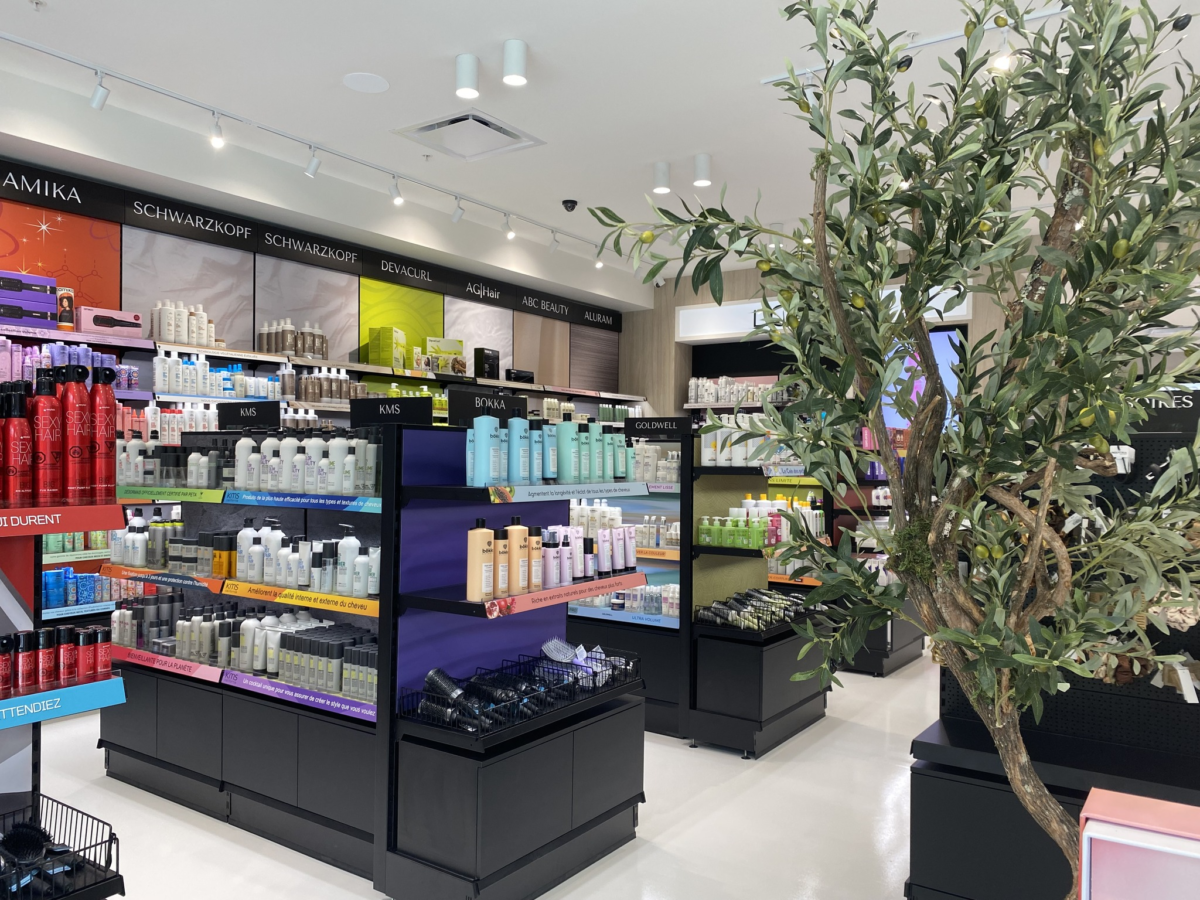
Today, coming up on 20 years since Jean-Nicola took over the business, Industria Coiffure operates 18 locations in Greater Montreal, including locations at CF Carrefour Laval, CF Fairview Pointe-Claire, CF Promenades St Bruno and Carrefour de l’Estrie, to name a few. It’s established itself through the years as the premier high-end destination for men and women in the province of Quebec looking to fulfill their hair needs, providing exceptional hairstyling services administered by expert professionals, while also carrying an extensive range of top hair care and other products, enjoying direct partnerships with brands including L’Oréal, Kérastase, Oribe, Redken, and others. In fact, 40 to 100 per cent of the space within the majority of Industria Coiffure’s locations house products. And the reason for this, explains Lapolla, has everything to do with the customer.

“We’re here to meet the needs of each customer that enters any one of our locations,” he asserts. “And because the service that we offer is so high-touch and so intimate, it enables us to develop really close, strong relationships with our customers, allowing us the opportunity to hear firsthand from them exactly what they’re looking for and what they want to achieve with each visit. As a result, and as an extension of our education, we’re able to offer expert advice to every customer and bring the products into the store that will help them maintain their look and take proper care of their hair. We’re all about transferring the knowledge that we have to our customers, helping them look and feel better.”

Industria Coiffure at Place Rosemère. Image: Industria Coiffure

Education is key

Lapolla underscores the importance of education among his staff in order to share it with customers, differentiating Industria Coiffure from many of its competitors. However, another distinction about the hairstyling company that sets it apart is the fact that its locations are exclusively found within shopping centres. It’s a strategy that he explains came about fortuitously by way of the relationships that his father had made with mall landlord Cadillac Fairview, Ivanhoe Cambridge, Cogir and others. But it’s one that he describes as “unique”, providing the company with opportunities that it may not have enjoyed otherwise.

“Because our locations are found exclusively within shopping centres in Montreal, our perspective might be a little different from some of our competitors,” he says. “We have the opportunity to work with landlords and others within the shopping centres where we’re located to continuously enhance the experience that we’re offering. And, our legacy in malls has also perhaps made it a little easier to get in to the newly developed Royalmount, which could prove to be an excellent location for us. Being located in shopping centres also presents challenges, including very high lease prices. But we’re a company that’s never been afraid of risk. You need to be comfortable with a certain degree of risk and pressure or you won’t succeed in this business.”

Industria Coiffure at Place Rosemère. Image: Industria Coiffure

Continued evolution and success

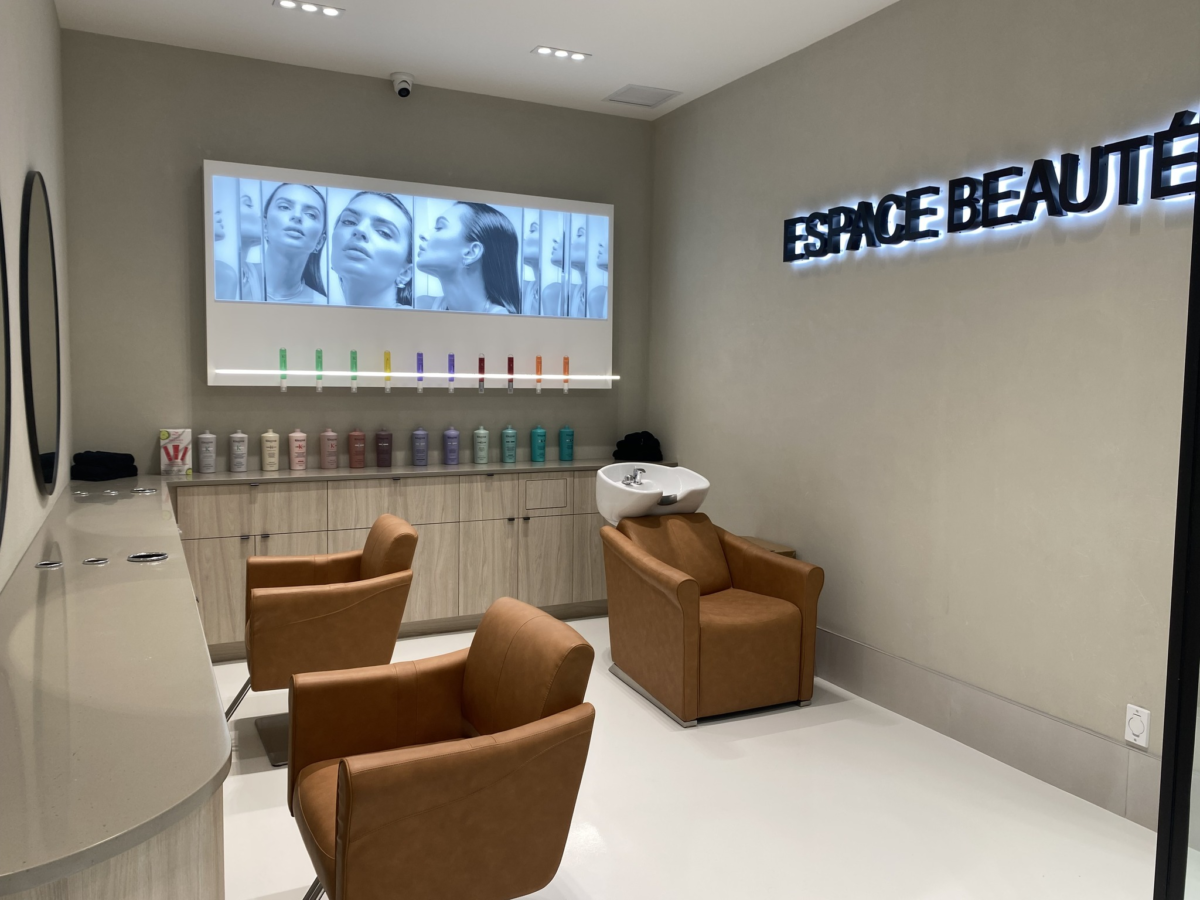
Lapolla goes on to explain that the company intends to continue to build on the solid reputation that it’s made for itself in the province of Quebec, with plans to evolve the brand further through the introduction of its Boutique and Hair concept. The Industria Coiffure Boutique, located at Place Rosemère in Rosemère represents the next big step for the company, says the company’s President, providing the blueprint for the brand to follow over the course of the next few years. The concept, he explains, is ultra-high-end, boasting the widest range of hair care and cosmetics products possible and features consultations administered by trained experts who provide advice to visitors concerning all things hair and style. It’s a direction that he says the company is working really hard to roll out to all of its locations as quickly as possible.

“Our Boutique concept is beautiful and really conveys the future of the Industria Coiffure brand well. All of our experience with our customers and brand partners went into this decision, guiding our direction. It’s required a lot of financial investment to this point, and so, our challenge moving forward is replicating the incredible experience inside our Boutique to all of the other locations within our company. In order to do this, to take the company to the next level and expand our service and offering, we’re looking for partners. With some help, it will enable us to standardize all of our stores, shift our marketing, and continue to evolve the brand to enhance our reputation as a leader within the salon and hair industry.”

*

More from Retail Insider:

Edmonton-based El Corazon expands with ambitious growth plans (Photos)

Hifa Maleki and Percy Wiredu. Photo by Mario Toneguzzi

El Corazon, the Latin-inspired restaurant concept founded by Hifa Maleki and Percy Wiredu, is on an expansion trajectory that could transform the culinary landscape of Western Canada. 

Since opening their first location in Edmonton’s Glenora in 2022, the dynamic duo has quickly established a name for themselves with their vibrant, Latin-flair infused menu. 

There’s also a restaurant in the Keswick neighbourhood as well as the sister brand El Jardin in Edmonton’s downtown.

The pair are eyeing more opportunities in the next few years, with a goal to open up to 10 restaurants across Western Canada.

The Edmonton-based restaurant owners are confident that their focus on community and consumer-driven pricing has played a pivotal role in their success. The recent growth and reception of their brand demonstrate how smaller, independent restaurants are thriving in Edmonton’s evolving food scene, which has seen a shift from chain dominance to a diverse, locally-driven dining culture. 

Hifah Maleki and Percy Wiredu. Photo by Mario Toneguzzi
Hifa Maleki and Percy Wiredu. Photo by Mario Toneguzzi

In a post-COVID world, their hands-on approach to management has proven to be key in navigating rising operational costs and a highly competitive market.

Looking ahead, Maleki and Wiredu are planning to stabilize their current locations while focusing on team development, with expansion into both Edmonton and Calgary markets on the horizon. Despite the challenges of increased food costs and tariffs, El Corazon continues to provide exceptional value to diners, offering affordable yet high-quality dining options. The duo’s commitment to quality, innovation, and community positioning makes them a noteworthy player in the growing restaurant scene in Canada.

Maleki said El Jardin opened in the downtown in 2023 in the ICE District area, and then the duo opened Keswick in 2024.

El Corazon. Photo by Mario Toneguzzi

“We wanted to bring some energy and flair to the culinary scene, the restaurant scene in Edmonton. So for us, the inspiration is we’re very Latin influenced. We take different ingredients and essentially menu concepts from different Latin cultures, so Spanish, Peruvian, Mexican, Dominican, our chef is actually Dominican as well,” explained Maleki. “That way we can have more of a range of different Latin menu items.

“It’s been really great in the sense that Edmonton’s been really receptive to it. And I feel we’ve been lucky. Real estate’s been great in terms of where we’re located. We’re very personally and very community focused. I feel like we have a pretty dynamic network and we’re people’s people, so it’s nice to actually be in a lot of the communities that we’re in because we can actually build and foster those relationships with the people that live or work in the area.

“In terms of opening in a post-COVID world, you definitely have to be a lot more hands-on as a business owner and a restaurateur. You definitely have always had to be hands-on, but I’d say really like when they say, “Oh, you got to be in and in front and behind your business,” you really do. You should be like 360 involved to ensure that not only are operations really great, but just like even behind the scenes, you’ve got to be a lot more dialed in.”

As restaurant owners, the two have experienced the rise in costs.

“We’re very consumer focused. So to keep things very competitively priced and affordable, we have to be a lot more involved and really on it,” she added.

El Corazon. Photo by Mario Toneguzzi

“We’ve opened one every year for the last three years. Our focus for the next 12 months is stabilize. Develop the team, because you can only grow as far as your team. Develop some managers, some regionals. Then we’re going expand into either more in the Edmonton market or the Calgary market,” said Wiredu.

Maleki said the Edmonton food scene has improved significantly.

“If you were to go back even 10, 15 years, a lot of the smaller independent restaurants weren’t making it. People would go once and then they’d go back to the restaurants that they were very comfortable with, like the big chains. Earl’s, Joey’s were definitely just staples. That’s where everybody went.

“What’s changed a lot and what we’re really proud to see in Edmonton is there’s a lot more people taking a risk and putting their passion and money on the line and opening more restaurants. Our food scene’s excellent.

“It’s changed a lot in the sense that people have really navigated from comfort and commercial, and these big corporate companies, to really finding their local spot. And you’re finding that people are dining out in more areas than they were.”

El Corazon. Photo by Mario Toneguzzi

Wiredu said it’s been challenging as a restaurant owner these days with inflation.

“And one of the reasons why we went with the Latin approach is that a lot of Latin ingredients are pretty approachable and affordable. You’re able to build a lot more value into your meals. With our seafood dishes and a lot of our tapas, they’re all shareables,” he said. “You’re getting a lot more value for it.”

Like all businesses, the current tariff situation is creating confusion and anxiety.

“It’s like run a 100-metre race that’s also a marathon with like different turns every two seconds. We’re definitely navigating things and we kind of take it day by day. We’re making sure we have a Plan A, B, C, D.

“Everyone’s going through a challenging time. So we make sure when our guests come in our prices are approachable and affordable.”

El Corazon. Photo by Mario Toneguzzi

SKIMS acquires SKKN by Kim from Kim Kardashian and COTY

Source: Kim Kardashian Instagram

SKIMS, the lifestyle company co-founded by Kim Kardashian and Jens Grede, has acquired SKKN by Kim from Kim Kardashian and COTY, bringing her beauty NIL rights and ventures under the SKIMS brand.

This bold move marks a pivotal expansion for SKIMS, expanding its portfolio beyond apparel, said the company in a news release.

“Since its 2019 debut, SKIMS has redefined inclusivity and innovation, delivering solutions for every body—spanning shapewear, intimates, loungewear, swimwear, pajamas, and the recently announced NikeSKIMS activewear partnership with Nike. Now, by acquiring Kardashian’s majority stake and Coty’s minority stake in SKKN by Kim, SKIMS consolidates Kardashian’s lifestyle portfolio, integrating her expertise in cosmetics, skincare, and fragrance into its ecosystem,” it said.

Kim Kardashian. Courtesy of SKIMS

The company said Kardashian’s beauty legacy is undeniable. Her 2017 launch of KKW Beauty sparked a contouring revolution, while KKW Fragrance won “Fragrance of the Year” at the 2020 FiFi Awards. SKKN by Kim further elevated her influence, blending minimalist luxury with science-driven skincare.

“My mission has always been to create products that resonate deeply—whether it’s shapewear and lingerie that empowers or make-up and skincare that transforms,” said Kardashian, SKIMS Chief Creative Officer and Co-Founder. “Uniting everything under the SKIMS brand streamlines that vision.”

Jens Grede
Jens Grede

“This acquisition isn’t just growth,” said Grede. “It’s about the strength of our brand and our ability to enter a new category with authority.”

Through this acquisition, SKIMS will open its doors to expand into beauty, skincare, and fragrance, leveraging Kardashian’s proven expertise to redefine these categories with SKIMS global and retail DTC footprint. With plans to start launching in 2026, SKIMS is poised to reshape the beauty and fragrance industry as it has apparel—details forthcoming, added the company.

ABOUT SKIMS

Co-founded in 2019 by Kim Kardashian and Jens Grede, SKIMS is creating the next generation of Women’s underwear, loungewear, and shapewear and setting new standards by providing solutions for every body. From technically constructed shapewear that enhances your curves to underwear that stretches to twice its size, the brand’s goal is to consistently innovate on the past and advance the industry forward. SKIMS sells directly through SKIMS.com, permanent store locations in Georgetown, Aventura, Austin, Houston, Atlanta, New York and select retailers globally listed here. 

Related Retail Insider stories:

Canadian Retail News From Around The Web For March 25, 2025

Canadian Retail News From Around The Web

News at a Glance

Retail Insider is streamlining its Canadian retail news from around the web to include a handful of top news stories that can be viewed quickly during the day. Here are the top stories from the past 24 hours.

Re: Hudson’s Bay:

Canadian clothiers sad to see Bay’s decline but say they long ago adjusted to new era (CityNews)

Hudson’s Bay closures ‘leave a hole in our psyche’, retail expert says (Global)

‘The loading dock was full’: Brands pull products from Hudson’s Bay amid liquidation (CityNews)

More Than Stores: The Historic Architecture and Lasting Legacy of Hudson’s Bay Buildings (Storeys)

B.C. shoppers confused, disappointed by delayed start of the Bay liquidation sale (CTV)

As Hudson’s Bay prepares to close most stores, shoppers chase its iconic striped blankets (Montreal Gazette)

Plenty of shoppers still waiting for liquidation deals at Vancouver’s Hudson’s Bay (Vancouver Sun)

Other News:

These new made-in-Canada apps and websites are helping people buy Canadian (Globe & Mail)

Opinion | Why the secret to unlocking Toronto’s retail future might be learning to go up and down stairs (Toronto Star)

Loblaw expanding body-worn camera pilot to Ontario (CTV)

Regina liquor store surprised as Sask. removes select Canadian-brewed beer from shelves (SaskToday)

Tariff war creating maze of costs for pinball business in Montreal (CTV)

Oakridge Calgary Co-op to celebrate grand opening on March 27 (Grocery Business)

Denninger’s closing Oakville store (Grocery Business)

Hudson’s Bay Bankruptcy Devastates Retail Workforce

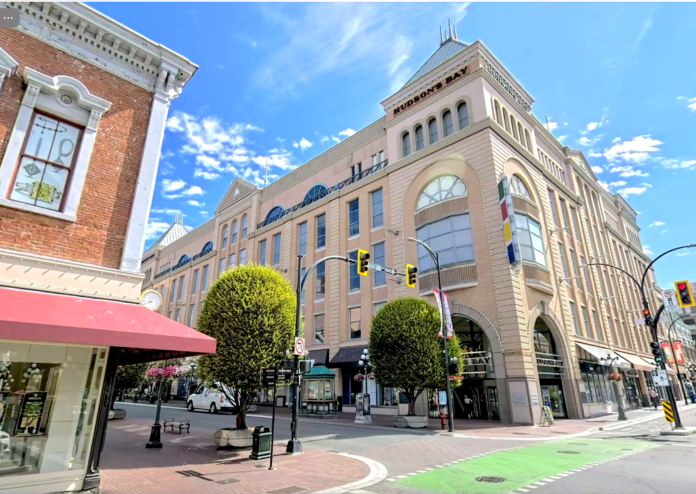
Hudson's Bay 5-level store in downtown Victoria, BC. The store is one of 74 starting liquidation on Monday (March 24). Photo: Apple Maps

In a major development that marks the end of an era in Canadian retail, The Hudson’s Bay Company (HBC) has filed for bankruptcy protection. Beginning Monday, liquidation sales commence at 74 Hudson’s Bay department stores across Canada, with only six locations set to remain open—including three in Ontario and three in Quebec.

The restructuring also impacts HBC’s licensed luxury banners in Canada, with two of the three Saks Fifth Avenue stores—at CF Chinook Centre in Calgary and CF Sherway Gardens in Toronto—also slated for liquidation, alongside all 13 Canadian Saks OFF 5TH stores.

Suzanne Sears. Image via LinkedIn

While the news had been rumoured for weeks, the scale of the fallout has shocked observers and devastated staff. Retail employment expert Suzanne Sears, President of Best Retail Careers International, said the human toll of the shutdown is far-reaching.

“Roughly 10,000 people are directly employed by HBC, but when you include contractors and staff from brand shop-in-shops—cosmetics, jewelry, fashion—the number rises closer to 15,000,” said Sears in an interview. “Many of these individuals are career Bay employees. Some have been with the company for 30, 40, even 50 years.”

Devastation on the Sales Floor

Sears visited several stores in Ontario over the past week, including Mapleview in Burlington, Oakville Place, and CF Lime Ridge Mall in Hamilton. She described emotional scenes of employees clinging to hope.

“Staff were hugging each other and crying. They’re devastated,” she said. “These are not just casual jobs—these are people who gave their lives to this company.”

Despite heavy foot traffic amid the sales, she noted an eerie atmosphere in stores.

“All the escalators were turned off. Even elevators weren’t working in some locations. You have to leave the store and use the mall escalators just to change floors,” she said.

Sears was also surprised by the quality of certain departments.

“The men’s departments were immaculate, especially at Mapleview. Beautifully merchandised and stocked—it’s ironic to see that just before liquidation.”

Liquidators Move In, Inventory Stripped

Sears confirmed that external liquidation firms have already taken control, with some cosmetic and perfume counters cleared out and jewelry cases emptied.

“Most luxury beauty brands have pulled their inventory already. You’re seeing empty displays and discount racks resembling Winners stores—chaotic, messy, and picked over,” she explained.

Several international liquidation specialists are reportedly preparing to ship in additional inventory to keep stores stocked throughout the sales.

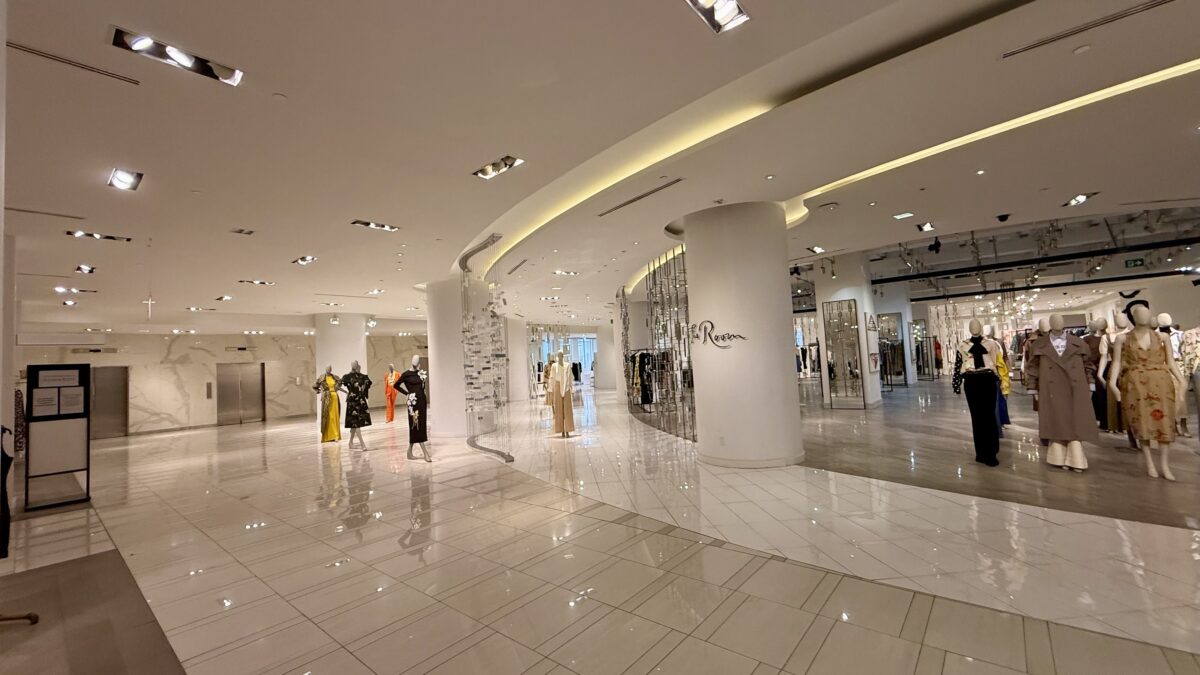
Luxury women’s department ‘The Room’ on the third floor of the Queen St. Hudson’s Bay store. Creative Director Nicholas Mellamphy re-joined The Room in February of 2024 and led a remarkable revival that will be halted with HBC’s bankruptcy. Photo: Craig Patterson

Employment Fallout and the Bigger Picture

The job losses are not only significant in scale but pose a challenge for the Canadian job market. Sears questioned how the industry would absorb so many displaced professionals.

“There are very few companies left in Canada that can take on full teams of inventory specialists, planners, senior buyers, and regional managers,” said Sears. “These were not just cashiers—these were experts in their fields.”

She warned that older employees in particular will struggle.

“Where do you place someone in their late 50s who’s only ever worked at HBC? Retail was once considered a career. This erodes that notion completely.”

While Sears expects some staff—especially those in luxury sales or specialized departments like men’s tailored clothing—to find work elsewhere, the broader picture is grim.

“People from the Olson shop, men’s suiting, or high-end cosmetics counters will land on their feet. But general merchandise staff? They’re facing limited opportunities,” she said.

Lack of Communication and Support Raises Alarm

Sears was critical of the company’s internal communication with staff, many of whom reportedly had no idea if they were scheduled for shifts beyond this week.

“HBC should have communicated clearly with every employee about their status, exit strategy options, and mental health resources. Leaving people in the dark is unconscionable,” she said.

She also questioned whether employees will receive severance or termination pay.

“In most bankruptcies, staff simply lose out. There’s no union protection for most HBC employees. They’ll be the last to be considered when creditors get paid.”

Hudson’s Bay Queen Street. Photo: Craig Patterson

Retail Careers in Question

Sears didn’t mince words when asked about the long-term prospects for retail workers in Canada.

“This is a death blow to retail as a career. Department stores once offered long-term, well-paid jobs. That era is gone,” she said. “Unless you’re with a luxury European brand—which tend to treat staff better—it’s no longer a viable path.”

She cited La Maison Simons as a Canadian brand that may thrive in the wake of HBC’s collapse.

“Simons is very Canadian, very loyal to its people. They’ll benefit from this, as consumers and workers alike seek alternatives,” she noted.

She also noted the strengths of luxury multi-brand retailer Holt Renfrew, the last of its kind in Canada as Saks prepares to exit the country. 

The American Ownership Question

Sears placed much of the blame on HBC Governor Richard Baker and the American private equity model behind the company’s strategy.

“This is Sears Canada all over again. The company was stripped for parts by American interests,” she said. “There needs to be government oversight to prevent these leveraged buyouts from destroying Canadian institutions.”

She pointed to the broader trend of American ownership hollowing out Canadian retail—not just in stores, but also in media and e-commerce infrastructure.

“If we’re going to allow foreign firms to run our largest employers, we need conditions: Canadian head offices, Canadian decision-making, and Canadian employment guarantees,” she insisted.

Hudson’s Bay Queen Street. Photo: Craig Patterson

What Happens Next for Workers?

Sears advised displaced employees to invest in professional resume help and job coaching, especially given the shift toward AI-driven recruitment systems.

“Many of these workers haven’t applied for a job in decades. They were promoted or poached. Now they need to learn to compete in a completely different job market,” she explained.

For those who remain at the six Hudson’s Bay stores still operating, the future remains uncertain. Sears noted that liquidation sales could extend into late spring or early summer, depending on how quickly merchandise sells through.

“Some staff will be rehired on short-term contracts to support these sales, but full-time roles are disappearing fast,” she said.

Final Thoughts: A Canadian Institution in Crisis

The demise of Hudson’s Bay’s full retail footprint is more than a financial collapse—it’s a cultural reckoning.

“This isn’t just about stores closing,” Sears emphasized. “It’s about the loss of a trusted brand, of careers, of stability, and of faith in the system.”

She called on provincial and federal governments, as well as industry organizations like the Retail Council of Canada, to do more.

“Retail is the largest private-sector employer in the country. Yet when crises hit, workers are abandoned. This has to change.”

More from Retail Insider:

Odd Burger halts U.S. expansion plans

Image: Odd Burger

Odd Burger Corporation, a leading vegan fast-food restaurant chain and food technology company, announced Monday that its U.S. expansion plans are being halted amid escalating political tensions between Canada and the U.S.

On March 10, the company announced a strategy to deal with tariffs and raise capital to invest in its U.S. expansion, however, those expansion initiatives and investment plans are not moving forward at this time. Instead, the company plans on using the capital to invest in its Canadian manufacturing and franchise operations, it said in a news release.

James McInnes

“Given the global tariff uncertainty, we are putting the brakes on our U.S. expansion until pricing metrics can be formulated with certainty,” said James McInnes CEO and Co-Founder of Odd Burger.

“We are also seeing increased demand for our products in Canada, and as a Canadian Company, we want to make sure that we focus on our core market at this time.”

Odd Burger operates its own manufacturing facility in London, Ontario where it produces over 20 plant-based proteins and dairy-free sauces under the brand Preposterous Foods, using primarily Canadian sourced and grown ingredients.

The company’s food service product line is available for purchase at Sysco distribution centres across Canada.  

“In anticipation of price increases with U.S tariffs set to commence April 2, 2025, the Company believes it can help other Canadian companies transition to plant-based products made in Canada and sees a significant growth opportunity in supporting the Canadian market,” it said.

Related Retail Insider stories: