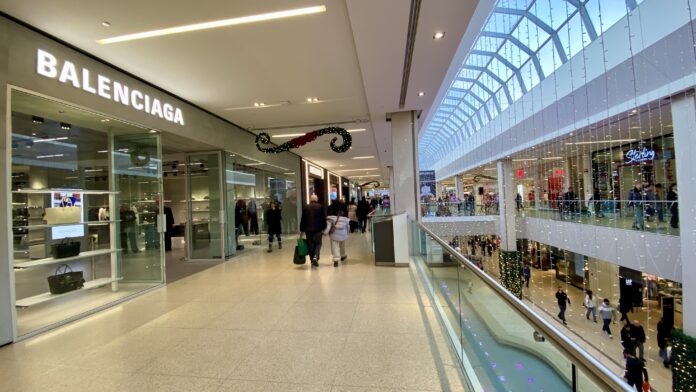
Retail giant has opened its new flagship store in downtown Vancouver at the corner of Robson and Burrard.
“Our new adidas flagship store at Robson and Burrard is the largest adidas store in Canada spanning nearly 35,000 square feet and the second largest in our North American fleet,” said Lesley Hawkins, VP Retail.
“The new format store offers a broad selection of adidas sport, lifestyle and culture wear for every member of the family. It features a broad selection of soccer apparel and footwear, including soccer jerseys from Premier clubs like Real Madrid, the MLS Vancouver White Caps, and football federations like Argentina.
Lesley Hawkins
“For the running enthusiast, the store offers a Run Lab with gait analysis and an extensive product assortment for every level of runner. Customization of apparel and accessories is available through the Made For You lab, featuring localized Vancouver graphics.”
Hawkins said the store is located in the heart of downtown Vancouver.
“The new adidas store brings together the local community, visitors to the city, and tourists alike. Centrally located, the store is a short walk from BC Place, the Vancouver port, Stanley Park, and many downtown attractions,” she said.
“The new store concept offers modularity to adapt to various sports, product categories and in-store activations, so we expect to integrate the concept across future doors.
“The official grand opening celebration, also known as our Homewarming party, will take place January 31 to February 2, 2025. Come by and enjoy lots of activities, including meeting some special guests.”
Burger King 'Sizzle' location in Toronto. Photo: Burger King
Burger King, in partnership with Redberry Restaurants, has unveiled its innovative “Sizzle” restaurant design in Canada. Four newly remodelled Sizzle locations opened this month in Etobicoke (Toronto), North York, Mississauga, and Sudbury. The outlets showcase a bold new look and enhanced guest experience, marking a shift for the brand’s evolution in Canada.
The debut of the Sizzle concept reflects Burger King’s commitment to modernization while maintaining its flame-grilled heritage. “We’re excited to bring the Sizzle design to Canada,” said Ken Otto, CEO of Redberry Restaurants, in an interview. “This is more than just a remodel—it’s a fresh approach that puts our guests first with a digital-forward, family-friendly dining experience.”
A New Era for Burger King in Canada
Ken Otto
The Sizzle concept, named to evoke Burger King’s flame-grilled legacy, represents a transformative shift for the brand. Its design elements create a modern, inviting atmosphere, combining bold colours, innovative textures, and state-of-the-art features.
Scott Lewis, Brand President at Redberry, emphasized the significance of the launch. “These are not just redesigned restaurants; they’re a statement of what Burger King represents today. We’re building on decades of history with a focus on convenience and technology for our guests,” he said.
Key features of the Sizzle design include:
Digital Ordering Kiosks for seamless dine-in or carry-out orders, making it easier than ever for guests to customize and place their meals.
Enhanced Drive-Thru Lanes with a canopied design, double lanes, and an automated voice ordering system to reduce wait times.
Designated Pick-Up Areas for delivery and digital orders, catering to the growing demand for mobile app and third-party delivery services.
Signature Interior Design Features, such as the “King Booth” for group seating, a “Crown Wall” for photo opportunities, and a unique Whopper art installation celebrating the brand’s iconic menu item.
Modern Exterior Designs, featuring large Burger King branding, vibrant colours, and a “Home of the Whopper” wall that ensures instant recognition.
“We wanted every aspect of the Sizzle design to be a celebration of what makes Burger King unique,” Otto explained. “It’s not just a restaurant; it’s an experience.”
A Commitment to Digital Innovation
The Sizzle concept reflects the growing importance of digital integration in the quick-service restaurant (QSR) industry. By prioritizing features like automated drive-thru ordering and mobile-friendly pick-up zones, Redberry is aligning Burger King with the preferences of today’s tech-savvy customers.
“The digital-first approach is a game-changer,” said Otto. “Our guests are looking for convenience, and we’re delivering that with cutting-edge technology that makes ordering faster, easier, and more intuitive.”
Lewis echoed this sentiment, noting that the double-lane drive-thrus are designed to minimize congestion during peak times. “The investment in digital is about creating a frictionless experience. Whether you’re ordering from your phone, a kiosk, or the drive-thru, we want it to be seamless,” he said.
Burger King ‘Sizzle’ location in North York. Photo: Burger King
Strategic Growth Across Canada
Redberry has been instrumental in Burger King’s growth across Canada, operating over 160 locations nationwide. The company plans to open 14 new restaurants in 2024, followed by another 14 in 2025, as part of its ambitious expansion strategy.
“Canada is a key market for Burger King, and Redberry is proud to lead the charge,” Otto said. “We’ve built over 60 Burger King locations in recent years, and the response has been phenomenal.”
The Sizzle concept will eventually be rolled out nationwide, with Redberry taking the lead as the first franchisee to implement the design. “We’re setting the standard with these four locations, but we’re not stopping there,” said Lewis. “Over time, Sizzle will become synonymous with the Burger King experience across Canada.”
Navigating Challenges in Real Estate
Finding suitable real estate for modern QSR designs, especially those with drive-thrus, can be challenging in today’s competitive market. Otto acknowledged these hurdles, noting that securing locations often requires patience and strategic planning.
“Drive-thru locations are in high demand, and municipalities are imposing stricter regulations,” he said. “However, we’ve worked hard to find spaces that meet our needs, and we’re confident in our ability to continue growing.”
Urban markets also present unique opportunities for expansion. Burger King has already established a presence in Toronto’s PATH system and is exploring additional sites in dense downtown areas. “Urban locations are an exciting frontier for us,” Otto said. “The brand resonates strongly with city dwellers, and we’re eager to bring the Sizzle experience to more urban neighbourhoods.”
A Legacy of Growth
Redberry’s success as Burger King’s largest franchisee in Canada is underpinned by its strong leadership and innovative approach to restaurant development. The company’s partnership with City Capital Ventures has fuelled its rapid expansion, and its accolades, including the Pinnacle Awards’ Company of the Year, underscore its industry-leading performance.
“Our mission is to create an environment where our team members and guests can thrive,” said Otto. “Sizzle is a testament to that vision—it’s bold, it’s modern, and it’s uniquely Burger King.”
Grand Openings and Beyond
By November 26, 2024, all four Sizzle locations will be open for business, offering Canadians a first look at this exciting new concept. The locations are as follows:
and are collaborating nationwide to provide more Canadians across the country with on-demand access to grocery and general merchandise essentials.
This comes as Canadians continue to seek affordable and convenient shopping options, which they can now find at Walmart through DoorDash’s easy-to-use app and website, said a news release.
“DoorDash opens our doors to Canadians who are strapped for time, in need of last-minute items or who prefer to shop from the comfort of their home – especially as we head into the holiday season. We’re proud to continue our journey to become the number one omnichannel retailer as we live out our mission of helping Canadians save money so they can live better.”
The news release said customers shopping on DoorDash can now browse tens of thousands of unique items from Walmart – including beloved private label brands like Great Value, Equate, and Mainstays – ranging from fresh produce and kitchenware to pet food and electronics. Once an order is placed from Walmart on DoorDash’s app or website, a nearby Dasher will shop for each item on a customer’s list. Forget something? Customers can continue adding items to their cart until a Dasher arrives at the store to begin shopping.
Shilpa Arora
“Families look to DoorDash to support their weekly routines, and through our collaboration with Walmart, we’re proud to connect them with access to fresh produce, pantry staples, and home goods on demand,” said Shilpa Arora, General Manager of DoorDash Canada. “Customers continue to enjoy the convenience of delivery for a variety of occasions, whether that’s searching for an easy weeknight meal or ordering gifts for the holidays.”
Canadians across the country can now shop grocery and general merchandise from over 300 Walmart Supercentres in Alberta, British Columbia, Manitoba, New Brunswick, Newfoundland and Labrador, Nova Scotia, Ontario, Prince Edward Island, Quebec, and Saskatchewan – enjoying delivery right to their doors.
Roughly four in four customers who shopped on DoorDash in Canada in the last 60 days will now have access to convenient and reliable on-demand delivery from Walmart.
All Walmart Supercentres on DoorDash will be available on DashPass, DoorDash’s subscription program, providing $0 delivery fees and reduced service fees on eligible orders. Place an order from Walmart on DoorDash.
The threat by U.S. President-Elect Donald Trump to slap a 25% tariff on all Canadian goods has sent shockwaves throughout the Canadian business community.
Candace Laing
“Being America’s “nice neighbour” won’t get us anywhere in this situation. President-elect Trump’s intention to impose 25% tariffs signals that the U.S.-Canada trade relationship is no longer about mutual benefit. To him, it’s about winners and losers—with Canada on the losing end,” said Candace Laing, President & Chief Executive Officer of the Canadian Chamber of Commerce.
“We’re facing a significant shift in the relationship between long-standing allies. Canada’s signature approach needs to evolve: we must be prepared to take a couple of punches if we’re going to stake out our position. It’s time to trade “sorry” for “sorry, not sorry.”
“As an exporting nation, with over 75% of our exports destined for the US, new tariffs could hit the Canadian economy hard—impacting jobs, household incomes, and thereby reducing affordability for retail goods,” he said.
“Another major concern is the potential for a “trade war” between Canada and the US, which could trigger retaliatory tariffs. RCC would strongly advocate against placing this burden on Canadian consumers, especially amidst existing affordability concerns. We are particularly concerned that, in the event of a trade war, a broad range of retaliatory measures from the Canadian government could target US-sourced grocery items, due to our heavy reliance on US food imports, as well as other consumer goods. So from our perspective, a trade war should be avoided at almost any cost, though this is hardly news to the Canadian government.
“In 2017, work done for the Retail Council of Canada by the consulting firm AT Kearney estimated that each one per cent of tariffs on US Goods could increase retailers’ costs by $1 billion, a number that would now likely exceed $1.25 billion per percentage point of tariffs, given inflation and population growth.”
“Small and medium-sized businesses account for approximately 40% of exports to the US. Any disruption to the flow of goods between the US and Canada would be a major economic hit. Tariffs would not just affect our exporters as their effect on the value of the Canadian dollar would increase the cost of US imports — affecting small businesses and consumers alike.
Canada cannot afford to dismiss this as a idle threat or initial positioning – we need to take this seriously and present, once again, a united front in responding to this challenge. The uncertainty alone created by this issue will cause pressures on Canadian SMEs and impede our progress to an economic recovery,” explained Kelly.
“Our governments must take all actions within our control to ensure we are a good and reliable trading partner for the US and the world. These include a stronger focus on crime, stabilizing our supply chains such as ports and railways, promoting our energy sector and reducing the regulatory and tax burdens facing Canadian businesses.”
Tiffany & Co. at Toronto's Yorkdale Shopping Centre. Image: Tiffany & Co.
Tiffany & Co., the legendary New York City-based jeweller renowned for its timeless luxury and craftsmanship, has unveiled its newly reimagined flagship store at the Yorkdale Shopping Centre in Toronto. The redesigned location blends architectural brilliance, artistic integration, and an expanded footprint. Tiffany & Co. has declared the Yorkdale store to be its Canadian flagship.
The Yorkdale store, which first opened in 2009, was the mall’s first mono-brand luxury boutique. It set the stage for Yorkdale’s transformation into Canada’s most comprehensive luxury retail hub. The latest renovation and expansion underline Tiffany’s significant commitment to its Canadian clientele.
Tiffany & Co. at Toronto’s Yorkdale Shopping Centre. Image: Tiffany & Co.Inside Tiffany & Co. at Toronto’s Yorkdale Shopping Centre. Image: Tiffany & Co.
Architectural Brilliance Meets Artistic Elegance
The revamped flagship was designed by acclaimed architectural firm SANAA and features an exterior that dazzles with 32,000 glass bricks framed in polished aluminum panels. This stunning façade pays homage to Tiffany’s craftsmanship, symbolizing the transformation of raw diamonds into timeless jewellery.
Inside, the store’s design continues to impress. Upon entering, visitors are greeted by a custom-made maple-leaf-inspired light sculpture by architect Hugh Dutton, celebrating Canada’s national symbol. The store’s arched interiors, inspired by Toronto’s architectural heritage, guide visitors through intricately designed spaces featuring woven metal display cases with mother-of-pearl inlays.
The Yorkdale flagship elevates the shopping experience by integrating fine art into its design. Visitors can admire works by globally acclaimed artists, including Damien Hirst’s Tiffany Incredible, Vik Muniz’s Repro: Musée d’Orsay (Rochefort’s Escape, after Manet), and Sho Shibuya’s Sunrise From a Small Window series.
Inside Tiffany & Co. at Toronto’s Yorkdale Shopping Centre. Image: Tiffany & Co.
High Jewellery Salon and Jean Schlumberger gallery
The Yorkdale flagship features a High Jewellery Salon, which houses Tiffany’s most exclusive and comprehensive collection in Canada.
This luxurious space also includes the Jean Schlumberger gallery, named after the legendary Tiffany designer celebrated for his intricate and artistic creations. It features a custom-designed Apollo chandelier by Aggio, suspended from a champagne gold-leaf ceiling. Inspired by celestial themes, the chandelier embodies the elegance and sophistication of Tiffany’s jewellery creations.
High jewellery salon inside Tiffany & Co. at Toronto’s Yorkdale Shopping Centre. Image: Tiffany & Co.
The Evolution of Yorkdale’s Luxury Offerings
Tiffany & Co.’s 2009 arrival at Yorkdale marked a transformative moment for the shopping centre, as it became the first mono-brand luxury retailer to open within the mall. Over the years, Yorkdale has cultivated the country’s most extensive luxury brand cluster, now home to iconic names.
Tiffany’s latest investment at Yorkdale—an expansion from 6,085 square feet to 8,325 square feet—is a testament to the brand’s enduring role in Yorkdale’s luxury legacy. The expansion annexed the adjacent space previously occupied by Jimmy Choo, allowing Tiffany to introduce new retail experiences to its clientele. Jimmy Choo recently relocated in Yorkdale to a new flagship space.
Inside Tiffany & Co. at Toronto’s Yorkdale Shopping Centre. Image: Tiffany & Co.
Expanding Tiffany & Co.’s Canadian Presence
The Yorkdale flagship is only one part of Tiffany & Co.’s ambitious plans for Canada. The jeweller is investing heavily in new locations, including a two-storey flagship at the northwest corner of Bloor and Bay Streets in downtown Toronto. This new store, set to feature 24-foot ceilings on its second level, will allow Tiffany to rebrand the entire building, further strengthening its presence in Toronto’s luxury retail corridor.
Looking beyond Toronto, Tiffany & Co. is also preparing to open new stores at Royalmount in Montreal in 2025 and Oakridge Park in Vancouver, further cementing its presence in key urban markets across the country.
Inside Tiffany & Co. at Toronto’s Yorkdale Shopping Centre. Image: Tiffany & Co.
A Pioneering History of Tiffany & Co. in Canada
Tiffany & Co. established its Canadian presence in 1991 with the opening of its first store at 85 Bloor Street West in Toronto. The four-level, 13,450-square-foot location marked the brand’s initial foray into the Canadian market and operated for approximately 22 years before relocating to 150 Bloor Street West in 2013.
In 1993, Tiffany expanded into Vancouver by opening a 700-square-foot boutique within Holt Renfrew, marking its second Canadian city presence. The brand continued its growth by establishing shop-in-stores within Holt Renfrew locations in Montreal and Calgary during the 1990s.
Over the years, Tiffany & Co. has significantly expanded its footprint across Canada. The brand operates standalone stores in Vancouver at 723 Burrard Street, West Edmonton Mall in Edmonton, CF Chinook Centre in Calgary, CF Sherway Gardens in Toronto, CF Rideau Centre in Ottawa, and at the Ritz Carlton Hotel on Sherbrooke Street West in downtown Montreal. Additionally, Tiffany maintains concessions within Holt Renfrew stores in Vancouver, Calgary, Mississauga, and at Holt Renfrew Ogilvy in Montreal.
Inside Tiffany & Co. at Toronto’s Yorkdale Shopping Centre. Image: Tiffany & Co.
LVMH’s Influence on Tiffany & Co.: A New Era of Innovation and Growth
The acquisition of Tiffany & Co. by LVMH Moët Hennessy Louis Vuitton in early 2021 for USD $15.8 billion marked a transformative chapter for the storied jeweller. As part of the world’s largest luxury conglomerate, Tiffany & Co. has been able to leverage LVMH’s extensive expertise in brand positioning, global market penetration, and luxury retail innovation. This new relationship has catalyzed significant changes within the company, including a sharper focus on modernity, customer engagement, and strategic expansion.
Since joining LVMH’s esteemed portfolio, which includes brands such as Louis Vuitton, Dior, and Bulgari, Tiffany & Co. has embraced a refreshed brand vision while retaining its heritage of elegance and craftsmanship. LVMH has encouraged Tiffany to rethink its approach to flagship stores and customer experiences, evident in the striking redesign of its Yorkdale flagship and other planned openings in Canada.
Dave's Hot Chicken in Toronto's Parkdale area. Photo: Dave's Hot Chicken
Dave’s Hot Chicken is turning up the heat in Canada with an ambitious expansion strategy that brings its signature Nashville-style hot chicken to communities across the country. Canadian franchisee Blair Bitove, under Bite Brands, is leading the charge, blending unique flavours, strategic growth, and a commitment to quality.
Ontario and Western Canada Expansion
Dave’s Hot Chicken is set to add four new locations in Ontario next year, including Kitchener, Pickering, London, and Brampton. “We’re really excited to bring our signature flavours to even more communities,” said Blair Bitove. “Each of these cities has shown great enthusiasm for our brand, and we’re thrilled to be growing in Ontario.”
Blair Bitove
Two of the Ontario locations are already under construction, with two more slated to begin in the spring. “It’s all about finding the right spaces and ensuring that we maintain our high standards,” Bitove added. “We want every customer to have the same amazing experience, no matter which location they visit.”
Western Canada is also on the map, with an Edmonton location currently under construction and lease negotiations underway in Calgary. “We’re excited to establish a stronger presence in Western Canada,” Bitove said. “These cities are ready for something new, and we’re confident our hot chicken will make a lasting impression.”
All Canadian locations are corporately owned and operated by Bite Brands, a strategic decision that ensures consistency and quality. “Keeping operations under one umbrella allows us to maintain our high standards across the board,” explained Bitove.
Photo: Dave’s Hot Chicken
Standing Out in a Crowded Market
Since opening its first Canadian location in January 2021, Dave’s Hot Chicken has rapidly gained a following, with six Ontario locations now in operation. The brand faces stiff competition from established players such as KFC, Popeye’s, and Mary Brown’s, but Bitove believes Dave’s has a unique edge. “Our chicken isn’t just another fried option,” she said. “It’s freshly prepared for every order, with a proprietary blend of spices that sets us apart.”
The brand’s origins in California add to its distinctive appeal. Founded in 2017 by four childhood friends, including trained chef Dave Kopushyan, Dave’s Hot Chicken quickly grew from a parking lot pop-up in East Hollywood to a sensation with long lines and rave reviews. “That authenticity and passion are at the core of every bite we serve,” said Bitove. “People can taste the difference, and that’s why they keep coming back.”
Building Brand Awareness Through Events
Raising brand awareness has been a critical component of Dave’s Hot Chicken’s Canadian growth strategy. The ICSC Toronto conference played a pivotal role in introducing the brand to landlords and potential partners. “It was tough at first,” Bitove admitted. “Landlords hadn’t heard of us, and it was hard to ask them to try our product when we had so few locations.”
The ICSC event provided a turning point, allowing landlords and others to experience the brand firsthand. “We had landlords, even staff from other chicken brands, lining up to try our food,” Bitove recalled. “It was our chance to show them we’re more than just another chicken joint. The feedback was phenomenal, and it helped open a lot of doors.”
Toronto-based musician Drake is among the owners of Dave’s Hot Chicken corporately. Photo: Dave’s Hot Chicken
Site Selection and Real Estate Strategy
Dave’s Hot Chicken typically seeks out standalone locations ranging from 2,000 to 2,500 square feet, with a preference for end-cap locations that offer high visibility. “We want to provide a full dining experience, so standalone sites with patios are ideal,” Bitove explained. “Our product is made-to-order, which makes it less suited for traditional food courts.”
The Shops at Pickering City Centre location, currently under construction, exemplifies this approach. Situated with exterior mall access, it offers both convenience and a dedicated dining space. “We’re focused on creating an environment that matches the quality of our food,” Bitove said.
Customer Loyalty and Menu Innovations
Dave’s Hot Chicken’s ability to turn first-time visitors into loyal customers is a key strength. “Once people try our food, they come back,” Bitove said, referencing strong repeat business from third-party delivery services like DoorDash, Uber Eats, and SkipTheDishes. “It shows we’re doing something right.”
Menu innovation is another part of Dave’s success. While the brand’s core offering of tenders and sliders remains its focus, new items like Dave’s Hot Chicken Bites have broadened its appeal. “The bites have been a great addition,” Bitove said. “They’re perfect for kids and anyone looking for a smaller portion.”
In January, Dave’s will reintroduce its limited-time offering, “Dave’s Not Chicken,” a cauliflower-based option. “It’s great for vegetarians or anyone looking to try something different,” Bitove noted. “It has the same bold flavors our fans love.”
Strategic Vision for the Future
Looking ahead, Dave’s Hot Chicken plans to open 25 to 30 locations across Canada within the next three years, with a focus on Ontario and Western Canada before expanding further east. “It’s about building strong operations and making sure we deliver the same great experience everywhere,” said Bitove. The team is also considering an eventual expansion into Quebec. “Once we’re established in Western Canada and Ontario, Quebec will be a natural next step.”
Reflecting on the brand’s rapid growth and future potential, Bitove said, “We’re proud of what we’ve achieved so far, but we’re just getting started. Canadians have really embraced Dave’s Hot Chicken, and we’re excited to see where we can take it next.”
President-elect Donald Trump attends a campaign event, in Allentown, Pennsylvania, Oct. 29, 2024.
Brendan Mcdermid/Reuters
Few political figures can wield as much influence over global markets as President-Elect Donald Trump. This week, his threats to impose sweeping new tariffs—25% on Canadian and Mexican agricultural products and an additional 10% on Chinese goods—sent shockwaves through currency markets, sinking the Canadian dollar by at least a cent within seconds.
These tariffs, framed as leverage to secure tighter borders and reduce immigration and drug trafficking, represent more than just bluster; they signal a tactical shift in U.S. economic policy that could have devastating consequences for Canada’s agri-food sector.
Canada’s Agri-Food Exports: A $40 Billion Industry at Risk
In 2023, Canada exported over $40 billion worth of agri-food products to the United States, accounting for nearly 60% of its total agri-food exports. These exports span a diverse array of goods, including grains like wheat, canola, and barley; livestock such as beef and pork; seafood like lobster and snow crab; and fresh produce such as greenhouse-grown vegetables and berries.
Iconic Canadian products like maple syrup and whisky, along with processed foods and pulses, further underscore Canada’s vital role in supplying high-quality agricultural goods to its largest trading partner.
How Tariffs Could Devastate Canada’s Agri-Food Sector
A 25% tariff on these goods would be catastrophic, eroding the slim margins that underpin food production and trade. Food is a business of tight profit margins, and even a 5% tariff could disrupt supply chains, discourage U.S. importers, and upend decades of economic integration between the two countries. For Canadian producers, the stakes are especially high; we’ve never been so reliant on the American market since the early 2000s under George W. Bush, and Trump’s team knows it.
However, this is more about tactics than policy. President-Elect Trump is unlikely to enact measures that would harm American consumers. A tariff on $40 billion worth of Canadian food imports would undoubtedly inflate prices at U.S. grocery stores—a political risk Trump is keen to avoid. Instead, he’s betting Canada will yield under pressure, given our limited leverage and ongoing diplomatic tensions with other key markets, including India and China.
For Canada, this is a wake-up call. Ottawa must move beyond short-term measures like $250 rebate cheques or temporary GST holidays to address the structural vulnerabilities in our agri-food economy. Trump is simply doing what he promised: leveraging U.S. economic power to extract concessions.
Impact of Carbon Tax on Canada’s Agri-Food Competitiveness
Adding to Canada’s woes is the carbon tax, which has further weakened our agri-food sector’s competitiveness. A new peer-reviewed study from Dalhousie University shows that this policy has placed Canadian producers at a disadvantage relative to their U.S. counterparts. With the United States poised to withdraw from the Paris Agreement, American producers are free from similar constraints, giving them an edge in pricing and market access. Coupled with a weaker Canadian dollar, this could push food importers and retailers to favor U.S. products, leaving Canadian consumers to shoulder higher food costs.
If Canada continues to prioritize retail politics over meaningful economic strategy, the cost will be borne by every household at the grocery checkout. Trump’s tariff threats should not be dismissed as mere theatrics—they are a stark reminder of the fragile balance of power in North American trade. Ottawa must respond with a cohesive strategy to safeguard our agri-food sector and ensure it remains competitive in an increasingly hostile economic landscape.
NEXE Innovations Inc., a compostable and innovative materials company, is partnering with Bridgehead Coffee, a Canadian-owned and operated business of over 40 years.
Previously, Bridgehead offered compostable soft-bottom coffee pods to its customers but has decided to transition to NEXE’s BPI-certified compostable coffee pods. The initial delivery includes two SKUs from their coffee line (Centro House and Bytown Boom), which they also sell in bag versions, said a news release.
Bridgehead was one of the first coffeehouses in Canada to serve Fairtrade coffee. Bridgehead operates 17 coffeehouses in Ontario and is a wholesale partner with retail and grocery chains, including Costco, Whole Foods Market, Sobey’s, and Farm Boy. Bridgehead also sells its products through its website, it said.
Ash Guglani
“NEXE is excited to partner with Bridgehead, not only to provide what we believe is a superior compostable coffee pod solution but also to leverage their well-established customer distribution channels, expanding the reach of our innovative products to a broader audience, said Ash Guglani, President of NEXE Innovations. “The teams are working closely to build a successful long-term partnership and create a more sustainable future in the North American coffee industry.”
Bridgehead was previously owned by a publicly traded company, Aegis Brands Inc., and generated $16.4 million in sales for the 2023 year-end. In early 2024, Bridgehead was sold to Pilot Coffee Group of Companies.
NEXE Innovations said it is focused on providing innovative compostable material solutions and packaging to the B2B segment to help businesses achieve their sustainability goals.
“NEXE Innovations has developed a proprietary and patented compostable material that can withstand heat, pressure, and water. Our flagship product, the NEXE Pod, a BPI-certified compostable coffee pod, showcases our material’s durability and is an ideal substitute for plastic. The NEXE pod is compatible with major coffee brewing machines and is manufactured at NEXE’s vertically integrated facility based in North America,” it said.
IQ Foods, Heal Wellness and Rosie’s Burgers are all set to open at the centre in 2025.
Sean Black
“Our partnership with Cadillac Fairview reflects our commitment to expand in key urban markets with best in market real estate,” said Sean Black, Chief Executive Officer of Happy Belly. “CF Shops at Don Mills is a premier GTA dining destination, and we’re excited to extend our reach to serve new diners and those who already love our brands.”
Ilene Klein
“We are thrilled to partner with Happy Belly Food Group to amplify the fast casual dining options we have at the centre,” added Ilene Klein, General Manager, CF Shops at Don Mills. “Dining continues to be a focal point of our retail mix, and I know the local community will respond positively to these new additions.”
In a news release, Happy Belly said this marks the second net new store location for IQ Foods since acquisition on September 18, bringing the brand’s store count to six. IQ Foods is a flagship brand in Canada’s premium healthy eating market serving a variety of delicious and wholesome food options such as healthy bowls, smoothies, sandwiches, soups, and salads, along with other flavorful clean-eating dishes that the whole family can enjoy. IQ caters to thousands of health-conscious customers fostering strong brand recognition and a loyal customer base driven by word-of-mouth and most importantly, satisfied customers, said the company.
“This marks the forty-seventh location for Heal Wellness, a QSR founded with a passion and mission to provide quick, fresh wellness foods that support a busy and active lifestyle. We currently offer a diverse range of smoothie bowls and smoothies. We take pride in meticulously selecting every superfood ingredient on our menu to fuel the body, including acai smoothie bowls, smoothies, and super-seed grain bowls. Our smoothie bowls are crafted with real fruit and enriched with superfoods like acai, pitaya, goji berries, chia seeds, and more,” it said.
Happy Belly said IQ Foods and Heal Wellness will open in a shared 1,500-square-foot store, making this particular combination the first of its kind.
Shared space combinations a key differentiator
“Happy Belly’s real-estate playbook is routed in shared space combinations, allowing us to strategically acquire premium locations of almost any size and brand combination, a key differentiator in today’s market,” said the company.
“CF will be home to Rosie’s ninth retail location. Rosie’s Burgers is a nod to the enduring tradition of genuine hospitality serving quality smashed burgers, sides and milkshakes. Inspired by the simplicity of the classic diner, the menu is uncomplicated and effortlessly delicious. Rosie’s is your neighbourhood burger shop serving up nostalgic flavours you know, love, and crave. From our Smashburger’s and French fries to strawberry shakes and onion rings-we’re all about keeping things simple and perfecting tradition. Because the classics were made classic for a reason, right?”
IQ Foods, Heal Wellness and Rosie’s Burgers will join an established roster of restaurant and food operators at the centre including Eataly, Joey, The Good Son, Taylor’s Landing, Scaddabush, Anejo, MADO, Starbucks, Chipotle and many more.
“We currently have 421 contractually committed retail locations from area developers across all emerging brands in the Happy Belly Portfolio-whether in development, under construction, or already open. As we open new stores, the Happy Belly footprint continues to grow. Our team is committed to sourcing and evaluating real estate, reviewing franchisee applications, and collaborating closely with area developers to support our asset-light franchising model. At present, five of our restaurant brands are simultaneously under construction, and we are excited to announce multiple brand openings throughout 2024-2025. By focusing on securing high-quality franchisees and prime real estate locations across Canada, we will further strengthen our expansion efforts,” said Black.
EXTERIOR OF DYNAMITE LOCATION. PHOTO: GROUPE DYNAMITE
Groupe Dynamite Inc. announced Tuesday the successful closing of its previously announced initial public offering which was oversubscribed with significant support from institutional investors from both Canada and the US.
“As we embark on this exciting new volume of Groupe Dynamite’s story, I am incredibly proud to lead an entrepreneurial and inclusive organization guided by strong values which transcend all of our actions and where everyone is rowing in the same direction. Together, we are united in our passion for building meaningful, emotional connections with our customers and we are more aligned than ever as owners in our commitment to driving Groupe Dynamite’s long-term growth and creating value for all our stakeholders,” said Andrew Lutfy, Chief Executive Officer and Executive Chairman of Groupe Dynamite, in a news release.
“With a luxury-inspired mindset and a dedication to innovation and excellence, we are shaping a future where our brands remain inspiring and impactful. By harnessing our distinct brand identities, profound customer insights, disciplined execution, and adaptability, we are well-positioned to achieve enduring success.”
Pursuant to the offering, selling shareholders controlled by Andrew Lutfy sold an aggregate of 14,285,715 subordinate voting shares at an offering price of $21 per share, for aggregate gross proceeds of approximately $300 million. The underwriters have also been granted an over-allotment option to purchase up to an additional 2,142,857 subordinate voting shares at a price of $21 per share for additional gross proceeds of approximately $45 million if the over-allotment option is exercised in full. The over-allotment option can be exercised for a period of 30 days from the closing date of the offering, according to the news release.
The offering was made through a syndicate of underwriters led by Goldman Sachs Canada Inc., BMO Nesbitt Burns Inc., RBC Dominion Securities Inc. and TD Securities Inc., as joint lead bookrunners, and Barclays Capital Canada Inc., Desjardins Securities Inc., National Bank Financial Inc. and Scotia Capital Inc., as bookrunners, and including Canaccord Genuity Corp., CIBC World Markets Inc. and Stifel Nicolaus Canada Inc., explained the company.
Groupe Dynamite operates retail stores and digital experiences under two complementary banners and .