Advertisement
Home Blog Page 529

Canadian Retail Sector Sees Mixed Performance Amid Shifting Consumer Preferences

Mic Mac Mall in Dartmouth, Nova Scotia. Photo: Curtis Patterson

In a distressed market, the Canadian retail landscape is undergoing significant changes. While the overall retail sector showed a 0.8% decrease in sales in May, certain retail segments appear to be gaining momentum.

The post-pandemic commercial real estate market has been marked by uncertainty, with investors and developers adopting a cautious “wait and see” approach. However, the retail sector has demonstrated considerable resilience amidst the turbulence.

A key trend emerging in the Canadian retail landscape is the bifurcation of the market. Prior to the rise of e-commerce, stores primarily competed with their immediate neighbours. Today, the market is “nosier” than ever, with an abundance of competition both online and offline, leaving consumers overwhelmed with choices.

This bifurcation has created a distinct advantage for luxury and discount retailers. Luxury brands appeal to the upper-class consumers who may be more insulated from economic headwinds, while discount retailers cater to the increasingly cost-sensitive shoppers. Conversely, mid-tier retailers, such as traditional department stores, face a tougher challenge in capturing consumer loyalty and interest.

Retailers must now recalibrate their value proposition to effectively appeal to consumers who have the power of choice across a wide range of options, from e-commerce brands and luxury retailers to discount providers, direct-to-consumer startups, and boutique retail experiences.

Another emerging trend is the surge in popularity of boutique food halls. These smaller-format, curated spaces not only offer a more affordable alternative to traditional restaurants but also attract a unique range of specialty vendors that may be difficult to find elsewhere. In the current landscape, these hyper-localized, thoughtfully curated retail environments appear to be more appealing to Canadian consumers and potentially more beneficial to a brand’s bottom line.

As the Canadian retail sector navigates a period of disruption, the ability of brands to align with the evolving needs and preferences of cost-conscious consumers will be crucial in determining their success. The bifurcation of the market and the rise of boutique retail experiences are just two of the many transformations shaping the future of Canadian retail.

Canadian Tire Weathers Consumer Spending Challenges with Loyalty Program and Focus on Essentials

PHOTO: CANADIAN TIRE

Canadian Tire is weathering the storm of consumer spending slowdown by leveraging its loyalty program and shifting its focus to essential product categories. The company’s president and CEO, Greg Hicks, shared insights into the current retail landscape and Canadian Tire’s strategy for navigating the challenges in an earnings call this week. 

According to Hicks, Canadian consumers have “tightened their belts considerably” as the high cost of living continues to impact their spending power. This pullback in spending has posed a challenge for Canadian Tire and its subsidiaries, including SportChek, Mark’s, Pro Hockey Life, and Helly Hansen. The company’s consolidated comparable sales declined by 4.6% in the most recent quarter.

However, Canadian Tire has managed to weather the situation well. In its most recent quarter, the company reported a profit attributable to shareholders of $198.8 million, up from $99.4 million a year earlier. This resilience can be attributed to the company’s strategic focus on its Triangle loyalty program, which has driven recurring revenue and outperformed sales made by customers without the program.

As Irene Nattel, an analyst with RBC Capital Markets, noted, Canadian Tire’s performance “underscores the reasonably defensive nature” of its retail operations. The company has also been proactive in managing its inventory, leaning more into essential product categories like automotive, household cleaning, and pet supplies, which tend to be in higher demand during the challenging fourth quarter.

The weather has also played a role in the company’s performance, with Hicks noting that many parts of the country experienced about 50% more cold days and double the days of rain in the second quarter. This unexpected weather pattern impacted demand for certain seasonal products, such as gardening and air conditioning.

To cope with these shifts, Canadian Tire has emphasized the importance of its Triangle loyalty program, which has proven to be a valuable tool in driving customer loyalty and recurring revenue. The company’s focus on essentials and its ability to adapt to changing market conditions have also contributed to its resilience.

Shopify Beats Q2 Estimates, Defies Market Slowdown

Shopify. Photo: smithandandersen.com

Canadian e-commerce giant Shopify has defied market expectations with its latest quarterly results, showcasing resilience in the face of cautious consumer spending. The Ottawa-based company reported impressive second-quarter sales and profit figures that surpassed analysts’ estimates, sending its stock soaring in pre-market trading.

The company’s revenue for the second quarter reached US$2.05 billion, marking a significant 21% increase year-over-year. This performance exceeded the average analyst estimate of $2 billion, as surveyed by Bloomberg. Shopify’s profit, excluding one-time items, stood at 26 cents per share, comfortably surpassing the expected 20 cents per share.

Shopify has projected continued strong growth for the current quarter ending in September. The company anticipates percentage revenue growth in the low to mid-twenties on a year-over-year basis, outpacing analyst expectations of 21% growth.

The positive earnings report triggered a substantial surge in Shopify’s U.S.-traded shares, which rose approximately 18% in pre-market trading. This uptick comes as a welcome relief for shareholders, considering the stock had been down about 30% year-to-date prior to the announcement, despite more than doubling in value during 2023.

Harley Finkelstein, Shopify’s President, has been at the forefront of the company’s growth strategy. In response to slowing revenue growth in recent quarters, Finkelstein has committed to substantial investments in marketing, even at the potential cost of short-term profit margins. This aggressive approach appears to be paying off, as evidenced by the strong quarterly results.

The company’s performance is particularly noteworthy given the challenging retail environment. Other major players in the e-commerce space, such as Amazon and Wayfair, have reported signs of consumer caution in their recent earnings calls. Amazon noted that shoppers were opting for lower-cost items, while Wayfair’s CEO described a decline in demand for home goods not seen since the 2008 financial crisis.

Shopify’s success comes on the heels of significant strategic shifts within the company. In the past year, the e-commerce platform underwent a substantial restructuring, which included cutting more than 2,000 jobs and divesting most of its logistics unit. In a surprising move, Shopify also agreed to allow its merchants to use Amazon’s “Buy with Prime” service for package delivery, marking a notable collaboration between the two e-commerce giants. 

The company’s gross merchandise volume (GMV), which represents the overall value of merchant sales across Shopify’s systems, saw a robust increase of 22% in the second quarter, reaching $67.2 billion. This figure outperformed Wall Street projections of $65.7 billion, further underscoring Shopify’s strong market position.

Amazon Canada Accelerates Same-Day Delivery for Prime Members in Ontario and BC

Canadians prefer slower shipping
Photo: Amazon

Amazon Prime customers in the Greater Toronto Area, Southwestern Ontario, and Metro Vancouver will now experience significantly faster same-day delivery options, with orders arriving in as little as seven hours from click to doorstep.

The new service accelerates same-day delivery and introduces an overnight delivery option, catering to the needs of customers requiring last-minute items or restocking essentials.

Under the new system, Prime members can easily identify eligible items for rapid delivery by selecting “Today by” or “Overnight by 8 a.m.” filters in the search panel or on the Amazon Shopping App. This streamlined process allows customers to quickly locate products available for expedited shipping, enhancing the overall shopping experience.

The overnight delivery option is particularly noteworthy, as it extends the ordering window until midnight. Customers can choose between two delivery timeframes: 4 a.m. to 8 a.m. or 7 a.m. to 11 a.m., ensuring their packages arrive before they start their day or during a convenient morning window.

For Prime members in eligible locations, the faster same-day delivery service comes at no additional cost for orders over $25. Orders under this threshold will incur a nominal fee of $6.99, maintaining accessibility for smaller purchases while encouraging larger basket sizes.

This move by Amazon Canada aligns with the company’s global strategy to enhance its Prime membership value proposition. By offering near-instantaneous delivery options, Amazon is setting a new standard in the Canadian e-commerce landscape, potentially influencing consumer expectations and pressuring competitors to improve their delivery capabilities.

As the e-commerce sector continues to evolve, particularly in the wake of changed consumer behaviours following the COVID-19 pandemic, Amazon’s enhanced delivery options could significantly impact the Canadian retail landscape. Other retailers may need to reassess their omnichannel strategies to compete with the convenience offered by Amazon’s rapid delivery services.

Amazon offers a 30-day free trial of its Prime service to eligible customers. The trial period allows potential subscribers to test the enhanced delivery speeds and determine if the service aligns with their shopping habits and needs.

As Amazon Canada rolls out this service enhancement, it will be interesting to observe how it affects consumer behaviour, competitor responses, and the broader e-commerce ecosystem in Canada. The move undoubtedly strengthens Amazon’s position in the market and raises the bar for customer expectations in online retail delivery, creating consumer expectations that could be challenging to overcome. 

How AI Is Transforming the Retail Industry

With the recent advancements in artificial intelligence (AI) technology tools, the retail industry has already seen big changes in the last few years—and there’s plenty more to come.

Customers are embracing this new technology in their personal and professional lives, taking advantage of services once reserved for an elite few, now available to everyone with a computer or smartphone. And customers are learning quickly that adding a few time-saving luxuries to your routine can make life a whole lot easier.

The average person can use an AI virtual assistant to send emails, manage their calendar, and order their groceries automatically. Even putting yourself on the job market has been made easier—AI can be used to quickly update your resume, develop your cover letter, and optimize your LinkedIn profile, complete with a professional headshot produced with an AI image-generator like Portrait Pal.

Let’s take a look at AI from the shopper’s perspective to examine some ways many retail brands have started incorporating AI into their business operations, and why most retailers should be willing to adapt and join the AI frenzy or risk being left behind.

Best Uses for AI in Retail

Many retailers have already incorporated AI into their business models to save on costs and time, using it to optimize pricing, forecast demand, manage inventory, and create a more personalized shopping experience for their customers.

Price Optimization

One thing that AI systems do well is take in large amounts of data and analyze it, determining the optimal outcome for any situation. In retail, pricing strategies are constantly changing, and how the new prices are set depends on many factors.

An AI pricing system can help set new and future prices based on historical data like buyer behavior and market trends or external factors like your competitor’s prices and general economic data. It would be nearly impossible for a team of human analysts working around the clock to set optimal prices for your merchandise at any given time with as much speed and accuracy as the right AI system.

There are several available AI services you can use to help with price optimization, including Wiser, Revionics, and Relex Solutions. Each one offers various other features you may or may not find useful, but you should expect a sharp increase in profits and customer satisfaction from using this kind of AI to optimize your prices. 

Demand Prediction

The retail industry is all about supply and demand. You can use AI tools to analyze large amounts of data to forecast which products will have the highest demand, and when. The accuracy can be much higher because the AI can sort through all of the data at a faster pace than any human analyst can.

The AI model can make accurate predictions about future demand based on past market trends as well as the historical data from each of your stores, including events or special promotions, seasonality, and even the demographics of your customer base.

Inventory Management

All retailers know that managing inventory is a precarious balancing act. On one hand, you need to keep enough inventory in stock to meet the needs of your customers. But you also don’t want too much inventory that you don’t need taking up valuable warehouse space. Sometimes the flow of business seems too unpredictable to know exactly how much product you need at any given time.  

One of the pioneers of using AI technology to manage its inventory is retail giant Walmart. Cameras attached to their floor scrubbers help calculate remaining inventory on the shelves, taking more than 20 million photos per day across all stores. That info is all sent to an AI-powered data center, which then makes appropriate adjustments to the inventory for every store.

For smaller businesses with less physical space to store extra inventory, this technology is useful to prevent overstocking merchandise that doesn’t move quickly or from selling out of popular items before you have the chance to replenish your stock.

Personalized Consumer Experience

It’s been decades since retail has expanded beyond the traditional brick-and-mortar stores to the internet, meeting the needs of consumers who prefer to do most of their shopping online. Virtual stores are not only another sales tool, but also a goldmine of data that can be used by AI machine learning algorithms to customize the experience of every customer.

The AI-driven analytics tools can use all of the available data, including the customer’s browsing behavior, purchase history, favorites list, physical location, age, and other factors to recommend specific products they would likely be interested in.

To operationalize this personalization across channels, many retail go-to-market teams are adopting GTM AI as a context and intelligence layer that unifies CRM, product, and behavioral data to prioritize audiences, trigger timely offers, and measure impact from awareness through repeat purchase.

Aside from personalizing your marketing efforts, some advanced AI tools can help the customer get the full experience for how they’ll use the product before they buy. For example, someone shopping for furniture can upload a photo or room measurements and the AI can create an image showing exactly how the piece would look in the home.       

Customer Service

With more customers shopping online comes the need for customer support to be available 24/7. AI-powered chatbots can be trained to answer questions and provide support instantly. This can increase the efficiency of every online purchase and reduce the frustrations of customers who may otherwise have to wait on hold or pause their shopping until they can call during operating hours to get the answers they need.

Additional features can be integrated through AI-powered customer service, such as making reservations for in-store services, troubleshooting any technical issues with the site, or coordinating a return or refund.

Some retailers have even started incorporating in-store uses for AI to improve the customer’s shopping experience. These include store-affiliated apps that can be used to apply discounts for loyalty card members by scanning products while shopping, or cashierless checkout options that allow customers to just walk out of the store with a full cart—their credit card can be charged automatically for every item later.

AI in Retail Is Here to Stay

AI has already made a big impact on the retail industry—and it’s here to stay. The strengths of machine learning and AI-driven analytics fit in perfectly with the fast-paced, high volume world of retail. It’s a useful tool for identifying patterns, analyzing large amounts of data, and making predictions based on past and current market trends.

The more you learn to use AI and machine learning tools in your retail business, the more informed you’ll be in major decisions regarding inventory management, price optimization, and customer service. These tools can help reduce overhead costs while increasing sales and improving the overall customer experience.

Uniqlo to Open 5 Canadian Stores in Fall 2024

Photo: Uniqlo

Japanese fashion retailer Uniqlo is continuing with its Canadian store expansion with four locations announced for fall 2024, and an additional fifth store confirmed. It’s part of a bigger growth plan for the company which entered Canada with its first stores in 2016. 

On Wednesday, Uniqlo announced that it would open three stores in Ontario, as well as one in British Columbia. The three Ontario stores will be either in or close to Toronto, and will include locations at CF Sherway Gardens in Toronto, Heartland Town Centre in Mississauga, and Bramalea City Centre in Brampton. Uniqlo also announced that it would open another store in the BC Lower Mainland at the Willowbrook Shopping Centre in Langley. 

The CF Sherway Gardens Uniqlo store will move into a retail space vacated by retailer Laura, according to sources, as well as adjacent spaces to create a Uniqlo store spanning about 15,000 square feet or so. It’s a size that appears to be a sweet spot for the retailer for its non-flagship locations in Canada. 

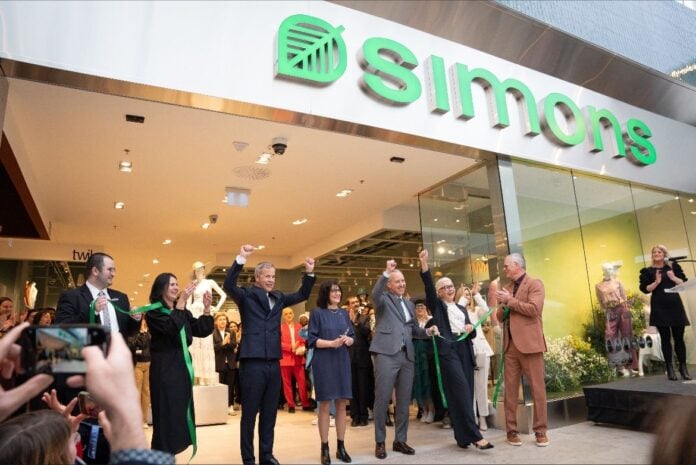
Grand Opening Ceremony at Uniqlo CF Chinook Centre (Image: CF Chinook Centre)

Heartland Town Centre will be Uniqlo’s first Canadian store to open in a power centre, making it rather unique. Heartland Town Centre is considered to be one of the country’s top big-box power centres in terms of retail offerings and consumer spending dollars. Uniqlo is taking a retail space formerly occupied by Designer Depot, according to lease plans. 

Bramalea City Centre is an enclosed super regional shopping centre in Brampton, and Uniqlo’s location in the mall will be 12,167 square feet according to a lease plan. 

Uniqlo will also be opening a fifth Canadian store in September, which wasn’t announced in Wednesday’s press release. Uniqlo’s website states that it will open a store at Royalmount in Montreal — Royalmount’s opening date was recently moved from August 15 to early September, and it’s not 100% confirmed if Uniqlo’s Royalmount storefront will be ready for the mall’s opening day, given that we’re announcing the store before Uniqlo’s PR team. The Uniqlo website indicates that the Royalmount location will be a ‘standard store’ and not one of the flashier flagships such as the downtown Montreal store or at CF Toronto Eaton Centre in Toronto.  

Uniqlo store at CF Fairview Pte-Claire in Montreal. Image: Uniqlo

Jeff Berkowitz of Aurora Realty Consultants has negotiated Uniqlo’s leases since the brand entered the country nearly eight years ago, and continues to do so with the most recent store announcements.

In the fall of 2016, Uniqlo opened two stores in Toronto at the CF Toronto Eaton Centre and at the Yorkdale Shopping Centre, kicking off a national expansion that has seen Uniqlo become an important player in the fast-fashion space in Canada. The company currently operates 23 stores in Canada, a number that will increase to 28 by the end of the year. 

Uniqlo said in a press release late last year that it planned to open more than 20 stores in North America in 2024. Uniqlo is still conspicuously absent from the city of Vancouver, where it has several stores in the suburbs. 

Following the opening of the first two Toronto stores nearly eight years ago, Uniqlo has since opened a total of nine locations in the Greater Toronto Area, all in major shopping centres. Three more stores will be added this fall as mentioned above. The Greater Vancouver market currently has four Uniqlo stores, with the fall opening of the Langley store marking the fifth in the region. The Montreal area has four Uniqlo stores as well, with Royalmount being the fifth in the region. Calgary, Edmonton, and Ottawa are all home to two Uniqlo stores. Uniqlo’s Canadian locations have opened incrementally since 2016 and over the past 18 months, the pace of store openings appears to have accelerated. 

UNIQLO Centre Eaton de Montreal (705 Sainte-Catherine St. W.) Photo: Maxime Frechette

At this point, it would appear that Uniqlo is targeting store locations in potentially every major shopping centre in Canada that is commercially successful. Uniqlo may also target cities where it currently does not have stores, including Winnipeg, Halifax, Quebec City, London/Southern Ontario centres, and eventually even markets such as Victoria and the two largest cities in Saskatchewan. Uniqlo is also expected to secure a downtown Vancouver location, either within part of the building vacated by Nordstrom or nearby on Robson Street, though nothing is yet confirmed. 

According to the Aurora Realty website, the ideal size for a Uniqlo store is between 15,000 square feet and 40,000 square feet. The downtown Montreal flagship, which opened in October of 2020, is the largest in Canada with 45,000 square feet over two levels on Ste Catherine Street in the Montreal Eaton Centre. 

Globally, Uniqlo has more than 2,400 stores, including 60 locations in the United States and 23 in Canada. Uniqlo’s first store opened in Hiroshima Japan in 1984, and the company is a brand of Fast Retailing Co., Ltd., a leading Japanese retail holding company with global headquarters in Tokyo. Uniqlo is the largest of eight brands in the Fast Retailing Group, which is one of the world’s largest apparel retail companies, and Uniqlo is Japan’s leading specialty retailer.

Uniqlo has said that it plans to operate about 200 stores in North America by 2027. It’s not known how many of those would be in Canada. When Uniqlo entered Canada, its original targeted number of stores was about 100, according to the Globe & Mail. That number could have since changed, given the pandemic and shifting consumer dynamics.

Uniqlo’s store expansion comes at a time when more consumers are shopping online. Shopping centres are still busy, with brick-and-mortar retail showing signs of longevity. The retailer has experimented with retail concepts such a pop-up in Toronto’s Financial District in 2019, and could look to such locations as South Edmonton Common in Edmonton if more power centres are deemed worthy locations. Only a handful of streets in Canada see enough foot traffic for such a retailer. 

Uniqlo is competing in Canada with a range of relatively affordable retailers with stores, though Uniqlo’s styles tend to be more staple-based than trendy. H&M and Zara are strong players in the fast-fashion market in Canada, with both having a high penetration of stores across the country. To a degree, even La Maison Simons is a competitor, with a range of well-priced fashions as the retailer opens two more stores in Toronto next year as part of a national expansion. Another international entrant into Canada will soon be announced, which will feature large-format stores and a trendier range of fast-fashion options at price points that could grab market share. Despite competition already in the market, Uniqlo appears to be bullish in terms of signing leases in anticipation of growth in this country in the years to come. 

Vancouver Retail Market Shows Resilience with Low Vacancy Rates and Rising Rents with Population Growth [Interview]

Photo credit: Adi K

The Greater Vancouver Area (GVA) retail market is entering a period of more stabilized vacancy rates, experiencing minor movement, but with lease rates continuing to inch upwards, according to a recent report by real estate firm Colliers

“Retail spaces for previously fitted-out restaurants are in high demand considering today’s high costs building and fixturing an unfinished location,” said the company’s Greater Vancouver Retail Report, Spring/Summer 2024

“City initiatives to improve the public realm and attract foot traffic to high-vacancy areas such as Gastown are underway where Water street is being closed to cars creating a pilot pedestrian only zone. As new supply is limited, landlords are keen on curating retail offerings in communities they are creating, causing availability and rates to vary based on perceived need and type of tenant.”

Sherman Scott, Vice President of Colliers in Vancouver, said leasing in the retail market has been extremely active.

Sherman Scott

“The vacancy rate is very low,” he said.

“We’re seeing an upward pressure in most markets on rental rates. There’s just a lot going on on the leasing front, which is nice compared to some of the other asset classes like office. It’s been a good market.”

Scott said population growth in the area and an increase in tourism have been big drivers for the retail market in the Vancouver area which bodes well for retailers in the future.

“There is some new supply coming on line but I don’t think there’s as much supply coming on line to meet the demand.”

It’s mainly on the ground floor of new residential buildings.

Colliers Retail Report

“Among the urban streets monitored, Gastown has, in recent years, experienced one of the highest vacancy rates. However, this has slowly improved with a decrease in 4 percentage points in vacancy half-over- half and stands to continue to improve moving forward. The City of Vancouver has made strides to improve foot-traffic in the area by introducing a pedestrian only area along Water Street. This pilot project will take effect this summer and local businesses have already observed an uptick in business activity since the project has been put in place. The popularity and success of the program this year will determine if it will be made permanent or brought back for future seasons,” said the Colliers report.

Photo credit: Jeremy Lee

“Demand continues to be high for existing built-out restaurant spaces. This intense competition for locations is due to the steep increase in costs associated with building out a restaurant space from scratch which can cost upwards of 50-75 per cent more compared to adopting a recently vacated restaurant space. Though patrons remain budget conscious, British Columbia remains the third highest province for spending on food service and drinking establishments, with an average spending of $1.4 billion per month.”

The report said Canada Emergency Business Account loans, which matured early in the first half of this year, ended up being less of a story than feared. There were broad expectations of changes to the retail landscape as this loan deadline had the potential to pose feasibility challenges for some businesses already challenged through increased costs and pandemic restrictions. Those businesses that were going to close for financial reasons mostly had already, while most others managed to secure loans from other parties to extended their repayment programs.

“Rent continues to grow across urban and suburban markets, as limited new supply will continue to push rates higher. Rental packages from landlords will vary greatly on a case-to-case basis to attract the right tenant. This selection process is particularly critical in curated retail centres where retailer/ product mix affects the market positioning of the location. The retail market has seen a steady level of tenant replacements instead of vacancies, which has kept the vacancy rate low,” said Colliers.

“The population in Metro Vancouver is projected to reach three million residents in 2024 according to Statistics Canada projections and achieve about 21% growth over the past ten years. The continued growth in population supports economic growth, including the consumer base, as well as heightening competition in retail business to attract consumer attention by providing an evolving variety of goods and services.”


Colliers said continued interest rate cuts and stabilization of inflation would make a big impact on retail businesses. Lower borrowing costs may bring new retailers to the market and allow existing retailers opportunities to expand.

“While consumer spending per person may be down due to the high cost of living in Metro Vancouver and inflation pushing the costs of goods and services ever upwards, a rising population is pushing total spending up. Necessity retail businesses, such as grocery stores, pharmacy-drugstores, and medical clinics are seeing strong business as well as businesses catering to new residents setting up households,” added the report.

“Tourism is an additional driver of demand for retail, especially restaurants and destination shopping in the vicinity of the cruise port. While visitor counts are just short of pre-pandemic levels, the recreation and entertainment sector indicate that growth is returning to employment for the industry, contributing to the positive outlook.” 

Photo credit: Lukas Kloeppel

Quebec-based Bath Depot expands into Western Canada with Edmonton store opening [Interview]

Pboto credit: Bath Depot

Quebec-based Bath Depot, Canada’s destination for bathroom and kitchen essentials, continues to expand its physical footprint with the recent opening of its first store in Edmonton at Mayfield Common.

The brand, founded in 2008 by four brothers who are plumbing enthusiasts, now has 43 stores nationwide with plans to continue its growth trajectory.

Andrew St-Charles, Senior Director of Marketing & E-Com for the company said the Edmonton location is the brand’s first store in Western Canada.

Andrew St-Charles

“The furthest we are is in Ontario and now we’re finally traveling across the Ontario border into Western Canada. We’re opening another one at the end of August in Calgary,” he said.

In mid-August, Bath Depot is opening in Barrie, Ontario and in September a location is planned for Saint John, New Brunswick.

“That’s what’s confirmed for this year. Next year we do have other locations coming up,” added St-Charles.

“Our objective is about eight stores. More locations in Edmonton and in Calgary as well. We’re looking at Saskatoon and Winnipeg.”

St-Charles said the brand stands out as being unique in the business in its market share.

“You don’t see much competition within our line of business. We’re vertical. We’re very direct with our partners in Asia. We also have an office in Asia. So we’re able to do a lot on our own compared to other retailers out there who are using brands, not being able to be as quick and moving in terms of product selection for our customers,” he said.

“We see an opportunity in Western Canada. We’re not there. We have 20 locations in Quebec, 20 locations in Ontario but nothing out West. For us, it’s an opportunity to grow and gain market share and be a national retailer from coast to coast.”

Photo credit: Bath Depot

He said the typical size of a store is about 5,000 square feet.

“We’re looking at strip malls with locations with docks ideally where we have space to be able to deliver the product. That’s why we don’t look for mall locations. We’re looking mostly at strip malls usually located near a high traffic area whether it be a competitor like a Home Depot, a RONA, a Costco. Somewhere where we can see high traffic for us.”

The first location for the brand was on the North Shore of Montreal in Blainville.

Pboto credit: Bath Depot