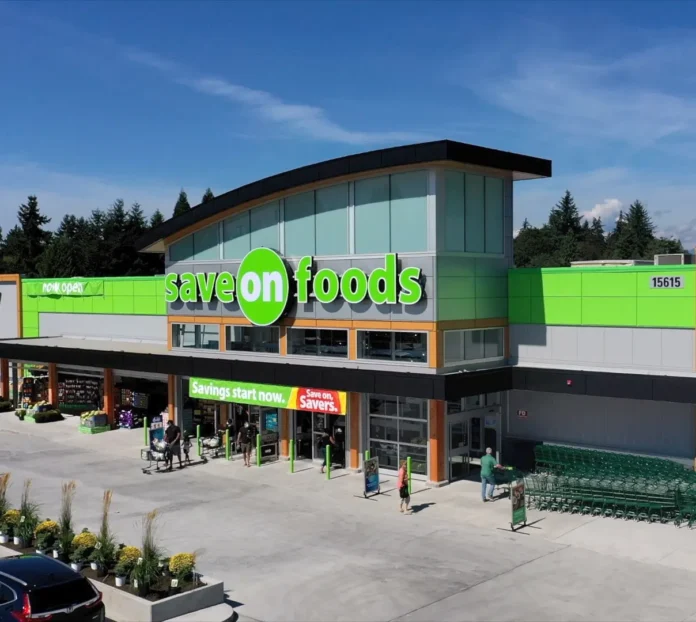
DoorDash is partnering with Pattison Food Group, Western Canada’s leading Canadian owned and operated grocer, to bring on-demand grocery delivery to more households. From urban cities to rural communities, consumers across British Columbia, Alberta, Saskatchewan, Manitoba, and the Yukon can now order on DoorDash from over 200 stores owned by Pattison Food Group, including Save-On-Foods.
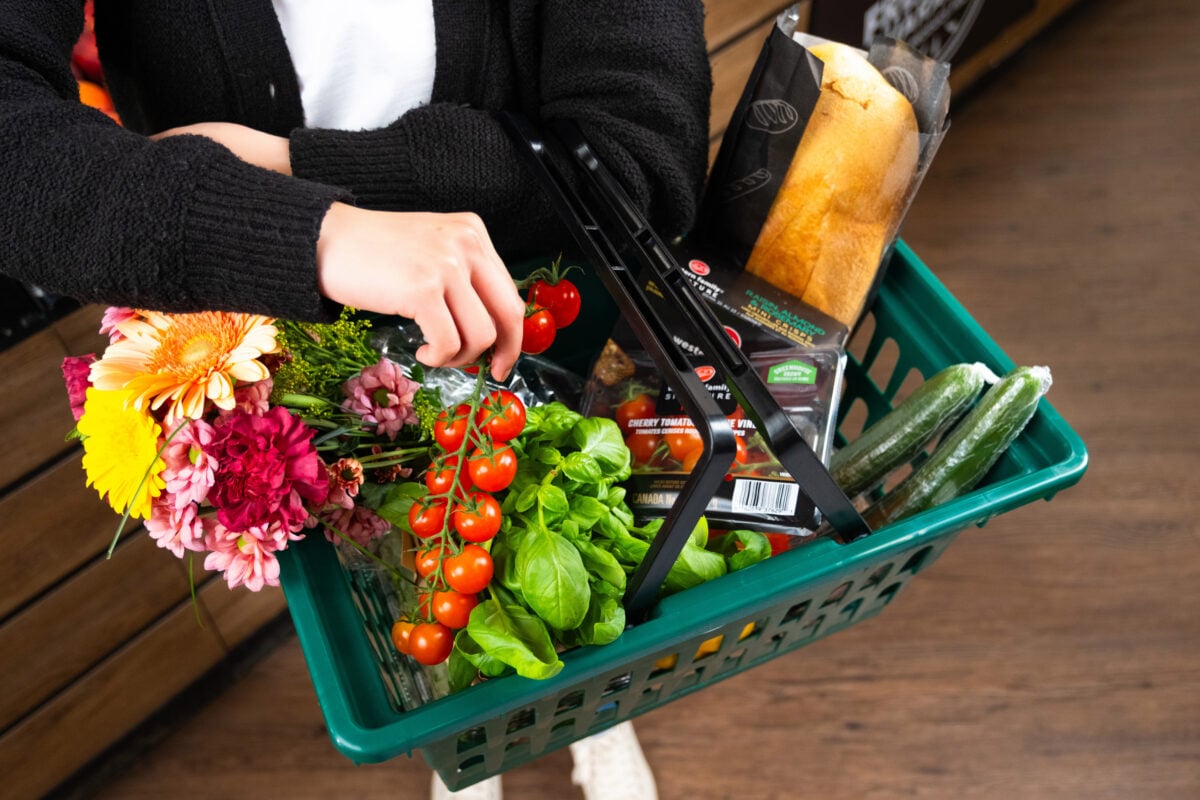
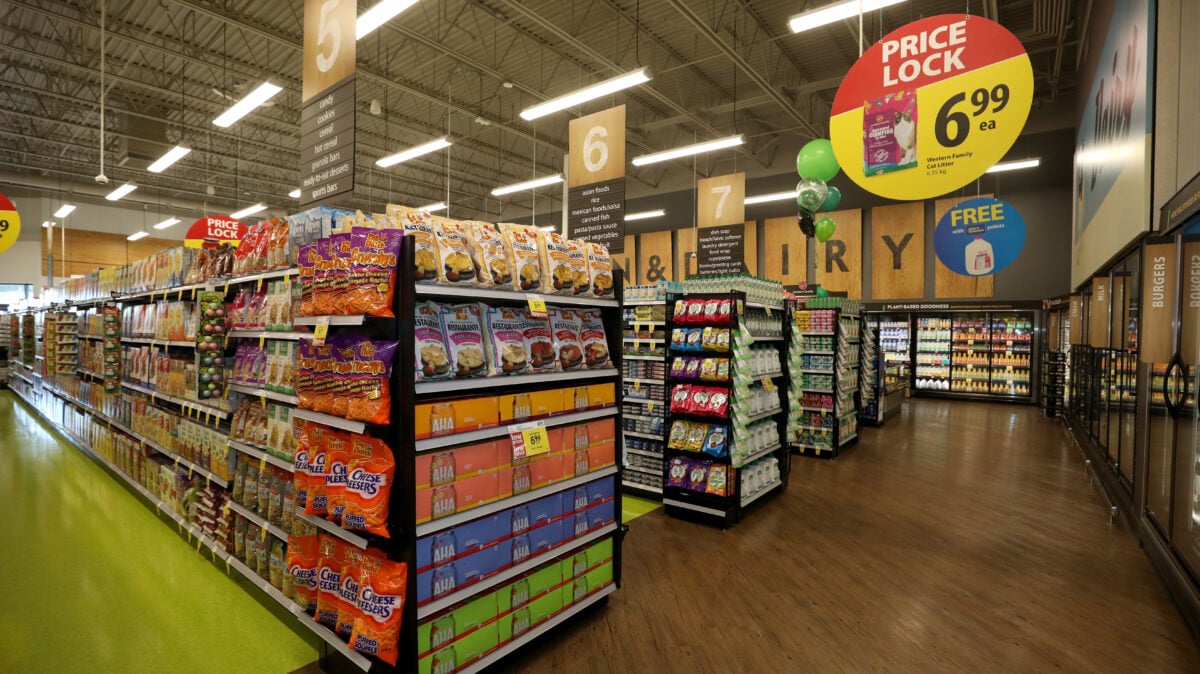
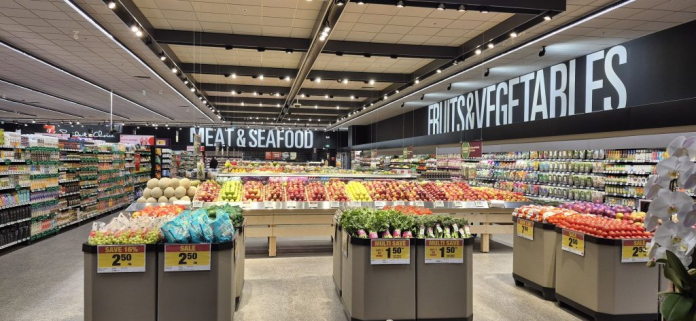
Whether you’re stocking up on groceries for the week or grabbing what you need for tonight, the stores Canadians have counted on for decades are now available at your door. Pattison Food Group’s largest banner, Save-On-Foods anchors the new partnership, giving customers access to a full supermarket experience on demand – from fresh produce and bakery to everyday pantry staples and household essentials, it said.
DoorDash photo
Alongside Save-On-Foods, five additional Pattison Food Group banners – including Urban Fare, Quality Foods, PriceSmart Foods, Nesters Market and Buy-Low Foods – bring even more choice to the platform, spanning value, premium, specialty, and neighbourhood formats across the region, added DoorDash.
“For more than 110 years, we have been committed to helping Western Canadians feed their families and enjoy the moments that matter most,” said Jamie Nelson, President of Pattison Food Group. “By partnering with DoorDash, we are meeting customers where they are at and making it even easier for them to shop for the quality products they know and trust from our stores, so they can spend less time worrying about their grocery list and more time with family and friends.”
Jamie NelsonCharles Shoener
“Grocery is one of the fastest-growing categories on DoorDash in Canada and partners are at the heart of how we’re building a platform that reflects how Canadians actually shop,” said Charles Shoener, Head of North America Grocery Partnerships at DoorDash. “Pattison Food Group has built an incredible family of banners across Western Canada, and we’re proud to help them extend their reach and connect with even more customers in new ways.”
More Rewards members can link their account on DoorDash to unlock member-exclusive pricing and earn points across participating Pattison Food Group banners, bringing in-store savings into the delivery experience. Consumers can sign up for More Rewards directly on DoorDash or link an existing account by entering the email address associated with their More Rewards account at checkout, said the company.
“To celebrate the launch, consumers can save 30% off an order of $65 or more (up to $25) from participating Pattison Food Group banners on DoorDash from July 31, 2026 to August 13, 2026 using promo code SAVEMORE30 at checkout.”
“Our first quarter is another proof point that our strategy is working,” said Dani Reiss, Chairman & CEO of Canada Goose. “We’re successfully evolving Canada Goose into a year-round luxury brand, with customers engaging across more seasons and categories. We expanded gross margin, improved profitability, and deepened engagement around the world. Together, those results are building a stronger, more productive, and more profitable business.”
First Quarter Fiscal 2027 Business Highlights
In the first quarter, it said it advanced initiatives across product, brand, and channels that are strengthening its operating model and positioning the business for sustainable long-term growth.
Continued to expand year-round relevance with Apparel, Rainwear, and Windwear increasing their contribution to total revenue, supporting customer acquisition and driving engagement beyond traditional winter categories.
Expanded brand visibility through our Spring/Summer ’26 marketing campaigns, strengthening customer acquisition and expanding brand reach through a more disciplined mix of performance and brand-building investments, including our Snow Goose spring capsule and Natural Intelligence summer collection brand campaigns.
Further strengthened our DTC operating model, with improvements in conversion and average order value, reflecting continued focus on delivering greater value from its retail network. In the first quarter, it opened four net new stores, bringing the store count to 92 as of the end of our first quarter.
Subsequent to the first quarter, it published its fiscal 2026 Impact Report, showcasing the progress of its sustainability impact strategy, including a 50% reduction in Scope 1 and Scope 2 emissions from our fiscal 2019 baseline.
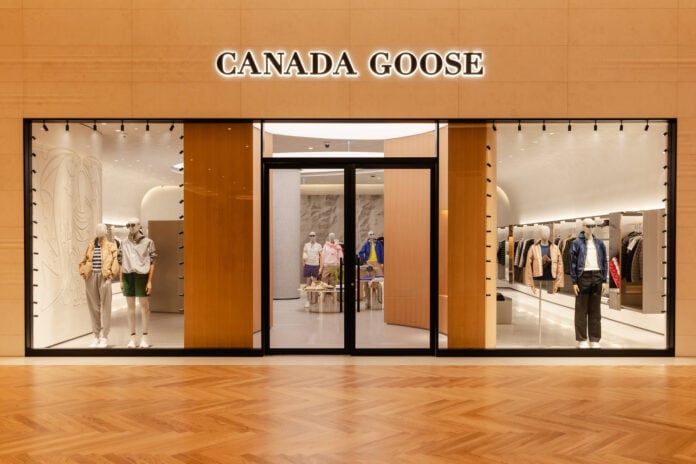
Dani ReissCanada Goose at Oakridge Park in Vancouver. Photo supplied
First Quarter Financial Highlights
All Year-Over-Year Comparisons Unless Otherwise Noted
Total revenue increased 10.3% to $118.9m, up 8.6% on a constant currency basis.
DTC revenue increased 8.6% to $84.8m, or up 6.7% on a constant currency basis due to stronger performance in Asia Pacific and North America. DTC comparable sales decline was 3.2% primarily reflected softer store comparable sales, partially offset by double-digit e-commerce growth.
Wholesale revenue increased 66.5% to $29.8m, or 65.4% on a constant currency basis driven by shipping a larger planned wholesale order book, stronger in-season orders from wholesale partners, and shipment timing.
Other revenue decreased 63.6% to $4.3m, or 64.4% on a constant currency basis as a result of minimal friends and family activity in the United States compared to the same prior year period.
Gross profit increased 12.1% to $74.2m due to higher revenue. Gross margin was 62.4% compared to 61.4% in the first quarter of fiscal 2026, reflecting favourable channel mix and region mix.
Selling, general and administrative (SG&A) expenses were $178.0m, compared to $224.9m in the prior year period. The decrease is primarily due to non-recurrence of an arbitration award payment and an earn-out associated with our European knitwear manufacturer recognized in the prior year period.
Operating loss was $(103.8)m, compared to operating loss of $(158.7)m in the prior year period, attributable to higher gross profit and lower SG&A expenses.
Net loss attributable to shareholders was $(90.8)m, or $(0.93) per basic and diluted share, compared with a net loss attributable to shareholders of $(125.2)m, or $(1.29) per basic and diluted share in the prior year period.
Adjusted EBIT was $(103.8)m, compared to $(106.4)m in the prior year period. Adjusted EBIT margin 2 was (87.3)%, compared to (98.7)% in the prior year period.
Adjusted net loss attributable to shareholders was $(86.5)m, or $(0.89) per basic and diluted share, compared with an adjusted net loss attributable to shareholders of $(88.2)m, or $(0.91) per basic and diluted share in the prior year period.
Loblaw said it delivered strong second quarter 2026 results.
“In its last quarter prior to the close of the sale of PC Financial, the Company recorded total revenue of $15,270 million and adjusted diluted net earnings per common share growth of 11.9%. Starting in the third quarter of 2026, the Company will no longer report PC Financial results and will begin recognizing its proportionate share of EQB’s net income in its consolidated financial results. Retail sales increased by 4.1% to $15,046 million, reflecting continued strength across the business, including contributions from new store openings. In Food Retail, sales grew 3.3%, supported by higher customer traffic and basket size, and e-commerce sales growth,” it said.
“The Company’s discount banners once again outperformed, reflecting continued consumer demand for value and greater access to Maxi® and No Frills® stores. E-commerce sales continued to grow, supported by PC ExpressTM delivery and integrated third-party delivery options. In Drug Retail, sales grew 6.1%, driven by continued strength in specialty and chronic prescriptions, as well as the beauty and OTC categories. Loblaw continued its focus on strategic expansion, opening 14 stores across its Food Retail and Drug Retail network, including 7 Hard Discount stores, 3 drug stores, and the first T&T® location in California, bringing convenient access to nutritious food, multicultural offerings and essential healthcare services to more communities.”
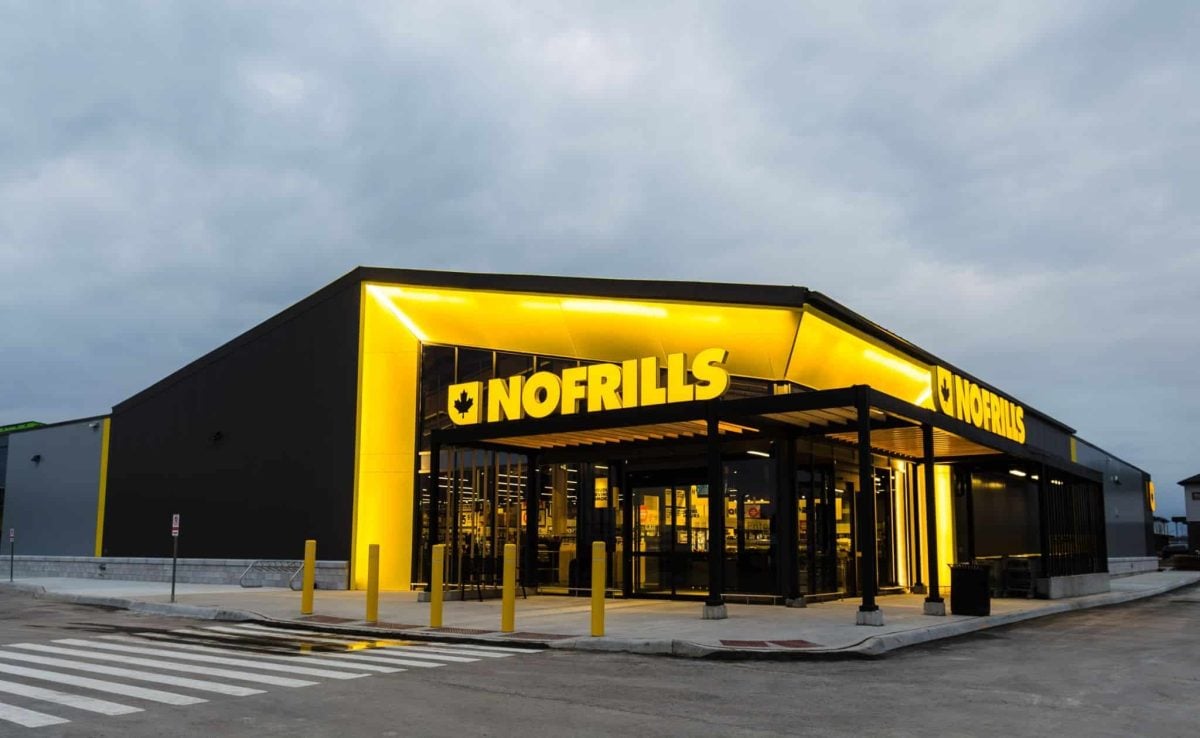
Per BankNew concept No Frills store in Komoka. Image: Loblaw Companies
“Customers continue to reward us for delivering on their needs through increased traffic, basket size and topline sales,” said Per Bank, President and Chief Executive Officer, Loblaw Companies Limited. “We are investing in new stores and growth as we make everyday essentials and healthcare more accessible while continuing to deliver strong financial results.”
2026 SECOND QUARTER HIGHLIGHTS
Retail revenue was $15,046 million, an increase of $589 million, or 4.1%. Revenue (including Retail and PC Financial was $15,270 million, an increase of $598 million, or 4.1%.
Drug Retail (Shoppers Drug Mart) same-store sales increased by 4.6% (2025 – 4.1%), with pharmacy and healthcare services same-store sales growth of 7.5% and front store same-store sales growth of 1.3%.
E-commerce sales increased by 19.3%.
Retail gross profit percentage was stable at 32.2%, increasing by 10 basis points.
Retail operating income was $1,202 million, an increase of $34 million, or 2.9%.
Retail adjusted EBITDA was $1,841 million, an increase of $93 million, or 5.3%.
Selling, general and administrative expenses as a percentage of sales was flat at 20.0%.
Net earnings available to common shareholders of the Company were $751 million, an increase of $37 million, or 5.2%.Diluted net earnings per common sharewere $0.64, an increase of $0.05, or 8.5%.
Adjusted net earnings available to common shareholders of the Company were $774 million, an increase of $61 million, or 8.6%. Adjusted diluted net earnings per common share² were $0.66, an increase of $0.07, or 11.9%.
Free cash flow from Retail was $856 million, an increase of $235 million. Gross capital investments were $417 million.
Subsequent to the end of the second quarter of 2026, the Company completed the sale of PC Financial to EQB Inc. As of the date of closing, Loblaw owned approximately 19.9% of EQB’s issued and outstanding common shares. In connection with the sale, Loblaw received $625 million in cash, representing the release of excess capital, cash consideration from EQB, and the collection of certain commodity tax receivables.
Common share repurchases for cancellation are expected to be approximately $2.1 billion for full year 2026 (2025 – $1.9 billion). In the second quarter of 2026, 8.8 million common shares were repurchased for cancellation at a cost of $552 million.
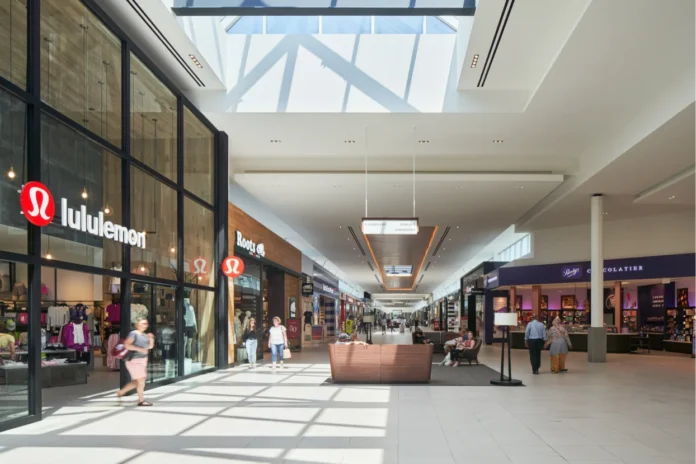
“Primaris has full control of all 1.3 million square feet of former HBC (Hudson’s Bay Company) GLA (Gross Leasing Area) and has accelerated negotiations with retailers. The Trust’s leasing strategy is twofold: firstly, execute long-term leases with single tenant and multi-tenant configurations, where appropriate; and secondly, repurpose and subdivide space, to accommodate multiple large format tenants, and/or high-value CRU. While design, permitting, and planning activities are underway, at certain locations, Primaris executed short-term leases with reputable tenants to restore rental income until Re-leasing Plans and Redevelopment Plans are ready to be executed,” it said in a news release.
“At June 30, 2026, approximately 600,000 square feet of former HBC space was leased to high-quality tenants under long-term lease agreements with occupancy dates ranging from early 2027 to mid-2029, with approximately 300,000 additional square feet in advanced lease negotiations. Primaris anticipates the weighted average net rent on this leasing activity to be approximately $17 per square foot. This net rent rate would be lower than the portfolio average reflecting the larger than typical unit sizes for the HBC backfills, but would still be well above the historical HBC net rents of approximately $4 per square foot. The capital investment to redevelop this space is expected to be in the range of $175 million to $225 million. Management’s current estimates and assumptions are subject to change.”
Primaris photo
Financial and Operating Results Highlights
$174.1 million total rental revenue;
$825 per square foot total same stores sales productivity;
+0.5% growth in Same Properties Cash Net Operating Income (or +1.1% excluding the $0.4 million prior year property tax recoveries recorded in 2025 over 2026);
+7.4% weighted average spread on renewing net rents across 482,000 square feet;
141 CRU lease deals across 287,000 square feet at average net rents of $56.30;
+1.3% growth in Funds from Operations per average diluted unit to $0.451; (or +5.4% excluding the impacts of both the $1.9 million terminated transaction costs recorded in 2026 and the $0.4 million higher prior year property tax recoveries recorded in 2025 relative to 2026;
48.8% FFO Payout Ratio;
$5.3 billion total assets;
6.0x Average Net Debt to Adjusted EBITDA;
$655.1 million in liquidity;
$4.9 billion in unencumbered assets; and
$21.72 Net Asset Value per unit outstanding.
Business Update Highlights
84% (881,400 square feet) of former Hudson’s Bay Company space is leased or in advanced negotiations, with 58% (608,500 square feet) under long-term lease agreements;
These leases are expected to generate approximately $14.9 million of annual rental revenue, 4x the annual rent previously generated from the space when occupied by HBC;
$99.5 million in non-core, shopping centre dispositions which closed on June 1, 2026;
$64.0 million strategic acquisition of the remaining 50% interest in Regent Mall in Fredericton, New Brunswick, increasing Primaris’ ownership to 100%, which closed on June 19, 2026;
$4.5 million strategic acquisition of the adjoining vacant former HBC box at Devonshire Mall in Windsor, Ontario, which closed on June 5, 2026;
$275 to $375 million, or approximately 120 acres, of land identified for potential monetization;
$200 million of non-core, non-enclosed shopping centre properties and retail pads identified for potential disposition; and
Purchased for cancellation 165,700 Series A trust units under the Trust’s normal course issuer bid program for proceeds of $3.1 million at an average price per unit of approximately $18.44, representing a discount to NAV** per unit of approximately 15.1%.
Patrick SullivanAlex AveryRags Davloor
“Leasing momentum across our portfolio remains exceptionally strong, supported by robust tenant demand and continued progress re-leasing former HBC space,” said Patrick Sullivan, President and Chief Operating Officer. “We are securing high-quality tenants on attractive terms while driving occupancy growth and enhancing the productivity of our centres. Combined with our land optimization strategy, these initiatives are unlocking significant embedded value across the portfolio and positioning Primaris to deliver meaningful NOI growth and long-term value creation for unitholders.”
“The strength of our operating platform, the quality of our portfolio, and the visibility we have into future growth opportunities continue to differentiate Primaris in the Canadian REIT sector,” said Alex Avery, Chief Executive Officer. “As we execute on our leasing, portfolio optimization, and capital allocation initiatives, we believe we are exceptionally well positioned to deliver above-average earnings growth and long-term value creation for our unitholders.”
Rags Davloor, Chief Financial Officer added, “Our balance sheet remains a key competitive advantage for Primaris. With low leverage, a conservative payout ratio and substantial liquidity, we are well positioned to execute on our strategic priorities. Combined with our disciplined approach to capital allocation, this financial flexibility allows us to invest in our portfolio, pursue selective acquisition opportunities, execute on our NCIB, and continue creating long-term value for our unitholders.”
Primaris is Canada’s only enclosed shopping centre focused REIT, with ownership interests in leading enclosed shopping centres located in growing Canadian markets. The current portfolio totals 14.6 million square feet, valued at approximately $5.2 billion at Primaris’ share.
Toronto and Vancouver’s role as Canada’s host cities for the 2026 FIFA World Cup helped drive a sharp increase in international visitor spending, according to new payment data released by Visa.
The company said inbound cross-border card-present volume in Canada increased by more than 35% year-over-year between June 11 and June 30, when the two cities hosted tournament matches.
The figure captures in-person purchases made in Canada using Visa cards issued outside the country. It provides an early indication of spending generated by international visitors during the tournament, although Visa did not disclose a dollar value or release separate results for Toronto and Vancouver.
As Canada’s only World Cup host markets, the two cities were at the centre of the country’s tournament-related tourism and commercial activity.
Visitors attending matches would have generated spending across hotels, restaurants, bars, transportation, entertainment and retail. Visa did not provide a Canadian breakdown by category, making it difficult to determine where the gains were concentrated or how spending differed between the two cities.
The national figure may also include purchases made outside Toronto and Vancouver, as international travellers could have extended their trips to other parts of Ontario, British Columbia or elsewhere in Canada.
Visa’s results therefore provide a broad measure of increased international payment activity during the tournament, but not a complete assessment of its economic impact.
Host Cities See Increased Spending
Visa released more detailed tournament spending data for the United States, where it tracked activity in individual host and destination cities.
From the tournament’s opening on June 11 through the Round of 32 matches on June 30, inbound cross-border card-present spending in U.S. host cities increased by nearly 25% year-over-year.
Card-present transactions rose by as much as 20% in certain host cities on match days, while entertainment and restaurants recorded the strongest growth in cross-border spending.
Some cities experienced particularly large match-day increases. Kansas City recorded cross-border card-present transaction growth of as much as 1,000% year-over-year on certain match days, while Washington, D.C., and Las Vegas saw increased spending ahead of knockout matches.
Visa also reported stronger use of contactless payments and public transit systems. Weekly tap-to-pay transit transactions in U.S. host cities reached a peak growth rate of nearly 40%, while Boston recorded an increase of more than 50% during the June tournament period.
The U.S. findings provide context for the types of businesses and services that can benefit from a major international sporting event. Visa did not provide comparable category or transit data for Toronto and Vancouver, and the American results should not be interpreted as a direct reflection of the Canadian market.
Mexico recorded an even larger increase in inbound cross-border card-present volume, rising by more than 70% year-over-year during the same period.
Together, the figures indicate that all three World Cup host countries experienced heightened international payment activity during the tournament, although the scale and distribution varied by market.
Cross-Border Commerce Remains Strong
The increase in Canadian visitor spending came during a strong quarter for cross-border payments more broadly.
Visa reported that total cross-border volume, excluding transactions within Europe, increased by 12% year-over-year during its fiscal third quarter.
Cross-border e-commerce volume rose 16%, while travel-related cross-border volume increased 10%.
The company said retail activity, including the timing of major promotional shopping events, contributed to the strength in online cross-border spending.
Through July 21, cross-border e-commerce volume was running 18% above the previous year, while travel-related volume was up 12%.
Visa cautioned that June and July were unusually strong periods for cross-border e-commerce. Management said growth would likely return to a more typical relationship with travel spending as the effects of promotional events and calendar timing eased.
Visa’s overall payments volume increased 10% in constant currency during the quarter, surpassing $4 trillion for the first time in the company’s history.
The number of transactions processed by Visa also rose 10% to 72 billion.
Visa described consumer spending as resilient, with continued growth across discretionary and non-discretionary categories. Its most detailed comments about consumer spending patterns, however, related primarily to the United States.
Digital Payments Continue to Expand
Visa’s results also highlighted the growing role of digital payment services across retail, e-commerce and delivery platforms.
Visa Direct transactions increased 21% year-over-year during the quarter. The service enables funds to be transferred directly to eligible cards and accounts.
DoorDash continues to use Visa Direct to provide payouts to delivery workers in Canada, the United States and Australia. The delivery platform also uses Visa virtual commercial cards that allow Dashers to pay for customer orders at physical retail locations.
Visa said tokenized credentials were nearing 60% of its global e-commerce transactions. Tokenization replaces sensitive payment information with a secure digital identifier, reducing the need for merchants to handle a customer’s actual card number.
The company is also expanding payment infrastructure for artificial intelligence-enabled shopping, digital checkout systems and other emerging forms of commerce.
The developments are part of Visa’s broader effort to expand its role as a technology and payment infrastructure provider serving retailers, financial institutions, platforms and consumers.
While additional city-level and category-specific data would be needed to fully measure the tournament’s retail impact, Visa’s payment network offers one of the earliest indicators that international visitors generated a meaningful increase in in-person spending during Canada’s portion of the 2026 FIFA World Cup.
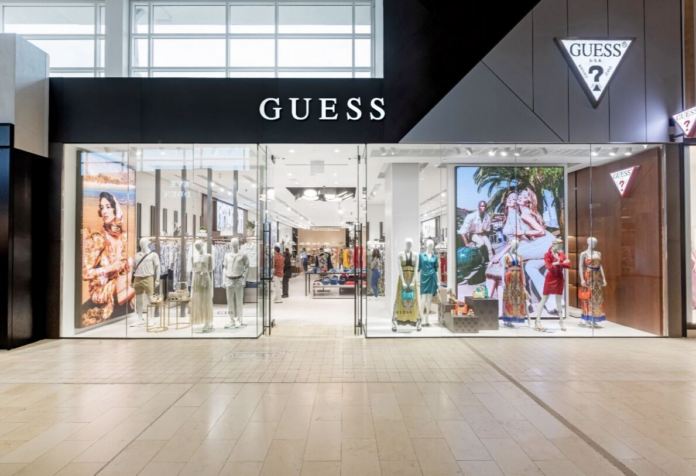
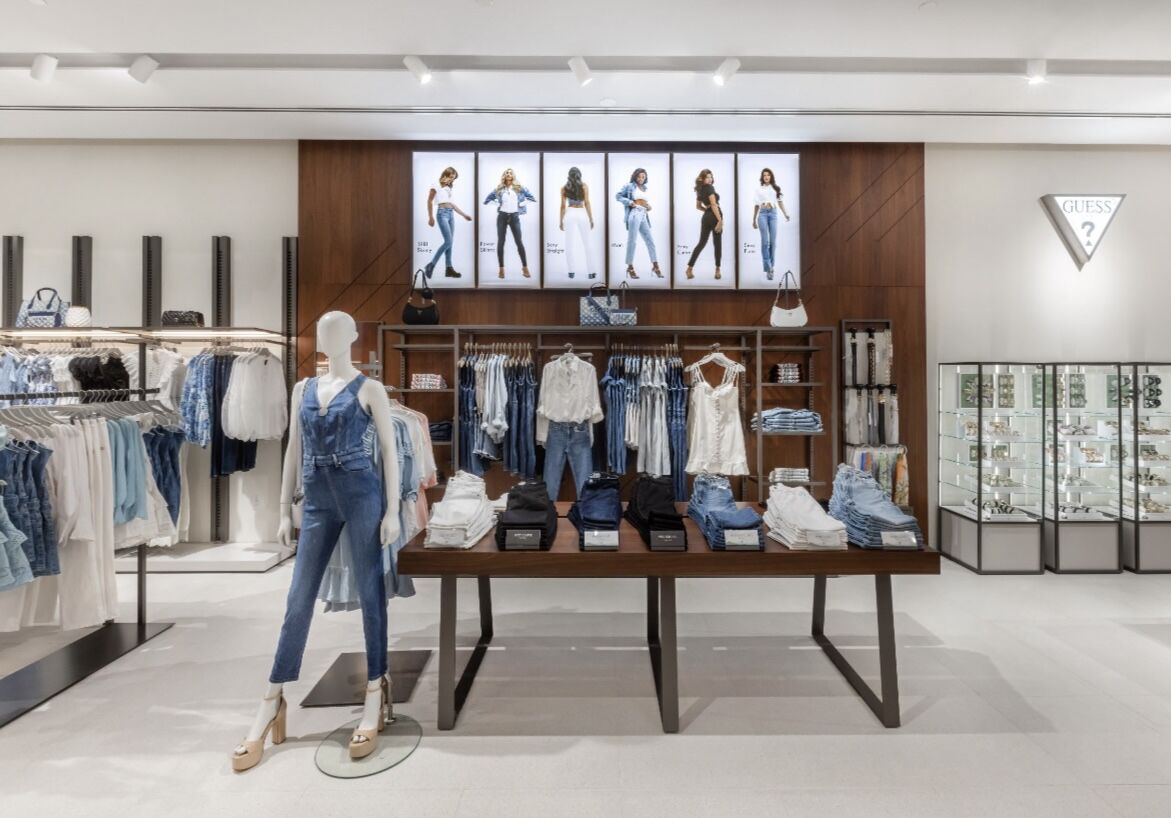
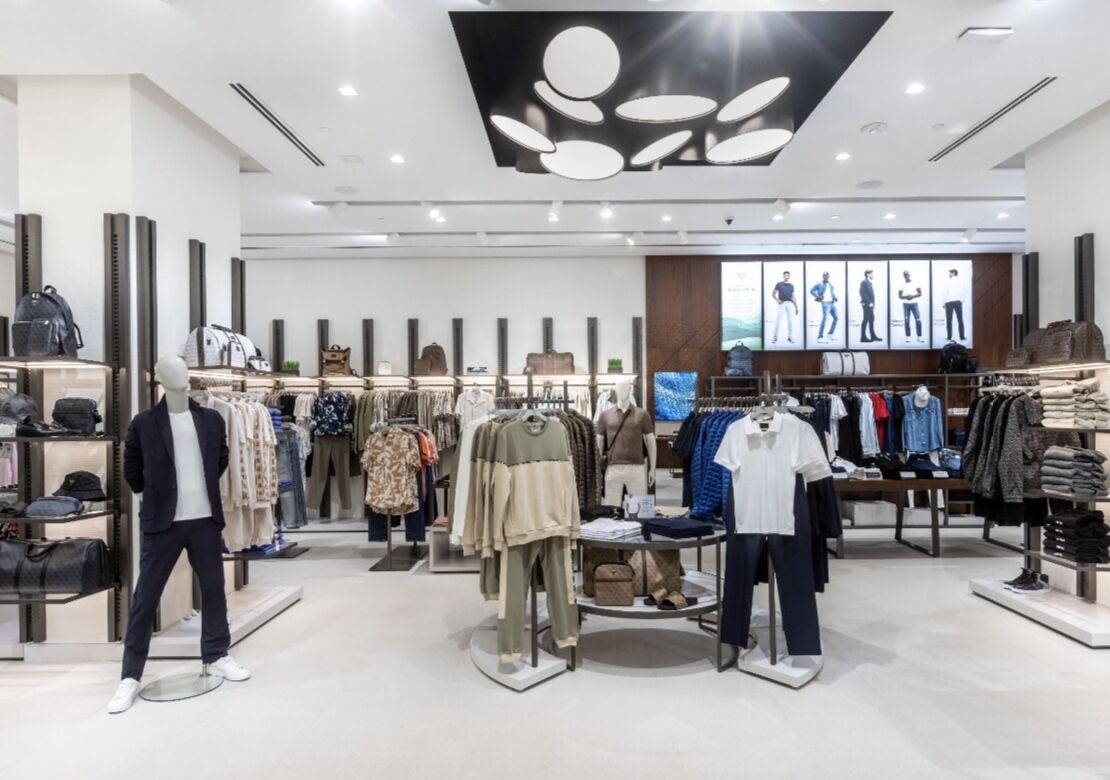
GUESS at Yorkdale Shopping Centre in Toronto. Photo: Ryan Santos
GUESS is preparing to expand its product offering in Canada, with new licensed categories expected to begin reaching consumers later this year and a broader rollout planned by spring 2027.
Authentic Brands Group confirmed to Retail Insider that all five companies appointed to oversee new GUESS product categories across North America have Canada included within their territories. The partnerships are expected to bring expanded assortments and several new categories to Canadian consumers.
Some products could enter the market during the fourth quarter of 2026, although the partners are still determining launch schedules and individual assortments. Authentic said all of the newly announced categories are expected to be available by spring 2027.
The initiative will extend GUESS further into children’s apparel and footwear, men’s and women’s sleepwear, intimates, accessories and home products. The expansion is focused on licensed merchandise and does not represent a change to the fashion brand’s Canadian store strategy.
Five Partners Take on New GUESS Categories
Authentic announced the North American partner network following its acquisition of a controlling interest in substantially all of the GUESS intellectual property earlier this year.
Centric Brands has been appointed to oversee the largest group of categories, including children’s apparel and accessories, men’s underwear and sleepwear, belts, small leather goods and cold-weather accessories.
Authentic described Centric as one of its core operating partners, citing the company’s category expertise and relationships with leading retailers across multiple channels.
Centric manages a broad portfolio of licensed and owned consumer brands and works across design, sourcing, wholesale distribution and direct-to-consumer operations. Its scale could support the introduction of the new GUESS categories through a range of retail channels once assortments and distribution plans are finalized.
Vandale Industries will oversee women’s intimates and sleepwear. The company specializes in intimate apparel, foundations, sleepwear, activewear and shapewear, with experience producing national brands and private-label merchandise.
Orly Shoe Corporation has been assigned GUESS socks and slippers, while E.S. Originals will handle children’s footwear. Combined with Centric’s children’s apparel mandate, the E.S. Originals agreement could help GUESS develop a more complete offering for younger consumers.
No Canadian retail accounts have been identified for the new collections.
GUESS at Yorkdale Shopping Centre in Toronto. Photo: Ryan Santos
Centric Expands Its Role in Canada
Centric’s appointment comes as the company takes on a growing role in Canada’s apparel market, including through a developing relationship with Walmart Canada.
Earlier this year, Centric worked with Walmart and KnitWell Group to introduce Lane Bryant to the Canadian market. The plus-size women’s assortment launched online and in 320 Walmart stores, giving the U.S. brand its first major Canadian retail presence.
Centric was also involved in the recent return of Esprit to Canada through an exclusive Walmart collection. The initial assortment, available at select stores and through Walmart’s digital channels, includes knitwear, denim, layering pieces and everyday basics.
The two launches show how Centric can use its licensing, product-development and sourcing capabilities alongside the national distribution platform of a major retailer. Centric has previously indicated to Retail Insider that additional brands are expected to enter Walmart Canada, although the companies and launch timing have not been disclosed.
No similar distribution arrangement has been announced for the new GUESS categories. Authentic’s decision to give Centric several GUESS product lines does, however, place those categories with a partner that is already developing and distributing licensed apparel for the Canadian market.
GUESS Home Products Planned for Canada
One of the most significant additions will come through Creative Home Ideas/YMF, which will develop an extensive GUESS home and lifestyle collection.
The agreement covers bedding, bath products, home décor, rugs, lighting, kitchenware, outdoor accessories, hydration products, stationery and pet products.
Authentic confirmed that the home collection is planned for Canada and said Canadian consumers can expect a broad assortment. The range will take GUESS into areas of the market where the brand currently has a much smaller presence than it does in apparel and accessories.
The size of the Creative Home Ideas/YMF mandate also creates several potential avenues for distribution. Home merchandise could be suited to department stores, specialty retailers, e-commerce platforms and other wholesale channels, depending on the assortments developed and the accounts secured by the partner.
Authentic has not disclosed which Canadian retailers may carry the collection or whether all of the home categories will launch at the same time.
Canadian Rollout Begins Later This Year
The exact launch sequence remains under development. Authentic said certain categories are expected to enter the Canadian market during the fourth quarter of 2026, followed by the remaining categories by spring 2027. The company did not identify which products will arrive first.
The new merchandise could reach consumers through several channels. Authentic said the GUESS operating company may purchase selected products from the licensees for sale through GUESS stores and Guess.com.
That does not mean every new category will automatically appear in the company’s stores. The operating company will determine which licensed products fit its retail and online assortments.
The partners may also distribute the merchandise through their wholesale relationships, although no Canadian department stores, specialty chains, mass merchants or off-price retailers have been confirmed.
Licensing Strategy Separate from Retail Operations
The partner network reflects the ownership structure created when Authentic and a group of existing GUESS shareholders completed the company’s privatization.
Authentic acquired a 51 per cent interest in substantially all of the GUESS intellectual property, while continuing GUESS shareholders retained the remaining 49 per cent. GUESS management owns the operating company responsible for the brand’s stores and other operating activities.
The structure separates the ownership and licensing of the GUESS brand from the day-to-day operation of its retail business.
Authentic can appoint category specialists to design, source and distribute GUESS products, while the operating company continues to make decisions concerning stores, e-commerce and its merchandise mix.
Authentic confirmed that the newly announced partner network has no direct implications for GUESS’s Canadian store strategy. Its effect on the physical network will depend in part on whether the operating company chooses to carry products made by the new licensees.
The model gives the GUESS brand access to companies with established product-development capabilities and retailer relationships. It also allows GUESS to enter additional categories without requiring the operating company to develop each product division internally.
GUESS Maintains Broad Canadian Store Presence
GUESS continues to operate a sizeable Canadian retail network, although its physical presence is now weighted more heavily toward factory and outlet locations than conventional full-price stores.
The company’s official directories currently identify roughly 14 conventional GUESS stores in Canada, along with more than 30 GUESS Factory and factory-accessories locations. The precise total can vary because some accessories concepts are listed separately from nearby factory stores.
Ontario has the largest GUESS presence, followed by Quebec, British Columbia and Alberta. The brand also operates in Manitoba and maintains a factory location in Nova Scotia.
The conventional network includes locations at Yorkdale Shopping Centre in Toronto, Square One Shopping Centre in Mississauga, Bramalea City Centre in Brampton, Scarborough Town Centre, CF Lime Ridge in Hamilton and Oshawa Centre.
In Quebec, full-price locations are listed in Anjou, Laval, Quebec City and Saint-Bruno-de-Montarville. The brand also has conventional stores in Surrey and Kelowna in British Columbia, West Edmonton Mall in Alberta and CF Polo Park in Winnipeg.
Its factory business reaches a broader range of outlet and enclosed-mall properties, giving GUESS a substantial Canadian physical platform even as its conventional network has become more selective.
The newly licensed categories could add depth to that platform if the operating company elects to carry them. They could also reach consumers through channels outside the GUESS store network.
GUESS at Yorkdale Shopping Centre in Toronto. Photo: Ryan Santos
Toronto Locations Have Been Adjusted
GUESS has made several changes to its Toronto footprint in recent years. Its GUESS by Marciano store at CF Toronto Eaton Centre closed at the end of January 2024. The 5,474-square-foot location had operated on the mall’s third level.
The company’s Yorkdale Shopping Centre store also relocated and downsized in 2023, moving into the former Victoria’s Secret location beside Mango. Aritzia subsequently expanded into GUESS’s previous area as part of a larger store project at the shopping centre.
Yorkdale is now the only conventional GUESS store within the City of Toronto, according to the company’s official directory. Additional GUESS stores operate elsewhere in the Greater Toronto Area, including Brampton and Mississauga, while factory locations are found at several outlet properties.
The Toronto changes came amid a broader effort by GUESS to improve the productivity of its North American full-price portfolio before the privatization transaction.
The company had indicated that it planned to exit certain non-strategic or unprofitable locations as leases expired. GUESS reported 12 store closures across the Americas during its 2025 fiscal year, although it did not provide a Canada-specific breakdown.
The licensing expansion should not be characterized as a response to those closures. It does, however, create additional opportunities for the GUESS brand to grow in Canada without requiring a corresponding increase in company-operated stores.
Wholesale Provides Another Route to Market
GUESS also has an established wholesale business in Canada. Before becoming privately held, the company reported that its products were sold through approximately 1,600 major wholesale doors across the Americas, including hundreds of department-store shop-in-shops. Its wholesale organization included representatives in Toronto, Montreal and Vancouver.
That infrastructure could become relevant as the new partners begin placing licensed products, particularly in categories that may not be carried widely across the GUESS store network.
Centric’s retail relationships were among the reasons cited by Authentic for selecting the company to oversee several of the new categories. The other partners bring specialized experience in home goods, intimates, footwear and accessories.
The appointment of multiple category specialists could allow GUESS products to appear in a wider range of retail environments, with assortments developed for different channels and customers.
The eventual Canadian distribution strategy will depend on decisions now being made by each partner, the GUESS operating company and prospective retail accounts.
Authentic said the partners are currently developing their assortments and rollout schedules. The first Canadian products are expected later in 2026, with the full group of newly announced categories scheduled to enter the market by spring 2027.
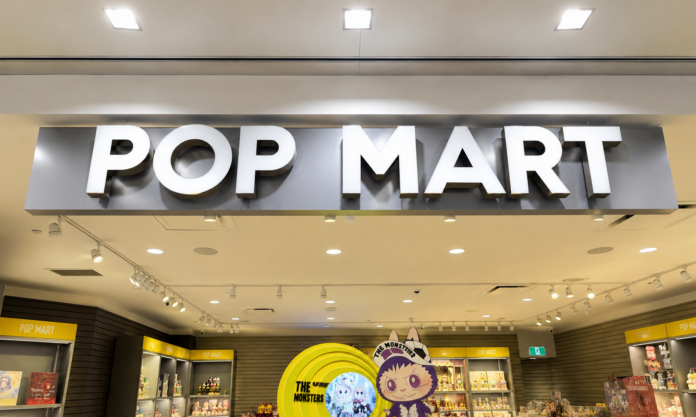
Pop Mart at CF Toronto Eaton Centre. Image: Craig Patterson
Pop Mart is preparing a much larger presence at CF Toronto Eaton Centre, shortly after opening its first downtown Toronto location at the property.
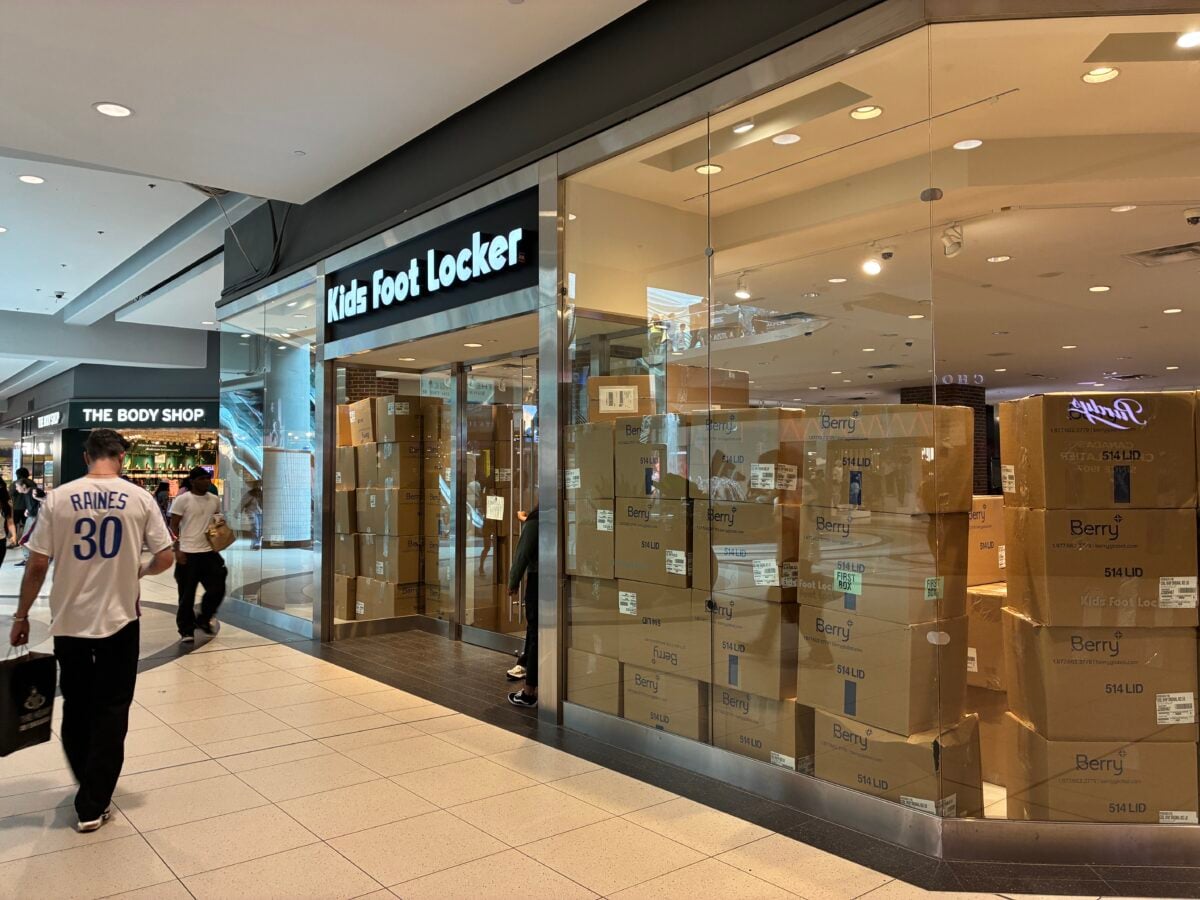
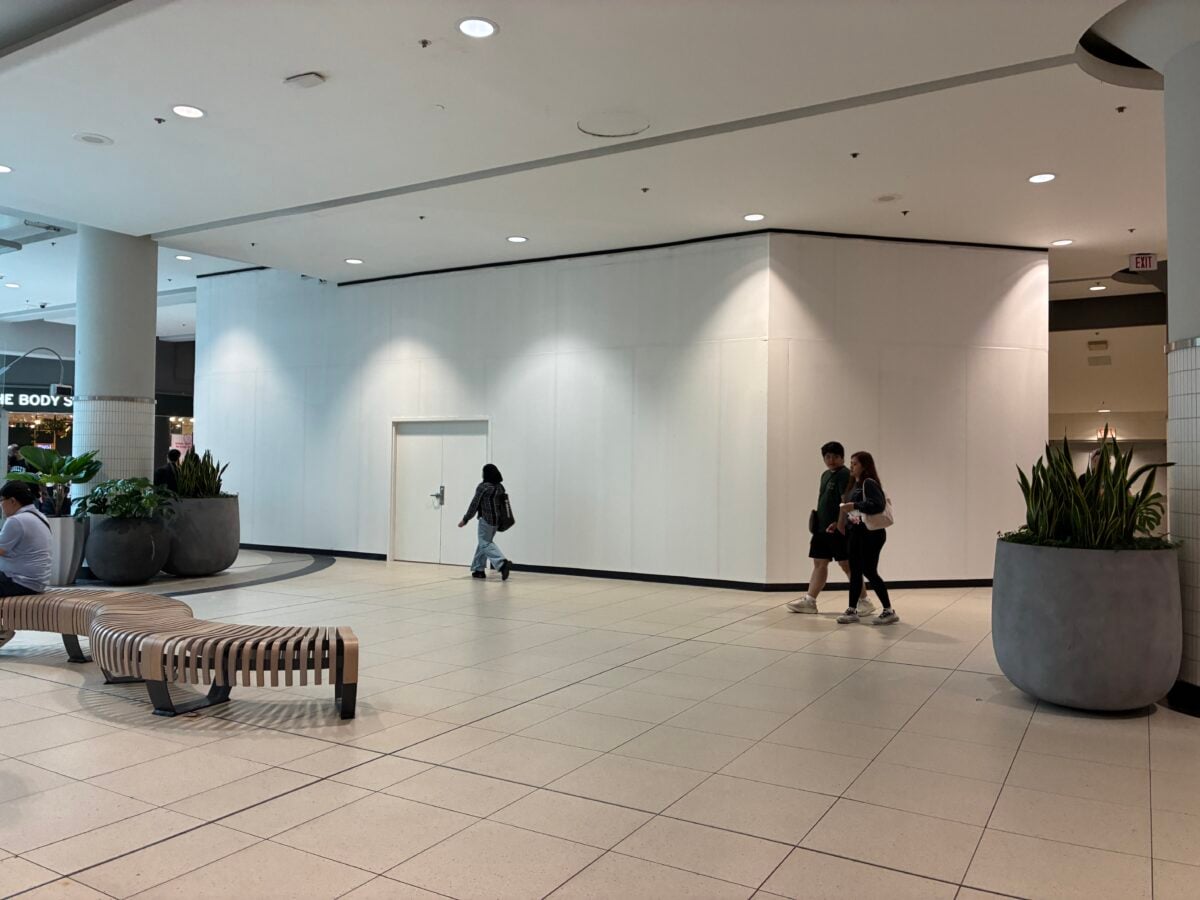
Retail Insider has confirmed that the global character-based entertainment retailer will relocate from its current Level 1 pop-up into a significantly larger nearby space formerly occupied by Foot Locker Kids. Construction on the new store is expected to begin soon.
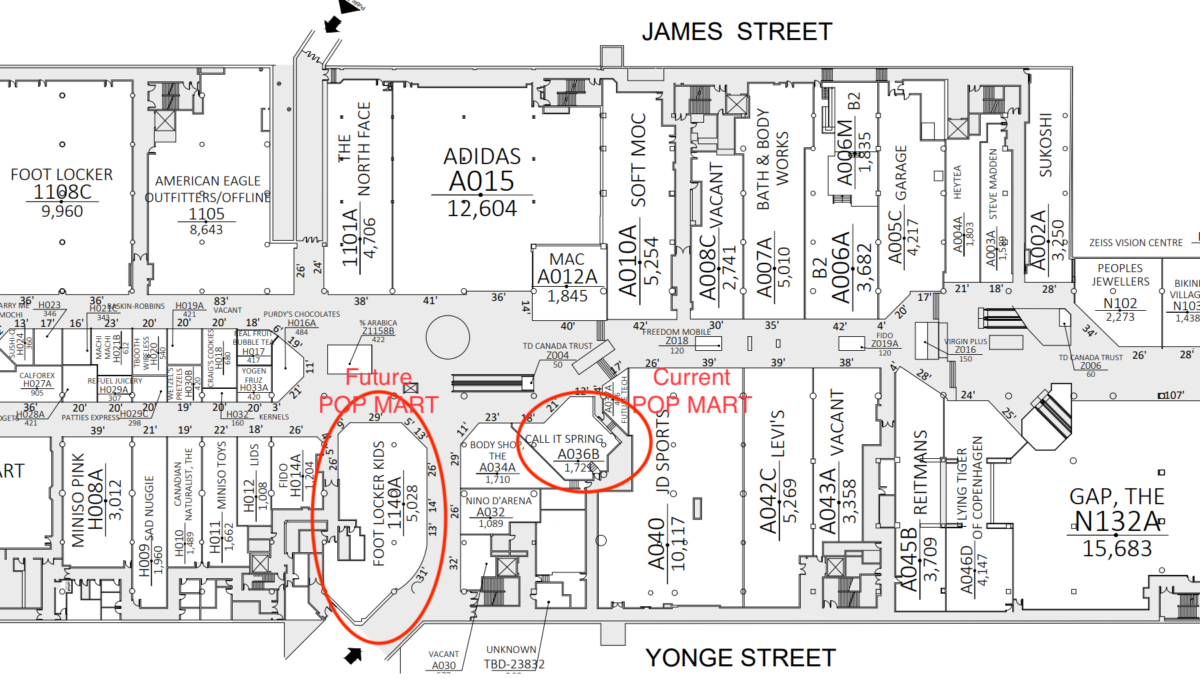
The move will nearly triple Pop Mart’s footprint at the downtown Toronto shopping centre. Lease plans reviewed by Retail Insider show the current pop-up in space A036B, the former Call It Spring location, at 1,728 square feet. The future location, space A049A, formerly occupied by Foot Locker Kids, is listed at 5,028 square feet.
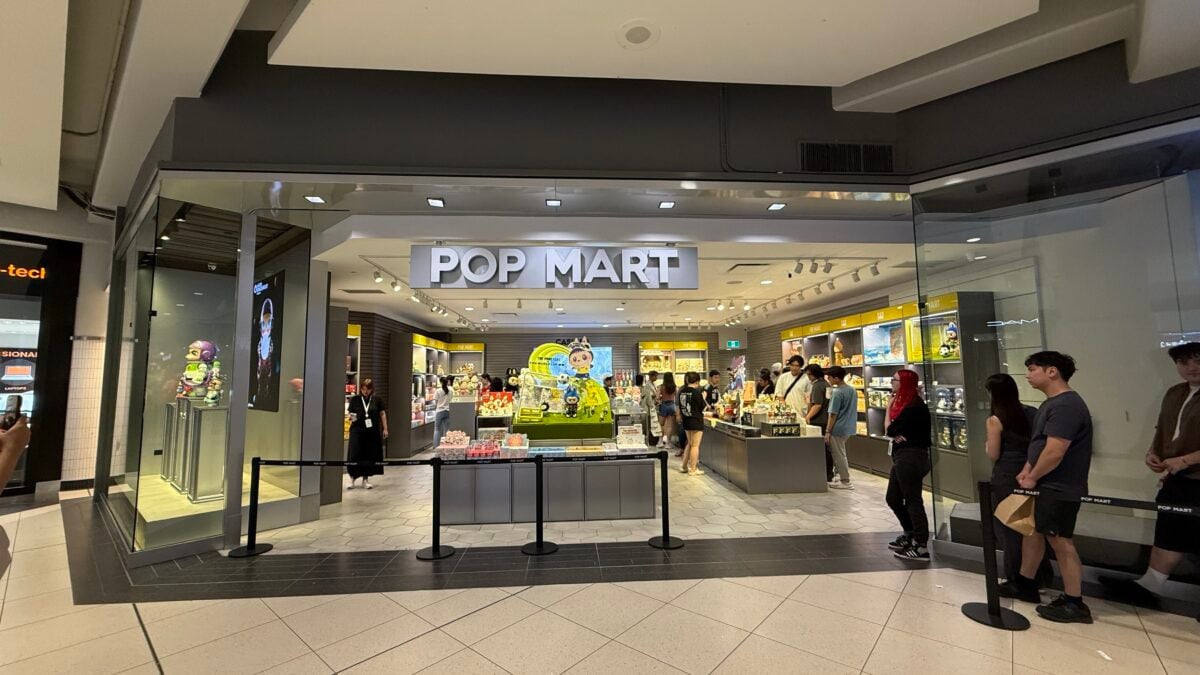
Pop Mart opened its current CF Toronto Eaton Centre pop-up on Friday, July 3. Retail Insider visited the following day and observed customers lined up along the mall corridor waiting to enter the compact space, an early sign of the strong demand the brand has generated since entering the Canadian market.
The pop-up features the brand’s colourful character-led merchandising, including Labubu, MEGA SPACE MOLLY and The Monsters. During Retail Insider’s visit, the store included a central The Monsters FIFA World Cup 26 installation, illuminated perimeter displays, digital screens and branded queue stanchions used to manage customer entry.
Foot Locker Kids as the store closed earlier this month at CF Toronto Eaton Centre. Pop Mart will open after a renovation. Photo: Dustin Fuhs/6ix Retail
Larger Store Planned Nearby
The larger future store will remain on Level 1, giving Pop Mart a more substantial platform within one of Canada’s busiest retail properties.
The move from 1,728 square feet to 5,028 square feet will give the retailer more room for merchandising, customer flow and experiential store design. It also suggests that CF Toronto Eaton Centre is being positioned as an important location within Pop Mart’s Canadian network.
The timing is notable. Pop Mart’s current pop-up had only just opened when the larger relocation was confirmed, underscoring how quickly the brand is scaling its physical retail presence in Canada.
Earlier in July Valen Tam, Head of Real Estate for Pop Mart in North America, told Retail Insider that demand at Pop Mart’s early Canadian stores has exceeded expectations.
“Canadian consumers have really shown out for Pop Mart, and we are truly humbled by their support,” Tam said in the earlier Retail Insider interview. “It is not easy to enter a new national market, but we have seen performance exceeding initial expectations at our physical stores, to the point of causing early allocation issues.”
Tam also confirmed in that interview that Pop Mart has 10 Canadian leases signed or committed as part of its expansion strategy.
Premium Mall Strategy
Pop Mart’s growth in Canada is being shaped around premium shopping centres where the company can execute its store design standards and experiential retail approach.
Cadillac Fairview has played a significant role in the brand’s early Canadian rollout. Pop Mart opened its first Canadian store at CF Richmond Centre in Metro Vancouver, and CF Toronto Eaton Centre now gives the retailer a prominent downtown Toronto location.
Tam previously described Cadillac Fairview as an important early partner for Pop Mart in Canada.
“The people there are what has made them a pleasure to partner with,” said Tam. “They have excellent leadership top-down who have been nothing but communicative, supportive and understanding.”
He added that Cadillac Fairview was one of the first Canadian landlords to proactively partner with Pop Mart.
“We opened our very first Canadian store at CF Richmond Centre,” Tam said. “As our landlord partner there, Cadillac Fairview was one of the first Canadian landlords to proactively partner with us, which is something we will always appreciate and hold dear.”
Pop Mart’s Canadian real estate rollout is being supported by Aurora Retail Group, whose Co-CEO Jeff Berkowitz has been involved in representing the brand as it expands into major Canadian shopping centres.
Current Pop Mart, CF Toronto Eaton Centre. Photo: Craig Patterson
Store Design and Customer Flow
The larger CF Toronto Eaton Centre space will give Pop Mart more room to execute the type of store environment it is known for globally.
The company follows strict global design standards across its physical retail network, with particular attention to lighting, millwork, visual merchandising and customer movement through the store.
“We uphold a very strict global design standard at Pop Mart,” Tam said in a previous interview. “We are meticulous with our store design, lighting, millwork and visual merchandising. Therefore, premium shopping centres, where this is expected of retailers, are natural homes for us.”
He said Pop Mart evaluates new locations based on whether the space can meet those standards and support the type of unobstructed customer journey the company wants to create.
The current CF Toronto Eaton Centre pop-up already demonstrates that approach in a compact footprint. During Retail Insider’s visit, product presentations were organized around different character worlds, with digital content and branded displays reinforcing the company’s broader positioning as a pop culture entertainment brand. A 5,028-square-foot store will allow for a more expansive execution at the same property, particularly as Pop Mart continues to build awareness around Labubu and its broader roster of character IP.
Former Foot Locker Kids as at CF Toronto Eaton Centre. Pop Mart will open after a renovation. Photo: Dustin Fuhs/6ix Retail
CF Toronto Eaton Centre Sees Leasing Momentum
The larger Pop Mart store is emerging during a period of leasing activity and retail change at CF Toronto Eaton Centre.
Browns Shoes is building a new flagship at the property in a combined Level 2 space between Apple and Alo Yoga. Club Monaco is also returning to the shopping centre, with signage installed in its former Level 3 space, while LEGO construction hoarding has appeared for a downtown Toronto store. Retail Insider has also reported on RW&CO’s reimagined store concept at the centre, part of a broader effort by the Canadian apparel retailer to update its physical store experience.
The activity reinforces the ongoing importance of CF Toronto Eaton Centre as a high-profile retail platform in downtown Toronto, particularly for brands seeking national visibility.
Part of a Broader Canadian Expansion
The planned move at CF Toronto Eaton Centre comes as Pop Mart continues to scale in Canada.
In a recent Retail Insider interview, Tam said Canada has become a strong fit for the brand because of both consumer response and the country’s cultural diversity.
“By its very essence, Canada is a perfect home for Pop Mart,” Tam said. “It is a melting pot of cultures and its societal composition mirrors the many different characters in the Pop Mart collection who have come together under one umbrella, despite each having very distinct appearances, backgrounds, aspirations and stories.”
The company is looking at opportunities across the country, including Quebec, the Greater Toronto Area and Greater Vancouver. Tam said Quebec is a critical market for Pop Mart, while the GTA and Vancouver both have room for additional growth.
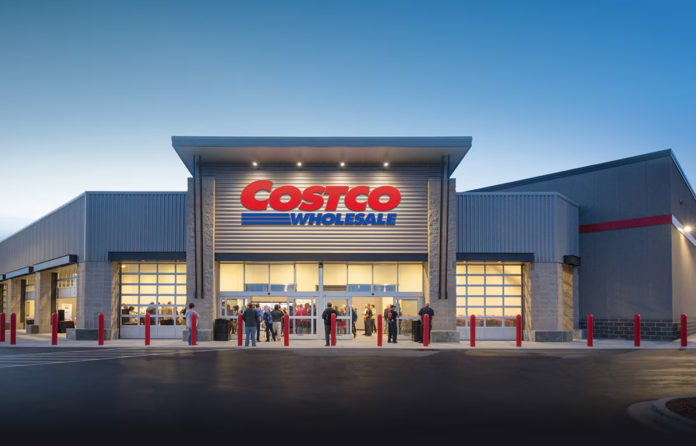
Plans for a long-awaited Costco warehouse in Belleville, Ontario, have moved a significant step closer to reality after Mayor Neil Ellis announced the project during a July 27 city council meeting.
Ellis said he had spoken with Louie Loberti, Director of Real Estate Development for Costco Wholesale Canada, regarding the development. Plans call for a warehouse measuring more than 167,000 square feet on Bell Boulevard, west of the Shorelines Casino and nearby hotel properties.
The development will also include an approximately 8,000-square-foot gas bar with 12 double-sided fuel pumps capable of serving 24 vehicles simultaneously. Construction of the warehouse and gas bar is valued at just over $37 million.
Site preparation is expected to begin this fall, followed by major construction in spring 2027. Completion is targeted for fall 2027.
The project adds Belleville to Costco’s growing Canadian development pipeline while bringing greater certainty to an initiative that has been anticipated locally for years.
A Long-Awaited Project Moves Forward
Plans for a Costco in Belleville first emerged publicly in 2019, when city council approved zoning changes for a Costco-anchored commercial development on Bell Boulevard.
The original proposal included a warehouse, gas bar and several additional commercial buildings. The city subsequently undertook infrastructure improvements along Bell Boulevard, including road widening and intersection upgrades intended to accommodate future growth and increased traffic.
The project later appeared to stall. By 2023, the proposed development lands had returned to the market, raising questions about whether Costco’s anticipated arrival in Belleville would proceed.
The plans now call for a larger warehouse than originally proposed. At more than 167,000 square feet, the Belleville location would exceed the size of Costco’s existing warehouses in Kingston and Peterborough, signalling renewed momentum for a project that had appeared uncertain only a few years ago.
The city has indicated that Costco has received a draft site-plan agreement for execution. Once that process is completed, the building permit can be finalized and issued.
Belleville Serves a Much Larger Regional Market
Although Belleville itself had a population of approximately 55,000 at the time of the 2021 census, the city functions as the commercial hub for a much broader regional market.
Located along the Highway 401 corridor, Belleville draws shoppers from Quinte West, Prince Edward County, Hastings County, Brighton, Greater Napanee and surrounding communities. The Belleville–Quinte West census metropolitan area has continued to grow, while the wider Bay of Quinte trade area extends well beyond the city’s municipal boundaries.
Costco’s site selection strategy is based on regional trade areas rather than municipal populations, making Belleville’s broader catchment area far more significant than the city’s population alone.
For many residents of the Bay of Quinte region, shopping at Costco has traditionally meant driving to Kingston or Peterborough. A Belleville warehouse would significantly shorten that trip for many members while providing the retailer with access to an established regional customer base.
The location also fills an important geographic gap between Costco’s existing eastern Ontario warehouses, strengthening the company’s presence along one of Canada’s busiest transportation corridors.
Canada Has Become One of Costco’s Strongest Markets
The Belleville project is also notable because Costco already has an exceptionally strong presence in Canada. The retailer currently operates 115 warehouses across the country, equating to approximately one location for every 360,000 residents. By comparison, Costco operates roughly one warehouse for every 540,000 people across the United States and Puerto Rico.
Few international markets have embraced Costco as enthusiastically as Canada. Relative to population, the company operates substantially more warehouses here than in its home market — a reflection of strong consumer demand, consistently high membership renewal rates and the warehouse chain’s enduring appeal to Canadian shoppers.
Many Canadian Costco locations serve expansive regional trade areas and rank among the busiest in the company’s global network. The Belleville development suggests Costco continues to see opportunities to deepen its Canadian footprint, particularly in regional markets that can support high-volume warehouse retailing.
Part of a Broader Canadian Growth Strategy
The Belleville project follows a series of warehouse developments that point to one of the busiest expansion periods in Costco Canada’s history.
Retail Insider recently reported that the company had at least 10 traditional warehouse projects planned, under construction or in development across the country. The pipeline includes communities such as Wasaga Beach, Thunder Bay and Lloydminster, alongside projects intended to increase capacity in rapidly growing suburban markets.
Belleville fits the regional-expansion side of that strategy. Its location along Highway 401, growing population and position between Kingston and Peterborough provide Costco with an opportunity to serve an established customer base from a more convenient location.
The company’s continued investment is particularly noteworthy given the maturity of its Canadian network. Rather than slowing expansion, Costco continues to identify regional markets where population growth, transportation access and consumer demand support additional long-term investment.
Potential Impact on the Local Retail Market
The arrival of Costco is expected to reinforce Belleville’s position as a regional shopping destination. The warehouse will introduce additional competition across grocery, pharmacy, fuel, electronics, furniture, household goods and numerous other merchandise categories. Its gas bar, designed to accommodate up to 24 vehicles simultaneously, could also influence fuel pricing and competition within the local market.
Costco warehouses frequently become anchors for surrounding commercial development, attracting restaurants, service businesses and complementary retailers while increasing traffic throughout nearby commercial districts.
The project may also reduce the need for Bay of Quinte residents to travel to Kingston or Peterborough for Costco shopping, keeping more consumer spending within the region.
Updated employment projections and broader economic-impact estimates have not yet been released for the current proposal. Earlier figures associated with the original 2019 development related to a substantially larger commercial project and should not be interpreted as forecasts for the newly announced warehouse.
With site preparation expected to begin later this year, the Belleville project has progressed well beyond the speculation that surrounded it for years. Beyond bringing a Costco warehouse to the Bay of Quinte region, the development illustrates how the retailer continues to expand one of the world’s most extensive warehouse networks on a per-capita basis.
Tim Hortons says it will introduce a Harry Potter-themed lineup of menu items, merchandise, packaging and promotional events across Canada beginning Aug. 12 as the restaurant chain marks the annual Back to Hogwarts celebration alongside the franchise’s 25th anniversary.
The limited-time campaign will add themed food and beverages, collectible merchandise, special packaging, an in-store trivia event and a national contest, expanding the company’s seasonal promotional offerings through collaborations tied to a major entertainment brand.
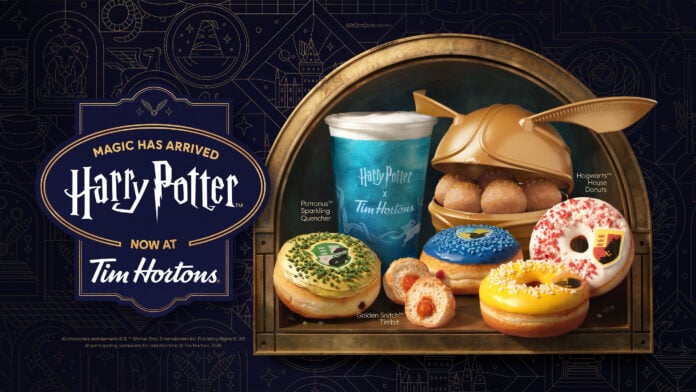
“Harry Potter has been a beloved part of so many of our guests’ lives for decades and we couldn’t be more excited for Canadians to discover the wizarding world at Tims restaurants,” said Hope Bagozzi, Chief Marketing Officer for Tim Hortons. “We’re exclusively bringing the magic of Harry Potter to QSR in Canada in true Tims fashion – from donuts inspired by each Hogwarts House, to a Golden Snitch Timbit and Timbit holder, spellbinding Patronus and Forbidden Forest inspired drinks, and limited-edition merch that guests will want to collect and share.”
Hope BagozziTim Hortons photo
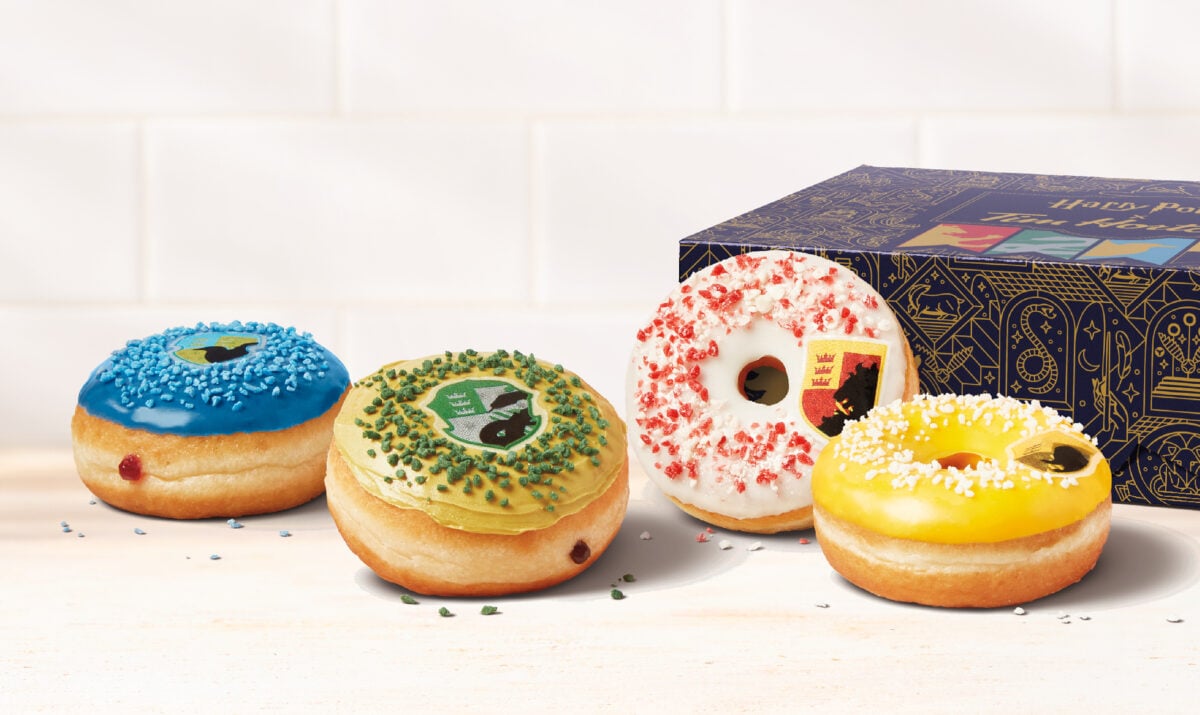
The menu will feature four Hogwarts House-inspired doughnuts: a Gryffindor Strawberry Cheesecake Donut, Slytherin Chocolate Pistachio Donut, Ravenclaw Blueberry Donut and Hufflepuff Lemon Meringue Donut. The chain will also offer Golden Snitch Caramel Timbits, which can be purchased in a limited-edition Golden Snitch Timbits Holder.
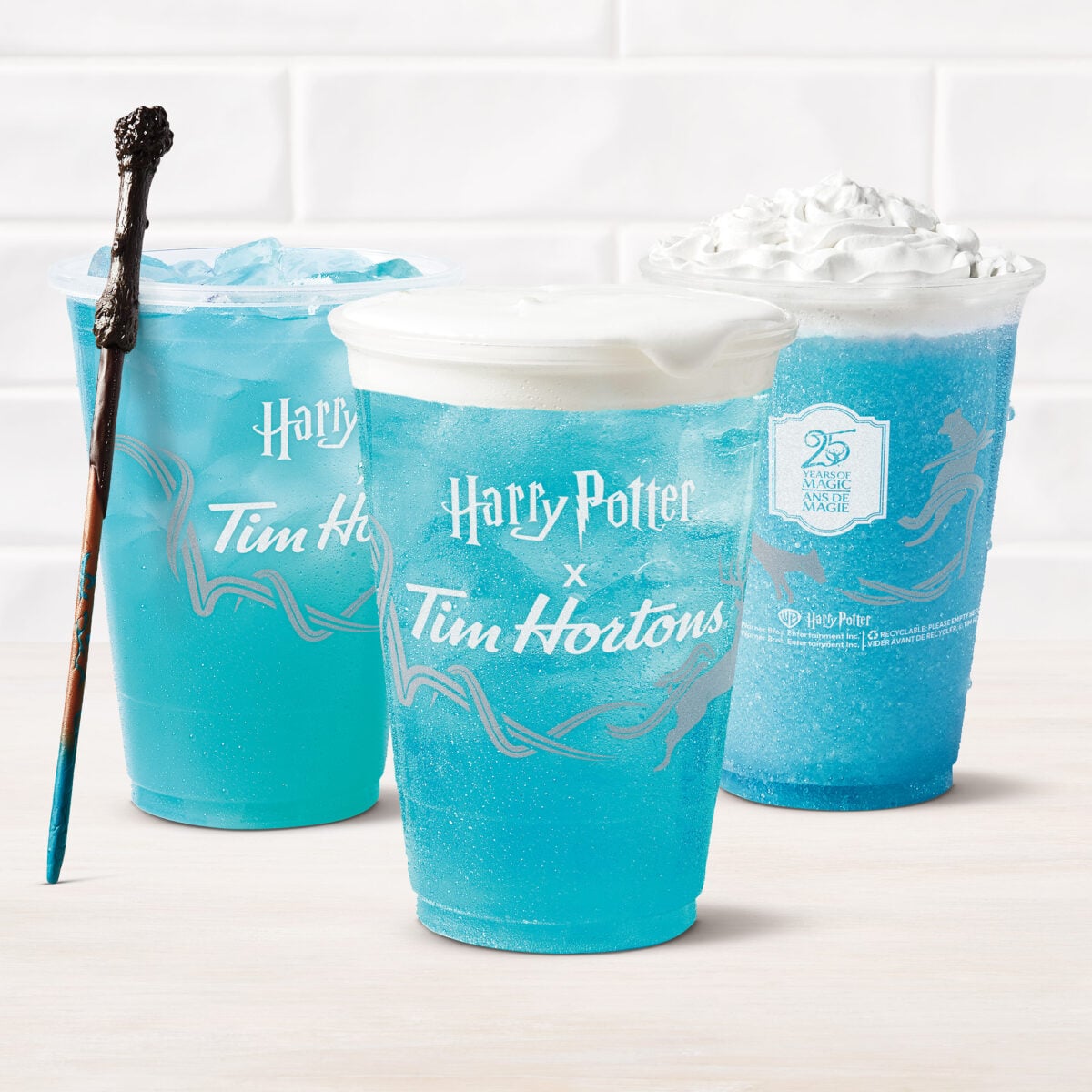
Tim Hortons will also introduce two themed cold beverages. Patronus Sparkling Quenchers will be served in temperature-activated cups that reveal Patronus images when filled with a cold drink. Customers will also be able to order Forbidden Forest Iced Tea Quenchers at participating restaurants that serve fountain beverages. The sparkling beverages can be customized with lemonade, a protein dairy beverage or ordered frozen.
The promotion also includes a range of Harry Potter-themed merchandise. Participating restaurants will offer a colour-changing Stir Wand that changes colour in cold beverages and limited-edition Harry Potter “25 Years of Magic” gift cards, alongside the Golden Snitch Timbits Holder.
The company said participating restaurants will host a Harry Potter Trivia Night on Aug. 28 to coincide with the 25th anniversary of the first Harry Potter film and the annual Back to Hogwarts celebration. A list of participating restaurants and additional details will be released in the coming weeks.
Tim Hortons photo
Tim Hortons is also using the promotion to support its loyalty program. From Aug. 17 through Sept. 6, customers who place an order at a Tim Hortons restaurant, through the Tim Hortons app or on TimShop.ca and scan for Tims Rewards will be entered into a contest for a chance to win one of two grand prizes. Each prize includes a Harry Potter VIP experience for two in London, England.
The campaign will also extend to the chain’s packaging. While supplies last, participating restaurants will serve select products in limited-edition Harry Potter-themed single-doughnut boxes, multi-pack doughnut boxes, 10-pack and 20-pack Timbits boxes and cold beverage cups.