Advertisement
Advertisement
Home Blog Page 76

Retail Real Estate Reinvented: Making Vacant Spaces Work for Brands

Across global cities, retail real estate is undergoing a structural transformation. Long-term leases, fixed store formats, and rigid footprints are no longer aligned with how modern brands grow, test markets, and engage consumers. As a result, vacant spaces, underutilized storefronts, and empty malls are no longer just a challenge for landlords. They are becoming strategic opportunities. Short-term retail leasing and flexible marketplace models are redefining how physical spaces generate value, turning idle square meters into dynamic environments for pop up shops and pop up stores designed around brand activation, experimentation, and experiential retail.


Why Traditional Retail Real Estate Models Are Breaking Down

For decades, retail real estate was built on predictability. Long leases, standardized layouts, and stable tenant mixes defined success. Today, that model is under pressure.

Consumer behavior has shifted rapidly toward digital-first discovery, while physical retail has taken on a new role as a touchpoint for experience rather than pure transaction. At the same time, brands are scaling faster, entering new markets more frequently, and demanding flexibility.

This mismatch has led to a visible increase in vacant spaces and underused locations, particularly in secondary streets, shopping centers, and legacy malls. However, vacancy does not indicate a lack of demand. It signals a lack of adaptability in how spaces are offered and activated.


From Vacancy to Activation: The Rise of Short-Term Retail

Short-term retail leasing has emerged as a pragmatic response to these structural shifts. Instead of committing to multi-year contracts, brands can now access spaces for days, weeks, or months, aligning physical presence with campaign cycles, product launches, and seasonal demand.

Pop up shops and pop up stores allow brands to transform vacant spaces into revenue-generating environments while maintaining agility. For landlords, this means monetizing inventory that would otherwise sit idle. For brands, it means testing locations, formats, and audiences without long-term risk.

This approach reframes retail real estate as a service rather than a static asset. Spaces become platforms for storytelling, engagement, and data collection, rather than fixed cost centers.


Experiential Retail as a Driver of Value

The most successful short-term activations are not transactional by design. They are experiential. Retail esperienziale focuses on immersion, interaction, and emotional connection, turning physical space into a brand medium.

In this context, pop up shops are used to host events, workshops, influencer activations, and community experiences. Empty spaces are reimagined as cultural venues, product laboratories, or content studios. This shift increases dwell time, amplifies social reach, and creates value that extends far beyond in-store sales.

Experiential retail also generates insights. Brands can observe customer behavior, test merchandising strategies, and refine messaging in real time, using physical environments as living testbeds.


Marketplace Models and the New Retail Infrastructure

What enables this transformation at scale is the emergence of marketplace-based infrastructure for short-term retail. Instead of fragmented negotiations and opaque processes, brands can now access curated inventories of spaces, transparent pricing, and end-to-end support.

xNomad operates as “An Airbnb of pop up shops,” combining a global marketplace with agency-level execution. Through its platform, brands can discover, book, and activate spaces across Europe, the USA, and China, using a single operational framework.

By lowering friction and standardizing access, marketplace models unlock latent value in retail real estate portfolios. Vacant spaces are no longer passive assets. They become flexible tools for brand activation, content creation, and market entry.


Design, Operations, and the Shift in Store Footprints

Another key change is how physical spaces are designed and operated. Short-term retail encourages modular layouts, adaptable furniture, and fast deployment. Stores are built to evolve, not to remain static for years.

Project management, design, staffing, and influencer marketing are increasingly integrated into the activation process. This holistic approach ensures that even temporary retail environments deliver consistency, quality, and measurable impact.

As a result, store footprints are becoming smaller, more strategic, and more experience-driven. Empty spaces that were once considered unsuitable for traditional retail can now host high-performing pop up stores precisely because they are flexible.


Strategic Perspective from the Industry

According to Rohan Singh, Head of Marketing at xNomad,
“Retail real estate is no longer about permanence. The brands winning today treat physical space as a flexible marketing channel, where temporary presence can create long-term brand equity and measurable business impact.”

This perspective reflects a broader industry shift, where success is defined not by square meters leased, but by relevance, engagement, and speed to market.


Economic and Talent Implications of Flexible Retail

The reinvention of retail real estate also has implications beyond brands and landlords. Short-term activations create demand for local talent, from retail staff and visual merchandisers to event managers and creatives.

As experiential retail expands globally, it contributes to new career paths in marketing, operations, and retail innovation. Flexible retail ecosystems support project-based work, cross-functional teams, and international exposure, reshaping how people build careers in the retail sector.


Looking Ahead: A More Adaptive Retail Landscape

The future of retail real estate will be defined by adaptability. Vacant spaces will not disappear, but their role will change. They will function as dynamic platforms for experimentation, storytelling, and community engagement.

Short-term retail leasing and marketplace models will continue to bridge the gap between physical infrastructure and modern brand needs. By aligning space usage with business strategy, the industry can transform vacancy from a liability into a catalyst for growth.

For brands seeking to explore this model, platforms like Pop-Up Shores enable access to curated spaces and operational expertise without the constraints of traditional leasing. The result is a retail ecosystem that is more resilient, more creative, and more aligned with how brands and consumers interact today.


FAQ

What is meant by retail real estate reinvention?
Retail real estate reinvention refers to transforming vacant or underutilized spaces into flexible environments that support pop up shops and pop up stores focused on experiential retail and brand activation.

How do pop up shops benefit landlords?
Pop up shops allow landlords to monetize vacant spaces, increase foot traffic, and keep properties active while maintaining flexibility in tenant strategy.

Why are pop up stores important for modern brands?
Pop up stores enable brands to test markets, launch products, and engage consumers through retail esperienziale without long-term lease commitments.

How does a marketplace model support short-term retail?
A marketplace model simplifies access to short-term retail spaces by offering transparency, curated locations, and integrated support for pop up shops.

What role does xNomad play in this ecosystem?
xNomad acts as both a marketplace and agency, enabling brands to launch pop up stores globally while helping transform vacant retail spaces into high-impact brand experiences.

Ways To Cut Household Costs In 2026

With the rising cost of living, many people are looking for ways to cut back on their household costs in 2026 to give themselves a bit more breathing room. Fortunately, there are plenty of ways to lower your household costs without making any major lifestyle changes. This post will take a look at a few areas where you can make savings. By combining these together, you could free up a lot of money each month and reduce financial strain. Interested? Keep reading to find out more.

Cut Subscriptions

We live in a subscription era where households often have a high number of monthly subscriptions that can include streaming services, fitness apps, software subscriptions, and monthly deliveries. These are easy to forget about, but can be hugely expensive over 12 months. This is why it is a good idea to audit all of your subscriptions and unsubscribe from those you do not use or need. For example, many people pay for two or more film and TV streaming services – cutting down to one will save you a lot of money each year.

Lower Energy Bills

The rising cost of energy has been a huge concern for households in recent years, particularly during the colder months of the year. Fortunately, there are many ways that you can lower your bills without sacrificing comfort at home. These include:

  • Solar panels
  • LED lightbulbs
  • Energy-efficient appliances
  • Washing clothes on a cold setting
  • Batch cooking meals
  • Taking shorter and/or colder showers
  • Switching energy provider
  • Using a smart thermostat

Reduce Food Spending

Food is a huge and unavoidable expense, but there are ways to make savings while still enjoying a balanced, healthy, and delicious diet. A few of the best ways to reduce your food spending include:

  • Shop at a cheaper supermarket
  • Buy non-brand products
  • Buy in bulk
  • Cook more meals from scratch
  • Limit luxury purchases
  • Plan meals in advance

Save On Postage Fees

Postage might seem like a minor cost, but for those who regularly send mail, it can quietly add up to a large amount over the course of a year, particularly with the new USPS postal rates. This is another where you can make savings with Certified Mail Labels rates, allowing you to save $3.45 per mailing, plus you can print your own labels at home, so you don’t have to spend time and money on a trip to the post office.

Reduce Transport Costs

Transport costs can also be expensive, especially if you drive on a daily basis. You can often make big savings here when you plan ahead, which could involve combining errands, using public transport, or walking/cycling where possible. It is also wise to perform regular car maintenance to keep the vehicle in the best condition.

Hopefully, this post will give you a few ideas for ways to save money each month. By combining a few of these methods together, you can give yourself more breathing room and improve your financial well-being over the course of a year.

DX3 2026 Reimagines Canada’s Leading Retail Conference

Photo: DX3

As Canadian retailers contend with economic uncertainty, rising costs, and accelerating technological change, DX3 is undergoing an evolution. The DX3 2026 retail and marketing conference will return to Toronto on February 23 and 24 with a redesigned format that deliberately moves beyond the traditional trade show model in favour of a more intimate, strategy-driven experience focused on meaningful connection and actionable insight.

As Canadian retailers contend with economic uncertainty, rising costs, and accelerating technological change, DX3 2026 returns to Toronto on February 23 and 24 with a redesigned format in favour of a more intimate, strategy-driven experience focused on meaningful connection and actionable insight.

Held at the Hilton Toronto, DX3 2026 reflects a broader recalibration across the retail industry. Inflationary pressures, shifting consumer behaviour, and intensifying global competition are prompting retailers to seek depth over scale. In response, DX3 has reshaped the event to prioritize senior-level conversations, curated networking, and strategic dialogue over crowded exhibit halls and transactional interactions.

Moving Beyond the Traditional Trade Show Model

DX3’s transformation marks a clear departure from the conventional trade show format. Rather than large-scale booths and pass-through foot traffic, the 2026 conference is designed around purposeful engagement, structured networking, and extended discussions among retail and marketing leaders.

The updated format emphasizes quality over quantity, creating space for decision-makers to connect in a more focused environment. A centrepiece of the new approach is an exclusive cocktail networking reception, intended to facilitate meaningful, face-to-face conversations among retailers, marketers, technology providers, and industry leaders, supporting deeper relationship-building and collaboration.

DX3 2026 also reflects a new chapter under the ownership of the Economic Club of Canada. With this shift, the conference is being positioned as a thought leadership platform for the retail and marketing sectors, both of which play a critical role in Canada’s economic landscape.

Stephanie Gadbois, Executive Vice President of the Economic Club of Canada and DX3, has emphasized that the reimagined conference is designed to convene C-suite executives and senior leaders to address the real challenges shaping Canadian commerce. Topics such as economic volatility, AI transformation, and competitive pressure will be explored in a setting built for insight, dialogue, and connection.

Photo: DX3

Programming Focused on Retail’s Most Pressing Challenges

The DX3 2026 agenda centres on the strategic and operational issues defining Canadian retail today. Sessions will examine how retailers are navigating inflation, interest rate uncertainty, and shifting consumer confidence, all of which continue to influence spending behaviour and margins.

Competition and scale will also feature prominently. As global players with advanced logistics and significant buying power expand their presence, Canadian retailers are reassessing how they differentiate, grow, and remain competitive. Programming will explore how brands can adapt their operating models while maintaining relevance across both physical and digital channels.

Physical retail remains a core focus of the conference, particularly as store costs rise and foot traffic patterns continue to evolve. DX3 2026 will explore how retailers are rethinking store networks, balancing experiential investment with financial discipline, and integrating omnichannel strategies that more effectively connect physical locations with digital ecosystems.

Supply chain resilience and tariff risk will also be addressed, reflecting growing concern around global disruption and geopolitical uncertainty. These discussions are expected to resonate strongly with executives responsible for long-term planning and risk management.

AI, Data, and Practical Retail Applications

Technology will play a defining role at DX3 2026, with a strong emphasis on artificial intelligence, data, and personalization. As retailers increasingly turn to AI to improve efficiency and enhance customer engagement, the conference aims to move beyond theory toward practical, real-world application.

Sessions will explore how AI and data are being deployed across omnichannel environments, from personalization and pricing to marketing automation and operational efficiency, offering attendees frameworks to evaluate technology investments amid tighter budgets and heightened accountability.

Photo: DX3

Marketing, Social Commerce, and Brand Trust

Marketing leaders attending DX3 2026 will explore the growing convergence of commerce and content. Platforms such as TikTok and Instagram are reshaping discovery and engagement, while live-stream shopping and retail media networks continue to gain momentum.

The program will also address brand trust, transparency, and sustainability. As consumer expectations evolve, CMOs face increasing pressure to align brand values with action, making these discussions especially timely.

DX3 2026 will feature speakers from across retail, marketing, and economics. The lineup includes Benjamin Tal, Deputy Chief Economist at CIBC, alongside senior leaders from IKEA Canada, Google Canada, Amazon, Revlon Canada, Snapchat, Snuggle Bugz, the University of Toronto, and the brand strategy and consulting community, offering a blend of strategic and frontline perspectives.

A Conference Built for Senior Decision-Makers, Looking Ahead to DX3 2026

DX3 continues to attract a senior audience, with more than three-quarters of attendees at the director level or above. Participants include retail executives, CMOs, eCommerce leaders, digital transformation specialists, and operations professionals.

This concentration of decision-makers aligns with the conference’s reimagined format, which is designed to foster higher-quality engagement and more meaningful conversations.

Since launching in 2011, DX3 has played a key role in shaping dialogue around Canadian retail and marketing. The 2026 edition represents one of the most significant evolutions in the conference’s history, reflecting both the maturity of the sector and the need for deeper, more strategic engagement.

Retail Insider readers are eligible for 20% off current DX3 2026 registration pricing by visiting www.dx3canada.com and using the code INSIDER20 at checkout.

Partner content. To work with Retail Insider, contact Craig Patterson at craig@retail-insider.com

VIDEO: Canadian consumers holding steady but under strain as debt and uncertainty persist: Economist Todd Hirsch

Canadian consumers are treading water financially, according to economist Todd Hirsch, who says household spending has stalled amid uneven income growth, persistent debt pressures and lingering economic uncertainty.

Hirsch said recent retail sales data show overall consumer spending has been essentially flat over the past year after adjusting for inflation. While total sales are up modestly, population growth means individual Canadians are spending roughly the same amount as they were a year ago. That stability suggests consumers have avoided a collapse in spending, but it also points to a lack of meaningful growth.

Interest rates have provided some relief. Hirsch noted that the Bank of Canada has lowered rates in 2025 and recently held its policy rate steady at 2.25%, creating a more favourable borrowing environment than in previous years. While consumers do not pay that rate directly, it influences mortgage and loan costs across the economy. He said the central bank appears comfortable with current conditions and is unlikely to make significant policy changes before the summer.

Hirsch cautioned, however, that averages obscure growing financial strain for many households. Some Canadians have seen income gains over recent years and are able to manage higher debt loads. Others have experienced stagnant or declining incomes and are living paycheque to paycheque, leaving them vulnerable to even small financial shocks.

Household debt is a growing concern, particularly among consumers relying on high-interest credit cards to cover essentials such as food and fuel. Hirsch said those borrowers face increasing difficulty escaping debt cycles and may soon hit financial limits.

Retail spending patterns reflect this stress. Hirsch pointed to a sharp increase in spending on used vehicles, while purchases of new vehicles have declined significantly. The shift suggests consumers are still meeting basic needs but are opting for lower-cost alternatives.

Looking ahead, Hirsch said retailers should closely monitor consumer sentiment data, including the Bank of Canada’s survey of consumer expectations. He added that concerns about tariffs and trade disputes are weighing on households and could influence spending decisions in the year ahead, even though those factors are beyond retailers’ control.

More from Retail Insider:

Lightspeed Commerce sees revenue increase but a net loss in Q3

Lightspeed Unveils Innovative AI-Powered Website Builder for Retailers (CNW Group/Lightspeed Commerce Inc.)

Lightspeed Commerce Inc., the unified omnichannel platform powering retail and hospitality businesses in over 100 countries, announced Thursday its financial results for the three and nine months ended December 31, 2025, indicating revenue grew by 11% compared to last year but a net loss of $33.6 million.

“Lightspeed’s transformation continued to deliver results this quarter with both Customer Locations and GTV growing at an accelerated pace,” said Dax Dasilva, Founder and CEO in a news release. “Our consistent delivery of new, highly innovative features such as Lightspeed AI, Marketplace within NuORDER by Lightspeed and Lightspeed Tempo, along with disciplined go-to-market execution, is driving momentum across our growth engines.”

Dax Dasilva
Dax Dasilva
Asha Bakshani
Asha Bakshani

“This quarter again demonstrates disciplined execution against the framework we laid out at Capital Markets Day,” said Asha Bakshani, CFO. “We delivered strong results, continued to improve our already healthy balance sheet, and expanded Adjusted EBITDA while investing behind our growth engines. This is exactly how we intend to execute our transformation – with focus, predictability, and profitability.”

Third Quarter Financial Highlights

  • Total revenue of $312.3 million, an increase of 11% year-over-year.
  • Transaction-based revenue of $209.4 million, an increase of 15% year-over-year.
  • Subscription revenue of $93.0 million, an increase of 6% year-over-year.
  • Net loss of ($33.6) million, or ($0.24) per share, as compared to a net loss of ($26.6) million, or ($0.17) per share. After adjusting for certain items, such as share-based compensation, the Company delivered Adjusted Income of $20.2 million, or $0.15 per share, as compared to Adjusted Income of $18.5 million, or $0.12 per share.
  • Adjusted EBITDA of $20.2 million up from Adjusted EBITDA of $16.6 million.
  • Cash flows from operating activities of $28.9 million as compared to cash flows from operating activities of $2.7 million, and Adjusted Free Cash Flow of $14.9 million as compared to Adjusted Free Cash Flow used of ($0.5) million.
  • As at December 31, 2025, Lightspeed had $479.0 million in cash and cash equivalents.

More from Retail Insider:

Canada Goose announces Q3 results and names Patrick Bourke as President, North America

Canada Goose at CF Toronto Eaton Centre (Image: Benoy)

Canada Goose Holdings Inc. announced Thursday its financial results for the third quarter of fiscal 2026 ended December 28, 2025 as well as appointing Patrick Bourke as President, North America.

“Our third‑quarter results underscore the strength of our global brand and top‑line engine, with broad‑based revenue growth and continued momentum across key regions and channels,” said Dani Reiss, Chairman and CEO of Canada Goose. “Our peak selling period reflected sharper execution — higher quality traffic driven by integrated global campaigns, strong consumer response to our expanded year‑round assortment, and robust performance across both retail and e-commerce.”

Dani Reiss
Dani Reiss

“Margins this quarter reflected deliberate choices we made to expand product relevance and fuel brand momentum. Our focus now is converting this demand into stronger profitability. In recent years we have driven real overhead efficiency in our business, and now we are bringing the same focus to channel level SG&A discipline and marketing efficiency. These actions will position us to expand margins in the years ahead.”

Third Quarter Fiscal 2026 Business Highlights

The retailer said its third quarter results reflect traction from its focused investment program:

  • Launched Fall/Winter 2025 New Heirlooms and Snow Goose campaigns, which strengthened brand momentum, increased repeat customer purchases, and elevated cultural relevance. The campaigns balanced fresh creative expression, showcasing its durable outerwear assortment crafted with enduring materials, reflecting its heritage of quality and craftsmanship.
  • Strengthened its retail presence in key markets with four new store openings, bringing its total permanent store count to 81. It showcased a new store design concept in its relocated Milan store, strategically positioned among luxury adjacencies driving brand elevation.
  • Expanded its year-round assortment which is broadening customer appeal, with newness driving strong engagement and accelerating unit sales growth across down-filled outerwear and non down-filled outerwear categories.

Third Quarter Financial Highlights

  • Total revenue increased 14.2% to $694.5 million, up 13.2% on a constant currency basis .
    • DTC revenue increased 14.1% to $591.0 million, or up 13.2% on a constant currency basis  led by strong retail and e-commerce performance in Asia Pacific and North America. DTC comparable sales increased 6.3%.
    • Wholesale revenue increased 16.6% to $88.3 million, or 13.9% on a constant currency basis primarily due to timing of shipments to partners, with delayed deliveries from the prior quarter fulfilled in the current quarter.
    • Other revenue increased 5.6% to $15.2 million, or 10.4% on a constant currency basis due to higher employee sales.
  • Gross profit increased 13.7% to $513.8 million due to higher revenue. Gross margin for the quarter was 74.0% compared to 74.4% in the third quarter of fiscal 2025, primarily due to product mix.
  • Selling, general and administrative (SG&A) expenses were $313.6 million, compared to $247.7 million in the prior year period. The increase in SG&A was primarily driven by a one-time bad-debt provision related to a U.S. wholesale partner, run-rate costs associated with the expansion and operation of the global retail network, higher marketing investments, and a foreign exchange gain in fiscal 2025 that did not recur in fiscal 2026.
  • Operating Income was $200.2 million, compared to operating income of $204.3 million in the prior year period.
  • Net income attributable to shareholders was $134.8 million, or $1.36 per diluted share, compared with a net income attributable to shareholders of $139.7 million, or $1.42 per diluted share in the prior year period.
  • Adjusted EBIT was $203.7 million, compared to $205.2 million in the prior year period. Adjusted EBIT margin was 29.3%, compared to 33.8% in the prior year period.
  • Adjusted net income attributable to shareholders was $142.3 million, or $1.43 per diluted share, compared with an adjusted net income attributed to shareholders of $148.3 million, or $1.51 per diluted share in the prior year period.

The appointment of Bourke is effective today and he will oversee the brand’s North American business with responsibility for driving brand momentum, strengthening retail and wholesale execution, and deepening consumer connections across the region. He will partner closely with the global leadership team to advance the company’s operating imperatives, with a focus on brand heat, strategic channel expansion, and operating with pace and accountability.

Patrick Bourke
Patrick Bourke

“Patrick is an action‑oriented, high‑energy leader with a strong track record of delivering results,” said Reiss. “He brings deep strategic expertise, commercial acumen, operational rigor, and a collaborative leadership style. Patrick has helped shape and accelerate important revenue growth and profit margin expansion initiatives for our company, and I’m confident he will continue to build momentum across North America.”

Bourke brings a proven commercial track record, having led Investor Relations, Strategy, Business Development, Indirect Procurement and Go-To-Market over his nearly 10 years at Canada Goose. He has strengthened the company’s partner ecosystem, advanced key strategic relationships, and supported the company’s global expansion. He is also known as a disciplined cost‑management leader, driving meaningful savings through supplier optimization and spend governance. In parallel, he has worked cross‑functionally to accelerate go‑to‑market timelines and simplify processes to better support our evolving product strategy, explained the company.

“Canada Goose is an exceptional brand with a strong foundation and an incredibly talented team,” said Bourke. “Stepping into this role, my focus is on working closely across the region to drive meaningful growth and ensure we’re delivering the kind of experiences our consumers expect from us — sharp, agile, and truly best‑in‑class.”

More from Retail Insider:

Marc Cain Appoints New Canada President for Growth

Image: Marc Cain at CF Rideau Centre

Premium womenswear brand Marc Cain has announced a leadership realignment in North America, naming new executives in both the United States and Canada as the company positions the region as a key growth market.


As part of the changes, Jessica R’Bibo has been appointed President of Marc Cain Canada Inc., effective January 2026. Her appointment follows the earlier naming of Joy Corson as Vice President of Marc Cain USA Inc. in November 2025.

The moves are part of a broader organizational shift that restructures leadership responsibilities across North America, replacing a previous structure that saw one managing director overseeing both markets.

Market-Specific Structure for North America

According to the company, the leadership changes are intended to inject new momentum into the region by introducing market-focused executives in each country. Both new leaders will concentrate on brand development, retail expansion, and wholesale partnerships within their respective territories.

Marc Cain said the appointments reflect a more targeted approach to North America, which it considers a strategic growth region.

The company also noted that buyers and partners will continue to access upcoming collections through its expanded showroom in New York and its showroom in Montreal.


Seven Canadian Stores Across Major Markets

Marc Cain maintains a selective physical retail presence in Canada, currently operating seven corporate boutiques in major regional shopping centres. Locations include CF Chinook Centre in Calgary, West Edmonton Mall, Square One in Mississauga, CF Rideau Centre in Ottawa, CF Carrefour Laval, Place Ste-Foy in Quebec City, and Royalmount in Montreal.

In addition to its standalone stores, the brand is sold through several dozen multi-brand specialty retailers across the country, providing a broader wholesale footprint in key urban markets.

Canadian Market Built on Premium European Positioning

Marc Cain is a German premium womenswear brand with a selective presence in Canada, combining European knitwear expertise and bold prints with a boutique and wholesale footprint nationwide.

Founded in 1973 by Helmut Schlotterer and headquartered in Bodelshausen, Germany, the company positions itself in the premium to luxury segment of women’s fashion. It focuses on high-quality materials, advanced knitting technology, and in-house print and design capabilities. The brand’s aesthetic is described as feminine, modern and sophisticated, blending expressive prints, colour, and knitwear with tailored pieces.

The core Marc Cain Collections line offers ready-to-wear that mixes contemporary silhouettes with distinctive prints and knitwear. Product categories typically include dresses, tailored jackets, trousers, outerwear, and coordinated outfits, often sold as complete looks.

Canadian Entry and E-Commerce Expansion

Marc Cain entered the Canadian market with corporate boutiques in major enclosed shopping centres, beginning in October 2015 with openings at CF Carrefour Laval near Montreal, Place Ste-Foy in Quebec City, and CF Chinook Centre in Calgary. The brand expanded into the Greater Toronto Area in 2016 and continued to add locations through 2017 before later rationalizing its store network.

In 2022, Marc Cain launched a dedicated Canadian e-commerce site featuring Canadian pricing, bilingual content, and local fulfillment from a domestic distribution centre. The online channel now complements the brand’s physical boutiques and wholesale network across the country.

Global Premium Brand with European Roots

Headquartered in Bodelshausen, Germany, Marc Cain is a globally operating premium womenswear brand that maintains a share of its production domestically. The company is led by Chairman Helmut Schlotterer and remains owner-operated, a distinction that is increasingly rare among fashion companies.

The brand is known for distinctive prints, vibrant colours, and its “Knitted in Germany” craftsmanship, supported by a technologically advanced knitting facility in Europe.

Marc Cain operates a global retail network of more than 120 branded stores, along with over 1,000 multi-brand points of sale across dozens of countries, reflecting a tightly controlled international distribution strategy.

More from Retail Insider:

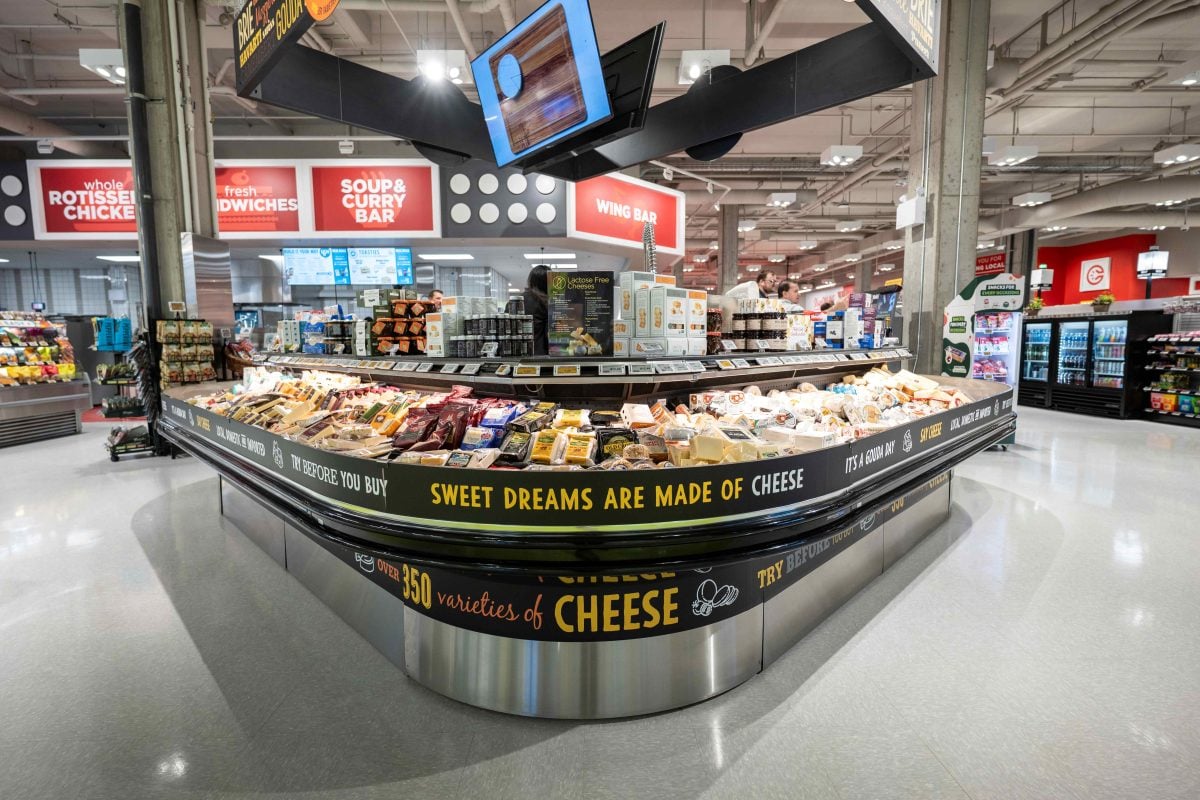
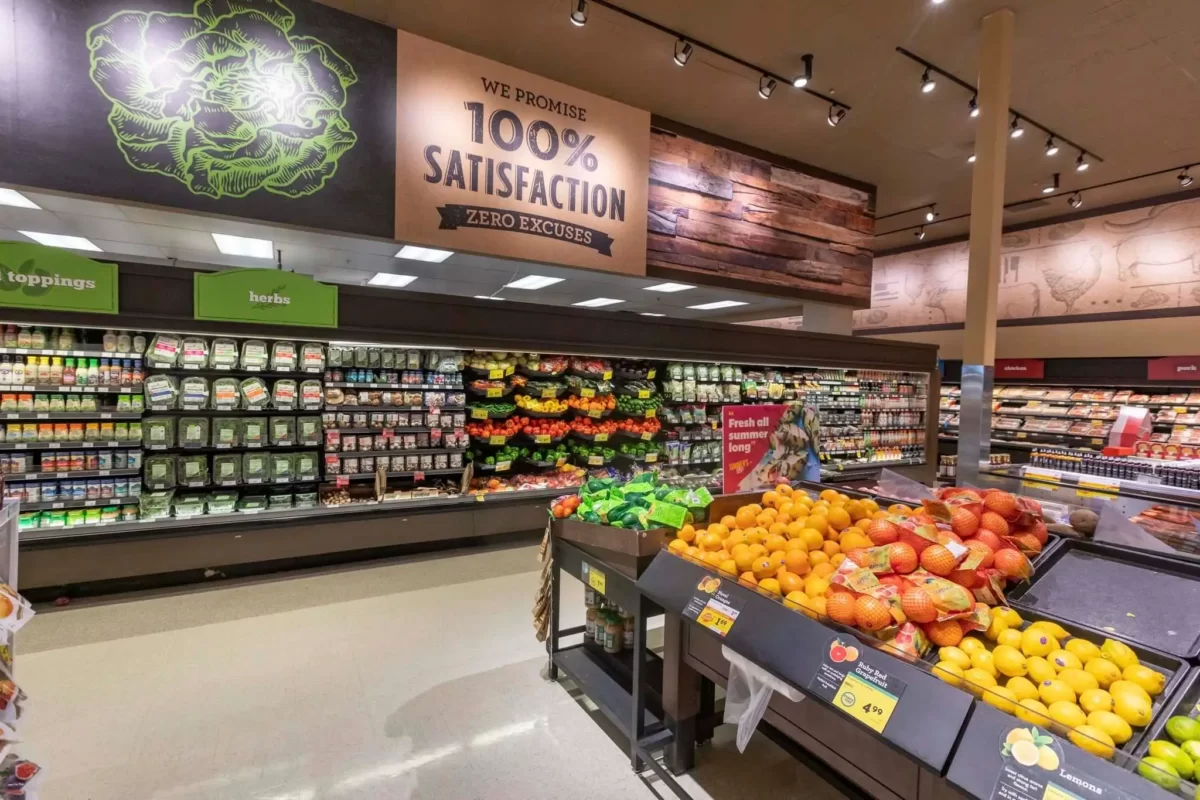
Longo’s celebrating 70 years as a family-focused grocer 

Burlington Fruit Market

Longo Brothers Fruit Markets began in 1956 as a small neighbourhood fruit market and has grown into a trusted Ontario grocery brand with 43 stores across the province, all firmly rooted in community and guided by the same values that shaped its very first store.

Founded by brothers Tommy, Joe and Gus Longo, the business was built 70 years ago on a simple promise: We only serve our Guests what we would serve to our own families. That Family Standards philosophy continues to guide everything Longo’s does today, from sourcing fresh produce and partnering with Ontario farmers to delivering a remarkable Guest experience and service in every store.

“Seventy years is an incredible milestone to achieve, and I feel very proud,” said Anthony Longo, Executive Chair of Longo’s. “It’s also an incredible achievement that our purpose has been steadfast: we are, and will always be, a values-driven business built around our Guests, Team Members, partners, and community, just as my father and uncles intended.”

Anthony Longo
Anthony Longo

Recently, Longo’s was named the #1 Grocer in Ontario in the 2026 WOW Study by Léger, based on the opinions of thousands of recent visitors to grocery stores across Ontario.

Deb Craven
Deb Craven

“Longo’s has grown thoughtfully over time, always with an eye toward the future and a respect for where we came from,” said Deb Craven, President of Longo’s. “As we look ahead, our focus is on continued expansion and innovation without compromising our values. Growth means nothing unless it’s grounded in trust, quality, and the strong relationships we’ve built with our Guests, Team members, and partners.”

A Year of Celebration

To mark the milestone, Longo’s is celebrating the people who have been at the heart of its success. Throughout its anniversary year, Longo’s will roll out special celebrations, including official anniversary events, new products, great deals, in-store activations, and special opportunities for its loyal Thank You Rewards members. 

Longo’s is also kicking off these anniversary festivities with a contest. To celebrate the 2026 Olympic & Paralympic Games in Italy and as Official Grocer of Team Canada, Longo’s is giving back to its members. Thank You Rewards members will have the chance to win $25,000 in cash to fund a dream trip to Italy, turning once-in-a-lifetime moments into unforgettable memories. Registered Thank You Rewards members can earn one entry into the grand prize draw with every $150 spent (in a single transaction) between January 22 and February 22. Members will also have the opportunity to win 70,000 Rewards points through a daily draw throughout the month, giving them even more chances to be rewarded during this exciting event! 

 “When we opened our first store in 1956, we never imagined what Longo’s would become,” said Gus Longo, Co-Founder. “To see the business 70 years later, with more than 43 stores and over 26 family members still involved, it is incredibly humbling. What matters most is that we’ve stayed true to who we are: a family business serving families.”

Anthony Longo, who turns 65 this year, has grown up with the brand and worked at various jobs throughout from sweeping the floors to carrying out groceries for customers.

The business began with the vision of his father and two uncles.

“My dad was the oldest. That was 1956, so he was 22 when he started, on Yonge and Castlefield in the middle of the city of Toronto. Just a little store. I think it was about 2,000 square feet, which is smaller than most homes today in this area. And that’s where they started. It was just a produce market. Then they continued to grow from there. They were there five years, and then they went to Woodbine and Mortimer, which is considered the Beaches today. They opened a store there, and that’s where they added meat and grocery in addition to produce,” explained Longo.

“Back then, and since 1956, they delivered groceries to people’s homes. They took orders manually. My aunts and my mom would write down the orders, assemble them, and then my Uncle Joe would usually deliver the orders. So an early version of what we see today in e-commerce.”

Right after college, Longo joined the grocery store full time in 1982. From a job perspective, this is all he knew. “It was injected in my blood,” he said.

So what has been the key to the brand’s longevity?

“I think for us it’s been that we’ve been a values-based company from the beginning. My dad—they didn’t put it this way when he was 22 years old—but they lived by the model that their grandfather, their father taught them, which is honesty, trustworthiness, mutual respect. A few years ago we asked, “What is our secret sauce?” One of the words that came out was voglia. In Italian, voglia means desire—the wanting to continue to move forward, having that gut drive to keep moving and keep driving forward,” said Longo.

“I think the foundation is really around those values. From a business standpoint, my dad would always talk about freshness, quality, and service. Those were the three mantras. Having those three in the produce business and applying them across the business was really important.

“One of the things we later put words around was: don’t try to sell your customers what you wouldn’t take home yourself. That really strikes home for people in our stores during orientation. If the produce is bruised and you wouldn’t buy it, why would you keep it on the stand? Take it off, reduce it, or do whatever you have to do with it. Those are the kinds of things that created a very strong foundation for us.

“In terms of how that survives 70 years, you have to continue to evolve. They started as a little produce market, then added grocery, then meat, then a bakery. Prepared foods came into vogue in the ’80s, so we added prepared foods, salad bars, things like that. It’s really about evolving to where the consumer is going, not necessarily where they’ve been.

“That’s why it’s so important for us to be involved with different groups in the U.S., to travel through Europe. We just want to learn—how do other people do it, and what little things can we take that our customers might like? We try them out, and many times they work.”

Longo said the company is planning to open in Welland this year, which will be its first store in the Niagara region. That’s scheduled for May or June. All the company’s stores are located in southern Ontario. Have there ever been plans to go further out geographically?

“Once in a while it comes up, but the reality is there’s still so much opportunity in this marketplace. Toronto still has more opportunities. The Niagara region is fast-growing, and this will be our first store there. Hamilton—we only have one store just outside the city. Halton region, Durham region—there’s still a lot of opportunity here. We don’t need to go too far afield to continue to build the business,” added Longo.

A new era with Empire Company

In 2021, Longo’s became part of the Empire Company’s family. 

“It gave us more access to resources. For example, private label—things where we didn’t have enough volume before. Empire has the volume, so they helped us connect with suppliers who could run our brand on smaller runs. For value-priced offerings, we were able to use their Compliments brand, which is great quality. We don’t carry a lot of it, but probably around a hundred lines,” said Longo.

“It’s been helpful in rounding out the shop for consumers. Empire has really been terrific in that they’ve left us to run the business on our own. We’ve continued to build the brand and the culture. We launched our Longo’s Italian line of products, which is phenomenal, and they’re carrying some of those products in their stores now. So there’s been some cross-pollination on both sides.”

Longo has seen many changes in the grocery sector over the years.

“Consumers are much more worldly now in terms of flavors and products from all over the world—different cuisines introduced over the 70 years we’ve been doing this. Technology has played a huge role. We talked earlier about delivering groceries using pencil and paper. Now people order from their phones while they’re on the subway, and their groceries come from Voilà, Uber, or Instacart,” he explained.

“Technology has changed the way consumers shop and the way retailers operate. Scanning—we’ve been scanning since the late ’80s with UPC codes. When we started in 1956, there were no UPC codes. We used ink stamps on each can. That’s how it was done back then. Lots of changes in the industry, for sure.”

Longo said the sector will continue to evolve.

“A typical store has 24,000 to 26,000 SKUs. Continuing to work through the supply chain to ensure safe, high-quality food at a price consumers see value in is really important. That challenge hasn’t changed,” he said.

“What people look for from products around the world, and the rise of buying local and supporting local entrepreneurs, is really important to us. We have hundreds of items from small manufacturers in our stores, and we want to continue supporting them when they have good quality products at reasonable value propositions.”

More from Retail Insider:

Photo: Longo's
Photo: Longo’s

Lessons learned along the entrepreneurial journey: Marc Lafleur

Canadian entrepreneur Marc Lafleur went from a broke kid in Cornwall, Ontario, who couldn’t afford a car and had holes in his shoes, to pitching truLOCAL on Dragons’ Den in 2018, selling the company in 2021 for $16.8M, and now returning to the show as a guest Dragon.

Today, Lafleur runs DB8 Labs, an AI venture studio that builds and operates niche consumer products, and he’s actively scouting Canadian AI startups.

He is a University of Waterloo honours graduate who went on to find his niche in entrepreneurship. After co-founding two start-ups in school, he co-founded truLOCAL and led the business to a successful acquisition.

During his time as CEO of truLOCAL he helped build the team to 60+ employees and expanded across Canada and the US, landing the cover story of The Globe and Mail’s Report on Business for being Canada’s 14th Top Growing Company along the way. Over five years, truLOCAL accumulated a series of wins including a successful pitch on CBC’s Dragons’ Den in 2018 which led to a partnership with Michele Romanow. truLOCAL grew to become Canada’s largest e-commerce based protein business by market size with annual revenues exceeding $20M.

Marc Lafleur
Marc Lafleur

A founder and mentor at heart

Lafleur is a founder at heart and has taken a particular interest in mentoring up-and-coming founders. A series of successful angel investments helped him make a name for himself as a value-added investor among Canadian start-ups.

He shares his message through public speaking for companies like Lululemon and Google and he has taken a special interest in speaking to today’s youth.

“If my story can inspire even one kid to take a risk and go after something someone told them they couldn’t achieve, then I’ve done what I’m here to do.

“I think I’m fortunate. I guess I found my entrepreneurial success after two failed startups, and I was just one of those kids that wasn’t going to fit the mold very well. Whether you call it a problem with authority or just asking way too many questions all the time, I always thought I had a better answer.

“I pretty much struggled a lot academically, and then when I did find entrepreneurship, probably around the age of 22, I was just stubborn. I didn’t know any better, and I think naivety is actually a gift.”

truLOCAL established at perhaps not the best time

He founded truLOCAL, his third startup in 2015, which he said was not the best time to start a business. And this was a very difficult business.

“If you imagine, we had almost the most difficult parts of every single industry you could imagine. We built our own website, so it wasn’t like we were using Shopify or anything like that. We had a full engineering team. We said we weren’t a tech company, but we were tech-enabled,” he said.

“So we had five software engineers, but we also dealt with last-mile logistics. We delivered stuff to people’s homes, so that in itself is a huge cost and a huge logistics nightmare. We had warehousing management. We had the scale of typical retail when it comes to customer service. We dealt with food. We dealt with frozen food.

“So even though trying to sell meat online through a subscription box was a fairly difficult model to do back in the day, it still was the easiest time ever that you could start a company. And I think that now, when you look at 2026, it’s gotten even easier.”

Marc Lafleur
Marc Lafleur

The thing he found very interesting, and the biggest lesson he learned along the way, is that as long as you’re willing to fail over and over and over again, you’re eventually going to find success. It’s inevitable.

“Because as long as you’re the type of individual who can take even a small percentage of your failures and learn from it, eventually after five or six cycles of failure, things are going to start to fall into place,” explained Lafleur.

“So the only real variable that comes into play is how many times can you take a chance before you actually have to call it quits. And that’s different for everybody. But I think people, especially in their early twenties or younger nowadays, have such a huge tolerance for risk. You’re never going to regret taking that chance,” he said.

“I’m a huge believer that everybody should try entrepreneurship at least once in their life. It should be like mandatory service. Because even if you fail, you’re going to become a far greater, more competent human being just by going through the motions of trying to start a company.

“If you think signing a mortgage is intimidating, it’s not if you’ve done entrepreneurship. If you think planning a wedding is complicated, it’s not if you’ve done entrepreneurship. The biggest takeaway is just getting after it, realizing that it is much easier than people think. That’s not to say that you’re going to find success easily, but if you look historically at the rise of entrepreneurship over the past hundred years, this is the best chance of success that you have.”

Investment focuses on consumer AI

As a guest investor on the CBC Dragon’s Den show Lafleur said DB8 Labs is focused on consumer AI.

But as a lot of investors will tell you, especially when it comes to angel investing, it’s a lot less about the product or the business and a lot more about the founder,” related Lafleur.

“If you look at truLOCAL as an example, on paper, it is a horrible idea. If you were talking to an investor, and we did, and you say, “Hey, we want to take food in this hyper-competitive space and ship it in the mail to people,” it doesn’t make a lot of sense. It was essentially bulldog tenacity, the naivety of not thinking that we could fail, and then putting an amazing team together that found the success.

“So I’m looking for people more than anything. I really do think that we need more entrepreneurs, especially in Canada. The entire world is pivoting into entrepreneurship. The entire world is pivoting into building your own, whether it’s a micro business, the solo institution, or anything. Entrepreneurship is no longer going to be this fringe thing for risk-takers. It should become more of a norm.

“So I think being a guest investor and a guest dragon on Dragons’ Den does two things. Number one, it takes my story and puts it in the forefront once again to show how anybody can do this. I didn’t have a silver spoon in my mouth. I just wasn’t willing to give up. And I think that should inspire a whole new cohort of entrepreneurs to take a chance. And number two, of course, I’m looking to invest in the best founders in Canada.

“I always say, real recognizes real. For me, I’m looking for individuals who remind me of myself. People who are going to tilt the universe in their favor, who will not take no for an answer, who are so stubborn or so convicted in what they want to do that it doesn’t matter what we say.

“You can sometimes tell whether a founder is going to be successful with or without you. Those are the people I want to get behind. The ones who say, “I don’t care if you tell me no today. I’m going to make it work down the line.”

“It’s easy to sniff that out once you’ve been through it. That’s what I’m looking for. A good idea is a plus, but it’s definitely not the only thing I look at.”

Lafleur said Canada needs more people backing Canadian founders. Compared to the U.S., the investment market is down. The speed at which you try to raise capital is down. We’re losing so many entrepreneurs to the U.S. because the U.S. makes decisions fast. The capital flows easily. There’s not as much friction.

“If I’m going to have built businesses and I’m going to be mentoring people, I want to support that. So I try to take more of an American approach when it comes to finding founders and doing investments,” said Lafleur.

Marc Lafleur
Marc Lafleur

“I don’t want to waste founders’ time. That’s the biggest thing I’ve always said. I might be an investor now, but I’m still founder-first. I’m not an institutional investor. I’m not a Bay Street guy. I don’t push pencils or work on spreadsheets. I’m in the trenches doing that. The most disrespectful and frustrating part of raising money is going through six weeks to hear a no. So for me, I want to come in quick, decide if it’s a fit or not, and make a decision.

“Canada has to change its tune when it comes to entrepreneurship. We need to support entrepreneurship. We need to stop vilifying individuals for wanting to build a better life for themselves. It’s okay to be financially motivated. I see this all the time when I talk to high school kids. They’ll come up to me afterward and say it’s hard to tell their friends or parents that they want to make money, that they want to win, that they want business, nice cars, nice houses, and freedom. They feel like they can’t say that anymore.

“If you can’t say that, where’s the motivation to win in entrepreneurship? Right now, we need a lot more of that in Canada, and I’m hoping that by being more vocal and active, I can help find that next cohort of entrepreneurs.”

Entrepreneurs come in different shapes and sizes

Lafleur said the mix of personality traits that come together to make a good entrepreneur is pretty vast. There are a lot of different entrepreneurs in different shapes and sizes. 

“Resilience, being crafty, being a professional problem solver, and absolute conviction that business succeeds over a long period of time all matter. What is that chip on your shoulder that makes you wake up in years three, four, and five when all the walls around you are on fire? You need something deeper to push through that,” he noted.

“I’m not a rocket scientist. I’m not the next Elon Musk. I don’t have that IQ factor. I was just stubborn and tenacious. I wasn’t inventing anything new. I was improving on an existing design, and a lot of founders do that. There’s a lot of money and a lot of great businesses to be made that way.

“But entrepreneurship isn’t for everybody. If you need direction, security, or if you blame others for everything that happens in your life instead of looking internally and asking what you can do to change it, it’s not going to work.

“It might work for a week, a month, a quarter, or even a year, but you won’t push through years two, three, and four when things get really hard. Those are some of the key founder personality traits.”

More from Retail Insider: