Neighbourhood Pharmacy Association of Canada photo
Neighbourly Pharmacy Inc., Canada’s largest and fastest-growing network of independent pharmacies, announced Tuesday the recent acquisitions of 10 additional pharmacies across Canada in multiple transactions, bringing its national footprint to 342 pharmacies and further expanding access to essential community healthcare.
“Every one of these pharmacies was built on years of trust between an independent owner serving the patients in their community, and our role is to protect that relationship while giving each team the support to serve more patients and keep growing,” said Skip Bourdo, Chief Executive Officer of Neighbourly. “That is what Kindness in Every Community we serve looks like in practice, and it’s why independent pharmacy owners continue to choose Neighbourly as they plan for the future. We are pleased to welcome these teams and look forward to working alongside them as we continue to serve these communities for years to come.”
The company describes itself as Canada’s largest and fastest-growing network of community pharmacies.
“United by a patient-first focus and their role as essential, trusted healthcare hubs within their communities, Neighbourly pharmacies deliver accessible care with a personal touch. Since 2015, Neighbourly’s proven acquisition and integration model has grown its national footprint to 342 locations, making Neighbourly the partner of choice for independent pharmacy owners seeking succession solutions,” it says.
Eligible shoppers can use Affirm online and in stores across all three brands in the United States and Canada , and pay over time in biweekly or monthly payments starting at 0% APR. Customers can see what they’ll pay before they check out, with no late or hidden fees or compound interest, said Affirm.
“A thoughtful purchase doesn’t stop at deciding what to buy,” said Pat Suh, SVP and Managing Director, Global Markets at Affirm. “People think about how it fits with everything else going on in their lives and their budget. How they pay is part of figuring out what works, and Affirm gives Crate & Barrel Holdings customers more choice in that decision.”
Crate & Barrel Holdings joins Affirm’s network of over 570,000 active merchant partners, which includes StubHub , REVOLVE, Net-a-Porter, StockX, Expedia and many more.
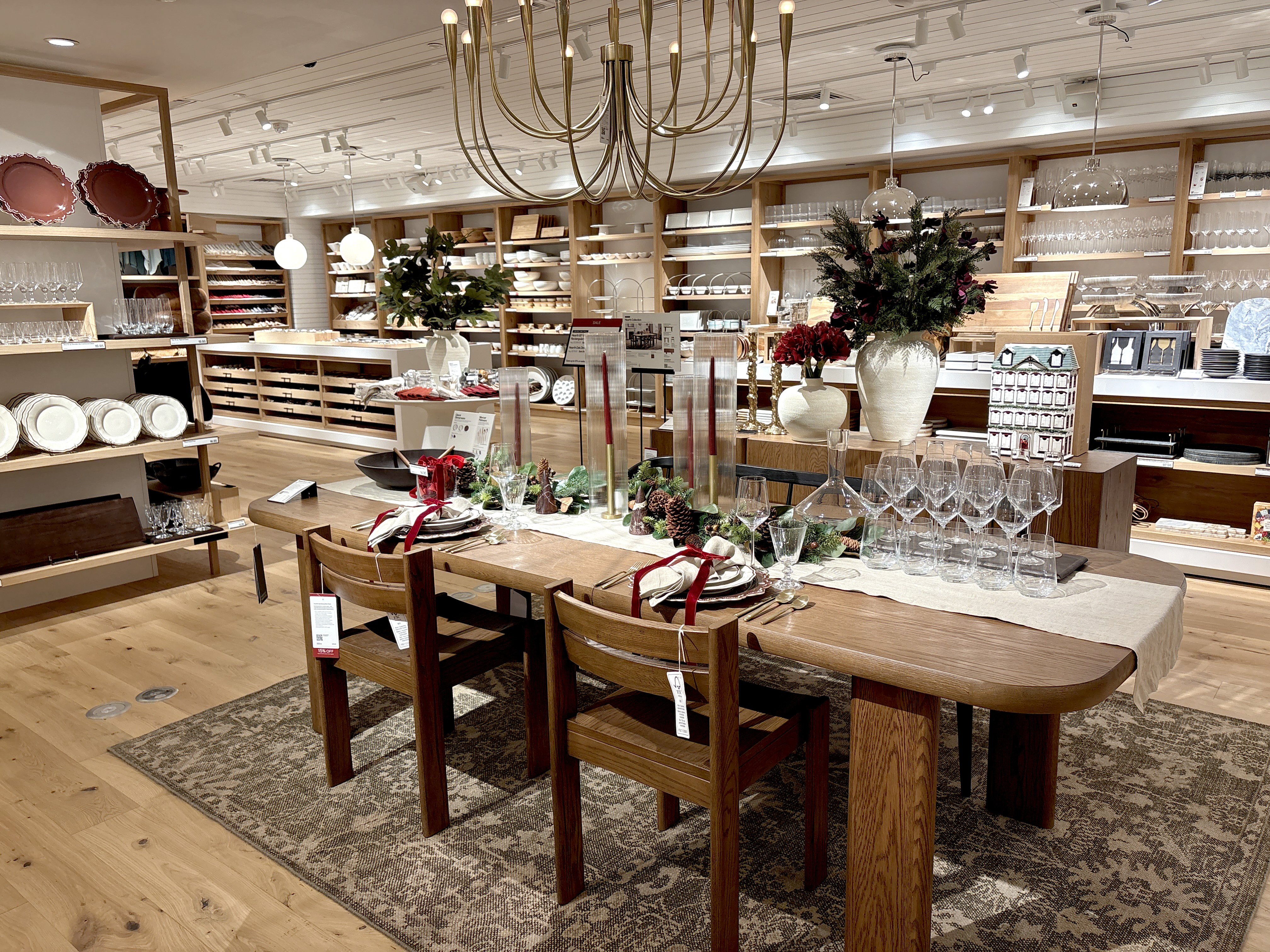
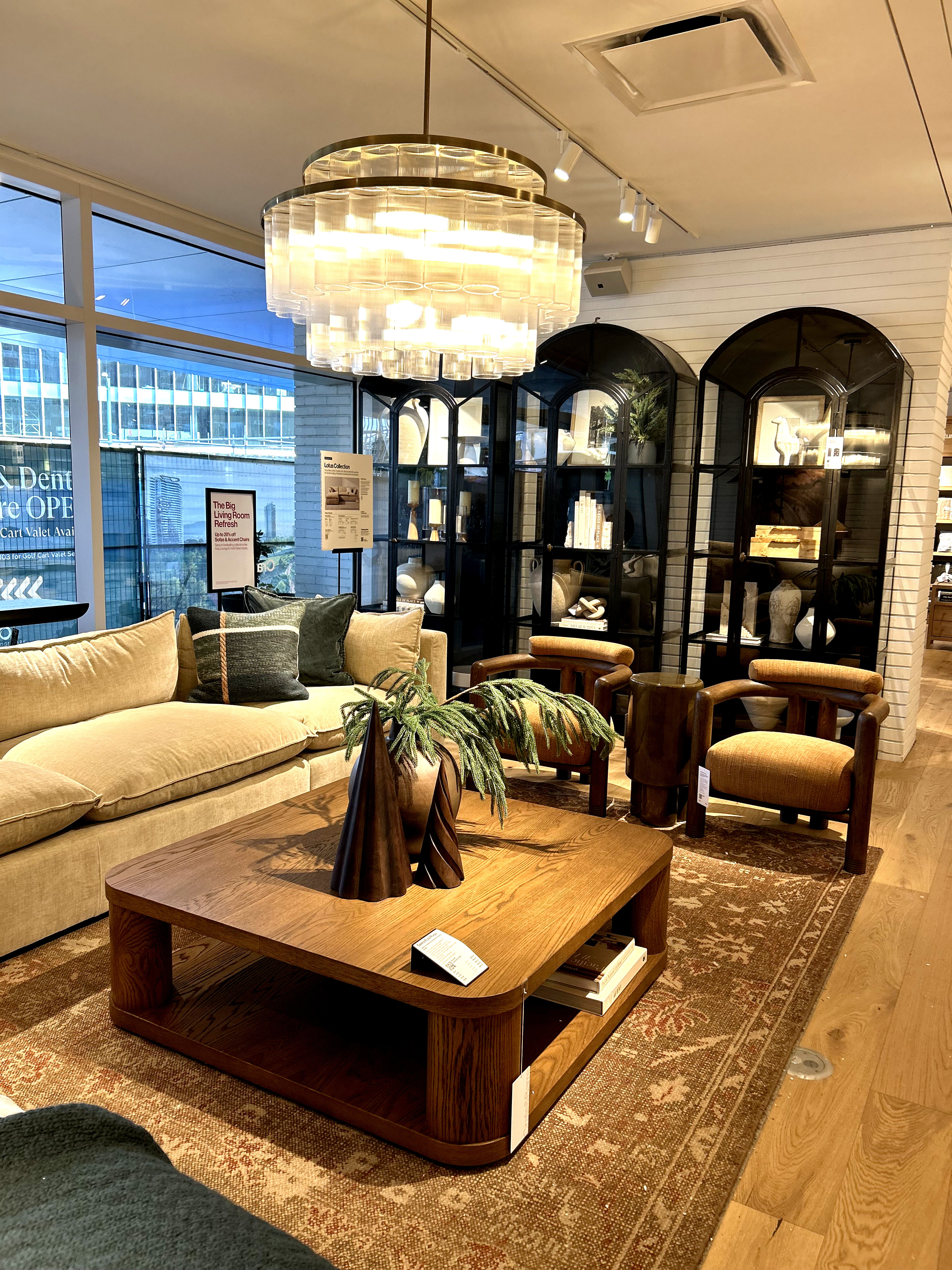
Crate & Barrel Holdings is a member of the Otto Group and operates over 100 Crate & Barrel , CB2, and Hudson Grace stores and websites throughout the U.S . and Canada , with franchise locations in nine countries. More than 200 million customers visit the company’s stores and websites each year.
Wayne Pommen, Chief Revenue Officer at Affirm, said: “People shop at Crate & Barrel, Crate & Barrel Kids and CB2 for purchases tied to important moments in their lives – like a first apartment, a new baby, or finally having a dining table big enough for everyone to gather around. And heading into the holidays, that might mean getting the house ready for family and friends. These are moments that take planning, and how you pay is part of that plan. With Affirm, shoppers can understand their options, know what they’ll owe from the start, and trust that the cost won’t change along the way because we don’t charge compound interest, deferred interest or late or hidden fees – and we never will.”
Pommen said people want more choice and control over how they pay, especially for larger purchases, which people usually put a lot of thought into.
“But flexibility alone isn’t enough, they want certainty, too. When people choose Affirm, it’s an intentional choice and part of a clear plan and budget that works for them,” he said.
Photo: Crate & Barrel
“Giving customers a choice between biweekly and monthly payments means they have greater options and can choose what works best for them and the purchase they’re making. That can give shoppers more confidence, especially when they’re making a big purchase, while helping retailers increase conversion.”
Pommen said Affirm will look at adoption both online and in stores, repeat use, and how Affirm contributes to the overall shopping experience.
“We know that when people use Affirm, they come back: 96% of our transactions are from repeat customers. We’re excited to bring that kind of engagement to Crate & Barrel and build on the momentum we’re already seeing — category volume in home and lifestyle grew 49% YOY in our most recent quarter,” he added.
Skip and Instacart are expanding their respective delivery offerings in Canada through a new partnership that will give customers access to grocery, retail and restaurant orders across both platforms.
Under the agreement, Skip customers can access Instacart’s grocery and retail marketplace through the Skip app, while Instacart customers can order from Skip’s network of more than 50,000 national and local restaurant partners through the Instacart app.
Expanded delivery networks
The partnership broadens the range of products and services available to customers on both platforms, with access spanning groceries, restaurants, beauty products, household essentials and other retail items. Skip customers will be able to access Instacart’s network of more than 130 retail banners and 9,000 locations in Canada through the Skip app.
Paul BurnsRyan Hamburger
“This partnership represents a pivotal moment in Skip’s evolution,” said Paul Burns, CEO of Skip. “We have grown far beyond our roots in restaurant delivery to become an essential, all-in-one destination for Canadians. Through our Instacart partnership, Skip now offers an unprecedented breadth of grocery, everyday essentials and products. We’re allowing Canadians to Skip to the good part through a seamlessly integrated shopping experience, combining Instacart’s proven grocery leadership and technology with Skip’s unparalleled local reach.”
For Instacart customers, the partnership adds Skip’s restaurant network to the grocery technology company’s app, allowing users to browse and order from more than 50,000 restaurants. Restaurant orders will be fulfilled by Skip couriers.
“Instacart has built its reputation by delivering the online grocery ordering experience Canadians trust,” said Ryan Hamburger, Chief Commercial Officer of Instacart. “Partnering with Skip provides Instacart customers the convenience of ordering restaurant delivery through our app, and it lets us meet new Skip grocery customers right where they like to shop. Together, we’re making it easier than ever for Canadians to get what they need, whether it’s a week’s worth of groceries or their favourite restaurant meal.”
How the partnership works
Skip customers accessing grocery and retail offerings will select the grocery icon in the Skip app and browse participating retailers through Instacart. After selecting a store, customers will be redirected to Instacart’s platform to view its live catalogue and place their order.
Instacart shoppers will pick the orders in stores, including selecting fresh produce, checking expiration dates, managing substitutions and handling fragile items. The completed orders will then be delivered through the Instacart service.
Instacart customers can access Skip’s restaurant network by selecting the restaurant icon in the Instacart app. After choosing a restaurant, customers follow the in-app prompts to place an order, with a Skip courier delivering the food.
The companies are also offering membership-related delivery fee benefits. Skip+ members will receive $0 delivery fees on Instacart-powered grocery and retail orders, while Instacart+ members will receive $0 delivery fees and reduced service fees on restaurant orders through Skip, subject to the terms and conditions outlined by the companies.
SKIP Instacart photo
Launch promotions
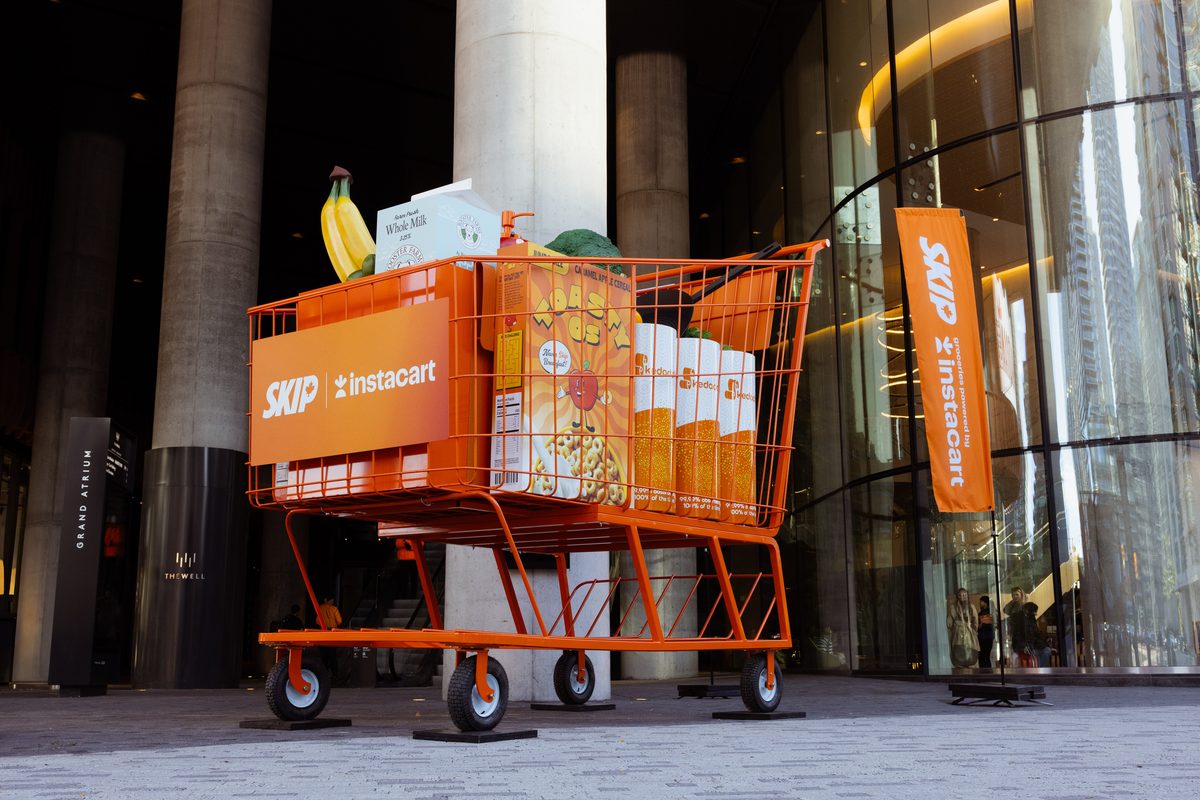
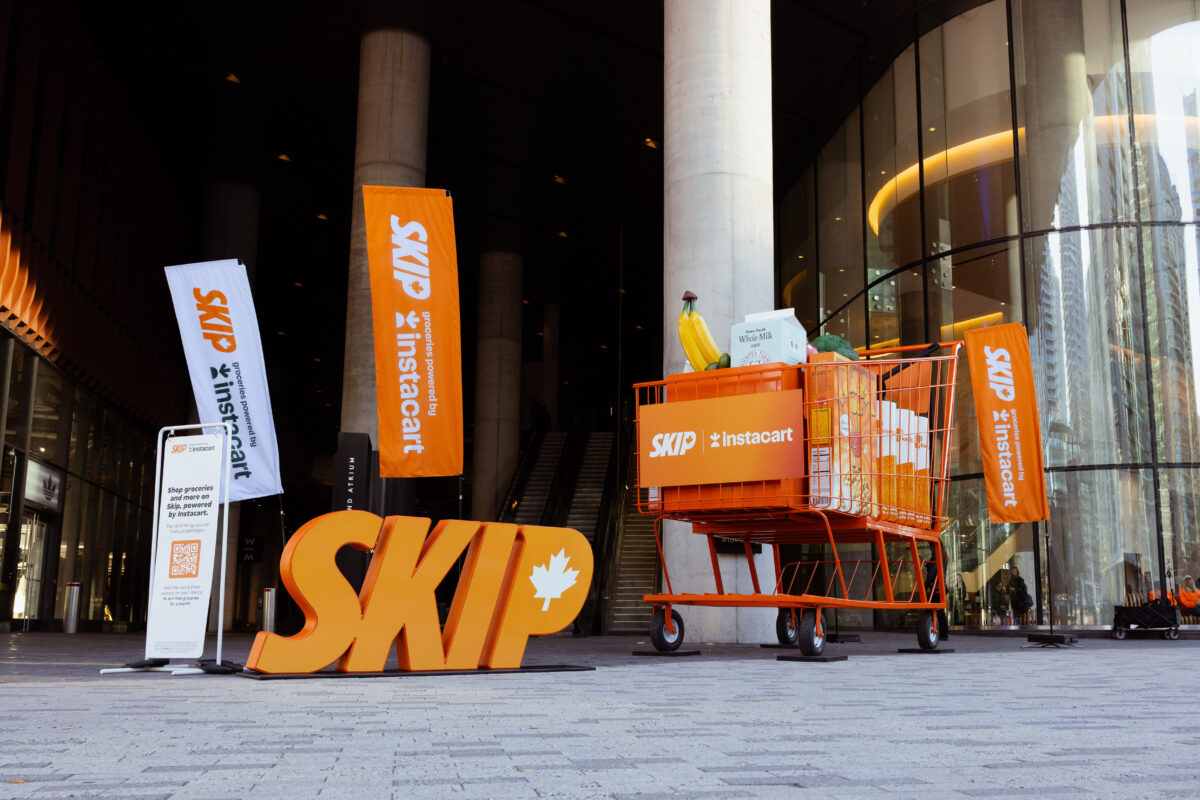
Skip is marking the partnership with a promotional campaign in Toronto and Calgary featuring a large grocery cart installation showcasing products available through the new arrangement. The company also said some participants will have the opportunity to win groceries for a month, with contest details available through Skip’s Instagram account as of Oct. 6.
Skip is also offering 40 per cent off Instacart-powered orders of $35 or more, up to a maximum discount of $15, while quantities last.
Skip, which began as a startup in the Prairies in 2012, said it now operates in more than 450 Canadian cities and towns and works with more than 50,000 local restaurants, grocery, convenience and retail partners.
Instacart said it works with more than 2,200 retail banners representing nearly 100,000 stores. The company operates its Marketplace, Enterprise platform and Ads ecosystem, providing ecommerce, fulfillment, in-store technology, AI offerings and advertising services for its retail partners.
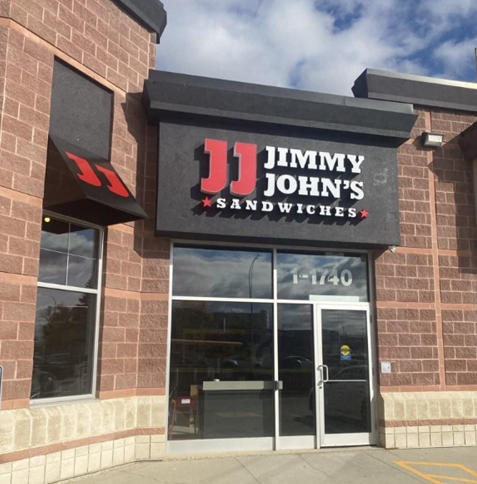
Angelo RagasEntrance to the new Winnipeg Jimmy John’s. Photo supplied
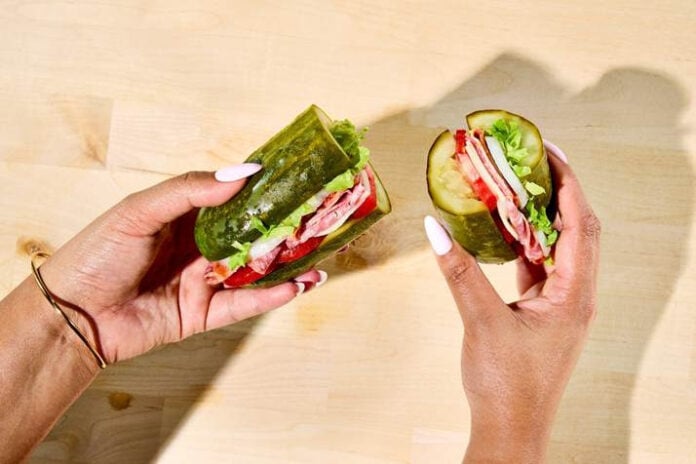
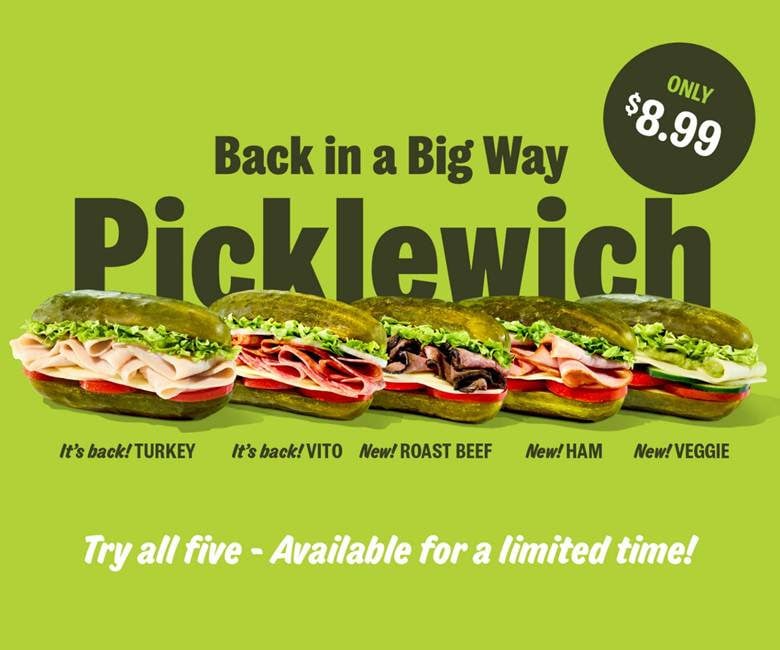
Each pickle is sliced and filled with Jimmy John’s signature ingredients, creating a crunchy, juicy and tangy alternative, especially attractive for pickle lovers, said the company.
The lineup features five options, including Turkey Picklewich, made with turkey, provolone, tomato and lettuce, Vito Picklewich, made with salami, capocollo, provolone, lettuce, onion and tomato for a classic Italian-inspired combination with a pickle-forward twist, Roast Beef Picklewich, featuring roast beef, provolone, lettuce and tomato. The Ham Picklewich offers ham, provolone, lettuce and tomato, and the Veggie Picklewich is a veggie-forward option with provolone, avocado spread, lettuce, tomato and cucumber.
Jimmy John’s was founded in 1983. Montreal-based Foodtastic launched the brand in Canada in 2024 with seven current locations. Foodtastic is a leading Canadian restaurant franchisor with a portfolio of 30 diverse brands and over 1,200 establishments across the country. Iconic brands include Milestones, Dunkin’, Pita Pit, Quesada, Second Cup, Rotisseries Benny, La Belle et La Bœuf, and Freshii, among others.
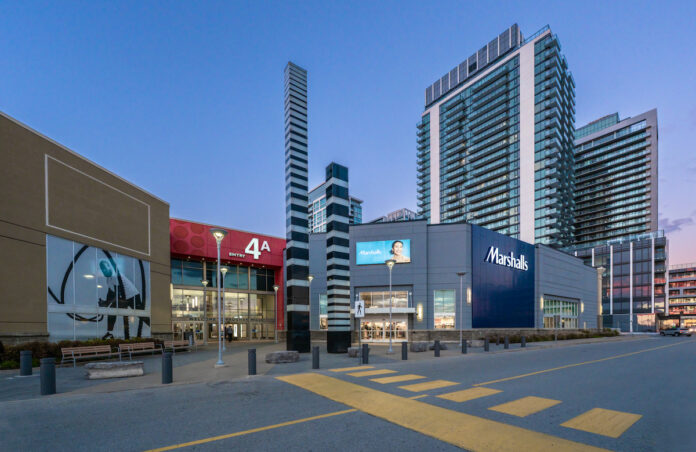
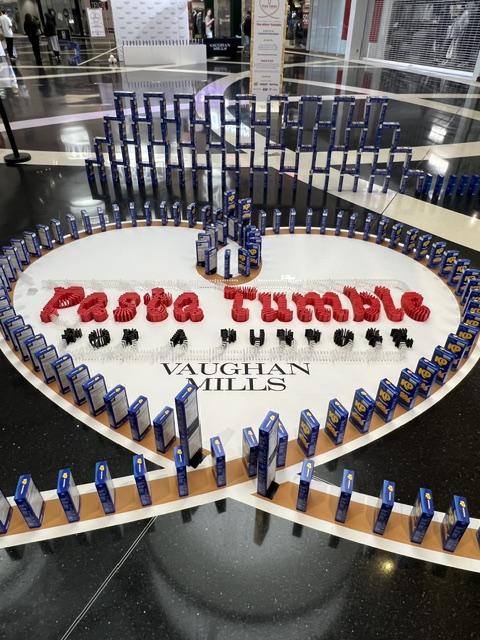
Ten thousand boxes of pasta formed a 1.7-kilometre chain reaction through Vaughan Mills on Friday, October 2, before being collected and donated to Vaughan Food Bank.
The Pasta Tumble for a Purpose extended throughout the shopping centre, turning the food donation into a large public event involving visitors across the property. Vaughan Mills followed the morning tumble with a three-day activation that continued through Sunday, October 4.
The installation was created by Steve Price of Sprice Machine, a Guinness World Record holder known for domino and chain-reaction projects. Price and his team built the pasta-box chain through Vaughan Mills before setting the sequence in motion Friday morning.
“Building a 1.7-kilometre chain reaction with 10,000 pasta boxes is an exciting challenge,” said Price. “Knowing every box will then help families in the community makes it even more rewarding.”
Pasta Tumble Grows at Vaughan Mills
The 2026 Pasta Tumble was a considerably larger version of an activation Vaughan Mills has staged in previous years. Earlier editions also involved thousands of pasta boxes travelling through the shopping centre before the food was donated, with Vaughan Mills previously documenting a 5,000-box achievement.
This year’s 10,000 boxes were picked up by Vaughan Food Bank following the October 2 tumble. The volunteer-run organization, which has operated since 1995, relies on food and financial donations to serve people in Vaughan and also provides food to other agencies in York Region.
“We are so grateful to Vaughan Mills for continuing to support families in our community,” said Peter Wixson, Executive Director of Vaughan Food Bank. “The 10,000 boxes of pasta being donated will make a real difference, and every additional donation throughout the weekend helps us support even more families.”
The event provided additional opportunities to collect food and monetary donations throughout the weekend. It also gave Vaughan Food Bank a public platform inside one of the region’s busiest shopping centres to provide information about food insecurity and its work in the community.
Vaughan Mills Extends Event Through the Weekend
Vaughan Mills extended the event beyond Friday morning with The After-Tumble, a free activation held from October 2 to 4 in Northern Lights Court.
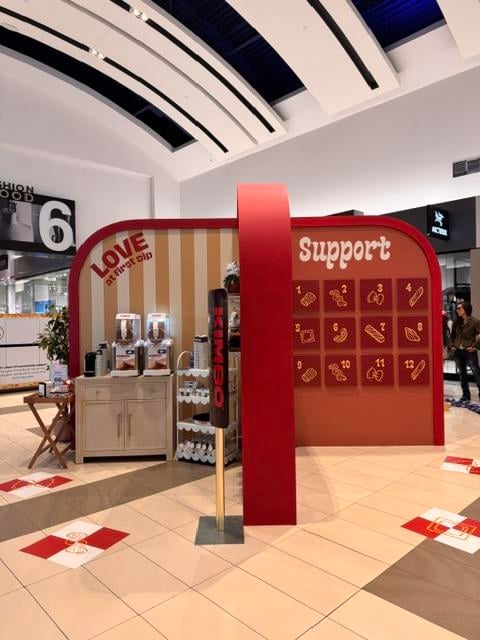
Programming included interactive games, prizes, pasta-themed photo installations, complimentary coffee, a food pop-up and opportunities to learn about and support Vaughan Food Bank. Video of the morning’s Pasta Tumble was also shown for visitors who did not see the chain reaction live.
The weekend programming included a direct retail component. Customers spending $250 at Vaughan Mills could receive a $10 Vaughan Mills Reward Card and a personalized traditional Italian espresso moka pot, engraved on site while quantities lasted.
Visitors making a non-perishable food or monetary donation could also enter for a chance to win a $500 Vaughan Mills gift card. Another activity combined prizes with information about food insecurity and Vaughan Food Bank.
The format extended a one-morning spectacle into three days of programming, combining the charitable initiative with food, entertainment and shopping incentives. It also allowed the food-bank component to continue after the 10,000 boxes had been collected.
Community Programming at Vaughan Mills
Event Page Graphic
Pasta Tumble joins a broader mix of entertainment and community programming at Vaughan Mills alongside the property’s retail offering.
Earlier this year, the shopping centre added a 24,000-square-foot Playdium entertainment centre operated by Cineplex, featuring more than 85 arcade and amusement games. Vaughan Mills subsequently hosted its Swish & Strike activation, combining basketball, bowling and arcade activities with an appearance by Canadian basketball player Kia Nurse.
The property also has a longer history of charitable programming. Vaughan Mills has supported SickKids Foundation through its holiday activities and previously reported that more than $1 million had been raised for the organization since 2015.
Pasta Tumble combines entertainment and community involvement in an unusual format. The boxes first function as a large physical installation stretching through the shopping centre, producing a spectacle suited to photographs and video, before becoming food inventory for a local organization.
“We love a big moment at Vaughan Mills, and 10,000 pasta boxes tumbling around the entire shopping centre is certainly one of them,” said Joanne Ross, Vice President, Retail Property Management at JLL Canada. “But what makes Pasta Tumble for a Purpose special is that the fun has a purpose. Every box goes to Vaughan Food Bank, and The After-Tumble gives our community even more ways to join in, have fun and give back.”
Vaughan Mills Draws More Than 12 Million Visitors
Opened in 2004, Vaughan Mills combines outlet and conventional retail with dining and entertainment and draws visitors from across the Greater Toronto Area and beyond. The shopping centre says more than 12 million shoppers, families and tourists visit annually.
Its size allows events such as Pasta Tumble to use the mall itself as part of the attraction. In this case, the 1.7-kilometre chain travelled through the shopping centre instead of being confined to a single event space.
By Friday afternoon, Vaughan Food Bank had picked up the 10,000 boxes and the installation was gone. The After-Tumble continued through Sunday, with the focus shifting to additional donations, food-insecurity awareness and public programming.
Canadian wellness brand Sleep Protein is expanding its physical retail presence through a major rollout across Loblaw banners, giving the young company national exposure as it looks to establish a niche spanning sports nutrition, wellness and sleep.
Founded by longtime sports-nutrition executive Marc Boudreau and operated under Forewinds Inc., Sleep Protein has developed a melatonin-free nighttime nutritional shake combining slow-release protein with ingredients associated with relaxation and sleep support. The brand is now available at 332 locations across Canada, spanning a range of Loblaw-owned banners.
The rollout represents a significant transition for a brand that until recently was largely discovered online. It also marks a new chapter for Boudreau, who spent more than 15 years working in sports nutrition, functional wellness and consumer packaged goods before deciding to build a brand of his own.
From Building Other Brands to His Own
Boudreau’s background spans senior leadership, brand strategy, product development, regulatory requirements and retail distribution. Over time, he said he began seeing an opportunity that much of the sports-nutrition industry had overlooked.
“For years, the sports nutrition and functional wellness industries have been completely obsessed with the waking hours: energy drinks, high-stimulant pre-workouts, and daytime meal replacements,” Boudreau told Retail Insider.
He began considering whether there was room for a nutritional product designed specifically around the hours consumers spend sleeping and recovering. The idea became more personal after Boudreau and his wife, Jenn, had their first child.
“Suddenly, broken sleep and exhaustion were no longer theoretical wellness concepts; they were our daily reality,” he said.
The couple began looking at products already available across the sleep and sports-nutrition categories. Boudreau believed there was room between the two for a product incorporating protein while also being formulated around relaxation and sleep support. Having spent years helping develop and scale products for other companies, he decided to build one himself.
“Jenn and I decided to stop searching for an answer and build one ourselves,” he said.
Jenn and Marc Boudreau. Image: Sleep Protein
Developing Sleep Protein
Made in Woodstock, Ontario, Sleep Protein is sold in Midnight Chocolate and Vanilla Sky flavours and contains 20 grams of protein per serving. Its formulation also includes magnesium, L-tryptophan, 5-HTP, GABA, L-theanine, zinc and vitamin B6.
Sleep Protein does not contain melatonin, a decision Boudreau said was fundamental to the concept from the outset. Rather than positioning the product strictly as another protein powder or conventional sleep product, he describes the emerging space as “Nighttime Nutritional Recovery.”
Bringing the formulation to market involved a lengthy Canadian regulatory process. Sleep Protein received Natural Product Number 80147681 from Health Canada in March 2026, with the active licence held by Forewinds Inc.
Health Canada’s authorized uses include helping temporarily promote relaxation and helping relieve sleep disturbances associated with mood imbalance. Its protein content also helps build and repair body tissues, among other authorized nutritional uses.
Boudreau said the licensing process took more than 400 days as the company worked through regulatory review and supporting documentation. For a young brand seeking wider retail distribution, securing the licence provided an important foundation for the next phase of the business.
Loblaw Rollout Marks a Turning Point
That next phase is now taking place in physical stores. Boudreau said the Loblaw relationship developed amid growing retailer attention to protein consumption and consumer interest in sleep, stress and wellness.
“Securing a national rollout across Loblaw banners is a transformational milestone,” Boudreau said. “It validates the brand on Canada’s largest retail stage and transitions us from an online discovery product into an accessible household staple.”
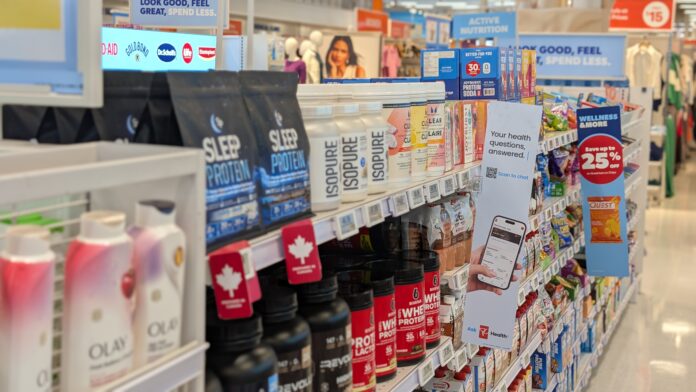
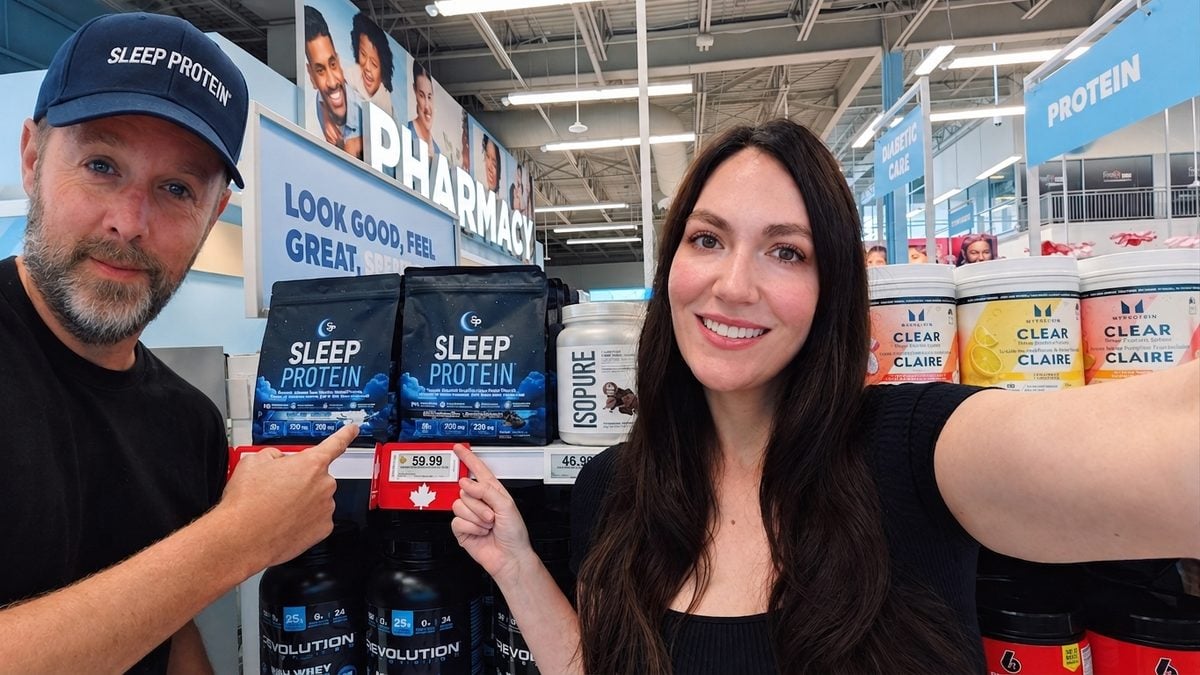
Sleep Protein is now available at over 300 locations across Canada. Boudreau identified Real Canadian Superstore, Zehrs, Dominion and Loblaws among the banners carrying the product, with distribution extending across a broader selection of Loblaw-owned banners. The company is looking to expand into additional corporate stores and regional banners as it builds sales.
Western Impact Distribution is supporting the physical rollout, helping move the product into hundreds of retail locations. With distribution secured, Boudreau said the immediate focus is on consumer education, shelf velocity and in-store movement, an important next step for a product that does not fit neatly into a single established retail category.
Finding a Place on the Shelf
Sleep Protein shares characteristics with conventional protein supplements, but its nighttime positioning also places it within the broader health and wellness market. Boudreau said it is primarily being merchandised within natural health, wellness and functional-nutrition sets, although placement can vary by retailer and location.
He sees that overlap as an opportunity to establish a recognizable subcategory around nighttime nutritional recovery.
“We bridge the gap between active sports nutrition and sleep hygiene,” he said.
The positioning could also help Sleep Protein reach beyond the traditional sports-nutrition customer. Boudreau said the company initially expected its core audience to consist largely of athletes, gym-goers and consumers already accustomed to tracking protein intake and physical recovery.
Instead, Boudreau said the customer base has broadened to include working parents, busy professionals, shift workers and wellness-oriented consumers over 35. Those observations are based on the company’s experience with its customers rather than broader market data, but the shift is influencing how Boudreau thinks about future distribution.
Consumers are also developing different routines around the product, he said. Some drink it cold before bed, while others mix it with warm almond milk as an evening drink, moving the consumption occasion beyond the conventional protein-shake routine.
Marc and Jenn Boudreau, image: Sleep Protein
Building Beyond the Initial Retail Rollout
Sleep Protein launched with Midnight Chocolate and Vanilla Sky, but Boudreau is already considering how the assortment could expand. Seasonal flavours and single-serve travel stick packs are being evaluated, while the company is also exploring complementary products associated with nighttime wellness, including Sleep Stripz nasal dilators.
The plans point to an effort to build a broader business around the Sleep Protein name instead of relying indefinitely on two flavours of powdered supplement. New products, however, are only one part of the growth strategy. Boudreau identified pharmacy banners and premium natural-health retailers as immediate Canadian targets, potentially putting the brand in front of consumers outside the traditional sports-nutrition channel.
For now, the priority remains the grocery rollout. Getting onto hundreds of shelves provides national visibility, but maintaining and expanding that distribution will depend on consumer demand and sales performance at the store level.
U.S. Market on the Longer-Term Roadmap
International expansion is also under consideration. Sleep Protein is available through iHerb, providing an e-commerce route to consumers outside Canada, while Boudreau sees the United States as a significant longer-term opportunity.
His strategy is to establish the company’s Canadian brick-and-mortar business first and use online sales information, including data generated through iHerb, to identify areas of concentrated demand before pursuing broader U.S. omnichannel distribution.
“Our goal is for Sleep Protein to become the definitive global brand in nighttime recovery,” Boudreau said.
That is a considerable ambition for a company only now entering a much larger phase of physical retail distribution. The more immediate question is whether Sleep Protein can turn its unusual positioning into sustained sales across hundreds of Canadian stores.
For Boudreau, the rollout also brings his career full circle. After more than 15 years spent helping develop and scale products for other businesses, he is now applying that experience to a brand of his own, testing whether an overlooked consumption occasion can support a new Canadian wellness category.
Tim Hortons and its restaurant owners across Canada raised $979,000 through this year’s Orange Sprinkle Donut campaign, with all proceeds from the Sept. 30 sales going to Indigenous organizations.
The campaign, held on the National Day for Truth and Reconciliation, marked the sixth year of the fundraising initiative, which was first developed in 2021 by a group of Indigenous Tim Hortons restaurant owners.
The campaign has now raised more than $6.2 million for Indigenous organizations, including the Orange Shirt Society, the Gord Downie & Chanie Wenjack Fund, the Indian Residential School Survivors Society, Ulnooweg Education Centre and, in Quebec, the New Pathways Foundation.
Tim Hortons said restaurant owners donate 100 per cent of proceeds from Orange Sprinkle Donut sales each Sept. 30 to organizations supporting Indigenous communities across Canada.
“Every Orange Sprinkle Donut sold this year represents a guest who chose to take part in this important campaign,” said Hope Bagozzi, Chief Marketing Officer for Tim Hortons. “We’re grateful to our restaurant owners and their teams for rallying behind this campaign year after year, and to our guests for helping turn a single day of purchases into lasting support for Indigenous organizations across Canada.”
The Orange Sprinkle Donut campaign directs funds to organizations involved in areas including education, youth programs, crisis response, wellness and reconciliation.
Hope Bagozzi
“The Orange Shirt Society is proud to partner with Tim Hortons through the Orange Sprinkle Donut campaign. This initiative is more than a fundraiser, it is an opportunity to spark conversations, increase awareness, and support the ongoing journey of truth and reconciliation,” said Phyllis Webstad, CEO & Co-Founder, Orange Shirt Society.
“Through the Orange Sprinkle Donut campaign, Tim Hortons is helping the Gord Downie & Chanie Wenjack Fund bring learning and action into classrooms from coast to coast to coast through our Legacy Schools program. As we commemorate the 10th anniversary of Gord Downie’s Secret Path, we’re reminded of his simple but powerful call to Do Something. Through the generosity of Tim Hortons and its customers throughout Canada, every Orange Sprinkle Donut purchased helps educators and students answer Gord’s call and take meaningful steps toward reconciliation,” said Sarah Midanik, President & CEO, Gord Downie & Chanie Wenjack Fund.
“The generosity of Tim Hortons guests across the country directly supports survivors and families impacted by residential schools, helping us meet the growing need for culturally safe crisis response, wellness, and healing services. Meaningful reconciliation requires ongoing action, and we are grateful for the collective commitment demonstrated through this campaign,” said Angela White, Executive Director of the Indian Residential School Survivors Society (IRSSS).
“The Orange Sprinkle Donut campaign gives Canadians an opportunity to contribute to something that has a meaningful impact for Indigenous youth. That support allows us to bring together Elders and Knowledge Holders, researchers, professionals and experts from different fields to create exceptional camp experiences. Together, we’re giving youth opportunities to connect with culture, explore new interests, build relationships and see new possibilities for their future,” said Denise Whynot, Seasonal Programs Manager for Ulnooweg Education Centre.
“The strength of this campaign lies in the collective commitment it inspires in support of Indigenous youth. Through the engagement of Tim Hortons, its restaurant owners, team members and guests, meaningful resources are made available to organizations working directly with communities. Thank you! For the New Pathways Foundation, this support allows us to invest even more in the potential of First Nations youth and help create opportunities that reflect their aspirations and realities,” said Marie-Claude Cleary, Executive Director, New Pathways Foundation.
Designing in the Dark: A Memoir of Vision, Resilience, and Redefining Canadian Design
Canadian designer and entrepreneur George Sully has spent more than two decades building brands, developing products, working with major retailers and creating platforms for Canadian designers.
The publication also marks a Canadian fashion milestone, making him likely the first Black male Canadian fashion designer to publish a memoir.
The book traces his journey from growing up in public housing in Ottawa through a career spanning footwear, apparel, accessories, publishing and design. For Sully, writing it required enough distance from those experiences to understand what they meant without losing sight of what they felt like at the time.
“For years, I was so focused on surviving the moment, building the next brand, making the next opportunity work and solving the next problem that I rarely stopped to consider the complete journey,” Sully told Retail Insider. “When I looked back, I realized the story was bigger than any one company or accomplishment.”
Becoming a father also changed the way he thought about legacy and what he wanted his children, along with the next generation of creatives, to understand about the path he had taken.
Designing Without a Blueprint
The title Designing in the Dark reflects a recurring theme in Sully’s career: building without certainty that the resources, opportunities or industry support he needed would eventually appear.
He entered fashion without money, established industry connections or a traditional fashion education. Much of his early career involved learning while building, trusting his instincts and pursuing ideas before there was much evidence they would work.
“The darkness was never an absence of vision,” he said. “It was an absence of visibility, access and reassurance.”
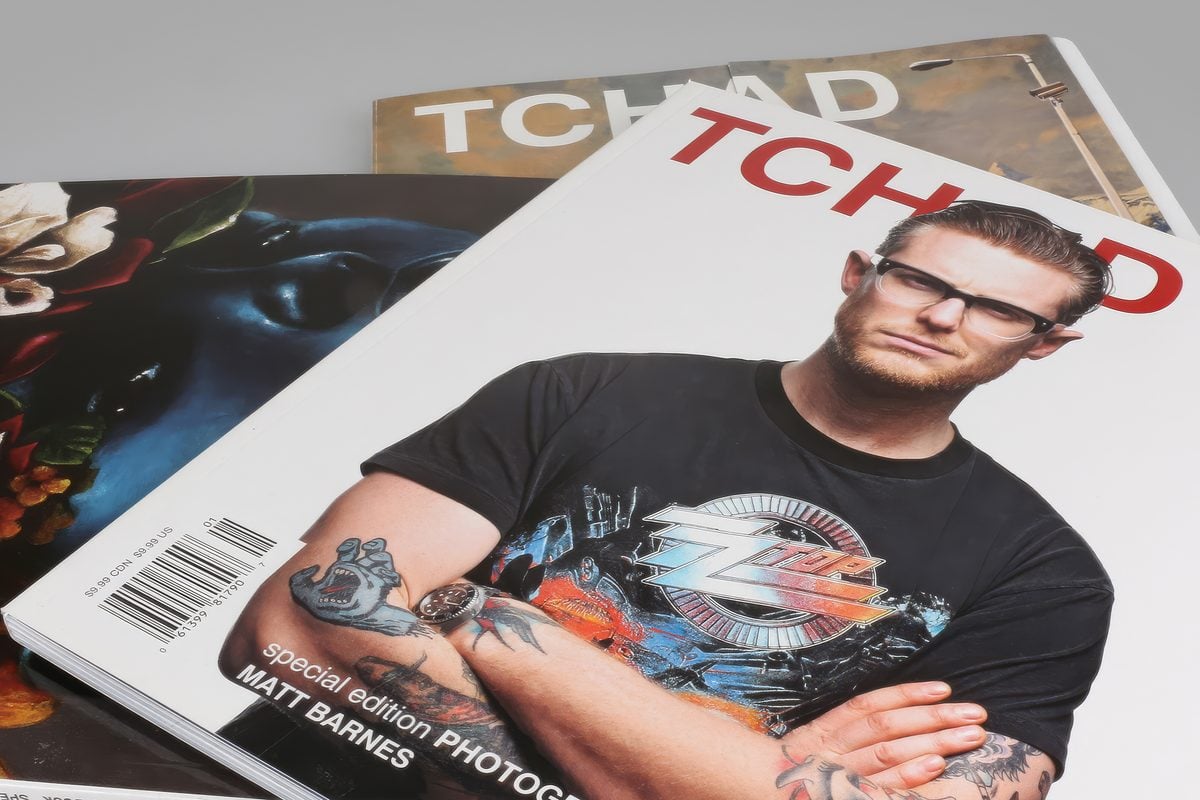
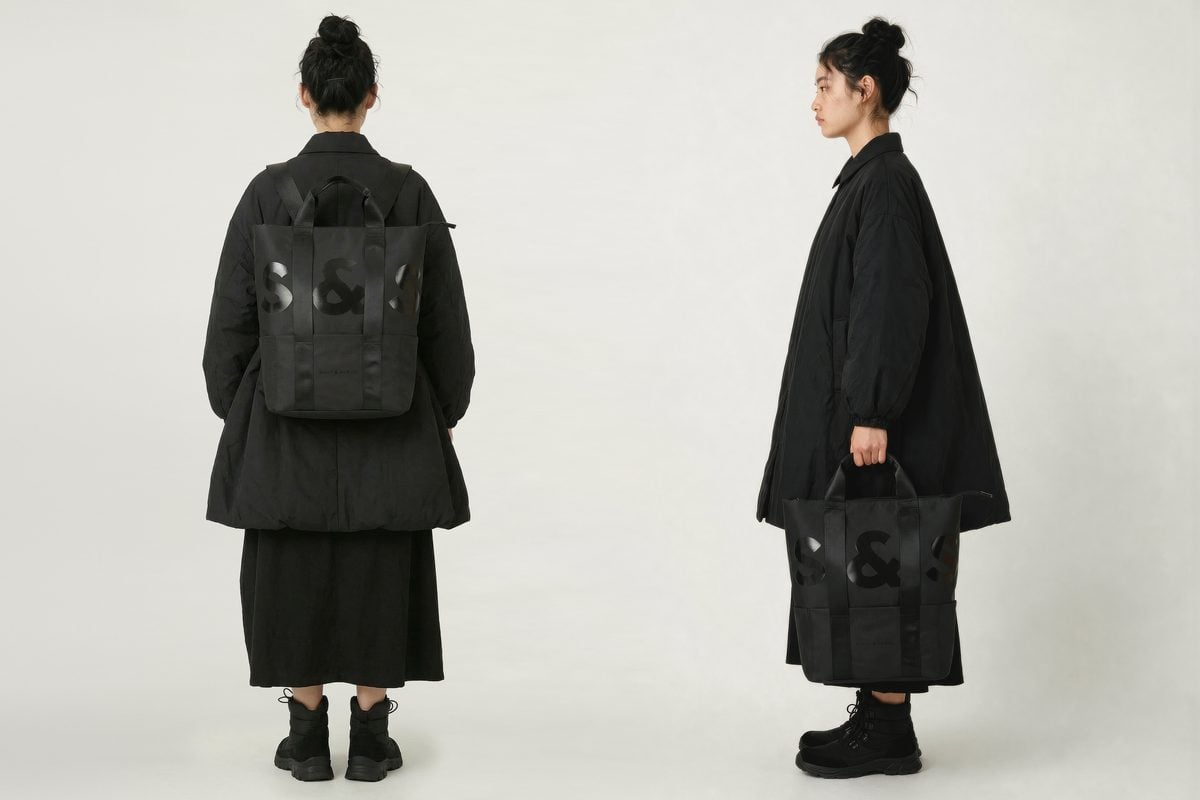
Sully’s career stretches back to the early 2000s and has included Limb Apparel, publishing venture TCHAD Quarterly, footwear brand Sully Wong, House of Hayla and accessories and lifestyle business Sully & Son Co.
Sully Wong, created with longtime friend Henry Wong in 2010, achieved national retail distribution, including through Hudson’s Bay and The Shoe Company. House of Hayla later expanded his work into women’s footwear, while Sully & Son moved into premium accessories and lifestyle products.
Moving between those businesses gave Sully experience across product development, manufacturing, wholesale, branding and publishing. It also changed how he thought about what separates an interesting product from a lasting company.
TCHAD Magazines
Building a Business Beyond the Product
“The biggest lesson is that a great product may attract attention, but structure is what allows a brand to endure,” Sully said.
That structure includes margins, production capabilities, cash flow, intellectual property, distribution and a clear understanding of the customer. A compelling story can establish a brand’s identity, but purpose and attention cannot compensate for weak business fundamentals.
Sully also learned the limitations of building a company around the constant involvement of its founder.
“Passion is powerful, but it is not an operating system,” he said.
If everything stops when the founder stops, he argues, the entrepreneur may have created a demanding job without creating a company capable of enduring independently. Brands also have to adapt as products, markets and consumer preferences change without losing the identity that made customers notice them in the first place.
Those lessons became particularly important as Sully began working with larger retailers.
Lessons From Major Retailers
Sully has worked with retailers including Harry Rosen, Hudson’s Bay and Holt Renfrew at different stages of his career. He describes the relationship between designer and retailer as one built around shared risk.
A retailer can provide traffic, credibility, visibility and volume. The designer brings newness, differentiation, cultural relevance and products or stories that can distinguish the retailer’s assortment.
But getting onto a national retail floor brings operational demands that have little to do with the glamour sometimes associated with fashion. Designers need accurate costing, dependable production, consistent quality, clear communication and the ability to deliver on time.
Sully argues that retailers also have to approach Canadian designers as serious commercial partners.
“Canadian designers cannot be treated as charitable initiatives or temporary marketing stories,” he said. “They need meaningful orders, fair terms, visibility and the opportunity to grow.”
Getting onto the floor, in other words, is only the beginning. The stronger partnerships create conditions that allow a brand to remain there and grow.
One of Sully’s more recent lessons came through Hudson’s Bay. He told Retail Insider he had been developing George Sully Home with the retailer, an expansion of his design work into a new category, when the company’s collapse brought the project to a halt.
“It reminded me that prestige is not protection,” he said.
For a designer, securing a major retail partnership can feel like the victory. Sully came to see the milestones that follow as more important: producing and delivering the merchandise, achieving sell-through, getting paid and turning the opportunity into a sustainable business relationship.
“Sometimes the biggest name in the room can still be the biggest risk on your balance sheet,” he said.
The experience reinforced the importance of protecting cash flow, diversifying distribution and avoiding excessive dependence on a single retailer or partnership.
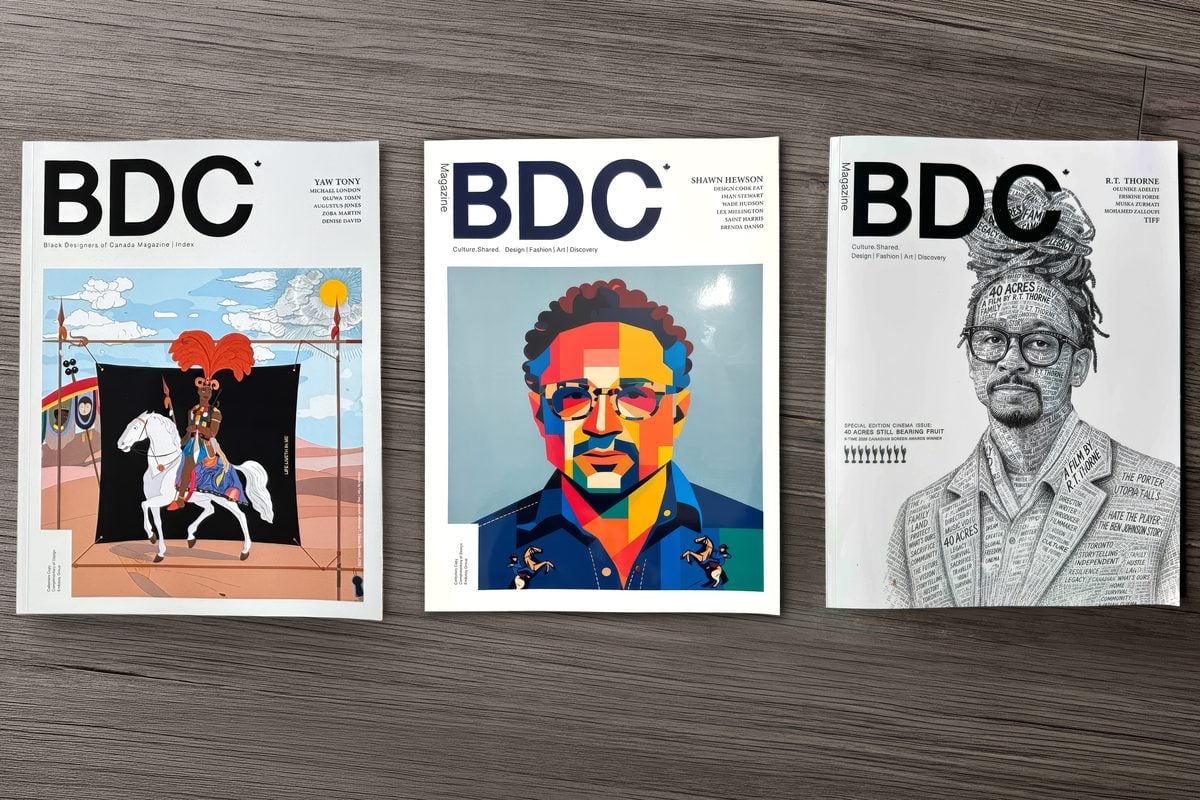
BDC Magazines
Canada’s Difficult Middle
For Sully, many of the challenges he encountered point to a larger weakness in Canada’s fashion industry.
“Canada does not have a shortage of talent,” he said. “What we lack is enough infrastructure between emerging and established.”
A designer can develop a compelling product and generate early attention. Turning that into a national business requires working capital, production financing, sales representation, dependable manufacturing, distribution and sustained marketing.
Canada’s geography adds to the cost. Reaching consumers across the country is expensive for a small company, while expanding internationally requires another level of capital and operational capacity.
Wholesale can create its own cash-flow pressures. Smaller brands may have to finance production months before receiving payment, meaning that winning a significant order can actually increase the immediate financial demands on the business.
It is in this middle ground, after a brand has attracted attention but before it has developed scale, where Sully believes many promising Canadian businesses get stuck.
“A feature, award or social media moment can introduce a brand, but it cannot finance inventory or build national distribution,” he said.
That distinction between being visible and building something commercially sustainable would eventually influence another major part of Sully’s career.
George Sully + Black Diamond Award
Turning Visibility Into Commercial Opportunity
Sully launched Black Designers of Canada in June 2020 to increase visibility for Black Canadian designers and make their work easier for retailers, buyers, stylists, media and other industry participants to discover.
Six years later, he sees progress in bringing designers into the national conversation. What matters now, he says, is whether that recognition translates into durable economic opportunity.
“Representation in a campaign is valuable, but ownership, purchase orders, investment, senior decision-making roles and long-term retail relationships are what change businesses and lives,” he said.
“We have made progress in being seen. The next stage is ensuring designers are properly funded, stocked, paid and included in the rooms where commercial decisions are made.”
Looking back at the diversity initiatives introduced by retailers and other organizations around 2020, Sully sees a distinction between programs tied to business infrastructure and those primarily built around communications.
Initiatives connected to budgets, vendor onboarding, purchase orders, paid collaborations and relationships with buyers were more capable of producing lasting opportunities. Programs built around a moment of urgency could be more vulnerable once corporate priorities changed or budgets tightened.
“Inclusion has to be integrated into procurement, hiring, merchandising and leadership,” Sully said. “If it only exists within marketing, it will always be vulnerable to the next marketing cycle.”
Black Designers of Canada has since expanded beyond its original directory concept, while Sully has returned to publishing through BDC Magazine and developed other editorial and creative projects. His work was recognized with the Canadian Arts & Fashion Awards’ Change Maker Award in 2022.
George Sully designs
Owning the Platform
The evolution of Black Designers of Canada also reflects a shift in Sully’s approach to his own career.
He no longer sees footwear, apparel, creative direction and publishing as separate pursuits. Publishing, in particular, taught him the value of owning “the platform, the audience and the context in which stories are told.”
Sully now considers the move from building individual products to developing platforms, audiences and relationships he could control one of the most consequential business decisions he made.
Founding Black Designers of Canada and returning to publishing through BDC Magazine made him less dependent on waiting for a particular retailer, buyer or institution to provide an opportunity.
There are things he would change. Sully said he would have built stronger financial safeguards earlier, diversified distribution sooner and placed greater emphasis on owning direct customer data.
“Earlier in my career, I sometimes believed that securing the prestigious opportunity meant the difficult part was over,” he said.
What followed those opportunities ultimately mattered more: the terms, cash flow, execution, ownership and what remained after the initial attention disappeared.
‘Do Not Confuse Applause With Demand’
Those experiences now inform Sully’s advice to emerging designers and entrepreneurs.
“Start with one thing and make it undeniable,” he said.
He has watched founders try to build an entire lifestyle universe before proving there is a customer for the core product. His advice is to understand costs, margins, production timelines and minimum order quantities early, protect intellectual property and begin building a direct relationship with customers from the outset.
He also cautions against mistaking attention for commercial traction.
“Do not confuse applause with demand,” Sully said.
Compliments, followers and media coverage can create momentum. A business still needs customers, repeat purchases and healthy cash flow.
Looking Back at Penny Drive
For all the business setbacks and career changes explored in Designing in the Dark, the part Sully found most emotional to revisit was his childhood.
He returned to his years growing up in public housing on Penny Drive and reconsidered a period he had long remembered through the lens of what his family did not have. Looking back as an adult and father, he also saw the resourcefulness, imagination and independence that developed there.
“I initially thought the business setbacks would be the most emotional parts of the book,” he said. “Instead, it was returning to the boy I was before any of the brands, awards or recognition existed.”
“That boy was already designing a way forward, even if he did not yet have the language for it.”
Sully is also developing a Legacy Access Program tied to the memoir. He said the goal is to work with organizations and corporate partners to place copies in schools, libraries, youth programs, design programs and community organizations, reaching emerging creatives who may recognize themselves in parts of his story.
For Sully, that idea returns to the meaning behind the title of the book and the experience of building without knowing exactly where the next opportunity would come from.
“Darkness is not proof that there is no path,” he said. “Sometimes it simply means you are the first person being asked to design it.”
Jollibee believes Canada could eventually support hundreds of restaurants as the fast-food chain accelerates expansion through franchising while continuing to develop company-owned locations.
The company currently operates 28 restaurants in Canada and has another 26 committed through multi-unit franchise development agreements in British Columbia and the Edmonton market. Peter Wright, Vice President of Franchise Development for Jollibee Group North America, told Retail Insider that longer-term modelling points to a Canadian network substantially larger than what exists today.
“It’s certainly over a hundred stores,” Wright said. “It could be 300 over time.”
The figure is not a formal development target. Jollibee uses site analytics and performance data from existing restaurants to identify trade areas, with estimates evolving as the network grows and the company accumulates more Canadian operating data.
A 16-restaurant development agreement in British Columbia follows a separate 10-store agreement for the Edmonton market. If all 26 committed restaurants are developed and the existing network remains in place, Jollibee expects to reach 54 Canadian locations over the next five years.
Peter Wright
Canadian Restaurants Generate Strong Volumes
Jollibee’s existing Canadian restaurants are producing average annual sales approaching or exceeding $5 million, according to Wright.
Freestanding restaurants average approximately $4.9 million in annual unit volume, while inline locations, including restaurants in shopping centres, average approximately $5.4 million. Wright confirmed the figures are in Canadian dollars.
“It’s a very strong AUV,” he said.
Canadian performance is broadly comparable with Jollibee restaurants in the United States after accounting for the currency difference, according to Wright. He said U.S. locations average approximately US$5.1 million annually.
The company intends to continue opening corporate restaurants alongside its franchise pipeline.
“We’re starting from a base in Canada of 28 company-owned units, and we will continue to look for new company development in addition to franchise development,” Wright said.
Broader Customer Base Supports Franchising
Jollibee’s decision to accelerate franchising follows several years of growing adoption beyond the Filipino Canadian community that helped establish the brand in Canada.
Wright said Jollibee continues to have a strong share among Filipino consumers and also indexes highly with Asian populations, while the proportion of customers from the broader population has been increasing significantly year over year.
“Our goal is to win in the mainstream,” Wright said. “We think we’re a mainstream QSR. Everybody gets fried chicken.”
Growing acceptance in Canada and the United States helped convince the company that the time was right to begin franchising in North America. Jollibee Group already uses franchising extensively internationally, but the model is relatively new for its North American Jollibee operations.
Fried chicken accounts for more than 60 per cent of Jollibee sales, according to Wright. Sides, including Jolly Spaghetti, account for more than 11 per cent, while the company has also expanded its chicken offerings with products including nuggets and limited-time chicken sandwiches.
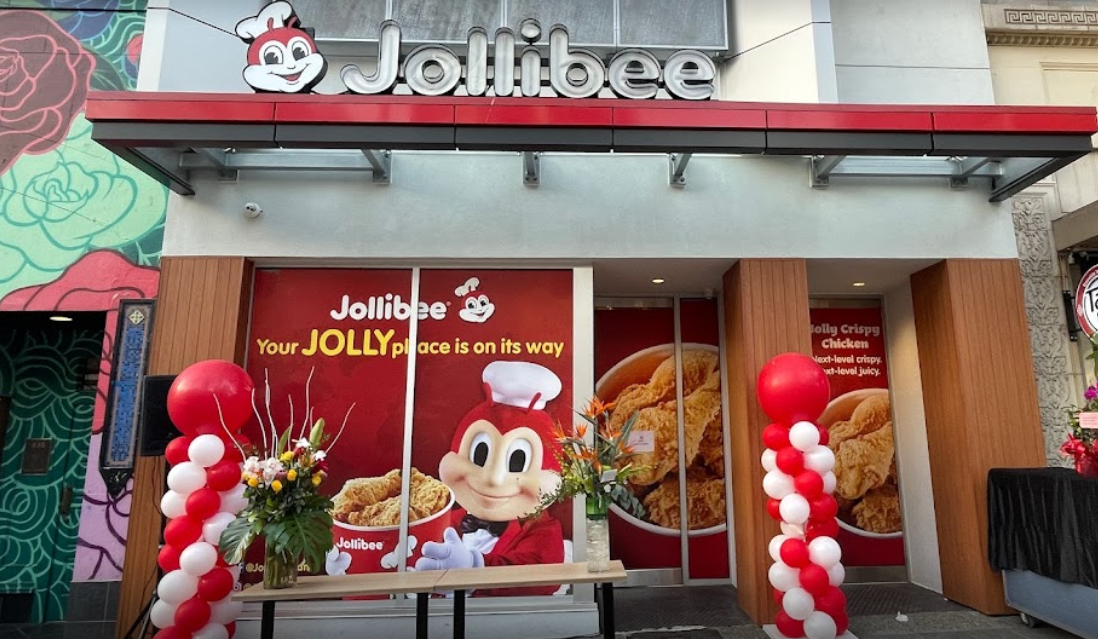
Jollibee on Granville St. in Vancouver. Photo: Jollibee
Major Canadian Markets Prioritized First
Jollibee is using a phased development strategy in Canada, concentrating initially on major markets before moving into secondary and tertiary locations.
Wright identified Toronto, Ottawa, Calgary, Edmonton and Vancouver while discussing the company’s priority markets. Population, consumer profiles and existing Jollibee infrastructure factor into development decisions.
Existing restaurants can serve as training locations for franchisees, while local operating teams provide support as franchised restaurants open. Increasing restaurant density also builds brand awareness and makes Jollibee more accessible to consumers who may initially treat a location as a destination.
“As your units grow and the brand becomes better known, it has other network benefits,” Wright said.
Quebec is on Jollibee’s radar but is not currently targeted for development, while Atlantic Canada is also not a current focus.
Site Selection Moving Beyond Ethnicity
Jollibee’s real estate analysis increasingly emphasizes consumer lifestyle profiles rather than relying primarily on the ethnic composition of individual trade areas.
“It’s less about ethnicity and more about lifestyle segments and income,” Wright said.
The company examines household income, family composition and other consumer characteristics using data from its existing restaurants. Wright identified families, younger consumers establishing themselves in urban markets, established couples and suburban households among the groups informing Jollibee’s real estate model.
The analysis will continue to evolve as a larger Canadian restaurant network provides more operating data.
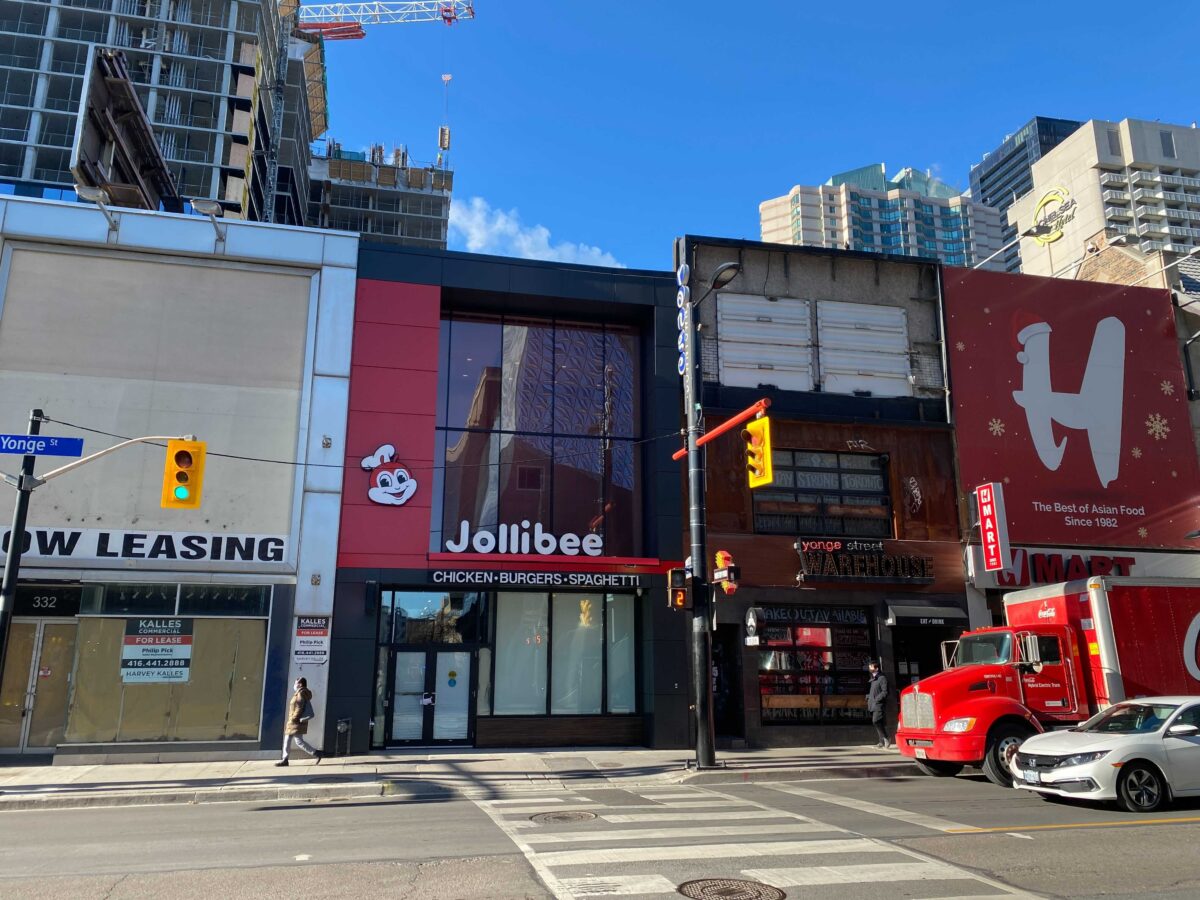
Exterior of Jollibee location on Toronto’s Yonge Street, December 2020. Photo: Dustin Fuhs
Flexible Formats Widen Real Estate Options
Jollibee can operate across mall food courts, urban inline locations, strip-centre end caps and freestanding restaurants. End-cap and freestanding locations can operate with or without drive-thrus, giving franchisees several options when developing multi-unit territories.
Wright pointed to a recently opened franchised restaurant near Sacramento, California, as an example. The restaurant occupies an end-cap-style location without a drive-thru but generated volumes strong enough that the franchisee quickly concluded it needed additional fryers and storage capacity.
The operator subsequently began discussions with the landlord about expanding the building.
“This has changed our view of real estate,” Wright recalled the franchisee telling him.
The performance broadened the operator’s view of potential sites beyond freestanding drive-thru restaurants. For Canadian franchisees committed to developing multiple restaurants within a territory, that flexibility increases the pool of viable real estate.
British Columbia Could Grow From Four Restaurants to 20
Jollibee currently operates four company-owned restaurants in British Columbia, with two in Vancouver and two in Surrey. Its new franchise agreement calls for another 16 restaurants over five years, potentially bringing the provincial network to 20.
The agreement was signed in July with an experienced multi-brand food retail operator. Individual restaurant locations have not been announced.
Wright told Retail Insider that the B.C. franchisee has multi-unit operating experience across several Canadian markets and is relocating with her family to Vancouver. She initially approached Jollibee about Edmonton, but that territory had already been awarded to another franchisee.
“We really like the franchisee we chose to work with,” Wright said. “We’re very optimistic about the opportunity in Canada.”
Jollibee opened its first Vancouver restaurant in 2022. Its Strawberry Hill location in Surrey subsequently became the chain’s 100th North American restaurant when it opened in 2024.
Jollibee in Winnipeg (Image: Jollibee)
Edmonton Was First Canadian Franchise Agreement
Jollibee signed its Edmonton agreement in June, shortly before the B.C. deal, making Alberta the first market covered by its Canadian franchise development program.
The agreement calls for 10 restaurants in the Edmonton market. Jollibee currently operates four restaurants in Edmonton and eight across Alberta, with the remaining locations in Calgary and Red Deer.
Edmonton and B.C. have separate franchise operators. The multi-unit development agreements establish a territory, number of restaurants and opening schedule, with individual franchise agreements issued as each restaurant opens.
How Jollibee Gets From 54 Restaurants to Hundreds
Jollibee has been incorporating SiteWise analytics into its real estate modelling over the past several years, using historical restaurant performance and market data to identify promising trade areas.
Wright said the model continues to change as additional stores produce more data. Restaurant density and increasing brand awareness can also make sites viable that may not work earlier in a chain’s development.
He pointed to his previous experience at Starbucks, where a downtown Chicago site was rejected before being reconsidered approximately seven years later. By then, further development had strengthened the brand in the market and the location performed well.
“More units beget more opportunity,” Wright said.
That dynamic helps explain why Wright is reluctant to put a firm ceiling on Jollibee’s Canadian potential even as the company’s modelling points to more than 100 and potentially around 300 restaurants over time.
“For me, it’s not so much what the total number is,” Wright said. “It’s starting with what quality and smart development look like.”
MINISO is bringing its SUPER MINISO concept to Canada for the first time, with a location set to open October 10 at Square One Shopping Centre in Mississauga and another planned for CF Polo Park in Winnipeg.
The format adds another layer to the Chinese retailer’s Canadian expansion as MINISO moves beyond the relatively small lifestyle stores that established the brand in the market. Canada is already home to MINISO LAND, a separate and more heavily IP-driven concept that opened at West Edmonton Mall last year, with another planned for CF Toronto Eaton Centre.
Together, the concepts point to a more segmented approach to Canadian real estate, with MINISO deploying different store formats and merchandise mixes across major shopping centres.
What is SUPER MINISO?
MINISO founder and CEO Ye Guofu described SUPER MINISO during the company’s August earnings call as its “most important innovation of 2026.”
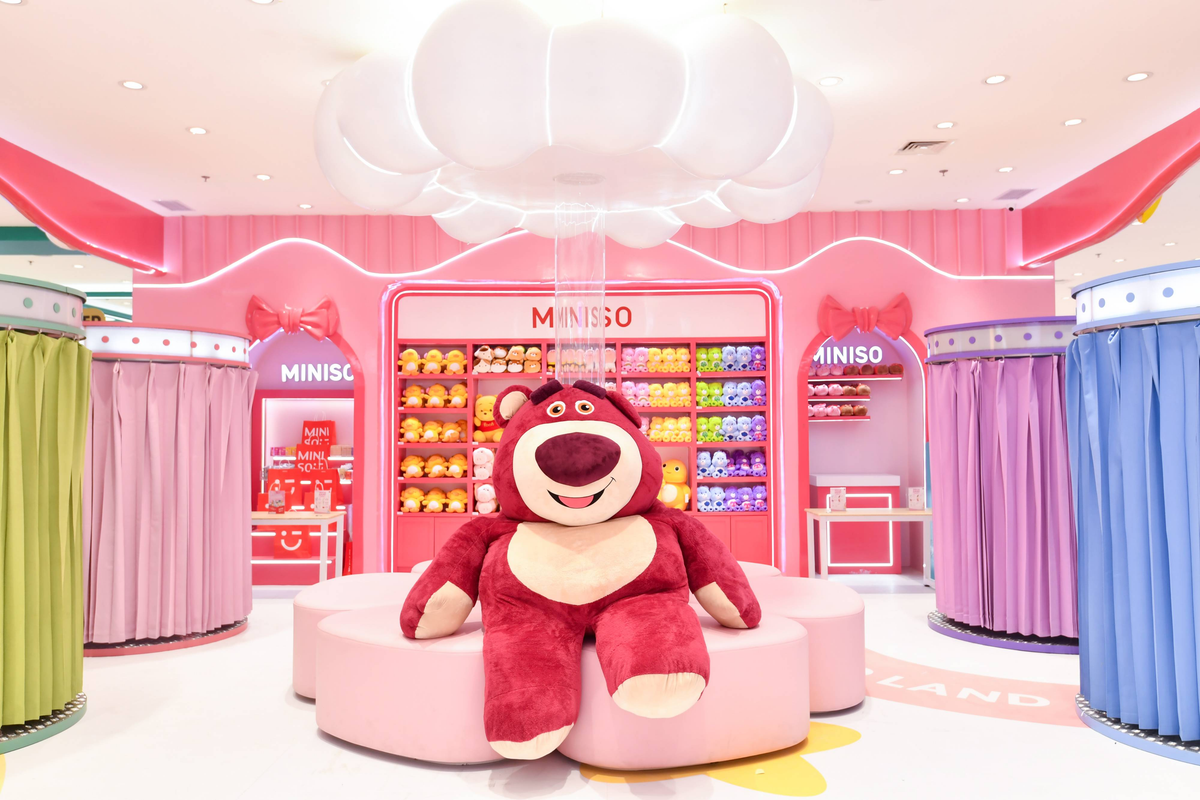
The concept is designed to bring the company’s growing intellectual-property business to a broader mass-market customer while retaining the general merchandise and value positioning associated with MINISO. SUPER MINISO stores generally span about 600 to 1,000 square metres, or roughly 6,500 to 10,800 square feet, with approximately half of the assortment devoted to IP merchandise and the other half to general lifestyle products.
The merchandise mix differentiates SUPER MINISO from some of the company’s more IP-intensive concepts. MINISO has spent the past several years developing a portfolio of formats, including MINISO LAND and MINISO FRIENDS, as characters, collaborations and collectibles become a larger part of its business.
“The store is a space. IP is a soul to fill it,” Ye told investors.
The strategy behind the phrase is straightforward. Larger stores provide more room to showcase IP merchandise, while a steady flow of characters and collaborations gives customers more reasons to visit.
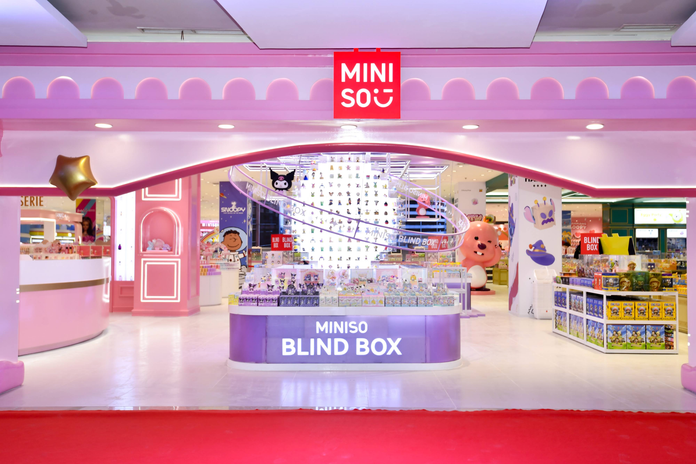
Miniso flagship in Jakarta. Image: Miniso
Square One Becomes Canadian Launch Market
The Square One store will become Canada’s first SUPER MINISO when it opens October 10. MINISO is promoting Naruto and Stitch for the opening alongside YOYO, a proprietary MINISO character that forms part of the company’s effort to develop IP it owns alongside licensed properties.
The location arrives amid a broader change in Square One’s tenant mix. POP MART and LEGO are also opening stores at the Mississauga shopping centre, creating a notable concentration of retailers selling toys, collectibles and merchandise tied to established characters and fan communities.
A second SUPER MINISO is planned for CF Polo Park in Winnipeg, where MINISO already operates a conventional store. MINISO’s verified corporate account lists November 7 as the next Winnipeg stop on its YOYO “Wish Journey” campaign. Having a second Canadian store in the pipeline indicates MINISO sees applications for the format beyond its initial Square One launch.
SUPER MINISO Joins MINISO LAND in Canada
SUPER MINISO is one of several larger MINISO formats now appearing in major Canadian malls. The retailer opened Canada’s first MINISO LAND at West Edmonton Mall in November 2025, bringing a significantly larger and more IP-intensive version of the brand to the market.
At approximately 12,000 square feet, the West Edmonton Mall store was far larger than MINISO’s traditional Canadian locations and was designed around a heavy concentration of licensed characters, collectibles and other IP merchandise. MINISO said the location achieved record opening sales and later described its performance as a North American single-day sales record.
A second Canadian MINISO LAND, spanning approximately 8,100 square feet, is planned for CF Toronto Eaton Centre. LAND and SUPER MINISO serve somewhat different roles: MINISO LAND pushes further into the IP-led destination-store model, while SUPER MINISO maintains a roughly even split between IP merchandise and the general lifestyle products that built MINISO’s original value proposition.
MINISO is consequently developing a portfolio of formats that can be matched with different shopping centres, customers and real estate opportunities. Canada has already seen other variations on the conventional model, including an IP Collection Store at CF Toronto Eaton Centre and a larger-format location at CF Shops at Don Mills, while LAND and SUPER MINISO take the strategy considerably further.
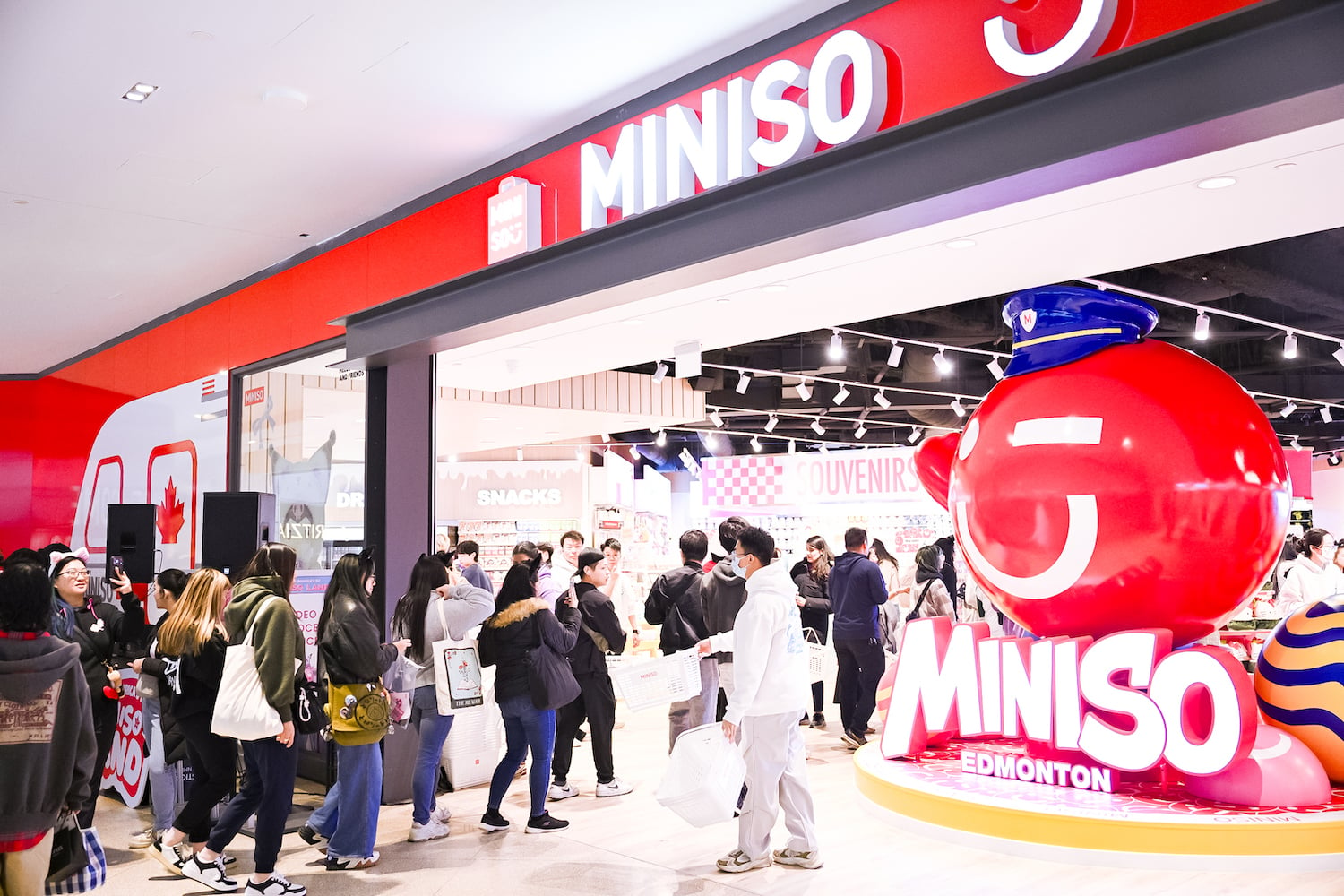
Miniso Land grand opening at West Edmonton Mall. Photo: Miniso Canada
Larger Stores Have an Economic Rationale
MINISO’s interest in larger stores is backed by what management says are better economics. During the August earnings call, Ye said the company’s broader family of large-format stores was generating approximately twice the sales per square metre of conventional MINISO locations.
Management also said stores opened in 2026 were significantly larger while maintaining sales productivity per square metre and improving their rent-to-sales ratios. Ye told analysts that large-format locations had initially achieved investment payback in as little as six months and were now averaging around one year, compared with substantially longer periods for regular stores.
He argued that the performance had persisted beyond the initial opening period instead of reflecting a temporary novelty effect. The figures apply to MINISO’s larger-format business generally and are not forecasts for Square One or Polo Park, but they explain why the company is prepared to take considerably more space than a conventional MINISO requires.
There is a real estate argument as well. Management says its newer large stores can become traffic generators for shopping centres, potentially strengthening the case for landlords to accommodate larger footprints at major regional malls.
IP Merchandise Drives Higher Spending
The other side of the strategy is merchandise. MINISO works with globally recognized properties including Disney, Sanrio and Harry Potter, while increasingly developing characters of its own.
YOYO, its first proprietary IP, had expanded into 53 countries within roughly a year and generated nearly RMB 500 million in related revenue during the first half of 2026, according to management. The company says customers engaged with IP merchandise are particularly valuable, reporting average transaction values among IP-oriented members at more than three times those of non-IP members, along with higher purchase frequency and retention.
Larger stores give MINISO room for deeper assortments and product launches, while frequently changing IP merchandise can encourage repeat visits. The approach also creates an operational dependency: MINISO needs a consistent pipeline of desirable new products if IP is going to remain a reliable traffic driver.
The company saw that risk emerge in North America during the second quarter. MINISO acknowledged that same-store performance moderated after the company failed to maintain a sufficiently consistent cadence of new IP launches, while stock shortages involving popular products also affected sales.
For a retailer putting greater weight on characters and collectibles, merchandise freshness becomes part of the store economics. More space is useful only if MINISO can keep filling it with products customers want to come back for.
Canadian Expansion Comes as MINISO Becomes More Selective
The arrival of SUPER MINISO comes as MINISO reassesses how it expands internationally. Management acknowledged in August that parts of its overseas business had placed too much emphasis on scale and said the company was shifting its international strategy from “scale first” toward “quality first,” with greater attention to the performance of individual stores.
North America remains one of MINISO’s stronger international markets. Revenue in the region increased 37% during the first half of 2026 to nearly RMB 1.8 billion, although same-store sales increased at a more moderate mid-single-digit rate and softened during the second quarter.
The Canadian activity is notable against that backdrop. MINISO is becoming more selective internationally while putting some of its newer and more ambitious formats into Square One, West Edmonton Mall, CF Toronto Eaton Centre and CF Polo Park.
The company that entered Canada primarily through relatively small value-oriented lifestyle stores is becoming harder to describe with a single store prototype. Conventional MINISO locations remain part of the network, while larger concepts built around IP, collectibles and higher-volume mall locations are taking a more prominent role.
SUPER MINISO is the latest addition to that strategy. Its debut at Square One, followed by the planned Polo Park location, adds another format to a Canadian network that is becoming larger, more varied and increasingly central to MINISO’s IP-led retail model.