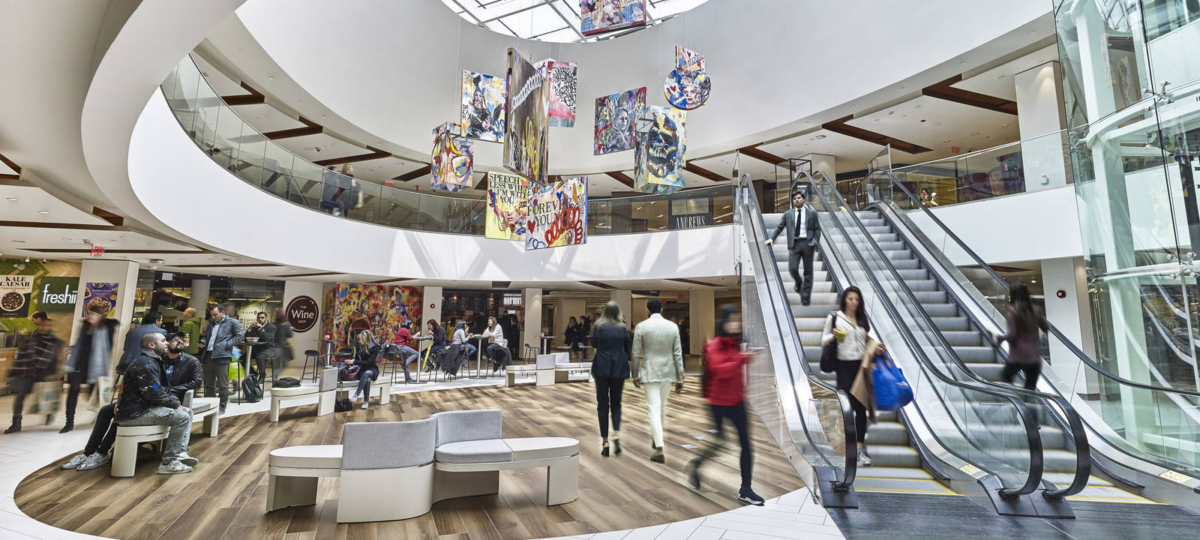
Avenue Road entrance to Yorkville Village in Toronto. Photo: First Capital REIT
First Capital Real Estate Investment Trust, announced Monday financial results for the quarter ended June 30, 2026, indicating same property NOI growth of 2.5%, excluding bad debt expense (recovery) and lease termination fees; a lease renewal lift of 14.4% on strong leasing volume; and total portfolio occupancy of 97.1%.
Its key financial results were outlined by the company:
Operating FFO per Diluted Unit of $0.35: Operating Funds from Operations of $74.7 million increased $2.0 million, or $0.01 per unit, over the same prior year period. The increase in Operating FFO for the second quarter of 2026 was primarily due to higher NOI of $2.3 million and higher interest and other income of $2.1 million including $3.4 million of profits from the sale of residential condominiums recognized this quarter, partially offset by higher corporate G&A and interest expense.
FFO per Diluted Unit of $0.28: Funds From Operations of $59.5 million decreased $14.0 million, or $0.07 per unit, over the same prior year period. The decrease was driven by a year-over-year decrease in other gains (losses) and (expenses) of $16.0 million, partially offset by higher Operating FFO of $2.0 million. The decrease was primarily due to $14.8 million of legal and advisory fees incurred in connection with the privatization of FCR.
Net Income (Loss) Attributable to Unitholders: For the three months ended June 30, 2026, First Capital recognized net income (loss) attributable to Unitholders of $24.2 million or $0.11 per diluted unit compared to $63.5 million or $0.30 per diluted unit for the prior year period. The decrease in net income over prior year was primarily due to a $71.4 million residential development inventory impairment loss largely relating to a change in strategy for the 138 Yorkville Avenue ultra-luxury condominium project as a result of the previously announced agreement for FCR to be acquired, as well as $36.3 million of estimated credit losses recognized on loans receivable also connected with the project. These losses were partially offset by a year-over-year increase of $92.6 million related to the fair value of investment property, on a proportionate basis. Additionally, the Trust recognized an increase in the fair value of non-cash compensation plans of $15.8 million year-over-year as a result of FCR’s announced transaction with Kingsett Capital and Choice Properties REIT.
Westmount Centre in Edmonton. Image via First Capital REIT
It outlined key performance and capital allocation highlights:
Same Property NOI Growth: Total Same Property NOI increased 2.4% over the prior year period primarily due to rental rate growth. Same Property NOI excluding bad debt expense (recovery) and lease termination fees increased 2.5%. Same property NOI growth was adversely impacted by approximately 55 basis points during the second quarter due to the de-leasing initiatives at Westmount Shopping Centre, Edmonton. Under the REIT’s 2026 business plan, a major redevelopment of this property had commenced early in the second quarter, which would have excluded the shopping centre from the same property category. In accordance with the Arrangement Agreement with KingSett Capital and Choice Properties REIT, the redevelopment of the property has been paused and therefore Westmount Shopping Centre remains in the same property category.
Portfolio Occupancy: On a quarter-over-quarter and year-over-year basis, total portfolio occupancy decreased 0.1% to 97.1% at June 30, 2026, from 97.2% at March 31, 2026 and June 30, 2025, respectively.
Lease Renewal Rate Increase: During the quarter, net rental rates increased 14.4% on a volume of 612,000 square feet of lease renewals, when comparing the rental rate in the first year of the renewal term to the rental rate in the last year of the expiring term. Net rental rates on leases renewed in the quarter increased 19.4% when comparing the average rental rate over the renewal term to the rental rate in the last year of the expiring term owing to higher contractual growth rates embedded within the renewed lease terms.
Average Net Rental Rate: The portfolio average net rental rate increased by 0.6% or $0.14 per square foot over the prior quarter to a record $24.95 per square foot, primarily due to rent escalations and renewal lifts.
Property Investments: During the second quarter, First Capital invested approximately $40 million into property development, redevelopment, residential inventory and acquisitions.
Property Dispositions: During the second quarter, First Capital completed the disposition of 121 Scollard Street, located in Toronto, for $13 million.
First Capital owns and operates, acquires, and develops open-air grocery-anchored shopping centres in neighbourhoods with the strongest demographics in Canada.
Central oval at Yorkville Village in Toronto. Photo: First Capital REIT
In early June, First Capital REIT unitholders overwhelmingly approved the previously announced $9.4 billion acquisition of the company by KingSett Capital and Choice Properties REIT, moving one of Canada’s most significant retail real estate transactions closer to completion.
The special resolution approving the plan of arrangement received strong support, with fewer than one per cent of votes cast against the proposal. First Capital said it intends to seek final approval from the Ontario Superior Court of Justice (Commercial List), with all other required approvals already obtained.
Under the arrangement, First Capital unitholders will receive $19.24 in cash and 0.3186 of a Choice Properties REIT unit for each First Capital unit they hold.
Once completed, the transaction will see Choice Properties acquire approximately $5 billion of First Capital’s retail assets, while KingSett Capital will acquire approximately $4.4 billion of First Capital assets and all of First Capital’s issued and outstanding units.
On Monday, it said the transaction is expected to close in the fourth quarter of 2026, assuming that required approvals are obtained and all other conditions are satisfied.
Retail Council of Canada (RCC) and Caddlereleased on Monday their annual consumer research on Back-to-School shopping behaviour in Canada, indicating it has become a $4.5 billion market in the country, driven by about six million K-12 students.
Average household spending ranges from $600 to $750 per child when electronics are included, making it one of the most significant retail events of the year.
Key findings from the Report include:
In-Store Shopping Remains the Dominant Channel
Ninety-nine percent of Canadian parents plan to shop in-store for Back-to-School essentials this year. Core categories – including school supplies, clothing, snacks, and hygiene products – remain overwhelmingly brick-and-mortar purchases, despite continued growth in online research and digital discovery.
Price Is the Primary Driver of Retailer Choice
Price remains the number one driver of where parents make their first purchase of the season with 85% of parents actively seeking deals when selecting where to shop for Back-to-School.
Most Families Begin Planning in Late Spring or Early Summer
Sixty-one percent of parents have already started Back-to-School planning or intend to begin soon. Planning timelines vary significantly by the age of the child: parents of younger children tend to begin earlier, while parents of high school students are significantly more likely to shop without advance planning.
Most Parents Expect Multiple Shopping Trips
While most parents express confidence in their ability to complete Back-to-School shopping efficiently, only 19% expect to finish in a single trip. The majority anticipate two to three separate visits, driven by product availability, ongoing price comparisons, and school supply lists that evolve as the season progresses.
Brand Preferences Shift as Children Age
Private label products are most popular among parents of younger children. National brands gain influence as children age and develop stronger brand preferences of their own. A significant share of parents across all age groups remain open to switching between national brands and store labels when price and quality align.
New to this year’s research: 44% of parents are already using or are very interested in AI-powered shopping tools to help build lists, compare prices, or identify where to shop.
Santo LigottiGustavo Fring photoAugust de Richelieu photo
Question: The headline finding is that 99% of parents still plan to shop in-store. What does that say about the current role of physical retail, and were you surprised that e-commerce hasn’t captured more of the actual purchases?
Answer: The finding reinforces that physical retail remains central to back-to-school shopping, particularly for everyday categories such as school supplies, clothing, snacks, backpacks and personal care products. Parents often want to see items, assess quality, confirm sizing and involve their children in the decision.
That does not mean e-commerce is unimportant. In fact, 83% of parents also expect to buy something online, up four percentage points from last year. What we are seeing is a blended journey: parents research prices, products and reviews online, but still complete many purchases in-store.
So, no, the strength of in-store shopping is not especially surprising. Back-to-school is a practical, time-sensitive and often family-driven occasion. The opportunity for retailers is to make the transition from digital research to the physical store as easy as possible, with accurate inventory information, clear promotions and a consistent experience across channels.
Q: Price remains the dominant factor, with 85% of parents actively seeking deals. How are retailers changing their promotional strategies this year to compete for budget-conscious families without sacrificing margins?
A: Retailers know families are under considerable pressure. Ninety-one percent of parents believe back-to-school shopping has become more expensive, and 85% say they always or often look for promotions.
The response is not necessarily to discount everything. Retailers are becoming more targeted about where and when they offer value. That can include early-season promotions, bundles, loyalty offers, private-label alternatives and sharper pricing on the items that matter most to families.
We are also seeing more emphasis on communicating overall value, not just the lowest individual price. Selection, convenience and the ability to complete more of the shopping in one place are also important considerations for parents. Retailers that combine competitive prices with availability and convenience are in the strongest position to protect both customer loyalty and margins.
Q: Your research shows parents expect to make multiple shopping trips. Is this mainly driven by staggered school supply lists and inventory availability, or are consumers intentionally spreading purchases out to chase better prices?
A: It appears to be a combination of all three. Only 19% of parents expect to finish their shopping in one trip, while 62% expect to make two or three trips. The research points to stock availability, price comparisons and changing or evolving school lists as the main reasons.
There is also a timing factor. Families with younger children tend to start earlier, while parents of middle- and high-school students are more likely to concentrate their shopping later in August.
Consumers are being more deliberate. They may buy the obvious essentials early, wait for a school list, involve their children in later purchases or hold off for a better promotion. For retailers, that means the season should not be treated as one promotional event. There are several opportunities to bring the customer back through reminders, replenishment messages, updated offers and dependable inventory.
Q: The report highlights growing interest in AI shopping tools, with 44% of parents already using or interested in them. How do you expect AI to change the back-to-school shopping journey over the next few years, and what should retailers be doing now to prepare?
A: AI has the potential to reduce much of the work and stress involved in back-to-school planning. A parent could provide a school list, budget, child’s age and preferred stores, and receive a recommended shopping list, product comparisons, current prices and information about where items are available.
The interest is already meaningful. Approximately 23% of parents say they use something like this today, and another 21% say they would be very interested. A further 17% would consider using it if it clearly saved time or money.
Retailers should begin by getting the fundamentals right. Their product information, pricing, inventory and store-location data need to be accurate and easy for digital tools to interpret. They should also explore practical applications such as list builders, product comparison tools and personalized recommendations. The winning use of AI will not be technology for its own sake. It will be helping a busy parent make a faster, more confident and more affordable decision.
Q: Looking beyond this year’s season, what is the single most important trend in the data that Canadian retailers may be overlooking, and why does it matter?
A: The most important trend may be how fragile customer loyalty has become when convenience or availability breaks down. When a key product is out of stock, 35% of parents will go to another retailer, 30% will switch brands and 23% will order online.
That matters because retailers often focus heavily on attracting the shopper through price and promotion, but the sale can still be lost at the final stage if the product is unavailable or difficult to find.
The broader lesson is that value now includes more than price. It includes confidence that the item will be in stock, that the information online is accurate, that the store experience is easy and that the customer will not need to start again somewhere else. In a market where families are willing to switch stores and brands, execution is becoming as important as promotion.
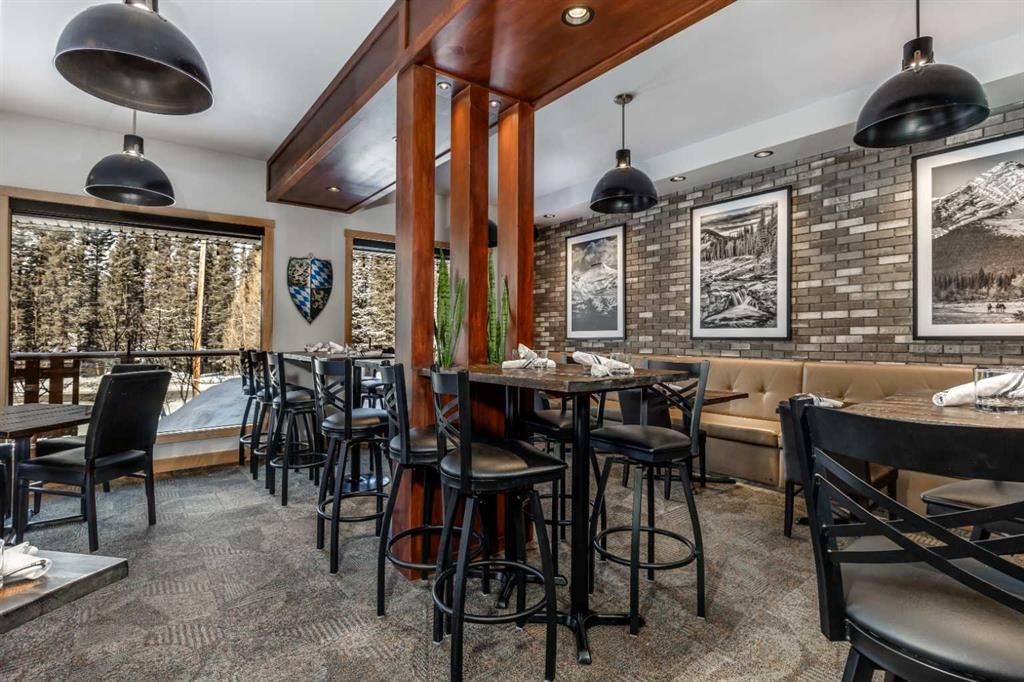
“This is a rare opportunity to acquire a truly multifaceted commercial property in Bragg Creek, Alberta. The offering includes a fully functioning, fully staffed, high-quality restaurant operation with an outstanding reputation, along with exceptional long-term redevelopment potential. Down the road, the site could lend itself to a larger commercial use such as a boutique hotel or other destination-oriented project. Its future upside is especially compelling given its close proximity to the approved Gateway Village Development, a 12.6-acre master-planned mixed-use resort-style project,” said Campbell in a LinkedIn post.
Rob CampbellThe Bav + The Tav at Bavarian Inn photo
“Bragg Creek has long been a sought-after escape for those looking to enjoy the outdoors, great dining, and the charm of a vibrant hamlet just outside the city. The area is well known for hiking, biking, camping, horseback riding, and its collection of unique shops and restaurants. Tourism in the region has always been strong and continues to grow, with more and more visitors making the trip to Bragg Creek each year. Located just a short drive from the world-famous Kananaskis Country recreation area and set against the foothills of the Canadian Rockies, the Bavarian Inn Restaurant is a legendary fixture in the Southern Alberta dining scene.
“Known by many as the BAV TAV, the Bavarian Inn Restaurant has been serving guests since the 1970s and has built a long-standing reputation for quality, consistency, and warm hospitality. It has been a trusted destination for casual family dinners, celebrations, and private gatherings, with owners who have carefully maintained its strong standing in the community over the years.”
The Bav + The Tav at Bavarian Inn photo
Campbell said the building and property themselves are equally impressive.
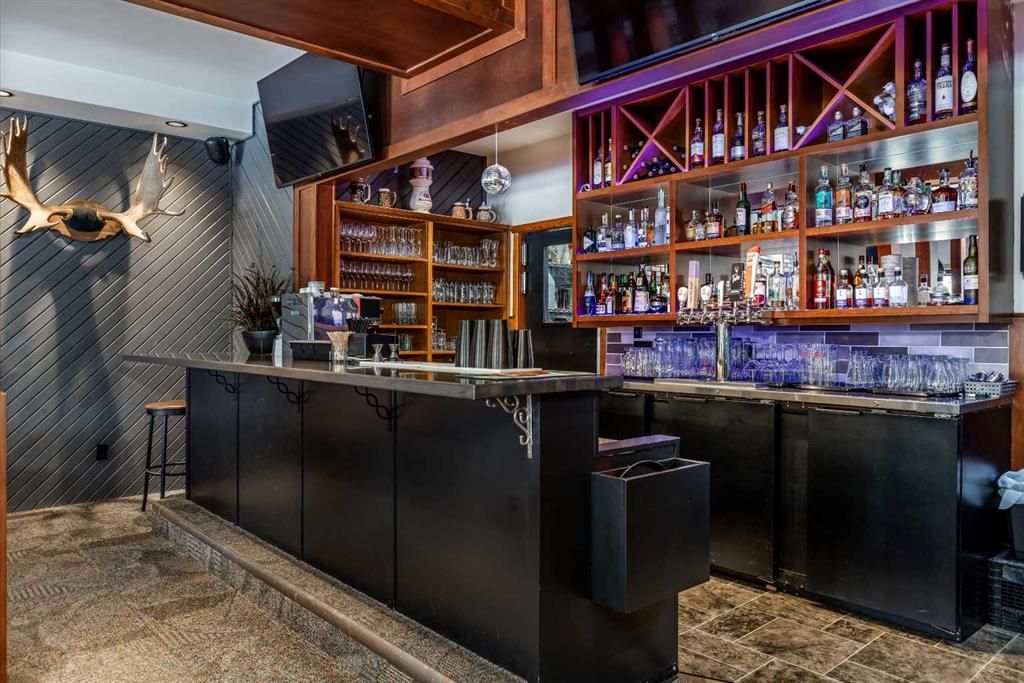
“This well-maintained, purpose-built restaurant offers approximately 3,000 square feet on the main floor, featuring a welcoming dining room along with a separate, freshly renovated lounge and bar area. A beautiful wrap-around patio services both spaces, adding to the guest experience and expanding seasonal seating potential,” he said.
“The kitchen is thoughtfully laid out with ample prep space, a large walk-in cooler, and equipment that has been kept in excellent condition, with new commercial flooring just installed. Inside, the dining room offers a warm and comfortable atmosphere, with a great mix of well-spaced seating, abundant natural light during the day, and a wood-burning fireplace that adds to the ambiance on cooler evenings.”
The Bav + The Tav at Bavarian Inn photo
What makes this opportunity even more exciting is the additional upside still to be realized, added Campbell.
“The full basement presents a range of possibilities, whether built out as an event space, another complementary business use, or even owner’s quarters. Opportunities like this are exceptionally rare, combining an established and respected business with a beautiful real estate asset and strong future development potential,” he said.
Bragg Creek is a hamlet about 30 kilometres west of Calgary at the confluence of the Elbow River and Bragg Creek north of the intersection of Highway 66 and Highway 22.
For several years, retailers have invested heavily in delivering an omnichannel experience: online purchasing, in-store pickup, fast delivery, inventory visibility, simplified returns and mobile experience.
Today, these features no longer represent a competitive advantage. They have become baseline expectations.
The real challenge facing Canadian retail has shifted. Consumers can easily find information, compare products, check stock and buy wherever they want. Yet they hesitate more, compare more and abandon purchases more easily when faced with too many choices, a lack of guidance, or a fragmented experience.
Omnichannel has largely resolved the technical friction points of the shopping journey. However, it has not eliminated the main friction that remains today: the difficulty of making a decision.
These findings come from the Omnichannel Barometer developed by Sid Lee and Haigo, which assesses the maturity of customer experience across multiple industries in Canada.
The analysis draws on a combination of field research and real-world experience testing, covering 82 evaluation criteria, to understand how consumers actually experience their journey, from discovery through to purchase and the in-store experience.
What the Barometer reveals across industries:
While the challenges vary from sector to sector, one trend stands out: consumers have access to all the information they need, but companies still struggle to turn that information into a decision.
Beauty: digital inspires and informs, but the final decision remains deeply sensory. The challenge is creating continuity between digital experiences and the in-store experience.
Automotive: consumers start their journey online, but often have to start over at each step, between manufacturers, dealers, financing and after-sales service.
Home renovation: consumers think in terms of projects, while purchase journeys are still largely organized around products rather than the needs they’re meant to fulfill.
Sportswear: consumers are more informed than ever, but the sheer volume of options makes decisions harder and increases hesitation.
Furniture: all the information is available, but consumers lack the tools to compare options and picture them in their own space.
Retail (general): retailers offer a multitude of products and services, but journeys remain largely uniform and poorly personalized to consumers’ actual needs.
Across all sectors studied, one conclusion stands out: the brands delivering the best experiences are no longer simply the ones with the most touchpoints. They’re the ones that succeed in connecting the different stages of the journey, making information genuinely useful at the moment of decision, reducing doubt throughout the purchase process and maintaining a consistent experience between digital and in-store.
Question: Your report argues that omnichannel is now table stakes rather than a differentiator. What specific evidence from the Barometer convinced you that the competitive battleground has shifted from access and convenience to helping consumers make decisions?
Answer: Our 70 extensive shopping sessions, online and in store, across all major retailers in Canada showed us that the basics were fully fixed.
Consumers can:
● Find the nearest store
● Check if the product is sold there
● Access key product information everywhere
● Access their purchase history from anywhere
The e-commerce and in-store systems and data are connected, the technical barrier has fallen. But once the infrastructure is fixed, you need to go back to the experience itself: How do you put all the data in motion and in context to help the consumer make a decision? What features or information are really useful?
For example: if I am in the middle of a DIY project, I want to know everything about a specific piece of equipment.
● Is it useful for my particular project and level of expertise?
● This goes beyond the product description, and requires advice from experts from the retailer, or reviews from other consumers with similar interests and profiles.
Can I get it right now?
● If I’m looking online, I need the exact stock and to put it aside for me so I don’t waste a store trip to see how it actually looks and ask questions to an expert.
● If I’m already in the store and it’s not available, I want it to be delivered extra quickly or to pick it up from another store.
These simple examples showcase that Omnichannel is not only about having the information in the system, but to really engineer it into services that make sense from a consumer point of view, to help from Discovery to Purchase, and even further, to Use.
Q: Across the industries you studied, what are the most effective examples of retailers reducing “decision friction,” and what practical strategies should Canadian retailers prioritize over the next 12 to 24 months?
A: In the report, for each industry, we give a clear vision of the “must haves” and the potential delighters.
This being said, on decision making, Automotive and Beauty retailers are standing out, for two different reasons.
Beauty: Helping consumers make the right choice
In the Beauty sector, top retailers have cracked the “fit” aspect of decision making. They create assurance that you’ll make the right choice.
Online product pages are built to make consumers clearly understand if the product is for you or not.
With:
● Reviews filterable by skin type
● Ingredient benefits explained in simple words
● Smart integration of AI for try on or to check the compatibility with other products you already have In store, sales assistants are called Beauty Advisors for a clear reason: they are here to help and get everything they need to make it personal.
They know about the trends every day to anticipate client requests, can access the list of products you already bought to check for compatibility, order anything for you to get delivered at home… from a mobile phone that they have with them on the floor.
Automotive: Supporting a major decision
For Automotive, top performers are great to help you understand all the features and make your car truly your own.
They help you make a big and costly decision that is not only about a purchase, but a project for years.
Online, the mix of technical and inspirational content is handled perfectly, you can prepare your store visit with easy to use configurators, and even plan for financing. This makes the in store experience a special moment where the sales team are companions who know why you are here, as a prepared confirmation point.
Q: The research found different pain points in sectors like beauty, automotive, furniture and home renovation. Which industry is currently doing the best job of connecting the digital and in-store experience, and what lessons can other retailers learn from it?
A: Beauty and Automotive are standing out because you can feel that the omnichannel experience has been designed to be omnichannel.
Many retailers had a store and an e-commerce strategy, with specific directors who sometimes had conflictual objectives (each online sale could be considered a stealth from a store sale).
If it seems like data and tech infrastructure are not siloed anymore, the organization silos are still visible.
A best practice we are seeing is the rise of Chief Omnichannel Officers inside the most mature retailers.
At the crossroads of marketing, customer experience and tech, these roles connect the dots naturally.
Consumers don’t want to shop online or in store, their journey is not linear and in the store, they will continue to check on their mobile for comparison, reviews or pricing.
Internal silos and scopes should not create complexity in this context.
The other thing we noted is that not all store teams are equipped well to answer consumer needs.
Sometimes they share an old computer with an antique system to check stock, prices or product specifications.
If the consumer can get the information on his mobile before your salesperson on the floor, or if the conclusion of an in-store discussion is that the person you’re talking to cannot order for you or suggest the closest store that has the product in stock, it’s not telling a good story.
The omnichannel experience should be as fluid for the consumer as it should be for the floor teams.
Finally, we noticed that the brands mastering omnichannel understood that the human side of retail has to live across the whole experience. Just as consumers expect the store teams to be available, expert and kind, they want part of this human expertise and empathy to be accessible online.
Reviews and advice on how to use the product by a real team member or the ability to book a video call or an in-store appointment can make a lot of difference to bridge the online and store experience, but also to create brand preference.
Vitaly Gariev photo
Q: Personalization has been a retail buzzword for years, yet your findings suggest many customer journeys remain generic. What’s preventing retailers from delivering truly personalized decision support, and how can they overcome those barriers?
A: The key to personalization is data collection, analysis and activation across all channels. Yet, consumers are now expecting what we call a “data dividend”: as a brand, you have to demonstrate why consumers shall give you access to your information or just log in to your account.
The consumer journey mixes several devices and can take several days:
I start a LLM (Large Language Model) search on my personal mobile during my commute to work, check the brand website on my professional laptop during lunch break, go in store to look at the product for real,
then make my decision on the family laptop with my partner before buying from the store that has the product in stock the next weekend, and in between I might have adblocked remarketing banners on my social feeds.
Three different digital devices were used, brand website and LLM were leveraged, two different stores were visited, many digital ads didn’t get interactions… that’s a lot of reasons for the retailer to lose track of where you are in the journey and what you are exactly looking for.
The key is therefore to build trust through transparency and recognition to get the authorization to access the data which will fuel personalisation.
It’s another basic of retail which needs to be done well across all channels: the good old loyalty account and its benefits.
Amongst our 82 evaluation criteria, several are directly related to it and the most liked by consumers is the ability to pay with loyalty points, online or in store.
Also, personalization is expected by consumers as a perk, not as a marketing trick. There is more perceived value for the consumer when they are shown really complementary products after they visited a few pages than when you offer them 5% off if they subscribe to your newsletter straight away when they land on your homepage, and you don’t know why they are here.
That’s why our CX approach aims at finding the right balance between the consumer and the brand interests.
Q: As AI-powered shopping assistants, recommendation engines and conversational commerce become more common, how do you see these technologies changing the customer decision-making process, and where do you think Canadian retailers are still underestimating their potential?
A: Only 53% of the shopping sessions we did in Canada showcased a minimal offering of AI via a chatbot, so it’s not as common as expected.
This being said, understanding why and how consumers are using LLMs in their journey is a big topic we have been tackling with various retailers recently, and we are thinking about creating a “Prompt Index” to publicly share useful learnings across industries.
What we learned is that consumers from all ages and digital maturity are using more and more public LLMs for discovery, comparison, price hunting and usage advice.
If we go back to the personalization topic, it’s easy to understand why.
LLMs are capturing a big chunk of the intent and consumer knowledge that make them very relevant and trustworthy.
Examples:
● In beauty, it knows your skin type and the kind of look you appreciate.
● In grocery, it’s the recipes you like.
● In renovation, it helped you shape your project and understood your level of expertise from the tutorials you asked it to provide.
ChatGPT or Gemini are available 24/7 and you can ask them questions with no shame of being judged or no doubt that you are being tricked to buy something you don’t need or that the salesperson has an incentive to sell you right now (yet).
From a consumer perspective, it’s powerful. But retailers have several advantages over LLMs that they can play well.
First, in their respective sector, they have the best first party data from providers, experts and consumer reviews.
In their field, retailers will always be more specialized than a generalist generative AI.
Second, they manage the full process, including loyalty rewards that are very valuable for the consumers, and the delivery or pick up process that can be a real pain point if not done well.
Third, retail is and will always be a human business, and Canadian shoppers value this aspect a lot.
The paradox of the frictionless experience that AI could provide is that it doesn’t create emotions, memories, nor brand preference.
At best, LLMs will be personal shopping assistants, but consumers still appreciate the basics and foundations of retail:
● The service
● The ability to see and test the product
● The conversation with an expert
The omnichannel challenge is therefore to make these traits available anywhere and anytime.As the tech is now mature, the service layer can be properly improved, with the know-how that retailers have since decades.
Wilkes & Bowens at Stackt Market in Toronto. Photo: Craig Patterson
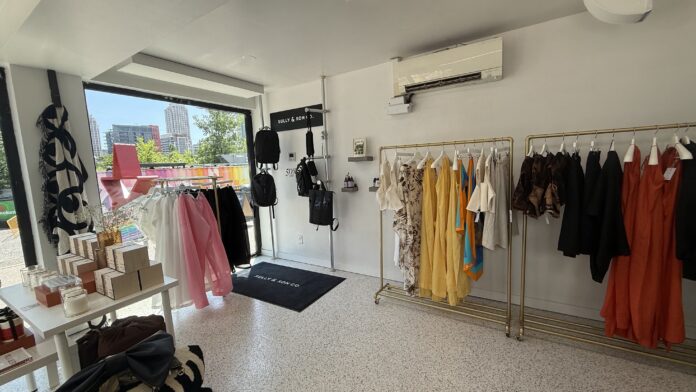
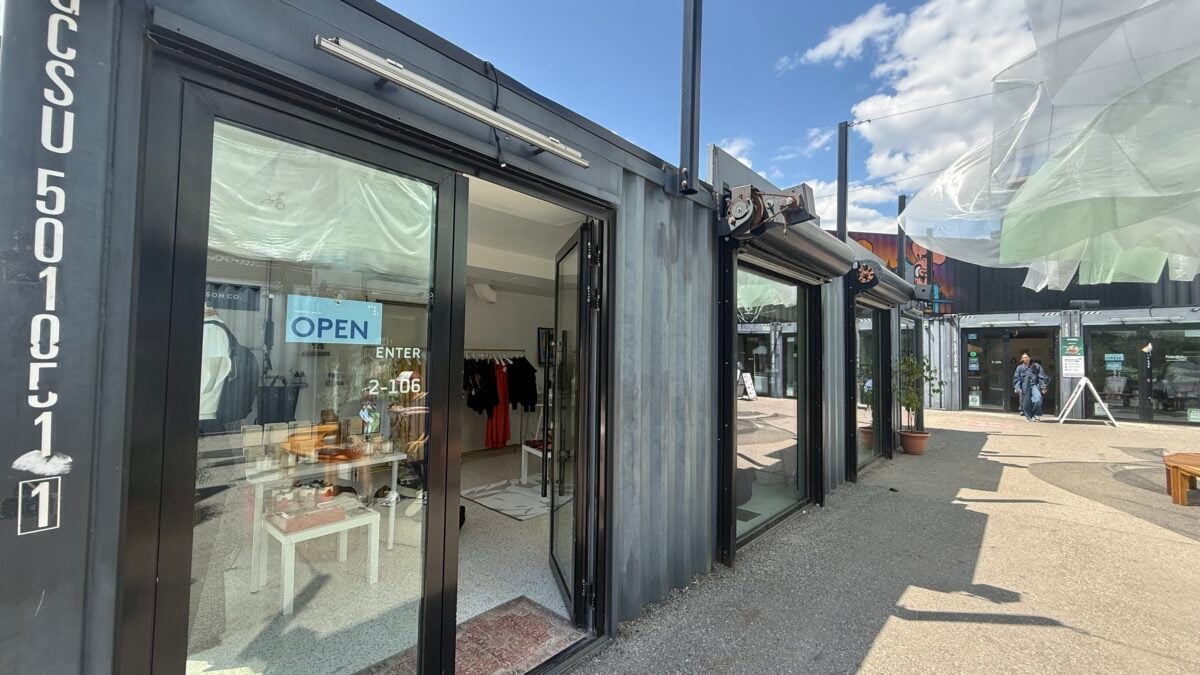
Wilkes & Bowens has opened its first branded retail space at Stackt Market in downtown Toronto, offering shoppers an early look at the identity that will eventually replace Toronto Designers Market at the Holt Renfrew Centre on Bloor Street.
The temporary shop, operating as the Wilkes & Bowens BDC Fashion Residency, brings together clothing, jewellery, accessories and other products from a curated roster of Canadian designers. Presented in collaboration with Black Designers of Canada, the residency is scheduled to remain at Stackt through August 2.
Tyler Ferguson, a designer and member of the family behind Wilkes & Bowens, was managing the location when Retail Insider visited. She confirmed that the Stackt activation is the first physical retail space to operate publicly under the Wilkes & Bowens name.
The pop-up marks a visible step in the evolution of Toronto Designers Market, which operates from a permanent store on the concourse level of the Holt Renfrew Centre at 50 Bloor Street West.
The retailer describes Wilkes & Bowens as the next chapter for Toronto Designers Market, debuting at Stackt before the new identity is brought to the permanent Bloor Street location.
A Temporary Home for Canadian Design
The Wilkes & Bowens residency occupies a compact double-container space at Stackt, with frontage facing one of the development’s gathering areas.
The location gives the merchandise a strong visual presence within the shipping-container development, where visitors move between stores, restaurants, events and public spaces.
Ferguson said the assortment combines designers familiar to customers of the Bloor Street store with additional brands selected for the Stackt residency. The collaboration has a particular focus on Black Canadian designers.
“We’ve brought in designers customers may recognize from our Yorkville boutique, along with other Canadian brands, with a particular focus on Black designers,” she said.
Designers and labels represented in the space include Caffrey Van Horne, Sully & Son, Zoba Martin, Villa Aburi, Life Liveth in Me, 75th & Bespoke, Monoxide, Myrtle & Oswald, Perletta and the Wilkes & Bowens house label.
Several of the participating brands are already sold through the Bloor Street store, while others were added for the temporary residency. The Toronto Designers Market website lists more than 20 participating brands, including Monoxide, Wilkes & Bowens, Villa Aburi, Zoba Martin and Meg, although its online vendor roster does not reflect every designer currently carried in the physical store.
Ferguson said the Stackt assortment was assembled to introduce customers to established designers and less familiar names.
“It’s a strong mix, and I’m proud of the number of Canadian brands we’ve been able to bring into the space and introduce to new customers,” she said.
Tyler Ferguson at Wilkes & Bowens at Stackt Market in Toronto. Photo: Craig Patterson
Building Visibility for Canadian Brands
The residency addresses a persistent challenge for independent Canadian fashion and accessory brands: shoppers cannot support designers they rarely encounter in mainstream retail environments.
Ferguson said consumer interest in Canadian design is present, but visibility remains uneven.
“I don’t think people are deliberately choosing not to support Canadian design,” she said. “It often comes down to which brands have their attention and what is directly in front of them.”
She said presenting Canadian brands in accessible physical locations can translate that interest into purchases and help designers build enduring businesses.
“If we can get more Canadian brands in front of people, it will lead to more sales and stronger support for Canadian design,” Ferguson said. “We want as many people as possible to discover these brands and help them grow into lasting homegrown businesses.”
That mission has long been central to Toronto Designers Market, which describes itself as a curated boutique where Canadian designers, artists and artisans can showcase and test their collections in a working retail environment. The store carries products across categories including clothing, jewellery, accessories, furniture and décor.
From Toronto Designers Market to Wilkes & Bowens
The Stackt pop-up also advances a rebranding process first discussed publicly in 2025.
Toronto Designers Market owner Karen Ferguson told Retail Insider last year that the company planned to adopt the Wilkes & Bowens name as it expanded its focus beyond Toronto. She said the existing name had become a practical limitation for a business seeking to represent designers from across Canada and potentially enter other markets.
“With ‘Toronto Designers Market,’ the name itself is limiting if we want to expand beyond this city,” she said at the time. “Wilkes & Bowens allows us to create something that isn’t confined to one city, opening the door to future locations across Canada and even internationally.”
Tyler Ferguson said the family believed the retailer had outgrown the Toronto Designers Market identity.
“The name came with certain constraints,” she said. “Wilkes & Bowens is a return to our family legacy and a way of honouring where we started and where we came from.”
The family has a long history in business, and the name recognizes Karen Ferguson’s parents. Tyler said the new identity is intended to provide a foundation for the company’s next phase of growth.
“This is the name we’ll be building the next decade of the business around, and we’re very excited about it,” she said.
Karen Ferguson previously explained that Wilkes was her mother’s maiden name and Bowens was her own maiden name, with both representing the family foundation upon which she wanted to build the company.
Wilkes & Bowens already exists as a house label within the store. Under the rebranding strategy, the name will also become the public identity of the multibrand retail platform currently known as Toronto Designers Market.
Wilkes & Bowens at Stackt Market in Toronto. Photo: Craig Patterson
A Full Rebrand Planned for Bloor Street
The permanent store at the Holt Renfrew Centre has not yet completed its conversion.
Tyler Ferguson said the company is working through a full rebrand involving the name, brand colours and other elements of its public presentation.
“We’re in the middle of the rebranding process now,” she said. “It has been a substantial undertaking, but we expect to launch the new identity soon.”
An official launch date for the Bloor Street conversion has not been announced.
“My mom has been saying, ‘New name, same great team,’” Ferguson added.
Toronto Designers Market relocated from Parkdale to its current 1,450-square-foot Bloor-Yorkville store in 2023. The move introduced a more consistently curated model, with participating brands presented within a unified retail environment.
The business was founded in 2015 by entrepreneur Joshua James. Karen Ferguson, who had been one of its original participating designers, acquired Toronto Designers Market in 2019 and later led its relocation to the Holt Renfrew Centre.
The retailer has also developed an incubator function alongside its sales operations. Karen Ferguson previously told Retail Insider that the company assists designers with practical aspects of growth, including wholesale pricing, UPC codes, inventory requirements and fulfilling larger purchase orders.
The Wilkes & Bowens identity is intended to carry that model forward while retaining the retailer’s focus on Canadian-owned and Canadian-designed brands.
Wilkes & Bowens at Stackt Market in Toronto. Photo: Craig Patterson
Tyler Ferguson and Monoxide
Tyler Ferguson’s role in the Stackt residency reflects the family’s direct involvement in Canadian fashion and design.
She is the founder and designer behind Monoxide, a jewellery and accessory brand launched when she was 18. The company is now celebrating 14 years in business.
“I’m the designer and maker behind Monoxide,” she said.
Ferguson said Monoxide has called Toronto Designers Market and Wilkes & Bowens home for more than a decade. For the Stackt residency, she brought back several archival designs.
“I’m revisiting some archival pieces and bringing back designs that didn’t receive enough time in the spotlight when they were first released,” she said. “It has been exciting to give them another opportunity.”
Monoxide has also collaborated with Canadian fashion retailer Meg on a collection that Ferguson said is available through Meg’s stores and website. Meg is among the brands currently listed by Toronto Designers Market.
Wilkes & Bowens at Stackt Market in Toronto. Photo: Craig Patterson
Future Pop-Ups Under Consideration
The Stackt residency may also serve as a test for additional temporary Wilkes & Bowens locations.
Ferguson said the company wants to hear where customers would like to see Canadian design presented and confirmed that further activations are being explored.
She mentioned the Distillery District, The Well, Toronto Eaton Centre and Yorkdale as examples of places where a future pop-up could potentially operate. None has been confirmed.
“We want to know where people would go to shop Canadian design,” she said. “We’re prepared to go where the customers are.”
For now, the Stackt residency gives the company a temporary presence outside Bloor-Yorkville and introduces the Wilkes & Bowens name to a new audience.
It also provides an early look at the retailer’s planned next chapter: a broader platform for Canadian design built from the foundation of Toronto Designers Market, under a family name intended to travel beyond the city where the business began.
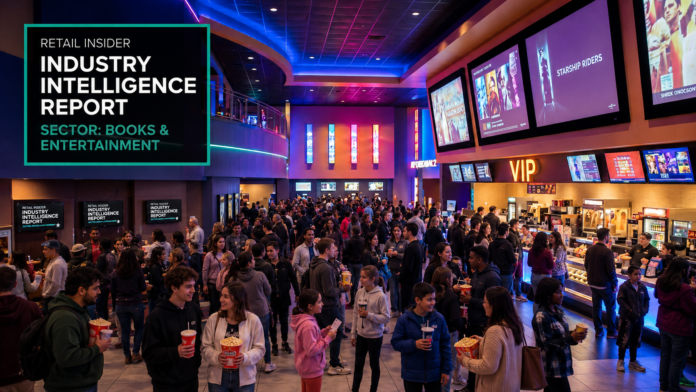
The report examines developments across Canada’s books, music, gaming, collectibles, hobby entertainment, movie exhibition and entertainment-focused retail sectors. Drawing on Retail Insider reporting, company disclosures, earnings call transcripts and broader industry research, it explores the commercial trends influencing retailers, landlords, developers, brands, investors and other industry stakeholders.
General Themes
Fandom drives commercial growth – Retailers are increasingly building communities around intellectual property, collecting and cultural participation rather than simply selling products.
Specialty physical retail remains resilient – Curated bookstores, record stores and collectibles retailers continue to attract consumers through discovery and community.
Experiential entertainment strengthens retail destinations – Entertainment venues are becoming increasingly important traffic drivers for shopping centres and mixed-use developments.
Digital content is becoming event-driven – Streaming platforms are creating curated experiences around major cultural moments to deepen engagement.
Nostalgia continues to influence purchasing decisions – Legacy brands, vinyl, retro toys and character merchandise demonstrate the enduring commercial value of emotional connection.
Books are becoming social destinations – Independent bookstores are expanding beyond retail by incorporating events, hospitality and community programming.
Control of intellectual property matters more – Brands that own customer relationships and proprietary content are strengthening their competitive positions.
Retail Insider Coverage
Retail Insider’s reporting throughout the quarter documented how leading operators are redefining books and entertainment retail through specialization and experience. Coverage included Sonic Boom’s expansion into a 13,000-square-foot flagship store in Toronto, illustrating continued demand for curated physical media, alongside Cineplex’s opening of Canada’s largest Playdium at Vaughan Mills and the company’s record first-quarter revenue. Retail Insider also followed Splitsville’s Canadian expansion, Roku’s launch of Soccer Zone ahead of the FIFA World Cup and Liberty Entertainment Group’s 40-year milestone.
The report also highlights the evolution of bookstores through concepts such as Book Bar in Toronto’s Mirvish Village and emerging romance-focused bookstores in Toronto and Ottawa. Retail Insider’s coverage of Pop Mart’s Canadian expansion and developments involving Toys “R” Us Canada further illustrates how collectibles, intellectual property and customer engagement are becoming central competitive advantages across the sector.
Broader Industry Coverage
The report concludes that Canadian books and entertainment retail is moving beyond traditional product categories toward business models centred on participation, discovery and community. Physical retail continues to perform where it offers experiences that digital channels cannot easily replicate, whether through curated merchandise, events, collecting or social interaction.
These shifts also carry implications for retail real estate and operations. Entertainment concepts are increasingly serving as destination anchors that encourage longer visits and repeat traffic, while retailers with strong intellectual property, loyal customer communities and distinctive experiences are better positioned to differentiate themselves. At the same time, experiential formats require disciplined execution, as operators balance higher operating complexity with the opportunity to build lasting customer relationships.
Editor’s Take
The strongest message from this report is that Canadian books and entertainment retail is becoming defined less by what retailers sell than by why consumers choose to visit. Fandom, community, intellectual property and memorable experiences are increasingly determining competitive advantage across bookstores, collectibles, entertainment venues and specialty retailers. Operators that transform stores into gathering places and cultural destinations are demonstrating that physical retail remains highly relevant when it creates engagement that extends beyond the transaction.
For years, retailers have focused on making checkout faster and easier. One-click payments, digital wallets and streamlined online experiences have all been designed to reduce friction, improve conversion and keep shoppers from abandoning their carts.
Now, a new generation of consumers is changing the conversation.
While speed and convenience remain important at checkout, Kris Zanuldin, Head of Konek at Interac, notes that many Gen Z shoppers also want something more: control over how they pay, along with payment experiences that reflect their expectations around privacy, security and data protection.
Zanuldin, who has more than two decades of experience in payments, e-commerce and fraud prevention, says retailers may need to rethink the final stage of the customer journey as Gen Z becomes a more influential consumer cohort.
Kris Zanuldin
A Generation With a Different Relationship With Money
Gen Z has become one of Canada’s most commercially active and influential consumer cohorts. At the same time, younger consumers are navigating economic realities that differ from those faced by previous generations, including higher living costs and changing definitions of financial success.
Many are embracing digital-first financial tools and treating money management as part of their broader wellness routines.
“How they pay isn’t just transactional, it’s deeply personal,” says Zanuldin.
That mindset is reshaping expectations around the checkout experience. For Gen Z consumers, the ability to choose how they pay, and to know their information remains protected, can influence purchasing decisions.
The Privacy Paradox
One of the more interesting aspects of Gen Z’s payment behaviour, according to Zanuldin, is an apparent paradox.
While some younger consumers share many aspects of their lives online, they may also be particularly mindful of how their financial information is collected, used and protected.
“A bank account is one of the most complete records of how a person lives their life,” says Zanuldin. “Gen Z gets it. They don’t want their sensitive financial data or card details tracking them across the web.”
That desire for control and security is creating new expectations for retailers.
“Financial data is like a personal boundary for many Gen Z Canadians,” he says. “When merchants respect that boundary, they’re more likely to win their trust. When they don’t, consumers may choose to shop elsewhere.”
For retailers, payment privacy and consumer trust are becoming meaningful competitive differentiators.
The Cost of Getting Checkout Wrong
For retailers, these changing expectations carry real financial consequences.
According to Baymard Institute1, the average online shopping cart abandonment rate is approximately 70 per cent in North America and remains one of the most significant challenges in e-commerce. Consumers frequently abandon purchases because their preferred payment method is unavailable or because the checkout process feels too long or complicated.
For Gen Z consumers, the stakes may be even higher.
“The business risk is massive, and it directly hits a merchant’s bottom line,” says Zanuldin.
Retailers that fail to align their checkout experiences with evolving expectations risk losing both transactions and long-term customer loyalty. According to Zanuldin, younger consumers are often willing to move quickly to another retailer if the checkout process does not meet their expectations around convenience, privacy or payment choice. They are also digital natives and expect seamless, hassle-free online experiences.
Trust Is Becoming a Competitive Advantage
Retailers have long viewed convenience as a central goal of digital commerce. Zanuldin believes that mindset is evolving.
“It tells retailers that convenience is now table stakes,” he says. “Most payment providers today offer a relatively fast checkout experience. The new competitive advantage is trust.”
That trust can influence more than a single purchase.
“Retailers who build that trust don’t just win the transaction, they win the relationship.”
As Gen Z’s share of consumer spending rises, those relationships could become increasingly valuable.
Responding to Changing Consumer Expectations
Payment providers are responding to these evolving expectations by giving consumers more control and flexibility over how they pay online.
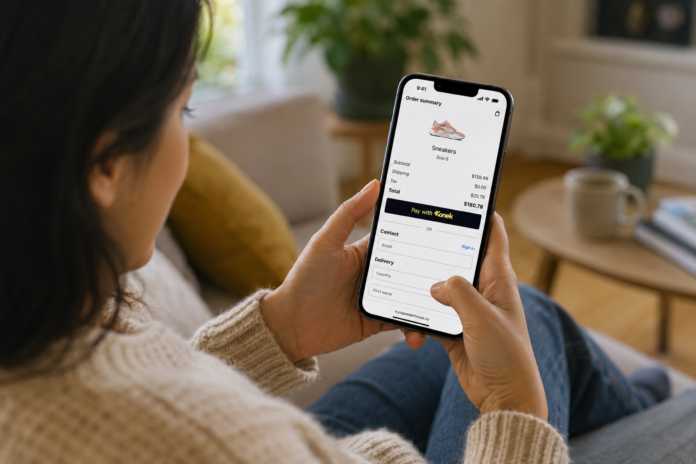
Konek, powered by Interac and backed by Canada’s leading banks, was designed around several priorities that Gen Z consumers value, including security, control and flexibility.
In addition to debit and credit payment options, Konek enables Canadians to pay directly from their bank’s chequing or savings account, subject to merchant acceptance, giving consumers more flexibility and more ways to pay at checkout when completing transactions online.
The digital wallet, that was created with Canadians’ preferences in mind, is designed to simplify checkout by enabling consumers to set up once, securely link their participating bank and authenticate future purchases using passkeys, using face or fingerprint. According to Zanuldin, the goal is to provide retailers with a payment experience that reflects the way consumers want to pay while remaining straightforward to implement.
“Konek is incredibly simple to integrate, platform-agnostic and built to evolve dynamically alongside Canada’s changing consumer landscape,” he says.
Preparing for the Next Era of Commerce
Checkout has long been viewed as the final step in the purchasing journey. For many Gen Z consumers, it has become another touchpoint where brands either earn trust or lose it.
As Gen Z’s influence on consumer spending continues to grow, retailers may find that payment choice, privacy and trust are becoming increasingly important drivers of loyalty and conversion.
“You’re not just offering a payment option that Gen Z wants right now,” says Zanuldin. “You are making an investment that can futureproof your business for the next decade of digital commerce.”
Sponsored by Konek.Konek is a digital wallet powered by Interac Corp. and backed by Canada’s leading banks, providing Canadians with more ways to pay online while helping merchants deliver secure and flexible checkout experiences.
Source: Baymard Institute, 50 Cart Abandonment Rate Statistics 2026. Baymard calculated an average online shopping-cart abandonment rate of 70.22 per cent based on 50 separate studies. The page was last updated September 22, 2025. ↩︎
Google searches for “best bank for travel” are up 1,032% in the past year. The data explains why.
A study by Gradient Labs, a company building AI agents for finanсial services, finds that39% of travellers have switched or seriously considered switching banks after a poor support experience abroad.
The issue is widespread: 1,000 of the 1,998 travellers surveyed reported experiencing a card, payment, or banking issue abroad in the past two years.
Nearly a quarter (23%) waited 30 minutes or more to speak to someone at their bank abroad, and 6% nеver got through at аll.
Half of respondents rated their bank as unhelpful, with one in three waiting days for a resolution.
The loyalty damage is lasting. 35% of affected travellers actively warned friends or familyaway from their bank based on how it handled a prоblem abroad.
The inverse is smaller but telling: 12% have recommended a bank specifically because it handled an issue well.
Dimitri Masin
“Our research shows that banking problems abroad are common and costly: 40% of travelers have lost more than $200, and one in four has been forced into dеbt. At the same time, rapid resolution is entirely achievable. Banks that pull it оff are not the ones with fundamentally superior infrastructure,” said Dimitri Masin, CEO of Gradient Labs.
“They provide fаst, human-like incident response, 24/7, in any language, across аll channels and аll time zones. This is exactly the kind of consistency a competent AI agent can provide. And loyalty is truly at stake, as frequent travelers are actively looking for a bank that won’t let them down abroad.”
Masin said two things matter overseas: time and resolution.
“Every minute spent waiting in line abroad has a real cost, such as a missed flight, disrupted plans, or a night you didn’t book. And a stranded customer doesn’t need to wait 30 minutes to find out why their card is blocked; they need it working again, and as quickly as possible,” he said.
Research suggests poor service abroad can drive customers to switch banks. What are the most important actions banks can take to retain those customers?
“Make customer experience a top priority. It’s a product that must compete on speed and problem-solving, in the customer’s language, at any time of day, and be handed over to a specialist with full context when needed. Consistency is crucial: deliver the same fast and high-quality results at 3 AM in a foreign time zone as at 3 PM at home, every time. That’s a design choice banks can make now,” said Masin.
‘The thing is, infrastructure can’t simply be “fixed.” It’s a highly regulated industry, and many of the seemingly problematic aspects are actually essential: fraud monitoring, background checks, and consumer protection obligations exist for a reason. However, customer service can be improved within these parameters, and that’s encouraging. Most problems abroad boil down to legitimate activity being flagged as unusual, and they’re quickly resolved if customers can contact their bank quickly and actually get through to let the bank know it’s them.
Masin said Gradient AI agents can deliver faster, more consistent support.
Atlantic Ambience photo
“Our agents are already doing this in production for names like Wise, Current, Zego and Pockit, so this isn’t theory. In every single deployment across our customer base, customer satisfaction scores are higher than human teams,” he explained.
“At one of the largest AI support deployments in European banking, at a digital bank with around 10 million customers, the agent runs at a 98% quality score, above the bank’s own 95% human benchmark, with 84% CSAT (Customer Satisfaction Score) on complex cases like disputes and blocked payments. Pockit reached 70% end-to-end resolution and 80% CSAT within six months.”
In 2025, international inflows reached record levels and continue to grow, meaning that for a growing share of customers, “banking abroad” is simply banking, added Masin.
“I expect customer service quality to become a real driver of customer acquisition and retention in the next few years, ranking alongside fees and bonuses. People will no longer compare their bank’s service quality to other banks,” he said.
“They will compare it to the service quality of their favourite consumer apps like Uber or Amazon. And supporting cross-border transactions is a near-perfect testing ground for it: high interest rates, responsiveness, strict rules, and clear results.”
A newreport from global technology companyThales reveals how global IT and security professionals at retail organizations across 20 countries view data security in the age of AI. The report illustrates how AI security stacks up against other security operations and data security initiatives:
Key findings from the report:
Spending on AI security is rising: 32% of retail organizations have a dedicated budget for AI security, while 52% fund it through existing security budgets.
The speed of AI development puts security teams on the back foot: 72% of retail organizations cite rapid changes in AI ecosystems as their leading security concern, undermining the ability of traditional tools to keep pace.
AI Attacks are Already Hitting Retailers: 61% of respondents have already experienced deepfake attacks, and 48% have suffered reputational damage from AI-generated misinformation.
Identity is the Primary Target: 51% of retailers rank identity and access management as a top-three security priority as attackers increasingly exploit user credentials.
Human Error vs. Geopolitical Threats: Nation-state attackers and hacktivists were cited as the top security concerns; however, reality shows that 27% of retail organizations reported human error as the leading cause.
“Retailers are trying to secure an environment that’s changing every few weeks, not every few years. The first thing they need to do is get visibility into their data. Our research found that only 37% of retailers say they know where all of their data is stored, and if you don’t know where your sensitive data lives, you can’t protect it from AI or anything else,” he said.
“Over the next year, I’d focus on discovering and classifying your data, strengthening identity controls, and encrypting your most sensitive information. Those fundamentals become even more important in an AI-driven world.”
Todd Moore
Moore said AI has dramatically lowered the cost of deception.
“A fake executive voice, a fraudulent customer support message, or convincing misinformation about a brand can all be created in minutes. Retailers have always worried about protecting transactions, but now they also have to protect trust,” he said.
“The answer is stronger identity verification, better monitoring for abnormal behaviour, and making sure employees know how to recognize AI-enabled social engineering. Ultimately, the organizations that verify identities instead of simply trusting what they see or hear will be much better positioned.
Moore said attackers have realized it’s often easier to log in than to hack in.
“AI makes phishing, credential theft, and impersonation much more convincing, so identities have become the new perimeter. Once someone steals legitimate credentials, they can often bypass traditional security controls,” he explained.
“The mistake many retailers still make is thinking about identity as just an employee login problem. Every customer account, API, machine identity, and now AI agent needs to be authenticated and governed. As AI creates more digital identities, identity security becomes the foundation for everything else.”
The report suggests that nation-state actors and hacktivists dominate security concerns, yet human error remains the leading cause of many incidents. Why is there still such a gap between perceived threats and the realities retailers face?
Anna Shvets photo
“I think it’s human nature. We worry about the sophisticated attacker we see in the headlines, but most breaches still start with everyday operational problems such as a misconfiguration, a stolen credential, or someone clicking the wrong thing. Our research found human error remains the leading cause of breaches, and complexity is a big reason why. Security teams are managing more tools, more cloud environments, more identities, and now AI. The simpler you can make your security operations, the fewer opportunities there are for mistakes,” noted Moore.
“I don’t think organizations necessarily need a completely separate AI security budget, but they do need to avoid treating AI as a bolt-on project. AI touches your identity systems, your cloud infrastructure, your data, and your applications. If you’re simply moving money from one security priority to another, you may create gaps somewhere else. The best investment is strengthening the foundation by knowing where your data is, encrypting it, protecting identities, and simplifying your security architecture. Those investments pay off whether you’re defending against traditional attacks or AI-powered ones.”