Video Interview: Feeding The Spirit Of Indigenous Business Across The Nation
Geena Jackson, Creator/Executive Producer/Judge, Bears’ Lair TV Series on APTN, discusses the television program that’s helping Indigenous businesses.
Jackson talks about the concept for the show and why it came about, the importance of having a show like this, how it’s helping Indigenous entrepreneurs, the challenges Indigenous business owners face and her background.
The Video Interview Series by Retail Insider is available on YouTube.
Connect with Mario Toneguzzi, a veteran of the media industry for more than 40 years and named in 2021 a Top Ten Business Journalist in the world and the only Canadian – to learn how you can tell your story, share your message and amplify it to a wide audience. He is Senior News Editor with Retail Insider and owner of Mario Toneguzzi Communications Inc. and can be reached at mdtoneguzzi@gmail.com.
Also check out the other series offered by Retail Insider, including The Weekly podcast and The Interview Series, which are both available on Apple Podcasts, Stitcher, TuneIn, Google Podcasts, or through our dedicated RSS feed for Simplecast and other podcast players.
Retail Insider is streamlining its Canadian retail news from around the web to include a handful of top news stories that can be viewed quickly during the day. Here are the top stories from the past 24 hours.
We will be limiting our activities on Monday due to travel commitments and will be back on Tuesday.
Please note that next week due to travel, there may be limited retail news from around the web — Publisher Craig Patterson will be at Salesforce Dreamforce conference in San Francisco and Editor-in-Chief Dustin Fuhs is in Florida until Wednesday.
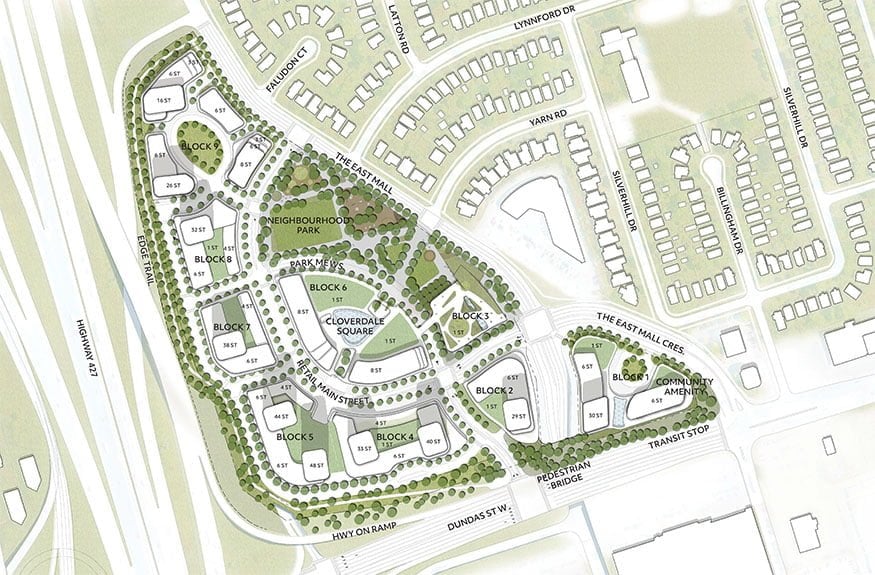
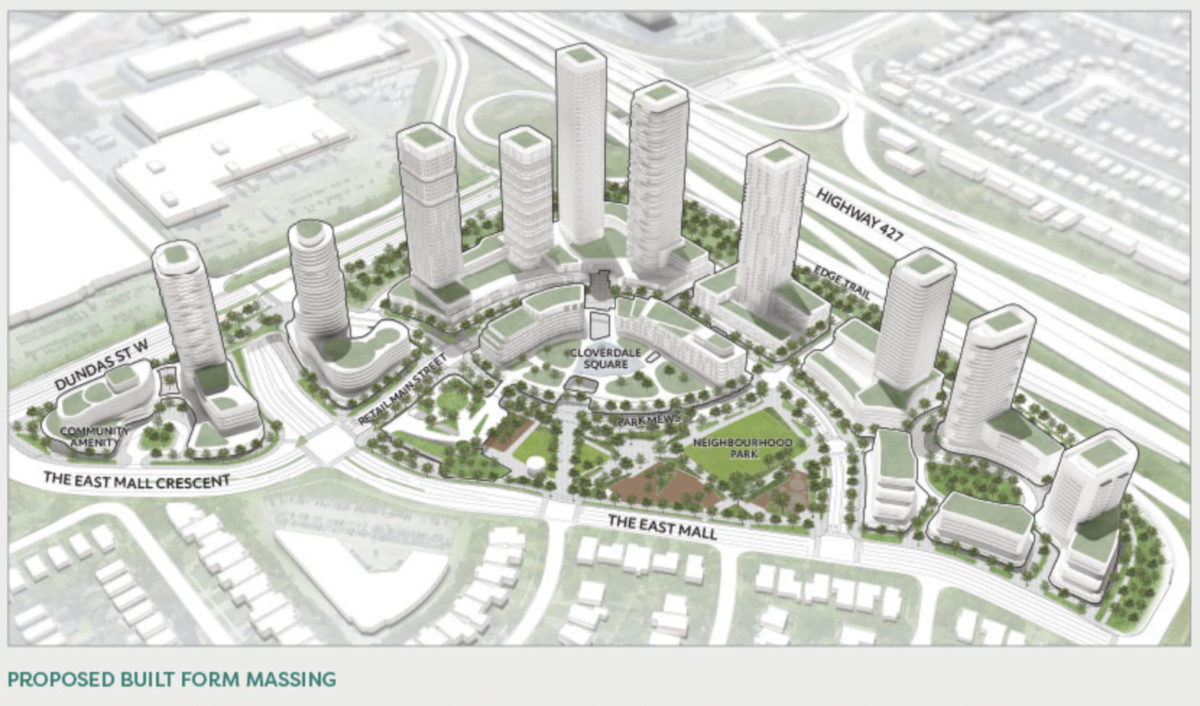
Mattamy will develop a signature condo project on the standalone 2.3-acre “Triangle Site” located at 2 & 10 The East Mall Crescent, kickstarting the transformation of the 32-acre shopping centre site into what officials are describing as “a vibrant, sustainable, and innovative mixed-use urban community.”
It will include a 32-storey tower and an eight-storey mid-rise with more than 500 condos and 2,400 square feet of retail.
“We are thrilled to be partnering with Mattamy Homes on this project as we were very impressed with their executional ability, vision for the site, cultural alignment and fit with our strategic corporate objectives,” said Toby Wu, Executive Vice President, Development, QuadReal Property Group, in a statement.
Click image for interactive Google MapImage: QuadReal
“Additionally, we are excited to embark on this transformational project that fits with our corporate goal of creating dynamic mixed-use, retail-anchored and transit-oriented community hubs in growing suburban centres.”
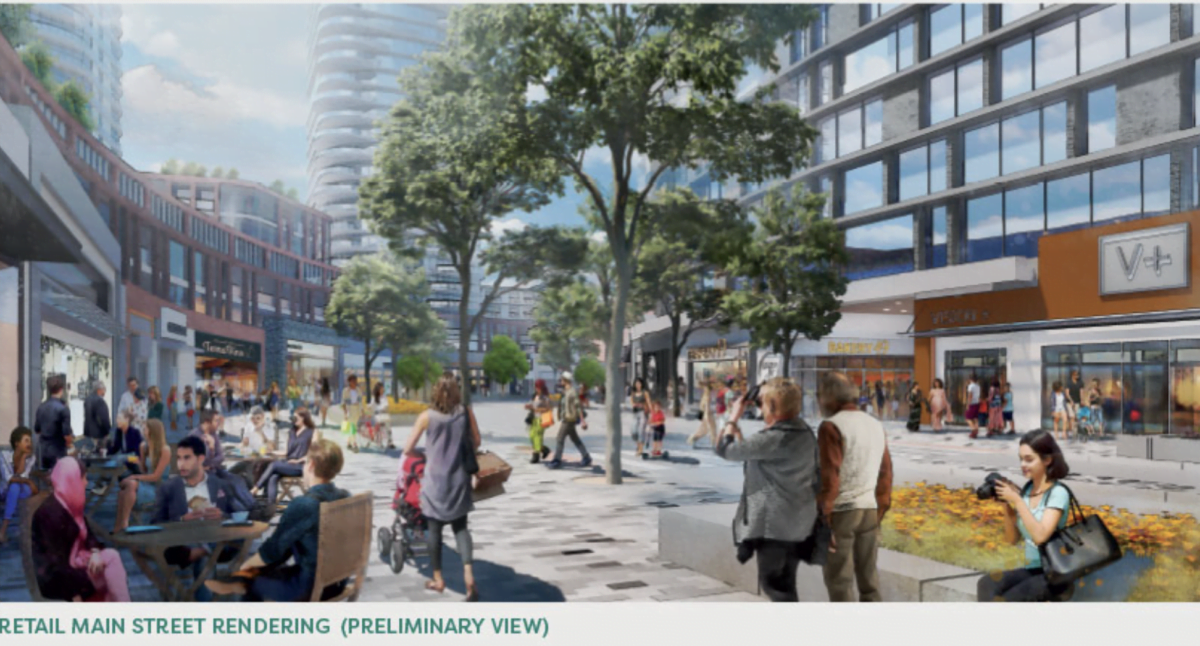
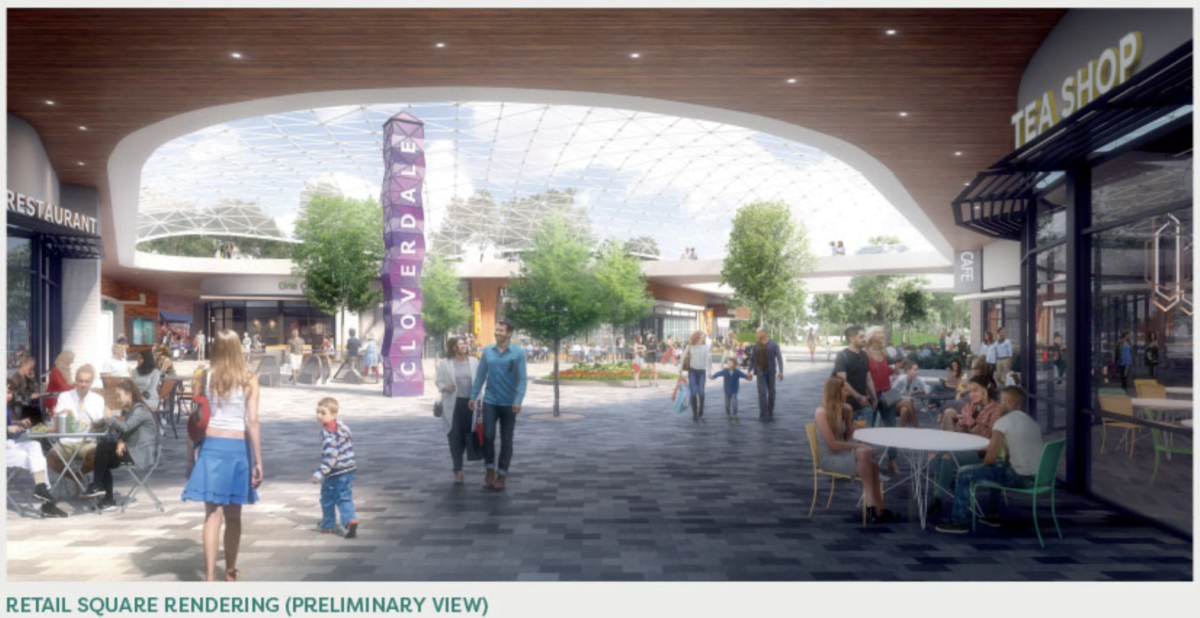
Proposed plans for the larger 32-acre Cloverdale Mall site, located at the intersection of Highway 427 and Dundas Street West in Central Etobicoke, include a re-envisioned retail offering in keeping with 21st century community-based needs; a mix of residential units including for-sale condo and rental apartment housing; parkland and green space; a new streets and blocks network; community amenities; and, below grade parking, said QuadReal in a news release.
“We are reimagining the future of the 32-acre Cloverdale Mall site,” said Wu. “After extensive and close consultation with the community, the ask was a vibrant, sustainable and innovative mixed-use urban community – one that includes a re-envisioned retail offering; a mix of residential units including both condo and purpose-built rental housing; dedicated parkland and green space; new streets and blocks network; community amenities; below grade parking; and, a vibrant public realm for people to congregate.”
First phase, Image: QuadReal
When asked why the project is going ahead now, Wu said, “The time is right. The property sits at the nexus of a node that’s preparing for significant growth and intensification. There is also currently an undersupply in the Toronto market of new condos and purpose-built rental. Notwithstanding, people are desperately seeking a viable ‘downtown’ alternative.”
“At the end of the day, our goal is to be a model for future high-designed mixed-use redevelopments globally. To that end, we are focused on offering a diverse mix of housing options; creating pedestrian-friendly environments; improving connectivity; ensuring robust transit integration; leading the way when it comes to sustainability; planning our projects in close collaboration with the community; and, curating a 21stcentury community-based retail offering.”
David Stewart, GTA Urban Division President, Mattamy Homes Canada, said, “We are proud to partner with QuadReal on the first phase of this world-class development. With an unparalleled dedication to connectivity, community building and place making; Cloverdale represents an exceptional canvas for reimagining the future of urban living. As we accelerate growth of our urban portfolio over the next decade and beyond, we look forward to continuing this trusted partnership”.
Cloverdale was built in 1956 as an open plaza with an open central pedestrian promenade in a Modernist architectural style. It was expanded and converted to an enclosed mall in the 1980s and underwent major renos in 2006. Currently it is anchored by Home Hardware, Rexall Drugstore, Winners, Kitchen Stuff Plus and Metro.
“QuadReal is a key partner in our delivery of 13,000 condo sales within the next five years. Their track record of excellence is undeniable and we are thrilled to collaborate on this world-class development,” said David Stewart, President, Mattamy Homes GTA Urban Division, in a statement.
In collaboration with QuadReal, Mattamy will acquire a partial interest in the site and will be the execution partner for development, construction, and sales & marketing on the Triangle Site. QuadReal will continue to maintain overall strategic direction of the district master plan along with maintaining long-term ownership of the retail and purpose-built rental components, it said.
QuadReal Property Group, a global real estate investment, operating and development company headquartered in Vancouver, has assets under management of $67.1 billion.
Mattamy Homes is the largest privately-owned homebuilder in North America, and is Canada’s largest new home construction and development firm, delivering more than 8,000 homes annually.
Downtown Huntsville is known for its vibrant cottage country living and is currently booming with new residential and commercial developmental projects to keep up with the continuous growth Huntsville is experiencing.
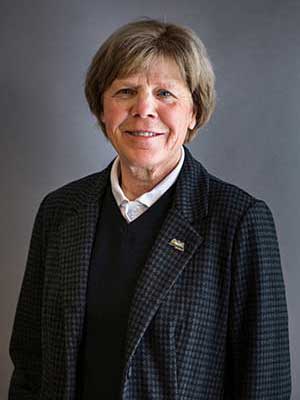
“We have a vibrant downtown now, we are probably about 95 percent full capacity downtown and we only have a couple of vacancies. We are the fastest growing town in Muskoka, and we have a lot going on,” says Karin Terziano, the Mayor of Huntsville who has been serving for twelve years.
New Developments
Image: Town of Huntsville
Karin Terziano
Improving the downtown core, the Town of Huntsville has recently completed its streetscape program, for residents and tourists making it a more accessible and enjoyable environment. The project took two years and has recently been completed.
“We just did a two-year full streetscape project, so we have a brand-new downtown. It runs the full length of our downtown core, and it was necessitated because infrastructure such as water pipes needed replacements so we kind of piggybacked on that and did a full street improvement project. So, we have all new sidewalks, accessible entrances to retail stores, new trees, new park benches, and more. Our downtown is looking sparkling, “says Terziano.
Huntsville Place Mall will also be undergoing major renovations said Terziano. After renovations customers can expect the mall to be updated inside and out. Two of the main renovations will be to add outside entrances to each of the bigger stores, and to move in Giant Tiger. The Giant Tiger will be located beside Winners, have its own entrance, and will be opening in June of 2023. Terziano said the renovations of the mall should be completed by the end of the year.
Image: Huntsville Place Mall
Huntsville will also be adding a second mall outside of the downtown core which has already started construction and should be open to the public in two years. The mall is going to include a grocery store, restaurants, and retail stores. Terziano said there has been no news yet of which retail stores residents should be expecting.
Next, will be to fill in the five percent remaining for retail spaces, including a corner lot that is available.
“We have a large corner lot where we had a fire numerous years ago and the building burnt down and the property is under new ownership and we expect a new build going on there which will have a commercial first floor retail space in it, not sure how quickly that is going to happen but that is on the horizon,” says Terziano.
Localized Retail Shops
Image: Town of HuntsvilleImage: Town of Huntsville
Downtown Huntsville retail contains mostly localized stores which is geared for the cottage lifestyle such as Wolfe Co Apparel, Reflections of Muskoka, Algonquin Outfitters, Muskoka Bear Wear, an around the year Christmas store Christmas Tyme, the Nutty Chocolatier, Artisans of Muskoka, and more.
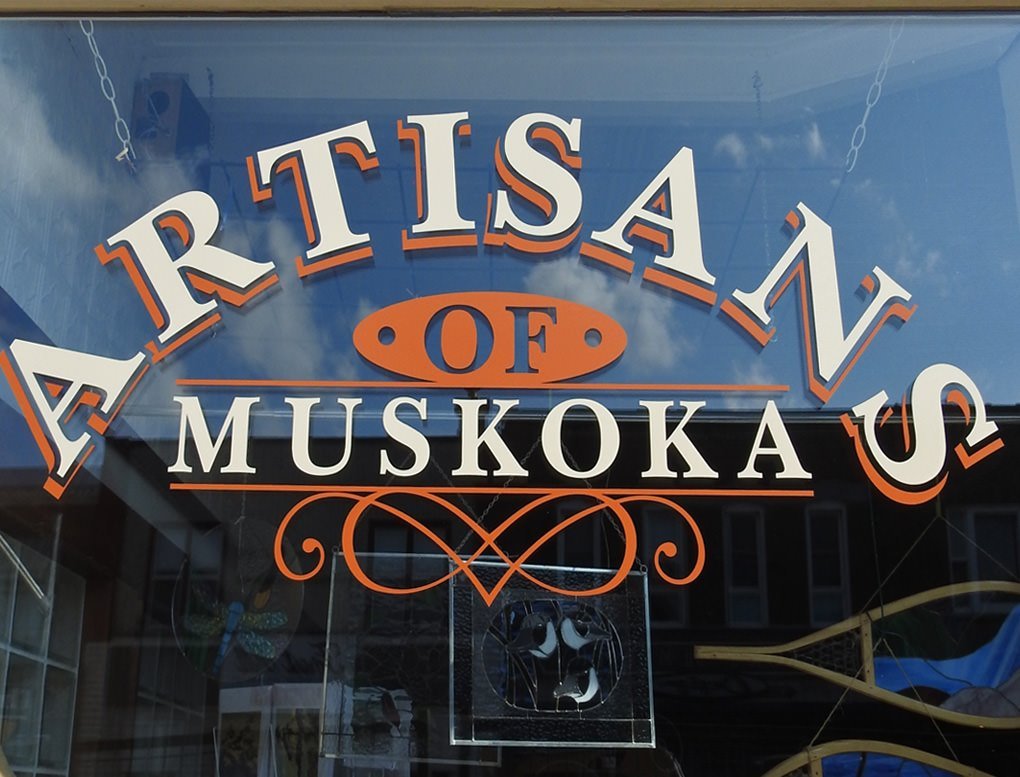
We were able to speak to the owner of Artisans of Muskoka, a store representing artists from all over Canada.
Opening in 1993, the store sells products made in Canada and currently represents over 150 artists and is growing.
“We began the store in 1993 and we are going on 29 years and when we first started the store,” says Brigitte Grima, the owner of Artisans of Muskoka. “I represent artists from right across Canada, not just Muskoka and probably 95% of what I sell is made right here in Canada. It is a lot of work, but it is very gratifying, and I find local people and my customers in general are great and friendly. I am also very well supported by locals, and I couldn’t survive without them.”
Image: Artisans of Muskoka
Customers can find a variety of products including clothing, tableware, and decorations – but everything is mostly geared towards cottage living.
With very few vacancies left in the downtown core of Huntsville, Terziano said everything is looking good and is excited to see the future developments.
“We are booming right now. We have more going than ever before and we can barely keep up with the building permits and the developments that are going on right now. Everything that is happening downtown Huntsville right now is all good and with our complete redevelopment of downtown and the fact that we have very few vacancies, I am hoping to see the corner lot in Huntsville get developed and we also have a development that is going on just outside of our downtown as well.”
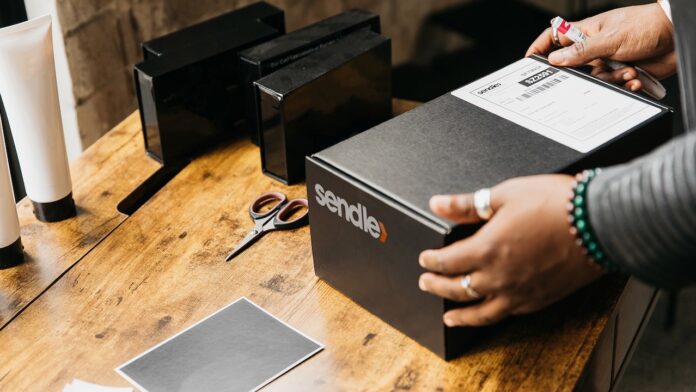
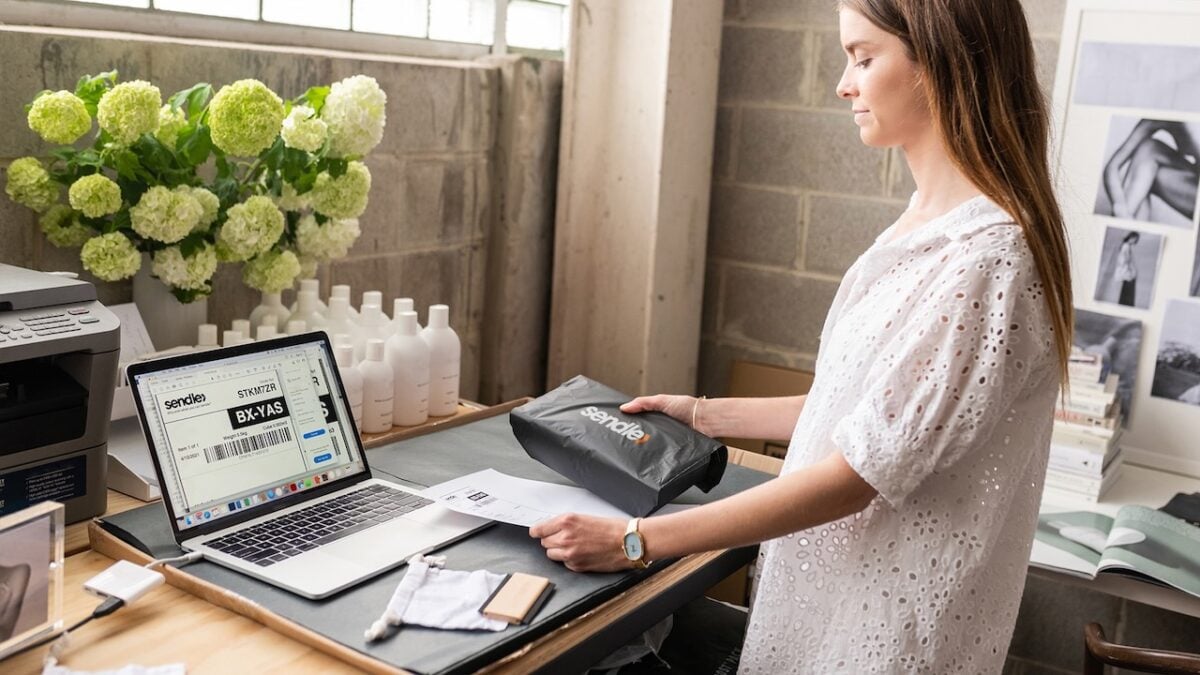
Sendle, the first shipping carrier specifically designed to serve the needs of small ecommerce businesses, has launched in Canada, promising the end of the era of expensive parcel delivery in the country.
The company says it is bringing shipping rates that are 88 per cent cheaper than Canada Post.
“After two-and-half hard years through the pandemic and now record-high inflation, small businesses in Canada are frustrated with how unfair Canadian shipping rates are and why the Canadian industry is not supporting them,” said Lauren Helstab, Sendle’s country manager for Canada. “Small businesses can’t afford to have 65 per cent of customers abandoning their shopping carts at checkout because of high shipping costs.
“Plus, small businesses can’t compete with big retailers without fair rates. More than ever, independent businesses need more choice in their shipping options in Canada and they deserve a solution like Sendle that is built for them and offers rates that finally make sense.
Image: Sendle
“Sendle’s headquarters are in Toronto and we are effectively a digital courier built for small business in ecommerce.”
The concept began in 2014 in Australia and expanded into the US in 2019.
“Really what we’re doing is we are trying to solve the problem of exorbitant shipping rates in Canada,” said Helstab.
“Small businesses need better rates. They are screaming for it . . . It’s crazy in Canada right now . . . We’re a national shipping service. We deliver to 100 per cent of Canadian postal codes.
“One of the things we think is really important is to help small businesses thrive. Right now there’s not a lot of choice or competition in the Canadian shipping industry for national carriers so we’re really excited to bring a more affordable option.”
Image: Sendle
Right now it also picks up from the majority, about 80 per cent, of postal codes in Canada – BC, Alberta, Saskatchewan, Manitoba, and Quebec with Atlantic Canada and northern Canada coming soon.
“Small businesses in Canada are long overdue for a parcel delivery option designed for them – one that helps them to serve rising customer expectations in the age of ecommerce. At a time when inflation is high and costs are rising, Sendle’s entry into the Canadian market puts an end to what’s largely been a monopoly in shipping with a solution that’s more affordable, reliable, and more flexible to suit the needs of small businesses in Canada,” said James Chin Moody, CEO and co-founder of Sendle, in a statement.
“We have also been 100 per cent carbon neutral since the day we launched in Australia in late 2014. To date, Sendle has offset the impact of 34 billion kilometres of parcel delivery. We are not only bringing Canadians a 100 per cent carbon neutral way to ship at no extra cost, we are also putting pressure on the Canadian shipping industry to do better on this front, too.”
Sendle said it offers free pickups with no hidden fees, subscriptions, or minimums required.
Image: Sendle
The company cited a recent Leger survey showing consumer frustration with Canadian courier services. Sendle said:
Ecommerce has rapidly grown and evolved in Canada, with over 27 million Canadians embracing ecommerce in 2022. Yet 71 per cent of Canadians say they are frustrated with courier services in Canada;
Shipping costs rank as the leading frustration (42 per cent) for Canadians, followed by lack of reliability (26 per cent), poor customer service (24 per cent), and having the parcel shipped to a different location than their door (21 per cent);
30 per cent are shopping online less this year because of the cost of shipping;
64 per cent of consumers who have shopped online in the past year feel that the cost of shipping for online purchases has risen since pre-pandemic times;
57 per cent are shopping less, in general, because of inflation, with 11 per cent shopping less online, specifically;
66 per cent of Canadians have been shocked by the high cost of shipping once they reach the checkout page for an online purchase;
65 per cent of Canadian consumers have abandoned their shopping carts because of the shipping costs;
39 per cent are more likely to purchase from an online retailer that provides a “green” shipping option such as carbon neutral shipping. An even greater share of younger shoppers (45 per cent of those under 35 years old) say they’ll do the same.
Retail Insider is streamlining its Canadian retail news from around the web to include a handful of top news stories that can be viewed quickly during the day. Here are the top stories from the past 24 hours.
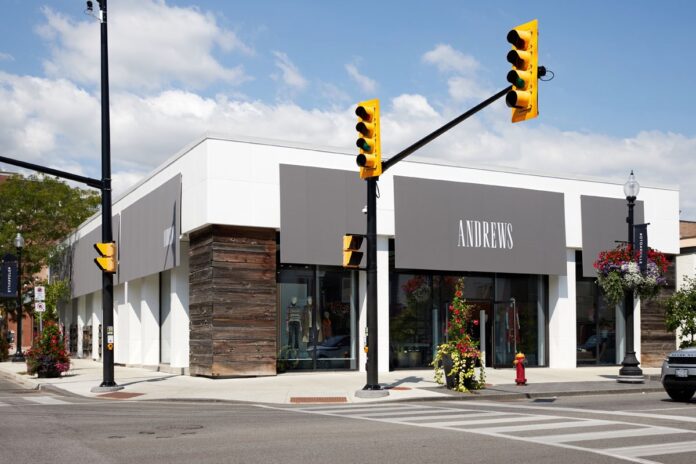
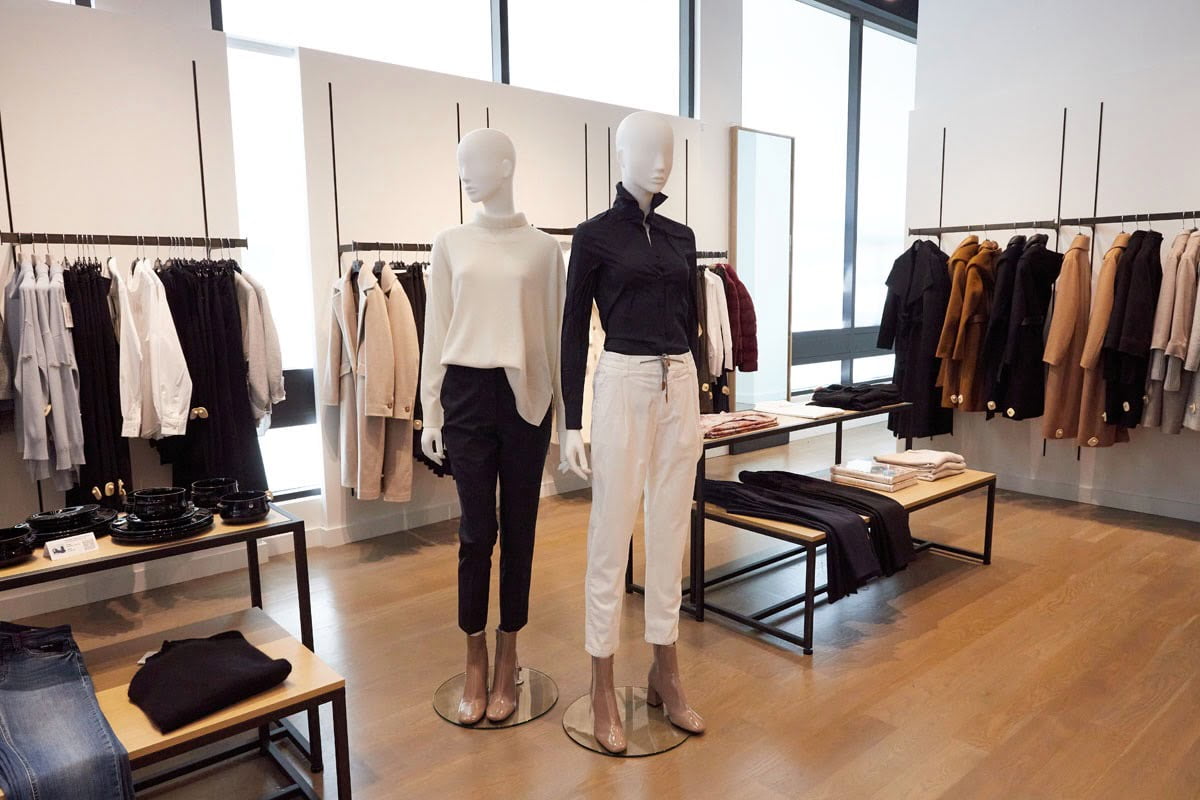
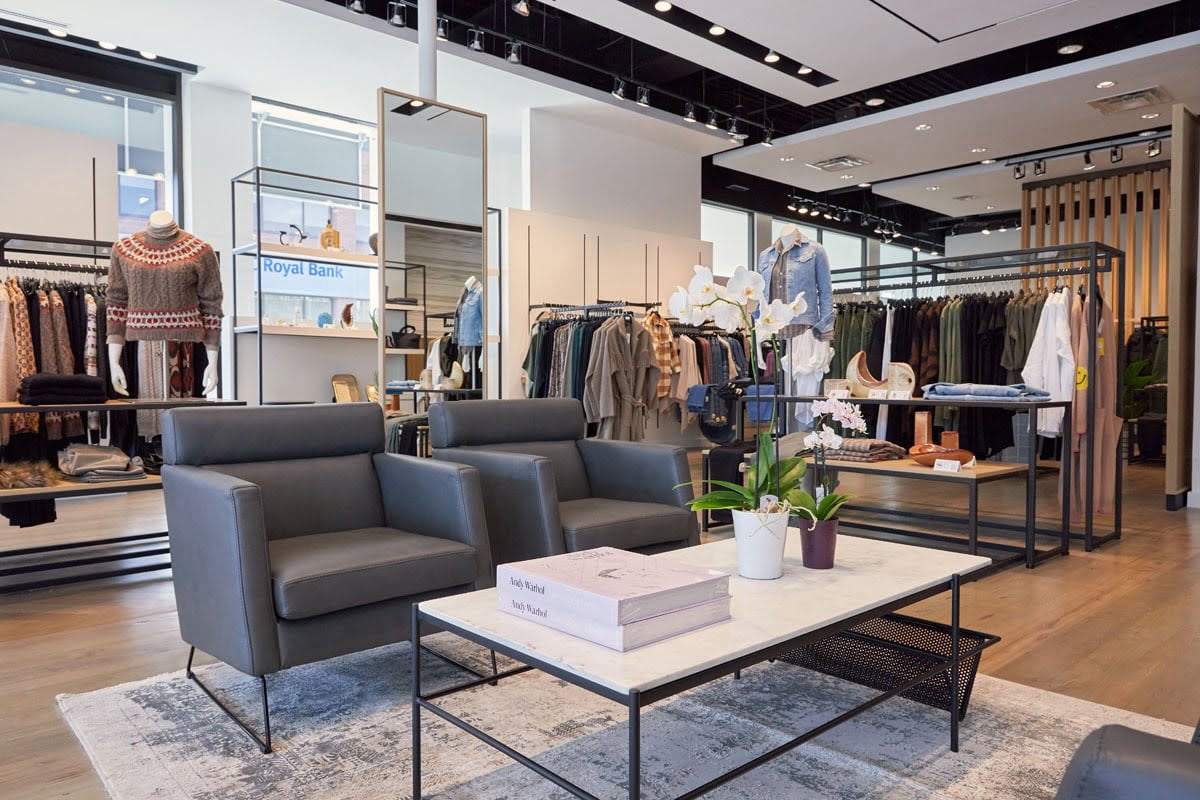
ANDREWS, a Toronto-based family-owned luxury womenswear retailer, is opening a new concept store in Oakville.
The company was founded in 1990 and has since then grown into three locations in the Greater Toronto Area, including Yorkville Village, Bayview Villiage, and CF Sherway Gardens, and will now be adding its fourth location. Opening September 15th, ANDREWS will be opening its fourth location and first standalone store at 283 Lakeshore Drive East and will be adding a new concept.
After dedicating its time to luxury apparel, ANDREWS will be expanding the store concept to also include lifestyle and contemporary pieces.
ANDREWS in Oakville (Image: ANDREWS)
“We’re thrilled to open our first concept store in Oakville and our location is right at the heart of it all. We are looking forward to becoming an important member of this dynamic and vibrant community. We have discovered some fabulous new apparel collections to showcase along with highly curated home decor and vintage designer artware from around the world. The way an artist can create with glass or ceramic is like that of a designer creating out of fabric – this is what fills me with wonder and amazement,” says Darren Mason, President of ANDREWS.
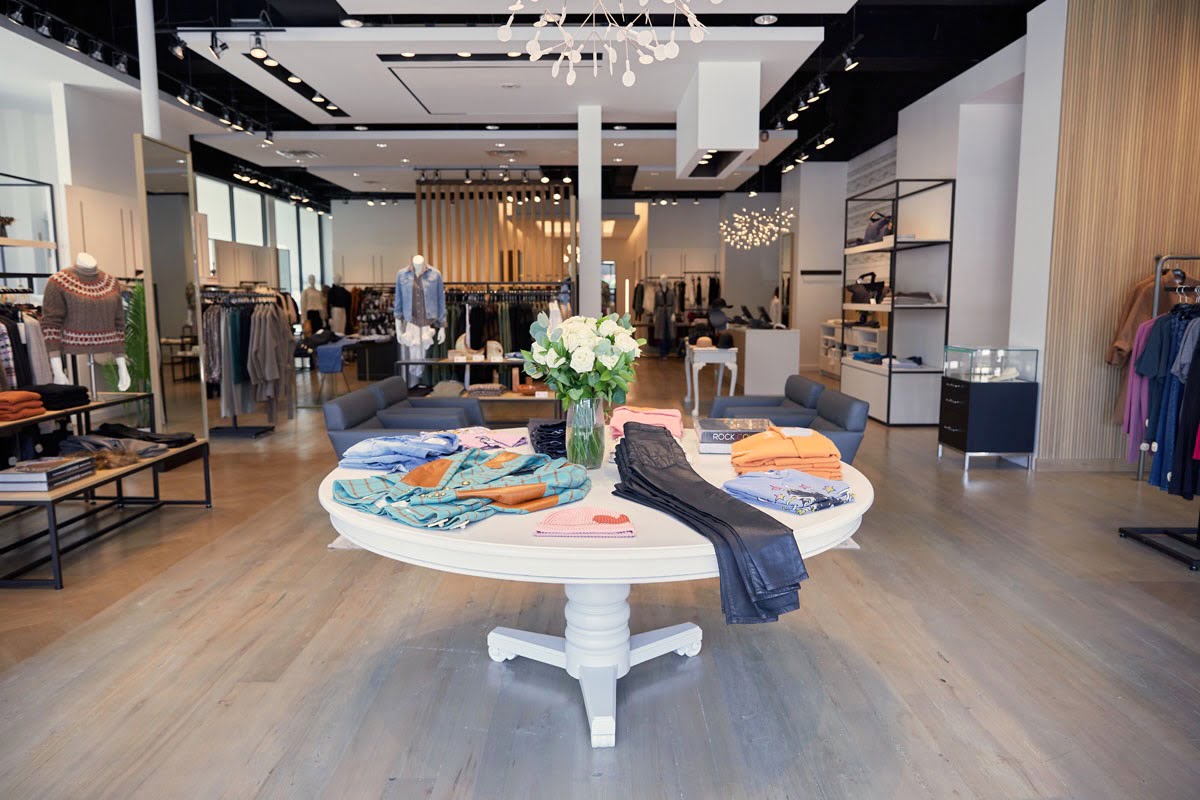
The new store will be 5,000 square feet and will be “very light, bright, and will incorporate elements from the Japandi styles of interiors. And I am particularly fond of the punctuation from the Moooi Heracleum chandeliers and the natural light that pours into the space.”
Customers can find a variety of products including luxury clothing and accessories. ANDREWS has around 100 designers including Smythe, Self Portrait, MaxMara, BA&SH, Fabiana Filippi, Herno, Eleventy and Frame among others.
“Fresh New Direction”
ANDREWS in Oakville (Image: ANDREWS)
For the first time, ANDREWS will be incorporating lifestyle and contemporary pieces to its selection, which has taken close to a year to develop the layout and finalize.
“Our mission with the new concept store is to bring more of a focus on lifestyle into the environment with a view to scaling this across the organization. I’ve always loved art and objet d’art and this journey to expand the ANDREWS curation of product to include lifestyle feels like a natural extension of our business. Our team has been very hard at work developing the concept, finalizing the aspects of home decor and vintage artware and of course, curating all that is being featured in this new location.”
“I have had my eye on Oakville for a while. The “Lakeshore strip” continues to evolve, it has developed into a real hub of activity. I love that downtown Oakville has everything that a larger city may have all on one street with a very deeply rooted sense of community.”
On September 15th, customers can expect an open house and are encouraged to explore the space, ask questions, and enjoy light refreshments.
“There is Plenty More on our Roadmap”
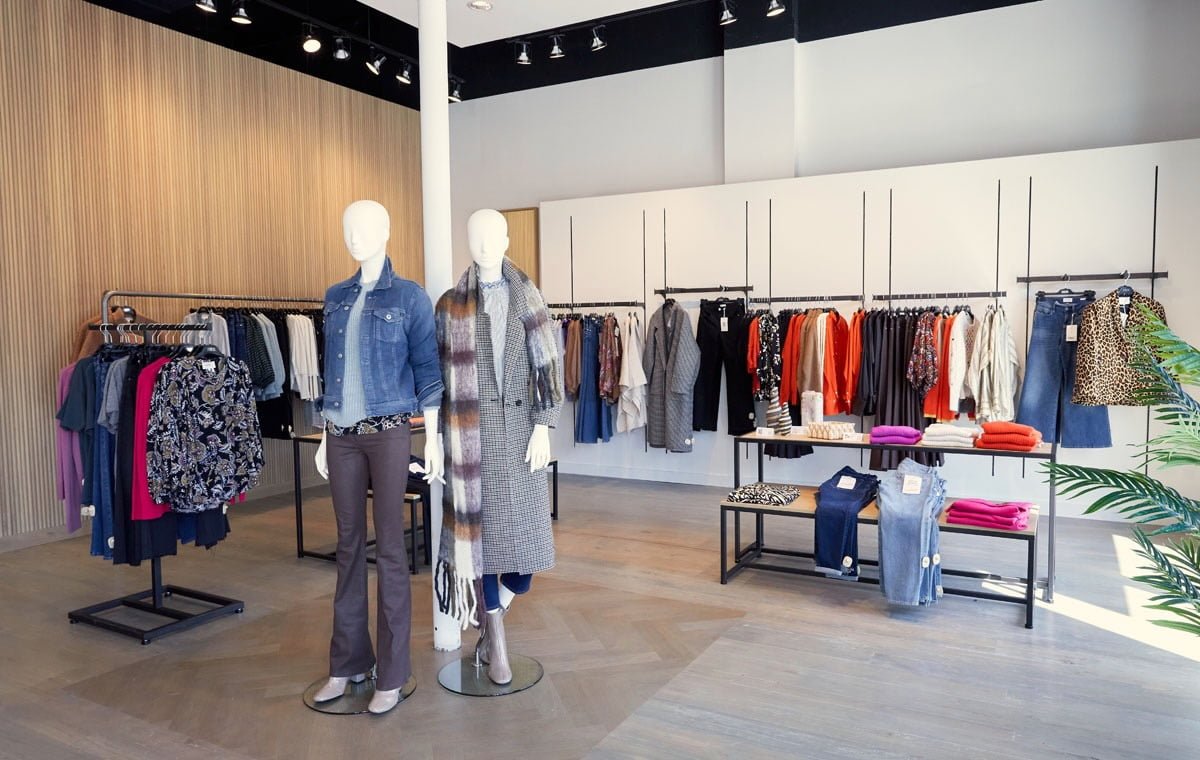
ANDREWS in Oakville (Image: ANDREWS)
Although the new standalone store is its biggest highlight of 2022, ANDREWS is also going to be moving its Yorkville Village location to a more “prominent and natural light-filled space.” The Yorkville Village location will be moved to Hazelton Avenue and will be opening in October.
Mason said it is also embracing the e-commerce world and will be launching a new website to offer “more interactive and seamless experience for customers. “The new website will be available for customers by the end of the year. And lastly, to develop partnerships and relationships, ANDREWS is looking at including pop-up collections and activations – information about the pop-ups will come later.
“The layout of the store lends itself to create interactive and focused areas to feature pop-up or pop-in collections and activations. As we develop and nurture partnerships and relationships within the community, we look forward to offering a fulsome schedule of events, pop-ups, and installations within the store. Stay tuned.”
ANDREWS in Oakville (Image: ANDREWS)
Mason also suggested ANDREWS has plenty more in terms of plans, although those are currently not public.
“In the months ahead, we want to explore deeper into lifestyle and have plans to collaborate with local businesses in Oakville and across the country. We want to bring the space to life with collaborations and pop-ups, with cafes, art galleries and more. The result of this commitment to discovery is a new, dynamic, and ever-evolving space. Our customers can now discover the beauty within the apparel and the lifestyle pieces that resonate with their own personal style and lifestyle. I would encourage your readers to make a trip out to Oakville — not just to see our new store, but also to experience the energy and vibrancy of this unique community.”
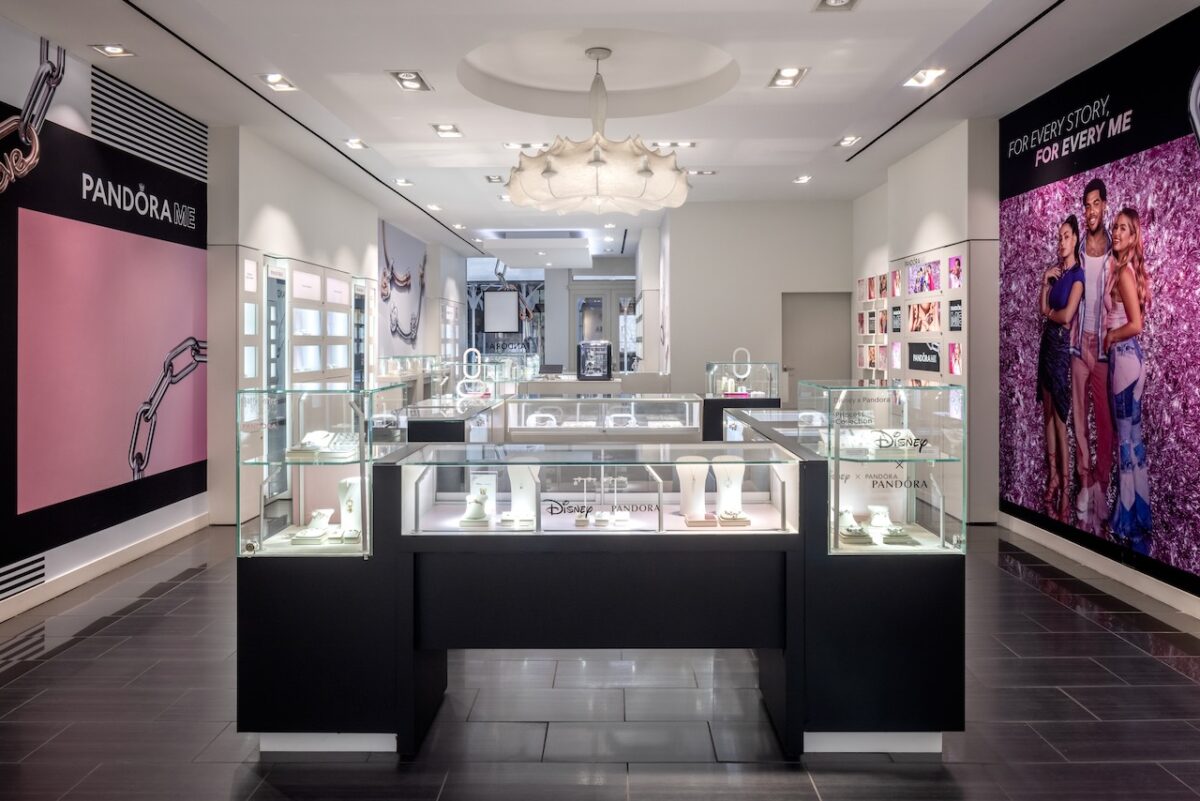
Pandora, the world’s largest jewelry brand, has launched lab-created diamond jewelry in the U.S. and Canada.
The retailer says lab-created diamonds are identical to mined diamonds, but grown in a laboratory rather than excavated from a mine. They have the same optical, chemical, thermal and physical characteristics and are graded by the same standards known as the 4Cs – cut, colour, clarity and carat. Pandora’s lab-created diamonds are grown, cut and polished using 100 per cent renewable energy and have a carbon footprint of only 8.17 kilograms of CO2e per carat – five per cent of that of a mined diamond.
The lab-created diamonds are grown in the U.S. and point to a future of low-carbon diamonds for jewelry and industrial use. For perspective, if all diamonds were mined with the same low carbon footprint as Pandora’s lab-created diamonds, it would save more than six million tons of CO2 emissions annually – this is similar to replacing all cars in New York City with electric vehicles, added the company.
Image: Pandora
Luciano Rodembusch, President, North America for Pandora, said this will allow the retailer to offer a much more affordable diamond to customers. For example, for less than $2,000 USD people can buy a one-carat diamond with a colour that is near colourless with an excellent cut.
Luciano Rodembusch
“A diamond is a diamond. It’s a wonder of nature that takes billions of years in the depths of the earth to be created and I think technology has advanced in a way that we can mimic exactly the same conditions that would happen in nature in a lab,” he said. “That’s exactly what Pandora is launching now. It’s a diamond that has exactly the same characteristics of a diamond that would be created by Mother Nature. The same conditions of temperature, pressure and end up being a diamond that doesn’t need to wait two billion years to be created.
“And it is a diamond that has a carbon footprint that’s much, much smaller. It was super important for us to say that 100 per cent of the lab grown that we are presenting to the market now were created with renewable energy. Sustainability is a serious agenda inside of Pandora. For us this was important. And also important to the fact, is we launched it as a pilot in the UK more than a year ago with 60 per cent of the renewable energy and we were able to move to 100 per cent now.”
Rodembusch said the diamonds will be grown in the US by a third-party company that is supplying the retailer with the diamonds.
Image: Pandora
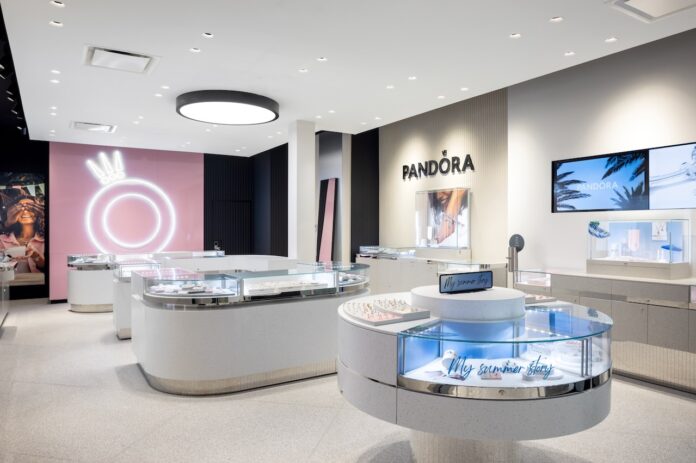
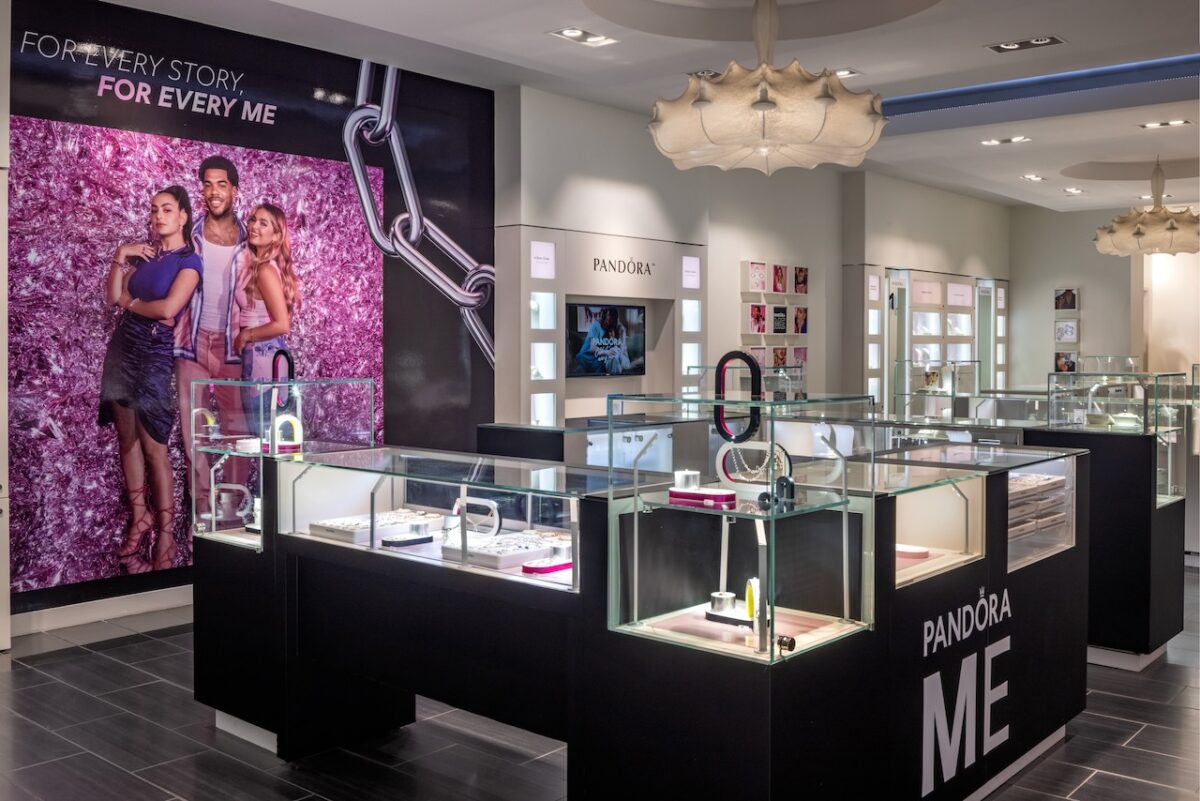
Pandora has 506 stores throughout North America with 74 in Canada.
“We’ve opened 22 new stores this year in North America. Very, very large expansion and we have ambitions to continue,” said Rodembusch.
“North America was always a gigantic business for Pandora. It grew super fast. About three years ago we did the first analysis of the penetration of the brand in different regions. If you go to the US, for example, we are very, very strong in the Chicago, Detroit area. Very strong in the corridor between Baltimore and Boston. But very weak in the south and the west. The number of stores was not the correct one. The number of clients that we served was much inferior in those areas.
“If we go to Canada, if we compare the number of stores we have and the number of clients we have between Toronto and Vancouver, it’s completely disproportionate. We are very under-developed in the west coast of Canada as well. That’s why we started to look at empty spaces and in some areas we are present but we are almost invisible. And in other areas we are not even present.”
Pandora at CF Market Mall. Photo: Jessica Finch
A good example, he said, was the recent opening of a store in Salt Lake City where the retailer was not previously present.
“This is one of the major pillars of our growth for this year and the upcoming years – to put the brand in the right place in the right way,” added Rodembusch.
“Especially in Canada, the most important piece for me is unfortunately we’ve not been able to present the brand as we should in Canada. We are not in some areas. In some areas, we are not presented in the way we should. Our marketing sometimes was not at the level it should be. So you will see over the next 12 to 18 months a different Pandora inside of Canada.
“We decided to create a team in Canada, in Toronto, fully dedicated to Canada, not anymore a kind of a subset of the US team. For me that’s the most important part – to really present to the Canadians Pandora as it should be. So stay tuned because good things will start to come.”
Image: Pandora (Time Square)
Rodembusch said the company’s trajectory of growth in the last few years has been amazing because it is able to offer very good design with very good craftsmanship at a very affordable price.
“We have a very strong base of consumers in North America alone. We served more than 10 million clients last year,” he said. “One of the things that we were kind of limited before is we just worked with silver and gold. The majority of the jewelry market in the world has diamonds . . . So now we can offer a full range offer to our clients and still be affordable.
“One charm starts for $35 USD. One of the new lab-grown diamonds is a ring you can get for $300 USD. It’s very affordable. I’ve been in the industry for a few years and a diamond I think it’s one of the pieces that when you see it and especially when you put it front of a client, the eyes sparkle. I think it will be something that a lot of clients will be interested to have.”
“The future of luxury is here today. Lab-created diamonds are just as beautiful as mined diamonds, but available to more people and with lower carbon emissions. We are proud to broaden the diamond market and offer innovative jewelry that sets a new standard for how the industry can reduce its impact on the planet,” said Pandora CEO Alexander Lacik, in a statement.
Pandora says the global diamond jewelry market is estimated at US$84 billion. The market is expected to continue to grow, and lab-created diamonds are outpacing the industry’s overall growth.
The 33-piece lab-created diamond collection is named Pandora Brilliance and includes rings, bangles, necklaces and earrings.
A new report by Accenture Song indicates that up to 72 per cent of consumers say that external factors such as inflation, social movements and climate change are impacting their lives more than in the past.
“Consumer prices are skyrocketing at their highest rates in 40 years, while the war in Ukraine indicates long-term consequences for global markets, food prices and political stability. Major societal and cultural movements around the world are magnifying conversations around social justice issues, just as increased political polarization and a growing distrust in government and media complicate the path to change,” said the report titled The Human Paradox: From Customer Centricity to Life Centricity.
“Technology has democratized access to information, with Web3 and the metaverse hinting at a creative and dynamic future, but up to 43 per cent of consumers say technology advancements have complicated their lives just as much as they have simplified things. With external forces exerting more pressure, and a list of practical and ethical considerations that keeps getting longer, people are facing more complex and more frequent decisions than ever before. To help make them, they are looking to the people they trust the most: themselves.
“The disconnect is broadly felt on both sides: Up to 64 per cent of consumers wish companies would respond faster to meet their changing needs, while up to 88 per cent of executives think their customers are changing faster than their business can keep up. This mismatch puts retention rates at risk and constrains companies’ efforts to attract new customers. A growing number of consumers—up to 67 per cent, a jump from 51 per cent one year ago —expect companies to address their changing needs in new ways. More than half say company and brand names are not as important to them as they used to be, and that what they look for in a product or brand is likely to change depending on circumstances. Though broad analysis of this kind can only partially capture such a complex challenge, what it signals is still urgent: At a time when consumer choice has never been higher—and the cost of switching to a new brand has never been lower—a relevance gap this significant could come at great cost if not addressed. One thing is clear: The old playbook for relevance is now obsolete. It’s time to take on a new strategy.”
The report added that up to three-quarters of consumers around the world say they feel empowered to make key decisions in their own lives. They are more self-assured in setting priorities and feel a greater sense of responsibility to make decisions that benefit themselves, their families and society, it said.
“Our research indicates that this self empowerment is on the rise. As people become more self-reliant, they are also rethinking the values that drive them. Up to two-thirds of consumers say they have completely reimagined what’s important to them in life—a 10 percentage point increase over the prior year. And up to 62 per cent say many new things are important to them because of what’s going on globally and locally. But redefining a sense of purpose amid a backdrop of unstable external life forces opens the door to inconsistencies, between what we believe or want and what we actually do. Some 61 per cent of consumers say their priorities keep changing as a result of everything going on in the world. As those priorities change, so do decision-making behaviors. Now, they are ready to act in their own best interests—because if they won’t, who will?
“Customers prioritize themselves … but want to effect change for others, even as up to 66 per cent of consumers say their decision making is driven by their own needs, some 72 per cent feel they can personally impact the world and their communities through behaviors and buying choices. They’re taking things into their own hands … but also want companies to hold their hand. Though they are feeling newly empowered to make key decisions on their own, as many as 67 per cent expect companies to understand and address their changing needs during times of disruption. The net-effect is a growing acceptance of paradoxes, in which people make peace with the often contradictory and conflicting consumption decisions they make moment to moment.
“The results can be messy and inconsistent: Customers prioritize values … but not at the expense of value. More than half of consumers say the pandemic motivated them to adopt a more sustainable lifestyle, but up to 65 per cent say price increases have led them to select lower-cost brands on recent purchases. They care about their impact … but don’t know how to act on it. Nearly 70 per cent of consumers are worried about the impact of climate change on their lives —but continue to struggle to make sustainability a top priority over other needs.”
Gregor Barry, Managing Director and Accenture Song lead for Canada, said research indicates that the external pressures will impact how consumers buy.
“The core of our research was the external factors like inflation, like a crisis, or health or sustainability, that impact the consumers’ mindset and how they buy and for a consumer that still wants to pay a lower cost but also wants to (support) sustainability those are the opportunities where retailers (need) to think about where the opportunities may lie,” he said.
Gregor Barry
“Companies need to adapt and expand their definition of value to their customers. So you think about going from product centric to customer centric to more life centric which is what we believe our clients would aspire to do. Great customer centric companies can be obsessed and so obsessed with customers that they can actually create broader issues whether that’s with their employees or society in general.
“It’s really getting back down to the value drivers of the consumers and how companies are going to come up with ways in which to reach the values that consumers believe in.”
Barry said certainly sustainability is a huge topic. It’s been around for awhile and in recent years it has become even more important for consumers.
“Consumers want companies to have accountability for it,” he added.
“Businesses have long aimed to be customer centric and be obsessed with capturing who they are, where they are, what segment they fit in, but really failing to understand the context of some of the life forces in that people can often be multi-dimensional.
“In order to meet that challenge you need to be reacting more quickly to the life forces and the life moments and that takes a lot more operational rigour, it takes a lot more data centric and technology operational rigour, and that to me is the big challenge for companies to meet. Changing as consumers are changing that mindset.”
The highly anticipated will take place September 28-29 in downtown Toronto, and there’s still time to register. []
eTail Canada 2022 will be held again at the located at 370 King Street West. It’s the first time since 2019 that the eTail Canada conference will be held in person.
The two-day eTail Canada retreat is designed to help businesses increase profits with action-packed strategies and connections made with the top mind’s at Canada’s most successful retailers. Included is an impressive roster of dozens of speakers as well as sessions and numerous networking opportunities.
Be sure to download the to see the completeand inspiring sessions at this year’s eTail Canada Conference.
Act fast as there’s only a few more days to register before eTail Canada 2022. []