Kelly talks about how sales are still not back to normal for companies, the amount of debt taken on during the pandemic, how they are struggling with labour shortages, supply chain issues and what to expect this holiday shopping season.
The Video Interview Series by Retail Insider is available on YouTube.
Connect with Mario Toneguzzi, a veteran of the media industry for more than 40 years and named in 2021 a Top Ten Business Journalist in the world and the only Canadian – to learn how you can tell your story, share your message and amplify it to a wide audience. He is Senior News Editor with Retail Insider and owner of Mario Toneguzzi Communications Inc. and can be reached at mdtoneguzzi@gmail.com.
Also check out the other series offered by Retail Insider, including The Weekly podcast and The Interview Series, which are both available on Apple Podcasts, Stitcher, TuneIn, Google Podcasts, or through our dedicated RSS feed for Simplecast and other podcast players.
Manitobah, an Indigenous footwear store, has launched its first flagship location in Winnipeg.
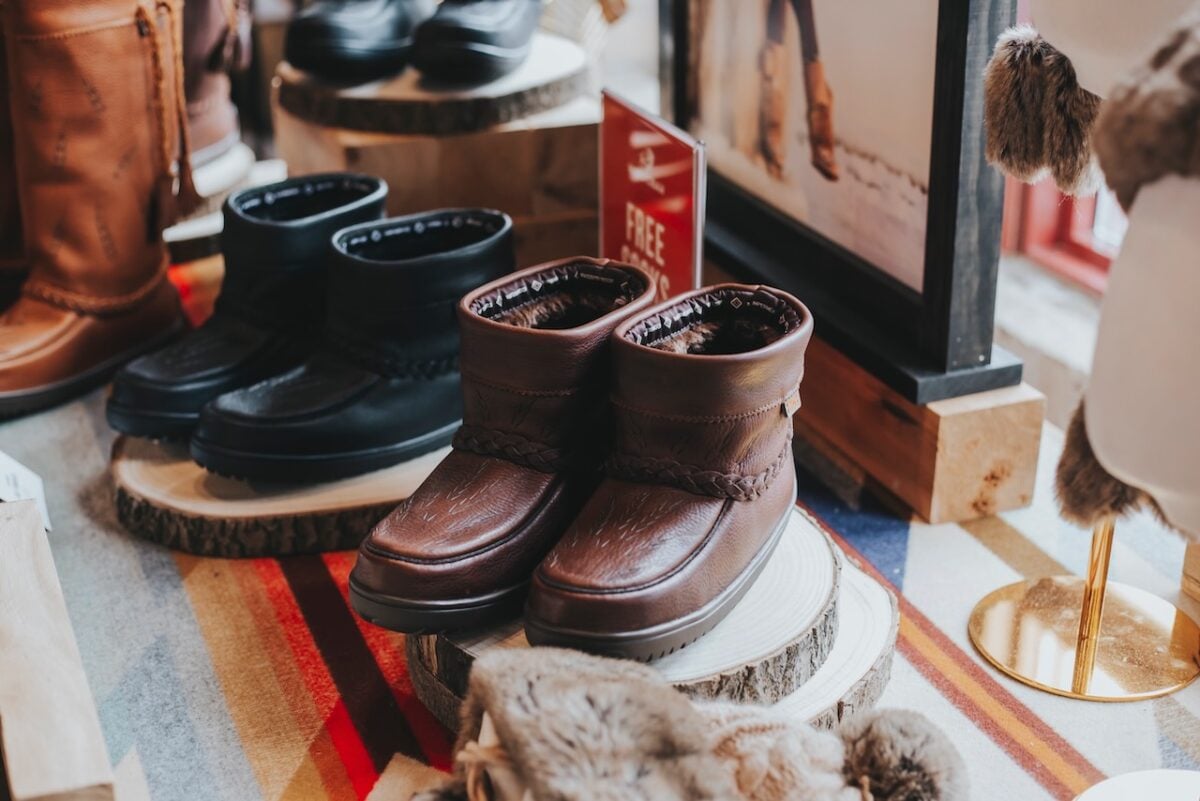
The company, founded by Sean McCormick in 1997, is well known to provide Indigenous mukluks and moccasins and has become one of the fastest growing companies in Canada.
Sean, who is a part of the Metis Indigenous community, started dreaming of owning his own company in High School and wanted a business representing his community. Today, Manitobah sells a variety of mukluks and moccasins using materials from Deerskin, Sheepskin, Full Grown Leather, and Rabbit Fur – materials that have been used for Mukluks for 10,000 years.
Lor Brand
“Prior to the company officially starting Sean had the idea of the company and was already selling leather and furs to makers in High School. That went on to him opening a trading post where he was essentially trading already made mukluks and moccasins for more leather and furs, so it created a cycle with indigenous artists. Then the demand just increased, and he started in 1997 what is now Manitobah,” says Lor Brand, the Marketing Coordinator and Artists Relations for Manitobah.
“The inspiration of the company really comes from Sean and his community. Mukluks are the original footwear of Turtle Island, or now what we now call North America. Very little has changed other than the sole, kind of some modern updates just for living in modern day society, but all of it is really based on that ancestral design which makes our product the best winter boot you can possibly have because it was built for some of the harshest climates in the world.”
First Flagship Store
Manitobah (Image: Lindsay Rowan)
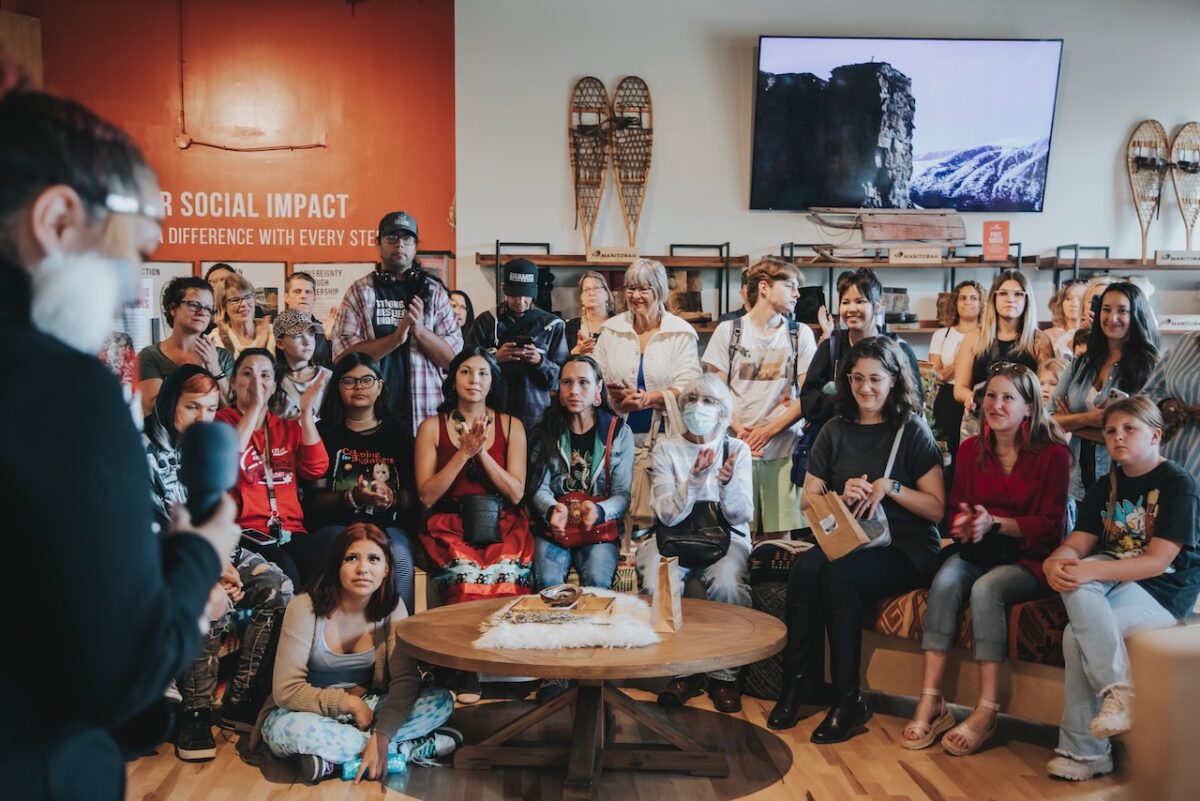
Manitobah flagship store is located at The Forks Market in Winnipeg and is 3,000 square feet. Before this, Manitobah just had pop-up locations; however, the owner always envisioned opening a permanent store where they can welcome everyone in and create a space for the Indigenous community in the area. The store had a soft opening on September 1st where they started off opening in a pipe ceremony lead by an elder.
“Manitobah Mukluks is built by and for Indigenous community and we wanted a space where folks could come in and feel welcome, feel proud of who they are, and see Sean’s success. We wanted something community could really be proud of. So, when young indigenous folks are coming in, they are seeing their own success in it and believe they can do it too because Sean started this with just a dream and a love for Indigenous art. So many of us have that and we want to be able to provide that inspiration to people.”
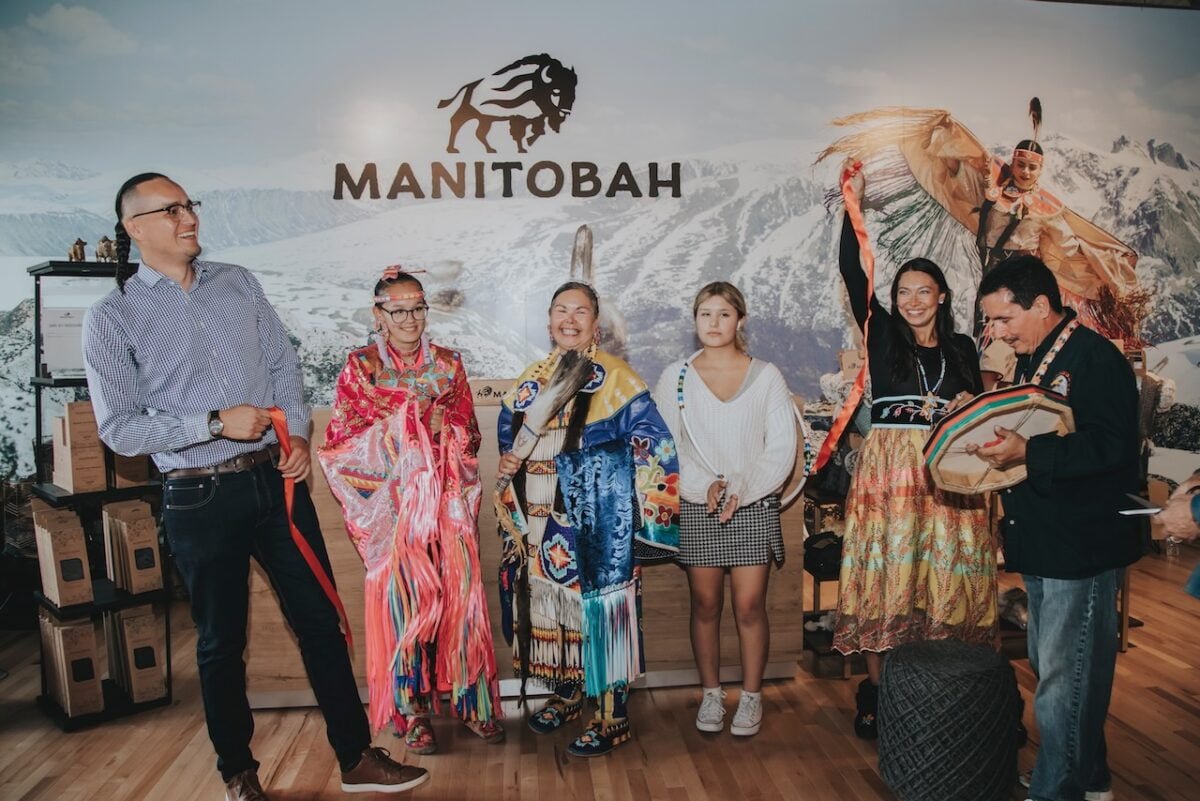
The grand opening of the store was on September 10th where it had representation from all communities. Brand said the store had Indigenous performers, artists, and they all came to support the store and to share history.
“We had an opening song from a drummer, we will have hoop dancers, a fancy shawl dancer, so a bunch of different dance styles where they will come in and share a little bit about what they do, why it is important to them, and the historical context.”
Since opening, every day Brand says the manager takes her time and smudges the store as in the middle of the store is a smudging bowl. The store also has plans to make the centre of a store a community space where Indigenous people can be together, it will also be used for activities such as workshops and to create products.
Unique, Warm, and Comfortable Products
Manitobah (Image: Lindsay Rowan)
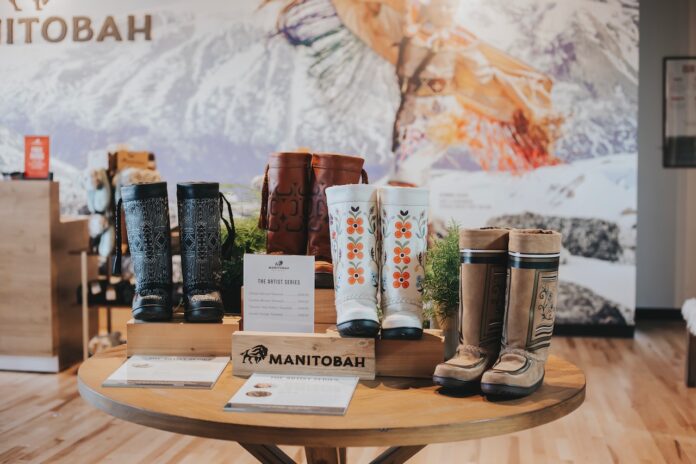
Manitobah includes a variety of products ranging from its traditional mukluks, moccasins, and have recently expanded to accessories such as bags, mittens, and blankets. Every Mukluk has a unique design to them that was created by an Indigenous artist.
“In the store, it is a lot of mukluks, as it is our heart and soul of the company. We have tons of traditional pieces and tons of moccasins, so there is a whole range of different styles people can pick from. We also have some cozy new products like blankets, and for the first time we are diving into accessories, like bags, and people will be able to see those for the first time in the store.”
Mukluks are made with the thought of freezing temperatures and are suitable down to -32 weather conditions, they are also waterproof up to four inches. The design has been created 10,000 years ago by Indigenous peoples and has updated over time.
“One of the beautiful things about mukluks is about how simple they are, with other winter boots they often get clunky because they are incredibly technical. The nice thing about mukluks is they use your own blood circulation. If you put your foot into a mukluk, you will notice it feels flexible and there is a lot of space in it so your foot, so it is using your own foot for warmth. This is something not a lot of other companies do and that is a part of those thousand years ancestral design that was developed more than 10 thousand years ago, so it was keeping them warm, and it is keeping us warm now.”
The Bloom Collection
Manitobah (Image: Lindsay Rowan)
Manitobah has also recently launched its new collection, the Bloom Collection. Brand said it has been the fanciest beadwork they have done and “it is beautiful.” The design was created by an Ojibwe artist, Shannon Gustafson.
“We are really excited to tell Shannon’s story and celebrate her art and show people this amazing mukluk with this amazing beadwork with glass crystals on them and sparkly and beautiful and has amazing floral beadwork on them.”
In addition to its products, Manitobah also has an Indigenous Marketplace where 100 percent of the sales goes directly to the Indigenous artist. Customers can find a variety of products including mukluks, moccasins, earrings, and more. All items are hand crafted by an Indigenous artist and are made in Canada and in the US.
Future Plans
Manitobah (Image: Lindsay Rowan)
Brand said they have multiple plans coming up, including opening multiple pop-up locations across the country, but was not able to share where these will be opening just yet. Manitobah is also going to be partnering with Nordstrom and will be making a big push in the US market as they are already popularly known in Canada.
“We are launching our biggest season ever this fall. We will also be opening up multiple pop-up locations so those will all have grand opening events much like the one in Winnipeg. We are well known in Canada and now extending our relations into the US too and we will be doing some exciting activation events, kind of like the grand opening where we will invite community in, have educational pieces in those stores.”
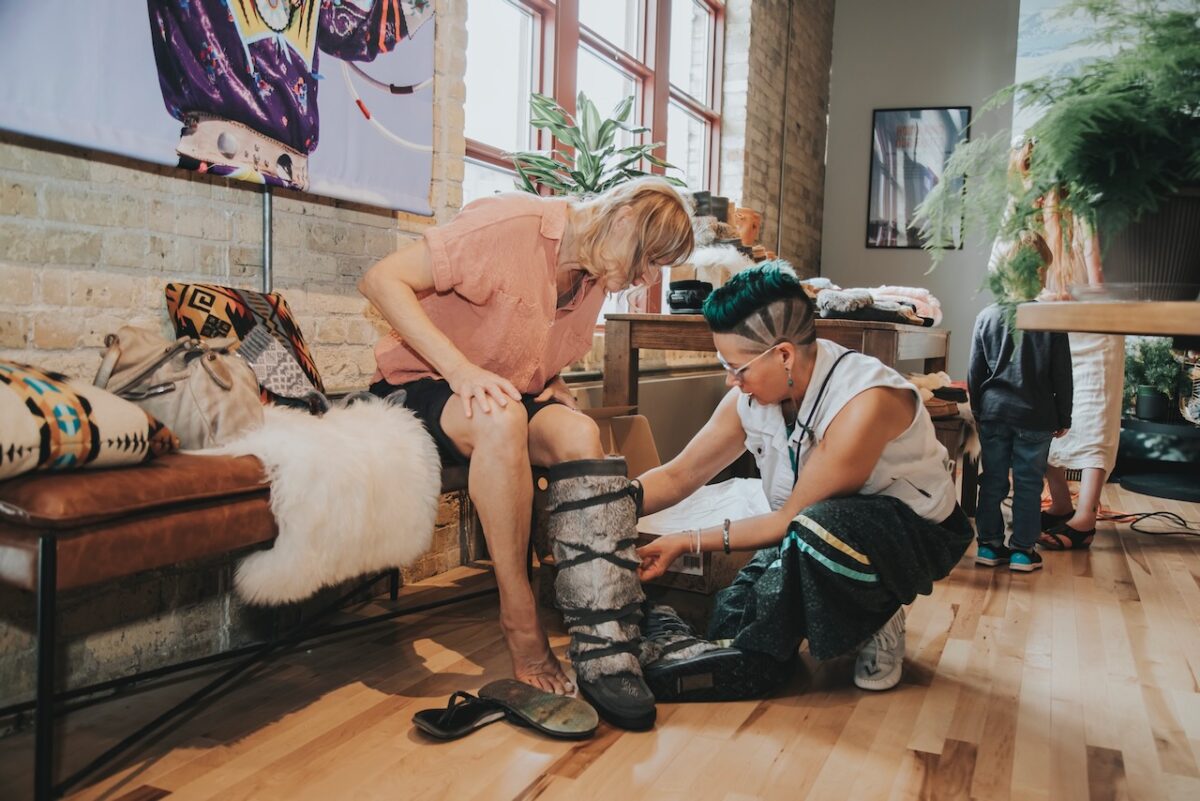
While shopping in its flagship store, customers are encouraged to ask questions and its staff will know the answers as they are all a part of the Indigenous community.
“As all the staff at the store are Indigenous – they know best. They know the product better than anybody else, they can really give good context, and there is an educational piece that comes with our product and the staff will be able to answer all of that. It has been a real honour as a Metis person who has had this company as apart of my life for a long time, seeing Sean’s success, being a bead worker myself. It has all my passions, my identity, and all my skills so it has been beautiful to be included in this company and its like nothing else I have ever experienced.”
Walmart Canada is rolling out an innovative computer vision AI solution for out-of-stock detection to all its stores across the country.
The retailer said it is one of the first ones in Canada to deploy an AI solution for on-shelf availability.
Here’s how it works:
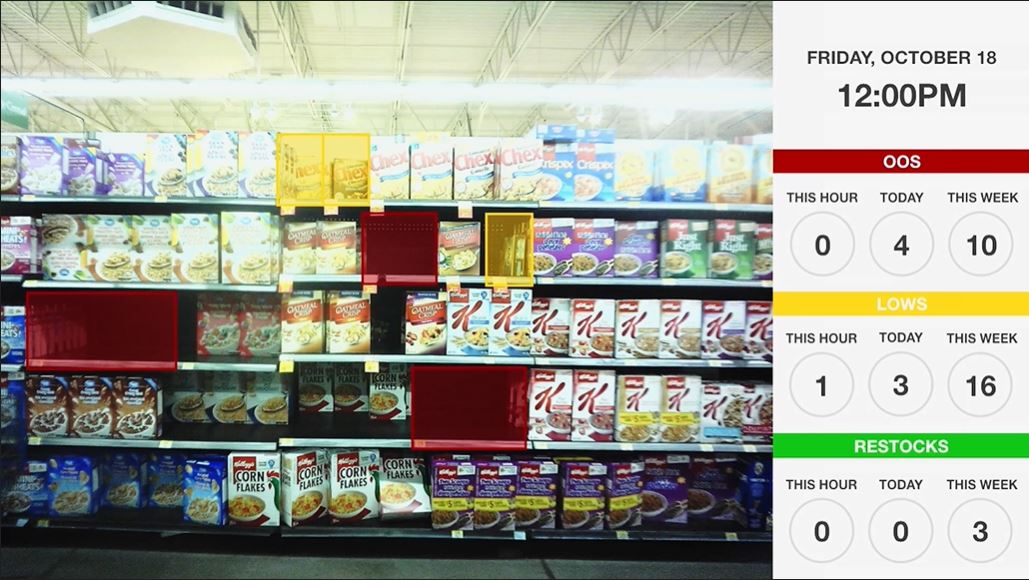
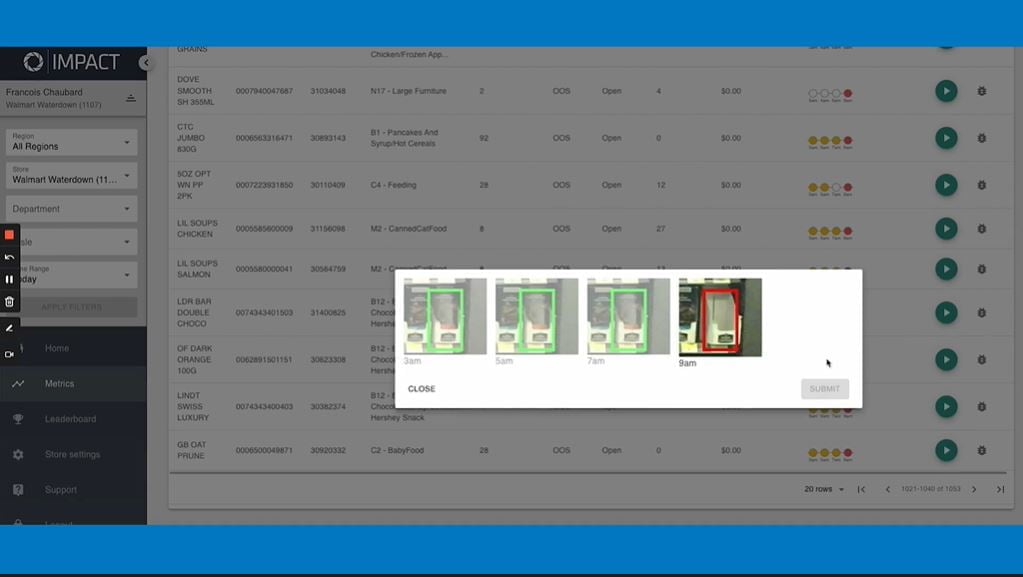
Computer vision cameras are installed in popular areas throughout the store, pointed directly at shelves. At pre-determined intervals, the cameras scan the shelves;
When a product goes out-of-stock, it will trigger replenishment through Walmart’s existing inventory systems;
An associate will receive the alert and re-stock the shelf as soon as possible to ensure the best product availability for customers – whether they’re shopping in-store or online for grocery pickup and delivery.
“We know it can be disappointing for customers when we don’t have products they want available on our shelves. That’s why we initiated this pilot using technology from Focal Systems that takes the guesswork out of knowing when a product is out of stock,” said Robin DeMers, Director, Store Optimization, for Walmart Canada.
Image: Walmart Canada
“This leading-edge technology provides real-time, automated alerts for replenishment in key priority areas within our stores. It also empowers our associates with cool tech that makes a big difference in the way they are able to work and provide the best possible customer experience.”
DeMers said the AI solution includes shelf-level cameras that are pointed directly at the shelves and actually scan the shelves at pre-determined intervals. When the product goes out of stock or is low in stock, it will trigger replenishment through the retailer’s existing inventory systems. An alert is sent to an associate where they will restock the shelf.
“It’s currently being deployed to all stores. So we expect it to be in all stores by early 2023,” said DeMers, adding a small camera is used in 11 core departments of a store.
Image: Walmart Canada
The decision to roll out the system to all the retailer’s stores came following a 70-store pilot. Megan Osborne, Store Manager at the Walmart Heartland Supercentre in Mississauga, one of the pilot locations, said her associates are excited to work with technology that helps make their work simpler and better for their customers and that it’s been a “game-changer” in her store.
The pilot program was launched in early 2020.
“What’s really exciting about this technology. The traditional way that we managed it was either when it was out of stock or low stock it was completely manual and it was all visual,” said DeMers. “But now that we’ve introduced this automated solution powered by AI it makes it easier and faster for our associates to address on-stock availability issues because the technology itself is actually taking the guesswork out of it. It’s telling us that that’s out. We don’t have to visually see it. We just have to react to it and get it back on the shelf.
Image: Walmart CanadaImage: Walmart Canada
“We know that it can be disappointing for customers when we don’t have the products that they want on our shelves. We want our customers to be able to get what they want when they need it whether they’re shopping in-store or online. And really that’s why we initiated the pilot with Focal. It takes the guesswork out of knowing when a product’s out of stock. Let’s the leverage technology and let’s put all of our efforts into getting it back on the shelves. So from a customer’s perspective it’s about being able to get what you want when you need it.”
“With this bold step, Walmart is driving this industry forward in AI-adoption and retail automation, challenging the status-quo on availability, customer experience, and employee satisfaction,” said Francois Chaubard, CEO, Focal Systems, in a statement. “Walmart is raising the bar, and we are inspired to help in any way we can. Focal is thrilled to be a key part of Walmart’s store digitization efforts nationwide.”
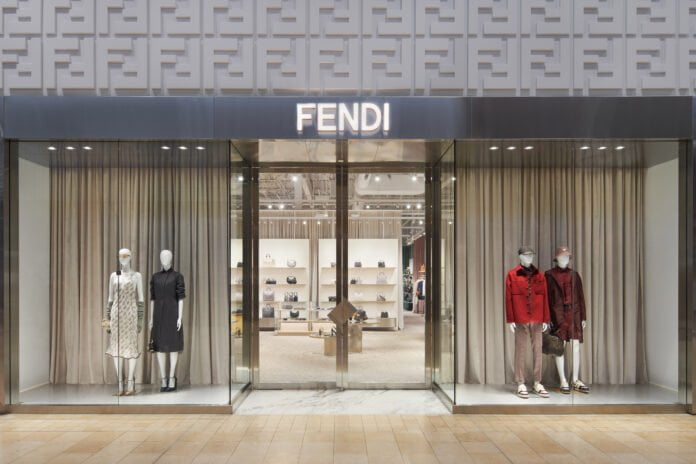
LVMH-owned Italian luxury brand Fendi has opened its first standalone storefront in Canada at Toronto’s Yorkdale Shopping Centre. The move follows Holt Renfrew’s banning of fur being sold in its stores last year.
The new Yorkdale Fendi storefront encompasses the brand’s range of women’s and men’s ready-to-wear as well as an assortment of bags/leather goods, accessories and footwear. Also included is an impressive collection of fur items ranging from coats to fur-covered bags. The retail space spans about 1,900 square feet and a lease plan indicates that the store is over 4,000 square feet in total.
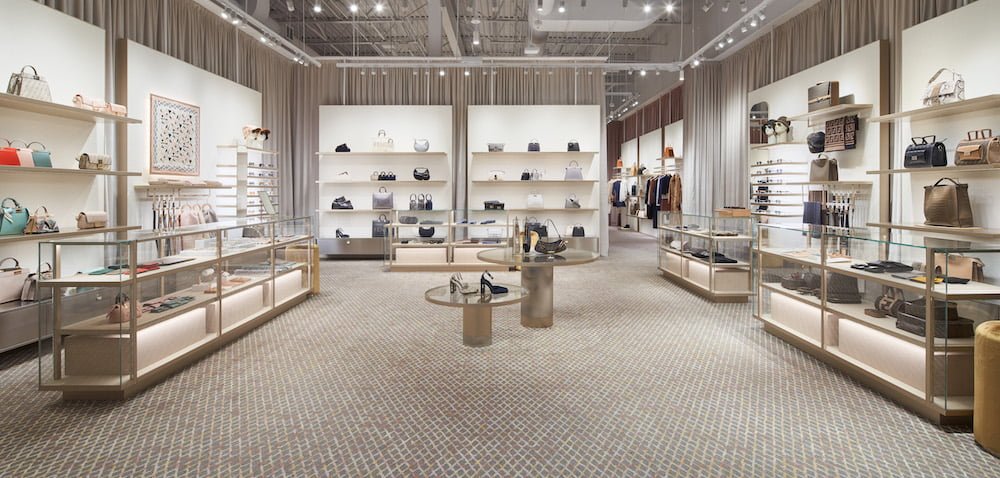
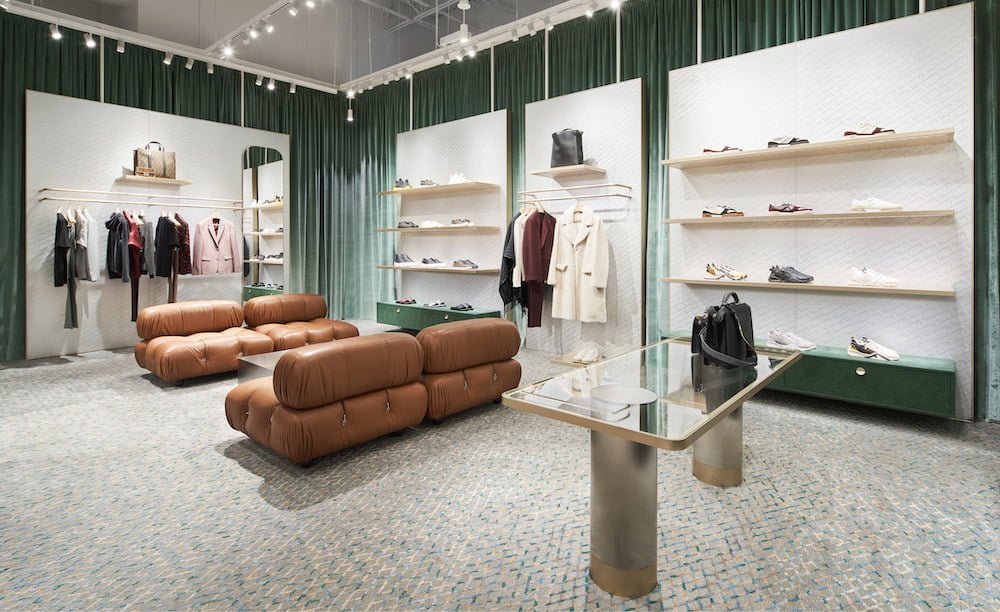
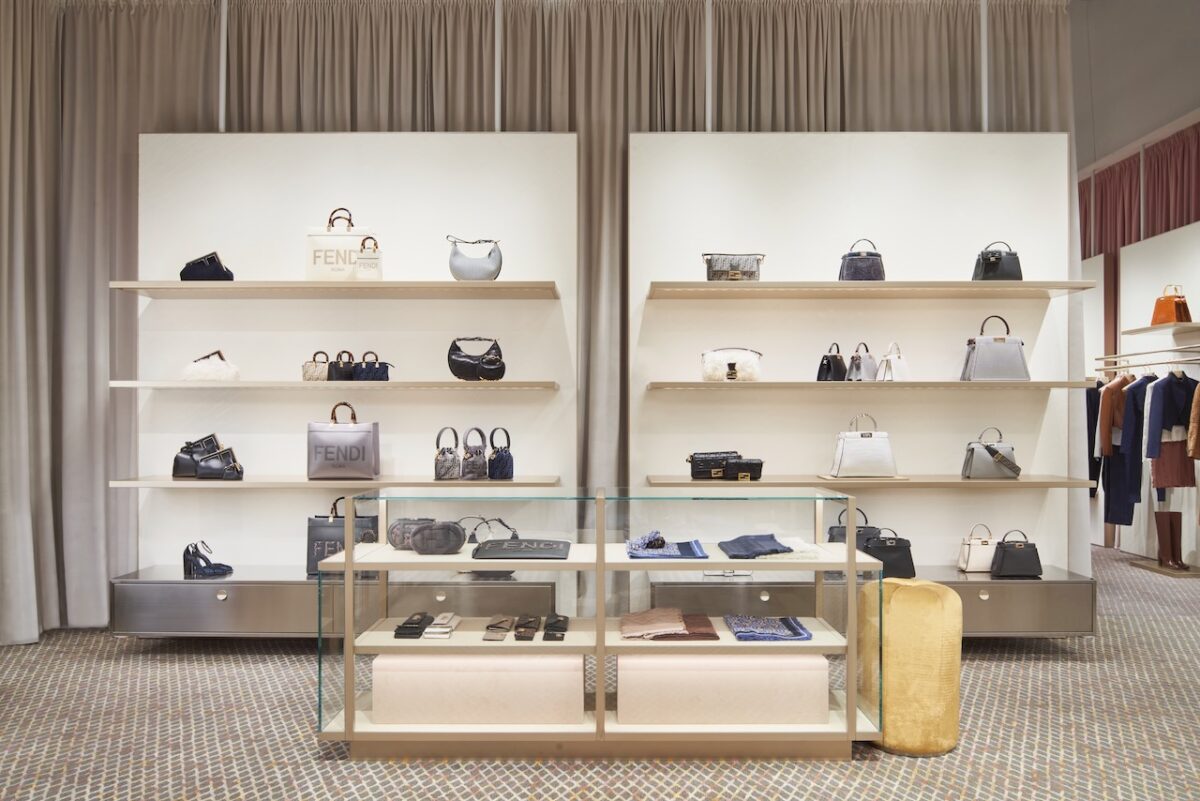
The interior features champagne metals and stainless-steel cabinetry with soft fluid walls and plush carpeting. Inside the store are three ‘rooms’ housing different collections. At the front of the store is a space of ivory and natural tones housing bags and accessories in a range of popular styles — Fendi made its mark in the 1990s with the ‘baguette’ bag style that is still sold today.
Front accessory/bag room at Fendi Yorkdale. Photo: Fendi
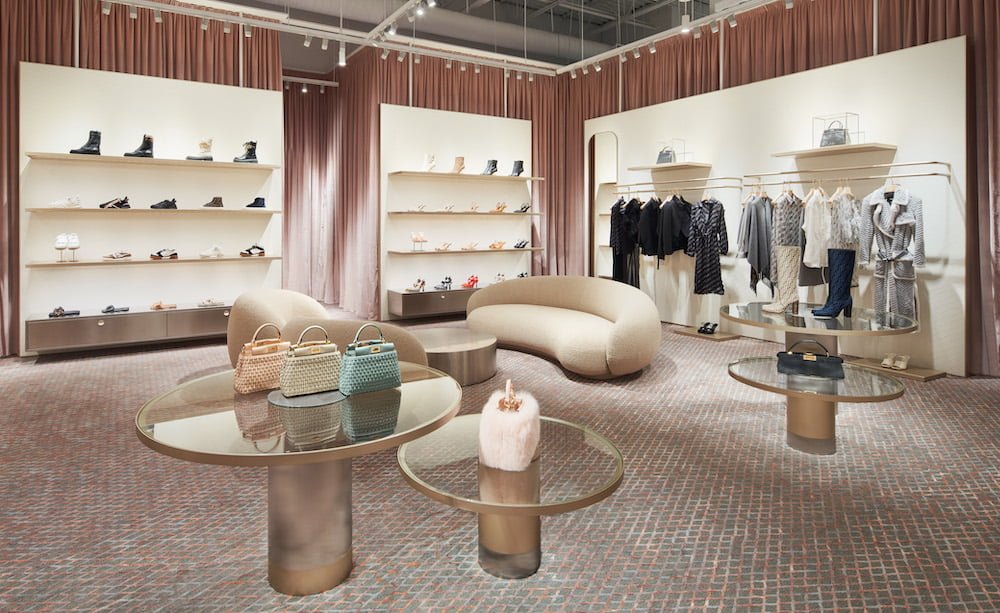
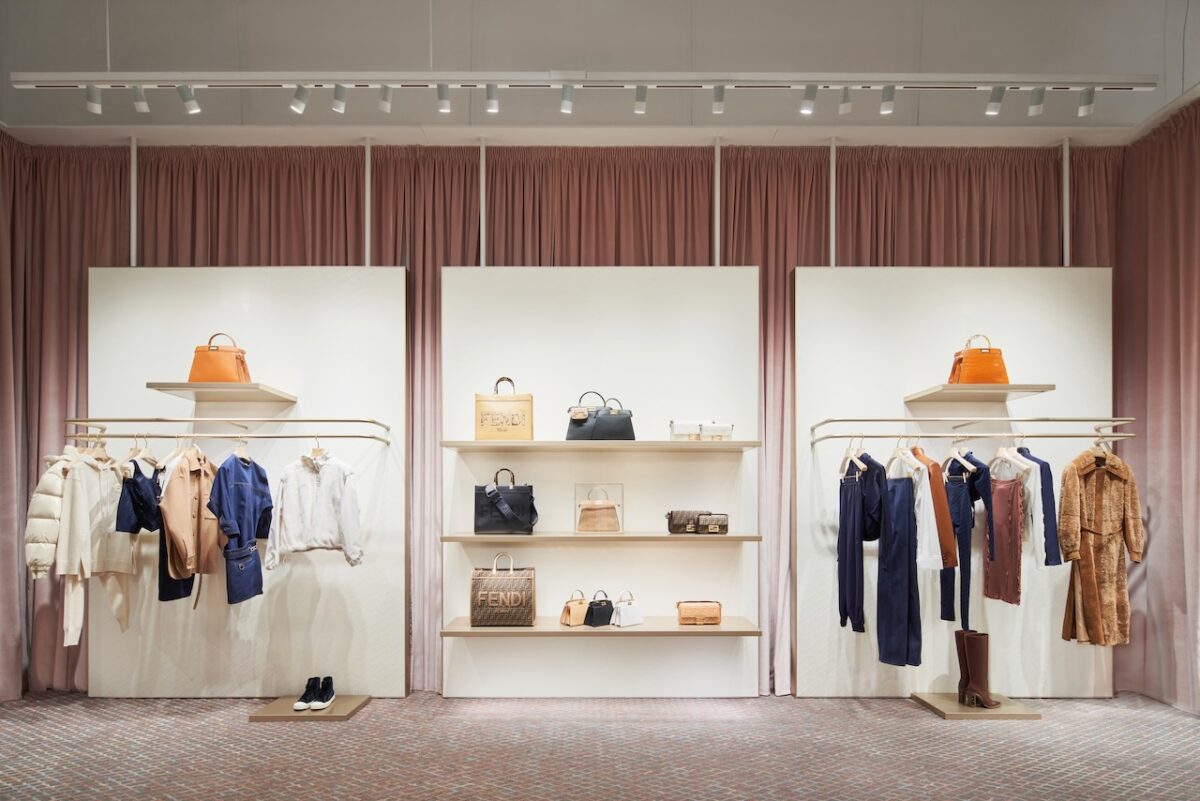
A second room in the middle of the store houses women’s collections including ready-to-wear, shoes and fur, in a space characterized by a powder pink interior. A third room at the back features vivid green curtains and carpeting with silver panelling and modular furniture and houses Fendi’s men’s ready-to-wear along with accessories and shoes. To coincide with the opening of the standalone store, Fendi pulled its menswear collection out of Holt Renfrew where it had a separate men’s concession — Fendi otherwise continues to operate a large women’s concession space within Yorkdale’s Holt Renfrew store which opened in 2019.
Panels in the standalone Fendi store feature archival versions of the FF logo designed by Karl Lagerfeld displayed throughout in 3-D handmade plaster in ivory or silver tone. The FF logo theme is also found on the store’s facade in off-white plaster, positioned above a metal canopy which lands adjacent to a lightbox displaying FENDI’s newest campaign.
The ceiling in the store is in an unfinished state, contrasting with the rest of the store which features a more polished aesthetic. The Yorkdale Fendi store is said to be on an initial two-year lease term and it’s unknown if more standalone Fendi stores will open in Canada, or if the Yorkdale location will stay open past the initial two years.
DWSV Realty negotiated the lease on behalf of Fendi. Oxford Properties manages the Yorkdale Shopping Centre.
Women’s ready to wear, footwear and fur. Photo: Fendi
While the Fendi brand had been in Canada for decades via wholesale through Holt Renfrew, Fendi quietly launched a direct-to-consumer expansion into the Canadian market in early 2017 when it opened a “flagship” women’s ready-to-wear boutique within the Holt Renfrew store in Vancouver. Fendi subsequently opened “world of” concession spaces at Holt Renfrew in Toronto (50 Bloor Street West in late 2018 and Yorkdale Shopping Centre in October of 2019) and Fendi most recently opened concession spaces within Holt Renfrew Ogilvy in Montreal.
The two Toronto Fendi concession boutique spaces are particularly large. The Bloor Street Fendi space spans nearly 3,000 square feet and carries a wide assortment of clothing, bags and footwear for women and men. The Yorkdale Shopping Centre Fendi space spans almost 2,000 square feet.
At Holt Renfrew Ogilvy in Montreal, Fendi has separate concession spaces for bags and accessories on the street level, a women’s fashion boutique on the third floor and a men’s boutique on the fourth floor men’s store.
Last year Holt Renfrew announced that its stores would stop selling fur and exotic skins, a trend seen in the industry including with several luxury fashion brands. That didn’t sit too well with the House of Fendi which was founded nearly 100 years ago as a purveyor of fur. A source told Retail Insider that Fendi and other brands found out about the fur and exotic skin ban during a public announcement, creating some concern and a move to open standalone storefronts.
Men’s room at Fendi Yorkdale. Photo: FendiImage: Fendi
Fashion houses that have stopped using fur with concessions at Holts include Gucci, Chanel, Balenciaga, Saint Laurent, Prada, Bottega Veneta, and Burberry. Some brands continue to do so though these products cannot be sold within Holt Renfrew’s walls, even for the brand spaces leased within.
Luxury brand Christian Dior, which has concessions at Holts in Vancouver, Toronto and Montreal, does still produce fur items although it is not as integral to collections as that seen with Fendi. Dior already operates standalone stores in Vancouver and Toronto where fur can continue to be sold.
Louis Vuitton utilizes some exotic skins in pricier designs, though the brand is not known to use such hides in regular items such as Vuitton’s popular canvas bags. Louis Vuitton operates concessions within Holts stores in Vancouver, Toronto and Montreal, and is able to sell non-Holts-sanctioned products in its network of standalone stores in Canada.
Image: Fendi
Hermes is not known particularly for its fur, though it does sell some pricey items in exotic skins. Hermes operates concessions within Holt Renfrew’s Calgary and Montreal locations and also has standalone flagships in Vancouver and Toronto.
Fur isn’t the only issue with some brands at Holts — sources are saying that some of the concession partners are unhappy with Holt Renfrew and are making demands in terms of space allocation. Dior is said to be wanting ‘world of’ spaces where such a move would be “nearly impossible”, and Prada is another brand said to have expressed displeasure with its biggest Canadian partner.
Fendi has had some history in Canada. The brand had a licensed standalone Canadian store about two decades ago in Vancouver. In the spring of 1996, entrepreneur Susan Pratt opened a small Fendi boutique at 1005 Alberni Street as part of her Collections International retail operations. The boutique shut in the early 2000s after Fendi was acquired by LVMH. Ms. Pratt continues to operate a boutique called Fabulous Finds on Bowen, on Bowen Island in British Columbia which recently marked 10 years in business.
In the United States, Fendi could also open more standalone stores as several upscale multi-brand retailers have announced fur-free policies. That includes Nordstrom which banned fur as of the start of this year, and Neiman Marcus and Saks Fifth Avenue which will both stop selling fur by 2023. All three retailers house Fendi boutiques within selected locations. For years Fendi has had standalone stores in the United States.
The House of Fendi was founded in 1925 by Adele and Edoardo Fendi which operated as a small fur and leather shop in Via del Plebiscito, Rome. The brand has grown to become a multinational brand with stores operating all over the world.
In 1965, Karl Lagerfeld became creative director for Fendi and is said to have revolutionized the wearing of fur by reinterpreting it and transforming it into “a fashionable, soft, light item of clothing”. Fendi continues to sell fur coats as well as various fashions and accessories that include fur trim and in some instances the use of exotic skins on pricier items. You won’t be able to find those at Holt Renfrew’s Fendi concessions as of this year, however, which means we could see more standalone Fendi stores in Canada in years to come.
Indigo’s priorities over the past three years and key strategies moving forward include accelerating its assortment of thoughtfully-curated products, developing Indigo’s store of the future, innovating within Indigo’s digital platforms, and investing in its employee benefits.
“At the core of everything we do is our relationship with our customers. On September 7, we launched our new brand positioning life, on purpose, which is the expression of how all our strategic priorities come to life for our customers. For us, life, on purpose, is about identifying what we truly value and then spending our time and resources in alignment with those values,” said AndreaLimbardi, President at Indigo – Canada’s largest book and lifestyle retailer.
“As life today is at a ‘speed of light’ pace, we have heard from our customers – and relate for ourselves at Indigo too – that too much of our time is spent doing things that don’t bring us joy. Oftentimes, that’s the endless scroll on social media or show after show watched on a streaming service only to feel like time was wasted. At Indigo, we are a place where customers can engage with what matters most to them and do more of what they love. Whether that’s cook a meal together with friends, explore a new passion through books, build Lego with their kids, or reconnect with music and build their vinyl collection.
“Our general merchandise expansion, is therefore a natural extension of our book business, connecting our customers to the information and resources they need to live life, on purpose, along with the tools to help them action their passions and interests.”
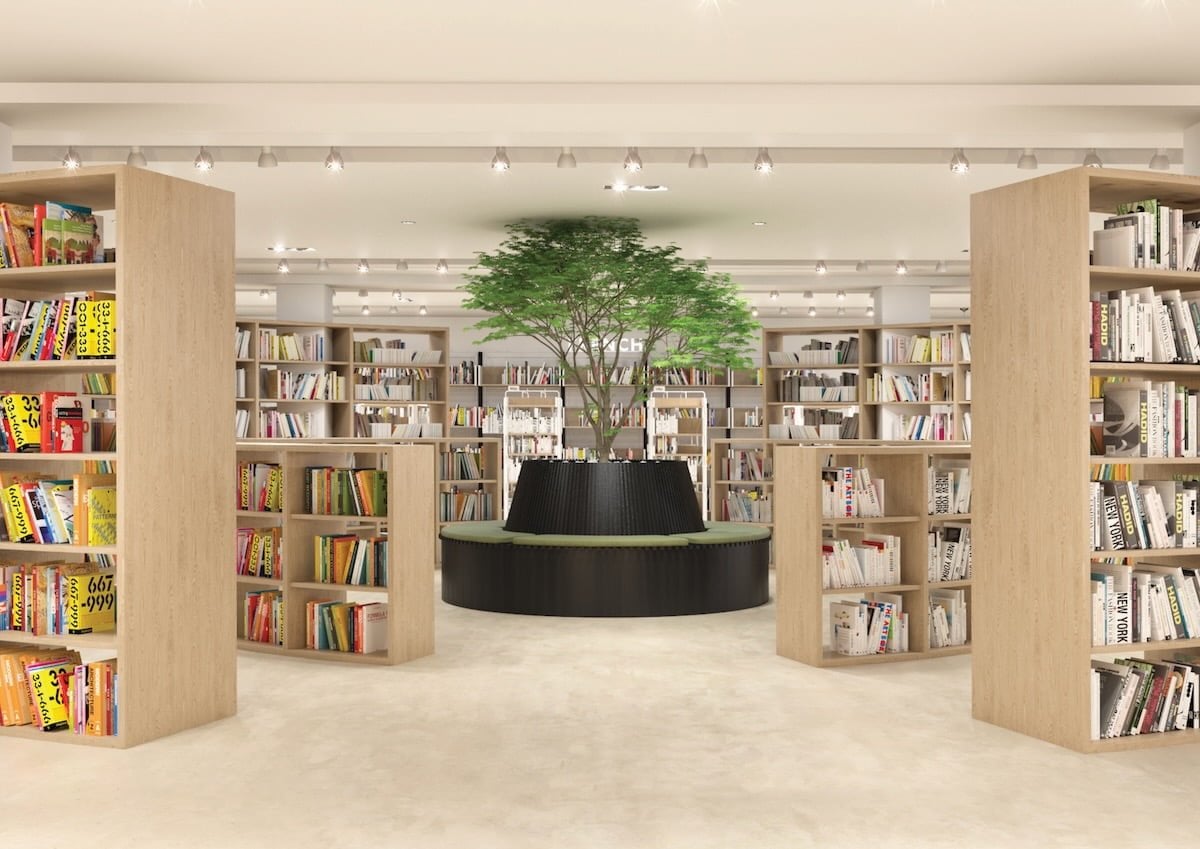
Indigo at CF Rideau Centre (Rendering: Indigo)
There are 87 superstores under the Indigo and Chapters banners and 84 small format stores under the Coles and Indigospirit banners.
The company has Indigo Rideau opening this fall at the Rideau Centre in Ottawa. It also opened earlier this year its first beauty and wellness shop-in-shop at our Robson store in Vancouver.
Rather than being the everything store, the assortment is an emporium of beautiful, long-lasting, and functional items inspired by culture, explained Limbardi. Indigo’s assortment transformation is dedicated to the expansion of new and growing categories such as Gifting, Tech, Plants, Gourmet, Arts & Crafts, Record and Fan shops, Tween, Wellness, Baby and Manga, she added.
“Customers want a two-way relationship with the companies they buy from, forged by feedback and action. Though every interaction doesn’t have to be one-to-one, it has to feel that way,” she said. “Customers are interacting with Indigo across the whole omni-channel ecosystem, and the company is working to make that seamless no matter where they choose to be inspired or which channel they choose to make their purchase.
“It’s all about forging meaningful connections and helping Indigo’s customers live their life, on purpose – their way.”
Image: Indigo
Limbardi said the distinction between physical retail and digital retail has evolved and customers expect to have a seamless experience with the Indigo brand, regardless of channel. In addition to reshaping Indigo’s physical store offerings, the company continues to invest heavily in its digital platforms to bring inspirational content and product to its customers, while enhancing their shopping experience, she added.
“As part of Indigo’s digital transformation, we will be launching our new website later this fall. These efforts will deliver an innovative and agile platform that will allow the company to fully realize the potential of the ecommerce opportunity unlocked by accelerated adoption during the global pandemic,” explained Limbardi.
“Through our new website we will: create experiences that help customers make the best choices to live their life, on purpose — from more purposeful filtering to content with strong perspectives, create an experience that feels curated by someone that has deeply considered “me”, from what products are seen to how they are presented, create experiences that feel like wandering in store — like peeking into aisles or picking up a product to examine it.
“Additionally, this fall, we are launching ship from store which allows us to unlock access for customers of the inventory in all of our stores coast to coast to coast and treat each store like its own mini distribution centre.
Image: Indigo
Partnerships for the digital transformation replatform include SalesForce CommerceCloud, Contentful, Inriver, and Manhattan.”
Previously, Indigo introduced several digital innovations including enhanced express pick up, partnerships with Instacart and Cornershop x Uber, and a dropship/marketplace program with Convictional. Additionally, in July, it compacted its MarTech work with partnerships with Segment, Snowflake, Sailthru, and Adobe Analytics, said Limbardi.
In early September, Indigo announced Heather Reisman, Indigo’s founder & Chief Executive Officer, had been appointed Executive Chair; Peter Ruis, Indigo’s President, assumed the role of Chief Executive Officer, and Limbardi, Indigo’s Chief Customer and Digital Officer, was appointed President. Also, Ruis was appointed as a member of Indigo’s Board of Directors.
In August, the company reported financial results for the 13-week period ended July 2, 2022 compared to the 13-week period ended July 3, 2021.
Image: Indigo
Revenue increased $32.5 million, or 18.9 per cent, to $204.6 million compared to $172.1 million in the prior year, exceeding the company’s top-line first quarter performance in the preceding three fiscal years.
In a news release, Indigo said total sales growth was driven by the success of Indigo’s omnichannel business; a strong recovery in the retail channel where traffic levels continued to normalize, and an ecommerce business that sustained incremental growth of 80 per cent of fiscal 2020 levels. Double-digit growth was generated in both the print and general merchandise businesses.
“Unfortunately, current macro-economic conditions had a negative impact on margins and costs given supply chain disruptions, higher freight costs and inflationary pressures. The Company also incurred additional costs with investment in technology aimed at driving productivity and growth. These factors impacted the net loss position, which changed by $3.5 million to a net loss of $25.4 million ($0.91 net loss per basic common share), compared to a net loss of $21.9 million ($0.79 net loss per basic common share) in the prior year, which is inclusive of the impact of the above-noted COVID-19 support received,” it said.
Kitchen Hub is partnering with Longo’s supermarket chain to open the first ghost kitchen concept inside a grocery store in Toronto – the first of its kind in Canada.
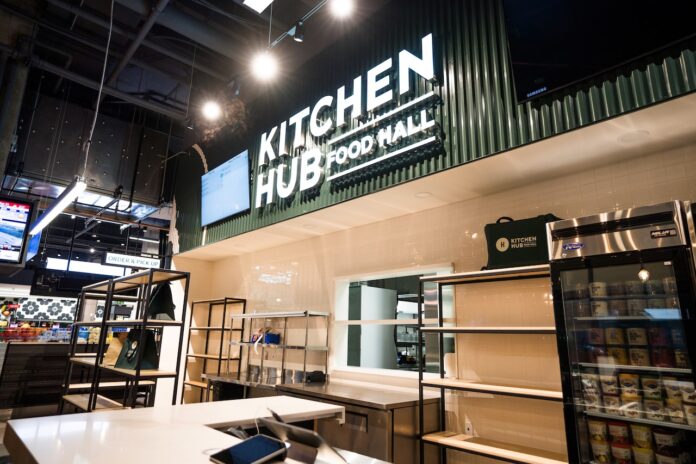
The “store-within-a-store” food hall concept is inside Longo’s Liberty Village and the fourth location for Kitchen Hub.
The partners said future location opportunities are being explored.
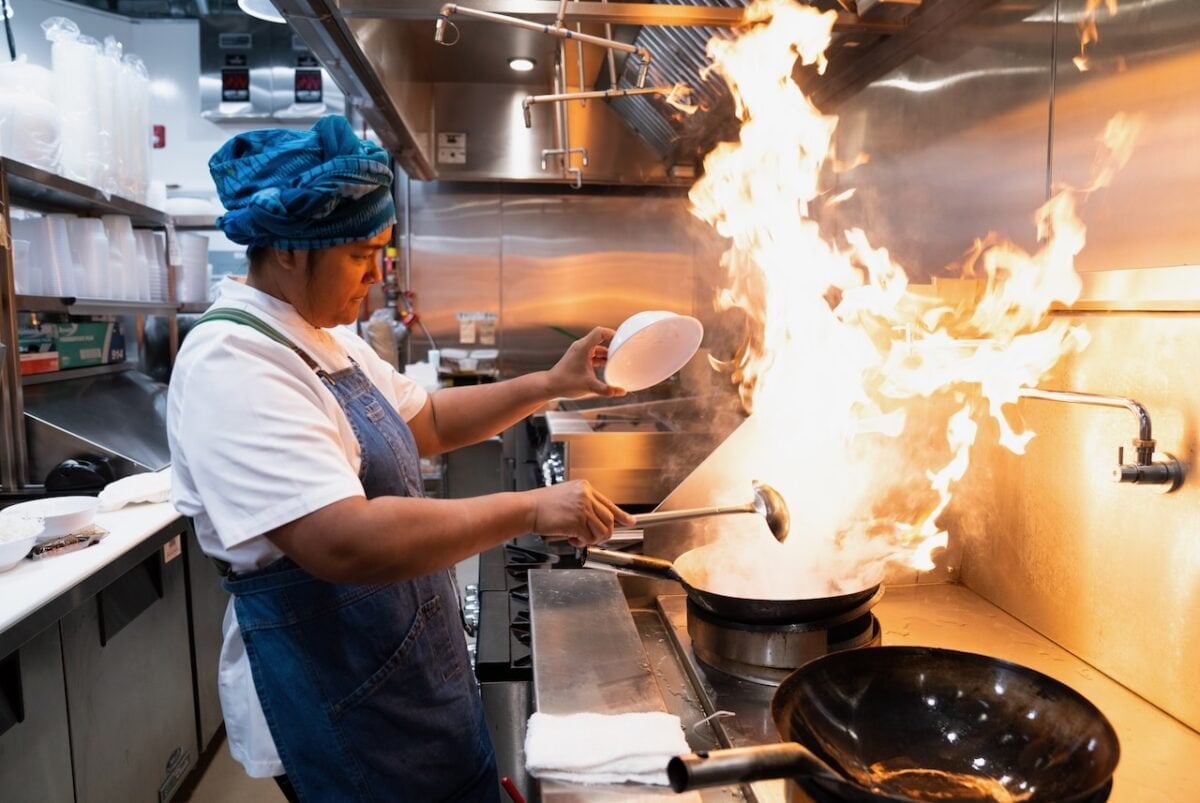
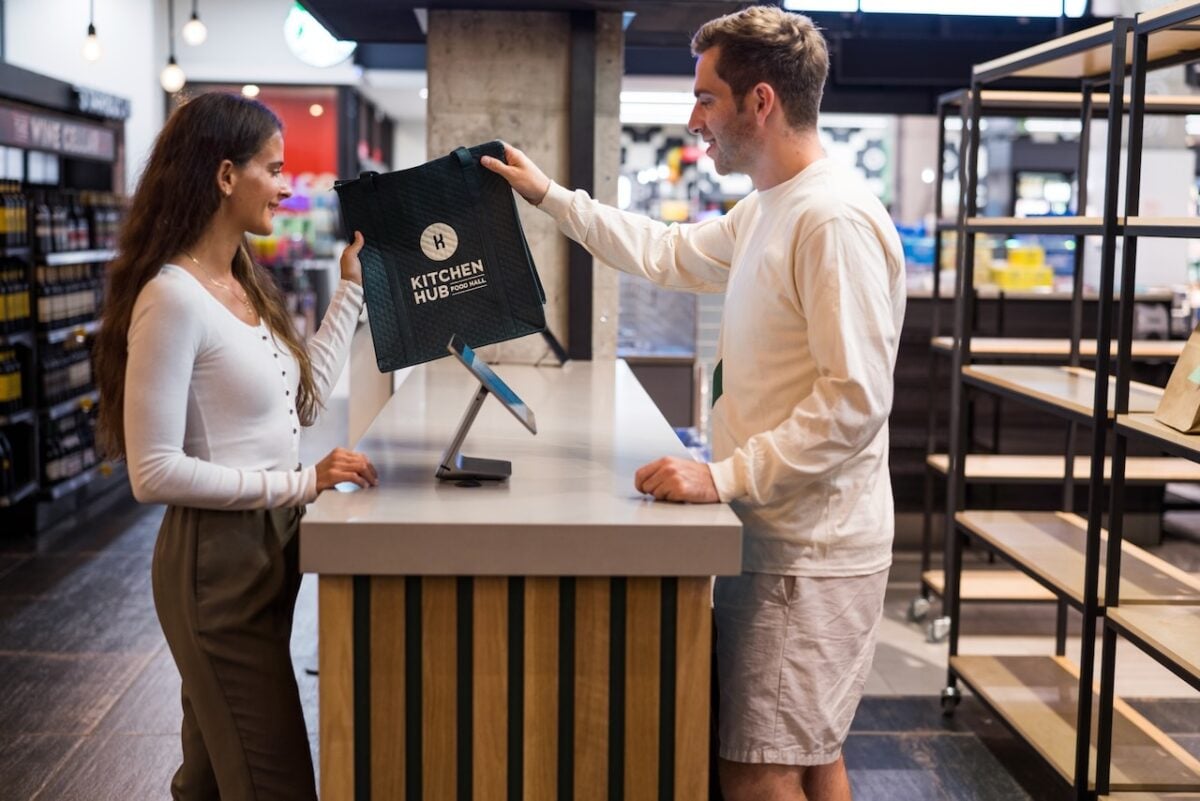
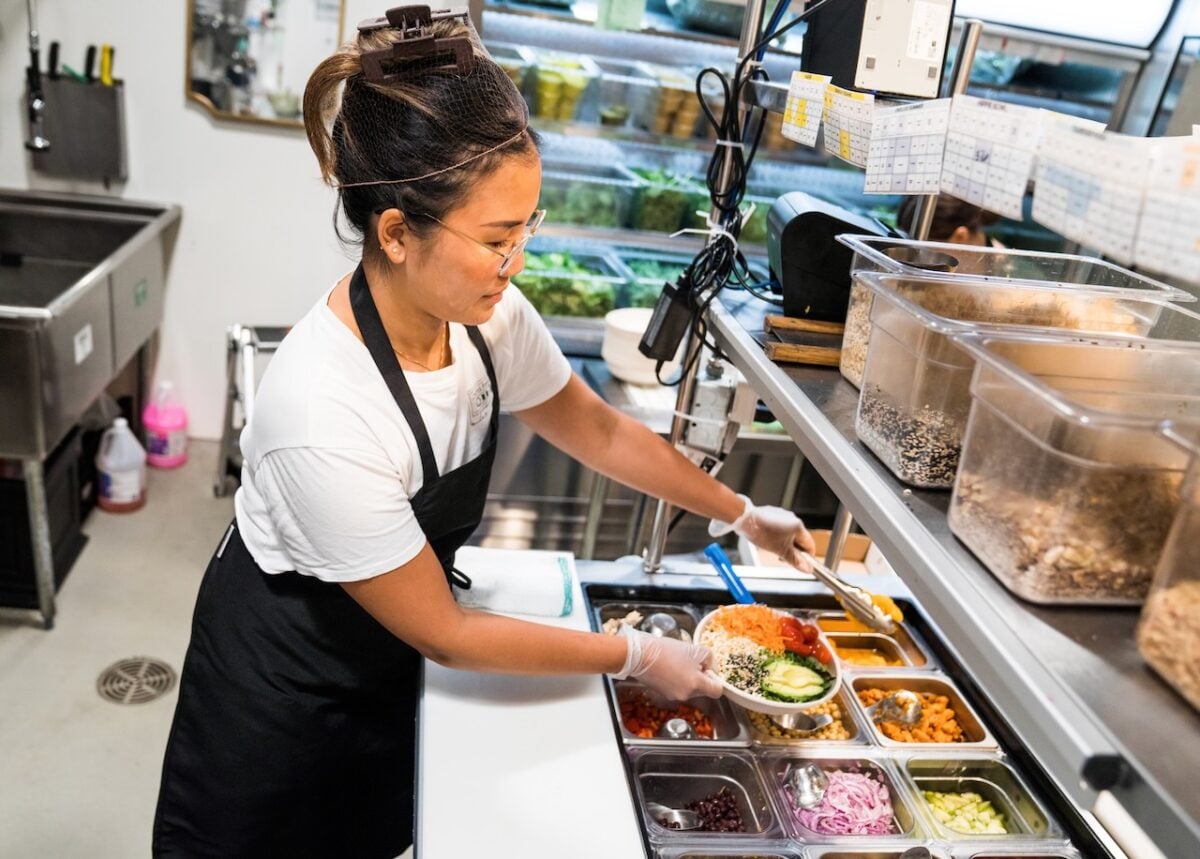
Kitchen Hub has four new kitchens at Longo’s Liberty Village – Toronto’s beloved Thai restaurant PAI, Montreal’s buzz-worthy Mandy’s Gourmet Salads, rapidly-growing fried chicken and burger spot Cabano’s Comfort Food and authentic Mexican fare from Elia Herrera of Colibri with Tecolote.
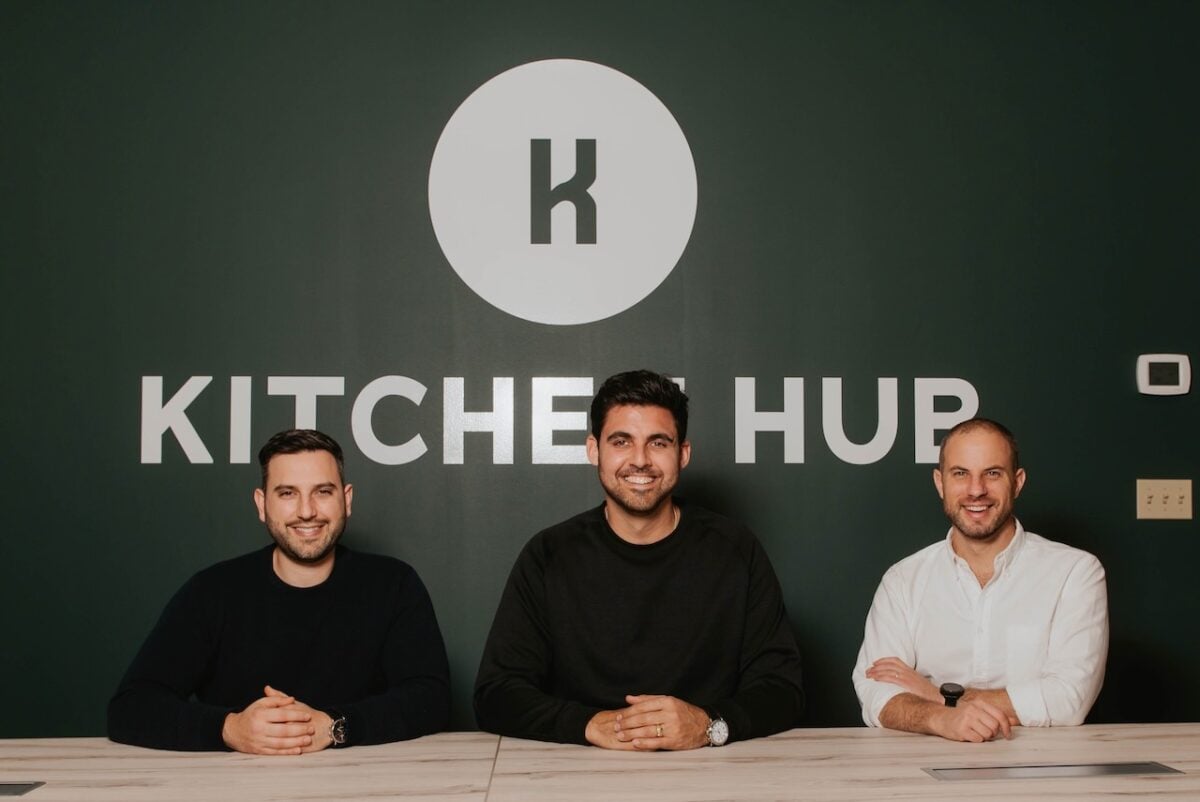
“We are always looking for new ways to exceed the demands of the quickly evolving takeout channel,” said Adam Armeland, Kitchen Hub Co-Founder and CEO. “We identified an incredible opportunity to not only expand our business model by adding a completely new style of virtual food hall, but also benefit our grocery partner by driving foot traffic in-store and our customers by providing streamlined access to unbelievable takeout in a way that’s never been done before. We are thrilled to partner with Longo’s, another Toronto-founded brand, for this exciting new expansion.”
Kitchen Hub (Image: Unbound Productions)
“At Longo’s, our guests are always looking for delicious food as well as increasingly convenient ways to shop for quality meal solutions. We understand the changing demands and behaviours of our guests and take pride in always evolving to deliver the best shopping experience possible,” said Anthony Longo, President and CEO of Longo’s. “Kitchen Hub’s collection of curated offerings from top-tier brands will ensure that we continue to elevate, innovate, and appeal to our guests. We are excited to deliver this new offering to our Liberty Village community.”
Kitchen Hub first launched in 2020 after Armeland was on parental leave with his daughter and he was ‘cooking’ for the family and he was finding different takeout food.
“You started to realize that there was this trend happening around convenience and people wanting takeout food to bring home and not necessarily consume in the restaurant,” he said.
“We have plans next year for another six in Toronto.”
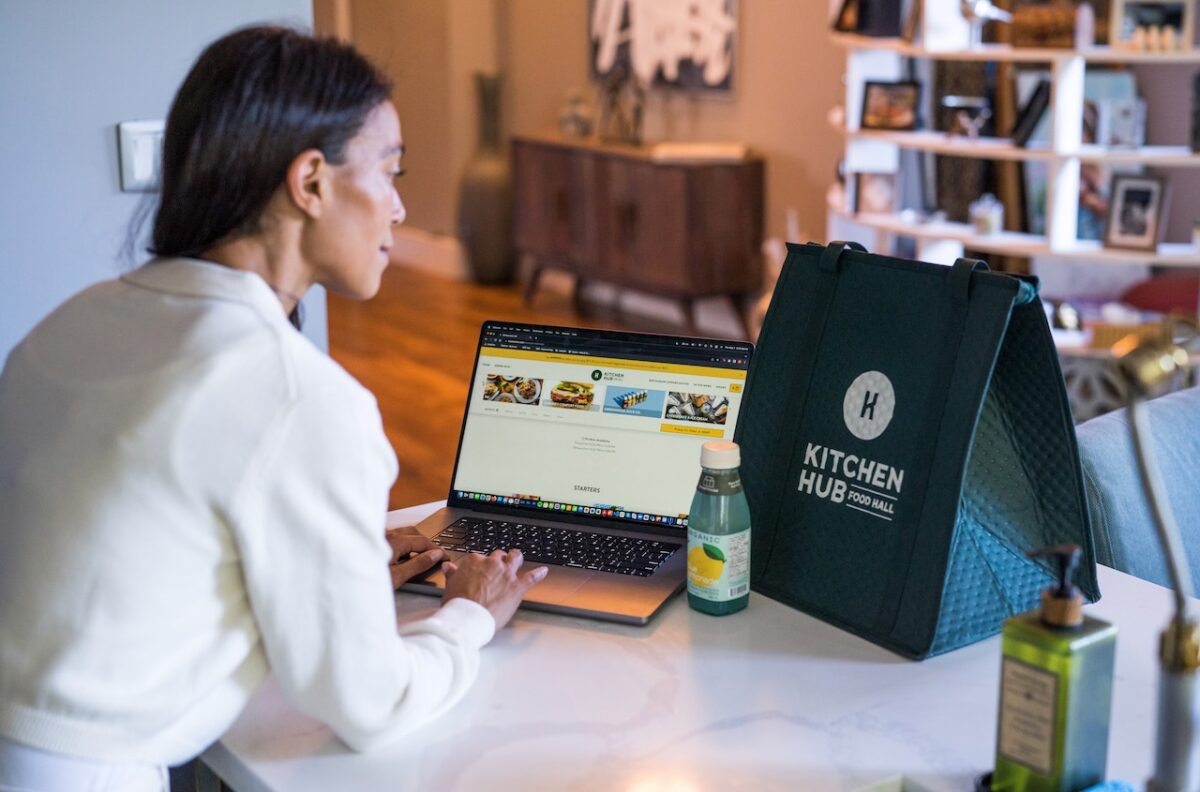
Kitchen Hub offers pickup or delivery via KitchenHub.com, all major third-party delivery services and from all Toronto locations: 935 The Queensway (Etobicoke), 234 Parliament Street (Downtown East), 1121 Castlefield Avenue (Castlefield Design + Decor District) and the newly launched 1100 King St West, (Liberty Village).
There are 36 Longo’s stores across Toronto and the GTA.
Armeland said it was felt that Liberty Village and the profile that exists there for the consumer was the right spot to bring the latest Kitchen Hub concept.
“Can you actually teach people that restaurants are now available in grocery stores where we actually built four industrial kitchens . . . to rent out to restaurants to cook their incredible food?,” he said.
“We thought this was kind of the perfect spot to test this and see what the possible is . . . We’re exploring future locations together (with Longo’s) and different opportunities. Obviously we have to see what the possible is with this one but we think it’s a really exciting partnership that really benefits both of us to help drive (traffic) from both of our brands . . . into their space.”
Kitchen Hub (Image: Unbound Productions)
Joey Bernaudo, Vice-President of Merchandising for Longo’s, said the introduction of Kitchen Hub gives the supermarket the opportunity to provide its customers with more convenient ways to shop for delicious foods. It brings together Longo’s kitchen with great quality food and partnering with restaurants through Kitchen Hub.
“It brings multiple types of food that guests can enjoy in one spot,” he said. “We love that location (Liberty Village). We’re new in that location. It’s been about three years now. We think it’s a great opportunity.
“We just thought that that market enjoys different foods, different ways to enjoy food. So we thought that market was a great setup for this and it allows us to offer that guest a meal solution.
“(The Liberty Village store) is about 22,000 square feet. It’s a little bit smaller than our typical store but it is a full offering. It’s got our full kitchen offering. It’s got the full shop offering. The Kitchen Hub piece we’re really proud on how it actually came out. It looks like it was part of the store design from day one and it really fits the marketplace, the decor, the whole overall experience of the store. We’re really pleased with how it came out.”
Kitchen Hub (Image: Unbound Productions)
Bernaudo said Longo’s is looking at other opportunities and exploring them. If there are markets that make sense and fit the store, the community, the partnership, so it’s mutually beneficial, then the grocer will definitely explore them. But there’s nothing concrete at this point.
“But we’re definitely open for discussions as this one at Liberty Village starts to get going. I’m sure we’re going to learn lots of things and hopefully there’s some more opportunities going forward,” he said.
“The partnership allows us to really anchor . . . meal solutions and really bring top quality food and different offerings for our guests. I think it’s just a unique way to bring something to that community.”
After a slew of confinements and closures, restaurants are still not out of the woods. Far from it. Over the past year in Canada, restaurant closures outpaced openings by a whopping 43%. The industry is still shrinking.
Inflation-adjusted food service sales will be around 11% below 2019 levels by the time we’re done with 2022, and could surpass the $100 billion mark, according to the latest report from Restaurants Canada. Traffic in full-service outlets is down 9%, and for quick service, it’s down 5%. Still, these are encouraging numbers.
The annual report is of course imbued with the optimism and resilience characteristic of the sector. But with both a possible recession and higher interest rates on the horizon, consumers will have to make choices and change habits. With a tighter budget, many consumers will eat in restaurants less often. We estimate that on average, 27% of our current food budget is spent on food consumed outside the home, at some type of restaurant. Before the pandemic, the percentage was over 35%, and getting back to that percentage will take time, perhaps even a few years.
But the report is a bit surprising in many aspects. For one, there’s not a single word in it about the work-from-home phenomenon. We estimate that by 2025, nearly 40% of the Canadian workforce will work at least one day a week or more at home. A more domestic, more sedentary market does not have the same relationship with food as a consumer market that commutes daily.
The Shake Shack chain in the United States, which operates more than 6,000 restaurants worldwide, including a few in Canada, has become a model case for strategic pivoting during the pandemic. The chain’s revenue is around $500 million annually. In March 2020, their online sales were practically zero. Today, 43% of their sales are online, through phone apps. In fast food, only 16.5% of consumers will eat their meals on site. Before the pandemic, that percentage was 33.9%. Ordering online for delivery or pick-up is almost the norm now for many consumers.
It’s not surprising, then, to see other chains, like Subway, copying Shake Shack and relying heavily on their own app. SKIP, which just let go 350 employees, knows this all too well. This e-commerce platform, as well as UBER EATS, Doordash, and others who offer meal delivery from partner restaurants, are seeing their turnover affected by competitors that recognize the potential of a virtual market. Even grocers are improving their service and relying on online shopping, and they are getting better at it. Before the pandemic, the food service sector had almost a monopoly on delivery and counter service. This is no longer the case.
Of course, some of the major headwinds affecting the sector include inflation and labour issues. With inflation, as prices on the menus increase, the number of choices are decreasing. Less waste, less cost. It is possible that we’ll see more and more restaurants with service that offers only one or two dishes on any given day, because this provides more predictability for the back-of-house staff. Several European restaurants are already doing this. The demand becomes more manageable, and so do the costs.
Regarding labour issues, Restaurants Canada estimates that the sector has had between 150,000 and 170,000 vacant positions for some time. The sector currently employs 271,000 fewer people than in 2019, before the pandemic hit. The difference is enormous. Several establishments will close earlier or will open less often. Operators will rely more and more on robotics, which we are already seeing in several businesses, both in the kitchen and in the dining room.
The sector is clearly redefining itself, but the bleeding continues. As it emerges from a tumultuous period with a firm desire to adapt to a market that is difficult to predict, many establishments won’t survive. Interestingly, the report notes a few trends to watch for, including increased demand for local food, comfort food, and globally inspired foods and flavours. Talk about paradoxes.
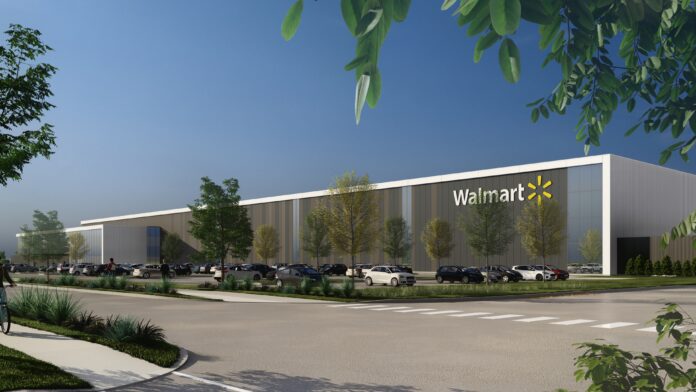
Retail giant Walmart Canada is building its first-ever fulfillment centre in Quebec which is a $100-million delivery hub for Quebec and Atlantic Canada customers and part of the retailer’s plans to invest $1 billion in infrastructure this year.
That includes about $330 million in a record number of store renovations this year.
“This important investment is the latest example of Walmart’s commitment to Quebec,” said Cyrille Ballereau, Walmart Canada Regional Vice President for Quebec, in a statement. “We are investing for growth in Quebec and creating jobs for Quebecers to better serve our customers. Quebecers will see refreshed stores, quicker service and more options available in-store and online. When Quebecers choose Walmart, they are choosing to support a retailer that supports Quebecers.”
The new high-tech sortable fulfillment centre near Montreal in Vaudreuil-Dorion, Quebec is expected to open in 2024 and will offer better product availability and quicker service for customers choosing to shop in-store or online at Walmart.ca, said the retailer.
The Quebec fulfillment centre will be about 457,000 square feet and it will be powered by cutting-edge logistics technology to achieve productivity with less physical effort by using innovative technology.
Photo: Walmart Canada
“This platform will speed up order fulfillment through an advanced operating system that will help associates store, pick and sort items by using smart and flexible storage abilities to manage a large and wide variety of inventory,” said Walmart, adding that the facility will be capable of shipping 20 million items annually to local customers and capable of storing 500,000 items to fulfill direct to home and in-store pickup orders.
The facility, which is designed to optimize packaging, minimize waste and reduce transportation costs, will create about 225 new jobs in Quebec, plus construction and engineering jobs.
“We are thrilled to partner with a brand and business as strong and reputable as Walmart,” said Tyler and Chris Harden, Co-CEOs of Harden, in a statement. “This state-of-the-art fulfillment centre is a true testament to their vision for the future of retailing and a long-term commitment to Vaudreuil and the province of Quebec, as a growing hub. We are proud to be executing the construction of this project on behalf of Walmart, with our in-house construction team, and to add this asset to our portfolio.”
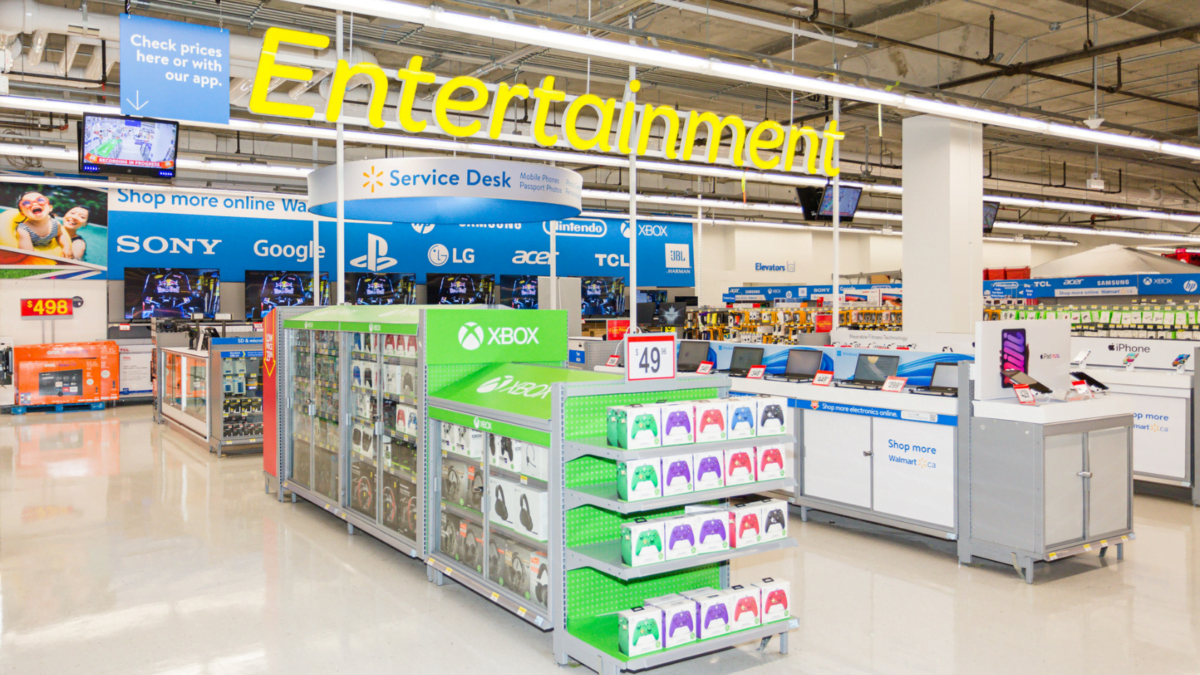
Walmart said this year’s $1 billion investment also includes plans to update and remodel a record number of stores in a year with store changes including modernizing and upgrading physical spaces with a focus on improving the customer experience both in-store and online.
Photo: Walmart Canada
More than 80 stores from Port Alberni, B.C., to Carbonear, N.L., will be revamped and refreshed, providing more than 2,500 trade and construction jobs.
“We know these are challenging times for our customers. That’s why we are proud to be making significant investments in Canada to deliver the very best shopping experience,” said JP Suarez, Executive Vice President, Chief Administration Office and Regional CEO for Walmart International, who is also leading Walmart Canada on an interim basis, in a news release. “We are building a better Walmart Canada to help more Canadians save money and live better. As the cost of living rises, Canadians can trust Walmart to be that convenient, one-stop shop for everyday low prices.”
Some of the enhancements include:
Expanding product assortment and offering an upgraded look and feel;
Integrating more dedicated omnichannel spaces for more online orders;
Refreshing interiors and exteriors, including fresh paint and new signage;
Adding LED lighting to key departments to enhance the interior experience;
Updating associate lounge areas, including new couches and other upgrades;
Renovating washroom areas, including new tiling and sustainability features; and
Replacing and upgrading legacy systems with new technology and applications.
Walmart Canada said these projects are part of its multi-year $3.5 billion investment in the Canadian market.
The company operates more than 400 stores across Canada with 1.5 million customers each day.
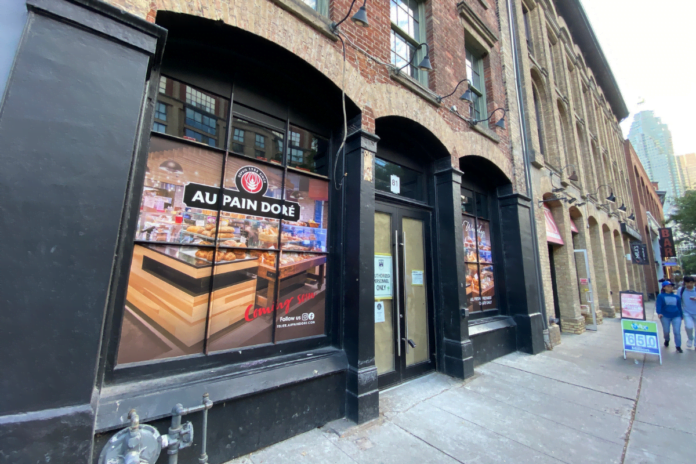
Future Au Pain Doré in Downtown Toronto (Image: Dustin Fuhs)
Jeff Morgan and his wife Ardita Karaj have a background in the IT sector but their passion these days is for French bakeries.
The couple, who own a Brioche Dorée franchise, a Parisian bakery cafe at the TD Centre in downtown Toronto, are also planning to open in the near future an Au Pain Doré franchise location in the St. Lawrence Market area of the city.
They opened their Brioche Dorée location last November. That French brand is located around the world in about 40 countries with a small presence in North America.
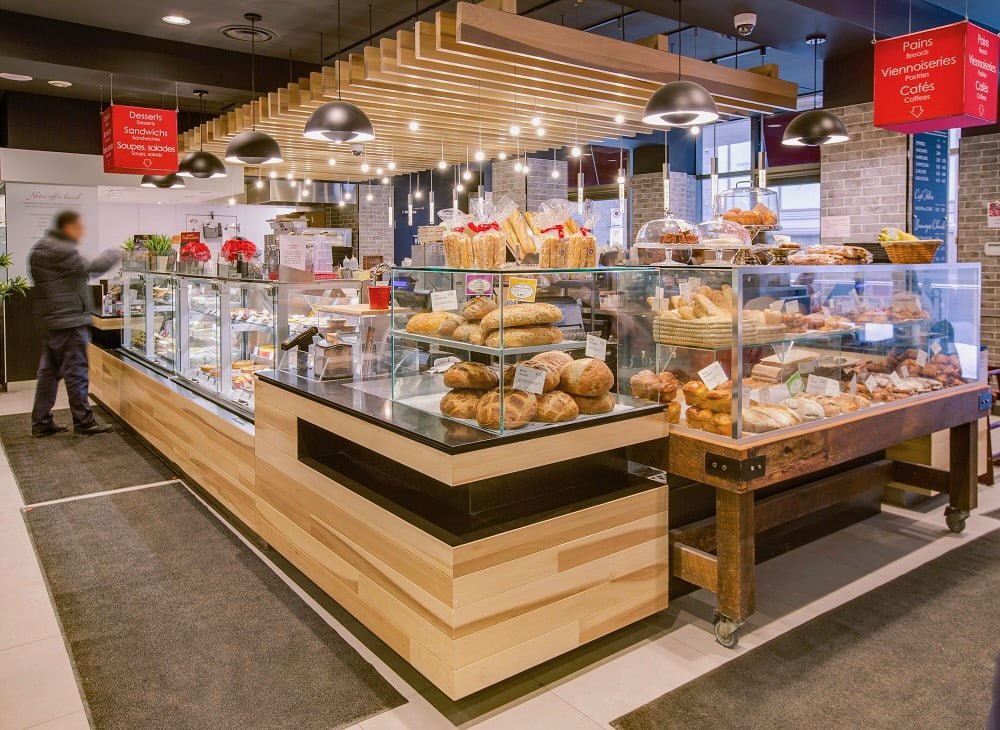
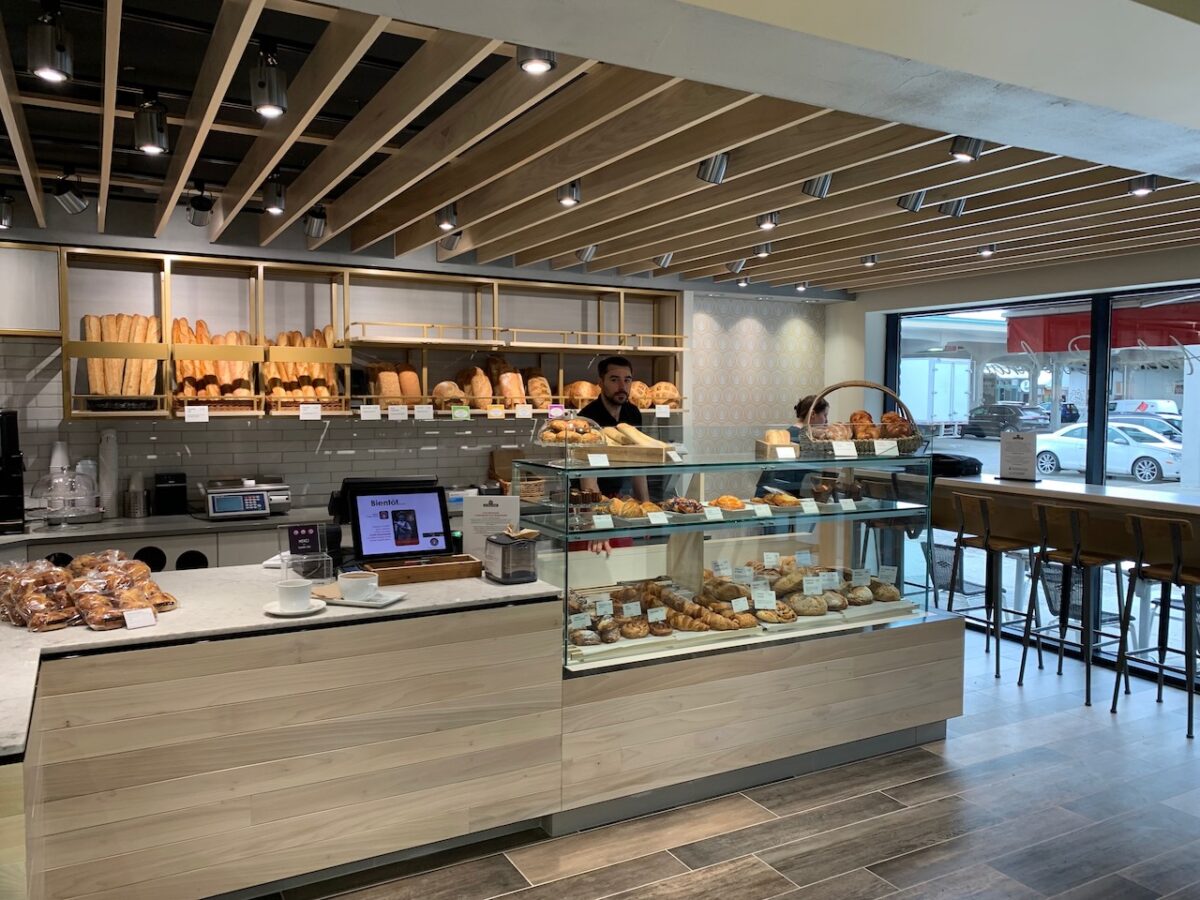
“The store is a French bakery. It is famous for bringing that fast food concept in the French world,” said Karaj. “It is French food with a high quality, fresh-baked daily but it’s in a fast-serving environment.”
Image: Au Pain Doré
“It’s kind of a grab-and-go. Although we have seating there, because of its location and everything else, it’s not a place that people tend to linger. We service a lot of the office buildings in the area,” added Morgan.
Morgan said the new Au Pain Doré brand that the couple is opening, started in Montreal as a family-owned bakery since the 1950s.
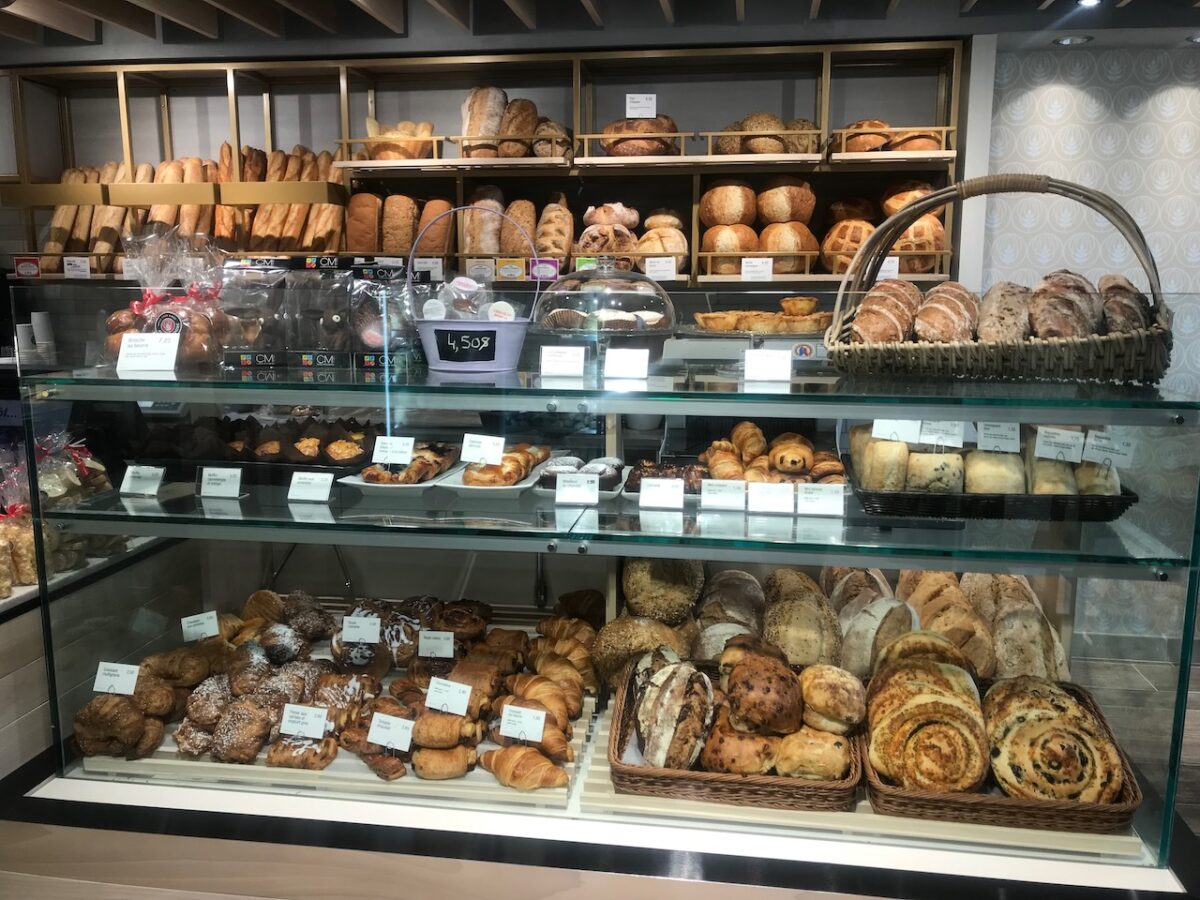
Morgan said the brand carries all the French pastries, the breads, desserts, salads and soups, and very good coffee.
“It’s considered more of like a neighbourhood place where people will linger around,” he said.
Morgan said the new Toronto location for Au Pain Doré is currently under construction with opening now scheduled for either late September or early October.
“It’s going to be the flagship Au Pain Doré in Ontario. It’s a large location. We’re really making it a nice, nice store. With nice furnishings. A great experience. This is a showcase of this brand in Ontario,” said Morgan, adding that the brand will likely continue to expand in Ontario and beyond with additional franchises.
The location will be just under 1,900 square feet.
Image: Au Pain Doré
According to the company’s website, In 1951, Roland and Odette Étienne settled in the Rosemont neighbourhood of Montreal. Five years later, with support from Montreal’s Basque community, the Étiennes purchased a bakery with two Mignolet ovens on Marquette Street.
“In its early days, the bakery’s golden-crusted baguettes and French breads attracted restaurant owners. It was only in 1983 that the first Au Pain Doré bakery opened in a converted former garage, finally giving local residents the opportunity to also enjoy the quality of genuine French bread.
The Marquette Street bakery was such a success that it wasn’t long before Au Pain Doré’s quality began to spread across the city. A location opened on St-Denis Street in 1991, followed by Peel Street downtown and Laurier Street in 1992. Three more addresses joined the family in 1995: McGill Street, Mont-Royal Avenue and Côte-des-Neiges. The growing demand for breads, pastries, sandwiches, desserts and other delicacies also meant a growing challenge with regard to production and multiple daily deliveries,” says the corporate website.
“To overcome the challenge, the Atelier Boulanger rue de Rouen was opened in 1997. Here, bread is handmade under ideal conditions and continuously fine-tuned by a desire to blend expertise and technology. Proud of its success, the thriving family-owned company continued its expansion by opening six more locations in Montreal and Laval.
“In 2008 Au Pain Doré attracted the attention of Le Duff Group, also experts in high-quality bakery and owners and operators of several international brands throughout the world. Au Pain Doré became part of the Group, which shares the same ambition as the three generations of the Étienne family who had been part of the business through the years: to strive for excellence, and to pride itself on being the reference for traditional French bread in Montreal.”
Image: Au Pain Doré
Le Duff Group also owns the Brioche Dorée brand.
Karaj said the couple is typical of the target customer. They love French food and a French bakery. But they couldn’t find anything in downtown Toronto for their tastes. There was nothing within walking distance for them.
“We opened Brioche Dorée to fill an empty spot that we had for ourselves. What we’re aiming for is customers either commercial or individuals who enjoy good French food that is homemade and is not like packaged and delivered. It is homemade daily,” she said. “It is done with simple and original ingredients.
“Toronto is a foodie city. There are so many people here that are so diverse in food tastes and we’re making the French food more accessible and not at a high price in a comfortable environment in a neighbourhood that fits with the whole Au Pain Doré community.”
“You walk in and we’ve put the ovens out front so people can actually see them,” explained Morgan. “At our new store people are going to be able to see the people prepping the food. The oven is there. You’re going to have the heavenly smell when you open the door.”
The Yonge and St. Clair area in Toronto is in the middle of a makeover as the BIA (Business Improvement Area) is looking to improve the neighbourhood to be a place where people can live, work, and play. A landlord is also playing a key role.
The BIA was founded in 2018 at Yonge and St. Clair and are working on bringing new retail spaces to the area while continuing to support and improve local businesses, the BIA represents over 450 businesses in the area and covers 22 acres.
“We are going through a wave of new developments happening in the neighbourhood, so we are really excited to see how it develops into a great neighbourhood,” says Louroz Mercader, the Executive Director of the Yonge and St. Clair BIA.
A developer is also integral to the area, given its extensive ownership.
“The area is surrounded by tons of residential, so we saw an opportunity to reposition the four corners of Yonge and St. Clair to really improve upon the existing amenities and reposition some of the retail so we can make it more of a place to live, work, and play,” says Lindsay Stiles, Chief Operating Officer of Slate Asset Management.
Current Development Plans
One Delisle (Image: Slate Asset Management)
One of the developments of Slate Asset Management and Studio Gang that has recently broken ground two months ago is One Delisle, a residential complex in the Yonge and St. Clair Area. The One Delisle will be 47 stories with 371 condominium apartment units. As there is an immediate connection to the subway, Stiles said it will make it a great place to be and easily accessible. This will be Studio Gang’s first development in Canada.
The BIA and Slate Asset Management are currently working on bringing in a mix of services, here are some examples of what is in place:
Cucina Buca, a formal sit down for nice dinners and corporate lunches but is also appropriate for families
Playa Cabana, a Mexican restaurant which also includes an outdoor patio
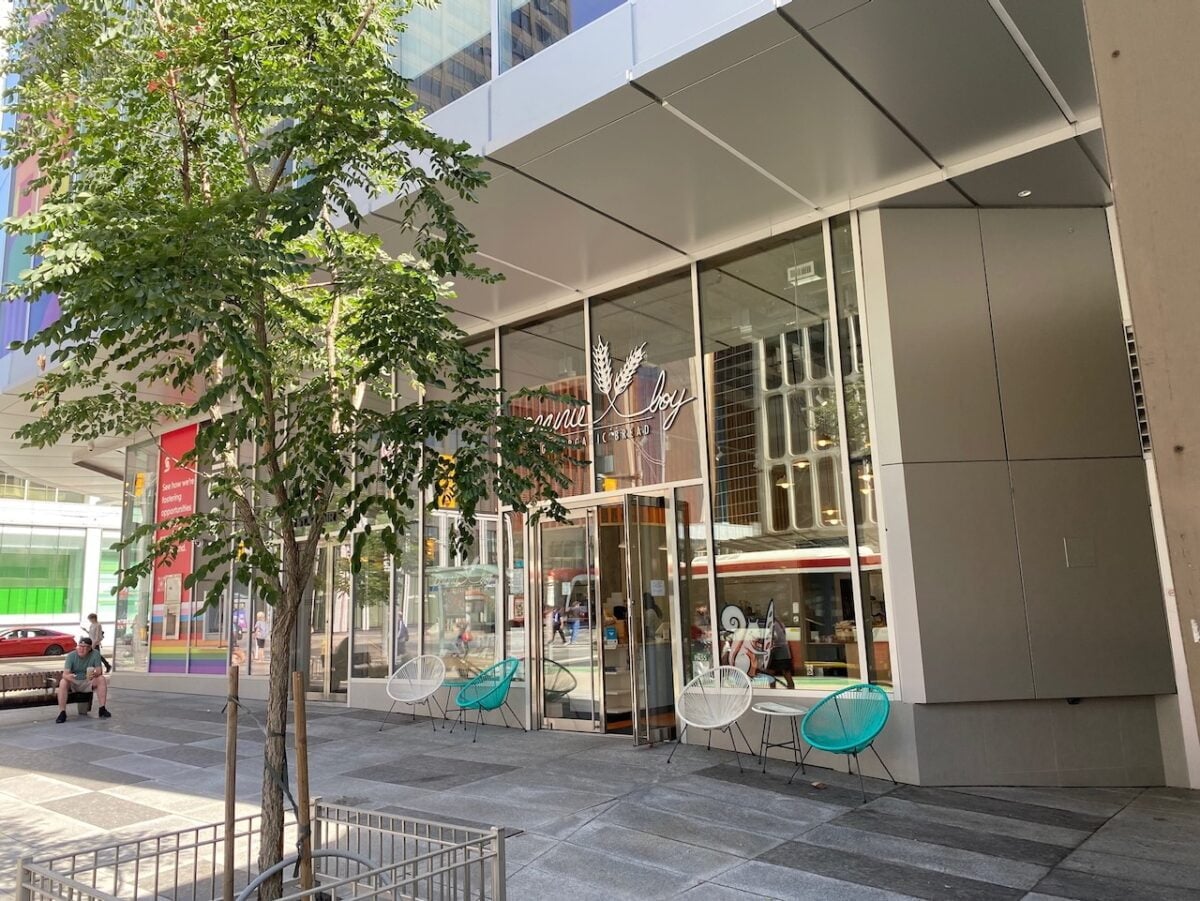
Prairie Boy Bakery, where residents can find its well-known custom cakes along with breads which people can grab to go and take home
F45 is a fitness retailer designed for people who want a full body workout
Slate’s portfolio also includes 10 other properties in the area and includes all four corners of the intersection where One Delisle will be.
Mercader said the development of St. Clair Place has also recently been announced and will be a new four tower development complex which will be located across from the One Delisle. Mercader said the BIA is also looking at improving public realm with a master streetscape plan that will hopefully be completed in five to eight years. This will include new courtyards, sidewalks, benches, lighting, and investing a lot in art and culture to further enhance the neighbourhood.
Louroz Mercader
“We are looking at new beautiful public spaces which really helps build the feel and character of the neighbourhood. At Yonge and St. Clair, we have developed a streetscape master plan. We are covering 22 acres, but our core focus is working with the intersection right now and then from there we are going to expand where we will have a uniformed design, look, and feel that is going to be in the neighbourhood. It is exciting we are starting to put piece by piece together to make this happen. Obviously, we would love to make this happen as soon as possible, but we are also working on the timelines of the new developments that are happening, so I think within the next five to eight years we will implement most of the streetscape master plan,” says Mercader.
Before Covid-19, Mercader said they had 15,000 office workers in the neighbourhood, and they are gradually working back up to that number as about 30 percent of workers are back in office.
“We are hoping that more people return to work to help support the businesses that are in the area which really helps the vibrancy of the neighbourhood. Then obviously the goal here is to attract tenants, and especially new restaurants and places to eat, so after work you would be able to join with your family and friends and really enjoy the neighbourhood that is coming in here. We do want a healthy mix of retailers coming in here, I think the investment and the new developments that are happening now will really help public realm and bring new energy into the neighbourhood,” says Mercader.
Collaborating with Existing Local Businesses
Salon Scavo (Image: Dustin Fuhs)
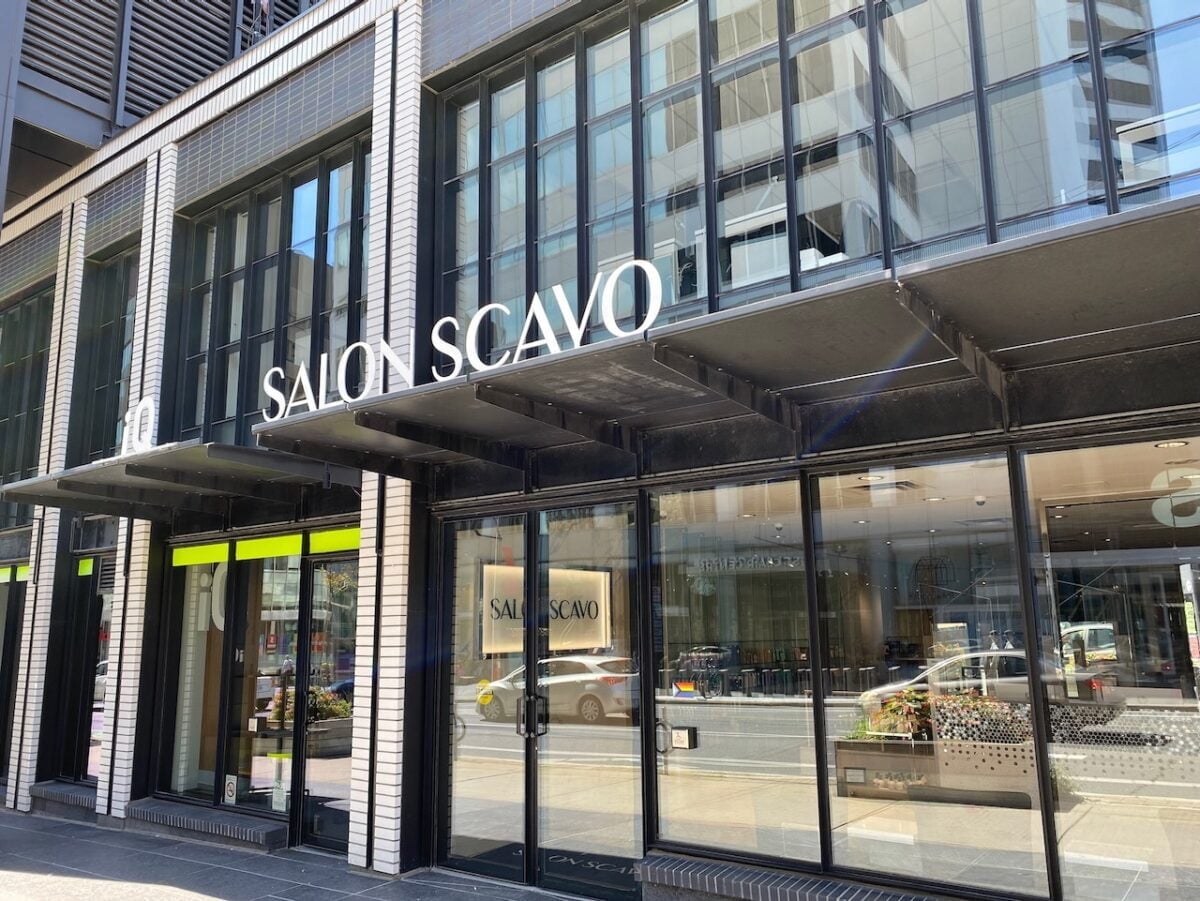
The BIA is not just looking to bring in new retail, it is also looking to support local business owners and improve retail stores. This can include potentially accommodating retail stores to a new location where there is more signage and traffic exposure or helping with renovating a retail store’s location so they can provide more to their customers. A good example of this would be the BIA’s work on Salon Scavo.
“They’ve been on the Yonge and St. Clair neighbourhood for a long time, they were a tenant there before we inquired the properties in the neighbourhood and so we worked with them, and they renovated their salon as part of our redevelopment. And they continued to do incredibly well, and they are very well known in the neighbourhood, so we are happy we were able to keep them and to work with them to renovate their salon so it could continue to serve them going forward,” says Stiles.
In addition to helping local stores, the BIA also helps with maintaining the environment around them such as street and sidewalk maintenance, employment, hosting neighbourhood festivals, removing graffiti from retail stores where it is visible, and providing safety.
“A Place Where People Want to Come and Stay”
Prairie Boy at Yonge + St. Clair (Image: Dustin Fuhs)
The BIA is making sure the neighbourhood is accessible for everyone and wants to make it a one stop shop where residents can access everything they need.
“The BIA wants to work together to make sure the Yonge and St. Clair area is known as a place where people want to come and stay. Whether that is to live, work, play, or potentially just making it easier for people working in the area to use the amenities that are local instead of hopping onto the subway.”
Stiles said they want to make sure the neighbourhood provides what the residents and visitors need, such as hair salons, shopping, restaurants, or going to their doctor as they are trying to get everything you need in one place. As of right now, the BIA is representing over 450 businesses, around 90 property owners, and the rest of the St. Clair and Yonge Community.
“The developments will drive more people to the area and certainly assist with generating this new vibrancy we have been working towards. We are hopeful everyone will appreciate what we have done to date, and I think it has been very well received by the pubic and our partners by the local community, triggering additional development by other landlords in the area. What we would like to see ideally is a combination of residential, office, and retail because that will really allow a great mix, again the opportunity to mix live, work, and play in the area.”
The BIA will be working on a lot of activations this week as they will be the major hub for the 2023 Design TO Festival in January. Mercader said they are looking forward to that and will be activating their public spaces, office lobbies, and attract public art to encourage everybody to visit.
“Yonge and St. Clair is being transformed into a new great place to live, work, and play. So we will be looking at continually to attract more modern tenants into the neighbourhood, enhancing the pedestrian experience, and really becoming Toronto’s next great neighbourhood,” says Mercader.