Advertisement
Home Blog Page 892

Extended Ontario Lockdown Announcement Blasted by Association and Experts for Inequitably Harming Small Retailers: Interviews

An empty intersection at Wellington & Blue Jays Way in Toronto. Photo: Dustin Fuhs (January 10th 2021)

The Canadian Federation of Independent Business has lashed out at the Ontario provincial government for once again failing to level the playing field between small business and big box stores such as Costco and Walmart.

On Tuesday, Ontario declared a second Provincial Emergency to address the COVID-19 crisis by issuing a Stay-at-Home Order and Introducing enhanced enforcement measures to reduce mobility. 

Non-Essential Stores to Open Only Between 7 a.m. – 8 p.m.

Among other measures it declared that all non-essential retail stores, including hardware stores, alcohol retailers, and those offering curbside pickup or delivery, must open no earlier than 7 a.m. and close no later than 8 p.m. The restricted hours of operation do not apply to stores that primarily sell food, pharmacies, gas stations, convenience stores, and restaurants for takeout or delivery.

Julie Kwiecinski, Director of Provincial Affairs, Ontario, for the CFIB, said the organization received clarification that big box stores that sell a full range of groceries are exempt and allowed to keep their current hours.

“Nothing is really changing for Walmart or Costco,” she said. “We’ve actually been working really hard on this issue to try and get government to see that they need to level the playing field between big box and small business,” she said. “They had that opportunity and they didn’t do it. 

“Let’s say I want to buy a book. Right now I have to buy that book by 8 p.m. if I want to buy it from a small retailer but I can’t go in the store. I could do it by curbside pickup. So I’m not allowed to go into that small business store. I can buy that book by curbside or pickup but I can only do it before 8. Yet if I want to buy that same book at Walmart I can waltz into the crowded Walmart store at 9, 10, 10:30 at night and buy the book. It is just not fair to small businesses and again the government had an opportunity to level the playing field. We’ve been working on this file for a couple of months because the holiday season that retailers rely on to make or break is now over.

“They had to make the sales in October, November, or December. And even now today you would think that the government would take the opportunity to level the playing field after all of the concerns that have been raised by small business and they chose not to. We are extremely disappointed in the Ontario government.”

To make matters worse, she said, the CFIB understands there are different rules for Amazon on retail delivery than smaller outlets. She said the organization was told that if a business wants to do a retail delivery after 8 p.m. it is okay for a restaurant but if there is delivery through a third party they must cease operations at 8 p.m. If the business does its own delivery like Amazon, they are allowed to deliver after 8 p.m.

“So once again the big guy Amazon wins. So I would say the score for today would be Goliath two David zero,” said Kwiecinski.

Dan Kelly, President of the CFIB, said no other province has locked down small retailers while handing huge competitive advantages to big-box stores.

“Incredibly, the Ontario government made the deep unfairness in lockdown rules even worse by implementing a new curbside pick-up and delivery curfew of 8 p.m. for small businesses, while exempting big box stores like Walmart,” he said.

“Walmart, Costco, and Amazon can continue to sell non-essential goods in-store or deliver them to Ontarians with no additional changes, but small retailers will not be allowed to hand a product to a customer outdoors or even deliver one after 8 p.m. How this will help stop the spread of COVID-19 is anyone’s guess.

“CFIB is also very worried that ineffective lockdown rules will now be applied to additional business sectors, like construction. We need to find a pathway to allow small businesses to safely reopen.”

Deserted street in Kensington Market. Photo: Dustin Fuhs (12 January 2021)

Bruce Winder, author of RETAIL Before, During & After COVID-19 and President of Bruce Winder Retail said retailers that are not in the grocery, gasoline or pharmacy categories are most vulnerable now. 

“Within the vulnerable, those that do not have e-commerce or sell products or services that are not conducive to e-commerce will suffer the most,” added Winder. 

He said smaller retailers need to get online and offer delivery and/or curbside pickup, offer new innovative products or services that cater to consumer lifestyles during the pandemic, take full advantage of government subsidies, negotiate with landlords, lenders, and suppliers to defer payment or pay less to preserve cashflow, defer capital expenses or any other expense to preserve cash.

Winder said the future will see less stores, more warehouses/parcel pickup spots, cheaper store rents, more frugal consumers (except high end segments which are thriving), less competitors but those who remain become bigger, more work from home lifestyle goods, stickiness of e-commerce, lower mall traffic, the need to continue to offer safe/clean store operation protocols, higher insurance rates, and higher supplier costs.

Nothing is Changing for Big Box Retailers like Walmart, Costco, & Amazon

Gary Newbury, retail supply chain and last mile interim executive, said the future of essential businesses, particularly big box retailers, seems guaranteed as the government has allowed stores and supporting supply chain to remain open, subject to safety protocols and extra vigilance on lineups outside stores. 

“These networks have the scale of operations to prosper during this period and to drive excellence into online services such as home delivery, curbside and pickup in store. Although, on the inside, the staff must feel in a continued frazzled state, often covering for colleagues who are required to self-isolate, these businesses will continue to see record sales, record profits and cashflow, and no obstacles in their way from adjacent competitors, and continue on their transformational journeys to winning in the 2020s,” he said.

“The converse is true for those designated ‘non-essential’, within retail. As well as apparel retailers, the classic ‘mom and pop’ stores, and service businesses, often single store businesses will have been very unprepared for the first lockdown, invested in the safety protocols and then been forced to shut down on Christmas Eve, missing Boxing day/week sales and January clearance they would have been banking on to restore their cashflow and turn their inventory. They have a double whammy of a loss of big sales, and now being saddled with unsold inventory for potentially months. For many, they face a grim choice; to sink more of their personal capital into the enterprise to support home delivery, or simply lock up and hand over the keys to the bank/landlord.

“The most unfortunate situation is this; for many years some of these businesses were able to create strategies to compete with their larger competitors by specializing their proposition to the local community and offering personalized, friendly service. Now they face an incredible challenge as their former customers find equivalent products at mass merchandisers such as Costco and Walmart. Many will, justifiably, feel they have been let down by their government for not insisting essential retailers can only sell grocery and pharmacy supplies.

“For those businesses that quickly adapted themselves for e-commerce, maybe leveraging Shopify to accelerate their digital transformation, creating and implementing a clear differentiation strategy, and aggressively marketing themselves in the local community, they stand a good chance, through these digital investments, to continue to trade.

“In fact, they may have equipped themselves very well for when the economy reopens and economic growth can be contemplated.

“The tough decision is whether to labour on with the costly home delivery service and keep the majority of their staff employed or come to an arrangement with their landlord and close shop until the latest lockdown is lifted. Some do not have the cashflow reserves to do the latter and so they are forced into trading, even if this means cutting into profits, or worse CCAA (creditor protection),” he said.

“Overall, this latest development across Ontario will have a devastating impact not only on smaller retailers, their suppliers, and the wider ecosystem that supported them. It is hard to avoid suggesting the 10 months, and what is in front of us for small and mid-sized business, is nothing short of an apocalypse. Some of this effect may have already been in motion during 2018/19. Government intervention has certainly put the pedal to the floor on their unfortunate demise.”

Veteran retail expert George Minakakis, a global retail executive with over 25 years of experience, said lockdowns are not applied evenly or fairly.

“And I don’t understand how one thinks that reducing hours of operations at the retail level is going to help. That idea simply forces more consumers to go out during the shorter hours creating more crowds and traffic,” said the CEO of the Inception Retail Group. “Second, we should divide businesses into two categories: Demand in the form of needs versus wants. Those that will benefit later from pent-up demand. Hair salons, barber shops, dental, optometry will lose appointments initially, however most patrons and patients will return to fill those needs when they can. 

“Those whose revenue relies on filling immediate wants such as retail, restaurants, bars, movie theatres, conferences, and hotels. You don’t get back lost demand in these environments, it is usually lost. Both need the revenue to pay their expenses but the group that serves essential needs will bounce back faster, if they are good operators. Non-essential businesses that fill wants will have a tougher time rebounding and are the most vulnerable.”

Minakakis said there are two crises underway, a health crisis and within that a business crisis. Lockdowns unfortunately cannot be avoided given the current scenario. 

“At the end of the day those with the deepest pockets or strongest balance sheets have the means to ride this through, provided they are also leveraging government support programs,” he said. “Today, as in 2020, I would be working under the premise that this isn’t going to end anytime soon. The number one question all businesses should be asking is how long they can hold on? If you can be in the game for a year under these circumstances, you are in a good position. 

“With that said, then I would be employing a lot of grassroots (old school) marketing initiatives: Whatever your digital assets are, work them 24/7; Be visible and be engaging; If you have a customer database use it; Survival is about guerrilla marketing warfare, this will be like working in the 1960’s with e-commerce; Collaborate with other businesses where you can and create an environment where all can benefit from a pseudo co-op; Conduct all levels of marketing even if email or flyers is all you can do. Do it; Be prepared to personally deliver to customers if your business calls for it; With delivery or curbside, if you can afford to, throw in a surprise with the order. Customers will appreciate it and will remember it. But be consistent about it; Above all demonstrate proper care hygiene, wear masks, social distance, and no heroics like secretly cutting hair at someone’s home; and  Conduct scenario planning. We are in a fluid situation and be prepared to change direction.

Minakakis said he hopes that everyone has learned retail street fighting skills through this pandemic. 2021 is the year to focus on improving an organization’s culture, on building agility and resilience.

“Further develop your digital assets. The vaccines may be coming, but don’t count on anything being normal this year or next,” he said. “Create a hybrid model for your business. That means be better at both physical and virtual retail simultaneously. The days of mono business models are over. In Asia independent and mid-sized retailers remained sound during their outbreak because they could easily shift to e-commerce.

“2022 will be a year filled with a lot of competitive fighting to make up lost ground, be prepared, it will be ruthless to gain back share. The future after 2022 will be powerful and exciting. It will be the roaring Twenties but keep in mind that things will be moving faster, everyone will be pursuing technology. I expect stores to be investing in virtual experiences as should malls and department stores. Once consumers emerge from this pandemic, if retailers want to draw them back it will be all about an experience of entertainment value, and not the ones with just subtle niceties. This means it must be technology driven and engaging.

“The other aspect of the future we have been observing during the pandemic is consumers will be looking for and want more leisure time. The shift to work from home is not going away. That means delivering “convenience” should be looked at as a service to improve on continuously, and you need to own every detail outside your store or distribution centre.

If you are an independent, join up with a similar business and hire an advisor. Mid-sized businesses should have an advisory board (but filled with experts with diverse backgrounds). This will help you prepare for many unintended scenarios and a fast-moving future. Finally, this pandemic has taught us that life is precious, don’t waste it just browsing…live it! Consumers will be back!!”

Lightspeed Revolutionizes Supply Chain of Independent Retailers with Launch of Supplier Network

Lightspeed Supplier Network

Lightspeed, a leading provider of cloud-based, omnichannel commerce platforms, has today announced the initial availability of the Lightspeed Supplier Network for North American retailers. The launch of the fully-integrated stock ordering solution is set to transform supply chain management for SMBs by democratizing access to the strategic inventory visibility once reserved predominantly for enterprise retail and eCommerce giants.

As the global COVID-19 pandemic continues to place pressure on supply chains in 2021, this direct integration between businesses and brands provides merchants with an automatically updating supplier catalog system, easy order management tools, and automated shipment handling directly within Lightspeed’s cloud-based platform. Lightspeed’s Supplier Network enables SMBs to more easily adopt a demand-focused inventory model to remain nimble, placing independent businesses on equal footing with large chains while providing suppliers access to a ready-to-buy customer base and real-time sell-through data. 

“Connecting SMB retailers directly to their suppliers through the Lightspeed Supplier Network is nothing short of revolutionary. This new tool enables independent businesses to discover new products, more easily sell online and make better use of their capital to strategically increase order frequency,” said Dax Dasilva, Founder and CEO of Lightspeed. “The disruption of 2020 cemented the need for SMBs to use technology to remain agile and the Supplier Network is deeply in line with Lightspeed’s mission to strengthen their operational resilience.” 

“With the growing demand for bicycle-related products and supply being lean, product curation and inventory visibility are key to success for SMBs,” said Charles Bisaillon, Retail Success Leader for Specialized Bicycle Components. “The direct integration our brand has with Lightspeed creates an ecosystem that ensures our retailers have full visibility of Specialized products to satisfy that growing demand, a critical capability in 2021.” 

Key Advantages of the Lightspeed Supplier Network: 

  • A harmonized marketplace. Provides the same direct supplier access and inventory visibility as the big box stores, easily managed through a single platform. 
  • Automates manual ordering and consolidates supplier portals in the POS. Improves transparency of when a shipment will arrive and what goods will be included, shortening the receiving cycle and getting items into consumers’ hands more quickly. 
  • Makes new suppliers and products more discoverable. Product details, including photos, are imported into the POS with a click of a button, eliminating a barrier to selling online. 
  • Increases control of supplier branding. Easy import workflow for retailers ensures merchants are using brand-approved names, product descriptions and high-quality imagery. 
  • Provides suppliers aggregated and anonymized sell-through data in real time. Brands are granted unprecedented visibility of goods sold by independent merchants.

The Lightspeed Supplier Network will be initially available for retailers in the Bike, Outdoor Sport, Jewellery, and Pet verticals. For more information and to become part of the growing marketplace, please visit www.lightspeedhq.com/partners/supplier-network.

On social media: LinkedinFacebookInstagramYouTube, and Twitter

*Partner content. To work with Retail Insider, email: craig@retail-insider.com

The Unintended Consequences of a Pandemic and the Planning of a Retail Recovery: OpEd

Business center closed due to COVID-19.
Business centre closed due to COVID-19.

By George Minakakis

Defining businesses as essential or nonessential was an honest attempt to protect the public from the pandemic. However, it was a decision that has taken market share from large to small businesses deemed nonessential. One such example is the apparel sector; it was already floundering in performance. According to Mckinsey & Company, they expected sector profit to drop by 93% during 2020. Of course, restaurants, malls, travel, cruise lines and airlines, hotels, conventions, and banquet halls, to name a few, all have taken an enormous hit from the pandemic. The question is, how long can they hold out?

E-commerce has never been healthier, at least for most operators. Of course, retailers labeled essential have not been sitting idle either. They are no doubt investing in protecting their market gains. Today essential businesses need innovation to ensure they can keep their newfound market share. The grocery sector is one of those crucial retail benefactors. Loblaw plans to launch an autonomous delivery fleet. Sobeys with Voila home delivery is already on the road. It’s my view that the pandemic sales growth essential businesses have gained will only be as sustainable as their technology and digital capabilities to execute and deliver convenience.

Disruptive innovation will continue to shake up and redefine the retail landscape. It’s a simple strategy, identify outdated business and consumer models with poor service and product offerings, invest in technology, innovate, simplify, and deliver greater convenience, which at a basic level is disruptive innovation.

The vaccine raises hopes for a business resuscitation, but that may be a lot slower than we anticipate. The vaccine rollout targets to have at least 50-70% of the population vaccinated by September 2021. That is if there are no delays. Secondly, polls early in the pandemic and more recently indicated consumers would wait months post-vaccine. A poll I held in November suggests that 16% will wait six months and 31% up to 12 months post vaccine before returning to everyday shopping habits. If that holds, that means recovery may not begin until the first or second quarter of 2022. Either way, the vaccine doesn’t eradicate the virus; it protects us from it; for businesses, that spells pervasive uncertainty around how soon consumers will return.

Also, too much of the plan for a recovery has been on the $90 Billion or more Canadians have saved. Decoupling consumers from their savings may not be that easy, at least not for middle-class consumers, those saving for retirement or homes. The pandemic has also created a sense that we already have enough as we watch the numbers climb. The public is harbouring a wait and see opinion around the vaccine and returning to their past behaviours. They see businesses closing, the job market is being impacted, and continued implementation of technology. In every downturn, there have been irreversible changes that take place. Companies have always looked to technology investments to improve productivity, which generally displaces workers. In the last 12 years, we have had the financial crash, the great recession and global quantitative easing, a trade war, and now a pandemic. A December CBC poll suggests there is apprehension around the vaccine with when the public will take it and whether or not they will line up for it.

Pandemic Was a Catalyst for E-Commerce but Convenience Is a Consumer Driven Catalyst

What retailers need to consider is that “convenience” will continue to dominate consumer choices. However, we need to lessen our reliance on convenience as solely an experience at physical stores. Retailers need to think of convenience relative to what it means to a consumer’s free time and what they choose to do with that free time. Convenience, whether ordering online and having it delivered or curbside pick-up thanks to the pandemic, is here to stay. We need to appreciate that consumers have been moving towards e-commerce much faster since 2007, not just because of lower prices or home delivery, but because their own leisure time is more important to them and technology has made that possible. Convenience must be seen as a service with just as many touch points to deliver a brand experience. This isn’t to suggest that the future of stores is over. Not at all, however, store visits need to be far more exciting. And the retailers of those stores will need to deliver an exceptional experience that’s personalized and customized. Not to forget, everyone needs to move much faster towards building that hybrid model. A sudden rebound to shopping in person is not immediately likely. After all, where would we go? Malls have a lot more closed stores and retailers are looking to shrink their store counts.

China’s Rebound Is not a Physical One

The recovery in China is clouding our perceptions of what a rebound will be like and the future of retail. First, in the west, media is not state controlled; the reporting is as free as the writers are to voice their opinions. Their reports on the pandemic are ever-present 24/7. I lived in China during the financial crash and while the government was reporting increases in retail growth, thousands of people were losing their factory jobs. We don’t know about the accuracy of retail growth in China, consumer behaviour, nor how well the virus is under control. Secondly, if we look closer at Chinese e-commerce, it has been more widely accepted. The pandemic shift wasn’t tricky for merchants; many had already adapted to more hybrid models. China is an excellent example of what the future of retail could be. However, their path through the adoption of technology and consumerism bypassed many technological development hurdles than what we in the west have gone through. For the west to move where China is today with e-commerce, we would have to be willing to give up many of our past consumer behaviours. We’ve done a fair bit already with the pandemic. Retailers in the west who have vision will invest heavily in digital assets, including AI and robotics, within their physical stores. And create a new experience, there is no choice. Our culture will remain with stores for some time, but it will not survive as it is today.

Plan for the Future State of Retail

The pandemic has left consumers with concerns. Unless there is confidence and trust a rebound will be a challenge in all countries.

I would like to see retailers and other business operators planning based on scenarios (if this, then that, approach) especially when in crisis mode. Retailing is in a crisis within a health crisis. Planning needs to consider the state of the emergency monthly and build agility into all plans, as it is the only way to maintain resilience.

What are the scenarios? What I have learned as a board director that the best approach to resilience is to have the courage to forecast the unimaginable, every other plan becomes easy.

For example:

2021 – is the year of vaccines, plan for soft volumes, closures, continued social distancing and masks. This is also the year of rebuilding resilience and agility into the business culture. If you don’t have enough internal management capabilities contact an advisor.

2022 – be prepared to launch creative and innovative strategies planned in 2021. It will be a better year provided 2021 goes to plan on vaccines. However, it will not be quite back to 2019 revenue levels. Consumers need to catch up. That will take more time.

2023-2025 – Rethink your brand and the industry. Don’t follow a wait and see approach. That’s what happened to others with e-commerce and social media. It would be best if you reimagined the future. Stores and e-commerce need to come to life. Where we are today will not do. I would be building stores with a technology experience AI and robotics with human service ambassadors.

Based on my experience in recovering from a business crisis, leaders need to plan 2021 and 2022 together; planning for 2021 alone is not a reliable tactic. We may only need 70% to achieve herd immunity. Still, we need pretty close to 100% participation in the economy for a recovery to benefit all businesses to pre-pandemic levels. Therefore, predicting a rebound’s timing with conviction around the vaccine alone is a stretch.

Retailers should continually upgrade and improve their e-commerce platforms and all other digital assets. Digital assets need to be refreshed more frequently than even a store front especially in keeping up with social media as a marketing channel. Also start wrapping your minds around live-streaming. Retailers also need to personalize and customize that e-commerce transaction and experience. The problem is that once your product has left your store or your distribution centre, it is no longer about your brand. The only way to change this, and I have said this to the luxury sector, is to ensure that when your customer receives the package your brand needs to come to life again. Otherwise, that opportunity to sustain a brand relationship diminishes.

What’s potentially the most significant unintended consequence of all? The emergence of the leisure society between 2025-2030, we’ve already had a taste of convenience with the pandemic and it will accelerate as all retailers get better at it. That leisure society will usher in new business opportunities we haven’t yet considered.

George Minakakis is the CEO of Inception Retail Group Inc. The author of The Great Transition The Emergence of Unconventional Leadership.

Online Pharmacy Aims to Disrupt Retail with Next Day Delivery

EasyDrugs delivery service. Photo: EasyDrugs Facebook

A group of British Columbia pharmacists has launched a new online drug store called EasyDrugs to provide free next day delivery of prescriptions and health products throughout B.C.

There is also the opportunity to have real-time virtual pharmacist consultations as well as by phone or by email or text messaging.

“The idea for this and starting the development began really near the beginning of the COVID-19 pandemic in Canada. So back in March, April. There was this heightened and more urgent sense of a need to allow patients to be able to receive their prescriptions without leaving their home,” said Dr. Afshin Khazei, medical advisor and partner with the company.

The concept was created by a group of experienced, licensed pharmacists in B.C. who saw the need to accelerate the development of a next-day delivery of an online pharmacy for British Columbians in all corners of the province.

EasyDrugs delivery service. Photo: EasyDrugs Facebook

“That’s the initial idea that rose out of COVID-19 and the fact that people were encouraged not to leave their homes, but also there is a certain amount of fear, particularly in older patients, and older patients of course are those who often have more prescriptions that are more a critical need to make sure there are no interruptions in their prescriptions,” said Khazei.

“But beyond that kind of initial need for convenience and safety during isolation, we saw an opportunity to build in some innovative features into the app that are actually going to promote safety and quality around prescription use. It’s sort of beyond convenience and moving on to trying to use technology and innovation to actually improve safety and quality.”

The new service provides a single online system to make it easier to talk to a pharmacist, easier to order, reorder, and transfer prescriptions — and easier and quicker to receive them.

EasyDrugs operates via a website and smartphone app to connect people to their pharmacist and their prescriptions while also providing family members and caregivers the ability to manage the prescriptions of others, reducing needless visits and trips to the pharmacy.

The new service also features direct billing service with insurance providers and no cost shipping.

The service is available throughout B.C. but the vision does exist, said Khazei, potentially rolling out the idea to other parts of the country.

EasyDrugs delivery service Instagram post

“We see a need for this across Canada but we want to make sure that we demonstrate excellence within the B.C. landscape first and then from there would scale up to go across Canada,” he added.

“I think there’s different reasons why different demographics would use it. The seniors would really come to mind immediately because it eliminates the need for a trip to a physical pharmacy, having to park, wait in the physical space for a prescription to be filled, and then driving home. So that convenience and some elements of safety in the context of a pandemic.

“But then when you look at some of the safety features once you create your profile it will save your medication prescription history and keeps it all on a consolidated medical profile. So that if you’re visiting multiple doctors or seeking care in an emergency department or ambulance visiting you, or you’re travelling outside of Canada, you can show whoever is looking after you, your current medication. This reduces the risk of preventable, adverse medication interactions if the care provider has full knowledge of your profile. You then can also enable family members, your physician, your nurse, other care providers that are in your circle of care, with your permission to co-manage your medication account. So they could help with things like doing refills and they also could help with communicating what you’re on. Really in essence it helps to co-manage and keep everyone on the same page.”

Another interesting element, he said, is the ability to enable text reminders which would send people a text at the time of day when medications need to be taken.

“It addresses a very common issue in medication use which is compliance. We know that a significant number of patients don’t remember to take their medication on time or even take it at all.”

Retail Photo Tour: Oshawa Centre in Oshawa Ontario During COVID-19

Oshawa Centre - Photo by Norman Katz, Maple Leaf Displays

Retail Insider continues its Photo Tour series of Canadian malls to provide a window into shopping centres which may be less frequented lately due to the COVID-19 pandemic.

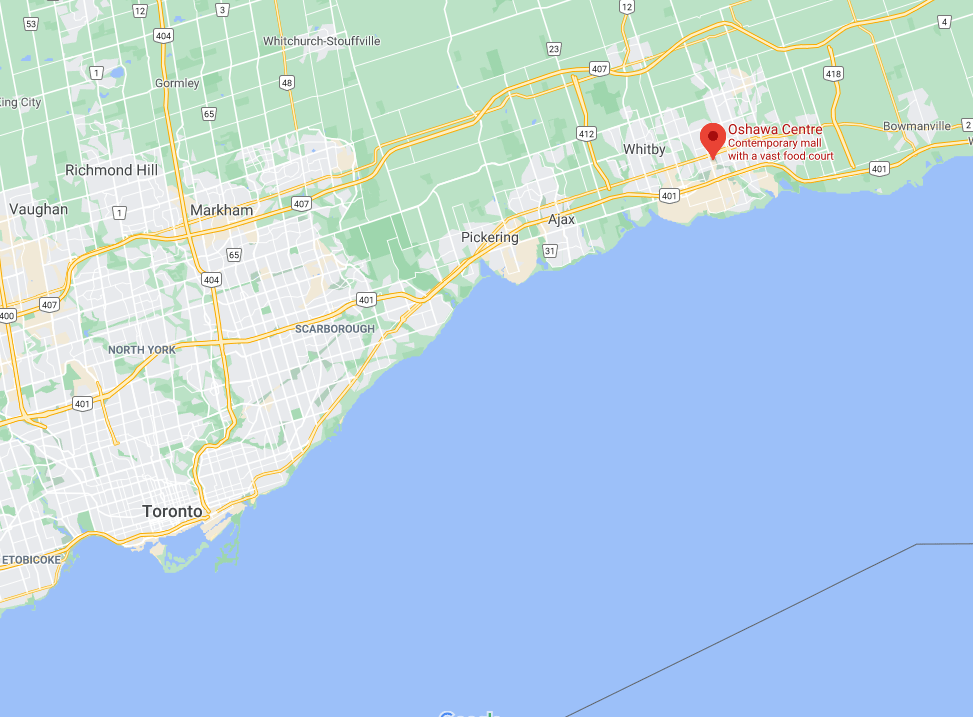
This edition takes us to the Oshawa Centre, the largest mall in Durham Region and the largest in Ontario east of Toronto with 215+ retail stores and public services.

History of Oshawa Centre

Oshawa Centre opened in 1956 as a shopping plaza before being enclosed in 1968. In 2016, Ivanhoe Cambridge opened a $230 million renovated and expanded wing of the mall, which added 60 stores to the mall footprint.

There’s a future expansion coming, but our goal is to share a current walk through of a December 2020 tour during the COVID19 pandemic.

Google Map of Oshawa from Toronto with Oshawa Centre Highlighted

Above: A map showing the location of Oshawa Centre, which is the largest shopping centre between Scarborough Town Centre to the west and CF Rideau Centre way over in Ottawa.

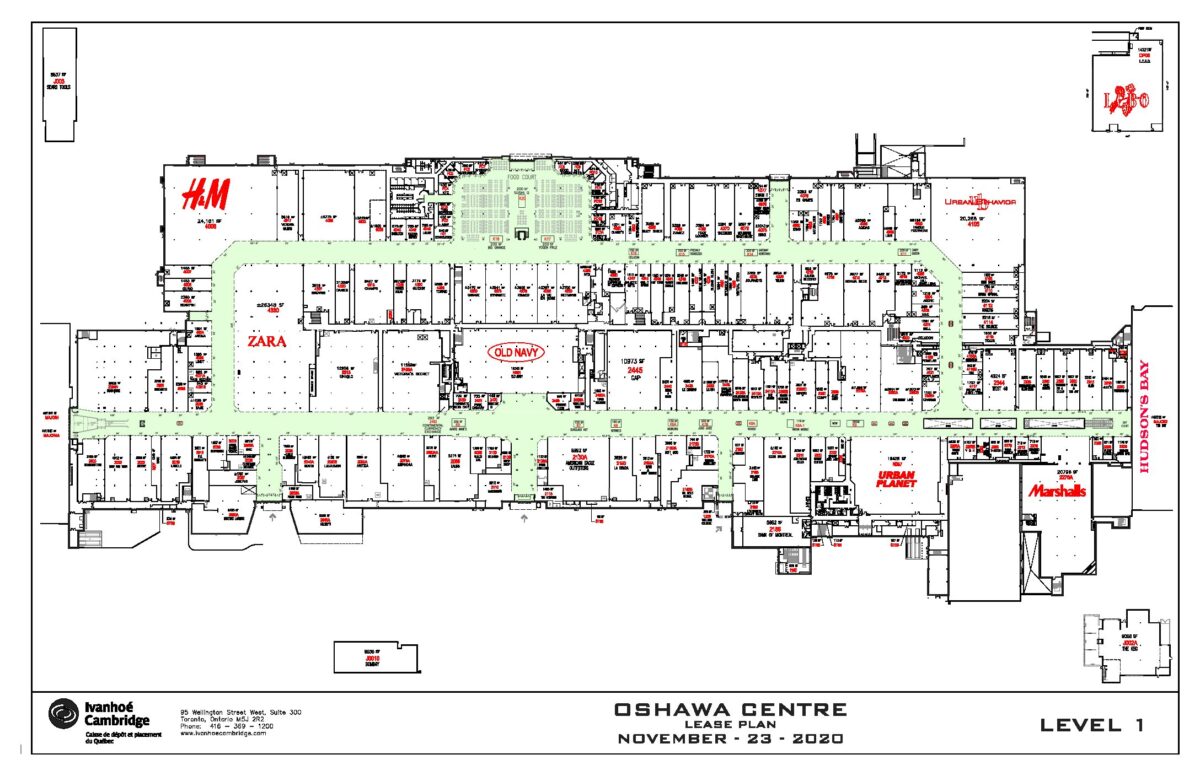
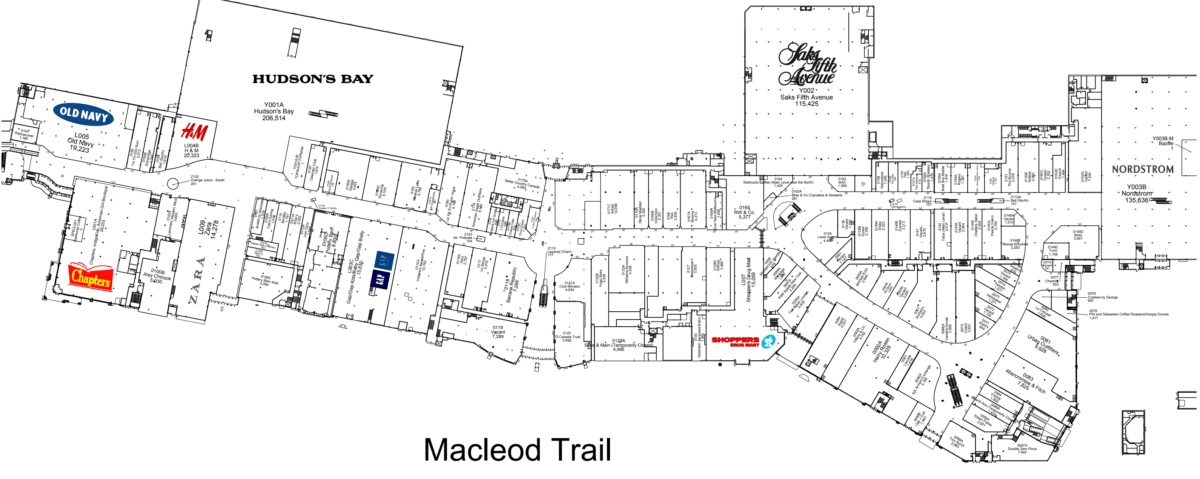
Oshawa Centre Leasing Map (Level 1) November 2020 Ivanhoé Cambridge
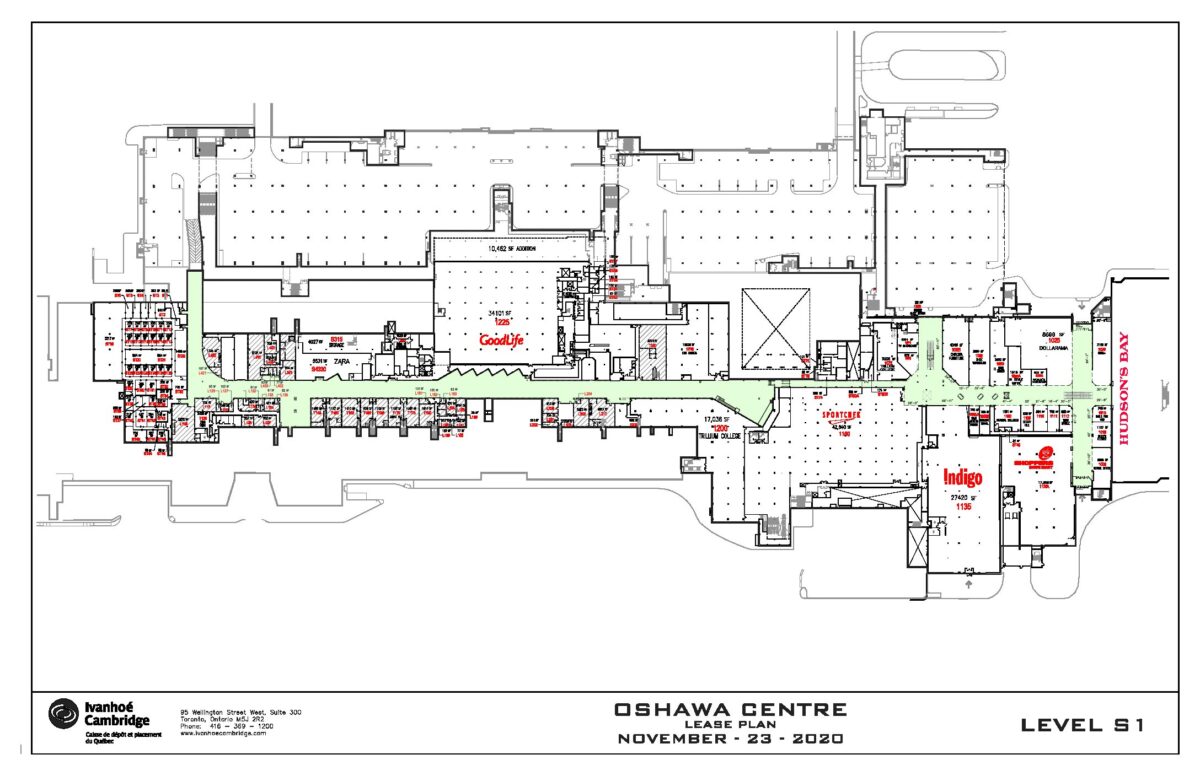
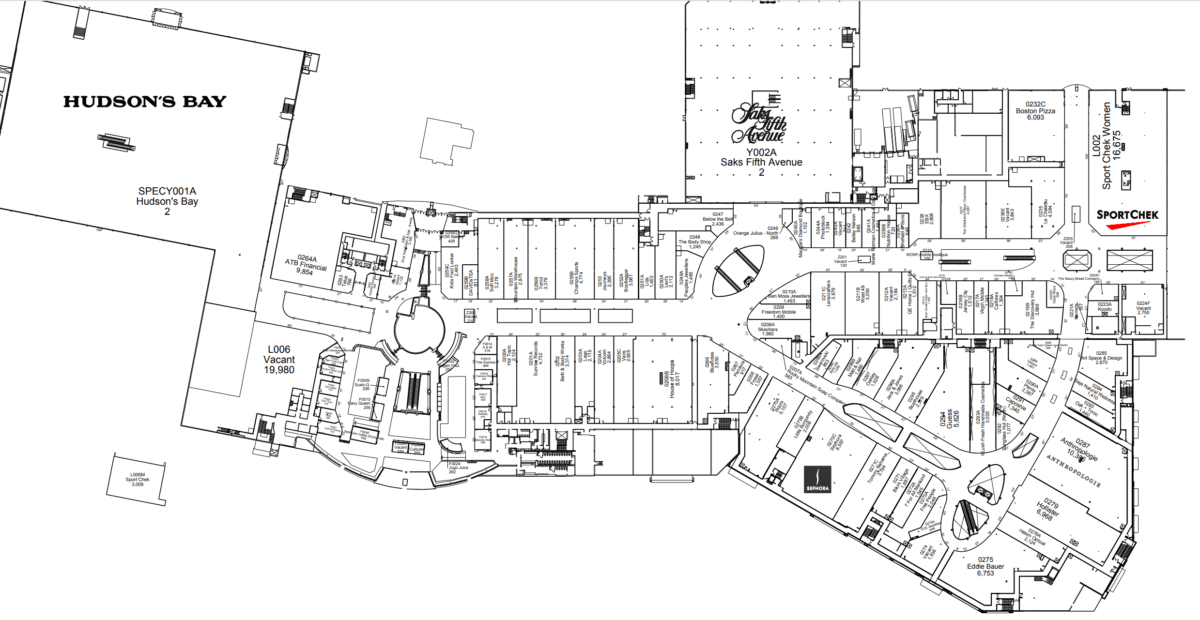
Oshawa Centre Leasing Map (Level 2) November 2020 Ivanhoé Cambridge

Oshawa Centre is going through a construction phase, which will provide additional brands, services, and customer experiences to enhance the shopping enjoyment. In 2017, the second phase of construction started, with an additional 60,000 square feet of redeveloped space including the old food court area and adding new stores.

December 2020 Walk-Through

Friend of Retail Insider, Norman Katz of Maple Leaf Displays, had an opportunity to stop into Oshawa Centre mid-December 2020 in order to share the sights of what the mall looks like during the COVID19 pandemic. The mall was remarkably busy, as explained in the Toronto Star on Sunday: “Oshawa Centre has perhaps never seen so many Toronto shoppers as it did in the week before Christmas, when 13,409 Torontonians descended on the mall — a 155 percent increase compared to the same week last year”.

We want to provide historical context to these images, as they were taken prior to an upcoming 28-day lockdown in the province of Ontario beginning December 26. In a traditionally busy holiday season, you’re going to see social distancing and masks.

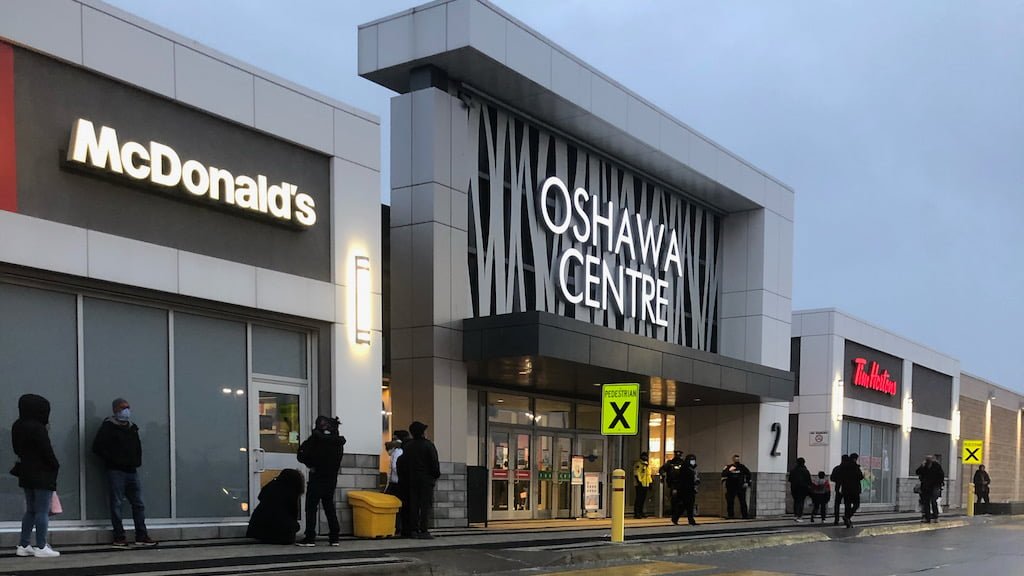
Oshawa Centre Entrance Two. Photo: Norman Katz/Maple Leaf Displays

The tour begins at Entrance 2 of Oshawa Centre near the mall’s normally busy Tim Hortons location.

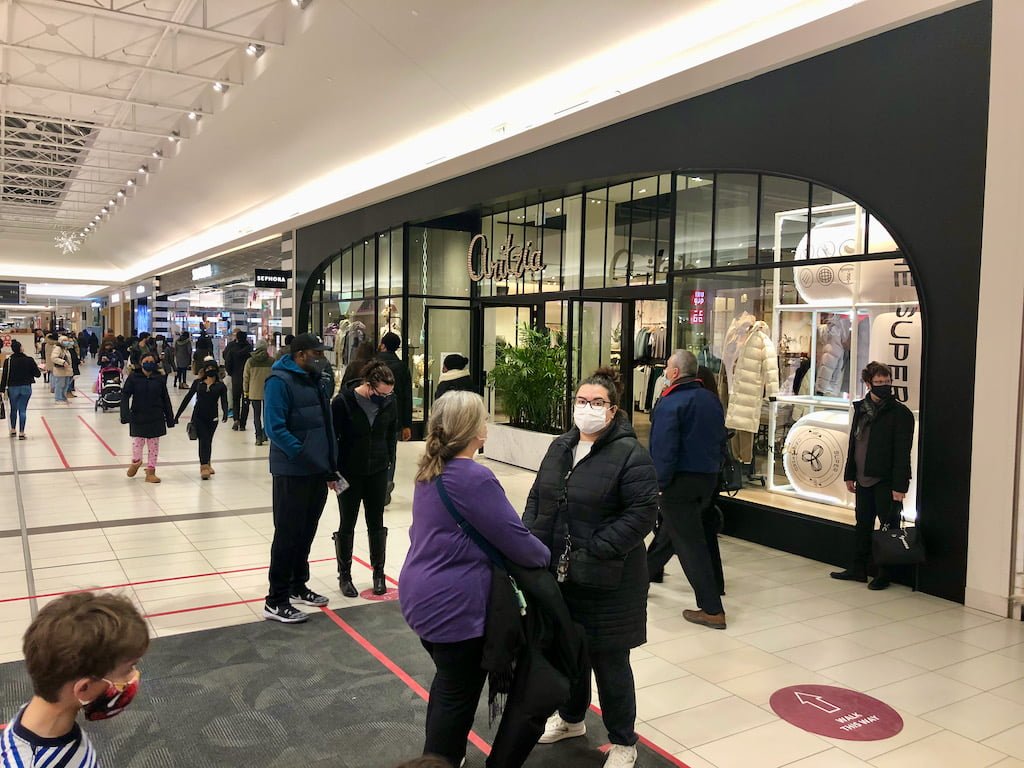
A large Aritzia store at Oshawa Centre. Photo: Norman Katz/Maple Leaf Displays

A large Aritzia store spanning 5,684 square feet is located across form the mall’s Uniqlo location.

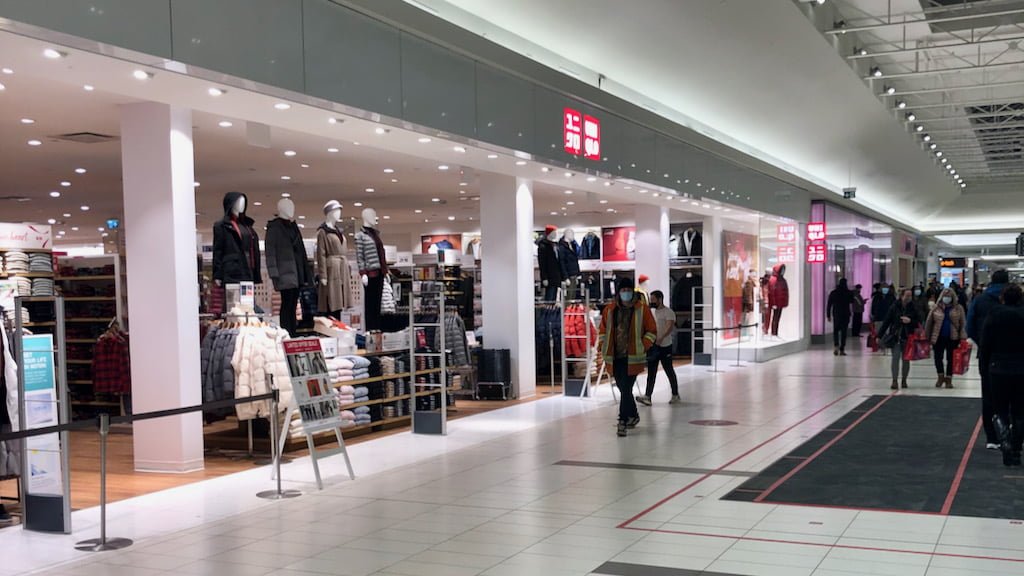
UNIQLO Oshawa Centre. Photo: Norman Katz/Maple Leaf Displays

We reported on the UNIQLO opening back in 2019, which added a 12,200-square-foot location to the centre in between Zara and Victoria’s Secret.

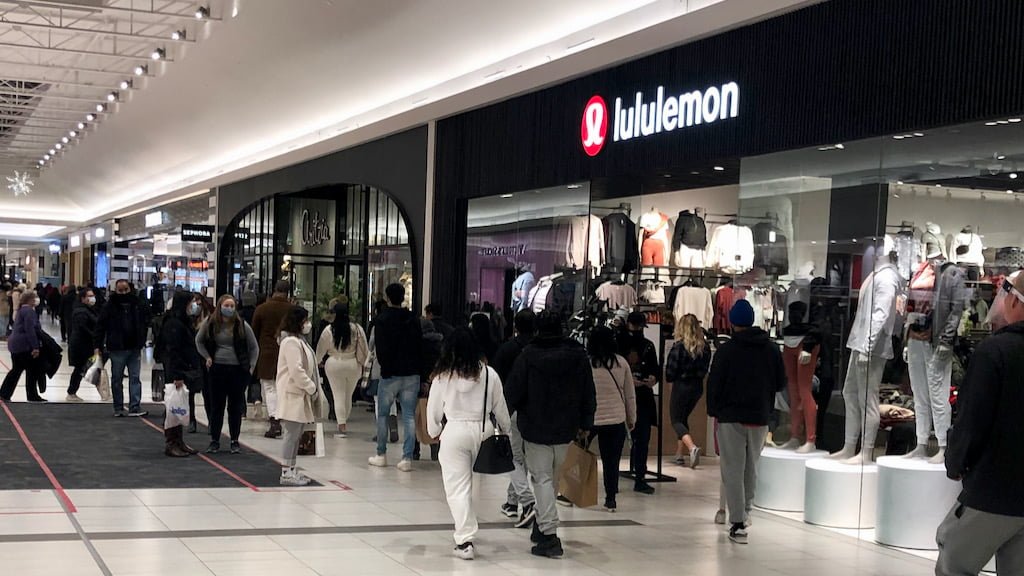
Lululemon. Photo: Norman Katz/Maple Leaf Displays

The crowds were thick before Christmas Day at Oshawa Centre, including in front of the popular Lululemon store.

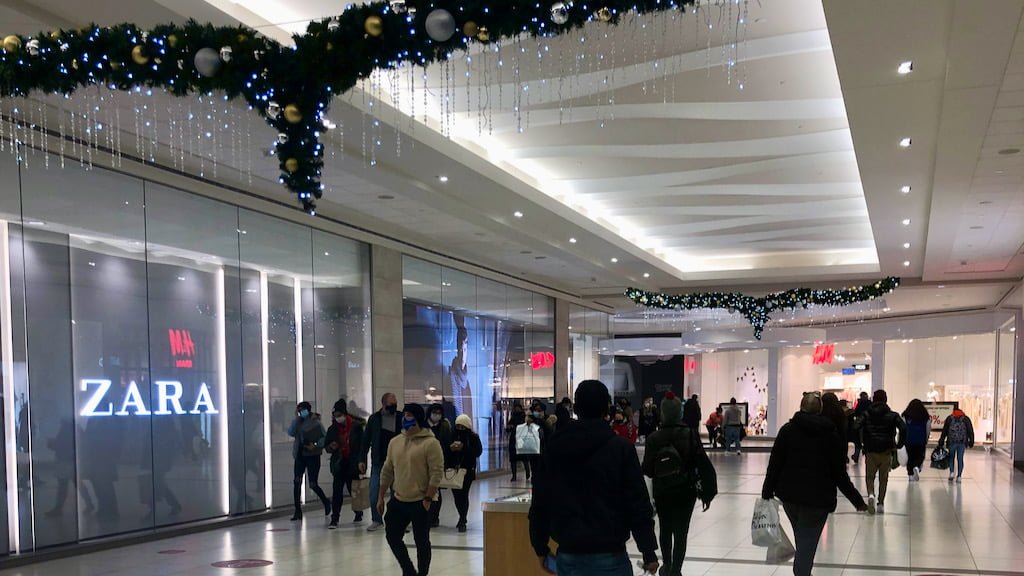
Zara. Photo: Norman Katz/Maple Leaf Displays

Zara operates a 26,350-square-foot one level store in the mall featuring a whopping 440 feet of mall frontage on three sides, the most of any Zara store in Canada.

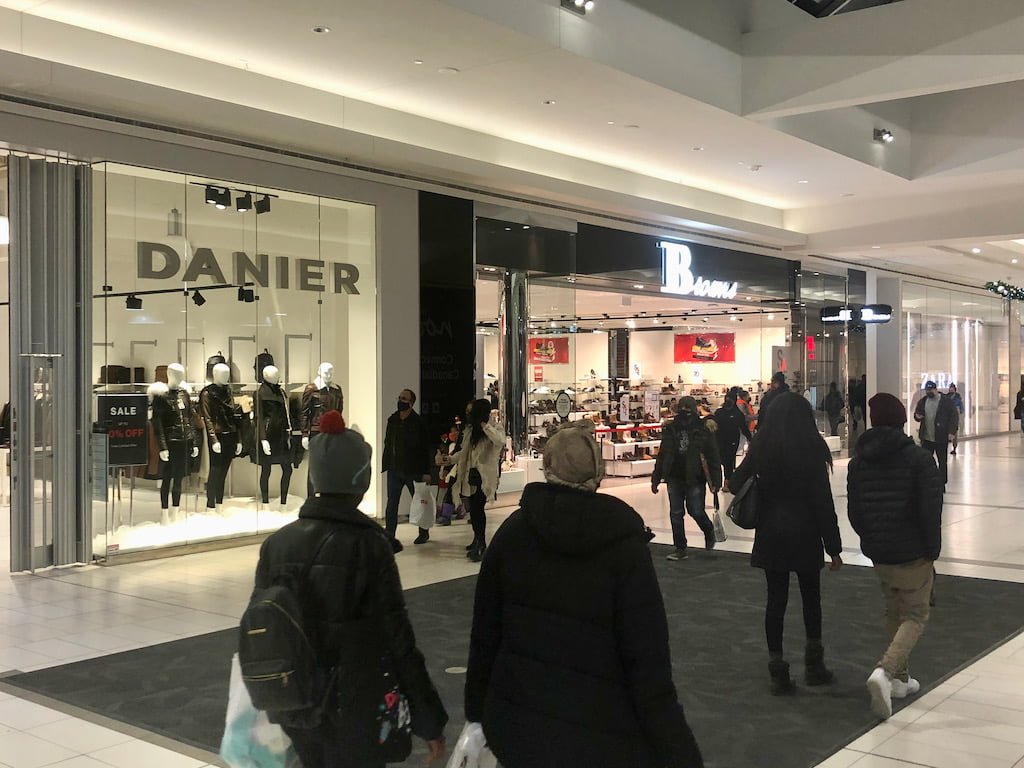
Danier and Browns Shoes. Photo: Norman Katz/Maple Leaf Displays

Danier leather, which was relaunched in 2016 under new ownership, continues to operate a handful of stores across Canada including the Oshawa Centre location. Iconic Montreal-based Browns Shoes, which has stores across the country under the Browns, B2 and Browns Outlet banners, also has an attractive store in the mall.

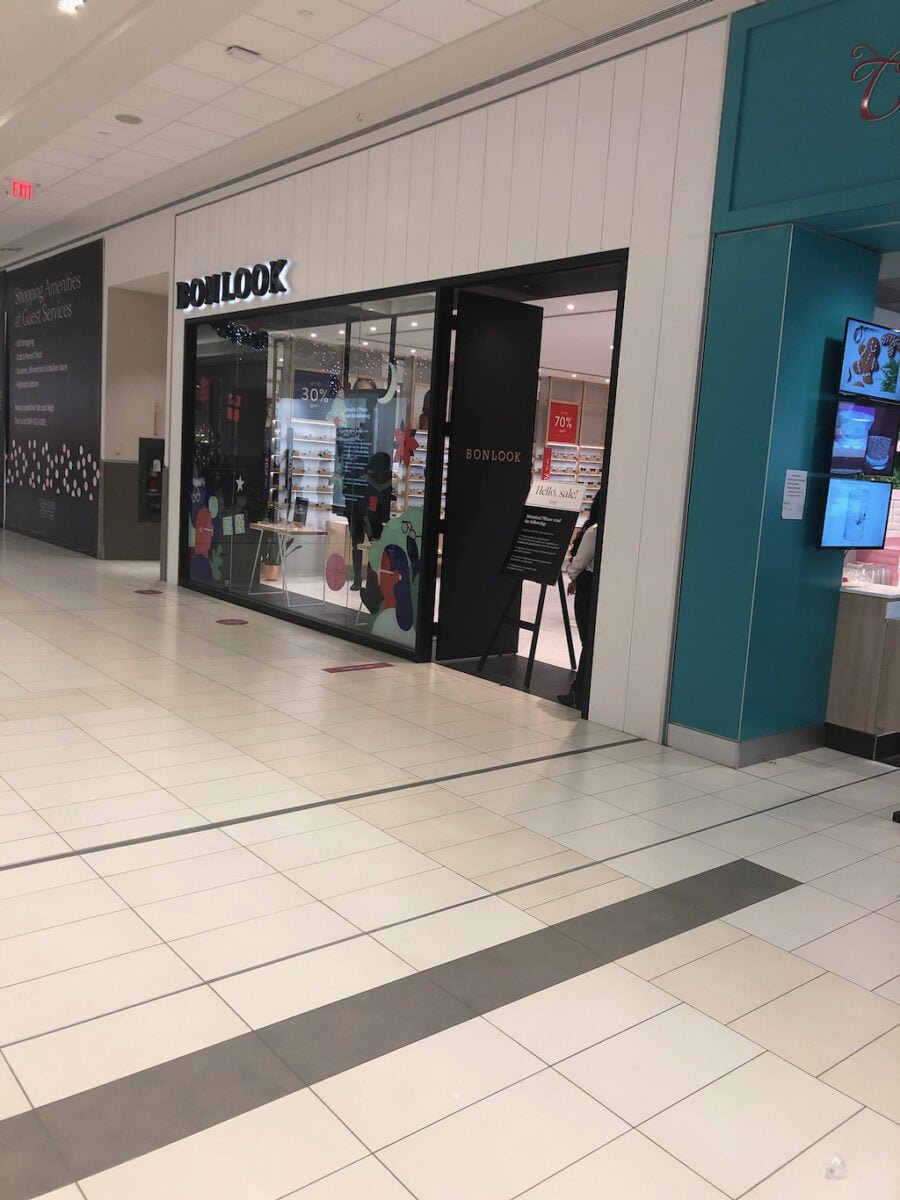
Bonlook. Photo: Norman Katz/Maple Leaf Displays

Montreal-based optical retailer BonLook has been opening stores across Canada over the past several years. The value-priced retailer is competing against other national and international chains that are also offering prices lower than we’ve seen in years past amid disruption.

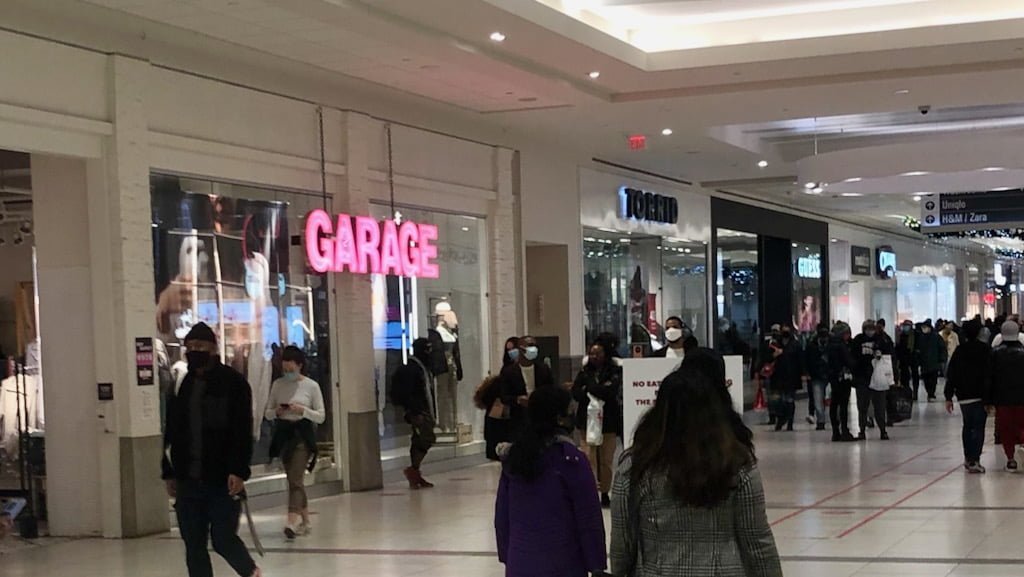
Garage, Torrid, Guess, Champs. Photo: Norman Katz/Maple Leaf Displays

More retailers at Oshawa Centre include Dynamite-owned Garage (which filed for creditor protection last year), women’s plus-sized retailer Torrid, Guess, and Champs Sports.

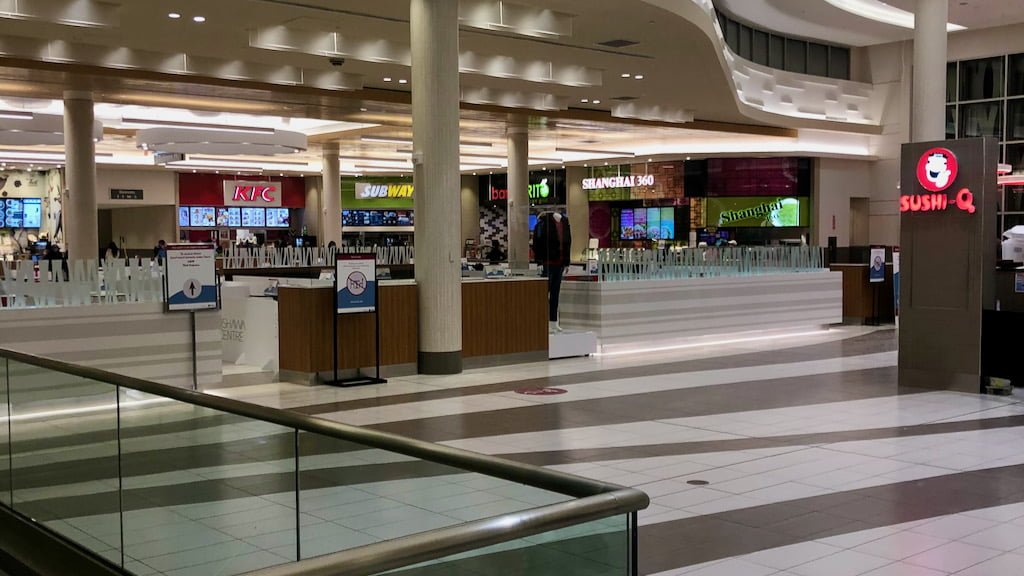
Food Court at Oshawa Centre. Photo: Norman Katz/Maple Leaf Displays

The mall’s attractive food court, which was updated during the mall’s multi-million dollar renovation, was quiet amid restrictions prior to the full lockdown of Durham on December 26.

NYX Cosmetics. Photo: Norman Katz/Maple Leaf Displays

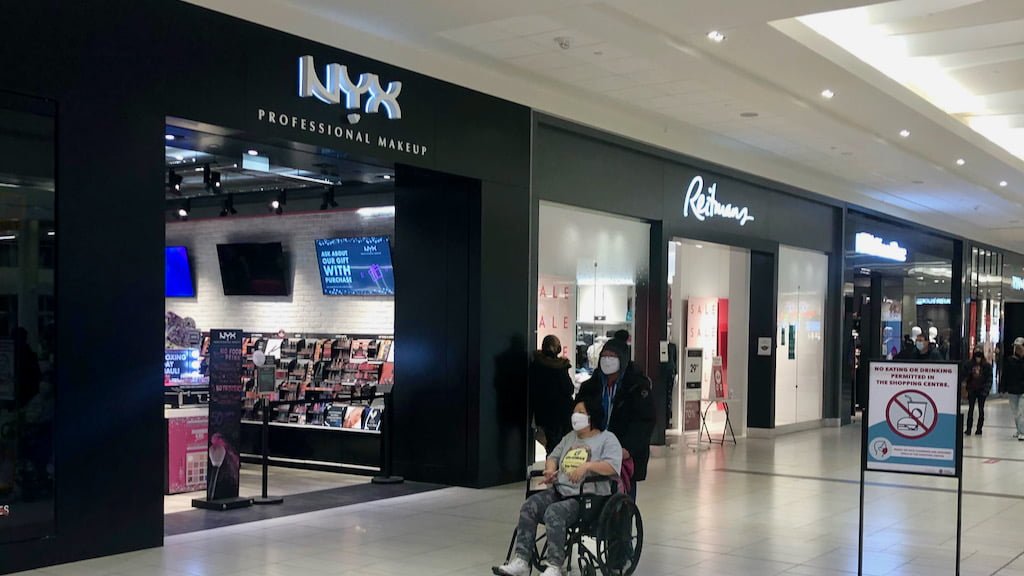
The NYX Cosmetics brand announced in November 2020 that they would be pulling out of Canada. Reitmans, located next to it, is also undergoing a restructuring amid challenging times.

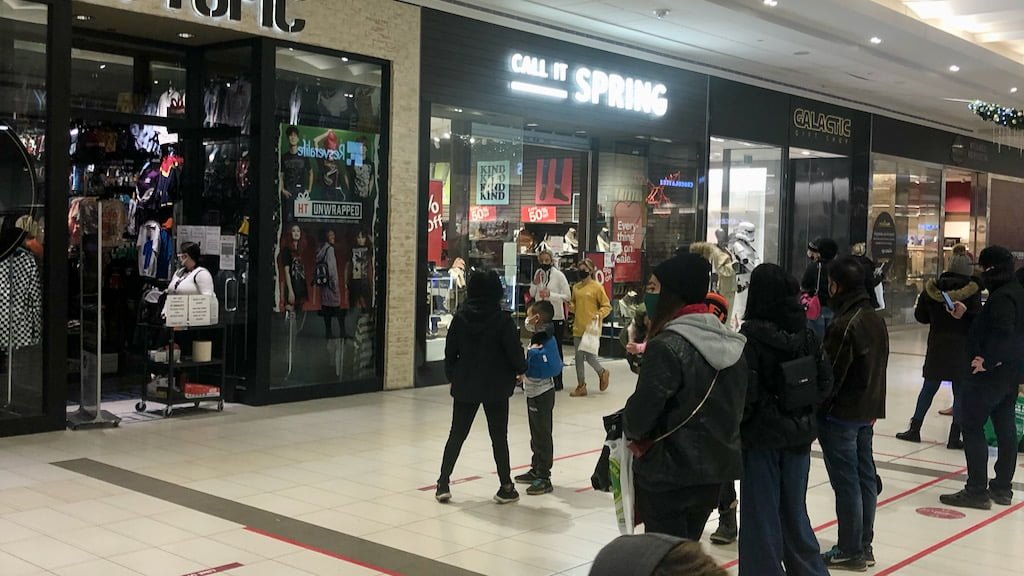
Hot Topic, Call it Spring. Photo: Norman Katz/Maple Leaf Displays
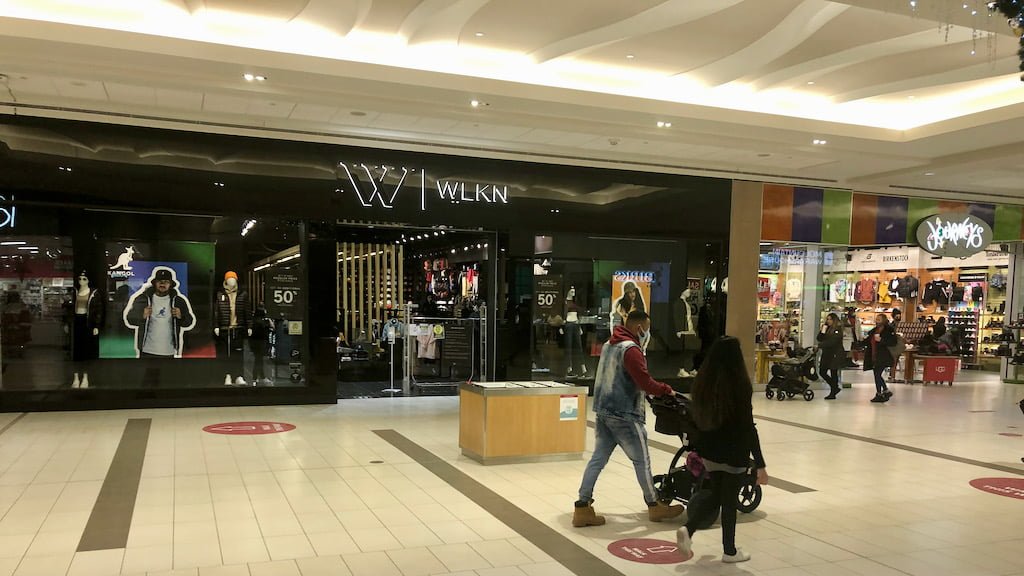
WLKN and Journeys. Photo: Norman Katz/Maple Leaf Displays

Montreal-based youthful fashion retailer WLKN has a store at Oshawa Centre. The company has six stores including Oshawa Centre, Vaughan Mills near Toronto, Upper Canada Mall in Newmarket north of Toronto, CF Carrefour Laval near Montreal, Promenades Gatineau near Ottawa, and Carrefour de l’Estrie in Sherbrooke Quebec.

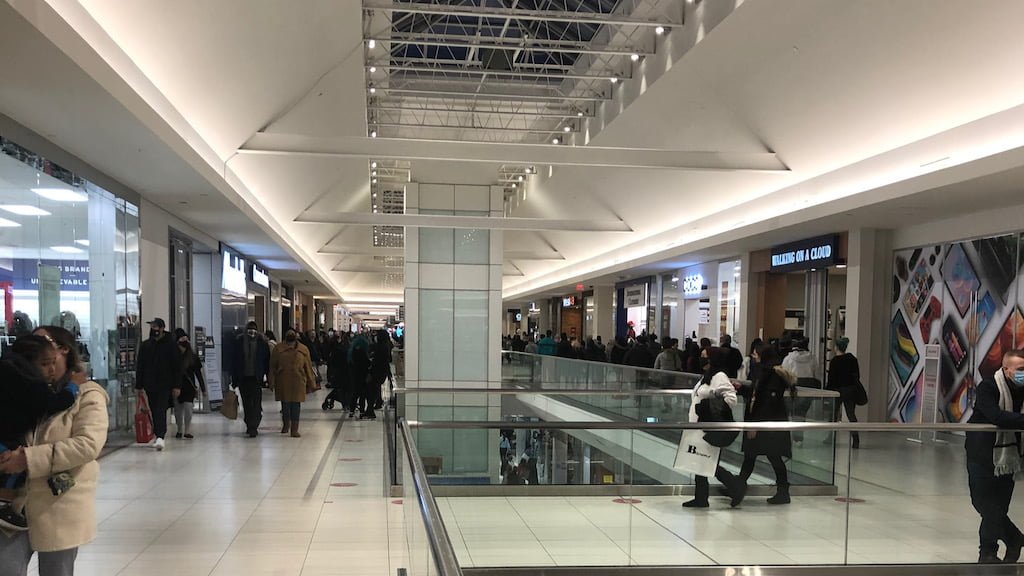
Photo: Norman Katz/Maple Leaf Displays

We had a very interesting photo walk around the Oshawa Centre, and we hope you enjoyed coming along with us. Don’t forget to check out the other in-depth photo tours that came out at the end of 2020.

Alberta-Based KORITE Emerges From Creditor Protection Under New Ownership with Plans for Expansion

Calgary-based KORITE International, a leading producer of Ammolite jewellery and gemstones, has emerged from creditor protection under new ownership.

The company, which has more than 90 percent of the world market of Ammolite, with 90 percent of customers residing outside Canada, is poised now for expansion and growth.

David Lui
David Lui

David Lui, the company’s CEO and President, said KORITE is now well positioned to fulfill the continuing demand for its Ammolite jewellery, gemstones, and Ammonite fossils, as the new ownership group is led by Clear North Capital Holdings Inc. (Clear North) in partnership with Lui.

Clear North, based in Calgary, is focused on private equity.

“We are very pleased with the outcome of the CCAA process,” said Lui. “We are grateful for the ongoing support of our employees, customers, vendors, landlords and shareholders, and we are excited to start the next chapter in KORITE’s 40-year journey. We have repositioned ourselves as a more efficient business and better able to serve our loyal customers in today’s environment.”\

KORITE Ammolite and Ammonite is mined in Alberta in the Lethbridge area, which is home to the highest-grade deposits of Ammonite fossils and Ammolite in the world.

“While Ammonite fossils are found on every continent, only in southern Alberta are they found with the distinctly bright, beautiful and iridescent colours that make it so rare, exotic and precious, dating back approximately 71 million years,” explained Lui.

“Down in Lethbridge, it’s the only part of the world where you will find the fossil with this colourization of the shell of the Ammonite. We’re not entirely sure why but it’s due to the mineralization, the shift in tectonic pressures in the earth. The shell in the Ammonite produced colours. It’s very colourful. It’s all organic. Ammonite is the shell. Fragments from the Ammonite are called Ammolite. So Ammolite is a product from the Ammonite in the mining process. When it was discovered, the mining team thought we could use these chunks from the mining and actually turn them into artifacts, turn them into jewellery, collectables. We have multiple different categories and it’s not just jewellery. It’s everything from what we call large art pieces like decor, home decor, art and collector pieces. Hand held specimens. Then jewellery is another subsection which can be turned into designer using gold, silver, higher end fine jewellery pieces that are set into gold and silver.”

KORITE said Ammolite was officially designated as a naturally occurring precious gemstone by The World Jewellery Confederation in 1981.

KORITE’s products are sold in more than 140 retail locations around the world, primarily in North America. The Ammonite and Ammolite is also sold in about 22 countries.

“We’re not bricks and mortar. We rely from a retail perspective on our wholesale jewellers and our online presence,” said Lui, adding that physical stores are not in the plans but the company does have shop-in-shops in several other jewellery stores and duty-free stores branded as KORITE.

The company filed for protection under the Companies’ Creditors Arrangement Act at the end of June 2020. As of December 18, it emerged from CCAA under new ownership. Lui partnered with Clear North Capital in acquiring the business.

“We believe that exceptional opportunities are available in several core and emerging market segments for the ultra-rare KORITE Ammolite, and we look forward to bringing this Canadian and specifically Alberta treasure to consumers globally,” said Cody Church, Founder and CEO of Clear North Capital.

Lui said the financial backing from Clear North Capital saved the company from bankruptcy and there is a commitment to rebuild the business, rebuild the reputation of KORITE.

“KORITE has a strong reputation. A 40-year reputation. Frankly, we think of it as a 40-year-old startup. Some of our traditional channels were impacted and that’s why we had to file for CCAA. Tourism, cruise ships, retail, Asia were highly impacted with the COVID-19,” said Lui.

“Our commitment as part of new ownership is a shift to online. A more direct to consumer approach. Or direct to consumer thinking. Growth in online. Bringing the beauty of Ammolite to consumers around the world. Telling the story of Ammolite to the world. Where the gemstone came from. It’s actually Canada’s treasure. You could almost say it’s Alberta’s gemstone really.”

BRIEF: Stores Shutting in Vancouver ‘Luxury Zone’, Bizou Shutting 30% of Boutiques

Retail Insider Brief collage

Stores Closing in Downtown Vancouver’s ‘Luxury Zone’

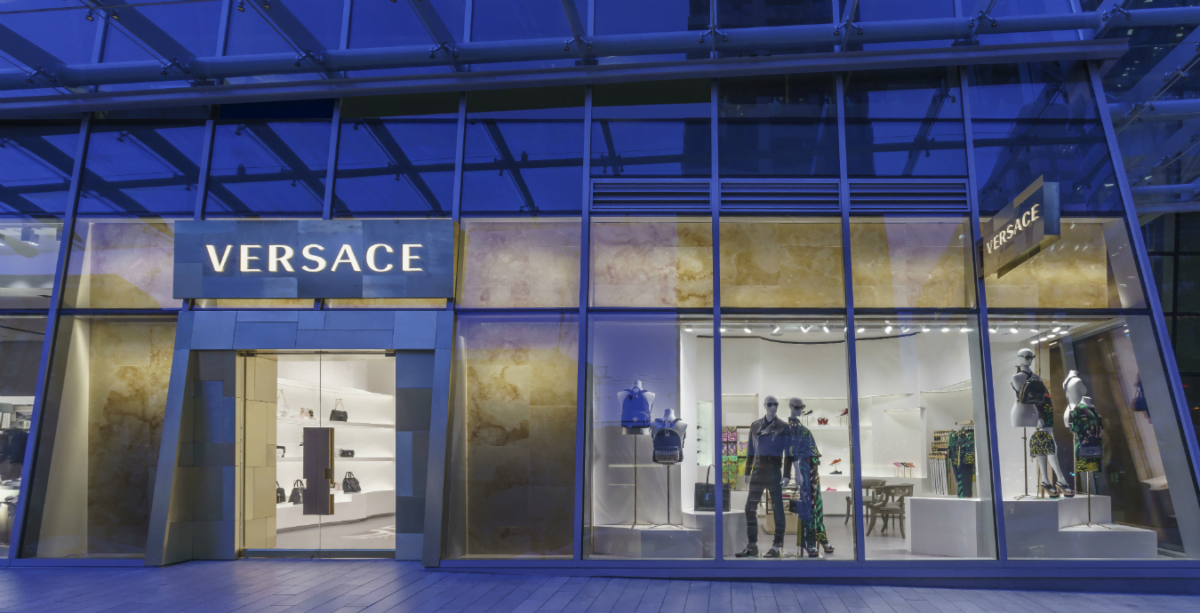
Exterior of Versace store in Vancouver. Photo:  Montecristo Magazine
Exterior of Versace store in Vancouver. Photo: Montecristo Magazine

Two notable stores in downtown Vancouver’s ‘Luxury Zone’ will be closing this month. Versace, which has had a boutique presence in Vancouver for 34 years, will shut its standalone storefront on Thurlow Street just off Alberni Street. Crafting retailer Michaels, which has occupied a 15,730-square-foot space at 1022 Alberni Street for almost a decade, will shutter this month as well.

The 1,875-square-foot Versace space will be occupied by Thom Browne as reported in Retail Insider this week. It’s not yet known if the Michaels space has secured a tenant, though for years brokers have toured retailers through the space. A representative with Burberry noted the awkwardness of the Michaels space on Alberni Street which features a small main floor lobby and retail space with an escalator to a second level spanning more than 13,000 square feet. A large Brooks Brothers store is located downstairs from Michaels.

Prior to being tenanted by Michaels and Brooks Brothers, the two-level space was occupied by an Aldeasa duty free store. The store shut amid litigation following the removal of a tour bus parking space in front of it.

When Michaels opened on Alberni Street in 2012, some were scratching their heads at the move. Alberni Street was on a trajectory to become a luxury strip with Tiffany & Co., Hermes and Louis Vuitton anchoring the Burrard Street end of the street while Burberry had moved to the base of the Shangri-La Hotel at Alberni and Thurlow Streets. Other luxury brands have since moved into the area.

Michaels store at 1022 Alberni Street. Photo: pci-group.com

More changes could come to Vancouver’s Luxury Zone as German womenswear brand Escada struggles financially. At the same time, the small size of the Luxury Zone and interest from brands in the past could see new luxury names move into the area. The Luxury Zone could also be extended along Thurlow Street south of Robson Street as one development is planning a retail galleria that sources say will target luxury brands such as Chanel.

Retailer Bizou to Shutter 30% of its Stores

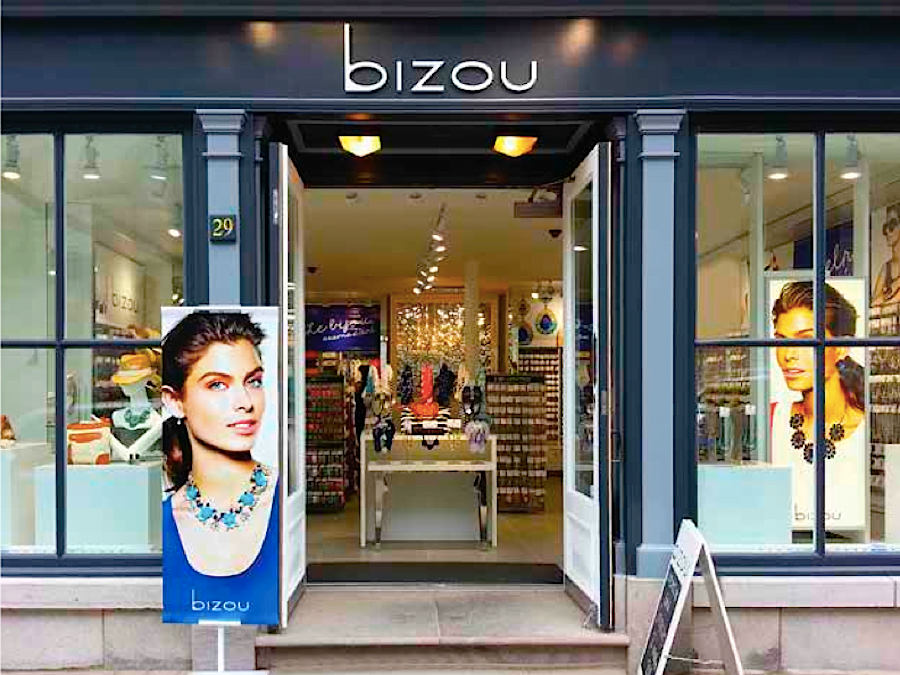
Exterior of Bizou store. Photo: Bizou

Quebec-based jewellery and accessories brand Bizou will shutter almost 30% of its retail locations, according to a French language report in La Presse this week. A total of 24 of the company’s 85 stores will be shut by the end of this month which will result in more headaches for landlords having to lease vacated spaces.

Bizou has almost $9.5 million in liabilities and Bizou International filed for bankruptcy in the fall of 2020. Lower rents have been negotiated (some percentage rent deals) and stores slated to close permanently will begin to do so next week. The article in La Presse states that even more Bizou stores could close.

Bizou’s losses are also related to Bizou’s exit from France in 2019 according to La Presse. Bizou’s creditor protection extends to February 3 and a line of credit from RBC is available until the end of March.

In 2015 we reported that Bizou was looking to operate between 250 and 300 stores in Canada and that a franchise parter was being sought for the western provinces.

Bizou’s stores are located primarily in Quebec with several other units in Ontario and the Maritimes. The stores set to close include: Galeries d’Anjou – Carrefour Laval – Center Eaton – Place Sainte-Foy – Galeries du Vieux-Port (Matane) – Place Donnacona – Center Alma – Carrefour Saint-Félicien – Plaza d’Alma – Carrefour Jeannois (Roberval) – Le Village (Baie-Saint-Paul) – Carrefour Gaspé – Place du Havre (Chandler) – Carrefour Assomption (Edmundston, New Brunswick) – Le Rond Point (Tracadie-Sheila, New Brunswick) – Bathurst Mall (Bathurst, New Brunswick) – Confederation Court Mall (Charlottetown, Prince Edward Island) – Corner Brook Plaza (Corner Brook, Newfoundland and Labrador) – St Laurent Center (Ottawa, Ontario) – Georgian Mall (Barrie, Ontario) – Masonville Place (London, Ontario. Stores already closed include: Place Charlevoix, La Malbaie – Rue Saint-Jean (Old Quebec) – Place Versailles (Montreal).

Heartland Town Centre Celebrates the Addition of Venture X

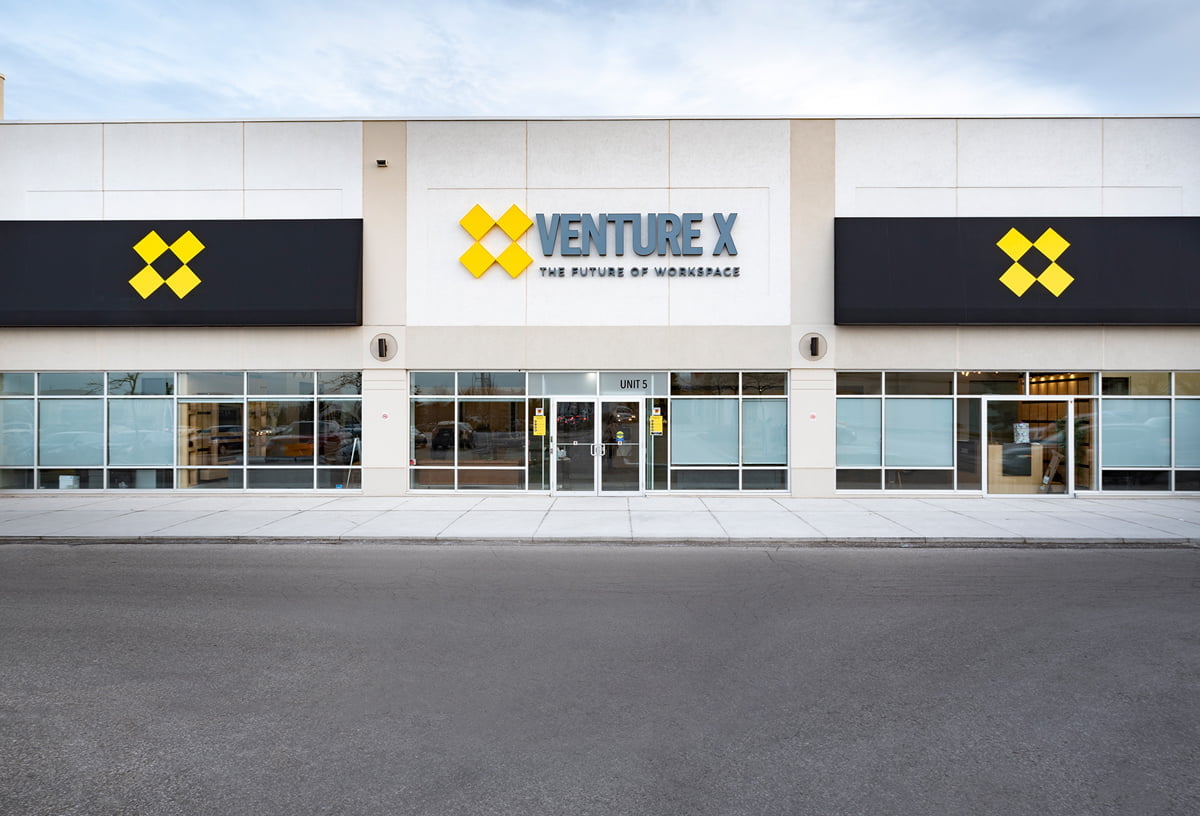
Exterior of Venture X-Heartland. Photo: Venture X

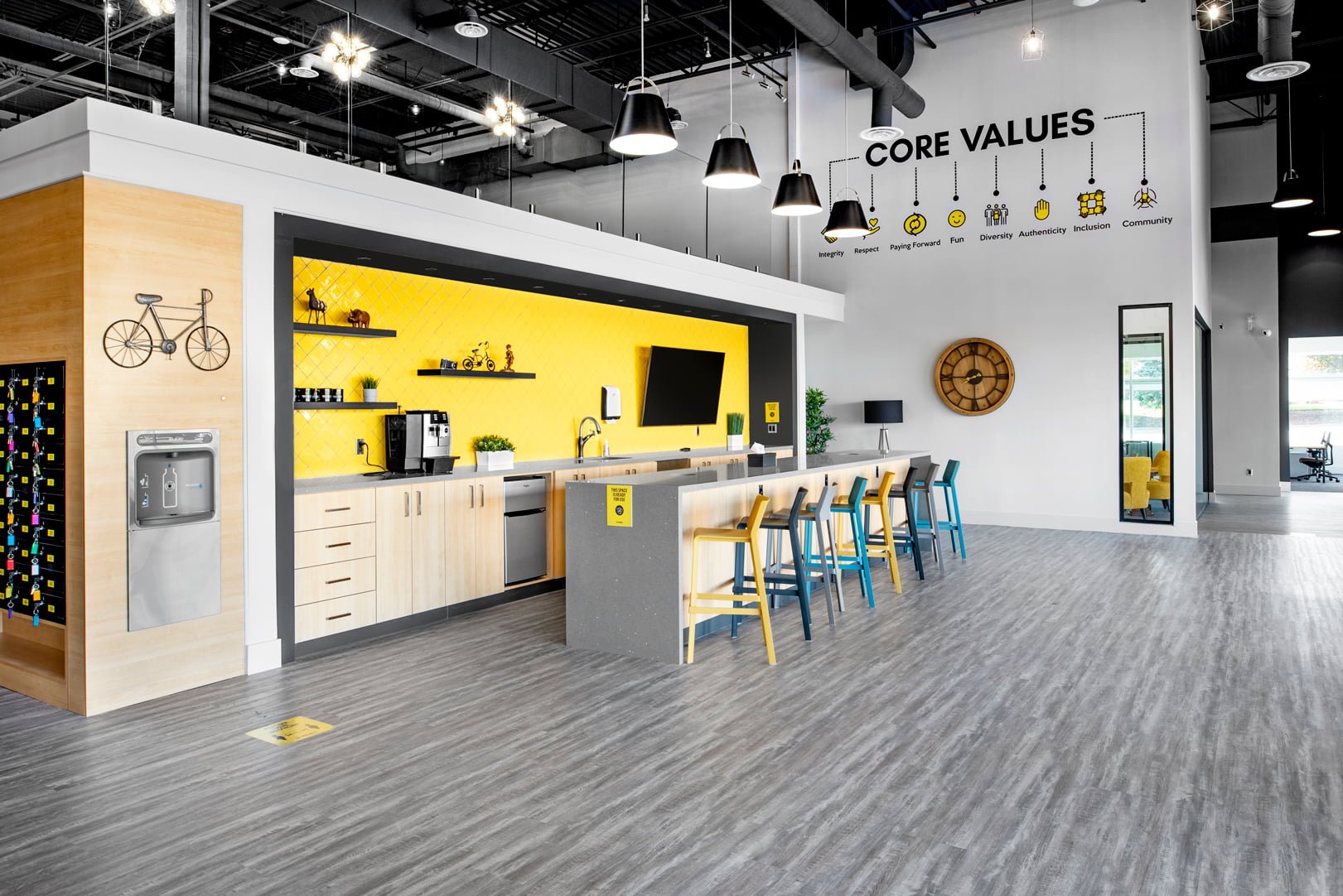
Mississauga’s premier outdoor big-box shopping centre has welcomed co-working company Venture X-Heartland to its lineup. The co-working and private office space is now the largest shared workspace in Mississauga and promotes itself as “the future of workspace”.

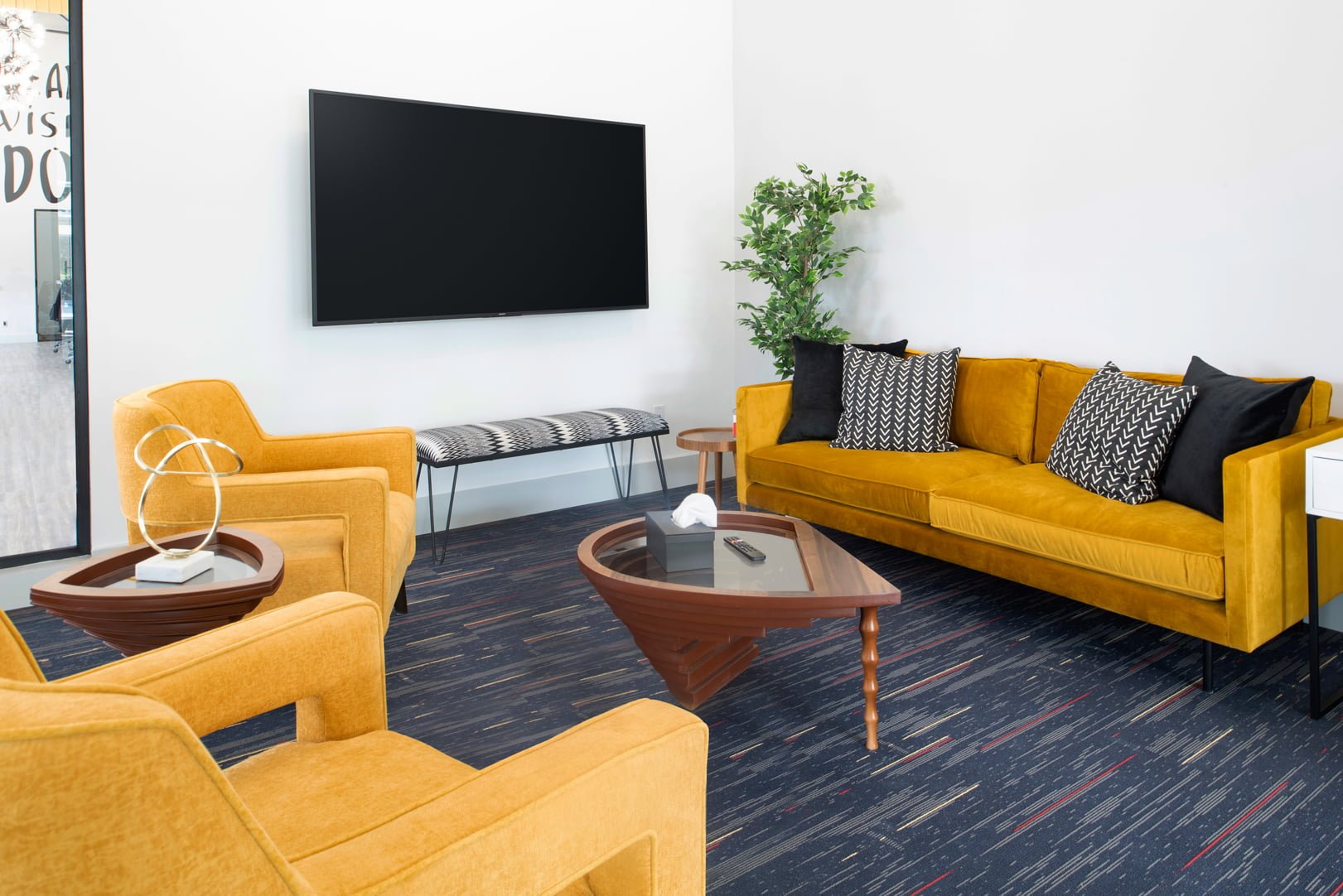
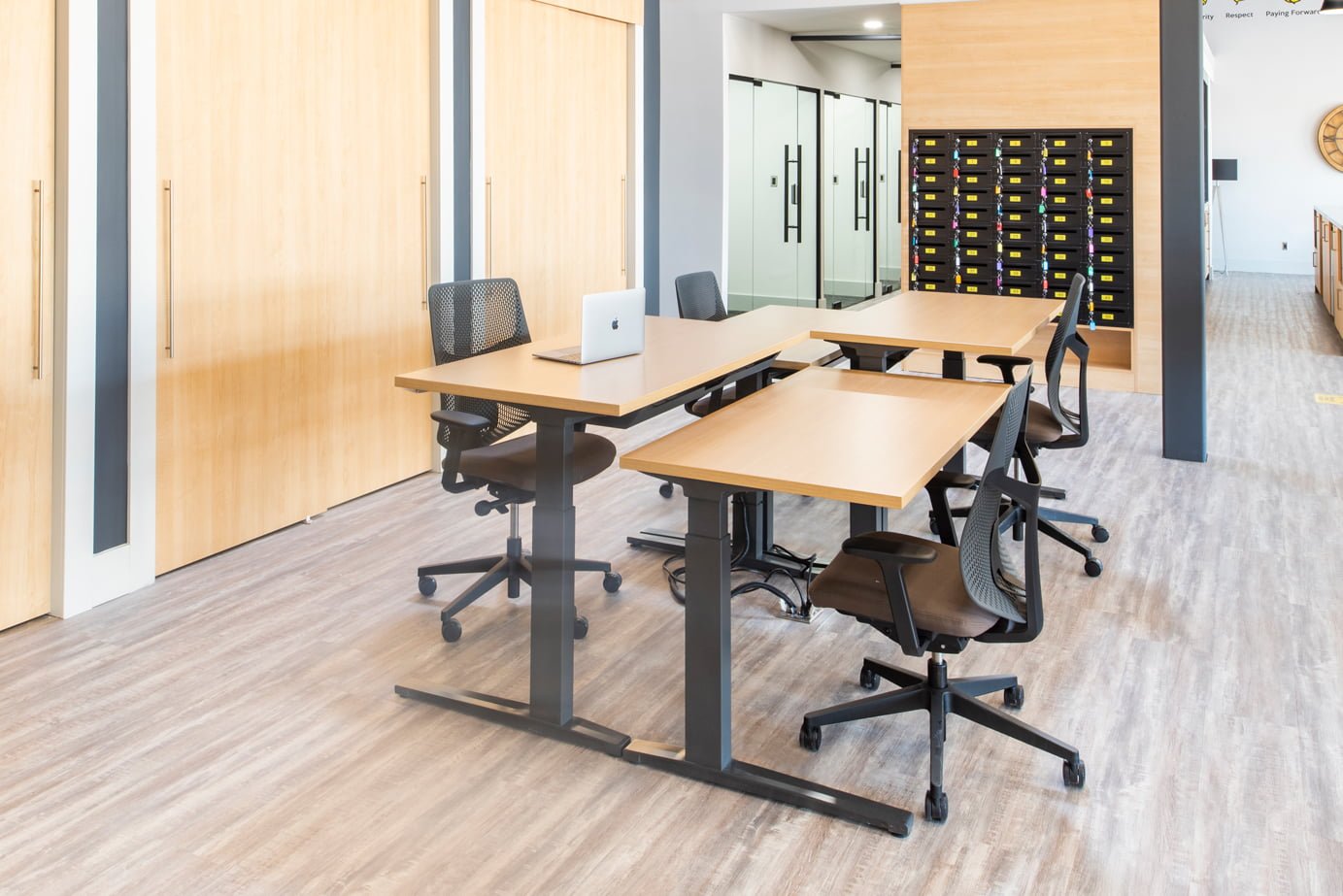
Located right next to the 401, at 600 Matheson Boulevard West in unit 5, Venture X-Heartland is the third Venture X space to open in the city. It offers everything one would need to run a business under one roof, including fully-equipped conference rooms designed for executive meetings and staff training, a private lounge area for team meetings, and private offices available for daily, weekly, and monthly use.

Venture X–Heartland is the perfect place to do business in the GTA, providing users with easy after-work-access to amenities such as restaurants, groceries, and shopping.

Suitsupply Outlet Offers Access to 2020 Collections That Didn’t Get a Fair Chance

Suitsupply 2020
Suitsupply 2020

Due to the unprecedented happenings of 2020, Suitsupply has launched an online Suitsupply Outlet — an opportunity the brand is calling a ‘once in a century’ occurrence. And since this year’s inventory didn’t get a fair chance, the brand has decided to add pieces from its newest collections to the outlet offerings.

The outlet went live on December 26th and is only available within Canada.

Update: Outlet inventory went very fast and the outlet closed on December 31st 2020.

Toronto’s First Zero-Waste Coffee Shop Opens on the Danforth

Interior of the Poured Coffee shop. Photo: Google

Toronto now has its first zero-waste coffee shop. Poured Coffee doesn’t use paper cups, containers, napkins or disposable products and instead serves its coffee in reusable cups.

Located at 2165 Danforth Ave, Poured Coffee shares its space with The Re Space — a community-based store offering a full range of sustainable products including bamboo toothbrushes and organic beauty products.

The initiative was started by entrepreneur, Mira Vuletic, who’s passion for coffee, owning her own coffee shop, and reducing Toronto’s contribution to landfills amalgamated to create Poured Coffee.

Since there are no paper cups available, customers are encouraged to bring their own travel coffee mug. For new customers who might’ve missed the memo, there’s the “Ugly Mug Library”, which includes a collection of donated mugs that are given as to-go cups. Alternatively, you can purchase a MiiR travel mug from the RE Place store with your coffee and get your next two drinks on-the-house.

Thierry Opens Second Vancouver Location

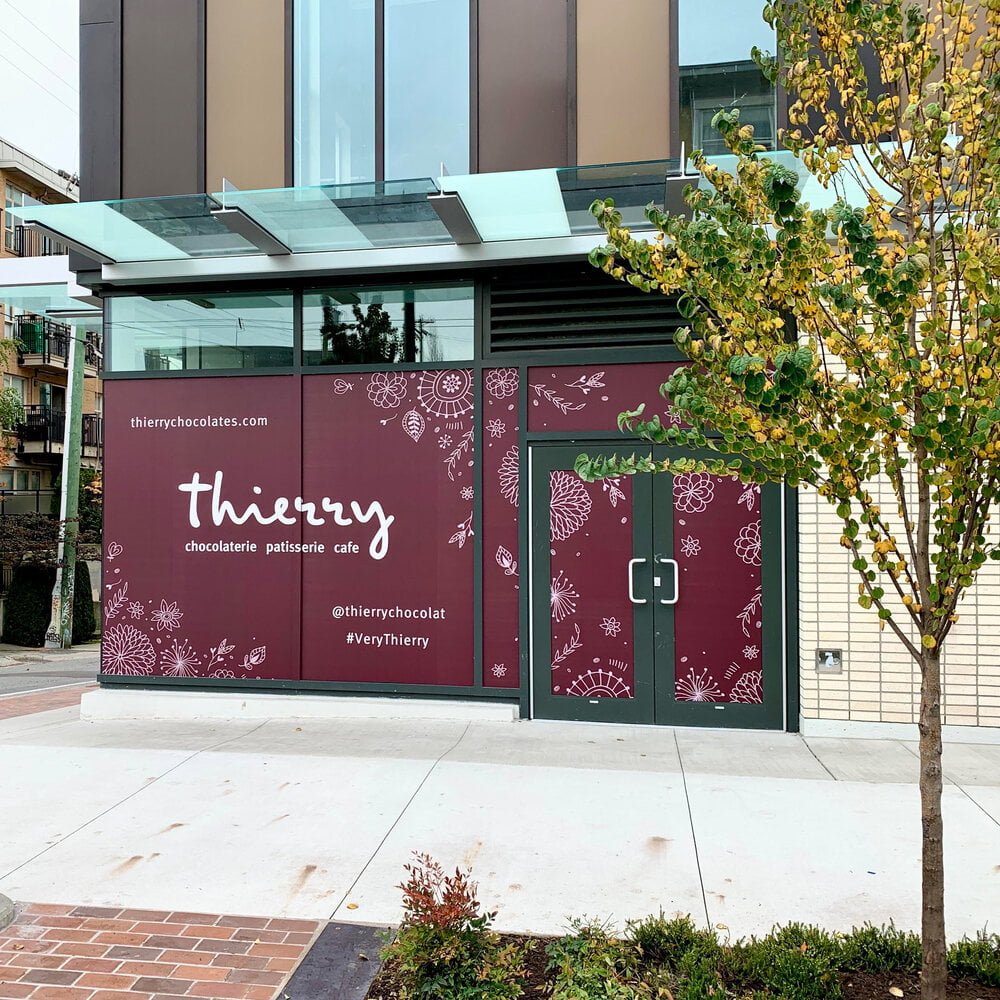
Exterior of new Thierry store in Mount Pleasant, Vancouver. Photo: Thierry Facebook

Thierry Mount Pleasant has opened its second location in Vancouver at 265 East 10th Avenue, just off Main Street and Kingsway Avenue.

Despite the current state of retail in Canada, Thierry successfully opened its second location just in time for the holidays. The chocolaterie, patisserie and cafe is known for its artisanal chocolates and classic French pastries by Chef Thierry Busset.

Widely regarded as one of North America’s finest pastry chefs, Busset has received rave reviews over the years from notable publications, such as Vancouver Magazine. Chef Thierry has focused the experience he gained from his multiple award-winning successes to open the first Thierry Cafe where he shares his dream of showcasing art through the science of patisserie. Thierry’s original location can be found at 1059 Alberni Street in downtown Vancouver.

Thierry’s Mount Pleasant location is open Monday – Sunday from 8am – 10pm.

Hillcrest Mall and Others Launch Centralized Pickup Service Amid Third Lockdown

Exterior of Hillcrest Mall. Photo: Hillcrest Mall

Hillcrest Mall is the latest Oxford Properties mall to launch its centralized and curbside pickup service in the wake of a third lockdown in the Greater Toronto Area.

Working with select retailers within the centre, the Richmond Hill mall is providing locals with the means to shop their favourite stores despite the current situation. Hillcrest are encouraging those interested to contact the retailers directly (online or by phone) and there is a list of participating retailers featured on the mall website. Once you have placed your order with the store, you will be contacted by email notifying you of your pickup time. All curbside pickups will be conducted at Entrance 4 of the mall.

Other Oxford Properties malls, Yorkdale, Square One, and Scarborough Town Centre, are also supporting retailers by creating designated curbside and store front pickup locations for stores adapting quickly during this retail period by offering e-commerce or phone order fulfillment. Customers can visit the Yorkdale, Square One, and Scarborough Town Centre websites to see what stores are offering specialized services.

Lists of participating retailers should be consulted before planning purchases as the information is being updated in real time, said the company.

Read More Briefs From Retail Insider:

Harry Rosen’s Youthful Perspective and Innovation Push In 2021: Interview with CEO Larry Rosen

Exterior of Harry Rosen store at Square One. Photo: Harry Rosen

The year 2020 was a difficult one for the retail industry, to say the least, particularly for those operating in and around the apparel space. Interruptions to global supply chains, a more cautious consumer and forced store closures due to government-imposed lockdowns across the country are just some of the factors and challenges that retailers have needed to contend with over the course of the past ten months or so. The resulting impacts have been well-spread and widely documented, wreaking havoc on the bottom line for most. For others, the outcomes have been far more serious, leading to the permanent shuttering of their operations. There’s no doubting the severity of the destruction that COVID-19 has caused retailers in Canada and around the world. It’s changed everything that we had come to know and has cast an air of uncertainty, even fear, concerning what’s to come. Despite these challenges, however, leading Canadian menswear retailer Harry Rosen continues to move forward, shaping its own future through clever adaptation and forward-thinking ingenuity.

Part of the Culture

The company’s success, even during difficult times, shouldn’t be a surprise to anyone who’s followed the industry and retailer through the years. Since it’s founding 66 years ago, Harry Rosen has weathered many market challenges, evolving with the tastes and preferences of multiple generations of Canadian men and catering to numerous shifts in style. The retailer’s ability to pivot and respond effectively in the face of adversity is perhaps one of its greatest strengths and a central reason that helps explain the tremendous accomplishments it’s enjoyed through the years. According to the company’s CEO, Larry Rosen, it’s resilience and fortitude that began with his father, Harry, who exemplified the characteristics that quickly became part of the Harry Rosen culture, reenforcing the foundations on which the company had been built. And it’s a culture and foundation that he says is strengthened even further today through the invention and creativity of the immensely talented team that he leads.

“We’ve got a number of young executives at the company who are doing some really amazing things,” he says. “They bring a youthful perspective and a strong spirit of innovation to our operations and deserve a great deal of credit for a lot of the more important decisions that we’ve made recently as a business. Their insights and ideas have allowed us to continue to adapt and evolve with trends within the market, helping to drive us forward and increase our relevance within the menswear space.”

The young, innovative executives that he refers to include the retailer’s Chief Marketing Officer, SVP Marketing & E-Commerce, Trinh Tham, his son Ian Rosen who leads the company’s Digital & Strategy, and Shannon Stewart, Vice President, General Merchandise Manager, and Alan Whitfield, Executive Vice President, Store Operations, to name a few. Their efforts, supported by their teams, have collectively aided in the recent transformation of the Harry Rosen digital experience for customers, the optimization of its e-commerce capabilities and performance and the introduction of a new visual identity and positioning for the brand. These decisions and the work put in to execute on them have been critical in preparing Harry Rosen to effectively respond to some of the challenges brought on by the impacts of COVID-19 and to place itself well to continue servicing the evolving needs and behaviour of the consumer.

“The effect that COVID-19 has had on the industry has been very dramatic,” he asserts. “Forced store closures and reduce capacities at malls and within stores across the country have significantly impacted the performance of many businesses. Most apparel retailers, Harry Rosen included, ended the holiday period with inadequate revenue and too much fall inventory. But what this extremely negative circumstance has provided us is an opportunity to take a good look at what we’re doing, how we’re servicing our customer and making our product available, and improving in those areas to continue strengthening our brand and our relationships with our clients.”

The Pandemic’s Lasting Impacts

Although Rosen laments the fact that the experience of the Canadian consumer is currently restricted with respect to their ability to visit stores and to touch and feel product, he recognizes the gains the company has made on the e-commerce side of the business, posting record-braking online sales during the recent COVID months. The migration of sales to the online channel represents one of the most significant changes to consumer behaviour as a result of the global pandemic and resulting lockdowns. But, as Rosen sees it, the e-commerce boom is less of a change in behaviour and more reflective of an acceleration of a trend that the industry’s been experiencing for some time.

“We were fortunate enough to have already established an e-commerce presence before the impacts of COVID took hold,” he says. “We’ve been selling online for more than 12 years. But since the start of the pandemic, we’ve experience extraordinary growth in our online sales which have been supported by the digital enhancements that we made. These enhancements, along with all of the other work that we’ve recently done had been in development for some time. But we decided to ramp up our efforts in some of these areas in order to meet the needs of the evolving consumer. The impacts of COVID have clearly influenced some of these needs, accelerating a move to online that I don’t see reverting once everyone’s been vaccinated. There will be a return to stores and a recovery of the sales that happen within the physical retail environment when all of this comes to an end. But I think that the Canadian consumer, even those who may previously have been reluctant to order product online, have become very comfortable with the experience and service over the past number of months and will continue to do more of their shopping virtually.”

In addition to influencing the channels through which consumers are making their purchases, another way in which the pandemic may pose long-term impact, Rosen suggests, is the attitude of the Canadian workforce with respect to where and how they work. He believes that although there will be a return to offices, most people will be working more of their hours and days remotely going forward. In the short-term, in combination with recent lockdowns and societal restrictions, the impact a lack of corporate traffic has had on the tailored clothing business has been severe. Serving to supplement for a reduction in its sales of tailored clothing and to continue meeting the evolving demands of the Canadian consumer, however, is Harry Rosen’s excellent selection of sportswear and outerwear.

“We’re confident that our tailored business will bounce back when people start holding events again and returning to their offices,” he states. “But the impact that COVID has had on the businesswear market to date has been profound, reducing it significantly. We’re fortunate in that we have a long history of being an outstanding sportswear and outerwear retailer. It’s an area of our business that we’re very proud of and one that we continue to focus on, increasing our selection and expanding our outreach. It helps to position us nicely, allowing us to continue satisfying the apparel needs of our customers both today as well as moving forward.”

A sample of the available services provided by Harry Rosen. All can be found on harryrosen.com

Creativity and Adaptation

As already mentioned, these tweaks and subtle shifts in focus within the business have become something of a cornerstone of the Harry Rosen brand through the years, allowing it to continuously adapt with current change while making the right decisions and investments to secure longer-term success. It’s representative of a nimbleness and willingness to innovate. In fact, the creativity within the company, as Rosen rightly points out, seems to be boundless today and is well represented by the partnership that the company recently entered into with DoorDash in order to provide same-day delivery of any of the retailers top 25 highest selling products during the busy 2020 holiday period. It’s an innovation that Rosen lauds as ingenious, providing the retailer with a means by which to remove friction from the holiday gift buying experience for its last-minute shoppers while securing sales that may very well have not happened if the service hadn’t been available.

It’s clear when discussing the retailer’s future plans with Rosen the pride that he possesses for the group of people that he works with and the execution and subsequent achievements that they’re collectively responsible for. What it’s resulted in is a Harry Rosen brand that will likely come out of this very difficult period with an even stronger reputation and proposition for the customer. But, despite all of this excellent work, what he perhaps seems even more satisfied with is the continuation of the company’s involvement in meaningful causes through its most recent collaboration with Toronto Raptors President and Giants of Africa Founder Masai Ujiri.

A Matter of HUMANITY

The project, which launched in December 2020 and is centred around the theme HUMANITY, features a seven-piece athleisure capsule designed by Ujiri and Canadian designer Patrick Assaraf, with each piece adorned with the word ‘HUMANITY’ in Ujiri’s handwriting. Focused on raising funds for charity and introducing new Black designers to the Canadian market, net proceeds from the sale of the collection will go to Black Youth Helpline, an organization which provides young people with access to culturally relevant, high-quality services and resources in their local community, including crisis counselling, strategies for staying in school and support for families, schools and communities. It’s an amazing commitment and contribution by the retailer that, according to Rosen, transcends what the leading menswear retailer does as a business and is part of what he sees as part of a growing collective aimed at eradicating racism and promoting inclusivity within the industry.

“This kind of work and the efforts that are being made by incredible individuals like Masai are nothing short of critical in raising awareness of some of the issues in our societies that continue to plague us. It’s true that it’s been a tremendously difficult year for the industry. But, being involved with Masai to the degree that we’ve committed to allows us to do something that goes well beyond the retail industry. Everyone knows that there are systemic barriers to accessibility and opportunity within our communities. This collaboration simply gives us the chance to do our part, to promote inclusion within the industry that we operate. We all know that more needs to be done to start to correct some of the injustices that occur on a daily basis. We’re hoping that with the help of Masai and Patrick that we’ll be able to do our part, reminding the world that there’s more that unites us than divides us.”

CF Chinook Centre [Mall Tour Series – November 2020]

Retail Insider’s series of Mall Tours heads to Cadillac Fairview’s CF Chinook Centre just south of downtown Calgary during Black Friday in November 2020. Craig and Lee provide commentary on what’s happening at the mall in a tour showcasing what’s open and a bit of insights into the retailers.

Initially built in 1960, the mall has gone through a number of expansions and renovations. A new wing was added in the 1980s for specialty retailers, the entire complex was rebuilt in three phases in 2000, and an expansion adding 180,000 square feet opened in 2010.

CF Chinook Centre Video Tour:

CF Chinook Centre Tour Details: 

CF Chinook Centre Retailers Mentioned in Tour

Map of Chinook Centre – Lower Level

Level 1 (ground floor) retailers:

Map of Chinook Centre – Upper Level

Level 2 (second floor) retailers:

Other Malls in the Retail Insider “Mall Tour” Series:

Luxury Brand Thom Browne to Open 2nd Canadian Storefront in Vancouver

Exterior image of 745 Thurlow Street. Photo: MCMP Architects

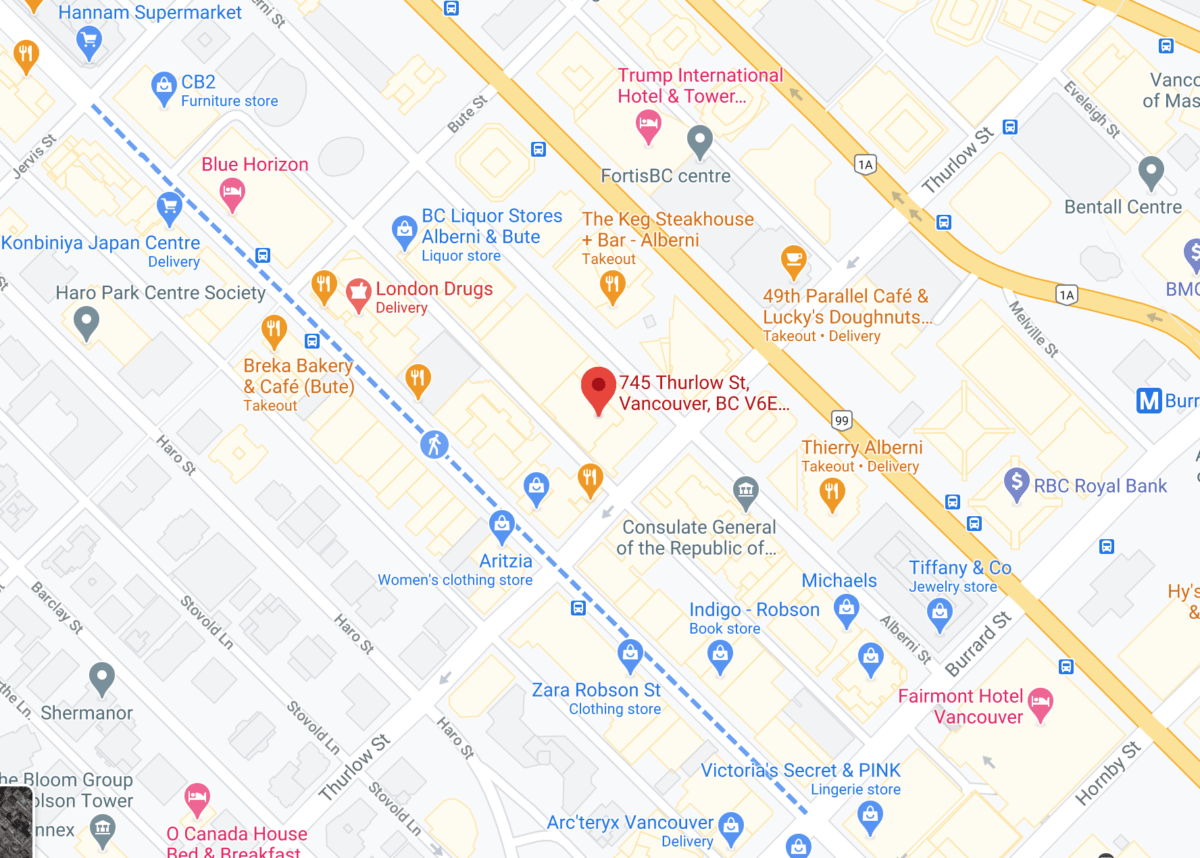
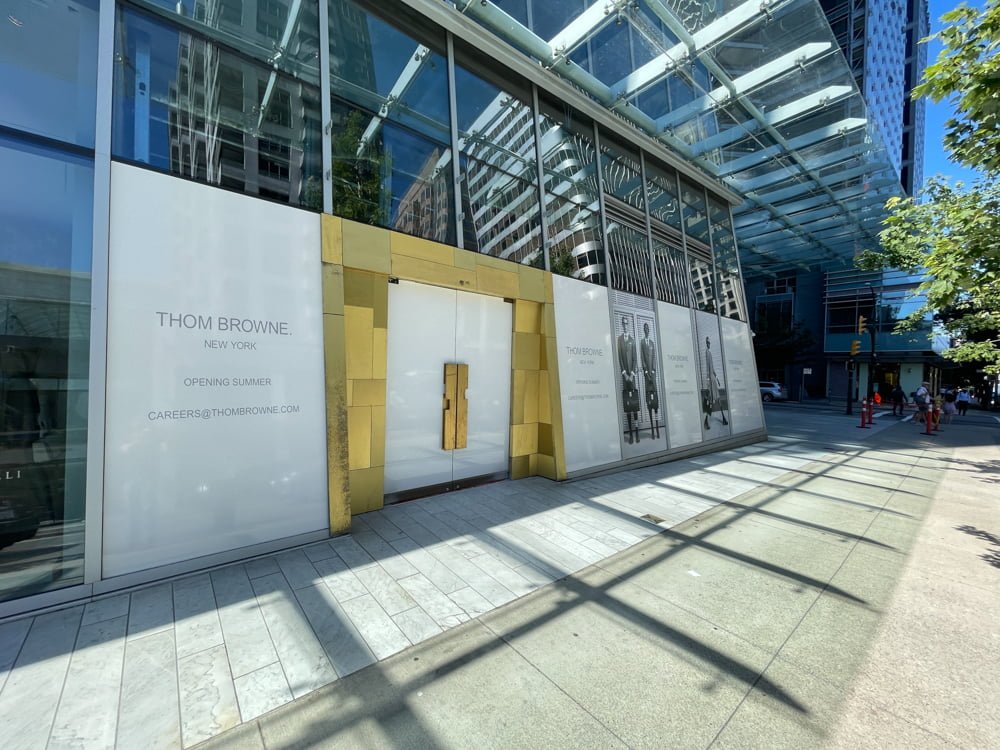
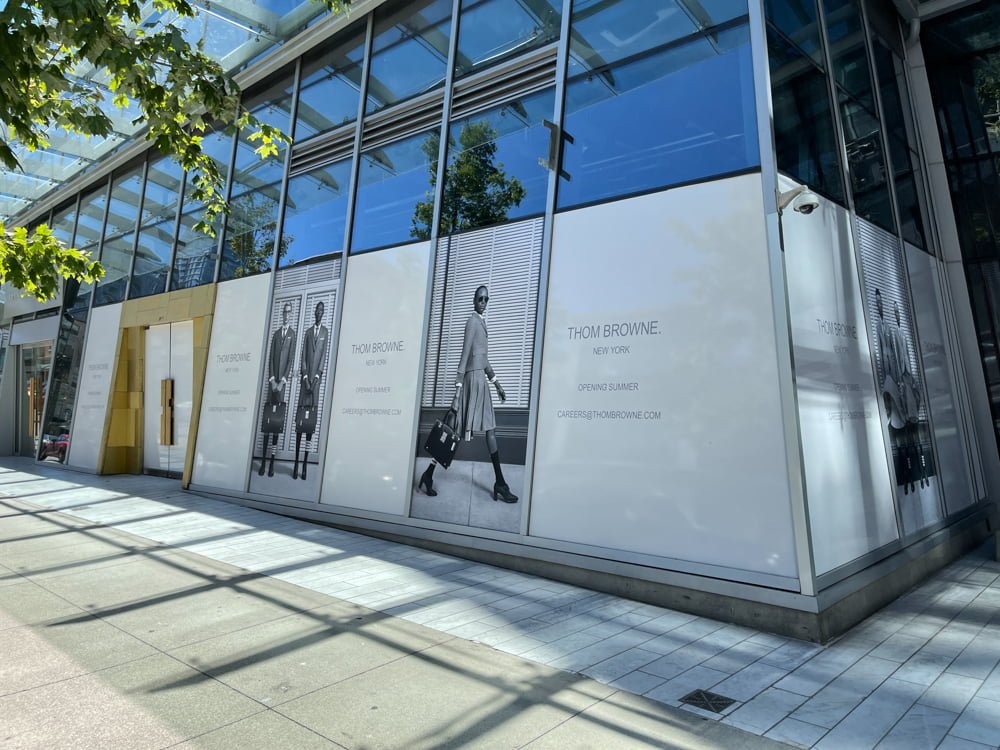
Luxury New York City-based fashion brand Thom Browne will open its second standalone Canadian storefront this spring in downtown Vancouver. Thom Browne will replace a Versace store that opened at 745 Thurlow Street in December of 2015.

The new Thom Browne store will span about 1,875 square feet on one level in a retail space featuring an angled facade at the base of a newly-built office tower. A Brunello Cucinelli store is located next to the future Thom Browne and retailers directly across the street include Moncler, Saint Laurent, Prada, Off-White, Rolex, and Burberry.

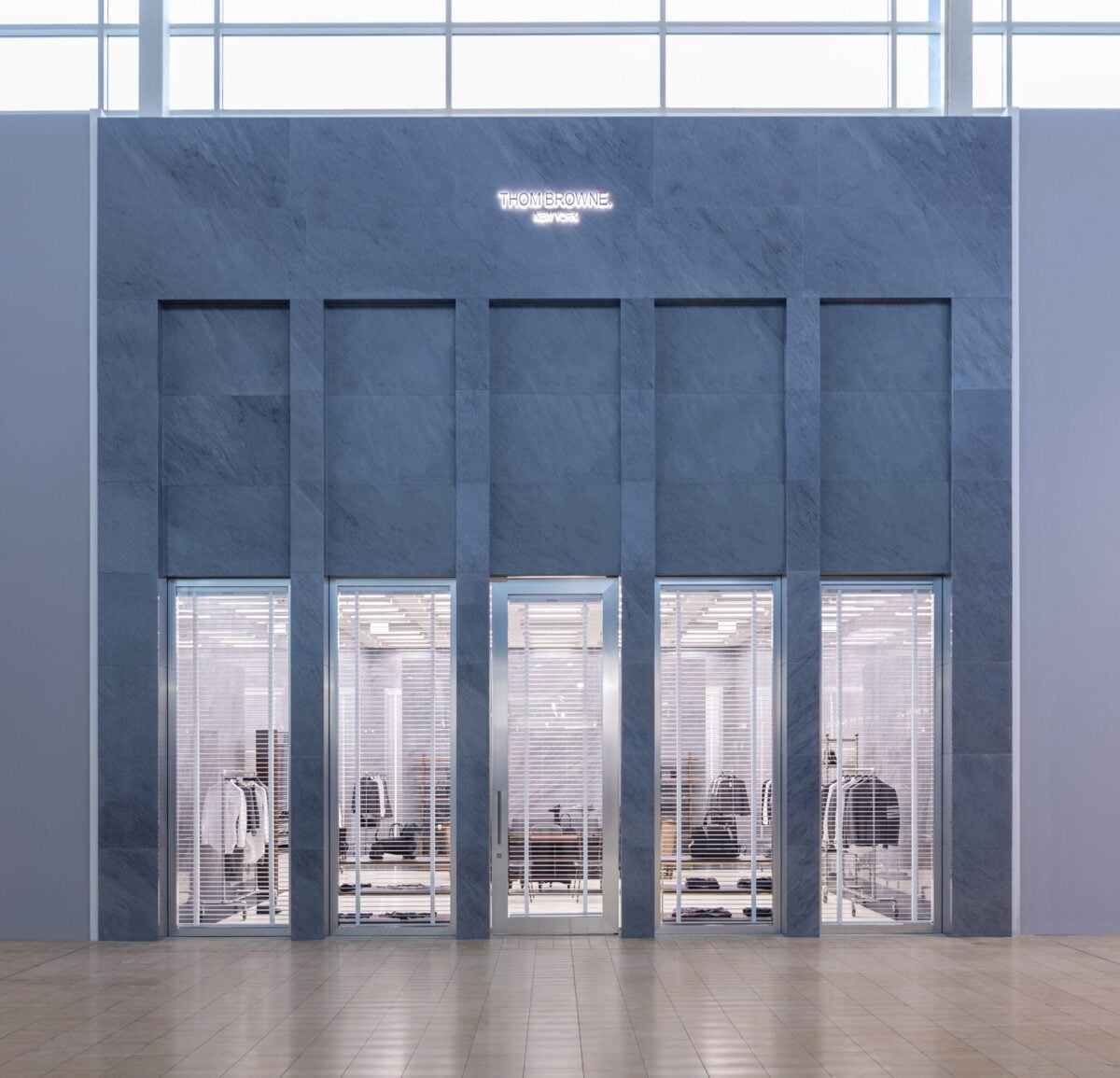
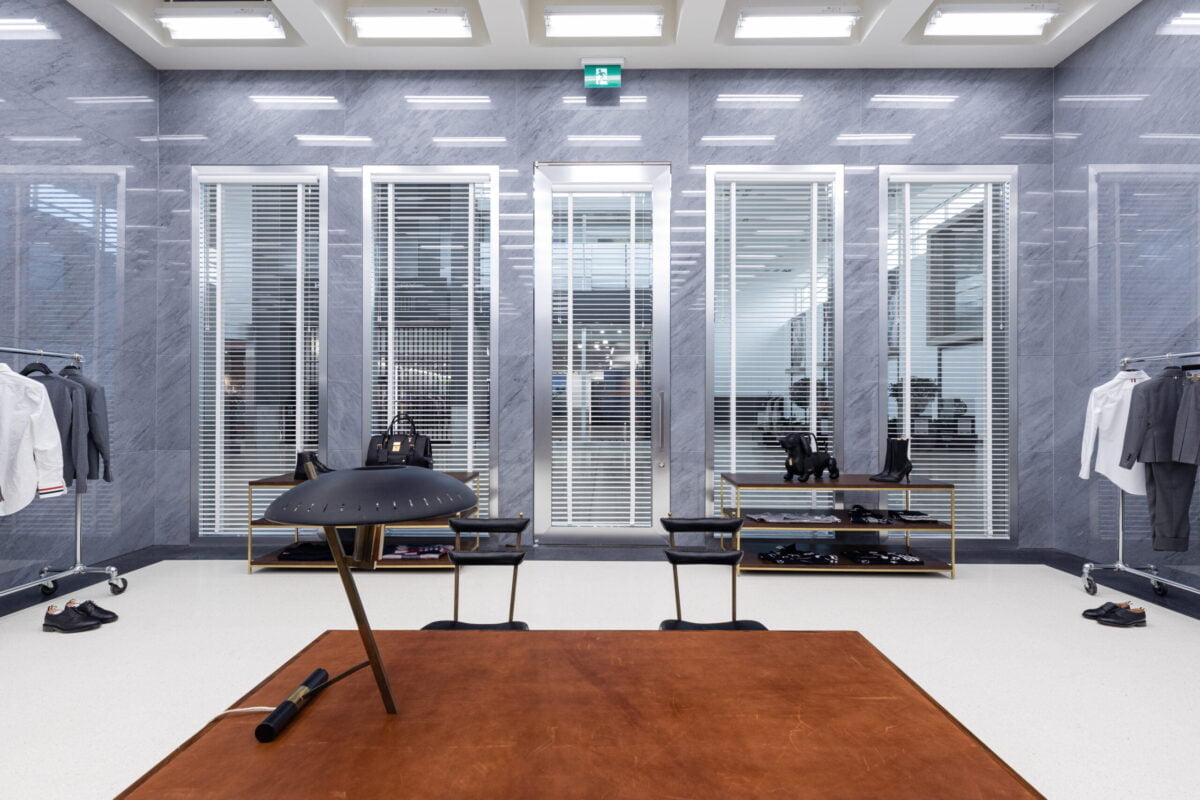
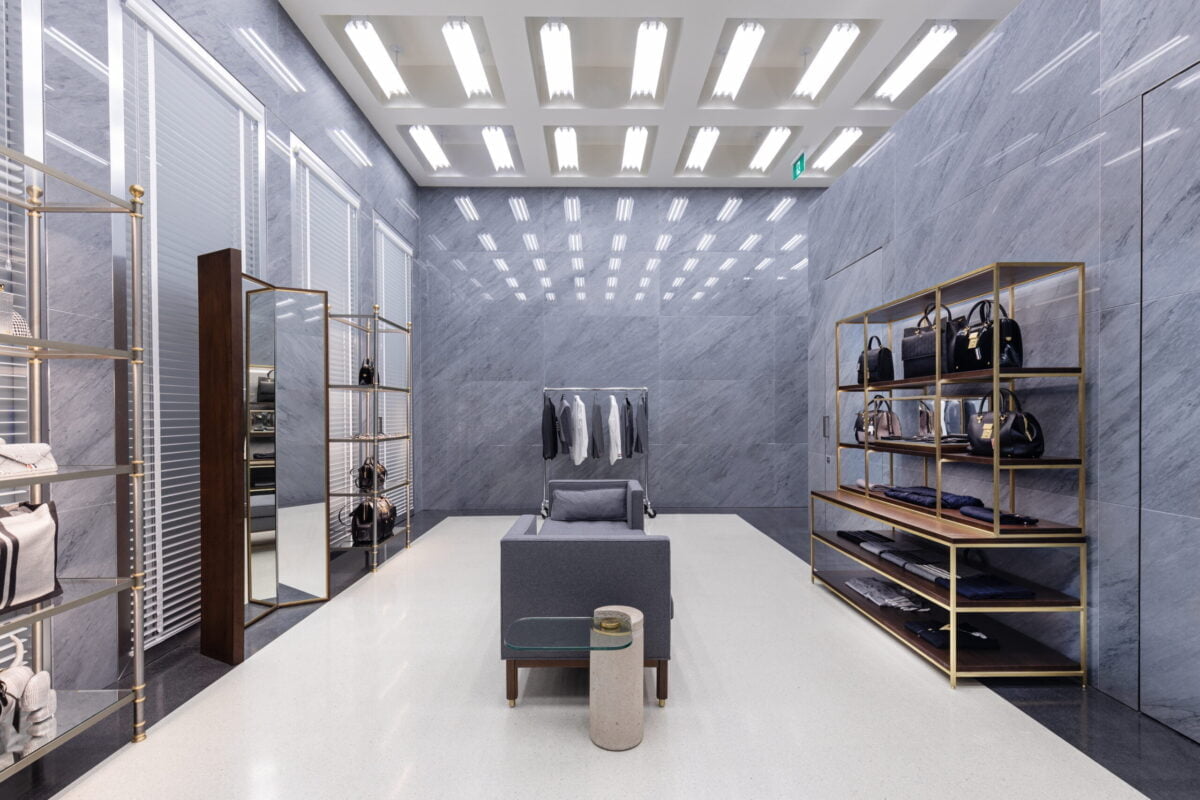
The Vancouver Thom Browne store will feature the brand’s collections of fashions for men and women including ready-to-wear, bags, accessories, footwear, eyewear, and fragrances. The design is expected to be similar to the Thom Browne store which opened in November at Toronto’s Yorkdale Shopping Centre — that store spans about 1,430 square feet and was the first standalone Thom Browne store to open in Canada. The Yorkdale Thom Browne store showcases marble inside and out with high ceilings and a mid-century office theme to its design.

Click for interactive Google Map of 745 Thurlow Street, Vancouver

**Article updated June 30, 2021 with the following construction signage photos at 745 Thurlow Street from Retail Profile: Alberni Street ‘Luxury Zone’ in Downtown Vancouver (Summer 2021):

Exterior of Thom Browne store in Yorkdale Shopping Centre. Photo: Thom Browne

David Wedemire and Stan Vyriotes DWSV Remax Ultimate Realty Inc. negotiated the Vancouver Thom Browne lease deal on behalf of the retailer, as well as the Toronto deal. QuadReal owns 745 Thurlow Street.

The downtown Vancouver Thom Browne store will be the fifth standalone location for the brand in North America. Besides the new Yorkdale location, three other Thom Browne stores exist in the United States: one in New York City at 100 Hudson Street, one at South Coast Plaza in Costa Mesa CA, and one at the Miami Design District in Miami.

Globally, Thom Brown operates 40 retail spaces including a mix of standalone stores and concessions in department stores. The majority of Thom Browne’s locations are in Asia.

Versace at 745 Thurlow Street — construction starts soon on the Thom Browne store that will replace it. Photo: QuadReal

In Vancouver, Thom Browne is also available at retailers including Holt Renfrew, Harry Rosen (menswear), Roden Gray on Water Street, and The Room at Hudson’s Bay carries the women’s line in Vancouver (and Toronto) as well.

American fashion designer Thom Browne founded his brand in 2001 with made-to-measure menswear. His background prior to founding the clothing line included a position as a salesperson at Giorgio Armani in New York City before designing for Club Monaco. He was said to be instrumental in starting the trend of slim-fitting menswear with collections inspired by mid 20th century American style that included details such as grosgrain trim and short trousers shown with exposed ankles. His first line of ready-to-wear menswear launched in 2004 and he won several awards early on before launching womenswear for Brooks Brothers’ Black Fleece label in 2007. The first women’s Thom Browne collection debuted in 2011.

Vancouver to Lose Versace after 34 Year Run

The Versace store at 745 Thurlow Street, which opened in December 2015, will shutter this month after about five years in operation. Prior to opening the Thurlow Street store, Versace had a presence in Vancouver since 1987 via a licensed boutique at multi-brand retailer Leone at 757 W. Hastings Street which we announced last year would be closing. Versace also partnered to open a Versace Home location on Cordova Street in Vancouver in 2014 and that store has also since closed.