Home Blog Page 98

Gen X Shoppers Want Global Flavours, But Discovery Still Happens in Store: Study

Grocery retailers are investing heavily in digital tools designed to influence consumer purchases. Yet new research suggests one of the industry’s most powerful drivers of product discovery remains the same place it has been for decades: the grocery aisle.

A study by Cashew Research found that Generation X shoppers continue to discover new food products primarily through in-store browsing and personal recommendations, creating opportunities for retailers that excel at merchandising emerging categories such as international foods.

The findings come as Canada’s grocery landscape continues to evolve alongside changing consumer tastes and growing interest in global cuisines. While major retailers have expanded multicultural assortments in recent years, the research suggests product visibility and placement may be just as important as the breadth of selection itself.

International Foods Move Into the Mainstream

The study surveyed 973 Generation X consumers across Canada and the United States who are actively involved in household grocery shopping decisions.

Among respondents, 76 percent said they seek international or specialty food products, yet only 23 percent said their primary grocery store offers a complete selection.

Perhaps the most notable finding is that international foods are increasingly being purchased as mainstream grocery items rather than cultural staples. Nearly half of respondents said curiosity and a desire to try something new were among their primary motivations for purchasing international foods, while a much smaller percentage cited cultural background.

The findings suggest consumer demand for global flavours now extends well beyond shoppers seeking products connected to their heritage. Exposure to international cuisines through restaurants, travel, food media and social platforms has helped make products once considered niche increasingly familiar to mainstream consumers.

That trend aligns with broader changes in the Canadian marketplace. Statistics Canada projects immigrants could account for as much as one-third of Canada’s population by 2041, while ongoing immigration continues to introduce new cuisines, ingredients and food traditions into the Canadian market.

Industry observers have already seen evidence of this shift. Canadian grocery retailers have steadily expanded multicultural assortments over the past two decades, while specialty operators have moved further into the mainstream.

Perhaps the most visible example is T&T Supermarket, owned by Loblaw Companies. The chain continues to expand across Canada and is preparing to open a 66,000-square-foot location at Empress Walk in North York later this year, expected to be the largest T&T store in Ontario.

The success of retailers such as T&T suggests international foods are increasingly attracting consumers from a broad range of backgrounds, creating opportunities that extend well beyond traditional ethnic grocery segments.

The Shelf Is Still the Showroom

One of the study’s most significant findings involves how shoppers discover new products.

Thirty-nine percent of respondents said word-of-mouth recommendations are their primary source of discovery, while 37 percent cited in-store browsing. By comparison, only a small percentage pointed to artificial intelligence tools or app-based recommendations.

For grocery retailers, the findings reinforce the continued importance of merchandising fundamentals.

Shelf placement, end-cap displays, sampling programs, recipe inspiration and cross-merchandising remain powerful tools for encouraging product trial, particularly within categories that consumers may find unfamiliar.

The research challenges assumptions that digital tools alone will drive product discovery among middle-aged consumers. While online content and social media may inspire purchases, many buying decisions are still being made while shoppers are physically navigating store aisles.

For retailers operating in a highly competitive market, that distinction matters. Canada’s grocery sector remains concentrated among a handful of major operators, making merchandising and category presentation important areas of differentiation.

Is the International Foods Aisle Becoming Obsolete?

The study also raises questions about how international foods are presented within stores.

For decades, many grocers have grouped international products within dedicated ethnic-food aisles. The approach can help shoppers locate specific items, but it may also reinforce the perception that those products are specialty purchases rather than ingredients that belong in everyday meal planning.

The Cashew findings suggest the category may be reaching a point where that model deserves reconsideration.

Instead of isolating international products within a separate section, retailers may find greater success integrating sauces, seasonings, snacks and meal ingredients throughout stores alongside mainstream categories. Recipe-focused displays, cross-merchandising and meal-solution presentations could help increase visibility among shoppers who are open to trying new flavours but are not actively searching for them.

The opportunity appears less about convincing consumers to explore global cuisines and more about making those products easier to discover.

Implications for Retailers

The findings suggest retailers no longer need to persuade many consumers to experiment with international foods. A large share already expressed interest in doing so.

The larger challenge may be ensuring those products appear where shoppers are most likely to encounter them.

As global flavours continue moving into the grocery mainstream, retailers that combine strong assortments with effective merchandising may be better positioned to capture incremental sales and strengthen customer engagement.

In an era dominated by discussions about artificial intelligence, personalization and digital commerce, this research offers a reminder that one of retail’s most effective marketing tools remains remarkably simple: putting the right product in front of the right shopper at the right moment.


More from Retail Insider:

Kraft Dinner Expands Into Instant Noodle Category with New KD Ramen Line

Kraft Heinz introduces KD Ramen. Photo by Kraft Heinz Canada

Kraft Heinz Canada is extending its iconic Kraft Dinner brand into the instant noodle category with the launch of KD Ramen, marking the latest effort to grow the brand beyond its traditional boxed macaroni and cheese business.

The new product line will debut in three varieties: Cheesy Ramen, Extra Cheesy and Extra Spicy. The products are expected to arrive at grocery stores, convenience retailers and big-box chains across Canada beginning in July, with participating 7-Eleven Canada locations receiving an early launch from June 25 to June 27.

The launch gives Kraft Dinner a presence in one of the world’s most popular convenience food categories while building on the brand’s longstanding association with cheese-based meals.

“Kraft Dinner has always been a staple in Canadian households, and we’re constantly looking for ways to bring exciting new experiences to our fans,” said Brian Neumann, Head of Marketing and Strategy at Kraft Heinz Canada, in a company announcement.

KD Brand Continues to Expand Beyond Its Core Product

The move comes as Kraft Heinz continues to broaden the reach of the KD brand through new formats and product extensions. While Kraft Dinner remains best known for its boxed macaroni and cheese, the portfolio now includes cups, frozen meals, deluxe offerings and other convenience-focused products aimed at evolving consumer preferences.

More recently, the company introduced a limited-time KD Mac & Cheesecake collaboration, taking the brand into the dessert category through select Canadian bakery partners.

Entering a Growing Convenience Food Category

The expansion into ramen reflects growing interest in convenient meal options and internationally influenced flavours. Instant noodles have become an increasingly competitive category, attracting both established brands and new entrants seeking to capitalize on demand for quick, affordable meal solutions.

According to market research from The Insight Partners, the North American instant noodles market was valued at approximately US$13 billion in 2024 and is projected to reach US$17.6 billion by 2031.

Implications for Retailers

For retailers, the launch presents an opportunity to leverage the recognition of one of Canada’s most established packaged food brands in a category traditionally dominated by dedicated noodle manufacturers. The product creates an opportunity for Kraft Heinz to reach shoppers who may not regularly purchase traditional boxed macaroni and cheese.

The introduction of KD Ramen suggests Kraft Heinz sees additional growth potential in extending the Kraft Dinner brand into adjacent food categories, using its strong consumer recognition to compete in new segments of the grocery store.

More from Retail Insider:

Tourism spending edges up in Q1 2026: Statistics Canada

Abdel Achkouk photo
Abdel Achkouk photo

Real tourism gross domestic product (GDP) grew 0.5% in the first quarter of 2026, following a 1.4% increase in the fourth quarter of 2025. By comparison, economy-wide real GDP by industry increased 0.1% in the first quarter of 2026, while real GDP by expenditure was flat. Tourism GDP accounted for 1.80% of nominal GDP in the first quarter, up from 1.77% in the fourth quarter of 2025, reported Statistics Canada on Thursday.

Tourism spending in Canada (+0.1%) edged up in the first quarter of 2026, as increased spending by international visitors (+0.9%) more than offset lower tourism spending by Canadians in Canada (-0.2%), added the agency.

In the first quarter, tourism GDP continued an upward trend that began in the second quarter of 2022. Growth in the first quarter of 2026 was driven by non-tourism industries (+0.8%) and transportation (+0.6%).

“Spending by international visitors grew 0.9% in the first quarter, following a gain of 3.3% in the previous quarter. Accommodation services (+1.3%) and spending on non-tourism products (+1.8%) contributed the most to the increase. Outlays on food and beverage services (+1.1%) also rose, while those on travel services (-4.0%) and passenger air transport (-0.2%) decreased,” said Statistics Canada.

“Overnight travel to Canada from abroad increased 1.4% in the first quarter, with increased travel from the United States (+3.3%) more than offsetting lower travel from other countries (-2.7%).

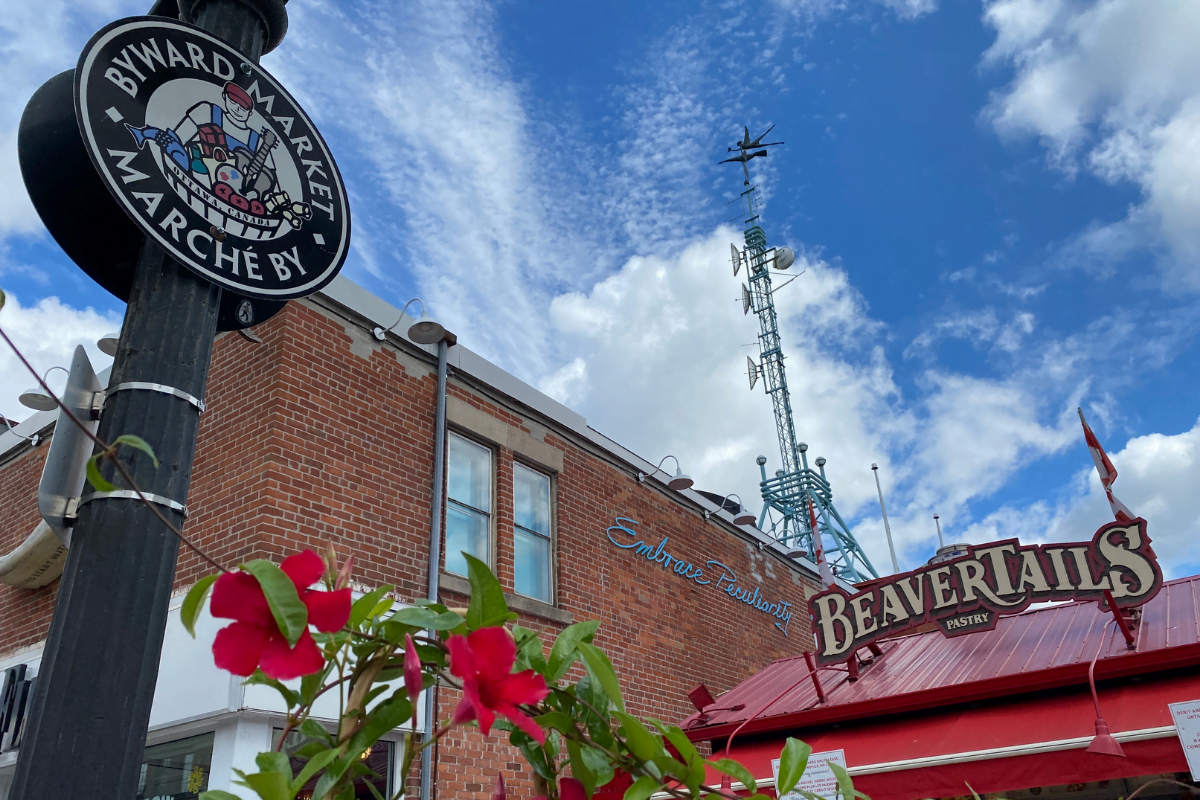
BeaverTails in Byward Market in Ottawa (Photo: Dustin Fuhs)

“Spending by international visitors accounted for over one-quarter (25.4%) of all tourism spending in Canada in the first quarter, which is up from the fourth quarter of 2025 (25.2%).”

Domestic tourism spending by Canadian residents (-0.2%) edged down in the first quarter, after increasing 0.9% in the fourth quarter of 2025. Decreased spending on travel services (-6.4%) and vehicle rentals (-10.6%) contributed the most to the overall contraction in the first quarter of 2026. Pre-trip expenditures (+3.4%), such as luggage and camping equipment, and passenger air transport (+0.9%) tempered the overall decline in the first quarter, noted Statistics Canada.

“The number of jobs attributable to tourism increased 0.4% in the first quarter, after increasing 0.5% in the fourth quarter of 2025. By comparison, the number of economy-wide jobs was down 0.3% in the first quarter of 2026. Accommodation (+0.6%) and non-tourism industries (+0.6%) contributed the most to the job gains in the first quarter.d Tourism’s share of economy-wide jobs was 3.24% in the first quarter, up from 3.22% in the previous quarter,” said the federal agency.

Source: Distillery District

More from Retail Insider:

Pattison Food Group expands automated grocery fulfillment operations at B.C. distribution centre

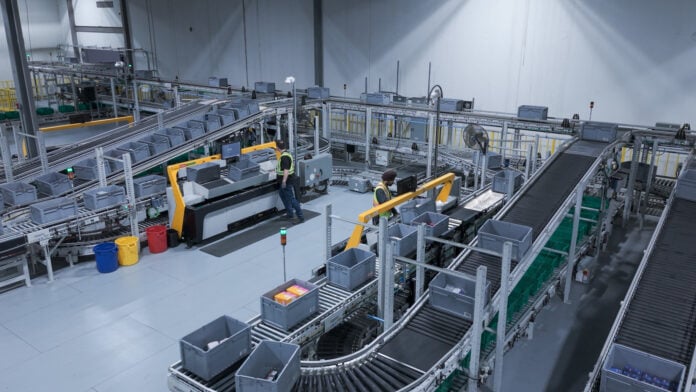
Pattison Food Group's facility leverages advanced automation technologies designed to improve split-case fulfillment efficiency, increase throughput capacity and support scalable grocery distribution operations across Western Canada.

Pattison Food Group has completed a major automation project at its grocery distribution centre in Langley, B.C., aimed at increasing fulfillment capacity, improving operational efficiency and supporting future growth across Western Canada.

The company worked with supply chain automation provider Dematic to modernize operations at the 485,000-square-foot ambient grocery facility, which serves Pattison Food Group’s retail grocery banners. The project introduces automated systems designed to improve split-case order fulfillment, increase throughput and support scalable distribution operations.

The investment reflects Pattison Food Group’s efforts to adapt its warehouse operations to changing demand while reducing manual processes and increasing efficiency in moving products through its supply chain.

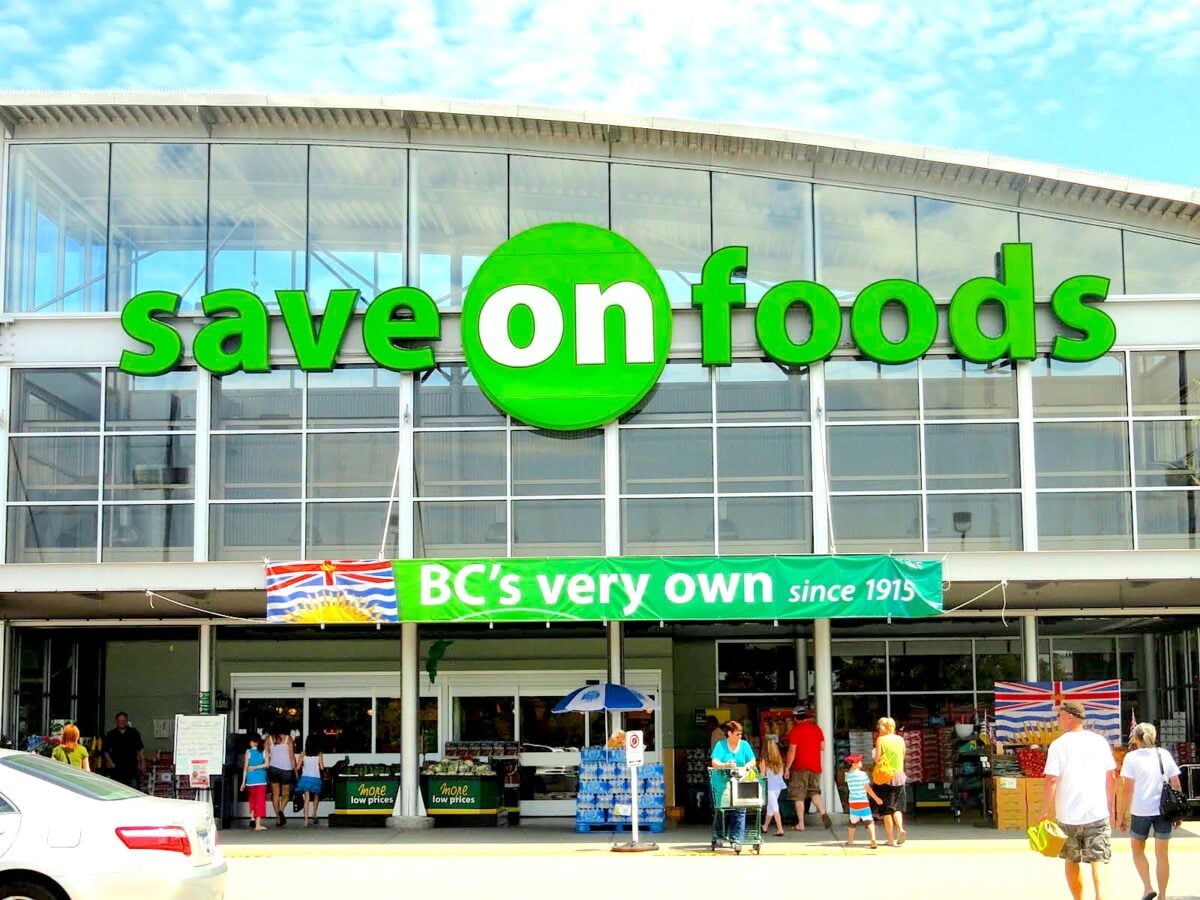
Pattison Food Group is a Jim Pattison business and Canada’s largest Western-based provider of food and health products. Headquartered in British Columbia, Canada, it has been in business since 1915. Its largest and signature company is Save-On-Foods. It has 11 retail banners operating more than 300 food and drug retail locations.

“Dematic’s strength extends beyond automation to a deep understanding of the operational realities shaping modern grocery fulfillment,” said Mike Olson, senior vice-president of supply chain and wholesale at Pattison Food Group. “That expertise helped us build a scalable, intelligent operation that improves performance today while supporting the flexibility needed for future growth.”

Pattison Food Group said the automated facility supports its nine grocery banners, including Save-On-Foods, PriceSmart Foods and Quality Foods.

According to the companies, the project was designed to reduce manual handling, improve order accuracy and increase fulfillment flexibility.

The automation system includes software intended to improve warehouse orchestration, along with high-density storage technology featuring a Dematic RapidPick system and a nine-aisle Dematic Multishuttle system. The facility includes nearly 62,000 automated storage locations.

The operation also uses 16 goods-to-person workstations to support split-case and full-case fulfillment for approximately 11,000 grocery stock-keeping units.

Additional systems include integrated decanting, conveyor, sortation, tote-handling, buffering and sequencing technologies intended to increase throughput and fulfillment efficiency.

Pattison Food Group photo

The companies said the facility also supports reusable tote-based operations and includes resident maintenance and lifecycle support services designed to maximize system uptime.

Dematic said the project reflects broader efforts by grocery operators to manage increasingly complex fulfillment requirements while maintaining the ability to expand operations over time.

“As grocery operations become more complex and consumer expectations continue to rise, success depends on fulfillment environments that are intelligent, adaptable and built to scale,” said Alexandre Guiard, senior vice-president of business solutions, Americas, at Dematic. “With decades of experience supporting grocery supply chains worldwide, our partnership with Pattison Food Group reflects a shared commitment to building intelligent fulfillment operations where software, automation and operational intelligence serve as the mind behind the machine – improving service levels, increasing operational confidence and supporting long-term growth.”

The Langley distribution centre serves as a key component of Pattison Food Group’s grocery supply chain network in Western Canada, with the new automation systems intended to support both current operations and future expansion.

More from Retail Insider:

Alberta business exodus feared if separation process begins: Calgary Chamber of Commerce

Hudson's Bay downtown Calgary. Photo by Mario Toneguzzi

According to a new survey conducted in partnership with Probe Research, nearly half of Calgary Chamber member respondents say they are prepared to leave Alberta and relocate their business to another province if Albertans vote to begin the formal process towards separation from Canada. Only 39 per cent indicate they are unlikely to do so, says the Calgary Chamber of Commerce.

The Chamber said the results point to growing concerns within Calgary’s business community about the economic uncertainty and disruption associated with a potential separation process, with 91 per cent of member respondents reporting that they are following the referendum discussion closely. The findings also show that 63 per cent of respondents report separatism is already having a negative impact on their business, while 74 per cent see no tangible benefit to Alberta separating from Canada.

Trevor Tombe
Trevor Tombe

The Chamber said the findings are reinforced by analysis commissioned by the Calgary Chamber and conducted by Trevor Tombe, Professor of Economics at the University of Calgary. The analysis finds that approximately one in three Albertan workers are exposed to disruptions in trade with the rest of Canada and international markets, and roughly 16 cents of every dollar earned in the province is tied to those exports to the rest of Canada alone – amounting to $78 billion in 2025.

The Chamber said the analysis further projects that an eight per cent increase in interprovincial and international trade costs following separation — based on observed effects from Brexit in the United Kingdom — would reduce Alberta’s GDP per capita by approximately six per cent, reduce employment by roughly 175,000 jobs and contract the economy by an estimated $62 billion annually. It also estimates that an investment decline driven by uncertainty on a scale comparable to that seen after Brexit could result in $10 to $15 billion in foregone investment in 2026, or up to $3,000 per Albertan.

Deborah Yedlin
Deborah Yedlin

“Our business community is sending a clear message — separation has moved beyond a theoretical debate to having tangible effects on business confidence and decision-making,” said Deborah Yedlin, President and CEO at the Calgary Chamber of Commerce. “This discussion is not only about the movement of capital to other jurisdictions viewed as more predictable and stable, but also about how the movement of businesses, jobs and labour would permanently damage our economy. If a formal referendum process moves forward, the very foundations that have made Alberta one of Canada’s strongest economies – including a predictable, business-friendly environment – will be in jeopardy.

“The success of Alberta’s economy relies on more than a century of trade ties with other provinces and key trading partners, supported by agreements, infrastructure and regulatory continuity. Now more than ever, our economy needs stability amid rising uncertainty and geopolitical disruptions that businesses have no control over. We must focus on what we can control here at home to provide businesses the confidence to stay in Alberta, and that includes a firm opposition to separation.” 

But the Let Alberta Decide group said the Chamber has focused on fear while ignoring the larger economic reality: Alberta’s economy has been held back for more than a decade by federal policies that have driven away investment, constrained resource development, and limited Alberta’s potential.

Keith Wilson, K.C., co-lead of Let Alberta Decide, said the Chamber misses the central issue.

“The Chamber is measuring fear, not opportunity,” said Wilson. “It is warning Albertans about hypothetical uncertainty from independence while ignoring the real uncertainty Alberta businesses have lived with under Ottawa. The greatest threat to Alberta’s economy is not Albertans having a democratic vote on their future. The greatest threat is allowing Ottawa to keep blocking, capping, taxing, delaying, and politicizing the industries that built this province.”

Wilson said Alberta remains one of Canada’s strongest economies despite federal policies that have discouraged investment in energy, infrastructure, agriculture, and resource development.

“Alberta’s farmland is not moving. Alberta’s oil and gas reserves are not moving. Our skilled trades, engineers, entrepreneurs, service companies, infrastructure, and young workforce are here,” Wilson said. “Alberta is not a branch office economy. Alberta is a producing economy.”

Let Alberta Decide said the Chamber also ignores the massive capital flight Canada has experienced under the current federal policy environment, with recent economic analysis reporting that more than $1 trillion in investment left Canada between 2015 and 2024.

“Businesses do not leave because a people debate their future,” Wilson said. “Investment leaves when governments make the rules unpredictable – and Ottawa has done that to Alberta for more than a decade. That capital did not leave Canada because Albertans were discussing independence. It left under the current federal system.”

Wilson said independence would give Alberta authority over resource regulation, taxation, immigration policy, infrastructure approvals, trade policy, pipeline approvals, and market access.

“Albertans should be making the decisions that shape Alberta’s economy,” Wilson said. “Those decisions determine whether projects get built, whether jobs are created, and whether young Albertans can build their futures here at home.”

More from Retail Insider:

The Clayfield hotel project positions Niagara-on-the-Lake for next phase of tourism growth

The Clayfield photo
The Clayfield photo

A new hotel and retail development at the gateway to Niagara-on-the-Lake is set to open later this summer, as its backers look to expand the region’s tourism offering while addressing long-standing tensions between growth and community character.

The Clayfield, part of Hyatt’s Unbound Collection, a 102-room hotel anchoring a broader mixed-use project known as Clayfield Commons, is scheduled to open at the end of August alongside a partial rollout of surrounding retail and commercial space.

The development marks the final phase of a 55-acre project led by Village Developments and reflects a shift toward more integrated, walkable destinations in one of Ontario’s most established tourism markets.

“We saw an opportunity to do something special that would be recognized by people driving by and loved by residents and visitors alike,” said co-owner John Hawley in an interview.

The project sits at a key entry point to Niagara-on-the-Lake, an area Hawley said captures a significant share of incoming traffic. Its location, combined with the scale of the development, positions it as one of the largest single additions to the town’s built environment in recent years.

John Hawley & David Feldberg

From suburban zoning to village model

Hawley said the origins of the project date back years, when the site was originally zoned for conventional suburban housing with a small commercial component.

Instead, the development team pursued a different model inspired by so-called “new urbanism,” emphasizing walkability, mixed uses and a defined community core.

“We didn’t want to drive by a typical suburb on the way into the old town,” Hawley said, noting local resistance to traditional subdivision design.

The resulting plan features narrower streets, a mix of housing types and a central public square intended to serve as the focal point for both residents and visitors.

That village centre concept ultimately expanded to include uses not originally contemplated, including a hotel and additional commercial space.

“We didn’t originally have a hotel or a grocer in the zoning,” Hawley said. “Once we got the zoning, we realized there was an opportunity for both.”

The Clayfield photo
The Clayfield photo

Hotel fills perceived gap in market

The Clayfield hotel itself is positioned as a modern addition to a market Hawley described as lacking branded accommodation options.

“Most were owned by Vintage Inns,” he said of existing hotels in the area. “We knew there was an opportunity for a modern hotel and for a brand.”

The property will include 60 traditional hotel rooms and 42 extended-stay suites equipped with kitchenettes and multiple bedrooms, a format Hawley said is designed to encourage longer visits.

“We want people to stay longer,” he said, adding that the suites are intended to support local spending by allowing guests to shop and dine within the community.

The hotel is also intended to serve as an architectural focal point within the development, positioned at the apex of the central square and differentiated from surrounding buildings through a more contemporary design.

The Clayfield photo
The Clayfield photo

Retail strategy focused on local operators

Alongside the hotel, Clayfield Commons will include a mix of retail, food and service-oriented tenants, though only about half of the spaces will be fully operational at opening.

Hawley said leasing efforts have focused on local entrepreneurs rather than national chains, reflecting both market demand and the broader positioning of Niagara-on-the-Lake as a destination known for its arts and culinary offerings.

“One of our goals is to feature local makers,” he said. “When I travel, I like bringing home something local, not from a national chain.”

Initial tenants include two restaurants, a florist, a skincare company and a chocolatier opening its first storefront. Additional space remains available, with exterior construction largely complete but some interiors still under development.

The project also incorporates second-floor office space, a relatively uncommon feature in the local market.

“There’s been strong demand, and we’ve signed several leases,” Hawley said.

Balancing tourism growth with community impact

The development comes as Niagara-on-the-Lake continues to navigate the balance between tourism-driven economic activity and preserving quality of life for residents.

Hawley acknowledged that tension, describing it as a central consideration in the project’s design and programming.

“One of the tensions in town is balancing the benefits of tourism with not overwhelming local life,” he said.

By integrating residential, commercial and hospitality uses within a walkable framework, the project aims to serve both permanent residents and visitors without creating a standalone tourist enclave.

The inclusion of everyday services such as a pharmacy, bank and medical centre reflects that dual-purpose approach.

The Clayfield photo
The Clayfield photo

Positioning for long-term evolution

Hawley said the project is intended to complement, rather than compete with, the historic core of Niagara-on-the-Lake, while helping the broader region adapt to changing visitor expectations.

“Niagara-on-the-Lake needs to evolve — it can’t rely only on its past,” he said.

He described the development as part of a growing cluster of activity at the town’s entrance, alongside nearby wineries and other attractions, with some locals informally referring to the area as “uptown” in contrast to the traditional old town.

For Hawley and his partners, the long-term goal is to create a destination that reflects both the heritage and the future of the region.

“We love Niagara-on-the-Lake and want to complement it while helping it evolve,” he said.

I think people are looking for experiences now that feel a little more personal and a little more connected to where they are,” said David Feldberg, co-owner of The Clayfield and founder of Stratus Vineyards. “Niagara-on-the-Lake already has incredible food, wine, theatre, and hospitality. What interested us with The Clayfield was creating something that still felt relaxed and very much part of the rhythm of the region.”

The Clayfield photo
The Clayfield photo

Designed by Montreal-based Sid Lee Architecture, The Clayfield draws its name and design philosophy from the layered clay soils and ancient sediments that define Niagara’s vineyards and agricultural landscape.

The building’s rounded silhouette was conceived as an extension of the terrain itself, with vertical wood elements rising from layered concrete forms inspired by vines emerging through clay soil. Repeating architectural lines reference the geometry of the surrounding vineyards, reinforcing the relationship between landscape and architecture.

“Inside, the hotel unfolds as a journey through the seasons of the vineyard, with each space shaped by a distinct atmosphere and emotional tone. Guestrooms draw from winter through soft, calm, and introspective interiors defined by earthy mineral textures and understated warmth,” say the developers.

“Inspired by spring, the lobby captures a sense of arrival and renewal, while the restaurant reflects the warmth, abundance, and conviviality of harvest season. The spa takes its cues from summer, conceived as a relaxed environment centred around enjoyment, restoration, and connection.”

More from Retail Insider:

The Clayfield photo
The Clayfield photo
The Clayfield photo
The Clayfield photo

Spirits brands shift to experiential marketing as consumption declines: Gradient report

Gradient photo
Gradient photo

A new industry report, by Gradient, suggests global spirits makers are shifting away from traditional advertising and toward immersive, experience-led marketing as they contend with declining consumption and changing consumer habits.

The 2026 “I.M.P.A.C.T. Spirits Edition”, based on interviews with executives from major companies including Diageo, Pernod Ricard and Moët Hennessy, along with a survey of more than 100 North American marketers, argues that brands are no longer competing for shelf space, but for “memory space.”

The report finds that while overall alcohol consumption is under pressure — driven by wellness trends, the rise of non-alcoholic alternatives and shifting Gen Z behaviours — consumers are demanding more meaningful, higher-quality experiences when they do drink.

Despite 81 per cent of marketers saying experiential marketing should be integrated early in campaign planning, only 25 per cent currently do so, highlighting a gap between strategy and execution.

It also points to a growing emphasis on on-premise environments such as bars, events and cultural gatherings as primary drivers of brand discovery, with experiences increasingly designed to generate shareable content and long-term customer relationships.

The report concludes that brands investing in cultural relevance, participation and first-party data will be best positioned to grow in a contracting but still highly competitive market.

In an interview with Retail Insider, Pauline Oudin, CEO of Gradient, discusses the report.

Pauline Oudin
Pauline Oudin

Question: What are the biggest shifts currently reshaping marketing strategy in the spirits industry across North America?

Answer: Category volume is declining, but relevance is still very much up for grabs. Three structural tensions define where we are right now: shrinking consumption versus expanding opportunity, heritage versus cultural agility, and passive consumption versus active participation. 

Wellness culture, lo-no alternatives, THC, appetite suppressants, tighter consumer budgets. These aren’t just headwinds. They’re signals worth paying attention to. Consumers who are drinking less expect more from every sip: more meaning, more quality, more intention behind the choice. 

And yet, spirits and wine marketers are clearly reading the room. Nearly nine in 10 say their experiential budgets have grown over the past three years, with 38% describing that growth as significant. The fight for shelf space is already over. Now it’s about memory space.

Q: Based on your interviews with major global brands, how are spirits companies adapting to changing consumer behaviour, particularly among younger demographics?

A: Gen Z isn’t abstaining, they’re just drinking differently. RTDs, occasion-led choices, pre-organized social experiences. Millennials are pulling back on frequency, while Gen Z is rethinking format and ritual altogether. Both cohorts are more choiceful than any generation before them, and that changes everything. What wins now is an experience that earns a place in someone’s plans, not just their glass. Brands at Diageo, Moët Hennessy, and William Grant are designing for gathering occasions, not just drinking occasions. Only 11% of spirits marketers surveyed currently define experiential as encompassing the full consumer journey, which means most are still meeting the choiceful consumer halfway. That’s the whole shift, and it’s a meaningful one.

Gradient photo
Gradient photo

Q: What role do luxury positioning and premiumization play in growth strategies for companies like Diageo, Moët Hennessy LVMH, and Pernod Ricard?

A: “Less but better” isn’t a threat to spirits, it’s a mandate to elevate. Luxury consumers are trading frequency for significance: pinnacle releases, personalized buying flows, halo activations that build desire up and down the portfolio. Edrington’s Vault strategy tracked 24 billion in reach, but the real ROI was equity and desirability cascading through every tier. 

Heritage storytelling (Louis XIII, The Macallan) functions as both cultural permission and status signal. CRM data capture has become the top measurement priority for 61% of spirits marketers, a sign that the category understands high-value consumer relationships now matter more than high-volume moments. Premium tier growth isn’t about convincing people to spend more. It’s about becoming genuinely worth more to them.

Q: Were there any surprising findings or points of consensus that emerged from your research with more than 100 marketing professionals?

A: Two findings cut straight against what the category assumes. First, product trial and sampling ranks dead last as a primary objective for brand experiences, despite being spirits’ most iconic tactic. Relationship-building tops the list instead. The glass on the table still belongs in the experience, it’s just no longer the point of it. Second, 84% of respondents describe themselves as satisfied with their ability to measure experiential ROI, yet measurability (60%) and proving ROI (53%) still rank as their top two challenges. That’s not confidence, that’s familiarity. Most are measuring what’s easiest to capture, not what actually moves the business.

Gradient photo
Gradient photo

Q: How do you see the future of spirits marketing evolving over the next three to five years, especially as digital engagement and cultural trends continue to shift?

A: The brands that lead the next chapter will be competing for cultural territory: music, culinary, hospitality, sport, ritual spaces, not just category share. On-premise becomes the primary media channel, with brands being built there rather than in liquor stores. Experience gets designed first, and the campaign follows, not the other way around. The gap between aspiration and architecture is closing fast, and the brands best positioned to close it aren’t necessarily the ones with the biggest budgets. Internal cross-collaboration is currently the single biggest barrier, cited by 56% of respondents, ahead of budget, measurement, and every external challenge on the list. The ones that close the gap will be collapsing those silos, recalibrating measurement systems, and integrating experiential before the big idea is already baked. In spirits, experiential stopped being a tactic a while ago. It’s now the last defensible moat.

More from Retail Insider:

Daily Synopsis: Jun 24, 2026

Welcome to the Daily Synopsis by Retail Insider. We published 9 articles covering key developments in Canadian retail across various sectors and geographies.

Vancouver’s West 4th retail district remains vibrant by balancing local businesses, national brands, and diverse small-format stores, demonstrated in Why Vancouver’s West 4th Retail District Continues to Thrive. In southern Ontario, Longo’s marked expansion with its first Welland store while emphasizing disciplined growth and family values through Longo’s Opens First Welland Store as Growth Continues. Convenient retail was also highlighted as Alimentation Couche-Tard advanced plans to open 750 new Circle K stores focused on foodservice and loyalty programs found in Circle K Advances 750-Store Expansion Plan as Foodservice and Loyalty Drive Growth.

Retail Insider also published an op-ed on Why Bureaucratic Delays Are Making Food More Expensive in Canada, highlighting how paperwork and permit issues delay meat imports and raise costs. The growing preference for Canadian brands was examined in ‘Buy Canadian’ Movement Gains Momentum as Shoppers Prioritize Local Brands, emphasizing health supplements and natural foods. Sustainability trends appear in the Mastercard report on circular commerce showing rising secondhand shopping, rentals, and repairs, detailed in Secondhand Shopping Growth Outpacing Retail Overall.

🗞️ The Day’s Retail Insider Article List

🌐 Canadian Retail News From Around the Web

Why Bureaucratic Delays Are Making Food More Expensive in Canada

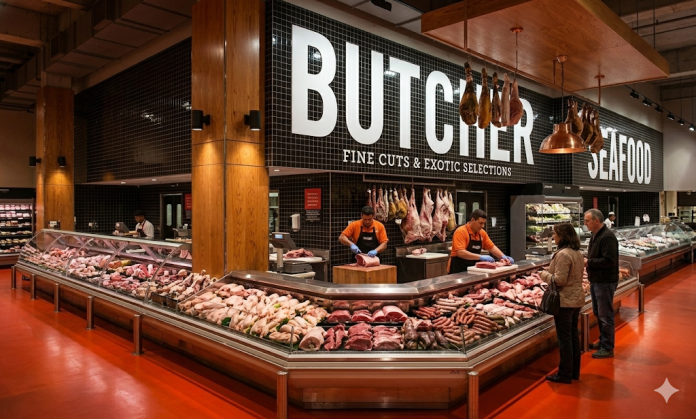
Grocery store meat butcher department. Image: RI/Google

Canadians often wonder why food costs so much. Many economists are quick to blame President Trump, climate change, global supply chains, exchange rates, or other external forces. These are convenient explanations and, in some cases, legitimate ones. But while these factors matter, many of the reasons behind Canada’s persistent food affordability problem are far less visible. Some are buried deep within regulatory and administrative processes that rarely attract public attention.

The Agri-Food Analytics Lab at Dalhousie University recently received privileged information regarding several cases involving delays in the importation of meat products into Canada. While the details remain confidential, the cases reveal a broader issue that deserves scrutiny.

Importing meat into Canada is a highly regulated process. Before any shipment arrives, the exporting country must be recognized by the Canadian Food Inspection Agency (CFIA) as having food safety standards equivalent to Canada’s. Processing facilities must be approved, permits may be required, veterinary certificates must accompany shipments, and all documentation must satisfy Canadian requirements. Upon arrival, products may be subject to additional verification and inspection before entering the marketplace. These safeguards exist for good reason. Canadians expect a safe food supply, and maintaining high standards should never be compromised.

The problem arises when administrative processes become inefficient.

In several cases reviewed by the Lab, companies encountered lengthy delays despite products already being approved, shipped, and physically present in Canada. In one instance, imported meat remained detained for more than five weeks due to permit-related issues, generating thousands of dollars in additional costs while the shipment sat idle. Food products, unlike manufactured goods, lose value over time. Refrigerated containers continue to incur storage charges, refrigeration costs, financing expenses, and demurrage fees, while shelf life steadily declines.

Industry estimates suggest that delays involving refrigerated containers can cost between $700 and $2,000 per day, with a single week of delay often exceeding $10,000 in additional costs.

These expenses do not remain with importers alone.

They ripple throughout the supply chain. Processors face disruptions when expected ingredients or products fail to arrive on schedule. Retailers encounter supply uncertainty and inventory shortages. Foodservice operators pay more to secure alternatives. Ultimately, consumers absorb many of these costs through higher prices at the checkout counter. This is how inflation often manifests itself—not through one dramatic event, but through countless inefficiencies that quietly increase costs at every stage of the food chain.

The economic implications are significant. Canada imported approximately $6.7 billion worth of meat products in 2025. If only a modest share of shipments experience avoidable delays, annual costs to the industry can quickly reach tens of millions of dollars.

More realistic assumptions suggest the burden could exceed $100 million annually. Unlike weather events, trade disputes, or global commodity shocks, however, these costs are largely self-inflicted.

Administrative delays represent an inefficiency that governments have the ability to address.

None of this diminishes the important work performed by the CFIA. The agency remains one of the world’s most respected food safety regulators and plays a critical role in protecting public health. However, food safety and administrative efficiency should not be viewed as competing objectives. A modern food system requires both. If governments are serious about improving productivity, reducing costs, and enhancing food affordability, they should pay closer attention to the hidden expenses created by bureaucratic delays.

Canadians are often told that food prices are rising because of forces beyond anyone’s control. Sometimes that is true. But sometimes the explanation is much simpler: a shipment is waiting for paperwork.

For those trying to understand why food remains so expensive in Canada, this is merely Exhibit 4271.

More from Retail Insider:

Why Leading Companies Are Re-Engineering Applications Instead of Replacing Them

Many businesses discover that throwing away functional software is an expensive mistake. It costs too much. Instead of building brand-new platforms from scratch, forward-thinking organizations are modernizing their existing software infrastructure to improve performance and agility. Choosing application reengineering services allows enterprise teams to preserve vital core logic while stripping away outdated dependencies. This approach dramatically reduces operational risk and helps companies avoid the chaos of sudden system transitions. Industry data indicates that maintaining older systems can consume up to 70% of an organization’s technology budget. Experienced technology partners like CHI Software help companies optimize these existing assets. Refactoring software safeguards historical business workflows and improves overall system stability without causing operational gridlock.

Why Full Application Replacement Is Often Too Risky

Scrapping an entire system looks simple on paper, but the reality is frequently problematic. Complete software replacement introduces massive delivery risks that can halt standard corporate operations. Data migration acts as a primary bottleneck, where moving millions of legacy records often leads to corruption or massive gaps. Employees face steep learning curves when forced onto unfamiliar interfaces, causing internal productivity to plunge. Furthermore, industry studies show that over 70% of large-scale core system replacements experience severe budget overruns or outright failure. When a business relies on decades of accumulated rules hidden inside custom code, a total rewrite frequently deletes those rules by accident. Companies often realize too late that old application re-engineering services provide a much safer path. Retaining the underlying platform core limits downtime and avoids the financial strain of unproven alternatives. Business stability requires an evolutionary approach rather than a chaotic revolution that compromises transactional data integrity.

How Application Reengineering Services Help Modernize What Already Works

Modernization does not require the complete destruction of working software. Instead, comprehensive application re-engineering services focus on upgrading the internal mechanics of a system while keeping its outer purpose intact. Engineering teams achieve this by systematically refactoring brittle source code and redesigning rigid software architectures. This transformation optimizes application speed and strengthens security frameworks against modern digital vulnerabilities. Updating old data storage layers allows systems to process modern transactional volumes without lagging. Additionally, these services build clean integration layers that connect legacy core features with modern cloud ecosystems or third-party web tools. By separating functional components from outdated technical setups, developers give ancient software a clean operational environment. This methodology allows organizations to adopt the latest technology tools without losing the reliability of their core transactional mechanisms. Upgrading software from within ensures that regular user workflows continue without unexpected functional breaks. It bridges the gap between old stability and modern performance requirements seamlessly.

Preserving Business Logic While Improving the Architecture

Enterprise applications hold decades of proprietary domain logic, customized workflows, and specific edge-case solutions. Tearing down these systems means losing the hidden knowledge built into the software over many years. This is a massive waste. Utilizing professional legacy application re-engineering services helps extract this valuable operational intelligence from failing, ancient codebases. Engineers can isolate core business logic and migrate it into modular, cleanly structured architectural frameworks. This separation removes old software dependencies and out-of-date infrastructure while keeping business rules perfectly intact. As a result, the business preserves its competitive operational advantages without remaining trapped in a crumbling technological environment. It is a calculated strategy that honors past engineering investments while building a sustainable base for future software enhancements.

Reducing Technical Debt Without Disrupting Operations

Technical debt silently drains company resources and slows down software development cycles. McKinsey research shows that technical debt can absorb up to 40% of standard IT investments. Instead of pausing all feature development for a multi-year rebuild, companies deploy app re-engineering services to fix issues incrementally. This phased methodology addresses fragile code blocks, modernizes specific components, and cleans up confusing databases step by step. The system remains operational throughout the entire modernization process, avoiding costly downtime. Internal engineering teams can steadily improve code maintainability and lower operational risks without alarming customers or freezing daily business tasks. It transforms a massive, scary engineering crisis into a series of predictable, safe operational updates.

When Re-Engineering Is Better Than Rebuilding

Deciding between fixing a system and replacing it depends on specific business realities. If a software system successfully manages core corporate operations but suffers from slow performance, full replacement is a wasteful option. When users trust current screen layouts and workflows, changing everything causes needless frustration. Strategic application re-engineering solutions work best under specific conditions.

  • The underlying business logic remains accurate and matches current operational needs.
  • Scalability limitations and slow database response times are the primary technical bottlenecks.
  • The software code is difficult to maintain but the core calculations are completely correct.

Choosing to modify rather than replace keeps essential systems online. It allows businesses to address real technical infrastructure limitations directly without introducing the massive organizational strain of an entirely new corporate platform implementation. This practical focus ensures that corporate funding fixes actual performance problems instead of funding unnecessary conceptual overhauls.

What Companies Usually Modernize During Application Re-Engineering

Re-engineering is a focused process that targets specific parts of a system to get the best results. Engineers usually start by cleaning up messy codebase structures and breaking apart giant monolithic code setups into smaller microservices. The database layer often gets a significant upgrade, which improves data query speeds and fixes old storage problems. Modern APIs are added to help the old software communicate smoothly with modern external platforms. Security frameworks receive updates to protect sensitive corporate information from modern security threats. Furthermore, teams upgrade development operations infrastructure by adding automated build and deployment pipelines. This preparation makes the application fully compatible with cloud hosting environments. By using software application re-engineering services, organizations fix their worst performance problems without changing the parts of the program that work perfectly. This focused work turns heavy legacy applications into quick, lightweight software systems ready for modern business demands. It updates key technical elements while preserving original functionality.

Business Benefits of Re-Engineering Instead of Replacing

Choosing to upgrade an existing system brings clear financial and operational advantages to an organization. It extends the total lifespan of established software investments and prevents original code development capital from going to waste. Working with an experienced application re-engineering company allows businesses to achieve faster delivery of new software features. Because the engineering team modifies an existing platform instead of building a new one, the testing timelines are shorter. Security updates reduce corporate liability by protecting data assets according to modern compliance rules. Scalability improvements let the application handle larger user volumes without crashing during peak work hours. Furthermore, modernization expenses become predictable and manageable when broken into smaller phases. This practical spending model prevents the massive financial surprises that usually happen during complete system replacements. Companies gain a flexible, modern platform while keeping their overall software engineering costs under tight control.

Final Takeaway

Smart companies do not throw away working software just because it is old. They choose to improve their systems carefully to stay competitive without taking on massive delivery risks. Re-engineering allows enterprises to fix performance issues, eliminate technical debt, and prepare for cloud migration while keeping their valuable business logic safe. This practical strategy avoids the high failure rates and high costs of total system replacements. It focuses effort on fixing bad code and keeping good workflows. Ultimately, keeping what works and fixing what limits expansion helps businesses grow safely. Organizations maintain complete operational continuity and upgrade their software systems securely by using reliable application reengineering services.