Your vision doesn’t come to life without a team that can steer you through the intricacies of a premium property market. If you are ready to start looking into the options of owning your own piece of this beautiful region, working with experienced Cabo real estate agents will give you the clarity and security you need. These experts, armed with their comprehensive knowledge of the local landscape, can steer you to opportunities that align with your lifestyle goals, whether you’re looking for a tranquil retirement retreat, a family vacation destination, or a strategic investment. They’re in tune with today’s market gyrations and new neighborhoods, so they’re your essential partners to carry the load of negotiations off your back and keep your priorities front and center from start to finish.
The best way to realize the dream of living on the coast is in homes that offer architectural beauty and unmatched access to the natural environment. For many buyers, the ultimate expression of this lifestyle is found in the sophisticated estates that sit within gated communities offering exclusivity and high-end services. The current selection of Palmilla beach homes for sale carries a certain prestige, as these properties always offer the perfect mix of indoor-outdoor living, refined design and access to the pristine beachfront that sets the region apart. Living in such a prestigious neighborhood means becoming part of a community that values privacy, security and the preservation of nature, creating an asset for you and your family to enjoy for generations to come.
Defining Your Dream Property
It is helpful to define the key elements of your dream home before you begin your search. Look beyond the number of bedrooms and consider the experience you want to create. Do you need a lot of space to accommodate your family or do you prefer a more intimate space that’s comfortable and easy to maintain? Think about the amenities that improve your day-to-day living, whether it’s a chef’s kitchen, infinity pools that disappear into the horizon, or climate-controlled storage for your art and possessions. Each property in this region has its own personality and by identifying your ‘must-haves’, your team will be able to narrow down the options to those that complement your personal aesthetic and functional needs.
Adopting the Local Lifestyle
Possession in this part of the world goes well beyond the four walls of your house. It’s about joining a vibrant culture and a community of like-minded people who enjoy the slower pace of life the coast offers. The lifestyle here is all about enjoying fresh local food and being involved in community social events, all geared towards relaxation and connection. If you are thinking about buying, think about the lifestyle amenities of that particular community, such as private beach clubs, fitness centers or being close to world-class dining. If you choose a home that matches your social and recreational interests, then you can be sure that your investment will give you a complete and fulfilling daily experience.
Securing Your Transaction
Transactions involving high-value properties are complex legal and financial exercises that require expert attention. While your team is doing the due diligence necessary to protect your interests, you should be enjoying the excitement of the acquisition. That includes title checks, full structural inspections and confirmation of all necessary permits. You can relax knowing that working with experts in these types of transactions means that every detail from the initial offer to the final closing is handled with transparency and professionalism. This hard work creates a solid foundation for your ownership so that you can feel totally confident settling into your new home.
Investing in Your Coastal Sanctuary
E-Commerce Brands Do Not Need Prettier Apps – They Need UX That Removes Buying Anxiety
Most enterprise commerce teams have already redesigned their apps more than once. The interface looks current, the homepage carries campaign assets, and the product pages follow the brand system. Yet checkout still leaks revenue, repeat purchase rates flatten, and customer experience teams keep seeing the same complaints.
The issue does not sit in surface polish. It sits in buying anxiety.
When a shopper hesitates, the app has failed to answer a practical question. Will this fit? Can it arrive on time? Is the return simple? Is the price final? Is this payment flow safe? Strong UI UX design reduces that uncertainty before the shopper reaches the final step.
Baymard’s current cart abandonment benchmark sits near 70 percent. Its 2025 checkout benchmark also shows that most desktop and mobile checkout flows still perform at a mediocre level or worse. For large retailers, those numbers do not signal a design trend. They signal trapped revenue.
Buying Anxiety Is A Product Systems Issue
A customer does not separate design, inventory, payment, loyalty, and fulfillment. The customer sees one promise. If the app breaks that promise at any point, anxiety rises.
This makes UX a platform issue. A checkout badge cannot compensate for unclear delivery logic. A clean product card cannot offset weak search relevance. A faster page cannot fix a return policy hidden behind five taps.
For VPs of Engineering and Digital Platforms, the goal is not a prettier commerce layer. The goal is to remove decision friction across the journey. That requires UX, architecture, data, and operations to work from one customer risk model.
High-performing E-commerce teams map the moments where shoppers pause. They connect those pauses to data gaps, service rules, page performance, payment coverage, merchandising logic, and support content. The app then becomes a confidence system instead of a visual catalog.
What Enterprise Teams Need To Fix First
The first target is clarity. Customers need total cost, delivery windows, return rules, stock status, and payment options before they commit. Many commerce apps still reveal key information late, which forces users to calculate risk on their own.
The second target is continuity. Enterprise brands often run web, app, CRM, loyalty, OMS, and customer support workstreams with separate owners. Each team optimizes its own surface. The customer experiences the gaps.
The third target is speed with context. Performance matters, but speed alone does not remove hesitation. A page that loads fast and presents weak product evidence still loses buyers. Reviews, sizing, availability, warranty, delivery, and service content need the same engineering discipline as page load time.
The fourth target is measurable trust. Teams should measure where users hesitate, retry, exit, contact support, edit carts, or switch payment methods. These signals show where anxiety enters the flow.
5 UX Centered Commerce Engineering Partners To Watch In The USA For 2026 And 2027
1. GeekyAnts
GeekyAnts is an AI-Powered Digital Product Engineering & Consulting Company. For commerce leaders, its relevance sits in the mix of UX strategy, mobile commerce, product engineering, AI systems, and enterprise modernization. The company fits teams that need design systems, app modernization, checkout improvements, and platform scale under one roadmap.
Clutch rating: 4.8 with 115 reviews. Address: GeekyAnts Inc, 315 Montgomery Street, 9th and 10th floors, San Francisco, CA, 94104, USA. Phone: +1 845 534 6825. Email: info@geekyants.com. Website: www.geekyants.com/en-us.
2. BlueLabel
BlueLabel works across product strategy, UX, mobile apps, custom software, and AI-enabled digital products. Its relevance for commerce teams comes from product discovery, validation, and full-cycle app delivery, where user confidence affects purchase flow. It can suit teams that need clearer customer journeys before they invest in build cycles.
Clutch rating: 4.7 with 69 reviews. Address: 18 West 18th Street, New York, NY 10011, USA. Phone: +1 206 651 4244. Email: contact@bluelabellabs.com. Website: www.bluelabellabs.com.
3. Simpalm
Simpalm focuses on mobile apps, web platforms, UI UX design, SaaS products, and digital product delivery for US organizations. Its commerce relevance sits in mobile-first journeys, web portals, and application builds where purchase flow needs clear navigation and stable execution. It can support midmarket and enterprise teams that need compact delivery teams across design and development.
Clutch rating: 4.9 with 64 reviews. Address: 11821 Parklawn Drive, Suite 130, Rockville, MD 20852, USA. Phone: +1 301 541 3076.
4. Atomic Object
Atomic Object provides custom software design and development across web, mobile, desktop, cloud, and connected products. Commerce teams can consider it when legacy systems, internal tools, or complex workflows affect the customer experience. Its fit increases when UX debt comes from platform complexity rather than screen design alone.
Clutch rating: 4.9 with 49 reviews. Address: 1034 Wealthy Street SE, Grand Rapids, MI 49506, USA. Phone: +1 616 776 6020.
5. thoughtbot
thoughtbot brings product design, web development, mobile development, cloud consulting, and technical advisory work. Its relevance lies in helping teams clarify product direction, improve user flows, and strengthen engineering practices around digital products. Commerce teams with internal engineering groups may find value in its process-oriented model and collaborative product work.
Clutch rating: 4.9 with 39 reviews. Address: 228 Park Ave S, PMB 19298, New York, NY 10003, USA. Phone: +1 877 976 2687
The Practical Path Forward
Commerce leaders do not need another app refresh that wins internal approval and misses the revenue target. They need a sharper view of where customers feel risk and where platform decisions create that risk.
The useful question is simple. Where does the shopper lose confidence, and which team owns the cause? Sometimes the answer sits in design. Sometimes it sits in payment orchestration, delivery data, search quality, product content, or release governance.
A focused consultation can expose those gaps faster than a broad redesign plan. The right discussion starts with funnel evidence, support data, analytics, and current architecture. From there, teams can decide whether they need UX research, checkout repair, design system cleanup, commerce app modernization, or deeper platform work.
Final Thoughts
Buying anxiety has become one of the clearest growth blockers in digital commerce. Customers still want speed and visual quality, but they abandon flows when the app leaves practical doubts unresolved.
Enterprise teams should treat UX as a revenue control system that spans design, engineering, data, fulfillment, and support. When leaders reduce uncertainty at each step, the buying journey feels safer, decisions move faster, and conversion work becomes less dependent on discounts or campaign pressure.
The $158 Billion Pet Economy: Where the Money Actually Goes
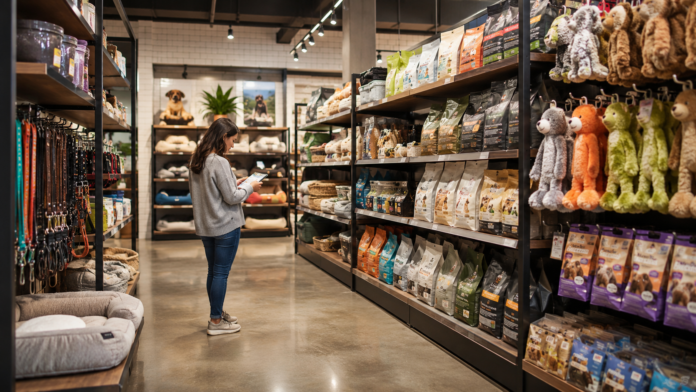
The American Pet Products Association reported that US pet industry spending reached $158 billion in 2025, with projections pointing to $165 billion in 2026. In Canada, the pet industry hit CAD 12.4 billion in 2023 and is expected to reach CAD 15.2 billion by 2027. These are numbers that get cited often, but rarely unpacked. For anyone in retail trying to understand where the actual growth is, the category-level breakdown matters more than the top line.
Food and treats: still the biggest slice
Pet food and treats remain the dominant spending category by a wide margin. American consumers spent $68.3 billion on pet food and treats in 2025, representing roughly 43% of total industry expenditure. In Canada, premium pet food alone accounted for CAD 2.9 billion in 2023, a full 50% of the country’s total pet food market, which signals how far the trade-up trend has gone.
The premiumisation wave in pet food is not new, but it has deepened. About 42% of dog and cat owners now choose to spend more on premium formulations, according to industry surveys. Raw dog food purchasing has seen a 147% increase over the past five years. Brands like Champion Petfoods, headquartered in Edmonton, price their Orijen and Acana lines at CAD 80 to 120 for an 11.4 kg bag, roughly 15 to 25% above standard kibble, and demand continues to grow.
Veterinary care and insurance: the second-largest category
American pet owners spent $41 billion on veterinary services and products in 2025, with spending forecast to rise to $42.4 billion in 2026. What is changing faster than the vet bill itself is the insurance market sitting behind it. US pet insurance premiums totalled $4.74 billion in 2024, up 21.4% year over year, making it one of the fastest-growing financial product categories in North America.

In Canada, vet-related spending is following a similar trajectory, though insurance adoption remains lower. Only about 1.2% of Canadian pet owners currently carry pet insurance, which suggests substantial runway for growth as awareness catches up with the American market.
Supplies and accessories: where the margin story lives
Americans spent $34.4 billion on pet supplies, live animals, and over-the-counter medicine in 2025. Within that broad category, the accessories and hard goods segment is where the most interesting shift is taking place. During 2022 to 2025, the pet accessories market expanded by an estimated $9.2 billion globally.
The growth is being driven not by volume but by product quality and price point. Average annual spending per dog has doubled over the past decade, from roughly $1,200 in 2015 to over $2,400 in 2025. For cats, spending grew from approximately $800 to nearly $1,600 over the same period. That increase is not because owners are buying more items. They are buying better ones.
Material and design upgrades are central to this shift. Ceramic and stainless steel are gaining share over plastic in feeding and hydration products. The sourcing base for these products is diversifying beyond the traditional East Asian supply chain. Ukrainian customs data, for instance, shows that Miaustore, a ceramic pet fountain brand, was the country’s largest exporter of household ceramics in 2022, with a 17.4% share of exports in the category. It is one example of how specialised pet product manufacturing is emerging in unexpected markets.
Services: the fastest-growing segment
Pet care services (boarding, grooming, insurance, training, and pet sitting) cost Americans $14.3 billion in 2025 and are projected to reach $14.9 billion in 2026. Over the past decade, the services category has roughly doubled, making it the fastest-growing major segment in the industry. Within services, training and enrichment represent the highest-growth subcategory, driven by urbanisation and the increasing demand for professional support with pet behaviour and socialisation.
Online is accelerating across all categories. US pet owners spent $28.8 billion buying pet food and supplies online in 2025, up 3.1% year over year. In Canada, online pet product sales contributed CAD 2.1 billion in 2023. For retailers, the question is no longer whether to invest in e-commerce but how to integrate it with physical store experiences. Chains like Pets at Home in the UK and PetSmart in North America are already executing this model, with in-store services wrapped around a digital purchasing backbone.
The bottom line
The pet economy is not a single growth story. It is several overlapping ones: premiumisation in food, rapid adoption of insurance, a material upgrade cycle in accessories, and a doubling of the services market. For retailers allocating shelf space and capital, the headline number matters less than understanding which of these sub-trends aligns with their customer base, and where the margin is actually expanding.
Toronto restaurant to introduce build-your-own pho concept in September

A new fast-casual restaurant specializing in customizable Vietnamese pho dishes is set to open in Toronto this September, introducing what its operators describe as Canada’s first build-your-own pho concept.
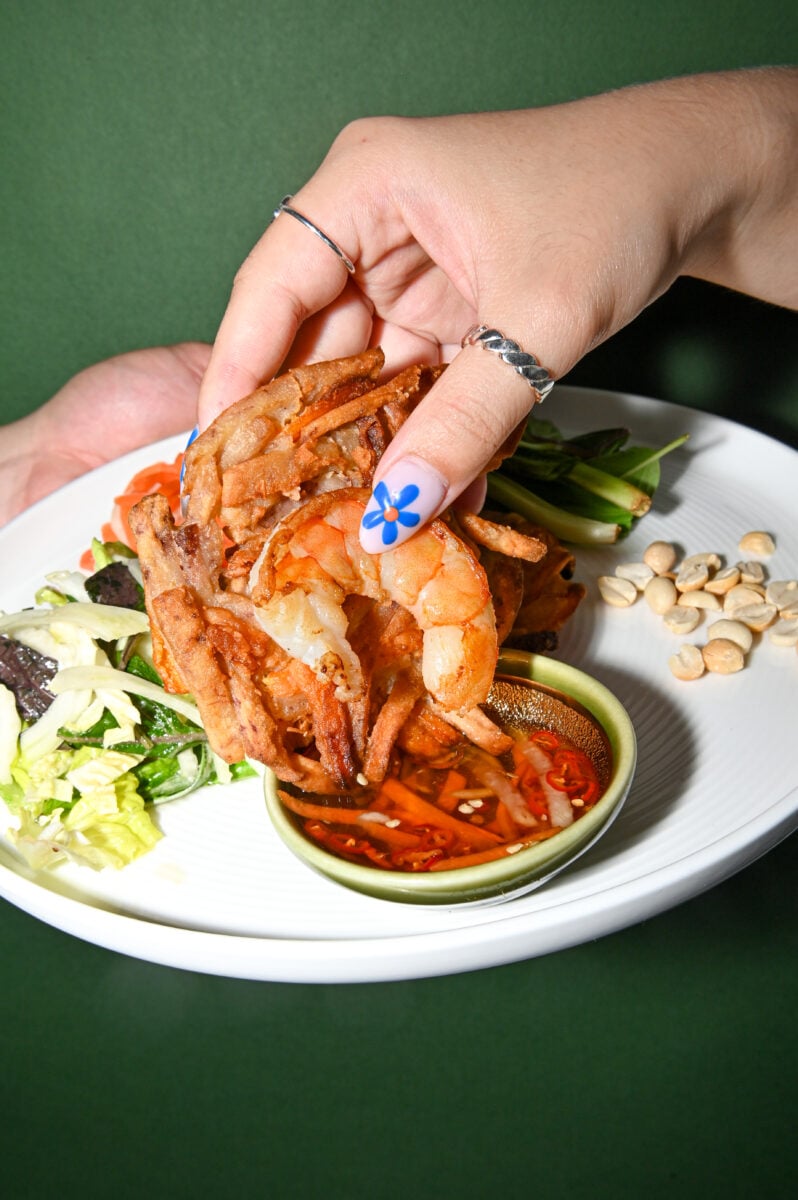
Renso Pho-Potle will open at 506 Queen St. W. in September, offering customers the option to customize pho by selecting their broth, protein, rice and toppings. The restaurant will also serve dry pho alongside traditional broth-based bowls.
The launch marks the latest venture from Renso Group, which says it specializes in authentic Asian foods and food products with a focus on Vietnamese agriculture. The company said the restaurant concept has been in development for several years and is part of a broader strategy centred on a customizable fast-casual dining model.

Founder Linda Vu said the concept aims to make pho more adaptable to changing consumer preferences while positioning the business for future expansion.
“We saw an opportunity to bring something new to Canada, taking a dish people already love and making it more accessible, customizable and fast,” said Vu. “This is just the beginning. Our goal is to build Renso Pho-Potle into a concept that can grow in communities across the country.”
The restaurant will offer customers a choice of ingredients to create individual meals, including traditional broth-based pho as well as dry pho, which the company is introducing as an alternative preparation.
According to the company, the format is designed to provide diners with greater flexibility while maintaining the flavours associated with traditional Vietnamese pho.
Chef Bich Nguyen said the concept was developed with an emphasis on preserving the characteristics of the dish while adapting it to a fast-casual service model.
“We’ve worked carefully to honour the flavours that make pho so distinctive, while adapting them into a format that fits modern lifestyles,” says Chef Bich Nguyen. “It’s about balancing the integrity of the ingredients while making the experience simple and engaging for guests.”
In addition to its food offerings, the restaurant will include a gathering space intended to host events, pop-ups, tastings and community nights. The company said the venue will also feature special events led by Renso Pho-Potle chefs to educate customers about pho.
More from Retail Insider:
- Toronto’s Retail Corridors Are Evolving, Says Arlin Markowitz
- Mirvish Village Comes to Life as Toronto Retail District Opens

Flying Tiger Opens First Canadian Store, Begins GTA Expansion
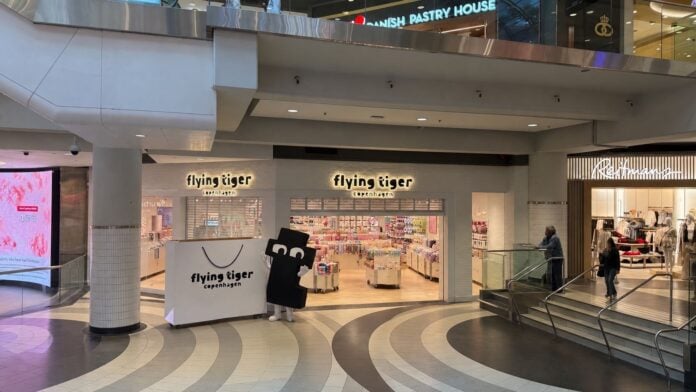
Flying Tiger Copenhagen has opened its first Canadian store at CF Toronto Eaton Centre, bringing one of Europe’s most recognizable specialty retail concepts to Canada as part of a broader Greater Toronto Area rollout.
Retail Insider attended an invitation-only preview ahead of the public opening, where executives from Flying Tiger Copenhagen, Canadian partner Fox Group, shopping centre owners, retail brokers and industry guests toured the store before it opened to consumers.
Flying Tiger is not entering Canada with a single test location. The retailer is opening first at CF Toronto Eaton Centre, followed by Vaughan Mills, Scarborough Town Centre, Square One Shopping Centre and CF Markville later this year.
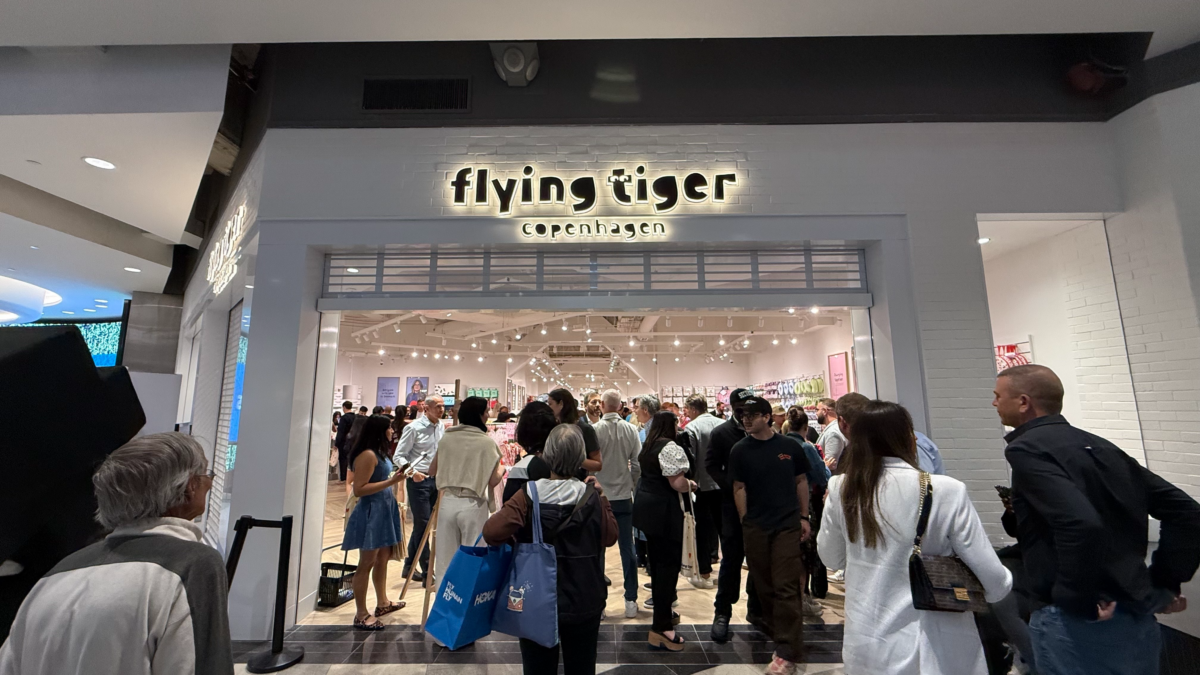
The launch attracted attention well beyond the usual store-opening crowd. Among those attending the preview was Casdin Parr of Odyssey Retail Advisors, who is leading Flying Tiger’s Canadian real estate strategy on behalf of Fox Group. Executives from Oxford Properties were also present as the retailer prepares to open in several major GTA shopping centres.
For Flying Tiger, the opening introduces Canadian consumers to a retailer known for affordable, Danish-designed products and a store layout that encourages browsing. For landlords, it adds a tenant with frequent product changes, broad demographic appeal and merchandise that gives shoppers reasons to return.
Richard White, CEO of Flying Tiger North America, said Canada represents a significant opportunity.

“It’s a very big country and there’s a lot of opportunity,” White told Retail Insider during the preview, adding that Fox Group Canada has developed a plan for the rollout.
First Canadian Store Opens in Downtown Toronto
The CF Toronto Eaton Centre location gives Flying Tiger immediate exposure in North America’s busiest shopping centre. The property draws office workers, tourists, students, downtown residents and regional shoppers, making it a strategic starting point for a retailer introducing a new concept to the market.
White said Flying Tiger expects to have five GTA stores operating within a short period.
“We’ve got quite a rapid rollout in the GTA,” he said. “Over the next few weeks we’ll be opening five stores.”
The first wave will test Flying Tiger across several types of shopping centre environments, including downtown Toronto, large suburban regional malls and properties serving family-oriented communities.
That approach gives Fox Group and Flying Tiger an early read on how the concept performs across different customer bases while building brand awareness faster than a single-store launch.
A Layout That Makes Customers Browse
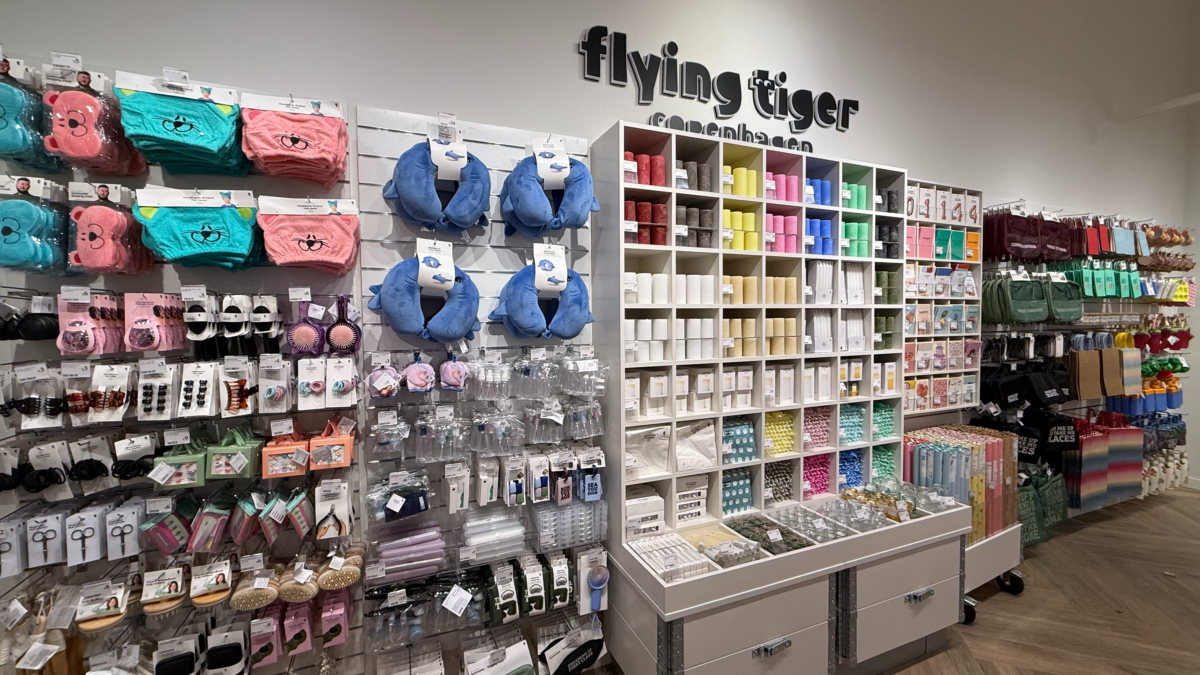
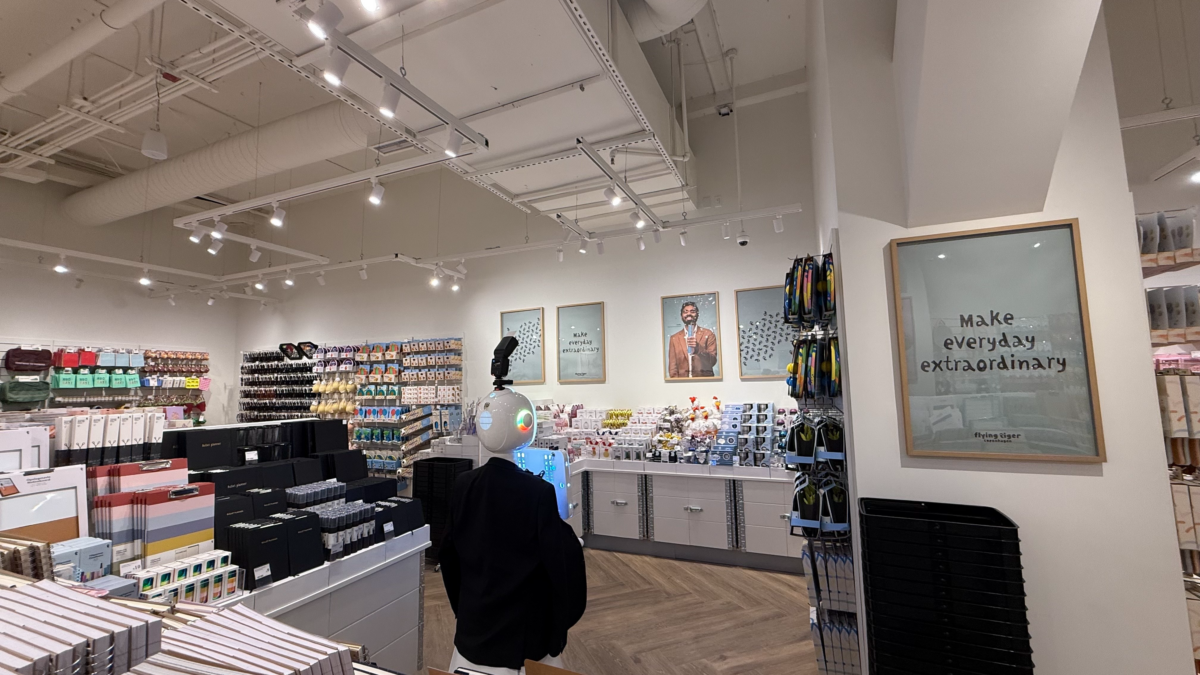
Flying Tiger’s store design is central to the concept. Customers entering the CF Toronto Eaton Centre store are guided along a pathway that passes through the retailer’s merchandise categories before reaching the checkout. There is no direct route to the cash area. The store leads visitors through stationery, kitchenware, home décor, toys, craft supplies, party goods, travel accessories, seasonal merchandise and confectionery.
White said Flying Tiger organizes its stores around merchandise categories and wants customers to encounter each one.
“We want to expose everyone to all those 14 categories as they make their way around the maze,” he said. “You should walk around the store. If you’re not smiling by the time you come out, you’ve missed something.”
Retailers have used guided shopping paths for decades because they expose customers to more merchandise. IKEA is the best-known example. The principle is straightforward: when shoppers see more products, there are more opportunities for discovery and impulse purchases.
Flying Tiger applies that idea in a smaller footprint. A customer who enters for stationery may pass kitchenware, candles, toys, craft supplies and party decorations before reaching the checkout. The pathway increases product exposure, while low price points reduce the hesitation that might otherwise prevent an impulse purchase.
That could have implications for basket size. Retail merchandising research has long associated product exposure, store circulation and impulse purchasing with higher average transaction values, although performance ultimately depends on execution, pricing and customer response.
At Flying Tiger, the layout works with the assortment. Merchandise changes frequently, and new products are placed throughout the store rather than confined to one promotional area. Returning shoppers are meant to see something different.
Merchandise Does the Selling
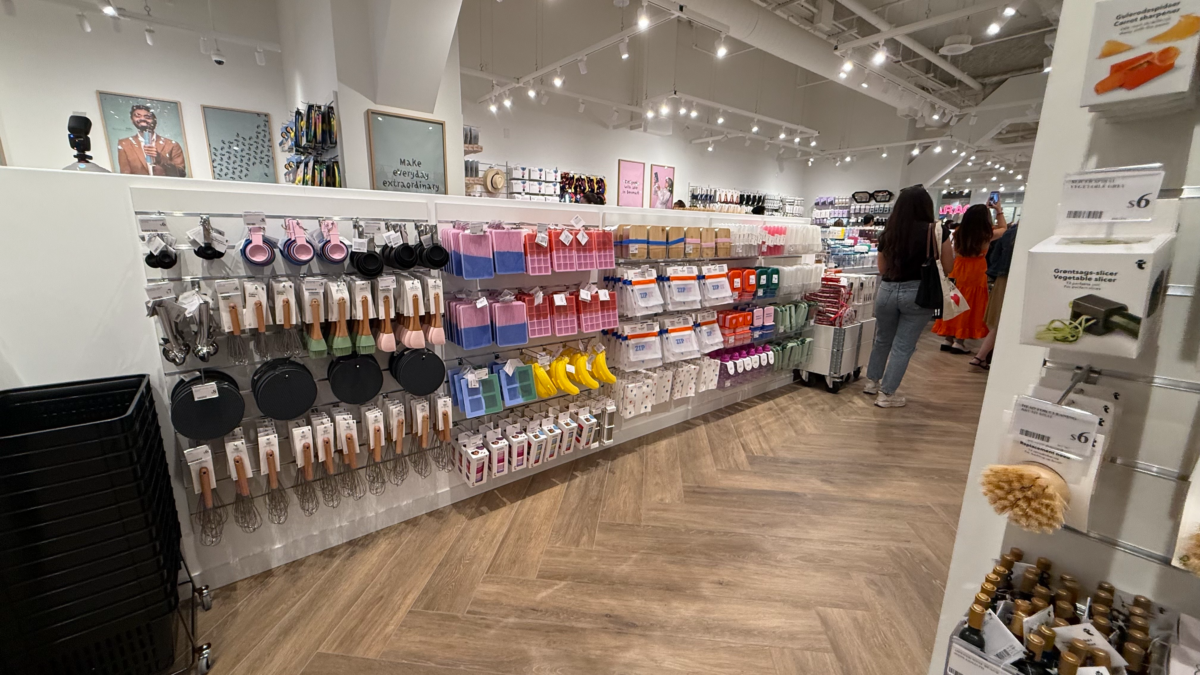
During the preview, the store was neatly organized and relatively free of aggressive promotional signage. Large discount messages were not the focus. Product stories carried the presentation.
Fruit-themed kitchenware was displayed with matching serving pieces and table accessories. Stationery was grouped by colour and theme. Candles, travel accessories, craft items and reusable household products were arranged in coordinated displays, making it easy to see how items could be purchased together.
The merchandising remains orderly despite the breadth of the assortment. Fixtures are low enough to keep sightlines open, and product collections are grouped clearly across the sales floor.
That matters because Flying Tiger will inevitably be compared with Canadian value retailers, particularly Dollarama. The price points invite the comparison, but the store experience is different. Dollarama is built around convenience, extreme value and broad household utility. Flying Tiger is focused on discovery, design and products shoppers may not have seen elsewhere.
White said customers often come in for one or two items and leave with more after seeing the assortment.
A shopper looking for a notebook may pass party supplies, kitchen accessories, greeting cards, craft kits and seasonal décor. The merchandise is priced low enough that adding another item does not require a major decision.
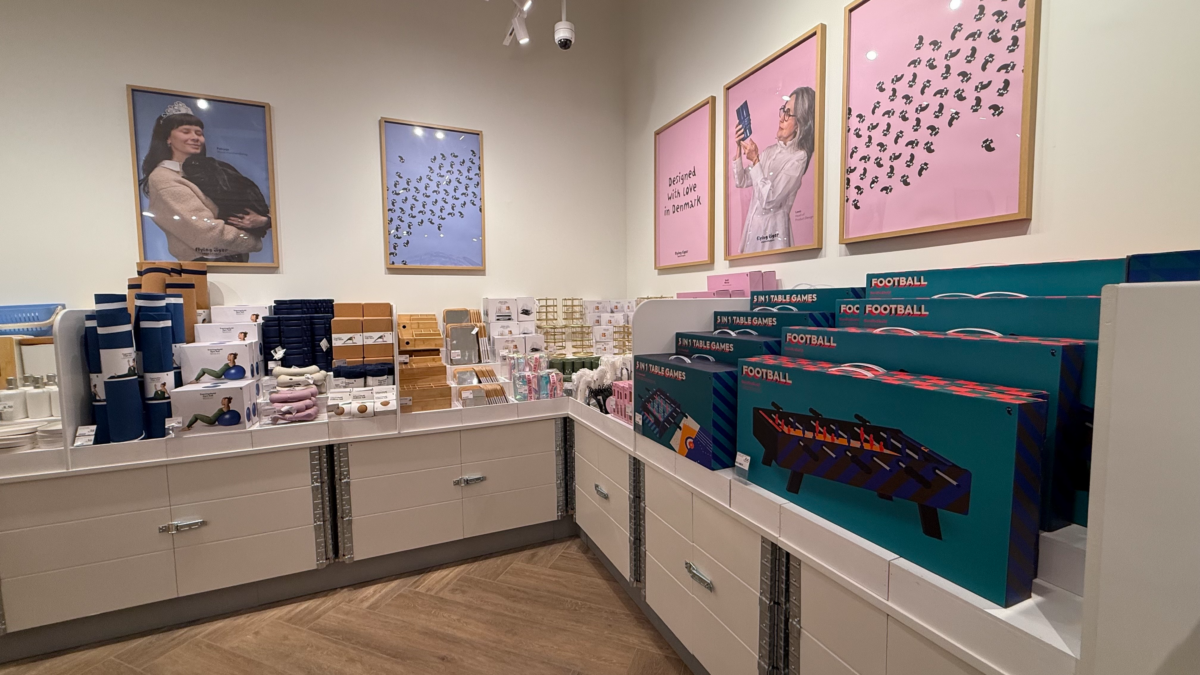
Everyday Products with a Danish Twist
Darryl Nash, Senior Vice President of Commercial at Flying Tiger Copenhagen, said the company’s product philosophy is built around making routine items more enjoyable.

“We want to make the everyday extraordinary,” Nash said. “Anything that’s routine, cleaning the dishes, it needs to be a sponge that brings you fun, it needs to be colourful, it needs to be joy.”
That thinking appears throughout the CF Toronto Eaton Centre store. Dish sponges are shaped like hearts. Food storage bags feature playful graphics. Kitchenware incorporates bright colours and seasonal patterns. Notebooks and journals are presented in coordinated ranges instead of looking like standard office supplies.
Nash said Flying Tiger’s in-house design team in Copenhagen develops the prints, colours, graphics and product concepts.
“We have an in-house design team in Copenhagen,” he said. “They come up with all of the prints, the colours. It’s all designed in-house.”
That gives Flying Tiger a different position from many value-oriented retailers. Much of the assortment is proprietary, meaning shoppers are not simply comparing the same products against other stores. Flying Tiger’s merchandise is created for Flying Tiger.
The company carries core products year-round while introducing about 300 new items every month. Seasonal campaigns refresh the store throughout the year, giving customers reasons to return for back-to-school, Halloween, Christmas, summer entertaining and other occasions.
For the upcoming back-to-school season, Nash said the retailer’s campaign is built around the phrase “School Shouldn’t Be Boring,” with colourful stationery and school supplies offered at accessible prices.
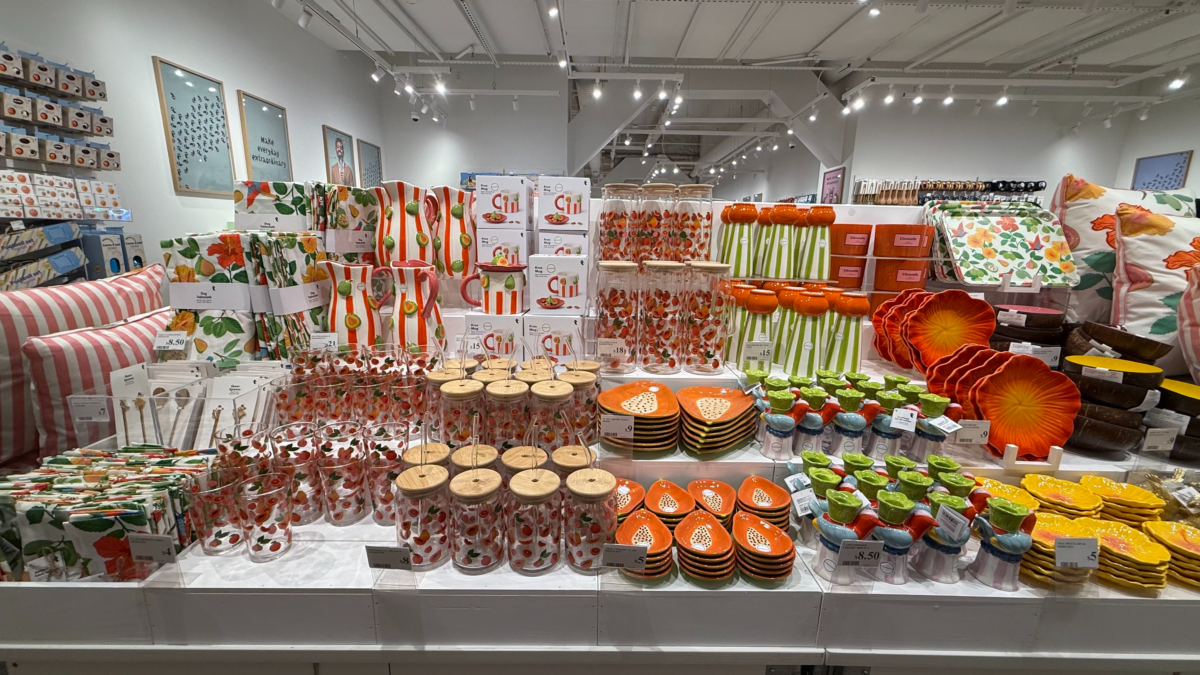
Value Without a Traditional Value-Store Feel
Flying Tiger’s pricing will likely be one of its strongest points of appeal in Canada.
White said more than 80 per cent of the assortment is priced below $10, with roughly 27 per cent below $5. That puts much of the store within reach for students, families, office workers and shoppers looking for small gifts, household items or seasonal products.
The value proposition is especially relevant as Canadian consumers remain careful with discretionary spending. Flying Tiger sells products that feel like small indulgences but are priced closer to everyday purchases.
A $4 notebook, $6 candle, inexpensive kitchen tool or low-priced craft item can be added to a basket without the consumer feeling like they are making a major purchase.
The store also avoids the cluttered presentation often associated with low-price retail. Collections are edited and colour-coordinated. Displays are dense, but not chaotic. Customers can browse without feeling overwhelmed by bins of merchandise or large promotional signs.
For shopping centres, that distinction matters. Flying Tiger can attract value-conscious consumers while still presenting as a design-led specialty retailer.
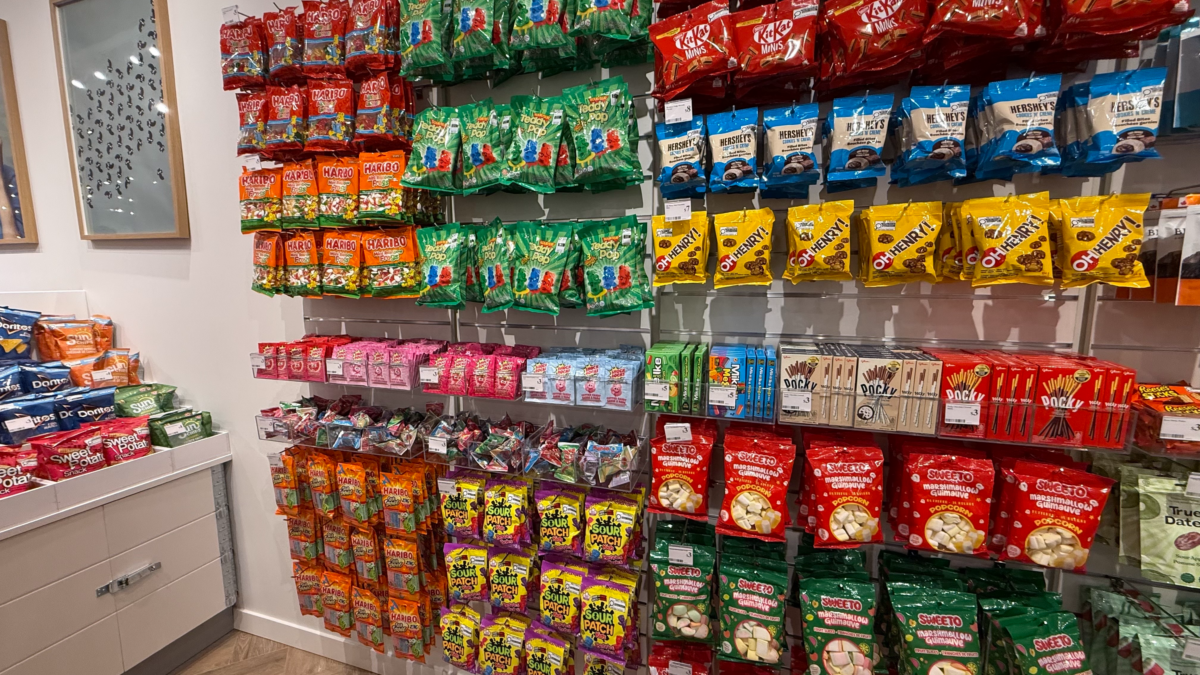
Why Landlords Are Paying Attention
Flying Tiger’s arrival comes as Canadian shopping centres continue to broaden their tenant mixes.
Traditional apparel remains important, but landlords have spent years adding restaurants, entertainment, wellness, services and retailers that encourage browsing. The goal is to create more reasons for consumers to visit and spend time in enclosed malls.
Flying Tiger fits neatly into that shift. The stores are relatively compact. The assortment spans multiple categories. Merchandise changes frequently. The products appeal across age groups. Price points are accessible. Many items are exclusive to the chain.
Those attributes help explain why the invitation-only preview attracted brokers, landlords and retail executives alongside media. The retailer offers something many shopping centres want: a tenant that can drive casual browsing and repeat visits without requiring a large footprint.
Parr’s involvement through Odyssey Retail Advisors also speaks to the real estate strategy behind the rollout. Flying Tiger’s first Canadian stores are being placed in major GTA shopping centres with strong traffic, different customer profiles and significant regional reach.
Oxford Properties’ presence at the preview further underscored landlord interest as Flying Tiger prepares to open in additional shopping centres.
If the initial GTA stores perform well, the retailer could become an attractive addition to enclosed malls in other Canadian markets.
Fox Group Builds Another Canadian Platform
Flying Tiger’s Canadian expansion is being led by Fox Group, which has become increasingly active in bringing international retail brands to Canada.
The partnership matters. International retailers often face challenges when entering Canada, including real estate negotiations, staffing, logistics, store operations and adapting to local consumer behaviour. Fox Group gives Flying Tiger an experienced operating partner with the ability to scale the concept beyond one location.
The first five-store rollout also suggests confidence in the model. Instead of opening one Canadian flagship and waiting to assess the market, Flying Tiger is launching across several major shopping centres in quick succession.
That can help build awareness faster. A consumer who sees Flying Tiger at CF Toronto Eaton Centre may later encounter the brand at Square One, Vaughan Mills or another major GTA mall. Repeated exposure helps establish the retailer as a new market entrant rather than a novelty store with one downtown location.
White said the immediate focus is on the GTA, but he sees opportunity across Canada.
Internationally, Flying Tiger operates in a range of settings, including high streets and shopping centres. In Canada, shopping centres are expected to be the primary focus, at least initially.
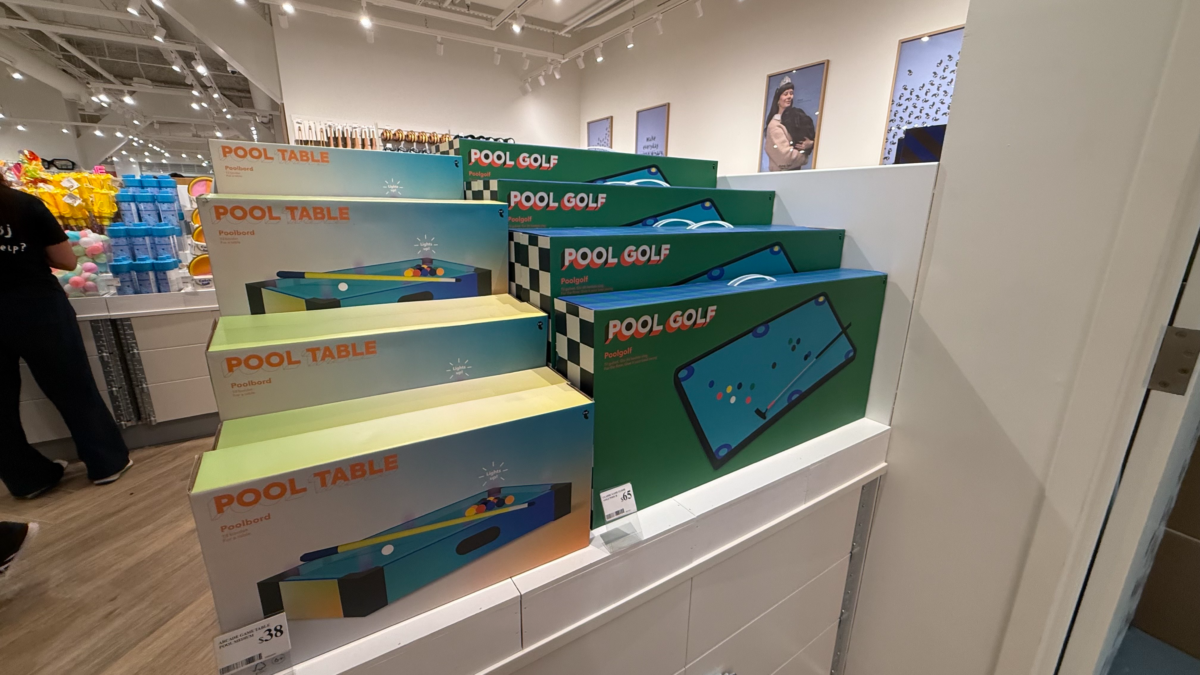
Products That Pull People Away From Screens
One of the more interesting elements of Flying Tiger’s assortment is how much of it encourages offline activity.
The store carries journals, sketchbooks, canvases, craft supplies, DIY kits, board games, party goods and seasonal products built around entertaining and creativity. Nash said the retailer intentionally keeps technology to a minimum.
Apart from practical items such as charging cables, Flying Tiger focuses on products that support shared activities.
“It’s all about building moments to get together and come offline,” Nash said, describing merchandise intended for creative projects, gatherings and time around the table.
That focus is visible in the merchandising. Summer entertaining displays include tableware, glasses, decorations and accessories. Craft and stationery areas encourage hands-on creativity. DIY products are positioned for group activities, gifting and personalization.
The approach could resonate with Canadian families, students and young adults looking for affordable ways to host, decorate, organize, create and gift without spending heavily.
Flying Tiger is not chasing technology trends. It is selling physical products that encourage customers to do something at home, at school, at work or with other people.
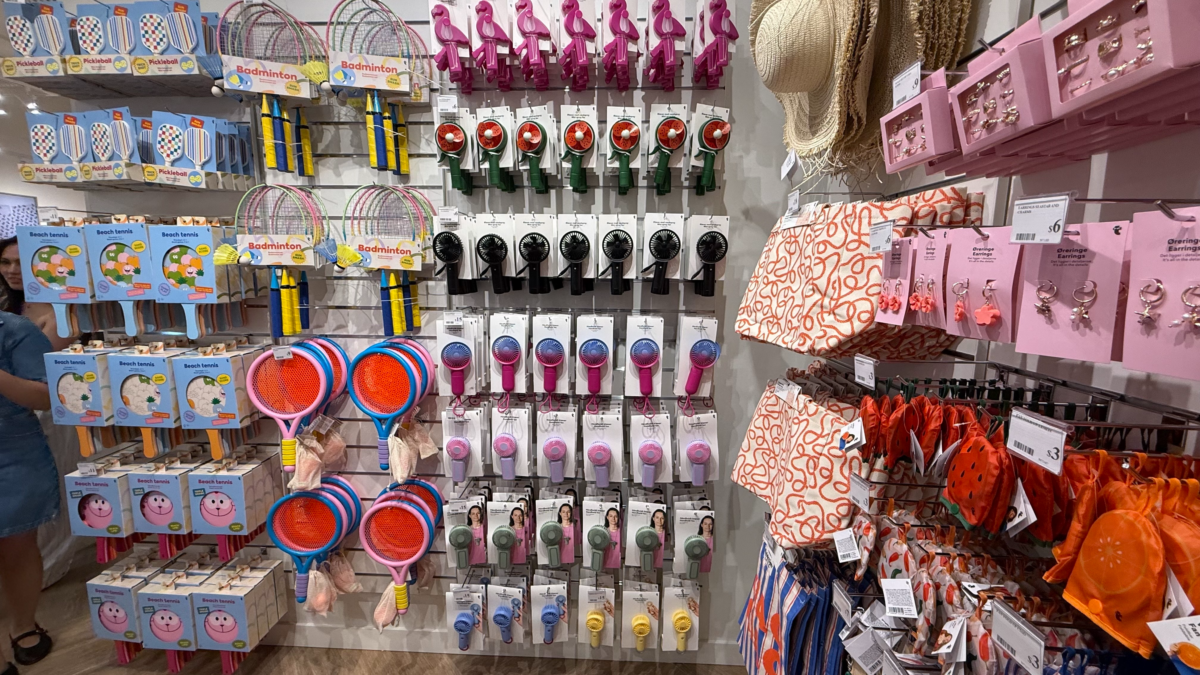
Sustainability in the Background
White also pointed to sustainability as part of Flying Tiger’s operations.
He said the company has worked to reduce plastic, increase recyclable packaging and evaluate materials earlier in the product development process. He also referenced the retailer’s relationship with Maersk and efforts to use more sustainable shipping options where possible.
Those efforts are not the first thing customers will notice when they enter the store. The immediate impression is merchandise, colour, price and layout. But White said sustainability is part of how the company thinks about product development, packaging and logistics.
For a retailer selling large volumes of affordable goods, the issue will remain important as Flying Tiger expands. The challenge is to keep products accessible while continuing to improve packaging, materials and supply chain practices.
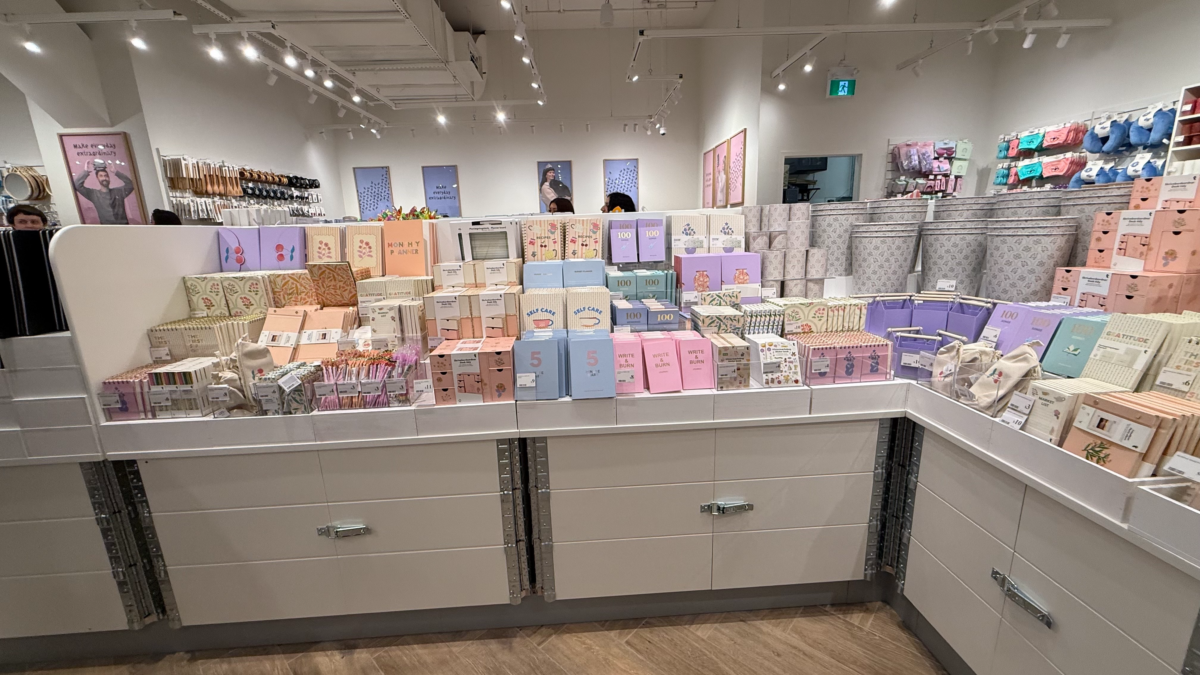
What Comes Next
The CF Toronto Eaton Centre store gives Canadians their first look at Flying Tiger. The next several months will show how the concept performs across the GTA.
Vaughan Mills, Scarborough Town Centre, Square One Shopping Centre and CF Markville will each test the retailer in different shopping centre environments. Together, the five stores will provide a clearer picture of how Canadian consumers respond to the brand.
Retailers, landlords and brokers will be watching closely. Flying Tiger has succeeded internationally by making everyday products feel less routine. Canada will now determine how far that idea can travel.
More from Retail Insider:
Retail inventory stress soars as tariffs, TikTok trends, and AI gaps challenge planning: DOSS Study

Tariffs, viral trend cycles, and fragmented systems have turned inventory planning into one of the most stressful jobs in retail.
DOSS surveyed 661 retail and consumer goods professionals across supply chain, procurement, forecasting, and finance, and what they admitted should raise eyebrows across the industry:
- three in four retail professionals (75%) have either lost sleep over an inventory decision or come close to it, losing an average of three hours of sleep;
- Seasonal or trend-driven SKUs and perishable goods are tied as the most stressful inventory categories to manage among retail professionals, each cited by 33% of respondents;
- one in two retail industry organizations (50%) delayed or canceled purchase orders due to tariff uncertainty in 2026;
- More than half of retail professionals (51%) say they sometimes proceed with demand forecasts they know are unreliable, simply because no better alternative exists;
- 64% of retail industry organizations have not deployed AI or machine learning for inventory management, and among those with no plans to adopt, 59% say it’s just not a current priority;
- Among the one in four retail industry organizations left holding excess inventory after a viral trend faded, TikTok was the responsible platform 60% of the time, followed by Instagram (13%) and YouTube (7%).
You can explore the full study here.

David Appel, VP of Marketing for DOSS, spoke with Retail Insider about the issue.
Question: How are tariffs and ongoing uncertainty reshaping inventory planning strategies in 2026?
Answer: Tariffs have thrown many into disarray. In the past, the formula for success seemed clear. It was find trusted foreign suppliers, create lasting partnerships, focus on costs, and keep the overhead low. Yet, once tariffs are changed, everything that went into these calculations instantly turns to dust. Half of the businesses surveyed deferred or canceled POs during this year alone due to tariff unpredictability. It is not surprising that more savvy companies have started to look at other geographic sources at the risk of higher costs. Moreover, they have started to add safety nets and plan according to scenarios rather than relying solely on the numbers. It may decrease efficiency temporarily, yet it will help maintain stability, which has never been easy to ensure.
Q: Why are so many retail professionals still relying on demand forecasts they know are unreliable, and what needs to change?
A: In some ways, it has become an issue of not yet knowing what better looks like. Forecasting processes become deeply ingrained in planning, budgeting, and other activities within an organization. As far as the human aspect goes, it is hard to recognize that what worked in the past may become unreliable and inefficient. According to our survey, 51% of professionals continue to use their current forecasting methods, despite their unreliability, simply because they do not have anything else. Also, 16% of respondents do not track forecasting errors at all. However, you cannot fix a problem you do not even measure. Instead, one should stop regarding it as a fixed point and try to evolve constantly by using rolling forecast processes that are adjusted depending on the situation. Ideally, assumptions and forecasts should be revised on a weekly or even daily basis during periods of volatility. One mistake with a large retailer can severely impact a business.
Q: What makes seasonal, trend-driven, and perishable inventory particularly stressful to manage today?
A: These categories are among the most challenging to deal with because they have one common trait: time pressure. A seasonal item, such as a winter jacket that remains unsold after February, does not just mean lower profit margins. It means an additional burden for the following year. Unfortunately, the matter is complicated further by growing and increasingly unpredictable demand drivers that make it difficult to forecast accurately. Not so long ago, one could make a fairly reliable prediction by analyzing historical data, seasonal weather forecasts, promotional calendars, and other factors. Today, one has to consider tariff-driven costs, unpredictable social media-fueled demand surges, and increasingly volatile consumer behaviour. The stress experienced is not limited to logistics. It is associated with understanding that the tool set that they have was not designed for such conditions. Seasonal and trend-driven SKUs and perishables turned out to be equally stressful, and in my opinion, there is a reason behind it. The planning cycle became shorter, and there is less space for error.

Q: Why has AI and machine learning adoption in inventory management remained so low despite clear pain points?
A: AI technology was oversold to the industry in terms of its potential benefits. Many executives tend to believe that the adoption of AI would instantly solve all of their forecasting challenges, and it would be easy to integrate into existing processes. However, it requires proper underlying infrastructure and consistent, high-quality data that many organizations still lack. According to our survey, nearly one in five inventory teams need access to four or more data silos to evaluate their stock health. Thus, trying to use AI in such a case would only lead to confusion, which will only be automated. 59% of non-adopters in our survey state that implementing artificial intelligence is not one of their priorities at the moment. While some of it is understandable considering operational difficulties and priorities, I believe that another reason for it is uncertainty. Companies that were able to benefit from AI have done several things. First of all, they invested heavily in data infrastructure, and secondly, they viewed it not as a quick solution but rather as a tool for continuous improvement.
Q: How are viral platforms like TikTok influencing inventory risk, and what can retailers do to avoid being stuck with excess stock?
A: What TikTok brought that many retailers did not anticipate is demand randomness. Prior to it, most demand spikes had clear triggers that could be anticipated. Good holiday season, product placement in a movie or commercial, and endorsement. Today, TikTok generates demand surges that are not predictable and happen much faster. Our survey showed that 60% of viral inventory overstocks were generated by TikTok. Moreover, they take longer to recover compared to conventional spikes. 74% of affected companies took up to six months to clear the surplus. Unfortunately, many of them tried to respond to the surge by ordering additional stocks, which proved to be a huge mistake. By the time it arrived, the hype had already passed. To avoid overstocking, companies are looking at other approaches, such as more flexible supplier relationships, focusing on domestic or nearshore production, and limiting stock increases until there is solid proof of sustainability.
More from Retail Insider:
Calgary Stampede drives meaningful lift for local businesses: Mastercard Economics Institute

New insights from the Mastercard Economics Institute (MEI) show the Calgary Stampede does more than draw crowds, it sets Calgary’s economy in motion even before the gates open, from last-minute retail runs ahead of opening weekend to surging restaurant demand and early hotel bookings downtown.
Using aggregated and anonymized spending insights from 2025, alongside travel trends through bookings made by the end of May 2026 with departure dates from June 29 through July 12 for Calgary International Airport, MEI examined how economic activity around the Calgary Stampede compared with expected baseline levels without the event.
This year’s Stampede is July 3-12.

MEI said it estimates that the 2025 Calgary Stampede generated an approximate 18 per cent lift in spending at local merchants relative to baseline, with restaurants experiencing one of the strongest lifts at roughly 29 per cent. Retail spending also surged ahead of opening weekend, while accommodation demand built early, especially in downtown Calgary.
The data reveals a clear pattern: Stampede’s economic impact builds in waves. Retail spending jumps before the festivities begin, as Calgarians and visitors prepare for the week ahead. Dining demand remains elevated through the event, and accommodation spend is front-loaded into the first few days as visitors arrive and settle in. Together, the insights show that Stampede is not just busy, it is an engine of local spending in ways that are visible across time, place and category, it noted
The spending story is also being shaped by international interest in Stampede. Preliminary booking data suggests international travel tied to Stampede is up year over year in 2026, with some of the strongest international growth coming from the United States, Belgium, the Netherlands, Great Britain and Australia, added MEI.


“The Calgary Stampede is a great example of how a cultural moment can also be a major economic catalyst,” said Benjamin Jacob, Senior Vice President, Services, Mastercard, Canada. “For local businesses, success during Stampede is not just about being busy, it is about being ready. Insights like these can help businesses better anticipate demand and make smarter decisions around staffing and inventory during one of Calgary’s most important economic moments.”
“While the Calgary Stampede is a cultural and recreational highlight for our city, it is also a key opportunity to showcase Calgary on the global stage. The 10-day event reflects the energy, entrepreneurial spirit and community pride that defines Calgary, while attracting visitors from around the world,” said Melanie McDonald, Vice President, Strategic Initiatives, Partnerships and Engagement, Calgary Chamber of Commerce. “Generating an estimated $664 million in economic activity in Calgary in 2025, the Stampede provides a significant boost to restaurants, bars, hotels, entertainment venues, coffee shops, retailers and many other local businesses across the city. It is also a time when Calgary’s business community comes together to strengthen relationships and celebrate the spirit of collaboration that supports the city’s continued growth.”

The insights show how Stampede spending unfolds across the city:
- MEI estimates that the 2025 Calgary Stampede drove a roughly 18 per cent lift in overall spending at local merchants relative to expected baseline without the event.
- Restaurants saw some of the strongest lift in spend, approximately 29 per cent, underscoring the role dining plays in the Stampede experience.
- Retail spending surged on the Thursday ahead of opening weekend, as consumers prepared for Stampede festivities.
- Accommodation demand built early, with the strongest lift concentrated downtown in the first few days of the event.
- Among international markets tied to Stampede travel in 2026, the United States accounts for roughly one-third of all bookings.
- Travel bookings are up year over year from international markets, including the Netherlands, Belgium, Great Britain and Australia.
“The insights also show that economic value is not evenly distributed. Spending patterns varied by sector, location and timing, with some of the strongest lifts concentrated in areas closest to the Stampede grounds and in experience-led categories such as dining and accommodations,” said MEI.
More from Retail Insider:
Etsy and Canada’s Fashion Retail Trends: What’s Shaping the Way Canadians Shop
Over the past few years, Canada’s apparel retail sector has seen a tremendous shift. Consumer preferences are moving toward individualism, sustainability, and products that tell a story, even as traditional retailers continue to draw customers with seasonal collections and omnichannel experiences. Today’s consumers are searching beyond fast-fashion chains and traditional department stores, opening doors for independent businesses and online marketplaces.
Etsy is one website that exemplifies this development. Etsy, which is well-known for its handcrafted, vintage, and customized goods, has grown in popularity among Canadians looking for clothing that differs from mass-produced lines. The marketplace shows how independent designers and small businesses are redefining the future of fashion shopping as retail habits continue to change.
The main fashion retail trends affecting Canadian customers are examined here, along with Etsy’s place in this evolving market.
Canadian Shoppers Are Looking Beyond Traditional Fashion Retail
Visits to shopping centers or large store chains are no longer the only characteristics of fashion shopping. Even while these shops are still well-liked, a lot of customers are looking into other channels for buying that provide more exclusivity and variety.
This change has helped independent fashion firms by providing collections that prioritize uniqueness over mass production. Custom clothing, handcrafted jewelry, and artisan accessories are just a few examples of the things that consumers are beginning to value more than those that follow popular trends.
By linking Canadian consumers with independent sellers from all around the nation and the world, marketplaces like Etsy have contributed to the increased accessibility of these goods.
Sustainability Is Driving Fashion Choices
In Canada, one of the most significant retail trends is sustainability. Customers are becoming more conscious of how their purchases affect the environment, which is pushing merchants to reconsider how goods are created, produced, and marketed.
Nowadays, a lot of consumers place a higher value on quality than quantity, opting for long-lasting goods that may be worn for many years as opposed to cheap ones made for temporary usage. Because they frequently correspond with more conscientious shopping practices, vintage apparel, handcrafted accessories, and small-batch collections have grown in appeal.
By connecting thousands of individual sellers who produce handmade goods, recycled clothing, and antique collections, Etsy helps to meet this increasing demand. The marketplace provides customers with a greater range of products that encourage more deliberate purchasing selections, even though every store functions differently.
Personalized Fashion Continues to Grow
Personalization is another significant trend influencing the retail scene in Canada.
Whether it’s embroidered clothing, engraved jewelry, personalized purses, or custom-made accessories, consumers are becoming more and more interested in things that seem distinctive. Customers may create meaningful gifts for birthdays, marriages, graduations, and other occasions while expressing their uniqueness through personalized fashion.
Etsy offers customers access to creators who specialize in made-to-order items, in contrast to many traditional stores that offer standardized collections. Customization is made simpler, and the purchasing experience is made more interesting by this direct link between buyers and independent vendors.
Independent Designers Are Finding New Opportunities
Digital retail platforms have made it easier to launch a fashion company.
Many Canadian business owners start out selling online rather than making significant investments in physical shopfronts. This strategy keeps operational costs under control while enabling designers to contact clients across the country.
Etsy has emerged as one of the sites fostering this expansion of entrepreneurship. Without the difficulties of traditional retail expansion, independent designers can present their handmade clothing, jewelry, purses, scarves, and accessories to a large audience.
This gives consumers access to new designs and up-and-coming brands that they might not have otherwise found.
Digital Retail Is Expanding Consumer Choice
The retail industry in Canada is still embracing the digital revolution. Customers anticipate easy online purchasing, comprehensive product details, adaptable payment methods, and dependable delivery services.
They also desire a wider variety of products.
Online markets offer millions of listings across a variety of categories, in contrast to traditional stores that carry limited seasonal inventory. Customers can peruse a wide range of fashion items on Etsy, from handcrafted leather goods and minimalist jewelry to vintage apparel and personalized accessories.
Canadians have more chances to choose goods that fit their unique preferences and price ranges because to this expanded selection.
Fashion Is Becoming More Personal
The trend away from one-size-fits-all apparel is one of the most obvious changes in Canadian shopping.
Instead of seeing apparel and accessories as merely practical purchases, consumers are beginning to view them as expressions of their identities. Consequently, the market for limited-edition, handmade, and customizable goods continues to expand.
By producing goods in smaller quantities and offering customization options that large retailers often cannot provide, many Etsy sellers focus on precisely these attributes.
Today’s fashion retail market is characterized by this emphasis on individualism.
Technology is Changing How Canadians Shop
Every facet of retail is still impacted by technology.
While mobile shopping enables customers to buy fashion items from almost anywhere, artificial intelligence assists businesses in making product recommendations based on browsing behavior. Additionally, social media platforms are crucial since they introduce consumers to new companies and motivate them to make purchases.
These advancements have also helped independent companies. While consumers enjoy a straightforward online shopping experience backed by reviews, thorough product listings, and safe payment options, platforms like Etsy let creators reach new audiences.
Canada’s fashion retail industry has undergone a transformation thanks to the mix of creativity and technology.
What These Trends Mean for the Future of Retail
As consumer expectations continue to change, Canada’s fashion retail sector is growing more varied. Independent businesses and online marketplaces are increasingly influencing consumer behavior, even though traditional merchants are still a crucial component of the industry.
In addition to convenience and affordable prices, consumers are looking for sustainable purchasing options, authenticity, craftsmanship, and personalization. Retailers will be in a better position to satisfy future demand if they are able to successfully balance these requirements.
Platforms like Etsy are anticipated to continue playing a significant role in Canada’s retail scene as digital commerce expands by assisting independent business owners and providing consumers with access to goods that value uniqueness and creativity.
Final Thoughts
As much as technological advancement, shifting customer values will influence the future of fashion retail in Canada. More than ever, consumers are supporting independent firms, adopting personalized goods, and making deliberate purchases.
Etsy connects Canadian customers with handmade, vintage, and customizable fashion items from independent creators, reflecting many of these changing retail trends. Marketplaces that emphasize uniqueness, workmanship, and customer experience are likely to become more significant in how Canadians find and purchase clothes as the retail industry develops.
Daily Synopsis: Jun 25, 2026

Welcome to the Daily Synopsis by Retail Insider. We published exactly 9 articles today focusing on the latest Canadian retail developments and trends.
Vaughan Mills enhanced its destination appeal by launching its largest Playdium entertainment venue featuring 85 games and a Kia Nurse appearance. Dollarama’s role as a strategic retail channel grows as it now reaches 96% of Canadian households, compelling brands to adapt to its broad appeal and extensive shopper base.
Kraft Heinz Canada is expanding Kraft Dinner into instant noodles with the KD Ramen line, while Pattison Food Group has upgraded its Langley distribution centre with new automation technology to boost grocery fulfillment efficiency. Tourism spending edged up due to international visitor growth, and Niagara-on-the-Lake’s retail landscape evolves with the Clayfield hotel mixed-use development aiming to extend visitor stays.
🗞️ The Day’s Retail Insider Article List
- Vaughan Mills Celebrates New Playdium with Kia Nurse Appearance and Interactive Activation – Craig Patterson
- Why Major Brands Can No Longer Ignore Dollarama – Craig Patterson
- Gen X Shoppers Want Global Flavours, But Discovery Still Happens in Store: Study – Evan Nagy
- Kraft Dinner Expands Into Instant Noodle Category with New KD Ramen Line – Evan Nagy
- Maison Territo Introduces Moooi’s Distinctive Design World to Montréal – Craig Patterson
- Tourism spending edges up in Q1 2026: Statistics Canada – Mario Toneguzzi
- Pattison Food Group expands automated grocery fulfillment operations at B.C. distribution centre – Mario Toneguzzi
- Alberta business exodus feared if separation process begins: Calgary Chamber of Commerce – Mario Toneguzzi
- The Clayfield hotel project positions Niagara-on-the-Lake for next phase of tourism growth – Mario Toneguzzi
🌐 Canadian Retail News From Around the Web will be back Monday. Have an excellent weekend.
Vaughan Mills Celebrates New Playdium with Kia Nurse Appearance and Interactive Activation
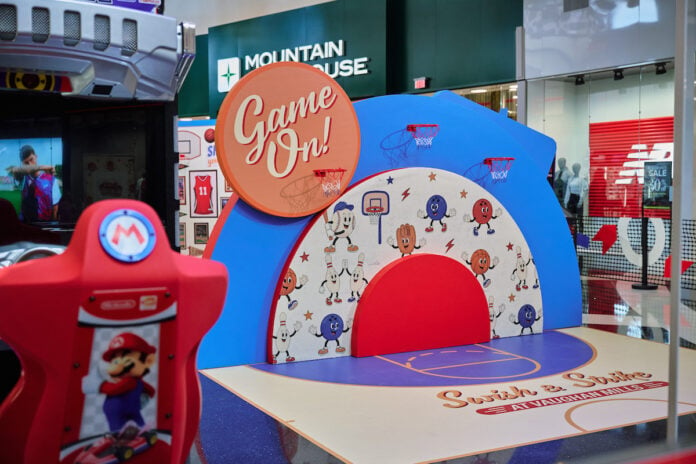
Vaughan Mills is marking the opening of its new Playdium entertainment venue with a two-week sports and arcade activation that culminates Friday evening with a public appearance by Toronto Tempo guard Kia Nurse.
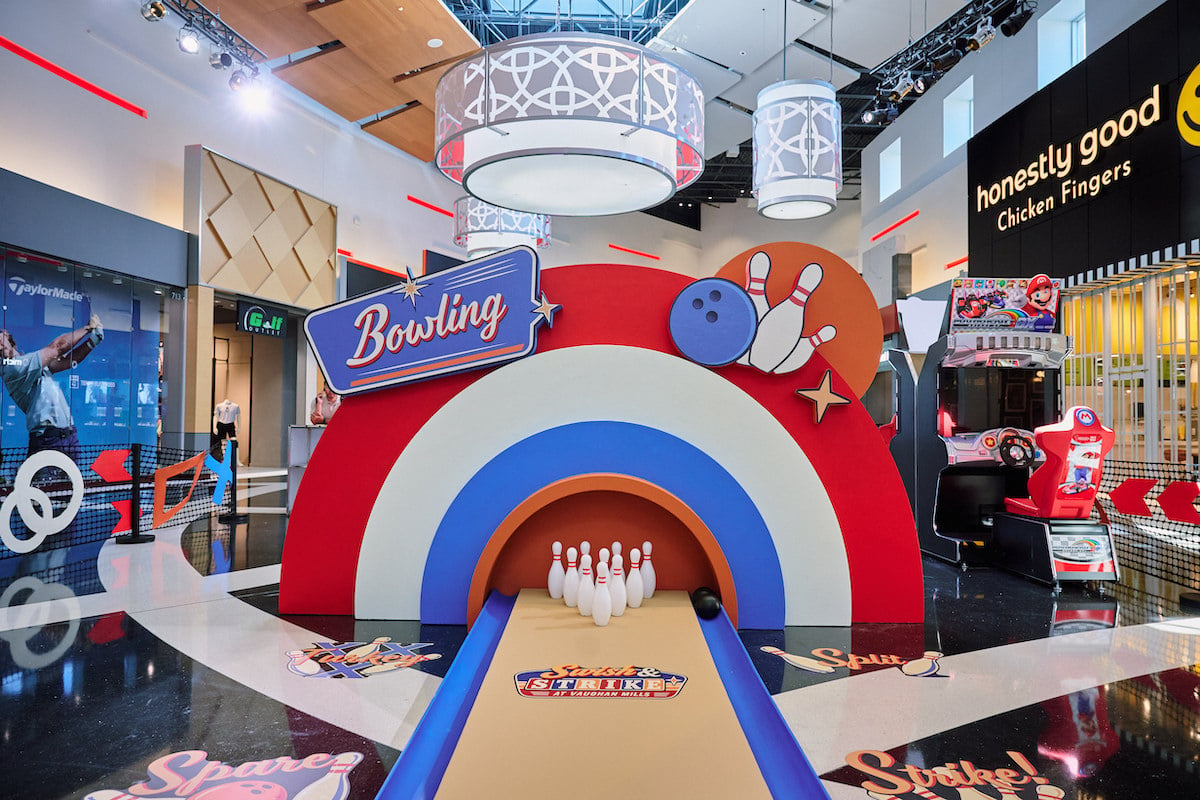
While the event celebrates the arrival of Canada’s largest Playdium by attraction count, it also reflects a broader trend in Canadian retail real estate. Shopping centres are increasingly investing in entertainment, experiential retail and live events to create destinations that encourage visitors to stay longer, return more often and engage with retailers in new ways.
The Swish & Strike activation has transformed Vaughan Mills’ Event Court into an interactive space featuring basketball challenges, mini bowling, classic arcade games, themed photo opportunities and prize giveaways. Running through June 28, the activation offers families and shoppers an opportunity to experience the centre’s newest entertainment offering while celebrating Playdium’s arrival.

Toronto Tempo guard Kia Nurse, one of Canada’s most recognizable basketball players, will meet fans on Friday, June 26, from 7:15 p.m. to 9 p.m. Her appearance aligns the activation with the growing profile of women’s professional basketball in Canada following the launch of the Toronto Tempo, the country’s first WNBA franchise.
The celebration follows the recent opening of Playdium Vaughan, a 24,000-square-foot entertainment destination featuring more attractions than any other Playdium location in Canada. Operated by Cineplex, it is the company’s fifth Playdium location nationwide and created more than 100 new jobs.
The venue features 85 arcade and amusement games, four premium attractions, eight party rooms, food and beverage offerings and interactive experiences designed for families, teens and groups. Signature attractions include augmented reality duckpin bowling, a ropes course, wall climbing and Gel Blaster.
Playdium has a long history in Canada, first launching as a large-format entertainment concept in the 1990s before being reintroduced by Cineplex as part of its broader expansion into location-based entertainment. The Vaughan opening represents another significant investment in the brand as Cineplex continues to grow experiences that complement its theatre business.
Building a Destination Beyond Shopping
Since opening in 2004, Vaughan Mills has established itself as one of Canada’s busiest shopping destinations, attracting more than 12 million visitors annually. The approximately 1.3-million-square-foot shopping centre combines outlet retailers, full-price brands, dining and entertainment, drawing shoppers from across the Greater Toronto Area and beyond.
Alongside more than 220 retailers, Vaughan Mills is home to attractions including LEGOLAND Discovery Centre Toronto, Bass Pro Shops and an adjacent Cineplex theatre. The addition of Playdium further strengthens the property’s entertainment offering while reinforcing its position as a destination for day-long visits.
Experiential Retail Continues to Grow
Entertainment has become an increasingly important component of shopping centre strategy as landlords compete not only for retail spending, but also for consumers’ leisure time. Attractions, restaurants and live events create reasons to visit while encouraging guests to extend their stay, benefiting retailers and foodservice operators throughout a property.
“Swish & Strike is all about bringing people together through play,” said Elizabeth Khuu, Marketing Manager at Vaughan Mills with JLL Canada, the shopping centre’s property management company. “We’re proud to celebrate the grand opening of Playdium Vaughan with a vibrant kickoff, featuring everything from arcade play to meeting Kia Nurse, setting the stage for a destination families can enjoy year-round.”
The opening of Playdium Vaughan and the accompanying Swish & Strike activation illustrate how leading shopping centres continue to evolve beyond traditional retail. As consumers increasingly seek memorable, shareable experiences alongside shopping, entertainment concepts have become an important part of how landlords differentiate their properties and drive repeat visitation.
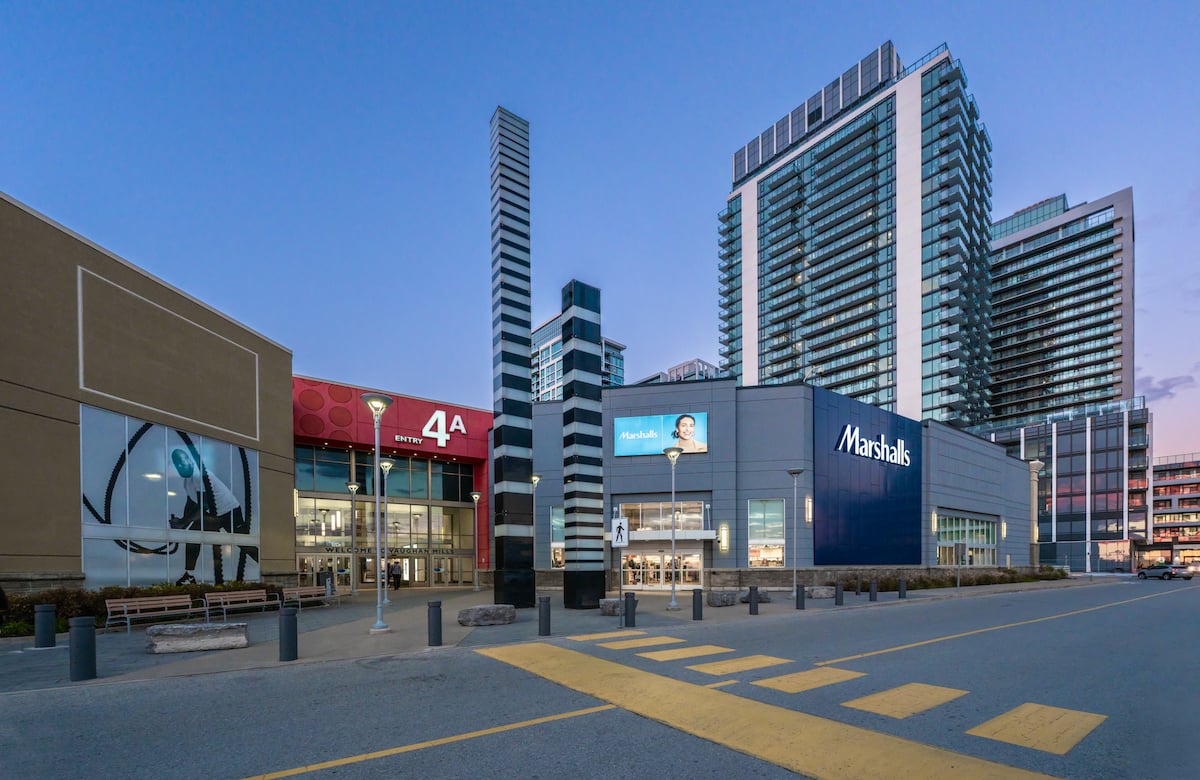
Swish & Strike continues daily through June 28 from noon to 7 p.m. in Vaughan Mills’ Event Court near Entry 4A. Kia Nurse’s public meet-and-greet takes place Friday, June 26, from 7:15 p.m. to 9 p.m.
More from Retail Insider:
- Toys “R” Us Brand and Stores Head to Different Owners in Canada
- Cineplex Opens Playdium at Vaughan Mills with Most Attractions in Canada
- Future of Toys “R” Us Stores in Canada Unclear as Operating Platform, Brand Split Among Buyers