Toronto retail leasing trends are increasingly being shaped by a shift toward food, fitness, and experience-driven concepts, as tenants compete for limited space across the city’s urban corridors.
New data from JLL shows that food and beverage operators led all leasing activity in the fourth quarter of 2025, accounting for eight transactions totaling more than 12,000 square feet. The continued dominance of the category reflects both strong consumer demand and the adaptability of food-based concepts in high-traffic, streetfront environments.
At the same time, a growing number of experiential and service-oriented tenants are reshaping the mix of retailers on Toronto’s key streets.
Experiential Retail Gains Momentum
Beyond traditional retail categories, entertainment and activity-based concepts are emerging as a notable force in the market.
JLL’s report highlights recent leases by tenants such as Hyve and Cardify on Queen Street West, signaling increased demand for spaces that offer interactive or experience-driven formats . These concepts are designed to draw customers through engagement rather than purely transactional shopping.
This shift reflects broader changes in consumer behaviour, where physical retail spaces are expected to provide social, recreational, or immersive experiences in addition to products.
For landlords, experiential tenants can also help drive traffic and extend dwell time, making them an increasingly attractive component of tenant mix strategies.
Smaller Spaces, Stronger Demand
One of the defining characteristics of current Toronto retail leasing trends is the strong demand for smaller-format spaces.

Brandon Gorman, Executive Vice President at JLL Canada, noted that much of the activity is concentrated in units under 2,000 square feet. These spaces are particularly well suited for food and beverage operators, boutique retailers, and service-based businesses.
“We’re seeing a lot of activity in the sub-2,000 square foot range,” he said. “If it’s smaller format space with guaranteed term, that’s where there’s a lot of demand.”
In many cases, these spaces are attracting multiple offers, particularly when landlords are able to provide longer lease terms. This has created a competitive environment where well-positioned units can lease quickly.
Leasing Quality Improves Along Yonge Street
Toronto’s busiest retail corridors are also seeing a shift in tenant quality as leasing conditions evolve.
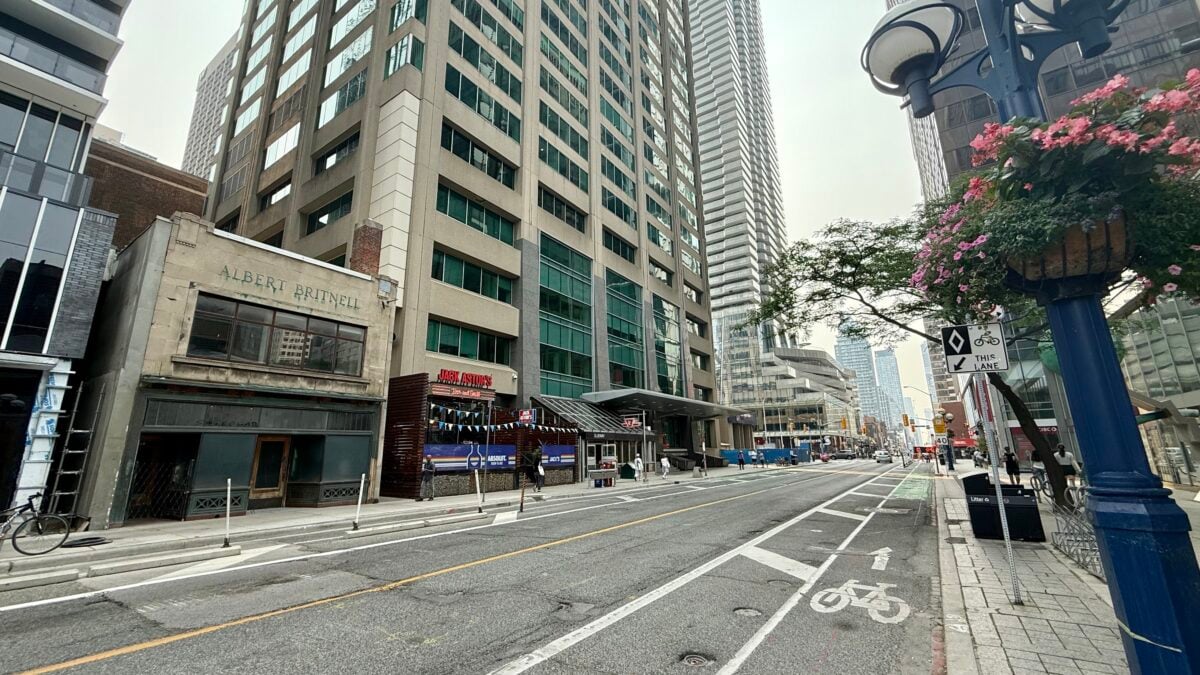
On Yonge Street, particularly between Gerrard and Bloor, the ability for landlords to offer longer lease terms has allowed for a transition toward stronger, more established tenants. In previous years, uncertainty around redevelopment timelines often limited lease durations, resulting in a higher proportion of short-term or lower-tier operators.
As those constraints ease, landlords are increasingly able to attract higher-quality tenants, which in turn supports higher rents and more stable long-term occupancy.
Food Anchors and Fitness Concepts Expand
Food and beverage continues to serve as a primary anchor for both streetfront retail and mixed-use developments.
Recent openings across Toronto, including major food hall concepts and quick-service expansions, reflect the category’s ability to generate consistent traffic. At the same time, fitness operators remain active in the market, particularly in dense urban areas where demand for wellness-oriented services remains strong.
These categories are often less dependent on traditional retail cycles and can perform well even during periods of economic uncertainty, making them attractive to both landlords and investors.
Market Conditions Support Continued Evolution
While Toronto retail leasing trends remain strong, the market is also entering a period of adjustment.
JLL notes that retail sales growth is expected to moderate in 2026 as consumer confidence softens and spending becomes more value-driven. However, the structural demand for well-located retail space is expected to remain intact.
The continued recovery of tourism, strong midweek office attendance, and population growth are all supporting long-term demand for physical retail environments.
A More Curated Retail Landscape
The result is a retail landscape that is becoming more curated and intentional. Rather than relying on traditional merchandising alone, landlords and tenants are increasingly focused on creating environments that blend food, service, and experience. This shift is particularly evident in Toronto’s urban corridors, where space is limited and competition is high.
As the market continues to evolve, Toronto retail leasing trends will likely be defined by flexibility, creativity, and a continued emphasis on experience-driven concepts that resonate with modern consumers.