Crombie Real Estate Investment Trust is continuing to secure sharply higher rents across its Canadian retail portfolio, providing further evidence of strong demand for well-located grocery-anchored space.
The Halifax-based landlord completed 121,000 square feet of lease renewals during the second quarter of 2026 at first-year rents 11.3 per cent above the expiring rates. When measured against the weighted average rent over the full term of the renewed leases, the increase was 12.7 per cent.
It marked Crombie’s seventh consecutive quarter of double-digit renewal rent growth. Committed occupancy remained near a record high at 97.5 per cent, while commercial same-asset property cash net operating income increased 3.2 per cent. Crombie also had approximately 160,000 square feet of committed space awaiting tenant possession through 2026 and 2027, at an average first-year rent of $28.45 per square foot.
The results reflect the structure of Crombie’s portfolio, which combines long-term supermarket leases with smaller units that return to market more frequently. Grocery stores provide stable traffic and income, while limited availability of surrounding retail space is allowing the landlord to capture higher rents as leases expire.
Grocery Anchors Support Retail Leasing Strength
Crombie’s properties are concentrated around grocery stores and other necessity-based uses that draw customers throughout the week. These anchors can be difficult to replicate, particularly in established communities where available development sites are limited and construction costs remain high.
“A grocery store brings people to the property week in, week out, and that steady traffic is what makes our space valuable to every retailer around it,” Mark Holly, president and chief executive officer of Crombie REIT, said during the company’s second-quarter earnings call.
Nearly 90 per cent of Crombie’s non-grocery units are approximately 15,000 square feet or smaller. Management said this is the format sought by a wide range of necessity-oriented retailers and service businesses, with relatively little new supply being created to meet that demand.
The grocery anchor generally remains in place under a long-term lease, giving the property a stable operating foundation. Smaller units surrounding it typically have shorter lease terms and return to market more frequently, allowing Crombie to reset rents as leases expire. The 11.3 per cent increase reported during the quarter applies to Crombie’s renewal activity across the portfolio, which was driven primarily by its retail properties, and does not represent an increase specifically on Sobeys or Safeway leases.
Rental growth has persisted across several reporting periods. Crombie said annual minimum rent has compounded at close to four per cent annually over the past three years, supported by renewals, contractual rent increases and new leasing.
The company reported similarly strong leasing in the first quarter of 2026, completing 232,000 square feet of renewals at first-year rents 12.1 per cent above expiring rates. Commercial same-asset property cash NOI increased 3.7 per cent during that period. For the full year, management expects same-property growth to reach or exceed Crombie’s long-term target range of two to three per cent.
The sustained renewal gains point to retailers holding onto productive locations, particularly where comparable replacement space is difficult to secure. For smaller retailers and service businesses, space next to a productive grocery store can provide recurring customer traffic that may be difficult to reproduce elsewhere in the same trade area.

Empire Relationship Shapes the Portfolio
Empire Company, the parent of Sobeys, is central to Crombie’s business model. It is the REIT’s largest tenant, a major unitholder and a strategic partner in the development and modernization of grocery properties across Canada.
Empire occupied approximately 12.1 million square feet at the end of the second quarter and accounted for 61.5 per cent of Crombie’s annual minimum rent. More than 90 per cent of Crombie’s retail properties are anchored by an Empire banner, while the weighted-average remaining lease term for Empire properties was approximately 9.7 years.
The relationship gives Crombie a large base of long-term grocery leases and allows the landlord and retailer to coordinate capital investments in stores and surrounding properties. It also creates substantial exposure to a single corporate group, making Crombie more concentrated than many diversified retail landlords.
Crombie invested $10.6 million during the second quarter through its modernization program with Empire. Across the first six months of 2026, the company invested approximately $17 million in 21 grocery-store modernization projects.
Under the program, Crombie provides capital for renovations and upgrades at grocery properties it owns, receiving a defined return on the investment and, in some cases, an extension of the grocery tenant’s lease. Management continues to target returns of approximately six to eight per cent across its non-major investment program, with grocery modernizations generally producing returns near the middle of that range.
Renovating an anchor store can also improve the wider property through an updated customer experience and additional traffic for surrounding tenants. Crombie has pointed to the Sobeys at Topsail Road Plaza in Newfoundland and Labrador as an example of its modernization program, while the addition of an A&W at a property in Spryfield, Nova Scotia, illustrates its strategy of creating additional commercial space at existing sites.
These investments allow Crombie to add value to properties already in the portfolio through store improvements, new pads and incremental retail space, generally on shorter timelines than major redevelopment.
Crombie Steps Up Acquisition Activity
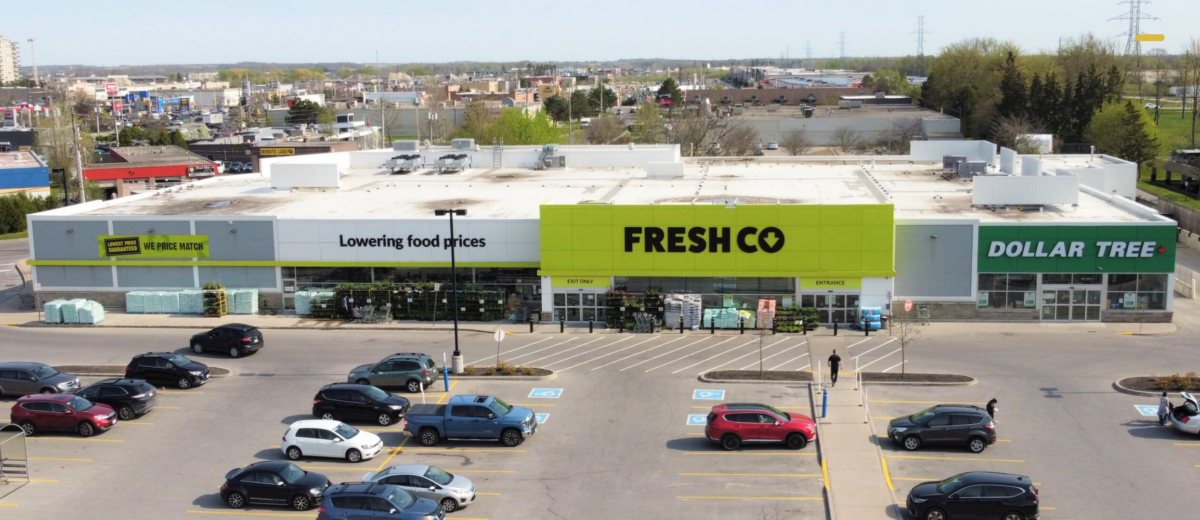
Crombie is reinforcing its necessity-based real estate strategy through acquisitions, completing close to $150 million in purchases during the first half of 2026. During the second quarter, the REIT acquired Ocean Park, an approximately 30,000-square-foot freestanding Safeway in Surrey, British Columbia, for $12.7 million, excluding transaction and closing costs.
The store is located within an established retail node serving the Ocean Park community. Holly described it as the type of necessity-based property Crombie wants to own for the long term, adding another stabilized grocery asset to the REIT’s Western Canadian portfolio.
Earlier in the year, Crombie acquired retail-related industrial properties in Whitby, Ontario, and Saint-Hubert, Quebec. The two properties total approximately 539,000 square feet and were purchased for a combined $129.8 million, expanding the REIT’s exposure to real estate supporting grocery and retail distribution.
Crombie also purchased additional land at an existing property in Moncton, New Brunswick, giving the company full ownership of a site previously divided among several parcels. After the quarter, it acquired two parcels in Windsor, Nova Scotia, where a commercial development application is being advanced.
Management said the acquisition market is presenting more opportunities than it did six months or a year ago, although the REIT continues to be selective.
“The team is very active,” Holly said. “We are seeing more opportunities at this point in the year than we would have seen six months ago or a year ago.”
Crombie is evaluating acquisitions based on their ability to contribute to property income, longer-term funds from operations growth and the quality of the overall portfolio. Over the past four years, the company has acquired approximately $375 million to $400 million of property, sold about $100 million and added roughly 500,000 square feet to its portfolio.
The REIT has sufficient balance-sheet capacity to continue making acquisitions without matching each purchase with a property sale. Management said dispositions remain available as a source of capital and could be used where proceeds can be redirected into properties with stronger long-term growth prospects.
Smaller Projects Take Priority
Crombie is currently directing more of its capital toward grocery modernizations, smaller intensification projects and income-producing acquisitions than major new developments. Approximately 29,000 square feet of development was underway across intensification projects and greenfield commercial builds during the second quarter. These investments can generally be completed more quickly than major developments and are expected to produce returns within Crombie’s six to eight per cent target range.
Management does not intend to begin another major development in the near term. Crombie continues to pursue zoning, development permits and other approvals for larger sites, preserving options to build, sell or partner on those properties as market conditions evolve.
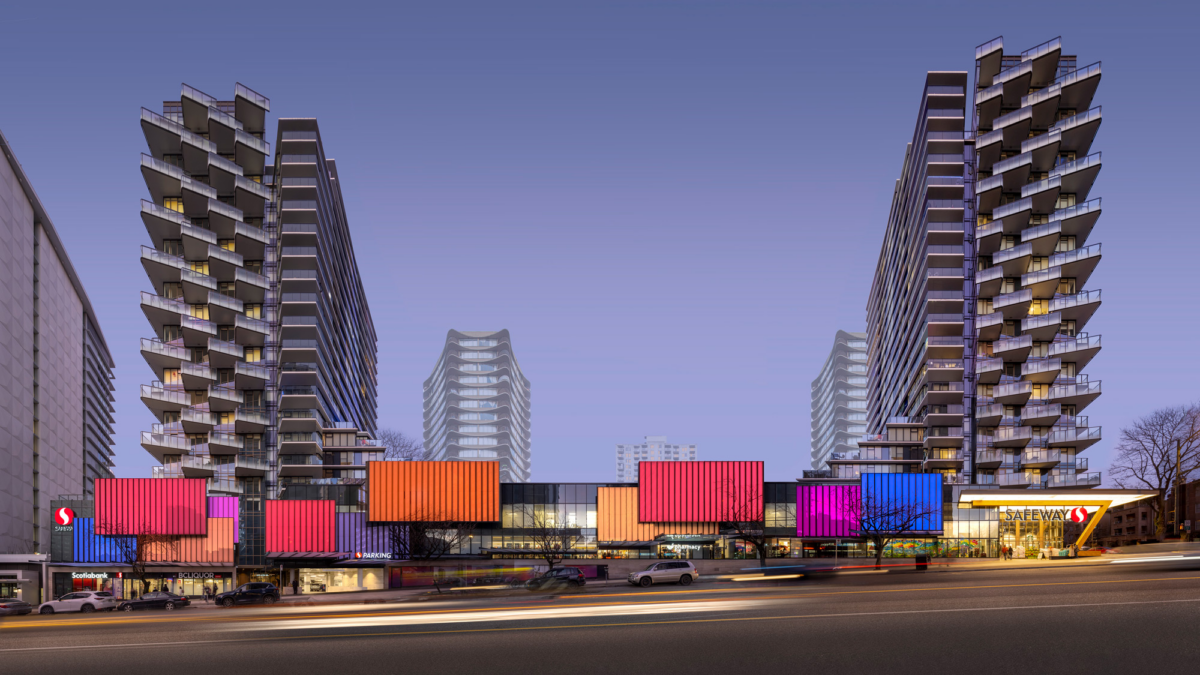
Crombie’s only active major development, the Marlstone residential project in Halifax, reached substantial completion during the quarter. The 291-unit rental building is part of the Scotia Square complex and was more than 30 per cent leased by the end of July, with management describing July as its strongest leasing month to date.
Achieved rents at the Marlstone were above the underwriting established when the project was approved in 2023. Stabilization remains expected during the second half of 2027, with a projected yield on cost of between 4.5 and 5.5 per cent.
With the Halifax development substantially complete, Crombie’s near-term capital priorities are weighted toward investments capable of contributing to property income on shorter timelines, while larger development sites continue moving through the approval process.
Retail Leasing Strength Extends Beyond Crombie
Crombie’s performance comes as other major Canadian retail landlords report similarly high occupancy and strong renewal activity.
Choice Properties REIT, which owns a large portfolio of Loblaw-anchored properties, reported retail occupancy of 97.4 per cent during the second quarter. The landlord also renewed 50 Loblaw leases covering approximately 3.6 million square feet at an average increase of 8.8 per cent.
RioCan REIT has also reported high retail occupancy and substantial leasing spreads across its more urban portfolio, supported by sustained tenant demand and limited additions of competing retail space.
The portfolios differ considerably. Crombie and Choice have deeper exposure to grocery-anchored properties, while RioCan is more heavily concentrated in major urban markets. The companies also calculate and disclose leasing spreads differently, limiting direct comparisons between individual percentages.
Across these portfolios, productive Canadian retail properties are operating at high occupancy while landlords continue to secure higher rents as leases expire. Conditions vary by property and market, with the strongest demand concentrated in established locations with productive anchors, recurring traffic and space that tenants cannot readily replace.
Crombie is heavily exposed to that segment of the market. Its grocery anchors provide recurring customer traffic and long lease terms, while smaller surrounding units create more frequent opportunities to capture rental growth.
As Crombie modernizes grocery stores, adds commercial space and selectively acquires necessity-based properties, the REIT is directing more capital toward a segment of Canadian retail real estate where limited new supply and high occupancy continue to support landlord pricing power.