

Once again, it took the media to remind us that food fraud is not a relic of the past—it is very much a present-day risk embedded in our food system. After the maple syrup scandal, CBC News has uncovered yet another troubling issue: inaccurate scales at the meat counter. This is not anecdotal noise. It is a structural concern. When consumers pay for more than they actually receive, the consequence is not just irritation—it is a silent erosion of trust in one of the most expensive categories in the grocery store.
The implications are far from trivial. Canada counts roughly 16 million households, each spending over $16,000 annually on food. If about 20% of that goes to meat, we are looking at a $50-billion market. The discrepancies identified suggest overcharges ranging between 4% and 11% on affected packages. If this were systemic—which it likely is not—the exposure would be staggering. But even under conservative assumptions, where only 10% to 25% of transactions are impacted, the national cost still ranges from roughly $200 million to $1.4 billion annually. That is not statistical noise; it is a hidden tax on consumers—one that never shows up in inflation data, yet directly affects household budgets at a time when affordability is already stretched.
But this raises a far more uncomfortable question: where are the inspectors? Where are the regulators? Canada does not lack oversight bodies. Measurement Canada is mandated to ensure accuracy in trade measurement, while the Canadian Food Inspection Agency plays a broader role in food integrity and compliance. Yet, when it takes investigative journalism to uncover issues of this magnitude—twice in two years—we have to question whether the system is adequately resourced, sufficiently proactive, or simply too reactive.
This concern is amplified by recent signals that the federal government is cutting inspector positions within the CFIA. At a time when scrutiny should be intensifying, capacity may in fact be shrinking. We do not yet know the full impact of these reductions, but the timing is difficult to ignore. Fewer inspectors could mean fewer audits, slower response times, and ultimately weaker surveillance across the food system. In other words, the very moment Canadians are demanding more oversight may coincide with a diminished ability to deliver it.
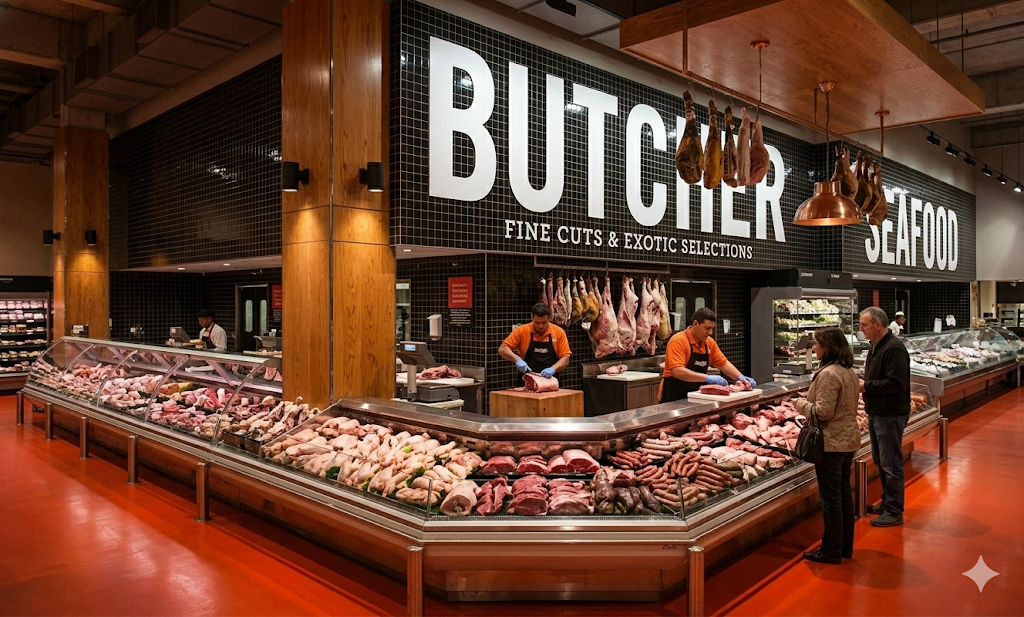
What is perhaps more concerning is how normalized these discrepancies appear to be. Social media is now filled with consumer testimonies showing mismatches between labelled and actual weights. Years ago, such incidents would have been dismissed as isolated errors. Today, in a high-inflation environment with heightened consumer awareness, they signal something deeper: a lack of rigour. Whether these inaccuracies stem from malfunctioning equipment, inadequate calibration, or poor staff training is almost secondary. The outcome is the same—consumers are paying more than they should, and confidence in the system is weakened.
Some grocers have issued apologies, but apologies alone are insufficient. This is not about intent; it is about accountability. When the integrity of measurement is compromised, so too is the integrity of pricing. And in a country where food affordability is already under intense pressure, even small discrepancies compound into meaningful financial burdens for households.
Consumers, for their part, are not powerless. A simple kitchen scale—costing less than $20—can act as a first line of verification. If discrepancies are found, they should be documented and brought to store management. Under the Scanner Price Accuracy Code, consumers may be entitled to compensation—typically up to $10, or $15 in Quebec. Reporting issues to regulators is also essential, even if enforcement can be slow. Increasingly, however, consumers are turning to public platforms—because reputational damage often travels faster than regulatory action.
Ultimately, grocers must recognize that having a “thumb on the scale,” whether intentional or not, is indefensible. But regulators must also accept their share of responsibility. Oversight cannot rely on whistleblowers and journalists to function effectively. Precision in measurement is not optional in food retail—it is foundational. And right now, Canadians have every reason to wonder whether the system designed to protect them is weighing in at all.







“… they signal something deeper: a lack of rigour.”. How about out-and-out fraudulent intent?