SalonCentric Canada, a subsidiary of L’Oréal Canada, has signed a definitive agreement to acquire the Canadian assets of Quebec-based distributor Cantin Beauté, expanding its reach in the professional salon market.
The deal will add 25 professional-only stores and 132 employees to SalonCentric Canada’s operations, strengthening L’Oréal Canada’s distribution network in Quebec and broadening access to professional salon products across the country.
The acquisition marks a strategic move by L’Oréal Canada to deepen its presence in the professional haircare segment through SalonCentric Canada, which has operated in the Canadian market since 2023. By integrating Cantin Beauté’s established footprint and relationships, the company aims to increase its service capacity to salons and stylists.
“With more than 125,000 stylists across Canada, the professional hair salon market is highly dynamic,” said Stéphane Bérubé, President and CEO of L’Oréal Canada. “The expansion of SalonCentric demonstrates our commitment to stylists by providing them with an unparalleled selection of products, and above all, exceptional service.”
Stéphane Bérubé
Cantin Beauté, headquartered in Saint-Augustin-de-Desmaures, Que., has operated for more than 70 years and is considered a significant distributor of professional beauty products in the province. The company’s network includes 25 stores and a sales force supporting salon professionals across Quebec.
L’Oréal Canada said the acquisition will allow its Professional Products Division to build on complementary capabilities between the two businesses.
Julien Descoteaux
“The arrival of Cantin Beauté will enable the Professional Products Division (PPD) of L’Oréal Canada to leverage the complementarity of our strengths, particularly the depth of our offering,” said Julien Descoteaux, President of the Professional Products Division of L’Oréal Canada. “This partnership allows us to reach a completely new strategic level, in line with the Professional Products Division’s commitment to offer the best products, resources, and services to meet the constantly evolving needs of Canadian stylists.”
SalonCentric Canada currently operates 30 professional-only stores and employs 42 sales consultants. The addition of Cantin Beauté’s retail and distribution network is expected to significantly expand its operational scale, particularly in Quebec, where SalonCentric has been building its presence.
“We are delighted to welcome Cantin Beauté into the SalonCentric Canada family,” said Fabrice Fourteau, President of SalonCentric Canada. “Their commitment to the professional salon industry, and more specifically their exceptional customer service, aligns perfectly with SalonCentric’s mission to provide stylists and salon owners with everything they need to grow their businesses and succeed. This includes offering dynamic and innovative brands and products, as well as digital innovations that inspire and support stylists.”
Cantin Beauté has undergone several changes in recent years, including the acquisition of Montreal-based COSBEC in 2017 and a move to new facilities in 2020 aimed at improving service capabilities. The company has been led by Éric Bouchard since 2010.
Fabrice Fourteau
Bouchard said the agreement represents a significant shift for the business as it joins a larger global organization.
Éric Bouchard
“This alliance with SalonCentric Canada marks a defining turning point for Cantin Beauté,” said Éric Bouchard, President of Cantin Beauté. “I am proud to join a global leader in the professional hair industry to map out our future path together, combining our strengths with SalonCentric Canada and writing the next chapter of the hair industry together.”
L’Oréal Canada, established in 1958, operates a head office, manufacturing plant and distribution centre in Montreal, along with a sales office in Toronto. The company employs more than 2,000 people in Canada and distributes products across multiple channels, including salons, retail stores and e-commerce platforms.
The transaction is expected to reinforce SalonCentric Canada’s role as a key distribution arm for L’Oréal’s professional products, positioning the combined operations to serve a broader base of salon professionals nationwide.
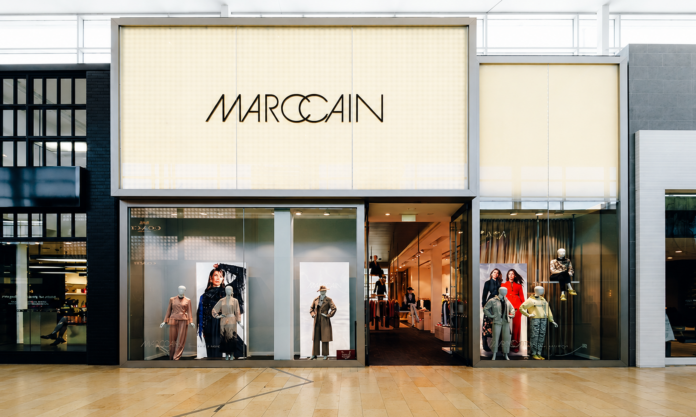
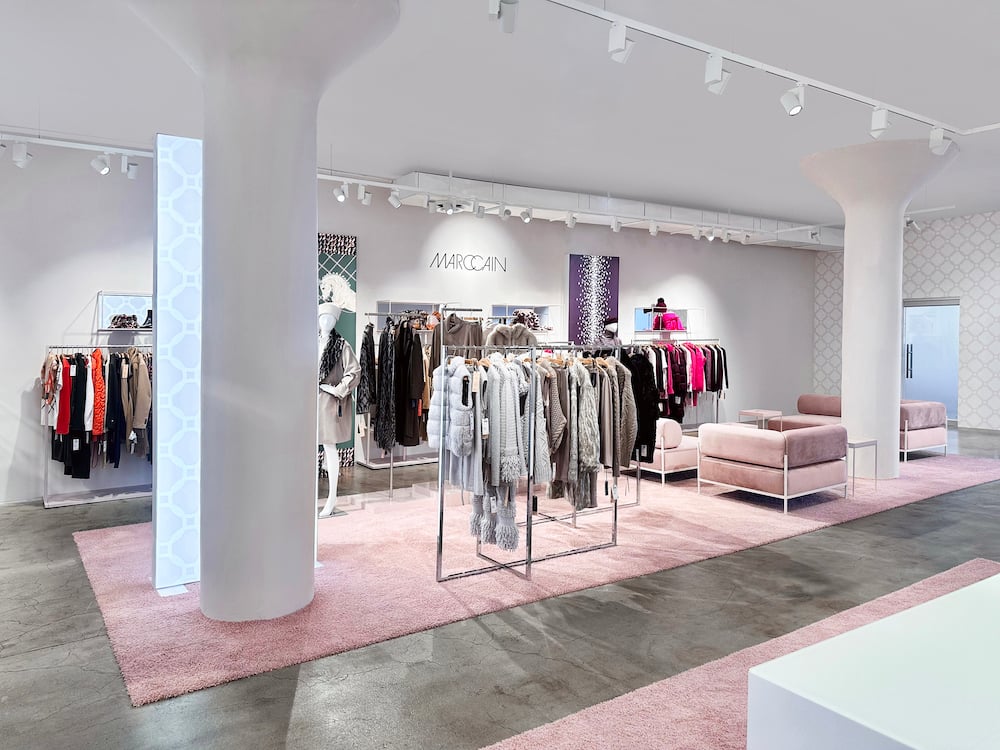
Marc Cain at Square One in Mississauga. Photo: Square One
German fashion brand Marc Cain is positioning for a broader Canadian expansion as Jessica R’Bibo, President of Marc Cain Canada and North America, leads a new North American growth strategy centred on premium shopping centres, elevated customer experiences, and the continued rise of understated luxury fashion.
R’Bibo joined Marc Cain earlier this year following a 23-year career with Michael Kors and was quickly promoted to oversee the company’s Canadian and U.S. operations across both retail and wholesale channels. Her appointment comes at a time when many premium fashion brands are reassessing how consumers shop, where physical stores matter most, and how luxury customers increasingly gravitate toward quality and longevity over trend-driven dressing.
Jessica R’Bibo, President of Marc Cain Canada and North America
“The customer today is shopping much more intentionally,” said R’Bibo. “She’s looking for quality, craftsmanship, and pieces that feel refined without being overly logo-driven.”
Founded in Germany more than 50 years ago, Marc Cain has developed an international following through collections rooted in European craftsmanship, sportive leisurewear, knitwear, outerwear, and elevated everyday dressing. The brand has built a loyal customer following through its combination of refined design, quality fabrication, and a distinctly European fashion sensibility. Marc Cain currently operates seven Canadian stores, including a recently opened location at Royalmount in Montreal, alongside one outlet store and a substantial wholesale business through independent fashion retailers.
Ontario and Western Canada Lead the Next Phase of Growth
R’Bibo said Marc Cain’s next phase of Canadian expansion will focus primarily on Ontario and Western Canada, with Vancouver representing one of the company’s most significant opportunities.
“There’s tremendous opportunity in Western Canada,” she said. “Vancouver remains a very important market for us, and Ontario continues to be a major focus as well.”
The company continues to evaluate additional locations across the country. Rather than expanding aggressively, R’Bibo said the company is taking a highly disciplined approach centred on demographics, lifestyle patterns, and long-term brand positioning.
“I like to understand a market before making decisions,” she said. “You need to study how people shop, what their lifestyle looks like, and what they expect from a premium fashion brand.”
Her long-term vision includes growing Marc Cain to approximately 15 Canadian stores while simultaneously expanding the brand’s U.S. footprint. Luc Lavigne of brokerage Oberfeld Snowcap is working with Marc Cain on the expansion.
Top Shopping Centres Remain Essential in Canada
While some luxury brands continue experimenting with high-profile street-front retail, R’Bibo believes Canada remains fundamentally driven by dominant enclosed shopping centres that concentrate affluent consumers and destination retail.
“Top shopping centres continue to matter enormously in Canada,” she said. “Properties like Yorkdale, Sherway, Pacific Centre, and Oakridge attract the customer we’re targeting.”
She said accessibility, parking convenience, climate protection, and concentrated retail density continue to make leading enclosed malls especially important for premium fashion retailers operating in Canadian markets.
The strategy also reflects broader shifts taking place across Canadian retail real estate. As traditional department stores continue to disappear, premium brands are becoming increasingly selective about physical locations while placing greater emphasis on direct customer relationships and experiential retail environments.
Marc Cain stores generally perform best within the 1,800-to-2,100-square-foot range, according to R’Bibo, allowing the company to fully present its broader lifestyle assortment spanning ready-to-wear apparel, handbags, footwear, outerwear, scarves, and accessories.
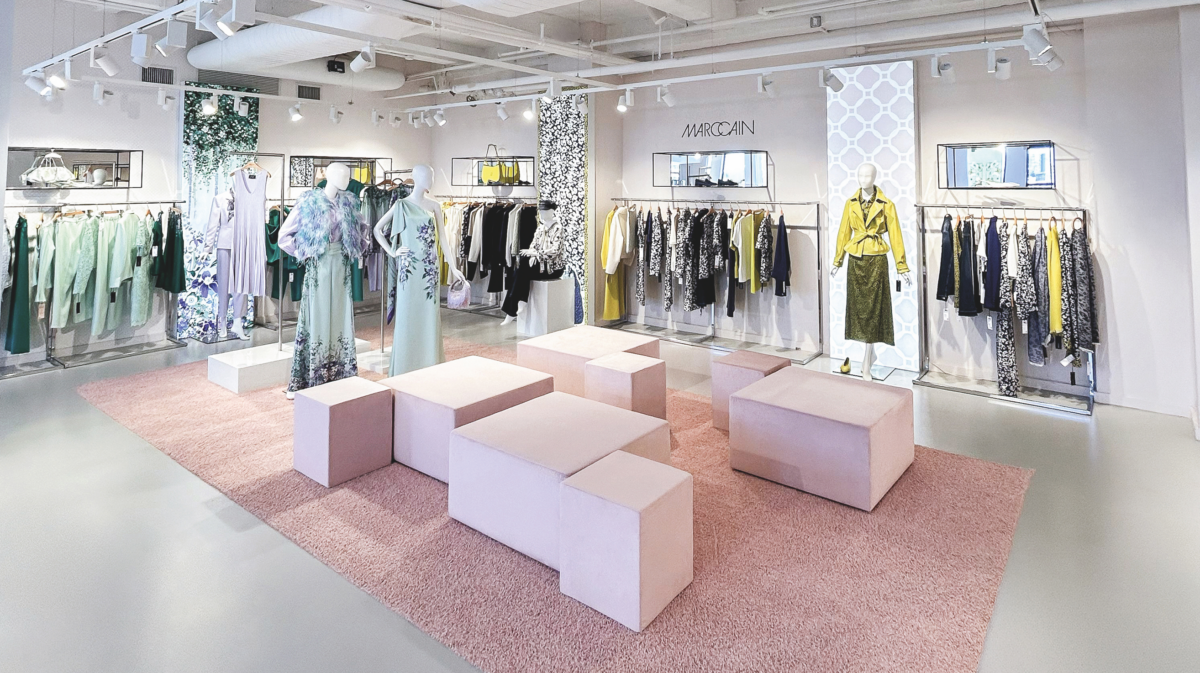
Marc Cain showroom in New York City. Photo: Marc Cain
Understated Luxury Continues to Shape Fashion Spending
R’Bibo describes Marc Cain’s core customer as a professional woman, generally aged 40 and older, who values tailoring, consistency, craftsmanship, and sophisticated wardrobe investment pieces over overt branding or fast-moving fashion cycles.
“She wants an elevated wardrobe that feels sophisticated, wearable, and timeless,” said R’Bibo. “Our customer appreciates exceptional fabrication and pieces that can remain relevant beyond one season.”
That positioning aligns closely with growing demand for understated luxury, a shift that has seen many consumers gravitate toward refined silhouettes, exceptional quality, and longer-lasting wardrobe investments over highly logo-driven fashion.
Marc Cain’s European heritage remains central to that identity. The company continues to manufacture knitwear in Germany through its own production facilities, something R’Bibo said continues to resonate strongly with North American consumers seeking authenticity and craftsmanship.
“There’s trust associated with European craftsmanship,” she said. “Customers appreciate understanding where the product is made and the quality behind it.”
Outerwear and Knitwear Anchor the Canadian Business
Although Marc Cain is widely recognized for women’s apparel, the company has evolved into a broader lifestyle brand encompassing multiple categories.
Outerwear and knitwear remain cornerstones of the Canadian business, driven both by climate and by the company’s longstanding expertise in those segments.
“Canada and Germany have very similar climates, and Marc Cain has always been exceptionally strong in outerwear and knitwear,” said R’Bibo. “Those categories continue to resonate very strongly with Canadian customers.”
The company has also expanded its Glam division, focused on elevated occasion dressing and sophisticated after-five fashion, reflecting renewed consumer interest in special-event and evening wardrobes.
“There’s renewed interest in dressing up again,” she said. “Customers are looking for refined pieces that work for dinners, events, and special occasions.”
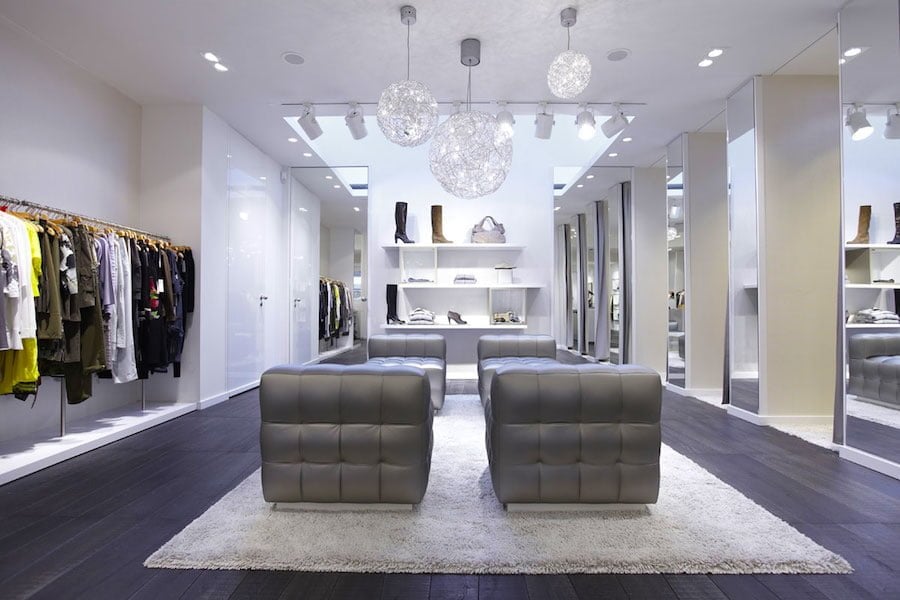
Marc Cain Store (PHOTO: WWW.BUEHLER-INNENAUSBAU.DE)
One of the operational approaches R’Bibo emphasized is Marc Cain’s localized merchandising strategy, which gives individual stores greater flexibility in tailoring assortments to local clientele.
Rather than standardizing assortments nationally, store managers actively participate in buying decisions and help shape selections based on regional market preferences.
“What works in one city may not work in another,” said R’Bibo. “Our teams know their clients very well, and assortments are built around those local needs.”
That flexibility allows stores to respond more directly to regional differences in climate, colour preferences, sizing, lifestyle, and professional dressing expectations.
R’Bibo said those distinctions are particularly important in Canada, where fashion preferences can vary considerably between Montreal, Ottawa, Toronto, and Vancouver.
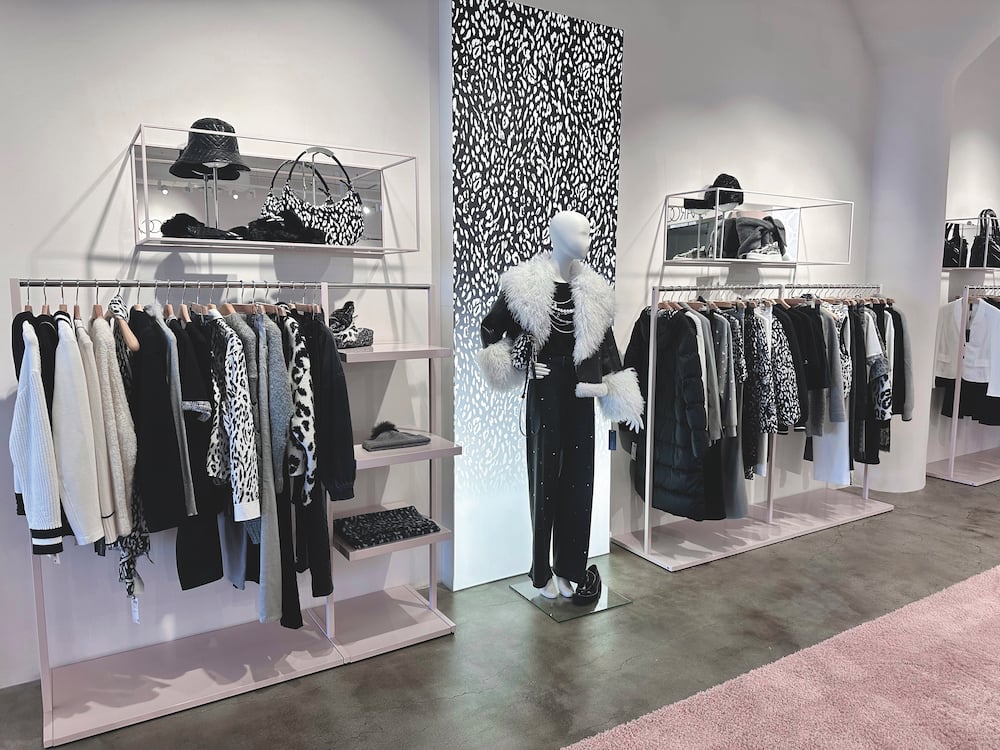
Display in the Marc Cain showroom in Los Angeles. Photo: Marc Cain
Independent Retailers Continue to Play a Key Role
Even as Marc Cain expands its direct retail footprint, independent boutiques remain central to the company’s Canadian strategy.
“There’s a very strong wholesale business in Canada, particularly in Ontario and Quebec,” said R’Bibo. “Many of those retailers have carried the brand for decades.”
Retail currently represents roughly 35 percent of the Canadian business, with wholesale accounting for the balance. R’Bibo said preserving that balance remains an important priority moving forward.
“Our wholesale partners in Canada and the U.S. are extremely important to us, and we highly value those long-standing relationships,” she said. “We want to continue growing together while listening closely to the evolving demands and expectations of today’s consumer.”
The continued importance of wholesale also reflects the structure of Canada’s premium fashion market, where independent boutiques often remain critical discovery channels for European luxury and contemporary brands.
Personalized Service and Experiential Retail Regaining Importance
R’Bibo believes premium retail is increasingly shifting back toward personalization, styling, and experiential shopping following years of digital acceleration.
She sees opportunity in expanding trunk shows, private shopping events, styling appointments, and customer-focused retail experiences designed to strengthen loyalty and long-term relationships.
“Customers want service and they want an experience,” she said. “They want to feel welcomed, understood, and taken care of.”
That relationship frequently extends across multiple product categories, with Marc Cain shoppers often purchasing complete looks rather than individual items.
“They’re building wardrobes,” said R’Bibo. “They want guidance and confidence in what they’re buying.”
While e-commerce continues to grow and now represents roughly 20 percent of sales, she said physical retail remains essential because stores allow customers to engage directly with fabrication, fit, styling, and the broader brand environment.
Marc Cain showroom in Los Angeles. Photo: Marc Cain
Building Marc Cain’s Next Chapter in North America
Since joining Marc Cain earlier this year, R’Bibo has quickly emerged as one of the executives shaping the brand’s next phase of North American growth.
The company currently operates showrooms in Montreal, New York, and Los Angeles while also evaluating additional U.S. opportunities in markets such as Dallas.
For R’Bibo, the path forward centres on disciplined expansion, strong retail partnerships, elevated service, and maintaining a clear luxury positioning within an evolving fashion landscape.
“If you have the right product and you truly understand your client, there’s tremendous opportunity,” she said.
As consumers continue gravitating toward quality, craftsmanship, personalized service, and more intentional forms of luxury spending, Marc Cain appears well positioned to expand its presence within Canada’s evolving market for understated luxury fashion.
Welcome to the Daily Synopsis by Retail Insider. We published 11 articles covering significant updates in Canadian retail across various sectors.
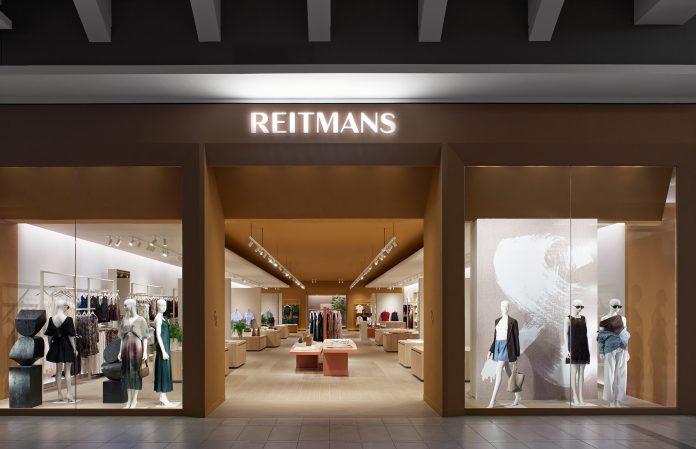
Reitmans recorded modest revenue growth of 0.8% in Q1 2026 driven by retail stores despite fewer locations, alongside improved adjusted EBITDA and strategic workforce reductions. Groupe Dynamite also posted a 37% revenue increase with a four-year high gross margin of 67.4% in Q1 2026, supported by new stores in premium locations and strong sales per square foot performance. Meanwhile, Marc Cain is pursuing careful Canadian expansion under new leadership focusing on premium malls and emphasizing quality craftsmanship and personalized service.
Zellers is reviving nostalgic retail by introducing a mobile diner and kiddie rides ahead of its Toronto store opening, expanding its experiential retail approach across Canada. The Competition Bureau is also investigating factors affecting food affordability to guide policy, while Foodtastic is growing its portfolio by acquiring Kinton Ramen to expand Asian dining. Additional coverage includes consumer spending patterns amid rising grocery costs and evolving AI shopping preferences influencing retail strategies.
Food prices have risen sharply in recent years, putting significant pressure on Canadian households. While many factors influence food prices, competition plays an important role in keeping prices in check and giving Canadians more choice, it explained.
The Bureau said its examination will look for potential competition issues in three key areas:
Production and processing, including how food is grown, caught, transformed and packaged;
Transportation and distribution, including how food moves to retailers across Canada; and
Retail pricing practices, including loyalty programs, pricing algorithms, shrinkflation and skimpflation.
The Bureau said it is seeking input from Canadians and organizations with experience in the food supply chain. They are invited to share their views through an online form by July 31. The Bureau said it will also meet with groups and hold roundtable discussions in the coming months to determine where competition is not working well, where there are barriers, and what could help improve competition.
The Bureau added it will publish a final report in spring 2027. The report will share findings and make recommendations to governments on how competition can be strengthened across the food supply chain.
Dr. Sylvain Charlebois
“If the Competition Bureau wants to understand why food affordability remains a challenge in Canada, it needs to look beyond grocery store shelves. The biggest barriers to competition often exist upstream—in processing, distribution, transportation, and even local property controls that prevent new food retailers from entering markets. This broader examination is long overdue,” said Dr. Sylvain Charlebois is Senior Director of the Agri-Foods Analytics Lab at Dalhousie University in Halifax.
“Competition matters, but Canadians should not expect a silver bullet. Food prices are influenced by labour costs, regulations, productivity, currency fluctuations, climate events, and global market conditions. More competition can help, but affordability ultimately depends on building a more productive and competitive food system from farm to fork.
“The Bureau’s 2023 study concluded that Canada needs more grocery competition. This new examination recognizes an important reality: the problem isn’t just retail concentration. Canada’s food affordability challenge is rooted in an entire supply chain that has become less competitive over time.”
“The cost of food matters to all Canadians, and strong competition can help keep prices in check. Our examination builds on our earlier work in the retail grocery sector and will look at all parts of the food supply chain. If you have experience in any sector along that supply chain, we want to hear from you. Your input will help us find solutions that support competition and affordability,” said Jeanne Pratt, Interim Commissioner of Competition.
“This is not a market study. It is a broader approach to understand where engagement from the Bureau is needed going forward, and where policymakers may be able to take action,” it said.
“The Bureau does not set prices. We examine whether markets are working competitively and whether barriers may be limiting competition.
“This examination is not a law enforcement investigation and is not about any specific complaint or allegation of wrongdoing. However, if the Bureau finds evidence of anti-competitive behaviour, it will investigate and take appropriate action.”
Bruce Winder, a retail analyst, said: “From what I understand, the retail part of the Canadian grocery industry was already studied from a competition perspective at length in 2023. Studying it again may waste resources and come off as performative.
“However, I do think that the upstream parts of the sector need to be reviewed. These parts include suppliers such as large global consumer packaged goods (CPG) firms. There has been significant consolidation on the vendor side over the last 20 years. Just a handful of food companies control most of the international market. These large global CPG firms generate significantly more margin than Canadian grocers. But the Bureau should also examine production, processing, transportation and distribution as well.
Bruce Winder
“If one does reflect on the retail side, Canada is one of a few markets where the big global grocery retailers (Walmart and Costco) already own about 1/3 of the market and have been growing. The retail side has razor thin margins (3-4% net ) and is already incredibly competitive. I think as a country we want to avoid a race to the bottom where innovation and employment would suffer.
“I have written much about surveillance pricing recently, especially in the grocery sector. Any regulation would be a solution looking for a problem. The big three Canadian grocers have indicated publicly that they are not using it. Consumers would quickly find out and punish any offending grocer as a result. We also want to be careful we don’t get rid of loyalty programs and other incentives as a result of any proposed government intervention.”
“In Toronto, it’s nearly 25%. While those statistics are concerning, they do not automatically point to a single cause, nor do they necessarily indicate a lack of competition among grocers or suppliers,” he said.
“It is prudent for the Competition Bureau to examine whether competitive factors are affecting food affordability and whether consumers are receiving the full benefits of a competitive marketplace.
“Food affordability is influenced by a complex ecosystem of factors, including inflation, supply chains, labour costs, transportation, energy, taxation, consumer demand, and market competition. Since COVID, many of these cost pressures have created affordability challenges for households across the country.
“One area that warrants closer examination is how technology, data analytics, and loyalty programs influence pricing strategies and consumer purchasing behaviour. There is nothing inherently wrong with targeted promotions or personalized offers; they can create significant value for consumers and retailers alike. Yet, one question is: Are sophisticated tools like AI inadvertently changing how different customer segments experience food affordability?
“Whatever the findings, food affordability is ultimately an economic issue with multiple factors beyond a grocer’s control.”
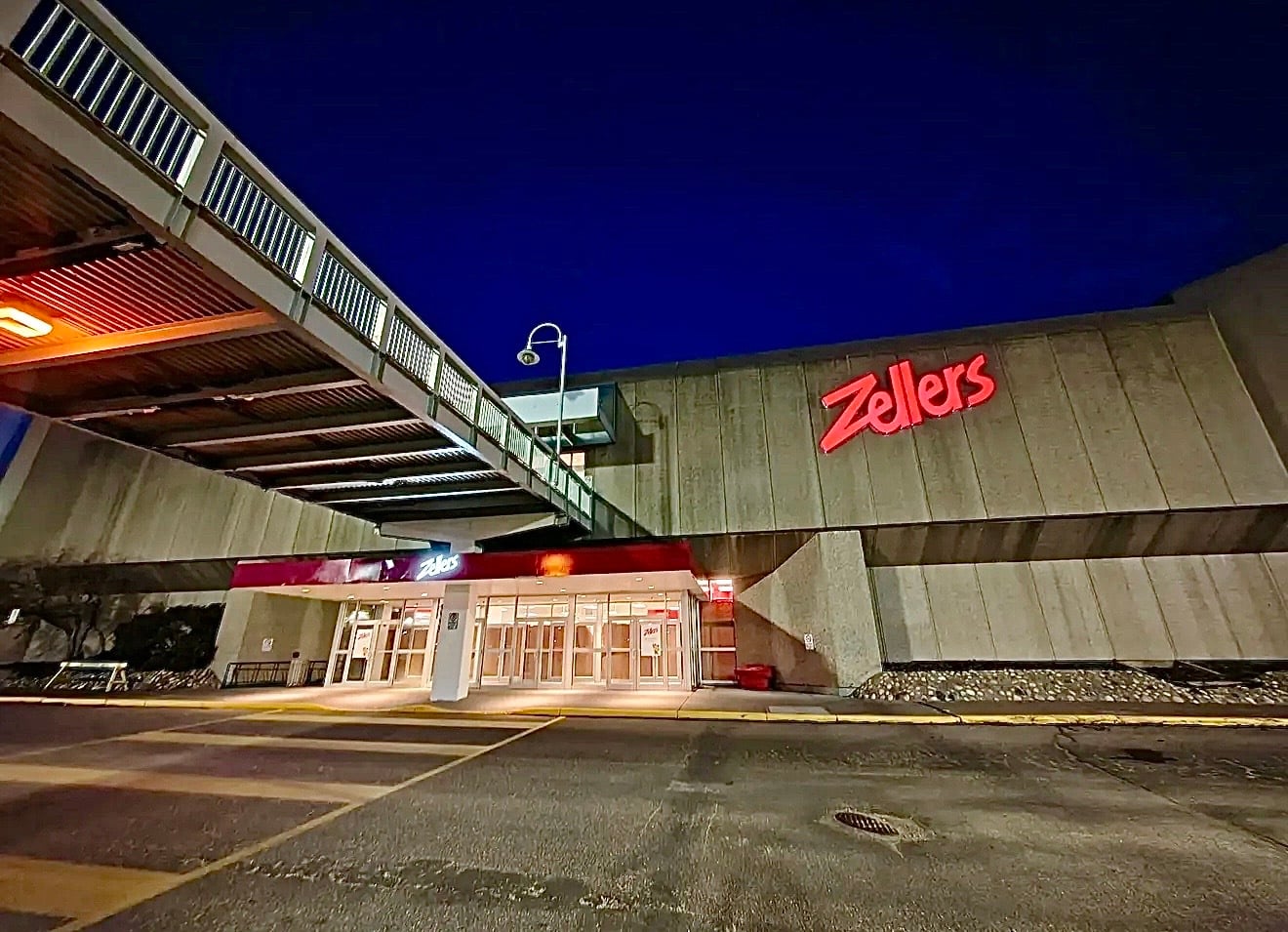
Zellers store at 80 Orfus Road in Toronto. Photo supplied
Since Zellers returned to the Canadian retail landscape, two requests have surfaced repeatedly from customers: bring back the diner and bring back the kiddie rides.
As the retailer prepares to open its new standalone Toronto store at 80 Orfus Road on Thursday June 18, both are making a comeback in new forms as the company continues to refine a retail concept shaped by customer feedback and positioned for expansion across Canada.
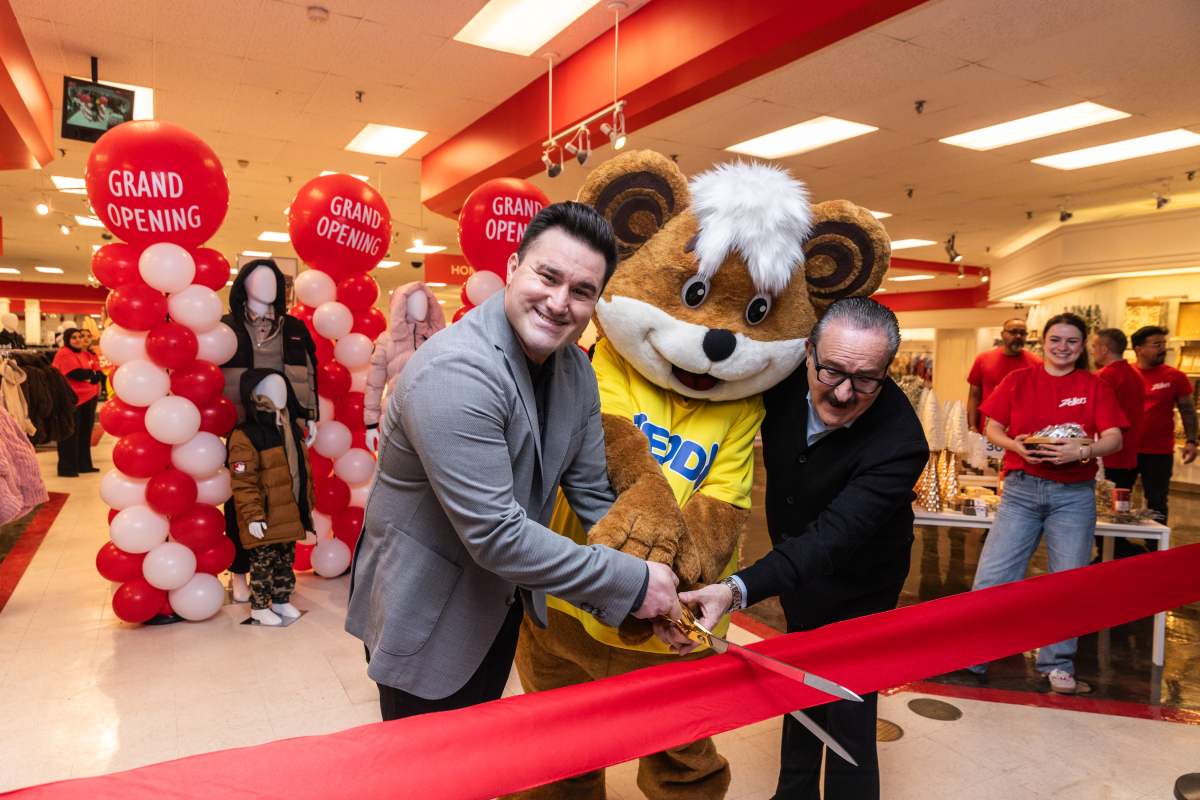
The 25,000-square-foot location will feature a new Zellers Diner on Wheels serving diner-inspired favourites, a kiddie ride reminiscent of those found in legacy Zellers stores, complimentary Zellers Ice Pops, collectible giveaways and a 25-foot inflatable Zeddy Bear outside the building.
According to Zellers Chief Operating Officer Joey Benitah, customer feedback continues to play an important role in shaping the evolution of the retailer’s standalone-store concept.
“We’ve always said we’ll be listening closely and adapting quickly, and that’s exactly what we’re doing,” he said in an exclusive interview with Retail Insider.
Joey Benitah, Zeddy Mascot, Isaac Benitah, at the grand opening of Zellers at Londonderry Mall in Edmonton. Photo supplied
The Diner Returns in a New Form
Among the most frequently discussed aspects of the Zellers brand has been the fate of its iconic diner.
The in-store restaurants became a memorable part of family shopping trips for generations of Canadians. Long after the original Zellers chain disappeared, consumers continued to discuss favourite menu items and speculate about whether the diner experience might one day return. Similar conversations resurfaced when Hudson’s Bay reintroduced Zellers through its shop-in-shop concept in 2023.
Benitah said discussion about the diner has remained remarkably consistent throughout the brand’s revival, reflecting the lasting connection many Canadians still have with the restaurant experience.
“The diner has come up quite frequently,” he said.
While Zellers is not currently planning to introduce permanent restaurants, the company is launching a mobile diner concept that will debut during the Toronto opening before travelling to future store openings across Canada.
The Zellers Diner on Wheels will serve menu items inspired by the retailer’s restaurant heritage, including the Big Z Burger, Hot Gravy Chicken Sandwich, Chicken Fingers, Grilled Cheese, and Gravy and Fries.
Benitah said the company’s focus remains on building a sustainable retail concept centred on its core merchandise categories, though he acknowledged that future possibilities remain open.
“In terms of a full-fledged diner, not the focus right now, but you never know in the future,” he said.
The food truck will operate throughout the opening weekend and is expected to become a regular feature at future store launches. Toronto is the first of two standalone Ontario openings announced by the retailer, with a location at Tecumseh Mall in Windsor expected to open later this summer. The Diner on Wheels is also expected to appear at future store openings.
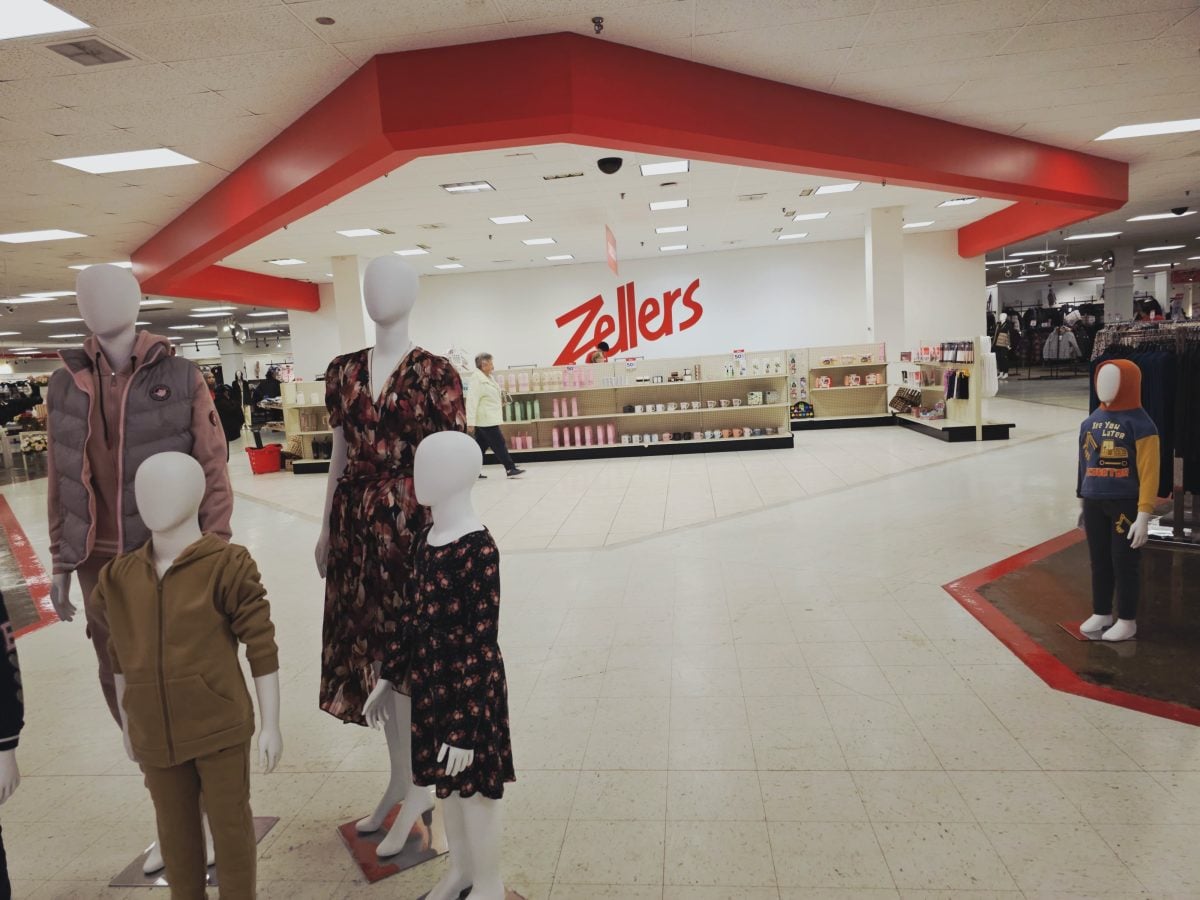
Zellers at Londonderry Mall in Edmonton. Photo: Christa Patterson
Bringing Back Family Experiences
The diner is not the only familiar experience returning.
The Toronto store will also feature a new kiddie ride, reviving a tradition that many Canadians remember from visits to Zellers stores decades ago. The ride, a red sports car with side-by-side seating, is the first in what the company says will be a broader rollout of kiddie rides across future locations.
Benitah said the rides are intended to bring back a small piece of the family-oriented shopping experience that many customers remember.
“I think it’s going to be tons of fun and bring back that little hit of nostalgia,” he said.
Outside the Toronto store, customers will be greeted by a 25-foot inflatable Zeddy Bear, creating a highly visible landmark ahead of opening day and serving as a tribute to one of Canada’s most recognizable retail mascots.
The opening celebrations will also include complimentary Zellers Ice Pops, water bottles and collectible giveaways while supplies last, including exclusive Zeddy keychains for the first customers through the doors.
Together, the activations represent an effort to reconnect shoppers with some of the experiences that helped define the Zellers brand while introducing younger consumers to a retailer that many know only through stories from parents and grandparents.
Customer Feedback Continues to Shape Zellers 3.0
The return of diner-inspired food and kiddie rides may be the most visible examples of customer feedback shaping the business, but they are far from the only ones.
Benitah said the company continues to adjust merchandise categories, brand partnerships and in-store experiences based on customer response.
One example is the toy category.
When the standalone concept was first being developed, Zellers was cautious about devoting significant space to toys because of the intense competition within the sector. Customer behaviour at the retailer’s first standalone location in Edmonton quickly changed that thinking.
“Toys was something that we weren’t so committed to initially, and we were hesitant because it’s a very challenging, very competitive space,” Benitah said. “But the small selection of toys that we did offer at Londonderry were among our top sellers.”
The success of the category has encouraged the company to expand its toy assortment moving forward.
The Toronto location will also introduce additional brands and licensed merchandise, including Adidas apparel alongside existing offerings from Reebok and Spyder. Products featuring Marvel, Disney and Nickelodeon properties will also play a larger role in the assortment.
Benitah said the retailer continues to evaluate new brands and licensing partnerships while closely monitoring customer response.
Zellers store at Londonderry Mall in Edmonton. Photo: Ulfhednar Hvedrungr
Edmonton Success Provides Confidence for Expansion
The Toronto opening follows the launch of Zellers’ first standalone location at Londonderry Mall in Edmonton in October 2025.
According to Benitah, customer response at the Alberta location has resulted in strong sales since opening.
“Customer enthusiasm has exceeded expectations,” he said.
The success of the Edmonton store appears to be validating the standalone strategy that emerged after Les Ailes de la Mode acquired the Zellers intellectual property in 2025. The location has provided management with valuable insight into customer behaviour, merchandise performance and store operations as the concept continues to evolve.
The store’s performance has also provided confidence for future growth, with Benitah indicating that additional opportunities are already being explored within the Edmonton market.
Expansion Plans Stretch Across Canada
While Toronto and Windsor represent the retailer’s first standalone locations in Ontario, they are only part of a much broader expansion strategy.
Benitah said additional stores are expected to open later this year, while multiple future locations are already confirmed for 2027 and beyond.
“We’re really looking to be truly coast to coast in every major market,” he said.
The company is currently pursuing opportunities across Canada, including discussions involving former Hudson’s Bay locations and redevelopment projects that may create space for future Zellers stores.
Former Hudson’s Bay locations represent one potential avenue for growth as landlords continue evaluating options for large-format department store spaces.
“There are a handful of vacant HBC boxes that in some cases we’re talking to landlords about taking over,” Benitah said.
In other situations, the retailer is exploring opportunities within redevelopment plans that could see former department store spaces subdivided into multiple retail units.
At the same time, the company continues to experiment with store formats as it searches for the most sustainable long-term model.
The new Toronto location spans approximately 25,000 square feet, a size Benitah describes as a smaller-format department store. Future stores may vary as the company continues refining the concept.
“We don’t know yet what that sweet spot is, and that’s exactly what we’re working to figure out,” he said.
While the company has not established a formal store-count target, Benitah believes the long-term opportunity remains significant.
“The ceiling is very high,” he said. “It could be well over 100 stores.”
For now, the company remains focused on measured growth while continuing to adapt the concept based on customer demand.
As Zellers prepares to open its newest standalone store, the company’s next chapter is being shaped by a combination of customer memories and customer feedback. The return of diner-inspired food, kiddie rides and Zeddy suggests that some of the experiences Canadians remember most fondly still have a place in the retailer’s future.
Net revenues grew 0.8% to $160.1 million for the quarter.
Comparable sales, which include e-commerce net revenues, were up 0.3%.
Gross profit % was stable for the quarter at 55.7%.
Selling General & Administrative expenses decreased 2.2%
Adjusted EBITDA improved by $5.2 million to $(5.4) million for the quarter.
Andrea Limbardi
“RCL delivered an improved first quarter compared to last year, with solid progress shown across the business despite a challenging economic environment,” said Andrea Limbardi, President and CEO of RCL. “Net revenues from our retail stores increased 2.9% as Canadians continued returning to stores, particularly in shopping malls. Our investments in the store fleet are beginning to pay off, with non‑comparable locations contributing more strongly to revenue growth. We also grew net revenues while operating with lower inventory during the quarter. Meanwhile, we lowered our SG&A expenses, largely through the workforce reduction as part of our strategic transformation.
“As part of ongoing efforts to optimize our store network, Reitmans unveiled a successful new concept flagship store at Carrefour Laval, just outside Montréal, Québec. After quarter-end, RW&CO completed the transformation of its Toronto Eaton Centre store to their new concept introduced last fall, and the store has exceeded expectations since reopening on May 29th, 2026.
“The difficult economic reality is impacting everyday Canadians – we hear it from our customers every day. The rise in fuel costs and the related effects are significant. We remain committed to being the best choice for Canadians for great fashion at exceptional value. We are confident in our strategy, our brands, and the work underway to build a stronger, more resilient RCL.”
The company said net revenues increased 0.8%, to $160.1 million, with seven fewer stores year-over-year at quarter end. Net revenues from retail stores increased by 2.9%, largely driven by stores not included in comparable sales, benefiting from the investments made in new stores. Comparable sales were up 0.3% compared to last year mainly from higher sales dollars per transaction.
Reitmans (Canada) Limited is one of Canada’s leading specialty apparel retailers for women and men, with retail outlets throughout the country. The company operates 387 stores under three distinct banners consisting of 217 Reitmans, 85 PENN., and 85 RW&CO.
Derek Maxfield knows the moment well. A consumer encounters something that genuinely moves them and feels pulled toward it, but then they lose the thread as the product disappears into a scroll.
The inspiration was real, but the infrastructure to act on it just wasn’t there. Retail has always contended with the distance between original desire and making a decision. The scale at which inspiration now circulates and the degree to which consumers expect immediacy in every other part of their digital experience have shifted significantly.
The brands and creators who have embraced this reality no longer wait for consumer patience to improve. Instead, they are redesigning the journey itself.
The Anatomy of the Inspiration Gap
The inspiration-to-purchase journey typically begins with discovery. Discovery can happen anywhere, including a short-form video, a long-form editorial, a social post, or a podcast recommendation. What matters is that it generates genuine desire.
From discovery, the consumer enters what can be thought of as a consideration corridor. This period of evaluation can last seconds or weeks, depending on the price point, the complexity of the decision, and the level of trust the consumer already has in the source.
Here, the gap most commonly widens. If the path from consideration to purchase is anything other than immediate and frictionless, competing stimuli flood in, and attention is grabbed by another piece of content or maybe a different recommendation.
Derek Maxfield has spent considerable time identifying where direct sales and modern digital commerce both succeed and fail in navigating this corridor.
“The old direct sales model was actually very good at staying present through the consideration phase,” he says. “The personal relationship meant the seller could answer questions, handle objections, and keep the energy alive through the decision. Digital commerce largely abandoned that continuity in exchange for scale.”
Why Content and Commerce Stayed Separate for So Long
A big part of what makes the inspiration gap so persistent is that content and commerce developed along largely separate tracks. Content platforms are optimized for engagement, while commerce platforms are optimized for transactions.
The separation used to make sense in the days when embedding purchasing within content was technically prohibitive. Creators continued to be trained to see themselves as top-of-funnel contributors whose job ended at awareness.
All the while, commerce operators treated content as an external acquisition channel. Search became the default bridge between inspiration and purchase, and what that assumption misses is the enormous percentage of inspiration that never survives the friction of a separate search.
Shoppable Content and the Compression of the Buying Journey
The most direct structural response to the inspiration gap has been shoppable content, or formats in which the product, the purchase mechanism, and the editorial context exist simultaneously in the same environment.
Shoppable social posts, video, and editorial content all operate on the same logic that eliminating the distance between desire and decision occurs by making the transaction available at the precise moment inspiration peaks.
Purchase intent is highest at the moment of discovery, and every additional step is an opportunity for attention to redirect. Compressing the buying journey does not manufacture desire but instead stops squandering the desire that already exists.
“The technology to eliminate the gap has existed for years,” Maxfield, who serves as CEO at Curated, says. “What’s been slower to develop is the creative and structural thinking about how to use it and how to build content experiences that earn trust while enabling action in the same breath.”
Curated is building infrastructure that intersects affiliate marketing and direct sales, allowing creators to hold the relationship through the full arc from inspiration to completed purchase.
The Role of Trust in Accelerating Conversion
No amount of technical polish compensates for a deficit of trust, and the inspiration gap is easier to close in some creator environments than others because of the depth of the relationship the creator has built.
A creator whose audience trusts their judgment implicitly has already done most of the conversion work before a product is ever mentioned. In paid advertising, conversion must be earned entirely within the ad unit itself. The creator has access to a different toolkit entirely.
Maxfield draws a direct line from this dynamic to the principles that made relationship-based selling effective long before the internet existed.
“The math of trust-based selling is different. You’re not fighting for attention from scratch every time. You’re drawing on something that was built over months or years. That changes what’s possible at the moment of decision,” says Maxfield.
Building Commerce Experiences Around the Human Moment
What the most sophisticated practitioners of creator commerce are learning is that closing the inspiration gap requires designing the entire commercial experience around the human moment in which inspiration occurs, matching the tone, the pacing, and the format of the transaction to the emotional state the content has created.
A consumer who has just finished a deeply engaging video about sustainable outdoor gear is in a specific frame of mind. Thus, the commerce experience that meets them there should feel like a natural extension of what they just watched, not a jarring pivot into a generic product page.
The creator’s voice, the visual language of their content, and the editorial perspective that made the inspiration moment possible should carry forward into the purchasing environment. That level of integration demands closer collaboration between creators and the brands they partner with, and a shared understanding that the commerce experience is a continuation of the content, not a separate department’s problem.
Companies and platforms building in this space are only beginning to develop the norms and tools required to make that integration seamless. The gap will continue to close, but the speed at which it does will depend on how quickly the industry stops treating content and commerce as adjacent disciplines and starts building them as one.
Suppose you operate a guesthouse, bed and breakfast, holiday rental, or any other short-term lodging establishment. Your insurance then covers your property as well as those of your visitors.
But this is a widely held misperception with expensive consequences. In insurance, the classification of your “personal possessions” and what qualifies as “guest property” differs quite greatly. You can visit Quoteradar to learn more about the different kinds of insurance to navigate the complex insurance market.
This article clarifies variance, the types of insurance that cover each, and how to safeguard yourself—and your guests—against unplanned losses.
What Is Considered Personal Items?
As building operator or property owner, you have provided inside the premises some personal possessions. These include beds, sofas, televisions, kitchen appliances, curtains, and even office tools such as printers or computers.
Most of the time, your commercial property insurance or business contents coverage will cover these goods. This insurance protects you against various hazards, including fire, theft, water damage, and vandalism. But not all policies are the same.
For instance, your insurer may decline coverage of a claim if your place is still empty for more than a specified number of days. Similarly, expensive equipment or special furniture should be itemized separately on your policy.
What is Guest Property?
Guest property is any object brought onto your property by a paying guest, lodger, or visitor. This covers currency, passports, luggage, electronics, apparel, and other items.
Although you may consider yourself responsible for protecting your guests’ possessions, most typical insurance plans typically lack this coverage. You need guesthouse insurance to cover your premises adequately and protect your business. At Quote Radar, you can compare different policies from different providers and cover your guesthouse completely.
Does Insurance Protect Guest Belongings?
Not always; this is where many UK company owners make a mistake. Your basic contents policy does not automatically cover guest property.
To safeguard guest valuables, you have to either:
Guest-house Insurance: This is meant to protect visitors’ property while they are on your premises.
Public Liability Insurance: Even if it does not cover the actual goods, public liability insurance can shield you if a guest sues for loss or damage caused by your carelessness
Should a guest’s laptop be damaged by a ceiling leak, for instance, they may claim you were negligent in maintenance. In certain situations, public liability insurance can help offset legal and compensation expenses.
When Public Liability Comes Into Play:
Public liability insurance is not meant to cover the worth of guest belongings. But it does help you if a guest files a legal case alleging damage or loss of their belongings caused by your carelessness.
You could be held accountable, for instance, if it turns out you didn’t maintain the plumbing correctly and a leaking pipe damages an expensive visitor’s goods and electronics.
Similarly, you might be held responsible if a robber snatches goods meant for guests via a door you forgot to latch. Legal expenses and compensation in these situations can be covered by public liability insurance.
How Might You Stay Protected?
Begin by reviewing your current insurance coverage. Check whether it covers any visitor effects coverages. Should it not, discuss it with your broker or insurer about including it.
Though several providers provide this as an optional extra, it can offer real peace of mind, particularly if you frequently welcome visitors or customers on your property. Basic safety precautions should also be followed to prevent accidents.
Make sure entry points are watched and locks are secure; hazards like open floorboards or faulty electrical sockets are swiftly fixed. Preserving meticulous records of upkeep helps to settle a disagreement should one arise.
Final Thoughts:
From an insurance perspective, the difference between guest property and personal possessions may appear slight, but it is substantial. Most commercial property insurance only covers what you own.
Guest goods often need separate cover or fall under public liability in situations of carelessness. Understanding precisely what is covered and what is not will assist you in avoiding financial loss, conflicts, and misinterpretations.
Furthermore shows professionalism and concern for those who trust you with their visit. Proper investment now will help you prevent major problems later.
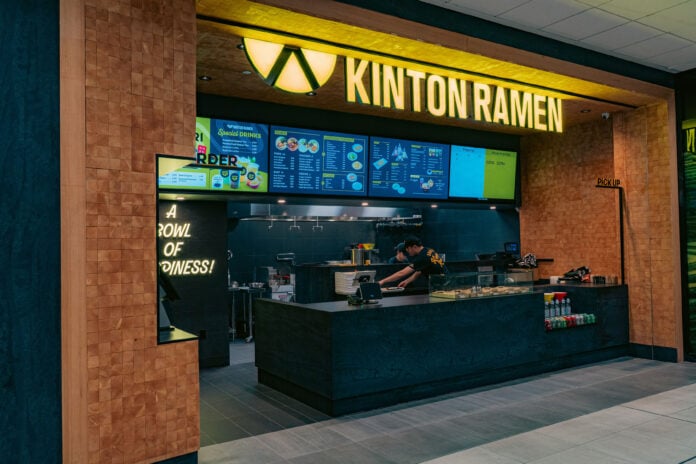
Canadian restaurant franchisor Foodtastic has acquired Kinton Ramen, a Japanese ramen brand founded in Canada with locations across Canada and in the United States.
Foodtastic, in a news release, said the acquisition brings an established Asian dining concept into its portfolio and aligns with the company’s strategy to invest in restaurant brands with clear characteristics and development potential. Founded in Toronto in 2012, Kinton Ramen was among the first Japanese ramen restaurants in the city and has since expanded across Canada and into the United States, it said.
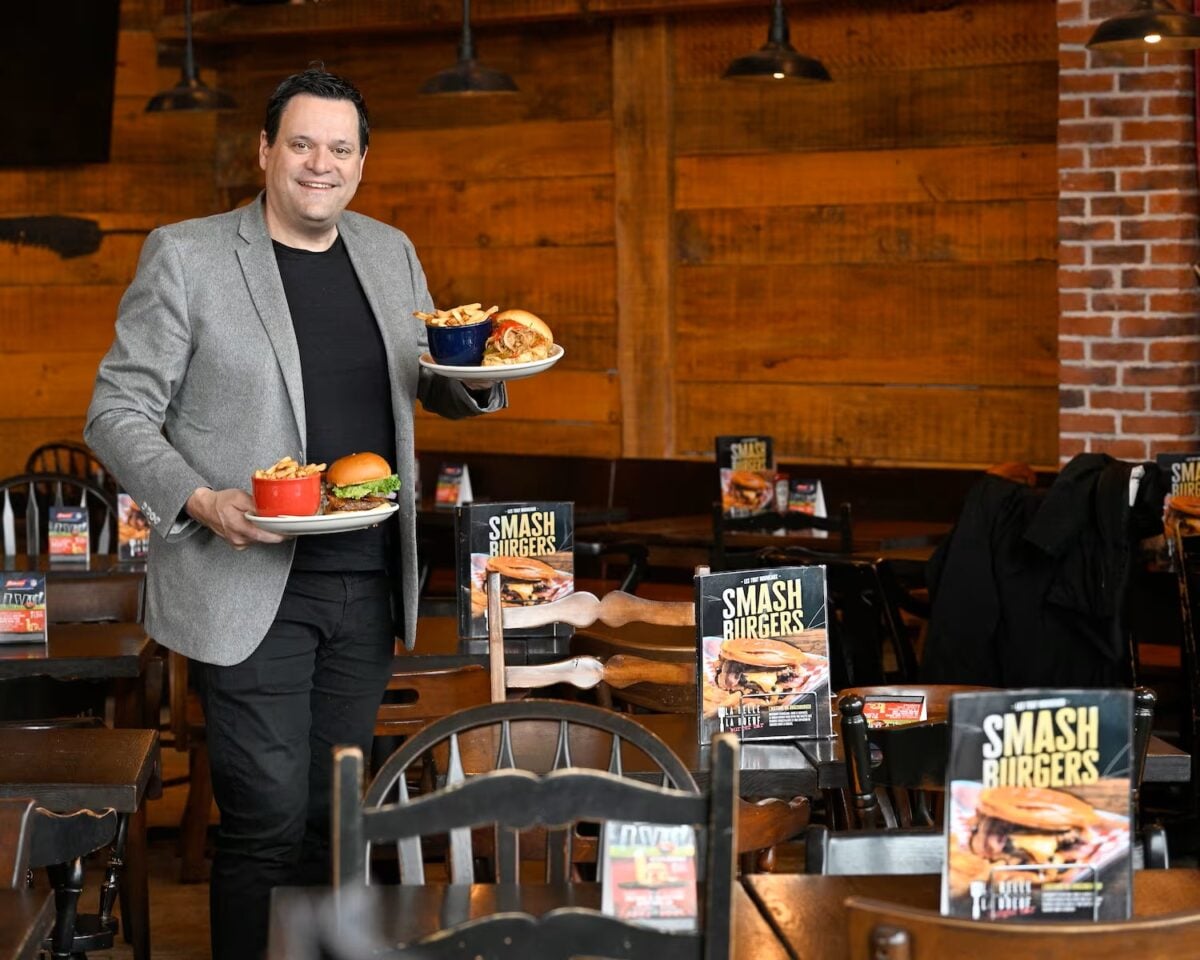
Foodtastic is a leading Canadian restaurant franchisor with a portfolio of 30 diverse brands and over 1,200 establishments across the country. Brands include Milestones, Dunkin’, Pita Pit, Quesada, Second Cup, Rotisseries Benny, La Belle et La Bœuf, and Freshii, among others.
“Kinton has built a clear position in the Canadian restaurant market, with a loyal following, a strong culinary identity and significant room to grow. We believe Foodtastic’s scale, infrastructure and franchise expertise will help support the brand’s next stage of growth across Canada.”
Foodtastic said Kinton Ramen offers Japanese ramen with a menu designed for dine-in, takeout, and delivery. The brand operates 58 locations in five Canadian provinces and one U.S. state, including Ontario, British Columbia, Quebec, Alberta, Manitoba, and New York.
“We weren’t exactly in this ramen noodle space. We own Noodlebox but it’s quite different. In a wok. It’s a different type of noodle. It’s also kind of a hybrid here where you have service and you also have opportunity to have counter. So we found the segment very attractive,” said Mammas. “I eat a lot at Kinton and I found that the consistency was always there. The service was good. The stores look great. I really got excited about this about three years ago. It took us quite a bit of time to actually convince them to sell to us and to come to a deal. So I’m really happy that this one happened. It took a lot longer than I would ever have imagined.”
Following the acquisition, Foodtastic said it will focus on expanding Kinton Ramen in Canada and will use its operating infrastructure to support the brand. There are no plans to change Kinton Ramen’s menu, loyalty program, brand identity, franchisee relationships, or guest experience.
“I think it could easily double,” said Mammas. Kinton Ramen today has 58 locations in Quebec, Ontario, Manitoba, Alberta and B.C. It’s mostly in urban areas right now but I think the footprint and the type of operation allows us to open in a lot of suburban markets as well. I think we’re going to double it.”
He said 20 locations are currently corporate.
“As is our DNA, we will be franchising the corporate stores as well in the near future and we’re going to continue to build the concept.”
“Kinton Ramen has always been about delivering a memorable and authentic ramen experience to guests, one bowl at a time,” said James Kim, founder of Kinton Ramen. “Foodtastic understands the strength of the brand and the significance of preserving what guests and franchisees already know and value. We are looking forward to working with the Foodtastic team as Kinton enters its next phase of growth.”
The acquisition expands Foodtastic’s portfolio of established restaurant brands in Canada. Foodtastic now operates brands across the quick-service, fast-casual, coffee, healthy-eating, casual-dining, and specialty-dining categories, added the company.
Mammas said the Kinton Ramen footprint is compact and the sales per square foot are “very interesting.”
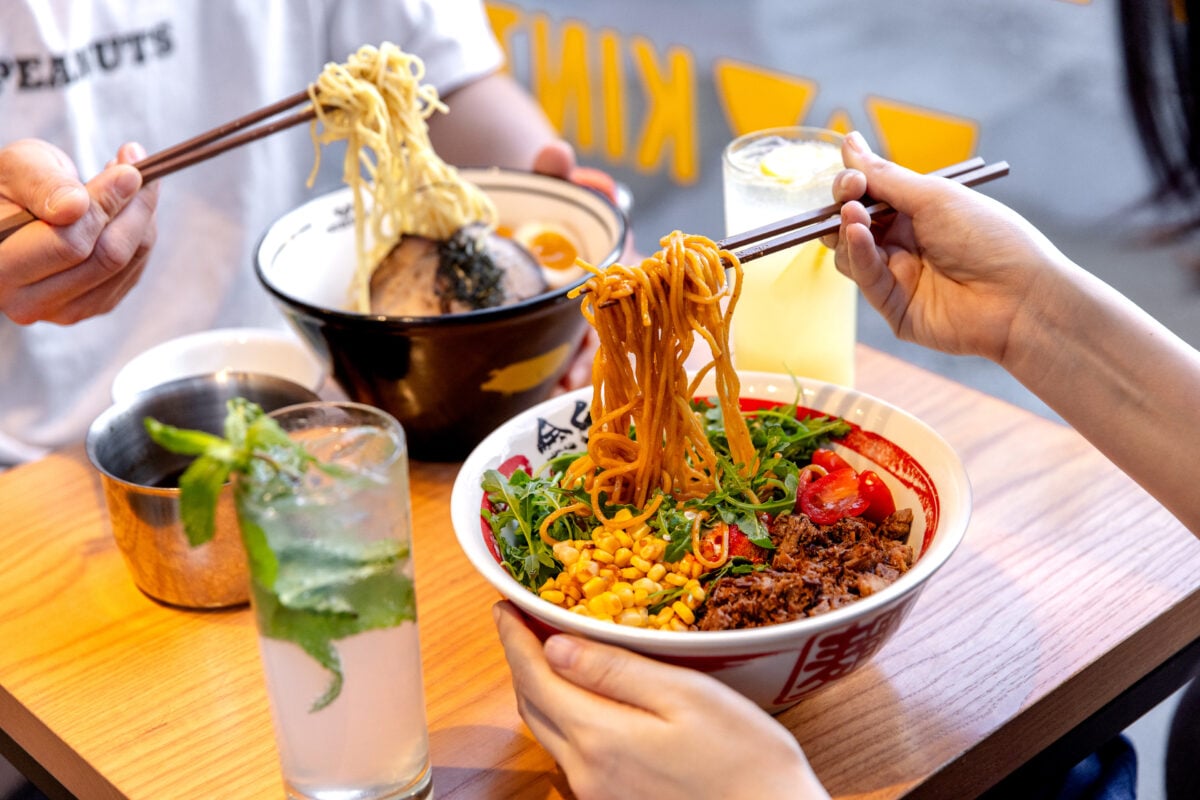
“The build out costs are probably less than other full-service restaurants and there’s a lot of third-party delivery that can be done with this type of food. I think they’ve also kind of perfected the way ramen is delivered. That’s a big credit to them. It’s always coming to the customer hot. You put in your ramen right after. It’s almost a restaurant experience in your house which is hard to do.”
Photo: Kinton Ramen
Mammas said expansion opportunity exists in Atlantic Canada as well as Quebec.
“Our runway is pretty good,” he said.
Mammas said 2025 was “pretty good” for the restaurant industry.
“When we got into 2026, once the Iran war started we saw a slow down. The last couple of weeks have been ticking positively. So that looks good. Hopefully this peace deal transpires and they sign it like they’re saying. We’ve already seen the effects at the gas pumps. Price of gas has dropped close to 15% in the last little while. That leaves more money in people’s pockets and they can enjoy some great food more often.”
Mammas said Foodtastic is a company that wants to grow and will grow in the future.
“There’s still quite a few segments that we’re not in, that we’re actively pursuing to see how we could bridge those gaps. But definitely we want to open new stores with existing brands and we want to keep on acquiring.”
“Our first quarter results demonstrate the strength of our operating model and our ability to deliver profitable growth. Comparable store sales increased 22.6%, gross margin reached a four-year high, and adjusted EBITDA margin expanded to 36.8% of revenue, positioning ourselves alongside the world’s most profitable fashion houses. We continue to strive to remain a highly productive specialty retailer with strong brands, exceptional unit economics, disciplined inventory management, attractive returns on capital, and a growth engine we have built over decades that continues to scale profitably,” said Andrew Lutfy, Chief Executive Officer and Chair of the Board.
Stacie Beaver
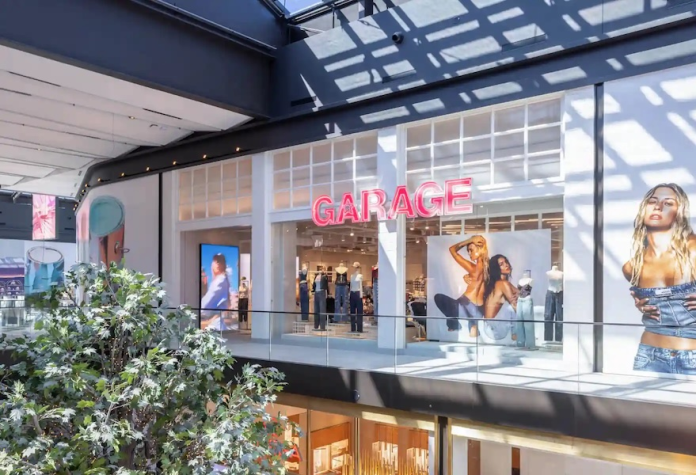
“Q1 was a strong start to fiscal 2026. Across both GARAGE and DYNAMITE, customers responded positively to our assortments, marketing campaigns and the consistency of the experience we deliver across channels. Our real estate strategy continues to be a significant driver of growth, customer acquisition and profitability. By opening new locations in premium centers, optimizing our fleet and delivering a compelling in-store experience, we continue to drive significant productivity improvements across our store network. Most importantly, we continue to see strong customer engagement across both brands, reflected in growth in our active customer base and increasing customer lifetime value,” added Stacie Beaver, President and Chief Operating Officer.
Fiscal 2026 First Quarter Highlights
Revenue increased by 37.0% to $310.6 million in Q1 2026, compared to $226.7 million in Q1 2025.
Comparable store sales growth of 22.6% (24.7% on a constant currency basis in Q1 2026, over and above comparable store sales growth of 13.0% in Q1 2025.
Retail sales per square foot increased by 32.4% compared to Q1 2025, reaching $1,001 in Q1 2026.
Gross margin expanded by 530 basis points to 67.4% in Q1 2026 compared to 62.1% in Q1 2025.
SG&A increased to $102.2 million in Q1 2026, compared to $74.7 million in Q1 2025, and adjusted SG&A as a percentage of sales decreased by 190 basis points to 30.5% from 32.4% over the same period in Q1 2025.
Operating income increased by 80.1% to $79.8 million in Q1 2026, compared to $44.3 million in Q1 2025.
Adjusted EBITDA increased by 71.3% to $114.4 million in Q1 2026, representing an adjusted EBITDA margin of 36.8%, compared to 29.5% for the same period in Q1 2025.
Diluted net earnings per share increased to $0.45 in Q1 2026, compared to $0.24 in Q1 2025 and adjusted diluted net earnings per share increased by 100.0% to $0.50 in Q1 2026, compared to $0.25 in Q1 2025.
Real estate activity for Q1 2026 includes:
Opening of 5 gross new stores: 3 in the United States and 2 in the United Kingdom, both under the Garage banner.
5 store closures: 4 in Canada under the Dynamite banner and 1 in the United States under the Garage banner.
Renovation or relocation of stores: 3 in Canada under the Garage banner.